





Description
D1: Arrival in Beijing · First Impressions of the Capital
⏰ Time Reference: All day (Subject to actual flight/train arrival time)
🚗 Transportation:
- Airplane: Beijing Daxing International Airport (approx. 50 km from city center, 1-1.5 hours by car), Beijing Capital International Airport (approx. 30 km from city center, 40 minutes-1 hour by car). International routes cover Malaysia (Kuala Lumpur), Singapore, USA (Los Angeles/New York), Australia (Sydney), Canada (Vancouver), Japan (Tokyo/Osaka), Cambodia (Phnom Penh), etc.; domestic routes cover Hong Kong, Shanghai, Guangzhou, Chengdu, etc.
- Train: Beijing South Railway Station (High-speed rail hub, e.g., Shanghai Hongqiao-Beijing South, 4.5 hours), Beijing West Railway Station (Mixed conventional/high-speed rail, e.g., Xi’an North-Beijing West, 4.5 hours). Both are located in the urban area with convenient transportation. 🏨 Accommodation: Beijing City Center (e.g., Dongcheng/Xicheng District, near Subway Line 1/2 for easy travel), specific hotel based on the group notice. 🍴 Dining: On your own. Recommended for free exploration:
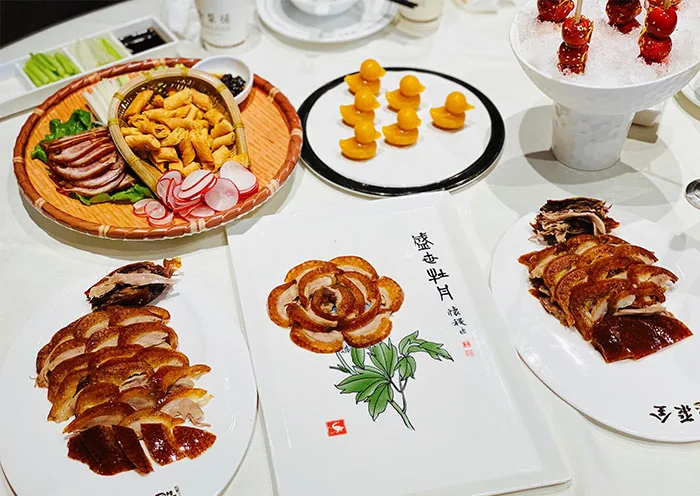
- Qianmen Street (Qianmen Street, Dongcheng District): A gathering place for time-honored brands. You can try Quanjude (Qianmen branch, average 150-200 yuan, hanging-oven roasted duck with thin pancakes), Duyichu Shao Mai (average 50-80 yuan, specialized in seafood shao mai).
- Huguo Temple Snacks (Huguo Temple Street Branch) (93 Huguo Temple Street, Xicheng District): Average 30-50 yuan, featuring traditional Beijing snacks like Douzhir (fermented mung bean milk), Jiaoquan (fried dough rings), and Aiwowo (steamed rice cakes). 🎯 Free Activity Suggestions:
- If arriving early (before 10:00), take Subway Line 2 to “Qianmen Station” and walk to Qianmen Street to experience the style of an old Beijing commercial street (Open 9:00-22:00);
- In the evening, go to Shichahai (Xicheng District) to see Yinding Bridge under the sunset and listen to locals playing the Erhu (Free, folk artist performances from 19:00-21:00).
D2: Central Axis · Imperial Grandeur
⏰ Time Reference: 8:30-18:00 (Including transportation, subject to actual conditions on the day)
🍴 Dining: Includes breakfast (Hotel buffet, 7:00-9:00), lunch (Group meal, 12:00-13:30, 10 people/table, 8 dishes and 1 soup, including Kung Pao Chicken, Shredded Pork in Peking Sauce, and other Beijing-style dishes).
🏰 Itinerary:
- 8:30-9:00 Departure: Meet at the hotel and take a tour bus (with air conditioning and WiFi) to Tiananmen Square.
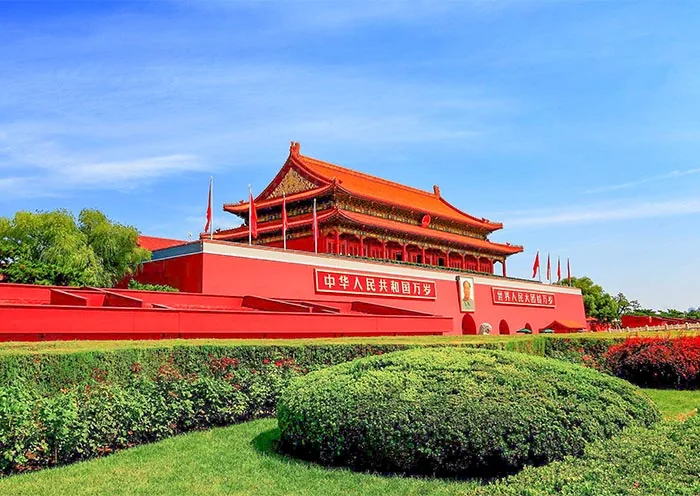
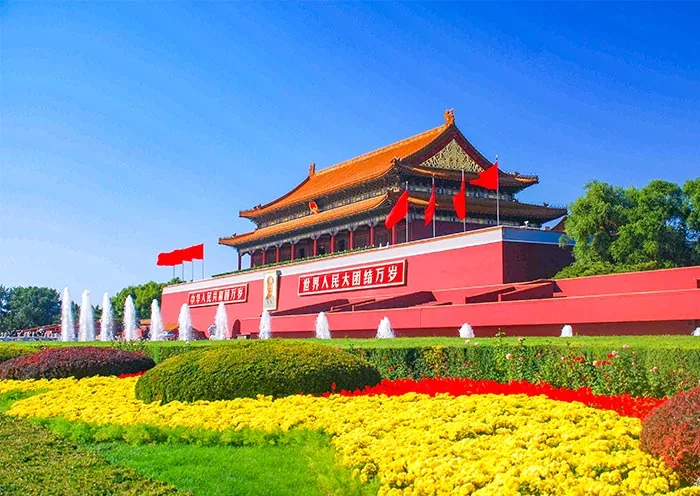
- 9:00-10:30 Tiananmen Square (East Chang’an Street, Dongcheng District):
- Historical Background: Originally built in the 15th year of Yongle in the Ming Dynasty (1417). On October 1, 1949, Mao Zedong proclaimed the founding of the People’s Republic of China here. It is now the world’s largest city center square (440,000 square meters).
- Landscape Highlights: Monument to the People’s Heroes (Built in 1958, 37.94 meters high, inscribed with “Eternal Glory to the People’s Heroes”), Chairman Mao Memorial Hall (Reservation required, closed on Mondays), National Flagpole (Flag raising/lowering times adjust with sunrise/sunset, checkable via the “Beijing Daily” WeChat account).
- Practical Tips: The “National Museum of China” is on the east side (advance reservation 1-7 days required, free); the “Great Hall of the People” is on the west side (external view only, no entry).
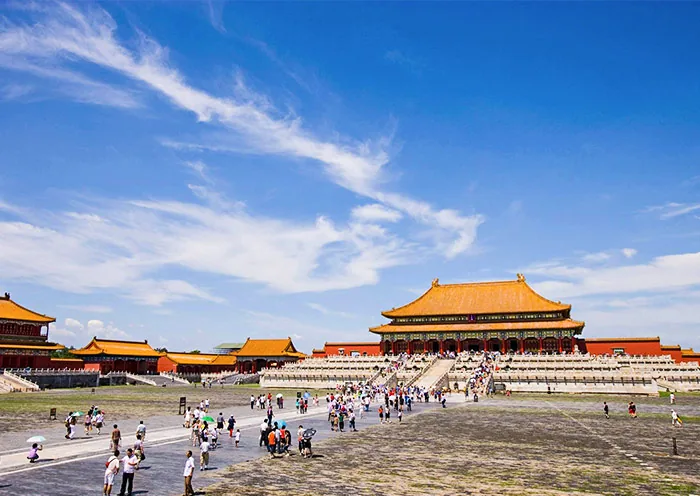
- 10:30-12:30 Forbidden City (Palace Museum) (4 Jingshan Front Street, Dongcheng District):
- Historical Background: Built in the 4th year of Yongle (1406) and completed in 1420. The residence of 24 emperors of the Ming and Qing Dynasties, it is the world’s largest wooden palace complex (720,000 square meters, 8707 rooms).
- Architectural Features: Central axis layout (Meridian Gate – Hall of Supreme Harmony – Palace of Heavenly Purity – Gate of Divine Might), with yellow glazed tile roofs, red walls, and white marble balustrades, embodying the concept of “Unity of Heaven and Man.”
- Must-see Highlights: Hall of Supreme Harmony (Golden Throne Room, for enthronement ceremonies), Palace of Heavenly Purity (Emperor’s bedchamber, with the “Upright and Pure” plaque handwritten by Yongzheng), Treasure Gallery (requires additional 10 yuan ticket, displaying Jade Cabbage, Nine-Dragon Wall, etc.).
- Practical Tips:
- Entrance: Meridian Gate (Wu Men, the only entrance); Exit: Gate of Divine Might (Shenwu Men) / East Prosperity Gate (Donghua Men).
- Guide: Electronic guides can be rented (20 yuan/unit, 100 yuan deposit), or listen to the group guide (included in tour fee).
- Avoid Crowds: Fewer people before 10:00 or after 14:00. It is suggested to enter from Meridian Gate and head west first to avoid the main central axis path.
- 12:30-13:30 Lunch: Group meal (see above).
- 13:30-15:00 Jingshan Park (44 Jingshan West Street, Xicheng District, 15 minutes walk from the Forbidden City exit):
- Historical Background: Built during the Yongle period of the Ming Dynasty, originally the imperial garden “Wansui Mountain.” Renamed Jingshan in the 12th year of Shunzhi in the Qing Dynasty (1655), once an imperial retreat.
- Landscape Highlights: Wanchun Pavilion (The highest point of Jingshan, altitude 88.7 meters, offering a panoramic view of the Forbidden City, the central axis, and the “凸” shaped outline of old Beijing), Spring Peony Exhibition (late April, thousands of peonies bloom below Wanchun Pavilion).
- 15:00-17:30 Summer Palace (19 Xinjiangongmen Road, Haidian District, 40 minutes drive):
- Historical Background: Built in the 15th year of Qianlong (1750) as “Qingyi Garden” for his mother’s birthday. Burned by Anglo-French forces in 1860, rebuilt by Empress Dowager Cixi in 1888 and renamed “Summer Palace.” One of China’s four famous gardens.
- Architectural Features: Based on Kunming Lake and Longevity Hill, using the “Though man-made, it looks as if created by heaven” technique. The Long Corridor (728 meters, with 1.4 million Suzhou-style paintings), Tower of Buddhist Incense (41 meters high), and Seventeen-Arch Bridge (150 meters long with 544 carved lions) are the three major landmarks.
- Must-see Route: East Palace Gate → Hall of Benevolence and Longevity (Cixi’s office) → Long Corridor → Hall of Dispelling Clouds (Birthday celebration venue) → Tower of Buddhist Incense (Climb for lake views) → Marble Boat → Boat to South Lake Island (View Seventeen-Arch Bridge from afar) → East Palace Gate.
- Practical Tips:
- Combo ticket (including garden-within-gardens) 60 yuan, single entrance 30 yuan (Peak season 4.1-10.31). Combo ticket recommended.
- Boating: Hand-rowed/Electric boats (minimum 1 hour rental, hand-rowed 180 yuan/hour, seats 4). Recommended to row from “Marble Boat Pier” to “South Lake Island.”
- 17:30 Return: Drive back to the hotel, free time.
D3: Great Wall Majesty · Olympic Legacy
⏰ Time Reference: 7:30-19:00 (Including round-trip transportation, subject to actual conditions on the day)
🍴 Dining: Includes breakfast (Hotel buffet, 7:00-9:00), lunch (Group meal, 12:00-13:30, same standard as D2).
🏰 Itinerary:
- 7:30-8:00 Departure: Meet at the hotel and take a tour bus (with air conditioning and WiFi) to Mutianyu Great Wall.
- 8:00-9:30 Travel: Approx. 73 km, 1.5-2 hours (via Jingcheng Expressway, passing Huairou District with views of Yanqi Lake).
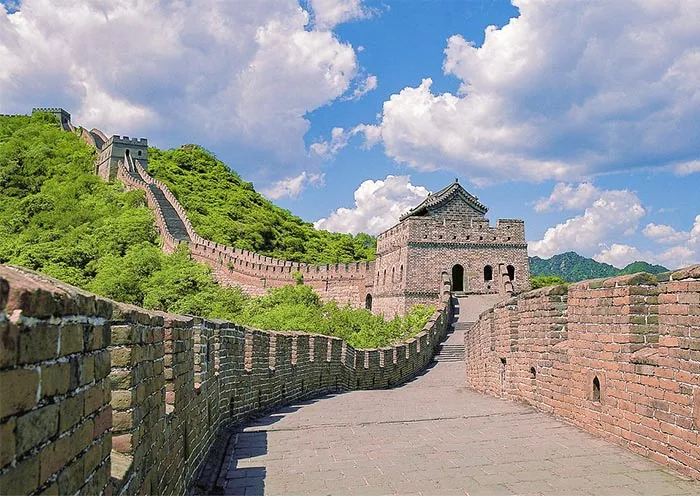
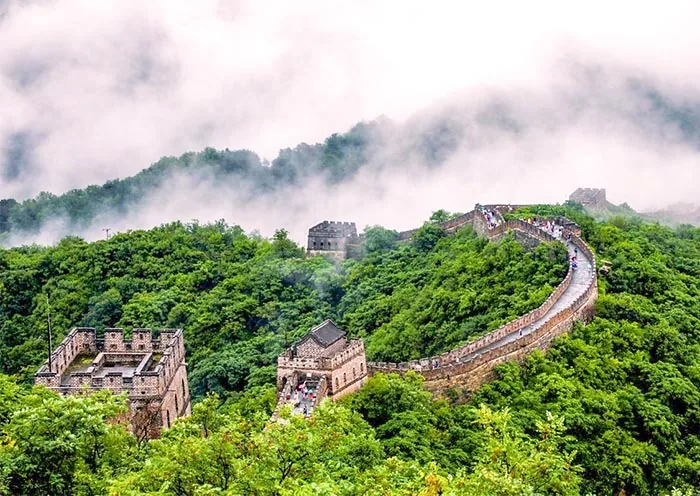
- 9:30-12:00 Mutianyu Great Wall (Mutianyu Village, Bohai Town, Huairou District, 73 km from downtown Beijing):
- Historical Background: Built in the 1st year of Hongwu in the Ming Dynasty (1368) as a vital pass guarding the capital and imperial tombs. Listed as a World Heritage Site in 1987. It is known for its unique beauty (5400 meters long, 22 watchtowers, the highest watchtower density among Ming Great Walls).
- Landscape Highlights:
- Cable Car: Take the cable car from the foot (Watchtower 1) to “Watchtower 14” (Single trip 100 yuan/person, optional self-pay item) to save energy.
- Hiking Route: Watchtower 14 → Watchtower 20 (The highest point, altitude 1039 meters, offering open views and photos of the “Jiankou Great Wall”). Round trip takes approx. 1.5 hours; steps are steep, non-slip shoes recommended.
- Vegetation: Flanked by pines and cypresses, with vibrant colors in autumn (mid-to-late October), making it one of “Beijing’s most beautiful Great Wall sections.”
- Practical Tips:
- Opening Hours: 7:30-18:00 (Peak season 4.1-10.31), last entry at 16:30.
- Equipment: Bring enough water (5-8 yuan/bottle on the mountain); prepare sun hats and sunglasses for strong summer UV.
- Safety: Do not climb unopened areas; watch your step while taking photos.
- 12:00-13:00 Lunch: Group meal (Restaurant near the scenic area, 10 people/table, 8 dishes and 1 soup, including local farmhouse dishes like stewed chicken with mushrooms and Tiebingzi/cornmeal cakes).
- 13:00-15:00 Sightseeing on Return Trip:
- Bird’s Nest (National Stadium) (1 South National Stadium Road, Chaoyang District): Main stadium for the 2008 Beijing Olympics, featuring a steel-structure woven design. External view (Free, suggested panoramic photo spot from the “Beichen Bridge” on the North 4th Ring Road).
- Water Cube (National Aquatics Center) (11 Tianchen East Road, Chaoyang District): Adjacent to the Bird’s Nest, with a blue “water bubble” ETFE membrane exterior. Now converted into the “Ice Cube” center (Exterior view free, interior visit requires a ticket).
- 15:00-16:00 Return: Drive back to the hotel, free time.
D4: Wisdom of Ancient Architecture · Bidding Farewell to Beijing
⏰ Time Reference: 8:30-12:00 (Including airport/station drop-off, subject to actual flight/train time)
🍴 Dining: Includes breakfast (Hotel buffet, 7:00-9:00), lunch (Group meal, 10:30-11:30, 10 people/table, 8 dishes and 1 soup, including Beijing-style Luzhu and Zhajiangmian/Soybean Paste Noodles).
🏰 Itinerary:
- 8:30-9:00 Departure: Meet at the hotel and take a tour bus to the Temple of Heaven.
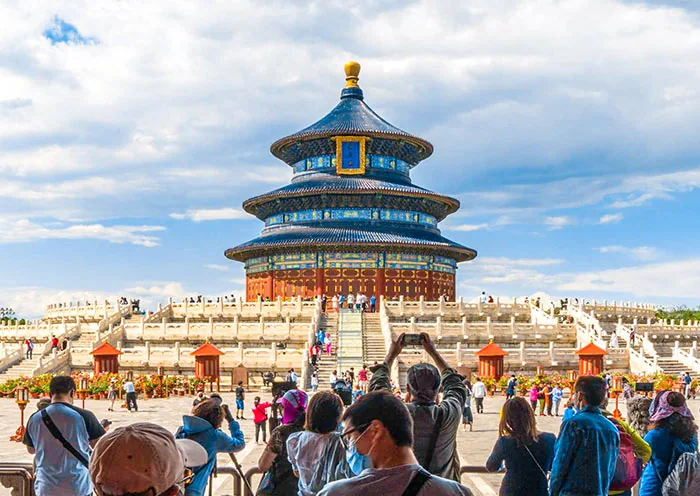
- 9:00-10:30 Temple of Heaven Park (1 Tiantan Road, Dongcheng District):
- Historical Background: Built in the 18th year of Yongle (1420). In the 9th year of Jiajing (1530), the Altars of Heaven and Earth were separated. It was the place where Ming and Qing emperors worshipped heaven and prayed for harvests. China’s largest extant ancient sacrificial complex (273 hectares).
- Architectural Features:
- Circular Mound Altar (Sacrifice site): A three-layered white marble circular platform. The central “Heavenly Heart Stone” has excellent sound resonance (speaking on it sounds loud and resonant).
- Hall of Prayer for Good Harvests: A triple-eaved blue tile roof, 38 meters high, with a beam-less structure. The 28 nanmu pillars symbolize the four seasons, 12 months, and 12 shichen/bi-hours.
- Echo Wall (Imperial Vault of Heaven Enclosure): 3.72 meters high, 0.9 meters thick. With smooth wall surfaces, two people standing at opposite ends can hear each other clearly (requires silence to work).
- Practical Tips:
- Combo ticket (including Hall of Prayer, Circular Mound, Echo Wall) 34 yuan, single entrance 15 yuan (Peak season 4.1-10.31).
- Best photo spots: The steps of the South Gate of the Hall of Prayer for Good Harvests (for panoramas) and the Heavenly Heart Stone (for portraits with the architecture).
- 10:30-11:00 Free Activity: Hutong Walk (Optional):
- Location: Exit from the North Gate of the Temple of Heaven, walk 10 minutes to Dongxiaoshi Street (Dongcheng District, a traditional old Beijing Hutong area).
- Ways to Experience:
- Rickshaw (Self-pay, approx. 50 yuan/car/30 minutes): The driver acts as a guide, explaining Hutong history (e.g., “Qianshi Hutong” was once a Qing Dynasty silver exchange, with its narrowest point only 0.4 meters wide).
- Old Beijing Snacks: “Jinfang Snacks (Ciqikou Branch)” at the Hutong entrance (32 Ciqikou Dadushi Street, Dongcheng District, average 20-30 yuan, specialized in fried cream cakes and Tang’erduo).
- 11:00-12:00 Lunch: Group meal (see above).
- 12:00 Airport/Station Drop-off: Take the bus to Beijing Daxing Airport/Beijing Capital Airport/Beijing South Station/Beijing West Station (Travel time based on destination, suggest leaving 2-3 hours for check-in/waiting), end of trip.

Temple of Heaven Park — Practical Information
Transport & Schedules
- City center → Temple of Heaven Stadium / gates of the Temple of Heaven | Bus: Take bus 36, 525, 685 or 957 to the “Temple of Heaven Stadium” stop, then walk into the park.[src]
Where to Stay · Room Type · Nearby
- Chongwenmen–Qianmen area (Dongcheng/Xicheng) | Reference price Old-Beijing-style inns/chain hotels, reference about CNY 260–500 per night (OTA reference) | Room tip: Standard twin/king room; choose near Metro Line 2/Line 5 stations | Nearby add-ons: Tian’anmen Square, Qianmen Street, Dashilan, Hall of Prayer for Good Harvests[src]
- Temple of Heaven East Gate/Ciqikou (Dongcheng district) | Reference price Budget hotels about CNY 300–460 per night (OTA reference) | Room tip: Standard twin/king room | Nearby add-ons: Temple of Heaven, Qianmen Street, National Natural History Museum[src]
Typical Climate & Packing (Past Years)
- January: -9.4–1.6 °C, Cold and dry; windy among the ancient cypresses, keep warm
- February: -6.9–4.0 °C, Cold, large day-night temperature difference
- March: -0.6–11.3 °C, Warming and windy
- April: 7.2–19.9 °C, Peak-season prices from Apr 1; fresh green on the ancient trees
- May: 13.2–26.4 °C, Pleasant climate, good for unhurried visits
- June: 18.2–30.3 °C, Rainy season begins; frequent afternoon showers
