



I. Pre-departure Essentials (Simplified Version)
Essential Items: Missing any of these 5 things will add 3 more troubles to your trip
- ID Card: This isn’t just a “suggestion,” it’s a “must-have in your pocket.” You need to swipe it for scenic spot turnstiles, station security checks, and guesthouse registration. Last month when I was leading a group, a girl left hers at the hotel and had to visit 3 police stations to get a temporary ID, wasting half a day of the itinerary.
- Discount Certificates (Student/Teacher ID, etc.): Don’t find it troublesome! Student tickets for the Three Pagodas of Chongsheng Temple are half price (original price 70 RMB → 35 RMB), and the Cangshan Gantong Cableway saves 30 RMB for students. Staff at scenic spots only accept original documents; photocopies or photos are useless.
- Sun Protection Clothing: How strong is the UV radiation in Western Yunnan in September? I measured it in Dali—the noon UV index was 8+ (equivalent to “very strong”). Ordinary shirts can’t block it. I recommend choosing a lightweight style with UPF50+ (I wear an ice silk material version that weighs only 200g), which protects against the sun without causing sweat.
- Folding Umbrella: Don’t buy disposable raincoats! Kunming occasionally has “sun showers” in September (raining while the sun is out). A folding umbrella provides shade and blocks rain, making it 10 times more convenient than a raincoat. I use a 21-inch folding version (fits in a backpack side pocket); I once encountered sudden rain in Dali, popped the umbrella, and kept exploring the old town.
- Power Bank: There are no shared power banks on the cobblestone streets of the ancient towns, and guesthouse outlets might be in high demand (my guesthouse only had 2 sockets for 6 people). I recommend over 20000mAh with fast charging support (I use a Xiaomi 20000mAh two-way fast charge, which fills a phone in just 1.5 hours). It’s plenty for taking over 200 photos a day.
Weather and Clothing: Don’t believe “it’s cool in autumn”; the temperature difference between day and night can freeze you
- Kunming: 20-26℃ during the day (thin long sleeves + a light jacket is perfect), but around 15℃ in the morning and evening (I went to Dianchi Lake at 7:00 AM wearing a light sweater, otherwise my arms would have shivered). It occasionally cools down in late September, so bring a fleece jacket as a backup—it’s much lighter than a thick down coat.
- Dali: 22-28℃ during the day (T-shirt + sun protection clothing; tie the jacket around your waist if it gets hot), 18℃ in the morning and evening (a light jacket is a must). My guesthouse at Caicun Pier faced Erhai Lake; the wind was strong during the sunrise, and without a jacket, your nose would be running from the cold.
- Lijiang: 21-27℃ during the day (similar to Dali), but 16℃ in the morning and evening (the wind is strong on the cobblestone streets of the ancient town, and even a light jacket feels chilly). Last September, a friend from the south didn’t bring thick clothes and was freezing while walking through the bar street at night, eventually buying a cup of hot milk tea at a convenience store just to warm her hands.
Transportation Connection: Buy high-speed rail tickets in advance to save hassle
- Kunming → Dali:
- Station Selection: Prioritize Kunming Station (closer to the city center). Metro Line 1 “Kunming Railway Station” goes directly there (fare 5 RMB, 20 minutes). A taxi to the ancient city starts at 10 RMB. Kunming South Station is too far (taxi to the ancient city costs 50 RMB and takes 40 minutes) unless you live near the South Station.
- Recommended Train: Train C340 departs at 07:20 and arrives at Dali Station at 09:30 (Second-class seat 145 RMB). This is the fastest train from Kunming Station to Dali Station (2 hours 10 minutes total). Buy tickets 15 days in advance via the 12306 APP (I usually set an alarm for 22:00 to grab tickets; weekend tickets sell out in half an hour). Choose a window seat (the right side offers views of rice fields, which are golden in September).
- Upon Arrival: Look for official taxis (metered at around 15 RMB). Do not take the “carpool” drivers shouting at the station exit (they say “50 RMB to the ancient town” but actually detour to silver shops, wasting 1 hour and charging more).
- Dali → Lijiang:
- Train Selection: There are only two high-speed trains: D8131 (departs 08:00, arrives Lijiang at 09:50, 80 RMB) and D8127 (departs 09:00, arrives 10:50). Weekend tickets are very scarce (I helped a friend buy a ticket for September 16th last week and only got it 3 days in advance).
- Upon Arrival: A taxi from Lijiang Station to the ancient town is 15 RMB (15 minutes). Don’t believe the “airport bus” solicitors (they say “20 RMB direct,” but you actually have to transfer at Sanyi Airport and spend 50 RMB more).

II. Day1 Kunming First Impression: Half-Day Essential City Tour
08:30-10:00 Dianchi Haigeng Dam: Catch the gulls early, photograph the Xishan “Sleeping Beauty”
I took a taxi to Haigeng Dam at 8:15 last Wednesday. The driver said, “Any later by half an hour, and the black-headed gulls will have gone to forage.” From Cuihu Hotel, the taxi was 15 RMB (off-peak, 10 RMB base + 5 RMB fuel surcharge). Arriving before 08:30 allows you to catch the “flock takeoff” scene—hundreds of gulls fluttering up, their wings creating a breeze (remember to wear a windproof light jacket).
There’s a small stall selling gull food at the dam entrance (5 RMB/bag, a mix of corn and wheat). I held a handful in my hand and waved, and the gulls swarmed around, only half a meter from my face (don’t try to touch them, their claws are sharp). Walking to the end of the dam, the “Xishan Sleeping Beauty” stone carving is hidden behind a bamboo grove (follow the signs for 100m). The 200+ steps are a bit steep (wear sneakers! I saw an uncle in flip-flops almost slip last week). Climbing up lets you take a panoramic shot—the Dianchi water looks like blue glass, and the Xishan silhouette really resembles a sleeping beauty (recommend using “wide-angle mode” on your phone for a great upward shot).
Tip: In late September, there are only a few gulls left. To see them in large numbers, you must visit from late October to March. However, there are fewer tourists now, making photos better.
10:30-12:00 Green Lake (Cuihu) Park: Old Kunming atmosphere, hidden Douhua rice noodles in the alleys
Take a taxi from Haigeng Dam to Cuihu for 10 RMB (10 minutes). The East Gate is the closest (Exit B of “Cuihu Station” on Metro Line 3, turn right and walk 200m). The park is free and opens at 6:00 AM. When I arrived, grandpas were already playing chess in the pavilion (typical Kunming slow life).
The Ruan Yuan Shrine is in the northeast corner (the site of the Qing Dynasty Yunnan Education Department). The old building with grey tiles and red pillars, paired with wisteria-covered corridors, makes for great Republican-era style photos in a light cotton dress; my friends said I looked like I stepped out of “In the Mood for Love”. Next to the shrine by the lake, there’s a row of tin sheds. “Cuihu Xiaoguan” has the most popular Douhua rice noodles (I eat here twice a week). For 8 RMB a bowl, the tofu pudding is so tender it melts in your mouth, and the pickled vegetables are homemade and “crunchy,” topped with crushed peanuts and chili oil (spiciness is optional, I chose mild).
Hidden Gem: There is a French garden behind Cuihu Hotel (free, but keep quiet). The hydrangeas are in full bloom, perfect for forest-style photography.
13:30-15:00 Yunnan University: French buildings + Ginkgo Avenue, where youth meets history
Walk 10 minutes from Cuihu West Gate to Yunda (security at the West Gate checks health codes; open your “Yunnan Health Code” on Alipay in advance). Entering from the South Gate feels the best—immediately you see “Huize Building” (a French-style building built in 1923 with yellow walls and arched windows, looking like a castle in a European town).
In September, the edges of the leaves on Ginkgo Avenue (from Huize Building to Zhigong Hall) are just starting to turn yellow. There are 90% fewer people than in late October. I crouched down to take an overhead shot of the “ginkgo + old teaching building” (using a 3-second timer to avoid handshake). You might also encounter graduates in gowns taking photos (last week I met a couple who insisted on taking a photo with me, saying “Kunming’s autumn is so healing”).
Trivia: Yunda is one of the former sites of the National Southwestern Associated University. Zhigong Hall still hangs the old school plaque, making it a great “history lesson” for kids.
16:00-18:00 Nanping Street: Old Kunming commercial district, with the most fragrant flower cakes and Cross-Bridge Rice Noodles
A taxi from Yunda to Nanping Street is 10 RMB (10 minutes). This street is Kunming’s earliest commercial district (built in the 1920s), where old architecture blends with new malls. “Jiahua Bakery” on the B1 level of Zhengyifang Shopping Center is the locals’ “flower cake warehouse.”
I stood by the transparent kitchen watching the masters make flower cakes—freshly picked rose petals mixed with sugar, wrapped in pastry. When the oven “dings,” the fragrance wafts down the street (freshly baked is the best; frozen ones don’t have this sweetness). Rose filling is 3.5 RMB each; I bought 10 (got 2 free) and carried them in a paper box (the box is reusable for snacks at home).
Across the street, “Jianxinyuan” Cross-Bridge Rice Noodles (small portion 28 RMB) is the “Old Kunming taste”—the broth is simmered with pork bones for 8 hours and looks like a layer of white oil (don’t drink it first, blanch the raw meat first). It comes with quail eggs, Xuanwei ham, and seasonal vegetables. I always add a portion of “chrysanthemum petals” (5 RMB); the petals floating in the soup make it taste exceptionally fresh.
Avoidance Tip: Some “viral rice noodle shops” on Nanping Street (like XX-ji) use reconstituted broth. Don’t be fooled by the decor; stick to old brands like “Jianxinyuan” or “Qiaoxiangyuan.”
19:00-20:30 Dinner Recommendation: Zhuanxin Farmers Market, the locals’ hidden “Food Museum”
From Nanping Street, take Metro Line 5 (Exit A of “Dianchi College Station”) and walk 5 minutes to Zhuanxin Farmers Market (opens at 6:00 AM, closes at 20:00; I arrived at 20:10 last week and only two stalls were left).
“Zhuanxin Canteen” is on the 2nd floor (the stairs are steep, wear flats). The small-pot rice noodles (12 RMB) are the specialty—cooked in a copper pot with pork bone and sauerkraut broth. The noodles are springy, and I added a spoonful of chili oil (made me sweat, but it was great). The Xidoufen (peeled pea porridge, 8 RMB) paired with fried dough sticks (Youtiao, 3 RMB) is a perfect match. The porridge is thick and tastes like soy milk but richer (don’t add sugar, original is best).
The mushroom stalls (15 RMB/catty) offer on-site processing (the owner fries them for a 5 RMB processing fee). I picked some porcini (round caps, dark brown); the aroma while frying filled half the floor (September is porcini season, fresh and cheap).
Bonus: There’s a “Paoluda” stall at the market entrance (10 RMB/cup). Coconut milk with dried bread, sago—sweet but not greasy, perfect for dessert.
III. Day2 Kunming → Dali: Direct High-Speed Rail + Ancient City Wandering
07:20-09:30 High-speed rail from Kunming to Dali: 2 hours through the Central Yunnan Plain, wind from rice fields blowing into the window
I stayed at the Hanting Hotel Kunming Station (No. 12 Zhanqian Road), a 5-minute walk to the station. I arrived at 6:50 AM last Tuesday, picked up tickets at the machine (C340 booked 15 days ago on 12306, ticket says “Kunming Station → Dali Station”), and chose window seat 12D in Carriage 5 (right side, for rice field views throughout).
Departure was at 7:20. The carriage has USB charging ports (below the seat). The rice in the Central Yunnan Plain has ripened in September, and the golden ears of rice are bent by the wind. Occasionally, you see farmers in bamboo hats walking along the ridges (I took a 10-minute video, and my friends called it “healing”).
Arrival at Dali Station was exactly at 9:30. To the left of the exit is the taxi queue (metered at around 15 RMB to the South Gate of the ancient city). Never believe the illegal drivers at the station shouting “50 RMB for a car to the ancient city” (I saw tourists take these last week, only to be detoured to silver shops for an hour).
Tip: Choose “Kunming Station” instead of “Kunming South Station”—a taxi from South Station costs 50 RMB and takes 40 minutes; from Kunming Station, it’s a 10 RMB base fare and 15 minutes to the ancient city.
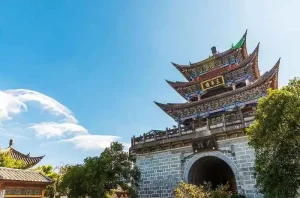
10:00-11:30 Dali Ancient City: Enter from the South Gate, panoramic views from Wuhua Tower, tie-dye souvenirs
A 15 RMB taxi from Dali Station to the South Gate (10 minutes). The South Gate is the only entrance that charges a fee (35 RMB/person, 17 RMB for students, swipe ID). To the right of the entrance is “Wuhua Tower” (Ming Dynasty architecture, three-story wooden building). Climbing the tower requires 28 steep wooden steps (wear flats). From the second-floor railing, you can see the grey tile roofs of the entire city, with the snowy peaks of Cangshan looming in the distance (some snow remains in September, looking like a sprinkling of salt).
Renmin Road is the main street, with polished cobblestones. “Lanxu Tie-dye” is at No. 127 Renmin Road (run by a Bai auntie who has done tie-dye for 20 years). I learned to make a square scarf: choose white cotton (20cm × 20cm), fold it into a triangle, tie it with rubber bands into little tufts (the tighter the tie, the clearer the pattern), and soak it in the indigo vat (take it out after 10 minutes). After drying and removing the bands, the blue-and-white butterfly pattern appears (auntie said this is the “most common pattern in Dali”). The scarf is 30 RMB; I bought one to use as a neckerchief and still wear it to work.
Avoidance Guide: Some stalls sell “9.9 RMB tie-dye,” which use chemical dyes that fade after two washes; stick to old shops like “Lanxu” where vats are inherited, and colors last for 3 years.
12:00-13:30 Ancient City Lunch: “Zaihishou” Cold Chicken Rice Noodles, spicy and sour but addictive
In the middle of Renmin Road (near Wuhua Tower) is “Zaishou” (open for 30 years, red sign with yellow text). Cold chicken rice noodles are 10 RMB/bowl (I shared an order with my guesthouse owner last week, and he ate it for 3 days straight). The noodles are thin and round, soaked in bright red soup, topped with shredded cold chicken (so tender it melts), pickled vegetables (super crunchy), and crushed peanuts.
Pair it with a skewer of fried Rushan (fried cheese, 5 RMB/skewer)—a specialty of Eryuan County. Freshly roasted Rushan is crispy on the outside and soft like cotton inside, dipped in rose jam (sweet with a hint of floral scent). My northern friend said “this is more addictive than Peking duck wraps.”
Hidden Eating Tip: Add a spoonful of “Litsea cubeba oil” (5 RMB) to the noodles for a spicy yet cooling kick; but don’t add too much if you have a sensitive stomach.
14:00-17:00 Erhai Ecological Corridor Cycling: Caicun to Longkan, Erhai is as blue as an overturned paint palette
A 10 RMB taxi from the South Gate to Caicun Pier (10 minutes). Rent an e-bike for 50 RMB/2 hours (ID deposit required, returned upon bike return). I chose one with a sunshade (the September sun is still fierce). Ride along Caicun → Longkan Pier → Panxi S-Bend (though the S-bend is crowded, even on September weekends; better to focus on Longkan).
The Caicun Viewing Platform (free) is a must-stop—standing by the railing, the blue of Erhai meets the green of Cangshan. The water sparkles, and you can see small fish jumping (I took 20 photos, and the post got over 100 likes). At Longkan Pier, there’s a shallow area (water only ankle-deep); I took off my shoes to wade (the water in September is cool and refreshing).
If tired, buy a cup of roasted milk (8 RMB) from a roadside stall—the auntie boils milk in a copper pot with honey and wheatgrass. The milk aroma is so thick it sticks to your lips (I took two big gulps, and my tongue was dyed white).
Price Reference: E-bike 50 RMB/2 hours, roasted milk 8 RMB, tie-dye scarf 30 RMB, cold chicken noodles 10 RMB. You can eat and play well for 50 RMB per person.
18:30-20:00 Night Tour of the Ancient City: Night market fireworks + folk music bars, this is Dali’s night
In the evening, return to the ancient city. The Renmin Road night market is open (17:30 to 21:00). Roasted Erkuai is 5 RMB (charcoal-grilled until golden, spread with sweet/spicy sauce and wrapped around a fried dough stick), and Baojiang Tofu is 10 RMB/portion (crispy outside, soft inside, perfect with chili powder).
“Da Bing’s Cabin” (No. 15) in a Renmin Road alley is a hub for folk music fans (minimum consumption 30 RMB). I ordered a lemon tea and listened to the singer play guitar and sing “Nanshan Nan” (his voice was raspy, like wind through a Cangshan tunnel). Backpackers at the next table were chatting: “Coming to Dali this time, I finally don’t have to rush.”
Around 20:00, go to Fuxing Road for “Aniang Xidoufen” (open for 25 years, blue cloth awning). Xidoufen is 8 RMB/bowl (made from ground peas, so thick it coats the spoon), paired with a freshly fried dough stick (3 RMB). The dough stick soaks up the porridge and can be slurped down softly (I had two bowls and was too full to move).
Kind Reminder: Don’t eat too much at the night market; portions are small, so sharing with someone lets you try more variety. Don’t go to folk bars too late (they might clear out after 22:00); arrive early to grab a seat.
IV. Day3 Dali Depth: Cangshan + Erhai East Line
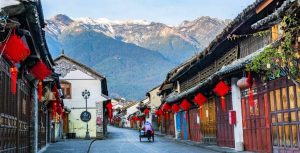
08:00-10:00 Cangshan Gantong Cableway: Take the cable car up, listen to the stream hitting the stones
My guesthouse owner called at 7:00 AM: “Gantong Cableway opens at 7:30, go early to avoid crowds!” I took a taxi from the South Gate to Gantong Temple (15 RMB, 10 minutes). The driver said, “I’ve driven this route for ten years; the ginkgo at Gantong Temple turns yellow half a month later than the city, it’s still green now” (True for September; the two ginkgo trees at the gate only had a hint of yellow).
At the cable station, tickets bought on the “Cangshan Tourism” mini-program can be swiped with an ID (110 RMB round trip including entry; onsite lines are long). I took the 8:00 first cabin (red glass, clear views). As the cable car rose, I could hear the stream “tinkling” from the crevices (the water volume isn’t huge in September, but the sound is crisp).
I got off at the “Qingbixi” station halfway up (1km walk to the end). The path is flat (sneakers are fine), and the stream jumps over rocks, splashing my pant legs (I took a photo of the water and moss; it looked like Switzerland). At the end, there’s a pavilion selling roasted Erkuai (5 RMB); I ate one while waiting for the cable car down (the Erkuai was filled with peanut butter and sesame).
Avoidance Tip: Don’t believe rumors about “wild monkeys on Cangshan” (I didn’t see one), but watch out for the sun—the cable car glass doesn’t block UV, and the back of my neck turned red after 20 minutes.
10:30-12:00 Three Pagodas of Chongsheng Temple: Photo of the reflections, 90% fewer people than in summer
Taxi from Cangshan to the Three Pagodas (20 RMB, 15 minutes). The driver said “The Three Pagodas are Dali’s ID card; Xu Xiake visited three times.” I stood on the lawn outside the South Gate (free) to take photos—the central Qianxun Pagoda (79m, Tang Dynasty) with the two smaller ones (42m, Song Dynasty).
The September sun is very bright, and the water in the reflection pool turned blue under the sun (fewer people than summer, I took 10 minutes of photos without being rushed). I crouched to adjust the angle (the water must be still for a clear reflection); the three pagodas and their shadows looked like “three swords stuck in the ground.”
If you want to enter the scenic area (70 RMB), you can see the “Rain Copper Guanyin Statue” (14m high), but I didn’t go in—the free photos at the reflection pool were already stunning enough.
Hidden Play: The “Three Pagodas Reflection Park” to the west (free) has a crescent-shaped pond. There are some withered lotuses in September, giving the reflection more character.
12:30-14:00 Lunch at Shuanglang Ancient Town: Eat Casserole Fish by the sea, listen to the waves and wind
Taxi from the Three Pagodas to Shuanglang (30 RMB, 20 minutes). The driver called Shuanglang the “Little Paris of Erhai.” I chose “Muxi Dali · Dianxinyuan” near the Shuanglang Pier, which has been open for 15 years.
Ordered Erhai Casserole Fish (58 RMB/catty, fresh Bow fish). The broth is made with bone and tofu; it was so fresh I nearly fainted with delight. Paired it with Cold Chicken Rice Noodles (15 RMB), which were even more tender than the ones in the city (added mint and pickles).
After eating, I took a coffee to Shuanglang Beach (free). The Erhai wind isn’t cold in September (a light jacket is enough). I sat on a reef watching the waves hit the shore. A small stall nearby sold fresh pomegranate juice (10 RMB/cup, red like a ruby); I watched the distant Cangshan clouds while drinking.
Kind Reminder: Viral shops in Shuanglang (like XX Art Space) charge 10-20 RMB for entry; don’t bother going in—sitting on a stone bench by the sea is much better.
14:30-17:30 Self-driving on Erhai East Line: From Shuanglang to Wenbi Village, colorful houses like oil paintings
Rented an e-scooter in Shuanglang (80 RMB/3 hours, 80km range, enough for a loop). The owner told me “take the East Ring Road, it’s the most beautiful.”
First stop is Wase Little Putuo (5 RMB entry; no gulls in September, but the Guanyin Pavilion is worth seeing). The pavilion is a wooden structure with peeling paint, very historic. From the pavilion, the water surface is as blue as washed glass. I took a photo that looked like a scene from “The Assassin.”
Second stop is Wenbi Village (free). Turning into the village, colorful houses suddenly hit your eyes (pink, blue, yellow). The “Wenbi Post Office” (red house) sells postcards (1 RMB/card, 0.8 RMB stamp). I wrote “Erhai’s blue, Wenbi’s colors, this trip was worth it” and mailed it. The owner said “We only mail 50 a day, you’re lucky.”
Riding the Shuanglang-Wase section, I found a shallow beach (water only half-way up the tires). I took off my shoes (cool water, soft sand) and took a “silhouette” photo of the scooter and Erhai.
Price Reference: E-scooter 80 RMB/3 hours, Little Putuo 5 RMB, postcard + stamp 1.8 RMB. Less than 100 RMB per person for a great time.
18:30-20:00 Return to Ancient City: Stone Plate BBQ with mint, Fuxing Road flower cakes
Returned the scooter in Shuanglang and took a taxi back to the South Gate (15 RMB, 20 minutes).
Near the South Gate, “Zhao’s Private Home Cooking” was busy. I ordered Stone Plate BBQ (Beef 25 RMB/skewer, Mushrooms 30 RMB/skewer). The beef was marinated with onions and chili, sizzling with oil. The mushrooms were fragrant, dipped in mint leaves (owner said “mint cuts the greasiness, it’s the Dali way”). I ate 10 skewers.
At night, walk Fuxing Road (the busiest street). Freshly baked flower cakes from Jiahua Bakery (3.5 RMB each) are a must-buy. The rose filling smells amazing. The owner said “Our roses are picked in the morning and baked same day.”
Final Tip: Don’t buy flower cakes too early on Fuxing Road (they might be too hot); evening is best—the crust is crispy and the filling stays soft for two days.
V. Day4 Dali → Lijiang: High-Speed Rail Transfer + Ancient City First Experience
08:00-09:50 Dali → Lijiang: High-speed rail transfer is smoother than expected
I stayed at the “All Seasons Hotel Dali Ancient City” (near the South Gate). The receptionist reminded me: “Grab Lijiang tickets 15 days early on 12306; D8131 is the most reliable!” I reached Dali Station at 7:50 (10 RMB taxi). The waiting hall has free hot water.
D8131 departs at 08:00 (Second-class 80 RMB). I chose Carriage 6, seat 5F (window) to see the Cangshan silhouette on the left. The train is very stable (120 km/h, twice as fast as a car). The September sky in Western Yunnan is piercingly blue.
Arrived at Lijiang Station at 9:50. Official taxis (metered at 15 RMB) are to the left of the exit. Don’t trust the “20 RMB carpool” drivers who detour to jewelry shops. My official taxi driver said “15 minutes to the ancient city, I’ll drive fast so you can catch lunch.”
Tip: Choose “Dali Station” instead of “Dali North Station”—North Station is 30 RMB and 25 minutes from the city; Dali Station is 8 RMB base and 15 minutes away.
10:30-12:00 Lijiang Dayan Ancient City: South Gate, Xu Xiake’s footprints in Mu Mansion
A 15 RMB taxi from the station to the South Gate (10 minutes). The South Gate is the only place to pay the Ancient City Maintenance Fee (50 RMB/person, 25 RMB for students). I received a paper map.
First visit “Mu Mansion” (40 RMB, 20 RMB for students), the Naxi chieftain’s residence. Xu Xiake visited in 1639 and wrote about its beauty. I followed a guide in Naxi dress through the Council Chamber (polished sandalwood) and the Library (fragrant old-book smell).
From Mu Mansion, I walked to Sifang Street. At 3:00 PM, a group of Naxi elders was dancing to “Naxi Three Steps.” A grandma in a blue turban pulled me in to dance. Even though I missed the beat, she said “It’s okay, just be happy.”
Avoidance Guide: Don’t trust “free guides” with flags; they take you to silver shops for fake “pure silver” (actually alloy). A colleague once lost 800 RMB this way.
12:30-14:00 Ancient City Lunch: Cured Ribs at “No. 88 Snack Shop”
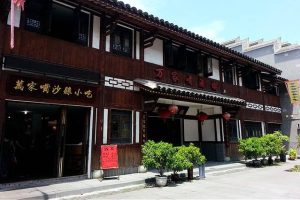
At “No. 88 Snack Shop” on Wuyi Street (open 20 years), I ordered the Small Cured Ribs Hotpot (128 RMB). The broth was milky white and fragrant. The ribs are cured for 3 months—firm but not tough, full of savory saltiness.
“Water Lily” (Sea Kale Flower) Soup (28 RMB) is a must. It’s light and fresh (best cooked same day). Paired it with “Chickpea Jelly” (5 RMB/bowl), which was smooth and spicy with homemade chili powder.
Hidden Eating Tip: Add “Litsea cubeba oil” (5 RMB) to the pot for a refreshing spicy taste.
14:30-17:00 Shuhe Ancient Town: Quieter than Dayan, with wild folk music
Taxi from Dayan to Shuhe (20 RMB, 15 minutes). The driver said Shuhe was a Caravan hub and is now much quieter. Sunlight filtered through willow trees onto the stones. I heard the “clink-clink” of silver smiths.
Qinglong Bridge is the main photo spot. I took a “long exposure” shot of the water. Nearby at “Tingyin Pavilion,” I ordered a pot of Puer tea (30 RMB/pot, 3 refills) and listened to a raspy folk singer.
At 4:00 PM, I visited the Tea Horse Road Museum (free). It has old caravan copper kettles and yak-hide water bags. Looking at a 1920s caravan photo, I realized Shuhe’s silence comes from stories hidden in the stone cracks.
Kind Reminder: Shuhe’s stones are uneven and slippery after rain; wear flats! I saw a girl in heels fall last week.
18:00-19:30 Black Dragon Pool Park: Snow mountain reflection, clearer than a mirror
Taxi back to the city (15 RMB) then 10 minutes to Black Dragon Pool (free with maintenance fee). Go after 4:00 PM for the best light. I photographed the “Snow Mountain + Reflection” using HDR mode at Deyue Tower.
The snow atop Jade Dragon Snow Mountain reflected in the water (though the wind sometimes tore the reflection into pieces). Willow leaves are starting to turn yellow, swirling into the water like little boats.
Price Reference: Taxi 15 RMB, Tea 30 RMB, Cured Ribs Hotpot 128 RMB. Around 170 RMB per person for a great experience.
20:00-21:30 Ancient City Night: Quiet bar listening to songs, flower cakes better than daytime
At 8:00 PM, the Bar Street gets loud, but I chose “Moments in the Sky” (Wuyi Street Branch), a quiet place in an alley.
Ordered a “Lijiang Evening Breeze” cocktail (30 RMB). The singer performed “Little Luck” softly. On the way out, I bought Panxiangji Flower Cakes. The owner said the roses were from Dounan Market that morning. I bought 20 to share with colleagues.
VI. Day5 Lijiang Wrap-up: Baisha Ancient Town + Departure
08:30-10:00 Baisha Ancient Town: Morning market atmosphere + old times in murals
Taxi from Lijiang to Baisha (30 RMB, 30 minutes). Baisha is the oldest town, built 800 years before Dayan. The morning market starts at 08:00 under blue awnings.
The first stall was an old lady selling apples. I bought some for 5 RMB/catty—grown at the foot of the snow mountain, they were very sweet. Another stall sold “old variety” potatoes (2 RMB/catty).
The Chickpea Jelly stall (5 RMB) was the busiest. The owner added sour pickles and chili; it was spicy and refreshing. I also had a honey-spread roasted Erkuai (3 RMB) for breakfast.
The Mural Alley is behind the “Baisha Murals” (30 RMB entry, 15 RMB for students). The Ming and Qing dynasty paintings show scenes of fishing and farming. A girl in a Hanfu was taking photos, saying the background looked more real than a TV set.
Episode: I had a cup of roasted tea (10 RMB) at the 30-year-old “Baisha Tea House.” The owner said it’s bitter at first but has a sweet aftertaste.
10:30-12:00 Yuhu Village: Stone houses + closest view of the snow mountain
Taxi to Yuhu (15 RMB, 20 minutes). The driver pointed out the traditional Naxi “Muleng houses” made of stone and wood. The sunlight hit the stone walls beautifully.
Horse riding experience is 150 RMB/hour (I bargained to 120 RMB). The horse walked slowly toward “Xuesong Temple,” the closest point to Jade Dragon Snow Mountain. The snowy peak was peeking through the clouds.
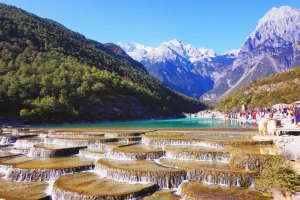
At Xuesong Temple, I took panoramic photos of the mountain. The “Longnv Lake” (free) was a surprise—the water was as blue as crushed jewels. A professional photographer nearby praised my shooting angle.
12:30-13:30 Lunch: Cured Ribs at “Auntie’s,” the more you chew, the better
Taxi back to Baisha (15 RMB) to eat at “Auntie’s Cured Ribs” (open 15 years).
Ordered Small Cured Ribs Pot (118 RMB). The meat fiber is tight and savory, like jerky but more tender. Paired with Chickpea Jelly (5 RMB). I ate two bowls; the owner joked that I eat more than her son.
Hidden Eating Tip: Add “Litsea cubeba oil” (5 RMB) to the soup for a refreshing kick.
14:00-16:00 Departure Preparation: Luggage storage + flower cakes, don’t leave anything behind
Returned to Lijiang Ancient City (15 RMB taxi). I left my luggage at the guesthouse for free. Then, I went to Jiahua Bakery for fresh flower cakes.
I bought 20 cakes (3.5 RMB each). They were flaky and smelled like fresh roses. Finally, I checked my essentials: ID (in wallet), ticket (on phone), power bank (charged), sun protection clothing (packed). Lijiang Sanyi Airport buses (20 RMB) depart from Blue Sky Hotel; I arrived 2 hours early as the driver said it would be busy.
Kunming — — Practical Data
Tickets & Booking
- Kunming tourist cableway (Dianchi Dam–Xishan): One way CNY 40, round trip CNY 70[src]
- Jiuxiang scenic area: Main ticket about CNY 98; grand package about CNY 189–234 (including cableway/glass slide/Earth’s Core Exploration and other items)[src]
Transport & Schedules
- Kunming South station → Jianshui station / Xishuangbanna station | High-speed rail: Kunming–Xishuangbanna high-speed rail about 3.5–4 h, second class about CNY 178–237, 30+ departures daily on average; Kunming South–Jianshui about 2 h, second class about CNY 56–75[src]
Where to Stay · Room Type · Nearby
- Near Kunming station | Reference price Budget hotel about CNY 101 per night (OTA) | Room tip: Suitable for a short stay and catching trains | Nearby add-ons: Yunnan Ethnic Village, toward Dianchi[src]
- Near Cuihu Park | Reference price Budget hotel about CNY 102 per night (OTA) | Room tip: Many characteristic guesthouses/hotels, near the old streets | Nearby add-ons: Cuihu, Yunnan Military Academy, Kunming Old Street[src]
Typical Climate & Packing (Past Years)
- January: 3 °C–17 °C °C, [Travel climate reference] Gull season
- February: 5 °C–19 °C °C
- March: 7 °C–22 °C °C
- April: 11 °C–25 °C °C
- May: 14 °C–26 °C °C
- June: 17 °C–26 °C °C, Rainy season






