



The three cableways on Cangshan Mountain are not different ticket stalls on the same line, but go up the mountain from different entrances to different areas:
- Ximatan CablewayArriving at the high altitude area of Cangshan Mountain, you will mainly see Xima Lake, Qilongnu Pond, alpine vegetation and open vistas.
- Gantong CablewayArrive at Qingbi Creek and Cangshan Grand Canyon, mainly to see forests, streams, canyons and Yudai Yunyou Road.
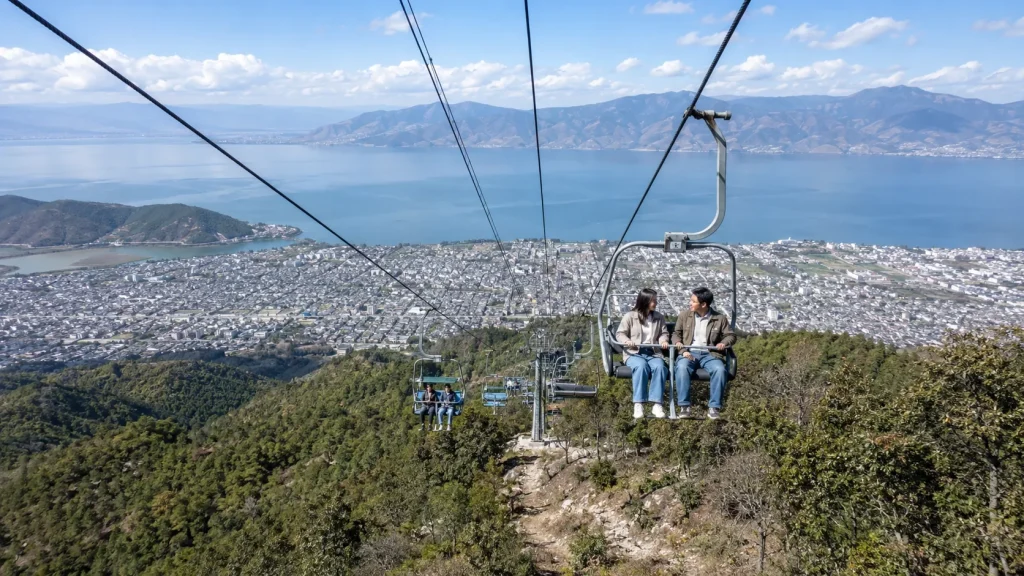
- Zhonghe RopewayArrive near Zhonghe Temple and mainly experience the open chairlift, temple, Yudai Yunyou Road and Cang’er Lake view.
When selecting only one item, you can first judge according to the following method:
- This is my first time in Dali. The weather is sunny and my body is in good condition: Priority is given to the entire Ximatan Cableway.
- If you are bringing the elderly or children and do not want to enter a high-altitude area close to 4,000 meters: give priority to the Gantong Cableway.
- Live in Dali Ancient City and like temples, hiking and open cableways: you can choose Zhonghe Cableway.
- Obviously afraid of heights, hanging in the air and being blown by the wind: it is not recommended to choose the neutral ropeway.
- There are thick low clouds on the top of the mountain and poor visibility in the distance, but there are no strong winds and thunderstorms: the forest valley landscape of the Gantong Cableway is usually more stable.
When choosing the Cangshan Cableway, you should not only look at the name of the attraction, but also the open range of the cableway that day, visibility at the top of the mountain, wind strength, physical condition of fellow travelers, and available time. Ximatan Cableway may only be open half way due to strong winds, ice, maintenance or weather changes, and the entrances to the three cableways are not at the same location.
If you have not determined how to combine Cangshan Mountain with Erhai Lake and Dali Ancient City, you can check firstMust-visit attractions in Dali and how to play the Cangshan Jade Guide, and then decide whether to arrange a half-day or one-day trip to Cangshan.
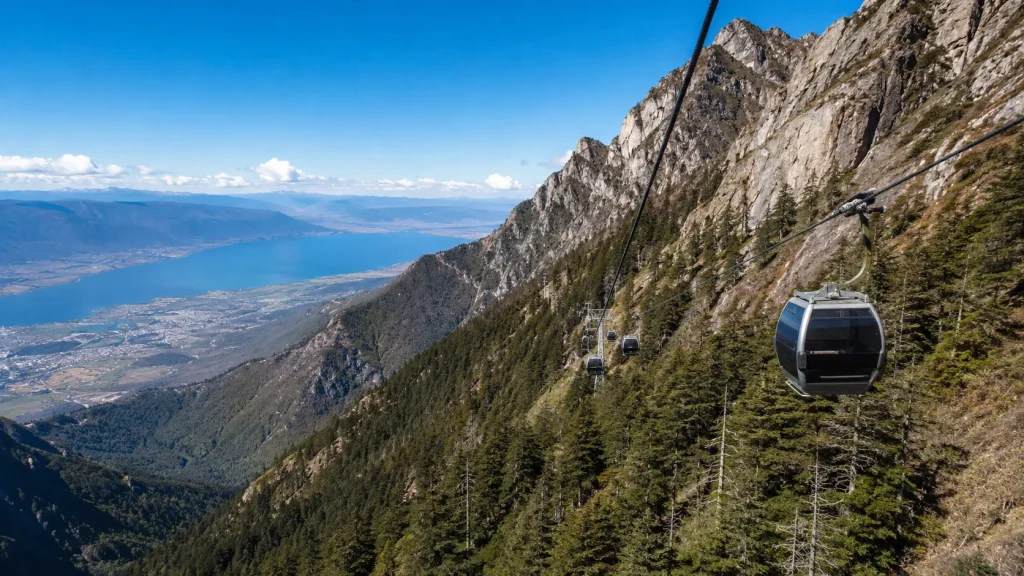
Three-line comparison
| project | Ximatan Cableway | Gantong Cableway | Zhonghe Ropeway |
|---|---|---|---|
| Common names | Cangshan Cableway | Cableway in Cangshan Mountain | Cangshan Small Cableway, Cangshan Cableway |
| Location of next stop | The west side of Tianlong Babu Film and Television City | Near Gantong Temple and Guanyintang | West side of March Street venue |
| Arrival area | Seven Dragon Girl Pond, Xima Pond | Qingbi Creek, Cangshan Grand Canyon, Yudai Road | Zhonghe Temple, Yudai Road |
| Ropeway form | Enclosed gondola | 6-person enclosed gondola | Open hanging chair |
| Highest area | About 3900 meters | About 2600 meters on the mountainside | About 2600 meters on the mountainside |
| Main landscape | Alpine lakes, ridges, rhododendron forests, sea of clouds and distant views of Erhai Lake | Views of streams, forests, canyons and Erhai Lake | Zhonghe Temple, forest, ancient city and Erhai Lake view |
| Walking intensity | Moderate to high, you still need to walk on high-altitude planks and steps after getting to the station | Low to medium, there are still steps and ramps near Qingbi Creek | Medium, the ropeway is short, physical strength is mainly consumed on Yudai Road |
| Recommended time | 4.5-6 hours | 3-4 hours | 3-4 hours |
| Weather effects | is the largest, and the upper section is easily affected by strong winds, low clouds and ice. | Medium, low reliance on distant visibility | is relatively large, wind and rainfall will affect the open chairlift experience |
| Fee level | Usually the highest | Usually centered | usually relatively low |
| Suitable for the crowd | First time visitors, photography tourists, and those in good physical condition | Family tourists, senior citizens, half-day tourists | Hiking tourists, cultural tourists, tourists staying in the ancient city |
| Main shortcomings | The altitude is high, and the upper section may be out of service, which will cost more and take more time. | Not in the high-altitude area of Ximatan | Strong sense of openness, those who are afraid of heights tend to be nervous |
The Ximatan Cableway is about 5552 meters long, with a vertical height difference of about 1648 meters. It has lower, middle and upper stations; the Gantong Cableway is more than 2500 meters long; the Zhonghe Cableway has a total length of 1668 meters and a climb of about 478 meters. The three lines are not the same system where the upper and lower stations can be interchanged at will. The specific ropeway name should be entered directly during navigation.
Ximatan
Ximatan Cableway is the one with the longest route and the highest altitude among the three cableways. The lower station is located on the west side of Tianlong Babu Film and Television City, the middle station is near Qilongnu Pond, and the upper station is located in the Ximatan Scenic Area with an altitude of about 3885 meters.
Many guides describe Ximatan Upper Station as “the top of Cangshan Mountain”, which is easily misunderstood by ordinary tourists. The ropeway reaches the Ximatan high-altitude tourist area, not Malong Peak, the highest peak in Cangshan Mountain. Visitors cannot leave the plank road to enter unopened peaks and ridge lines.
What to see
The value of the Ximatan Cableway is that you can see the landscape changes of Cangshan Mountain from the foot of the mountain to the high altitude area in a relatively short period of time.
When the ropeway ascends from the foot of the mountain, forests, valleys, and evergreen vegetation are dominant along the route; after approaching Qilongnu Pond, you can see streams, waterfalls, rhododendron forests, and alpine firs; as you continue to ascend to the Ximatan area, the trees gradually decrease, and the landscape turns to alpine shrubs, rocks, lakes, and open ridges.
When the weather is clear and the air is clear, you may have the opportunity to see the Erhai Lake, the ancient city of Dali, the ridges of Cangshan Mountain and the clouds in the mountains near the upper station. You may see alpine rhododendrons in late spring and early summer, and you may encounter snow and frost in winter. However, the snow scene, sea of clouds, and Erhai Lake panorama are all affected by the weather, and you cannot guarantee that you will see it.
Ximatan relies more on visibility than the other two ropeways. If the high places are completely covered by low clouds, you may only be able to see nearby plank roads, shrubs and fog after going up the mountain. Before departure, you should not only check the weather in Dali Ancient City, but also confirm whether the upper section of Ximatan is open, and combine it withDali’s annual weather and Cangshan vertical temperature differencePrepare clothes.
How to get there
Ximatan Cableway is usually divided into full and half journeys. The two tickets are not different in price but have the same content, but in different arrival areas.
During the half journey, we mainly went to the area around Qilongnuchizhong Station:
- Mainly visit Qilongnu Pond, forests, streams, waterfalls and rhododendron forests.
- The altitude is significantly lower than that of Ximatan Upper Station, and the plateau pressure is relatively small.
- Suitable for tourists who do not want to enter the area close to 4000 meters, or encounter suspension of service on the upper section.
- The open ridge landscape near Ximatan, alpine lakes and the upper station cannot be seen.
The whole journey will continue to ascend to Ximatan Upper Station:
- You can enter high-altitude scenic spots close to 3900 meters.
- Can see more obvious alpine vegetation, ridges and vistas.
- The risk of low temperature, wind and altitude sickness will also increase significantly.
- After getting off the ropeway, you still have to walk along the plank road and steps. It is not possible to sit on the station and see all the attractions on the same spot.
A more complete method is: take the cableway from the lower station to the upper station of Ximatan, first visit the high mountain plank road according to your physical condition, then take the cableway to the middle station to visit the Seven Dragon Girl Pond, and finally return to the lower station. Whether you can stay at the middle station, and how the sightseeing bus and transfer methods operate will depend on the day’s ticket type and scenic spot arrangements.
It is recommended to reserve 4.5-6 hours for Ximatan. The time includes not only the cableway operation, but also ticket exchange, transfer, queuing, walking to the station, tour of the middle station, rest and descent. When queues are long on holidays, the actual tour time will be further compressed.
It is not recommended to forcefully purchase a full ticket when the following circumstances occur:
- The upper section is suspended due to strong winds, ice or maintenance.
- High altitudes were completely obscured by low clouds and visibility was very poor.
- I arrived at the scenic spot late and did not have enough time to visit and go down the mountain.
- Travelers who have recently caught a cold, chest tightness, headache, or are in poor physical condition.
- No windproof warm jackets and non-slip shoes were prepared.
- You still have to catch the high-speed train, plane or long-distance bus on the same day.
Who is it suitable for?
The Ximatan Cableway is suitable for tourists who are coming to Cangshan for the first time, want to see the mountain scenery, are in good physical condition, and are willing to spend most of the day on Cangshan. If you only choose one of the three ropeways, when the weather is clear and the upper section is open normally, you will see the richest elevation changes and landscape levels in Ximatan.
Ximatan is not suitable for people who understand “sitting on the ropeway” as not having to walk at all. The upper station is close to 3900 meters, and the same flight of steps will be more tiring than walking in the ancient city of Dali. Do not walk fast, run or climb stairs immediately after arriving at the station. Walk slowly for a few minutes first and observe whether you have headache, dizziness, nausea, palpitations or chest tightness.
The elderly and children are not absolutely prohibited from going, but they cannot be judged based solely on whether they can walk. Also consider whether you have heart or lung disease, blood pressure problems, severe anemia, recent respiratory infections, and ability to withstand low temperatures and high altitudes. When your physical condition is uncertain, it is usually safer to choose the Gantong Cableway or Ximatan Half Course.
It is recommended to bring a windproof and warm jacket, sun protection products, drinking water and non-slip sports shoes when going to Ximatan. Don’t carry a heavy backpack, and don’t use portable oxygen as a shield against physical discomfort.
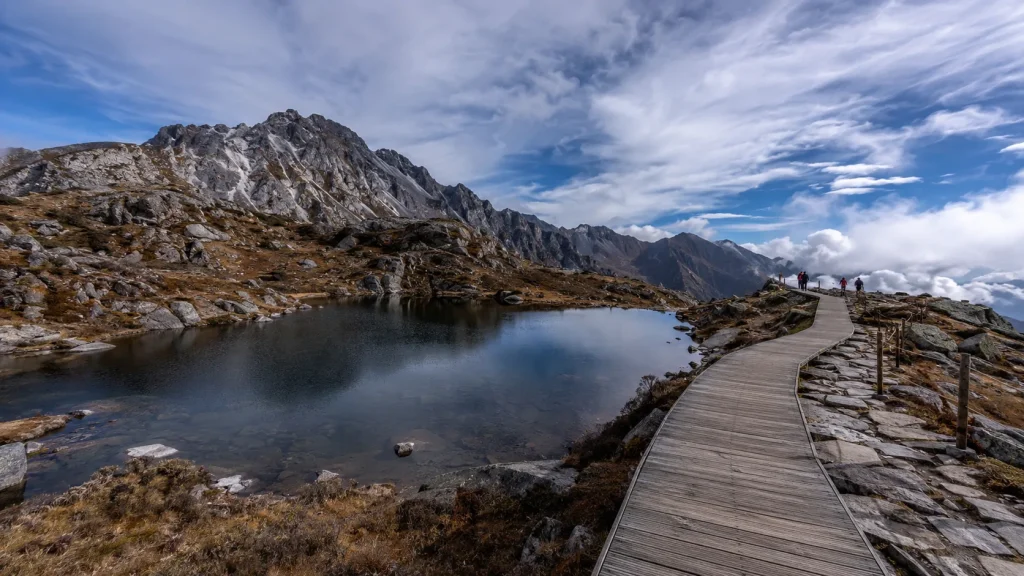
Sensitivity line
Gantong Cableway is located in the south of Cangshan Mountain, close to Gantong Temple and Guanyintang. The ropeway uses a 6-passenger enclosed gondola with a diagonal length of more than 2,500 meters. The upper station connects Qingbi Creek, Cangshan Grand Canyon and Yudai Yunyou Road.
The Gantong Cableway does not enter the high-altitude area of Ximatan. The focus of the tour is on the mountainside at an altitude of about 2,600 meters. Its advantage is not that “the scenery is less than that of Ximatan”, but that the itinerary is easier to control and is less dependent on the distant views from the top of the mountain and weather visibility.
What to see
The views along the Gantong Cableway are dominated by forests, streams, canyons and mountainside views. The main landscapes include Qingbi Creek, Cangshan Grand Canyon and Yudai Yunyou Road. When the weather is clear, you can also overlook the Erhai Lake and Dali Dam area to the east.
Qingbi River is the most representative landscape of Gantong Line. What you see here is the environment of streams, ponds, stone walls, forests and canyons, which is not the same experience as the alpine lakes and open ridges of Ximatan.
The Gantong Ropeway is still a certain degree of viewing in cloudy or distant weather, because forests and streams mainly focus on close-up views. But this does not mean that thunderstorms, strong winds or sustained heavy rainfall are also suitable for riding the ropeway. In bad weather, you should obey the suspension arrangements of scenic spots, and do not interpret “cloudy days are suitable for Gantong” as “you can go in any bad weather”.
During the rainy season, the flow of water in streams may be greater and the color of the forest may be thicker, but the steps and stone paths will be slippery. Wearing regular sneakers is safer than slippers, leather shoes, or shoes with smooth soles.
How to get there
The route suitable for most tourists is: go up the mountain on the Gantong Cableway, first visit Qingbi Stream and the vicinity of Cangshan Grand Canyon, then walk a short section of the Yudai Yunyou Road according to physical strength, and finally return to the original route and go down the mountain on the Gantong Cableway.
Gantong line can be divided into two ways of playing:
- Easy version:After the cable car goes up the mountain, visit Qingbi Creek and the area near Shangzhan Station. There is no long-distance hiking on Yudai Road. It is suitable for the elderly, children and half-day tourists.
- Pedestrian version:Add a section of Yudai Yunyou Road on the basis of Qingbi Creek, which is suitable for tourists with good physical strength and sufficient time.
Seven Dragon Girl Pond is not a small attraction next to the station on the Gantong Cableway. The Gantong Cableway from Qingbi Stream to Qilongnv Pond is about 4.5 kilometers. This distance is the one-way connection distance of the mountainside trail. After walking to Qilongnv Pond and returning the same way, the actual walking distance will be close to 9 kilometers.
The overall slope of Yudai Yunyou Road is relatively gentle, but with an altitude of about 2,600 meters, it is not a flat trail in a city park. There are limited supplies and exits along the way, so there is no need for ordinary tourists to go all the way to Qilongnu Pond just to “walk through the Jade Belt Road”.
If you want to know more about the distance of the trail, scenic spots along the way and the view of Cang’er, you can checkCangshan Yudai Yunyou Road route description. When there is no plan to cross the ropeway, it is easiest to control the time by returning to the original route after walking for a while.
It is usually recommended to reserve 3-4 hours for the Gantong Cableway. If you only visit Qingbi Creek and the vicinity of Shang Station, you can shorten the time; if you continue to walk on Yudai Road, you should set a turnaround point in advance and reserve enough time to return to the cableway station.
When planning to arrange Jizhao’an, Gantong Temple and Gantong Cableway on the same day, please note that they are not the same attractions where you don’t have to walk at all after getting off the bus. Jizhao’an is located at the foot of Cangshan Mountain. There are still walking sections from the surrounding roads. Please confirm the vehicle drop-off point and return method before departure.
Who is it suitable for?
The Gantong Cableway is more suitable for tourists who bring the elderly, school-age children, only have half a day, or do not want to enter the high altitude area close to 4,000 meters.
It is suitable for families for several reasons:
- Using a closed gondola, the feeling of suspension and wind are weaker than that of an open neutral cableway.
- The altitude is lower than that of Ximatan Upper Station, so the altitude sickness pressure is relatively small.
- There are forests, streams and canyon landscapes near the upper station, and the route can be shortened at any time according to physical strength.
- Even if the visibility in the distance is average, the nearby valleys and forests still have tour content.
But “suitable for the elderly and children” does not mean that the entire journey is flat or barrier-free. There are still steps and slopes near Qingbi Creek, and the road may be slippery after rain. Tourists with knee joint discomfort, weak mobility, or those who need to use a stroller should not arrange an overly long route.
If tourists’ expectations for Cangshan Mountain are high mountains, snowy scenery, sea of clouds or Xima Lake, the Gantong Cableway cannot replace the entire Xima Lake journey. It’s better suited for those who value comfort, forest gullies, and stability on the trail.
neutralization line
The Zhonghe Cableway goes up the mountain from the west side of the March Street venue in Dali Ancient City, and ends near Zhonghe Temple and Yudai Yunyou Road. The total length of the line is 1,668 meters, with a climb of about 478 meters. It is the shorter of the three ropeways.
The biggest practical advantage of Zhonghe Cableway is its proximity to the ancient city of Dali. For tourists who live on the west side of the ancient city, near March Street, or who just want to arrange a half-day trip to Cangshan Mountain, it is usually more convenient to go to the Zhonghe Cableway.
What to see
The focus of the Zhonghe Ropeway is not the Ximatan alpine lake, nor the large Qingbi River canyon, but the overall perspective of Zhonghe Temple, the mountainside forest, the Yudai Yunyou Road, the ancient city of Dali and the Erhai Lake.
During the ascent of the cableway, you can look back and see the ancient city, villages, Erhai Lake and Dali dam area gradually unfolding. Because of the use of open hanging chairs, the line of sight is less blocked, and the panoramic view of Cang’er Lake is more direct when the weather is clear.
After arriving at the upper station, you can first visit Zhonghe Temple and then take a short walk along Yudai Yunyou Road. Zhonghe Temple is the main cultural attraction on this route. If you are not interested in temples and mountainside hiking at all, and just take the ropeway up and return immediately, the overall content may appear relatively thin.
Zhonghe Line is more suitable for people who are willing to slow down and stop at Zhonghe Temple and Yudai Road. It is not a cheap alternative to Ximatan, and the two ropeways offer different types of views.
Ride experience
Zhonghe Cableway uses an open chairlift and does not have a closed gondola like the Ximatan and Gantong Cableway. Visitors will directly feel the wind, temperature, sound and suspension.
The advantage of the open chairlift is that it has a wide field of vision and the ride itself has a strong sense of experience; the disadvantage is that those who are afraid of heights may be nervous throughout the ride, and the comfort level will also be significantly reduced when encountering low temperatures, strong winds or light rain.
The following tourists should choose carefully:
- Obviously afraid of heights, easily nervous when seeing feet hanging in the air.
- Afraid of open high-altitude facilities.
- Carry young children who cannot sit stably.
- Limited mobility, or it takes a long time to get on and off the chairlift.
- The wind will be strong, the temperature will drop significantly or there will be rainfall.
Cell phones, hats, glasses, scarves and other loose items should be kept away while riding. Do not lean out of the seat to take photos, and do not frequently adjust large backpacks during the ropeway operation.
“Open” does not mean that the facility is unsafe, nor should it be simply described as “old equipment”. It is mainly different from modern closed gondolas in its riding form, and it still needs to be inspected and maintained according to passenger ropeway requirements during normal operation.
Don’t go too far
The upper station of Zhonghe Cableway connects to Yudai Yunyou Road. Yudai Yunyou Road is located on the mountainside of Cangshan Mountain, with an altitude of about 2,600 meters and a total length of about 18 kilometers. It can connect Zhonghe Temple, Qilongnu Pond, Qingbi Stream and other areas.
The Zhonghe Ropeway area is about 7 kilometers away from Qilongnu Pond. This distance cannot be understood as a flat road in the city. The round-trip distance will be close to 14 kilometers. Altitude, weather, supplies, the last time of the ropeway and personal physical strength must also be considered.
Ordinary half-day tourists can visit Zhonghe Temple, walk for a while on Yudai Road, and then return on the original route at the scheduled time. Don’t make a temporary decision to walk to Qilongnu Pond or Gantong Cableway just because several cableways on the map are connected by Yudai Road.
If you really plan to walk down the mountain from the Zhonghe Cableway to another cableway, you must confirm in advance whether the trail is open, what kind of one-way ticket you need to buy, whether the other cableway is operating normally, and the latest descent time. You also need to arrange transportation after going down the mountain, because the two cableway stations are not in the same place.
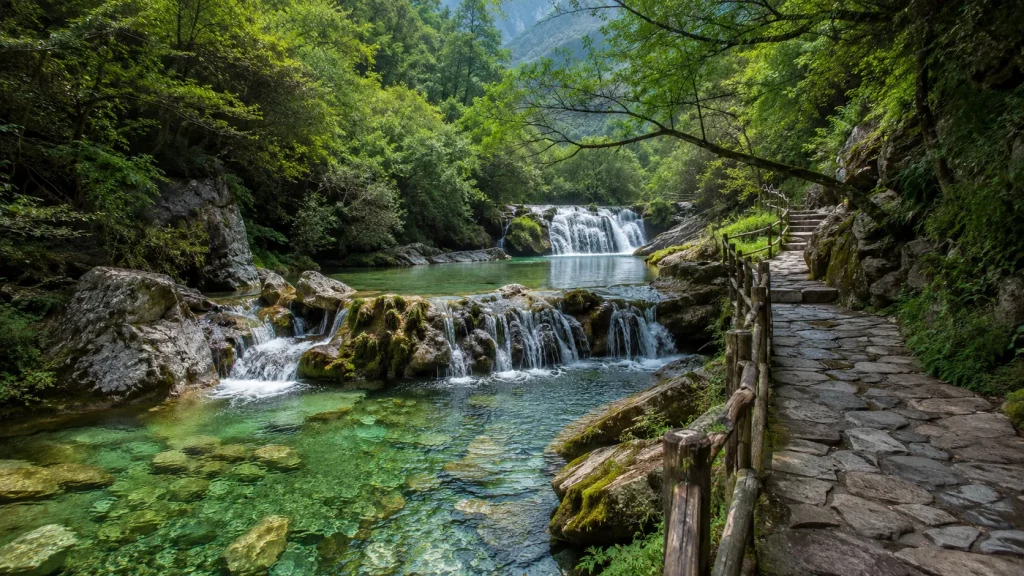
How to choose
First time here
When I come to Dali for the first time, I only choose one ropeway. You can first determine whether Ximatan is open throughout the whole journey.
If the weather is clear, the visibility is good, the physical condition is normal, and most of the day can be arranged, the entire Ximatan Cableway is usually more in line with the expectations of visiting Cangshan Mountain for the first time. It can see the complete change from the forest at the foot of the mountain to the alpine landscape.
If the upper section of Ximatan is out of service, the heights are completely obscured by clouds and fog, or there are elderly and children traveling with you, it is usually safer to choose the Gantong Cableway instead. Don’t ignore the conditions of the day just because “you have to go to Ximatan for the first time”.
Take the elderly
When taking the elderly, priority is usually given to the Sensational Cableway, but one should not just look at age, but also judge the actual ability to move.
Elderly people who are suitable for riding the Gantong Cableway should be able to go up and down steps independently and have no obvious chest tightness, dizziness, cold or physical discomfort recently. People with bad knee joints can only visit the Shangzhan Station and Qingbi River area, and do not continue to walk long distances on Yudai Road.
People with severe cardiopulmonary disease, recent stroke, severe high blood pressure or hypotension, severe anemia, etc. should not try the high-altitude area of Ximatan on their own and should consult a doctor before traveling.
Taking care of children
The Gantong Ropeway is usually easier to arrange when bringing school-age children. The closed gondola reduces the feeling of wind and suspension, and the route can be shortened at any time according to the child’s condition near the upper station.
It is not recommended for children who are younger, prone to fear of heights or unable to sit stably to choose the open neutral ropeway. When planning to go to Ximatan, you should also consider whether your child has caught a cold recently, whether he or she can adapt to low temperatures, and whether the child can walk slowly instead of running in a high-altitude environment.
Strollers cannot solve the walking problem in Cangshan Scenic Area. Qingbi Stream, Qilongnv Pond and Ximatan Plank Road all have steps or uneven sections. When bringing young children, you should judge in advance whether they need to be carried. When you plan to take your children to visit Dali and Lijiang consecutively, you can combineSuggestions on climate, itinerary and attraction selection for Yunnan parent-child toursControl daily intensity.
Like hiking
If you want to go on a light hike, you can choose the Gantong Cableway or the Zhonghe Cableway.
The Gantong Line is suitable for Qingbi Creek and a section of Yudai Road, with forests and valleys as the main route; the Zhonghe Line is suitable for Zhonghe Temple and Yudai Road, with more emphasis on mountainside views and cultural landscapes.
Although the overall slope of Yudai Yunyou Road is not large, the total length is about 18 kilometers. Ordinary tourists do not need to walk the entire distance, nor should they enter mountain roads without open signs according to the online tracks. The weather in Cangshan Mountain changes rapidly, and there are risks such as getting lost, slipping, and difficulty in rescue in unopened areas.
Afraid of high reaction
When you are worried about altitude sickness, give priority to Sentong or Neutralization. Do not directly make the entire Ximatan trip your first choice.
Ximatan Cableway will take tourists to an area close to 3,900 meters in a short time. Some people may experience headache, dizziness, nausea, palpitations, chest tightness and fatigue. Even if they are usually in good physical condition, there is no guarantee that they will not have reactions.
After reaching a high place, you should reduce the intensity of your activities and walk slowly to adapt. If you feel unwell, do not continue to climb the steps or keep moving forward to take photos. If symptoms still worsen after resting, you should contact the scenic area staff and descend as soon as possible.
Bad weather
“Bad weather” needs to distinguish specific situations and cannot simply be understood to mean that the Gantong Cableway must be open.
- Cloudy, with a general outlook:The Gantong Cableway is less affected, and forests, valleys and canyons can still be visited.
- The clouds are thick at high places and low at low altitudes:The value of Ximatan’s distant view will decrease, so the visibility of the upper section should be confirmed first.
- Strong wind:The operation of the upper section of Ximatan may be adjusted, and the feeling of the Zhonghe open chairlift will also become worse.
- Continuous rain:The water in the valley may increase, but the steps and trails will become slippery.
- Thunderstorm, strong wind or ice:It is not recommended to take any ropeway reluctantly. Please refer to the suspension notice of the scenic spot.
Time schedule
Half-day tour
Only half a day, usually the first choice is Sensation or Neutralization.
A half-day tour of Gantong can be arranged as follows: going up the mountain via cableway, visiting Qingbi Creek and the vicinity of the upper station, taking a short walk on Yudai Road, and going down the mountain along the same route. The focus is on the valleys and forests, and there is no need to go to the Seven Dragon Girls Pond.
The half-day tour of Zhonghe can be arranged as follows: going up the mountain via cableway, visiting Zhonghe Temple, walking a short distance along Yudai Road, and going down the mountain along the same route. It is suitable for tourists who live in the ancient city of Dali and want to continue to visit the ancient city on the same day.
If you only have two or three hours left, it is not recommended to buy a full Ximatan ticket at the last minute. Ximatan also needs to calculate the time for ticket exchange, transfer, queuing, walking to the station and going down the mountain. It is easy to have an incomplete tour or catch the last ropeway when climbing the mountain in the afternoon.
One day tour
Ximatan Cableway is more suitable for half a day to one day. It is recommended to arrive early in the morning to allow time for weather changes, queues and temporary adjustments on the upper section.
There is no need to ride all three ropeways in one day. The locations of the three lower stations are different, and the scenic spots on the mountain also need to be connected on foot. Catch three ropeways in a row and you’ll spend a lot of time taking a taxi, exchanging tickets, queuing and looking for the entrance.
If you visit Xima Lake in the morning, you can return to Dali Ancient City to rest in the afternoon; if you choose the Gantong short-term tour, you can also arrange a trip to the west coast of Erhai Lake in the afternoon. When you need to connect Dali, Lijiang and Shangri-La into a complete route, you can refer toYunnan 7-day classic loop arrangement, to avoid conflicts with cross-city traffic in Cangshan on that day.
If you don’t want to deal with the high-speed rail, local cars and accommodation in each city, you can also check out the free activities in Dali Ancient Town, Erhai Lake and Jizhao’anKunming Dali Lijiang 6-day slow tour route, and then decide whether to add Cangshan Cableway to Dali Free Activity Day.
Crossing line
Yudai Yunyou Road can connect Gantong Cableway, Ximatan Cableway Middle Station and Zhonghe Cableway, but “can be connected” does not mean that ordinary tourists can make a temporary decision to cross it after reaching the mountain.
It is about 4.5 kilometers from the Qingbi River on the Gantong Cableway to the Qilongnu Pond, and about 7 kilometers from the Zhonghe Cableway area to the Qilongnu Pond. Before planning a crossing, you should confirm:
- Whether the relevant sections of Yudai Road are open that day.
- Whether both ropeways are operating normally.
- Whether it is possible to purchase a one-way ticket that meets the route requirements.
- The latest descent time of the other ropeway.
- Walking distance, estimated time and physical strength of fellow travelers.
- How to get to the original hotel or parking place after going down the mountain.
Crossing the cableway is not suitable for the elderly, young children, those with knee joint discomfort, those prone to high altitude sickness, or those who only go up the mountain in the afternoon. If ticketing rules, opening status and return transportation cannot be confirmed in advance, the original ropeway round trip is safer and easier to control the time.
Ticket purchase reminder
Cangshan Cableway tickets may be divided into round-trip tickets, one-way tickets, Ximatan full-trip tickets and Qilongnu Pond half-trip tickets. Some platforms will also sell Cangshan Scenic Area tickets, shuttle buses, film and television cities or other projects in combination.
Be sure to confirm the following when comparing prices:
- Is the Ximatan ticket for the full journey or the half journey?
- The ropeway ticket is one-way or round-trip.
- Whether tickets to Cangshan Scenic Area are included.
- Whether the shuttle bus from the entrance to the cableway lower station is included.
- Whether the price difference will be refunded after the last section is suspended due to weather.
- What documents do children, the elderly and other preferential groups need to present?
The cost of Ximatan is usually the highest, Gantong is in the middle, and Zhonghe is relatively low. However, the package content of different platforms may be different. It is easy to compare different products together by just looking at the total price.
The regular ropeway times listed on the public page of Dali Tourism Group are 08:30-14:00 for the upstream and 08:30-17:00 for the downstream. This time may be adjusted due to seasons, holidays, maintenance, weather and passenger flow, and the regular time cannot be regarded as an absolute guarantee on the day of departure.
The entrances to the three cableways are not in the same place:
- The lower station of Ximatan Cableway is near the west side of Tianlong Babu Film and Television City.
- Gantong Cableway is located on the south side of Dali Ancient City and west of Guanyintang.
- The lower station of the Zhonghe Ropeway is close to the west side of the March Street venue.
When taking a taxi or using map navigation, you should directly search for “Cangshan Ximatan Cableway”, “Cangshan Gantong Cableway” or “Cangshan Zhonghe Cableway”, and do not just search for “Cangshan Scenic Area”. If you plan to cross the ropeway and go down the mountain, don’t let the driver wait at the original ropeway entrance.
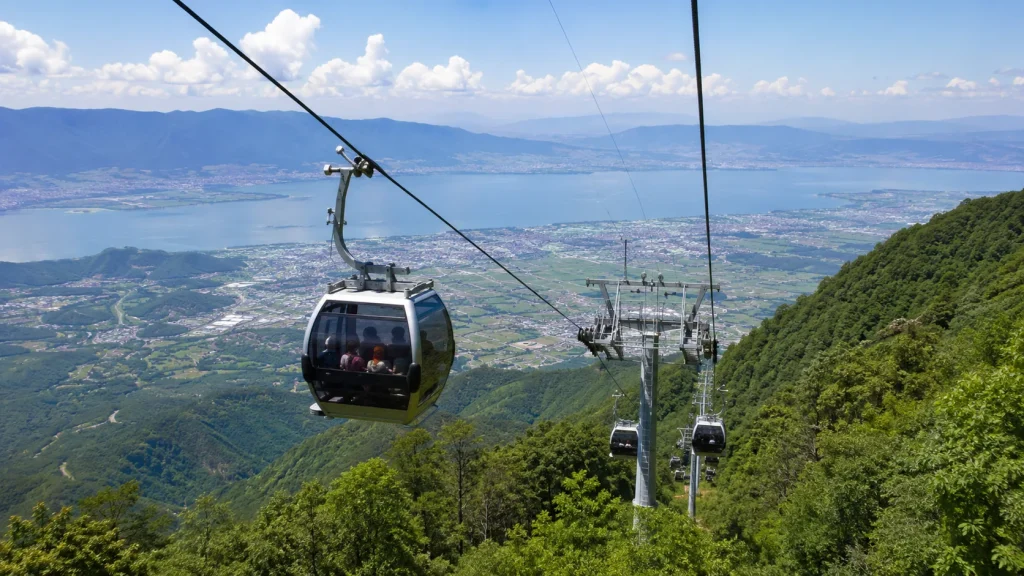
Weather safety
The altitude of Cangshan Mountain changes greatly, and the weather in Dali Ancient City is warm, which does not mean that the upper station of Ximatan is also warm. Even if you go to Ximatan in summer, it is recommended to bring a windproof and warm jacket; in winter and early spring, you should also pay attention to low temperatures, frost and ice.
Different ropeways require slightly different items:
- Ximatan:Windproof and warm jacket, sun protection products, non-slip sports shoes, and a small amount of drinking water.
- Sensation:Non-slip shoes, light rain gear, and those with knee joint discomfort should reduce the number of steps.
- Neutralization:Windproof jacket, and secure hats, cell phones, and other items that are prone to falling.
After arriving at the high altitude area of Ximatan, do not run, jump or climb steps quickly in succession. If you experience headache, dizziness, nausea, chest tightness or obvious fatigue, you should stop climbing and rest.
If you experience severe difficulty breathing, unconsciousness, inability to walk normally, persistent severe headache, or symptoms that worsen significantly after rest, you should contact the scenic area staff immediately and seek medical help. Portable oxygen can only be used as a temporary aid and is not a substitute for descent and medical attention.
Cangshan tour is not only about plateau risks. The stone steps can be slippery after rain, supplies on the mountainside trails are limited, and the weather can change quickly. Do not enter unopened mountain roads, do not rely solely on network tracks on your mobile phone, and do not temporarily start long-distance traversing near the last time of the ropeway.
FAQ
Which one is the best?
When the weather is fine and physical conditions permit, Ximatan has the richest landscape throughout the entire journey; when taking the elderly and children and focusing on comfort and stability, Gantong is more suitable; when you like temples, Yudai Road and open chairlifts, Zhonghe is more unique.
There is no absolute ranking of the three ropeways. The wrong choice is usually not because of bad scenery, but because tourists’ expectations are inconsistent with the actual content of the line.
Which one is the easiest?
Usually the Kantong Cableway, but only relatively easy. There are still steps and slopes in Qingbi Creek and the canyon area. People with weak mobility should shorten the route and do not continue to the distant Qilongnu Pond.
The Zhonghe Cableway itself is shorter, but if you walk further along Yudai Road, the actual walking amount may exceed the Gantong Short Line.
Which one is closest to the ancient city?
The lower station of Zhonghe Cableway is close to Sanyue Street and the west side of Dali Ancient City, making it more convenient to visit together with the ancient city. Xima Tanxia Station is close to Tianlong Babu Film and Television City, and Gantong Cableway is located on the south side of Dali Ancient City and west of Guanyintang.
Being close to the ancient city does not necessarily mean it is the most suitable. People who want to see the alpine scenery of Ximatan should not choose the Zhonghe Cableway just because it is close to the Zhonghe entrance.
Can you see the snow?
Not guaranteed. Ximatan has a relatively high chance of encountering snow in winter and early spring, but whether there is snow depends on recent precipitation, temperature and wind.
There is no snow in the ancient city of Dali, which does not mean that there is no snow on the mountains; conversely, going to Ximatan in winter does not mean that you will definitely be able to see the complete snow scene. Accumulated snow and ice may also cause temporary shutdowns on upper sections.
Is the half way to Ximatan worth it?
If you mainly want to see the Seven Dragon Girl Pool, forests and streams, or do not want to enter the area close to 4000 meters, the half-way trip is actually worth visiting. If you are traveling with the elderly and children, are in average physical condition, or the upper section is suspended due to weather, you can also consider the half-distance journey.
If you are looking forward to Ximatan alpine lakes, mountain ridges, sea of clouds and high-altitude landscapes, half the journey cannot replace the full journey. Before purchasing tickets, you should first confirm whether the attraction you want to see is located in the middle station or the upper station.
The simplest selection method
On sunny days and in good physical condition, if you want to see the mountains, choose Ximatan; if you are bringing the elderly and children, if you want to see forest valleys, choose Gantong; if you live in an ancient city, like temple hiking, and can tolerate open chairlifts, choose the one.
Before making the final decision, confirm three things: whether the ropeway is open normally that day, whether the visibility at high altitudes is worth going up, and whether the body and walking ability of the people traveling with you are suitable.
Related Guides
- Hangzhou 3-Day Spring Flower Viewing Tour | Prince Bay Tulips + Yuhu Bay Cherry Blossoms + Guo Manor Roses, Encountering the Most Beautiful Spring
- Hangzhou 4-Day Cycling & Hiking Route | Lake Loop Cycling + Jingshan Ancient Trail Hiking + Riverside Cherry Blossom Runway
- Hangzhou 4-Day In-Depth Tour | West Lake Loop + Xianghu Resort + Longyang Village Terraces, New Urban-Rural Combo Experience
- 3-Day Tour Around Hangzhou West Lake | Broken Bridge Snow Scene + Lingyin Temple + Nine Creeks and Eighteen Streams, Classic Jiangnan Route Without Backtracking
- Hangzhou 3-Day Essential Tour | Ten Scenes of West Lake + Lingyin Temple Fortune Telling + Xiaohe Straight Street, Zero-Backtracking Nanny-Level Route
Dali — — Key Facts
Tickets & Booking
- Xizhou Ancient Town: Free; Yan Family Residence about CNY 18, Yan Family Courtyard Museum about CNY 21–30; Xizhou wheat-field mini-train CNY 35; no booking required[src]
- Shuanglang Ancient Town: Free; Nanzhao Customs Island about CNY 50–56; no booking required[src]
- Erhai cruise: About CNY 142 per person (the Greater Shuanglang line one way and other ticket types)[src]






