



Day 1: Arriving in Tengchong, Diving into Ginkgo Village—Rubbing the First Sight of Golden Yellow into Your Sleeve
I landed at Tengchong Humfeng Airport on a flight at 7:40 AM. The airport is as small as a box hidden in a mountain hollow, with the exit floating with a scent of osmanthus that is just right—later, A-ju said that Tengchong’s osmanthus trees always bloom later than elsewhere, just in time to join the golden yellow of the ginkgo trees. The driver of the pre-booked business car, wearing a navy blue uniform and holding a cardboard sign with my name at the exit, took the canvas bag from my hand and handed me a bottle of ice-cold mineral water: “You’re from out of town, young lady, moisten your throat first.”
From the airport to Ginkgo Village, we took the newly built secondary road, a 40 km journey that took 50 minutes. Both sides of the road were first filled with rice paddies where the stubble had just been cut, and the foxtail grass on the ridges was covered in morning dew; moving further into the mountains, you could see scattered ginkgo trees, their leaves as yellow as a handful of crushed gold, standing out strikingly among the evergreen firs. The driver, Master Li, chatted with me: “The trees in Ginkgo Village were planted by our ancestors. The ‘Ginkgo King’ you’re about to see has had children’s toys tucked into its hollow; it’s older than my father.”
Staying at “Ginkgo Family” in the Village Center: Touching the Breath of Ginkgo by Opening the Window
I arrived at the village entrance at exactly 10:00 AM. Master Li called an electric tricycle (5 yuan to the guesthouse), and the driver uncle carried my suitcase up: “Where are you staying, young lady? ‘Ginkgo Family’? The ginkgo trees in that courtyard bloom (actually fruit), and they smell so fragrant!”
“Ginkgo Family” has a faded wooden plaque with the name written in regular script. A-ju, wearing a blue cloth apron, came out to greet me. As she took my umbrella, her fingertips were stained with the sticky juice of ginkgo fruit: “Come in quickly, the room is on the second floor. I’ve just dried some ginkgo fruits, go smell them—it’s not bitter, it’s a thoroughly dried sweetness.”
The room indeed held a small surprise: the small courtyard on the second floor had two bamboo chairs, a bougainvillea with pinkish-purple flowers growing in the corner, and a basket of cracked ginkgo fruits drying on the ground, their shells curling to reveal white kernels. When the wind blew, the whole courtyard was filled with a bitter fragrance as light as mist. The room was laid with coarse cotton and linen sheets, smelling of the sun and wrapped in the warmth of an electric blanket. The window faced the crooked Ginkgo King at the village entrance—looking up, you could see the blue sky peeking through the branches; you didn’t even need to close the curtains.
Afternoon Village Stroll: Stepping on Ginkgo Shadows, Listening to Elders’ Secrets of the Fruit
After putting down my luggage, I tucked a bag of orange candies in my pocket (afraid of getting hungry while chatting with villagers) and wandered along the stone-paved paths of the village. Some parts of the stone paths had grown moss and required tiptoeing. Beside them were people’s courtyards: some planted with chrysanthemums, their petals covered with ginkgo leaves; others hung with strings of corn, the corn silk dried crisp.
Passing by the small shop at the head of the village, a glass cabinet displayed mineral water with ginkgo leaf prints. The owner was an old man wearing reading glasses: “This water is collected from the rock crevices in the back mountain. It’s sweet, tastes better than the mineral water in the county seat.” I bought a bottle, and upon opening it, there was indeed a light bitter-sweet taste.
Walking further, I met an old lady carrying a bamboo basket filled with half a basket of ginkgo fruits. She sat on the doorstep peeling the shells, her fingernails dyed with the red of balsam flowers. I leaned in: “Grandma, how do you peel these fruits?” She smiled and handed me a bamboo skewer: “Poke the fruit stalk and turn it once, the shell will crack—the kernels inside need to be dried for two days. Put a handful in your porridge, it’s so sweet it’ll stick to the spoon.” Saying this, she grabbed a handful of dried ginkgo kernels and stuffed them into my hand: “Take these, go back and cook them with eggs.”
Occasionally, children’s laughter could be heard in the alleys, chasing a spotted dog whose tail was covered with ginkgo leaves, looking like it was dragging a small fan as it ran.
Sunset on the Small Hill: Putting the Sunset into My Phone, and a Little Girl’s Small Fan
When A-ju came to find me with sugar water eggs, she said the small hill behind the village was a good spot for the sunset: “The road is hard to walk, wear my family’s rubber boots.” The rubber boots she handed me were stained with mud, with a small flower embroidered on the toe.
The small hill had no railings and was covered with knee-high foxtail grass that rustled when stepped on. Reaching the top, the entire Ginkgo Village spread out below—the white-walled houses with grey tiles looked like chess pieces scattered on the ground, and the distant mountains were layered, dyed with orange-red and pinkish-purple sunset glow. The wind carried the bitter fragrance of ginkgo leaves; the leaves dried by the sun all day were spread on the ground, feeling like stepping on crushed sunlight.
I set up my phone to take photos when I suddenly heard “da-da” footsteps—a little girl with pigtails ran over, holding up a ginkgo leaf larger than her face: “Sister! This looks like a small fan, take a picture for you!” Her mother followed behind smiling: “My Niuniu said she wanted to give the ginkgo leaf as a gift to the sister.” I knelt down and framed her small head and the ginkgo leaf into the lens; a ginkgo leaf was stuck to her pigtails, and her eyes were as bright as stars.
After the photo, the little girl tugged at my sleeve: “Sister, do you want to come to my house for ginkgo cake? My grandma made it!” I didn’t have the heart to refuse and followed her for a few steps until A-ju called me: “Young lady, time to come back for sugar water eggs!” The little girl pouted and went back, calling out: “Come again next time!”
Back at the guesthouse, the sugar water eggs A-ju brought indeed had ginkgo fruits in them, sweet and delicious. I sat in the courtyard eating, watching the stars get brighter, listening to the distant barking of dogs. Before I finished the ginkgo kernels in my hand—I realized that “checking in” at Ginkgo Village isn’t about how yellow the trees are, but crouching under the trees to feel the roughness of the bark, learning the skill of peeling shells from an old lady, hearing a little girl holding a ginkgo leaf calling “Sister,” and the scent of ginkgo fruit floating in the wind.
These tiny, warm moments are the things most worth holding onto in Ginkgo Village in autumn.
Later, while organizing photos, I found that the most beautiful ones weren’t of the trees, but the little girl’s fan-like ginkgo leaf, the dried ginkgo kernels handed over by the old lady, and the sunset reflecting off the bougainvillea in the courtyard—The meaning of travel always lies in people and details.
Day 1 Practical Scraps (Note them down to avoid panic)
- Transportation Link: It’s about 40 km from Humfeng Airport to Ginkgo Village. A business car costs 300 yuan/day (book on Ctrip 1 day in advance, most drivers are reliable); there are electric tricycles at the village entrance for guesthouse transfers, 5-10 yuan/person.
- Choosing the Right Guesthouse: Prioritize old courtyards in the village center (like “Ginkgo Family”), so you can touch ginkgo trees without walking too far; choose a room with a small courtyard or a window facing the trees to be woken up by the ginkgo scent in the morning.
- Small Tip: Don’t wear high heels when strolling through the village in the afternoon! The moss on the stone paths is very slippery; when meeting villagers selling ginkgo fruits, don’t rush to buy—ask “Can I try it” first. The sweet ones are thoroughly dried; the bitter ones haven’t been processed well.
(Attached: Day 1 Route Reference Table for Ginkgo Village)
| Time | Itinerary | Key Experience |
|---|---|---|
| 7:40-8:40 | Arrive at Tengchong Humfeng Airport | Pick-up driver hands over ice mineral water |
| 8:40-9:30 | Drive to Ginkgo Village | See rice paddies and scattered ginkgo trees on the way |
| 9:30-10:00 | Check into “Ginkgo Family” | Ginkgo fruits drying in the yard, room smells of sunlight |
| 10:00-15:00 | Stroll through old village alleys | Learn to peel ginkgo fruits, meet the water-selling old man |
| 15:00-17:30 | Sunset on the hill behind the village | Take panoramic sunset photos, meet the girl giving ginkgo leaves |
| 17:30-19:00 | Back to guesthouse for sugar water eggs | Ginkgo fruit boiled with eggs, hear A-ju’s village stories |
Day 2: Deep Exploration of Ginkgo Village, Rubbing Golden Yellow into Every Breath
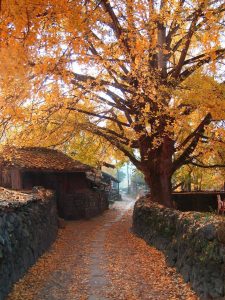
I was woken up by a sweet and toasty aroma. Drowsily pulling back the coarse cloth curtains of the guesthouse, the morning mist still shrouded the village’s grey tile roofs. Under the old locust tree at the head of the village, that black iron pot was already “sizzling” with oil—an auntie in a blue cloth apron was stirring ginkgo kernels. The gold-like kernels bounced in the pot, and the fragrance broke through the mist and drifted in. I immediately put on a hoodie and ran downstairs.
“You came just in time, young lady, they just came out of the pot!” The auntie looked up and smiled, holding up a few roasted ginkgo fruits on a bamboo spatula. The shells had thin cracks, revealing white kernels. I took one and bit into it; it was crisp with a hint of salt and no bitterness—I later learned she secretly added a handful of fine salt during roasting, saying it “draws out the sweetness in the ginkgo’s bones.” Beside her, a bamboo basket was piled with unprocessed greenish-yellow fruits. She shuffled through them and handed some over: “These need to dry for three days before peeling and grinding into powder. Then ginkgo cakes will be soft and chewy, ten times more fragrant than store-bought ones.”
Wandering deeper along the village stone paths, the morning mist slowly scattered into golden dust. I encountered an old grandfather in a navy blue cloth shirt. A basket on his arm was covered with a faded old towel. Peeking inside, there was half a basket of ginkgo fruits mixed with a few dry ginkgo leaves. I leaned in and asked: “Grandpa, why are you picking so many?” He squinted and smiled, sunlight hidden in his wrinkles: “Saving them to make a pillow for my granddaughter—dry them and put them in a cloth bag, says it helps sleep soundly.” At the bottom of the basket lay a shriveled ginkgo fruit; he picked it out and put it in my palm: “Take it, it’s cleaner than what they sell at the scenic spot. Go back and try putting it under your pillow.”
Passing the Ginkgo Museum in the village center, the vermilion door hung with a copper lock. I was hesitating whether to knock when the auntie drying ginkgo fruits nearby waved: “No need to lock, just go in!” It wasn’t large inside, but it seemed to hold the village’s entire past: a glass cabinet displayed the 1983 village collective ledger, with crooked brush calligraphy writing “Ginkgo purchase price: 8 cents per jin”; a chipped wooden scale, the beam still stained with tea from years ago. Most prominent was a black-and-white photo—under the “Ginkgo King” in 1990, a little girl with braided pigtails hugged a small ginkgo tree. The auntie leaned in and pointed: “That’s her daughter. She’s a doctor in Shanghai now, but she comes back every autumn to take a photo in this same spot.”
At noon, I returned to “Ginkgo Family” for lunch. A-ju served ginkgo stewed chicken in a porcelain bowl—the broth was as thick as melted milk, with a layer of pale yellow oil floating on the surface. Scooping a spoonful, the ginkgo fruits settled at the bottom; biting into them revealed a soft sweetness. The chicken was so tender it fell off the bone, even the chicken feet were stewed to a glutinous texture, collagen and ginkgo fragrance sliding down the throat. A-ju wiped her hands and smiled: “The chicken is free-range from the village, and the ginkgo fruits were roasted fresh this morning. I put in two pieces of dangshen; drink a few more sips to warm your body.”
At 2:00 PM, I carried my camera up the small hill behind the village. The path was a mud trail trodden by villagers, with small clusters of wild chrysanthemums blooming on both sides, bright yellow. Occasionally, a lizard would “whoosh” past, making me stop in my tracks. Reaching the top was a simple wooden observation deck, the railings hung with ginkgo leaf ornaments woven by villagers—a few whole ginkgo leaves tied with red string. When the wind blew, they “clattered,” as if greeting the breeze.
I set up my tripod and waited for the light through the viewfinder. The 4:00 PM sun was like a red-hot coal, rubbing the light into a soft honey color, leaking through the gaps in the ginkgo leaves and sprinkling onto the white walls and grey tiles of the whole village. In the lens, a little girl in a red dress ran past holding a ginkgo leaf, her shadow flickering on the wall like small light spots; an auntie in a bamboo hat carried a bamboo basket picking fruits, her silhouette melting into the golden yellow; even the branches of the “Ginkgo King” were gilded with honey color, looking like a golden umbrella.
I took dozens of photos, each one different—some framed the little girl’s smiling face, some focused on the auntie’s bamboo basket, some captured the entire golden panorama of the village. Crouching by the deck, the wind was full of the bitter fragrance of ginkgo. I heard the “sizzling” sound of roasting ginkgo fruits from below, and children’s laughter. Suddenly I felt that the so-called “deep travel” isn’t about how many “masterpieces” you take, but accepting the warm ginkgo fruit from an auntie, listening to a grandpa’s secret of ginkgo pillows, touching the tea stains on the old ledger in the museum, and watching the 4:00 PM sun turn the whole village into a poem.
Coming down the mountain, the auntie roasting ginkgo fruits held up a bag of warm fruits and called out: “Young lady, take some back!” I took them; the shells still carried the residual heat of the stove fire, like holding a handful of autumn sunlight. Back at the guesthouse, I spread the fruits on the windowsill. As the sunset shone through, every fruit sparkled with warm light—this is probably the magic of Ginkgo Village, turning ordinary days into the flavor of golden yellow.
Later, flipping through photos, what touched me most wasn’t the “masterpiece,” but that panorama of the small hill at 4:00 PM: blurred shadows, flowing wind, honey-colored light, and the atmosphere of life hidden in the gold—this is what autumn should look like.
Day 2 Practical Details (Note them down to avoid detours)
- Early Morning “Hidden Perk”: Get to the village head before 7:00 AM to catch villagers roasting ginkgo fruits. Aunties will proactively offer samples; it’s cleaner than what’s sold in scenic shops, and you can chat about ways to eat ginkgo.
- The “Correct Way” to Chat with Villagers: When you meet elders picking ginkgo fruits, don’t be shy to ask “What is this fruit used for?” They will tell you about ginkgo cakes, ginkgo pillows, and ginkgo tea—all little pieces of wisdom from life.
- Ginkgo Museum “Must-See”: Free, no reservation needed. The guide is a retired teacher from the village who can tell stories from when there were only a few households to the present, 10 times more vivid than a guidebook.
- Choose “Ginkgo Stewed Chicken” for Lunch: A-ju’s is the most authentic. Drink the broth while it’s hot; the ginkgo fruits are stewed soft, and the soup is great over rice—don’t waste it.
- Observation Deck Photography “Tips”: 4:00 PM is when the light is softest and shadows are longest, making for atmospheric photos. If you didn’t bring a tripod, find a steady rock to rest your camera on to avoid shaking.
Day 3: From Ginkgo Yellow to Mountain White, Driving Deep into the Clouds
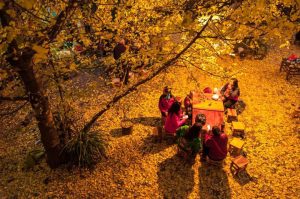
At 8:00 AM, clutching the warm sugar oil cake stuffed into my hand by the guesthouse, I got into the business car and joked with the driver, Master Yang—”This cake is as sweet as if it were soaked in honey. Do Tengchong people rub all of autumn into their dough?” Master Yang, wearing a faded navy blue jacket with a jar of jasmine tea in the passenger seat, laughed: “Wait until we get to Lujiangba and the wind picks up, pad your stomach first so you don’t end up gnawing on my seat cushion.” As the car left Ginkgo Village, the morning mist still shrouded the grey tile roofs. The crisp scent of the sugar oil cake mixed with sesame drifted toward my nose. I bit into the cake and watched the rice paddies recede, the stubble covered in morning dew like scattered silver bits.
After Lujiangba, the wind suddenly rushed in with the fresh, fishy-sweet scent of grass—the temperature dropped 5 degrees instantly. I quickly zipped my jacket to the top. The mountains ahead changed completely: no longer the layered hills of Tengchong, but gentle slopes covered in deep green meadows, like a freshly ironed velvet rug. A few black-and-white yaks lowered their heads to graze, their tails swishing slower than a snail’s crawl. Master Yang parked by the road and said, “Go down and touch the meadow”—I grabbed my phone and stepped on it. The dew wet my pant legs, making me flinch from the cold; the grass was as soft as a cat’s tail, and the wind carried a scent of yak butter mixed with grass. In the distance, the yak herds looked like moving black sesame seeds. Master Yang held up his phone to take a picture: “In summer, this place is full of Gesang flowers, red as fire. Coming in autumn is also lucky; you can see the snow mountain peaks peeking out from the clouds.”
At 12:30 PM, we arrived in Deqin County. Master Yang parked at “Ajia Yak Beef Noodles” at the entrance of an old town alley—the red lacquer sign was missing a piece, revealing the wood beneath like an old person missing a tooth. The owner was a middle-aged woman in a Tibetan robe and a blue cloth apron, with silver bracelets on her arms. Seeing us, she shouted: “Wide noodles or thin? Plenty of beef!” I asked for wide noodles. When served, the soup in the bowl was steaming, the milky white broth having a layer of golden oil floating on top. Large chunks of beef were stewed until tender, full of tendon. The wide noodles soaked up the soup and were chewy enough to bounce. Ajia wiped the table and leaned over: “The soup was simmered for 8 hours with yak bones and a bit of dangshen to warm the body—you’re going to see the golden mountain tomorrow, you need to eat something hot.” I asked: “Will it be clear today?” She looked up at the sky, her finger pointing at a cloud: “The clouds were thin yesterday, and there’s no big wind today, it should be—if clouds come up, find me, I’ll calculate an auspicious time for you.” 15 yuan a bowl, I drank every drop of soup; the green onions at the bottom were stained with broth, looking like little snowflakes.
At exactly 3:00 PM, we arrived at Feilai Temple. Master Yang helped me call a tricycle (10 yuan). The driver was a young man in sportswear who said with a smile: “You’re lucky. I just saw the tip of Kawagarbo Peak peeking out from the clouds, looking like it’s wearing a white hat.” The sign for Mingzhu Laka Hotel was made of copper, engraved with the Six-Syllable Mantra, feeling cool to the touch. The front desk girl had her hair in braids and spoke with a Tibetan accent: “The room is on the 3rd floor, the viewing balcony faces Meili.”
As soon as I pushed open the room door, the cold, fresh scent of the snow mountain rushed in—not the stuffiness of smog, but a crispness with icy bits, like a towel just pulled from snow water. On the balcony in front of the floor-to-ceiling window were two rattan chairs. I threw down my luggage and pounced to the window: the Meili Thirteen Peaks in the distance were still hidden in the clouds, showing only a few sharp peaks like swords stuck in the clouds. The wind blew in from the balcony, lifting the hem of my jacket with the chill of the snow mountain. Master Yang’s earlier words “Don’t sleep too soundly tonight” suddenly popped up. I pulled out my phone and set an alarm—5:30 AM, to see the Sunlight on the Golden Mountain.
Lying in bed, I stared at the Tibetan thangka on the ceiling, thinking about the sugar oil cake on the road, Ajia’s yak beef noodles, the dew on the meadow—it turns out that the journey from Ginkgo Village to the snow mountain isn’t about how many kilometers were traveled, but that the scent in the wind changed, the cold in the air deepened, and the expectation in my heart slowly swelled into a ball, like carrying a piece of sun-drenched candy.
Day 4: A Day at Meili Snow Mountain, Sunning My Heart in Golden Red
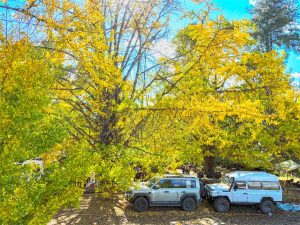
When the alarm went off at 5:30 AM, I was curled up in the down duvet at “Mingzhu Laka”—dreaming I was standing on the Feilai Temple viewing platform, my fingertips just touching the snow tip of Kawagarbo Peak, when I was jolted awake by the alarm. In the dark, I put on my fleece-lined hardshell jacket + fleece pants (which I specifically asked the owner to pack yesterday), buried my face in my hat, rubbed my eyes, and ran downstairs with my phone—the viewing platform is only a 5-minute walk from the hotel; a step late and I definitely wouldn’t get a good spot.
Chasing the Golden Mountain: Fearing to Miss That Stroke of Gold Every Second
The sensor lights in the stairwell flickered. I walked down the stairs, the wind pouring into the hallway, blowing my jacket hem like a small flag. Outside the hotel, the night at Feilai Temple still shrouded the silhouettes of Tibetan architecture, with only streetlights illuminating the prayer flags by the road—red, yellow, blue, flapping loudly in the wind, as if shouting “Come and see!”
The viewing platform is an open concrete deck surrounded by a ring of rusty iron railings. When I arrived, there were already about ten people: a guy in a hardshell jacket setting up a tripod, an auntie holding a prayer wheel chanting sutras, and a girl with a ponytail holding her phone to her eyes, her nose red from the cold. I squeezed to the edge of the railing and put my hand on the iron bar—it was as cold as a piece of frozen meat just taken from the fridge, so I quickly pulled back, rubbed my hands, and breathed into my palms.
Initially, the sky was gray-blue, like crumpled old denim. Slowly, the clouds in the east began to turn white, like water-soaked cotton. Then—the top of Kawagarbo Peak first showed a bit of golden light! Not a piercing lemon yellow, but melted gold, gently “applied” to the top of the snow mountain, as if a god had dipped a fingertip in paint and dabbed it. The auntie in a Tibetan robe next to me tugged my sleeve: “Young lady, it’s starting.” I stared intently at that point of light—it flowed down the ridge like someone pouring golden lacquer onto the snow mountain, flowing into a band of light along the mountain’s contour. Around 6:20 AM, the entire mountain became orange-red! The clouds were soaked through, like covered in gold leaf; even the chill in the wind softened. I held up my phone to take photos, my fingers so frozen they wouldn’t cooperate, requiring effort just to press the shutter. My breath fogged up the phone screen, which I wiped again and again—afraid to miss a single second, afraid this photo would miss a bit of the golden tremor.
I took photos for 20 minutes until my hands ached from the cold, and even the hand warmer in my down jacket pocket went cold. Only then did I reluctantly walk back. The Tibetan owner in the hotel lobby smiled and handed me a cup of ginger tea + roasted potato: “Just brewed, to warm you up.” Biting into the warm potato, the spiciness of the ginger tea slid down my throat, warming my heart like a small sun.
Trekking to Wunongding: Prayer Flags Carry the Warmth of Sutras
At 10:00 AM, I set off with my small backpack for Wunongding—the 2 km stone path from Feilai Temple to Wunongding is lined with Tibetan pilgrims. Some were turning copper prayer wheels engraved with the Six-Syllable Mantra, clattering loudly; some were carrying bundles of prayer flags to hang at higher mountain passes; there was also a little lama in red robes holding prayer beads, smiling with a little snaggletooth when he saw me taking photos.
The prayer flags by the road were hung densely, like a colorful cloud—red like fire, yellow like gold, blue like the sky over Meili Snow Mountain. I knelt to touch a mani stone pile by the road: the stones were engraved with crooked sutras, stained with snow water and mud, feeling cool. The Ajia (Tibetan for “sister”) trekking nearby smiled and said: “These stones were piled by the elders; every stone has been prayed over to ward off misfortune.” I stood up and took a photo of the prayer flags fluttering—the wind pulled them straight, like countless hands shouting “Tashi Delek” (auspicious wishes).
Mingyong Glacier: God’s Ice, Cold to the Core
In the afternoon, I went to Mingyong Glacier. Taking the scenic shuttle from Wunongding down, I reached the viewing platform in 15 minutes. The ice tongue extended from the mountain hollow, its blue-white surface gleaming like God’s tears frozen into ice. There were deep glacial striations on the nearby rocks. The guide was a young Tibetan man in a navy blue hardshell jacket, holding an ice axe: “This was left by the glacier’s retreat. Decades ago, the glacier reached the foot of the mountain; now it has retreated nearly two kilometers—at this rate, the ice tongue might be gone in a few decades.”
I reached out to touch the ice tongue—it was bone-chillingly cold, the surface covered in white frost, as rough as a grandfather’s palm. The wind had a crisp scent of the glacier, like stones soaked in snow water; inhaling it made even my lungs feel cool. Standing at the edge of the platform, watching the glacier sparkle in the sun with Meili Snow Mountain looking like a crystal palace in the distance, I suddenly understood why Tibetans say “Meili is Kawagarbo’s home”—every inch of ice here, every stone, holds the breath of a god.
It was evening by the time I returned to the hotel. I sat in a rattan chair on the balcony, watching the sunset dye the snow mountain pink, holding a cup of sweet tea given by the owner (brewed from brick tea with milk, thick enough to coat the cup). Thinking about the golden mountain this morning, the Ajia on the trek, the coldness of the glacier—this day wasn’t about “seeing” scenery, but taking out my heart and sunning it in the golden red of the snow mountain, rubbing it into the sutras in the wind, and soaking it in the cool scent of the glacier.
Before bed, I flipped through photos. The one that touched me most wasn’t a “masterpiece,” but that panorama of Wunongding at 4:00 PM: blurred shadows, flowing wind, honey-colored light, and the atmosphere of life hidden in the gold—this is what autumn should look like.
Day 4 Practical Whispers (Tested to Save Effort)
- Be Early for the Golden Mountain: Get to the viewing platform by 5:30 AM! Otherwise, you won’t be able to squeeze to the railing and will only photograph heads—I took the spot at the very edge, just framing the tip of Kawagarbo Peak.
- Keep Warm Enough: Wear a fleece-lined hardshell jacket + fleece pants + non-slip shoes! The wind on the platform is strong; I stood for 20 minutes and my legs were numb, luckily I dressed thick.
- Bring a Power Bank: Taking photos of the golden mountain requires continuous shooting, which drains battery fast—I brought a 20000 mAh one, just enough to last until the gold faded.
- Easy Hike to Wunongding: The 2 km stone path with prayer flags and mani piles is suitable for slow walking; no need to rush.
- Don’t Touch the Ice at Mingyong Glacier: Although it’s refreshing, there are crevasses on the glacier; be careful not to fall in—the guide said a tourist slipped last year and luckily caught a prayer flag.
Lying in bed, I stared at the snow mountain outside—moonlight sprinkled on the peak like a layer of silver powder. Thinking of today’s golden mountain, the cold of the glacier, and Ajia’s smile—the god of Meili didn’t speak, but rubbed all tenderness into my lens and my heartbeat.
Day 5: The Mountain Path to Yubeng, Planting Footprints at the Foot of the Snow Mountain
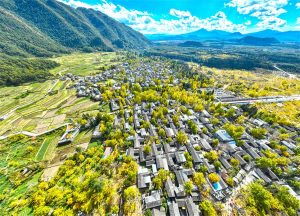
Early morning at Feilai Temple was still wrapped in thin mist as I hopped into a chartered car clutching the thermos the owner stuffed in my hand—it was filled with warm sweet tea. The owner said “trekking requires hydration, this is more nourishing than mineral water.” The driver was a young man in a navy blue sweater who drove very slowly. As I rolled down the window, the snow tip of Kawagarbo Peak hit my eyes, brighter than yesterday, like a silver hairpin stuck in the blue sky. The 1-hour drive made me sleepy. When passing Xidang Village, the young man called out: “We’re here, the supply point is over there.”
Trekking Start: The Sweetness of Snickers is the Courage to Enter the Mountain
The supply point in Xidang Village was a small wooden hut decorated with prayer flags. The owner was an uncle in a baseball cap who opened a cooler as soon as I arrived: “Want a Snickers? It’s warm!” I took it, crumpled the foil into a small ball in my pocket, and bit into it as the chocolate sauce stained my fingers—it was cloyingly sweet, yet just right to dispel the morning drowsiness. The uncle pointed at the mountain path: “The first half is a pine forest, easy to walk; the second half is meadow, don’t slip.” I nodded, poked my trekking pole into the ground, and set off.
Into the Mountain: The Bitterness of Pine Needles, the Sound of Prayer Flags—All the Breath of the Snow Mountain
The path initially hid in a pine forest, pine needles forming a thick, soft carpet that felt “squishy” underfoot, like stepping on dried seaweed. Sunlight leaked through the canopy, turning into shattered gold that touched the tips of the needles. When the wind blew, the sound of the pines mixed with the bitter scent of the needles drifted into my nose. After walking for half an hour, the forest suddenly opened to a high mountain meadow—green as freshly dyed cloth, dotted with stars of wild chrysanthemums in yellow and white. The wave of flowers in the wind was dizzying.
Prayer flags hung over the meadow—red, yellow, blue, like a colorful cloud. I knelt to touch them; the flags were printed with the Six-Syllable Mantra, their edges curled by the wind, carrying grass bits and the smell of yak butter. A Tibetan uncle passing by smiled and pointed at the flags: “The villagers just hung these this morning to ask for the snow mountain’s protection.” I stood up and took a photo of the prayer flags fluttering—the wind pulled them straight, like countless hands shouting “Tashi Delek.”
Xiaonong Base Camp: A 10-Minute Break is Sugar for the Body
After 2 hours of walking, I saw the Xiaonong Base Camp ahead—small houses with red roofs and white walls, with a “Supply Point” sign at the door. The owner was a plump auntie in a floral apron who shouted upon seeing me: “Want to rest? Hot water and instant noodles available!” I asked for a cup of braised beef noodles. The broth was thick enough to coat a spoon, the beef chunks were stewed soft, and the noodles had soaked up the soup, becoming chewy. The auntie sat nearby peeling an orange, the scent of the peel drifting over: “I’ve walked this path for 20 years. If you’re tired, take a rest, don’t rush—the snow mountain is waiting for you back there.”
Holding the noodle cup, I watched a few yaks grazing on the meadow outside, their tails swishing slowly. 10 minutes later, I packed up and continued. The auntie handed me an orange: “Eat it on the way, it’s very sweet.” The orange peel still carried the warmth of her body; I squeezed it and tucked it into my hardshell jacket pocket.
2:00 PM: Upper Yubeng Village, Children’s Laughter Crashes into My Arms
At 2:00 PM, I finally saw the wooden sign for Upper Yubeng Village—crooked Tibetan script read “Yubeng Village,” with a string of prayer flags hanging beside it. A child at the village entrance, a little girl with pigtails, ran over holding a wild chrysanthemum: “Sister! Did you come to see the snow mountain?” Her eyes were as bright as stars, and the highland flush on her face looked like honey. I knelt, took the wild chrysanthemum, and smelled it—it was a crisp fragrance, like the scent of snow water.
“Yes, to see the snow mountain,” I said with a smile.
“We see it every day in our village!” She tugged my sleeve toward the village, “My house is up ahead, do you want some sweet tea?”
I didn’t go in, but just touched her head: “Next time I come, sister will drink sweet tea at your house.”
She pouted and smiled. As she ran away, the wild chrysanthemum fell from her hand; I picked it up and tucked it into the loop of my backpack.
“Yubeng Stories” Guesthouse: The Warmth of an Electric Blanket is the Snow Mountain’s Hug
The guesthouse was in the village center, its sign a wooden board reading “Yubeng Stories.” The paint was chipped in several places, yet it felt very warm. The owner was an auntie in a blue cloth apron who took my backpack: “The room is on the 2nd floor, the electric blanket is on, it’s very warm.”
As soon as I pushed open the door, a stream of warm air carrying the scent of sun-drenched cotton fluff hit me. The electric blanket was spread on the bed. I took off my hiking boots and put my feet on it—it was so warm it almost hurt, but so comfortable I wanted to sigh. The window faced the snow mountain directly, with the snow tip of Kawagarbo Peak right before my eyes, as if I could reach out and touch it.
I sat on the bed, pulled out the wild chrysanthemum from my backpack, and put it in a glass jar on the nightstand. Outside, children were running, their laughter sounding like bells, and the distant snow mountain was glowing—it turns out the fatigue of the trek turned into this warm electric blanket, this fragrance of wild chrysanthemums, and this laughter of children, all piled up in my heart, soft and warm.
Lying in bed at night, staring at the snow mountain outside, I thought of the pine needles, prayer flags, instant noodles at Xiaonong Base Camp, and the child’s wild chrysanthemum—Yubeng is not a “destination,” but a journey of rubbing the scent of the snow mountain into every footprint, every mouthful of hot noodles, and every smile of a child.
Day 5 Practical Whispers (Tested to Suffer Less)
- Choose the Right Trekking Gear: Wear non-slip hiking boots! The second half of the meadow has dew and is very slippery; trekking poles are a must to reduce knee pressure—I used double poles, which saved 30% more effort than a single pole.
- What Supplies to Bring: Snickers, chocolate, and a thermos! Hot water at Xiaonong Base Camp takes 5 minutes to wait for; having your own bottle allows for direct filling. Choose dark chocolate for energy without being cloying.
- Interact with Villagers: If a Tibetan offers food, don’t be polite! The auntie’s orange was sweet and the child’s wild chrysanthemum was fragrant—both were kindness. I took the orange, and the auntie smiled all the way.
- Guesthouse Choice “Yubeng Stories”: Rooms have electric blankets and sun-scented quilts, 10 times warmer than a hostel; the owner auntie will tell you the “best time to see the snow mountain tomorrow,” which is more accurate than any guide.
(Attached: Day 5 Route Reference Table)
| Time | Itinerary | Key Point |
|---|---|---|
| 8:00-9:00 | Charter car from Feilai Temple to Xidang Village | Driver hands over sweet tea, see Kawagarbo snow tip |
| 9:00-9:10 | Buy Snickers, hear uncle talk about mountain paths | Snickers is warm, sweetness dispels drowsiness |
| 9:10-11:10 | Pine forest → High mountain meadow | Soft pine needles, clattering flags, yellow chrysanthemums |
| 11:10-11:20 | Rest at Xiaonong Base Camp | Braised beef noodles, plump auntie hands over an orange |
| 11:20-14:00 | Meadow → Upper Yubeng Village | Child runs over with a wild chrysanthemum |
| 14:00-15:00 | Check into “Yubeng Stories” | Room has electric blanket, warm to the toes |
| 15:00-17:00 | Rest in room, view snow mountain | Insert wild chrysanthemum, smell cotton fluff |
| 17:00-19:00 | Eat sweet tea steamed buns made by guesthouse auntie | Thick sweet tea, soft buns |
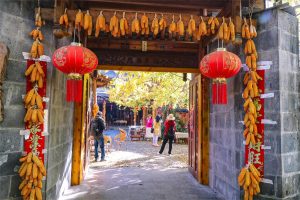
Day 6: Trekking to Yubeng Ice Lake, Carrying the Snow Mountain’s Heartbeat in My Pocket
At 7:30 AM, the guesthouse auntie stuffed warm sweet tea into my hand—the cup was coarse ceramic, feeling hot in my hand. “The Ice Lake line takes 4 hours,” she said, wiping the table with her blue cloth apron, “take a piece of chocolate so you don’t get hungry halfway. The wind at the lake is strong, don’t take off your scarf.” I nodded, put on my backpack, and touched the chocolate in my pocket—it was the dark chocolate I bought yesterday in Xidang Village, bitter and rich.
The child at the village entrance was still squatting there playing with wild chrysanthemums. Seeing me with trekking poles, she held up a flower and shouted: “Sister! The water in Ice Lake is blue!” I smiled and waved, following the signs up the mountain—the morning mist hadn’t dissipated yet, and dew hung on the pine needles, dripping onto the back of my hand and making me flinch from the cold.
First Half: Pine Needle Path and the Stream’s Song, the Breath of the Snow Mountain
The initial path was a soft carpet of pine needles that “creaked” underfoot, like stepping on dried seaweed. Sunlight leaked through the canopy, touching the tips of the needles like crushed gold. When the wind blew, the sound of the pines mixed with the bitter scent of the needles drifted into my nose. After walking for half an hour, I heard the tinkling of a stream—the water of Shenpu Valley seeped from rock crevices, so clear I could see the pebbles at the bottom. Occasionally, a small fish would flick its tail, splashing little droplets that felt cool on the tips of my shoes.
I knelt to touch the stream—it was bone-chillingly cold, yet sweet as if honey had been added. A Tibetan uncle passing by smiled and said: “This water flows from the snow mountain, it can cure a sore throat.” I scooped some with my hands and drank; sure enough, a crisp sweetness slid down my throat, making even my breath feel sweet.
Second Half: Thin Ice and Steep Slopes, Every Step a Firm Intention
Past Shenpu Valley, the path became steep—the stone steps were covered in a layer of thin ice, very slippery. I gripped my trekking poles tightly, using the tip to test the ground before stepping. There were red strings tied by villagers along the side, fluttering in the wind like safety belts for the mountain path. I walked slowly, occasionally stopping to look at the clouds in the valley—they looked like cotton candy, moving slowly and making the distant snow mountain appear and disappear.
After nearly 2 hours of walking, I finally saw the shadow of Ice Lake—nestled in a mountain hollow, blue as a fragment of sapphire, embedded at the foot of the snow mountain.
By the Ice Lake: Half an Hour of Silence, Hearing the Snow Mountain’s Heartbeat
I put down my backpack and sat on a rock by the lake—the rock was warmed by the sun, just enough to offset the chill by the lake. Ice Lake isn’t large, about half a football field. The water was so clear I could see glacial striations at the bottom, looking like someone had scratched the lakebed with their nails. The shadow of Kawagarbo Peak fell exactly in the center of the lake, the snow mountain shimmering in the water as if staring back at me.
I pulled the chocolate from my pocket and took a bite—it was bitter and rich, just enough to replenish my energy. The chill in the wind dissipated slightly. I stared at the water, listening to the distant bird calls and my own breathing, feeling as if I were in a dialogue with the snow mountain. After sitting for half an hour, I stood up and took a photo—in the photo, Ice Lake occupied two-thirds, with the snow mountain in the background, blue and striking yet gentle.
Return: Tibetan Prayer Wheels, Prayers for the Snow Mountain
At 2:00 PM, I started my way back. After just one kilometer, I saw Tibetan pilgrims—an old Amma in a Tibetan robe, turning a copper prayer wheel and chanting sutras. The sound of the wheel was a “humming” drone, as if talking to the snow mountain. Seeing me, she nodded with a smile, pointed toward the Ice Lake, and then pointed to her own heart—I knew she was saying “the snow mountain is the home of God.”
A little lama in red robes walked by, holding prayer beads. Seeing me taking photos, he stopped and pressed his palms together: “Tashi Delek.” I returned the gesture, and he said: “The water of Ice Lake is the tears of the snow mountain, cherish it.” I nodded with a smile and continued back. Behind me came the sound of the prayer wheel and the lama’s chanting, like singing a song to the snow mountain.
By the time I returned to the guesthouse, it was 4:00 PM. The auntie served warm ginger tea, the steam blurring her eyes: “Tired from the Ice Lake trek? Have something hot.” Holding the cup, I sat on the rattan chair on the balcony, thinking of the blue of the Ice Lake, the smiles of the Tibetans, and the sweetness of the stream—it turns out trekking is not a “challenge,” but a way to rub the tenderness of the snow mountain into every firm step, every mouthful of sweetness, and every encounter with kindness.
Organizing photos at night, the one that touched me most was the reflection in the Ice Lake: the snow mountain shimmering in the water like glowing jade. I wrote a note beside it: “The wind is cold, but my heart is warm because the snow mountain is by my side.”
Day 6 Practical Whispers (Tested to Save Effort)
- Trekking Gear Must Be in Place: Wear non-slip hiking boots! The thin ice in the second half was very slippery; I had to steady myself with my trekking poles three times. Bring a piece of dark chocolate for energy; it’s more effective than candy and less cloying.
- Hydrate Timely: The water in Shenpu Valley is drinkable, but it’s best to bring a thermos—there’s no water source by Ice Lake, so you can have something hot when thirsty.
- Don’t Be Shy with Tibetans: The old Amma’s prayer wheel and the little lama’s greeting are all kindness—receiving the blessing of the prayer wheel made me happier than any souvenir.
- Don’t Wander on Ice Lake: There is snow on the meadow by the lake, don’t walk into the lake—the guide said the ice is thin and you could fall in. I stood on a rock and got a perfect full view of the lake.
At night, I touched the wild chrysanthemum in my pocket—the one the child gave me this morning, still carrying a bit of scent. The snow mountain outside was glowing. Thinking of the blue of Ice Lake and the smiles of the Tibetans, I felt that all the fatigue turned into a warmth hidden in my heart, like the heartbeat of the snow mountain, staying with me always.
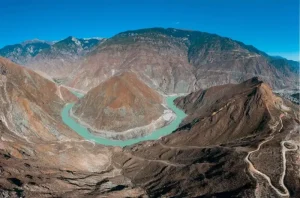
Day 7: Sacred Waterfall and Slow Time in Yubeng, Soaking My Heart in Sweet Tea
Early morning in Lower Yubeng was still wrapped in pale mist, and the scent of sweet tea already drifted from the guesthouse auntie’s kitchen—the bitterness of brick tea mixed with the sweetness of milk, as if the snow mountain and the grassland had been rubbed into the pot. She served freshly roasted highland barley cakes, crisp enough to drop crumbs. Biting into one, the wheat aroma and honeyed sweetness surged: “Going to the Sacred Waterfall today, the path is flat but don’t run; your knees just rested from yesterday.” She added: “The water of the Sacred Waterfall is holy. When you collect it, hold it with both hands, don’t spill it, so you can save some luck.” Clutching the cake, my fingertips stained with crumbs, I nodded in agreement.
Sacred Waterfall: Water is the Breath of the Snow Mountain, Sweet as a Blessing
Walking along the stone path of the Lower Village, the dew wet the tips of my shoes with a cool touch. Half an hour later, prayer flags suddenly lined both sides of the path—red as fire, yellow as gold, blue as the snow on the peaks. Their edges were curled by the wind, the Six-Syllable Mantra on them blurred yet clear. Passing a Tibetan pilgrim turning a copper prayer wheel engraved with crooked sutras, he smiled and pointed to the prayer flags, then tilted his chin toward the mountain ahead—even without translation, I understood he was telling me to follow that colorful path.
At 10:30 AM, the shadow of the Sacred Waterfall hit my eyes. The waterfall wove down from a 30-meter-high cliff, not as a torrent, but as a strand of white gauze. When the wind blew, the gauze curtain swayed, feeling bone-chillingly cold against my face yet carrying the crisp, sweet taste of snow water. The pool below was only a few square meters, so clear I could see a few dry leaves at the bottom, looking like small green drifting boats.
I knelt and scooped up water from the pool with both hands—the first sip was cold enough to make me frown, but the second revealed a sweetness, like snow water with honey. An Amma in a Tibetan robe crouched nearby, clutching a plastic bottle. Seeing me look at her, she grinned: “This water flows from the snow mountain. I come to collect it every day; it works for a sore throat.” I followed her lead, filled half a bottle, and tucked it into my backpack—this is a blessing from the snow mountain to take back for friends to taste.
There were shallow indentations on the rocks by the waterfall, worn by the constant flow like someone had touched them ten thousand times. I touched them; the rock felt as cool as a piece of warm jade. My fingertips were wet and cool, bringing a sense of peace to my heart.
Back in the Village: The Warmth of Sweet Tea is the Atmosphere of Life at Dolma’s House
At noon, I headed back and passed the house of the little girl Dolma I met yesterday—with her hair in pigtails, she had run over yesterday holding a wild chrysanthemum and calling out “Sister.” Now, hearing footsteps, she bounced out from the courtyard: “Amma brewed sweet tea! Saved some for you!” Dolma’s Amma, in a blue cloth apron, held a copper sweet tea bowl, its rim glowing with heat: “Come, have something hot, the road is tiring.”
The sweet tea was brewed with brick tea and fresh milk, thick enough to coat the bowl, bittersweet with every sip, sliding warmly from my throat to my stomach. Dolma sat opposite me peeling an orange, not even tearing off the white pith. The juice dripped onto her skirt, but she didn’t care: “My Abba said the snow mountain will come out in a bit, you can go to the meadow by the village to see it.” Drinking the tea, I watched her small fist clutching the orange, her fingertips stained with juice, her eyes curving into crescent moons as she laughed—this wasn’t just sweet tea, it was the atmosphere of life at Dolma’s house, warm enough to melt even the snow mountain.
Afternoon: The Healing of Sunbathing, the Snow Mountain Playing Hide-and-Seek in the Clouds
I didn’t trek in the afternoon; instead, I held the oranges Dolma gave me and walked to the meadow by the village. There were a few wild chrysanthemums on the meadow, yellow as small suns, swaying in the wind. I lay on the grass, the shadow of the snow mountain peeking from the clouds and then shrinking back, as if playing hide-and-seek with me. Dolma and a few other children chased yaks, the yak bells tinkling and the children’s laughter sounding crisper than the bells, drifting across the entire field.
I pulled the Sacred Waterfall water from my backpack and took a sip—it was still sweet, like Dolma’s smile, like Amma’s sweet tea, and like the breath of the snow mountain. The wind carried the scent of grass, the taste of sweet tea, and the sound of prayer flags. All fatigue dissipated, leaving only a warmth in my heart like a quilt drying in the sun, soft and fluffy.
When I returned to the guesthouse, the auntie was drying quilts at the door. Seeing me, she asked with a smile: “Happy today?” I pulled out the bottle of Sacred Waterfall water: “Saved some for you, a blessing from the snow mountain.” The auntie took it and sniffed: “It’s sweet, sweeter than my sweet tea.”
At night, sitting on the rattan chair on the balcony, drinking sweet tea brewed by the auntie and watching the snow mountain appear and disappear in the clouds, I clutched the orange peel Dolma gave me. Its fragrance was crisp and clear—it turns out the slow time in Yubeng isn’t “wasted,” but is about soaking the sweetness of the snow mountain, the kindness of the villagers, and the laughter of the children in your heart, turning it into the warmest light.
Organizing photos at night, the one that touched me most was of the Sacred Waterfall pool: the water as clear as jade, with the snow mountain blurred in the background like an unfinished painting. I wrote a note beside it: “When collecting water, the Amma said ‘save some luck.’ I saved a whole bottle, along with the scent of Dolma’s orange.”
Day 7 Practical Whispers
- Sacred Waterfall Prayer Tip: Collect water from the center of the pool; it’s clearer. Hold it with both hands and don’t spill—Tibetans say “if you spill it, the luck runs away with the water.”
- Drink Sweet Tea While Hot: The copper bowl of sweet tea from Dolma’s Amma was glowing with heat and warmed my stomach, 10 times more effective than cold drinks.
- Don’t Let Children’s Kindness Go to Waste: Dolma’s orange was sweet, and her smile was even sweeter—if you meet a child, stop and chat for a bit; they might give you their favorite wild chrysanthemum.
- Sunbathing Spot on the Meadow: The meadow facing east by the village gets the soft morning light from the snow mountain; in the afternoon, the wind is small, making it perfect for lying down and dazing all afternoon.
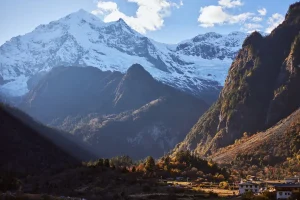
Day 8: In the Morning Mist of Yubeng, Hidden Tenderness for the Return Journey
The guesthouse auntie’s sweet tea was still steaming as I stuffed my mud-stained hiking boots into my backpack—the toes were hard as sun-dried earth. “It’s a 3-hour trek to Xidang,” she said, wiping the table with her blue cloth apron, “don’t avoid the Ajia you meet on the trek; smile, and she’ll give you yak butter candy.” I grabbed the highland barley cake from the table, so crisp it dropped crumbs, its wheat aroma and sweetness drifting into my nose—this was the last bit of Yubeng’s “local flavor.”
Trekking Back: Prayer Flags in the Morning Mist, a Farewell Gift from the Snow Mountain
The morning mist at the village entrance was like a layer of gauze, wrapped in the bitter scent of pine needles. I walked up the mountain with my pack, prayer flags flapping in the wind—red as fire, yellow as gold, blue as the snow on the peaks. Their edges were stained with grass bits, like unspoken words of the Tibetans. Half an hour later, I met an Ajia on the trek—her Tibetan robe embroidered with coral beads, a copper prayer wheel in her hand. Seeing me, a warm smile appeared on her face: “Almost there, the yak butter tea in Xidang is brewed thick.” Her voice was like yak butter, soft and warm. I nodded and instinctively touched my pocket—the water I collected at the Sacred Waterfall yesterday was still there, cool.
The last segment was downhill, the stone path slippery. I gripped my trekking poles tightly and heard the tinkling of the stream in the valley—it was the water from the Sacred Waterfall making a turn, flowing back toward the snow mountain. Reaching Xidang Village, the sun just climbed over the peak. The small wooden hut at the supply point wafted with the scent of yak butter. The uncle in the baseball cap shouted while holding a copper pot: “Young lady, want a warm bowl?” I took the yak butter tea, the cup hot enough to make me tremble. The tea mixed with the fragrance of yak butter slid down my throat—this was Yubeng’s “return hug,” carrying Ajia’s blessing, the sweetness of the stream, and the bitterness of the pine needles.
Transfer Back to Shangri-La: The Gold of Napa Lake, a Full Stop to the Journey
When the bus from Xidang Village honked, I squeezed on. My seatmate was a Tibetan in a navy blue jacket, carrying a cloth bag. “Going to Shangri-La?” he asked, his dialect carrying the sour fragrance of milk dregs. I nodded, and he handed me a piece of milk dregs: “Homemade, fresh.” Biting into it was sour yet sweet, like the wild chrysanthemums of Yubeng, Dolma’s orange, and Ajia’s yak butter candy—all the kindness encountered was rubbed into this one bite.
The bus started, and Napa Lake spread out outside the window like gold leaf—the grass had turned yellow, like sun-dried sunlight. When the wind blew, the waves of grass swayed, rubbing the distant snow mountain into shattered gold. Occasionally, water birds skimmed the surface, their wingtips catching the sunlight like scattered diamonds. I pulled out the prayer wheel pendant Ajia gave me—a small copper cylinder engraved with crooked Six-Syllable Mantras. Giving it a spin, the “humming” sound seemed to say “goodbye” to Yubeng.
At the Airport: Yubeng in the Luggage, Light in the Heart
At 3:00 PM, I arrived at Shangri-La Airport and pulled my suitcase toward the departure gate. My luggage contained: holy water from the Sacred Waterfall (in a small mineral water bottle, no leaks), orange peels Dolma gave me (can be made into a sachet after drying), and Ajia’s prayer wheel pendant (the copper body already polished bright). The sweet tea shop at the airport floated with a familiar scent. I bought a cup and sat by the window—the clouds were low, as if pressing down on the snow peaks. Like the morning mist of Yubeng, the golden mountain of Meili, and the toasty fragrance of Ginkgo Village, all fragments surged back.
As the plane took off, I looked at the snow mountain through the window, thinking of the morning I ate sugar oil cake in Ginkgo Village on Day 1, the early morning I chased the golden mountain in Meili on Day 4, and the afternoon I sunbathed on the meadow in Yubeng on Day 7—these 8 days were not just “travel,” but about packing the sweetness of the snow mountain, the kindness of the villagers, and the laughter of children into my luggage, turning them into a warm stove in my heart.
When I landed, my phone rang with a message from the auntie: “The sweet tea is warming on the stove, waiting for you to return.” I smiled and replied: “On my way with the blessings of Yubeng.”
Organizing my luggage at night, I pulled out the bottle of holy water from the Sacred Waterfall—there was still half a bottle, sweet as the taste of snow water. Beside it was Ajia’s prayer wheel pendant, its copper body glowing. It turns out the best return journey isn’t about how many souvenirs you bring back, but about keeping the temperature of the journey in your heart, keeping it forever warm.
Day 8 Practical Whispers (Tested to Go Smoother)
- Trekking Back Tip: Wear non-slip hiking boots! The last downhill part was slippery, and I had to steady myself with my trekking poles three times. Bring a piece of dark chocolate for energy—the yak butter tea in Xidang Village is warm, but chocolate replenishes sugar faster.
- Encountering Kindness During Transfer: The seatmate’s milk dregs were fresh and more sour-sweet than those from a supermarket. You can chat with him about the migratory birds of Napa Lake; it’s 10 times more vivid than the “attraction introduction” in a guide.
- Pack “Temperature” in Your Luggage: Holy water from the Sacred Waterfall (sealed in a small bottle), Dolma’s orange peels (dried for a sachet), and Ajia’s prayer wheel (copper is durable)—these “non-commercial items” are the most precious evidence of the journey.
(Attached: Day 8 Route Reference Table)
| Time | Itinerary | Key Point |
|---|---|---|
| 7:30-8:00 | Eat breakfast, auntie hands over highland barley cake | Barley cake is crisp, sweet tea is hot enough to make one tremble |
| 8:00-11:00 | Trek from Yubeng to Xidang Village | Morning mist, prayer flags, Ajia’s yak butter candy |
| 11:00-12:00 | Drink yak butter tea in Xidang Village, transfer | Uncle’s hot tea, Tibetan’s milk dregs |
| 12:00-16:00 | Bus back to Shangri-La, view Napa Lake | Grass yellow as gold, water birds skimming the surface |
| 16:00-17:00 | Arrive at airport, buy sweet tea | Thinking of Yubeng fragments, waiting for auntie’s message |
As the plane landed, I touched the prayer wheel pendant in my pocket, thinking of the morning mist of Yubeng, the golden mountain of Meili, and the toasty fragrance of Ginkgo Village—these 8 days are my promise with the snow mountain, my encounter with kindness, and my reconciliation with myself.






