



This seven-day plan combines Ancient City walks, separate outings around Erhai and a return trip to Shaxi; it is not a continuous self-driving circuit of the lake. Choose your transport for each leg, then arrange parking or vehicle returns and luggage storage. Do not combine the timings of a scooter ride, a car transfer and a walk as though they were interchangeable.
Day 1: Settle in Dali, Stay in the Ancient City and Explore the Night Market
Morning: Arrival, Head to the Ancient City to Find a Place to Stay
Plan the transfer to the Ancient City around your actual arrival at Dali Airport or Dali Station. If departing from Kunming, compare the rail and air journeys available for your date; the original Wednesday-flight anecdote is not evidence of a regular direct service. The account’s airport-bus figures of 25 yuan and 50 minutes, and station-taxi figures of 30 yuan and 20 minutes, lack a travel date and receipts. Confirm the current destination, fare and luggage arrangements before boarding, and allow time for arrival formalities and onward travel.
Staying at the South Gate is a lesson learned from my third visit—the first time I stayed on Foreigner Street, it was too noisy to sleep; the second time at Caicun, it was too far and inconvenient. This time, I chose “Yundu” Guesthouse, tucked in an alley 50 meters from the South Gate, with an old bougainvillea climbing the blue brick walls, red like it was on fire. The owner is a Bai auntie with a soft voice: “Rest first, young lady, the room is on the second floor, and the balcony has a view of the city wall.” The room was small but tidy, with fresh sheets smelling of sunlight and a packet of rose sugar by the pillow. In the afternoon, the cleaning lady came to change the linens and secretly handed me a cup of warm rose brown sugar water, “Just brewed, drink it to stay warm.” The sugar grains settled into small red dots at the bottom, and every sip was sweet to the throat.
(Perspective from the guesthouse balcony) Looking down from the balcony, the bluestone road shined under the morning light. A Bai auntie in traditional dress walked by with a bamboo basket, the fresh flower cakes inside emitting a sweet fragrance. Looking up, the grey ancient city walls had foxtail grass growing in the crevices; when the wind blew, the grass heads swept against the wall with a rustling sound.
Noon: Cold Chicken Rice Noodles + Rushan (Milk Fan) in the Ancient City
It was just past 12:00 when I reached “Yang’s Cold Chicken Rice Noodles” on Renmin Road. The shop was packed. An uncle was scooping noodles from boiling water with a strainer, his warnings of “careful, it’s hot” mixing with the clatter of spatulas. I ordered a bowl of cold chicken rice noodles. The broth was a clear chicken soup with a few sprigs of cilantro. The cold chicken was sliced thin as a cicada’s wing, and the dipping sauce was chili oil with sesame—tingling the tongue slightly, yet getting more addictive with every bite. The noodles themselves were subtle, relying entirely on the broth for freshness; I drank almost half the bowl of soup.
I bought the Rushan from a cart in the middle of Renmin Road. The uncle wore a straw hat, with a charcoal stove set up in his cart and Rushan roasting on an iron plate. As I approached, he looked up and smiled: “Sweet or original, girl?” I pointed to the original, “One original, with rose jam.” The Rushan was piping hot, the outer skin so crispy it made a “crunch” sound, while the inside was soft and chewy. Once spread with rose jam, the sweet floral scent mingled with the milky flavor of the Rushan. For 10 yuan a skewer, I finished it by the roadside without even wiping the oil off my fingers.
Afternoon: Wandering Old Alleys, Seeing Bai Houses
I didn’t join a tour in the afternoon; I just grabbed a cup of Liangxia (rice tofu dessert) and wandered toward Honglong Well. The water at Honglong Well flows down from Cangshan Mountain, bubbling up from the rock crevices, so clear you can see the pebbles and swimming fish at the bottom. Several Bai aunties were squatting by the well washing vegetables, the red water caltrops in their bamboo baskets glistening like scattered diamonds in the sun. One auntie saw me taking photos and held up a caltrop, shouting: “Girl, take a picture of this, it’s fresh!” Her hands were rough with mud under her nails, but holding the caltrop, it looked like she was cradling a treasure.
Walking through a few old alleys from Honglong Well, the bluestone paths were worn smooth and shiny, with some spots polished into small pits and moss growing in the cracks, making it a bit slippery. On both sides were old Bai houses. Though the wood-carved doors and windows had lost some paint, you could still make out carvings of “Pine and Crane for Longevity” and “Blooming Flowers for Wealth.” One family’s door was half-open, revealing an eight-immortal table in the main hall covered with a blue-and-white tie-dye cloth. An old clock stood in the corner, “tick-tock, tick-tock,” as if time had slowed down here.
(Sounds of the old alley) The scent of stir-fry drifted in the wind—green peppers and cured meat from a neighbor’s kitchen; from afar came the cry of a Liangxia vendor, “Liangxia—brown sugar flavor!”; and aunties sat at their doorsteps picking vegetables, saying “this one needs the root snapped” or “that leaf has bug holes,” their voices soft like a song without lyrics.
Evening: Roasted Erkuai on Foreigner Street, Picking Tie-dye at the Night Market
I had dinner at “Granny’s Roasted Erkuai” on Foreigner Street. Her stall was set up under an old locust tree, with sparks from the charcoal brazier flying upward, tinting her silver hair gold. The Erkuai was freshly steamed that morning, pearly white, and when placed over the charcoal, it puffed up with small bubbles, the edges turning slightly crispy. Granny tucked a fried dough stick inside, spread some pickled vegetables and minced meat, and finally brushed on a layer of sweet chili sauce. “Want it spicy?” I shook my head, and she smiled, “You like it mild, girl, I’ll put less chili in the sauce.” One bite revealed a crispy exterior and soft interior; the crunch of the dough stick, the acidity of the pickles, and the aroma of the meat blended perfectly. At 8 yuan each, I ate two before feeling satisfied.
I browsed the night market at South Gate Square, where tie-dye fabrics hung on iron racks, their blue-and-white patterns shimmering under the streetlights. I knelt to pick through a pile of fabric and felt a blue-and-white checkered tablecloth. “Is this herbal dyed?” The account attributes the cloth to a plant dye, but the actual dye and plant part need confirmation from the seller. Ask for washing instructions rather than treating a ten-wash no-fading claim as a general guarantee. Traditional tie-dye can lose some colour during rinsing. [3] She helped me roll up the cloth and handed me a salted plum candy, “Try it, I dried it myself.” After paying for the cloth, she smiled, “Next time you come, I’ll save a new piece for you.”
(Texture of the tie-dye) That tablecloth felt a bit coarse, like old homespun cloth, but looking at it against the light, the pattern was gradient—the deep blue looked like the night sky, and the light parts like morning mist. I draped it over my arm; when the wind blew, the corner fluttered to reveal the white underneath, like a moving cloud.
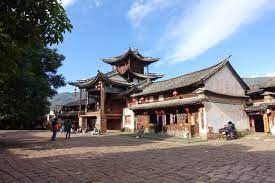
Day 2: Erhai West-Shore Outing, Longkan Wharf to Xizhou
Morning: Photographing the Sunrise at Longkan Wharf
For sunrise at Longkan, check the local sunrise time for your travel date and allow time to reach the entrance and walk to a viewing spot; an 8:00 departure is not a year-round plan. Before renting, confirm the vehicle type, permitted roads, battery range, deposit and return point. Wear and fasten a suitable helmet. The ecological corridor and the roads around the lake have different access arrangements: do not assume an externally rented electric scooter can enter every section. Use the Erhai Ecological Corridor entrance and bike-return guide to plan a short ride and its return connection.
Travel from the Ancient City to the Longkan entrance using your confirmed transport arrangement, then walk to an open viewing area. Before sunrise, the lake can look like a blue cloth beneath a pale horizon. Visibility depends on the weather; do not use 8:30 as a fixed arrival time for every season.
The original account describes a passer-by offering red water caltrops at Longkan. Their identification, source and preparation were not verified. Do not eat an unfamiliar waterside plant merely because someone says that boiling makes it edible; choose clearly identified food from a reliable source.
Park only in designated areas without blocking paths or damaging grass. I spread out the tie-dye cloth I bought yesterday (the blue-and-white checkered one). Just as I sat down, my phone chimed—it was a message from a girl at the same guesthouse: “The sunrise at Longkan is coming!” Looking up, the eastern clouds were slowly turning orange-red, and the lake surface lit up as if someone had tossed a handful of stars into the water. I snapped away with my phone; after 10 shots, the auntie came over: “Girl, stand under that willow tree to take the photo, the slanted shadow looks better.”
(Morning light at Longkan Wharf) The account recalls a friendly conversation by the water. It does not establish that the offered plants were correctly identified or safe to eat; do not use the boiling-with-sugar anecdote as food-safety guidance.
Morning: Panxi S-Curve + Lunch in Xizhou
Continuing the outing from Longkan Wharf toward Panxi, the road gradually narrowed, flanked by patches of rice paddies. In September, the rice ears weren’t fully yellow yet, a mix of green and light yellow swaying like waves in the wind. At the Panxi S-Curve, the so-called “viral check-in spot” was just that stretch of curved road, with seven or eight scooters parked and a few girls huddled together with selfie sticks.
For a quieter view near the S-curve, stay on permitted paths rather than relying on an unspecified left turn. The account recalls two or three couples taking wedding photos in front of the reeds. The white veils fluttered in the wind against the lakeside scenery. I found a rock to sit on. I was wearing a light blue dress; the wind lifted the hem, and the reeds blurred into a golden haze in the shot. When I showed the photos later, my friends said, “This looks like it has a soft-focus filter.”
I reached Xizhou Ancient Town at 11:00, smelling the aroma of Poshu Baba (flaky pastry) from afar. There was a small queue at “Yang’s Poshu Baba” in Sifang Street. The owner, a man with glasses, was rolling the dough thin. “Sweet or savory?” I asked for one of each. As he handed them over, he said, “Fresh from the oven, careful of the heat.”
The sweet one had a rose filling. Biting into the crust produced a “crunch,” and the rose jam mixed with sesame gushed out, its sweetness reaching straight to the throat. The savory one had a ham filling; the ham was finely diced with a hint of smokiness, pairing perfectly with the flaky crust—the more I chewed, the more fragrant it became. I finished them while squatting by the road, crumbs falling everywhere. The owner knelt to help me pick them up: “Eat slowly, girl, no one is racing you.”
Afternoon: Visiting Yan Family Mansion + Returning to the Ancient City
In the afternoon, I wandered over to the Yan Family Mansion. Check current official ticket and audio-guide arrangements before visiting; the original 20-yuan ticket figure has no date and is not a current quote. The guide explained the “Three Rooms and a Screening Wall” layout. I walked around the courtyard; the flower bed in the center was planted with bougainvillea, redder than the ones at Longkan Wharf.
A Bai auntie sat at the entrance of the main hall peeling peas, the pea pods forming a small mountain in her bamboo basket. I raised my camera to take her picture, but she laughed and ducked: “Why take a picture of me? I’m old.” Her little granddaughter tugged at her sleeve: “Grandma, the big sister said she wants to photograph you peeling peas.” Only then did the auntie sit up straight, wiping her hands on her apron: “Then you stand over here, sit by this flower.” She pointed to some bougainvillea petals on a stone bench; the sunlight filtered through the petals onto her face, making the light dance in her wrinkles.
Before returning to the Ancient City, confirm the return route and transport; a battery percentage alone does not establish the remaining range. Passing through the Xizhou flats, I saw a few children chasing butterflies. The butterfly wings were blue-purple, flashing so brightly in the sun it was hard to look. Arrange the next day’s transport to Shuanglang separately rather than assuming the same rented scooter is suitable for the whole trip.
In the evening, I drank rose wine at “Huayue Xiaozhu” on Renmin Road, brewed by the proprietress herself. She brought a celadon cup with half a dried rose floating in the wine. One sip revealed the sweet fragrance of roses, followed by the slight bitterness of the wine, finishing with a honey-like sweetness in the throat. The lady said: “This wine should be paired with Rushan. Buy some roasted Rushan tomorrow and dip it in the wine—even the immortals wouldn’t trade it.”
(A night with rose wine) I sat on the guesthouse balcony holding the cup. The evening breeze carried the scent of stir-fried mushrooms from next door. The silhouette of Cangshan Mountain grew increasingly blurred in the dusk, like an unfinished ink painting. Tourists at the next table were chatting about “where to go tomorrow,” while I stared at the rose in my cup, suddenly feeling that this kind of slowness is exactly what travel should be.

Day 3: From the Ancient City to Zhoucheng, Then On to Shuanglang
Morning: Visiting the Tie-dye Workshops in Zhoucheng Village
Start from your Ancient City accommodation for the Zhoucheng tie-dye visit, then allow a separate transfer to the east shore and Shuanglang, with luggage and check-in arrangements confirmed. Confirm the workshop address and visiting slot before departure. Do not treat the workshop, Wase and Shuanglang as a single short scooter ride; leave time for the cross-lake journey and lunch.
At the workshop entrance stood a wooden pole with several pieces of freshly dyed blue cloth hanging from it. When the wind blew, they rustled like ocean waves. I leaned in to smell it—the bitter freshness of woad mixed with the warmth of the sun. The owner auntie was squatting by a dye vat stirring the fabric. The blue cloth felt heavy in her hands, and water droplets fell from the corners into the vat with a “plop,” startling the sparrows nearby.
I didn’t enter the courtyard immediately; I found a rock at the entrance to sit on. A long piece of cloth was draped over the dyeing rack, its blue-and-white patterns looking like moving clouds. I was taking photos with my phone when the wind suddenly picked up, making the cloth flutter and revealing the undyed parts underneath—pearly white, like the snow on Cangshan. The auntie looked up, saw me, and shouted with a smile: “Girl, want to come in and see?”
I followed her into the courtyard. The dye vats were half a person’s height, a blue so deep it looked like the sky had been crushed and soaked inside. The auntie fished out a freshly dyed square cloth, water dripping from the edges. Observe the texture first and ask the instructor about protection before handling wet cloth or dye. Skin staining does not identify the dye or establish its quality or safety.
(Light and shadow in the workshop) There was an old locust tree in the courtyard, and sunlight filtered through the leaves onto the dyed fabrics. The shadows of the white patterns on the blue cloth swayed on the ground, as if someone had torn up the moon and scattered it. The auntie’s shadow mingled with them; when she bent over to straighten the cloth, her silver hair flashed. I quickly pressed the shutter, and that photo later became my phone wallpaper.
Lunch: Confirm the Ingredients Before Choosing a Dish
After Zhoucheng, arrange lunch around your confirmed onward transport. The original account names “Haidong Bistro” in Wase, but its address, current opening and menu have not been verified; do not assume it is a quick ride from the workshop.
The original account describes a dish as “cold stir-fried tree bark” and identifies it as water-willow bark. That identification is not supported by reliable ingredient information. A dish name is not a species identification: do not cut, forage or taste unidentified bark. If the ingredient and its edibility cannot be established, choose something else.
Choose dishes with clearly identified ingredients from reliable sources and appropriate food handling. The original tasting description does not establish that the unidentified “bark” is safe; the restaurant and actual ingredient still need confirmation.
Before ordering an unfamiliar ingredient, ask what it is and where it comes from. The original tree-climbing and bark-cutting story is unverified and should not be used as a foraging example.
Afternoon: Views of Little Putuo, Then a Stay in Shuanglang
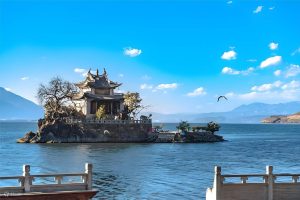
At the Little Putuo shore, check the open viewing areas and any visitor access arrangements; reaching the shore is not the same as riding onto the island. The island is tiny, just the size of a palm, with a small temple in the middle. The red walls and green tiles, surrounded by Erhai Lake, look like an agate embedded in blue velvet.
If waterbirds are present, observe and photograph them from a distance without using food to draw them onto your shoulder, hand or vehicle. Red-billed gull sightings depend on the season and conditions; do not treat the original September feeding scene as a guaranteed experience.
Continue to Shuanglang using the transport arranged for this part of the trip. If wind makes it difficult to control a bicycle or scooter, stop in a safe place rather than leaning over the handlebars or holding a hat while riding; use suitable alternative transport if conditions are unsafe. The original account names “Tinghai” Guesthouse, whose location and room availability still need confirmation.
The room wasn’t big, but it was tidy. The sheets were fresh, smelling of sunlight, and there was a pot of succulents on the windowsill with plump leaves. I pushed open the window, and the wind from Erhai rushed in, carrying the damp scent of the lakeside. The clouds over distant Cangshan Mountain rolled and billowed like someone kneading cotton in the sky.
In the evening, I had casserole fish at the guesthouse. The actual fish supplier needs confirmation; a fresh-catch story does not establish fishing permission or ingredient safety. When the casserole was served, it was bubbling away. Tofu, cabbage, and wood ear mushrooms floated in the soup, and the fish was served in the hot broth, sprinkled with green onions. I took a spoonful of soup; it was so fresh my tongue almost melted. The fish was so tender it fell apart with a touch of the chopsticks, and the tofu had soaked up the broth, releasing a burst of soup with every bite. Choose fish with an identifiable source and have it thoroughly cooked; do not rely on a daily-fishing anecdote as proof of safety or compliance.
(Dusk in Shuanglang) I sat in a rattan chair on the terrace waiting for the sun to set. The wind grew stronger, blowing the guesthouse curtains into billowing shapes. The distant Erhai Lake shimmered with golden light, like scattered gold dust. A couple at the next table were taking photos, the guy shouting, “Look here!” and the girl laughing as she ran over, her skirt fluttering in the breeze. Holding a warm cup of roasted tea (30 yuan/set), I listened to their laughter and suddenly felt that this kind of slowness is the true meaning of travel.
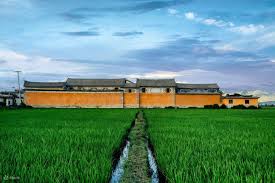
Day 4: Return from Shuanglang, With Time Set Aside for Xizhou
Morning: Xidoufen (Pea Porridge) with Fried Dough Sticks in Shuanglang
I was half-asleep when the wind pushed the wooden window open a crack, and I heard the proprietress shouting from the kitchen: “Girl, the Xidoufen is ready!” The voice carried the warmth of firewood, and the aroma of beans drifted straight into my nose. I threw on a jacket and went downstairs. The coal stove in the kitchen was “hissing,” and the Xidoufen in the aluminum pot was bubbling, its surface covered in a layer of fine foam. A stir with a spoon revealed bean-sized pieces at the bottom.
The proprietress brought a blue-rimmed porcelain bowl, blew on it, and handed it to me: “These beans were soaked last night, ground starting at three in the morning, and simmered for nearly two hours.” I took a sip; the bean flavor was incredibly thick, carrying a warm, toasted scent, much richer than soy milk. The fried dough sticks were freshly made, “crunching” in the bamboo basket, the crust so crispy it fell apart while the inside was soft and stringy. I broke the dough stick into the Xidoufen; it soaked up the soup and burst with flavor. The mix of bean and oil aromas was more substantial than any breakfast my mom ever made. The proprietress sat opposite me peeling peas, smiling at my appetite: “My son has to eat this every time he comes back; he says it’s better than anything in Kunming.”
Morning: Confirm the Return Route and Any Xizhou Stop
Before leaving Shuanglang, decide whether to include Xizhou and confirm the cross-shore route and transport. Wase, Little Putuo and Xizhou should not be treated as consecutive stops on a short ride along West Erhai Road. In strong winds, stop safely rather than leaning over the handlebars to press on. Reduce the stops if necessary so that the return journey is not rushed.
If you want sunset views near Little Putuo, plan a separate evening visit with return transport; it cannot fit before an 11:00 arrival in Xizhou. Watch birds from a distance rather than enticing them onto a handlebar or your body.
For a visit to Xizhou and Haishe Park, first confirm current access, booking requirements and ticket arrangements; the original 10-yuan ticket figure is not a verified current quote. The original account describes the scenery in September: the grass was waist-high. When the wind blew, waves of grass rolled like wrinkled green silk. There was fine dew on the grass blades that felt cool against my hand. The “Love Square” stone tablet stood in the middle of the meadow. I stood with my back to Erhai Lake, the wind lifting my hem and the grass tickling my calves. My friends later saw the photos and said, “This looks like a Swiss prairie.” But I knew this was Dali’s grass, touched by the snow-water of Cangshan and the wind of Erhai.
Noon: Lunch if You Include Xizhou
If you include Xizhou, the original lunch suggestion is “Mushroom King Mansion”, but the business identity, mushroom sourcing and 120-yuan pot price still need confirmation. Mud or a forest-like smell is not evidence that mushrooms are safe to eat.
Do not treat boiling or any fixed cooking time as a way to detoxify wild mushrooms: some poisonous species retain toxic substances even after cooking. Do not forage mushrooms for food. Buy only from reputable, reliable suppliers; avoid products mixed with unknown species or carrying growing material or signs of spoilage. Edible mushrooms still need washing and thorough cooking, but cooking cannot make a poisonous mushroom edible.[1]
Cap shape, stem thickness, colour and a vendor’s verbal assurances do not establish that a mushroom is edible. Avoid products of uncertain source or species. If mushroom poisoning is suspected, seek immediate medical attention and bring any available mushroom remnants for identification.[1]
Afternoon: Back to the Ancient City to Organize Photos
If you stop in Xizhou, arrange the onward return to the Ancient City using the confirmed route and transport. Do not rely on slowing down to complete a journey on 10% battery; stop safely and contact the rental provider if range is insufficient. The original account describes osmanthus scent drifting from a yard. Passing the Xizhou flats, I saw children chasing paper airplanes that flew over high rice stalks and landed in the fields.
At 16:00, I arrived at the South Gate. The guesthouse auntie was sitting at the door picking vegetables, the hollow heart spinach still covered in mud. Seeing me, she shouted with a smile: “Girl, you’re back? I made ice jelly, waiting for you.”
The ice jelly was served in a porcelain bowl with hawthorn flakes, raisins, and crushed peanuts, drizzled with brown sugar water. I stirred it with a spoon; the jelly was slippery like a transparent fruit drop. A bite of the hawthorn flake made me squint with its sourness, but it was immediately balanced by the sweetness of the raisins. The auntie sat opposite me and said: “Ate too much mushroom hotpot today, didn’t you? Ice jelly cuts the grease.”
In the evening, I strolled through the Ancient City. The lanterns on Fuxing Road were lit, red as fire. Bai aunties carried bamboo baskets selling fresh flowers; the roses and lilies were covered in dew, their fragrance mingling with the lantern light and filling the streets. I bought a bunch of roses. The vendor said: “These were picked this morning; they’ll last three days at home.”
I walked home with the roses. Passing Sifang Street, I heard someone playing the Sanxian (three-stringed lute). The music was melodious, mixing with distant laughter, the shouts of Erkuai vendors—it was like a song without words. The wind carried the scent of boiling mushrooms from a neighbor’s house, and I suddenly felt that these seven days of slowness weren’t a waste of time—they were about turning daily life into poetry.
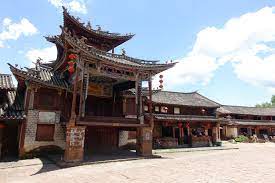
Day 5: Shaxi Ancient Town, With an Overnight Stay
Arrange luggage storage with your Shaxi accommodation before sightseeing. The Beilong bookstore needs a separate journey from the town; if arrival or transport leaves too little time, skip it rather than squeezing every stop into the morning.
Morning: Dali Ancient City → Shaxi
The alarm went off at 7:15. I pulled back the linen curtains—the sky over the Ancient City was just turning grey, the bluestone paths were wet with dew, and the air smelled of the sweet porridge being boiled by a Bai auntie. The prearranged carpool driver, Uncle Li, arrived at the guesthouse. Wearing a faded blue shirt, he saw me with my suitcase and reached out to help: “Girl, the road to Shaxi is a bit bumpy; I’ll put your suitcase in the back row.”
The carpool was a silver-grey minivan. A girl with a ponytail sat in the front passenger seat—a photographer going to Shaxi for a wedding shoot. We set off from the South Gate, heading toward Shaxi. Rice paddies gradually increased on both sides. In September, the rice ears were half-yellow and half-green; when the wind blew, the rice waves looked like crumpled silk. Uncle Li drove slowly, even honking to give way to an auntie on an electric bike: “Ma’am, take it easy!”
On reaching Shaxi, confirm the permitted drop-off point before walking into the town. The account’s two-hour drive and 50-meter walk to the Ancient Stage lack a dated route and mapped drop-off point, so they should not be used as transfer standards. When I stepped out, the morning mist hadn’t fully cleared, and the eaves of the stage were partially hidden in the fog, like an unfinished ink painting.
(Morning light at the Ancient Stage) A thin layer of mist rested on the bluestone steps of the Ancient Stage. Several Bai aunties sat there soaking up the sun, sewing shoe soles. Their blue aprons were washed white, and the stitches were so dense they could be counted. One auntie saw me with my phone and said with a smile: “Girl, sit here; with the stage behind you, it looks beautiful.” Her hands were covered with age spots, but her sewing movements were sharp—the awl “clicked” into the sole, and a pull of the thread created a beautiful butterfly knot.
Morning: Librairie Avant-Garde + Eating Braised Chicken
The Shaxi Librairie Avant-Garde is in Beilong village, in a converted village granary, rather than opposite the Ancient Stage. Allow separate travel and visiting time for Beilong.[2] The original account recalls light falling across the book shelves, but its claimed immediate walk from the stage should not be used for navigation.
The bookstore visit can be a quiet pause between the town walk and lunch. Confirm its current opening before setting out, and do not assume the reading area and restaurant described in the original account are in the same building.
The original lunch choice was “Old Tree Braised Chicken”; its address and opening still need confirmation, so do not look for it downstairs or next door to the bookstore. The restaurant was an old Bai house. In the middle of the main hall sat a large iron pot, the braised chicken “bubbling” away, its aroma of chili and ginger hitting my nose. The owner was a plump uncle. Seeing me, he tapped the edge of the pot with a spatula: “Girl, want it spicy?” I shook my head, and he smiled: “Then I’ll put in more potatoes for you.”
When the braised chicken was served, the porcelain bowl was piled with golden chicken and potatoes that had soaked up the sauce. The chicken was stewed so soft the chopsticks could pull it apart, and the potatoes were sandy and slightly sweet. I ate it with rice; the first bite stunned me—this tasted far better than any braised chicken I’d had in Kunming. The owner brought over some tea: “Our chickens are free-range in the mountains, and the potatoes are local to Shaxi, that’s why it’s good.” I ate two bowls of rice and even licked the sauce from the bottom.
Afternoon: Yujin Bridge + Rice Fields + Roasted Tea
At 14:00, I walked along the stone path toward the edge of town. Yujin Bridge is right at the entrance—an old stone bridge covered in moss. The stone lions on the railings were polished shiny from being touched, their stone balls worn smooth. The rice fields by the bridge were completely yellow; when the wind blew, the rice ears rustled, like someone whispering in my ear.
Take photographs only from permitted paths or viewing areas; do not step onto cultivated ridges without permission. An uncle with a hoe on his shoulder passed by and smiled: “Girl, stand a bit to the right; there’s a white goose there, it’ll look good in the photo.” I moved, and sure enough, a white goose waddled over, its neck curved beautifully. The uncle raised his hoe and made a “V” sign. I quickly pressed the shutter; that photo later became my most-liked on social media.
At 16:00, I wandered to a “Tea House” at the end of the village. The tea house was a low wooden building with several pots of succulents at the door. The owner was a Bai auntie with glasses. She smiled: “Want some roasted tea? Just made.” She placed a tea cake on a copper kettle and roasted it over a slow fire. The tea fragrance gradually emerged, mixed with the scent of pine wood.
When the roasted tea was served, a layer of tea foam floated in the coarse clay bowl. I blew on it and took a sip—first bitter, like medicine, but as soon as the bitterness faded, a sweetness rushed in, like a honey candy. The auntie brought a plate of roasted potatoes and peanuts: “Eat these with it, it’s more fragrant.” The potato skins were charred and crispy, the insides soft, and the peanut shells were salty and crumbly.
(Light and shadow in the tea house) The window was small, and sunlight slanted in, casting a golden patch on the tea bowl. The auntie sat opposite me weaving a scarf, the threads flying through her hands. I watched her hands and suddenly noticed indigo juice under her nails—dyed from her work, impossible to wash off. Yet it was these hands that wove such a beautiful scarf.
Evening: Staying in a Shaxi Guesthouse Listening to Insects
In the evening, I stayed at “Shouzhuo” Guesthouse, converted from an old house. Pushing open the door, a paper lantern hung from the wooden beam, casting a warm yellow light on the stone floor. The room wasn’t large but was very tidy—the linen sheets were fresh, smelling of sunlight; the grain of the old wooden wardrobe was clear, and the copper handles were polished bright. On the wall hung a blue-and-white decorative textile, with butterflies among peonies.
As I lay in bed, the sound of insects began. There was the “qu-qu” of crickets, the “ji-ji” of katydids, and other tiny insects making subtle noises. A dog barked in the distance, “woof-woof,” and then stopped. I turned over, and the bed board “creaked,” as if the old furniture was saying “welcome.”
I slept very deeply, without even a dream. In the morning, I was woken by birds chirping. I pulled back the curtain—the morning mist in Shaxi had cleared, the eaves of the stage flashed gold in the morning sun, and dew on the blue tiles dripped from the eaves, “ding-dong,” into a pit in the bluestones.
I suddenly understood why everyone loves Shaxi. Life here is as slow as a cup of steeped roasted tea—after the bitterness, it’s all sweetness.
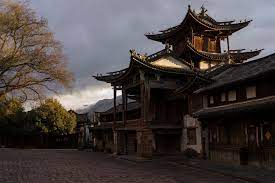
Day 6: Xizhou Tie-dye Experience, Hand-dyeing a Blue Cloth
Morning: Return from Shaxi to the Confirmed Workshop Drop-off
The morning mist in Shaxi hadn’t fully cleared when I woke at 7:00. The guesthouse auntie knocked: “Girl, catching a ride? I’ve asked driver Old Li to pick you up at 9:00.” Old Li is a Shaxi local with a silver-grey minivan. Before setting off, secure the suitcase and sit in a designated passenger seat with the seat belt fastened; do not flatten the occupied rear seat for comfort.
On the return journey from Shaxi, the car passed through the mountain valley. The September morning wind rattled the car windows. I saw an uncle herding cattle along a ridge, the copper bells around their necks “tinkling” in a sequence. Old Li hummed a Bai tune. Seeing me staring out the window, he smiled: “The rice is almost ripe this season; come back in two weeks, and it’ll be so golden it’ll dazzle your eyes.”
Before the tie-dye visit, confirm the exact workshop branch, address and drop-off point with the operator. The original account combines the Xizhou town entrance, Zhoucheng village and “Lanxu Tie-dye Workshop” as if they were in one alley; that location claim has not been established. Allow transfer time from Shaxi rather than assuming a walk from a Xizhou drop-off reaches the intended workshop.
The tie-dye workshop was an old Bai house with a faded blue cloth sign hanging on the wooden door, “Lanxu Tie-dye Workshop” written in wobbly characters. Pushing open the door, the room was filled with an herbal scent—the smell of fermenting woad. A tie-dye auntie sat on the threshold twisting thread. Seeing me, she put down her work: “You’re here, girl? The reservation is 80 yuan, including a square cloth. Pick your fabric first.” Her hair was in a bun with a silver hairpin, and her blue apron was dotted with indigo dye.
(Light in the workshop) Several pieces of freshly dyed blue cloth hung in the center of the hall. Sunlight slanted through the wooden windows, making the patterns on the cloth look like flowing water. Large and small dye vats were stacked in the corner; the innermost one was the largest, the surface a deep blue, with a bitter herbal scent lingering near it.
Noon: Choosing Fabric + Tying Patterns + Dyeing
The auntie brought out a stack of fabrics—white, light blue, off-white, each feeling different. “Want a square cloth?” She picked up a piece of white cotton-linen. “This is the most practical; it makes a good handkerchief or bag hanging.” I felt it; the fabric was thick but not stiff, and in the sunlight, you could see the fine fuzz in the weave.
After choosing the cloth, the auntie taught me how to tie the patterns. She spread the cloth on a wooden table and drew a butterfly outline with a pencil: “You have to tie it tight, otherwise the color will bleed during dyeing.” My hands shook as I held the rubber bands; the first time I tied it, I pulled the wing pattern out of shape. The auntie smiled and held my hand: “Don’t worry, take it slow.” Her hands were rough but warm, with calluses from years of tie-dyeing. Follow the instructor’s tying method for the chosen fabric and pattern; three turns of a band are not a universal no-loosening guarantee.
For dyeing, follow the workshop’s demonstration for its actual dye, fabric and process rather than copying a universal 20-minute soak. Ask about safe handling before touching the dye or wet fabric; this travel account is not a dye-preparation recipe.
Watching the cloth change colour can be part of the experience, but let the workshop staff control the sequence and timing. Different stages should not be inferred from the conflicting clock times in the original account.
Ask the workshop to explain its dyes and demonstrate safe handling. Do not touch dye bowls without permission or treat skin staining as proof of the dye’s quality or safety.
Afternoon: Untying + Drying + Returning to the Ancient City
After completing the workshop’s dyeing sequence, the auntie lifted out the cloth with long wooden tongs, the blue liquid “plopping” back into the vat. I looked at the dripping cloth: “Did I ruin it?” The auntie took it and gently shook it out: “Don’t be afraid, you’ll know once we untie it.”
She helped me remove the rubber bands. I held my breath and leaned in. The patterns on the butterfly wings slowly appeared—the deep blue parts looked like shadows, and the light blue parts like the scales on wings; even the details of the antennae were clear. Ask the instructor to explain how the tying and dyeing produced the pattern; the original account’s simple loose-versus-tight colour rule has not been verified.
After the workshop’s dyeing, untying and rinsing steps, the cloth was hung on a bamboo pole in the courtyard. When the wind blew, the blue cloth fluttered, revealing the undyed white edges like a flying cloud. Drying depends on conditions and the fabric; ask for care and packing instructions before taking it away. I sat on a bamboo chair nearby, watching the sun move across the cloth, the blue getting deeper and clearer.
When collecting it, I took down the cloth. It was still slightly damp but felt soft, a blue so deep it looked like the sky had been shredded and woven in. Keep damp dyed fabric separate from other clothes and follow the workshop’s drying and washing instructions; do not assume colour will never transfer. I paid her, and she handed me a salted plum candy: “Dried it myself, sour and sweet.”
At 17:00, I headed back to the Ancient City with my blue cloth. Passing the Xizhou flats, the wind smelled of rice. Before wearing the cloth, follow the workshop’s washing and drying instructions; being cool or soft to the touch does not establish that it is ready to wear. A friend saw me and shouted: “Wow, a piece of the sky!” I touched the wrinkles on the corner of the cloth, left by the auntie when she untied it—I realized the traces of handwork are more moving than perfect patterns.
(Warmth of the blue cloth) At night, I spread the blue cloth by my bed. The moonlight shined on it, making the blue glow with a hint of purple. Leaning in, there was still a faint scent of woad. I suddenly understood that tie-dyeing isn’t just coloring fabric; it’s kneading time, temperature, and human warmth into the cloth.
Day 7: Slow Ending in Dali, Buying Souvenirs to Go Home
Morning: Buying Food at the North Gate Morning Market
The bustle of the North Gate morning market drifts out from the alleys. I arrived at 9:00 sharp. Bamboo baskets and wooden tubs were already lined up on the bluestone road—an uncle with porcini mushrooms shouted “very fresh!”, and an auntie selling vegetables had hollow heart spinach neatly arranged, with morning dew still on the leaves. The breakfast stalls at the back were busy. An auntie in a blue apron offered a fresh flower cake.
The aroma of the fresh flower cakes was wrapped in the scent of roses. The cakes had golden flaky crusts and pink rose-jam filling. “These use edible roses picked at five this morning,” she handed me one, “eat it while it’s hot, the crust is crispy and the filling is sweet.” I took a bite; the crust “crunched” and fell into my hand, and the rose filling was soft and perfectly sweet, not sickeningly sugary like some shops.
Next, I went to buy Diaomei (Carved Plums). Turning a corner, I saw an auntie in an indigo tie-dye apron sitting on a small stool, with several jars of plums soaking in honey before her. “Want sour-sweet or salty?” She scooped out a carved plum and handed it over. The actual ingredient origin and preparation time need confirmation from the seller; the account’s half-month figure is not a general processing standard. I took a bite; the skin was so sour I squinted, but the flesh was as sweet as honey, and the patterns were carved into the plum flesh. In making Diaomei, the pit is removed; it is not the pit that is carved. [4]
Finally, I bought a bag of Rushan Sachima. An uncle shouted with a bag: “Try some, girl! The Rushan is made from fresh milk squeezed this morning, and the Sachima is fried until crispy.” I popped a piece in my mouth; the milky flavor of the Rushan mixed with the sweetness of the Sachima had great layers, making a “crunch” sound, the milky scent lingering for a long time.
(Sounds of the morning market) The market’s calls, flower sellers’ greetings and children’s footsteps mingled with the breakfast stalls—a lively morning soundscape.
Noon: Buying Souvenirs on Fuxing Road
At 10:30, I had breakfast at “Yang’s Xidoufen” near the South Gate. The Xidoufen was as fragrant as I remembered. The owner poured a spoonful of soup over the bowl: “Drink slowly, it’s hot.” I soaked a fried dough stick in it; it puffed up with the soup and burst with flavor, even better than the one earlier in Shuanglang.
After eating, I strolled to Fuxing Road. This street is full of souvenir shops, with bluestone paths worn shiny and tie-dye signs fluttering in the wind. I entered a shop called “Cloud Handmade.” The owner, a Bai uncle with glasses, was sitting by the window embroidering a tablecloth.
“Want a tie-dye tablecloth?” He pointed to the samples on the wall, “This butterfly and camellia pattern is the most popular.” I felt the fabric; the cotton-linen texture and blue-and-white patterns looked like moving clouds. Before buying, ask about the item’s dye, washing instructions and return terms. Rubbing a sample by hand does not test machine-wash colourfastness; do not treat a verbal no-fading promise as a verified result. Traditional tie-dye can lose some colour during rinsing. [3]
I wandered to the embroidery shop next door, where several handkerchiefs sat on the windowsill. I leaned in to look; they were embroidered with camellias, the stitches so dense they could be counted, the stamens outlined with gold thread that shimmered in the sun. The lady said: “This is the Bai ‘Random Stitch Embroidery’; it looks spontaneous, but every stitch has a purpose.” I picked one with twin lotuses, “15 yuan each, not expensive.”
(Warmth of the handmade) As I paid, the lady insisted on giving me a salted plum candy: “Dried it myself, sour and sweet.” The wrapper had “Cloud Handmade” handwritten on it in slightly crooked script, but it felt endearing. Holding the candy and handkerchief, I suddenly realized—a souvenir isn’t just buying an item; it’s buying a connection with a craftsperson.
Afternoon: Checking Out and Going Home
Confirm the guesthouse’s checkout deadline and your airport or station transfer before deciding how long to shop. If needed, check out earlier and arrange luggage storage; a 13:00 checkout is not a universal entitlement. The auntie was sunning quilts in the courtyard. Seeing me with my suitcase, she smiled and shouted: “Girl, you’re leaving?” She handed me a cup of rose tea: “Have a sip before you go, I brewed it myself.” Half a dried rose floated in the tea; one sip was sweet and floral, warmer than any coffee.
On the way to the airport in a taxi, I looked out the window at Cangshan Mountain. The clouds were still piled on the peak like cotton candy, and the air smelled of rice—the view still felt fresh. The driver said: “You’ve really lived Dali’s days into your bones.”
At the airport, my phone buzzed with a message: “Coming back next weekend?” Looking at the clouds, I felt a bit reluctant to leave. These seven days included sightseeing and plenty of photographs, as well as time for sun, roasted tea and passing clouds. Only then did I understand what it means to “turn daily life into poetry”—it’s not about how far you go, but about slowing down to truly feel the atmosphere in front of you.
Travel Cost Reference (Per Person)
The original ranges below are retained as an unverified planning budget, not a bookable quote. Seven days cover six nights. The travel date, origin of the transport journey, room type and whether accommodation is shared are not specified. Haishe Park, Xizhou stops and individual experiences are optional; confirm which costs apply to your chosen route before relying on the total.
| Item | Details | Cost (Yuan) |
|---|---|---|
| Transport | Flight/High-speed train + Taxi + Car rental | 800-1500 |
| Accommodation | Ancient City Guesthouse + Shuanglang Sea-view Guesthouse + Shaxi Guesthouse | 800-1200 |
| Food | 7 days of breakfast, lunch, dinner + snacks | 500-700 |
| Tickets/Experiences | Yan Mansion + Haishe Park + Tie-dye | 200-300 |
| Others | Tie-dye cloth + Souvenirs | 200-300 |
| Total | 2500-4000 |
Dali —: Numbers to Check
Tickets & Booking
- Xizhou Ancient Town: Free; Yan Family Residence about CNY 18, Yan Family Courtyard Museum about CNY 21–30; Xizhou wheat-field mini-train CNY 35; no booking required[src]
- Shuanglang Ancient Town: Free; Nanzhao Customs Island about CNY 50–56; no booking required[src]
- Erhai cruise: About CNY 142 per person (the Greater Shuanglang line one way and other ticket types)[src]
Transport & Schedules
- Dali station → Kunming South station | EMU: E.g., D8784/D8781: Dali departs 15:40–Kunming South terminates 18:22, 2 h 42 min total, 356 km; stops at Yunnanyi, Chuxiong, Guangtong North, Lufeng South, Kunming[src]
Where to Stay · Room Type · Nearby
- Dali Ancient Town | Reference price Moderate range (mostly OTA guesthouses) | Room tip: Convenient for food, lodging and transport, suitable for a first visit to Dali | Nearby add-ons: Chongsheng Temple Three Pagodas, Renmin Road night market, Cangshan Gantong cableway[src]
- Shuanglang Ancient Town | Reference price On the high side (lake-view guesthouses) | Room tip: Right by Erhai with a good view but relatively inconvenient transport | Nearby add-ons: Nanzhao Customs Island, Yuji Island[src]
Typical Climate & Packing (Past Years)
- January: 2 °C–16 °C °C, [Travel climate reference]
- February: 4 °C–18 °C °C
- March: 6 °C–21 °C °C
- April: 9 °C–24 °C °C
- May: 12 °C–25 °C °C
- June: 15 °C–25 °C °C, Rainy season






