



Is it easy to get motion sickness when traveling in Xinjiang? The answer is not necessarily.Cities, highways, and open roads are generally smoother. What really needs to be evaluated in advance are long-distance rides, continuous curves in mountainous areas, and plateau sections. The pressure on the Duku Highway mainly comes from the accumulation of driving and fatigue, the Yizhao Highway tests the tolerance of mountain road curves, and the Panlong Ancient Road combines dense curves with the plateau environment. Whether you are prone to discomfort also depends on your previous history of motion sickness, sleep, diet, seat, car type, frequency of stops and physical condition that day.
Do you spend most of your time traveling in Xinjiang by car?
Xinjiang has a vast territory, and cross-city lines do involve long-distance travel, but “sitting for a long time every day” is not a fixed fact. Easy days can be arranged around Urumqi, Yining City, and Kashgar City; inter-regional itineraries such as the Northern Xinjiang Ring Road, Duku Highway, and Kashgar to Taxian County will only require longer journeys on some dates.
When looking at the itinerary, don’t just look at the total number of days. You should confirm the departure point, accommodation place, estimated driving time and stops on a day-by-day basis. The time provided by map software usually does not fully include meals, security checks, transfers to scenic spots, photography, weather and temporary traffic control, and the actual arrival time may change.
For motion sickness, the elderly or families with children, a more practical approach is to break up consecutive long distances: arrange easier sightseeing days after long driving days to avoid leaving early and returning late for many consecutive days. This is usually more comfortable than simply pursuing “going to more places.”
Is it easy to get motion sickness when traveling in Xinjiang? What factors mainly depend on
Motion sickness is often related to the inconsistency between the movement information seen by the eyes and the movement felt by the inner ear. Nausea, dizziness, cold sweat, paleness, etc. are all possible manifestations. Children, people with migraines, and people who are prone to motion sickness in the past may be at a higher risk of experiencing discomfort.[1][2]
- Road factors:Continuous curves, frequent acceleration and deceleration, and long bumps add to the excitement.
- Itinerary factors:A long drive, little rest, and continuous driving can lead to fatigue and motion sickness.
- Travel habits:Looking down at mobile phones, reading, sitting upside down, or looking at something close for a long time are more likely to aggravate discomfort.
- Physical status:Lack of sleep, overeating, fasting, anxiety, or headache and nausea that day may all affect tolerance.
- Plateau environment:Headache, nausea or fatigue in Ta County cannot be simply identified as motion sickness. It needs to be judged based on altitude changes and symptom progression.
Comparison of driving difficulty on Duku Highway, Yizhao Highway and Panlong Ancient Road
| Route | Main ride pressure | People who need more attention | Planning focus |
|---|---|---|---|
| Duku Highway | The route is long, mountainous sections alternate with curves, and fatigue may gradually accumulate. | Those who are intolerant of long distances and prone to discomfort after continuous driving | Walk in sections, reserve stops, and do not over-schedule the crossing day |
| Yizhao Highway | Mountain passes and continuous curves have higher requirements for turning tolerance. | Those who are sensitive to frequent turns and rapid acceleration and deceleration | Choose to drive smoothly and confirm the traffic rules of the day in advance |
| Panlong Ancient Road | Concentrated corners and in a plateau environment | Those who have severe motion sickness, headache, nausea or altitude sickness on the same day | Put your physical condition before clocking in, and cancel or change the route if necessary |
This table is not a fixed ranking. On the same road, the feeling may be different between the front row and the back row, short time and long time, sunny day and temporary control, skilled and smooth driving and frequent sudden braking. The final judgment should be based on personal motion sickness history, traffic conditions on the day and the pace of the journey.
Is it easy to get motion sickness on Duku Highway?
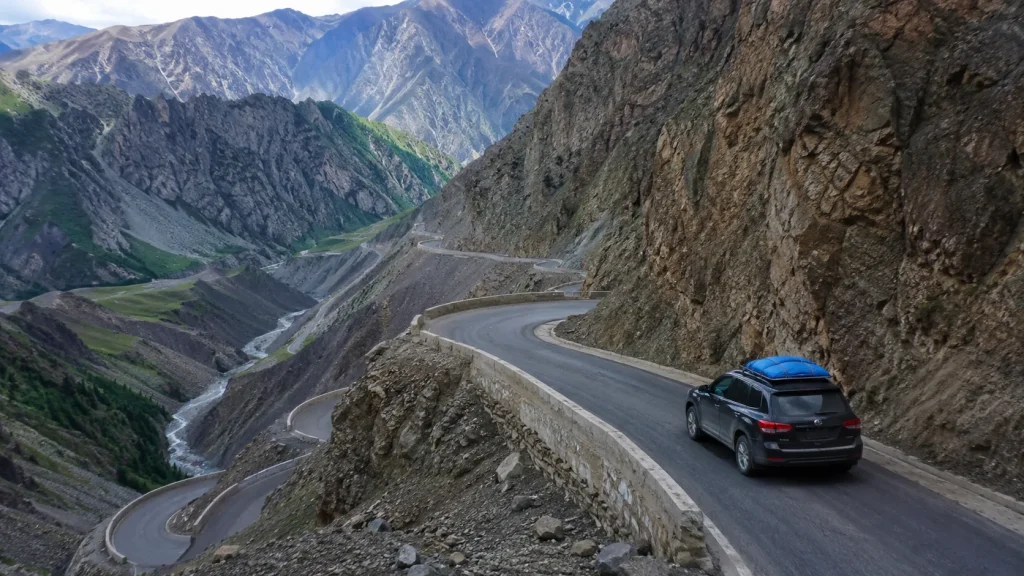
Duku Highway is not full of dense curves, nor can it be simply summarized as a “dangerous mountain road”. Official opening information in 2026 shows that the G217 Duku Highway has a total length of 561 kilometers and will continue to adopt time-sharing traffic management; the specific opening hours, vehicle restrictions and temporary controls shall be subject to the announcement on the day of departure.[3]
For people who are prone to motion sickness, the main pressure of Doku is oftenLong distance and fatigue accumulation. If you set off very early in the morning, arrange multiple attractions along the way, and arrive at the hotel in the evening, even if a certain section of the road is not very concentrated, sitting in the car for a long time may gradually increase your dizziness, stomach discomfort, and fatigue.
It is not necessary to complete the entire trip in one day. The northern, middle or southern sections can be split in conjunction with accommodation, leaving room for lunch, restrooms, stretching and impromptu breaks. People with severe motion sickness should try to avoid the back row of the vehicle, look far ahead when riding, and do not lower their heads for long periods of time to browse their mobile phones.
When traveling with elderly people or children, you should also consider whether it is convenient to get in and out of the vehicle and whether the trunk is occupied by large luggage. The larger the car, the less dizzy it will be. The seat orientation, suspension status, driving style and everyone’s field of vision are equally important.
Is it easy to get motion sickness on Yizhao Highway?
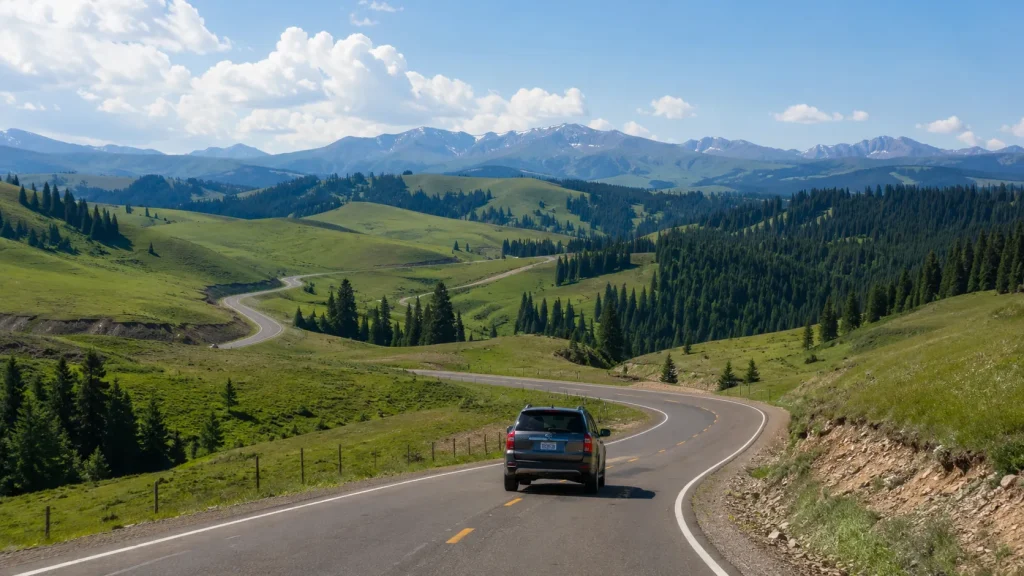
Yizhao Highway connects Yining and Zhaosu. The mountainous curves and mountain pass sections will make some tourists feel more strenuous than ordinary highways. On June 1, 2026, the official announcement was made about the resumption of traffic, announcing rules such as limited opening times and prohibiting the entry of vehicles with more than 7 seats; seasonal closure plans and temporary controls still need to be subject to the latest notice from Yili Prefecture.[4]
What needs more attention here is thatThe short-term stimulation brought by continuous turns. People who have experienced obvious discomfort on mountain roads, winding scenic spots, or continuous sharp turns should tell the driver in advance to give priority to the front row or a front-facing seat with a wide view, and avoid frequent overtaking and sudden braking in a hurry.
The Yizhao Highway and the tours along the way are often scheduled on the same day. The real pressure of riding not only comes from the road itself, but also from early departure, photo stop and late arrival at the hotel. If your companions are prone to motion sickness, you can reduce the number of additional attractions on the day, or use accommodation in Zhaosu as a buffer.
Is it easy to get motion sickness on Panlong Ancient Road?
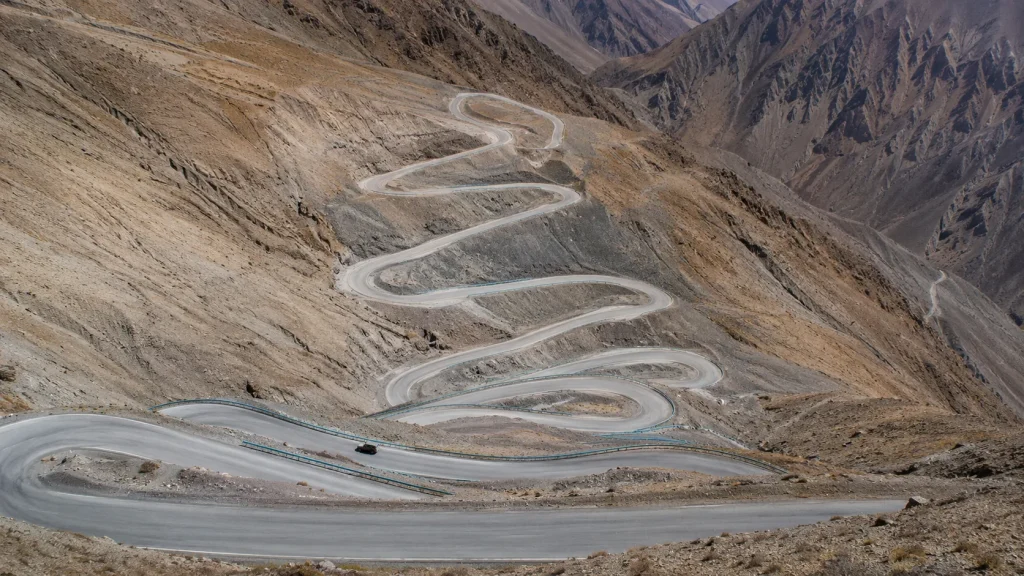
Panlong Ancient Road is located in the Taxkorgan area. According to information from the Xinjiang Transportation Department, the road section is about 36 kilometers, with an altitude difference of about 1,000 meters, more than 600 bends, and the highest point is about 4,200 meters; these are route characteristics and do not mean that everyone will faint.[5]
Its special feature isDense curves and plateau environment coexist. Frequent turns may induce motion sickness, and headaches, nausea, and fatigue may also be related to high-altitude discomfort, fatigue, dehydration, or other causes. You cannot make your own judgment based on just one symptom, let alone continue to drive reluctantly because “it’s just motion sickness”.
Traveling from Kashgar to Ta County usually involves a longer ride and an increase in altitude. If you have poor sleep or appetite after arriving in Ta County, or if you have persistent headaches and nausea that day, it is not recommended to forcefully walk the Panlong Ancient Trail just to complete the check-in. The current traffic direction, opening hours and vehicle regulations of Panlong Ancient Road are [to be confirmed]. Before setting off, you should check the latest announcements from Ta County and the local traffic control department.
Whether children are suitable cannot be judged only by their age, and whether the elderly are suitable cannot be judged only by age. Previous motion sickness, plateau travel experience, basic health conditions, energy on the day and willingness to cancel at any time are more practical judgment conditions.
Itinerary tips:If you are not sure whether the three highways are suitable for traveling together, you can send the travel date, daily accommodation, past motion sickness, age of the elderly and children, and acceptable single-day drive to the HiWan travel consultant. The consultant will assist in breaking up the long journey, arranging stops, and preparing alternative routes.
Which of the three roads is the most prone to motion sickness?
There is no fixed order that works for everyone. For tourists who are not afraid of bends but feel uncomfortable sitting for a long time, the long drive on the Duku Highway may be more arduous; for those who are sensitive to continuous turns, the Yizhao Highway or the Panlong Ancient Trail may be more obvious; for those who are new to the plateau and prone to motion sickness, the Panlong Ancient Trail requires more conservative margins.
When comparing routes, you should look at four things at once: how long the continuous curves last, the total ride time for the day, whether it enters high altitude areas, and whether the trip can be stopped or canceled at any time. Just looking at the “number of curves” cannot fully represent the real body feel.
How to distinguish between motion sickness, travel fatigue and high altitude discomfort?
| situation | Possible performance | Judgment clues | Recommended processing |
|---|---|---|---|
| Motion sickness | Nausea, dizziness, cold sweat, pale face, vomiting | Usually occurs while driving and turning, and may be relieved after parking and resting. | Stop looking at your mobile phone, ventilate, look far away, and park in a safe place to rest. |
| Travel fatigue | Drowsiness, decreased concentration, muscle stiffness, and poor energy | Often related to getting up early, not getting enough sleep, and driving long distances for many days in a row | Reduce the schedule for the day, supplement rest, and eat and drink normally. |
| High altitude discomfort | Headache, fatigue, nausea, sleep disturbance, etc. | Related to rapid ascent to high altitude and persistence and progression of symptoms | Stop continuing to rise; seek medical help promptly when symptoms become apparent or worsen. |
Three types of situations may occur at the same time. The table is only used to help observation and cannot replace medical diagnosis. If high-altitude symptoms worsen during rest, or if obvious difficulty breathing, altered consciousness, or unsteady walking occur, you should descend as soon as possible and seek professional medical help.[6]
How to reduce discomfort during long-distance driving in Xinjiang?
- Make sure you get enough sleep before departure, avoid an empty stomach, and don’t eat too full or too greasy.
- Give priority to choosing a position facing forward with a wider field of view, and focus on the fixed target in front of the road or in the distance.
- Reduce reading and scrolling on mobile phones on mountain roads; maintain air circulation when ventilation is available.
- Tell the driver in advance about your history of motion sickness, rest in sections at safe parking spots, and get off the car to stretch.
- Keep drinking water, paper towels, cleaning bags and a change of clothes within easy reach rather than stuffing them all into the trunk.
- Do not arrange high-intensity travel for multiple days in a row; reduce nighttime activities after a long drive.
Both the NHS and CDC recommend reducing irritation by looking ahead, breathing fresh air, reducing reading or screen use, and taking breaks. The results vary from person to person, and there is no guarantee that motion sickness will be completely avoided.[1][2]
How to choose seats and car models for chartered cars in Xinjiang?
| Select | Possible advantages | Confirmation required |
|---|---|---|
| Co-pilot or front seat | The forward view is usually better and it is easier to predict turns. | Airbags, height, age and local regulations; children should not sit in the front seat |
| Business car middle row front seat | Getting in and out of the car and leg room may be more convenient | Whether the seats are facing forward, whether they are too soft, the visibility of each row and the seat belts |
| Car | Flexible when the number of people and luggage is small | Rear view, legroom and trunk capacity |
| Multiplayer vehicle | Luggage and member arrangements are more centralized | Bumpiness in the rear row, vehicle compliance, and road restrictions on the number of seats |
Commercial vehicles will not naturally eliminate motion sickness. Vehicle maintenance status, tires and suspension, whether the driver is driving smoothly, seat orientation and field of vision are often more critical than “the bigger the car, the more comfortable it is.” Private cars should also reserve trunk space to prevent large luggage from blocking frequently used items or squeezing the seating space.
How to make more secure arrangements for the elderly and children?
Elderly tourists
Prioritize seats that are easy to get on and off, face forward and have seat belts intact, to reduce continuous long drives and late-night arrivals. If you have chronic diseases, recent physical discomfort, or plan to enter high-altitude areas such as Ta County, you should ask a doctor to evaluate your personal situation before departure, and do not make judgments based solely on your age.
Children
Children should not copy medications or seating arrangements from adults. Use a child restraint device that complies with age, height and local regulations, and prepare a cleaning bag, change of clothes, and drinking water. If you feel sick, cry, or become mentally ill, you should stop the car in a safe place as soon as possible instead of asking your child to endure it.
Should people with severe motion sickness abandon these routes?
It is not necessarily necessary to cancel the entire Xinjiang itinerary. You can first retain the parts with a high proportion of cities, grasslands, lakes or highways, and then decide whether to join the Duku, Yizhao or Panlong Ancient Trails based on your own tolerance. People with severe motion sickness are more suitable to “one focus per day”, reduce cross-city travel, stay for two consecutive nights and set up alternative routes.
If you have repeatedly vomited on short mountain roads in the past, or have obvious symptoms as soon as you reach a bend, you can choose not to take the Panlong Ancient Trail, and only take the appropriate section in Duku. You can also make separate plans between Yining and Zhaosu based on the latest road conditions. The quality of a trip should not be measured by whether or not you complete your road trip.
Which symptoms should not be forced on the road?
Repeated vomiting and inability to drink water, obvious or continuously worsening headache, difficulty breathing while resting, abnormal consciousness, unsteady walking, chest pain, syncope, or symptoms that are significantly different from previous motion sickness are not suitable for continuing to drive. Stop the vehicle in a safe place as soon as possible and contact local medical emergency or go to a medical facility promptly.
When feeling unwell at high altitudes, do not attribute all symptoms to motion sickness, and do not rely on continuing to ascend to “adapt”. The CDC recommends that if you have symptoms of high altitude discomfort, you should stop ascending. If symptoms worsen while resting, you should descend and seek medical help.[6]
How can a customized itinerary reduce the stress of traveling?
The value of a private itinerary is not to ensure “no motion sickness”, but to give the route more room for adjustment. The travel consultant can first understand each member’s motion sickness history and acceptable driving distance, and then arrange the car type, seats, accommodation, stop frequency and alternative roads.
- Divide the Duku Highway into suitable sections and do not cram all scenic spots into the crossing day.
- When the Yizhao Highway opens and the weather changes, prepare alternative routes in advance.
- Panlong Ancient Trail has an option of “depending on the conditions of the day” and does not force check-in.
- The elderly and children’s families are less likely to change hotels and reserve space for lunch breaks and early termination.
- Choose a vehicle based on the number of people and luggage to avoid a cramped ride caused by full passengers and full loads.
You can refer to it firstXinjiang travel routes, comparisonNorth Xinjiang itinerary including Duku HighwayandKashgar, Taxian and Panlong Ancient Road southern Xinjiang itinerary‘s daily drive. You can also read before entering the mountains and plateaus in summerClothing recommendations for summer mountainous areas and plateaus in Xinjiang。
What information should I prepare before consultation?
- Travel date, travel days and the city you want to visit;
- Whether it is necessary to take the Duku Highway, Yizhao Highway or Panlong Ancient Road;
- Each member’s past motion sickness degree and the most unbearable road conditions;
- The age of the elderly and children and their health conditions that require special care;
- The maximum acceptable ride time and latest arrival time per day;
- The number of people traveling with you, the number of pieces of luggage, and whether child safety seats are needed;
- Would it be acceptable to change the route, visit fewer attractions or add one night of accommodation?
FAQ
Does traveling to Xinjiang require a long ride every day?
No. The cross-regional loop takes several days to drive, while city and peripheral tours can be arranged more easily. When making judgments, you should look at the accommodation location and estimated driving time on a day-by-day basis, rather than just the total number of days; the stress of parent-child itineraries for the elderly can be reduced by staying two nights in a row and reducing cross-city travel.
Would it be better to sit in the front row on Duku Highway?
It may be more comfortable for some people because the front view is wider and it is easier to predict turns, but there is no guarantee that they will not get dizzy. At the same time, it is necessary to reduce the use of mobile phones, allow the driver to drive smoothly and arrange rest; whether the co-pilot is suitable must also meet safety requirements.
Is Duku Highway suitable for people with severe motion sickness?
You can choose segments based on severity without having to go all the way in one go. If you have often suffered from repeated vomiting on mountain trails in the past, you should reduce the number of attractions on the day, avoid waiting in the back row, and prepare alternative routes; if you feel unwell on the day of departure, it is usually safer to cancel the trek.
Which one is more likely to get dizzy, Yizhao Highway or Duku Highway?
There is no unified answer. The continuous mountain curves of the Yizhao Highway may be more irritating to people who are sensitive to turns, while the Duku Highway is more likely to cause discomfort due to longer rides and accumulated fatigue. The comparison should be based on the history of motion sickness and the complete drive of the day.
Is it really that easy to get motion sickness on Panlong Ancient Road?
The curves are more concentrated, so you do need to be more careful, but not everyone will get dizzy. Those who have just arrived at the plateau, have poor sleep, or have had headaches and nausea that day should be more conservative; the symptoms cannot be entirely attributed to motion sickness, and you should stop rushing if the symptoms persist or worsen.
How to easily differentiate between motion sickness and altitude sickness?
Motion sickness often occurs when the vehicle is moving and turning, and may be relieved after parking. High-altitude discomfort is related to the increase in altitude, and headaches, fatigue, and nausea can persist. The two overlap, and professional medical help should be sought if the diagnosis cannot be determined or if symptoms worsen.
Is it suitable for children to walk the Panlong Ancient Trail?
You cannot judge based on age alone. The child’s history of motion sickness, altitude acclimatization, energy level on the day, and whether the child can safely use child restraints should be examined. If you are obviously feeling unwell, you should cancel or change the schedule. Do not let your child continue to endure just to complete the check-in.
Is it suitable for the elderly to take the Duku Highway?
Many elderly people can tour in sections, but this must be combined with personal health, history of motion sickness, and tolerance for driving. It is recommended to reduce early departures and late arrivals, and arrange seats that are convenient for getting on and off the bus. If you have chronic diseases or recent discomfort, you should consult a doctor before departure.
Can Xinjiang chartered cars stop midway?
Private cars are usually more convenient to adjust than fixed groups, but they can only stop at legal and safe parking spots and are subject to road control, weather and time restrictions. Before booking, you should confirm the number of stops per day and the driver’s handling of temporary adjustments.
When should you take motion sickness medicine?
Different drugs have different applicable groups, contraindications and usage times, so it is not appropriate to give a unified answer. You should consult a doctor or pharmacist before departure and use the medicine according to the instructions; especially children, pregnant women, the elderly and people with underlying diseases should not copy other people’s plans.
Are commercial vehicles less likely to faint than cars?
Not necessarily. Commercial vehicles may have better space, but the rear rows, side-facing seats or softer suspension may also make some people uncomfortable. In addition to the car model, you should also check the vehicle status, seat orientation, whether the driving is stable, and whether the number of people and luggage is overly full.
Should I cancel my entire trip to Xinjiang due to severe motion sickness?
It is usually not necessary to cancel the entire trip. You can retain urban, highway and easy scenic spots, delete continuous winding mountain routes, and break up cross-city days. If you suffer from frequent and severe vomiting during short distances, it is recommended to receive a professional assessment before determining the intensity of the route that is suitable for you.
Arrange Xinjiang route according to your own tolerance
“Is it easy to get motion sickness when traveling in Xinjiang?” cannot be judged without considering the specific route. It is usually easier to prepare the three highways, the total daily driving distance and the tolerance of the members one by one before deciding to retain, segment or replace it than to prepare just before departure.
If the travel time has been determined, you can provide Hiwan Travel with the number of travel days, planned destination, number of people traveling with you, past motion sickness, information about the elderly and children, an acceptable single-day drive, and whether you must take three roads. The travel advisor can combine accommodation, car types, stops and the latest road announcements to give route suggestions that are more suitable for members’ tolerance. PassableHiWan Travel Contact and Consultation PageSubmit requirements.
Related Reading
- How big is the temperature difference between morning and evening in Xinjiang: How to dress in layers in northern Xinjiang, Ili, southern Xinjiang and high-altitude areas
- How many sets of clothes to bring when traveling in Xinjiang: 7-day, 10-day and 15-day luggage lists
- Xinjiang 5-Day Itinerary Guide: Avoiding Rushed Routes, Repeated Sights, and Hotel Issues
- 7-day essential in-depth tour of Northern Xinjiang: Kanas Lake + Hemu Village + Sailimu Lake all unlocked
- Xinjiang 8-day tour guide: Kanas, Hemu, Bayinbuluk attractions and food arrangements
独库公路 — Key Facts
Transport Options
- 克拉玛依市独山子区 → 阿克苏地区库车市|自驾公路(G217独库公路):全长约561公里,纵贯天山南北。北段独山子-乔尔玛约250公里;中段乔尔玛-那拉提-巴音布鲁克约60公里;南段巴音布鲁克-库车约250公里。沿途串联独山子大峡谷、唐布拉、那拉提草原、巴音布鲁克天鹅湖、天山神秘大峡谷等。[源]






