



Day 1: Arriving at Jianshui – The Wind of Double Dragon Bridge and the Clay of Purple Pottery Carry the Soul of Old Jianshui
At exactly 10:00 AM, I dragged my suitcase out of Jianshui Station. The sun that day made the tiles of the station square feel a bit hot. Turning left 50 meters from the exit, I immediately spotted the green minibus sign—the “Jianshui-Qujiang” shuttle was parked there. The driver, in a blue uniform, leaned out the window and shouted: “Young lady, going to Double Dragon Bridge? 10 yuan per person, 30 minutes to arrive.” There were only three or four people on board. I picked a window seat in the back row and watched the rice fields fly by. The window was cracked open, and the wind, wrapped in the fresh scent of rice leaves, drifted in—it was much more comfortable than an air-conditioned bus.
After getting off the minibus, Double Dragon Bridge was diagonally opposite the intersection. It wasn’t until I walked to the front of the bridge that I realized its “grandeur”: 17 stone arches connected to form a long bridge over 200 meters, with each arch reflecting the blue sky. The stones of the bridge had been polished bright by time, with moss squeezing through the crevices. The rice fields by the bridge were just beginning to head, a pale yellow emerging from the green. When the wind blew, waves of rice rolled from the east end of the bridge to the west, and the fragrance of grass mixed with moist water vapor brushed against my face. Beneath the bridge, it was even livelier: an auntie in a blue cloth apron squatted on a stone washing clothes, with a pile of sheets to be washed in a bamboo basket. The wooden club hit the bluestone with a “dong-dong” sound, creating a delicate rhythm with the sound of flowing water. I sat on a stone bench by the bridge for a while, watching an old man in a straw hat walk by with a hoe. He smiled at me: “Here to see the bridge? This bridge is over 200 years old. Back then, even the horse caravans had to stop here for a rest.”
Feeling hungry at noon, I walked 50 meters along the path by the bridge and saw the blue cloth sign of “Old Zhou’s Roasted Tofu.” The owner was squatting in front of a charcoal stove, flipping tofu on an iron grate, with round pieces of “bao jiang” tofu sizzling and oozing oil. I ordered a portion (20 yuan) and watched him pick one up with bamboo clips; the outer skin was already roasted crisp and translucent. With a light poke, the tender tofu “popped” out. “Dip it in this.” The owner handed me a small dish. The dried chili powder carried a smoky aroma, and the Houttuynia cordata fragments were a bright green, mixed with a splash of soy sauce. With one bite, the skin cracked with a “ka-cha” sound, while the inside was so tender it melted away. The dipping sauce was so fragrant it rushed straight to the nose—three levels fresher than the MSG-laden tofu I’d eaten in tourist areas before.
In the afternoon, I took a taxi to Xiang Fengchun Purple Pottery Workshop (15 yuan, 10 minutes). The workshop was in an old alley on the edge of the ancient city, and the courtyard was filled with unbaked pottery blanks. The master’s surname was Li, in his fifties, with palms as rough as old tree bark and knuckles full of calluses from kneading clay. “Knead the clay first.” He pinched a lump of clay and threw it to me, “You have to squeeze the air out, or it will explode when fired.” I tried to copy him by rubbing it in my palm, but the clay was disobedient, either becoming loose or bunching up. Master Li took it with a smile: “Relax your wrist, press down, don’t fight it.” He covered my hand and kneaded again. Ten minutes later, the clay was finally smooth enough to see a reflection. “Try the wheel throwing.” He fixed the clay on the turntable, and after turning it on, the clay began to spin. I reached out to support the clay wall; with a slight force, the blank tilted with a “pa” sound. Master Li quickly steadied it: “Don’t panic, keep your fingers close to the clay, lift it up slowly, and keep your strength even.” After half an hour of struggle, I finally managed to shape a crooked little tea cup. Master Li patted away the mud spots: “Not bad for a first try. It’ll make a good pen holder after firing.” I paid the 150 yuan experience fee (including firing). He said it would be mailed home in 10 days. I noted down the address, thinking of pairing it with a good tea when it arrives.
At night, I stayed at the “Tingziyun Guesthouse” in the ancient city. The bluestone road was bumpy, and the old houses on both sides still had faded brick carvings at their foundations. The room was deep in the alley. Opening the old wooden window, I could see the phoenix tree in the corner of the courtyard, its leaves rustling in the wind. In the living room downstairs, a charcoal stove was burning. The owner, Uncle Wang, wearing a buttoned shirt, brought a cup of Pu-erh tea: “Freshly brewed ripe Pu-erh, warm enough to relieve fatigue.” We talked about Jianshui’s past. He said: “This place used to be the cultural center of southern Yunnan. These old houses in the alleys have brick carvings that were the standard for successful scholars’ mansions back then. Look at this peony, it has three layers of petals carved into it.” Before bed, I wandered to the night market, where stalls were set up along the bluestones, their lights making shadows dance. People crowded around the roasted potato stall. The owner cut potatoes into thick slices, roasting the skin black over charcoal, then brushed on chili powder and sprinkled green onions (5 yuan). With one bite, the skin was so crispy it crumbled, while the inside was soft and sweet. I also had a bowl of sweet white wine (3 yuan), fermented from glutinous rice, served in a small porcelain bowl with a sprinkle of osmanthus. It was sweet and warm going down, washing away the smoky air of the night market.
(Small reminder: The last minibus is at 5:30 PM, so it’s recommended to arrive at the station around 10:00 AM; it’s best to contact the master at the purple pottery workshop via WeChat in advance to reserve a quiet spot.)
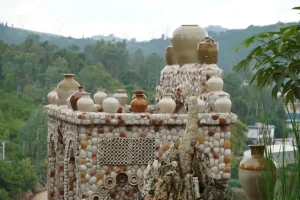
Day 2: The Old Houses of Tuanshan Residences, History More Alive than a Museum
At 7:50 AM, I stood at the entrance of Jianshui Bus Station clutching 15 yuan in cash—the green minibus had just skidded to a stop, and the ticket seller leaned out the window shouting, “Jianshui to Tuanshan, hurry if you’re going”. Getting on, the seats had old blue cloth covers that made my arms a bit itchy, but looking out the window, the dew in the rice fields hadn’t dried yet, and the distant mountains were wrapped in thin mist, which was more interesting than an air-conditioned bus. An hour later, I arrived at the Tuanshan intersection. I pulled out 50 yuan for the entrance fee. The ticket seller was an auntie in a blue cloth shirt. As she tore the ticket, she said: “Walk slowly, the paths in the village are narrow, don’t bump into the corn drying at the doors.”
The first impression of entering the village was like walking into an unsealed old movie—the bluestone paths were polished bright by footsteps, and the houses on both sides were made of rammed earth walls, with “fortune” characters or lotus vines carved on the lintels. Some foundations even had firewood piled up. I headed straight for the Zhang Family Garden. The threshold of the three-entry courtyard was higher than my knees. As I stepped over, I heard voices from inside. The pomegranate tree in the courtyard bore small, translucent red fruits, and the wood carvings in the main hall were truly exquisite—every petal of the peonies on the doors and windows had curled edges, feeling rough to the touch with the texture of old wood. The color paintings on the beams surprisingly hadn’t faded, depicting “Guo Ziyi Offering Birthday Greetings,” and the folds of the characters’ clothes still showed the luster of the pigment.
While I was staring blankly at the paintings, an old man sitting at the door called out to me: “Young lady, come in for a cup of tea?” He wore a faded buttoned shirt and held a coarse pottery pot. I sat down, and he poured a cup of tea, the liquid yellow-green in color. It tasted a bit astringent at first, but the sweet aftertaste came quickly. “I grew this tea in my back garden without pesticides,” he said. “Our village used to be a stop for horse caravans. Back then, the caravan leaders carrying tea and salt through here would all rest at my house—look at that wing room, that’s where the horse packs used to be piled.” I looked where he pointed. There was still a deep groove on the wall of the wing room, worn by ropes. Instantly, I felt that groove was more alive than any written words.
At noon, following the path at the village entrance, I saw the blue cloth sign of “Auntie Zhang’s House.” The courtyard had a grape trellis with green grapes hanging from the vines. Auntie Zhang, wearing a navy blue apron, came out of the kitchen with chicken soup: “Freshly stewed, have a taste.” The local chicken soup was served in a coarse porcelain bowl, with a few oil spots floating on the surface. The chicken was stewed until the meat fell off the bone. With one bite, the meat was firm and had a faint ginger aroma. “The chickens are free-range in my backyard, let out every day to peck at bugs,” Auntie Zhang said as she wiped her hands. “The water spinach served with it was just picked this morning, very sweet.” I drank two large bowls of soup and even sucked on the chicken bones; it was truly incredibly fresh.
Returning to Jianshui in the afternoon, I specifically got off the minibus early when passing Lin’an Road. The “Yikeyin” (Single Seal) structure houses are really interesting—the main house and wing rooms form a square, like a seal stamped on the ground. At an old residence next to the Zhu Family Garden, the lintel was carved with “Farming and Studying Pass Down the Family,” the four characters carved very deep. I reached out to touch them and found a few cat hairs stuck in the brick crevices, likely from a neighborhood cat that often came to rub against it. When I reached the Daban Well, the bluestones at the wellhead were polished bright. An auntie nearby in a blue cloth shirt was drawing water with an iron bucket. I approached: “Auntie, is this water sweet?” She looked up and smiled, the iron bucket in her hand spilling some water onto the bluestone: “We’ve been drinking it for thirty or forty years, much better than the mineral water bought in supermarkets. Have a taste.” I took the ladle she handed me and took a sip. It was indeed cool and clear, with a faint sweetness, like drinking mountain spring water.
The auntie at the nearby pastry shop called to me: “Want some Lion Cake? Just made.” The box was wrapped in earthy yellow paper and tied with a red string, 15 yuan. Opening it, I could smell the osmanthus fragrance. With one bite, the crispness of the rice cake wrapped around the sweetness of the osmanthus. It wasn’t greasy, and the fragrance remained in the throat after swallowing—it must have been made with homemade sugar.
Returning to “Tingziyun” at night, the owner Uncle Wang was waiting for me downstairs with a small porcelain jar: “I saved some sweet white wine for you to drink on the way to Yuanyang tomorrow, to warm your body.” The seal on the jar was old newspaper. When I uncovered it, I could smell the fragrance of glutinous rice. I told him about my experience in Tuanshan today. He smiled and nodded: “The old people in that village can all tell old stories. If you stayed a bit longer, you could listen for three days and three nights.”
Lying on the bed in my room, listening to the rustling of the phoenix tree outside, I thought of the wood carvings I touched in Tuanshan, the old tea I drank, and the chicken soup at Auntie Zhang’s house—these are not exhibits in a museum, but living history with warmth, like a grandma’s old wooden cabinet, hiding stories from generation after generation.
(Small details: The last minibus from Tuanshan is at 4:00 PM, so it’s recommended to go in the morning to catch the daily routine of old people drying corn and cooking; some wing rooms in Zhang Family Garden are villagers’ homes, so call out “Is anyone here?” before knocking, and don’t intrude abruptly; the water from Daban Well can be drunk directly, but it’s best to bring a cup rather than putting your mouth to the wellhead.)
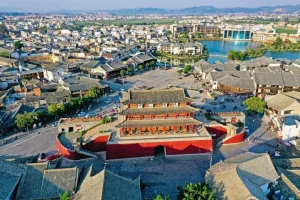
Day 3: The Wind of Yuanyang Terraces Carries the Fragrance of Rice Leaves
At 8:30 AM, clutching the Lion Cake I bought yesterday, I arrived 10 minutes early at the window of the Jianshui Bus Station waiting room—the tires of the green bus were still stained with mud from the mountain roads. The driver was wiping the windshield. Seeing me come over, he made space in the front passenger seat: “Sit here, you’ll be able to see clearly how the terraces climb the mountains.” The bus started at 9:00 sharp. Leaving the city, I could still see the leaves of the banana groves fanning in the wind. Twenty minutes further south, the terraces suddenly burst into view: layer upon layer winding around the mountains, like a green velvet blanket wrapped around the green hills. The water-filled fields were as bright as mirrors, reflecting the clouds in the sky, while the transplanted fields showed a tender green. When the wind blew, the rice seedlings swayed in delicate ripples. I pressed my face against the window; I could even clearly see the little sheep grazing on the ridges.
Two and a half hours later, I arrived at Yuanyang county town. The blue “Scenic Area Direct Bus” sign stood at the intersection. A uniformed staff member pointed to the green minibus next to it: “Every 10 minutes, goes directly to the entrance of Duoyishu Village, 20 yuan.” Getting on, the driver was humming a Hani song, the melody as slow as the wind on the terraces. Two aunties carrying cameras sat on the bus, guessing all the way whether “the next bend will have terraces.”
At 12:30 PM, Aqiang was standing at the village entrance holding a bamboo sign with my name on it—wearing a navy blue Hani top and a brocade belt, with his pant legs rolled to his ankles, revealing rubber shoes stained with mud. “Let’s go, my house is the second one at the head of the village.” Both sides of the stone path were lined with adobe houses. The walls had peeled in some places, revealing the straw inside, but the lintels were all hung with bamboo decorations, some woven into bullheads and others into rice ears. Entering the house, the charcoal in the fire pit was crackling, and a clay pot on top was stewing local chicken soup, its fragrance mixing with the smoke and filling the room. Aqiang brought a bamboo stool for me to sit by the fire: “Have some hot soup first, the wind on the terraces is cool.” When the chicken soup arrived, a few sprigs of Codonopsis pilosula floated on top. The chicken was stewed until it fell off the bone. I drank two large bowls, my chest tingling with warmth.
For lunch, we had terrace fish. When Aqiang brought the iron basin over, the fish were still splashing—just caught from the rice fields behind the village, their scales shimmering with silver light. The ginger was old ginger grown in the corner of the wall, cut thick, and the millet chili was cut into rings. There was a “zi-la” sound when they hit the pan, and the fragrance instantly filled the room. I picked up a piece of fish meat; it was so tender it melted. The spiciness rushed from the tip of my tongue to my forehead. Paired with terrace rice—each grain was distinct and had a sweet chewiness, the taste of being nourished by terrace water. I devoured two bowls of rice and even soaked half a bowl of rice in the fish soup. Aqiang laughed and patted my shoulder: “Slow down, there’s more in the pot.”
At 2:00 PM, I changed into a pair of old slippers and followed Aqiang to the ridges. The ridges were paved with mud mixed with straw, feeling soft and a bit slippery underfoot. I held onto the rice stalks nearby, afraid of falling into the mud. On the way, we met an auntie in an indigo cloth shirt with a blue cloth headwrap, bending over to pull weeds. Aqiang called out “A-jie,” and she looked up and smiled: “You’re here?” She handed me an empty mineral water bottle filled with mountain spring water: “Have a drink first. You have to pinch the roots to pull these weeds—” Saying this, she pinched a weed and flicked her fingertip upward, pulling the whole weed out with its muddy roots. “If you leave the roots, they’ll grow again tomorrow, a waste of effort.” She also taught me how to recognize the rice: “This wide-leaf one is an ‘old variety.’ We’ve been planting it for centuries. It’s more fragrant than hybrid rice, and the cooked rice can taste of sunlight.” When the wind blew, the scent of rice leaves mixed with the smell of earth surged over. The distant terraces were dyed golden-red by the setting sun, like a layer of crushed gold had been scattered. Cattle on the ridges slowly grazed on grass, and children’s laughter floated over from the village.
Returning in the evening, Aqiang had already started roasting sweet potatoes. Several sweet potatoes were buried in the ashes of the fire pit, their fragrance filling the entire house. He gnawed on a sweet potato and said: “Want to wake up early tomorrow and come transplant seedlings with me? You’ll need to wear slippers, or you’ll get mud all over yourself.” Touching the remaining Lion Cake in my pocket, I thought of the terraces I saw from the bus in the morning and the hands of the auntie when she taught me to weed—rough like old tree bark, but carrying the warmth of the land.
Lying in bed at night, hearing the charcoal in the fire pit crackle and smelling the straw fragrance in the room, I suddenly understood that the Yuanyang terraces are not a painting—they are the ridges stepped out by generations of Hani people, the fish swimming in the rice fields, the weed roots in the auntie’s hands, and every mouthful of rice with the taste of sunlight. The wind blew in from the window, carrying the scent of rice leaves, and wrapped around me as I slowly fell asleep.
(Small reminder: The last direct bus to Yuanyang is at 5:00 PM, so it’s recommended to go in the morning to catch the morning mist on the terraces; you can roast by the fire pit in Azheke Village at night, remember to bring a light jacket; transplanting seedlings requires an early start, the village gets lively around 6:00 AM. Bring a bottle of water, as there’s none for sale on the ridges.)
Appendix: Useful Information for Azheke Village
- Farmhouse Booking: Search for “Azheke Village Aqiang’s House” on Ctrip. Booking 3 days in advance can secure a room by the fire pit;
- Terrace Fish: Ask villagers “if there are any freshly caught.” Freshly killed fish are three times tastier than frozen ones;
- Weeding Tip: Pinching the roots is more effective than pulling the leaves. A-jie will laugh and teach you.
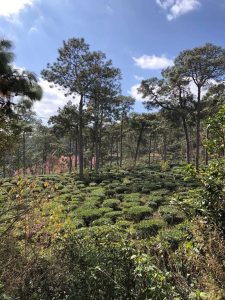
Day 4: A Morning Transplanting Seedlings with Villagers, More Memorable than Sightseeing
At 6:30 AM, while I was groggily reaching for my phone, there was a knock on the door—Aqiang’s voice carried the coolness of the dew: “Quickly, get up! The rice seedlings in the terraces can’t wait. Wear the slippers I gave you, don’t get muddy.” Rubbing my eyes, I pulled on an old T-shirt, rolled my jeans up to my knees, and took the plastic slippers he handed me (with deep treads on the soles so they wouldn’t slip on the ridges) and followed him out of the village.
The sky was just beginning to brighten. The dogs in the village alleys were curled up at the wall foundations napping. The stone path was covered with fine dew, seeping coolly into the gaps of the slippers. After walking for 10 minutes to the edge of the terraces, a knee-deep muddy field spread out before my eyes, with a few bits of floating weed on the water surface. The distant mountains were still wrapped in mist. Aqiang took off his sandals, rolled up his pant legs, and stepped in: “Look clearly—let your foot sink halfway into the mud, don’t step too firmly, or you won’t be able to pull it out.” He pinched a seedling, gripped the roots with his fingertips, and stepped steadily into the water: “Bend your waist low, the seedling must be straight, the spacing about this wide—” He measured 10 cm with his hand. Mud spots splashed onto his pant legs like a handful of crushed silver.
I tried to copy him. As soon as I put my foot in, it sank to my calf, and I quickly pulled it out in a fright: “How is this mud like glue?” Aqiang laughed until he had wrinkles: “I step in it every day, I’m used to it! Come, I’ll support you.” His hand wrapped around mine, guiding my seedling into the mud: “Don’t rush, step steadily before moving.” I tried to transplant three rows, and my back began to ache so much I couldn’t stand straight. Sweat from my forehead dripped into the mud, “pa,” splashing tiny water droplets. Aqiang handed me an old bamboo hat: “Rest for a bit, have some tea.” The bamboo hat still carried the scent of his sweat mixed with the muddy smell of the rice field. I picked up the enamel cup and took a sip of plain water; the dryness in my throat mostly dissipated.
After finishing two rows of the field, I collapsed on the ridge to rub my back. Aqiang pulled a coarse burlap bag from his canvas bag—the mouth was tied with cotton thread and still carried the warmth of the sun: “For you, home-grown red rice, just dehusked. Take it back to cook; the fragrance will attract the neighbors.” I pinched the bag; the rice grains were plump and hard with texture. “50 yuan per jin?” I asked. Aqiang waved his hand: “A gift for you to taste! If you want to buy, go to the village cooperative; it’s ten times more fragrant than the supermarket—supermarket rice is machine-grown and hasn’t seen enough sun.”
Returning to Aqiang’s house at noon, wild vegetables were being stir-fried in the iron pot on the stove, the fragrance mixing with the smoke. The bitter greens were picked from the edge of the terraces, with thin leaves and small serrated edges. Aqiang used minced garlic to fry them, threw in the bitter greens for a quick stir-fry, and sprinkled a little salt: “Don’t mind the bitterness, this is the ‘cleansing grass’ of the terraces, the aftertaste is very sweet.” I took a chopstick-full; first I frowned at the bitterness, then slowly chewed out a clear sweetness. Paired with the leftover terrace fish from the morning (the fish bones were stewed soft), I actually finished a whole bowl of rice. Aqiang sat opposite me and laughed: “Slow down, no one’s competing with you—I ate these bitter greens every day when I was a kid.”
At 2:00 PM, I took the bus back to Yuanyang county town. On the bus were several aunties carrying bamboo baskets filled with freshly picked water spinach. They chatted with me: “Young lady, did you come to transplant seedlings? My kid came to learn last year too, and his were even more crooked than yours.” I nodded with a smile. The terraces outside the window slowly receded into green mountains and then into flat plains. I thought of the seedlings I transplanted in the morning; they should have already taken root and be swaying in the wind.
When transferring to the high-speed train back to Kunming, I clutched the red rice bag Aqiang gave me, smelling the fragrance of the rice inside. I thought of the fragments of these past few days: the wind of Double Dragon Bridge wrapped in the scent of rice leaves, the mud spots Master Li left on my hands at the pottery workshop, the old green tea handed to me by the old man in Tuanshan, and the mud prints on my pant legs when Aqiang taught me to transplant seedlings. These are not “scenery” in a photo, but “living energy” whose temperature you can touch and whose flavor you can taste.
When we were about to part at the village entrance, Aqiang ran out holding two warm boiled local eggs: “Eat them on the way, don’t let them get cold.” The eggshells still carried his body heat. As I took them, he said with a smile: “Next time you come, I’ll teach you how to make rice cakes—with our family’s glutinous rice. Once dried, they can be kept for half a year and chew like candy.” I looked at the terraces behind him; the setting sun pulled his shadow very long, like a frame from an old movie.
A few unspoken practical details:
- Be sure to wear old clothes for transplanting! The muddy field will turn you into a “mud person.” Don’t lose the slippers Aqiang gives you; the little shop at the village entrance can help you store them;
- Aqiang’s red rice is an “old variety.” Soak it for half an hour before cooking, and the rice fragrance will fill the entire house;
- Ask before taking photos with villagers—Aqiang will laugh and say, “Go ahead, this face of mine is as sun-baked as the terrace soil, it’s not ugly”;
- Buy the bus ticket from Yuanyang back to Kunming 1 day in advance. Afternoon buses easily run out of seats. Sitting in the front row allows you to see the mountains along the way.
This trip was slow. I didn’t rush to attractions or take “check-in” photos. The most memorable part was the morning transplanting seedlings with Aqiang—my back was so sore I couldn’t stand straight, yet I felt grounded, as if I had learned a “craft” from the land. Those stories hidden in the ridges, the old houses, and the mouths of the elderly are not specimens in a museum; they are living history, “humanity” that can be tucked into a pocket and cooked into rice.
Clutching the red rice bag on the high-speed train, the clouds outside the window drifted very slowly. I suddenly understood—humanity is not something you “see,” it is something you “do”: transplanting seedlings once, drinking a cup of old tea, listening to a story of the past—those temperatures will seep into your bones and become your own story.
Yuanyang Rice Terraces and Jianshui — Practical Information
Tickets & Booking
- Jianshui Confucian Temple: Adult about CNY 39.9–40; child/student/senior CNY 20; intangible-heritage theater section C CNY 50, section V CNY 110[src]
- Jianshui Ancient Town mini-train: Round-trip hard seat adult CNY 120; concession ticket CNY 60 (departures 09:00, 14:30); advance booking required (OTA/on site)[src]
- Lin’an Prefecture Office / Imperial Examination Hall / Chaoyang Tower: Lin’an Prefecture Office CNY 32; Imperial Examination Hall CNY 20; Chaoyang Tower CNY 15; combined ticket for Zhu Family Garden + Confucian Temple + Lin’an Prefecture Office + Chaoyang Tower + Imperial Examination Hall CNY 115[src]
Transport & Schedules
- Kunming South Bus Station → Yuanyang Xinjie town | Long-distance coach: Fare about CNY 120–140, journey about 5.5 h, direct to the Xinjie town terrace area[src]
- Jianshui station → Yuanyang Nansha town | Passenger coach: Fare about CNY 38, rolling departures[src]
- Yuanyang Nansha bus station → Xinjie town (terrace area) | Rural minibus: About CNY 10 per person, rolling departures 7:00–20:00, about 40 min[src]
Where to Stay · Room Type · Nearby
- Near the Duoyishu scenic area | Room tip: The top choice for watching the sunrise; you can walk to the viewpoint in the early morning | Nearby add-ons: Duoyishu viewpoint, Azheke Ancient Village[src]
- Xinjie town / Shengcun market town | Reference price Cheaper on weekdays | Room tip: Restaurants and guesthouses are concentrated, convenient for Hani-style dining | Nearby add-ons: Bada viewpoint, Qingkou Hani Folk Village[src]






