



Preparation: Transportation, Accommodation, and Essential Items
To reach Bingzhongluo, you first need to establish a base in Liuku—the capital of Nujiang Lisu Autonomous Prefecture. I took a night sleeper bus from Kunming West Bus Station: it departed at 8:00 PM, the air conditioning made me sleepy, there were charging ports under the seats, and it stopped for 20 minutes at the Chuxiong Service Area. I didn’t dare get off (fearing I’d miss the connection). Arriving at Liuku Bus Station at 6:30 AM, the Ersi (rice noodle) stalls at the entrance were just setting up. The owner shouted “Beef Ersi, 8 yuan a bowl.” Drinking the hot soup helped wash away the fatigue of the night journey. The next day at 8:30 AM, I went to the window to buy a direct bus ticket to Bingzhongluo. There are only two buses a day—8:30 and 10:00, priced at 80 yuan for a 5-hour journey. Don’t believe the illegal taxi touts in floral shirts; last time I met one who promised “150 yuan direct to the village entrance,” but the station auntie told me he just drives you to Fugong to transfer to a carpool, which is more troublesome and expensive. The bus driver was still Old Zhou; he smiled when he saw me: “Back again? I saved the window seat in the back for you—great view of the Nujiang River bends.” Passing through Fugong, the canyon outside was as narrow as a crack, and the river water was a deep green. Approaching Bingzhongluo, Peach Blossom Island across the river floated in the mist; it must bloom like pink clouds in spring.
Staying at Nujiang Old Ma Guesthouse in Bingzhongluo town is the most worry-free option. The owner, Uncle Ma, is a local in his fifties with sun-reddened skin, wearing a navy blue cloth shirt, and the bougainvillea at the door is in full bloom. A room is 120 yuan per night with solid wood beds and thick quilts—it’s not cold at night. There’s an electric water heater in the bathroom; the water pressure is small but enough for a shower. Uncle Ma is very thoughtful; while I was packing the next day, he brought in a bowl of corn porridge: “Just brewed it with two red dates, drink it before you leave.” When I asked for a muleteer to Wuli Village, he called immediately: “Old Zhou, bring a guest tomorrow, make sure the horse is gentle”—it was settled for me by the afternoon. In Qiunatong, you must stay at Qiunatong Rural Guesthouse. The owner, A-Mei, is a Nu girl with braided hair and a woven tunic. The guesthouse is next to the flagstone road in the village center, with roses in the yard and a small balcony overlooking the terraced fields. It’s 150 yuan per night. In the evening, A-Mei brought Lacquer Tree Oil Tea: brewed in a pottery pot with fried rice and walnut kernels, it tastes slightly bitter but has a fragrant aftertaste. She handed me two buckwheat cakes: “These are filling and better than your biscuits, eat them when walking the ancient path.” For Dulongjiang Township, choose Dulongjiang Old Li Guesthouse. Li is Dulong, has a snaggletooth when he smiles, and tells stories about the tattooed-face women. The guesthouse is a 3-minute walk from the village entrance, with animal bone decorations at the door. 100 yuan per night, simple but clean. Every night he sat in the yard chatting with me: “In the past, there were no roads for the Dulong people, it all relied on horse caravans. My grandfather was a caravan leader and walked this path for thirty years.” He also introduced me to his grandmother—one of the last tattooed-face women in the village. Indigo blue butterfly patterns were carved on her face. Li said: “She got this at age 12 to ward off evil.” I raised my phone to take a photo; she nodded with a smile, and I quickly turned off the flash.
Essential gear isn’t about being pretentious; these are details learned from experience:
- High-top waterproof hiking boots: I bought the Camel Vibram sole model. Walking the Ancient Tea Horse Road from Wuli to Qiunatong, a muddy section after rain was so slippery I could hardly stand. If not for the high-tops protecting my ankles, I would have fallen over. Also, the path is close to the Nujiang River; water splashes up occasionally, and low-top shoes would definitely lead to wet ankles and piercing cold.
- Windproof fleece jacket: The “wind tunnel effect” in the canyon is brutal. At noon on the third day, I was walking the ancient path in short sleeves, but at 4:00 PM the wind suddenly kicked up with river moisture, giving me goosebumps. I quickly put on a Decathlon fleece jacket (only about 100 yuan), which was lightweight and warm—much smarter than bringing a down jacket.
- Compressed biscuits + 2L mineral water: Between Wuli and Qiunatong, there’s only a small shop under an old locust tree. The old man sells mineral water for 10 yuan a bottle and compressed biscuits for 5 yuan a pack. I bought buckwheat-flavored compressed biscuits (3 yuan a pack) and 1.5 yuan mineral water in Bingzhongluo beforehand, saving dozens of yuan. More importantly, buckwheat biscuits aren’t sweet, so they don’t make you thirstier as you walk.
- Sun hat + Sunglasses: The mountains on both sides of the canyon are bare, and the UV reflection is more vicious than at the seaside. On the first day, I didn’t wear a hat, and within an hour my shoulders were bright red and stinging. Polarized sunglasses help see into the Nujiang water without glare, allowing me to see the rocks in the river clearly and walk the ancient path more safely.
“Old Zhou, the bus driver from Liuku to Bingzhongluo, said: ‘This road has many bends. If it’s your first time, don’t stare out the window for too long, or you’ll get motion sickness. I stop for one minute every hour so you can get out, walk a bit, and breathe the mountain wind.'”
| Category | Key Information |
|---|---|
| Transportation | Kunming West Bus Station → Liuku (Night bus 20:00, arrives 6:30 next day, 180 yuan); Liuku → Bingzhongluo (8:30/10:00, 80 yuan, 5 hours) |
| Bingzhongluo Stay | Nujiang Old Ma Guesthouse (120 yuan/night, Uncle Ma helps contact muleteers, corn porridge warms the stomach) |
| Qiunatong Stay | Qiunatong Rural Guesthouse (150 yuan/night, A-Mei’s Lacquer Tree Oil Tea + buckwheat cakes) |
| Dulongjiang Stay | Dulongjiang Old Li Guesthouse (100 yuan/night, Li tells tattooed-face women stories, close to village entrance) |
| Essentials | High-top waterproof hiking boots (slip/splash proof), windproof fleece jacket (canyon wind), compressed biscuits + mineral water (cost saving), sun hat + sunglasses (UV protection) |
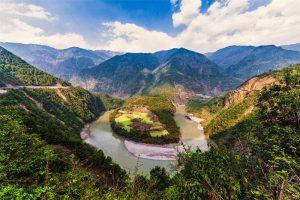
Day 1: Liuku → Bingzhongluo, Walking to see the First Bend of Nujiang
At 9:30 AM, clutching my ticket, I squeezed off the bus from Liuku to Bingzhongluo. My nose first met the wind of Bingzhongluo—carrying the moisture of the Nujiang River and the scent of grass on the slopes, unlike the dry wind of Kunming. Looking up, I saw Uncle Ma’s guesthouse: a red storefront hung with strings of dried corn, and a wooden sign nailed to the lintel saying “Nujiang Old Ma Guesthouse.” Just as I stopped with my suitcase, Uncle Ma in his navy blue shirt peered out from the yard: “Young lady, staying or just passing through?” I said I’d drop my luggage and go to the First Bend. He immediately took the suitcase: “The room is on the second floor, the window faces the Nujiang. Pack for two minutes, I’ll get you a bottle of iced mineral water—you must be thirsty after walking half an hour uphill.”
Dropping my luggage and grabbing the water, I headed out. Walking to the First Bend of Nujiang starts with 1 km of asphalt road. The sun made the road surface a bit soft, and the cacti by the road had small yellow flowers with dew on their spines. Don’t hesitate after crossing the Nujiang Bridge; turn left into the dirt slope path. The dirt is deep brown and makes a fine crunching sound underfoot, much better than the scenic route that charges 10 yuan and circles for 2 km. The path climbs along the river, and you can hear the Nujiang roaring below like muffled thunder in a jar. After 15 minutes, the view suddenly opens up: the First Bend of Nujiang viewpoint has arrived.
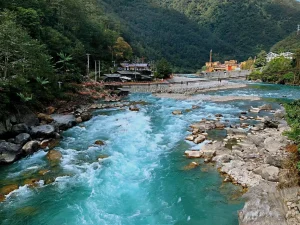
The railings at the viewpoint are made of thick iron pipes, a bit hot to the touch—the morning sun had made the iron shine. Leaning over the railing, the Nujiang is truly “drawing a circle”: the water isn’t a muddy yellow, but a deep green like steeped Pu-erh tea, making a 180-degree turn around the foot of the Gaoligong Mountains. The surface is as flat as a mirror, reflecting the cotton-like clouds. Villagers carried corn cobs down the path, the corn wrapped in bright green husks, weighing heavily on their shoulders, followed by a yellow dog that stopped every few steps to lick the villagers’ mud-stained pants. I found a rock to sit on and took out the Baba (flatbread) I bought—purchased in Liuku that morning, it was corn-flavored with a sweet molten center. The wind blew the fishy scent of the river mixed with the sweet fragrance of the cornfields. I stared at the falling leaves drifting in the river for a full half-hour, not even hearing Uncle Ma calling to ask if I had “arrived.”
In the afternoon, I returned to Bingzhongluo town to wander the Old Street. It’s actually a 50-meter-long dirt street with a hard-packed surface and bamboo baskets and stalls on both sides. The first stall was Nu weaving: an old woman in a floral apron sat on a small stool, holding colored yarn as the loom went “ka-da ka-da.” Her woven scarves were 30 yuan each with the Nu “sunflower” pattern. She explained in imperfect Mandarin: “This is a pattern my grandson taught me, young people like bright colors.” I chose a light blue one with red flowers. She wrapped it carefully in old newspaper and gave me a roasted potato as a gift.
Further along was Old Ma Breakfast Stall—actually a plastic shed where the lady owner in a blue apron was flipping Baba in a bamboo tray. The Baba were made of corn, round and roasted crisp on the outside. “Sweet or savory?” she asked. The sweet ones have brown sugar filling that oozes out; the savory ones have pickled vegetables mixed with minced meat, very crunchy. I bought two and ate them on a small stool under the shed. A local uncle next to me was drinking corn wine and chatted: “Here for hiking? Go to Wuli Village tomorrow, the scenery on that road is even more handsome.”
As I walked back with my Baba, the Old Street slowly filled with more people—children with schoolbags, old men with hoes, and an auntie selling fried potatoes, with the potatoes sizzling in the oil pot. The scent of grass in the wind grew stronger. I suddenly understood what Uncle Ma meant by “life is slow in Bingzhongluo”—it’s not that there’s nothing to do, but that life is close to the earth, and even the wind carries the aroma of daily life.
“Uncle Ma later told me: ‘Don’t stay too late at the First Bend viewpoint. There’s mist at 5:00 PM; it’s beautiful, but the mountain road is slippery, so it’s better to be early.’ I went half an hour early the next day and indeed saw the mist rising from the river surface, wrapping around the mountain peaks like a thin veil over the First Bend.”
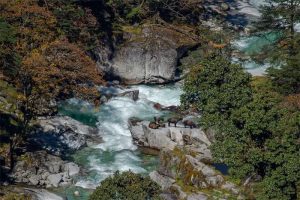
Day 2: Bingzhongluo → Wuli Village → Qiunatong, 20 km Light Trekking
At 9:00 AM, clutching the corn Baba I bought yesterday (still warm), I set off from Old Ma Guesthouse. Uncle Ma saw me to the door and pointed to the old locust tree by the road: “Follow this path, don’t turn into the scenic route—that path is 2 km longer and costs 10 yuan. It’s steadier for beginners to take the dirt path.” From the very first step, the fishy air of the Nujiang collided with the scent of grass. The river water was light green, like freshly brewed Biluochun, flowing loudly at my feet. Old hoof prints from caravans were visible on the road, with dew in the shallow pits wetting the tips of my shoes, which felt more like “really walking” than wearing sneakers on asphalt.
“Peach Blossom Island” arrived after half an hour—they call it an island, but it’s actually a small earthen mound protruding by the river. The peach blossoms have faded now, with last year’s dried calyxes hanging from the branches like strings of small brown bells. Crayon drawings by children remained on the dirt walls: crooked suns, toothless moons, and a little person holding a Baba—likely drawn by a child as a “welcome.” Further ahead was a gentle slope, and my legs began to ache. I took out compressed biscuits from my bag to gnaw on; the crumbs fell to the ground, attracting three small sparrows that hopped and pecked at my feet.
After another 40 minutes, the aroma of roasted walnuts and tea suddenly hit my nose—looking up, I saw a clay pot set under an old walnut tree. An old woman in a navy blue buttoned jacket squatted nearby fanning the fire, a silver hairpin glinting in her hair. Her cuffs were embroidered with red flowers. Seeing me, she wiped a coarse pottery cup with her sleeve: “Young lady, want some roasted tea?” The cup was so hot my fingers flinched. Taking a sip: first the charred fragrance of roasted walnuts hit me, followed by the bitterness of tea, and finally a hint of sweetness lingering on the tongue, as if the Nujiang sunshine had been kneaded into the tea. A yellow dog approached to rub against the back of my hand. The old woman smiled and patted it: “Go on, don’t touch her bag.” I gave her 10 yuan, and she quickly returned a handful of roasted walnuts: “Grown myself, thin shells and full kernels, eat them if you get hungry on the road.”
Another 20 minutes and I entered Wuli Village, entirely composed of log houses—walls of stacked logs with gaps filled with dried wormwood, and roofs covered in deep yellow thatch, like a sun-dried straw quilt over the houses. The flagstone road in the village was a bit hard on the feet, but Persian chrysanthemums with pink and purple flowers grew on both sides; when the wind blew, petals drifted into the middle of the road. At noon, I went to A-Mei Farmhouse. A-Mei, with a ponytail and an embroidered apron, was stewing Lacquer Oil Chicken on a dirt stove, the aroma wafting through the yard. The lacquer oil was in a pottery jar, golden and translucent. She scooped a spoonful into the chicken soup: “This is handmade lacquer oil from Dulongjiang; it’s not bitter, just very fragrant.” The chicken arrived, stewed until the meat fell off the bone, falling apart at the touch of a chopstick. Lacquer oil floated on the soup; I scooped a spoonful over my rice—it was so fragrant I devoured two bowls. A-Mei sat nearby and smiled: “Slow down, there’s more in the pot.”
Continuing in the afternoon, I passed “Nidadang” (Nu for “Big Rock”). A two-person-high giant rock stood by the road, its surface carved with arrow-like symbols, somewhat blurred by weathering. A-Mei said: “This is an old caravan mark carved by people who walked this path before, meaning ‘rest stop ahead’.” I touched the carvings with my fingertips; they were rough and prickly like an old person’s calluses, hiding a century of horse hoof sounds.
After another 1 hour and 40 minutes, I finally saw the wooden bridge of Qiunatong—built of old pine logs with gaps between the planks through which I could see the churning Nujiang below. It creaked as I stepped on it. I held the iron cables, my heart beating fast. After the bridge was a flagstone road, polished bright by countless footsteps like a piece of old jade soaked in time. The guesthouse A-Mei stood at the door in a Nu woven skirt. Seeing me, she came to meet me: “I’ve been waiting for you, give me your luggage.” She carried my bag and led me into the yard, where hot corn porridge and a dish of pickled radishes were set on the table—the porridge was thick and sticky, and the radishes were crunchy, perfectly sour and salty. Eating the porridge, I watched small chickens pecking at rice in the yard. A-Mei said: “Stay with me tonight, tomorrow I’ll take you on my grandfather’s old Tea Horse road.” The scent of Lacquer Tree Oil Tea drifted in the wind, and touching the roasted walnuts in my pocket, I suddenly felt that the leg aches from the 20 km had turned into warmth in my heart.
“A-Mei later told me: ‘The log houses in Wuli Village are warm in winter and cool in summer. Caravans used to rest here, but now few people walk it—your coming just continues the story of the old houses.’ At night, sitting in the yard eating walnuts and listening to the river, I really felt I could touch the temperature of this path from a hundred years ago.”
| Phase | Details |
|---|---|
| Departure Prep | Bring compressed biscuits + mineral water (no supplies on slopes); the roasted potato from Uncle Ma is more substantial trail food |
| Caravan Path Condition | First half is flat with hoof prints; second half is a gentle slope requiring slow pace (to avoid leg ache); total journey about 5 hours |
| Wuli Village Experience | Log houses can be visited (old women will chat with you); Lacquer Oil Chicken at A-Mei’s is 40 yuan (must try) |
| Human Interaction | The crayon drawings on Peach Blossom Island are a “welcome ceremony” by local kids; roasted tea is an old woman’s daily life, 10 yuan for a moment of warmth |
| Arrival in Qiunatong | Hold the iron cables on the wooden bridge (a bit shaky but safe); A-Mei’s corn porridge is the “healing miracle after trekking” |
| Cost Reference | Roasted tea 10 yuan (exchanged for walnuts); Lacquer Oil Chicken 40 yuan; corn porridge + pickled radishes free (thoughtful guesthouse supply) |
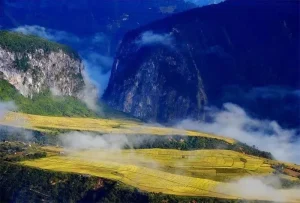
Day 3: Around Qiunatong, Exploring the Canyon via the Ancient Tea Horse Road
At 8:00 AM, A-Mei knocked on the door. She wore a faded Nu woven tunic and held a bamboo staff: “My grandfather used this when walking this path; it’s handier than a trekking pole.” She slung my backpack over her shoulder and led me out of the guesthouse—the flagstone road at the village entrance was just soaked in dew, glowing blue-gray. After a few steps, we entered the Ancient Tea Horse Road.
The flagstones of the ancient path are blue-gray, each with horse hoof prints of varying depths—some wider than my palm, with edges polished bright. A-Mei squatted to touch one: “Was this carved by my grandfather’s grandfather? No, it was stamped by the caravan horses; after decades, it became like this.” I squatted too, my fingertips brushing the hollow of the hoof print. It was cool, like touching the temperature of a horse from a hundred years ago. In the roadside bushes, you can occasionally see old caravan bells, rusted down to just an outline. A-Mei picked one up and wiped it: “Horses used to wear these on their necks; they jingled while walking to ward off wolves.”
Walking along the cliff edge, the Nujiang thundered below—the water was deep green like a piece of jade soaked in tea. As the sun shone in, you could see small stones at the bottom and tiny fish swimming. Looking up at the Gaoligong Mountains, there was actually snow from July still remaining at the peak! It wasn’t a heavy white, but a pale pink like melted cotton candy spread on the mountain tip. A-Mei pointed to the snow cap and laughed: “When I walked this path with my grandfather as a kid, the snow was knee-deep. Now there’s less and less.” The wind carried the fishy scent of the river, blowing my hair into my face, but I didn’t dare reach out to fix it—fearing I’d trip if I didn’t pay attention.
Walking 3 km to the Shimenguan Viewpoint, the view suddenly opened up: two peaks stood like two giant gates, sandwiching the Nujiang in the middle. The river makes a sharp turn here, waves crashing against the rocks and splashing half a meter high. I held the railing of the viewpoint and squatted down. A-Mei leaned in and lowered her voice: “Caravans had to lead the horses by hand here, otherwise the horses would get spooked and jump into the river—see those scratches on that rock? That’s from horse hooves.” I looked up, and there were indeed several deep scratches on the rock, like someone had desperately clawed at it. The wind grew stronger, making the iron roof of the viewpoint go “kuang kuang,” but I didn’t want to leave—this wasn’t just a viewpoint; I was standing on a caravan road from a century ago, listening to their heartbeats.
At noon, I returned to the village for stir-fried cured meat with green vegetables. A-Mei’s father, in a greasy apron, peered from the kitchen: “Young lady, try the cured meat I pickled!” The cured meat was sliced thin; the fatty parts were translucent and the lean parts were red like agate, fried until fragrant. The greens were freshly pulled from the village fields, so tender they burst with juice. A-Mei sat opposite me, breaking a corn cob: “When my grandfather walked the Tea Horse road, this cured meat was his favorite; he said it was more fragrant than wild game.” I ate two bowls of rice and even soaked the rice in the vegetable soup—this meal was more fragrant than any food at a trendy restaurant.
In the afternoon, we went to the small hill behind the village. The path was dirt, with knee-high wild grass on both sides. A-Mei led the way, using her bamboo staff to push aside the grass: “Watch out for thorns!” Climbing for 20 minutes to the top, the entire panoramic scroll of Qiunatong suddenly unfolded: layers of terraced fields followed the mountain slope, the rice just heading and glowing green; the Nujiang was like a silver ribbon winding through the canyon; Peach Blossom Island in the distance floated in the mist like a fairyland. At sunset around 6:00 PM, sunlight leaked from the peaks, dyeing the terraces golden yellow like scattered gold dust. I took out my drone. When the propellers started spinning, A-Mei stood nearby laughing: “No one has ever filmed our village like this! My grandfather would be so happy if he saw this.” The drone rose, capturing the outline of all Qiunatong—log houses, terraces, Nujiang, even the smell of the wind could be packed in.
On the way down, A-Mei picked a bunch of wild chrysanthemums and handed them to me: “Brew these in water to clear heat.” I held the flowers, watching her back disappear at the end of the flagstone road, and suddenly understood what “slow travel” means—it’s not about how many attractions you check off, but about following the local footsteps into their daily lives and touching the texture of time.
“A-Mei’s father later told me: ‘Caravans used to take three days and nights to walk this path. Now you arrive in two hours, but the road hasn’t changed, the scenery hasn’t changed—what’s changed is people’s hearts.’ At night, sitting in the guesthouse yard, smelling the wild chrysanthemums and looking at the stars, I suddenly felt this trek was worth it.”
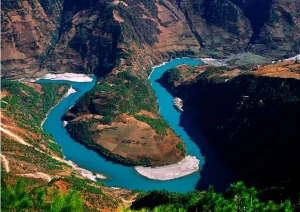
Day 4: Qiunatong → Dulongjiang Township, Deep into the Primitive Canyon
At 7:00 AM, just as the guesthouse rooster crowed, I headed out with the bamboo staff A-Mei gave me the day before—Li had specifically warned yesterday that “today is 18 km, a bamboo staff is steadier than a trekking pole.” It started with a gentle uphill, the altitude slowly climbing from 1700 to 2000 meters. After only 1 hour, my front thighs felt like they were bound with thick, water-soaked towels; every step made me wince with soreness. More and more wild cherry trees appeared by the road, with green fruits hanging on the branches. Smelling them closely revealed a bitter fruit fragrance. I picked one and put it in my mouth; it was so sour I squinted, but the more I chewed, the more I felt a “stubbornness of spring”—this was my first taste of “wild flavor” from Dulongjiang.
After passing “Xianjiudang” village (the wooden sign was carved with Nu; Li read it: “It just means wild cherries”), a group of children in Nu weaving squatted under an old tree at the entrance, holding strings of wild strawberries and shouting: “Sister, eat!” The strawberries were slightly larger than a fingernail, translucent red, sweet with the bitterness of wild mugwort. I took a handful and ate as I walked, replenishing some electrolytes—it was much more substantial than sports drinks from a convenience store.
After walking for 2 hours, the descent began, and the Dulong vine bridge suddenly appeared—thickly woven vines about 10 meters long, with both ends tied to old oak trees on the banks. The bridge swayed, and the Nujiang below turned green waves, sounding like muffled thunder in a jar. Standing at the bridge head, my calves were shaking. Li smiled and handed me a wild grape vine: “Hold this and shuffle slowly.” I gripped the vine, and as soon as I stepped on, the bridge tilted to the right. I was so scared I squatted down and shuffled forward with my knees on the planks—it turns out you don’t “walk” across the vine bridge, you “shuffle” across while “clinging” to the river water. After crossing, I realized my palms were soaked with sweat, and the texture of the wild vine was imprinted on my palm like a light gray scar.
At 3:00 PM, I finally saw the archway at the entrance of Dulongjiang Township. The red paint had half-peeled off. Li was standing there holding a cardboard sign saying “Welcome Hikers.” Seeing me, he shouted: “Young lady! You finally made it!” He handed me a cup of warm honey water. The coarse pottery cup was so hot my fingers flinched. Taking a sip, the sweetness slid down my throat, and the ache in my legs instantly dissipated by seventy percent—this was more refreshing than any functional drink.
In the evening, Li took me to visit a tattooed-face woman. Her home was at the end of the village. The curtain of the log house was made of roe deer skin. Lifting the curtain, the smell of burning pine branches drifted in the room. The 82-year-old grandmother sat by the fire pit, with indigo patterns carved on her face: a butterfly with spreading wings on the left cheek and wave patterns on the right. Although somewhat faded, the outlines were like passwords carved in time. Li squatted next to her and spoke in Nu for a long time before she slowly nodded: “Let the girl take a photo, I’m not afraid.” When I raised my phone, my hand was shaking—fearing the flash would hurt her eyes. She laughed, her wrinkles forming flowers, and reached out to touch the back of my hand: “Young lady, your hand is so soft, like my granddaughter’s.” My nose felt tingly, and I quickly adjusted the angle to take a backlit photo—her silver hairpin glinted, and the indigo patterns on her face were like a quiet lake. Before leaving, she gave me a handful of roasted soybeans: “Grown myself, very fragrant.” The soybeans were in a coarse cloth bag, carrying the warmth of the fire pit. I held them as I walked out, the air smelling of pine branches.
Li and I sat on a rock at the village entrance, gnawing on roasted potatoes: “In the past, Dulongjiang had no roads, it all relied on horse caravans. My grandfather was a caravan leader and walked this path for thirty years. Now a tunnel has been built, but the older generation still prefers the ancient path—this vine bridge and Grandmother’s tattoos are our roots.” I looked at the roasted soybeans in my hand; peeling one, the aroma was enticing. I suddenly understood the meaning of this trek: it’s not about how many kilometers you check off, but about walking into a living culture and touching the temperature of time.
“Li later told me: ‘Tattooed-face women are the living fossils of Dulongjiang; the patterns on their faces are the memories of generations.’ At night, sitting in the guesthouse yard, eating the remaining soybeans and looking at the stars, I suddenly felt that the exhaustion of these 18 km had turned into a heavy sense of being moved—it turns out trekking isn’t ‘conquering,’ it’s ‘meeting.'”
Day 5: Dulongjiang → Return, Summary of Trekking Essentials
At 9:00 AM, the morning mist in Dulongjiang Township still carried the scent of pine branches. Li handed my backpack onto the green minibus: “Young lady, take a window seat to see the Nujiang bends.” The cabin smelled of sweet corn wine. A Shanghai auntie in a blue cloth shirt next to me was holding ointment for her knees. Seeing the trekking badge on my bag, she smiled: “I walked Bingzhongluo last week and fell on an old road without railings; my knee is as swollen as a steamed bun—the new planks you walked must be much safer?” I nodded: “Auntie, next time you come, definitely take the new path. I’ll show you the photos of how clear the river view is!” She touched the ointment on her knee and sighed: “Never again will I take wild paths just to save a few yuan.”
At exactly 12:00 PM, I arrived at Bingzhongluo Bus Station. Wang at the Ersi stall saw me, his strainer still dripping soup: “The girl is back! Freshly brewed beef Ersi to nourish those sore legs!” I took the bowl, the hot soup and beef aroma hitting my nose. Wang chattered beside me: “Next time you come, I’ll save you the fattest beef shank!”
Sitting on the bus to Liuku, I flipped through photos of these five days: the roasted tea cup of the Wuli grandmother, the terraces at sunset in Qiunatong, me holding the wild grape vine on the vine bridge, the roasted soybeans in the tattooed grandmother’s hands… I suddenly wanted to list the pitfalls I stepped in so those who follow won’t take the same detours:
- ① Don’t buy the “wild honey” in Qiunatong—A-Mei held my hand yesterday and said: “There are stalls set up by outsiders in the village; the honey is mixed with corn syrup. A tourist ate some last time and had diarrhea for half an hour.” Better to go back to Bingzhongluo and buy Multi-flower Honey from Uncle Ma. 50 yuan per jin in a glass jar; opening the lid reveals the fragrance of locust and chaste tree flowers, a transparent sweetness. Uncle Ma guaranteed: “I got this from a Nu honey brother; it’s so pure it pulls into threads!”
- ② Don’t walk the ancient path alone—when I walked the Ancient Tea Horse Road, my phone displayed “No Service” on one section. Luckily Uncle Ma had downloaded offline maps for me beforehand, otherwise I would have been crying while hugging a tree. Also, some slopes on the ancient path are so muddy and slippery you can hardly stand; if you fall, there’s no one even to call for help.
- ③ Keep customs in heart—Take off your shoes before entering a Dulong home; it’s not a hassle, but the bamboo mats by the fire pit are afraid of mud. Don’t touch children’s heads; A-Mei said “we believe a child’s head has a ‘spirit,’ and touching it causes trouble.” Always ask first before photographing tattooed-face women: “Grandmother, can I take your photo?” She nodded with a smile that day, her silver hairpin glinting, but if I hadn’t asked, she would feel “you aren’t treating me like a person.”
Outside the window, the autumn in the Nujiang canyon was as thick as unsteeped tea: leaves glowing yellow, river water deep green like jade soaked in time. I thought of Uncle Ma’s corn porridge, A-Mei’s lacquer oil chicken, Li’s warm honey water, and the roasted soybeans given by the tattooed grandmother—these aren’t “check-in points,” they are the warmth handed over by life. This route isn’t for “conquering,” it’s for “receiving”: receiving the Baba fragrance of the Nu people, the swaying of the Dulong vine bridges, the horse hoof prints of the Ancient Tea Horse Road, and the kindness of strangers.
Next time, I want to come in winter. I want to see what the ancient path looks like covered in snow—snow falling on log houses like a cotton quilt. I want to drink even stronger roasted tea, the smoke swirling around the fire pit, warming even my fingertips. I want to walk the Tea Horse road with A-Mei again, listen to her stories of her caravan leader grandfather, watch the yellow dog rub my hand, and smell the bitter scent of wild strawberries.
(Attached: 5-day actual expense list, excluding shopping; every cent was spent on essentials)
- Kunming ↔ Liuku round-trip long-distance bus: 360 yuan (Night bus saved 1 night’s stay, slept all the way)
- Liuku ↔ Bingzhongluo round-trip bus: 260 yuan (Driver Old Zhou saved me the window seat every time for the river view)
- Accommodation (4 nights): 520 yuan (Old Ma Guesthouse 120 + Qiunatong Guesthouse 150 + Dulongjiang Guesthouse 100 + ? Oh right, stayed two nights in Qiunatong, so total is 120+150+100+150=520, correct)
- Food: 400 yuan (80 yuan a day, enough for lacquer oil chicken, Baba, roasted tea, roasted walnuts—half the price of scenic area restaurants)
- Total: 1540 yuan (The value is so high I could cry, didn’t waste a single penny)
“Wang said when sending me to the night market stall: ‘You young people come to trek not to see scenery, but to find your roots.’ At night, sitting by the river eating roasted Erkuai and watching the moon fall into the Nujiang, I suddenly understood his words—every inch of soil on this route hides the soul of Northwest Yunnan, waiting for you to touch slowly, taste slowly, and slowly pack its warmth into your heart.”
| Phase | Details |
|---|---|
| Return Transit | Dulongjiang → Bingzhongluo (9:30 bus, 50 yuan, 3 hours); Bingzhongluo → Liuku (12:00 bus, 5 hours) |
| Warmth on the Road | Shanghai auntie’s fall lesson (reminder to take the new path); Wang’s hot Ersi (restoring trekking energy) |
| Pitfall Advice | Fake honey in Qiunatong (Uncle Ma’s 50 yuan/jin honey is pure); offline maps needed for ancient path; remember customs |
| Emotional Resonance | Encountering “living life” (not attractions, but people living their days) |
| Winter Expectations | Snowy mountain ancient paths, thick roasted tea, walking the Tea Horse road again with A-Mei |
| Expense Accuracy | Zero shopping throughout, every cent spent on “essential and warm” things |






