



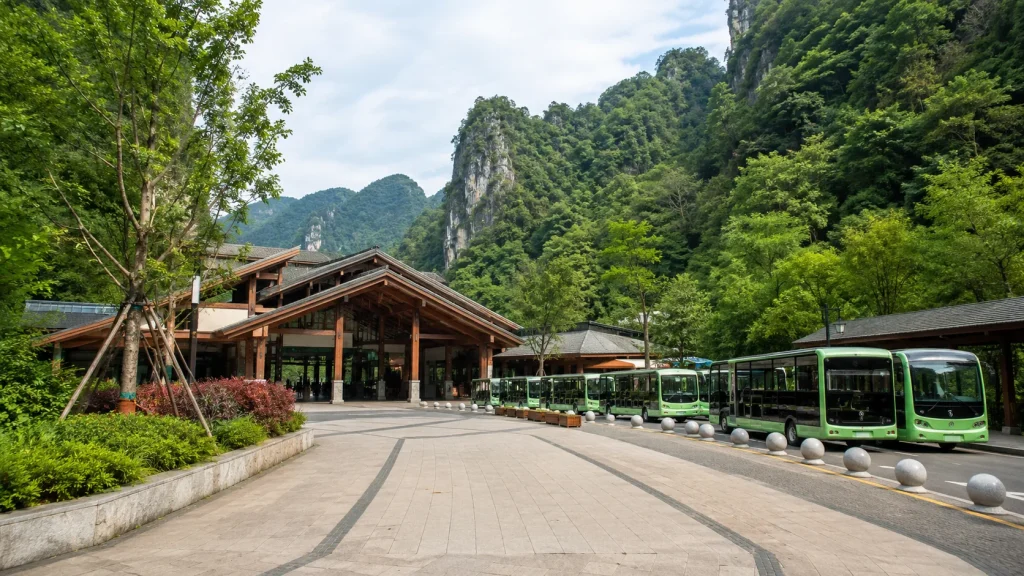
Whether Old Man Qikong is tired from traveling should not just depend on whether there are sightseeing buses. The sightseeing bus mainly connects the entrance and the main site. After getting off the bus, you still have to walk on trails, stone paths and steps, and it may be wet near the waterfall. Elderly people with normal physical strength and able to walk for a continuous distance can usually complete the tour by getting off the car less often and skipping long trails; people with obvious knee, cardiopulmonary, balance or wheelchair needs should shorten the route and confirm the conditions of the day in advance.The direction of entry cannot be judged by just “uphill, downhill”, it also depends on the opening of attractions, vehicle arrangements, passenger flow and return location.Data verification date: August 6, 2026. An announcement issued by the scenic spot on July 19, 2026 shows that the Water Forest is temporarily closed due to ecological restoration, and other scenic spots are open normally; the flood season may still be temporarily adjusted based on weather, safety inspections and water levels. On the day of departure, you should check the scenic spot announcement again or call 0854-3516115 or 0854-3516116 to confirm.
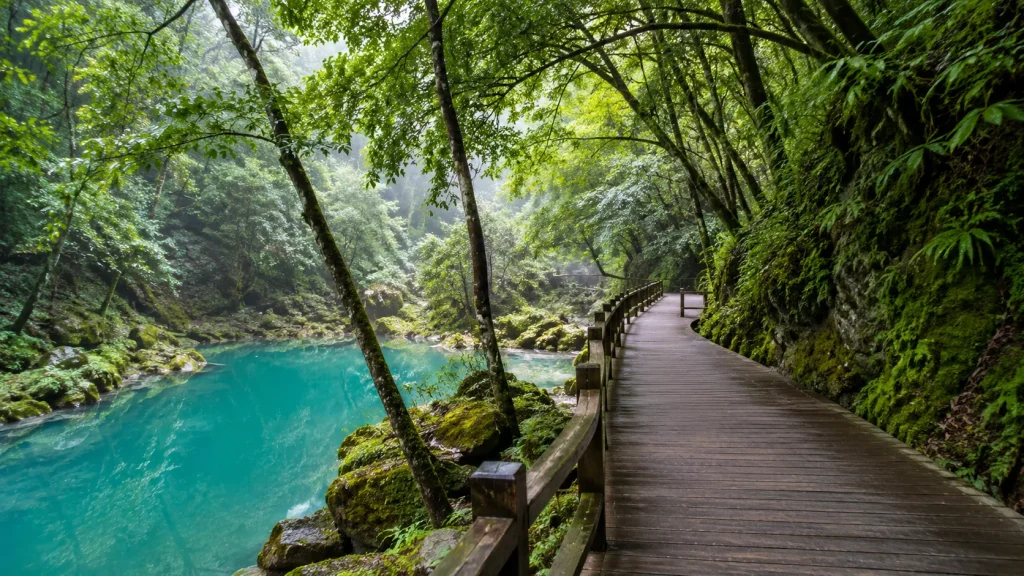
Is the old man tired from visiting Xiaoqikong?
I judge whether Xiaoqikong is suitable for the elderly mainly depends on the ability to walk continuously on flat ground, go up and down steps, stand while waiting for buses, and walk on wet roads. Age can be used as a reference, but it cannot alone determine the route. Both are 70 years old. Some people can walk for an hour every day, while others need to sit down after walking for ten minutes. The suitable arrangements will be different.
| The situation of the elderly | Tour options that can be considered | Main difficulties | Part that needs to be shortened | Judge before departure |
|---|---|---|---|---|
| Good physical strength | Use sightseeing cars to connect sites, and you can choose a continuous trail | Waiting in peak seasons, hot and humid weather, standing for long periods of time | Do not participate in boat rides and cave activities if there is insufficient time | It still depends on the spirit, gait and knee reaction of the day, and there is no guarantee that the whole process will be easy. |
| Average physical strength | Select only two to three attractions close to sightseeing stations | Frequent getting on and off the bus, walking continuously, and unable to find a seat | Abandon the continuous pedestrian area between the ancient bridge and the stone forest | Whether you can walk on flat ground for 30 minutes continuously is more valuable than your age. |
| Knee discomfort | Choose a location that allows short in and short out, and can return to the site along the same route. | Downhill control, continuous steps and slippery surfaces | Reduce the sixty-eight-level waterfall, Raya Falls and the route inside the cave. | If the pain has worsened recently or it is obviously difficult to go up and down stairs, you should consult a doctor in advance. |
| Needs walking stick | Arrange short-term calls on sunny days and be accompanied by family members one-on-one | It is difficult to use the cane and handrail at the same time after holding the umbrella | Reduce narrow trails, wet stone roads, boat rides and caves | Check the walking stick pads and locks to further shorten the time in rainy days |
| Wheelchair required | Entrance, visitor center and a few gentle areas near the site | Stairs, narrow paths, wading areas and wheelchair loading | Do not enter the continuous waterfall trail, caves and boat rides | Confirm wheelchair type, vehicle loading and barrier-free access range on the day in advance |
| Around 80 years old | Arrange one to three representative attractions and try to enter and exit from the original entrance | Standing and waiting, getting on and off, heat and humidity and temperature difference | Complete traversal and multiple additional items are not arranged | It is best to have one-on-one companionship and keep the transportation conditions to leave the park at any time |
| Have heart, lung or respiratory diseases | Low-intensity, short-term activities after evaluation by a doctor | Hot and humid, crowded, constant walking and staying away from the station | Reduce long trails, caves, boat rides and noon time periods | Recently the situation is unstable and the person is obviously unwell after activities. It is not appropriate to force admission into the park. |
Before departure, you can let the elderly walk continuously for 20-30 minutes at their usual speed, and then walk up a normal flight of stairs. If you take a long time to recover from your walk, your gait becomes unsteady, or you have significant knee pain, use a low walking route for the day.
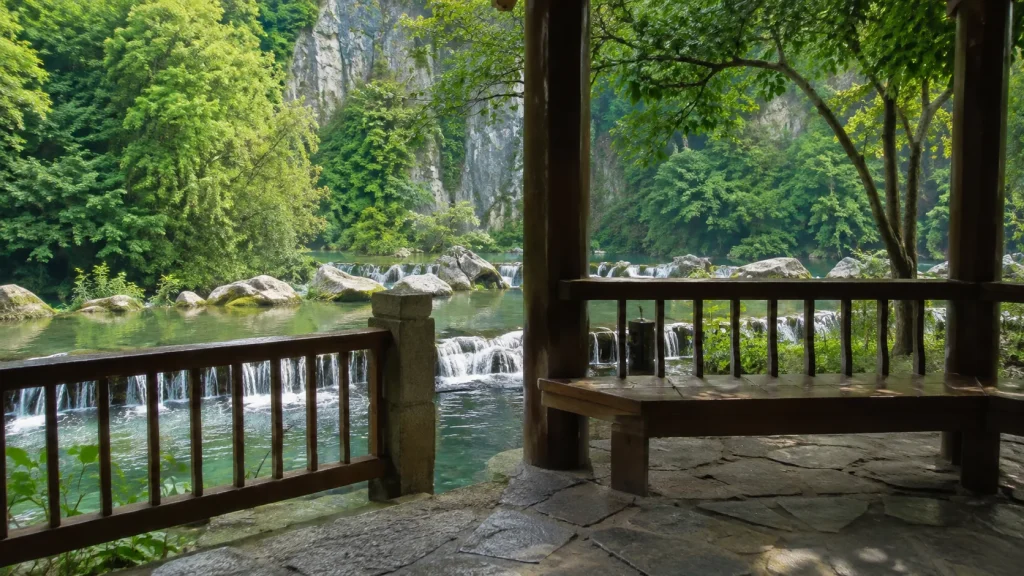
How much walking can be reduced by sightseeing cars?
Xiaoqikong sightseeing bus solves the problem of long-distance movement between scenic spots and will not directly send tourists to every viewing location. The current ticket purchase instructions for the scenic spot state that the round-trip tour of Xiaoqikong Scenic Spot is about 39 kilometers, of which about 1.6 kilometers from Xiaoqikong Ancient Bridge to Shishang Forest is a clear area that requires walking. The 39 kilometers here include vehicle travel.It cannot be understood that every tourist has to walk 39 kilometers。
The actual amount of walking depends on the number of times you get off the bus, whether you enter the continuous waterfall section, whether you participate in the Yuanyang Lake or cave project, and where you walk at each stop. Elderly families do not need to pursue a fixed number of kilometers, but should record how long they walked continuously, whether there are seats along the way, and whether they can return to the station at any time.
| Main stations or road sections | Characteristics of walking after getting off the bus | Steps and slippery conditions | Can it be shortened? | Which type of elderly is more suitable? |
|---|---|---|---|---|
| Xiaoqikong Ancient Bridge | Enter the site to view the surroundings of the ancient bridge. You may need to queue and stand during popular times | Stone slabs, bridge decks and waterfront locations may be slippery after rain | You can only look at the location close to the site and not continue walking along the river. | People with average physical strength who just want to see representative attractions |
| Guqiao to Shishang Forest Walking Area | Officially clearly marked about 1.6 kilometers, requiring continuous walking, connecting Raya Falls and Falling Water Falls along the way | There are steps, water mist, wet stone roads and people stopping in some places. | You can skip the entire section and take a sightseeing bus to other stops. | People who have a stable gait and can walk continuously for a long time |
| Water Forest | When open, it is a continuous forest and water trail, which is not accessible immediately after getting off the car. | Waterside stone surfaces and wooden planks require higher balance | Can be skipped; it is still closed as of the verification date | After reopening, it will also be more suitable for people with stable legs and feet. |
| Cuigu Waterfall | You can walk closer to view the scenery according to your physical strength, and the staying time is easier to control. | There is water mist near the waterfall, and the road surface becomes even wet after the rain. | You can look closer and return to the site | People with average physical strength and need frequent rest |
| Yuanyang Lake | May involve buying tickets, waiting for the boat, getting on and off the boat, and rowing, not just walking | Pier stepping and hull rocking require knees and balance | You can skip the participation at all and it will not affect your trip to other attractions. | People who can get on and off the boat stably and have no obvious balance problems |
| Tianzhong Cave or current cave project | Need to consider the light, steps, ramps and exit location in the cave | The cave may be wet, and changes in light and shade may affect your judgment under your feet. | You can skip it. Please ask about the exit and return methods before entering. | People with stable eyesight, knees and balance |
| Wolongtan | The main viewing location is relatively concentrated with the site and is suitable for short stops. | Areas near water and areas with large amounts of moisture may be slippery | You can only look at the near-station area and not participate in other projects | People with average physical strength who only want to enjoy the scenery for a short time |
In addition to sightseeing buses, there are three types of consumption that are easily overlooked: standing waiting for the bus, getting on and off the bus in a crowd, and finding a toilet or seat after arriving at the station. During summer and holidays, you can’t just arrange your time based on walking time at attractions. It’s best to leave room for waiting, transfers, and rest.
How to choose between East Gate and West Gate
The terrain of the west gate is relatively high. Moving from the direction of Wolongtan to the ancient bridge, you will encounter more downward sections, but this does not mean that there are no uphill, steps and return journeys. Going downhill requires continuous body control, which may not be easier for people with knee discomfort. Entering through the east gate is not necessarily more tiring, because you can take sightseeing buses between most attractions, and the actual intensity depends on which stations you get off at.
| What needs to be compared | East Gate | Ximen |
|---|---|---|
| Depart from Libo Station | First check whether the through train, bus or reserved vehicle stops at the east gate on the day | Do not default that every scenic spot bus goes to the west gate. You need to confirm the destination entrance and return flight. |
| Start from Libo County | Suitable for people who have booked transfer to Dongmen or live in the direction of Dongmen | Suitable for vehicles clearly delivered to Ximen, self-driving or chartered families |
| Accommodation near the entrance | When making a reservation, confirm the actual distance from the hotel to the east gate check-in area, whether there is a pick-up and drop-off, and whether there is an elevator. | Confirm whether the hotel is really close to Ximen, instead of just writing “near the scenic spot” |
| Common tour order | You can see the ancient bridge first, or you can go to Wolongtan first according to vehicle arrangements. | A common approach is to look at Wolong Pond first and then move towards the ancient bridge |
| Slope feeling | If you walk continuously from the ancient bridge to the west, some sections will feel like they are going up. | There are more downhill sections overall, but continuous downhill will also increase the burden on the knees. |
| Sightseeing bus transfer | In times of heavy passenger flow, temporary restrictions, or site adjustments, waiting and transfer may be required | Also affected by vehicle dispatch, weather and passenger flow |
| Return after the end | It is easier for people who live in Dongmen, go to the county, or have arranged to be picked up from Dongmen. | It is more appropriate to park the vehicle at Ximen or when the hotel arranges a pick-up from Ximen |
| Popular season | High-speed rail connections, groups and accommodation tourists may gather together, and there may also be queues in the morning | There are many tourists who choose to travel down from high places, and Wolongtan Station may be concentrated |
| Open area on the day | Weather, water level, maintenance and passenger flow will change the site and access methods. After entering the park, please refer to the on-site route signs and staff arrangements. | |
I would recommend deciding how to leave the park first and then choosing the entrance. The self-driving car is parked at the east gate, but it is planned to end at the west gate, and the family members have to go back to pick up the car. Waiting with the elderly will be more tiring than walking uphill. Families who use public transportation or need to catch the high-speed rail should try to choose arrangements where transportation has been confirmed and they can return to the original entrance.
The route information published earlier by the scenic spot lists the two-way sequence from the East Gate to the Ancient Bridge, Stone Forest, Water Forest, Cuigu Wetland, Yuanyang Lake, Tianzhong Cave, Wolong Pool and West Gate. However, the Water Forest is currently closed, and other sites may also be temporarily adjusted, and the old route cannot be directly copied.
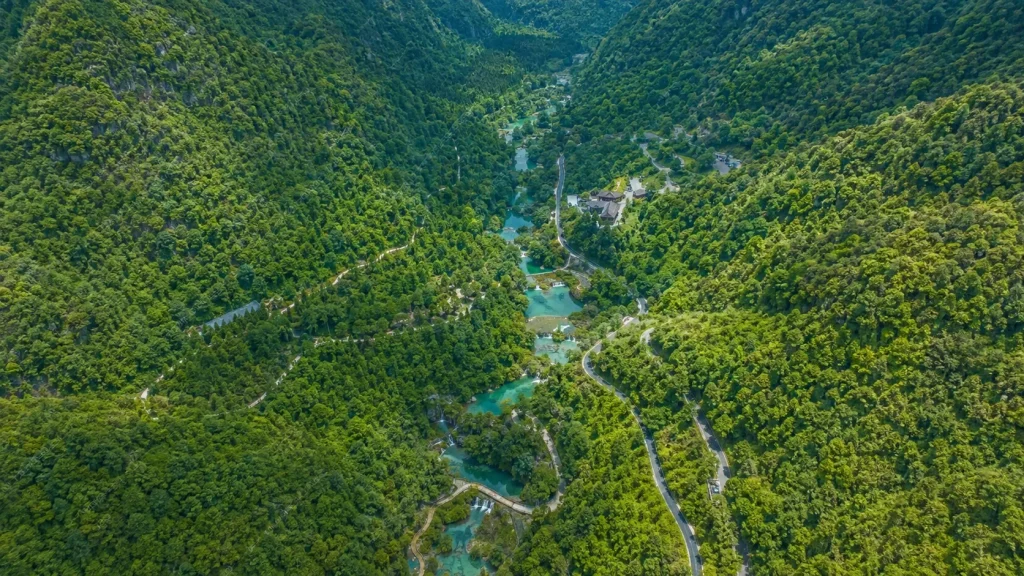
Walking intensity of main attractions
As of August 6, 2026, the Water Forest is temporarily closed due to ecological restoration. The remaining attractions are subject to the announcement and on-site guidance on the day.The following only determines the road surface and physical requirements, and does not equate the names of attractions with fixed sites or fixed open projects.
Xiaoqikong Ancient Bridge:After entering the area around the ancient bridge from the sightseeing station, there are mainly stone roads and waterfront areas. There are many people taking photos during popular hours, and the elderly may not be tired from walking, but stand and wait for a spot. The bridge deck and mossy stone surface will become slippery after rain, so you can only watch them from a location close to the station before returning to the waiting area.
Laya Falls:It is usually associated with the sixty-eight-level waterfall and the continuous walking area of the stone forest. It is not suitable to be understood as “get off the car and watch for a few minutes”. Water mist from waterfalls will make the road surface wetter and local traffic space will be limited. Elderly people who cannot walk continuously for a long time can skip the entire section.
Sixty-eight-level waterfall:The difficulties come from continuous walking, constant adjustment of stride length, wet roads near water and tourist stops, not just the number of steps. People with bad knees, slow walking speed, or those who need to sit down frequently are not recommended to use this section as the main route of the day.
Stone Forest:After entering, you will connect to the pedestrian area of about 1.6 kilometers in the direction of the ancient bridge. The route is not a smooth road throughout. The flow of people, water mist and photo stops will prolong the continuous walking time. It is more suitable for people who can walk steadily for about an hour and have good downhill control.
Water Forest:When open, it is a continuous trail in the forest and near water, and some locations may be close to the water. Elderly people in wheelchairs, with an unsteady gait and who are obviously afraid of slippery conditions are not suitable to make this their main destination. It is still closed as of the verification date and should be deleted directly from the route.
Cuigu Waterfall:Easier to arrange as a short-stop site. After getting off the bus, walk nearby as if you were an elderly person. Return when you feel tired. There is no need to continue to the next section of the trail. When there is a lot of water or it has just rained, the time spent near wet stone surfaces should be reduced.
Wolongtan:Suitable for arrangement as the main water feature in a low walking route. Elderly people can only visit the viewing area near the site and not continue to participate in rafting and other projects. When there is a heavy flow of passengers, it is usually safer to sit down, rest and wait for the next bus than to chase the bus in the crowd.
Yuanyang Lake:Physical exertion also includes waiting for the ship, getting on and off the ship, and rowing. People who find it difficult to step on their knees, lack arm strength, have weak balance, or need to rush back may not participate. Before deciding to take a boat, you should ask about the project time, operating status and how to return to the station.
Tianzhong Cave or other currently open projects:The cave may involve steps, ramps, wet pavement and changes in light and shade. People with weak eyesight, fear of the dark, knee discomfort, or those who use wheelchairs can simply give up. Before entering, ask whether you need to walk the entire route and which station the exit is near.
The most tiring section for the elderly
For the elderly, the most tiring thing is often not the total kilometers, but the continuous walking, standing and waiting for the bus, and the superposition of slippery steps.Even if the journey is not long, as long as there are no seats, the flow of people in front is slow, and the ground is wet, the actual consumption will increase significantly.
The continuous walking area from the ancient bridge to the Shishang Forest is the part that elderly people with average physical strength need to choose most carefully. After entering, you will pass through waterfalls, water mist, stone paths and partial steps, so it is not suitable to have the idea of “walk a little before talking”. Before starting, you should ask about the nearest sightseeing station and whether you can exit early on the way.
Continuous downhill riding cannot just be regarded as energy saving. The elderly need to use their leg strength to continuously control their bodies. When their knees are uncomfortable, it may be more uncomfortable than walking uphill slowly. When the trail is narrow and there are many tourists behind, it is easy for the elderly to suddenly turn sideways to give way.
Projects such as Yuanyang Lake will increase the movements of waiting for the boat and getting on and off the boat; the cave will increase light changes and steps; the humidity and heat at noon will accelerate fatigue; holding an umbrella in rainy days will reduce one hand that can be used to hold the railing. Route planning must calculate these actions together.
How to arrange different physical strength
| Mobility | It is recommended to reserve time | Recommended to retain | You can give up | Accompanying and resting | Situations where it is not recommended to continue |
|---|---|---|---|---|---|
| Able to walk continuously for more than 2 hours | About 5-7 hours, including waiting, rest and meals | Wolong Pond, Cuigu Waterfall, and Ancient Bridge, you can choose a continuous trail | Cancel boat or cave ride when time is insufficient | Take the initiative to rest after completing a continuous route | Slowed gait, obvious knee pain, or failure to recover after rest |
| Need a break every 20-30 minutes | About 3.5-5 hours | Wolong Pond, Cuigu Waterfall, Ancient Bridge | The continuous section from the ancient bridge to Shishang Forest, Yuanyang Lake and caves | Find a seat first at each station, do not get off at multiple stations in a row | Still unable to return to normal pace after rest |
| Can only walk on flat roads, not suitable for stairs | About 2.5-4 hours | Visitor center, near-station viewing locations and gentle areas | Falls, caves, wading trails and boat rides | Family members check the road first before deciding whether to enter | You must pass through the steps ahead and there is no alternative path |
| Needs walking stick | About 3-4 hours | Wolong Pond, Cuigu Waterfall and the area near the ancient bridge on a sunny day | After the rain, the waterfall section, caves and boat rides | One-to-one escort, priority is given to wearing a well-fitting raincoat on rainy days | The cane slips, stumbles frequently, or turns obviously unsteady |
| Wheelchair required | About 2-3 hours, adjusted according to the traffic range of the day | Entrances, visitor centers and gentle areas accessible by vehicles | Stairs, narrow walks, wading areas, caves and boat rides | At least one family member who can steadily carry out and assist in getting on and off the bus | The vehicle cannot carry wheelchairs or does not have a smooth passage in front |
| Around 80 years old | About 2-4 hours | One to three attractions close to the site | Continuous waterfall section and additional experience items | One-on-one escort, re-evaluate the status before getting off the car every time | Slowed reaction, unsteady gait, or inability to drink or eat normally |
| Have cardiopulmonary disease or recent instability | It is determined by the doctor’s evaluation and does not aim at completing the number of attractions. | Short-term activities near the entrance and sightseeing stations | Long walks, hot and humid periods, caves and areas away from site | Carry daily medications as directed by your doctor and do not adjust your medication on your own | Chest discomfort, persistent difficulty breathing, dizziness or abnormal consciousness |
Public information from the National Health Commission reminds that the activity intensity of the elderly should not be too high, and they should stop activities when they experience dizziness, palpitation, etc.; they should drink small amounts of water frequently. Walking should not only pursue a fixed number of steps, but should be gradually adjusted based on daily activities and body reactions.
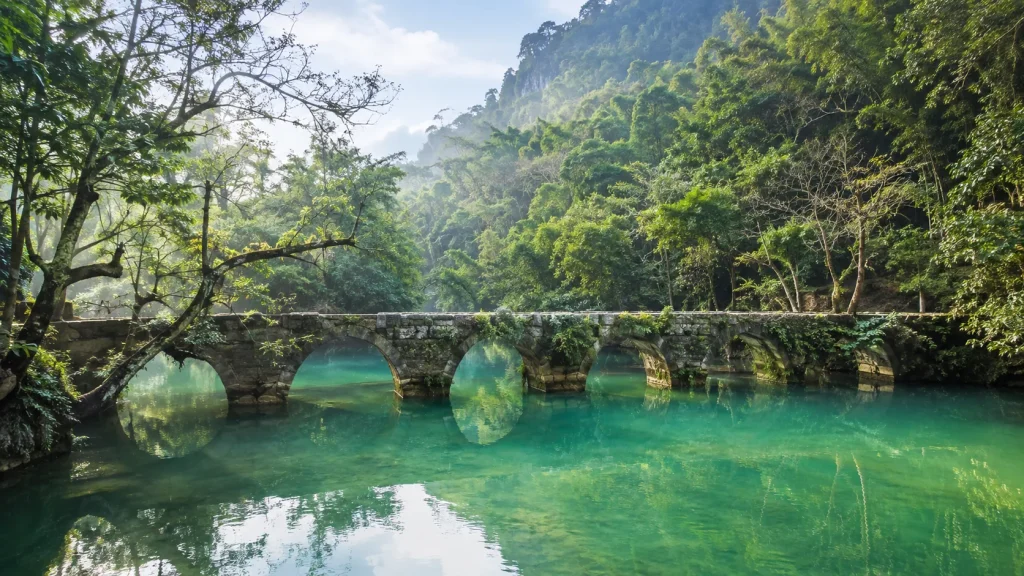
Three labor-saving routes
The following route is an arrangement idea for elderly families, not a long-term fixed sightseeing bus operation chart. After entering the park, first confirm the water forest, caves, boat rides, cross-door vehicles, return waiting points and the closing time of the day.
| Route | Entrance and ride methods | Recommended drop-off stops | Characteristics of single-section walking | Skip part | Leaving the park and suitable people |
|---|---|---|---|---|---|
| Basic sightseeing route | Enter the west gate, go to Wolongtan first according to the vehicle arrangement of the day, and then move towards the ancient bridge | Wolong Pond, Cuigu Waterfall, Stone Forest, Xiaoqikong Ancient Bridge | Contains about 1.6 kilometers of continuous pedestrian area. There is a lot of descending overall, but there are still wet roads and steps. | Yuanyang Lake, caves and water forests | You can leave from the east gate; suitable for people with a stable gait, able to walk continuously for a long time, and who have arranged to be picked up at the east gate. |
| Stamina generally shortens the route | Enter the east gate and first confirm whether you can take the sightseeing bus to the direction of Wolongtan | Wolong Pond, Cuigu Waterfall, Xiaoqikong Ancient Bridge | Each site has a short entrance and a short exit, and does not enter the continuous waterfall walking area. | Sixty-eight-level waterfall, Raya Falls, Yuanyang Lake and caves | Return to the east gate according to vehicle arrangements; suitable for people who need to rest every 20-30 minutes |
| Low walking representative route | Choose the entrance that is easiest to connect to for pick-up, parking or accommodation, and try to enter and exit from the original entrance. | In the direction of the east gate, you can focus on the ancient bridge, and in the direction of the west gate, you can focus on Wolong Pond. If your physical strength allows, you can add one more stop. | Only walk the area close to the site and do not connect to continuous trails | All long walks, boat rides, caves and slippery rides | Suitable for the elderly, people with canes, wheelchairs or those who can only walk short distances |
When I actually arrange this kind of trip, I will ask the elderly about four things before entering the continuous trail: where is the nearest station ahead, whether they can exit on the way, on which side the return vehicle is waiting, and whether the elderly can still maintain a normal pace at this time. If you are unsure about anything, don’t rush into it.
Which attractions can be chosen?
When taking the elderly to visit Xiaoqikong, you don’t need to include all the stops. Wolong Pond, Xiaoqikong Ancient Bridge and Cuigu Waterfall are easier to make up a short-stop route; continuous falling waterfalls, Yuanyang Lake and caves are content that can be added when physical strength allows.
| Actual situation | is more suitable to retain | is more suitable to give up |
|---|---|---|
| Only arranged for half a day | Choose two to three from Wolong Pond, Ancient Bridge, and Cuigu Waterfall | Boat rides, caves and continuous waterfall walking area |
| The old man is afraid of being slippery | Viewing location close to the site in dry weather | Waterfall trails, wading areas and wet stone paths with heavy water mist |
| Knee discomfort | A location where you can get in and out quickly and easily return to the station. | Continuous downhill slopes, cave steps and long trails |
| I like to take pictures but don’t want to walk for long periods of time | Wolongtan and Guqiao each have a relatively relaxed stay time. | Multiple waterfalls with similar scenery but requiring continuous walking |
| Want to walk and don’t want to wait for the boat | Choose a continuous waterfall route when the weather is dry | Yuanyang Lake and other projects with unstable waiting times |
| Need to catch the high-speed train or make a long return trip | Attractions close to the planned departure entrance | Items that require additional transfers, boat rides or cross-gate departure from the park |
| Rainy day | A location close to the station and easy to return to the original route | Narrow roads, continuous steps, wading areas and sections with heavy water mist |
It is possible to complete a relatively easy tour by just looking at the ancient bridge and Wolong Pond. The small number of attractions does not mean that the day is incomplete. The elderly are willing to take their time taking photos, which is usually more comfortable than getting off the bus continuously and completing multiple stops quickly.
Will it be more tiring on rainy days?
Rainy days generally significantly increase the intensity of elderly people’s visits. The latest notice from the scenic spot clearly reminds that there are wading areas on some sections of the road, and the waterfront plank roads, forest trails and steps may be wet and slippery. Temporary closures, passenger flow controls or route adjustments may also occur after continuous rainfall.
It is not suitable for cane users to hold an umbrella in one hand and a cane in the other because they do not have a free hand to hold on to the railing when walking up the steps. When it rains lightly, a lightweight raincoat of appropriate length is usually more convenient; the hem of the raincoat should not be too long to avoid stepping on it. The soles of the shoes should have clear texture. Shoes that have been worn flat are not suitable for wet roads.
Elderly people should not take pictures while walking, nor should they suddenly turn sideways to give way. Stand firm first, and then let the family members take over the phone. After your clothes get wet, you may feel cold when entering an air-conditioned car. You should prepare a light jacket, spare top or dry socks in your backpack.
When encountering sustained heavy rainfall, thunder and lightning, rising river water levels, or partial closure or traffic control issued by the scenic area, you should directly check the scenic area announcement. If you have arrived at the entrance on the same day, you should also accept the arrangement of shortening the route or canceling the admission.
What is the difference between summer and winter?
Summer mainly faces humidity and heat, thunderstorms, changes in water volume and summer passenger flow. It is suitable for the elderly to enter the park earlier, reduce continuous walking at noon, and do not put high-intensity sections in the hottest hours. The opening hours may change due to summer operation arrangements, and the admission period shown on the reservation page shall prevail.
Drink small amounts of water frequently in summer. Do not wait until you are very thirsty and then drink a lot at once. When waiting for the bus, give priority to a cool and seated location. When the elderly are taking long-term medications, they should not increase or decrease the dose on their own for travel.
Passenger flow may be relatively scattered in winter, but low temperature, humidity, morning and evening temperature differences, and changes in water volume will also affect the experience. Wearing too much will hinder lifting your legs and getting in and out of the car. Wearing too little will make you prone to chills while waiting for the bus. It is more suitable to wear multiple layers of clothing that can be added or removed.
People who are afraid of heat, prone to sweating and have average cardiorespiratory endurance may not have an easy time in midsummer. People who are afraid of cold, have stiff joints or have reduced flexibility in their hands and feet may not be more suitable in winter. Seasonal judgment should be considered together with the elderly’s usual status.
Can wheelchairs travel?
The Xiaoqikong Wheelchair Tour cannot be understood as being barrier-free throughout the entire journey. The official ticket purchase instructions clearly state that there is about 1.6 kilometers of clearance area that requires walking. The latest notice also reminds that the scenic area has wading areas, waterfront planks, forest trails and wet steps. It can be judged from this that wheelchairs cannot cover all attractions.
Before departure, you should check with the scenic spot item by item: which entrance between the east gate and the west gate is more suitable for wheelchairs; whether ordinary sightseeing buses can load folding wheelchairs; whether electric wheelchairs are subject to size, battery or weight restrictions; which stations have steps after getting off; where the barrier-free toilets are located; whether there is road maintenance that day.
The public page of the scenic spot does not provide a long-term fixed number of wheelchair rentals, collection locations, and a list of all accessible toilets. It cannot be directly written as “wheelchairs are available at the scenic spot.” Those who need to rent should call 0854-3516115 or 0854-3516116 to explain the wheelchair type, entry date, planned entrance and whether the elderly can stand for short distances.
Accompanying personnel should also consider their implementation capabilities. The loading conditions for ordinary folding wheelchairs, electric wheelchairs and nursing wheelchairs are different; sufficient strength is also required for wet roads, ramps and getting on and off the vehicle. Only one family member of the same age is accompanying you, so it is not suitable for arranging complicated routes.
What do you need to prepare to take care of the elderly?
- Non-slip shoes: The soles of the shoes have clear texture. Wear them in advance. Do not change into new shoes on the day you enter the park.
- Lightweight raincoat: Keep your hands free for use with walking sticks and railings when it rains.
- Walking sticks or trekking poles: Check for non-slip feet and folding latches.
- Drink small amounts of water: drink in portions and avoid carrying large bottles of drinks that are too heavy.
- Commonly used medicines: carry them according to the doctor’s usual instructions and do not change the medicines on your own.
- Spare clothing: Prepare a light jacket, spare tops or dry socks.
- Waterproof bag: store mobile phones, documents and medicines.
- ID card: may be required for reservations, discounts, and park admission verification.
- Scenic area map: After entering the park, take a photo of the route, closed area and exit location of the day.
- Charging equipment: Keep your mobile phone powered and facilitate contact with vehicles and fellow travelers.
- Emergency contact: Write it down on paper and keep it with your ID or medicine bag.
- Simple food: Choose small packaged food that is easy to chew and does not spoil easily.
- Paper towels: Bring dry paper towels and a small amount of wet paper towels.
The health literacy information released by the National Health Commission proposes that attention should be paid to the problem of falls among the elderly and that assistive devices should be used rationally according to mobility capabilities. Preparation during travel can only reduce part of the risk and cannot replace a doctor’s judgment on specific diseases and recent physical conditions.
How to calculate the cost
As of August 6, 2026, the latest announcement from the scenic spot announced that the regular peak season ticket is 120 yuan/person, and the sightseeing car is 40 yuan/person. The current ticket purchase instructions on the official website of the scenic spot also lists the off-season ticket prices, and explains that tickets, sightseeing cars, insurance and operating items need to be checked separately. The price and ticket combination are subject to the official reservation page on the day of payment.
| Expense items | Contents that elderly families need to confirm |
|---|---|
| First ticket | The current instructions of the scenic spot state that tourists aged 60 and above can enjoy the first ticket discount with valid ID. Real-name reservation and ID verification must still be completed before payment. |
| Accompaniment for those over 80 years old | The current instructions state that seniors over 80 years old can bring a companion for free. The specific application method is subject to verification on the reservation page and window. |
| Sightseeing bus | The regular price is 40 yuan/person; the first pass for the elderly does not mean that the sightseeing bus is automatically free. |
| Scenic Area Insurance | Some ticket types are listed separately, and some products are sold in combinations. Check whether they are included and the conditions for refund and change before payment. |
| Yuanyang Lake, rafting or cave projects | When it is a project operated separately, the price, opening status and suitable crowd need to be looked at separately. |
| Pick up and drop off at Libo Station or county town | Buses, through trains, hotel transfers, chartered cars and customized cars are calculated separately |
| Transportation from hotel to entrance | Confirm whether the hotel corresponds to the East Gate or the West Gate, whether there is a fixed pick-up time, and how to return if you miss it. |
| Catering | Dining in the scenic area and bringing simple food are prepared separately, and the elderly are not allowed to walk continuously on an empty stomach |
| Wheelchair or assistive services | Please check with the visitor center to confirm whether it is provided, whether there is a fee, and whether a deposit and certificate are required. |
The free ticket policy for the elderly only applies to eligible first-line tickets. Tickets, sightseeing buses, insurance, cruises and other items cannot be mixed into one. When purchasing a package, expand to view each item and don’t just compare the total price.
If you are planning to combine the tour with Xiaoqikong, Huangguoshu and Qiandongnan, please refer to the websiteGuizhou in-depth tour 6-day itinerary, and then delete the continuous waterfall section according to the elderly’s walking ability. More lines are accessibleGuizhou tourism pageView. When bringing the elderly or children or requiring special transfers, the accommodation location in Libo, the entrance to Xiaoqikong and the return vehicle should be confirmed on the same itinerary.
When should you stop touring?
Elderly people should stop moving if they have obvious chest pain, persistent difficulty breathing, abnormal consciousness, sudden and obvious instability in walking, worsening dizziness, repeated vomiting, pain after falling, or are no longer able to continue walking steadily.
The family members first ask the elderly to park in a safe location and stop chasing the sightseeing car, and do not let the elderly return to the entrance alone. Contact nearby staff and explain the attractions, sightseeing stations, main symptoms and whether the elderly person can walk; if the situation is obvious or continues to worsen, contact 120 or local medical institutions.
Don’t attribute all discomfort to “tiredness from walking”. Public information from the National Health Commission points out that if you have sudden and persistent chest tightness and chest pain, difficulty breathing, abnormal consciousness, abnormal speech or body movements, you should seek medical treatment in time; if you suspect a fracture after a fall, you should not move at will.
Common cases
A family of three stayed at the east gate for one night and entered the park around 8 a.m. The 68-year-old man walking with me usually walks for about an hour every day. There is no problem on flat roads, but his knees tend to get sore after going downstairs continuously. The family did not catch the high-speed train that day. They first took a sightseeing bus to Wolongtan and then saw Cuigu Waterfall. After the old man’s condition returned to normal, they added the Xiaoqikong Ancient Bridge. They did not enter the continuous walking area from the ancient bridge to Shishang Forest, nor did they participate in the Yuanyang Lake project. They returned to the hotel to rest in the afternoon.
Specific judgment:This kind of elderly can swim in Xiaoqikong, but it is not suitable to directly convert “can usually walk” into “can continuously walk wet steps”. Wolong Pond, Cuigu Waterfall and the ancient bridge are preserved, and you can already see representative landscapes. It is easier to control for half to most of the day.
Another group of families stayed in Libo County for one night and arrived at the scenic spot at around 9 a.m. after the rain. The 78-year-old man traveling with us needs a cane, and it is slow to get on and off the sightseeing bus. He has to return to the county seat in the afternoon. The family originally planned to tour east from the west gate and take a boat ride. After arriving at the entrance, they changed their plan to only visit Wolong Pond and an attraction close to the site, abandoning the continuous waterfall trail, caves and boat rides. They left the park about three hours later according to confirmed vehicle arrangements.
Specific judgment:When Rain, Walking Stick, and Old Age occur at the same time, you should no longer rely on the “Ximen Jin General Descending” to complete the complete route. Getting out of the car less often, taking less wet roads, and arranging vehicles leaving the park in advance are more suitable for this type of family than increasing the number of attractions.
FAQ
How many miles does it take to walk through Xiaoqikong?
There is no set number of kilometers to walk that applies to all visitors. The official round-trip tour of Xiaoqikong is about 39 kilometers, most of which are connected by sightseeing buses; about 1.6 kilometers from the ancient bridge to Shishang Forest requires walking. The amount of other walks depends on the number of stops, viewing depth, boat rides and cave rides.
Do I need to buy additional tickets for the sightseeing bus?
Needed. According to the regular fare effective from July 20, 2026, the sightseeing bus is 40 yuan per person. Seniors over 60 years old enjoy the first ticket discount, which does not mean that the sightseeing bus is free. The payment page should be checked to see whether insurance is included in the selected category.
Should the old man enter through the east gate or the west gate?
Let’s look at accommodation, parking and return first. If you live in the direction of the east gate, take a confirmed east gate connection, or need to return to the original entrance, you can give priority to the east gate; if the car is delivered to the west gate, the elderly have a stable downhill slope and an east gate pick-up has been arranged, you can consider the west gate to visit the east. The vehicle organization on the day still needs to be confirmed on site.
Can a 70-year-old man swim in Xiaoqikong?
Many 70-year-olds can tour through sightseeing buses and shortened routes, but age cannot be the only factor. Those who can walk continuously on flat ground for 30-60 minutes, get on and off the vehicle stably, and have no obvious discomfort recently, may consider Wolongtan, Cuigu Waterfall and Ancient Bridge; the continuous waterfall section depends on the conditions of the day.
Is it suitable for an 80-year-old man to go?
You can consider a low-level walking route of 2-4 hours, but you should be accompanied one-on-one and ensure that you can leave the park by car at any time. Only choose one to three attractions close to the site, and do not arrange continuous trails, caves and boat rides. If your condition is unstable recently, you should consult your doctor first.
Can I go if my knee is bad?
You can use station-style short swimming, but you can’t think that going downhill will definitely save your knees. Long descents, wet steps and frequent getting on and off the bike can also add to the strain. It is more suitable to retain Wolong Pond, Cuigu Waterfall and the area near the ancient bridge station, and abandon the continuous pedestrian area of about 1.6 kilometers.
Are there wheelchairs in the scenic area?
There is no stable public list of the availability, quantity, deposit and collection location of wheelchairs, which should be confirmed with the visitor center on the day of departure. Even if you can borrow a wheelchair, all attractions with steps, narrow paths, wading waters, and wet stone surfaces are inaccessible.
Is it suitable to take care of the elderly on rainy days?
Light rain does not mean you must not go, but the route should be significantly shortened. After rain, the stone slabs, wooden planks, steps and waterfalls become more slippery, and it is inconvenient for an old man with a cane to hold an umbrella. When there is sustained heavy rainfall, thunder and lightning, water level changes, or the scenic area issues restrictions, you should make a new decision whether to enter the park.
How many hours does it take to play Xiaoqi Kong?
Elderly people with good physical strength can reserve 5-7 hours; people with average physical strength and need frequent breaks can reserve 3.5-5 hours; families with elderly people, canes or wheelchairs can limit it to 2-4 hours. These times include waiting, resting and dining, and are not fixed standards in scenic spots.
Which attractions are suitable for the elderly?
Wolongtan, Xiaoqikong Ancient Bridge and Cuigu Waterfall are easier to arrange as short-in and short-out stops. The Stone Forest, 68-level Falls, Raya Falls, Yuanyang Lake and cave projects need to be determined based on continuous walking, slipperiness, steps and ability to get on and off boats.
Can the elderly only see the Xiaoqikong Ancient Bridge and Wolong Pond?
Yes. The two scenic spots are located in different directions, and you can see Xiaoqikong’s more representative ancient bridges, pools and waterfalls. Connecting according to the day’s sightseeing bus route and only walking in the area close to the site in the two places, you can complete a less walking tour.
How long is the queue for sightseeing buses in peak season?
There is no fixed time. Waiting times may increase significantly during the summer, weekends, holidays and during mid-day team gathering periods. It is suitable for elderly families to enter the park earlier to reduce continuous transfers, not to chase vehicles at popular stops, and to leave sufficient margin for the return journey.
Elderly people who can walk continuously for more than two hours, have stable knees and have arranged their return trip can reserve most of the day and choose a continuous trail; people who need frequent breaks, are elderly, use canes or wheelchairs, are more suitable for 2-4 hours and only visit two or three nearby attractions. On the day of departure, re-check the opening of attractions such as the Water Forest, sightseeing bus organization, admission time, senior discounts and departure transfers, and then decide between the east gate and the west gate.
Data sources: Libo Xiaoqikong Scenic Area’s current online admission and ticket purchase instructions; Libo Zhangjiang Scenic Area Management Office’s notice on resumption of normal opening on July 19, 2026; National Health Commission’s information on elderly exercise, fall prevention and abnormal symptom identification. Scenic area policies, open projects, transportation organization and ticket prices may be adjusted. Please refer to the official reservation page and on-site announcement on the day of departure.
Libo Xiaoqikong — — Key Facts
Transport & Schedules
- Guiyang North Railway Station → Libo station | High-speed rail: Multiple departures daily 6:54–20:06, fastest about 1 h 10 min, fare about CNY 90 (another source says about CNY 100)[src]






