



This four-day plan needs three nights: two at your confirmed city accommodation, then a third in Ginkgo Village if you choose the village overnight. Arrange checkout, luggage and onward transport before the wetland visit on Day 4. Rehai and Mayugu are separate places, not two sets of pools to sample within one afternoon. The original travel narrative is retained below, but its travel date, conversations, hotels, shops, prices and gifts still need receipts or other supporting records; they are not verified booking promises.
Day 1: Arrive in Tengchong and Make the Volcano Visit Optional
Morning: Landing and Finding Accommodation—Stability Before Fun
The original account records a 9:00 AM arrival at Tengchong Tuofeng Airport, but “last Wednesday” has no calendar date. Confirm the current airport bus stop, destination and departure rules before boarding: Exit 1, 20 yuan and departures without waiting for a full bus are unverified records, not current instructions. The author recorded an 85-yuan Didi trip. Neither a 30-minute maximum in congestion nor a fixed 10-yuan saving over street taxis can be guaranteed.
Upon reaching the city, I went to drop off my luggage. This time I stayed at the Dagunguo Hot Spring Hotel (Jingbian Plaza Branch). The exact hotel identity, branch address and claimed 10-minute drive to Rehai need confirmation; check the actual booking rather than treating a review as proof of a private pool. The front desk lady upgraded me to a “Viewing Private Hot Spring Room” for 380 yuan/night (non-holiday price). The room wasn’t huge but very clean. The bathroom had bathrobes and disposable slippers. The private hot spring tub was on the balcony, about 1.5 meters long and wide, fitting two people. The author records a 20-minute filling time, which needs the hotel’s confirmation; the recorded 42°C default is not safe bathing advice. Measure the water before entry; hot tub water should not exceed 40°C. Do not use sweating as a safety test. Avoid alcohol before and during bathing, do not swallow the water, and keep children under five out of hot tubs. Pregnant visitors should consult a healthcare professional first. [1]
Noon: Eating Copper Pot Beef—Warmth is the Priority
By the time I finished dropping off my luggage, it was 12:00 PM. I walked 10 minutes to Madong Halal Copper Pot Beef (Jianshe Road Branch)—the storefront isn’t large, the sign is red with yellow characters, and there’s a wooden plaque saying “Open for 23 years.” The shop was packed with locals, from workers in vests to aunts pushing strollers.
I ordered the “Small Pot Beef + Beef Tongue + Radish + Cabbage” (Small pot 68 yuan, extra sides 10 yuan/portion). The broth is made from beef bones. Take a sip when it’s served—it’s so fresh it’s incredible, with a light fragrance of mint leaves, but its color or taste cannot establish whether MSG was added. The beef is cut thick and stewed until tender but not falling apart; you can still feel the texture of the meat fibers. The tongue is described as braised, but ask whether it is already fully cooked; ten seconds of blanching or a crisp texture cannot establish safe cooking. Heat foods that need cooking thoroughly, and keep utensils for raw and cooked foods separate. [2] The radish soaked up the broth and “crunched” when bitten, making it even more popular than the meat.
The recorded 110 yuan for two people works out to 55 yuan each, not 50. The bill and visit date still need confirmation. The original account says no soup remained and then describes cooking noodles in it. Whether the soup was replenished is not recorded; the author recalls finishing two bowls of noodles. The author also records sweet-and-sour tamarind juice, but whether it is complimentary on a current order needs the shop’s confirmation.
Afternoon: Volcanic Geological Park, Seeing “The Scars of the Earth”
If you feel well after arrival, arrange the volcano visit from your actual hotel address; do not treat it as a short old-town taxi hop. The recorded 15-yuan taxi, 40-yuan ticket and 8:00 opening lack a date. Check current admission, the open route and return transport; afternoons are not guaranteed to be quieter. The author recalls a quiet visit. There were stalls at the ticket gate selling volcanic stone bracelets (15 yuan/string, said to be polished volcanic rock, feeling cool to the touch).
The original route selects Xiaokongshan, Dakongshan and the museum; that is not an exhaustive division of the park. The 238 steps, 12-minute ascent and 50-meter crater diameter lack supporting measurements and should not determine your walking plan. Follow open trails and site interpretation, stay out of the crater, and turn back if the climb is unsuitable. Smell cannot identify a gas or prove the air is safe.
Dakongshan is a separate climb. The original “over 300” steps is not a reliable measure of the full ascent; check the actual open route and allow energy and time for the descent. I didn’t climb to the very top but took a panoramic photo from the mid-mountain platform—the distant volcanoes look like crumpled bowls, some round, some pointed, with a few wisps of clouds at the peaks, giving it a real cinematic wilderness feel.
The author recalls a museum with volcanic models, mineral specimens and an earthquake simulation. Its exact location, admission, open exhibits and participation restrictions need checking; a simulation is not a guaranteed inclusion.
Evening: Foot Soak + Private Hot Spring, Rest Before Sleep
It was past 6:00 PM when I returned to the hotel, and the sunset made the building glow golden. I first went to the front desk for a free foot soak (provided in a plastic bucket, water temperature around 40°C, with some ginger slices). I soaked my feet on the hotel steps for 20 minutes; my soles felt warm and I felt more relaxed; this is a personal impression, not a health effect that foot soaking guarantees.
At 8:00 PM, I went for the private hot spring. First establish whether this is a private in-room tub or a shared facility, and confirm cleaning, water changes and filling rules. The original explanation that daytime users cooled the private tub is unsupported. Use additives only if the operator permits them; the claimed complimentary rose salts need confirmation. I soaked for 20 minutes—my skin felt soft and I was sweating slightly on my forehead. I wrapped myself in a towel, went back to the room, and fell asleep within 5 minutes of hitting the bed.
Ask the booked hotel how pool filling and reservations work; the original one-hour notice is not a universal private-room rule.
Keep Day 1 flexible: shorten or skip the volcano climb according to arrival time and how you feel. A lower city elevation does not rule out illness, and a hot bath is not a necessary treatment for travel fatigue. The following is a record-checking table, not confirmed booking information:
| Item | Details |
|---|---|
| Airport to City | Confirm the current bus stop, fare and destination; the recorded 20-yuan bus and 80–100-yuan taxi are undated. Platform booking is not always cheaper. |
| Recorded Hotel | Confirm the hotel and branch address, room type, private-pool access and water service. The 380-yuan room and 1.5m tub are unverified records. |
| Copper Pot Beef | Confirm Madong’s branch and menu. The original table lists tongue at 15 yuan, while the prose says extra sides are 10 yuan; the bill and complimentary juice need checking. |
| Volcanic Geological Park | Confirm tickets, opening and the actual ascent and descent. The 238-step claim is unverified; do not plan Dakongshan from the original 300-step estimate or assume a mid-point route suits everyone. |
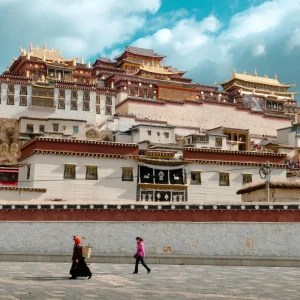
This retained image shows temple buildings, not the Tengchong volcano or Rehai scene described here. Its location and usage rights still need confirmation.
Day 2: Hot Spring Soaking at Rehai + Geothermal Wonders
Morning: Arrive Early at Rehai to See the “Earth’s Boiling Pot”
The author records leaving at 8:00 AM. Plan transport to Rehai from your actual address; the 15-minute journey, 20-yuan taxi, 10-yuan carpool and 8:00 opening are undated. Confirm the day’s opening and return arrangements rather than relying on an early arrival to eliminate queues.
The original record lists 50 yuan at the gate and 45 yuan through Meituan, with 100,000 yuan of accident cover. Check the actual ticket product, validity, entry procedure and insurance terms; those undated figures are not current inclusions. The first path leads to the “Big Boiling Pot,” and you can hear the “bubble-bubble” boiling sound from afar—a bubbling pool, whose original six-meter diameter has no measurement record, with water splashing like boiling dumplings, and a layer of white steam on the surface. View it from the open path behind barriers, without approaching the outlet, touching spring water or exposing your face to steam. Yellow deposits do not establish their composition by color alone; do not step onto wet rocks beside the spring.
Next to the Big Boiling Pot is the “Pregnancy Well,” with a small aluminum stall nearby saying “Hot Spring Boiled Eggs, 10 yuan for 3.” The boss, an auntie in a blue apron, said while peeling an egg: “I put these in at 8:00 sharp; they are just ready now, eat them while they’re hot!” I bought a string. A sulfur smell or soft center does not prove freshness or safe cooking. Choose reliably sourced eggs cooked thoroughly until the yolk is firm; undercooked eggs can carry Salmonella. [3]
Afternoon: Soaking in Hot Springs, Choose the Right Pool
I ate a bowl of Ersi (15 yuan) at a small restaurant by the gate at noon and went for the hot spring at 1:30 PM. Do not treat Rehai and Mayugu as two pool areas in one attraction. Baoshan’s tourism information places Rehai southwest of Tengchong; Tengchong’s government locates Mayugu in Xinle Village, Beihai Township. [4] [5] Choose a confirmed Rehai bathing service for this afternoon. A separate Mayugu visit needs its own address, ticket, transport and time; a Rehai ticket is not a Mayugu ticket.
The original Yugu description mentions a “Forest Hot Spring” sign, pools among trees, volcanic stone and pebbles. Confirm the exact operator and current facilities rather than identifying a pool from that description alone. Do not copy the original 42–48°C range or the account of ten minutes in a 45°C pool. Measure the water before entering: it should not exceed 40°C, and sweating is not proof of safety. The named herbal pool, ingredients and temperature record need the operator’s confirmation. Use drinking water to hydrate; the unverified lemon-slice service is not advice to flavor or drink pool water.
The original Mayugu recollection belongs to a separate location, not a walk between Rehai pools. Its claims of new construction, a children’s pool, milk and wine pools, and comparative crowds need confirmation. Children’s play facilities do not mean hot tubs are suitable for young children. Do not follow the 46°C rose-pool example; stop if a scent is irritating or you feel unwell. Color and fragrance cannot establish that water is natural or safe.
After the Soak: Small Details on Returning to the City
If visiting only Rehai, arrange the return to your actual hotel. Adding Mayugu would require a new transport plan; the original 15-minute return and 4:30 PM arrival cannot cover both sites. The front desk lady warned: “It’s getting colder in the mountains tonight, your light jackets won’t be enough. I have a spare sweater here for free.” I hung my swimsuit (quick-dry type) on the balcony to dry—follow its fabric care label for washing and drying. Drying time depends on fabric and weather, not a guaranteed three hours. Day 3 is a walking visit to Ginkgo Village, not a reason to wear a swimsuit.
The original account calls the 380-yuan room an upgraded private-pool room on Day 1 and a standard room here. Confirm the actual room category, heating and operating hours; floor heating is not automatically warmer than air conditioning. The author recalls a clear bathroom mirror, but that does not establish the ventilation design or prove the hotel safer than another.
This retained image shows temple buildings, not the Tengchong volcano or Rehai scene described here. Its location and usage rights still need confirmation.
Day 3: Jiangdong Ginkgo Village, Timed to the Actual Leaf Color
Tengchong’s government identifies Jiangdong Ginkgo Village in the southeast of Gudong Town. Late autumn is the leaf-viewing season, not a guarantee of golden carpets on fixed November dates. Confirm recent conditions and the exact accommodation address. The original Chenjiazhai and Jiangyun names and walking directions have not been reliably matched to the described places. [6]
Morning: Heading to Ginkgo Village, Autumn Vibes Arrive Early
The author records an 8:40 AM departure and a 10:30 AM arrival, which does not support the table’s 30-minute drive. The “Tengban Road,” 28-kilometer distance and Chenjiazhai navigation label need route evidence. Use the confirmed Jiangdong destination and current road conditions; one successful sedan trip is not a guarantee for another day. Along the way, you can see villagers drying corn and hanging chili strings, with a few early-yellowing ginkgo trees among the green forest like scattered gold.
For public transport, confirm the current Tengchong–Gudong departure station, timetable, fare and onward connection. The original 8:00–9:40 bus segment is already 100 minutes; adding the recorded 15-minute connection makes at least 115 minutes before waiting, not one hour. A red vest does not establish an onward driver’s authorization or safety. The reported 5-yuan bus, 10-yuan connection and 100-yuan four-person carpool are undated; confirm pickup, return arrangements and a legitimate operator rather than assuming a carpool is always cheapest.
Midday: Chicken and Rice, With Ginkgo Portions Limited
I reached the village entrance at 10:30 AM and went straight to Old Yang’s Ginkgo Manor (located in the center of Chenjiazhai, with a 200-year-old ginkgo tree as its sign). The courtyard is paved with bluestone, with about a dozen wooden tables. I ordered “Ginkgo Braised Chicken” (small portion 128 yuan) and “Ginkgo Fried Rice” (38 yuan), along with a dish described as cold-dressed “tree bark.” Its actual edible ingredient and source need the restaurant’s confirmation; do not identify or collect food from that name alone.
The account describes golden chicken soup, but the claimed floating ginkgo leaves have not been identified; do not use this narrative as a recipe for adding leaves. The first sip was sweet—the freshness of the local chicken mixed with the waxy sweetness of ginkgo nuts. The chicken was stewed until the meat fell off the bone. Ginkgo seeds contain natural toxins. Freshness, soaking away bitterness and a soft texture do not prove they are safe, and cooking cannot completely eliminate the toxins. Avoid raw or immature seeds and limit even cooked seeds; count those in soup and rice together rather than treating them as unrestricted snacks. Children are especially susceptible. Seek medical help for illness after eating them. [7] The fried rice used long-grain local rice, each grain distinct, mixed with crushed ginkgo, diced ham, and green onions. The author records two bowls but gives no total seed quantity; that is not a recommended serving.
A recorded total of 130 yuan for two people would be 65 yuan each, not 40. Yet chicken at 128 yuan plus rice at 38 yuan already totals 166 yuan, before any extra half portion. The actual order, portion charges and bill remain unresolved. The hostess saw how much we enjoyed it and gave us a free bowl of white fungus soup.
Afternoon: Taking Photos in the Available Light
I started taking photos at 1:30 PM. The original 10:00–15:00 suggestion is a five-hour window, not a fixed best-light rule. Cloud, tree shade and the actual viewing direction affect the light; southerly sunshine does not eliminate harsh shadows.
First, I went to Chenjiazhai Autumn Drying Plaza (in the village center, near Old Yang’s). The plaza was filled with dozens of bamboo trays layered with freshly picked ginkgo nuts in shades of yellow, orange, and green. An old man in a blue shirt was peeling fruit. I asked him for a photo, and he smiled and said: “Girl, stand by the tray, tilt your head slightly, perfect!” In the resulting photo, the texture of the bamboo trays and the ginkgo nuts was incredibly clear.
The author next describes an old ginkgo called the “Ginkgo King”, with umbrella-like branches. The Jiangyun location, ten-minute southerly walk, 300-year age and trunk measurement lack a matched site record; ask locally for the actual marked tree rather than using these as directions. There are several yellow walls nearby (likely courtyard walls). I wore a light pink sweater and stood in front of the wall while my friend took a photo with a phone—sunlight filtered through the leaves onto me, and even the shadows looked golden. A thick layer of ginkgo nuts covered the ground, “crunching” underfoot. The account also mentions a child collecting fallen seeds for candy; this is not an activity to imitate, and the conversation has no supporting record.
Evening: Staying at a Guesthouse—A Warm Night by the Hearth
The author records a 6:30 PM village check-in, but does not explain leaving and returning from the earlier village activities. Confirm the day’s route and lodging in advance. The account names Yunqi Ancient Courtyard (the innermost guesthouse in Chenjiazhai, with a red lantern at the door). The guesthouse is a traditional wooden structure with a ginkgo tree in the courtyard and pine needles on the ground. I stayed in the “Songyue Room” (280 yuan/night). Opening the door, I saw the hearth in the living room—a stone hearth with burning pine branches in the original description. Smoke or pine scent is not evidence of safe heating.
Do not copy the original advice to collect fallen ginkgo seeds and roast them by the hearth. Cracked shells, sweetness and yellow flesh do not establish detoxification, and cooking does not remove all toxins. Wood fires can also produce colorless, odorless carbon monoxide. Use properly installed, maintained and ventilated heating; do not add fuel yourself or leave an unattended fire overnight. [8]
Details to verify before booking or following the route:
| Item | Details |
|---|---|
| Getting to Ginkgo Village | Check the actual route and road conditions. The carpool price is undated. The recorded bus and connection total at least 115 minutes before waiting, not one hour. |
| Recorded Farmhouses | Old Yang’s and Aunt Li’s identities, locations and menus need checking. The 130-yuan bill would be 65 yuan each for two, but the dish prices still conflict. Confirm unknown ingredients and limit cooked ginkgo seeds. |
| Best Photo Time/Spots | Choose light on the day. Confirm the plaza, marked tree and access locally; the 300-year age and walking directions are unverified. Ask permission before photographing people or entering courtyards. |
| Guesthouse Experience | Confirm Yunqi Ancient Courtyard’s identity, room, rate and heating safety. The 280-yuan stay and gifts lack booking evidence; do not collect seeds for roasting or add fuel to the hearth. |
| Pitfall Warnings | Wear stable walking shoes for uneven or slippery surfaces. Warm rice is not proof of food safety; ginkgo seeds still need limited intake even after cooking. |
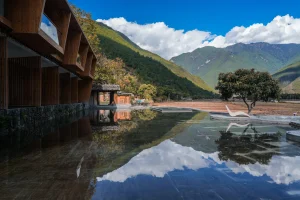
This retained image shows a mountain-view building and reflecting pool; it has not been verified as this itinerary’s accommodation or Ginkgo Village.
Day 4: Beihai Wetland, Optional Boating and the Return Trip
Morning: Wetland Views and Optional Authorized Water Activities
The original account records an 8:20 AM arrival, a 35-yuan entrance ticket and a 55-yuan grass-raft activity bought for 50 yuan online. Confirm current opening, permitted activities, ticket inclusions and redemption rules; neither these prices nor immediate weekday entry is guaranteed.
Beihai is a natural perennial marsh with extensive floating vegetation mats; these are not simply artificial boats made from bundled reeds. [9] Confirm which water activities are permitted, the actual craft, age restrictions and safety equipment with an authorized operator. Consider participating only in permitted areas with a suitable life jacket and on-site instruction; a rope is not a substitute for a life jacket. Do not step onto natural vegetation mats yourself or head into the lake merely because the wind feels light.
The author records 9:00–10:00 on the water but later describes a 10:30 finish; the activity’s actual duration needs confirmation. If a craft feels unstable, stop and follow the operator’s safety procedure rather than learning balancing techniques from this narrative. You can see egrets gliding over the water and wild ducks flying off, with endless reed marshes in the distance waving like waves—it’s much more vivid than in photos.
Pitfall Warning: Don’t wear high heels! The mud at the edge of the rafts will stain your shoes. My colleague wore white sneakers, and the soles were covered in black mud; it took half an hour of wiping with wet tissues to get them clean.
After Landing: Luggage and a Meal Near the Wetland
After the confirmed activity, allow time to land, change and deal with luggage; the original 10:30 finish conflicts with the earlier 10:00. The author then records a five-minute walk to Wang’s Ersi (Wetland Parking Lot Branch)—the storefront isn’t large, the sign is blue with white characters, and there’s a red cloth saying “Open for 18 years.” The shop was full of tourists and locals, with the thick scent of bone broth wafting from the kitchen.
I ordered a bowl of “Bone Broth Ersi” (12 yuan). The broth was milky white with some green onions and pickled vegetables. The Ersi was thin and round, soft but not mushy, having absorbed the freshness of the soup. I added a spoonful of chili oil (free self-service); the spiciness was just right. Combined with the tang of the pickles, every bite was warming.
The account describes a neighbor’s 15-yuan “Xidoufen Ersi” as thick, bean-scented and mild. The claimed pea ingredient, exact recipe and toppings need the vendor’s confirmation; ask about ingredients, spice and allergens rather than treating a quoted conversation as a universal recipe or health claim.
Before Leaving the Wetland: Buying Souvenirs
At 11:30 AM, I prepared to head back. I first went to the “Local Products Shop” at the wetland exit. For ginkgo products, check traceable suppliers, packaging, dates and storage instructions. Hardness or softness cannot establish whether the product was sulfur-treated.
The Chinese companion records 2 jin at 25 yuan per jin, not 2 kg at 25 yuan/kg. That is 1 kg at 50 yuan/kg, although the purchase still lacks a receipt. Deep yellow color or an absence of white residue does not prove safety or absence of sulfur treatment. A purchase quantity is not a safe single serving. The original shopkeeper also recommended “Volcanic Stone Handcrafts,” which can also be found at the Volcano Park exit (10-50 yuan). I picked a paperweight carved with “Tengchong” (35 yuan). The author recalls cool stone and a fissured texture, but those features cannot authenticate its material or origin. It was intended as a desk ornament.
Pitfall Warning: Do not judge ginkgo safety by freshness, softness, roasting or where it was bought. Do not follow the original preference for freshly collected village seeds; cooking still does not remove all toxins.
Departure: One Last Taste of Tengchong Before the Flight
Day 3 ends at a village guesthouse, but the original Day 4 departure is from a city hotel. Confirm checkout, luggage storage, collection and the village–wetland–city transfer rather than assuming the bags return by themselves. The 30-kilometer route, 40-minute journey, 80/75-yuan taxi and 19:00 flight lack dated records. Work backward from the airline’s check-in requirement and the actual starting address, allowing traffic and weather margin; the author’s 16:30 departure is not a universal safe cutoff. The friend’s delay story also lacks a date or supporting record.
At the airport, I bought a box of “Xidoufen Baba” (8 yuan/box) at a convenience store. The author describes a crispy snack with a soft, bean-flavored center. The precise product name, ingredients and cooking method need the vendor’s confirmation; this is not a standard recipe or assurance about allergens.
On the final day of this trip, sitting in the airport waiting hall flipping through photos, I suddenly understood Tengchong’s charm: it doesn’t rush to please tourists. The volcanic silhouettes, autumn leaves and wetlands reward an unhurried visit. Check the forecast for your actual dates and lowest temperatures, and dress in layers for your needs rather than assuming all autumn and winter mornings are 10°C. Leave time to walk slowly and enjoy local meals.
For Chinese place names when checking locations with a driver or accommodation host, use the Chinese-language companion to this four-day Tengchong plan. It follows the same three-night framework and distinguishes Rehai from Mayugu; it is not an extra tour to fit into these four days. Its unconfirmed hotel and shop records are likewise not booking guarantees.






