



Day 1: Landing in Xishuangbanna, Staying in Gaozhuang is Most Worry-free
Landed at Xishuangbanna Gasa Airport at 10:30 AM—the airport design understands tropical vibes so well. The ceiling is decorated with imitation Dai brocade, signs are bilingual saying “Welcome to the City of Dawn,” and even the restroom fragrance is lemongrass. I pre-booked a pickup on a platform, and the driver stood at the exit holding a sign with my name. The car was a local SUV with strong air conditioning. We chatted on the road; he said, “The night market in Gaozhuang opens half an hour later in winter than in summer because there is still sun in the evening, and tourists like to browse longer,” which later proved very useful. It took 20 minutes to reach Gaozhuang Xishuangjing, the fare was 32 yuan, and the driver helped me put my luggage in the hotel elevator, saving me the trouble of carrying it.
Starving by noon, I headed straight for “Manfeilong Roast Chicken”—this shop is hidden in a Gaozhuang alley, with a string of copper bells at the door that jingle when pushed. The kitchen is semi-open, and a chef was squatting on the ground chopping sour bamboo shoots. The shoots in the plastic basin were soaked white, emitting a faint lactic acid fragrance. I ordered the Sour Bamboo Shoot Chicken set, and the clay pot was still bubbling when served: the chicken was free-range, stewed until falling off the bone, with slightly crispy skin. The sour bamboo shoots wrapped around the chicken flavor; it wasn’t a pungent smell but a perfectly fermented freshness. The accompanying chicken soup rice noodles deserve special praise—the noodles were handmade, soft and smooth, and the broth had simmered for at least 4 hours, floating with two lemon leaves. One sip moisturized my throat. I drank all the soup and finally added a spoonful of the shop’s free tamarind juice, which was sweet, sour, and refreshing. Seeing how much I enjoyed it, the owner came over and said, “You can try the coconut milk egg tarts at Manting Park tomorrow; they are richer than the ones sold outside.”
Exploring Gaozhuang in the afternoon, remember to find the elephant sculpture entrance of “Starlight Avenue”—it’s 50 meters south of the main entrance of Gaozhuang Xishuangjing. There are coconut stalls by the road, and owners enthusiastically shout, “Want a freshly opened one? Very sweet.” After entering Starlight Avenue, I first went to rent a Dai costume—I chose a shop hanging handmade sarongs. The owner, a Dai auntie, saw that I wanted a Japanese-style shoot and helped me pick a light blue sarong with silver threads, paired with a frangipani flower pinned to my hair, all for 100 yuan, including a free hairstyle. When taking photos, I stood under a phoenix flower tree. Sunlight filtered through the petals onto the sarong, and passing aunties complimented, “The little girl looks so beautiful in that.” Wandering to the center of the night market, I bought two Dai paper lanterns—they are handmade, printed with elephants and lotuses. The owner used a marker to write “Slow Down” for me and said, “Hang it on the balcony; when the wind blows at night, the lamp sways so gently,” 15 yuan each, much more textured than the plastic ones at the scenic area entrance.
Stayed at “Bodu Oxygen Forest” at night, located right inside Gaozhuang, just a 5-minute walk to the night market. The room was Southeast Asian style, with light beige walls, rattan wardrobes, bamboo chairs, and a balcony with iron railings covered in bougainvillea. I dropped my bags and went to the balcony, just in time to see the barbecue stalls below. The chef was flipping roasted tofu, and the smoke carried the scent of cumin. The bed was 1.8 meters, the mattress had just the right firmness, and the pillow was memory foam, so my neck didn’t ache. It was 318 per night including breakfast. Waking up the next morning, I had breakfast in the restaurant downstairs. The freshly simmered pineapple porridge was amazing—fresh pineapple cubes simmered until soft, mixed with glutinous rice, sweet but not cloying. Paired with freshly fried dough sticks and pickled radishes, I drank two large bowls. Even though I usually don’t like breakfast, I licked the bowl clean.
The Gaozhuang night market actually starts setting up at 6:30 PM. Last time I went at 7:00 PM, it was already too crowded to move. This time, following the driver’s advice, I arrived at Starlight Avenue at 6:30 PM and found a quiet corner to photograph the moment the lights came on. With only a few people in the background, I posted a photo on social media, and friends asked if I had booked the whole place.
The benefits of staying in Gaozhuang really go without saying—if you want to visit the night market, it’s right there; if you want barbecue, just go downstairs; even buying water doesn’t require a long walk. Coming back at night, I passed a convenience store under the hotel and bought a bottle of local “Xishuangbanna Mineral Water” for 2.5 yuan. The bottle was printed with tropical rainforest patterns, and it tasted a bit sweet, like it had a hint of honey.
The whole day went by without rushing or getting tired, and even the photos turned out great. I have to get up early for the Botanical Garden tomorrow. Lying in bed thinking about the Victoria amazonica for tomorrow, I fell asleep very quickly.

Day 2: The Plants and Daily Life of Xishuangbanna
Set the alarm for 6:30 AM—I read the Botanical Garden guide three times before bed, fearing I’d miss the dewdrops on the Victoria amazonica. Got up, washed my face, ate a pineapple bun from the hotel, and packed a warm dough stick while walking to the west gate of Gaozhuang Xishuangjing. The pickup point for the scenic area shuttle is here, with a blue and white sign saying “CAS Botanical Garden Special Line.” Arrived at 7:50 AM, five or six people were already standing there, all photography enthusiasts with long lenses. They chatted with me: “You came early, girl; the dew on the Victoria amazonica hasn’t dried yet.” The 8:20 AM shuttle was on time. The driver was a local uncle humming Dai songs, saying, “The weather is good today; the orchids in the garden will bloom brilliantly.”
40 minutes later, I entered the Botanical Garden gate. My first reaction was being wrapped in fragrance—frangipani and jasmine flowers planted on both sides of the road filled the garden with a sweet scent. I headed straight for the Victoria amazonica pond and was immediately struck by the scene: Victoria amazonica leaves 1.2 meters in diameter floated on the water, edges curled into small waves, each leaf dotted with dewdrops the size of ping-pong balls. When the sun hit them, it looked like a handful of crushed diamonds. A small sign stood nearby: “Victoria amazonica can bear 50 kg; a child sat on one yesterday and stayed steady.” I crouched by the pond, using my phone close to the water to photograph the dew. The lens got misty, but after wiping it, I could count the veins of the leaves in the photo, and even the blue sky in the dewdrops was visible. A staff member carrying a small bucket came over and said, “Want to touch the leaf veins? They don’t prick.” I reached out; it was slippery, like it had a layer of wax.
Next, I visited the strangler fig area. The trees along the path were shaped like giant umbrellas. The words on the explanation board were fluttering in the wind: “The aerial roots of the strangler fig first wrap around the host tree, then slowly secrete acidic substances to corrode the bark, and finally replace it.” I stopped in front of the largest strangler fig—the trunk of the host tree had been squeezed until only a thin layer of bark remained, like a falling coat. I touched the aerial roots; they were as rough as a grandfather’s palm. My heart trembled slightly: nature’s “competition” is hidden in these silent entwinements. A mother nearby was explaining to her child: “See, trees ‘fight’ too.” The child asked with wide eyes: “Then who wins?” The mother smiled: “The winner is the one best suited to survive.”
At noon, I ate at “Green Stone Forest Restaurant” by the Botanical Garden entrance. Outdoor seats were arranged with rattan furniture, right next to a jackfruit tree. I ordered pineapple rice—the rice was fragrant glutinous rice, mixed with freshly cut pineapple cubes, each grain soaked in fruit aroma. One bite was sweet but not cloying, like eating tropical sunshine. The accompanying stir-fried water spinach was so crunchy it made a sound. I ate two bowls of rice and finally picked out all the pineapple cubes at the bottom. The waiter smiled and said: “You have a good appetite, girl; next time you can try our coconut cake.”
At 1:30 PM, I took the return shuttle to Jinghong, arriving at the bus station before 3:00 PM. I took a taxi to Manting Park. The driver spoke in a Dai accent: “Manting is the royal garden of the old Dai kings; there’s the Zongfo Temple inside. Remember to wear long pants—otherwise, they won’t let you in.” I looked down at my jeans and breathed a sigh of relief. The fare was 15 yuan. Getting out, the driver pointed to a flower stall: “Buy a string of frangipani; the masters at Zongfo Temple will give you a blessing.” I spent 10 yuan on a string—white petals with yellow centers—and clipped it to my waistband.
Entering Manting Park, I first visited the Royal Garden—the rockery was made of Taihu stones. Although the lotus leaves in the pond had withered, they still stood like small umbrellas. Walking along the bluestone path toward Zongfo Temple, I passed a grove of champaca trees; the scent was as thick as being soaked in honey. The threshold of Zongfo Temple was high. When I stepped in, my heartbeat slowed down: the golden Buddha in the main hall was shimmering, and the Bodhi tree in the yard was over three stories high, its leaves spreading out like palms. A monk in robes was sweeping the ground; seeing my frangipani, he nodded slightly: “Auspicious.” Standing under the Bodhi tree, listening to the wind through the leaves, I finally understood what “quiet years” meant.
In the evening, I strolled along the Lancang River. The water was pale green, like a piece of wrinkled emerald. High-rises on the opposite bank lit up, some with Dai neon signs, as if greeting the river. A few kids were flying kites by the river; butterfly-shaped kites flew high, the reels whirring in their hands. I walked for half an hour and bought a bottle of local “Rainforest Mineral Water” for 2.5 yuan. The bottle had an Asian elephant on it, and the water was clear and sweet, like mountain spring water.
At night, I went to “Cai Chun Qing” for Dai-style hot pot—I chose a window seat where I could see the phoenix flower tree below. I ordered the tomato base. Fresh tilapia was added; the meat was so tender it shook when picked up, and a handful of fresh peppermint made the aroma burst out. There was also a dish of fried Dai-style shrimp; the shells were crispy enough to chew, coated in sweet chili sauce, salty and fresh with a hint of sweetness. I drank three bowls of soup; the tomatoes were simmered into a sandy texture, with a bit of lemongrass, like Thai Tom Yum soup mixed with Dai gentleness. Seeing my enjoyment, the owner brought a free Paoluda—a coconut milk base with bread rusks and sago, sweet but not greasy, perfect for cooling the hot pot spice.
Free guides at the Botanical Garden must be grabbed! When I arrived in the morning, a Dai guide was just registering. Following her for two hours, I learned that Victoria amazonica leaves can be “baby cradles” and strangler fig roots can be “natural ropes,” which was ten times more interesting than reading the signs myself. If you’re late, the guides will be taken, and you’ll have to wander aimlessly.
On the way back to the hotel, I passed the Gaozhuang night market entrance and saw people taking photos with Dai paper lanterns. I touched the frangipani at my waist and smelled the fragrance on me, suddenly feeling: so-called “life’s bustle” isn’t about being frantic; it’s the scent of plants, the smell of food, and the kindness of people wrapping around you as you move slowly.
The whole day wasn’t rushed or tiring, and the photos were great. Lying on the hotel bed, thinking about going to Yuanyang tomorrow to see the terrace sunset, I actually felt a bit of anticipation—after all, nature’s gifts never disappoint.
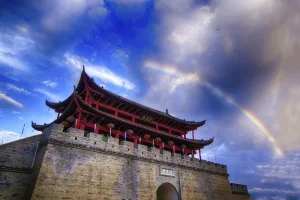
Day 3: To Yuanyang, Chasing the Terrace Sunset
I was at Jinghong Bus Station at 6:50 AM with the ticket I booked the night before—the steam from the rice noodle shop mixed with beef aroma drifted over. The ticket lady looked up at me: “Going to Yuanyang? Last row, by the window, hurry up.” The bus was a long-distance coach with independent air conditioning. The seats were wide enough to stretch my legs. Next to me sat a Hani auntie holding a bamboo basket lined with banana leaves, stuffed with greenish-yellow bananas: “Have some on the road, girl; they’re sweeter than the supermarket’s.” The bus started at 7:30 AM, heading north along the Kunmo Expressway. The tropical green slowly faded into mountain brown. The auntie pointed out the window: “One more turn and you’ll see the shadow of the terraces.”
5 hours later, the bus creaked to a stop at the entrance of Shengcun—my butt was numb from the shaking, but I immediately saw the “Shengcun Farmhouse” red sign hanging under an old locust tree. The owner was a thin, dark man in a blue apron who wiped his hands and came out: “Food is ready, the terrace fish is waiting.” When the clay pot was served, the lid was still steaming. The fish was caught from the terraces at dawn, its scales shimmering. It was stewed so tender it melted in the mouth. The ginger and garlic were sliced whole and crunchy. The broth had the sweetness of jackfruit (later I learned a bit of homemade jackfruit wine was added for freshness). A man in a conical hat at the next table leaned over: “Where was this fish caught? I’ll take my grandson tomorrow!” The owner smiled and pointed out the window: “Just shout on the ridge; any farmer is happy to help you catch some.” I drank three bowls of soup in a row and finished every bit of fish and green onion.
In the afternoon, I went to Duoyishu Terraces. A 10-minute walk from the guesthouse leads to a dirt road. The rice fields on both sides were just heading, and the wind carried the bitter-green scent of rice leaves. I passed several Hani mushroom houses with sun-yellowed thatched roofs. Bamboo baskets by the doors were piled with freshly dug sweet potatoes. Kids were playing marbles by the road; they smiled at me, showing missing teeth. The Duoyishu viewing platform has no entrance fee, but you have to arrive early to get a spot—I arrived at 4:30 PM, and some photographers had already set up tripods. The sun was like a red-hot coal slowly sinking, dyeing the deep green terraces into gold foil, then orange-red, pink-purple, and finally merging into pale pink. The sea of clouds surged at my feet like crushed marshmallows. Occasionally the wind blew the clouds away, revealing layers of terraces like a puzzle of broken mirrors. I kept taking photos until my memory went from 50% to 10%. The last photo was when the sun just touched the mountain peak, the terraces were soaked in gold, and the sea of clouds looked like a gentle fire.
At night, I stayed at “Yunmei Guesthouse.” The owner, Ajie, a Hani young man in a navy blue traditional jacket, specifically placed my rattan suitcase on top when helping with luggage. The room wasn’t big but had a large east-facing window facing the terraces—I dropped my bags and leaned on the sill: the sunset dyed the rice fields amber, and the ridges were like thin lines stringing pieces of “gold foil.” Ajie brought a cup of Pu’er tea: “Ripe Pu’er from our own tea mountain, warm and relaxing.” The tea was mellow with a hint of jujube. I sat in a rattan chair on the balcony for two cups, looking at the stars—the stars in Yuanyang are so bright, like crushed diamonds on black velvet; I could even see the faint outline of the Milky Way. Ajie leaned against the doorframe: “Wake up early tomorrow for the Bada sunrise; I’ll drive you there, it’s only 5 minutes away.” The wind carried the scent of rice fields. I hugged my blanket and yawned, suddenly feeling: all the bumps on this journey were worth it for this moment standing in the wind, watching light turn terraces into poetry.
① You must book the bus to Yuanyang at the station or a reliable platform 1 day in advance; buying on the spot often means no seats, especially in peak season; ② Duoyishu viewing platform has no fee but requires early arrival to get a spot, or you’ll be blocked; ③ For terrace fish in Shengcun, look for “freshly caught at the farmhouse,” don’t eat frozen fish at the scenic entrance; the taste is worlds apart.
Returning to the room, the moonlight cast the shadow of the terraces on the wall. I touched the Hani brocade pendant Ajie gave me by the pillow, listened to the insects outside, and fell asleep quickly—dreaming of the sunset, with golden light on my face, as warm as a sun-dried quilt.
Day 4: Yuanyang’s Sunrise and Ancient Village Slow Life
At 4:30 AM, I was curled in bed counting stars when the guesthouse door creaked open—owner Ajie, in a navy blue fleece, brought a steaming cup of ginger tea: “Time to get up, the Bada sunrise won’t wait.” I rubbed my eyes and put on my down jacket. He tucked my scarf tighter: “It’s cold outside, don’t catch a cold.” His small van was downstairs, “put-putting” as it started. Frost condensed on the window; I breathed on it to wipe a small circle and saw the roadside terraces still in darkness, with only wild chrysanthemums on the ridges glowing dimly white.
5 minutes later, we were at the Bada viewing platform—fewer people than I imagined, just three or four photographers with tripods. Ajie took a photo of my back standing by the platform, saying, “When the sun comes out, this frame will perfectly capture the terraces.” It was still dark, the wind smelled of freshly turned earth. I held my ginger tea, watching the eastern sky turn pale. Suddenly someone shouted “It’s out!” I looked up—the sun was like a waking baby, first showing half a face, dyeing the nearby clouds pinkish-purple, then jumping out completely as light “whooshed” down. The terraces first caught the red light, like scattered dried goji berries, then turned to gold foil. The lowest terraces were still in shadow, looking like a gradient cloth. The sea of clouds surged—not thick black, but pale cotton-like white. Occasionally the wind cleared the clouds, revealing perfectly straight ridges like they were drawn with a ruler. I kept taking photos, my fingers numb but unwilling to stop—the last photo was when the sun was overhead, the terraces soaked in gold, and my long shadow fell on the lines of the ridges.
In the morning, I hiked to Azheke Ancient Village—a 15-minute walk from Bada along a newly renovated dirt road. The rice fields were heading, and dew dampened my sneakers. Passing a few houses, bamboo baskets were piled with freshly dug sweet potatoes, looking like chubby babies. At the village entrance, I first saw the mushroom houses—adobe walls were light brown with handmade plaster textures, and the thick thatched roofs looked like quilts, with dried corn hanging from the eaves. A village auntie sat at the door weaving. The “creak” of the wooden loom drifted over. I moved closer: the brocade pattern was connected diamonds in dark brown and light yellow. Her hands were skillful, the shuttle flying as the cloth grew. “Want to buy one, girl?” she smiled. “20 yuan a piece, hand wash only, or it’ll shrink into a ball.” I touched the brocade; it was thick and warm from the sun. After bargaining to 15 yuan, she wrapped it and gave me a red string: “Tie it to your bag for good luck.”
At noon, I ate “Granny’s Terrace Duck” in the village—Granny’s small kitchen was behind a mushroom house, and the scent of stewed duck filled the street. The duck was free-range, its meat firm and stewed until the bones were flavorful. The soup was made from the duck carcass with a layer of yellow oil and green onions. One sip was so delicious it nearly melted my tongue. I had two bowls of rice with Granny’s crunchy pickled radish. She sat opposite me, smiling: “This duck runs in the terraces every day, so the meat is firm, much better than farm-raised.”
In the afternoon, I went to Aichun Blue Terraces—I took a motorcycle at the village entrance; the driver was an uncle in liberation shoes, 10 yuan per person. The motorcycle rolled over mud clumps, splashing small spots. The wind blew my hair, and I held onto the uncle’s waist as roadside terraces looked like broken mirrors. When we arrived, I walked down the ridge; the soil was soft and damp, turning dark brown. The blue terraces stunned me—the water wasn’t a vivid blue but a pale blue like watered-down ink, clear enough to see moss and small fish. I crouched on the ridge to take photos close to the water. The water in the photo was pure blue without impurities, even my reflection looked blue. A child crouched next to me, pointing: “Sister, the water is blue!” I smiled: “Yes, the clouds fell in.” He tilted his head: “Can I touch it?” I nodded, and he carefully put his finger in, making small ripples and smiling widely.
Back at Duoyishu in the evening, Ajie brought freshly steamed Hani handmade baba—round, topped with sesame, glutinous inside, sweet with an osmanthus scent. “I made osmanthus flavor today, try it.” He handed me Pu’er tea: “Ripe Pu’er goes well with baba.” One bite of the soft rice and fragrant sesame with the aged tea flavor made me sigh with comfort. Frogs were croaking in the terraces, the wind carried rice flower scent, and I sat on the balcony watching stars light up, suddenly feeling: the day’s fatigue had turned into the brocade in my pocket, the duck soup in my stomach, and the blue terraces in my camera—a warmth stored in my heart.
① Bada sunrise is freezing; wear a down jacket and scarf. The owner’s ginger tea is free and warming; ② Bargain for Azheke brocade with a smile; the aunties are nice and won’t overcharge; ③ Be careful on the Aichun Blue Terrace motorcycles; drivers know the road but don’t go too fast; ④ The water in the blue terraces is very clear; don’t step in it or you’ll ruin your shoes. Shooting from the ridge is safest.

Day 5: To Jianshui, Exploring Old Streets for Roasted Tofu
At 9:00 AM, Shengcun was still soaked in morning mist. Holding the roasted sweet potato Ajie gave me yesterday, I stood at the bus station for the minibus. It was an old green bus covered in faded travel ads. The driver, an uncle with a handlebar mustache, shouted: “Going to Jianshui? Sit inside, there’s a seat.” Some Hani aunties were already on board with bamboo baskets of fresh tea leaves, filling the bus with fragrance. I found a window seat and touched the back—old but clean. An auntie handed me an orange candy: “Homemade, sweet.” The minibus started with a “hum,” heading down the winding road. The mist cleared, and sugarcane fields turned from deep green to light yellow, the wind smelling of sweet juice. 3 hours later, the bus stopped at Jianshe Road. The driver shouted: “Jianshui is here, get off slowly.” I squeezed the candy wrapper and headed toward the old city.
At 12:30 PM, I stared at the “Lin’an Hotel” wooden plaque—red paint had peeled to reveal paulownia wood, and a large pottery jar of pickled radishes stood at the door. The owner, an uncle in round glasses and a blue apron, shouted: “Here, girl? The roasted tofu is fresh!” I rushed in to a wooden table that still had tea stains from the previous guest. When the roasted tofu arrived, the blocks tied with straw were charred black and crispy, but the inside was tender and soaked in the aroma of chili powder. The steam pot chicken came in a coarse pottery pot. When opened, the steam carried the chicken scent—the soup had pseudo-ginseng and goji berries, and the chicken was free-range and tender, with gelatinous skin. One sip of the soup made my eyebrows jump with delight. I had two bowls of rice with the free pickled radishes. The owner leaned in: “Our steam pot chicken uses 3-year-old hens, stewed daily. Tasted the freshness?” I nodded, rubbing my full belly: “Fresher than yesterday’s terrace fish.”
At 2:00 PM, I walked toward Chaoyang Tower. Passing a bluestone alley, there was a stall selling jasmine strings for 5 yuan; I bought one to hang on my bag. Chaoyang Tower is in the city center, with red walls and grey tiles. The stone lions at the door had moss on their ears. The ticket was 10 yuan. The elderly attendant pointed to the stairs: “Careful, the steps are slippery.” The stairs were bluestone with signs of wear, and the wooden handrails were polished by touch. Climbing up, I looked down from the railing; the old city was like an unfolded chessboard, with grey tile roofs stretching out, and distant mountains wrapped in mist like an ink painting. The wind was strong, blowing my hair. The old man pointed: “That’s Shuanglong Bridge, you can visit later; it’s from the Qianlong era.” I leaned on the railing, smelling the tung oil paint, suddenly feeling: history’s flavor is the coolness of old bricks, the saltiness of the wind, and the scent of rice cakes from below.
At 6:00 PM, the lights on Zitao (Purple Pottery) Street came on—warm yellow string lights hung from eaves, reflecting off the pottery shop windows with a soft glow. I wandered the street; every shop displayed purple pottery: teapots, vases, bowls, some carved with lotuses, others painted with peacocks. I chose a shop with a “Disciple of Xiang Fengchun” sign. The owner, an auntie in indigo cloth, picked up a round teapot: “This is a Xishi pot, made of Jianshui purple pottery; it breathes.” I took it; the body was warm, carved with lotus vines. She taught me: “Use Pu’er tea at home, wipe the body daily, and tea oil will seep into the pottery, making it brighter with use.” I asked: “How much?” “100 yuan, for you, it’s 150 elsewhere.” I bargained to 80, and she smilingly wrapped it, adding a small pottery cup: “For you, to match the pot.” An auntie nearby added: “This pot is nice, I’ll buy one too.”
At 8:30 PM, I walked along the bluestone road to the guesthouse “Grand Mercure”—the door was vermilion with a paper lantern, and potted bougainvillea stood in the shadows. The owner, a young Jianshui man, helped with luggage: “Room is on the second floor, renovated from an old house, with a skylight.” Inside, the bed was old elm with coarse cloth sheets, and a calligraphy piece on the wall read “Water Flows, Clouds Stay”. A bit of moonlight leaked through the skylight onto the pillow. The owner brought hot milk and a piece of handmade brown sugar: “Made this morning; let it cool in water, it’s warming.” One bite of the sugar was sweet but not cloying, with a fresh sugarcane taste. I sat under the skylight looking at photos, hearing the flower seller in the alley: “Buy jasmine flowers—”
① Sit in the front of the bus from Shengcun to Jianshui; the back is bumpy, but the driver plays nice Jianshui folk songs; ② Eat the roasted tofu at Lin’an Hotel while hot; it gets soft and loses crispiness when cold; ③ Chaoyang Tower stairs are steep; wear flat shoes; ④ Don’t buy pottery that is too shiny; handmade pottery has a grainy texture, which is authentic Jianshui Zitao; ⑤ Guesthouse skylights let in moonlight; close the thin curtain or you’ll wake up early.
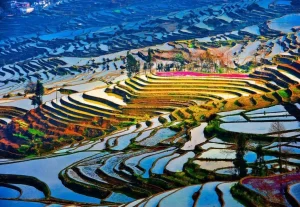
Day 6: Jianshui’s Ancient Villages and the Small Train
When the morning wind carrying osmanthus scent drifted through the guesthouse window, I was eating the rice cake given by the owner—the rice aroma mixed with brown sugar was soft and sweet. Checking out, the owner handed me a plastic bag: “The soy milk stall at the Zhu Family Garden entrance is good, it’s warm.” I took the bag to the alley; the bluestone was shiny with dew. A basket of gardenias by the wall was 5 yuan a bunch; I pinned one to my collar.
The vermilion gates of Zhu Family Garden were open. The paper ticket had gold-stamped peonies, and the ticket lady in a qipao smiled and straightened my collar. Entering, I first hit the screen wall—a bas-relief of “Pine and Crane for Longevity,” with distinct pine needles and lifelike crane feathers. Past the wall was a pond. Red carp crowded under water lilies, splashing as they moved. A small pavilion on the rockery had copper bells that jingled in the wind. I followed the signs; it took half an hour to find the exit. I met a girl in Hanfu asking for directions, and we took a photo together; her horse-face skirt swept the stones like a moving flower. At the exit, I rented a pink Manchu-style outfit. The owner did my hair with a pearl hairpin, saying “This makes for an authentic period photo”. I took a photo by the stone lion; a friend messaged: “Are you in Jianshui or did you travel back to be a Qing Dynasty princess?”
In the afternoon, I took a minibus to Tuanshan Village. The station by the old city gate was like an old teahouse; aunties sat on stone stools peeling beans and gestured: “Sit in the front, it’s steady.” The minibus was a green vintage model labeled “Jianshui-Tuanshan.” The driver wore a straw hat, and it “put-putted” as it started. We passed rice fields where heavy ears bowed the stalks like golden waves. Kids ran with dandelions, fluff flying everywhere. 10 minutes later we reached Tuanshan. An old camphor tree shaded half the street, with a tamarind juice stall beneath. An auntie handed me a cup: “5 yuan, with ice?” I drank the sweet-sour juice and followed signs into the village.
The “Tuzhang” houses in Tuanshan are unique—the roofs are flat with blue tiles, topped with drying corn and red chili, like colorful hats for the houses. Walking the stone road, I passed a home where the wooden lintel carving showed peonies with layered petals and a small bee inside; the wood grain shone with the oil of time. An old man sat on the threshold smoking. Seeing me look at the carving, he smiled: “My father carved this; took three months. Young people don’t know this craft anymore.” I touched the petals, feeling the warmth of the wood, like touching the time of Tuanshan.
At sunset, I took the meter-gauge train. The Old City station was an old platform with a wooden sign “Old City → Tuanshan,” fare 10 yuan. Waiting for the train, an old man with a pipe said: “I used to take this to the market as a kid. Back then, the carriages were full of tea and mushroom sellers; very lively.” The green old train clattered in. The wooden seats were old but clean, and the windows were large enough to catch the wind. Sitting by the window, I saw scarecrows in straw hats holding plastic sickles, and a boy on a buffalo’s back waving a whip. The buffalo moved slowly, its tail sweeping rice leaves. I filmed the flowing fields, villages, and distant mountains. Friends were amazed: “This is so healing! I want to go to Jianshui now!”
Back in the old city, I ate at “West Gate Well Tofu.” Walking the bluestone road, red lanterns lit up, casting red light on the walls like sparks. The shop was at the end of an alley. The owner brought sweet soy milk and tofu pudding—the soy milk was freshly ground and thick, sweet to the throat; the tofu pudding was as soft as pudding, topped with pickles and cilantro, melting in the mouth. Only 5 yuan. I sat on a small stool while the auntie smiled: “This was made at 3:00 AM; very fresh.” The jasmine seller’s voice drifted in: “Buy jasmine flowers—” I inhaled; the jasmine scent mixed with the tofu sweetness warmed my heart.
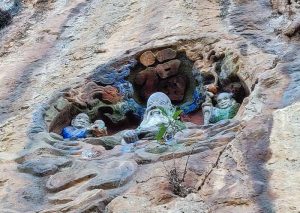
Day 7: Returning Home, Bringing Authentic Souvenirs
Morning: Buying Souvenirs at Zitao Street
The morning mist on Zitao Street hadn’t cleared, the stones were damp, and stalls looked like a blurred palette—clay tea canisters, ginger-colored vases, moon-white dishes appearing in the mist. I went straight to the tea canister stall I saw yesterday. The owner, a bearded man, was packing teapots, with new stock from the kiln at his feet, still carrying the warmth of the fire.
- Purple Pottery Tea Canister:
- Chose a dark brown one with carved lotus vines (handmade marks are visible, thicker than machine-made);
- Original price 280, bargaining tip: first praise the “even color and fine carving,” then mention “online similar ones are 180.” The owner rubbed his hands: “The labor cost is high, but fine, take it for 200, and I’ll give you a pottery tea strainer—perfect for Pu’er.” The strainer had fine holes and smelled of earthy clay.
- An old man nearby added: “The girl can bargain; I got this pot for 150. You’re lucky, the owner is in a good mood today.”
- Jianshui Onions:
- Picked those with rough, shiny skins and a firm feel (the auntie shouted: “These are ‘Red-skinned Sweet Onions,’ not spicy even if eaten raw!”);
- Price: 10 yuan/jin, bought two jin wrapped in newspaper (she said “newspaper absorbs moisture, keep them in a cool place for half a month”).
Noon: Checkout + Transportation
The guesthouse owner strapped my suitcase to his electric scooter, with a bag of his own cherry tomatoes in the basket: “For the road.” Taking me to the bus stop, he pointed to the mountains: “That’s our ‘Sleeping Beauty Mountain.’ Come back in spring for the peach blossoms.”
- Bus Experience:
- Line 1 was packed like sardines. An auntie with a basket of fresh water spinach brushed against my onion bag and apologized. “No worries, these onions are tough!” The window was down, wind carrying rice leaf scent. I watched rice fields turn to sugarcane, then Kunming’s skyscrapers, like a fast-moving movie.
- Reached the High-Speed Rail station in 20 minutes. Staff with megaphones shouted: “Jianshui to Kunming train checking in in 10 minutes, don’t go to the wrong platform!”
Afternoon: Return Options
| Method | Time | Cost | Experience Details |
|---|---|---|---|
| HSR to Flight | Approx. 3 hours | Kunming Flight + 50 yuan HSR | Spacious HSR seats with chargers; many snacks at Kunming Airport, recommend Small Pot Rice Noodles. |
| Jianshui Direct Flight | Approx. 2 hours | Occasional discount tickets | Small airport, check-in takes 5 minutes; flight provides Jianshui honey water, sweet and light. |
Practical Tips
- Bargaining Formula: First praise quality (“the carving is fine,” “onions look sweet”), then mention reference price (“online is 180,” “market is 8”), and finally settle on “take it for 200” or “10 for two jin.” Owners usually yield;
- Onion Storage: Don’t wash, keep in newspaper, refrigerate for a week. Sliced with sugar is a fresh snack;
- HSR Tickets: Book on 12306 1 day early; choose “First Class” for more legroom (20 yuan more than Second Class);
- Jianshui Direct Flight: Follow “Yunnan Aviation” for Wednesday specials to cities like Chengdu or Chongqing for around 300 yuan.
As the plane ascended, I squeezed the pottery strainer in my bag, smelling the sweet onion scent through the newspaper. The temperature of these seven days—the wind over terraces, the sticky sweet tofu pudding, the train clatter and children’s laughter—are all wrapped in these onions and the tea canister, becoming breathing memories. Landing, a message popped up from the guesthouse owner: “Onions are sweet raw, use warm water for the tea canister, avoid cold.” I smiled and replied: “I’ll be back in spring for the Sleeping Beauty peach blossoms.”
Yuanyang Rice Terraces and Jianshui — Practical Information
Tickets & Booking
- Jianshui Confucian Temple: Adult about CNY 39.9–40; child/student/senior CNY 20; intangible-heritage theater section C CNY 50, section V CNY 110[src]
- Jianshui Ancient Town mini-train: Round-trip hard seat adult CNY 120; concession ticket CNY 60 (departures 09:00, 14:30); advance booking required (OTA/on site)[src]
- Lin’an Prefecture Office / Imperial Examination Hall / Chaoyang Tower: Lin’an Prefecture Office CNY 32; Imperial Examination Hall CNY 20; Chaoyang Tower CNY 15; combined ticket for Zhu Family Garden + Confucian Temple + Lin’an Prefecture Office + Chaoyang Tower + Imperial Examination Hall CNY 115[src]
Transport & Schedules
- Kunming South Bus Station → Yuanyang Xinjie town | Long-distance coach: Fare about CNY 120–140, journey about 5.5 h, direct to the Xinjie town terrace area[src]
- Jianshui station → Yuanyang Nansha town | Passenger coach: Fare about CNY 38, rolling departures[src]
- Yuanyang Nansha bus station → Xinjie town (terrace area) | Rural minibus: About CNY 10 per person, rolling departures 7:00–20:00, about 40 min[src]
Where to Stay · Room Type · Nearby
- Near the Duoyishu scenic area | Room tip: The top choice for watching the sunrise; you can walk to the viewpoint in the early morning | Nearby add-ons: Duoyishu viewpoint, Azheke Ancient Village[src]
- Xinjie town / Shengcun market town | Reference price Cheaper on weekdays | Room tip: Restaurants and guesthouses are concentrated, convenient for Hani-style dining | Nearby add-ons: Bada viewpoint, Qingkou Hani Folk Village[src]






