



This ten-day outline combines long transfers with high-altitude walks. Confirm transport and authorized access before making non-refundable bookings; allow extra acclimatization days or omit stops rather than rushing to keep the ten-day label. A niche route does not guarantee freedom from crowds. The first-person encounters and quoted prices below remain unverified accounts, not confirmed services or current quotations.
Day 1: Arrive in Lijiang, Stay at an Inn by the Old Town
Whether you land at Lijiang Sanyi Airport or arrive at Lijiang Railway Station by high-speed rail, the moment you step out, you can smell the cozy “fireworks” atmosphere drifting from the Old Town—the wind at the airport exit carries a hint of pine needles, and from the station platform, you can see the distant snowy peak of Jade Dragon Snow Mountain, looking like a sprinkle of white sugar. I always take a taxi directly to the Wuyi Street Yinlu Inn by the Old Town. Most drivers are local uncles who ask in accented Mandarin, “Which location? I’ll take a shortcut for you.” Budget the airport and railway-station transfers separately using the actual pickup point, destination and fare basis; a single 20-yuan estimate cannot cover both journeys. Along the way, you can overhear his stories about the Old Town, like how Wuyi Street used to be where mule caravans unloaded goods, and the stones at the base of the walls still bear the hoofprints of mules.
I send my location to the proprietress 1 hour in advance. As I approach the inn, I can see the red lanterns hanging at the door from afar, and she stands on the steps smiling: “Little X, over here!” The inn is a two-story wooden building with old photos hanging on the walls of the staircase landing—photos of snow mountains and ancient towns taken by previous guests. The room is on the second floor; opening the door brings the scent of solid wood flooring. The window faces an old locust tree at the alley entrance, and lying on the bed, you can hear guitar music from the alley—it’s a folk singer at the next alleyway playing “Tick Tock,” the sound as light as rain falling on the windowsill. The bathroom is private, and the water heater is instantaneous, providing hot water in 3 seconds. I always start by soaking my feet in a basin of warm water to relieve the soreness from the journey. The room rate is 300 yuan a night, but booking a week in advance through the owner’s WeChat moments can get it down to 280, and it even comes with a box of freshly baked flower cakes. The crust is so crispy it flakes off, and the filling is a blend of rose sugar and jasmine, sweet but not greasy.
In the afternoon, with nothing much to do, I usually stroll to the Zhongyi Market inside the Old Town. The shade of the plane trees at the entrance covers the ground. An old lady selling fruit sits on a small stool, with Mengzi pomegranates neatly strung together in front of her. As I lean in to pick some, she reaches out to help: “Choose the ones with slightly wrinkled skin; those seeds are sweet.” I get 3 kg for 10 yuan, packed in a heavy brown paper bag. Inside the market, there are stalls selling freshly roasted Erkuai (rice cakes). The lady roasts them on an iron plate until they puff up, spreads a layer of sweet sauce, and sprinkles crushed peanuts and sesame seeds. At 5 yuan each, one bite is crispy and savory with the aroma of rice and sauce. Sometimes I buy a portion of Liangfen (bean jelly), made from peas, slippery and drizzled with vinegar and chili oil. I eat it while squatting on a stone block in the market, watching the lady nearby arrange hydrangeas—pink and blue flowers blooming vibratively.
Returning to the inn at night, I sit in the courtyard on a rattan chair eating pomegranates. The seeds are bright red and burst with juice, so sweet they make me squint. The proprietress brings a cup of warm Pu’er tea: “Drink this with the pomegranate; it won’t be astringent.” She chats with me about the inn’s past, like a guest who returned from Yubeng last year bringing a jar of water from the Sacred Waterfall, saying they wanted to put it in a bottle at the inn to “share the blessings”; or about the old yellow dog at the alley entrance that waits for its owner every night. The smell of dinner wafts in with the wind—someone is cooking cured pork ribs. The fragrance, mixed with the scent of pine, drifts in as I munch on pomegranate and listen to her stories until the stars slowly light up the sky and the lanterns in the yard cast a warm glow on the old photos on the wall.
Small Tip: Most taxi drivers in Lijiang are honest, but remember to note the license plate number—the first time I came, I took an illegal cab, and the driver took a detour to an alley outside the Old Town to hike up the price. I later learned from the inn owner that regular taxis have roof lights and use a meter, with the fare checked for your actual journey rather than assumed to be 20 yuan.
Hidden Use of the Hand-Drawn Map: On the map given by the owner, besides the niche check-in spots, there is a small sun drawn next to “Zhongyi Market”—that means if you go at 8:00 am, you can buy the freshest mushrooms. I tried it last week and got porcini mushrooms for 15 yuan per kg, smelling of fresh earth and incredibly delicious.
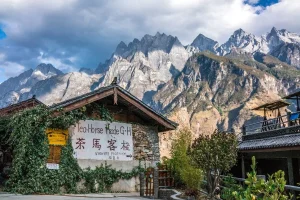
Day 2: Lijiang → Yubeng Village (transfer day; confirm current access and allow for acclimatization)
Before leaving Lijiang, confirm the current carrier, departure point, route, last connection and authorized entry arrangements for Yubeng. The following bus narrative is not a verified timetable. In the original account, I walk toward the waiting hall. The scent of butter tea from the specialty shop next door wafts through the air. The original account names a Lijiang–Xidang service and a 70-yuan ticket, but neither the current service nor its price has been verified. The driver said, “Leaving early helps avoid the afternoon mountain fog.” I choose a window seat; the back of the seat still carries the warmth of the previous day. Looking out, the snowy peak of Jade Dragon Snow Mountain slowly shrinks into a white ball, like crushed cotton candy.
The bus is an old Yutong model. Every hour, the driver stops at a service area to hand out free bottled water and reminds us, “Hold the handrail for the curves ahead.” We reach Benzilan at 11:30 am. As soon as the door opens, I smell beef from the alley—the curtain of Tashi Delek Tibetan Restaurant sways in the wind. The owner, wearing a navy Tibetan robe, stands at the door and waves to me: “Little girl, want a bowl of Yak Beef ‘Covered Quilt’?” The bowl is bigger than my face; the yak beef is stewed so tender that even the tendons melt. The dough “quilt” is freshly roasted unleavened flatbread, torn into pieces and soaked in the broth. It’s so hot it makes me gasp, but the aroma of wheat and meat is irresistible. At 25 yuan a portion, I finish half the bowl of soup. A local uncle sitting nearby says, “This yak beef was collected from the snow mountain last week. They only stew two pots a day; it’s gone if you’re late.”
The account next reaches Xidang; do not use its arrival time to book an onward connection. Stepping off the bus, I am enveloped by the “mountain scent” of Yubeng—the bitterness of pine needles mixed with the sweetness of earth. Do not judge altitude risk by the steepness of a trail or rely on a vendor’s reassurance. Plan gradual ascent and discuss this high-altitude itinerary with a clinician before travel. The claimed shuttle to Hesuitang and its 20-yuan fare need confirmation from the current transport operator; do not assume this is an available entry route. The mountain road winds around, the Chinese pines outside become denser, and occasionally I see bharals (blue sheep) jumping along the cliffs, their tails upright like little flags.
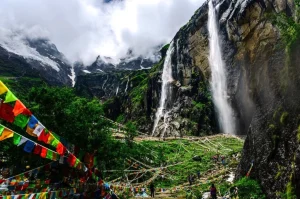
The account then describes a walk from Hesuitang, but the permitted trailhead, walking duration and access arrangements have not been established. There is a Mani stone pile at the entrance draped with colorful prayer flags. I follow the locals, walking clockwise three times, my fingertips touching the “Om Mani Padme Hum” on the flags, silently whispering “Tashi Delek.” The trail alternates between wooden boardwalks and dirt paths. It starts as a gentle slope, with sunlight dappling the ground like scattered gold. After walking for 20 minutes, I hear the jingling of bells—a mule train carrying salt slowly passes by. The Tibetan muleteer, wearing a fox-fur hat, smiles and shouts to me: “Girl, take it slow! There are stone seats ahead to rest!”
Further up, the rhododendrons are in full bloom, pink like clouds and white like snow. Leave the rhododendrons where they grow; photograph them without picking them. The account eventually reaches Upper Yubeng Village; the one-hour approach is not a verified walking-time estimate. The wooden sign at the entrance reads “Upper Yubeng Village” in pine-smoke ink, the strokes still seeping with resin. An old granny sitting on a doorstep husking corn hands me a freshly boiled sweet waxy corn: “It’s warm, taste our Yubeng corn.” The kernels burst with juice and the coolness of the earth. I head to the inn clutching the corn, passing a prayer hall where the low sound of chanting drifts out, like wind through a pine forest.
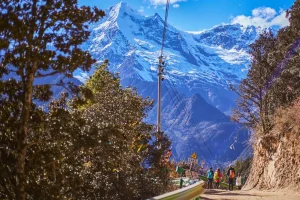
I stay at the Yubeng Story Inn. The owner, Tashi, is a 28-year-old Tibetan with a buzz cut. He comes out to greet me: “Exhausted? Have some ginger tea first.” The tea is made from ginger grown in his own field with a bit of honey, warming me to the core. The room is on the second floor with the scent of solid wood. The window faces the snowy peak of Kawagarbo. At night, the silhouette of the snow mountain is reflected on the curtains like a moving painting. The room has underfloor heating; once turned on, it gets warm in 10 minutes. I take off my jacket, lie on the bed under a thin quilt, smelling the resin from the pillow, and watch the stars—the stars in Yubeng are exceptionally bright, like diamonds on black velvet, and I can even count the stars in the Big Dipper.
At night, Tashi brings roasted highland barley cakes and hot water. The cakes are freshly baked and charred: “My mother made these; they go well with butter tea.” He sits opposite me, showing old photos on his phone: “Look, this was me as a child, following my father to circumambulate the mountain. The snow mountain was closer then, and there weren’t so many tourists.” Looking at the photo of little Tashi with braids eating dry rations at the foot of the snow mountain, I suddenly understand the “niche” appeal of Yubeng—it’s not that no one comes, but those who do are willing to slow down, listen to the wind, and watch the snow fall.
Kindness on the Bus: Sitting next to me was Sister Wang from Chengdu, taking her mother to Yubeng for the first time. Seeing me dazed by the snow mountain outside the window, she handed me a bag of dried plums: “My mom gets motion sickness; these help. Take some.” Her words reminded me of my own elders. The warmth of this route is hidden in the snacks offered by strangers.
Hidden Easter Egg on the Trail: Halfway through, I met an auntie from Shanghai coming down from Yubeng. She carried a small cloth bag and held a bunch of rhododendrons: “Girl, these flowers are for you. They’re from the roadside; no one picked them.” I took the flowers and put them in a water bottle by my bed. Before sleeping, I could still smell the faint fragrance, as if I had brought the spring of Yubeng into my room.
Small Fee Reminder: The room rate at Yubeng Story Inn is usually 350 yuan/night. Booking a week in advance through Tashi’s WeChat moments can lower it to 320, including free barley cakes. Confirm accommodation, entry, shuttle and any guide charges separately; the room price does not establish that other services are included. remember to bring water, as it’s 10 yuan/bottle in the small shops on the trail, which is a bit expensive.
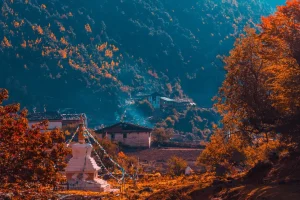
Day 3: Assess Acclimatization Before Deciding on the Sacred Waterfall Hike
If newly arrived at high altitude and not acclimatized, make this a rest day rather than following the full-day hike below. CDC advises avoiding heavy exercise for at least the first 48 hours above 8,000 feet; reaching that time threshold does not guarantee fitness to hike. Adjust subsequent departure dates and accommodation if rest is needed. The following is the original hiking account.
At 7:00 am, the copper kettle on the hearth is bubbling. The milky scent of butter tea and the toasted aroma of barley cakes drift into my bed. Tashi has already set breakfast on the wooden table in the main room. The barley cakes in the bamboo basket are still warm, crispy with a wheaty scent when bitten, paired with a bowl of hot butter tea. The sweet milky taste slides down my throat. I lean against the doorframe with my cup, watching the morning mist wrap around Kawagarbo Peak like an un-melted cream cake.
At 8:00 am sharp, I head out with my small backpack. Tashi hands me a bottle of warm water: “Drink it when you’re thirsty. The road to the Sacred Waterfall is a bit steep; take it slow.” The morning mist hasn’t dispersed, bringing the bitter scent of pine and the sweetness of wet earth. I walk up the Sacred Waterfall trail. It starts as a gentle slope, with small blue flowers blooming on the meadows like scattered diamonds. Occasionally, I meet Tibetan locals carrying bamboo baskets filled with freshly picked Snow Lotuses. Seeing me stare, they smile and shake their heads: “These are for the temple; you can’t pick them.” The plant identification and purpose in this encounter are unverified; religious use does not establish permission to collect wild plants.
After 20 minutes, I encounter a group of Mani stone piles—the stones are stacked higher than a person and covered with colorful prayer flags. When the wind blows, the flags rustle like they are chanting. A few Tibetan aunties are kneeling nearby tying Hada (ceremonial scarves). I walk over, and an old woman in a navy apron hands me a maroon one: “Little girl, want to hang a Hada? 10 yuan each, I’ll help you tie it.” Her silver rings feel cool against my hand. I follow her around the Mani pile three times, whispering “Tashi Delek.” She ties the Hada to the prayer flag pole and pats my shoulder: “May peace accompany you throughout the journey.”
The account reports heavy breathing while ascending, without a measured location supporting the quoted 3,800 metres. Stop ascending and assess symptoms rather than simply slowing down and pressing on; the account is not a safe symptom-response model. In the trail narrative, I hear the jingling of bells—a mule train carrying salt passes by. The muleteer in a fox-fur hat shouts: “Girl, rest if you’re tired, there are stone benches ahead!” I sit on a stone gasping for air. An auntie from Shanghai hands me a fruit candy: “My grandson gave it to me; it’s sweet, try it.” The wrapper smells of orange; it’s so sweet it makes me squint.
4 hours later, I finally see the silhouette of the Sacred Waterfall—the water falls like a white ribbon between the mountain slopes. The account does not establish the elevation of its source. It hits the pool below, creating mist that drifts for hundreds of meters. Standing in the wooden pavilion by the waterfall, my hair is damp with droplets. My phone lens fogs up, but the video looks like it has a filter: the background is a misty white, the roar of the waterfall mixes with the wind, and the cool water on my face tastes like the snow mountain.
I sit in the pavilion for 10 minutes, watching Tibetans washing clothes by the pool. Their laughter is louder than the waterfall. One sister waves at me: “Girl, come take a photo! The rainbow is clearest here!” I walk over; the water on the stones by the pool reflects the rainbow. She snaps a photo and says, “This can be your wallpaper!”
At 2:00 pm, I start the descent. The path is a bit slippery. I hold onto branches and see scriptures carved into stones, some worn smooth—likely polished by the blessings of countless visitors and locals. Passing the Mani piles, keep your safe drinking water rather than replacing it with untreated spring water. Clear appearance and a sweet taste do not establish that water is safe. WHO food-safety guidance
At 6:00 pm, I return to the village. Tashi is at the door smiling: “Exhausted? Go shower first; I’ll call you when dinner is ready.” A hot shower washes away the sweat. I change into a leather jacket and go downstairs. The clay pot in the main hall is steaming—the owner has cooked local chicken soup with Codonopsis roots. The chicken falls off the bone, and the broth is so delicious I have three bowls. Tashi sits opposite me, showing a photo on his phone: “Look, I took this of the Sacred Waterfall rainbow this morning; I saved a shot for you.” In the photo, I’m in the pavilion, hair damp, with the white waterfall as a backdrop, looking like a girl who wandered into a fairy tale.
A further meadow walk would require changing Day 4, which is reserved for leaving Yubeng; it is not an extra activity already fitted into this route. Tashi sips his tea, the flavor of the soup still in my mouth. The moon rises outside, illuminating the distant snow mountain like silver powder.
Trekking Gear Tip: You must wear non-slip hiking shoes! I saw a tourist in white sneakers slip and scrape their knee. Also, bring a quick-dry towel; the mist from the waterfall is heavy, so it’s handy for wiping your face and hands. Walking slowly does not guarantee protection from altitude illness. Ascend gradually and allow time to acclimatize. Do not go higher while symptoms persist; if symptoms worsen at rest, descend and seek medical help. Confusion, loss of coordination or breathlessness at rest require urgent descent and emergency medical assistance. Do not use a small oxygen canister as a substitute for descent or treatment. CDC high-altitude travel guidance
A Moment of Tibetan Kindness: On the way down, I met a child with a bamboo basket and braids, clutching a prayer wheel. I gave him a piece of chocolate. He ran off with it but came back a moment later to press a wild strawberry into my hand: “This is sweet, for you.” Do not eat wild fruit unless its identity and safety are established; use safe, washed fruit from a reliable source instead.
Fee Details: Hada at the Sacred Waterfall is 10 yuan, handmade by locals and more delicate than those in tourist shops. Water is 10 yuan on the trail; the hot water Tashi provides is better. Local chicken soup is 30 yuan/person, using their own chickens and home-grown herbs—unbeatably fresh.
Photography Tip: A rainbow depends on light, spray and viewing angle, not a guaranteed time slot. Use only permitted, safe viewpoints; do not approach slippery pool edges for a photograph. Wear bright colors like red or blue to contrast with the white snow mountain for better photos.

Day 4: Yubeng → Shaxi Ancient Town (transfer day; confirm each transport connection)
At 6:30 am, I get up in the dark, carrying the dried wild strawberries Tashi gave me. The morning in Yubeng is wrapped in mist. The wooden stairs creak as I find my windbreaker behind the door, my pockets stuffed with leftover barley cakes from last night. Confirm the actual departure time, meeting point and authorized transfer with the operator; an inn owner’s motorcycle ride is not an established transport arrangement. The wind carries the scent of the hot milk tea he handed me: “Drink it on the road to keep warm.”
The shuttle is a modified minibus; the seats are hard but the windows open. I sit in the last row with my strawberries, watching Kawagarbo Peak shrink into a distant blue shadow. The bus goes down Yubeng Gorge; the bitterness of pine needles slowly turns into the herbal scent of the valley. We pass a Tibetan hamlet where children with prayer wheels shout: “Sister, want a prayer flag?” I smile and shake my head; they skip away into the barley fields.
The claimed 20-minute descent and direct Xidang–Jianchuan bus at 50 yuan for three hours are unverified. Confirm the actual route, transfers and travel time before planning this long relocation. The aunties on the bus are chatting about family. The woman next to me has a bamboo basket of Ganba mushrooms, 100 yuan/kg. A casual sale on a bus is not enough to establish a mushroom’s species or safe supply chain; do not buy unidentified mushrooms for food. Passing Jian Lake, I see white herons skimming the water, their wingtips creating ripples.
For the final connection from Jianchuan to Shaxi, verify the departure point, fare and last service; do not rely on the account’s 1:00 pm arrival or two-hour transfer. The bus follows the Hei Hui River; willows by the river touch the water. I smell the fishy scent of the river. A young man nearby says, “Shaxi fish is great; I’ll take you for sour and spicy fish tonight!” The bus sways until we reach the entrance of Shaxi Ancient Town. I walk toward Sifang Street on blue flagstones, carrying my bags.
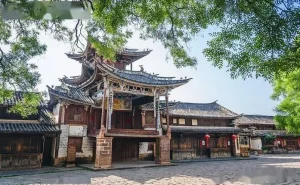
After checking in, Sifang Street if time permits; otherwise save it for Day 5—The flagstones are polished by centuries of footsteps. An orange cat sunbathes under the old locust tree at the corner. I visit the Ancient Stage from permitted visitor areas. The original claims about free access, stonework and specific Romance of the Three Kingdoms carvings lack supporting site documentation; do not use them as an authoritative architectural description. Do not assume visitors may climb onto the stage or shout there.
Next is Xingjiao Temple —check opening days, entry charges and accessible areas separately. The original identification of Xuanzang, Sun Wukong and Zhu Bajie, the pigment description and the claim of unfaded centuries-old colours are not supported by verified conservation records. Consult site labels rather than repeating those identifications; do not touch the murals and follow photography rules.
For a snack, I have Shaxi Baba (flatbread) at Sifang Street—5 yuan each. The lady has them freshly roasted in her bamboo tray. The sweet one is filled with rose sugar, with flower petals falling out—fragrant beyond words. The savory one has Xuanwei ham; the saltiness of the ham mixes with the aroma of wheat. I buy two—one to eat now and one for later. Her hands are wrinkled but steady as she kneads. She says, “I’ve made Baba for thirty years, waking at 4:00 am to knead the dough; it must rest long enough to be soft.”
If arrival time allows, I wander the old alleys. Clover grows in the cracks of the flagstones. A tailor shop at the alley entrance hangs blue tie-dye cloths with butterfly and peony patterns. I walk in; the owner is dyeing fabric. The indigo vat smells pleasant. She asks, “Want a bag? Tie-dyed, 15 yuan each.” I pick one with blue and white butterflies, useful for small purchases.
The original accommodation account describes Shaxi Old Horse Inn near the town entrance—it’s a renovated old house. The wooden door has polished copper rings. Inside, a laurel tree is blooming in the courtyard. The owner, wiping glasses on the steps, smiles: “Arrived? Your room is on the second floor, window facing the stage.” The room has an old wooden bed with coarse cloth sheets that smell of the sun. The window offers a view of the town’s gray tiled roofs and distant mountain silhouettes; the room’s actual view and peak names need confirmation from the accommodation provider.
At night, I have Bingfen (ice jelly) downstairs. When the owner brings it, it’s topped with rose jam and osmanthus, red like the sunset. One spoonful of the slippery jelly—the rose jam was made by the owner’s mother using local roses, sweet but not heavy. The osmanthus scent is faint, together tasting like the autumn of Shaxi. The account does not establish a safe storage life for homemade rose jam. Confirm the recipe, hygienic preparation and storage instructions; do not assume refrigeration guarantees a month of safety.
I sit in the yard eating jelly and watching the stars. The stars in Shaxi are even brighter than in Yubeng, like diamonds on black velvet. Guests at the next table are planning a trip to Shibaoshan tomorrow. The owner brings Pu’er tea: “I’m cooking pea flour soup tomorrow morning; let me know if you want some.” The scent of laurel mixes with the echo from the stage. I suddenly feel that this so-called “niche” place is just people living their lives like poetry, waiting for those who understand to read it.
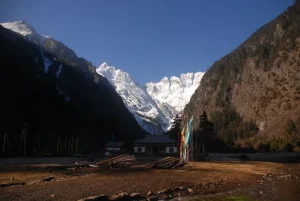
Day 5: Shaxi Slow Travel (Morning Market, Ancient Stage, Sunset at Yujin Bridge, Stay in Shaxi)
At 6:00 am, the mist in Shaxi still clings to the cool flagstones. I put on my windbreaker. The inn owner is in the yard picking mint; the leaves in the bamboo basket are covered in dew: “Take some to the morning market; adding them to mushroom soup is incredibly fresh.”
Check the market’s actual location and operating day in advance; if it is not running on Day 5, take an old-town walk instead. The original account places the market near Sifang Street. Stalls are made of bamboo, slightly messy but full of life. I rush to the mushroom stall. The lady wears a blue apron, her fingers stained with mushroom debris. Bamboo trays are lined with mushrooms labelled as porcini and green-headed mushrooms. Labels and soil on the caps are not evidence that mushrooms are safe to eat.
Morning Market Shopping List (reported prices, not current quotations)
| Item | Price | Selection Tip/Highlight | My Purchase |
|---|---|---|---|
| Porcini | 10 yuan/jin (500 g) | Cap shape, stem thickness and taste do not establish edibility. Buy only from reputable, reliable suppliers; avoid unknown mixed species, growing material and signs of spoilage. CHP mushroom-safety guidance | 2 jin (1 kg) |
| Local Eggs | 1.5 yuan each | Use a reliable supplier; grass on a shell or a tapping sound does not establish egg safety. | 10 eggs (weight not verified) |
| Handmade Fabric | 20 yuan/meter | Tie-dye patterns of butterflies and peonies, feels thick—the owner said “good for aprons, won’t fade after ten washes” | 1 meter |
Back at the inn, the owner is peeling garlic in the kitchen. His eyes light up at my mushrooms: “Great, tonight we’ll have a local chicken soup base with some of my pickled vegetables—last time a guest had three bowls of soup before stopping.” The owner is from Jianchuan and used to be a chef; his knife skills and heat control are masterful.
At 3:00 pm, I head to Yujin Bridge with the strawberries the granny gave me. The wind from the Hei Hui River carries osmanthus fragrance. Clover grows at the base of old houses, and cats occasionally dart out of alleys.
Yujin Bridge Sunset Planning
- Best Time: check sunset for your travel date and allow for cloud and local terrain; the original fixed seasonal times are not a reliable schedule;
- Positioning: Stay in open, level visitor areas without blocking the bridge. Do not approach unguarded water edges for a reflection photo; sunshine is not a guarantee of warmth;
- Props: Bring a light-colored scarf or straw hat for a better vibe in the wind;
- Warmth: It’s windy at dusk, wear a light jacket—I forgot last time and was shivering.
Yujin Bridge is an old stone arch bridge with lotus carvings on the railings, worn by time. Elders sit on stone blocks fanning themselves and chatting: “This used to be a stop for mule caravans; the bells could be heard across the mountain.” “Now it’s nice and quiet for the sunset.”
I sit on a stone by the bridge, the water so clear you can count the fish. Ducklings splash nearby. As the light changes near dusk, it falls across the surrounding hills; the account does not establish a Cangshan sightline or a fixed sunset time. The light turns from orange to honey-gold, hitting the bridge arch and casting long shadows like a golden ribbon. I keep taking photos—the stone texture, the ripples, the shadows of the fans, and the distant kitchen smoke. My hands are red with cold, but seeing friends comment “this looks like a movie” makes it worth it.
Agree on dinner timing before going to watch sunset; adjust one activity if they conflict. Back at the inn, the bell rings; the owner calls, “Mushroom hotpot is ready.” The broth in the clay pot is milky white, filled with mushrooms, chicken, and pickled vegetables. The aroma is mouth-watering.
Mushroom Hotpot Must-Try Details (as taught by the owner)
- Do not taste-test the broth: Do not taste mushrooms or broth to check whether an unidentified mushroom is safe;
- Cooking mushrooms: Wash and cook edible mushrooms thoroughly, but never treat a fixed cooking time as detoxification. Some poisonous mushrooms retain toxic substances after cooking. Do not forage mushrooms for food;
- Add veggies last: Greens soak up the broth and are even better than meat;
- Pair with pickled veggies: The owner says “if the soup feels too rich, eat some pickles to refresh the palate.”
The meal combines mushrooms, chicken and pickled vegetables. The safety of the ingredients and thorough cooking must come before tasting; flavour cannot identify a poisonous mushroom.
I sit under the laurel tree in the yard eating hotpot. The owner joins me: “Shaxi used to be the ‘Little Shanghai’ of the Tea Horse Road.” He stirs the mushrooms. “Not as many caravans now, but life is more grounded—look at the old stage, there are still troupes performing Dian Opera every week.” The scent of osmanthus mixes with the steam. A guest nearby takes a photo of the moon: “The moon is so round tonight, like a Shaxi Baba.”
After dinner, I blow off steam by the bridge. The owner brings warm Pu’er. Shibaoshan is not included in Day 6’s Nuodeng transfer. Add another Shaxi day or rearrange the route if you want that excursion, and confirm transport first. Looking at the river, I think of the market, the sunset, the elders—the slowness of Shaxi isn’t just “slow,” it’s infusing life into every sip of soup and every sunset, making you forget to hurry.
Mushroom Safety Warning: There is no universal boiling time that makes a poisonous mushroom edible. Suspected mushroom poisoning requires immediate medical attention; bring any available remnants for identification. Symptoms can be serious, not merely an upset stomach.
Hidden Perk of Old Horse Inn: The owner has an old photo album of Shaxi in the 80s—caravans, the stage, flagstone roads—flipping through it feels like traveling back in time.
Fee Details: Using the reported figures: mushrooms 20 yuan, 10 eggs at 1.5 yuan each = 15 yuan, hotpot 80 yuan for one person, and jelly 5 yuan total 120 yuan. Ask whether the hotpot charge already includes the purchased ingredients before adding them again. Fabric, transport and accommodation are not included in this calculation; these figures are not verified current prices.
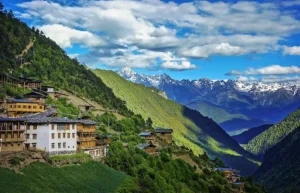
Day 6: Shaxi → Nuodeng Ancient Village (transfer and village visit; confirm transport and visiting access)
Confirm the actual Shaxi–Nuodeng transport arrangements, pickup and drop-off points, any changes and final village access. The account’s 8:30 am direct minibus is not a verified service. In the original travel narrative, I wait for a vehicle. The driver in a navy jacket pats the passenger seat: “Sit here, better view.” I sit down with my strawberries, smelling the orange peel in the cabin. As we start, the owner runs out to hand me a paper bag: “My pickled radish, for the road.”
The minibus winds along the Hei Hui River. The water is wrapped in morning mist like a grey-blue ribbon. Terraced fields rise from the valley; the rice is sprouting, brilliant green. I see farmwomen in bamboo hats weeding. The auntie next to me has a child who hands me an orange: “Sister, eat.” It’s as sweet as honey. The account does not establish a reliable journey duration.
On arrival in Nuodeng, if lunch service is available, I head to Nuodeng Renjia restaurant. The owner, an auntie in a tie-dye apron, shouts: “Little girl, ham fried rice is ready!” The aroma is mouth-watering: local purple rice, distinct grains with a faint sweetness; the ham bits are dark brown and perfectly salty, mixed with scallions and eggs. I finish the whole bowl. She says, “The ham is from our own pigs, dried for three months; the purple rice is mountain-grown, chewy and fragrant.” At 30 yuan, it’s worth every penny.
After settling arrival arrangements, check access before visiting the Ancient Salt Wells. Following the flagstone path behind the village, I pass cacti and wild chrysanthemums. After 20 minutes, I see salt ponds in the valley, gray rims covered in moss. The account describes salt-related work, but the exact location and current demonstration access have not been verified.
The claimed three-day sun-drying process is not supported by verified local craft documentation and should not be used as an explanation of Nuodeng salt production. Consult a documented interpretation or authorized demonstration. Do not taste untreated brine. There are piles of fine, yellowish salt in bamboo trays. I buy a bag for home; he hands it to me in a cloth pouch: “Use this for cooking; it’s fresher than MSG.”
At dusk, I find Nuodeng Ancient House Inn—an old wooden door with a copper lock. Inside, a laurel tree is blooming. The house is from the Ming and Qing dynasties, with wood carvings of cranes and pines. My room is on the second floor with a wooden bed and sun-scented sheets. The window faces an old locust tree and the mountains.
The landlady is knitting in the hall. She brings a jar: “My pickled radish, sweet and sour.” It’s crunchy and delicious. She says, “Grown in my own garden, sweet because of this year’s rain.”
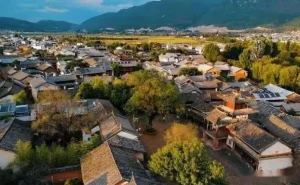
I sit on the doorstep eating radish, watching the sunset. Nuodeng’s houses have gray tiles and white walls. The scent of food and the sound of dogs drift through the alleys. The account records village voices in the evening. The air smells of laurel and salt. I feel that an ancient village isn’t a museum; it’s living days, weathered faces, pickle jars, and steaming ham fried rice.
Lying in bed listening to insects, the sweet radish taste remains—like all the details of today: quiet but comforting, like a bowl of warm purple rice porridge.
Day 7: Wandering Nuodeng (Tofu experience, old courtyards, stay in Nuodeng)
At 7:30 am, the granny stands at the inn door with a ceramic basin—local soybeans are soaking in spring water, plump and soft. “Little girl, want to learn to make tofu?” Her apron is stained with soy milk. I put down my strawberries and follow her to the kitchen.
The stone mill is made of old bluestone with lotus carvings. She holds the handle, and I help push. Soybeans and water turn into white milk, smelling wonderful. “Push slowly,” she directs, “or the tofu won’t be tender.” My arms ache after ten minutes, but she laughs: “I used to do this every day; my arms are as strong as a young man’s.”
When the milk boils, the room fills with fragrance. Tofu making uses a suitable food-grade coagulant and controlled preparation; do not use unspecified gypsum powder or treat stirring direction as a safety instruction. Once thickened, she pours it into a wooden frame with gauze: “Wait 30 minutes.” I watch it “wake up” into tender tofu. She pinches it: “Look, so soft, that’s the soul of Nuodeng tofu.”
Lunch is a Tofu Feast at her home. Mapo tofu with her own fermented bean paste, spicy and delicious; tofu pudding with brown sugar that melts in the mouth; golden fried tofu cakes, crispy outside and tender inside. At 50 yuan, I’m stuffed. She packs some for me: “Put this in your noodles tonight; better than meat.”
At 2:00 pm, we visit the He Family Manor—a Ming/Qing merchant’s courtyard. The threshold is a foot high. She skips over: “It used to block evil; now it’s just a habit.” The wood carvings on the doors are treasures, showing “Pine and Crane for Longevity.” She explains, “The He family were salt merchants and wished for long lives.”
There’s an old laurel tree in the yard, its petals like gold dust on the ground. She hands me a flower; it smells of sunshine. Flowering varies by location and weather; this account cannot establish the scene for every travel month. The side rooms have old farm tools—plows, spinning wheels. She spins it twice: “I sat here as a child; now the youth are in cities, leaving us old folks.”
Leaving the manor, I feel the warmth of the tofu cakes. At the village entrance, men playing chess shout: “Girl, come for ham and tofu tomorrow!” The scent of tofu, laurel, and laughter fills the air. I understand the “slow” of Nuodeng—it’s simmering life into tofu, laurel, and the stories in the bricks.
Back at the inn, she brings hot soy milk: “Tired? Have some.” It’s perfectly sweet. Visiting an ancient village isn’t about old houses; it’s making tofu, eating with locals, and feeling the warmth of old carvings—living their way for a while.
Day 8: Nuodeng → Nanjiluo (conditional plan; access must be confirmed first)
Access check before booking Days 8–10: A Deqin county culture and tourism department report covering 2024 records suspension of public access to the Nanjiluo area for ecological restoration. This historical report does not establish whether it has since reopened. Current reopening, permitted routes, transport, accommodation and guide arrangements have not been verified. Do not enter a closed or unauthorized area or book this section on the strength of the narrative below. Confirm current permission with the responsible authorities; if it cannot be confirmed, leave this section out and arrange an alternative return from Nuodeng. Deqin official report (Chinese)
Only after legal access and transport are confirmed should a journey toward Nanjiluo be considered. The original account’s direct morning minibus has not been verified; do not use it as a booking instruction. In that account, a vehicle is idling. The driver in a faded green jacket smiles as I run over with tofu cakes: “Get in, the road is bumpy today.” Two hikers with maps are in the back: “Sister, coming to see the alpine lakes? They say the water is like blue jewels!”
The bus climbs the winding road. After “Yunling Village,” it becomes a rough gravel road. My seat is jarring, but the view of the high mountain gorge is stunning. The river below is like a silver ribbon. The virgin forest brings the scent of pine and river water. I see alpine rhododendrons by the cliffs, pink and white with dew, like diamonds on a green carpet.
The account next reaches what it calls the foot of Nanjiluo; the four-hour travel time and precise lodging location remain unverified. Green mountains rise into the clouds. A Sichuanese owner with a megaphone shouts: “Arrived? Leave your bags, let’s eat spicy chicken!” He looks like a fun person with his panda T-shirt.
The inn is made of old wood. My room has bunk beds and a copper bell on the door. The ladder is sturdy. Photos of his family are on the wall, along with a handwritten “Welcome to Nanjiluo.” The electric blanket is already on, warming the bed in five minutes—a comfort detail, not a high-altitude safety measure. Check the forecast for the actual date and lodging elevation rather than assuming a fixed 10-degree night; use heating equipment according to its instructions.
He brings the spicy chicken: “Taste my skill! Chili from my hometown, spicy but good.” The chicken is tender and perfect with rice. I eat two bowls, sweating from the spice. He laughs: “Take your time, there’s more!”
I head to the waterfall at the mountain foot. Following the boardwalk past wild sunflowers, the roar of the waterfall hits me. Water plunges 30 meters, the mist feels like a cool facial mask. I take photos of the layers of green—bright leaves, mossy rocks, and rainbows in the mist. An Yi auntie washing clothes nearby shouts: “Girl, stand back! The water looks clearer in the shot!” In my lens, the water looks like silver threads next to her colorful apron.
Back at the inn, the owner gives me warm jasmine tea: “Going to the top tomorrow? I know a guide who can show you the meadows and stars—ten times brighter than here!” I sip the tea, feeling the mountain air. The foot of Nanjiluo already smells of snow; another outing still depends on confirmed access, weather and acclimatization.
In bed, the electric blanket is cozy. I look at my waterfall photos, thinking of Nuodeng’s tofu, Shaxi’s sunset, and Yubeng’s waterfall. Every step on this route is different: Nuodeng is tender tofu, Shaxi is warm sunset, Yubeng is cool water, and Nanjiluo is fresh wind and roaring falls.
Day 9: Nanjiluo Trekking (only if access is authorized and conditions are suitable)
At 7:00 am, I put on my windbreaker. I’m meeting the guide, Amu, an Yi man with strong arms. He hands me a roasted potato: “Eat this, no food on the mountain.” It’s starchy and smells of woodfire.
The account quotes 100 yuan per person for a guide and water, but the guide’s authorization, route and service inclusions have not been verified. Do not treat that amount as a bookable offer or access permit. He has wild walnuts in a jar. We walk up the meadow behind the inn; the grass is soft as clouds. Amu points: “That’s alpine fescue, good for cattle.”
Original account: “Lake 1” (not a verified route waypoint)—After 40 minutes, the lake appears. Blue-green water like a crushed jewel with golden glints of sun. Wild grass and dandelions line the shore. Do not drink untreated lake water; carry safe drinking water. Amu sits on a rock: “This was a fairy’s mirror that broke.” I hand him a potato: “Fairies must love Nuodeng potatoes too.”
Original account: “Lake 2” (the distance and permitted connection are unverified)—The path is lined with rhododendron forests. The leaves are waxy and deep green. Amu says, “In summer, they are like pink clouds.” It’s quiet, just birds and the rustle of leaves. The sky is a washed blue.
Original account: “Lake 3” (identity and access unverified)—There’s a small pavilion with red pillars. The account describes a reflected snow peak, but its identity and the viewpoint have not been established. I eat my whole-wheat bread, and Amu shares his walnuts. The kernels are rich and slightly bitter. I watch the clouds move over the snow mountain. We stay for half an hour until Amu says, “Time to head back for the hot water.”
At 3:00 pm, I return and shower. The water is perfect, washing away the sweat and dirt. At night, I sit in the yard on a stool.
The mountain stars in the account are brilliant—like diamonds on black velvet, with the Milky Way like a glowing ribbon. I take a time-lapse on my phone; the stars seem to dance. Amu shouts from inside: “Girl, come have hot milk!”
The milk is warm and sweet. Watching the stars, I think of the cold water of Lake 1, the forest of Lake 2, and the reflection of Lake 3. Nanjiluo is a high-mountain outing, not a promise of effortless trekking. Fitness, acclimatization, weather and authorized access all affect whether a visit is appropriate.
Back in my room, I check the star photos. The trails form a vortex, like the whole galaxy is in my phone. The moon illuminates the snow mountain. I remember Amu’s “fairy mirror”—nature’s beauty is a blue hidden in the mountains, a chill in the hand, an unforgettable sight.
Day 10: Return Journey from Your Confirmed Overnight Stop
Depart from the place where you actually stayed. If Days 8–9 were omitted because access was not confirmed, replan your return from Nuodeng or your alternative stop; do not follow the Nanjiluo lodging scene below. In the original account, the owner stands at the gate with a thermos: “Girl, take this hot soy milk for the road!” It’s sweet with rock sugar. My friend Alin, in a neon green windbreaker, comes over. Her backpack has an Yi silver ornament that jingles: “I packed Nuodeng ham for my mom; she’s been asking for it for weeks.”
The minibus is light blue and well-kept. The driver in a navy sweater nods: “Let’s go, roads are clear today.” The owner waves: “Message me when you reach Lijiang!” We head down the gorge; the waterfall is still roaring. The trees show more autumn colors—pines stay green, but shrubs turn yellow, like an oil painting.
The claimed 40-minute Nanjiluo–Jianchuan connection and 50-yuan, three-hour onward bus to Lijiang have not been verified and must not be used to book a same-day flight. Lijiang and Dali require separate onward plans; confirm the actual carrier, departure point, final connection and a suitable buffer. For Nuodeng ham, follow the producer’s storage and cooking instructions; curing alone is not a reason to assume a product is ready to eat.
Once a confirmed onward service is available, the account continues on a bus. Alin brings out sunflower seeds: “My mom roasted these, want some?” They are crispy and salty. Outside, farmers in hats are tending cattle; the bells sound distant. Alin points: “Look at that cloud, like the snow mountain?” I laugh: “Even softer.”
The account ends in Lijiang; it does not establish an arrival time for an airport connection. Alin is heading to the airport. Her orange jacket is like a moving flower: “This was so worth it—the waterfall, Shaxi sunset, Nuodeng tofu, and Nanjiluo lakes.” She shakes her ham: “Mom will love this.” We say goodbye before continuing to our respective departure points.
For a flight, the departure point is Lijiang Sanyi Airport, not Lijiang Railway Station. Confirm the airport transfer separately and allow the airline’s required check-in time. The reported 300 yuan airfare is not a current quotation. The girl at the counter smiles: “Where to?” “Home.” “Have fun?” “Loved it, I’ll be back.” Waiting at the gate, I see the city’s silhouette—gray tiles and white walls, like a miniature painting.
As the plane takes off, Lijiang becomes a tiny dot. I remember the fragments of these 10 days: the cool water of Yubeng, the long shadows at Yujin Bridge, the tofu feast in Nuodeng, the snow mountain in Nanjiluo, the ham, the walnuts… Travel isn’t “checking in,” it’s infusing the kindness of strangers, the warmth of mountains, and the scent of food into your life.
Do not carry fresh tofu through several travel days without a reliable cold chain and then assume reheating makes it safe. For noodles at home, use safely stored fresh tofu and follow food-storage guidance. The moon shines on my plants. This end is a new beginning. Next time, I’ll learn more tofu making, hike more with Amu, and see more mountains and people.
In bed, I look at the star photos. I touch the silver ornament and smile: The beauty of Yunnan isn’t a “scenic spot”; it’s every step you take and every reason you want to return.






