



Day 1: Kunming → Mile (130 km, approx. 2 hours), Exploring the Red Brick Fairytale of Dongfengyun
At 7:50 AM, clutching my ETC card, I got onto the Shantou-Kunming Expressway from the Kunming West Toll Station. The traffic was light, and Yunnan folk songs were playing on the radio. I turned down the air conditioning slightly to let the wind carry the scent of osmanthus from outside into the car. I reached the Yiliang Service Area at 10:30 AM; instead of rushing to refuel, I dashed to the roast duck stall in the corner. The wind tugged at the edges of the red cloth canopy as the owner, wearing navy blue gloves, stuffed duck legs into lotus leaf pancakes. The skin cracked with a crisp “click,” and the juices seeped into the pancake. Paired with a spoonful of sweet soy sauce, it was much moister than those in downtown specialty shops. I sat on a bench in the service area for 15 minutes finishing the pancake, watching aunties nearby taking photos of bougainvillea with their phones.
At 11:40 AM, I exited exactly at the Mile off-ramp. The navigation led me to the “Dongfengyun Scenic Area Parking Lot” via a two-lane country road lined with vineyards stretching to the horizon. The leaves were as yellow as if coated in honey, and a faint sweet fragrance drifted in the breeze. After parking at 12:10 PM, I looked up to see the dome of the Half-Cloud Art Museum—the red bricks were laid like half a cloud floating in the air. I quickly took out my camera and squatted under the arch for an upward shot. Sunlight leaked through the brick crevices, weaving a delicate web of light in the lens. Inside, I discovered that even the handrails of the spiral staircase were made of red brick, feeling rough and grainy to the touch. I leaned against the second-floor railing to take a panoramic shot; a beam of light from the skylight on the sloped roof hit the wave patterns on the wall perfectly, making even the shadows look curved.
A 5-minute walk from Half-Cloud brought me to the Kaleidoscope Art Museum. The bricks on the outer wall alternated between light and dark red, creating flowing wave patterns. I stood in the shadows on the side waiting for the right light—the 1:00 PM sun slanted across, and the light spots fell perfectly into the frame, making the image clear without a flash. A small courtyard inside held a surprise: several coarse pottery jars holding dried reeds, and a bamboo chair in the corner with a dusting of dust. I sat down to listen to the wind for a while, as a staff member whispered, “Take your time with the photos, no one is rushing you.”
At 1:30 PM, I went to the “Farmhouse Bistro” in the scenic area. The menu was written on a blackboard wall, and the owner, an auntie in a coarse cloth apron, brought out the Mile Braised Chicken, saying, “This is local chicken slaughtered just this morning.” The skin was amber-colored, so crispy it crumbled at a bite, and the meat was firm enough to pull apart into fibers, with the braised aroma spreading from the tip of the tongue to the throat. The side dishes served in bamboo baskets were pickled radishes and dried beans; the radishes were crisp with a hint of sweetness, and the beans were dried perfectly, soaking up the braised sauce. I devoured two bowls of rice and even finished the sauce at the bottom of the bowl.
At 2:30 PM, I rented a vintage electric scooter at the scenic area entrance. The owner, a Mile local in a blue cloth shirt, instructed me: “Ride slowly, the paths in the vineyards are narrow, don’t crush the vines.” There was a small copper bell on the scooter basket that went “ding-ling” whenever I twisted the throttle. Riding deep into the vineyards under the shade of the trellises, green grapes were still hanging on the branches, feeling hard to the touch and smelling of bitter fruit fragrance up close. Passing a cluster of bougainvillea, pink and purple flowers draped over the fence; I stopped for a photo as the wind caught my skirt, leaving even my hair scented with sweetness.
At 5:30 PM, I returned to my accommodation, choosing the “Half-Cloud Guesthouse”—it’s right inside the scenic area. The room door was a red brick arch, and upon opening it, I could smell the scent of terracotta. The walls were painted a light brick red, and a coarse pottery lamp hung by the head of the bed, its light as warm as a quilt sunned all afternoon. On the terrace were rattan chairs and a small tea table. I sat there with the osmanthus tea provided by the guesthouse, overlooking the distant terraced fields. Layers upon layers of rice leaves swayed in the evening breeze, with occasional insect chirps. After 8:00 PM, the guesthouse lights went out one by one. Lying in bed listening to the wind outside, I actually heard frogs croaking in the rice fields and drifted off to sleep.
Following this pace for the day, there was no need to rush; between wandering, photographing, and eating, I perfectly grasped the “slow” vibe of Dongfengyun. It wasn’t just about taking a few photos and leaving, but about feeling the temperature of the red bricks, smelling the fruit in the vineyards, eating freshly sliced braised chicken, and even letting the osmanthus scent of the guesthouse drift into the blankets. I had read in guides that this place was good for forest-style photos, but I didn’t expect that exploring it in person felt more like a small village hidden in red bricks, where every brick has a story.
| Daily Expenses (Per Person) | Details |
|---|---|
| Expressway Fee | 50 (Kunming → Mile) |
| Mile Braised Chicken | 45 (including sides) |
| Shared Electric Scooter | 30 (full day) |
| Guesthouse | 380 (Red brick view room, includes breakfast) |
| Post-lunch Snacks | 15 (Roasted sweet potato + Tamarind juice) |
| Total | Approx. 520 |
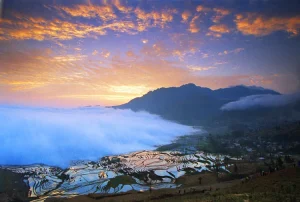
Day 2: Mile → Puzhehei (180 km, approx. 3 hours), Qingqiu Mural Wall and Water Fights on the Lake
At 8:40 AM, I tucked the roasted sweet potato I bought yesterday into the side pocket of my canvas bag—the auntie at the Yiliang Service Area had insisted I take it, saying, “Eat it on the road, it’s more filling than biscuits”—then, clutching my car keys, I set off from the Mile hotel. I took the Guangzhou-Kunming Expressway then transitioned to the Shantou-Kunming Expressway. For the first half of the journey, the road was flanked by eucalyptus trees with leaves so green they looked waxed, and I caught occasional glimpses of Yi villages at the foot of the mountains with pale blue kitchen smoke rising from red roofs. After the Mile South Toll Station, the expressway began to wind around the mountains. I rolled down the window, and the wind, carrying the scent of pine needles, mixed with the aroma of the sweet potato on the passenger seat, filling the whole car. At 11:50 AM, I exited exactly at the Puzhehei off-ramp. The navigation led me to the “Xianrendong Village Lakeside Guesthouse.” The car drove into the village along a two-lane asphalt road lined with waist-high foxtail grass, with occasional colorful butterflies flitting about.
When I arrived at the guesthouse, an uncle in blue cloth pants was squatting at the door repairing a bamboo chair—he was the owner, Mr. Zhang. Seeing me get out of the car, he quickly stood up and wiped his hands: “Young lady, the room is on the second floor, I’ll help you with your luggage.” As soon as the room door opened, the window faced Puzhehei Lake directly. Two egrets floated on the lake, their wings spread like two pieces of snow. I dropped my luggage and leaned on the windowsill watching for five minutes. The bed was made with coarse cotton sheets that smelled of sunshine, and the warm towels in the bathroom were folded neatly. Mr. Zhang said: “The water is brought from the mountain and is lukewarm. Rest for a bit. Want to go to the Qingqiu Mural Wall this afternoon? I’ll have the boatman wait for you.”
At 2:00 PM, I headed out with the mint candies Mr. Zhang gave me. Walking along the flagstone path by the lake, the road was flanked by half-height reeds, their fluff blowing like snow in the wind. After walking for 15 minutes, I saw the red sandstone murals “growing” out of the mountainside—not a flat wall, but carved along the mountain’s contours, depicting butterflies, bullheads, and sun totems, with the dampness of moss in the brick crevices. I rubbed a butterfly on the mural with my finger, and my fingertip was stained with dark red mud. Mr. Zhang had said these bricks were made from local red clay and “the more the sun shines, the brighter they get.” I found a side angle and had a friend take a photo for me: the background was the lake as blue as shattered glass, the red of the murals clashing against it. I smiled widely, with bits of grass from the wind stuck even in my eyelashes.
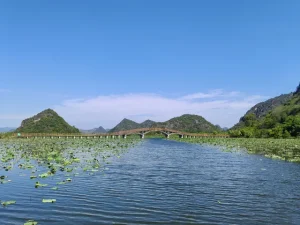
At 3:30 PM, I went to the pier to rent a willow-leaf boat—the owner was a dark-skinned Yi master named Amu, wearing a buttoned short jacket with sleeves rolled to his elbows. He poked a bamboo pole into the ground: “Young lady, this boat is stable, I’ll teach you how to row.” The willow-leaf boat is carved from a single bamboo trunk; it felt a bit wobbly sitting in it, but I could feel the temperature of the bamboo in my palm. Amu helped push the boat into the water. I gripped the oars and rowed toward the center of the lake, the blades slapping the surface and creating small splashes. Rowing about a hundred meters from the shore, I suddenly heard someone shouting: “Brothers and sisters, let’s have a water fight!” I looked up to see three children standing barefoot in the water holding plastic water guns, a little girl with pigtails smiling until her eyes curved into crescents. I pulled out the plastic water gun I bought at the roadside this morning (10 yuan, the owner said “filling it with lake water is most thirst-quenching”) and sprayed it at them. The little girl hid behind Amu’s boat as the splashes hit her face. She laughed and shouted “Again, again!” Our boat chased theirs, the lake water churning with ripples, and the distant peak forests reflected in the water like shattered emeralds.
At 6:00 PM, I returned to the village. Mr. Zhang was standing at the roadside with a plastic basin: “I got some lake water for you to wash your face and cool down.” Then he took me to the Old Captain’s Fishing Village—right next to the pier, with strings of dried fish hanging from the lintel swaying in the wind. I ordered Steamed Tilapia (28 per fish); when the fish arrived, its tail was still twitching, its scales silver and shimmering. A chopstick-full of meat was so tender it melted away, and even the belly had no fishy smell. The Pseudo-ginseng root chicken stew was milky white; a spoonful was sweet with the clear bitterness of pseudo-ginseng, warming my chest as I drank it. I also ordered a glass of corn wine (10 per glass). Amu brought it in a coarse pottery cup; the wine had bits of corn floating in it and a toasted aroma that warmed my ears until they turned red. Locals at the next table were chatting in a dialect about the Yi Torch Festival. I couldn’t understand them, but watching them clink wine bowls with laughter echoing off the boat planks made the lake water seem to sway along.
Returning to the guesthouse at night, Mr. Zhang had set a bamboo table in the courtyard with a plate of roasted peanuts—he said, “I saw you having fun today, so I saved these for you.” I sat on the bamboo chair, shelling peanuts and stargazing. The night sky in Puzhehei was exceptionally bright, the Milky Way looking like a path of crushed silver stretching from overhead into the lake. The air was scented with lotus, and in the distance, I could hear Amu’s bamboo pole, along with children’s laughter. I hugged my knees, feeling that such a day was perfectly slow.
According to my pace for the day: From Mile to Puzhehei, there was no rush. From eating roasted sweet potatoes on the road and looking at murals to the water fight and drinking corn wine at night, every step felt like soaking in warm water—not just visiting attractions, but truly “wandering” into the local life. I was worried the water fight would soak my clothes, but Amu gave me a dry towel and said, “Kids are mischievous, don’t mind them,” making it the happiest memory instead.
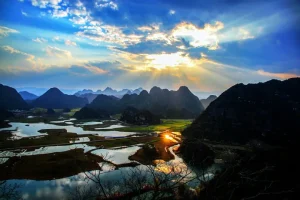
Day 3: Deep Dive in Puzhehei, Qinglong Mountain Panorama and Silver Jewelry in Xianrendong Village
At 5:50 AM, the first sliver of grey light leaked through the gap in the guesthouse curtains. I fumbled in the dark to put on the sneakers Mr. Zhang handed me yesterday (with deep treads, he said they wouldn’t slip while climbing), grabbed the roasted sweet potato on the nightstand (specially saved by the landlady who said, “Fill your stomach”), and headed toward Qinglong Mountain. The flagstone path at the foot of the mountain was still wet with night dew, and the moss was slippery. I pulled myself up by the wild roses at the roadside; in just 10 minutes, my pant legs were covered in grass debris. Halfway up, wild chrysanthemums suddenly burst into view—small yellow flowers gathered into balls the size of a fist. When the wind blew, they smelled clearly fragrant, and I leaned in to sniff, getting fine pollen on the tip of my nose.
In exactly 30 minutes, I stood on the observation deck at the top of Qinglong Mountain. The mist had not yet dispersed, wrapping all of Puzhehei like a layer of thin milk. The lake water was shattered light-blue glass, the distant peak forests were submerged in mist with only their grey-blue tips visible, and wisps of smoke rose from village roofs. Even the birdsongs sounded soaked and soft. I quickly pulled out my phone; the wind was so strong the lens shook, and it took three shots to get a clear one—in the panorama, I stood by the red-brick observation deck with the misty landscape behind me. When I posted it on social media, a high school classmate commented, “Is this photoshopped?” I replied, “Smell the grass fragrance in my post, it’s more real than a filter.”
Going down the mountain, the grass debris on my pant legs made my shins itch. Back in Xianrendong Village, clover grew in the cracks of the flagstone paths. I wandered along the alleys where ivy climbed the walls of old houses and bamboo trays of sun-drying red chilies sat by doorways, dazzlingly red. At the old locust tree in the center of the village, I saw an auntie in navy blue cloth clothes sitting on a small stool with silver bracelets and lock pendants in a bamboo basket. She looked up at me, the wrinkles at the corners of her eyes bunching into a smile: “Young lady, want to see silver jewelry? I hammered them myself.”
I squatted down and picked up a silver bracelet—the body was plain, engraved with small peonies. The patterns were chiseled very finely, showing even the veins of the petals. The auntie wiped the bracelet with a coarse cloth: “I made this for my daughter. she married into Wenshan and didn’t want to take it because it’s heavy, so I’m selling it here. It’s sterling silver, with the ‘Yun’ character stamped inside, 120 yuan.” I felt the bracelet; it was cool and smooth. I tapped it near my ear; the sound was deep. She said: “It complements the skin. If you don’t believe me, try it now.” I put it on, and my wrist was immediately graced with a gentle glow—to this day, colleagues still ask for the link to this bracelet.
At 12:00 PM, following the aroma from an alley, I found a farmhouse restaurant at the end of the village. A string of cured meat hung by the door, grease dripping onto the flagstones with a shimmer. The owner was a bald uncle in a floral apron, wiping his hands as he came out: “Young lady, sit in the main room, the food is coming soon.” When the stir-fried pork with sour bamboo shoots arrived, the “wok hei” was still rising—the bamboo shoots were shredded, crisp, and mildly sour, wrapped in the fatty aroma of the pork belly. A bite made my eyebrows relax. The glutinous rice was steamed in an electric cooker with distinct grains; I ate it with the bamboo shoot sauce, soft and flavorful. The uncle brought a bowl of tangyuan: “Free, homemade with sesame filling.” The skin was soft, and when bitten, the filling flowed out, perfectly sweet. I took two large gulps of the soup.
At 2:00 PM, I went to the pier to find Aqiang for a boat ride. Aqiang is Yi, wearing a buttoned top with a gourd hanging at his waist. He smiled when he saw me: “Young lady, want a wooden boat ride? It has a sunshade, not hot.” His boat was docked at the pier; the hull was wrapped in old wood and sat steadily. The sunshade was blue cloth; when the wind blew, the cloth swayed, letting in fragments of light. Aqiang pushed off with a bamboo pole, and the boat slowly drifted toward the center of the lake—summer lotuses were in bloom, pink and white, crowded among lotus leaves. Water droplets rolled around on the leaves, and occasionally a dragonfly rested on a petal.
“I planted these lotuses last year,” Aqiang said, stirring the water with the pole. “There’s been enough rain this year, so they’re blooming well.” Rowing to a reed marsh, Aqiang picked up a fishing net and cast it toward the water—”Watch, we can catch small fish.” The net fell with a splash and was soon pulled up with two small crucian carps flopping inside. Children’s laughter drifted from a distance; several kids were having a water fight on a willow-leaf boat, splashes hitting our boat. Aqiang laughed: “Those little rascals are always making trouble here.” The scent of lotus drifted in the wind, wrapped in the lake’s coolness. I leaned against the gunwale, basking in the sun while listening to Aqiang’s stories of Puzhehei—how he used to catch fish in this lake as a child and once caught a two-pound carp; how the Yi dance the Xianzi dance during the Torch Festival with girls in floral skirts and boys blowing wooden flutes; how the lake water springs from underground and is very sweet, and how he used to drink it directly as a child without ever getting a stomachache.
At 5:00 PM, the boat docked. Aqiang stuffed the bag with the crucian carps into my hand: “Take them back for soup, very fresh, better than city fish.” I thanked him and walked back along the lakeside road. The setting sun dyed the lake orange-red, the lotus petals catching the evening glow. Qinglong Mountain was no longer visible, leaving only a pale blue shadow. The silver bracelet on my wrist sparkled. I thought of the mist on the mountaintop this morning, the auntie’s silver jewelry, the uncle’s tangyuan, and Aqiang’s lotuses—I didn’t take many photos this day, but I felt the “softness” of Puzhehei in my heart.
According to my pace for the day: No need to rush through attractions. Climbing the mountain, wandering the village, and taking a boat ride made time slow down. I was worried I couldn’t climb Qinglong Mountain, but the moss on the flagstone path kept me steady, and the mist at the top didn’t clear, leading to the most atmospheric photos. The auntie’s honesty when buying silver, the uncle’s tangyuan when eating farmhouse food, and Aqiang’s stories on the boat are more memorable than the sights themselves.
| Daily Expenses (Per Person) | Details |
|---|---|
| Taxi to/from Qinglong Mountain | 20 (village motor-taxi, after bargaining) |
| Handmade Silver Bracelet | 120 |
| Farmhouse Lunch | Pork with sour bamboo 35 + Glutinous rice 5 + Tangyuan 5 = 45 |
| Boat Experience | 80 (after bargaining, 1.5 hours) |
| Snacks/Water | 15 (mineral water + oranges) |
| Total | Approx. 260 |
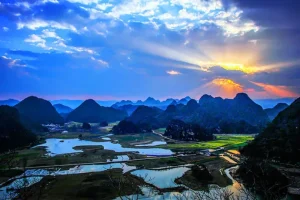
Day 4: Puzhehei → Jianshui (200 km, approx. 3.5 hours), The Ancient Vibe of Chaoyang Tower and Double Dragon Bridge
At 7:50 AM, clutching the boiled corn tucked in by Mr. Zhang from Xianrendong Village (who said, “Gnaw on it on the road, it’s warmer than biscuits”), I left the guesthouse. The morning in Puzhehei was still a bit cool, the wind carrying the scent of lotus leaves. I got into the taxi; the driver wore a faded blue shirt and said with a smile, “The road is clear today, we’ll reach Jianshui by 11:00.” The car drove southeast along the Jishi Expressway. The rice fields on both sides changed from mixed green and yellow to solid green. Occasionally, I could see farmers in bamboo hats bending over to transplant seedlings, water droplets from the hats splashing into the fields, creating tiny ripples.
At 11:20 AM, the car stopped on the flagstone road in front of Chaoyang Tower. Chaoyang Tower is actually the east city gate of Jianshui, with red walls and dark tiles. Above the gatehouse hung a plaque reading “Mighty Fortress of the Southeast,” its characters somewhat faded but still conveying its former majesty. Clutching a 10 yuan ticket, I climbed up. The stairs were paved with old blue bricks, polished bright in some places. The handrail was a solid log carved with faint vine patterns. Reaching the top floor, the wind suddenly grew stronger, snapping my open collar. Looking down, the old streets looked like a winding ribbon, flanked by vendors with shoulder poles. The roasted tofu stalls emitted steam, and people sat on small stools gnawing on tofu with chili powder on the corners of their mouths.
Dragon motifs were carved into the walls on both sides of the gatehouse. I leaned in to touch them: the dragon’s body was in relief with densely carved scales. Though the edges were somewhat weathered, the former exquisite detail was still visible—the dragon’s head had wide round eyes and upturned whiskers as if about to take flight. A few stalks of clover grew at the foot of the old wall. I squatted down to take a photo: the blue bricks of the city wall, the shadow of the dragon motif, and the clover at the wall’s base formed a photo with warmth.
Descending Chaoyang Tower, I headed straight to “Wang’s Roasted Tofu” nearby. The stall had wooden tables and chairs. The owner, wearing a navy blue cloth apron with a mole on the back of his hand, was flipping tofu on an iron grate with a bamboo sliver. The grate was glowing red and sizzling; the surface of the tofu was roasted golden and blistered with small bubbles. I ordered a serving of “freshly roasted,” and the owner picked one up with a clip: “Careful, it’s hot. Dip it in our chili powder; we grind it ourselves, it’s not harsh.” The tofu was crispy on the outside and tender inside, releasing hot soy milk when bitten. Dipped in chili powder, it was so delicious I could have swallowed my tongue—squatting on a small stool, I ate 10 in one go. The owner shook his head with a smile: “This girl can eat, more than my son can manage.”
At 2:00 PM, I walked toward Double Dragon Bridge with my bag. It’s about 2 km from the ancient town to Double Dragon Bridge. I walked along the embankment of the Lujiang River, where willow trees leaned over the water. The wind blew, and the willow strands brushed my shoulders. The Lujiang water was very clear, showing the pebbles at the bottom. Occasionally, white geese swam past, their long necks casting shadows on the water like small crescents.
Double Dragon Bridge spans the Lujiang River, with seventeen bridge arches connected like a long dragon lying in the water. I walked along the bridge; the railings were carved from solid blue stone with lions and lotuses. The lions’ ears were somewhat worn, yet they maintained a majestic expression. Reaching the middle of the bridge, I stopped—the reflections of the bridge arches in the water looked like 17 full moons. When the wind blew, ripples formed on the water, and the moons swayed along. In the nearby rice fields, the summer rice was as green as emerald. Several farmers in bamboo hats were weeding; seeing me take photos, they waved with a smile: “Young lady, good shot. This bridge has been around for many years.”
At 5:30 PM, I returned to the ancient town and took a taxi to “Tingziyun Guesthouse.” The guesthouse was in a narrow alley with an old wooden door and a copper ring. I knocked twice, and the landlady opened the door with a smile: “Young lady is here, the room is ready.” The room was on the second floor; the wooden stairs creaked. Upon opening the door, the upturned eaves of ancient buildings were right outside the window—several stalks of Orostachys fimbriata grew on the blue tiles, and a copper bell hung at the corner of the roof, its sound clear and crisp in the breeze. The bed was made with linen sheets that smelled of sunshine. The hot water in the bathroom was plentiful; after a shower, all fatigue vanished.
At 7:00 PM, I sat on the guesthouse terrace for dinner. The landlady brought a bowl of mixian (rice noodles); the broth was made from bones and was incredibly fresh, served with pickles and shredded meat. I finished every bit. The wind on the terrace carried the scent of osmanthus. From a distance came the sound of footsteps in the alley and the calls of flower vendors. I sat hugging my knees for a long time, feeling that Jianshui’s ancient vibe isn’t an artifact in a glass case, but something alive in the daily bustle—it’s the wind on Chaoyang Tower, the aroma of roasted tofu, the moon at Double Dragon Bridge, and the eaves outside the guesthouse window.
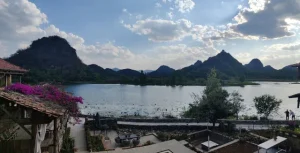
Day 5: Slow Experience in Jianshui, Meter-Gauge Small Train and Old Houses of Tuanshan Residences
At 8:30 AM, clutching the osmanthus cake I bought at the alley entrance last night—it was wrapped in paper and still warm, the osmanthus scent wrapping around me—I headed to the Ancient Town Station. The wooden sign on the platform still bore rain traces from last night, with “Meter-Gauge Small Train: Ancient Town → Tuanshan” scribbled on it. A dark green locomotive squatted on the tracks, its chimney dusted with coal cinders. A conductor in a navy blue uniform blew a copper whistle, shouting “All aboard,” his voice as sweet as honeyed dates. I found a wooden window seat and dropped my bag. The wind immediately rushed in with the bitter-green scent of rice fields, slightly dispersing the sweet aroma of the osmanthus cake.
The small train chugged along, moving so slowly I could count the dew drops on the rice ears. Passing Tuanshan Village, an old person shelling edamame at the door raised a hand; the edamame shells in the bamboo basket were piled like a small hill. A child chasing the train held a tanghulu (candied hawthorn), the syrup dripping onto his blue cloth shirt while his mother shouted from behind, “Slow down! It’ll hurt if you fall.” I quickly pulled out my phone; the rice fields in the frame were deep green, the white walls of the village looked like goji berries soaked in tea, and even the wind was slow enough to be caught.
At 10:30 AM, the train stopped exactly at Tuanshan Station. The hollow of a large banyan tree at the exit was filled with postcards from tourists; one read “The wind in Tuanshan is old.” I touched the hollow, the rough bark making my palm itch. Walking along the flagstone path toward Zhang Family Garden, wild roses climbed the fences, their pink flowers draping from the branches with a clear fragrance like the scent of grandma’s sun-dried quilts.
The door of Zhang Family Garden was made of old elm wood with a copper lock. It creaked as I pushed it open, and the wood carvings of lotus vines on the doors and windows immediately hit my eyes—the petals were curled at the edges, and the veins of the leaves were clearly carved. I reached out to touch them; the wood was warm and smooth, like touching grandma’s old wardrobe. In the center of the garden was an old well with a blue-stone carved rim featuring lotus petals. I lowered an iron bucket with a thud; the water splashed up, so cold my fingertips stung, yet it had a sweet coolness, like drinking from a mountain spring. An auntie nearby laughed and said, “This well is several hundred years old, the water is sweet. Wash your hands to get some luck.” I smiled along and rubbed my hands; the water droplets hit the flagstones, creating small splashes.
At noon, I ate Qiguo Chicken (Steam Pot Chicken) at a farmhouse restaurant by the garden entrance. The pottery pot was Jianshui’s unique “terracotta,” its body so thin it could transmit light, sitting on a clay stove and sizzling with steam. When the soup arrived, several sprigs of green onion floated on the milky white surface. A spoonful made me squint with its freshness—the chicken was so tender it melted, even the breast meat wasn’t dry. The soup carried a slight earthy scent from the pottery pot. The owner wiped his hands and came over: “This soup simmered for three hours with some pseudo-ginseng root added to nourish the blood.” I drank two bowls and gnawed the chicken clean, finally asking for a bowl of rice to soak in the chicken soup. The grains soaked up the broth and were so delicious that not a drop was left at the bottom of the bowl.
At 2:00 PM, I visited Zhu Family Garden. The red paint on the plaque reading “Grand View Garden of Southern Yunnan” was somewhat peeling, yet it still conveyed the grandeur of the past. Entering, I was greeted by carved beams and painted rafters. The “Pine and Crane for Longevity” wood carving on the crossbeam had pine needles as fine as hair, and the crane’s feathers could be counted one by one. The guide was an old lady in a blue cloth shirt, speaking into a small megaphone: “Look at the openwork patterns on these doors and windows—the bat represents ‘fortune’ (Fu); the gourd represents ‘prosperity’ (Lu); and that cloud is an ‘auspicious cloud’ (Xiangyun).” I leaned in to touch the bat pattern; the wood carried the warmth of an afternoon’s sun, like a pillow warmed by the sun. The rockeries and ponds in the garden were ingenious. Moss grew in the crevices of the Taihu stone rockeries, and red koi swam in the ponds, shattering the reflection of the willows by the water. I squatted by the pond for ten minutes, not even noticing when the fish swam away.
At 5:30 PM, I returned to the ancient town and headed straight for “Wang’s Roasted Tofu.” Seeing me, the owner forgot to flip the tofu with his bamboo sliver and shouted with a smile: “Young lady is back today! I saved some freshly roasted ones for you, and I’ll give you two extra—saw you enjoying it yesterday.” The tofu was still crispy outside and tender inside, releasing hot soy milk when bitten, dipped in the owner’s homemade chili powder. It was so delicious I could have swallowed my tongue. I sat on a small stool, gnawing on tofu and watching my surroundings: an auntie in a floral skirt bargained with the owner for pickles, an uncle in a straw hat took photos of the roasting tofu with his phone, the wind carried the scent of osmanthus, and even the laughter of children at the next table sounded soft. The owner handed me a cup of warm rice milk: “Free, to cut the grease.” The rice milk was sweet with a rice aroma. As I drank it, I watched the sunset dye the ancient city walls orange-red. I suddenly felt that slowing down is so comfortable—it’s not about rushing through attractions, but about feeling the temperature of wood carvings, drinking the sweetness of well water, eating freshly roasted tofu, and letting the wind carry the vibe of daily life.
| Daily Expenses (Per Person) | Details |
|---|---|
| Meter-Gauge Train Ticket | 12 (Ancient Town → Tuanshan round trip) |
| Tuanshan Farmhouse Qiguo Chicken | 58 (small portion, enough) |
| Zhu Family Garden Ticket | 50 |
| Wang’s Roasted Tofu | 18 (12 pieces + chili powder + rice milk) |
| Snacks/Water | 10 (mineral water + oranges) |
| Total | Approx. 148 |
Day 6: Jianshui → Yuanyang (140 km, approx. 2.5 hours), Terrace Sunset and a Hani Home
At 8:40 AM, I wrapped the roasted corn given by the owner of Wang’s yesterday in oil paper—the corn silk was still wet with morning dew, warm enough to keep my palms cozy—and set off from Jianshui Ancient Town. The Yuan-Lu Expressway was wider than yesterday’s road, with the mountains on both sides draped in pale blue morning mist like ink just rubbed out. The driver wore a checkered shirt and chewed on a stalk of foxtail grass, the steering wheel trembling slightly: “The road is smooth today, we’ll reach Yuanyang by 11:00. I’ll drop you at the terrace entrance.” Midway, I rolled down the window; the wind, carrying the scent of mountain pine needles, rushed in. The green and yellow gradient of the nearby terraced fields slowly unfolded. Occasionally, I saw farmers in bamboo hats carrying hoes, the red cloth on the hats fluttering like a moving cloud.
At 11:30 AM, the car stopped at a dirt intersection in Yuanyang County. An auntie selling soy milk gave me a cup of hot drink in a plastic bag and tucked in a piece of osmanthus sugar: “To go to Bada, follow this road for 5 km and turn right at the bamboo sign.” Driving along the country road, there were crooked wooden signs for “Bada Terraces” pointing toward the mountains. At the entrance, a string of sun-dried corn hung from the bamboo gate, the wind clashing the kernels together with a rustling sound. I first bought a cable car ticket—50 per person. The cabin was made of old wood; it wobbled as I sat in it and slowly sank toward the valley. The scent of rice in the wind grew stronger. Looking down, the terraces looked like layers upon layers of mirrors; some held the blue sky, others reflected the green mountains, and the water surface shimmered with fragments of silver light.
At 3:30 PM, I climbed the flagstone path to the observation deck—the coarse iron chain railing made my palms feel hot from rubbing. The sun began to sink behind the mountains, the light turning from a dazzling white to a soft orange-red. The water surface of the terraces suddenly burst with golden light—layer upon layer, as if someone had crushed gold leaf and scattered it in the fields. A farmer in a blue cloth shirt came over carrying a hoe and shouted in his dialect: “Sunset is coming, stand higher, young lady!” I smiled and stood on my tiptoes. In the lens, the terraces shifted from green to yellow, and the golden light climbed up the ridges, dyeing even the distant mountain peaks a honey color. The wind blew my bangs, dusted with bits of rice leaves, but I didn’t care at all, my finger kept pressing the shutter—this play of light and shadow was more moving than any filter.
At 5:00 PM, I returned to the guesthouse. The owner was a Hani uncle in a navy blue buttoned top who smiled when he saw me: “Young lady is here. The room is on the second floor; open the window and you can see the terraces.” The wooden stairs creaked. The moment I opened the door, the setting sun fell exactly on the ridges outside the window—the terraces looked as if covered in crushed gold, their shadows stretched long, and even the room was soaked in warm light. The bed was covered with Hani brocade; the red and black patterns felt soft to the touch. The uncle brought a cup of ginger tea: “It gets cool in the mountains at night; have a hot drink to ward off the chill.” The ginger tea was spicy and warm, making my chest tingle with warmth.
At 7:00 PM, Hani dishes were set on the wooden table in the courtyard. The auntie brought out Bamboo Tube Rice—the fresh bamboo section was split open, and the aroma of glutinous rice mixed with peanuts burst out. I picked up a grain of glutinous rice; it was soft with a nutty fragrance, and I was reluctant to swallow even after two bites. Then came the Sour Meat—cured with shredded radish and local pork, it was sweet and sour, fatty but not greasy, and I devoured two bowls of rice with it. Finally, the Terrace Fish Soup—the fish was carp raised in the rice fields, with soft tofu added. The broth was simmered to a milky white and was so fresh I drank three large bowls. The uncle slapped his thigh and laughed: “This fish wasn’t fed with fodder; it’s so fresh you’ll lick the bowl!”
At 8:00 PM, I sat in the courtyard stargazing. The uncle brought a bamboo chair and broke off a piece of roasted sweet potato for me: “This sweet potato was grown by the terrace, very sweet.” He pointed to the distant terraces and said: “These fields have been here for over a thousand years. We’ve built them following the mountain’s contours generation after generation, never daring to disturb the geomancy—look at those curves, they follow the mountain; they weren’t dug out blindly by people.” The scent of rice fields drifted in the breeze, and frogs croaked in the distance. Leaning back in the bamboo chair, listening to the uncle’s narration, I suddenly understood what “living scenery” meant—it’s not an artifact in a museum, but a life guarded, planted, and loved by people.
According to my pace for the day: From Jianshui to Yuanyang, there was no rush. From the roasted corn on the road and the golden light of the terraces to the ginger tea at the guesthouse and the auntie’s bamboo tube rice, everything became pictures etched into my mind. I was worried the mountain roads would be difficult to drive, but the driver was very steady and even pointed out a shortcut. I was afraid I’d miss the terrace sunset, but arriving at 4:00 and taking the cable car for two hours meant I caught the most intense golden light just in time. The warmth of the guesthouse owner was even warmer than the scenery of the terraces.
| Daily Expenses (Per Person) | Details |
|---|---|
| Jianshui → Yuanyang Expressway Fee | 60 |
| Bada Terraces Cable Car | 50 |
| Hani Guesthouse | 400 (Terrace view room, includes breakfast) |
| Hani Dinner | Bamboo rice 30 + Sour meat 40 + Fish soup 30 = 100 |
| Snacks/Water | 20 (mineral water + oranges) |
| Total | Approx. 630 |






