



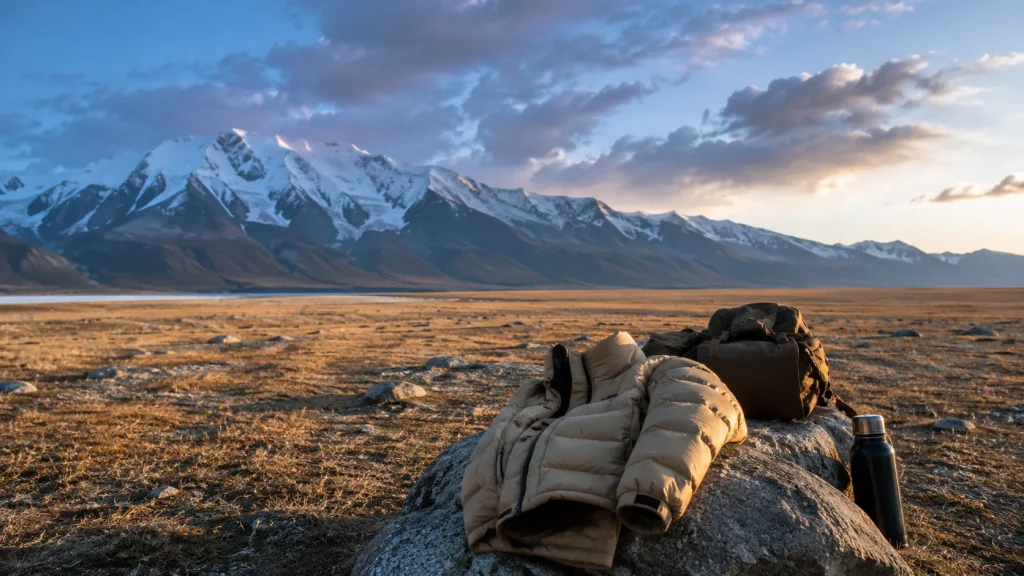
Direct answer:It is not necessary to bring a thick down jacket in summer in Xinjiang, but the judgment depends on the specific destination, travel month, altitude and terrain, whether early morning or night activities are arranged, and personal cold tolerance. When the itinerary includes Kanas, Hemu Accommodation, Sailimu Lake sunrise and sunset, Ta County or the Pamir Plateau, it is recommended to bring a light down jacket that is easy to pack, or use a fleece and windproof jacket. Only active during the day in low-altitude cities. You can decide whether to bring a light jacket based on the forecast before departure.
Do I need to bring a down jacket in summer in Xinjiang?
“Xinjiang summer” is not a uniform weather. The physical experience in cities such as Urumqi and Kashgar, the Altai Mountains, the shores of Sailim Lake and the Pamir Plateau may be significantly different. It’s impossible to tell what clothing is needed for the entire route just by looking at the weather in and out of the city.
Heavy winter down jackets and light and compressible down jackets are not the same thing. What most tourists need is not a thick coat to wear all day, but a layer of warmth that can be added temporarily in the early morning, after rain, at the lake or on the plateau.
| Itinerary status | Recommendation level | Recommended clothing |
|---|---|---|
| Only active during the day in low-altitude cities | Decided based on the forecast | Short sleeves, long sleeves or thin jacket |
| Go to Kanas or Hemu and stay overnight | It is recommended to prepare | Fleece or light down jacket |
| Watch the sunrise, sunset or strong wind at Sailimu Lake | It is recommended to prepare | Thermal layer plus windproof jacket |
| Go to Ta County and Pamir Plateau | Suggest preparation | Lightweight down jacket, or fleece plus windproof layer |
| Elderly people, children, or those who are particularly afraid of the cold | Appropriately increase warmth | Lightweight thermal layer that is easy to put on and take off |
Why can’t we just look at “Xinjiang summer temperature”?
Xinjiang has a large geographical span, and it is possible to travel from the city to the mountains or plateaus on the same day. Increase in altitude, wind at lakeside and mountain passes, cloud cover, and rainfall will all change the physical experience. It may be warm in the sun, but you need to put on more clothes when you enter the shade or a draft.
Activity time is equally important. Getting out of the car briefly to take photos at noon is not the same as waiting for the sunrise in the early morning, watching the lake in the evening, or standing for a long time. It is not the same dressing requirement. When crossing different terrains throughout the day, clothing may need to be added or removed several times.
For example, data from the China Weather Network shows that the historical average temperature in July, the hottest month in Kanas, is about 16°C, but the historical average is only used for pre-trip reference and cannot replace the weather forecast for the specific travel date.[1]
Do I need to bring a down jacket in Kanas summer?
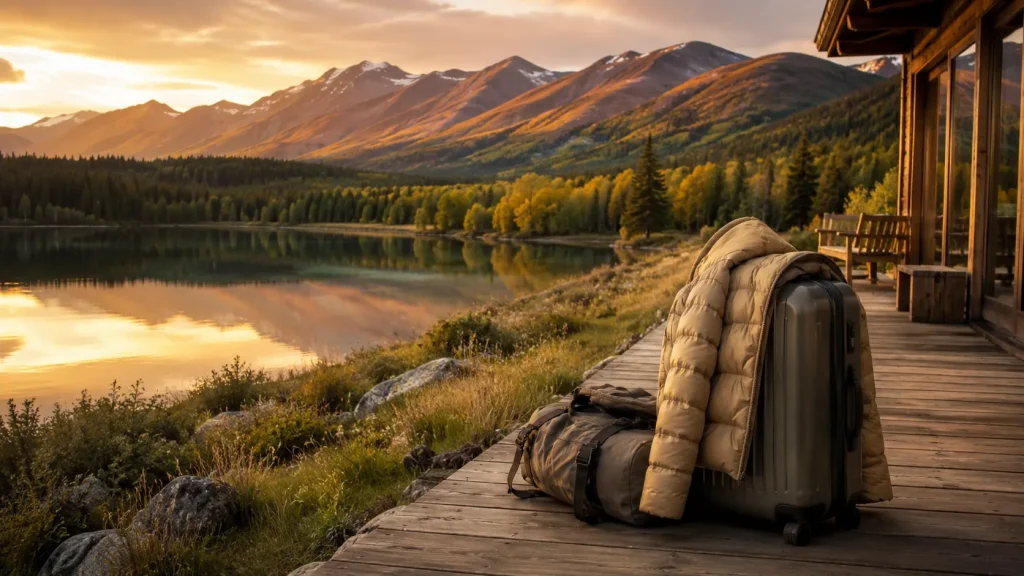
Some tourists do not need to wear down jackets when sightseeing at noon on a sunny day. If you go to Sanwan in the early morning, stay in Kanas or Hemu, or encounter rainy weather to cool down, a light thermal layer will be more practical. The forecast for Altay urban area cannot directly represent the Kanas scenic area located in the mountainous area.
There is a big difference in body sensation between noon on a sunny day and after rain or wind. Staying in a wooden house does not necessarily mean that it will be cold inside. Whether to wear extra clothes depends on the accommodation location, heating conditions, day’s forecast and departure time.
Before preparing clothes, you can checkKanas and Hemu Northern Xinjiang itineraryConfirm accommodation and early morning activity arrangements.
Plan A: Tour during the day on a normal sunny day
Choose short-sleeved or quick-drying tops as your base layer; carry thin long sleeves with you; and prepare a lightweight windproof outer layer. Wear long pants as bottoms, with stable traction sneakers or hiking shoes and moisture-absorbent socks.
Plan B: Viewing in the early morning or evening
For the base layer, choose a long-sleeved or quick-drying top; for the warm layer, use fleece, a thin sweatshirt or a light down jacket; for the outer layer, use a windproof jacket. Wear long pants as bottoms, and keep warm, comfortable and non-slip shoes and socks first.
Plan C: Rainy, cooling, or tourists who are afraid of the cold
Avoid thick cotton clothes that are easy to get wet and difficult to dry as the base layer; use fleece or light down jackets as the middle layer; and choose jackets with practical rainproof capabilities as the outer layer. Wear long pants, non-slip shoes and dry spare socks, and change them promptly if they get wet.
Do I need to bring a down jacket in summer at Sailimu Lake?
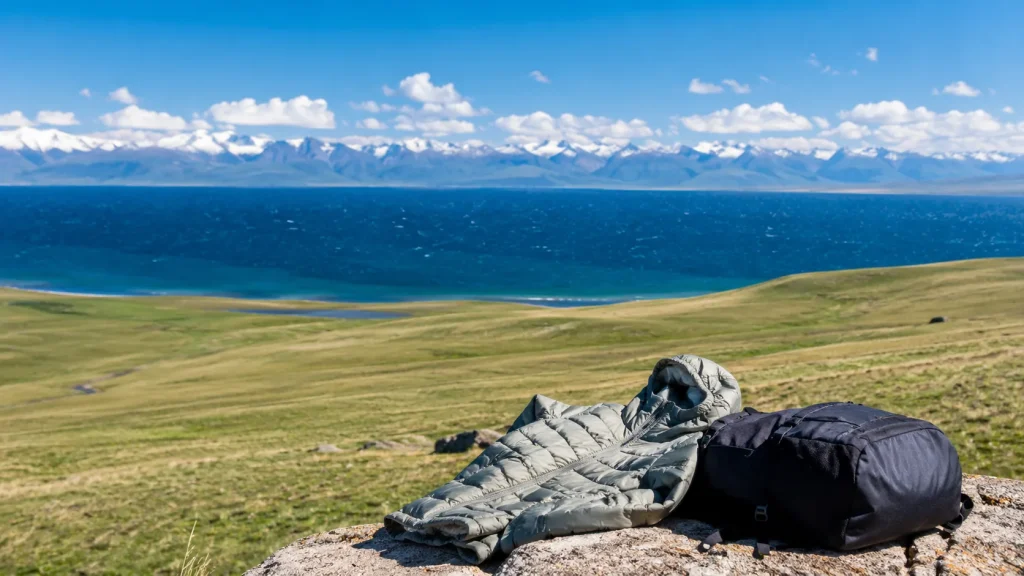
Sailimu Lake is about 2073 meters above sea level.[2]When judging what to wear here, you should not just look at the altitude or the highest temperature, but also the wind at the lake, length of stay and activity time. The windproof layer is responsible for reducing the heat taken away by the wind, and the thermal layer is responsible for retaining body heat. The two cannot replace each other.
Jackets or windproof jackets are not the same as down jackets; light and thin down jackets do not mean they can cope with continuous rainfall alone. Please check the accompanying product description for specific performance.
If the itinerary continues to Yining and Nalati, it can be combinedSailimu Lake and Ili Tourist RouteDetermine the length of stay at the lake.
Short tour at noon on a sunny day
Short sleeves or thin long sleeves and long pants, and keep a thin windproof jacket with you in the car. If you only get off the car for a short time, a light down jacket can be used as a backup and does not necessarily need to be worn.
Sunrise, sunset or long time around the lake
Long-sleeved base layer, add fleece or light down jacket, and add a windproof layer. The waiting time for shooting at the lake is longer, and your feet should be kept dry to avoid focusing only on your upper body.
Rainy or windy weather
Features a quick-drying base layer, a warm mid-layer and a wind- and rain-proof outer layer. When taking photos in a skirt, prepare a jacket and trousers that can be put on quickly. Add clothes immediately after taking the photo, and do not wait in the wind for a long time.
Do I need to bring a down jacket in summer in Ta County?
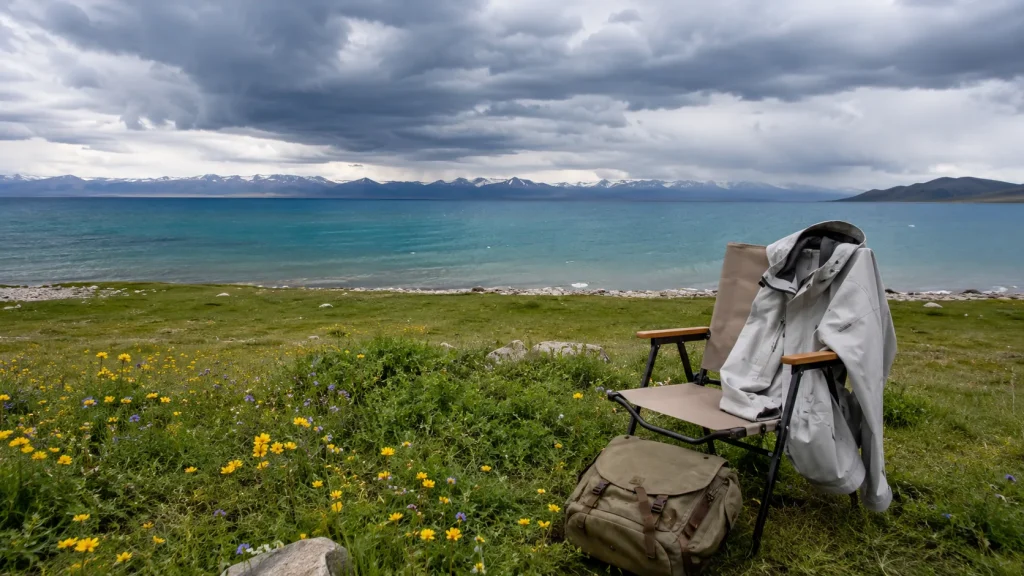
The urban area of Kashgar, the route to Ta County, the stopping points at Baisha Lake and Karakul Lake, the town of Ta County and higher mountain passes should not be regarded as the same environment. Ta County is located at the eastern foot of the Pamir Plateau, with an average altitude of more than 4,000 meters.[3]
When the city of Kashgar is hot during the day, you cannot wear the same set of clothes for the entire plateau route. You need sun protection during the day, and you need to keep warm when staying at high altitudes, when cloud cover increases, or when the wind blows. Lightweight down jackets are more suitable for keeping in the car as a backup and do not need to be worn all day long.
When traveling from Kashgar in the early morning and returning in the evening, or staying in Ta County, the need for warmth is usually higher than for a short stay at noon. When there are elderly people, children or tourists who are afraid of the cold, it is safer to keep an extra layer of lightweight clothing than to carry it temporarily.
Tourists who plan to enter the Pamirs can check first
Departure times, stopping points and accommodation locations inCustomized itinerary of Kashgar and Ta County.
Headache, nausea, fatigue, respiratory discomfort, or dizziness may have multiple causes and cannot be self-attributed to the cold or self-diagnosed. If the discomfort is obvious or continues to worsen, you should stop rushing and seek professional medical help in time.[4]
Itinerary tips:If you are not sure whether you need to bring a down jacket along your route, you can send the travel month, destination, accommodation location and traveling companions to a travel consultant, who will help make a judgment based on the specific route.
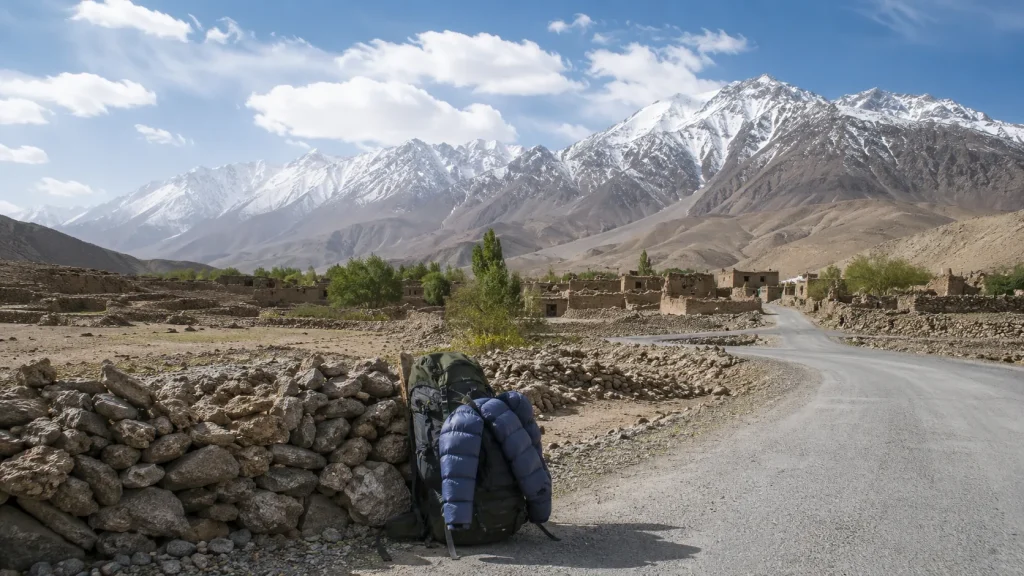
What are the differences between preparations in June, July and August?
June
The weather changes in some mountainous areas may be more obvious, so it is recommended to retain a more complete combination of warmth and wind protection. Don’t delete clothing based solely on the temperature in departure cities such as Urumqi and Kashgar.
July
Many areas are more likely to feel warm or even hot during the day, but mountainous areas, lakeside, early morning and rainy scenes still require a backup thermal layer. July cannot simply be understood as “it’s not cold anywhere”.
August
The beginning of the month and the end of the month cannot be considered identical. Especially in late August, more attention should be paid to changes in the minimum temperature, wind and precipitation at the destination, and a set of fixed temperatures should not be used to represent the entire Xinjiang.
How to choose between light down jackets, fleece and jackets?
| Clothing | Main functions | Advantages | Limitations | More suitable scenarios |
|---|---|---|---|---|
| Lightweight down jacket | Keep warm | Light, small compression size | Usually not suitable for dealing with persistent rainfall alone | Early morning, night, plateau backup |
| fleece jacket | Middle thermal layer | Breathable and easy to layer. | Wearing alone to keep warm in strong winds is limited | Mountain activities, switching between inside and outside the car |
| Windproof jacket | Block wind cooling | Practical for lakeside and mountain passes | does not necessarily have the ability to keep warm | Lakeside, mountain pass, windy weather |
| Rainproof jacket | Coping with rainfall | Reduce clothes from getting wet | Not necessarily warm | Rainy weather |
| Thick down jacket | Strong warmth | Obviously keeping warm in low temperature environment | is large in size and may be excessive for normal summer travel. | Special weather or those who are particularly afraid of the cold |
The most practical solution is often not to look for “one universal jacket”, but a base layer + a thermal layer + a wind or rainproof layer. Different jackets have different windproof, waterproof and thermal insulation capabilities, so the product description and actual usage should prevail.
How should different tourists adjust?
Ordinary adults
Pack short or thin long sleeves, a lightweight mid-layer and a windproof jacket. When the route enters mountains, lakes or plateaus, add a light down jacket as a backup.
People who are particularly afraid of the cold
Add a thin, compressible thermal layer to eliminate the need to carry multiple pieces of thick clothing with duplicate functions. Prioritize making sure the thermal layer and outer layer can be worn at the same time.
Elderly tourists
Clothes should be easy to put on and take off to reduce sudden colds, and the weight of luggage should be controlled. It is adjusted according to the actual physical condition and does not need to mechanically copy the configuration of young people.
Children
Add an interchangeable base layer and reliable windproof layer to deal with sweat, rain or dirt. Children’s activity levels and ability to express warmth and coldness are different, so it is not appropriate to completely copy adult configurations.
Photography Tourist
Sunrise, sunset, and starry sky photography often involve standing for long periods of time. You should wear an extra layer compared to midday sightseeing, and take care to keep your hands, feet, and neck warm.
Tourists dressed up for taking photos
When shooting in skirts or thin clothes, keep your jacket and trousers within easy reach. Put on some clothes immediately after taking the photo, and don’t stay in the low temperature or strong wind for a long time for the photo.
A clothing combination suitable for most summer itineraries in Xinjiang
The following quantities are only used as basic examples for short-term Xinjiang summer travel and do not represent a complete list of fixed days:
- 2 to 3 interchangeable short-sleeved or quick-drying tops;
- 1 to 2 pieces of thin long sleeves;
- 1 piece of fleece, thin sweatshirt or other warm mid-layer;
- 1 piece of light down jacket, choose according to the route;
- 1 windproof or rainproof jacket;
- 2 pairs of trousers suitable for walking;
- Comfortable non-slip shoes and adequate replacement socks;
- Visor and foldable rain gear.
Private small groups also need to consider the car model and trunk capacity. When couples or families are traveling together, repeatedly carrying multiple thick coats will compress other luggage space, so dressing in layers is usually easier to adjust.
How to judge whether you should wear a down jacket?
- See the complete route:Confirm whether Kanas, Hemu, Sailimu Lake, Ta County or other high-altitude areas are included.
- View event time:Confirm whether you want to see the sunrise, sunset, starry sky, or if you need to leave early in the morning.
- Check the weather at a specific location:Check the actual destination separately, don’t just check “Xinjiang weather”.
- View minimum temperatures, winds, and precipitation simultaneously:Don’t just look at the highest temperature.
- Based on personal circumstances:Consider the elderly, children, cold sensitivity and time spent outdoors.
In any of the following situations, it is recommended to bring a light down jacket or a thermal layer of the same level:
- Mountain accommodation;
- Sunrise or sunset by the lake;
- Pamir Plateau itinerary;
- Continuous rain or significant cooling;
- The elderly and children may be particularly afraid of the cold;
- There will be a long outdoor stay during the itinerary.
What information do I need to confirm before departure?
- Specific travel date and accommodation location each night;
- Whether to enter Kanas or Hemu accommodation;
- Whether you want to watch the sunrise or sunset at Sailimu Lake;
- Whether to go to Ta County and high-altitude viewing spots;
- The earliest departure and latest return time every day;
- Whether there are elderly people, children or people who are particularly afraid of the cold;
- Whether to check in luggage and vehicle trunk space;
- Forecast for the next 3 to 7 days and the latest forecast for the day before departure.
FAQ
Do I need a down jacket when going to Kanas in July?
It is not necessary to wear it for ordinary sightseeing at noon, but when going to Sanwan in the early morning, staying in Kanas or Hemu, staying outdoors for a long time, or encountering rainy weather, it is recommended to bring a light down jacket or fleece plus a windproof jacket. Before departure, you should also check the forecast of scenic spots separately, not just in Altay city.
Do I need a down jacket to go to Sailimu Lake in August?
Depends on the date, wind and event time. For a short stop at noon, you can choose a thin jacket according to the forecast; at sunrise, sunset, when staying around the lake for a long time, or when the temperature drops in late August, a light down jacket is more secure. With a windproof layer on the outside, it is easier to adjust than just wearing a thermal jacket.
Is it enough to wear a jacket when going to Ta County in summer?
Not necessarily. Jackets are mainly designed to be windproof or rainproof, and whether they are warm or not depends on the product and inner layer. It is recommended to prepare fleece or light down jackets for the Pamir route and layer them according to the weather. When the urban area of Kashgar is very hot, do not delete the backup thermal layer on the plateau accordingly.
Can I only wear short sleeves in summer in Xinjiang?
If the route only includes daytime activities in low-altitude cities, you can simplify your clothing based on the forecast; wearing only short sleeves is difficult to cope with the changes in body sensation in mountainous areas, lakeside, plateau, early morning, and after rainfall. At least one thin long-sleeved or lightweight jacket should be left to facilitate switching between inside and outside the car.
Do I still need a down jacket if I bring fleece?
For daytime activities in mountainous areas, fleece and a windproof layer may be useful; if you are afraid of the cold, watching the sunrise, living in mountainous areas, or going to the Pamirs, you can bring a lightweight down jacket with small compression volume. Whether to bring both should be determined based on the minimum temperature and time spent outdoors.
Which one should I wear, a thick down jacket or a light down jacket?
Most regular routes from June to August are more suitable for light down jackets with windproof layers. Thick down jackets are bulky and are usually reserved for those who need special cooling, activities at higher altitudes, or those who are particularly afraid of the cold. If the trunk space is limited, give priority to clothing that is compressible and does not have repeated functions.
How should the elderly prepare clothes for going to Xinjiang in summer?
Prepare a base layer, a warm mid-layer, and a wind-proof outer layer that are easy to put on and take off, and keep a spare layer. Reduce the burden of repeated heavy clothing and luggage, and adjust according to your physical condition and daily activity time. Before setting off in the early morning or staying on the plateau, the traveling companion will check in advance whether the clothes are on board the vehicle.
Do children need to bring an extra coat when going to Kanas?
It is recommended to have a spare jacket or warm mid-layer and prepare an alternative base layer. Children may sweat, get wet in the rain, or get their clothes dirty due to activities, so it is not advisable to only prepare the same amount as adults. Clothes should be easy for parents to add or remove quickly, and wet clothes need to be replaced as soon as possible.
Are hotel rooms in Xinjiang very cold in summer?
It cannot be generalized. The feeling of the room is related to the location, building, facilities and the weather of the day. When booking mountain accommodation, ask about heating, air conditioning and bedding conditions in advance. A wooden house does not necessarily mean it will be cold, and a city hotel cannot guarantee that everyone will feel the same.
How many days before departure is it better to check the weather?
Trends can be checked 3 to 7 days in advance, checked again the day before departure, and updated daily during the itinerary. Focus on the lowest temperature, wind and precipitation in specific scenic spots, not just the highest temperature. There is uncertainty in the long-term forecast, so it is not advisable to delete spare clothing prematurely based on this.
Prepare according to the specific route, the luggage will be lighter and more practical
If the travel time to Xinjiang has been determined, you can provide Hiwan Travel with the travel month, travel days, planned destination, number of people traveling with you, the situation of the elderly and children, and whether to arrange sunrise or sunset activities. The travel consultant can provide clothing and luggage suggestions that are more suitable for the itinerary based on the specific route, accommodation and car arrangements.
You can learn about it firstXinjiang private customized tour route, or viaHiWan Travel Contact and Service PageExplain your travel plans.
Related Guides
- Is it easy to get motion sickness when traveling in Xinjiang: Comparison of driving difficulty on Duku Highway, Yizhao Highway and Panlong Ancient Road
- How big is the temperature difference between morning and evening in Xinjiang: How to dress in layers in northern Xinjiang, Ili, southern Xinjiang and high-altitude areas
- How many sets of clothes to bring when traveling in Xinjiang: 7-day, 10-day and 15-day luggage lists
- Xinjiang 5-Day Itinerary Guide: Avoiding Rushed Routes, Repeated Sights, and Hotel Issues
- 7-day essential in-depth tour of Northern Xinjiang: Kanas Lake + Hemu Village + Sailimu Lake all unlocked
Kanas Scenic Area — — Key Facts
Typical Climate & Packing (Past Years)
- January: ?–-16.0 °C, Kanas has a cold temperate climate with an annual average temperatur
- July: ?–15.9 °C, July, the hottest month, averages about 15.9 °C (even at noon only a






