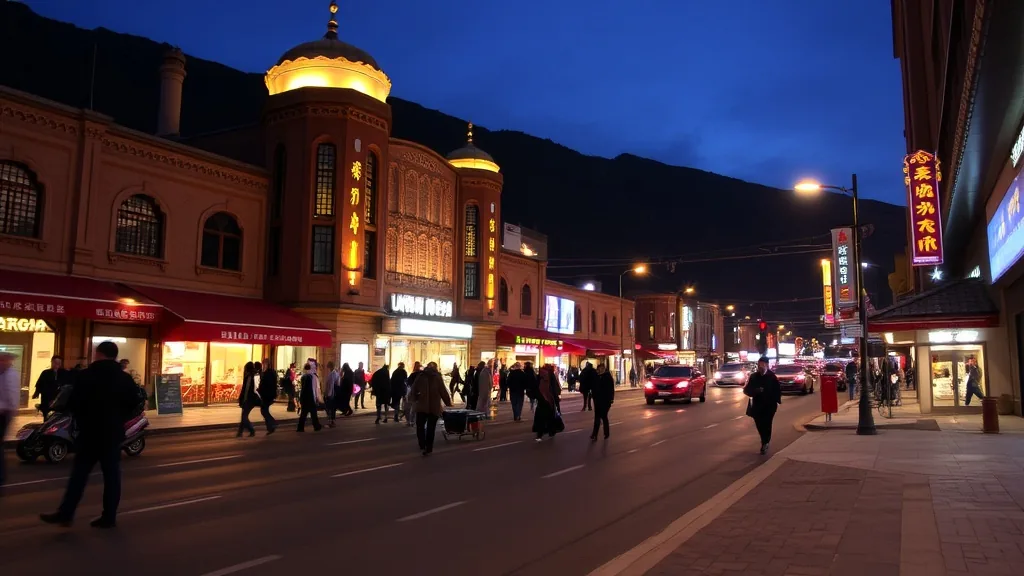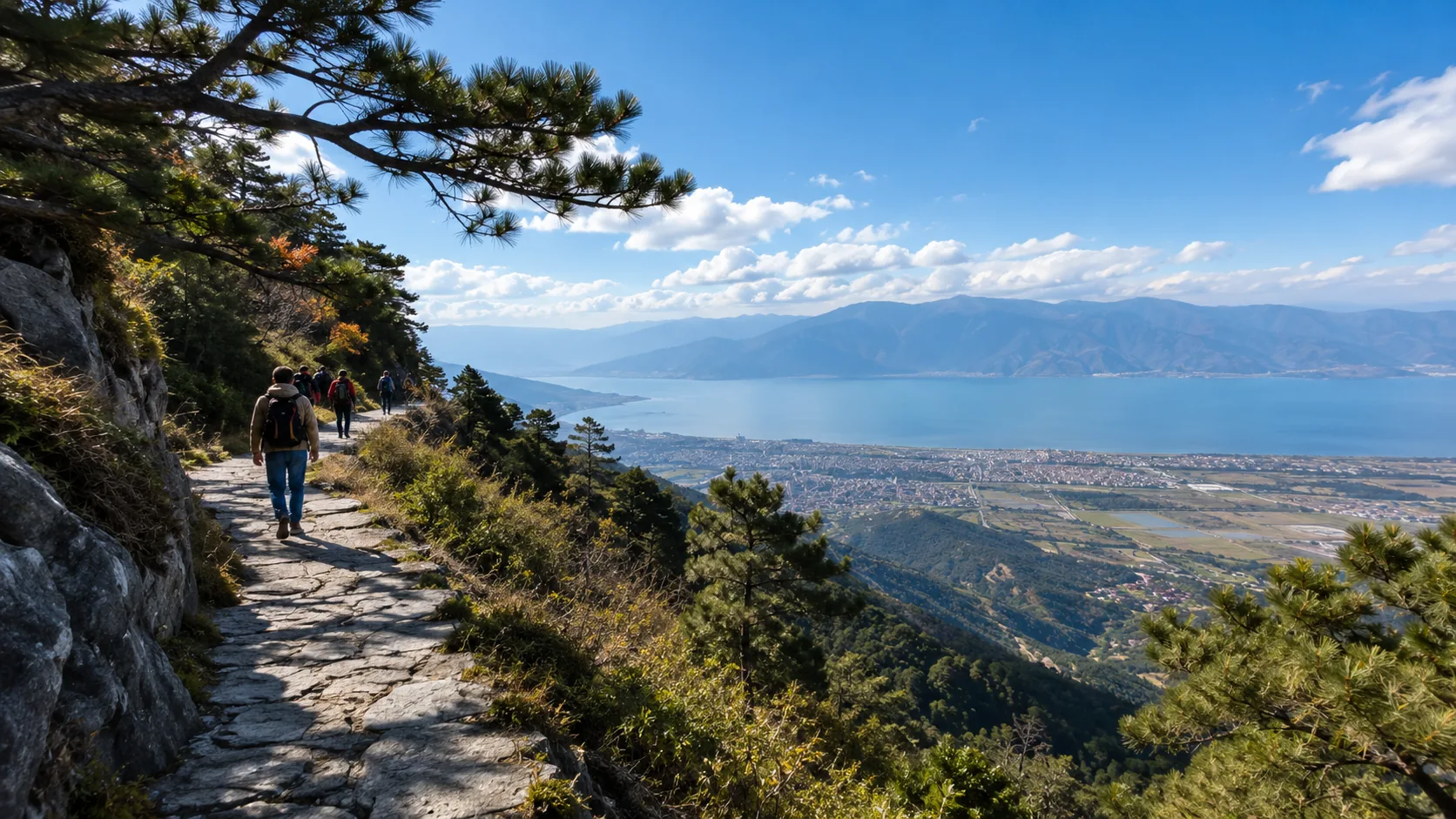



This six-day plan covers five nights, with the monastery and Pudacuo on separate days. Allow time to adjust to altitude rather than treating every outing as compulsory. Rest and do not go higher if altitude symptoms develop; seek urgent medical help for severe illness, confusion, poor coordination or breathlessness at rest, and descend safely if possible. Avoid alcohol while travelling at altitude. [1]
Day 1: Arriving in Shangri-La, Settling In Before Exploring Dukezong
At 6:40 AM, Lijiang Passenger Station was already bustling. I dragged my suitcase and lined up for the 7:00 AM bus. The driver, shouting “Get on board!” in a Yunnan-accented Mandarin, filled the cabin with the aroma of hot soy milk—a detail of this account, not a verified service included on every bus. The seat on the right side did not disappoint; after crossing the Tiger Leaping Gorge Bridge, snow-capped mountains poked through the clouds—first the sharp peaks, then vast, dazzling white glaciers. I stared out the window for half an hour until the driver announced, “Shangri-La is here.”
Confirm your actual accommodation before leaving the station. Songtsam Green Valley is in Kena village beside Songzanlin Monastery, not at the South Gate of Dukezong. Do not use the original 25-minute walk through old-town alleys as directions to that hotel; arrange the transfer to the address on your booking. [2] The remaining room and hospitality account needs an identified property and dated stay record. A string of copper bells hung on the lintel, tinkling in the wind. The front desk lady, wearing a Tibetan apron, greeted me with a smile and a “Tashi Delek,” handing me a bowl of hot yak butter tea (with milk dregs, 6 yuan per bowl). The bowl was coarse ceramic, with bits of butter residue clinging to the rim; it warmed my stomach so much that my nose began to bead with sweat.
My room was on the second floor, and I smelled pine incense as soon as I opened the door. The walls were painted in an earthy rammed-earth color, rough to the touch but smelling like sun-dried earth. Do not copy the original bedroom fire-pit anecdote as a heating recommendation. Burning wood can produce carbon monoxide, which has no smell. Use properly installed and maintained heating, ventilation and a working carbon-monoxide alarm. If poisoning is suspected, go outside and seek medical help; do not assume a headache indoors is only altitude sickness. [3] At the foot of the bed lay a Tibetan rug, its deep blue background embroidered with the Eight Auspicious Symbols; I kicked off my shoes and stepped onto its softness. The biggest surprise was a bag of highland barley biscuits on the nightstand with a note: “Freshly baked, eat them while they’re hot.” They were incredibly crispy, with a sweetness tinged by the bitterness of barley—the very taste of the Tibetan regions.
At 3:00 PM sharp, I headed out with the hotel’s map of the ancient town. The flagstones of the main street, Jinlong Street, were polished to a shine, and shops on both sides hung colorful prayer flags, selling Tibetan incense, dried yak meat, and silverware, their calls mingling with the sound of horse bells. Instead of following the crowd, I turned into Baijisi Alley—a narrow lane only 2 meters wide with old houses and clusters of Galsang flowers growing at the base of the walls. At the end of the alley, “Amah’s Yak Butter Tea” wafted the scent of barley. The owner, an old woman in a Tibetan robe, waved at me: “Young lady, come have a fresh bowl!” Her hands were as rough as old bark, but she held the copper pot steadily. The account changes from butter tea to barley wine here; confirm which drink was actually served. Do not use an arrival-day wine anecdote as advice to drink while adjusting to altitude.
Walking 5 minutes further, I reached the Turtle Well near Moonlight Square. The well rim was made of bluestone, worn round at the edges. An old locust tree grew beside it, wrapped in Hadars, its leaves sifting dappled light. An old woman knelt by the well washing walnuts, her bamboo basket piled high. She scrubbed the walnut skins while telling me: “This well is over a hundred years old; caravans used to rest and drink here.” I reached down to touch the water; it was chilly, and I could see my reflection shimmering in it.
At 7:00 PM, I had a yak meat hot pot at “Ancient Town Tibetan Restaurant.” The small pot bubbled away, the broth simmered from beef bones with wild chili and coriander floating on top. Cook beef tongue and other meat thoroughly in fully boiling broth; curling or a ten-second dip does not establish safety, and chili cannot kill pathogens. Keep raw-food utensils separate from those used for eating. [4] The blood sausage was a highlight—dark brown casing wrapping dark red meat. Confirm that blood sausage is thoroughly cooked; the phrase “boiled before slicing” alone does not establish adequate cooking. It wasn’t gamey at all, but rather had the fragrance of barley flour. The small pot cost 280 yuan, enough for 2-3 people. The accompanying highland barley pancakes were freshly baked, crispy outside and soft inside; dipped in the broth, they were so delicious I ate three pieces.
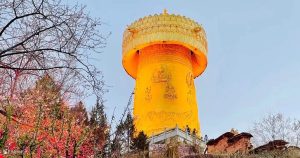
If feeling well, take an easy evening walk through open old-town streets. The large prayer wheel is on the north side of Daguishan, not simply a level stroll around Moonlight Square. It was built in 2002 and has a copper-plated surface, not centuries-old painted wood. [5] Save the climb for a later day if needed, and follow local religious guidance without treating a fixed number of turns as a guarantee of good fortune.
Key Information
| Category | Details |
|---|---|
| Transportation | Lijiang–Shangri-La: Confirm the current service, fare and arrival station. The account’s 7:00 bus, 62-yuan fare, 15-yuan taxi and 25-minute walk are undated, not current quotes or hotel directions. |
| Accommodation | Accommodation: Confirm the property, address, room type, heating and inclusions. The original 320-yuan room and 6-yuan tea figures are unverified, not bookable quotes; do not assume the described room or gifts belong to Songtsam Green Valley. |
| Dinner | Ancient Town Tibetan Restaurant: Identity, menu and 280-yuan pot price need confirmation. A 280-yuan pot shared by two or three costs about 140 or 93 yuan each before extras, not 60 yuan. Queues and seating are not guaranteed. |
| Tips | Compare labelled weight, ingredients, dates and prices rather than assuming one street is 30% dearer. The named shop, 110 yuan/jin price and value claim lack dated evidence. |
Day 2: Morning Bells of Songzanlin, Cloud Shadows of Napa Lake
The alarm rang at 7:58 AM. I got up and prepared for the day. Do not leave an open wood fire burning in a sleeping room overnight; a pleasant woody smell does not indicate the absence of carbon monoxide. Drawing the curtains, I saw a fine drizzle outside. Shangri-La is cool in the mornings and evenings of September, so I put on a windbreaker and headed to the lounge for breakfast.
The front desk lady had already set out a Tibetan breakfast: hot butter tea simmering in a copper pot, steam rising from the spout; highland barley buns in a bamboo steamer, their grain texture visible when broken; and two boiled eggs in a white porcelain bowl. She called out in slightly broken Mandarin: “Eat while it’s hot. The temperature dropped today; butter tea will keep you warm.” I took a sip; it was savory with the grainy texture of milk dregs, rolling down my throat like a small stove in my stomach.
At 8:30 AM, the driver honked his horn at the hotel entrance. A Tibetan man in his forties wearing a navy jacket, he smiled: “Young lady, going to Songzanlin today? Shall I play ‘King Gesar’ songs?” Without waiting for an answer, the car speakers filled with deep Tibetan chanting, like wind blowing through a valley. As we drove toward Songzanlin Monastery, the drizzle stopped. Through the window, I could see prayer flags on the slopes—red, yellow, and blue fluttering in the wind like a moving rainbow.
Check the monastery’s current opening time, ticket, shuttle and visitor route before setting out. The original 9:00 opening and 55-yuan combined ticket are undated. Use permitted visitor entrances; a story about following a novice through a side door is not access permission.
Along the visitor route, the account describes red walls and white pagodas—the red walls of Zhacang were freshly painted, Galsang flowers grew at their base, and the golden roof of the pagoda glittered. Several monks hurried by clutching scriptures, their long shadows cast by the sun. Use the site’s labels or an authorized guide to identify the halls and murals. I leaned in; the colors were vibrant, the Buddha’s eyes half-closed with a smile, every fold of his robes distinct.
The original free-tour and 20-yuan inner-hall arrangements have no confirmed temple notice; paying a guide does not itself authorize entry to restricted spaces. Construction began in 1679, and the Fifth Dalai Lama gave the name Ganden Songzanlin. The Qing court bestowed the name Guihua Temple in 1724; it was not the Fifth Dalai Lama’s name for the temple. [6] Enjoy the architecture from permitted areas and respect photography restrictions.
At 12:00 PM, leaving the monastery, the driver handed me a bottle of water: “It’s getting hot, have a drink.” I realized the rain had vanished, leaving a sky as blue as washed glass. We drove toward Napa Lake. The account describes a paved road and red vegetation in the meadow; the road section and plant identification need a dated location.
Before renting a bike, confirm permitted roads, vehicle condition, protective equipment, range, deposit, hire price and return point. A 50-yuan deposit is not an hourly rental fee, and shock absorbers do not make gravel riding risk-free. Arrange the bike return and onward car pickup before continuing toward Nixi. Riding along the lake road toward Gonqinlin Monastery, I saw a crooked wooden sign at Lookout Point 1: “Best Photo Spot.” Stay in permitted viewing areas. The account describes the boundary between lake and grassland as a green ribbon, the water a transparent blue, and yak herds like scattered black pearls. I spent 20 minutes shooting, my hair blown into a mess, with 37 photos saved in my album.
At 5:00 PM, the car stopped at “Nixi Black Pottery House.” The yard was piled with black pottery blanks. The owner, a Tibetan man in his fifties, was kneeling by a mud pit shaping clay. He smiled, hands covered in black mud: “Young lady, coming for dinner? Our black pig hot pot is very fragrant.” The account also mentions homemade barley wine; its production and strength are unverified, and it is not an altitude remedy. Choose a non-alcoholic drink while travelling at altitude.
When the hot pot arrived, I stared at the black pork—dark brown and marbled. The owner said: “These are free-range black pigs, they eat wild grass, the meat won’t get tough.” Pork must be thoroughly cooked; a curled slice or ten-second dip is not a safety test. The wild mushrooms in this account have no verified species or supplier. Do not eat unidentified mushrooms: some poisonous species retain harmful substances after cooking. If mushroom poisoning is suspected, seek immediate medical attention. [7] The account also describes a plate of arrowhead tubers: “These go well with hot pot, they’re sweet.” Sliced and boiled, they were crunchy and indeed had a hint of sweetness.
When paying, the owner pressed a piece of black pottery into my hand: “This is an heirloom, carved with the Eight Auspicious Symbols, a gift for you.” I felt the texture, embarrassed: “How much is this worth?” He waved it off: “It’s not about the money, just for good luck.”
Key Information
| Category | Details |
|---|---|
| Hotel Breakfast | The account describes butter tea, barley buns and boiled eggs at the hotel. Confirm availability and whether breakfast is included; shell fragments are not a desirable serving feature. |
| Transportation | Today: Accommodation → Songzanlin → Napahai → the confirmed dinner address → accommodation. Arrange bike return, luggage and car pickup; the Day 1 intercity bus is not today’s route. |
| Songzanlin Monastery | Confirm guide times, fees and accessible halls with the monastery. No guaranteed 10:00/14:00 free tour, 20-yuan inner-hall access or side-door shortcut is established. |
| Napa Lake Rental | The account lists 50 yuan/hour for an electric bike and 80 yuan/day for a mountain bike, separately from a 50-yuan deposit. Confirm current terms, permitted routes, range and return arrangements. |
| Tibetan Dining | Nixi Black Pottery House: Address, menu and 150-yuan pot price need confirmation. Require identifiable ingredients and thorough cooking. The pottery gift is an unverified anecdote, not an included benefit. |
Day 3: Pudacuo’s Lakes and Meadows, With Time for the Return Journey
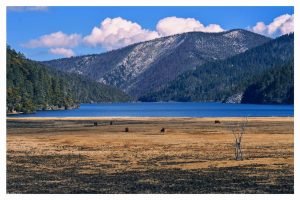
This guide reserves a separate day for Pudacuo. For a different seven-day itinerary, compare the Tiger Leaping Gorge–Shangri-La cultural route: it combines Songzanlin and Pudacuo on Day 5 and explicitly requires a shorter permitted park visit or a revised schedule. It is not this six-day plan, and its services must be confirmed separately.
The alarm chimed at 6:58 AM. I groggily reached for my phone; the screen was blindingly bright—it was still dark outside, with only the distant snow mountains showing a faint bluish-white. Check the park’s weather forecast and pack suitable layers before leaving the accommodation. Do not assume the park is always exactly 10°C colder than town.
The landlady was busy in the kitchen, boiling highland barley porridge in an aluminum pot and simmering wild mushroom soup in a clay pot. She brought a bowl of porridge in a blue-rimmed white porcelain bowl. A warm breakfast is not a guarantee against motion sickness; the wild-mushroom soup also needs identified ingredients. The porridge was so thick it clung to the spoon, the grains distinct. It felt like a warm heater in my stomach.
At 7:50 AM, a silver SUV parked at the door. For motion-sickness prevention or medication questions, consult a clinician or pharmacist. The driver’s homemade-mint anecdote is not evidence that candy works better than medicine; do not dismiss illness at altitude as ordinary travel sickness. The road to Potatso wound in circles, cliffs on the left and hills on the right. The account describes the meadows—the grass was starting to yellow, dotted with purple irises like stars on a yellow cloth.
At the visitor center, check the day’s open areas, admission, shuttle stops, last boarding time and exit arrangements. The park’s official information says some areas are temporarily closed; do not assume every stop below is available. [8] The original 100-yuan admission, 50-yuan shuttle and 9:00 departure lack a date and are not current offers. The roadside “snow lotus” has no verified species or source; do not buy or accept unidentified plant products on a promise of protection.
Take the shuttle at the confirmed operating time; the original 9:00 departure is only an undated account. The driver went slowly, honking at turns, the sound echoing in the valley. The first stop was the Shudu Lake boardwalk. Getting off, the wind suddenly picked up, making the prayer flags rustle loudly. Use only open, maintained boardwalks; if a section appears unstable, turn back and notify staff rather than relying on its railing. To the left was Shudu Lake, blue like crushed gems; to the right was the meadow, where yaks stood with their brownish fur puffed out by the wind.
“Don’t get too close!” the guide ahead shouted. “Yaks will charge if they’re protecting calves. Last year a girl was knocked over and her leg was swollen for half a month.” I backed up, watching a yak flick its tail, its horns glinting in the sun.
Do not use the account’s one-kilometre walk and “Militang halfway tea break” sign as navigation. Militang lies between Shudu Lake and Bita Lake, not an established snack stop halfway along Shudu’s boardwalk. The vendor and 10-yuan potato price need a dated location.
If Militang is open and a stop is permitted, allow time for the actual shuttle and viewing area. Otherwise skip it. Meadows and seasonal colours can be enjoyed from open paths; the precise Shika view and 11:00 arrival in the original account are not established.
Continue to Bita Lake only if the relevant area is open and there is enough time for the return shuttle and exit. In the forest, enjoy the scenery from your seat rather than reaching outside a moving vehicle.
If Bita Lake is accessible on your visit, use permitted paths. The account describes spruces lining the water like soldiers. The water was so clear I could see sunken logs and fish darting below. I watched the water for half an hour until a kingfisher, blue-green like glazed glass, flew from the reeds. It perched on a branch in the account. Do not wait until half an hour before closing to start returning from an unspecified location; agree an earlier turnaround with staff.
Return to the visitor center before the confirmed final shuttle and exit deadlines; the original 18:00 return is not an operating-time guarantee. Do not carry unidentified plant material as a souvenir.
Arrange a vehicle transfer back to your confirmed hotel. Pudacuo is outside Shangri-La’s urban area, so a meal in Shudu Village is not evidence of a continuous walk back to a Dukezong hotel. If a village dinner is planned, agree its exact address, opening and pickup before leaving the park. The original account describes a meal as follows. At the entrance was a small house with a red roof and white walls. No sign, just a national flag by the wall. I pushed the door open; the landlady was boiling water by the fire. “Hungry, young lady? Some ginger tea?” She handed me a coarse bowl of brownish-red tea that warmed my throat.
“How about a bowl of barley flour dough knot soup?” She went to the kitchen and returned with a wooden bowl. The soup had wild onions and coriander. “20 yuan, all you can eat.” I blew on the surface and bit into a dough knot—it was hand-kneaded with a rich grain flavor, the broth full of yak meat cubes. I finished two bowls.
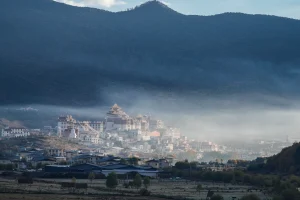
Day 4: Napa Lake East Line, Wild Fun Behind the Tourist Photos
8:50 AM, waiting for the driver in the lobby. Sunlight sat on the flagstones. The lady at the desk gave me a bag of dried yak meat: “The East Line ranch has fresh butter tea; it goes great with this.” The account describes the meat as hard and dried but also says it was simmered all night. Confirm its actual preparation and storage; texture or fat content is not proof of safe preservation.
9:00 AM sharp, the driver honked. His name was Tsering, with dark skin and many wrinkles around his eyes. Confirm which roads are open and permitted; an SUV does not confer permission to drive across wetland or grazing land. I sat in the front, smelling pine—the account attributes it to fresh pine, but this does not establish insect-repellent effectiveness.
The original account describes a rough east-side road. Confirm the actual route and conditions; do not generalize that the whole east side is dirt and the whole west side is asphalt, or rely on a fixed 15-minute transfer. Tsering played the Tibetan song “Road to Heaven.” A yak bone necklace hung from the sun visor—”Passed down from my grandfather for protection.”
9:15 AM, passing Dala Village, Tsering braked: “Look! The Wolfsbane is red.” Large patches of flowers were turning from green to red, like orange and magenta paint spilled on the ground. I photographed them for 10 minutes while Tsering waited patiently and handed me water. The plant identification and twenty-day flowering window need a dated botanical source; colour alone does not identify the species.
11:00 AM, we stopped at “East Lake Road Ranch.” The owner was feeding horses. “Tsering is here!” he shouted, then smiled at me: “Want to ride? My horses are very gentle.” He brought three horses; I picked the dapple-gray one. Before riding, confirm a qualified handler, fitted helmet, suitable horse, permitted route and a pace appropriate to your experience. The handler’s assurance is not a safety guarantee.
The horse swayed as I mounted. The uncle patted its rump: “Let’s go!” For an inexperienced rider, agree a slow, supervised pace rather than beginning with a trot. The air smelled of grass. Looking up, the sky was cloudless, with an eagle occasionally casting a shadow like a flying leaf.
Do not ask a handler to accelerate for photographs. Have photographs taken from a safe stationary position; a driver should not operate a motorcycle and film at the same time. The account recalls pink, white and purple flowers along the route.
12:30 PM, lunch in a tent. The uncle served mutton soup in a copper pot with a layer of white fat and green garlic. “Home-raised sheep, slaughtered this morning.” It was warming. The fresh barley pancakes were perfect for dipping.
Treat Shika Snow Mountain as an optional separate outing, not a required afternoon ascent after riding. Confirm current access, cable-car operation, altitude, weather and return transport. Snow and visibility are not guaranteed; do not ascend with altitude symptoms.
The original text confuses Shika with Thousand Lake Mountain (Qianhu Mountain), which is in the Xiaozhongdian/Tuanjie village area. It is not a walking alternative to Shika’s cable car. [9] Do not budget for a 50-yuan entrance and 140-yuan cable-car ticket and then assume an unrelated trail can replace the ride. A Qianhu Mountain trip needs its own access, transport, equipment and return plan.
The pig encounter cannot be assigned to a verified route from this account. Keep your distance from grazing animals and do not approach or feed them for photographs.
Return to the pickup point agreed for the actual outing; the original 17:00 parking-lot return cannot join two different mountain routes. Tsering gave me more yak meat: “Just bought it, eat on the way.” It was tough but got tastier with every chew, tasting like sunshine.
7:30 PM, Moonlight Square. The bonfire was lit, flames jumping high. Old Tibetans in traditional dress and coral necklaces danced in a circle. I joined in, stepping to the rhythm—left, right, left, right—clumsy as a penguin.
“Young lady, dance harder!” an old woman laughed, grabbing my hand. Her hand was rough but burning warm. More people joined. Spinning around, I felt like I’d been invited into a Tibetan home’s warm hearth.
As we left, an old man gave me some milk dregs: “Keep these for your butter tea.” Walking back, I saw an old father circumambulating the prayer wheel alone, chanting. The air smelled of barley, the lake silver in the moonlight. I realized the East Line’s charm wasn’t in “perfect angles,” but in the red of the flowers, the changing scenery and the warmth of the dancing hands.
(I later learned Tsering picks fresh pine every morning at 5:00 because “it’s most fragrant then”; the square-dance account does not establish a guaranteed daily event or uninterrupted historical tradition. Ask before joining a gathering and take part only if comfortable.)
Day 5: Slow Time in the Ancient Town, Weaving Tibetan Culture into Life
Begin the day with time for breakfast and an unhurried old-town visit. Do not copy the repeated overnight bedroom-fire example. A bowl of butter tea with milk dregs sat nearby. I stirred it with a wooden spoon and took a sip—savory; smoke or a pine-like taste is not a measure of the drink’s quality.
The “Shangri-La Folk Tales” on my nightstand was dog-eared; I’d fallen asleep during the story of King Gesar. Sunlight hit the floor’s Tibetan patterns—red, yellow, blue, like a crumpled rainbow cloth.
For Guishan Park, climb slowly only if feeling well, and rest or turn back if symptoms develop. Being out of breath is not a reason to push on. The account describes the view from the top: the town was like an open Thangka—the golden prayer wheel glittering, grayish roofs layered, and Shika Snow Mountain’s white peak visible.
The large prayer wheel’s copper-plated surface and reliefs can be appreciated from nearby. As noted above, it dates to 2002; the original grandfather story and “centuries of hands” on wood are not evidence of its age. Respect devotional practice without treating three turns as an objective guarantee.
10:00 AM, visited the “Red Army Long March Museum.” Old photos showed soldiers and Tibetans shaking hands, yaks carrying grain. A brass lamp marked “Gift from the Red Army” sat in a case. The documented Red Army arrival in Zhongdian was on 1 May 1936, not in winter. [10] The lamp inscription, sheepskin-coat story and annual butter-tea anecdote need museum labels or interview records; they are not verified history here.
12:00 PM, heading to the North Gate. An Amah’s restaurant was hidden in a lane, red chilies hanging at the door. Inside, she was adding wood to the fire, her silver hair glowing. “Young lady, want it spicy?” she asked.
I ordered pickled vegetable dough knots (15 yuan). She served a large wooden bowl—thick hand-rolled knots in a sour broth with yak meat cubes. She sat opposite me peeling walnuts: “My son taught me this, he says city people like them soft.” I laughed: “Better than my mom’s.” She beamed.
3:00 PM, at the “Tibetan Incense Workshop.” The smell of herbs was thick. An old master was kneading cypress powder. “Try it,” he said, pointing to the table.
Confirm the actual ingredients, lawful sourcing and handling instructions with the workshop; the original cypress, mugwort, musk and saffron list is not a verified recipe. Follow the instructor’s protection and drying instructions before packing the incense. A newly shaped strip is not automatically ready to use, and the bedside insect-repellent claim is unverified.
Walking back, “Tashi Shop” called me over: “Try the new barley sugar!” It was sweet like honey but not cloying. “Made from barley at the foot of the snow mountains,” she said.
7:00 PM, “Ancient Town Bookstore.” An old wooden building with creaky stairs. I ordered a “Barley Latte” (35 yuan). The barista ground the barley and coffee: “Local farm coffee, smells like roasted grain.”
The account mentions reading “Lost Horizon” at the bookstore. A literary association is not proof that Shangri-La is a real-world place named “Blue Moon Valley.”
Leaving, the girl gave me an old book, “Shangri-La Flora,” with a dried Jacaranda flower inside: “My grandfather said to understand the plants is to understand Shangri-La.”
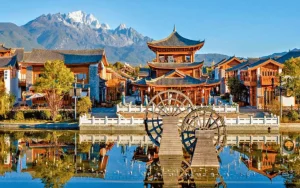
Day 6: Time to Go Home, but the Clouds Stay in My Heart
In the morning, allow time to pack before checkout. Sunrise time depends on the date; 8:55 is not a reliable sunrise appointment. The golden light hit the peaks, then the meadows, and finally my drying Tibetan robe. Use the accommodation’s safe heating arrangements rather than an overnight open fire.
9:00 AM, dragging my luggage down. The lady at the desk was adding to the pot. “Leaving?” she smiled, handing me a cloth bag. The account says she had kept the incense. Confirm that it has completed the workshop’s drying and packing steps. It still smelled of cypress.
Check-out was fast. Arrange luggage storage and collection with the accommodation, then work backwards from the booked departure and boarding cutoff before deciding how long to shop. I headed to the South Gate. At a souvenir shop, the owner was packing barley crisps, golden and sweet-smelling.
“What would you like?” he asked, his wrinkles like Galsang flowers. I pointed to the dried yak meat and barley crisps. “Get the meat with some fat,” he advised, showing me deep brown meat with white marbling. “Sun-dried, very fragrant.” I tried a piece; it was firm and savory.
He added extra barley crisps to my bag: “Freshly pressed, not too sweet.” Do not judge a mushroom’s identity, freshness or storage history by comparing it with barley crisps, or assume that all September matsutake is frozen. Check the supplier, identification, storage and labelling; avoid mixed or unknown species.
Collect stored luggage and leave for the confirmed station early enough to meet check-in or boarding requirements. An 11:00 walk cannot guarantee catching an 11:00 departure. “Amah’s Yak Butter Tea” wafted its scent as I passed. She waved her wine bowl: “One more?” I smiled and shook my head, hurrying for the bus.
The landlady ran out with a paper wrap: “Wait!” She was breathless. “Barley biscuits for the road.” They were still warm. I took a bite—hard but sweet, with the aroma of barley and sesame. “Baked them this morning, sweeter than the ones you had before,” she said.
At the booked departure time, the bus pulled out; the original text’s conflicting 11:00 and 12:00 times should not be used as a timetable. I watched the mountains shrink and the town become a layered Thangka. The lake faded to a watercolor smudge. I touched the biscuits, thinking of the first bowl of tea that warmed my soul.
If continuing by air, confirm the bus destination, airport transfer, baggage collection, flight check-in and connection buffer separately. The account does not establish where its bus-to-plane connection occurred, so it cannot support a same-day connection promise. The account then recalls a flight. A woman nearby said, “It’s so beautiful.” I nodded. Some places you don’t just leave; you take their clouds, wind, and bells with you.
Landing, I scrolled through photos: the gold of Songzanlin, Shudu Lake, the flowers of Napa Lake, the square dance… and finally, the landlady’s smiling face. I already look forward to the next time—to listen to the monks debate, to count the stars at Napa Lake, and to drink three more bowls of butter tea.
(I later learned the landlady woke up early to bake those biscuits because “traveling on an empty stomach is hard”; and the souvenir shop owner was the son of the woman who gave me directions on my first day—”I saw you often and wanted to save a fresh piece for you.”)