



This seven-day itinerary runs from Kunming through Dali and Lijiang to Shangri-La. It is a one-way route, not a completed loop back to Kunming. Plan the Pudacuo visit around your booked onward transport; a train from Lijiang on the following morning belongs to an additional eighth day. The mountain day requires particular care because of the rapid gain in altitude.
1. Must-Read Before You Go: 7-Day Route Packing List (Documents/Clothing/Supplies)
Key Points First: Never Forget These 5 Things!
- Valid travel documents: Carry the original document accepted for each booking, with matching passenger details. Overseas visitors should confirm passport registration and entry procedures with the railway, accommodation and attractions rather than assume every gate accepts a mainland ID-card swipe.
- Sunscreen (SPF50+, PA++++): How strong is Yunnan’s UV radiation? I rode a bike around Erhai Lake for 1 hour, and my face, which had no sunscreen, turned into a “Guan Gong face” (bright red). Reapplying sunscreen is not treatment for an existing sunburn; get out of the sun rather than continue the ride;
- Power bank: For rail travel, choose a clearly labelled unit with rated energy no greater than 100Wh; mAh alone does not establish compliance. Check aviation and airline requirements separately if flying. See the official railway restricted-items catalogue (Chinese).
- Warm layers: Take a wind-resistant outer layer and additional insulation for Shangri-La and Jade Dragon Snow Mountain. Clothing suitable for a sunny afternoon at lower altitude is not a reliable guide to what you will need after dark or on the mountain.
- Sneakers (Non-slip + Lightweight): The flagstone roads in Lijiang Old Town are uneven. I walked 5 km in mesh running shoes and my feet weren’t sore; a friend wore new leather shoes and got blisters all over their heels.
“Seemingly Useless but Life-Saving” Items:
- Discount eligibility documents: Check each attraction’s current age, residence and document requirements before relying on a concession. A discounted admission ticket does not necessarily cover shuttle buses or cableways. Do not assume all visitors over 60 enter Songzanlin Monastery free.
- Some cash in small denominations: Keep a backup payment method for temporary network or phone problems, and ask what payment methods a shop accepts. Shaxi and Yubeng are not stops on this seven-day route, so their payment arrangements should not determine this itinerary.
- Disposable Raincoat (Don’t buy the thin plastic ones, choose thickened ones): In September, Yunnan occasionally has sun showers. While cycling in Dali, it suddenly rained. The plastic raincoat I bought by the road broke in 10 minutes. Later, I prepared a thicker one and used it to keep my clothing drier. Stop outdoor activities and seek safe shelter in thunderstorms or strong winds;
- Portable Laundry Detergent + Folding Hangers: Ask whether your accommodation has laundry facilities and whether they are shared. I brought a small bottle of detergent, soaked my white T-shirt for 10 minutes at night, and hand-washed it. It dried overnight, saving 50 yuan compared to the dry cleaners;
Final Chat on “Common Pitfalls”:
- Don’t bring too many clothes: For a 7-day trip, you actually won’t wear many. Last year I packed 5 T-shirts but only wore 2—Yunnan is cool in the morning and evening but sunny during the day; short sleeves and a light jacket may work at lower elevations, but pack additional warm layers for Jade Dragon Snow Mountain and Shangri-La;
- Check sunscreen packaging and ingredients: Rail security does not impose a blanket 100ml limit on all liquids. Under the railway catalogue, non-pressurised toiletries containing flammable ingredients are limited to one of each type in containers no larger than 100ml; self-spraying pressure containers are limited to 150ml each, one of each type and 600ml in total. Check the product against the railway rules above; buses and flights require separate checks.
- Don’t bring glass bottle skincare: Pack glass containers securely to prevent breakage. My friend’s essence shattered in their suitcase, and the sticky mess almost ruined all the clothes;
- Don’t bring too much jewelry: Keep valuables secure while travelling. I wore a gold necklace in the old town, and an auntie stopped me saying it “attracts thieves.” I felt much safer after putting it in a jewelry box.
When I was organizing the list last year, my friend laughed at me for being “too dramatic.” But when we arrived in Kunming—he forgot his ID and ran to the airport 3 times for a temporary one; in Shangri-La—he wore a ripped hoodie and crouched in the hotel lobby waiting for an outdoor delivery of a jacket; in Dali—his phone died, he couldn’t find a power bank, and all the photos of Erhai Lake were “wasted shots”…

2. Day 1: Arrive in Kunming, Green Lake + Dianchi + Nanping Street Eat-and-Stroll Route (Check Transport for Your Travel Date)
Airport to Downtown: Choose Transport for Your Hotel Location
On arrival at Changshui Airport, compare the airport metro and official airport-bus services using your hotel’s actual location. Check the service’s final stop and the connection from there to your accommodation; do not rely on the former claim of a 13-yuan Line 2 bus direct to Nanping Street. Drop off luggage before beginning the city walk.
Before boarding: Confirm the official ticket channel, destination stop and luggage arrangement with airport staff. A large suitcase may require the luggage compartment, not space beside your seat.
Noon: Zhuanxin Farmers Market—The Local “Gourmet Mystery Box”
Head from the Nanping Street area to the actual entrance of Zhuanxin Farmers Market for lunch. The former “Dianchi College Station” directions should not be used as a navigation route. If arrival, luggage storage or lunch takes longer, choose Green Lake or Dianchi for the afternoon rather than rush to fit both. The following food descriptions are taste ideas from the original account, not verified current stall prices.
- Cold Chicken Rice Noodles (Recommended: “Zhuanxin Cold Chicken Rice Noodles & Xidoufen”): 10 yuan a bowl. The noodles are thin and round, and the broth is a sour soup simmered for 8 hours (you can taste lemongrass and millet chili). The chicken is shredded into fine, tender strips. I added a spoonful of chili oil—the sour and spicy kick was exhilarating. With the pickled vegetables in the bowl, a mouthful made me sweat—this is Kunming’s summer (though it’s a bit cool in September, this hot bite felt amazing).
- Posu Steamed Bun (Recommended: “Zhuanxin Traditional Posu Bun”): 5 yuan each, available in sweet and savory flavors. The sweet one is filled with rose sugar and oozes honey when bitten; the savory one is fresh meat + mushroom, and the juice pops out with a “hiss” when you bite. I bought one of each. My colleague ate and said, “This has much more soul than the buns I eat in Shanghai.”
- Papaya Water (Stall at the entrance of the market): 3 yuan a cup in the original account; ask the stall about the actual ingredients. It’s icy and refreshing with added brown sugar and sesame. After getting tired from walking the market, a cup of this is much better than milk tea.
Avoidance Tip: Zhuanxin Market is super crowded at noon (especially 12:00-13:30). Don’t pick the most crowded stalls; walk two shops further into the alleys, and compare their menus, hygiene and queue lengths. Buy Posu buns while they are hot; once cold, the skin gets hard and affects the texture.
Afternoon: Green Lake Park—Old Kunming’s “Slow Life Museum”
If you choose Green Lake after lunch, allow time for the transfer from Zhuanxin Market; the taxi fare depends on the actual trip. Visitor numbers vary, so do not rely on a guaranteed quiet 2pm arrival. My favorite spot is the bamboo chair area next to “Ruan Yuan Ancestral Hall” (free). The bamboo chairs are dark brown, slightly bumpy but very sturdy. There’s a small table nearby where you can buy Rose Pu-erh (15 yuan a cup) or roasted tofu (5 yuan/portion).
In September, the lotuses in Green Lake haven’t finished blooming (withered lotuses have more character). The edges of the lotus leaves are curled, and you can occasionally see small fish darting underneath. The ginkgo trees by the lake are half yellow, and leaves fall into the lake like little drifting boats. I sat in a bamboo chair drinking Rose Pu-erh (strong tea flavor with the sweet scent of roses), watching elderly men tease thrushes with grass ropes and listening to aunties chatting in Kunming dialect (“The squash at the market today was only 2 yuan a catty”). Suddenly, I understood what “the years are quiet and good” means.
Evening: Dianchi Haigeng Dam—The Wind Carries the Scent of Autumn
For Haigeng Dam, plan a separate cross-city transfer to the dam entrance, not to Dianchi International Convention and Exhibition Center as though the dam were a guaranteed 20-minute walk away. If time is short, stay around Green Lake and Nanping Street and leave Dianchi for another visit.
I walked along the plank road towards the Western Hills (about 2 km in total). The lake is very wide, and you can see the Western Hills opposite looking like a reclining camel (on clear days, you can see “Longmen”). By the plank road, there are vendors selling roasted potatoes (5 yuan each, sprinkled with chili powder) and roasted erkuai (6 yuan each, filled with pickled vegetables and peanuts). I couldn’t resist buying two roasted potatoes and took photos of the lake while eating—the phone cannot capture the blue seen by the naked eye; that feeling of “the blue of the sky seeping into the lake” can only be experienced by standing there in person.
Little Secret: If you want to take a “person on the lake” blockbuster photo, it’s recommended to wear light-colored clothes (white dress, light blue shirt). Late-afternoon light may suit photographs, but conditions depend on the season and weather. There are several observation decks on the plank road; climbing up gives a wider view of the lake, but the steps are a bit steep, so ladies in high heels should be careful.
Night: Nanping Street—Old Kunming’s “Living Room of Fireworks”
For the return from Haigeng Dam to Nanping Street, confirm the actual pickup point, transfers and last available service. Do not use the former “Nanping Street Station”/Line 1 towards University City instructions. Allow time for the return trip before choosing dinner.
For dinner, I chose “Jianxinyuan Crossing-the-Bridge Rice Noodles” (Nanping Street store). 38 yuan for a portion, the small pot style (enough for 2 people). The noodles are served with three dishes: “raw meat,” “cooked meat,” and “side dishes.” Ask the server to ensure the meat is thoroughly cooked before eating and keep utensils used for raw ingredients separate from ready-to-eat food; a brief dip in broth is not a sufficient safety check. See WHO’s Five Keys to Safer Food. In the original meal account, the broth was milky white and tasted of bone marrow freshness. The noodles were slippery and satisfying. You must add the side dish of cold mint; biting it is cool and refreshing, washing away any greasiness.
After dinner, I strolled along Nanping Street and saw Flower Cakes for sale (Jiahua Bakery, 1.5 yuan each). I bought a few rose-filled ones to keep in my bag as snacks for the next day; they were very fragrant.
Accommodation: Near Nanping Street—Convenient Enough for “Late-Stage Laziness”
I stayed at “Home Inn Selected (Nanping Street)” (200 yuan/night), a 2-minute walk to Nanping Street and 5 minutes to the metro station. The room wasn’t large but very clean. The bed was soft (those used to hard beds might find it too soft), and the air conditioning was inverter-type (set to 26℃ at night was just right). The bathroom had a water heater, and the shower water was quite hot (Yunnan nights in September are a bit cool, so a hot bath is very important).
Power-bank rental availability and charges must be confirmed with the hotel; do not rely on the original 2-yuan/hour account as a current service. Check which nearby food shops are actually open at night instead of relying on an unverified 24-hour convenience-store listing. The original account mentions audible footsteps; light sleepers should ask about room position and noise rather than treat this as a quiet-room recommendation.
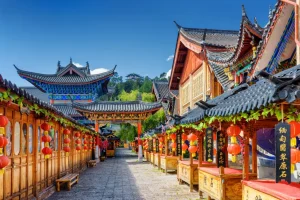
3. Day 2: Kunming → Dali, Rail Transfer + Erhai Ecological Corridor Cycling (Longkan Wharf → Caicun Section)
In the Morning: From Kunming to Dali, a “Western Yunnan Sunbath” on the Train
Check whether your train leaves from Kunming Station or Kunming South Station; they are not interchangeable. Work backwards from the booked departure, allowing time for the trip from your hotel, security and boarding. Getting up at 7:00 and allowing 40 minutes on the metro cannot work for a 7:30 departure. Do not follow the old Line 6/Line 2 station sequence.
Select a Kunming–Dali service using the actual departure station, date and class on 12306. The former D8672/7:30/52-yuan combination is not a verified booking option. After arrival, deal with luggage before heading to the lake.
At Dali Station, use an official taxi or a booked ride-hailing service and verify the vehicle, destination and fare arrangement. A person holding a sign is not necessarily your platform-booked driver. Head to your confirmed hotel or the Longkan entrance; follow shoreline access signs rather than use a claim about “the tide being out” to decide where it is safe to walk.
After Arrival: Longkan Wharf—The Unexpected Warmth of Luggage Storage
After reaching Longkan Wharf, I stored my luggage at the “Yundu Erhai Resort Hotel” next to the wharf (confirm non-guest access, charges and collection hours with the hotel before relying on storage). The receptionist was a Bai auntie wearing silver jewelry. Seeing me covered in sweat, she turned and took a cup of tamarind juice from the fridge: “Little sister, just picked from the tree, very sour and refreshing!” Tamarind juice is a Dali specialty. I later bought it in the old town for 10 yuan a bottle; the free one here was the truly authentic taste.
In the Afternoon: Erhai Ecological Corridor Cycling—”The Breath of Erhai” in the Wind
Before renting a bicycle near Longkan, confirm the rent, deposit, permitted route and return location. Do not leave your essential travel document with an unknown stall as security. Check both brakes, tyres, chain and saddle; if anything is loose or faulty, replace the bicycle before setting off. For the Longkan Wharf–Caicun outing, follow the corridor signs and agree on a turnaround point rather than rely on the old southbound instruction and inconsistent 8km/10km distances.
On the first part of the ride, stay on the open corridor. Do not confuse Longkan with a different village’s S-curve photo spot. I crouched on the embankment and waited for half an hour—finally, a vegetable transport boat slowly passed by, and the water ripples from the stern blew the reeds swaying. I quickly pressed the shutter. This photo of “boat + reeds + wind” was later set as my mom’s phone wallpaper.
By the time I cycled to Caicun Wetland Park, the wind had suddenly picked up (Dali’s wind in September starts to get chilly). I saw a patch of reeds rustling in the wind, with egrets flapping their wings, tips touching the water, landing on another cluster of reeds. There was a small pavilion nearby selling freshly roasted rushan (8 yuan/skewer, sprinkled with crushed peanuts). I bought one to eat while watching; the sweetness of the rushan mixed with the scent of reeds was more special than all the desserts I’d had before.
Tired from cycling, I rested at “Caicun Wharf Coffee House” (Iced Americano 18 yuan). The owner was a bearded man. Seeing me staring at Erhai in a daze, he started a conversation: “Little sister, look at that cloud, doesn’t it look like a big fat seagull?” I looked up and there really was a cloud curled into the shape of a seagull. He said this is “Erhai’s clouds playing tricks.” This is a place to allow a little time for a rest. The terrace of the coffee house has a panoramic view of Erhai. I took a photo of “coffee cup + Erhai” with the caption “The wind carries the scent of the sea,” and it got over a hundred likes.
In the Evening: Dali Ancient Town—The Smoke and Fire Code to Avoid Crowds
I cycled back to Longkan Wharf from Caicun (retracing the route, with time for rests and bike return), returned the bike, and took a ride-hail back to the ancient town (20 yuan). The guesthouse I stayed in was near Renmin Road, called “Slow House · Gewu” (280 yuan/night). The owner was a guy with glasses. When he opened the door, he handed me a skewer of roasted erkuai (5 yuan/piece, filled with pickled vegetables and minced meat): “Little sister, fresh out of the oven, want a taste?” The erkuai was crispy outside and soft inside, and the acidity of the pickles perfectly cut the greasiness. I later bought it two more times and even packed a bag of raw erkuai to take home.
The terrace of the guesthouse overlooks the night view of the ancient town. I sat there in a bamboo chair, listening to the sound of music from the nearby streets (check any performance’s actual time and admission arrangements locally), watching the lanterns light up one by one. Suddenly, I understood what “the years are quiet and good” means.
For dinner, I deliberately avoided the main street and went to a small eatery in Honglongjing Alley to eat “A-Niang Xidoufen” (12 yuan/bowl). Xidoufen is made from ground peas, simmered until thick, with a layer of rice oil on top, sprinkled with golden fried peanuts and bright green cilantro. I paired it with a freshly fried youtiao (3 yuan/stick), soaked the youtiao in the xidoufen, let it soak up the broth, and took a bite—the aroma of peas, oil, and cilantro mixed together. I drank three bowls in a row and was so full I had to rub my stomach.
If you have more time in Dali, compare the west-shore and Xizhou sections of the Dali slow-travel guide. That is a longer alternative, not an instruction to add Xizhou and Shaxi to today’s Longkan–Caicun ride.
Avoidance: The “Low Price Trap” of Renting Bikes in the Ancient Town
My colleague Xiao Yun insisted on renting a “20 yuan/day” bicycle in the ancient town that day, saying “I’m only riding for two laps anyway.” As a result, halfway through her ride, the tire went “pfft” and flattened—the tyre was flat, and it cost 30 yuan to patch it. The seat was also loose; stop riding and contact the rental operator when faults appear. A low price alone does not establish whether a rental is safe; inspect the actual bicycle. You must choose a formal rental point (check the operator’s identity and rental agreement), sign a simple rental agreement, and check the brakes and tires before paying.
Summary: On this day in Dali, if I wasn’t cycling, I was waiting for the wind, watching clouds, or drinking coffee—the meaning of travel is probably turning these “useless” moments into the most precious fragments of memory. Like the tamarind juice at Longkan Wharf, the egrets in the Caicun reeds, the street music heard from the guesthouse terrace… these details help me remember Dali better than any “must-visit attraction.”
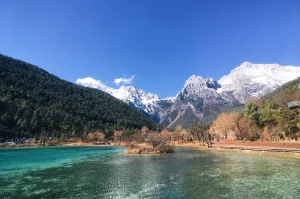
4. Day 3: In-Depth Tour of Dali Ancient Town (Wuhua Tower → Renmin Road → Honglongjing), Night Market Food List
1. Wuhua Tower—”Ancient Town Time” Hidden in Flying Eaves
I specifically timed my arrival at the South Gate (Fuxing Road) for 9 am. At this time, the morning mist had just cleared, and the breakfast stalls under the city gate tower were setting up large aluminum pots to cook xidoufen. The auntie selling xidoufen saw me standing there and wiped her hands on her apron: “Little sister, want a hot bowl? Add a spoonful of chili oil to drive away the morning chill.” I held the bowl and drank it under the city gate archway; the sweet aroma of xidoufen mixed with the scent of fried rushan. Suddenly, I knew exactly how to write the words “smoke and fire” (liveliness).
After breakfast near the South Gate, walk separately to the Wuhua Tower area; the South Gate tower and Wuhua Tower are different landmarks. Check current tower access and fees before climbing, and use the official display for its history rather than the unverified “600 years old” story in the original account.
Reaching the top, the view suddenly opened up—layers of blue-gray tiled roofs stretched towards the horizon. The morning light shone on the flying eaves, making the gilded plaque of “Wuhua Tower” glow. I leaned against the railing and took a photo (later I posted it on social media, and a girl from Xi’an commented: “How is this tower even more beautiful than the Bell Tower near my house?”). Photography reminder: Judge the light on the day rather than rely on a fixed 9–10am window; stay within permitted viewing areas.
2. Renmin Road—”Blue Dye Magic” in Tie-Dye Workshops
From the Wuhua Tower area, continue to Renmin Road using the actual walking route. The “Lanxu” tie-dye workshop on the left wafted the scent of plants. I leaned in to look; the proprietress was twisting white cotton cloth into a braid, tying it tight with rubber bands, and soaking it in an indigo dye vat. “The blue in this vat was made by soaking woad for 20 days.” Seeing me staring at the vat, she laughed and fished out a piece of freshly dyed cloth. “Smell it, does it have a grassy scent?” I put the cloth to my nose—truly! It was that wild grass scent on a hillside right after a rain.
A tie-dye square scarf is 30 yuan. I bought one with a butterfly pattern (the proprietress said this is a “lucky pattern of Dali”). The postcards at “Momoko’s Sky Castle” next door were even better—10 yuan a set, each printed with various corners of the ancient town (I bought a “Honglongjing + Wuhua Tower” set and later mailed it to my mom. She said on the phone: “This photo is clearer than the videos you took!”). There was a queue for the postmark, so I squatted nearby to watch the owner stamp. His stamp was “Dali Ancient Town · Years.” The red ink on the postcard looked like a flower blooming on paper.
3. Honglongjing—”Slow Time” in the Sound of Running Water
From the Renmin Road area, I continued to Honglongjing, checking the lane signs along the way. The flagstone road was polished bright by footsteps. On both sides were old Bai houses with strings of red chili and golden corn hanging under the eaves. The best part was a mountain spring in the middle of the alley, flowing through a stone channel into a small pond where red carp were kept. I squatted by the pond for half an hour until the fish shadows made my eyes hazy.
There was a “Tingquan Tea House” in the alley. The owner was a grandfather who played the Sanxian (three-stringed lute). I ordered a cup of roasted tea (15 yuan). While roasting the tea, he said to me: “This well is called Honglongjing (Red Dragon Well). Legend has it a red dragon once fell in here and dyed the water red. The dragon flew away, but the water stayed red.” The tea was roasted to a toasted fragrance; it was a bit bitter in the mouth, but the aftertaste was as sweet as eating a wild fruit. I held the cup and listened to the grandfather play the Sanxian, the music mixing with the sound of running water. Suddenly, I didn’t want to leave.
4. Three Pagodas Reflection Park—A “Photography Lesson” in Waiting for Light
From Honglongjing, I took a taxi to the Three Pagodas (10 yuan). Check the current ticket type and open areas for the Three Pagodas and Reflection Park separately. It was only 2 pm when I arrived; the light on the reflection pool was too harsh, and the pagodas looked like sliced cakes. I heard from the park keeper that the light is softest at 4 pm, so I found a stone to sit and wait.
While waiting, I observed the tourists: a young couple with a selfie stick running around the pool trying to get a “Three Pagodas + two people” shot; an old grandfather with a camera taking a photo every 5 minutes, saying he wanted to pick the one with the “fewest clouds”; and a girl in ethnic dress posing while her companion took photos, her silver jewelry flashing in the sun.
Finally, 4 pm! The sun hid behind the clouds, the water surface rippled gently, and the shadows of the three pagodas fell diagonally into the water like a light ink painting. I squatted by the pool and took over 20 photos, eventually choosing one where “the left pagoda tip touches a cloud and the right pagoda reflection is just broken by a falling leaf”—later, when I printed it, a friend said it had the “feeling of an ancient poem.”
5. Ancient Town Night Market—”Gourmet Guide” to Avoid Pitfalls
After visiting the Three Pagodas, I returned to the ancient town. The night market (Foreigner’s Street) was already lively. Under the streetlights, plastic tables were set up. Aunties selling roasted rushan flipped them with iron spatulas; the rushan sizzled on the charcoal fire. Sprinkled with rose sugar, it smelled so good it made my mouth water.
The following table preserves food suggestions and prices quoted in the original account; check the stalls and their current menus before ordering:
| Food | Recommended Stall | Price | Hidden Way to Eat |
|---|---|---|---|
| Roasted Rushan | “A-Yue” in the middle of Foreigner’s St | 10 yuan/skewer | Add a spoonful of hot soy milk for double sweetness |
| Cold Chicken Rice Noodles | “Yang’s Cold Chicken Rice Noodles” | 15 yuan/bowl | Add a spoon of chili oil to the soup for extra freshness |
| Baojiang Tofu | “Stone Plate Roast” | 20 yuan/portion | Choose a drink to taste; avoid alcohol while travelling or climbing at high altitude |
Wild mushroom hotpot: cooking cannot guarantee safety. Do not rely on boiling or a fixed cooking time to detoxify wild mushrooms: some poisonous species retain toxic substances after cooking. Do not forage mushrooms for food. Buy only from reputable, reliable suppliers, avoiding unknown mixed species, growing material and spoiled mushrooms. Edible mushrooms still require washing and thorough cooking, but this does not make poisonous mushrooms edible. If mushroom poisoning is suspected, seek immediate medical attention and bring any available mushroom remnants for identification. See the Hong Kong Centre for Health Protection’s mushroom warning.

5. Day 4: Dali → Lijiang, Intercity Transfer + Lijiang Old Town (Big Water Wheel → Sifang Street → Mu Mansion)
Morning: Dali to Lijiang from the Station on Your Ticket
Book the Dali–Lijiang service first and navigate to the exact station name and address on the ticket. Do not treat “Xiaguan Bus Station” and “Dali Bus North Station” as interchangeable. Allow travel time from the ancient town, security and boarding, then sit down and fasten the seat belt before departure.
Put large suitcases in the appropriate luggage compartment as directed by the driver and keep valuables with you. Do not force a 28-inch suitcase into an overhead rack.
Enjoy the scenery from your seat. The booked service determines the actual road and rest stops; a scheduled coach should not be treated as a sightseeing charter that detours to Wase or stops on demand for photographs.
On arrival in Lijiang, confirm the drop-off point before taking an official taxi or platform-booked vehicle to an accessible entrance outside the Old Town. Ask your accommodation which entrance is easiest with luggage; do not identify a ride-hailing driver solely by a sign or clothing.
After Arrival: First Encounter with Lijiang Old Town, “Dongba Code” by the Big Water Wheel
Store luggage at your accommodation or a confirmed storage point before walking to the Big Water Wheel. Ask about charges and collection hours first. Uneven flagstones make wheeling a large suitcase difficult, and arriving outside the Old Town is not the same as having checked into your room.
The Big Water Wheel is the “landmark center” of the Old Town. A wooden sign next to it reads “World Cultural Heritage Lijiang Old Town.” While I was photographing the wheel, the door of the “Naxi Culture Exhibition Hall” opened, and an auntie in Naxi dress peeked out: “Little sister, want to come in and look? It’s free!” The exhibition hall isn’t large, but it hides treasures—the Dongba script for “I love you” written on animal bones, and “Auspicious” represented by symbols of stars and clouds. I followed the auntie to learn how to write a few, and she praised me: “You have good hand strength, your writing has soul!”
Afternoon: Sifang Street → Mu Mansion, Walking in the Footsteps of Ancients
Walk 5 minutes south from the Big Water Wheel to Sifang Street. This is the “liveliest old town center” I’ve ever seen—the ground is paved with five-colored stones, polished bright; focus here on the square and streets rather than confuse this stop with the Big Water Wheel near the entrance.
At 3 pm, a group of Naxi elders were dancing “A-Li-Li” (traditional Naxi dance) in the square. The leading grandmother wore an indigo apron. Seeing me watching, she pulled me in: “Little sister, come! Lift your foot like this—” I was clumsy, and the elders laughed together. The grandmother said, “We Naxi women should dance like camellias, blooming passionately!” Check local activity times; a particular dance is not guaranteed every afternoon.
Walk to the actual entrance of Mu Mansion and check admission and guide fees separately. If you also want the Wangu Tower viewpoint, allow for its separate approach and uphill walking; do not assume the same ticket covers both. Read formal exhibits or reliable historical material rather than rely on the original dialogue about Mu Zeng, Xu Xiake and a “Snow Mountain Inkstone”.
If you separately visit Wangu Tower and it is open for climbing, take the permitted stairs slowly in suitable walking shoes. Allow rest breaks rather than push through fatigue for a viewpoint: the blue-gray tiled roofs spread out like waves, Jade Dragon Snow Mountain loomed in the distance, and the scent of cured pork ribs wafted in the wind—this is probably the most concrete form of “the years are quiet and good.”
Later, 6 pm: 88 Snack Shop, “Naxi Warmth” in Cured Pork Rib Hotpot
After the afternoon sightseeing, I headed towards the Wuyi Street area for dinner and smelled a rich meat aroma from afar. Turning into an alley, I saw the lightbox for “88 Snack Shop” (the owner said “88” is for the good luck of “making a fortune”). A large iron pot was set up at the door, with cured pork ribs bubbling in the soup.
I ordered a small pot (88 yuan). The owner sliced potatoes while saying, “It’s freshest with arrowhead; I’ll add a handful of kidney beans for you.” The soup was made from pig trotters and cured pork ribs, simmered for at least 8 hours, with a layer of golden oil on top. One sip was so delicious it made my eyebrows jump. The potatoes were stewed soft and full of broth; the arrowhead had an earthy scent and a crisp bite. I drank three bowls of soup in a row. Seeing how much I enjoyed it, the owner gave me a plate of cold mint: “It cuts the grease; we Naxi people eat cured meat with this.”
Finally, 8 pm: Tinghuatang Guesthouse, a “Lijiang Dream” in the Sound of Running Water
I stayed at “Tinghuatang” (near Sifang Street, 320 yuan/night). The guesthouse is a renovated old house with creaky wooden doors. Opening them reveals a small courtyard filled with hydrangeas, bougainvillea, and an old pomegranate tree (the owner said “this tree is 100 years old, and its fruit is sweet to the core”).
My room was on the second floor, with a window facing the courtyard and a bed covered in blue printed cloth (smelling of sunshine). Lying in bed at night, I heard the sound of running water downstairs (the guesthouse diverted Yuhe water into the courtyard). In the distance, there was Naxi ancient music. Waking up in the middle of the night, I saw the moon rising over the eaves, shining on the stone bench in the courtyard. I remembered the Mu Mansion guide’s words: “Lijiang’s days are water flowing, clouds floating, and people being happy.”

6. Day 5: Lijiang Jade Dragon Snow Mountain One-Day Tour (Glacier Park Cableway + Blue Moon Valley Walking Route)
Leave for Your Reservation: Lijiang Old Town → Ganhaizi, Preparing for the Mountain
Work backwards from your cableway reservation, allowing travel from the Old Town, security, scenic-area transfers and queues. Do not budget on a guaranteed 20-minute, 30-yuan taxi ride. Bring warm layers and safe drinking water. Speak to a doctor or travel clinic before this rapid ascent if you have had altitude sickness or have relevant health concerns.
At Ganhaizi, allow time to wait for the booked service. Carry suitable snacks and drinking water rather than depend on a particular stall opening early. Food can provide energy and warm clothing can help with cold, but neither treats altitude sickness or replaces medical assessment, necessary oxygen or descent.
Use the official “Lijiang Tourism Group” booking channel to check identity registration, current ticket release arrangements and your entry slot. Do not rely on the old “18:00 the day before” instruction or a special “window-seat ticket”. Check weather and suspension notices before leaving. A September 2026 report quoting the cableway operator (Chinese) describes timed real-name reservations and the separate transfer arrangements.
Cableway Ascent: Distinguish the 4506m Upper Station from the 4680m Viewpoint
If you develop a headache, nausea, unusual exhaustion or feel unwell at altitude, tell your companions and stop ascending. If symptoms worsen, descend; breathlessness at rest, confusion or difficulty walking require immediate medical help and descent as soon as possible. Do not label symptoms “normal” or continue just because a few breaths of oxygen temporarily feel better. See NHS altitude-sickness guidance.
The Glacier Park cableway ends at 4506m, not directly at the 4680m observation platform. Decide whether to continue on the boardwalk according to the open route and your condition; reaching 4680m is not a compulsory goal.
Photography: Stay on open boardwalks and designated viewing platforms. Do not climb protruding rocks or cross railings for a photograph. If you or a companion feels unwell, stop sightseeing and seek help rather than use an oxygen-can photo as a substitute for care.
After the Upper Station: Glacier Park Boardwalk, Footing and Fitness
After getting off the cableway, I walked along the wooden plank road towards the glacier (only the sections open that day, turning back if unwell or tired). Ice can make steps and paths slippery; follow staff instructions and do not leave the walkway for the rocks.
I walked very slowly, looking closely at the glacier traces—some ice had melted, revealing dark brown rocks. In the rock crevices grew clusters of low alpine rhododendrons (they were actually blooming in September!). I met an old grandfather carrying a camera; he was photographing the glacier: “Little sister, look at this ice, it has a history of thousands of years!” I leaned in to look; the ice surface glowed with a faint blue light, truly looking like a crumpled gemstone.
Put on appropriate warm layers before getting cold. Shorten the visit and ask for help if you feel cold, unwell or exhausted; do not press on for photographs or rely on finding a hot-food stall at the end of the boardwalk.
After Descending: Blue Moon Valley and Its Lakeside Boardwalk
After Glacier Park, take the cableway down before following the scenic-area transfer signs to Blue Moon Valley. A valley electric cart is not a direct descent from the high-altitude boardwalk. At the valley, choose from the open walking route and any available transport according to your mobility; do not treat a 50-yuan cart ticket as compulsory for everyone.
I walked around the plank road (about 2 km) and sat by “Jade Liquid Lake”—the water was so clear you could see the stones at the bottom. When the wind blew, the ripples broke the blue sky into pieces. There was a small pavilion nearby selling freshly boiled corn (10 yuan/ear). I bought one and ate while watching the lake. The corn was so sweet it could make your throat itch. I suddenly realized: things at the foot of the snow mountain, even corn, have a “pure” sweetness.
Food and drinking water: Bring portable food and safe drinking water and take rubbish away. Do not drink lake water or dip food into it: clear-looking water can contain harmful microorganisms. See CDC guidance on water safety while travelling.
Afternoon: Return from Blue Moon Valley to the Old Town, “Smoke and Fire” at the Foot of the Mountain
After Blue Moon Valley, follow the return transfer to the visitor hub. The cableway descent has already taken place before the valley visit; there is no need to return uphill for another descent.
Arrange a legitimate return vehicle to the Old Town; time and cost depend on the actual pickup point and traffic. Leave room for a meal and a quiet evening after the mountain visit.
6 pm: A-Po Cured Pork Ribs, a “Hot Meal” After the Mountain
In the evening, I went to “A-Po Cured Pork Ribs” (Wuyi Street store) and ordered a small pot (98 yuan, more meat than shop 88). As soon as it arrived, the aroma of the ribs hit my nose. The ribs were stewed soft and tender; the potatoes had soaked up the broth and were full of meat flavor.
I paired it with a bottle of “Yunnan Spring Water” (2 yuan/bottle in the original account). One sip was cool and perfectly cut the grease. The elderly couple at the next table chatted: “These cured ribs must be paired with snow mountain water to taste right!” I suddenly understood the meaning of travel: blowing in the wind on a snow mountain, drinking soup in an old town, and then connecting these “unrelated” things into a “complete story.”

7. Day 6: Lijiang → Shangri-La, Intercity Transfer + Songzanlin Monastery + Dukezong Ancient Town (Allow Time to Acclimatise)
Morning: Lijiang → Shangri-La, an “Altitude Climbing Log” on the Bus
Confirm the Lijiang–Shangri-La station and service on your booked ticket and allow time to reach it, pass security and board. Do not rely on “only three buses daily” or arrive ten minutes before departure. Compare any rail services available on your date, allowing separately for transport to and from the railway stations. On arrival at altitude, rest and avoid rushing up temple steps.
The road journey offers changing mountain scenery, but the actual road and rest stops depend on the service. Do not assume a scheduled bus includes photo stops at the Jinsha River bend or a tea-selling detour.
After arrival in Shangri-La, confirm your actual station and onward transfer to accommodation or Songzanlin Monastery. Use an official taxi or verified platform booking, not an unverified person holding a sign. If the journey is delayed or you feel unwell, shorten photography and Old Town activities rather than hurry to meet the original clock times.
After Arrival: Around Songzanlin Monastery, a “Little Potala Palace” in Tibetan Photos
The original account mentions the “Tashi Delek Photography Studio” (Tibetan clothing rental 50 yuan/set, including hat and scarf; the owner was a Tibetan auntie wearing coral necklaces). I changed into a red Tibetan outfit (Key Point: Choose clothing for the weather, warmth and ease of movement; a fabric name alone does not establish how warm a garment is.). The auntie braided my hair (6 braids with 3 silver hairpins), saying while braiding: “We Tibetan girls only braid this many for weddings; it’s good for you to be a ‘fake bride’ for a day!”
The photos were taken at the “Observation Deck” outside the temple (free). The photographer was a young man (named Tashi, 200 yuan/hour, includes 10 edited photos). He had me stand by the “Songzanlin Monastery” stone tablet with the golden-roofed main hall in the background (Consider glare, shade and local etiquette; midday light can be harsh, so there is no need to rush for a fixed photography window). I posed with “hands together.” Tashi suddenly shouted: “Look up! Look at that cloud in the distance—doesn’t it look like a yak?” I looked up and there was a cloud in the shape of a yak. This photo of “person + cloud + temple” was later posted by my dad saying “my daughter took wedding photos in Tibet” (Shangri-La is in Yunnan; Tibetan communities in different regions should not be treated as identical).
After Photography: Songzanlin Monastery, “Reading” a Temple with a Guide
Before entering Songzanlin Monastery, check admission, shuttle and guiding charges separately. Follow the site’s photography and conduct signs, and do not touch murals or statues. Use formal interpretation for the monastery’s history rather than the original unverified dialogue about the Fifth Dalai Lama and roof materials.
Take the temple steps slowly and rest when needed; stop and seek help if unwell. Read the displayed interpretation or listen to an authorised guide for religious meaning, and follow local instructions on thresholds and photography. Do not treat a quoted step count or “one turn is one cycle of life” as a universal religious rule.
Later: Dukezong Ancient Town, “Ten Thousand Hearts as One” at the Prayer Wheel
From Songzanlin Monastery, I took a taxi to Dukezong Ancient Town (check the actual pickup point, fare and traffic). The driver said: “This town used to be a caravan station; now it’s ‘Moonlight City,’ and there’s a bonfire party at night.” When I arrived, many people had already gathered at “Guishan Park” at the town gate—everyone was waiting for the prayer wheel.
A large prayer wheel stands at the top of Guishan Park. I looked up; the Six-Syllable Mantra was carved all over the wheel. Observe and participate according to the on-site signs (Key Point: Follow local religious etiquette and staff instructions. Do not treat fixed turn counts as universal rules or push the wheel if you feel unwell.). I asked 3 strangers for help (a young couple and an auntie with a child). We pushed together—it was slow at first, then smoother. The wind carried our laughter far away. At the moment we finished, the auntie said: “This feels like giving your wishes to the snow mountain.”
7 pm: Yak Beef Hotpot, the “Warmth” of a Tibetan Home Visit
After turning the wheel, I went to a “Tibetan Home Visit” for yak beef hotpot (80 yuan per person; the owner was an uncle wearing silver bracelets who hummed “Lucky Three Treasures” while cooking). As soon as it arrived, the aroma hit my nose—the yak beef was stewed soft and tender; the soup had angelica and goji berries, and one sip warmed me from my stomach to the top of my head.
I paired it with a plate of “Highland Barley Pancakes” (5 yuan each, so crispy you can hear the sound). I dipped them in the hotpot soup (don’t copy me! but it was truly delicious). Ask the restaurant about sourcing and prices; do not treat a claim that all yak beef comes from animals eating cordyceps and drinking snow water as a quality guarantee. The uncle secretly told me: “When ordering hotpot, ask the owner to add a spoonful of yak butter; the soup will be more fragrant—but don’t add too much, it’ll be too rich.” (I added a spoonful later, and indeed, the soup had a milky scent; it was so good I wanted to drink the whole pot).
Evening: Bonfire Party, If Scheduled, a “Warm Embrace” from Strangers
After the hotpot, I went to the bonfire party (confirm whether an event is running, its location, timing and admission arrangements). The stage was made of wood, surrounded by hundreds of tourists and locals. The host was a girl in Tibetan dress who could speak Mandarin and Tibetan. She shouted: “Everyone hold hands and form a circle!” I hesitated, then held the hand of the auntie next to me (she wore a Tibetan sweater made of colorful yarn) and joined the crowd.
The moment the bonfire was lit, everyone jumped—The Tibetan “Guozhuang Dance” is simple: just swing your hands and step to the rhythm. I was clumsy, but the auntie kept pulling me: “Little sister, don’t be afraid, follow me!” The firelight lit our faces. I saw everyone around laughing, singing, and dancing. I suddenly felt that the word “stranger” didn’t exist in front of the bonfire.
Accommodation: Distinguish the Monastery Area from Dukezong Old Town
Songtsam Green Valley is in Kena Village beside Songzanlin Monastery, not inside Dukezong Old Town. Its official hotel description (Chinese) describes lake, hillside and courtyard views. Check the actual room type, view, rate and transfer arrangements rather than rely on the original 400-yuan “snow mountain room” account. Returning here after Old Town activities requires a separate transfer.
The hotel’s official description mentions thangkas, tapestries and Buddhist statues on display. Confirm amenities for the room actually booked. When comparing this area with Dukezong, consider the evening return journey, quietness and next morning’s pickup, rather than assume the original room scene describes an available room.

8. Day 7: Shangri-La Pudacuo National Park (Open Routes and Onward Connections), Return Transport Guide (Bus/Plane)
Morning: Hotel → Pudacuo, a “Highland Road Movie” in the Morning Mist
Before setting out for Pudacuo, confirm checkout, luggage storage or transport, and the actual hotel pickup point. A stay near Songzanlin Monastery is not the same starting location as Dukezong. If continuing to Lijiang or the airport that day, plan luggage collection now, not after leaving the park.
Confirm the park’s current open routes, admission and shuttle arrangements through its official ticket channel. Do not assume a “Shudu Lake + Militang” package is currently sold or that advance purchase always saves a 20-yuan handling fee. Agree on pickup, waiting time and return costs separately rather than budget on an unverified 30-minute, 100-yuan taxi ride.
At the visitor centre, check the current route map and shuttle stops before following the open route towards Shudu Lake. Do not assume the shuttle stops anywhere, or that the boardwalk has a usable pickup only at one end. Ask where and in which direction to reboard before getting off.
After Entry: Shudu Lake Plank Road, “Oil Painting Time” by the Shore
The Shudu Lake plank road is made of wood and creaks when stepped on, with alpine meadows on one side and lake water so blue it looks brittle on the other. I walked very slowly, looking closely at the water—I could see dead wood at the bottom and a few thumb-sized small fish, their tails stirring and shattering the blue sky in the lake.
Halfway through the plank road is an “Observation Deck” (the wooden sign says “Shudu Lake Best Photo Spot”). I squatted there for ten minutes: the prayer flags on the opposite shore were flapping in the wind, red, yellow, and blue tangled together like a leaping flame; a thin mist floated over the lake, partially obscuring the mountain peaks. A friend later saw the photo and said: “This is Pudacuo? It looks like God knocked over his palette!”
I met an old grandfather carrying a camera (later found out he was from a photography association). He was photographing water birds on the lake: “Little sister, look at that Brown-headed Gull, its wingtips touching the water, it looks like it’s painting a rainbow when it flies.” I leaned in to look; the water bird skimmed over the surface, the splashing drops sparkling like stars in the sun—so the autumn in the highlands carries poetry even in water birds.
After Shudu Lake: Check Whether Militang Is on the Open Route
After Shudu Lake, ask staff which section is open next. If Militang is not open, do not go there independently; if the permitted experience is viewing from the bus, do not interpret that as permission to walk onto the meadow.
Enjoy meadow and flower views from permitted paths and viewing areas. Do not cross barriers, lie on vegetation or pick flowers. Flowering varies with season and weather; a September visit does not guarantee a particular display.
Do not include an unconfirmed meadow horse ride in this park plan. For any separately authorised riding activity elsewhere, first check suitability, protective equipment and supervision; holding a mane or posing hands-free is not safe riding instruction.
Afternoon: Finish in Time for Your Booked Connection
On a transfer day, keep to the open paths and turn back at your planned cutoff time. Do not handle or eat unfamiliar plants or rely on colour and a passer-by’s name for identification. Avoid extra riding or meadow detours that leave no time for luggage collection and station transfer.
Allow for shuttle queues on the return to the visitor centre. Whether Bitahai is open or on the route depends on the day’s arrangements; do not treat the original nesting-bird story as a guaranteed stop. Watch wildlife from a distance without disturbing nests.
Before Leaving: Return Transport, “Pitfall Guide” for Bus/Plane
Choose onward transport before fixing your park departure time. The table compares possible directions, not guaranteed direct services; check actual availability, station or airport, fare and schedule for your travel date.
| Transport | Route | Time | Cost | Notes |
|---|---|---|---|---|
| Bus | Shangri-La → Kunming | Check the booked service | Check the current fare | Confirm a usable departure; allow for park exit, luggage and station transfer |
| Bus | Shangri-La → Lijiang | Check the booked service | Check the current fare | Check station and boarding cutoff; park exit is not city-station arrival |
| Plane | Diqing → Kunming | Check the booked flight | Check fare and fees | Check flight route, baggage rules and check-in cutoff |
| Plane | Diqing → Chengdu | Check the booked flight | Check fare and fees | Services and fares vary by date |






