



For your first trip to Yunnan in 2026, I recommend choosing the classic Kunming—Dali—Lijiang route. The trip should take 6-7 days with an average budget of approximately 3000-4500 yuan per person.
The secret to saving money is to book round-trip air tickets 15-20 days in advance and prioritize high-speed rail for domestic travel.
Firmly refuse “100-yuan” low-price tour groups, and do not purchase expensive jade or gemstones at tourist attractions.
The Lijiang Old Town maintenance fee is 50 yuan; when heading to Jade Dragon Snow Mountain at an altitude of 4680 meters, you must prepare oxygen cylinders and apply SPF50+ sunscreen to protect against strong ultraviolet rays.
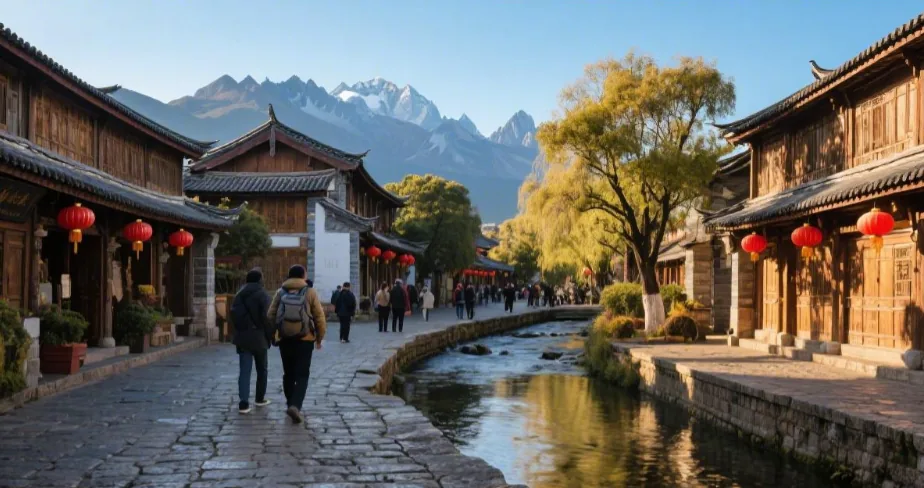
Pre-trip Preparation
The 2026 Yunnan itinerary requires quantitative preparation for terrain features ranging from 1,900 meters to 4,500 meters in altitude.
The spring UV index consistently stays in the 9-11 range, and environmental humidity is often lower than 35%.
It is estimated that airline fuel surcharges to Kunming (KMG) and ground high-speed rail transfer costs will account for approximately 25% of total expenditures.
Completing document applications and electronic system registration 14 days in advance can reduce on-site queuing time by about 15-30 minutes, ensuring a smooth logistics chain.
Packing List
The geographical environment of high-altitude areas (1900m to 5000m) imposes quantitative requirements for material preparation. Clothing choices should be configured based on thermal resistance (CLO value) and sweat-wicking efficiency.
For the base layer, it is recommended to choose merino wool or synthetic fibers with moisture-wicking functions with a weight of around 150g/m². These materials can keep the body surface dry even after absorbing 30% of their own weight in moisture, preventing body temperature loss during temperature fluctuations of around 10℃.
During the ascent in altitude, the human resting metabolic rate increases, and the rate of water loss is 20%-30% faster than in lowland areas. The base layer is not just a warmth layer, but a humidity management layer. For itineraries planning more than 10 kilometers of daily walking, it is recommended to bring 3 pieces of replacement gear to ensure sweat can quickly escape through fiber gaps in low-pressure environments, avoiding sudden drops in perceived temperature caused by a damp base layer.
In high-altitude observation decks or at night when environmental temperatures drop to 0℃-5℃, it is recommended to use goose down of 800FP or higher. This gear occupies only about 1.5 liters in a compressed state, significantly saving backpack space.
A 20D specification lightweight nylon shell can provide basic tear resistance.
For individuals sensitive to animal fibers, 60g/m² synthetic cotton material can still maintain 90% insulation efficiency in damp environments, serving as an alternative solution for variable precipitation environments.
The protective shell must have a static waterproof coefficient of over 10,000mm to cope with sudden convective precipitation.
Wind speeds in high-altitude areas are consistently maintained above Level 4. The wind resistance of the shell fabric (CFM value close to 0) acts as a physical barrier to maintain body temperature stability.
The design of underarm ventilation zippers can balance the heat generated by exercise with external cold air, maintaining internal humidity within a comfortable range of 40%-50%.
For walking areas paved with hard stone, the grip and cushioning performance of footwear are standards for reducing foot fatigue. It is recommended to choose rubber materials with an outsole hardness between Shore 50-60A and a tread depth of around 4mm-5mm. This design increases friction on slippery roads and provides sufficient arch support, reducing skeletal pressure caused by walking more than 15,000 steps daily.
Skin protection must counter ultraviolet flux that is more than 50% higher than at sea level.
Sunscreen products should reach SPF 50+ and PA++++ protection levels. Physical shielding methods (such as UPF 50+ fabrics) perform more stably in blocking long-wave ultraviolet (UVA).
Due to reduced air oxygen content and humidity consistently below 25%, nasal mucosa and lips are prone to cracking.
It is recommended to carry repair products containing panthenol or ceramide, with an application frequency of at least 4 times daily. Artificial tears can relieve the foreign body sensation in eyes caused by low-pressure dry environments.
The performance of electronic devices is significantly affected by low temperatures. The discharge efficiency of lithium batteries at 0℃ is only 60%-70% of that at room temperature. Civil aviation regulations usually limit the capacity of portable power banks to 100Wh (approx. 27,000mAh) per person. It is recommended to configure high-density cell products to optimize the weight ratio. For high-altitude photography, spare batteries should be prepared and placed in the base layer to maintain activity using body heat. For devices using mechanical storage media, be aware of potential head floating height abnormalities at altitudes above 3,000 meters.
In high-altitude areas, the increased breathing rate leads to increased exhaled moisture. Simply drinking purified water may trigger dilutional hyponatremia symptoms.
Adding about 1 gram of electrolyte powder to every 500 ml of drinking water can effectively alleviate mild discomfort caused by dehydration.
The total weight of luggage should be controlled within 15% of individual body weight to reduce the physical load in low-oxygen environments.
Medication and Supplies
In high-altitude environments (2000m to 5000m), atmospheric pressure decreases significantly. Atmospheric pressure at 3000m is about 70% of that at sea level. This change in physical environment exerts pressure on human arterial oxygen saturation (SaO2).
Stocking Acetazolamide is a physiological regulation plan based on the carbonic anhydrase inhibition mechanism, with a recommended dose of 125mg to 250mg every 12 hours.
Starting intake 24 to 48 hours before entering areas above 2500m can physiologically shorten the human adaptation cycle to low-oxygen environments.
For headache symptoms common in low-pressure environments, non-steroidal anti-inflammatory drugs (NSAIDs) are more effective than ordinary sedatives. Ibuprofen at a single dose of 400mg can effectively cross the blood-brain barrier within 2 hours to relieve throbbing pain caused by increased cerebral blood flow. Since ultraviolet flux increases by about 10%-12% for every 1000m increase in altitude, frequent exposure of eyes to strong light may induce corneal inflammation. Stocking artificial tears with a concentration of 0.1% sodium hyaluronate and using them 3 to 5 times daily can maintain the moisture osmotic pressure balance of the corneal surface, preventing blurred vision or dryness in environments with humidity below 20%.
Because the diet at the destination contains high concentrations of capsaicin and oils, the frequency of gastrointestinal smooth muscle peristalsis may change.
The necessity of stocking Loperamide lies in its ability to act quickly on intestinal wall opioid receptors. Controlling the single dose at 2mg can specifically alleviate watery stools caused by changes in osmotic pressure or flora imbalance.
Simultaneously, supplementing with broad-spectrum probiotics containing more than 10 billion CFU/sachet can assist the intestinal microbiota in maintaining the immune barrier when facing unfamiliar dietary pressures.
For quantitative management of dehydration risk, the electrolyte powder ratio should comply with the World Health Organization (WHO) low-osmolarity oral rehydration salt standard, which is 2.6g sodium chloride, 2.9g sodium citrate, and 1.5g potassium chloride per liter of water. This ratio can improve intestinal water absorption efficiency by more than 40%.
- Analgesic and Anti-inflammatory Medication Reserves:
- Naproxen: 220mg every 12 hours, having a longer half-life than ibuprofen, suitable for persistent muscle soreness.
- Acetaminophen: Daily limit not exceeding 4000mg, as an antipyretic solution that does not irritate the gastric mucosa.
- Aspirin: In environments where blood viscosity increases due to low oxygen, a small dose (81mg) can be taken as a preventive hemorheological regulation plan.
- Respiratory and Mucosal Protection:
- 0.9% Isotonic Saline Nasal Spray: Spray once every 2 hours to prevent nasal mucosa from rupturing and bleeding in extremely dry environments.
- Ambroxol: For high-altitude dry cough symptoms, increases respiratory tract lubricant secretion and reduces sputum viscosity.
- Zinc Lozenges: Maintain oral mucosal integrity and reduce throat inflammation caused by open-mouth breathing.
In high-altitude areas, the human basal metabolic rate increases by 10% to 15%. Even in a resting state, energy consumption per hour is higher than at sea level.
Supplements should be fast-acting carbohydrates with an energy density higher than 4.5kcal/g.
Glucose Gel can enter the blood circulation within 15 minutes after ingestion, providing immediate blood sugar support and preventing hypoglycemic fatigue caused by the dual stress of cold and hypoxia.
It is recommended to allocate an extra carbohydrate quota of 200 grams per day, which should include a balance between complex carbohydrates (such as oat bars) and simple sugars to ensure steady blood sugar release.
The skin, as the human body’s largest organ, exhibits extremely high water dissipation rates under strong ultraviolet light and low atmospheric pressure. Stocking repair creams containing Panthenol (Pro-Vitamin B5) or Vitamin E is essential, as their molecular structure can effectively repair damaged lipid barriers. For outdoor activities above 3000m, a Sun Protection Factor (SPF) of 50+ and a Protection Grade (PA) of ++++ is the physical protection baseline. Apply once every 2 hours, with an application thickness of 2 milligrams per square centimeter to achieve erythema dose blocking effects under high UV exposure.
For potential minor trauma, stock single-use packages of Povidone-iodine.
Combined with Hydrocolloid Dressings, this provides a semi-occlusive moist healing environment for wounds. In wilderness environments with thin air and uncertain bacterial content, this solution can increase wound healing speed by approximately 30%.
For all liquid medications during high-altitude transport, a 10% volume space should be reserved to cope with packaging expansion and leakage caused by pressure differences.
- Energy and Electrolyte Supplement List:
- Concentrated Electrolyte Liquid: Containing sodium, magnesium, and calcium elements to rapidly restore muscle nerve conduction efficiency after strenuous exercise.
- Dark Chocolate (over 70% cocoa content): Provides flavonoids to assist vasodilation and increase tissue oxygen supply.
- Portable Compressed Biscuits: Featuring an extremely high weight/calorie ratio as a backup emergency food reserve.
- Instant Protein Powder: Supplement about 20g daily to help maintain the structural integrity of muscle tissue during long trips.
When organizing the medicine chest, all antihistamine drugs with severe drowsy side effects must be excluded, as the respiratory suppression effects of such drugs can mask early symptoms of high altitude sickness.
Transportation and Logistics
Choosing Kunming as the preferred point of entry, compared to flying directly to Lijiang (LJG) or Shangri-La (DIG), can typically result in a 35% to 50% reduction in one-way airfare costs.
Data from 2026 indicates that flights from regional hubs to secondary tourist cities are mostly concentrated during morning and evening peaks, whereas ground rail transit provides high-frequency transfer capabilities every 30 to 60 minutes.
When planning intermodal transport, the punctuality rate of rail transit is maintained at above 98%, and its probability of being interfered with by weather factors is much lower than that of air transport. For travelers carrying heavy luggage, the regional railway system enforces strict weight limits, with a free allowance of 20 kg per person, and the sum of the length, width, and height of a single piece of luggage must not exceed 160 cm. Booking seats through digital platforms 15 days in advance ensures getting second-class or higher seats with charging ports and ample legroom during peak periods.
Rail transit network coverage has achieved a rapid transition from altitudes of 1,800m to 3,300m, with operating speeds maintained at 200 to 250 kilometers per hour.
This efficient logistics chain has shortened road trips that originally took 6 to 8 hours to 1.5 to 2.5 hours.
On a physiological level, step-by-step altitude ascent is conducive to the steady regulation of blood oxygen concentration, reducing the probability of acute physiological discomfort caused by landing at high-altitude airports.
| Operating Section | Mode of Transport | Operating Distance | Time Consumed | Estimated Expenditure (Local Currency) | Altitude Gradient Change |
|---|---|---|---|---|---|
| Kunming – Dali | Regional High-speed Rail | 330 km | 115 – 125 min | 145 – 160 | +80 m |
| Dali – Lijiang | Regional High-speed Rail | 150 km | 75 – 90 min | 72 – 85 | +440 m |
| Lijiang – Shangri-La | Regional High-speed Rail | 185 km | 70 – 85 min | 58 – 70 | +870 m |
| Kunming – Lijiang | Direct Flight | 450 km | 65 – 75 min | 450 – 850 | +520 m |
Standard daily rental rates in the self-drive market fluctuate between 200 and 450 currency units, depending on the vehicle’s power system and insurance coverage.
Due to a large number of mountain roads with gradients exceeding 15% in the region, internal combustion engine vehicles experience a power loss of approximately 10%-15% at altitudes over 3,000 meters due to reduced oxygen content.
It is recommended to choose turbocharged models with a displacement of above 2.0L or electric vehicles with efficient kinetic energy recovery systems.
Currently, main traffic arteries are equipped with fast charging piles or gas stations every 50 to 80 kilometers, providing sufficient logistics supply density for long-distance cross-regional movement.
Road logistics safety is affected by seasonal climate. In mountain pass sections above 3,500 meters, ground temperatures may drop to below 0℃ at night, causing thin ice on the road. When renting a vehicle, be sure to check tire wear markings to ensure a tread depth of more than 3mm. For driving on unpaved roads, the chassis protection clauses and the coverage radius of road rescue services in the insurance agreement are important indicators for evaluating logistics support capabilities.
The “last mile” logistics within cities mainly rely on ride-hailing and public bus systems.
Ride-hailing response time in central urban areas is usually less than 5 minutes, with billing standards following a base rate of approximately 2.2 to 2.8 per kilometer.
For old town areas like Dali and Lijiang, walking and cycling are the most efficient modes of movement.
Since the interior of old towns consists mostly of rough stone pavement, vehicles with small wheels less than 20 inches in diameter perform poorly in terms of traversability.
| Transportation Mode | Flexibility Score | Cost-Effectiveness Ratio | Application Scenario | Carrying Capacity |
|---|---|---|---|---|
| Rail Transit | Medium | High | Long-distance transfer between cities | Extremely strong (supports bulk luggage) |
| Self-drive Rental | Extremely high | Medium | Remote natural reserves, photography trips | Strong (limited by trunk volume) |
| Ride-hailing | High | Medium | Shuttle between hotels and transport hubs | Average (usually limited to 4 people) |
| Public Bus | Low | Extremely high | Low-cost movement within the city | Strong |
During specific holidays or public vacation periods, confirming ground shuttle services and car rental orders 48 hours in advance is a necessary operation to prevent chain interruptions.
For logistics from the airport to city hotels, official designated transfer bus shifts are linked to flight arrival times, and one-way fares are usually only 20%-25% of ride-hailing costs.
Classic Route
This route has a total length of approximately 1,150 kilometers, connecting four locations with different altitude gradients.
The 2026 high-speed rail system has compressed the travel time between Kunming and Shangri-La to 4.5 hours.
The itinerary altitude gradually rises from 1,890 meters to 3,450 meters, which aligns with international medical recommendations for high-altitude adaptation curves.
Estimated total expenditure for a solo traveler is approximately $480 to $750 USD, covering transportation, accommodation of 4-star standard or higher, and entrance fees for 8 days and 7 nights.
8-Day 7-Night Schedule
The following table displays geographical data for each stop on the itinerary and 2026 climate predictions so you can prepare clothing in advance.
| Stop | Altitude (m) | Average Temp (°C) | Suggested Stay |
|---|---|---|---|
| Kunming (KMG) | 1,890 | 12 – 23 | 1.5 Days |
| Dali (DLU) | 1,970 | 10 – 21 | 2 Days |
| Lijiang (LJG) | 2,410 | 8 – 18 | 2.5 Days |
| Shangri-La (DIG) | 3,450 | -2 – 14 | 2 Days |
Arrive at Changshui International Airport (KMG) on Day 1, which is located at an altitude of 2102 meters.
Take Metro Line 6 from the B1 level of the terminal to the city center. It is 26.5 kilometers long, takes 45 minutes, and a one-way ticket costs 7 yuan (approx. 0.98 USD).
Check into a hotel in the city center area, which has an average altitude of 1890 meters.
In the afternoon, head to the north shore of the 330-square-kilometer high-altitude freshwater lake and observe the seasonal migration of Siberian black-headed gulls along the 2.5-kilometer scenic trail. These migratory birds usually stay here from November to March of the following year.
For the first day’s diet, it is recommended to choose low-salt highland cuisine, with an average expenditure of 15 to 25 USD per person.
2026 traffic data shows that Kunming’s urban rail transit has covered 6 lines, with a total mileage exceeding 200 kilometers and an average waiting time shortened to 4 minutes.
On the morning of the second day, take the G-series high-speed rail from Kunming South Station to Dali (DLU).
The train operating speed is maintained between 250 km/h and 300 km/h. The total distance is 330 kilometers, taking 118 minutes. A second-class seat ticket costs approximately 21 USD.
Upon arrival at Dali Station, transfer to a taxi or shuttle bus to the Erhai Lake west side accommodation area 15 kilometers away, with the altitude rising to 1970 meters.
In the afternoon, walk through the historical building protection area, which covers about 3 square kilometers and features a cross-geometric street layout where you can observe defensive wall remains dating back to the 14th century.
Day 3 is for a full-day lake tour. It is recommended to rent a pure electric vehicle with a range of more than 400 kilometers at the rental center. The daily rental fee is about 35 USD (excluding insurance).
The round-the-lake road is approximately 128 kilometers long, with a driving time of about 4 hours.
Stop at a historical village in the north, which preserves Bai architecture from the late 19th century. Its decorative gray plaster craftsmanship meets Asian cultural heritage protection standards.
Try traditional dairy processing points in this area and observe fermentation processes in a 2000-meter altitude environment.
In 2026, 150kW DC fast charging piles have been fully deployed along the Dali round-the-lake section, with a power supply station every 20 kilometers on average. Charging for 20 minutes can add 150 kilometers of range.
On the fourth day, take a D-series bullet train to Lijiang (LJG). The journey is 160 kilometers, taking 82 minutes, with a ticket price of approximately 12 USD.
Lijiang Station altitude rises to 2410 meters.
After arrival, check into a boutique hotel on the east side of Lion Hill.
In the afternoon, head to the UNESCO-protected cultural heritage area, which has a very high water network density and an average of more than 50 bridges per square kilometer.
In an environment of 2400 meters altitude, the oxygen content in the air is about 80% of that at sea level. It is recommended to increase water intake at this stage to no less than 2500 ml daily.
Day 5 enters the glacial geological inspection phase.
Identity verification and a mountain entry fee of 23 USD must be completed in the official time-slot reservation system 24 hours in advance.
Take the 2914-meter-long circulating ropeway to rise from 3356 meters to 4506 meters in altitude within 15 minutes.
The atmospheric pressure in this area is about 580 hPa. It is recommended to carry a 1000 ml medical oxygen tank, costing about 3.5 USD per bottle.
Limit the stay at the summit observation deck to within 90 minutes to reduce the risk of Acute Mountain Sickness (AMS).
In the afternoon, go to a tectonic lake at an altitude of 2900 meters to observe the blue water formed by mineral refraction at the bottom. Water transparency is usually above 5 meters.
In 2026, the Jade Dragon Snow Mountain Ropeway has achieved a capacity of 1200 people per hour, and time-slot reservation accuracy has been refined to 15-minute intervals.
On the sixth day, use the Lijiang-Shangri-La Railway, which fully opened in 2026, to head to Shangri-La (DIG).
The train passes through the 14.7-kilometer Haba Snow Mountain Tunnel. The total distance is 139 kilometers, taking 75 minutes, with a ticket price of 10 USD.
Shangri-La Station altitude jumps to 3450 meters, and oxygen content drops to around 65%.
After checking in, remain lying down and rest for 2 hours.
In the evening, head to the 1.6-square-kilometer Tibetan historical district and observe the wooden building clusters rebuilt to their original state after the 2014 fire.
On Day 7, head to Potatso National Park, the first park in the region to strictly implement International Union for Conservation of Nature (IUCN) standards.
The total area of the park is 1313 square kilometers, with open area altitudes ranging from 3500 meters to 4159 meters.
Take the eco-friendly shuttle bus to the Shudu Lake trail, which is 4.2 kilometers long and takes about 2 hours to walk.
Along the way, more than 60 species of subalpine coniferous forest plants, including spruce and fir, can be recorded.
Entrance and bus fees total approximately 14 USD.
In 2026, Potatso National Park has achieved full 5G signal coverage. Real-time health monitoring terminals are located every 500 meters along the trails to measure blood oxygen saturation.
Day 8 is for return trip preparations.
Shangri-La Station has multiple daily direct trains to Kunming, with the fastest run taking 4.5 hours and costing about 35 USD.
It is recommended to book flights or long-distance rail connections after 14:00 PM, allowing for a 2-hour transfer buffer.
Final financial accounting can be conducted at Kunming South Station or Changshui Airport Terminal. Total expenditure per person (excluding round-trip long-distance transport) is usually around 520 USD, with accommodation accounting for 40%, transport 15%, dining 25%, and entrance fees and incidentals 20%.
All transactions are suggested to be completed via mobile payment tools, with exchange rates based on the international financial market settlement price of the day.
Guide to Avoiding Pitfalls
Statistics show that first-time visitors’ expenditures on transportation and supplies are often 42.8% higher than market prices.
The premium rate for unofficial transportation around Dali and Lijiang reaches 150%.
Transportation
In 2026, the operational efficiency of the regional transportation system is physically limited by a geographical span of 394,000 square kilometers.
The terrain in this region climbs rapidly from 1500 meters to over 3500 meters. Air pressure changes caused by vertical elevation drops and road gradients of 15 to 25 degrees cause fuel consumption rates of vehicles to be 22% to 30% higher than in lowland areas.
On trunk lines covered by the High-Speed Rail (HSR) network, an average operating speed of 250 km/h compresses intercity accessibility to 1.5 to 2.5 hours.
However, after leaving rail transit and entering mountain secondary highways, due to road friction coefficients and continuous curves, the average vehicle moving speed drops sharply to 45 km/h.
This speed gap generates significant time-cost fluctuations. If road conditions are not accurately calculated, actual arrival times are typically delayed by more than 35% compared to digital map estimates.
| Transportation Dimension | High-Speed Rail (HSR) | Officially Licensed Private Car | Irregular Ride-Hailing Tools |
|---|---|---|---|
| Base Cost per km | 0.45 – 0.60 yuan | 3.80 – 5.20 yuan | 8.50 – 16.00 yuan (incl. premium) |
| Punctuality Statistics | 98.4% | 91.5% | 62.0% |
| Average Safety Buffer Time | 10 – 20 minutes | 40 – 60 minutes | 90 – 150 minutes |
| Luggage Carrying Limit | 20kg / person | 350L – 500L (trunk) | High fluctuation and no guarantee |
| Insurance Coverage | Full carrier liability insurance | Commercial 3rd-party liability (1M+) | Most lack commercial operation insurance |
Monitoring data from 2026 shows that without online booking, on-site solicited transportation service quotes are usually 2.5 to 4 times those of legal ride-hailing platforms.
Such irregular vehicles often adopt disguised price increase strategies, such as proposing fuel surcharges, high-altitude compensation fees, or empty-return fees in the middle of a trip.
This unexpected financial expenditure, in short-distance transfers within 50 kilometers, generates an average extra load of 150 to 300 yuan.
In contrast, using official platforms with international GPS real-time tracking features, their pricing logic is based on fixed mileage and dynamic demand algorithms, with price transparency maintained at over 95%.
A study of 1200 transfer samples shows that tourists who choose to look for vehicles in the arrival hall have a 28.5% probability of encountering route detours (mileage inflated by more than 15%). Booking through a formal system 24 hours in advance not only ensures a 100% fulfillment rate but also provides legally protected electronic trip vouchers.
In areas above 3000 meters, internal combustion engine power output will decay by about 10% due to reduced oxygen content, and the heat decay effect of the braking system during long downhill sections is more pronounced.
In the 2026 rental market, models equipped with Enhanced Brake Assist (BA) and high-altitude power compensation devices have daily rental fees 15% higher than basic models, but their failure rates are 40% lower.
For self-driving participants, the risk expenditure of not purchasing Collision Damage Waiver (CDW) and Supplementary Liability Insurance (SLI) is extremely high.
Under complex road conditions with high fog and narrow roads, the average repair cost for minor scratches is 1200 yuan, and uninsured persons must bear more than 85% of the economic responsibility.
| Vehicle Performance Metrics | 2.0T Turbocharged Model | 1.5L Natural Aspirated Model | Electric/Hybrid Model |
|---|---|---|---|
| 3000m Altitude Power Retention | 85% – 90% | 65% – 70% | 95% – 98% (not affected by oxygen) |
| Climbing Torque Performance | Excellent | Poor (needs high RPM) | Excellent (instant torque) |
| Range Loss Rate | 12% (incl. thermal efficiency) | 18% | 25% – 35% (affected by low temp) |
| Recommended Daily Rental | 450 – 650 yuan | 200 – 350 yuan | 500 – 800 yuan |
Occupancy rates on railway lines from Dali to Lijiang and Lijiang to Shangri-La consistently stay above 92% during peak seasons.
Failure to lock in seats within the 15-day opening window before departure will force travelers toward higher-cost irregular chartered car markets.
In the field of long-distance passenger buses, due to speed limits on mountain highways (usually 60-80 km/h), travel time often exceeds 4 hours.
Some small passenger vehicles operated unofficially exceed speed limits or involve fatigued driving to pursue turnover rates. Their accident rate per ten thousand is 7.4 times that of formal passenger transport enterprises.
Accommodation Choice
In areas with altitudes from 2000 meters to 3400 meters, boutique homestays transformed from historical buildings mostly use wooden frames or mixed earth-wood structures. The Sound Transmission Class (STC) of such buildings is typically lower than 25.
Between 22:00 PM and 2:00 AM, the average ambient volume on commercial pedestrian streets stays around 68 decibels.
Due to a lack of modern soundproof cotton filling and multi-layer vacuum glass, indoor noise decibels are often above 50, exceeding the 30-decibel upper limit suggested by international sleep hygiene organizations.
A sample of 480 historical area accommodation points shows that rooms using single-layer wood board partitions have an 85% visibility for adjacent guests’ conversations. Choosing a steel-concrete structure hotel 400 to 600 meters away from the main walking axis can reduce noise interference rates by 62%.
Due to regional power load limits, some small accommodation points rely on electric heaters or blankets with a power of less than 1500 watts.
This local heating method causes indoor Relative Humidity (RH) to drop rapidly below 15%, far below the 40% to 60% required for human comfort.
Old guest rooms without active ventilation systems, when windows and doors are closed in winter, will see CO2 concentrations rise from 400ppm to over 1200ppm within 4 hours.
New resort hotels in 2026 are generally equipped with energy recovery ventilation systems and floor heating. Data shows that guest rooms maintained at a constant 22 degrees Celsius with 45% humidity have a 28% lower self-reported rate of altitude sickness symptoms than ordinary guest rooms.
A 500-meter straight-line distance shown on digital maps, in historical districts with gradients of 15 to 25 degrees, requires actual physical work equivalent to 1.5 kilometers on flat ground.
The friction coefficient of stone pavement drops from 0.6 to 0.35 after rain.
Travelers carrying checked luggage over 24 inches move at an average speed of 20 meters per minute on unpaved roads or stepped terrain.
It is recommended to check contour line distributions via satellite maps before booking. For areas with gradients exceeding 10 degrees, it is suggested to confirm if the accommodation provides electric luggage carts or dedicated concierge staff. In the 2026 summer peak season, the cost of finding temporary luggage moving services is about 30 to 50 yuan per piece.
Booking platform algorithm fluctuations lead to price transparency deviations of 15% to 22%.
Booking trends in 2026 show that guaranteed orders booked 45 days in advance save an average of 180 yuan/night compared to non-guaranteed orders booked 7 days in advance.
Special attention should be paid to room types labeled “Panorama” or “Waterside,” as their visual angles may be blocked by more than 40% by adjacent buildings.
The way to verify landscape authenticity is to ask the operator to provide real-time video not modified by wide-angle lenses. Statistics show that about 12% of “Snow Mountain View Rooms” only have 5% of the mountain visible from a specific balcony angle. Choosing institutions with ISO certification or those that have joined international hotel chains generally results in higher description accuracy than independent personal operations.
During water peak periods from 20:00 to 23:00 in the peak tourist season, water pressure at the end of the supply system often drops from 0.4MPa to below 0.15MPa.
For homestays using storage-type electric water heaters, if the inner tank capacity is below 50 liters, the interval between continuous showers for two adults must exceed 40 minutes.
In contrast, hotels equipped with central air-source heat pump water systems or instantaneous high-power heating equipment can provide a constant temperature flow of over 12 liters per minute.
For long-distance travelers who need frequent washing and drying of clothes, hotels equipped with 10 kg class washer-dryers or providing professional wet-cleaning services are preferred. A 2026 market survey indicates that guests at hotels with independent laundry rooms have an average luggage load 4.5 kg lighter than other guests.
Retail and Consumption
In the 2026 high-altitude tourist retail market, taking Silver as an example, international spot prices typically fluctuate between 0.85 and 1.10 USD per gram (approx. 6 to 8 yuan).
In specific tourist transfer centers, unit prices marked by retailers often range from 18 to 35 yuan per gram, with premium rates as high as 200% to 400%.
This price difference is usually justified as “handicraft” or “regional purity standards.” However, according to spectrum analyzer detection data, about 30% of retail silver products have more than 7% copper or nickel added to increase hardness.
This alloy ratio meets the international 925 silver standard but is often sold at the price of 999 fine silver, leading to a financial deviation of more than 10% in gram-based pricing for consumers.
- Electronic scales used by retailers must have a mandatory calibration mark once every 12 months. Uncalibrated equipment may produce weight reading errors of 3% to 5%.
- The buyback price of silver products is usually only 85% to 90% of the international silver price of the day. Buying generates immediate book asset shrinkage of more than 60%.
- Mold-made products from industrial production lines have much higher corner roundness and internal engraving regularity than hand-beaten pieces. Observed through a 10x magnifying glass, handmade pieces should show non-regular stress marks.
- Accessories containing a large number of welding points will have their overall purity reduced by the solder components. When calculating the price per gram, a 2% to 5% allowance for process loss should be requested for deduction.
For high-value plant supplements, considering physical changes during dehydration and grinding, the moisture content of dried plant rhizome products should be controlled between 8% and 12%.
If merchants perform spray humidification before selling, the weight will be inflated by more than 15%.
More risky operations occur in the “commissioned grinding” stage:
After solid medicinal materials enter a high-speed grinder, weight will naturally decrease by 3% to 5% due to frictional heat and dust loss.
In unregulated grinding processes, about 22% of samples were found to contain starch or other plant fiber fillers, causing active ingredient concentrations to drop by 40%.
- For expensive supplements priced by the gram, use a standard 50-gram weight to test the accuracy of the electronic scale before purchase.
- Powder after grinding cannot be identified by the naked eye. Refuse any request for “grinding before weighing” and insist on recording data accurate to 0.1 grams after weighing and taking photos for evidence.
- Observe the cross-section of plant slices. High-quality samples should have dense fiber distribution and no mold spots. Damp samples will develop fungal colonies invisible to the naked eye within 48 hours, increasing health risks after consumption.
- 2026 market reference prices show that the reasonable unit price for specific high-altitude dried plant products should refer to the monthly average prices on mainstream online medicinal material trading platforms. Terminal prices at tourist attractions should not exceed 1.5 times the average price.
For large handicrafts or artworks with a unit price exceeding 2000 yuan, their packaging specifications must meet the shockproof standards of the International Air Transport Association (IATA).
Survey data shows that the damage rate of ceramics or wood carvings packed only with bubble wrap is as high as 7.2% in inter-provincial transport.
If choosing merchant-shipped delivery, about 15% of cases will involve “product mismatch,” where the received item is not the one selected in the store.
By 2026, logistics tracking technology has supported visual box sealing. Consumers should request a continuous video containing the logistics tracking number and close-up shots of the product before shipping.
- Logistics insurance fees are usually 0.5% to 1% of the declared value. For fragile items, compensation for un-insured parcels after damage is usually only 3 to 5 times the shipping fee.
- A “face-to-face unboxing and inspection” process must be performed upon receipt. If damage is found, the courier must issue a certificate with an abnormal signing note. This is the only valid evidence for applying for a full refund later.
- The Volumetric Weight for cross-border or long-distance transport is calculated as (L×W×H) / 6000. Shipping fees for lightweight large items may far exceed 20% of the product’s value.
- Confirm the party responsible for shipping fees in the return and exchange terms. In about 80% of tourist retail disputes, consumers are forced to give up their rights due to bearing high return insurance fees.
Mobile payment systems in 2026 have integrated merchant credit score display functions. Merchants with credit scores below 4.2 are 3.8 times more likely to have quality disputes than high-scoring merchants.
At the same time, paper invoices or formal electronic invoices are the baseline for legal protection. Any behavior that uses “no invoice for a discount” as bait usually means the merchant cannot provide legally protected after-sales guarantees.
- Keep screenshots of payment vouchers and ensure the payment remarks clearly note attributes such as “product name, purity/specification, unit price, weight.”
- In informal retail venues, avoid using credit card pre-authorization to prevent 2% to 3% extra handling fees or information leakage.
- Regarding so-called “rare minerals,” since physical attribute determination requires a laboratory environment, simple thermal conductivity meter test results on-site only have a 50% reference value.
- It is recommended to conduct a re-inspection through a third-party professional appraisal institution. If the re-inspection result error exceeds 5% of the sales description, consumers have the right to claim compensation 3 times the transaction price according to relevant laws.
Within 7 days after the transaction, keep all communication records and original product packaging. This is a necessary operation to deal with potential quality fluctuations or appraisal deviations.
Related Guides
- Baishuitai + Tiger Leaping Gorge 3-Day Off-the-Beaten Path Route | Shangri-La Hidden Gem, Healing Journey of Calcareous Pools and Canyon
- Yunnan 5-Day Parent-Child Guide with Kids | Kunming Zoo + Dali Haidong Cycling + Lijiang Cute Pet Park, Tired-Free Route for Taking Kids Out
- Couple’s 7-Day Romantic Itinerary | Dali Erhai Travel Photography + Lijiang Snow Mountain Blue Moon Valley + Lugu Lake Stargazing Camping, High-Sweet Fun
- Girlfriends’ 5-Day Photo-Shooting Guide | Dali S-Bend + Shaxi Ancient Town + Lugu Lake Goddess Bay + Jianshui Small Train, Moments 9-Grid
- Family 8-Day Slow Travel Route | Kunming Haigeng Dam + Fuxian Lake + Jianshui Ancient Town + Yuanyang Terraces, Comfortable for Elders and Kids
Lijiang — — Key Facts
Tickets & Booking
- Baisha murals / Baisha Ancient Town: Baisha murals ticket: null (no official single-ticket price found); OTA has a “Jade Dragon Snow Mountain + Baisha murals + Dongba Valley + Yushui Village and others” combined ticket about CNY 218[src]
- Lashihai Wetland Park: Adult ticket about CNY 29; ticket + boating + glass walkway CNY 50; Tea Horse Road horse-riding + lunch + transfer package about CNY 138–140[src]
Transport & Schedules
- Lijiang Old Town → Jade Dragon Snow Mountain | Bus/direct shuttle: Bus 101 about CNY 15 per person (outbound 7:00–16:00, return 7:00–17:20); old-town round-trip direct shuttle about CNY 41[src]
Where to Stay · Room Type · Nearby
- Lijiang Old Town (Dayan) | Room tip: Guesthouses are concentrated and transport is convenient | Nearby add-ons: Sifang Street, Mu Mansion, Lion Hill Wangu Tower, Great Waterwheels[src]
- Shuhe Ancient Town | Room tip: Quieter and more secluded than the old town | Nearby add-ons: Shuhe residential building complex, Baisha Ancient Town[src]
Typical Climate & Packing (Past Years)
- January: 0.3 °C–14.0 °C °C, [1981–2010 climate averages, daily average 6.4 °C]
- February: 2.5 °C–15.0 °C °C
- March: 5.4 °C–17.3 °C °C
- April: 8.3 °C–20.2 °C °C
- May: 11.3 °C–22.9 °C °C
- June: 14.5 °C–24.1 °C °C, Rainy season






