



Day 1: Arrive in Kunming, stroll along Haigeng Dam to see seagulls
I set off from my hometown on the 10:00 AM high-speed train. During the 4-hour journey, the elderly leaned by the window watching the karst landforms outside, while the child played happily with puzzles—the high-speed train seats are wide, and my mother, who has a bad back, didn’t complain of fatigue once. Exiting Kunming South Station, we followed the blue and white “Metro Line 4” signs for a 5-minute walk to the entrance, took the subway towards “Kunming South Railway Station,” and arrived at “Dianchi College Station” after 8 stops. The moment we stepped out of the subway exit, we were greeted by plane trees with fresh buds, and the air carried a faint scent of osmanthus. I hailed a ride-share car by the road. The driver, an uncle in a blue cloth shirt, heard we were going to Haigeng Dam and smiled while patting the steering wheel: “Don’t worry, this stretch of road was just paved with asphalt; it’s as flat as a tabletop, perfect for pushing a stroller.” Sure enough, we arrived at the Huazhu Hotel in 10 minutes.
We booked a lakeside standard room, and the window opened directly onto the shallows of Dianchi Lake—you could see water birds skimming the surface, with the distant Western Hills shrouded in a pale blue mist. The bed was a brown mat with just the right firmness; my father, who has a lumbar disc herniation, lay down, rubbed his back, and said, “This is much more comfortable than that rock-hard spring mattress at home.” Seeing us dragging suitcases, the front desk girl quickly handed over two handwritten notes: “The convenience store downstairs sells sweet bread for feeding seagulls, 10 yuan a bag, freshly baked today and very soft; if you want to feed them longer, the supermarket 50 meters to the left has raw corn, 15 yuan a catty, and seagulls prefer it when peeled into kernels.” We thanked her, dropped our luggage, and headed out with the bread.
At 2:00 PM, Haigeng Dam looked like a ribbon laid by the sea. The entire path is made of bluestone slabs with no steps. The elderly walked slowly leaning on the stone railings, while the child rode a folding kid’s bike, the wheels rolling over the clover in the cracks of the stone slabs. I broke the bread into thumb-sized pieces and tossed them into the air. Immediately, several black-headed gulls swooped down—some perched on my mother’s hand, others on my father’s shoulder. My mother flinched at first but, seeing the gulls just tilting their heads to peck the bread, she shouted with a smile: “Old man, take a picture quick! This seagull is standing on my hand!” The child was even more excited, chasing a gull with bread in hand, running a few steps and then squatting down to place bread in his palm, laughing out loud even as he shrunk his neck in slight fear when the gull approached to eat. We stayed at the dam for two and a half hours until the sun turned the surface of Dianchi Lake orange-red, and the gulls fluttered their wings to fly behind the Western Hills.
In the evening, we followed the hotel’s guidance to “Old Captain Yunnan Cuisine.” Warm light flickered from the red lanterns at the alley entrance, and the owner, wearing a shiny apron, came out to greet us: “Here for the seagulls? Take a seat first, the Steam Pot Chicken will be ready soon.” The shop was filled with old wooden tables and rattan chairs, with old photos of Dianchi Lake hanging on the walls. When the Steam Pot Chicken was served, white steam puffed up from the lid. The chicken soup was golden and clear with a layer of oil on top. One sip—it was so delicious your tongue would melt! The local chicken was stewed until tender, and even the breast meat could be easily pulled apart. My father usually doesn’t like chicken, but that day he drank two big bowls and pointed at the Sanqi roots in the soup, saying, “This stuff is nourishing.” The cold chicken rice noodles were handmade and so springy they made a sound when bitten, topped with pickled vegetables, millet chili, and fried peanuts. The sourness and spiciness were just right—the child initially frowned saying he was “afraid of spicy food,” but after I picked out some noodles and added a spoonful of vinegar, he licked his lips, ate a few bites, and finally finished the whole bowl including the soup. The stir-fried greens were that day’s water spinach, crisp enough to snap and fragrant with garlic. The bill was only 180 yuan, half the price of restaurants at the scenic spot entrance, and the owner even gave us a bag of vacuum-packed flower cakes as a souvenir.
On the way back, we strolled along the small path by Dianchi Lake, the wind carrying the fishy-sweet scent of lake water. My mother touched the flower cake in her pocket and said, “This place is so comfortable, let’s come again next time.” The child skipped along holding a seagull feather he picked up during the day, the feather glowing with a faint golden light under the streetlamps. Looking at their backs, I suddenly felt—isn’t the meaning of slow travel to let the elderly feed seagulls in peace, the children chase the light, and yourself sit down to enjoy a bowl of hot chicken soup?
Small Detail Tip: Don’t buy bread that is too dry at Haigeng Dam; seagulls prefer soft bread. Don’t reach out too fast when feeding; wait for the gulls to get close before placing the bread to avoid startling them. Before returning to the hotel at night, you can buy a bottle of local “Zhenming” mineral water at the convenience store downstairs; it’s 3 yuan cheaper than at the scenic spot.
Day 2: Kunming to Fuxian Lake, 1.5-hour drive, stroll along the lake to see clear water
At 7:00 AM, I woke my parents up while munching on a bun—the pork and cabbage dumplings I cooked the night before were still steaming in the pot. My mother took a bite, the juice splashing on her hand, and said with a smile, “Much fresher than frozen ones.” We took a ride-share to Kunming South Passenger Station for 12 yuan, arriving in 8 minutes. The plastic chairs in the waiting room were warmed by the sun. I helped my father sit down; he took a sip of goji berry tea from his thermos and looked up at the electronic screen: “The bus is in 20 minutes, no rush.” The 9:10 AM Fuxian Lake shuttle bus entered the station on time. The new model has adjustable backrests, and I set my mother’s to semi-recline. She stuffed an orange she brought for me into my backpack, saying, “For boredom on the road, don’t buy expensive fruit at the scenic spots.”
The bus headed northwest, and Kunming’s buildings gradually shrank into small squares, replaced by endless yellow rapeseed fields that dazzled the eyes. The child sat on my lap playing with puzzles, and halfway through suddenly shouted: “Dad, look! Does that mountain look like Grandpa’s teapot?” I leaned over; the distant mountain was indeed round, just like my father’s old purple clay pot for brewing Pu’er. At 10:40 AM, we reached Fuxian Lake Passenger Station. The wind at the exit already smelled of lake water—there was no sudden braking the whole way, and my mother squeezed my hand saying, “Steadier than a long-distance bus.”
I had pre-booked a taxi on my phone. The driver was a young man from Luchong Village in a pair of faded jeans. Hearing we were going to Fuxian Lake Renjia Guesthouse, he immediately laughed: “What a coincidence, my home is in that village. I’ll recommend a guesthouse run by my mother; it’s clean and quiet.” After a 5-minute drive, we first saw the blue lake water similar to Dianchi, then the white walls and grey tiles of the guesthouse. The hostess, an auntie wearing a silver bracelet, took our luggage and led us to a second-floor room: “This one faces the lake; you can see Gushan Island from the balcony. Your parents will surely like it.” Opening the door, the balcony railing was just at my mother’s shoulder height; she leaned against it and could clearly see the white gulls on the lake. The windows were double-glazed for good sound insulation, yet the ripples of the lake were clearly visible. The bed was a firm brown mat with faded cotton sheets; my father lay down and patted it: “Softer than the hotel’s spring bed, no backache.” The bathroom had anti-slip mats and a thermostatic shower head; my mother tested the water temperature and said, “Not scalding, just right. I’ll soak my feet later.”
At 2:00 PM, I rented a covered electric scooter from the owner—the seats were faux-leather soft-wrap and the handles were covered in sponge; I adjusted the seat height so my father could easily step on the pedals. I bargained the price down to 80 yuan a day, and the owner gave us two bottles of mineral water: “The sun is strong by the lake, drink plenty of water.” Driving along the lakeside road, it was as flat as the floor tiles at home with no potholes. To the left was the shimmering blue lake water, where occasionally a white carp would jump; to the right were groves of eucalyptus trees, their leaves rustling in the wind. My mother sat in the back, pointing at the lake and shouting: “Old man, look! Those fish are fighting for food!” The child leaned against the window, his nose almost touching the glass, counting the ripples: “One, two, three… just like Grandma’s knitted wool socks.” At Moonlight Bay, we stopped the car, and my mother squatted on a stone by the lake to touch the water: “So cool, much clearer than the tap water at home.” The child picked up a flat stone and skipped it; it skipped three times, and he clapped his hands: “I can skip stones now!”
At 5:30 PM, we followed the owner’s directions to Luchong Fish Restaurant—red lanterns hung from the wooden building, and touch-me-nots grew in the courtyard. The owner, in a shiny apron, came out: “Freshly caught silver carp, I’ll make you Copper Pot Stew!” When the copper pot was served, the lid hissed with white steam, and a layer of golden fish oil floated on top, the aroma instantly filling the room. My father took a bowl first, blew on it, took a sip, and his eyes lit up like stars: “This soup is so fresh you could swallow your tongue!” The soup contained soft tofu, cabbage, and several pieces of carp stewed until they crumbled at the touch of a chopstick. The child leaned in, asked for a bowl of rice, mixed it with the fish soup, and ate until his mouth was oily. The potato braised rice used local red-skinned potatoes cut into wedges and braised with rice; with the fragrance of fish soup, every grain of rice was flavorful. The child ate so fast he dropped two grains of rice on the table and quickly picked them up: “Fragrant! Can’t waste it!” The stir-fried bitter greens were grown by the owner, so crisp they yielded juice; my mother said, “This hasn’t been sprayed with pesticides, safe to eat.” The bill was 220 yuan, and the owner gave us a jar of homemade pickles: “Take it back for noodles; it’s ten times better than store-bought.”
On the way back, we strolled by the lake. The moon rose, casting a shimmer on the lake like scattered silver. My mother held the child’s hand and said, “I want to wake up early to feed the seagulls tomorrow,” and the child skipped: “I want to feed the biggest one and let it stand on my hand!” My father didn’t speak, just stared at the lake water, his cane lightly tapping the ground—I knew that he, like me, was captivated by these slow, unhurried days.
Small Tips: Choose the “Fuxian Lake Shuttle” bus at the South Passenger Station; don’t take illegal private cars as prices are transparent and it’s safer. Rent electric scooters from guesthouse owners; it’s 20 yuan cheaper than at the scenic spot entrance. Go to local lakeside shops for Luchong Fish; the shops at the entrance of the scenic spot taste half as good. Drink the copper pot fish soup while it’s hot; it gets a bit earthy when cold. If traveling with kids, put light toys like puzzles and small water guns in the backpack; they don’t take up space on the road.
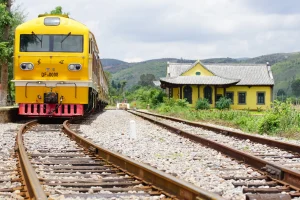
Day 3: Fuxian Lake to Jianshui, 3.5-hour drive, explore the ancient city, see old houses, and drink sweet soup
In the morning at the guesthouse, we had freshly brewed pork bone rice noodles specially reserved by the owner—the broth had simmered all night with two pieces of crispy pickles. My mother took a slurp and her eyebrows relaxed: “Even fresher than yesterday’s chicken soup, just like what my mother used to make.” At 8:30 AM, after packing our luggage, the owner helped hail a ride-share for 15 yuan to Fuxian Lake Passenger Station. The orange stall at the waiting room entrance was just setting up; Fuxian Lake honey oranges for 5 yuan a catty. I picked two catties, and my mother peeled one and stuffed it into my hand: “Sweet, not waxed, better than the supermarket’s.” The 9:30 AM bus departed on time. The seats were wide enough to fit the child’s dinosaur puzzle box. The driver was an uncle with glasses playing “Flowing Stream” folk songs. Along the way, the blue water of Fuxian Lake first shrank into a line, followed by mountains of rapeseed flowers, and finally turned into dark green peaks. My father napped by the window, while my mother smelled the orange peel: “This road is steady; I’m not dizzy, more comfortable than the last trip to Shilin.”
After 3.5 hours, we arrived at Jianshui Passenger Station. At the exit, an uncle in a dark blue cloth shirt was holding a “Ting Ziyun Guesthouse” sign—arranged by the owner via WeChat in advance. A 10-minute taxi ride took us into the ancient city. The guesthouse was tucked at the intersection of two alleys, with two osmanthus trees at the gate just sprouting fresh buds. The hostess, wearing a blue cloth apron, came out with a cup of warm honey water: “Moisten your throat first, you must be thirsty after the trip.” The courtyard was filled with succulents; the Jade Dew was as plump as small rice balls, ivy hung over the walls, and the ink orchid in the corner bloomed with pale purple flowers, smelling clear and fragrant. The room was on the second floor. The wooden stairs creaked, just like my grandmother’s old house. Opening the door, the windows were carved wooden grids, and the sunlight leaked in, weaving fragmented gold on the floor. The cotton and linen sheets on the bed smelled of sunlight; my mother touched them: “This fabric is soft, not scratchy like hotel synthetic fabric.” The bathroom had a copper basin stand, the toothbrushes were bamboo, and even the soap was handmade jasmine soap. My mother laughed: “This guesthouse is more thoughtful than the hotels I’ve stayed in.”
At 2:00 PM, we slowly wandered along Lin’an Road—the bluestone path was polished by many feet, without a single step. My mother leaned on the stone lion by the road: “The belly of this lion is bigger than the one in my hometown; it must have eaten many offerings.” First to Chaoyang Tower, its five stories are high enough to overlook the ancient city; moss is embedded in the brick gaps, and Ming Dynasty inscriptions remain on the city bricks. My father leaned in to squint: “These bricks are sturdier than the ones I collect, no cracks.” Standing in the square in front of the tower, you can see old houses with red walls and grey tiles, cured meat hanging from utility poles, and the scent of chicken soup drifting from someone’s home. Then we ducked into the small alleys of Hanlin Street. The alleys were so narrow only one electric scooter could pass; on the lintels of the old houses, the wood carvings of “Farming and Reading Legacy” were carved deep, the paint mostly gone but the strokes still powerful. At the alley entrance was a grandfather selling maltose, using a copper spoon to draw dragons on a stone slab. The child leaned in to watch on tiptoe, and the grandfather smiled: “Want a piece? So sweet it can stick your teeth.” He handed over a small strip; the maltose stretched long, and the child’s face was covered in it, his eyes shining like stars.
In the evening, we followed the owner’s directions to “Jianshui Sweet Soup Shop”—the wooden storefront had faded red lanterns, and a large copper pot for simmering sweet soup stood at the door. The owner was an old lady in a dark blue jacket sitting on the doorstep peeling edamame. Seeing us, she beckoned: “Sit inside, the sweet soup will be ready soon.” There were seven or eight old wooden tables inside, with old photos of Jianshui hanging on the walls—horse-drawn carriages from the Republic of China era, and Chaoyang Tower from childhood. We ordered red bean paste sweet soup and roasted tofu. When the sweet soup was served, the red bean paste was simmered until sandy, with silver ear fungus and goji berries, drifting a faint sweet fragrance. My mother took a spoonful and blew it cool: “These red beans are boiled soft, no grit, just like the ones I make.” The child drank a bowl and tugged my sleeve for a second: “More! Sweet!” The roasted tofu was served in a small clay pot. The tofu cubes were crispy on the outside and tender inside, with a beany fragrance when bitten into. Dipped in the chili powder provided by the owner (with a bit of Houttuynia cordata), it was so fragrant it went straight to the nose. The child gnawed with crumbs on his mouth, holding a piece of tofu and shouting: “Even more fragrant than yesterday’s rice noodles!” The bill was only 50 yuan, and the old lady added an extra spoonful of red beans to our bowls: “Come back next time, I’ll save some freshly boiled ones for you.”
On the way back, we walked along the base of the ancient city wall, moonlight casting a layer of frost on the bluestone. My mother said: “I want to visit Zhu’s Family Garden tomorrow; the old wooden furniture there must be interesting.” My father nodded: “The pillars in that garden are all old cypress; they must smell good.” The child skip-jumped holding the maltose stick he bought: “I want sweet soup again tomorrow!” I looked at their backs, the scent of osmanthus drifting in the wind—it turns out the taste of slow travel is being able to touch the temperature of old houses, drink slow-simmered sweet soup, and let the elderly and children relax without rushing.
Small Tips: For the bus from Fuxian Lake to Jianshui, you must choose official buses from the passenger station; don’t take those soliciting on the road. The driver will help with luggage. The courtyard of Ting Ziyun Guesthouse is suitable for the elderly to wander slowly; feel free to touch the succulents, they won’t break. Lin’an Road has no steps the whole way, smooth for strollers or the elderly. Don’t deface the bricks of Chaoyang Tower; leave the old patterns to tell history to the kids. Find old shops in alleys for Jianshui Sweet Soup; they simmer longer and have a richer taste. You can use less chili powder for roasted tofu; the owner will ask for your preference. Give the child a small puzzle or maltose stick so they don’t get restless and can interact with locals.
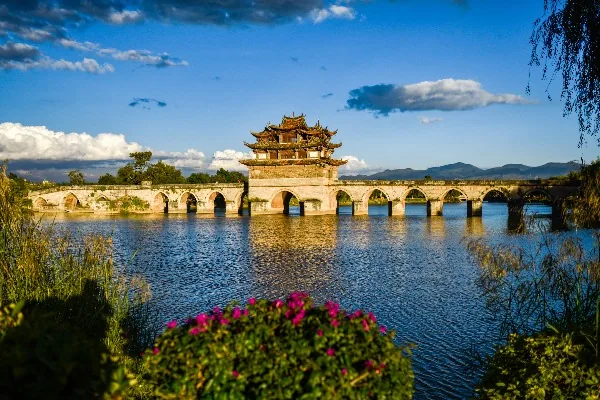
Day 4: Stroll slowly through Jianshui Ancient City, see Chaoyang Tower, and eat roasted tofu
7:30 AM: The warmth of Chaoyang Tower Bun Shop
The aluminum steamers at “Chaoyang Tower Bun Shop” downstairs were gurgling with white steam. The scent of pork and cabbage wrapped in warmth hit the window. My mother tugged my arm to go down: “Quick, the auntie said she saved the last two savory buns!” The auntie at the shop wore a faded blue apron, her fingertips dusted with flour as she smiled: “Two buns, two hot soy milks, served in coarse pottery cups, hot!” The bun skin was so thin it was translucent, bursting with juice at the first bite—the pork was stewed soft, and the cabbage was fresh and sweet. Even my father, who “doesn’t like buns,” finished every crumb. The soy milk was freshly ground and served in coarse pottery cups; I held mine and drank, my tongue shrinking from the heat, yet it was full of the bean’s sweetness, like the taste of morning tea in the alley of my hometown.
Chaoyang Tower Square’s old stones and copper bells
After finishing the buns, we went to Chaoyang Tower. The grey city bricks were inscribed with “the 17th year of Ming Hongwu,” and several foxtails swayed in the wind from the brick gaps. The stone benches in the center of the square were made of old bluestone, the surface polished smooth. My mother sat down and touched the bench: “This stone is older than when I got married.” We stood at the edge of the square taking photos of Chaoyang Tower—copper bells hung from the five-story eaves, tinkling in the wind. The tower was high enough to overlook the scattered red roofs in the ancient city, with the cries of flower sellers echoing from afar. My father held up his phone to photograph the roof ridge beasts, squinting at the screen: “The horns of this Xiezhi are exactly like the ones in the ‘History of Chinese Architecture’ I read before, no cracks!”
Zhu’s Family Garden’s pond and orchid fragrance
At 9:30 AM we strolled to Zhu’s Family Garden. The stone archway at the entrance was inscribed with four gilded characters: “Follow the rules.” Passing through a moon gate, we reached a small pond with pink-white water lilies floating on the surface. I squatted to feed the koi with breadcrumbs; the child clapped his hands in excitement, and although the splashing water wet his little trouser legs, he laughed: “Mom, look! The fish bit my hand!” The elderly sat in a pavilion by the pond, the pillars inscribed with the couplet “Farming and Reading Legacy.” My mother leaned in to read: “The handwriting is good, powerful, just like your grandfather’s calligraphy.” It was shady in the pavilion; she fanned herself with a cattail fan and watched the fish, saying “More comfortable than an air-conditioned room at home, the wind is natural.” The garden paths were flat bluestone; I helped my father walk slowly. Passing a carved wooden door, we found a hidden small garden with orchids and roses, smelling clear and fragrant. My mother leaned in to smell: “This orchid scent is just like the ones I used to grow.”
12:00 PM: Grass sprout rice noodles at Lin’an Hotel
At noon we went to “Lin’an Hotel.” The wooden storefront had a faded blue cloth sign, and three jars of pickled white radishes stood at the door. The waitress was an auntie in a floral shirt; seeing us, she shouted: “Here again? Grass sprout rice noodles with a fried egg?” The wooden tables had a patina and were smooth to the touch, with old photos hanging on the walls—people from the last century sat at the same tables, smiling with large bowls of rice noodles. The grass sprout rice noodles were served; grass sprouts are unique to Jianshui, as crisp as freshly picked lotus root tips, making a “crunch” when bitten. The broth was made from pork bones simmered all night, so fresh I finished half a bowl of soup. When the lid of the Steam Pot Chicken was lifted, the aroma hit us; the chicken was stewed soft. My father picked a piece of breast meat: “This meat isn’t dry, even fresher than yesterday’s chicken soup!” The child wanted a bowl of rice noodles with a fried egg; the egg was crispy, and he broke the yolk to mix into the soup, eating with an oily mouth and shouting: “One more bowl!”
2:30 PM: Scholar robes and old desks at the Imperial Examination Hall
In the afternoon, we went to the “Imperial Examination Hall.” The stone lion at the entrance was missing an ear, yet it had more character than a new one. We rented three sets of scholar robes—my father in dark blue, mother in light blue, and the child in moon white, the clothes carrying the warmth of the sun. The child put it on and held a thread-bound book, walking with square steps and shouting: “I’m a scholar going for the top rank!” The staff smiled while helping us take photos against the background of old wooden desks and examination cells; the desks still bore the crooked characters carved by past candidates: “Success in the exams” or “I want to go home.” The child ran into an examination cell, squatted on the doorstep, flipped through the book, and muttered: “Zhi hu zhe ye…” My mother sat on a nearby stone bench, watching him and smiling: “This kid is much better behaved than when watching cartoons at home.” There was a small exhibition in the hall with old exam papers, inkstones, and brushes. I leaned in to see; the characters on the exam papers were in neat Guange style. My mother said: “Just like your grandfather’s handwriting when he took the scholar exam, every stroke is meticulous.”
6:00 PM: Sunset on Hanlin Street and the scent of roasted tofu
Leaving the hall, we walked back along Hanlin Street. The plane trees by the street filtered the sunset, stretching our shadows. My mother held the maltose she didn’t finish this morning; the child licked his maltose and shouted: “I want to wear scholar robes again tomorrow!” My father said: “Shall we go to Alu Ancient Cave tomorrow? I heard the stalactites look like icicles.” I nodded with a smile as the scent of roasted tofu drifted from the neighbor’s shop—that crispy, fragrant smell that makes your mouth water. Today’s ancient city wasn’t crowded or noisy; there was only the temperature of old houses, the laughter of the elderly, the skipping of the child, and even the wind was slow, as if time had been crushed and gently spread over the bluestone slabs.
Small Detail Memo:
- Arrive at Chaoyang Tower Bun Shop before 8:00 AM; otherwise, only cold buns are left.
- There is moss by the Zhu’s Family Garden pond; elderly and children should hold the railings.
- Grass sprout rice noodles at Lin’an Hotel are fresher with a fried egg; add bamboo fungus to the Steam Pot Chicken.
- Scholar robes at the Imperial Examination Hall are free, but require an ID card as a deposit; return them clean after wearing.
- The bluestone paths in the ancient city are flat, but the alleys are narrow; be careful with strollers.
- Go to Hanlin Street for roasted tofu at night; the dipping sauce in the old alley shops with Houttuynia cordata is incredibly fragrant.

Day 5: Jianshui to Yuanyang, 3-hour drive, arrive at the terraces to see the evening clouds
8:00 AM: Millet porridge at the inn and departure preparations
Woke up early to eat freshly made millet porridge at Yunmei Guesthouse—the porridge was thick enough to coat a spoon, served with pickled radishes and fried tofu. The radishes were so crispy they “crunched,” and I drank two big bowls before getting up. At 8:30 AM, after packing, the owner helped me move the 20-inch suitcase downstairs and called a tourist bus for Jianshui Passenger Station (70 yuan/person, 3 hours direct to Yuanyang). The bus was a new Yutong with adjustable backrests; I set my mother’s to semi-recline. She stuffed the leftover boiled corn into her backpack: “To gnaw on when hungry on the road, fresher than the sweet corn at scenic spots.” As the bus started, the Jianshui rice paddies outside looked like spread-out green silk, with the occasional egret fluttering its wings over the fields. My father napped by the window, and my mother squeezed my hand and smiled: “This road is even steadier than yesterday’s Fuxian Lake bus; I’m not dizzy.”
12:00 PM: The road from Yuanyang Passenger Station to Yunmei Guesthouse
After 3 hours, we reached Yuanyang Passenger Station. At the exit, an uncle in a dark blue T-shirt was holding a “Yunmei Guesthouse” sign—arranged by the owner via WeChat in advance. A 15-minute taxi ride took us into Duoyishu Village. The terraces along the way were layered, with bits of pale yellow water marks amidst the green, as if God had crumpled a velvet carpet and spread it over the mountain. The hostess, in a blue cloth apron, came out with a cup of warm green tea: “Drink some to relieve fatigue; this is tea we grew ourselves.” The guesthouse was at the head of the village, a 10-minute walk from the Duoyishu Observation Deck. The room was on the second floor. The balcony faced the terraces directly, with three pots of succulents on the railing, the sunlight leaking in and making the leaves translucent. The bed was a firm brown mat with cotton and linen sheets; my mother touched them: “Soft, more comfortable than the bed at Zhu’s Family Garden yesterday.” The bathroom had a thermostatic shower; my father tested the water: “Just right for soaking feet later.”
2:30 PM: Tea on the balcony and slow terrace time
We brought small stools to sit on the balcony and drink tea—the green tea leaves provided by the owner unfurled, smelling clear and fragrant. My mother looked at the distant terraces and sighed: “These fields are like the ones in our hometown, but neater, like a painting.” The child leaned on the railing counting terrace plots: “One, two… oh, I can’t count them all!” Not until 4:30 PM did we return to the room; my mother spread the thin blanket she brought on the bed: “Keep your knees warm when watching the clouds tonight.”
5:30 PM: Sunset at the observation deck and the light-chasing child
At 5:30 PM, the owner called us: “The sunset is coming, walk faster!” A 10-minute walk along a country path led to the observation deck. The sunset had already stained the terraces golden red, as if someone had scattered crushed gold into the layered water fields, shimmering. My mother quickly took out her phone: “Quick, take a picture! This light is even more brilliant than this morning’s!” My father held his camera, frowning at the terraces through the lens: “This composition is too perfect; I don’t even know which angle to choose.” The child skipped around chasing his shadow, which flickered over the terraces: “Mom, look! I stepped on the sun!” An auntie planting terraces nearby laughed and joined in: “This kid is very clever, just like my grandson; he chased his shadow last time too.” The sun slowly sank, the terrace colors changing from golden red to orange-red, then to deep purple. Every second was changing, as if someone were slowly applying a palette. My mother took more than twenty videos, never stopping her talking: “Show my old sisters when I get back; they’ll definitely die of envy.”
7:30 PM: Home-cooked meal at the guesthouse and a sense of life
Dinner was in the guesthouse hall. The terrace fish was roasted over a wood fire—served still sizzling with oil, the skin charred and crispy, the meat inside so tender it crumbled at a touch, with very few bones. I took a piece: “Even fresher than yesterday’s Steam Pot Chicken!” The owner wiped his hands and smiled: “This was caught from the terraces this morning and roasted with pine branches; very fragrant.” The stir-fried wild greens were bitter greens grown by the owner, clear and refreshing with a slight bitterness; I ate half the plate: “More fragrant than organic vegetables in the city.” There was also local eggs scrambled with green onions, yellow eggs wrapped in onion fragrance. My father ate two big bowls of rice: “This rice is soft, more fragrant than yesterday’s Jianshui rice.”
8:30 PM: Watermelon in the courtyard and the starry sky
After dinner, we sat in the courtyard to enjoy the cool air. The owner sliced a watermelon freshly picked from the field: “Sweet, no pesticides.” My mother took a bite: “Yes, even sweeter than sandy-pulp watermelon from the supermarket.” Looking at the night view of the terraces, there were more stars than in the city. My mother said: “I want to wake up early tomorrow for the sunrise; I heard it’s even more beautiful on the terraces.” My father nodded: “Then I’ll set the alarm for 5:00 AM.” The child gnawed on the watermelon: “I want to chase the light again tomorrow!” I touched the succulents on the balcony, the scent of rice paddies drifting in the wind—this trip had no rush, no queues, only the slow sunset, delicious fish, and the laughter of family.

Day 6: Watch the morning sun at Yuanyang Terraces, walk the wooden planks to photograph light and shadow
At 5:30 AM, the wooden window frames of the guesthouse were whitened by the morning mist. My mother woke up first, lifted the thin blanket, and poked her head out: “Shall we go see the sunrise? Worried it will be crowded later.” I responded, put on my jacket in the dark, and followed the hostess downstairs—she brought a bowl of purple rice porridge with two honey dates floating on top, the sweet scent and warmth hitting my face: “Have a warm sip; the mountain road is cool.” The porridge was thick enough to coat a spoon, and after slurping it down, my stomach felt warm.
The Duoyishu observation deck wasn’t fully lit yet. The morning mist wrapped the mountain peaks like a thin veil, and dew on the trouser legs felt cool. We found a stone pier to sit on; nearby, an old woman in a bamboo hat was weaving, indigo thread darting across the wooden shuttle. The eastern sky slowly stained orange-red, and the sun, like a shy child, first showed half a face before suddenly leaping over the mountain. In an instant, the water in the terraces became a mirror, crushing the sunlight into thousands of gold fragments, flowing down the mountain layer by layer. My mother’s hand holding her phone trembled: “Quick! This light is even brighter than yesterday’s clouds!” My father held his old camera, the lens covered in a thin mist, and wiped it hurriedly: “This composition is perfect, don’t let it be blurry!” The child skipped and shouted: “The sun is in the water! The sun is in the water!” The old woman looked up and smiled: “This kid is clever, just like my granddaughter; she also shouted that the sun fell into the water last time.”
After the sunrise, we returned to the guesthouse. My father lingered in bed: “No more early starts, let’s go to Bada Observation Deck at noon.” At 9:30 AM we strolled over. The pine plank road was very gentle without a single steep slope, and the handrails were polished iron bars. I helped my mother walk slowly. She pointed at the terrace curves: “Look at these fields, layer upon layer, like the lace on the sweaters I used to knit.” The child ran ahead counting terrace plots, forgetting by the tenth and chasing his shadow instead—his shadow flickered over the terraces like a little rabbit. At the small observation deck at the end of the plank road, the sunlight was soft, casting deep and shallow shadows on the terraces. My mother stood there taking photos, the wind lifting her hem: “This wind carries the scent of rice fields, ten times more comfortable than city air conditioning.”
At noon, we ate at “Terrace Family” under the plank road. A Hani uncle in a dark blue top came out: “Bamboo rice is freshly roasted!” The bamboo was fresh sweet bamboo, filled with glutinous rice, cured meat, and peanuts, roasted until the skin was charred black. When split, steam wrapped in bamboo fragrance burst out. I leaned in to smell, and my nose was almost overwhelmed by the fragrance—one bite, the glutinous rice was soft enough to melt, and the cured meat was marinated with star anise and cinnamon, the aroma going straight to the throat. The child gnawed on the bamboo, his cheeks bulging like a hamster and rice grains at the corner of his mouth: “Mom, this rice tastes like bamboo!” My father ate a big bowl: “Fresher than yesterday’s terrace fish, the cured meat is great!” My mother also nodded: “This rice isn’t undercooked, perfect timing.”
In the afternoon, we went to Azheke Village at the foot of the mountain. The stone houses were built with local green rock, with moss growing in the cracks like a green velvet coat. Under the old locust tree at the village entrance, several Hani aunties were weaving indigo thread on wooden looms. The child leaned in to watch, and an auntie smiled and handed him a piece of indigo cloth: “Want to try?” We quickly rented Hani clothes—indigo tops, black pants, and red cloth tied at the waist. The child put them on, holding a small basket of fake rice, squatting on the ground to put “rice” into the basket one by one, muttering: “I’m a little farmer, I’m going to plant grain!” The aunties laughed so hard they slapped their legs: “This kid is so good, just like my grandson!” We also went to the village pond to catch fish. The child didn’t catch fish but caught a bunch of tadpoles in a mineral water bottle, saying he would take them back to show Grandpa the “little swimming dots.”
Coming back in the evening, the sunset stained the terraces orange-red. We sat in the guesthouse courtyard, and the owner brought a cup of warm honey water: “Tired from playing today?” My mother took a sip: “Not tired, much more comfortable than wandering a mall.” My father rubbed his chin: “I want to see the Hani people pounding rice cakes tomorrow; are there any performances?” The owner smiled and nodded: “Tomorrow morning at 9:00 AM at the village ancestral hall. Come early, and you can taste the freshly pounded rice cakes.” I looked at my family’s smiling faces as the scent of rice fields drifted in the wind—how is this trip about scenery? It’s about slowing down with parents to catch every ray of sun, every bite of hot food, and the laughter of the skipping child.
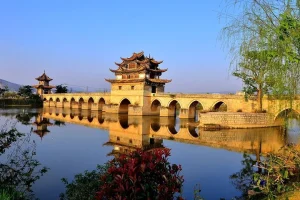
Day 7: Yuanyang to Kunming, 4-hour drive, two stops on the road to eat rice noodles
At 6:30 AM, the birds at the guesthouse woke me up—my mother was squatting in the courtyard wiping the green stone she picked up at Azheke Village yesterday, her fingers tracing the shallow patterns. She said, “Take this back to show my sisters; this is a stone from the mountains of Yuanyang, it can protect the house.” My father was nearby packing, pulling out the windbreaker I had stuffed into the suitcase and smoothing it: “Kunming is cool at night, this one is thick, don’t let your shoulders freeze.” At 7:30 AM we took a taxi to Yuanyang Passenger Station. The Lahu driver played “Awa People Sing New Songs,” and the car speakers drifted with the sound of terrace winds. The rice paddies along the way were still wrapped in morning mist, like a layer of white veil not yet rubbed away.
At the station, we bought bus tickets for 80 yuan/person. As we boarded, the driver smiled back: “The road is flat today, 4 hours to Kunming, two service area stops for food and toilet.” The bus was a new air-conditioned one, with seats wide enough for the child’s dinosaur toy car. My father lowered the backrest two notches and napped with his eyes closed. My mother held my hand, her knuckles still bearing the marks from knitting yesterday: “This road is much steadier than yesterday’s winding mountain road; I’m not dizzy.” Half an hour into the drive, the mist cleared slightly, and the terrace curves were visible, like the fingerprints of the earth.
First Stop: Qiaoxiangyuan Crossing-the-Bridge Rice Noodles at Gejiu Service Area
At 12:00 PM we reached the Dagejiu Service Area. Just pushing open the car door, I smelled the fragrance of chicken soup—the red and gold Qiaoxiangyuan sign hung at the entrance. The owner, in a white apron, was wiping tables; seeing us, he shouted: “Here? Crossing-the-bridge rice noodles by the window, you can see the mountains!” We found a window seat. The broth had simmered for 4 hours, a layer of golden chicken oil floating on top like scattered sunlight. My mother first took a spoonful of soup, wrinkled her nose, and sniffed: “So fresh my tongue is numb!” Then she added meat slices, quail eggs, and small oil greens; as the soup rolled, the fragrance of the meat emerged. The child held his bowl, pricked the quail egg, slurped the egg white, and laughed constantly with soup stains on his mouth: “Mom, this egg is even more fragrant than yesterday’s fried egg!” My father added a spoonful of chili oil and blew on the hot noodles: “These noodles are slippery, better than home-cooked, you can make a slurping sound.”
Second Stop: Roast Duck Fragrance at Yiliang Service Area
At 2:30 PM we arrived at Yiliang Service Area. There was a long queue at the roast duck shop at the entrance, the fragrance drifting for two miles—the owner was local to Yiliang, in an indigo apron, shouting as he held freshly roasted duck: “Just out of the oven, crispy skin and tender meat!” We approached. The duck skin was roasted golden and translucent like a layer of honey, making a “crunch” when bitten. The meat carried the fragrance of sweet bean sauce, so good you’d want to suck the bones clean. I bought half a duck, which the owner packed in an insulated bag, adding a bag of scallion shreds and sweet bean sauce: “Take it back for noodles, use the duck carcass for soup; it will be so fresh it attracts the neighbors!” The child drooled looking at the roast duck. I broke off a piece of leg meat for him: “Line your stomach first, there’s rice noodles tonight.” He gnawed on the meat with oily lips, his eyes shining like stars.
At 5:00 PM, the bus entered Kunming. The sunset stained Green Lake orange-red like a layer of honey. We took a taxi to Green Lake Hotel. The driver said: “This hotel is only 10 minutes from Green Lake; you can walk to the lakeside.” The front desk girl smiled while handing over the room card: “Your room faces east; you can see lotus in the morning and feel the breeze at night.” Opening the room, the bed was a soft brown mat; my mother lay down and patted it: “More comfortable than the hard bed in Yuanyang; I can sleep soundly tonight.” I drew the curtains; the Green Lake lotus filled the pond, red and white petals spread over the water. As the wind blew, the lotus scent drifted in. My father leaned over to look: “We can go feed fish by the lake tomorrow morning; the kid will love it.”
After dinner, we went to Green Lake. The summer lotus was in full bloom, red like fire and white like snow, petals still bearing water droplets. The child squatted by the lake with the small bread bought at the service area this morning to feed the fish. Schools of fish swarmed, red and black fish huddling together. The child shouted: “Mom, look! The fish are biting my hand!” Breadcrumbs were scattered all over the lake. We sat on stone benches by the lake watching the moon rise and shine on the lotus. My mother said: “This scenery is more beautiful than on TV; let’s come again.”
After dinner, we went to Jianxinyuan—an old Kunming crossing-the-bridge rice noodle brand. The storefront was old wood with copper lanterns. The broth was richer, with two pieces of ham floating, and the noodles were so slippery they made a sound when slurped. I added a fried egg; it was crispy, and after pricking it, the yolk flowed into the soup. Eating it with the noodles, it was so fragrant I licked the bowl clean. My father, biting the duck leg meat, said: “This roast duck is even more fragrant than the one we had in Yiliang this morning; let’s buy another half tomorrow.” My mother rubbed her stomach and laughed: “I’ve had three meals of rice noodles today, stuffed to death, but it’s just comfortable, better than wandering around scenic spots.”
Sitting on the bus back to the hotel, the child held the tadpole bottle from the day on his lap, and the tadpoles wagged their tails. My mother said: “These tadpoles must be taken back home, put in the fish tank for Grandpa to see.” I looked at the streetlights outside, shining on the Green Lake lotus leaves, the wind carrying the lotus scent—this journey home had no rush, no panic, only two warm bowls of rice noodles, a lake full of lotus, and the laughter of family huddling together. Even the wind was slow, as if time had been crushed and gently spread on the road home.
- Small Detail Memo:
- For the bus from Yuanyang to Kunming, choose the “Yuanyang-Kunming Shuttle”; stopping at service areas is convenient, no need to check for toilets in advance.
- For Qiaoxiangyuan Crossing-the-bridge rice noodles, wait for the soup to boil before adding ingredients so the broth stays fresh.
- Buy half an Yiliang roast duck; it’s enough. Use an insulated bag for packing so the skin stays crispy when you get home.
- Green Lake Hotel is near the lake; strolling at night to feel the breeze is comfortable for both elderly and kids.
- Add a fried egg at Jianxinyuan; the crispy fragrance blends into the soup, making it fresher than eating it alone.
- Tighten the tadpole bottle cap to avoid leaking and wetting luggage.
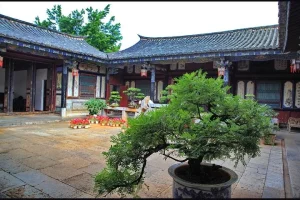
Day 8: Stroll around Kunming City, buy flower cakes, and prepare for home
At 7:00 AM, I dragged my mother into Zhuanxin Farmers Market—at 8:00 AM, the market is like a freshly opened steamer, with scents of flowers, meat, and rice wrapped in cries hitting the nose: “Jiahua Flower Cakes, hot!” “Want some beef jerky with a bit of fat?” “Tamarind cake is very sweet, kids love gnawing on it!” I squeezed into the Jiahua stall. The oven’s warmth reflected on the master’s gloves as he pinched a rose pie, flipped his wrist, and stuffed it into the oven. In a moment, the pie crust puffed into golden bubbles, the edges curling with a crispy rim. The master took it out and handed it to me: “Bite while it’s hot, it’s oily!” I took a bite, and the rose fragrance burst out, sweet but not greasy. Oil dripped from my fingers onto my wrist. My mother quickly pulled out a tissue to wipe me: “Slow down, no one is fighting you for it!” She bought two boxes of freshly baked rose pies and picked a catty of lean beef jerky—lean and chewy, the pickled pepper flavor wrapping the meat aroma. The child approached and tugged the packaging: “Mom, can I eat this?” I broke off a piece, and he chewed until his cheeks puffed: “More fragrant than yesterday’s roast duck!” Finally, we weighed a bag of tamarind cakes; the pulp was bright red and translucent. One bite was sour-sweet, and the child gnawed on the bag without stopping.
At 9:00 AM we strolled to the old campus of Yunnan University. The old locust tree at the gate tilted its neck, its branches reaching over the wall as if greeting passersby. Inside, the ginkgo leaves were bright green, branches weaving into an umbrella-like dome. Sunlight leaked through, paving the ground with fragmented gold. The child skip-jumped ahead and suddenly stopped: “Dad, this tree is ten times taller than the ones in our community!” He approached the classroom window and peered through the glass—university students were typing on computers, sunlight shining on their textbooks. The child tugged my sleeve: ” I want to take a photo with the older brothers and sisters!” We stood under the ginkgo tree. A student in a white shirt held his phone; in the lens, the child stood on tiptoe, his hand on the tree trunk, eyes shining like stars: “Eggplant (Cheese)!” After the photo was developed, my mother set this photo as her phone wallpaper.
At noon we went to the Yun University cafeteria. The auntie at the window wore a blue cloth apron, her hands as fast as weaving: “What kind of rice noodles? Thin round ones or wide ones?” I chose thin round ones. The auntie ladled pork bone soup, added a fried egg, marinated tofu, and a handful of greens. The noodles were slippery, absorbing the freshness of the soup; the fried egg was crispy, its yolk flowing into the soup when pricked. I slurped the noodles and looked up to see my father gnawing on beef jerky, chili powder at the corner of his mouth: “This cafeteria meal is more solid than at home, 10 yuan fills you up!” My mother smiled over her soup bowl: “Even fresher than yesterday’s crossing-the-bridge rice noodles.”
In the afternoon, while packing, my mother sat on the bed folding the cotton and linen shirt she bought yesterday—the fabric was as soft as a cloud. She touched it: “Wear this back home; more comfortable than silk.” My father flipped through photos on the camera, stopping at the one of Yuanyang Terraces: “Look at this one, the terraces are like mirrors, the sun reflecting off them.” I stuffed the child’s dinosaur toy into the suitcase. He ran over holding his tadpole bottle: “Mom, I’m taking the tadpoles home to show Grandpa tomorrow!” I tightened the cap: “Don’t worry, it won’t leak.” Finally, I checked the train tickets home for tomorrow—10:00 AM train. We put our IDs in the innermost layer of our wallets. My mother muttered: “Don’t forget them; someone forgot last time at Shilin and almost didn’t get on the train.”
At night, sitting by the hotel window, watching the night view of Green Lake—the streetlights shone on the lotus leaves, and the night breeze blew in, carrying the lotus scent. My mother leaned on my shoulder: “These 8 days were not rushed, didn’t get tired, more comfortable than visiting ten scenic spots.” My father pointed at the streetlights outside: “Home tomorrow; take some flower cakes and beef jerky for the old pals, they’ll surely drool with envy.” I touched the box of flower cakes in the suitcase; the warm fragrance was still inside—how is this trip a tour? It’s about slowing down life into slow-motion with family, eating the scenery into our stomachs, and leaving laughter at every intersection.
A few pitfalls we encountered, sharing for you to avoid:
- Don’t forget IDs for tickets: At Fuxian Lake Luchong and Yuanyang Duoyishu, the elderly get free entry with a Senior Citizen Card, and children under 1.2 meters are also free; Zhu’s Family Garden is half price for seniors. My mother forgot her card last time and spent 50 yuan extra.
- Choose official buses: Don’t take illegal private cars from Yuanyang to Kunming. My neighbor’s auntie took one last time; the driver took a detour, costing 20 yuan more, and she almost arrived late.
- Go to old alleys for food: Don’t buy Jianshui roasted tofu at the scenic spot entrance. The one at West Gate Tofu Workshop is authentic—crispy outside and tender inside, you can buy 10 skewers for 5 yuan. Buy freshly baked flower cakes; Jiahua’s are best straight from the oven. If they get cold, steam them; they’ll be ten times more fragrant than packaged ones.
- Choose nearby accommodation: Prioritize staying near attractions, like Haigeng Dam or guesthouses in the ancient city. We stayed at Green Lake Hotel, a 10-minute walk to the lake, saving a lot of walking effort.
After packing, I made a list of things to bring tomorrow: flower cakes, beef jerky, tamarind cakes, and the child’s tadpole bottle. Frogs croaked from Green Lake outside. My mother was already asleep with a smile on her face—this is what a family trip should be like: no rush, no check-ins, just slowing down to share a hot meal with family and watch the scenery. That’s enough.
You May Also Like
- Couple Self-Driving 4-Day Western Yunnan | Lijiang Shuhe + Shaxi Ancient Town + Jianchuan Shaxi, Niche Highways & Artistic Homestays
- Yunnan 5-Day Independent Travel Budget Guide | Transportation + Accommodation + Tickets, How to Spend Over ¥2000 Per Person Most Wisely
- Kunming-Dali-Lijiang 7-Day Public Transport Guide | High-speed Rail + Coach + Bus, Budget-friendly and Flexible Route Planning
- For Students Yunnan 5-Day Budget Travel Guide | Hostels + Carpooling + Local Cuisine, Average 800 RMB per Person for an Awesome Trip
- Lijiang 5-Day Intangible Cultural Heritage Tour | Dongba Script + Naxi Ancient Music + Baisha Murals + Handmade Paper Making, Exclusive Route for Culture Enthusiasts
Yuanyang Rice Terraces and Jianshui — Practical Information
Tickets & Booking
- Jianshui Confucian Temple: Adult about CNY 39.9–40; child/student/senior CNY 20; intangible-heritage theater section C CNY 50, section V CNY 110[src]
- Jianshui Ancient Town mini-train: Round-trip hard seat adult CNY 120; concession ticket CNY 60 (departures 09:00, 14:30); advance booking required (OTA/on site)[src]
- Lin’an Prefecture Office / Imperial Examination Hall / Chaoyang Tower: Lin’an Prefecture Office CNY 32; Imperial Examination Hall CNY 20; Chaoyang Tower CNY 15; combined ticket for Zhu Family Garden + Confucian Temple + Lin’an Prefecture Office + Chaoyang Tower + Imperial Examination Hall CNY 115[src]
Transport & Schedules
- Kunming South Bus Station → Yuanyang Xinjie town | Long-distance coach: Fare about CNY 120–140, journey about 5.5 h, direct to the Xinjie town terrace area[src]
- Jianshui station → Yuanyang Nansha town | Passenger coach: Fare about CNY 38, rolling departures[src]
- Yuanyang Nansha bus station → Xinjie town (terrace area) | Rural minibus: About CNY 10 per person, rolling departures 7:00–20:00, about 40 min[src]
Where to Stay · Room Type · Nearby
- Near the Duoyishu scenic area | Room tip: The top choice for watching the sunrise; you can walk to the viewpoint in the early morning | Nearby add-ons: Duoyishu viewpoint, Azheke Ancient Village[src]
- Xinjie town / Shengcun market town | Reference price Cheaper on weekdays | Room tip: Restaurants and guesthouses are concentrated, convenient for Hani-style dining | Nearby add-ons: Bada viewpoint, Qingkou Hani Folk Village[src]






