



Day 1 Full-Day Deep Tour of Shougang Park: Big Air Shougang, No. 3 Blast Furnace, Qunming Lake
Get off at Shougang Station of Metro Line 11 and walk. 6-8 hours.
I have visited many industrial heritage sites, but the transformation logic of Shougang Park is indeed the most solid and least superficial one in China currently. This is not just a place for taking photos; if you want to fully experience the Winter Olympic legacy, coming out of Shougang Station on Metro Line 11 around 9:00 AM is the most efficient way. The exit design of this station has a strong industrial feel and connects directly to the park’s walking system.
🎿 Big Air Shougang: Observation from an Aerial Perspective
When the sunlight is at its best in the morning, I suggest you head straight for the Big Air Shougang. Many people only look at it from below, but I strongly recommend buying a ticket to take that inclined elevator up.
- Entry Details: Before entering the Big Air area, buy your “Big Air Departure Area” ticket in advance using your real name via the “Liugonghui” or Shougang Park mini-programs. Look for the entrance named “Inclined Elevator.” It is one of the very few elevators in the world that runs on a curved track, and the push-back sensation during operation is quite unique.
- High-Altitude View: When you stand on the departure platform at the top of the Big Air, directly ahead are the ancient towers of Shijingshan, and to the left is a row of giant cooling towers. This feeling of ancient architecture, modern industrial heritage, and world-class sports facilities in the same frame is something you absolutely won’t see anywhere else.
- Track Observation: Looking closely, you will find that the slope of the Big Air is much steeper than it appears on TV. I specifically noticed that the bottom of the track has been transformed into an open-air performance venue; this multi-functional conversion of space is a typical example of the sustainable use of Winter Olympic legacies.
💡 Personal Experience Case
When I went last time, I met an old Shougang worker at the departure platform. He told me that this area where the Big Air stands was originally a storage yard for iron ore. Now he stands here as a park security officer, watching young people skiing and playing. This industrial transformation spanning decades is more vivid than any written explanation.
| Experience Item | Specific Cost Reference | Suggested Duration |
|---|---|---|
| Big Air Area Ticket | Free (Ground visit) | 30 minutes |
| Summit Elevator Ticket (Incl. Departure Platform) | 80 Yuan – 110 Yuan (Fluctuates by season) | 60 minutes |
| Cooling Tower Interior Visit | Partially open, check on-site | 20 minutes |
🏭 No. 3 Blast Furnace and Qunming Lake: Combining Industrial Structure with Ecology
Towards noon, walk north from the Big Air along the banks of Qunming Lake, and you will see the shocking blast furnace architectural complex.
- Qunming Lake Reflection: Qunming Lake was once a cooling pond for industrial circulating water, and the water quality is now well-treated. Be sure to go to the lakeside wooden boardwalk on the east side of the lake. This is the perfect spot to capture the reflections of the Big Air and the cooling towers. I found that between 1:00 PM and 2:00 PM, the light on the lake is flat, and the water surface can reflect the curves of the Big Air like a mirror.
- Structure of No. 3 Blast Furnace: No. 3 Blast Furnace is the soul of the entire park. It is not a closed factory but a hollowed-out cyberpunk-style space. I suggest walking along the skywalk on the second floor to see those huge air supply pipes with diameters exceeding two meters and the rust-stained valves up close. This equipment hasn’t been painted, preserving its most primitive texture.
- Bookstore and Leisure: There is a very famous bookstore on the first floor of No. 3 Blast Furnace. Although it sells books, the space design utilizes the original industrial foundation. Rest there for half an hour and look up at the towering interior of the furnace body; the unique sense of spatial pressure is remarkable.
| Area/Step | Walking Route | Key Details |
|---|---|---|
| Qunming Lake Boardwalk | Walk west along the north bank | Best point to photograph the Big Air, cooling towers, and lake in one frame. |
| No. 3 Blast Furnace 240 Platform | Take the internal escalator or stairs up | Observe the industrial piping network; experience the most authentic feel of a steel plant. |
| Global Flagship Starbucks | Located in the old warehouse diagonally across from No. 3 Blast Furnace | The interior retains original hoisting equipment. |
🍱 Park Dining and Practical Suggestions
In the afternoon, when energy consumption is high, the park’s food supply is mainly concentrated in the “Liugonghui” complex.
- Dining Choices: I personally recommend finding chain restaurants in Liugonghui. The prices there are basically the same as in downtown Beijing and won’t be inflated just because it’s a scenic area. If you have a sufficient budget, you can have lunch at the Shougang Park Shangri-La Hotel, which is converted from an old power plant; the interior is filled with greenery and the environment is very high-end.
- Walking Load: Shougang Park is very large. Although there are park shuttle buses, the intervals are unstable. From my actual test, walking the entire route takes at least 20,000 steps. Please be sure to wear sneakers with good grip and soft soles.
- Network and Reservations: Although park entry is currently free, certain specific venues (such as the museum or the interior of the Big Air) require a second check of reservation information. I suggest you screenshot these QR codes and save them on your phone in advance, as there are signal dead zones inside the blast furnace where temporary refreshing will be very slow.
| Category | Real Advice | Reason |
|---|---|---|
| Supply Point | Suggest bringing your own bottle of water. | Vending machines in the park are scattered; sometimes you have to walk for a long time. |
| Wind Protection | Bring a windbreaker even in spring. | The wind at the top of the Big Air is very strong, and the perceived temperature will be 3-5 degrees lower. |
| Hailing a Ride | Suggest going to fixed pick-up points at the North or South Gate when leaving. | Traffic control is implemented inside the park, making it difficult for ride-hailing cars to enter the area. |
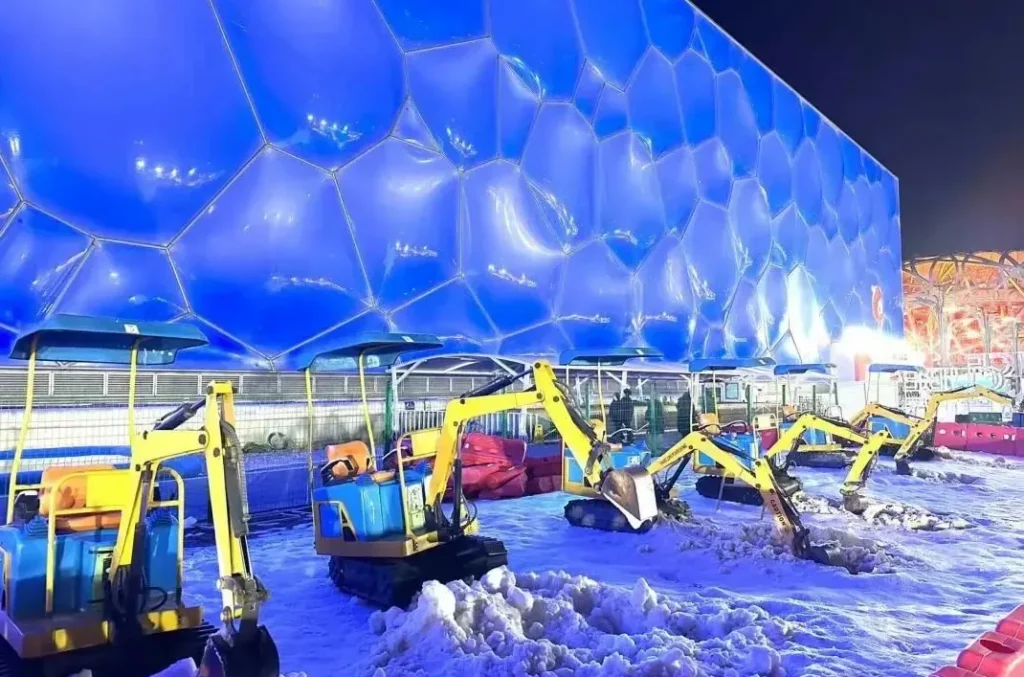
Day 2 Full-Day Olympic Area: Skating at Ice Cube, Dual Olympic Museum, Bird’s Nest Exterior, Olympic Sports Center Metro Station Line 8
5-7 hours.
To navigate the Beijing Olympic Center Area clearly, I suggest focusing on the deep internal experience of the “Ice Cube” rather than just a superficial walk around the plaza. Around 10:00 AM, I emerged from Olympic Sports Center Station on Metro Line 8. This station’s decoration style itself carries a rich Olympic atmosphere, and you can see the iconic blue membrane structure upon exiting.
⛸️ Ice Cube: Full Contact from Stands to Ice Surface
The current “Ice Cube” is not just a swimming pool or curling hall; its underground ice rink is one of the most stable and professional ice venues I have seen in Beijing.
- Skating Operation Details: I entered from the south gate of the venue and followed the signs down to the underground Ice Sports Center. After exchanging for a skating card at the window, the process of getting shoes and protective gear was very fast. The thickness and hardness of the ice here are maintained strictly according to Winter Olympic standards, so the resistance is very low and it’s very smooth. If you are a beginner, I suggest asking staff for a “skating assistant”; that small frame is very stable for practicing balance.
- Temperature Feeling: Many people worry about it being cold inside, but my actual feeling is that due to zoned temperature control, the temperature near the ice surface is indeed low, but the rest area and spectator stands are not cold. I was only wearing a thin fleece and a windbreaker, and I even felt just right after moving around.
- Dual Olympic Museum: Don’t rush off after skating; there is a Dual Olympic themed exhibition area inside the venue. I specifically noticed the area displaying medals and torches from previous games. Seeing the details and patterns of the torches up close is much more shocking than seeing them on a large screen. Technical details of the venue’s function switch from 2008 to 2022 are displayed here, which is of great educational value.
Personal Experience Case
While resting at the rink, I happened to meet several retired curling athletes instructing young team members on the adjacent lane. I observed that the ice surface is leveled by an ice resurfacer every once in a while. This attention to detail indeed reflects the high-level operation of the venue as a legacy. Skating near these professionals makes you want to straighten your back unconsciously; the sense of atmosphere is very unique.
| Step and Project | Specific Cost Reference | Estimated Duration | Tips |
|---|---|---|---|
| Skating Experience Ticket (Unlimited Time) | 70 Yuan – 100 Yuan (Incl. gear) | 120 – 150 minutes | Gloves must be worn; bring your own or buy on-site. |
| Dual Olympic Museum Visit | Included in venue ticket | 45 – 60 minutes | Focus on the comparison models of 2008 and 2022. |
| Membrane Structure Photo | Free (Exterior or interior stands) | 15 minutes | Find an angle with good light to capture the blue membrane. |
🏟️ Bird’s Nest Exterior and Olympic Park Landscape Belt
After 2:00 PM, the light begins to soften, which is the best time to walk around the exterior of the Bird’s Nest.
- Best Shooting Perspective: I didn’t spend money to go inside the Bird’s Nest because I think its most beautiful part is the complex steel structure shell. Walking around it, I found the observation deck on the northeast side and the Central Axis corridor connecting the Bird’s Nest and Ice Cube to be the best photo spots. From this angle, you can capture the charm of the interlaced steel bars while including the distant Linglong Tower.
- Dining and Supply: This walk involves many steps. If you’re hungry, I don’t recommend buying from roadside stalls. I walked through the underground tunnel to the Xin’ao Shopping Center. There are many chain brands there, whether you need a simple meal or a coffee refill. The underground dining area has a good environment, with air conditioning in summer and heating in winter, and prices are very transparent, making it an ideal transit stop.
- Cultural Atmosphere: On the Landscape Avenue, you will meet many local residents relaxing. I found the signage system here to be very clear, with detailed QR code explanations next to every sculpture and relic. This open museum experience allowed me to learn about the planning history of the entire center area while strolling.
| Area/Step | Specific Walking Route | Detailed Suggestions |
|---|---|---|
| Landscape Avenue Stroll | Walk from Ice Cube South Gate to Bird’s Nest East Side | Look for the Olympic year markers engraved on the pavement. |
| Xin’ao Shopping Center Supply | Enter from the Beichen Road underground entrance | Recommend the B1 dining area to avoid exposure to heat or cold on the ground. |
| Linglong Tower View | Stand at the plaza north of the Bird’s Nest looking north | It was the broadcasting tower at the time and is a beautiful sight on the Central Axis. |
📝 Practical Details During the Visit
Based on my experience of running around all day, these few details might increase unnecessary physical exertion if ignored.
- Original ID Card: Security checks in the Olympic area are currently very strict. Although there are electronic IDs, my actual test showed that swiping the original ID card is the fastest way to enter stations and venues. Especially during holidays, the induction efficiency of ID machines is much higher than scanning QR codes.
- Choosing Rest Points: Although Olympic Park is large, benches are unevenly distributed. I suggest that if you feel tired, enter indoor places like the Ice Cube or Xin’ao Shopping Center as soon as possible. The rest areas there are more user-friendly and help avoid prolonged exposure to wind and sun on the plaza.
- Reservation Rhythm: It’s best to book the Dual Olympic Museum and Ice Cube skating on a mini-program one day in advance. I have encountered situations where people queued up only to find the skating capacity for the day was full; locking in the time in advance ensures your itinerary isn’t disrupted.
| Category | Actual Operation Advice | Reason |
|---|---|---|
| Footwear Advice | Wear sneakers with good arch support. | There is a lot of walking on hardened pavement; soles that are too soft will be tiring. |
| Phone Power | Carry a power bank. | Taking photos and scanning codes consumes a lot of power; shared power bank points are numerous but not always easy to find. |
| Exit Choice | Suggest leaving via Olympic Park Station. | This station is close to Xin’ao Shopping Center; you can board after eating without retracing your steps. |
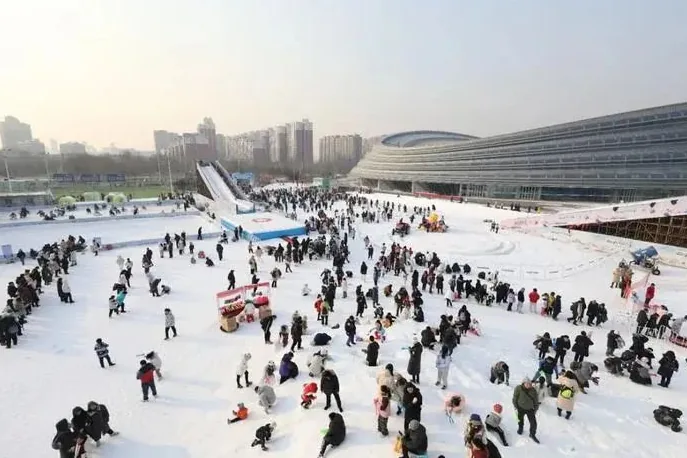
Day 3 Full-Day Yanqing Olympic Village: Take High-speed Rail to Visit “Snow Dragon” and Athlete Apartments
Round trip high-speed rail from Qinghe Station to Yanqing Station, shuttle bus transfer required. 8-10 hours.
The best experience of visiting the Winter Olympic legacy in Yanqing lies in feeling that sense of scale of the “mountain forest venues.” This day’s rhythm is fast because transportation to and from the city takes up a significant portion. At 8:30 AM, I arrived punctually at Qinghe Station, the hub of the Beijing-Zhangjiakou High-speed Rail. I booked a Fuxing train to Yanqing Station via 12306 in advance. The journey takes only 26 minutes. Switching from a bustling city to the foot of Haituo Mountain in half an hour is an efficiency that self-driving cannot match.
🚄 High-speed Rail Connection and Park Entry Path
Upon arriving at Yanqing Station, the real challenge is the transfer. Many people feel lost here because the train station is some distance from the scenic area.
- Shuttle Bus Operation: From the exit of Yanqing Station, I went to the bus transfer area. You need to look for the Y series or the specific Olympic Zone shuttle bus. The journey takes about 40 minutes. It’s recommended to sit on the right side of the bus to get a bird’s eye view of the “Snow Dragon” spiraling among the ridges as the vehicle climbs.
- Entry Process: At the entrance of the Yanqing Olympic Zone, ID cards also need to be verified. I found that the security level here is no less than that of an airport. I suggest holding power banks and metal objects in your hand in advance. If you visit in winter, the mountain wind here is extreme; even for indoor visits, the few hundred steps after getting off the bus will let you feel the “power” of Haituo Mountain.
🐉 “Snow Dragon”: Deep Breakdown of the National Sliding Centre
I believe the “Snow Dragon” is the most technologically valuable place in the Yanqing competition zone. It is not just an arena but a piece of art embedded in the mountain.
- Boardwalk Walking Details: I walked up the wooden boardwalk next to the track. This boardwalk is very cleverly designed, allowing you to closely observe the concrete surface of the track and the internal ice-making pipe system. I specifically noted the most thrilling 360-degree loop among the 16 turns. Standing on the observation platform, you can intuitively feel the vertical drop of the track; that sense of gradient is impossible to present on a screen.
- Sunshade Backing Details: The track is covered by huge wooden sunshades. This is not just for aesthetics but to prevent direct sunlight from affecting the ice temperature, thereby saving energy. I touched those components; the texture of the material is very solid.
Field Visit Case: A Lesson about Temperature Difference
While visiting the high-point area of the “Snow Dragon,” I met a photographer filming a documentary. He reminded me that the local airflow here is very complex. The city temperature was around 10 degrees at the time, but when I stood at the departure area at the top of the track, the wind chill caused the perceived temperature to instantly drop below 0. The windbreaker I brought played a huge role. If you plan to stay and shoot for a long time, don’t be fooled by the city’s sunshine; be sure to prepare a thick jacket that can seal the collar.
| Visit Point | Details | Suggested Duration |
|---|---|---|
| Departure Area (High Point) | Overlook the entire track view; best visibility. | 20 minutes |
| 360-degree Loop | Observe complex track curves and mechanical structures. | 15 minutes |
| Refrigeration Plant (Exterior) | Learn about the underground heart supporting the entire “Dragon.” | 10 minutes |
🏠 Yanqing Olympic Village: The Space Logic of Athlete Life
Coming down from the “Snow Dragon,” you can take a small shuttle bus within the park to the Olympic Village. The most authentic traces of athlete life are preserved here.
- Architectural Design Concept: I found that the apartments here are not high-rises but low-rise buildings scattered according to the mountain terrain. This “village-style” layout is to reduce damage to the mountain vegetation. I entered a model athlete room preserved in its original state and focused on the accessibility facilities: all door frames are wider than ordinary apartments, and the position of bathroom handrails is precisely calculated according to Paralympic standards.
- Olympic Village Plaza Area: This was once the place where athletes from various countries exchanged badges and held welcome ceremonies. Walking on the wooden platform, I can still see the traces where various delegations hung their flags. This sense of cultural flow is the most charming part of the Olympic Village.
| Area Name | Key Sights | Experience Details |
|---|---|---|
| Athlete Apartments | Eco-friendly furniture, accessible bathrooms | Observe bed extension designs and eco-friendly material textures. |
| Former Restaurant Site | Huge spatial layout, catering assembly line | Understand how to meet the dietary needs of thousands of athletes simultaneously. |
| Village Center | Post office, souvenir shop ruins | Feel the atmosphere of social life during the event. |
📝 Food Supply and Expense List
Food options in the Yanqing competition zone are relatively limited; you need to be mentally prepared for this.
- Dining Strategy: Within the Olympic Village area, it is currently dominated by simple fast food and vending machines. My lunch for the day was settled in a simple restaurant in the park; there weren’t many varieties, mainly offering beef noodles and simple sets. If you have specific taste requirements, I suggest eating near the Yanqing High-speed Rail Station or in the town before entering, or bringing some high-calorie supplies with you.
- Itinerary Load: My action camera showed that just going back and forth between the “Snow Dragon” and the Olympic Village, my steps easily exceeded 15,000. Moreover, most of it was on mountain slopes, which is much more physically demanding than Shougang Park.
| Category | Item Breakdown | Estimated Cost |
|---|---|---|
| Transportation | Qinghe-Yanqing Round Trip High-speed Rail + Shuttle | About 70 Yuan – 90 Yuan |
| Tickets | Yanqing Olympic Zone Pass | About 100 Yuan – 150 Yuan (Incl. shuttle) |
| Dining | Simple food supplies in the park | About 50 Yuan – 80 Yuan |
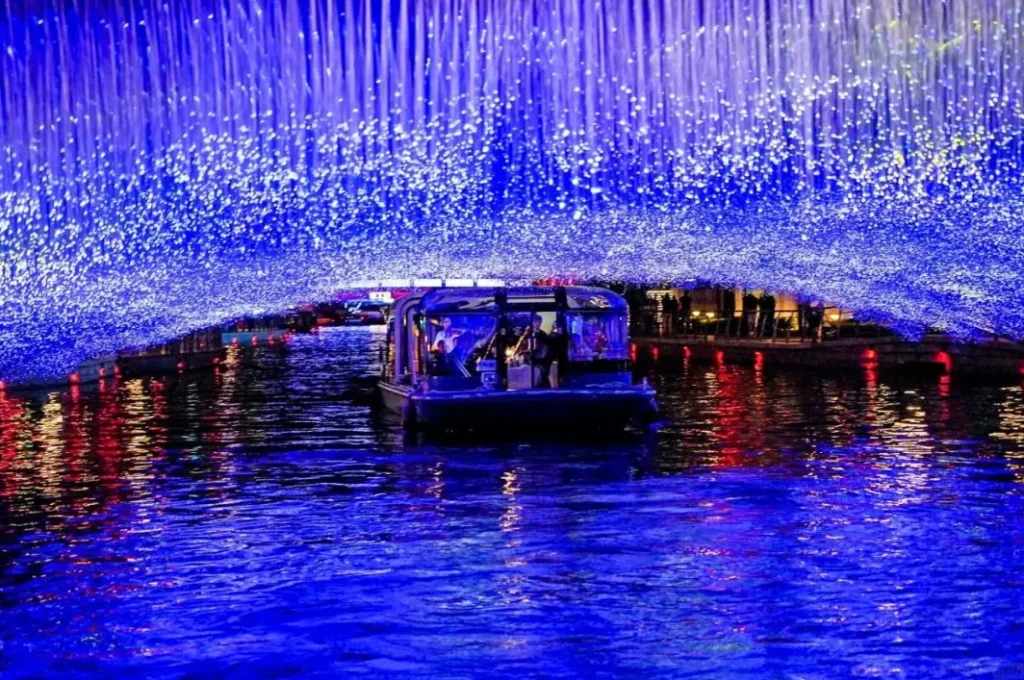
Day 4 Half-Day Beijing Olympic Museum: Systematic Understanding of Dual Olympic History Before Departure
At 9:30 AM, I arrived at Olympic Sports Center Station or Olympic Park Station on Metro Line 8. The last day’s itinerary is relatively relaxed, mainly to systematically connect the scattered venue memories seen in the previous days before leaving Beijing. The Beijing Olympic Museum is hidden quite deep; it is located on the south side underground of the National Stadium (Bird’s Nest). If you don’t look carefully at the signs on the ground, it’s easy to go the wrong way on the vast plaza.
🏛️ Entering Beijing Olympic Museum: An Underground Palace of Dual Olympic Memories
The scale of this museum exceeded my expectations; it condenses the essence of the 2008 Summer Olympics and the 2022 Winter Olympics into this underground space.
- Venue Entrance and Reservation: I suggest you complete your real-name reservation on the WeChat mini-program in advance. You need to swipe your ID card to enter, and the security process is very formal. If you come here after checking out like I did, the service desk on B1 provides free luggage storage service, which is very friendly for friends catching a flight or high-speed train in the afternoon.
- Exhibition Details: The entire museum is divided into the Prologue Hall, Summer Olympics, Winter Olympics, and Olympic Culture sections. I specifically focused on the 2022 Winter Olympics zone, where the actual “Xiangrui” medals are displayed. Seeing the concentric ring patterns on the gold medals up close, the hand-carved texture is indeed admirable. The giant snowflake cauldron from the opening ceremony, made of the names of various delegations, is also in the hall, restored at a 1:1 ratio with strong visual impact.
- Interactive Experience: There are many interactive devices in the museum. I tried a sensor-based ski simulation project; although it’s just a digital interaction, it allows you to intuitively understand the strict requirements of Winter Olympic events for physical balance.
Field Visit Case
I stayed at the torch display wall in the museum for a long time. Torches from every Olympic Games since the 1936 Berlin Olympics are displayed there, with “Lucky Cloud” and “Flying” being the highlights. I met a museum guide who specifically pointed out the exit of the “Flying” torch—it’s a rotating ribbon design, and because it used hydrogen fuel, its combustion technology was a world first at the time. This process of interpreting Olympic aesthetics from an engineering perspective made me feel that this trip was well worth it.
| Exhibition Area | Must-See Key Details | Suggested Duration |
|---|---|---|
| Prologue Relief | Shows the logic of combining Beijing’s Central Axis with Olympic venues. | 10 minutes |
| Winter Olympic Equipment | Actual skis and sleds used by athletes, authentic items with marks. | 30 minutes |
| Opening Ceremony Treasures | “Big Snowflake” cauldron, opening ceremony costumes. | 20 minutes |
| Medal Wall | Evolution of medals from summer to winter. | 15 minutes |
🍱 Supply and Cultural Atmosphere Before Departure
Finishing the museum visit around 12:30 PM, you can choose your last supply point based on your return transportation.
- Surrounding Dining: If you come out of the museum, the nearest commercial district is still the Xin’ao Shopping Center. This time I tried a simple old Beijing style restaurant and ordered fried bean sauce noodles and quick-boiled tripe. Although near a scenic area, the quality of the time-honored brand branch was quite stable, allowing a last taste of Beijing’s flavor before leaving.
- Souvenir Selection: The cultural and creative shop at the museum exit has many limited editions you can’t buy elsewhere, such as notebooks with Dual Olympic logos and miniature torch models. I compared them, and the prices here are more affordable than those in airport licensed stores, with more variety.
- Crowd Observation: In the museum, I saw many families with children. The cultural atmosphere here is strong; it’s not a stiff display but rather storytelling through these objects. You’ll find that the Olympics is not just about sports, but a complete record of the urban renewal of Beijing.
| Category | Specific Advice | Reason |
|---|---|---|
| Transportation | Suggest allowing over 2 hours for heading to the airport. | Although the Olympic Park area has convenient subway access, ground traffic may be restricted due to events. |
| Luggage Strategy | Make full use of the museum’s storage lockers. | Avoid dragging a suitcase through the vast Olympic Park. |
| Photo Spot | A photo with the Bird’s Nest steel structure at the museum exit. | The perspective here is more unique than at the plaza center, with relatively fewer crowds. |
📝 Expense Estimate and Personal Experience
This half-day itinerary cost is extremely low, involving mainly dining and transportation.
- Expense Breakdown: Museum visit is completely free. If you take the subway round trip and have a lunch, it can be done for less than 80 Yuan per person.
- Practical Advice: Never buy so-called “Olympic Commemorative Badges” peddled by mobile vendors on the plaza; many are products of unknown origin. If you want genuine souvenirs, be sure to buy them inside the museum or at official authorized physical stores.
- Time Control: The air conditioning in the museum is strong, making it easy to lose track of time. If your high-speed train or flight is after 4:00 PM, leaving Olympic Park Station by 3:00 PM is a safe choice.
| Project | Estimated Amount | Remarks |
|---|---|---|
| Round-trip Subway | 10 Yuan – 15 Yuan | Calculated based on distance from departure point. |
| Lunch Cost | 40 Yuan – 70 Yuan | Recommend Xin’ao Shopping Center chain stores. |
| Souvenirs | 30 Yuan – 200 Yuan | Depends on personal willingness to purchase. |
Related Reading
- 4-Day Beijing Night Tour Route | Liangma River Cruise + Qianmen Night Market + Sanlitun Club & Bar Exploration Guide
- 5-Day Beijing Food Trip | Michelin Restaurants + Hutong Private Kitchens + Time-Honored Breakfast Spots Check-in Map
- 3-Day Silver-Haired Nostalgic Tour in Beijing | Old Brand Delicacies + Model Opera Screening + Educated Youth Themed Homestay
- 7-Day Slow Travel in Beijing for Autumn Charm | Red Leaves in Gubei Water Town + Zen Meditation at Hongluo Temple + Yanqi Lake Cycling Wellness Journey
- 4-Day Heartwarming Winter Beijing Itinerary|Hot Spring Private Bath + Copper Pot Hotpot + Family Snow Park Guide






