



Day 1: Arrival in Shangri-La and Exploring Dukezong Ancient Town
Transportation Details: At exactly 9:00 AM, the plane landed at Diqing Airport. As I opened the cabin door, I felt a slight tightness in my breath—this was the first “greeting” from the plateau. While collecting luggage, I met an elderly couple from the same flight; we reminded each other to “walk slowly and don’t run.” Outside the terminal, I hailed a taxi. The driver was a dark-skinned Tibetan master who proactively helped me fit my 28-inch suitcase into the trunk. He said, “The East Gate of the Ancient Town is close, 20 minutes to get there. I don’t use the meter, it’s 30 yuan including the highway fee.” On the way, he pointed out the window and said, “That way is Napahai; there’s a lot of water in the rainy season, but the grass is just turning green now.” Hearing that I was staying in the ancient town, he even reminded me, “Go in through the East Gate and turn right at the third guesthouse; the owner is an honest person.”
Accommodation Experience: I stayed at “Tashi Guesthouse,” which I booked a week in advance. It’s located just 50 meters inside the East Gate of the ancient town, costing 280 yuan per night for a standard room. Entering the door, I saw a small courtyard planted with Gesang flowers. The owner, Dolma, was sunning quilts. Seeing me carrying an oxygen cylinder (prepared to prevent altitude sickness), she smiled and said, “We have a free oxygen concentrator here on the bedside table.” The room was well-heated with a south-facing window, allowing the afternoon sun to reach the foot of the bed. When I arrived, I had a slight headache, but after inhaling oxygen for 10 minutes as Dolma suggested, I did indeed recover, and I didn’t feel uncomfortable again during the night.
Ancient Town Experience: At 2:30 PM, I set out from the guesthouse on foot to explore the ancient town. First, I went to Guishan Park, where the stone steps were lined with stalls selling Tibetan incense and prayer wheels. Elderly pilgrims were spinning prayer wheels and chanting. I climbed to the top of the hill to personally spin the world’s largest prayer wheel—it’s covered in copper skin with a diameter of over 10 meters. It took the combined strength of myself and three other tourists to push it. It made a “humming” sound as it turned, and the scriptures engraved on the cylinder reflected in the sunlight. Standing by the wheel and looking down, the red-roofed Tibetan houses of the whole town looked like scattered rubies, with bluestone roads winding into invisible alleys. On the way down, I ducked into an anonymous alley where the stone roads had been worn shiny by time. The lotus flowers carved on the Tibetan window frames of the old houses were beautiful; I took a close-up shot with my phone, the light and shadow falling on the ground through the carvings like crushed gold.
Food Records: For dinner, I chose “A-Ma Cured Pork Ribs” in the ancient town, which Dolma recommended as a place “locals often go.” I arrived before 6:00 PM and it was already half full. The window seat offered a view of Sifang Street. I ordered a medium Yak Bone Soup Pot (98 yuan) and a portion of freshly fried potato pancakes (15 yuan). The soup pot was milky white when served, with large chunks of yak bone and meat. After it boiled and the foam was skimmed off, the base was so fresh it didn’t need dipping sauce; I drank three bowls in a row. The potato pancakes were crispy on the outside and soft on the inside, sprinkled with a bit of salt and pepper, which perfectly balanced the richness of the soup. The average cost was about 65 yuan per person. The owner even gave me a small dish of pickled radishes for free when I paid. Two Tibetan youths at the next table were chatting about the Horse Racing Festival; their quiet voices added a touch of daily life warmth.
Night Tour Feelings: At 7:30 PM, I walked out of the restaurant to find Sifang Street hung with warm yellow lanterns, with strings of lights wrapped around the old locust trees. I walked slowly along the bluestone road, avoiding the noise of the tour groups after 8:00 PM. Walking to the center of the ancient town, I heard the sound of Xianzi—an old grandfather in a Tibetan robe was sitting on a stone bench playing. The melody was melodious, and a little girl in a school uniform was humming along. I stood and listened for a while. The wind carried the scent of butter and roasted yak meat. Watching the shadows of the lanterns swaying on the ground, I felt this was much more comfortable than squeezing into crowded attractions.
|
Daily Expenses (Per Person)
|
Details
|
Amount
|
|---|---|---|
|
Transportation
|
Taxi from airport to ancient town
|
¥30
|
|
Accommodation
|
Tashi Guesthouse Standard Room (incl. breakfast)
|
¥280
|
|
Dining
|
A-Ma Cured Pork Ribs (incl. side dishes)
|
¥65
|
|
Others
|
Oxygen cylinder backup (unused)
|
¥0
|
Key Reminders: Entering through the East Gate of the ancient town is closer to the guesthouses than the North Gate; don’t believe illegal taxis offering a “fixed price of 50”; the Guishan prayer wheel has fewer people before 3:00 PM, making it better for photos; A-Ma Cured Pork Ribs requires queuing at meal times, so try to arrive before 6:00 PM to avoid the peak.
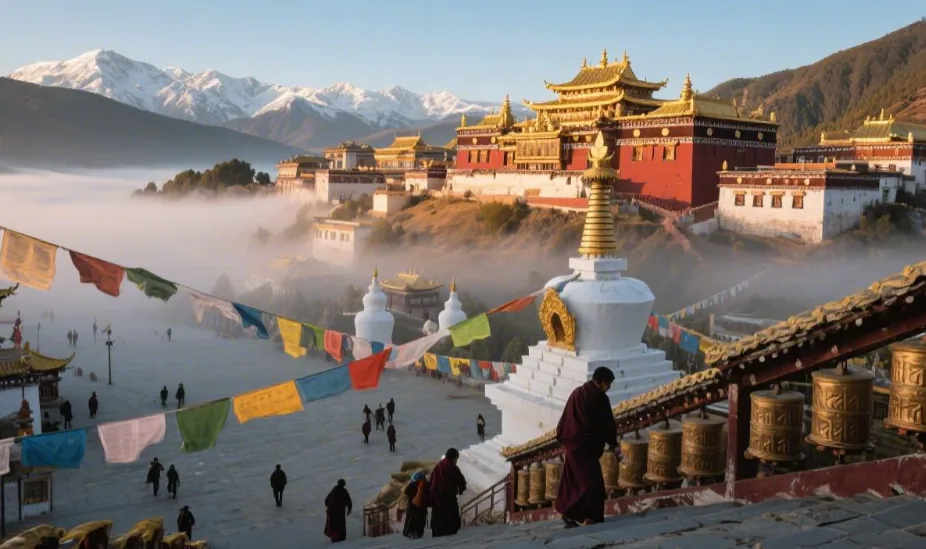
Day 2: Potatso National Park, Highland Lakes and Forest Hiking
Transportation Situation: Just as the sky was beginning to brighten, I asked the guesthouse to contact Master Tashi, who frequently drives to the scenic area. He arrived punctually at 8:20 AM. His Wuling Hongguang van had a “Potatso Line” sticker, and the back seat was piled with oxygen bags and raincoats. On the way, he played Tibetan folk songs and pointed out the window: “On the left is the Shudugang River; the water is very rapid in summer, but in winter only shallow shoals remain.” During the 40-minute drive, the altitude rose from 3300m to 3600m, and I felt my heart beating two beats faster than usual while holding the handle. When we reached the entrance, the sun had just cast its first light on the wooden sign of “Potatso National Park.” The round-trip chartered car cost 120 yuan, which was more cost-effective than a one-way taxi, and the master promised to wait at the exit at 3:30 PM.
Scenic Route Details:
9:30 AM to 11:30 AM Shudu Lake: I took the scenic shuttle bus (included in the ticket) up the mountain. The bus window was like a picture frame, passing through stretches of fir forests—the trunks were straight, and the needles covered the ground, making a “rustling” sound like stepping on crushed dry pine cones. After getting off, I walked the 3.3 km wooden plank road; some parts of the boards were warped, so I had to watch my step. The color of the lake was truly amazing: near the shore it was a transparent light green, gradually turning into peacock blue towards the center. When the wind was calm, I could see the water grass swaying at the bottom. There was a wooden sign by the plank road saying “Average depth of Shudu Lake is 20m.” I crouched down to look; a few fir leaves floated on the surface like small boats.
12:00 PM to 1:00 PM Rest Station: A bowl of noodles at the scenic restaurant was 38 yuan, which I thought was too expensive. I munched on the whole wheat bread with beef jerky I brought (bought at the guesthouse in the morning, 15 yuan/pack), washing it down with hot water from my thermos. There were benches at the rest station facing a meadow where several Tibetan Eared Pheasants were pacing in the distance. They weren’t afraid of people; I threw some breadcrumbs, and they took a few hops to peck them up, their movements clumsy and cute.
1:30 PM to 3:30 PM Bita Lake: I hiked the 1.5 km trail; the first half was a wooden plank road, and the second half was a gravel path. Asters (blooming in August) grew along the road, their purple petals dotted with dew. Walking to the edge of the wetland, I saw moss so thick it looked like a carpet. I took off my shoes and stepped on it; it was soft and spongy, and a chill surged up from the soles of my feet. It wasn’t winter, so I didn’t see Black-necked Cranes, but I met a forest ranger who said, “From November to March, you can easily see them catching fish here before 8:00 AM.” At the end of the trail was a viewing platform with a view of Bita Lake and the Shika Snow Mountain behind it. Clouds swirled around the summit like a white hat for the mountain.
Practical Tips: I wore a fleece-lined windbreaker (detachable lining); the wind by the lake was biting, but zipping up solved it. I stuffed two bars of chocolate (Dove Dark Chocolate, 70% cocoa) in my backpack; eating a piece when tired provided a sweet energy boost. One section of the wooden plank road was downhill, so I held the railing to avoid slipping—the boards are slipperier after rain, so anti-slip shoes are more useful than hiking poles.
Episode: On the Shudu Lake plank road, I met an old man from Beijing carrying a tripod to photograph birds. He said, “The air here is clean, so the birds’ feathers come out very clearly.” I took a look through his lens; on the screen was a Red-billed Chough perched on a fir branch, its black feathers shimmering with blue.
|
Daily Expenses (Per Person)
|
Details
|
Amount
|
|---|---|---|
|
Transportation
|
Round-trip chartered car to Potatso
|
¥120
|
|
Dining
|
Self-provided dry food (bread + beef jerky)
|
¥15
|
|
Others
|
Oxygen bag backup (unused)
|
¥0
|
Key Reminders: The last shuttle bus is at 16:00, don’t miss it; there’s a stall selling grilled sausages (10 yuan/piece) at the end of the Bita Lake hike—the warmth can heat your hands; if you want to photograph lake reflections, wait for the wind to stop around 10:00 AM or 3:00 PM when the light is soft and not harsh.
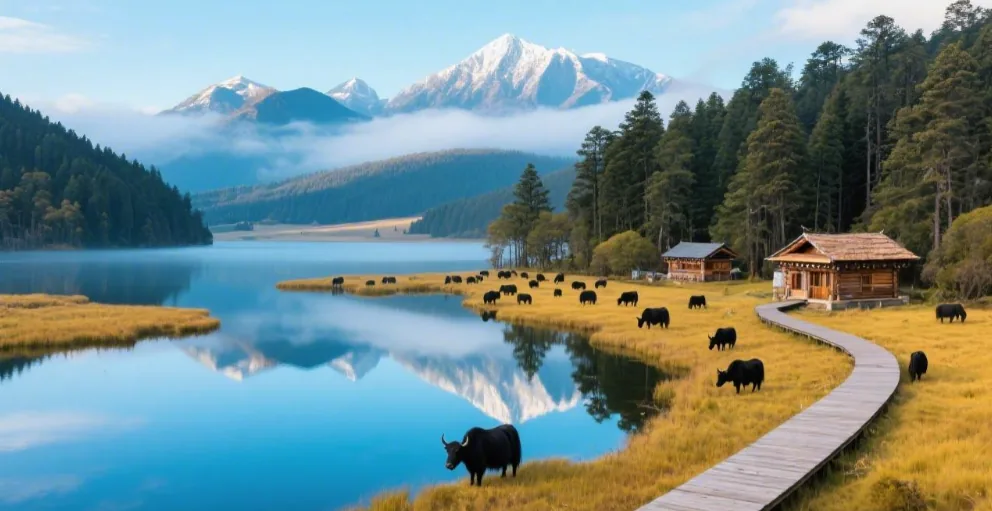
Day 3: Pilgrimage to Songzanlin Monastery
Transportation Feeling: I left the guesthouse at 9:00 AM and chose to walk—strolling along Dongwang Road, I passed a shop selling butter lamps. The owner was pressing wicks with a copper mold. Seeing me take a photo, he smilingly handed me a sample lamp and said, “Try the brightness.” It took 15 minutes to walk to the monastery gate. Along the way, there were elderly people spinning prayer wheels very quickly. If you’re in a hurry, there are shared electric bikes (Meituan brand, ¥5/30 mins) at the entrance. I tried one, and a Gesang flower even fell into the basket; I stopped exactly at the monastery gate.
Deep Experience Details:
Hire a guide: I found Auntie Zhuoga (50 years old, wearing a Tibetan robe and glasses) at the “Cultural Guidance Desk” to the right of the gate. She led a small group of 3 (me plus a couple from Shanghai). She explained as we walked. The brackets of the main hall are indeed like the “Touxinzao” of the Forbidden City. She pointed it out to me: “Look at these layered pieces of wood; no nails were used, it’s all joinery, the same technique as the Hall of Supreme Harmony in Beijing.” The golden roof is wrapped in real gold foil. She lightly scraped it with her fingernail (with permission), “See, the gold powder falls; fake gold foil is just painted.” Photos are not allowed inside the hall. She whispered, “The murals were painted in the Qing Dynasty. Malachite powder was used for the folds of the Green Tara’s clothing, and it still glows green now.”
Circumambulate the kora: After exiting the back door of the main hall, I walked along the 1.2 km circumambulation path. The prayer flag arrays along the path have five colors: blue, white, red, green, and yellow. When the wind blows, they rustle as if chanting scriptures. I chose to take photos at a 45-degree side angle—around 2:00 PM, the sunlight hit the red walls diagonally, and the shadow of the golden roof fell on the prayer flags, creating distinct layers. An old woman was performing full prostrations on the kora path; her mat was worn shiny. I slowed down and didn’t disturb her.
Climb to the top for a panoramic view: From the steps of the “Tsongkhapa Hall” at the back of the monastery, there are 108 steps in total (I counted). I reached the top at exactly 3:00 PM, with the light coming from behind, avoiding reflections. In the field of vision, the golden roofs of the entire monastery were connected, looking like a handful of crushed gold. The Ram-yangtso Lake in the distance was like a mirror, with prayer flags by the lake flying even higher than those in the monastery.
Tibetan Home Visit Record: At 6:00 PM, as agreed, I went to the “Tsering’s House” (meeting at the unified pickup point for Tibetan home visits, ¥80/person including meal). The hostess, Tsering Lhamo, wearing an apron, brought salty butter tea—the tea bowl was wood-based lacquerware. The first sip was very salty. She hurriedly handed me a piece of milk curd: “Eat it together, it balances the salt.” The tsampa was freshly made, and she taught me hand-to-hand: “Add hot tea to highland barley flour, stir clockwise, don’t make it too sticky.” The ball of tsampa I squeezed kept falling apart. She laughed and said, “Your heart must be quiet, like spinning a prayer wheel.” When learning Tibetan, she taught “Tashi Delek” (palms together at chest height) and corrected my pronunciation: “The stress is on the ‘De’ syllable, and the ending tone should rise.” The room had underfloor heating, her son’s certificates from the Horse Racing Festival hung on the wall, and the TV was playing the Tibetan version of “Journey to the West.” The atmosphere felt like returning to a relative’s house.
Small Case: While hiring a guide, I met a tourist from Taiwan who brought a book called “History of Tibetan Architecture.” Auntie Zhuoga flipped through the book and said, “The drawings of our monastery were almost burned in 1950, but an old lama hid them.” There was an old photo tucked in the book; the monastery gate was still a wooden fence, looking much less grand than it does now.
|
Daily Expenses (Per Person)
|
Details
|
Amount
|
|---|---|---|
|
Transportation
|
Shared electric bike (optional)
|
¥0 (walking)
|
|
Guide
|
Auntie Zhuoga guide service (group of 3)
|
¥50/3≈¥17
|
|
Home Visit
|
Tsering’s House dinner + experience
|
¥80
|
|
Others
|
Sample butter lamp (gift)
|
¥0
|
Key Reminders: Don’t look for “unofficial guides” touting for business at the gate; look for those with badges at the Cultural Guidance Desk. Don’t stand in the middle of the prayer flag arrays on the kora path; shooting from the side produces better photos. Don’t touch scriptures during the home visit; you can ask for half a bowl more of Tsering’s tsampa—it’s very filling.
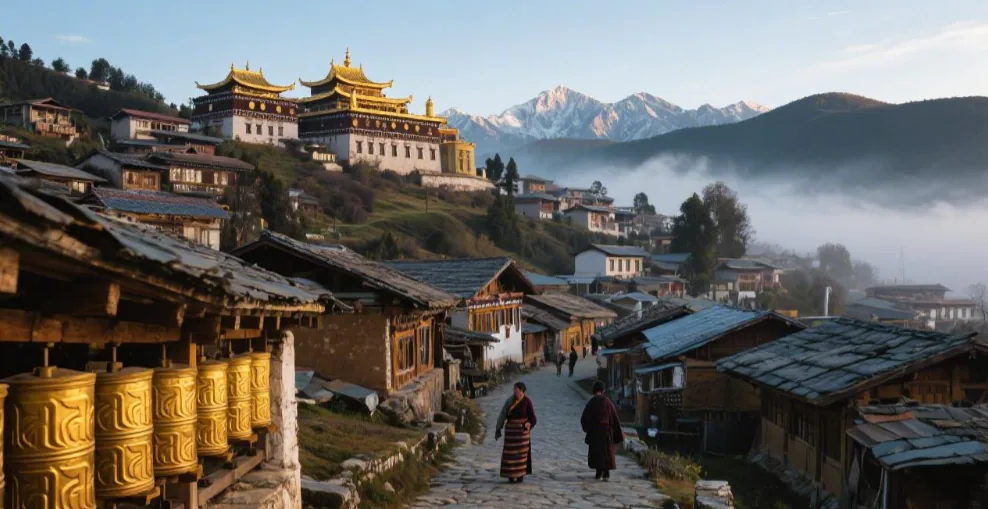
Day 4: Napa Lake Loop + Xiaozhongdian Flower Sea
Napa Lake Transportation Situation: At exactly 9:00 AM, I waited at the car-pooling point at the North Gate of the ancient town. A seven-seater commercial vehicle arrived, driven by a Naxi master wearing a baseball cap. A Tibetan grandmother going to the pasture was in the passenger seat, holding a small lamb. When I boarded, only the last row was left, and I shared with a couple from Chengdu (¥60/person round trip). On the way, the driver played “Shangri-La Love Song” and pointed out the window: “On the left is the seasonal Napa Lake; it becomes a sea in the rainy season and a prairie in the dry season. It’s just the beginning of summer now, and the water grass is just starting to poke through.” The 40-minute drive took us to the entrance of Yila Prairie, which is about 10 minutes closer than entering from the North Gate. There were herders with horses at the entrance, but I headed for the environmental shuttle bus station.
Loop Activities Choice:
✅ Environmental Shuttle Bus Loop (¥50): I chose this line. The bus was electric and made no noise. The driver, also a guide, was a Tibetan youth who said, “The loop is 30 km long, stopping at 4 viewing platforms, each with different scenery.”
Platform 1 (Arrived 10:30): Photographed cattle and sheep scattered on the meadow. Black and white dairy cows lowered their heads to graze, and the curly wool of Tibetan sheep was blown into clumps by the wind. The clouds in the distance were so low they seemed to press against the lake, and their folds were visible in the reflection.
Platform 2 (11:00): The meadow was just turning green, with tender green spreading to the horizon. I crouched down to photograph dew drops on the grass roots, which looked like crushed diamonds in the sun.
Platform 3 (11:40): Black-necked Crane observation point (though not winter, occasional migratory birds fly by). A telescope was mounted on a wooden pole; I adjusted the focus and saw two Bar-headed Geese splashing in the water.
Platform 4 (12:20): Panoramic view. The whole Napa Lake looked like a blue-green silk ribbon. The shuttle bus stopped here for 20 minutes. I took a panoramic photo and later set it as my phone wallpaper.
❌ Horse Riding (¥100/hour): While hesitating at the entrance, I saw the route of other horse teams—just walking around the same patch of meadow. The stirrups were uncomfortable and it looked painful for the buttocks. Asking tourists who had finished, they said, “You basically go in circles for an hour; it’s not as comprehensive as the shuttle bus.” I decided to skip it.
Xiaozhongdian Flower Sea Experience: At 1:30 PM, we returned from Napa Lake and transferred to Xiaozhongdian (30-minute drive). The driver said, “July is the peak season for Stellera chamaejasme (Wolfsbane flowers), turning the hills red as fire.” Upon arrival, the hillsides were indeed covered in red waves. Close up, the stems of the flowers had fine hairs, and the petals were as thin as paper, glowing red under the sun. There was a shop called “Tibetan Rhyme Clothing” by the road, where I rented a crimson Tibetan outfit (¥30/set, including headscarf). The lady owner said while tying my belt, “This fabric is woven on an old loom; it’s more breathable than chemical fiber.” I walked through the flower sea wearing it; when the wind blew the headscarf up, my friends said the photos looked like a local girl.
Shopping Record: At 6:00 PM, I returned to the ancient town and visited Zhaya Tusi Manor (middle section of West Street). The counter selling yak beef jerky had three types: Original, Spicy, and Smoked. I first tried the original—the meat was firm and chewy with a faint milky fragrance, no starchy feel. I asked the owner if it was real yak meat. He opened the freezer behind him and said, “Look, this is fresh-cut whole yak hind leg meat. It’s 120 yuan per catty. Buy two catties and get a small sample pack.” I bought 1 catty of original. While bagging it, he reminded me, “Keep it in the fridge; it can be stored for half a month.”
Small Case: On the car-pool back, the Chengdu couple talked about a video they shot at Napa Lake. “Using slow motion to capture sheep crossing the water; the splashes look like pearls.” I borrowed their phone to look; in the frame, a little lamb followed its mother, its hooves stepping into the water and creating fine waves, which was indeed more vivid than a photo.
|
Daily Expenses (Per Person)
|
Details
|
Amount
|
|---|---|---|
|
Transportation
|
Round-trip car-pool to Napa Lake
|
¥60
|
|
Activity
|
Environmental shuttle bus loop
|
¥50
|
|
Clothing Rental
|
Tibetan clothing (Crimson)
|
¥30
|
|
Shopping
|
Real Yak Beef Jerky (1 catty)
|
¥120
|
Key Reminders: The last environmental bus is at 17:00, don’t miss the return; Xiaozhongdian Wolfsbane flowers are reddest in mid-to-late July and fade in August; choose cotton or linen when renting Tibetan clothes, avoid sequined ones (they look cheap in photos); check the fibers when tasting yak beef jerky—real meat has long, thick fibers, while fake meat is mostly crumbles.
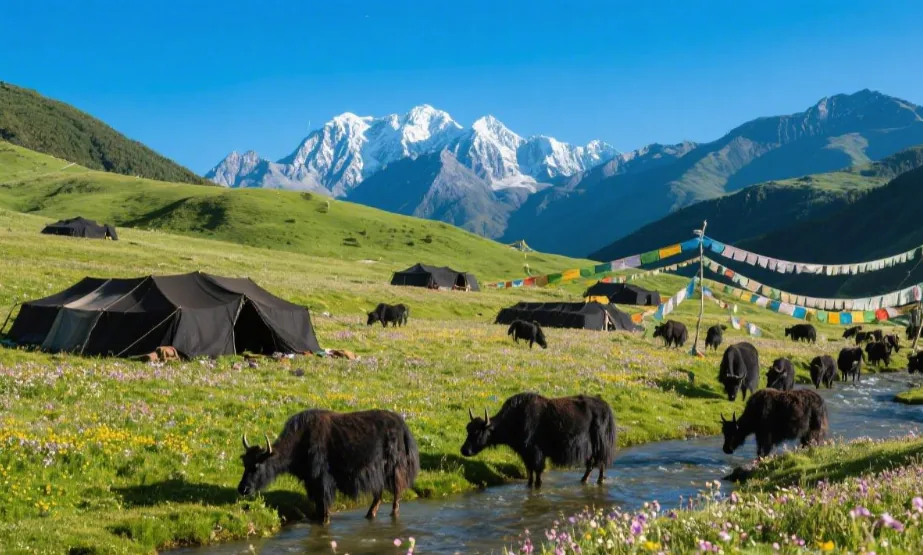
Day 5: Exploring Ancient Town Details and Farewell to Shangri-La
Early Morning Street Walk Record: At exactly 9:00 AM, before the tour groups flooded the ancient town, I slipped out of the guesthouse with my camera. The morning light shone diagonally on the bluestone road. The dew from last night hadn’t dried, making a slight “crunching” sound like stepping on broken moonlight. I ducked into an anonymous alley near the East Gate, where Gesang flowers grew at the foot of the wall, their petals dotted with dew. Deep in the alley was a “Tashi Thangka Workshop.” The wooden door was half-open, and I saw an apprentice in his early twenties bent over his work—he was using a wolf-hair brush dipped in mineral pigments (cinnabar red, azurite blue) to outline the folds of a Buddha statue’s clothing. On the table were stone pestles for grinding pigments, and Thangka samples were piled in the corner. The smallest one (20cm x 30cm) was priced from 200 yuan for custom orders, and he said, “It takes three months to dry and set the color after painting.” I stood by and watched for ten minutes; he didn’t look up, his brush tip moving extremely steadily, with every fold as precise as if measured with a ruler.
Souvenir Procurement Details:
Tibetan Incense: I remembered an “Incense Shop” at the exit of Songzanlin Monastery, run by a lay Buddhist. When I entered, he was mixing cypress powder with mugwort. He said, “Cypress incense is bitter and not choking, more durable than sandalwood, 25 yuan a box is enough for two months.” Compared to shops in the ancient town (where the same type sells for 40 yuan), this place was indeed honest. I bought two boxes, and he threw in a small sample piece, “Light it and smell it; if you’re not satisfied, bring it back to exchange.”
Silverware: I only bought once at “Snowy Silver Workshop” on West Street. I had seen a ring engraved with the Six-Syllable Mantra elsewhere priced at 500 yuan. I pointed at it and asked, “Is this workmanship worth 150?” the owner shook his head. Later at this shop, I chose a plain silver ring (92.5% silver content). The engraving was clear with no burrs, and I got it for 80 yuan. The owner reminded me, “Complex styles (with patterns or inlays) are prone to price premiums; plain rings are the most honest value.” When I tried it on, the size was perfect, and the inside was engraved with my initials.
Return Trip Arrangement: I checked out exactly at noon. Tashi, the guesthouse owner, helped call a taxi (¥35 to the airport). The driver was Master Tashi, who had taken me to Potatso yesterday. “Afternoon flights are good, less fog,” he said while driving. My yak beef jerky was packed in the trunk. During airport security, the staff reminded me, “Don’t check in plateau specialties, carry them with you.” Feeling the incense box in my pocket, I recalled the slight headache when I first landed five days ago; now, I actually felt a bit reluctant to leave this air behind.
Price Reference (Approx. ¥3200 total per person)
|
Project
|
Details
|
Amount
|
|---|---|---|
|
Airfare
|
Round-trip Economy Class
|
¥1800
|
|
Accommodation
|
4 nights in guesthouse (incl. breakfast)
|
¥1120
|
|
Local Transportation
|
Chartered/Car-pooled/Taxi
|
¥400
|
|
Tickets
|
Potatso + Songzanlin + Napa Lake
|
¥380
|
|
Dining
|
Avg. ¥100 per day
|
¥500
|
Pitfalls to Avoid & Recommendations:
Pitfalls: Prices in ancient town silver shops are generally inflated (e.g., a 300 yuan ring can be bargained down to 100 yuan). Always try it on and check the depth of the engraving. The Shudu Lake plank road in Potatso is like it’s been oiled on rainy days; I slipped once even wearing sneakers, so shoes with deep treads are a must. Drones are banned in Songzanlin Monastery; a tourist who tried to fly one was stopped by the lamas.
Key Recommendations: Hiking the Potatso wooden plank road (3.3 km at Shudu Lake to see the lake color change), hiring a guide at Songzanlin (Auntie Zhuoga’s explanation of joinery and gold foil), and photography at Xiaozhongdian Flower Sea (wear Tibetan clothes when the Wolfsbane flowers are red in July).
You May Also Like
- 7-Day Popular Western Yunnan Loop Tour | Kunming + Dali + Lijiang, Classic Comfortable Travel Plan
- Yunnan Travel Outfit Pitfalls to Avoid | Does Dali-Lijiang Have “Four Seasons in One Day” Sun Protection & 3-Layer Dressing Tips
- Preventing Altitude Sickness in Yunnan: Avoid Pitfalls | Should You Buy Overpriced Oxygen at Scenic Spots Medication Checklist for Shangri-La/Snow Mountains
- Dali Erhai Lakeview Room Pitfall Avoidance | 3 Tips to Spot Fake Wide-Angle Sea Views! Shuanglang/Caicun Real Stay Black & White List
- Taking Parents to Yunnan Avoid These Pitfalls | 3 High-Altitude Areas to Skip! Plus Low-Intensity Routes & Meds
Shangri-La — — Practical Data
Tickets & Booking
- Tiger Leaping Gorge (Shangri-La section, Upper Tiger Leaping): Adult CNY 45; ticket + round-trip sightseeing escalator (Pingbu Qingyun escalator) CNY 125[src]
Where to Stay · Room Type · Nearby
- Inside Dukezong Ancient Town | Room tip: Convenient for getting around, but vehicles cannot enter, so confirm with the guesthouse whether they carry luggage | Nearby add-ons: Great Buddha Temple, prayer wheel, Guishan Park, Moonlight Square[src]
- Along Napahai | Room tip: Good views and quiet, but far from the city | Nearby add-ons: Napahai Yila Grassland, Shika Snow Mountain[src]
Typical Climate & Packing (Past Years)
- January: -7 °C–9 °C °C, [Travel climate reference]
- February: -5 °C–11 °C °C
- March: -2 °C–14 °C °C
- April: 2 °C–17 °C °C
- May: 5 °C–19 °C °C, The meadow turns green again
- June: 8 °C–20 °C °C






