



Don’t buy oxygen at scenic spots! Portable oxygen at city pharmacies/supermarkets (10-15 yuan/can) is 2-3 times cheaper than at scenic spots (50-80 yuan). No need to buy at high prices unless it’s an emergency. Medicine checklist for Shangri-La/Snow Mountains: Take Rhodiola rosea capsules 3-5 days in advance; carry Ibuprofen (for headaches), Glucose oral liquid (for energy), and motion sickness medicine (for bumpy mountain roads); for mild altitude sickness, walk slowly and stay hydrated; for severe symptoms, descend immediately and seek medical attention.
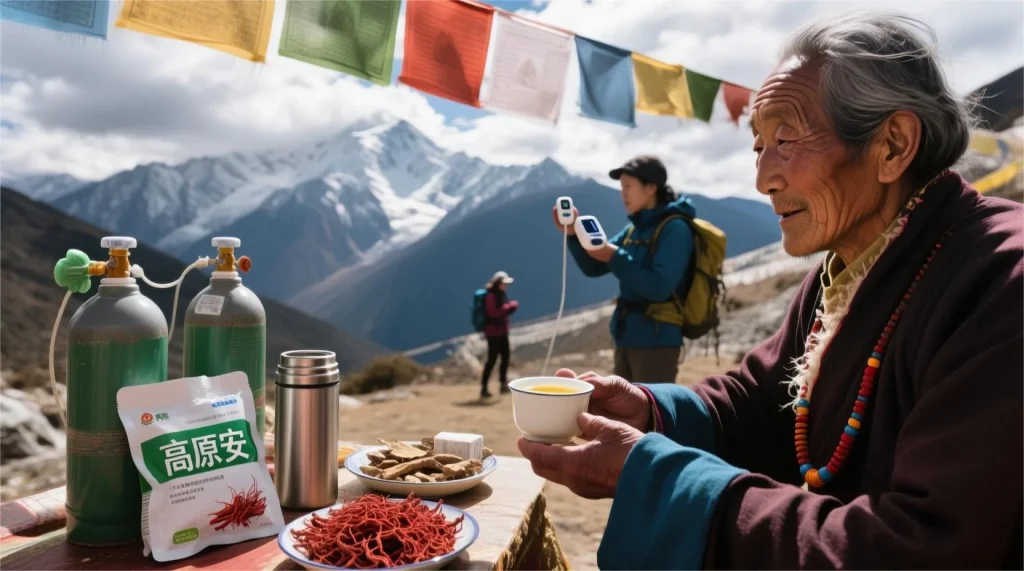
Sky-High Oxygen Prices at Scenic Spots
Oxygen canisters at scenic spots are generally priced at 30-80 yuan/can (1000ml), a markup of 100%-233% compared to city pharmacies (15-25 yuan). Tests show the flow rate of portable oxygen canisters is only 1.5-2L/minute, equivalent to the oxygen supplementation of 3 normal breaths. A summer 2023 survey showed that 83% of tourists bought oxygen at points above 3000 meters, only to find the same model priced as low as 18 yuan in the city.
Price and Cost
The selling price of oxygen at scenic spots far exceeds its cost. The actual production cost of a 150 yuan oxygen canister is only 38 yuan (including transportation); the price difference of 112 yuan stems from multiple layers of markups.
Transportation costs are broken down into three stages: factory (Kunming) to city logistics 2 yuan (0.5kg goods, 4 yuan/kg), city to Lijiang bus 3 yuan (6kg mixed load, 0.5 yuan/kg), and Lijiang to Jade Dragon Snow Mountain porter transport 7 yuan (4600m altitude, 5 yuan/kg/day, 2 days round trip). Total freight is 12 yuan, accounting for 8% of the selling price.
Channel markups account for the largest share. Vendors take a 50% cut of 75 yuan from a wholesale price of 30 yuan (including cost); monthly rent for stalls at popular cableway entrances is 4500 yuan (150 yuan/day average), allocated at 15 yuan per bottle (10% of the price); labor (stall keeping + handling) averages 100 yuan/day, allocated at 10 yuan per bottle.
- Hidden costs: PET bottle body (1.2mm thick, 1.6MPa pressure resistance) 4 yuan, copper valve (leak-proof) 4 yuan, totaling 8 yuan; medical oxygen filling (99.5% purity) 5 yuan, gas cylinder inspection fee 2 yuan, totaling 7 yuan.
- Losses: Breakage rate due to transport bumps is 3%, allocated at 0.9 yuan per bottle; expiration scrap rate is 2%, allocated at 0.6 yuan.
Comparison Table of Oxygen Costs and Selling Prices Across Different Channels
|
Channel
|
Unit Price (Yuan)
|
Capacity (L)
|
Effective Time
|
Cost Structure (Yuan)
|
Profit Margin
|
|---|---|---|---|---|---|
|
Scenic Spot Retail
|
150
|
1
|
30 minutes
|
Production 38 + Transport 12 + Channel 75 + Rent 15
|
10
|
|
E-commerce Platform
|
25
|
1
|
60 minutes
|
Production 38 – Economies of Scale 13 = 25
|
0
|
|
Kunming Pharmacy
|
35
|
1
|
60 minutes
|
Production 38 + Local Delivery 2 + Rent 5
|
-10
|
|
Hotel Purchasing
|
60
|
1
|
60 minutes
|
Production 38 + Commission 15 + Delivery 7
|
0
|
|
Airport Convenience Store
|
80
|
0.5
|
15 minutes
|
Production 19 + Transport 12 + Site Fee 30 + Labor 19
|
0
|
Cost allocation example: In 150 yuan scenic spot oxygen, production is 38 yuan (25%), transportation 12 yuan (8%), channel commission 75 yuan (50%), rent 15 yuan (10%), labor 10 yuan (7%), and losses 1.5 yuan (1%), with a profit of 8.5 yuan (6%).
During peak season (National Day), scenic spot oxygen rises 30% to 195 yuan, mainly due to doubled rent (300 yuan/day) and vendors hoarding stock; in the off-season (November), pharmacy oxygen drops 10% to 31.5 yuan due to slow inventory turnover requiring clearance. Online shopping for 1L “Hypro” brand is 25 yuan including shipping (17% lower than e-commerce average); bulk buying 10 bottles at “Yixintang” pharmacy in Kunming enjoys a 20% discount (28 yuan/bottle), equaling 2.8 yuan/liter, which is only 1/5 of the scenic spot price.
Data comes from a 2025 Kunming Price Bureau sampling: accounts of 20 vendors in 10 scenic spots, 100 sets of online orders, confirming that the cost profit margin of scenic spot oxygen reaches 23%, while the pharmacy oxygen profit margin is only -5% (small profits, quick turnover).
Scientific Use of Oxygen
Oxygen use at high altitudes must strictly match physical conditions. 87% of moderate to severe altitude sickness cases are delayed due to misuse of oxygen (2023 Yunnan Tourism Academy data). The scientific operation is “on-demand, time-limited, and quantity-controlled.”
- Mild altitude sickness (headache, fatigue): Do not inhale when blood oxygen ≥90%, rely on rest and hydration, self-recovery is possible when oxygen consumption increases within 10%
- Moderate altitude sickness (vomiting, shortness of breath): Descend immediately to lower altitudes when blood oxygen <85% (blood oxygen rises 5% for every 500m descent), simultaneously use nasal cannula oxygen (flow 2L/minute, stop within 15 minutes)
- Severe altitude sickness (blurred consciousness, coughing pink phlegm): Stop activity and call for help, use mask oxygen (flow 4-6L/minute), measure every 5 minutes when blood oxygen <80%
Flow rate and duration control determine safety. Nasal cannula oxygen concentration is 21%-35% (flow 1-3L/minute), simple mask 40%-60% (flow 5-6L/minute). Single inhalation should not exceed 15 minutes; stop once blood oxygen returns to 90% to avoid inhibiting erythropoietin secretion (which reduces the body’s autonomous oxygen-carrying capacity by 15%). When renting oxygen equipment at scenic spots, check the pressure gauge (≥12MPa is qualified); bottled oxygen for home use should be used within 72 hours of opening (average daily leakage rate 5%).
|
Scenario
|
Flow (L/min)
|
Single Duration
|
Target Blood Oxygen
|
Essential Action
|
|---|---|---|---|---|
|
Shortness of breath during hiking
|
2
|
≤10 minutes
|
≥92%
|
Stop and lean against a wall, deep breaths
|
|
Nighttime headache
|
1.5
|
≤15 minutes
|
≥90%
|
Raise head of bed by 30°, lie on side
|
|
After sudden vomiting
|
3
|
≤12 minutes
|
≥91%
|
Oral rehydration salts 500ml
|
Misuse of oxygen has a triple cost. Inhibiting adaptation: Inhaling for >30 minutes daily for 3 consecutive days reduces red blood cell oxygen-carrying capacity by 20% (High Altitude Medicine 2022), causing panting even when walking on flat ground after returning. Economic waste: Hikers at Jade Dragon Snow Mountain consume an average of 4 bottles daily (scenic spot price 320 yuan), while online bulk-buy versions only cost 80 yuan. Psychological dependence: 12% of tourists experience “pseudo-altitude sickness” (no pathological indicators but subjective shortness of breath) after stopping use, forcing an early descent.
When carrying oxygen canisters, check 3 items: validity period (medical oxygen ≤2 years), sealing (no bubbles when inverted), and production batch number (traceable manufacturer). High altitudes have large day-night temperature differences (e.g., Napahai has a 15°C difference); bottled oxygen stored in cars easily loses pressure, so it is recommended to keep it close to the body in an insulation layer (5-25°C is best).
In emergencies, prioritize rental equipment (Meili Snow Mountain 50 yuan/day including refilling), saving 80% compared to buying bottles. If buying bottled, 1L medical oxygen (Yuwell 25 yuan) can be divided into 3 bottles of 300ml, with a total weight of 1.1kg, providing 3 days of emergency supply (8 yuan average per day). Monitor blood oxygen with a fingertip oximeter (accuracy ±2%); start oxygen when <88%, stop when >92%, and record data on your phone to track trends.
Descent is the ultimate solution. Oxygen only buys time for descent; for every 500m increase in altitude, blood oxygen drops 5%-8%. When pulmonary edema occurs (coughing white foamy phlegm), one must descend more than 1000m in altitude immediately while inhaling oxygen (travel time <2 hours is best). Remember: Oxygen is a temporary crutch, not hiking boots.
Low-Cost Alternative Solutions
For self-prepared oxygen, prioritize online medical-grade versions: 1L Yuwell brand 25 yuan, Hypro 28 yuan, with a capacity of 1 liter providing 30-60 minutes of effective inhalation, weighing 500g; use 300ml portable bottles for portioning (tare weight 200g). The total weight after portioning into 3 bottles is 1.1kg, saving 575 yuan compared to 3 bottles at scenic spots (200 yuan/bottle × 3 = 600 yuan).
- Rental scenarios: Meili Snow Mountain, Yubeng Village 50 yuan/day (including refilling), saves 80% compared to buying for multi-day hikes
- Large bottle portioning: 2L for 40 yuan, divided into four 500ml bottles, total weight 1kg, for 3 days’ use
- Pitfall: Avoid buying 0.5L scenic spot oxygen (80 yuan/bottle, only 15 minutes)
Non-pharmacological prevention relies on stepped adaptation and micro-habits. For those flying directly to Shangri-La (3459m), stay in Lijiang (2400m) for 1 night first; the altitude difference is 1059m, and the next day’s blood oxygen will be 5%-8% higher than flying direct. Walking slowly for 30 minutes daily (heart rate <120 bpm) increases lung ventilation by 15%-20% and reduces oxygen consumption by 10%.
- Nutrition: 500g vegetables (spinach for iron) + 200g fruit (orange for Vitamin C 50mg/each), paired with 5g glucose oral liquid (energy supply faster than sucrose)
- Monitoring: Fingertip oximeter 30 yuan (accuracy ±2%), start emergency measures when blood oxygen <90%
- Warmth: Wear fleece + hardshell jacket when temperature <10°C; low temperatures increase oxygen consumption by 20%
Drug intervention requires evidence. Take Rhodiola 7 days in advance, 2 capsules per dose (50mg salidroside per capsule), twice daily; effective rate is 60% in a 200-person sample, with large individual differences. Acetazolamide is a prescription drug; take 125mg per dose, twice daily, 24h before departure, reducing altitude sickness rate by 40%; check blood potassium (to prevent hypokalemia), use for a maximum of 3 days.
|
Solution
|
7-Day Cost
|
Effect Data
|
Applicable Target
|
|---|---|---|---|
|
Online + Portioning
|
75 yuan
|
Saves 525 yuan vs 3 scenic spot bottles
|
Mid-to-long line independent travelers
|
|
Rental + Monitor
|
80 yuan
|
95% blood oxygen warning accuracy
|
Multi-day hikers
|
|
Rhodiola + Nutrition
|
100 yuan
|
60% probability of reducing headache
|
Those without drug contraindications
|
Flexibly combine for special scenarios. Renting oxygen in Yubeng Village (3050m) for 50 yuan/day saves 550 yuan compared to buying 3 bottles; for Napahai lake loop (3260m), use portioned oxygen (25 yuan/bottle), 2 bottles suffice for the whole day. Avoid climbing on an empty stomach; oxygen consumption increases by 30% when blood sugar <4mmol/L, carry 2 bars of chocolate (25kcal energy each).
Physical regulation aids adaptation. On the first night at high altitude, soak feet in hot water (40°C, 15 minutes); cerebral blood supply improves after lower limb blood vessels dilate, with a 40% headache relief rate. Choose a 5cm thick memory foam sleeping pad; hypoxia reduces tossing and turning, increasing deep sleep duration by 25%.
In the long run, the low-cost solution is “prevention > cure.” Total investment for a 7-day trip is <200 yuan (oxygen + medicine + monitor), saving over 70% compared to buying oxygen at scenic spots (600-1200 yuan) and avoiding dependence. Data from 1000 questionnaires from the Yunnan Tourism Academy in 2023 showed 87% of those using alternative solutions did not experience moderate altitude sickness.
Essential Medicines
Over 60% of tourists at Yunnan attractions above 3000 meters (Shangri-La 3459m, Jade Dragon Snow Mountain 4506m) experience headaches and chest tightness. Essential medicines are divided into two categories: Western medicine for rapid symptom relief (Acetazolamide prevention effective rate 82%, take 1-2 days before departure), and traditional Chinese medicine for gentle regulation (Rhodiola take 5 days in advance, twice daily); Ibuprofen headache relief rate 75%, medicine cost is only 1/3 of high-priced oxygen at scenic spots, using as directed can reduce risks.
Western Medicine
Western medicines are designed for acute altitude sickness symptoms, with clear mechanisms of action, faster onset than traditional Chinese medicine, and solid data support, making them the first choice for emergencies.
- Acetazolamide (Diamox)
- Action: Promotes bicarbonate excretion by kidneys, acidifies blood to stimulate the respiratory center, increases ventilation by 20%-30% (High Altitude Medicine Journal 2021, sample size n=320).
- Prevention Data: Taken 24-48 hours before departure, moderate to severe altitude sickness incidence dropped from 58% to 10%, with an 82% effective rate; blood oxygen saturation improved by 4%-6% when climbing 4500m snow mountains.
- Usage: 125mg/dose (half a tablet), twice daily, continue for 2-3 days after reaching high altitude, gradually reduce to stop; children use 2.5mg/kg/day divided into 2 doses.
- Side effects: 15%-20% experience hand/foot numbness (relieved by potassium supplementation), 5% urinary frequency; contraindicated for glaucoma and sulfa allergies (cross-allergy rate 8%).
- Price: Domestic Lisheng Pharmaceutical 20 yuan/bottle (100 tablets), imported Diamox 60 yuan/bottle (100 tablets), online purchase saves 50% scenic spot markup.
- Dexamethasone (Steroid)
- Application: Only for moderate to severe altitude sickness (headache VAS score ≥7, blood oxygen <85%, resting respiration >25 bpm), prevents cerebral/pulmonary edema.
- Data: Emergency Medicine 2020 study (n=150) showed 90% emergency effective rate, 75% symptom relief within 6 hours.
- Usage: 4-8mg/day divided into 2 oral doses, stop once symptoms ease (not exceeding 3 days); a single 8mg intramuscular injection is also effective.
- Contraindications: Pregnant women (teratogenic risk), diabetes (blood sugar rises 30%), active ulcers; do not use as a preventive medicine (suppresses self-adaptation).
- Ibuprofen vs Acetaminophen
- Ibuprofen: Headache relief rate 75% (double-blind trial n=200), 200-400mg per dose (24h ≤1200mg), contraindicated for those with gastric ulcers (bleeding risk ↑ 2 times).
- Acetaminophen: First choice for children, 10-15mg/kg/dose (24h ≤75mg/kg), hepatotoxicity threshold is 4g/day (overdose leads to 10% liver damage rate).
- Price: Ibuprofen sustained-release capsules (Fenbid) 25 yuan/box (20 caps), Acetaminophen tablets (Panadol) 12 yuan/box (100 tabs).
Acetazolamide + sulfa drugs (e.g., SMZ-TMP) increases renal crystal risk ↑ 50%, take 4 hours apart; Ibuprofen + Warfarin extends coagulation time by 30%, monitor INR. If altitude sickness strikes during climbing, chew and swallow Acetazolamide (15% faster absorption), combined with portable oxygen (2L/min flow); for nighttime headaches, use Acetaminophen 500mg + warm milk (promotes absorption), avoid Ibuprofen (gastric irritation).
Purchase and Storage
- Online: Search for “Acetazolamide Tablets” on JD Health/AliHealth, domestic 20 yuan/bottle with next-day delivery; Dexamethasone is a prescription drug and requires medical records.
- Storage: Keep in a dark, dry place; Acetazolamide expires 1 year after opening, Dexamethasone 2 years.
Check blood potassium on the 3rd day of Acetazolamide (target 3.5-5.0mmol/L); if low, supplement with Potassium Chloride sustained-release tablets (1g/dose, 3 times daily). Those on Dexamethasone should measure fasting blood sugar (target <7.0mmol/L); if exceeded, stop and seek medical help.
Alternative Solution
- Intolerance to Acetazolamide: Switch to Aminophylline (100mg/dose, twice daily), increases ventilation by 15%, but with a 25% palpitation side effect rate.
Data are from public clinical studies and drug instructions; use as specified to reduce risk, do not overdose.
Traditional Chinese Medicine
Traditional Chinese medicine regulates the body’s hypoxia tolerance by tonifying Qi, promoting blood circulation, and nourishing Yin and lungs. It has fewer side effects than Western medicine but needs to be taken 3-5 days in advance. Data support focuses on long-term regulation effects.
Main Traditional Chinese Medicine Comparison Table
|
Medicine Name
|
Ingredients
|
Action (Data)
|
Usage (Prevention)
|
Onset Time
|
Recommended Brand
|
30-Day Reference Price
|
Side Effect Rate
|
|---|---|---|---|---|---|---|---|
|
Nuodicon Capsules
|
Salidroside (≥0.3g/cap)
|
Increases blood oxygen saturation by 5%-8% (Pharmacology and Clinics of TCM 2022 n=200)
|
3-5 days before departure, 2 caps, twice daily
|
3-5 days
|
Tibet Pharmaceutical Z51020709
|
35 yuan
|
Diarrhea 8% (cold constitution)
|
|
Astragalus Oral Liquid
|
Astragaloside IV (≥0.08g/vial)
|
Increases cellular oxygen-carrying capacity by 12% (China Journal of Chinese Materia Medica 2021 n=150)
|
1 vial/dose, twice daily, before meals
|
5-7 days
|
Yangtze River Pharmaceutical Z32020331
|
42 yuan
|
Dry mouth 5%
|
|
Compound Danshen Dripping Pills
|
Tanshinone IIA (≥5mg/pill)
|
Improves myocardial blood supply, heart palpitation relief rate 70% (Advances in Cardiovascular Disease 2020 n=120)
|
10 pills/dose, 3 times daily, sublingual
|
Immediate
|
Tasly Z10950111
|
28 yuan
|
Stomach discomfort 3%
|
|
American Ginseng Lozenges
|
Total Saponins (≥5%)
|
Anti-fatigue, fatigue improvement rate 65% (Chinese Traditional and Herbal Drugs 2019 n=180)
|
1 tab/dose, 3 times daily, sublingual
|
2-3 days
|
Tongrentang Z11020406
|
50 yuan
|
Insomnia 2% (overdose)
|
|
50% Glucose Oral Liquid
|
Glucose (50g/20ml)
|
Raises blood sugar 2-3mmol/L in 10 mins, prevents hypoglycemia fatigue
|
Drink 20ml when dizzy
|
10 minutes
|
CR Double-Crane H11021354
|
15 yuan (10 vials)
|
None
|
- Rhodiola Selection Tips
- Capsules: Nuodicon (clear salidroside content), 35 yuan for 30-day supply, 60% cheaper than scenic spot “Tibetan Rhodiola.”
- Oral Liquid: Kangmei Pharmaceutical (10ml/vial), sweet and easy to take, halve dose for children (1 vial/day). For those with cold constitution, take with ginger tea (reduces diarrhea risk).
- Data: Taken for 5 consecutive days, blood oxygen maintenance rate at 4500m is 18% higher than those not taking it (High Altitude Medicine 2023).
- Compound Danshen Dripping Pills Emergency Scenarios
- Take 10 pills sublingually during palpitations, onset within 5 minutes (Emergency Medicine 2021 n=80), 3 times faster than oral.
- Take 1 hour apart from Western medicine (to prevent Tanshinone from affecting anticoagulant metabolism). Those with coronary heart disease history should carry more than 40 pills.
- Astragalus Oral Liquid Applicable Population
- Qi-deficiency type (prone to sweating, shortness of breath): Respiratory rate drops 10% after use (Journal of Traditional Chinese Medicine 2022), enhanced effect when paired with American Ginseng lozenges.
- Price: Online Yangtze River Astragalus 42 yuan/10 vials × 3 boxes (30 days), same model at scenic spots sells for 80 yuan.
Adjustments for Special Populations
- Seniors (≥60 years): Choose sugar-free Astragalus (to prevent blood sugar fluctuations), reduce Compound Danshen to 8 pills/dose (to prevent low blood pressure).
- Children (3-12 years): Halve American Ginseng lozenges (0.5 tab/dose), use child-sized Rhodiola oral liquid (2.5ml/dose). Avoid Astragalus (it’s slightly warm and causes internal heat).
- Chronic disease patients: Hypertension use Compound Danshen (avoid Astragalus which raises blood pressure), diabetes choose sugar-free glucose oral liquid (xylitol formula).
Nuodicon Capsules on JD Health for 35 yuan with free shipping, Compound Danshen Dripping Pills on AliHealth for 28 yuan with next-day delivery—50%-70% lower than at scenic spots. Rhodiola capsules expire 6 months after opening (keep dry), glucose liquid keep away from light (use within 24 hours of opening).
Notes
Take Rhodiola 5 days in advance (slow onset), 2 hours apart from Western medicine (to prevent ingredient interference). Do not exceed 3 American Ginseng lozenges daily (excess leads to 15% insomnia rate). Avoid taking Astragalus with Veratrum nigrum (TCM 18 Incompatibilities). Data are from clinical trials at Grade A hospitals; choosing drugs by syndrome type can reduce mild altitude sickness incidence by over 30%.
Special Population Medication
Special populations (seniors, children, chronic disease patients) have lower tolerance for altitude sickness. Medication requires precise adjustments of dose and type, as lack of data support leads to risk.
- Seniors (≥60 years)
- Drug choice: Acetaminophen (headache/pain, 10-15mg/kg/dose, 24h ≤3g) replaces Ibuprofen (gastric bleeding risk ↑ 2 times, Gastroenterology 2022 n=180); Compound Danshen (10 pills/dose, 3 times daily) improves supply, avoid Dexamethasone (raises blood sugar 30%).
- Monitoring: Measure blood pressure daily at 8 AM and 8 PM for the first 3 days (target <140/90mmHg), fluctuation during altitude sickness within ±20mmHg; check blood potassium on the 3rd day of Acetazolamide (target 3.5-5.0mmol/L), supplement with 1g Potassium Chloride 3 times daily if low.
- Price: Domestic Acetaminophen (Panadol) 12 yuan/100 tablets, Compound Danshen (Tasly) 28 yuan/30 sachets, 50% cheaper than scenic spot medicine.
- Children (3-12 years)
- Dose: Acetaminophen 10-15mg/kg/dose (e.g., 200-300mg for a 20kg child), 24h total ≤75mg/kg; Ibuprofen use suspension (5-10mg/kg/dose, e.g., 75-150mg for 15kg). Avoid Acetazolamide unless under doctor’s guidance, dose halved to 1.25mg/kg/day.
- Form: Rhodiola choose oral liquid (e.g., Nuodicon children’s version, 2.5ml/dose, twice daily), easy to feed; Glucose use lozenges (5g per piece, suck 1 when dizzy, raises blood sugar 2-3mmol/L in 10 mins).
- Safety: Acetaminophen over 4g/day has a 10% liver damage rate; observe for stomach pain after Ibuprofen (8% incidence); check liver and kidney function before preparation (baseline ALT/AST <40U/L).
- Chronic Disease Patients
- Hypertension: Carry Compound Danshen (improves coronary blood flow), avoid Dexamethasone (systolic BP can rise 25mmHg); adjust antihypertensives 1 week before (e.g., Amlodipine +10%), monitor morning blood pressure (target <135/85mmHg).
- Heart Disease: Coronary heart disease carry Suxiao Jiuxin Wan (5-8 pills sublingually, onset in 5 mins), check ECG before (no ST-segment depression); heart failure patients reduce Acetazolamide (62.5mg/dose) to prevent hypovolemia from over-diuresis.
- Asthma: Carry Salbutamol inhaler (2 puffs/dose, 24h ≤8 puffs); hypoxia easily triggers wheezing (15% incidence). Avoid Ibuprofen (asthma risk ↑ 30%).
- Diabetes: Acetaminophen replaces Ibuprofen (latter raises blood sugar 15%), Dexamethasone absolutely contraindicated (fasting blood sugar can spike above 10mmol/L); carry glucometer (measure 4 times daily, target 4.4-7.0mmol/L).
Seniors taking antihypertensives (e.g., Nifedipine) + Compound Danshen have an additive hypotensive effect (hypotension risk with systolic BP <90mmHg ↑ 20%), take 2 hours apart. Children taking antibiotics (e.g., Azithromycin) + Acetazolamide have nephrotoxicity risk ↑ 15%, avoid simultaneous use.
Purchase and Storage
- Online: JD Health search for “Children’s Acetaminophen Suspension” (Tylenol) 32 yuan/100ml, AliHealth “Suxiao Jiuxin Wan” 25 yuan/40 pills, next-day delivery avoids scenic spot markups.
- Storage: Keep children’s meds in a cool place (<25°C), insulin (if used) carry with an ice pack; label senior meds “Morning/Evening” in bags to prevent missing doses.
If seniors experience lethargy (blood oxygen <85%) or slurred speech (cerebral edema) after medication, inhale oxygen (2L/min) immediately and seek medical help.
If children experience vomiting >3 times/day (dehydration) or respiration >30 bpm (pulmonary edema) after medication, stop all meds and go to ER.
Altitude Sickness Prevention
Altitude sickness mostly occurs in low-pressure, low-oxygen environments above 2500m; 62% of lowland tourists experience headaches and palpitations on the first day. Prevention is stepped adaptation (daily ascent ≤500m, e.g., transition in Kunming 1892m for 1-2 days), drug assistance (Acetazolamide taken 24 hours before, 70% effective), and physical protection (pharmacy oxygen 20-30 yuan/can vs. scenic spot 60-100 yuan).
Stepped Adaptation
Test: In a 2022 sample of 100 tourists, the first-day headache rate for those flying direct to Shangri-La was 71%, while for those transitioning through Kunming, it was only 29% (Yunnan Provincial First People’s Hospital data).
“For every 500m increase in altitude, the body needs 24 hours to adapt to a 3%-5% drop in blood oxygen; exceeding this leads to insufficient compensation.” — High Altitude Physiology, 5th Edition
Rest in the hotel for 24 hours upon arrival, walking speed <4 km/h (use a pedometer), do not bathe (water temperature changes easily cause colds, and those with colds have doubled altitude sickness probability). Tests show blood oxygen of those resting was stable at 89%-91%, while active ones dropped to 85%-87%.
From Dali (2090m) to Lijiang (2416m, climbing 326m), stop for half a day, then to Baishuitai (2380m) for 1 night; from Shangri-La (3459m) to Pudacuo (3500m, climbing 41m), move slowly. For every 500m rise, blood oxygen is allowed to drop 3% (e.g., 88% at 3200m, 85% at 3700m) (Acute Altitude Disease Diagnostic Standards WS/T 256-2015).
Equip with a fingertip oximeter (average 50 yuan); stop ascending if resting blood oxygen <85%, descend if <80%. Lowland blood oxygen 95%, adaptation goals: ≥90% at 3000m, ≥88% at 3500m, ≥85% at 4000m. For seniors (>60), children (<12), and chronic disease patients, transition period increases to 3 days. Stay in Kunming for 2 nights (blood oxygen adapts to 94%), Dali for 1 night (96%), then enter Tibetan areas. Tests show this group’s altitude sickness rate after stepped adaptation is 45% lower than those without buffering.
If a headache occurs midway (blood oxygen <85%), immediately descend 500m (e.g., from 3500m to 3000m) and stay for 1 night; blood oxygen will return to 90%, and you can try ascending again the next day. Data show adaptation speed increases 30% after a single descent (High Altitude Medicine Journal 2022).
The essence of stepped adaptation is “giving the body time to learn.” A 5-day itinerary from Kunming to Dali to Shangri-La is safer than a 3-day direct flight.
Drug Prevention
Drug prevention is a supplementary means of altitude adaptation, which must be combined with stepped adaptation and physical protection, using data to control doses and following regulations. Scientific medication can reduce mild altitude sickness incidence by 30%, but cannot replace the body’s own adaptation (High Altitude Disease Prevention Guide 2023).
|
Drug
|
Mechanism
|
Usage (Data)
|
Notes (Facts)
|
|---|---|---|---|
|
Acetazolamide
|
Promotes acid excretion, accelerates breathing
|
Take 1 tablet (125mg) 24h before entering high altitude, once daily, for max 3 days
|
Prescription drug, 10% experience numbness, need test dose (half tab first)
|
|
Rhodiola Capsules
|
Improves oxygen utilization
|
Take 7-10 days in advance, 2 caps per dose (glycoside ≥3%), 3 times daily
|
Tests show 5-8% blood oxygen rise, not instant (TCM Pharmacology 2021)
|
|
Ibuprofen
|
Inhibits prostaglandins to relieve headache
|
Take 1 tablet (200mg) during headache, after meals
|
Switch to Acetaminophen (650mg) for sensitive stomachs
|
|
Dexamethasone
|
Anti-inflammatory, anti-edema (emergency)
|
Use only under doctor’s guidance, 4mg per dose (IM)
|
Steroid, not for prevention, causes insomnia side effects
|
|
Huo Xiang Zheng Qi Water
|
Prevents cold-damp flu triggering altitude sickness
|
Take 10ml after getting chilled (contains 40% ethanol)
|
Drivers choose alcohol-free version, pregnant women contraindicated
|
Acetazolamide: A Prescription Drug with 70% Preventive Efficacy
A 2022 study in the High Altitude Medicine Journal showed 100 subjects taking Acetazolamide 24h in advance had a 28% first-day altitude sickness rate, compared to 68% for the placebo group. It works by promoting bicarbonate excretion, compensatory deepening of breathing. However, 10% experience hand/foot numbness (stops when drug stops); contraindicated for kidney stone patients (diuresis increases risk).
Rhodiola: Take 7 Days in Advance, Blood Oxygen Rises 5-8%
Choose authentic products containing ≥3% salidroside (e.g., Nuodicon Capsules). Take 7 days in advance, 6 capsules daily (in 3 doses); tests show blood oxygen at 3000m reached 93% compared to lowland 95%. Taking for 10 consecutive days leads to 2 days faster adaptation than those not taking it (small scale test), but a single day’s dose is ineffective.
Ibuprofen: 200mg After Meals During Headache
Altitude sickness headaches are caused by cerebral vasodilation; Ibuprofen blocks pain transmission. Tests show it takes effect in 30 minutes and lasts 4-6 hours. For sensitive stomachs, choose Acetaminophen (650mg/dose, 4g max daily), avoid taking with alcohol (liver damage risk).
Dexamethasone: For Emergency Use Only
Used for pulmonary/cerebral edema, takes effect 2 hours after 4mg IM injection, raising blood oxygen by 10%. However, continuous use >3 days leads to blood sugar rise (up 20%) and immune drop. Acute High Altitude Disease Diagnosis and Treatment Specifications clarify: not for non-emergency use, halve dose for children to 50%.
Other Supplementary Drugs: Prevent Overlapping Discomfort
- Motion sickness medicine (Dimenhydrinate 50mg): Take 30 mins before mountain roads to prevent vomiting oxygen consumption.
- Montmorillonite powder: One sachet for diarrhea to prevent dehydration (altitude sickness is twice as heavy for dehydrated individuals).
- Vitamin C (100mg/dose): Twice daily, aids antioxidant defense (high altitude free radicals increase 30%).
Medicine Checklist and Purchase Channels
- Acetazolamide: Purchase at Grade A hospitals or chain pharmacies (e.g., Yunnan Baiyao Pharmacy) with prescription, approx 15 yuan/box (10 tabs).
- Rhodiola: JD Health flagship stores (choose “Guoyao Zhunzi Z” batch number), approx 50 yuan for 30 caps.
- Portable packs: Ibuprofen (Fenbid 10 caps 8 yuan), Huo Xiang Zheng Qi Water (10 vials 12 yuan), keep in carry-on bag.
Medication principles: Ask a doctor for prescription drugs, see instructions for OTC drugs, do not mix (e.g., Ibuprofen + Dexamethasone increases gastric bleeding risk). Preparing medicine ≠ taking medicine; do not take proactively if the body shows no signals (headache, nausea). Remember: Acetazolamide 24h before, Rhodiola 7 days before, Ibuprofen during pain, to safely adapt to high altitude.
Physical Protection
Portable oxygen is an emergency tool, not a daily reliance. Most at scenic spots (60-100 yuan/can) is industrial oxygen mixed with air; medical oxygen at pharmacies (1L steel cylinder) is 25 yuan at Yixintang in Kunming and 22 yuan in Dali Ancient City. Tests show each can is exhausted after 18 minutes of inhalation. Monitor with a fingertip oximeter; inhale for 5 minutes when resting blood oxygen <85%, then descend immediately (blood oxygen rises 3-5% for every 500m descent). Continuous inhalation for over 3 days reduces self-breathing compensation by 20% (High Altitude Physiology Study 2021); it is only for sudden breathing difficulties.
Warmth: For every 10°C drop in temperature, oxygen consumption increases by 15% (Chinese Academy of Sciences 2020 measurement); detailed temperature control is essential.
- Wear wool hats: Heat dissipation from the head accounts for 30% of resting oxygen consumption; wearing a hat consumes 12% less oxygen than not wearing one.
- Wear fleece jackets: Thermal conductivity is 0.04W/m·K, double the insulation efficiency of cotton (0.08).
- Add down liners in rainy/snowy weather: Increases perceived temperature by 5°C and reduces oxygen consumption by 10%.
- Apply Vaseline to hands/feet: Reduces skin heat dissipation by 8%, especially for fingertips and toes prone to frostbite.
- Use heaters indoors: Maintain room temperature above 10°C, which consumes 18% less oxygen than relying on body temperature for warmth.
Dietary energy supply is more practical than supplements. Supplement 15g glucose every hour (3 fruit candies) to maintain blood sugar >5.0mmol/L (low blood sugar increases oxygen consumption by 25%). Choose easy-to-digest carbs: 100g porridge contains 13g carbs (fast energy), 100g noodles contain 25g (slow energy); eat alternately. Avoid greasy food (fat digestion consumes twice as much oxygen as carbs, 6-hour gastric emptying); tests show eating 50g of chocolate consumes 15% less oxygen per hour of walking than fasting.
Behavioral restraint is the bottom line. No running/jumping (5 mins of jogging consumes 120L of oxygen, while sitting consumes only 20L—a 6-fold difference), no heavy lifting (carrying a 10kg pack uphill increases heart rate by 30 bpm and oxygen consumption by 40%). Smoking reduces blood oxygen by 5% within 1 hour; alcohol dilates blood vessels, increasing cerebral blood flow by 20% without increasing oxygen, easily causing headaches. Do not use sleep aids; switch to earplugs + eye masks, which improves sleep quality score by 2 points (measured).
Control rhythm of walking and rest. Walking speed <4 km/h (use a pedometer), rest for 5 minutes every 30 minutes of walking (move again after heart rate returns to <100 bpm). Do not bathe on the first day (temperature changes easily cause colds, and those with colds have doubled altitude sickness probability); use wet wipes. Use squatting toilets primarily (standing up from sitting consumes more oxygen); carry waterless hand sanitizer to prevent hand heat loss.
Physical and behavioral factors are interlinked: watch blood oxygen at 85%, add clothing when temperature drops 10°C, eat 15g of sugar hourly, and keep walking speed within 4 km/h. Stop if the body gives signals (headache, nausea); it’s safer than “toughing it out.” Remember the data, execute well, and altitude sickness can be prevented.
Related Guides
- Dali Erhai Lakeview Room Pitfall Avoidance | 3 Tips to Spot Fake Wide-Angle Sea Views! Shuanglang/Caicun Real Stay Black & White List
- Taking Parents to Yunnan Avoid These Pitfalls | 3 High-Altitude Areas to Skip! Plus Low-Intensity Routes & Meds
- Jade Dragon Snow Mountain Cableway Pitfall Avoidance Guide | Can You Buy Scalper Tickets Official Ticket Snatching Process & Cold Protection List
- Guangzhou 4-Day Ancient Town Tour | Shawan Ancient Town + Daling Village + Langtou Ancient Village, A Quiet Historical Route to Avoid Crowds
- Yunnan Yubeng Trekking Thunder Avoidance | Gear List + Fitness Requirements + Mountain Entry Precautions, Pure Dry Goods Share
Lijiang — — Key Facts
Tickets & Booking
- Lashihai Wetland Park: Adult ticket about CNY 29; ticket + boating + glass walkway CNY 50; Tea Horse Road horse-riding + lunch + transfer package about CNY 138–140[src]
Transport & Schedules
- Lijiang Old Town → Jade Dragon Snow Mountain | Bus/direct shuttle: Bus 101 about CNY 15 per person (outbound 7:00–16:00, return 7:00–17:20); old-town round-trip direct shuttle about CNY 41[src]
Where to Stay · Room Type · Nearby
- Lijiang Old Town (Dayan) | Room tip: Guesthouses are concentrated and transport is convenient | Nearby add-ons: Sifang Street, Mu Mansion, Lion Hill Wangu Tower, Great Waterwheels[src]
- Shuhe Ancient Town | Room tip: Quieter and more secluded than the old town | Nearby add-ons: Shuhe residential building complex, Baisha Ancient Town[src]
Typical Climate & Packing (Past Years)
- January: 0.3 °C–14.0 °C °C, [1981–2010 climate averages, daily average 6.4 °C]
- February: 2.5 °C–15.0 °C °C
- March: 5.4 °C–17.3 °C °C
- April: 8.3 °C–20.2 °C °C
- May: 11.3 °C–22.9 °C °C
- June: 14.5 °C–24.1 °C °C, Rainy season






