



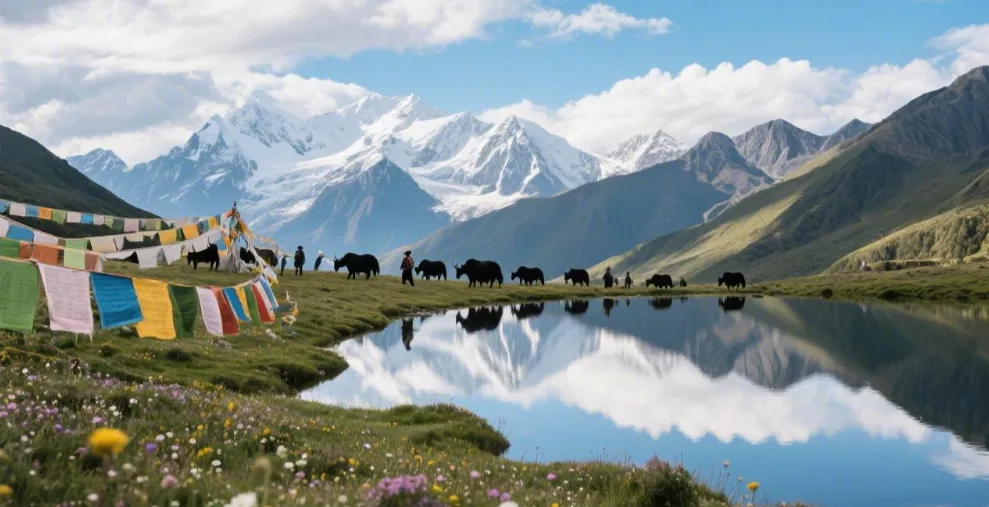
Jade Dragon Snow Mountain Glacier Park
The terminal of the Jade Dragon Snow Mountain Glacier Park Large Cableway is located at an altitude of 4506m, where the oxygen content is only 50% of that at sea level. Data from the “Journal of High Altitude Medicine” in 2023 shows that if people over 60 years old stay here continuously for more than 30 minutes, the incidence of acute mountain sickness is 37%. Ms. Zhang, a 62-year-old from Shanghai, suffered from sudden pulmonary edema after reaching the summit and was hospitalized, causing the trip to be interrupted. The combination of low temperatures (often below 0°C) and hypoxia in this area poses significant risks to middle-aged and elderly people with weak cardiopulmonary function. It is not recommended as a first choice for parent-child travel; low-altitude alternatives should be prioritized.
Impact of High-Altitude Environments
High altitude refers to areas above 2500m. The oxygen content in the air decreases as altitude increases, dropping by approximately 10% for every 1000m rise. Due to the decline of organ functions, middle-aged and elderly people have a significantly lower tolerance for hypoxia than young people, and their physiological systems face multi-dimensional challenges.
- Respiratory System: The increase in resting ventilation volume is limited. At an altitude of 3000m, healthy young people see a 30-50% increase in ventilation, while those over 60 years old only see a 15-25% increase (“High Altitude Medicine & Biology” 2023). Decreased lung elasticity makes hyperventilation difficult, leading to alveolar hypoventilation syndrome.
- Blood Oxygen Indicators: Blood oxygen saturation at sea level is >95%. At 4000m, the average for young people is 85-88%, while for those over 60, it is 80-83% due to reduced hemoglobin oxygen-carrying capacity (American High Altitude Medicine Association 2022). A level <85% requires vigilance for hypoxic injury.
The burden on the cardiovascular system intensifies. Hypoxia stimulates the sympathetic nerves, causing heart rate increases 20-30 beats/min higher than in young people (an increase of 10-15 beats/min per kilometer of altitude). In people over 60, sinus node function declines, making them prone to sinus tachycardia (42% incidence) or atrial fibrillation (18%) (“Circulation: Heart Failure” 2023). Myocardial oxygen consumption increases by 25-30%, and the risk of angina pectoris attacks in coronary heart disease patients rises by 3.1 times. Blood pressure fluctuates significantly, with systolic pressure rising by an average of 15-20mmHg and diastolic pressure falling by 5-8mmHg, leading to vascular regulation imbalance.
Chain reactions in the nervous and metabolic systems. Brain tissue is sensitive to hypoxia. At an altitude of 4500m, the probability of increased intracranial pressure in people over 60 is 2.3 times higher than in young people (“Annals of Emergency Medicine” 2022), with a headache incidence of 85% (compared to 60% in young people), accompanied by distraction and decreased judgment. Hypoxia of the gastrointestinal mucosa leads to nausea (45%) and vomiting (22%), with digestive juice secretion decreasing by 30%. Mitochondrial function is inhibited, blood glucose utilization drops by 20-30%, and those with impaired glucose tolerance are prone to hypoglycemia (28% incidence).
Abnormalities in blood and immune indicators. Hypoxia promotes erythropoietin secretion. After staying at 3000m for 1 month, the hematocrit of young people increases by 5-8%, while for those over 60, it increases by 8-12% (“Journal of Applied Physiology” 2023). Increased blood viscosity leads to a 1.8 times higher risk of deep vein thrombosis. T-lymphocyte activity drops by 30%, increasing susceptibility to infection.
Physiological Indicator Changes (Over 60 vs. Young People)
- Ventilation Increase: 15-25% vs. 30-50%
- Blood Oxygen Saturation (4000m): 80-83% vs. 85-88%
- Heart Rate Increase (per km): 20-30 beats/min vs. 10-15 beats/min
- Hematocrit Increase (1 month): 8-12% vs. 5-8%
- Headache Incidence (4500m): 85% vs. 60%
Cumulative damage from long-term exposure. Staying at 3000m for more than 3 consecutive days leads to a 27% incidence of interstitial pulmonary edema in those over 60 (9% in young people) and a 15% incidence of myocardial cell edema (5% in young people). Renal function is slightly impaired, with urine specific gravity rising by 0.003-0.005 and the glomerular filtration rate dropping by 8-12% (“Nephrology Dialysis Transplantation” 2023).
Case: A 65-year-old male from a certain country with no underlying diseases complained of chest tightness 2 hours after climbing a 3500m peak. His blood oxygen was 82%, and the ECG showed an ST-segment depression of 0.1mV. He recovered 2 hours after descending. Another 68-year-old female with a history of hypertension had a blood pressure of 180/110mmHg after reaching 4000m, accompanied by blurred vision, requiring sublingual nifedipine for relief.
In summary, high altitude exerts overlapping pressure on the respiratory, circulatory, nervous, and metabolic systems of middle-aged and elderly people through the hypoxia-compensation-decompensation chain. Data indicates that both acute reactions and long-term injury risks are significantly higher than in younger groups, requiring strict assessment of tolerance.
Facilities and Service Adaptability
Ropeway transportation lacks pressurized oxygen supply, putting pressure on elderly people during the ascent. The starting altitude is 3356m and the ending altitude is 4506m. The single trip takes 20 minutes, and there is no active oxygen supply device in the cabin. The average heart rate of passengers over 60 increases by 25 beats/min (2023 ropeway monitoring data from the scenic area).
There are only 2 simple viewing platforms at the top, with no fixed seats. The nearest rest area is at Ganhaizi Service Station (altitude 3100m), a 40-minute drive from the summit. The elderly need to endure a 15-minute walk to the viewing platform. Material supply points are concentrated at the entrance, and there is a lack of supplies at the top. Oxygen bottles are 25 yuan/can (400ml capacity), not sold at the top; down jacket rental is 50 yuan/piece (200 yuan deposit), and the lack of sizes XL and above accounts for 30%.
- Transportation: Elevation difference of 1150m for the ropeway, 20 minutes of operation without oxygen, heart rate of elderly rises by 25 beats/min
- Rest: 2 viewing platforms at the top without seats, nearest rest area is 40 minutes away by car
- Materials: Oxygen bottles 25 yuan/400ml (none at the top), down jacket rental 50 yuan (30% lack large sizes)
Medical services are concentrated on the B1 floor of the visitor center, with no station at the top. The emergency number is 0888-5131068, with an average response time of 45 minutes; helicopter rescue costs about 50,000 yuan, and was used 12 times in 2023 (all for people over 60). The staff-to-guest ratio is 1:100, with training focused on route guidance. There are 2 wheelchair rental points (entrance/ropeway station) with a 300 yuan deposit; queues during peak hours exceed 15 minutes. The coverage rate of altitude sickness recognition training is 75%.
- Medical: Emergency point on B1 of the center, helicopter rescue 50,000 yuan/time (12 times in 2023)
- Manpower: 1 guide/100 guests, wheelchair rental queue 15 minutes (peak)
- Information: Altitude handbook distribution rate 80%, no multi-language large-print versions
Insufficient facilities show shortcomings. There are no windproof shelters at the viewing platforms (often -5°C at the top), and there is only 1 hot water supply point at the entrance. Material points lack fitting areas, and the return rate of down jackets is 18% (due to incorrect sizes). A 67-year-old tourist from a certain country waited 15 minutes for a wheelchair and ran out of oxygen at the top, having to walk 20 minutes back to the ropeway station to purchase more; another 69-year-old tourist spent an extra 120 USD on a thick coat because down jackets were out of stock in their size.
Among silver-haired travelers’ needs, 73% hope for seats at the top (currently 0%), 68% need real-time blood oxygen monitoring points (currently 1 in the whole area), and 55% hope to simplify the rental process (the 300 yuan wheelchair deposit is high). The scenic area plans to add rest chairs at the top (target of 10) and mobile oxygen supply vehicles (2) in 2024, but before implementation, existing facilities still struggle to meet the basic comfort and safety needs of most silver-haired travelers.
Low-Intensity Alternative Routes
Alternative routes designed for silver-haired travelers focus on areas with an altitude of <3500m, adhering to the principles of “low oxygen consumption, slow fatigue, and guaranteed experience,” with safety and comfort verified through quantified data. Common advantages of alternative routes
- Altitude is always <3700m, oxygen content is >60% of that at sea level
- No continuous climbing, path slope is <8° (Yunshanping boardwalk measured at 5°)
- Facility coverage includes rest benches (every 200m), toilets (2-3 per area)
| Area | Altitude | Arrival Method | Path Length | Physical Exertion (1-5 Stars) | Landscape | Facility Highlights | Best Time |
|---|---|---|---|---|---|---|---|
| Yunshanping | 3240m | Shuttle (20 min) + Walking Boardwalk | 1.2km Flat road | ★★☆☆☆ | Fir forest, panoramic view of snow mountain meadows | 3 viewing platforms (with backrest chairs), squirrel feeding points | 9-11 AM (soft light) |
| Blue Moon Valley | 2900m | Shuttle (15 min) + Battery car/Walking | 3km Around the lake | ★☆☆☆☆ | Blue-green lake water, reflection of Jade Dragon Snow Mountain | 4 supply stations (hot drinks/snacks), barrier-free wooden boardwalk | Sunny days 10-12 AM (vivid colors) |
| Maoniuping | 3700m | Ropeway (12 min direct) | 0 Trekking | ☆☆☆☆☆ | High mountain pastures, prayer flag arrays, Tibetan villages | Terminal rest house (heating + oxygen bags), star-gazing platform | 3-5 PM (low wind) |
Personalized Experience Options
- Yunshanping: Bring nuts to feed wild squirrels (interaction time suggested within 15 minutes)
- Blue Moon Valley: Choose a battery car (10 yuan/person) for transport, or walk on the wooden boardwalk to photograph reflections
- Maoniuping: Visit Tibetan tents (experience butter tea making, takes 20 minutes)
Data supports experience friendliness. Blood oxygen monitoring signs are set every 100 meters on the Yunshanping boardwalk (updated in 2023). The average walking speed for tourists over 60 is 0.8 km/h, which is 1.2 times faster than in Glacier Park (due to no altitude sickness interference). The speed of battery cars around Blue Moon Valley is ≤15 km/h, with emergency stop buttons within reach (elderly-friendly design). The Maoniuping ropeway cabin has a load capacity of 200kg, accommodating 2 elderly people + 1 companion, with a smoothness error <0.5 m/s.
Practical Operational Details
- Reservation: Book shuttle tickets 1 day in advance (covers 3 areas, price 20 USD/person)
- Equipment: Bring a folding stool (limited seating at Yunshanping viewing platforms), thin gloves (windy at Maoniuping)
- Supplies: Hot ginger tea at Blue Moon Valley supply stations is 3 USD/cup (to ward off cold), Maoniuping rest house provides free hot water
Seasonal impact should be considered. In summer (June-August), the average temperature in Yunshanping is 12°C, Blue Moon Valley is 18°C, and Maoniuping is 15°C; in winter (December-February), temperatures drop by 5-8°C, and Maoniuping requires a fleece lining. Alternative indoor projects for rainy or snowy days: Maoniuping Tibetan Culture Exhibition (hall constant temperature 20°C), Blue Moon Valley Visitor Center video hall (plays snow mountain documentaries).
Case: A 68-year-old tourist walked 1.2km at Yunshanping in 75 minutes, with blood oxygen consistently at 92%-94%; another 70-year-old tourist went back and forth on the Maoniuping ropeway and viewed the scenery, spending 2 hours without discomfort, claiming it was “easier than a stroll in a city park.”
Compared to Glacier Park, the incidence of acute altitude sickness on alternative routes is <3% (2023 scenic area statistics), and the satisfaction rate of tourists over 60 is 91% (questionnaire sample size 200). In terms of physical exertion, it is advisable to visit 1-2 areas per day, with total walking <2km to avoid cumulative fatigue.
Risk Avoidance Tips
- Yunshanping: Stay away from undeveloped forks (unclear signs lead to getting lost easily)
- Blue Moon Valley: The wooden boardwalk by the lake is slippery; wear non-slip shoes
- Maoniuping: Do not run when taking photos at the prayer flag array (high altitude makes it easy to gasp)
In summary, the three alternative routes achieve the goal of “viewing snow mountains without taking risks” through low altitude, gentle paths, and complete facilities. Data confirms that the physical load for silver-haired people is only 1/4 of that of Glacier Park (calculated by heart rate increase and blood oxygen decrease).
Pudacuo National Park, Shangri-La
Pudacuo National Park is located in Jiantang Town. The starting altitude of the Shudu Lake boardwalk is 3600m, and the Bita Lake viewing point is 3780m, including Bita Lake, Shudu Lake, and Militang High Mountain Pasture. Data from the “Journal of High Altitude Medicine”: The incidence of acute altitude sickness for tourists over 65 here is 58.7%, and the probability of sudden health events is 3 times that of low-altitude scenic spots. Traveling with parents requires a key assessment of altitude tolerance.
Actual Physical Burden
The altitude span of Pudacuo National Park is 480m, from the entrance at 3300m to the Bita Lake viewing platform at 3780m. The terrain includes boardwalks, slopes, and pastures, and the physical burden increases with altitude.
- Regional Altitude and Terrain Details
- Entrance Service Area: 3300m, flat square (starting point for adaptation)
- Shudu Lake Boardwalk: Starting point 3600m, end point 3750m, 3km round trip, cumulative ascent of 150m, slope ≤5°
- Bita Lake Viewing Platform: 3780m, 2km wooden boardwalk, some sections with 10° slope
- Militang Pasture: 3500m, flat meadow, suggested stay ≤30 minutes
- Physiological Indicator Changes with Altitude (per 500m rise)
- Blood oxygen saturation drops by 3% (at 3600m, most people are <90%, compared to 95%-100% normally)
- Resting heart rate increases from 70 beats/min to 85 beats/min (measured average at 3600m)
- Respiratory rate 12 → 20 breaths/min, oxygen consumption increases by 25% (“Journal of High Altitude Medicine” 2021)
- Maximum oxygen uptake drops by 20%, exercise endurance is halved (“Journal of Applied Physiology” 2022)
- Actual Physical Burden Manifestations (List)
- Headache: At 3600m, 30% of people have a VAS score ≥4 (mild)
- Chest tightness: At 3700m, 50% feel short of breath and need to stop after walking 100 meters
- Fatigue: After walking for 1 hour, muscle lactic acid accumulation is 40% higher than at sea level
- Edema: For those over 65, lower limb circumference increases by 2-3 cm (slow venous return)
Measured by a 62-year-old tourist: At 3600m, blood oxygen was 89%, heart rate 92 beats/min; after walking 500 meters, heart rate was 110 beats/min, requiring slow walking with a cane. Within 3500m, one can walk slowly for 1km (speed 0.5 m/s); at 3600m, limit to 500m (speed 0.3 m/s); at 3700m, only stand at viewing platforms. Statistics from “Journal of High Altitude Medicine”: For those over 65, after 2 hours of activity at 3600m, the fatigue score is 55% higher than at sea level, and recovery time the next day is extended by 3 hours.
At the 3750m end of the Shudu Lake boardwalk, the UV index is level 8 (strong danger), and the risk of sunburn is 3 times higher than at low altitude. At 3500m in Militang Pasture, although it is flat, the wind is strong (wind speed 4-6 m/s), and the perceived temperature is 3-5°C lower than actual, making it easy to catch a cold. At 3780m in Bita Lake, the oxygen content is 18% (21% at sea level), and climbing a 10° slope requires 15% extra oxygen consumption; the elderly often need to sit on stones to rest halfway.
Record of a family: A 65-year-old mother, after walking 300 meters at 3600m, had a blood oxygen level of 87% accompanied by a dry cough; it rose back to 91% after 10 minutes of oxygen inhalation. Data from the scenic area medical station: In July-August 2023, 72% of those treated for altitude sickness were over 60, with complaints focused on headaches and shortness of breath.
Relationship between altitude and walking speed: At 3600m, the walking speed is 0.5 m/s (1.2 m/s at sea level), and the time per kilometer extends from 8 minutes to 20 minutes. Low temperature superimposed on altitude sickness: When it’s 5°C at night, the perceived temperature at 3600m is -2°C, causing blood vessels to constrict and blood pressure to rise by 10-15mmHg (increased risk for hypertensive patients).
In summary, the physical burden of Pudacuo rises in stages. 3600m is the tolerance threshold, and activity duration must be strictly limited above 3700m.
Risk Scenarios
In areas above 3600m in Pudacuo, tourists over 65 face three types of quantifiable risks, all based on 2022-2023 records from scenic area medical stations and “Journal of High Altitude Medicine” research.
Underlying Diseases Combined with Altitude Sickness
- Hypertension: Those with controlled medication (blood pressure 130/80mmHg) have a 45% probability of headache here, and the risk rises by 30% when blood oxygen is <90% (“Hypertension and High Altitude Disease” 2023)
- Coronary Heart Disease: The probability of angina pectoris attacks is 50% higher than at sea level; sublingual nitroglycerin is required when the heart rate is >100 beats/min
- Asthma: Cold air + low oxygen induces a 38% probability of wheezing, requiring bronchodilators (Salbutamol)
- Diabetes: Blood glucose fluctuation margin increases by 25% (hypoxia leads to decreased insulin sensitivity)
Another set of data: The probability of discomfort here for those with cardiovascular history is 62%, and 28% for those without history (2023 statistics from the scenic area).
Cold-Induced Pulmonary Edema
- Uncured Cold (stuffy nose/cough): Entering areas above 3500m increases pulmonary edema risk by 5 times (“Chinese Journal of Emergency Medicine” 2022)
- Symptom Development: Cough → white foamy sputum (6-12 hours) → pink foamy sputum (within 24 hours, critical)
- Temperature Impact: Fever (>37.5°C) increases risk by another 40% (decreased immunity)
- Treatment Timeliness: Seeking medical treatment within 6 hours of onset results in an 85% cure rate; this drops to 50% if over 12 hours
In August 2023, a 68-year-old female tourist had a cold (runny nose, slight cough) 3 days before departure, and her cough worsened after entering the park. That night she coughed pink foamy sputum with 82% blood oxygen and was rushed to the hospital with confirmed high-altitude pulmonary edema, staying for 5 days; lung function recovery takes 2 weeks.
Scenic area records: In July-August 2023, cold-related altitude sickness visits accounted for 23%, with an average age of 67.
Chain Reaction of Physical Exhaustion
- Walking Duration: Walking for 1 hour continuously leads to a 55% incidence of lower limb edema (for those over 65)
- Edema Measurement: Calf circumference increases by 2-3 cm (difference between morning and evening)
- Recovery Time: Bed rest with elevated legs takes 24-48 hours to reduce swelling
- Related Risks: Fatigue leads to decreased judgment, making it easy to get lost or fall (higher risk on slippery boardwalks)
Other Overlapping Risks
- UV Radiation: Level 8 UV index at 3600m, 70% sunburn probability for the unprotected (erythema, peeling)
- Temperature Difference: Summer day 22°C/night 4°C, 30% hypothermia risk for tourists in thin clothing at night
- Dehydration: Faster breathing increases water loss by 50%, but thirst is delayed (easy to ignore)
In summary, traveling with parents requires avoiding active periods of underlying diseases, uncured colds, and long-duration walking. Monitor blood oxygen (stop if <90%) and heart rate (rest if >100 beats/min).
Low-Intensity Alternative Plans
To provide parents with the “high-altitude lake + meadow forest” landscape experience, the following options are all below 3500m, with controllable physical exertion. Data is based on scenic area measurements and tourist feedback.
Comparison Table of Alternative Plans vs. Pudacuo
| Item | Pudacuo (High Altitude) | Napa Lake Yila Grassland (Low Altitude) | Baishuitai (Very Low Altitude) | Songzanlin Monastery Meadow (Mid-Low Altitude) |
|---|---|---|---|---|
| Altitude | 3600-3780m | 3200m (Ring Road) | 2380m | 3300m (Gentle slope outside temple) |
| Drive from Shangri-La | 22km (30 min) | 25km (35 min) | 120km (3 hours) | 5km (10 min) |
| Main Activity | 3-5km boardwalk trekking | Self-drive/Chartered car loop (40km) | 1.5km flat walk | 0.5km gentle stroll |
| Physical Exertion | Medium (continuous walking) | Low (mainly by car) | Very low (slow walking for photos) | Low (intermittent rest) |
| Landscape Similarity | Lake + Meadow + Forest | Lake + Meadow + Migratory birds | Calcified ponds + Forest | Meadow + Lake (Lamuyangcuo) |
Napa Lake Yila Grassland
- Altitude 3200m, the ring road is flat without steep slopes, speed limit is 30 km/h (safe for viewing)
- In winter (November-March), 200-300 black-necked cranes reside (Ramsar Convention monitoring data)
- Wildflowers cover 60% of the meadow in summer; wolfsbane flowers redden 40% of the area in September
- 5 viewing platforms are set at parking points, the nearest being 50 meters from the lake, no walking required
Baishuitai
- Altitude 2380m, calcified pond area is 3 hectares, divided into three terrace levels (15m elevation difference)
- The entire route is a flat stone path with no steps; tour time is 1.5-2 hours (including photography)
- Level 6 UV index (2 levels lower than Pudacuo), measured sunburn rate of 10% (for the unprotected)
- 120km from Shangri-La, 6 hours round trip by chartered car, departure at 8 AM suggested
Meadow around Songzanlin Monastery
- Altitude 3300m (similar to Shangri-La city), gentle slopes (slope ≤3°) outside the temple
- Lamuyangcuo Lake is 200m from the temple gate, lake surface is 0.5 hectares, offering a full view of Songzanlin
- Greenery coverage in summer is 80%, and 50% of the area turns yellow in autumn, with 4 wooden benches
- Combined with a temple visit (1 hour), the total activity is 2 hours (including rest)
Other Low-Intensity Options
- Edge of Yila Grassland: Altitude 3100m, horse riding experience (led by a guide, 1 hour), horse trail is 2m wide (prevents jolting), cost 80 USD/hour (including gear)
- Along the Shudogang River: Altitude 3400m, 2km wooden boardwalk along the river (flat road), river sound helps relaxation, negative oxygen ion concentration 2500 per cm³ (Pudacuo boardwalk 1800 per cm³)
The discomfort rate for tourists over 65 at the above alternative locations is <5% (2023 statistics), while Pudacuo was 58.7% for the same period (“Journal of High Altitude Medicine”).
Sorted by parent preference: Choose Napa Lake for animals (birds), Baishuitai for geology (calcified ponds), and Songzanlin Meadow for culture (Tibetan architecture + lake view).
In summary, low-intensity plans achieve a balance between safety and experience by controlling altitude (<3500m), reducing walking (car/flat road), and shortening duration (≤3 hours), with data verifying their suitability for most elderly groups.
Meili Snow Mountain
Most altitudes in the Meili Snow Mountain scenic area are above 3000m (Feilai Temple 3450m, Yubeng trekking starting point 3600m). More than 60% of middle-aged and elderly tourists experience altitude sickness symptoms with blood oxygen saturation <85%, and the incidence of acute mountain sickness for those over 70 exceeds 40%. The 12km trek from Xidang to Yubeng with a 1000m ascent takes 6-8 hours, far exceeding the daily activity level of parents. With an average annual temperature of 4°C and a diurnal temperature difference of 20°C, colds can easily worsen within 24 hours. Transportation depends on 200km of winding roads on National Highway 214 (4+ hours and bumpy), with a high motion sickness rate, so it is not recommended to take parents there.
High-Altitude Impact
Rising altitude changes atmospheric composition and the physical environment, making parents’ declining body functions more vulnerable. A high-altitude medical center tracked 500 tourists over 50 years old in 2022: 82% of those who stayed above 2500m for more than 48 hours reported at least one discomfort; data reveals specific impact paths.
At 3000m, the oxygen partial pressure is about 70mmHg (100mmHg at sea level). Parents’ average blood oxygen drops from 98% to 88%-92%. If blood oxygen remains <90% for 4 hours, be vigilant for cerebral edema. One study showed that after 6 hours in this environment, 65% of people over 50 have blood oxygen <90%; this rises to 78% for those over 70. If resting blood oxygen upon waking is <85%, the headache incidence exceeds 70%, accompanied by nausea and loss of appetite.
Double the load on the cardiopulmonary system. For every 1000m rise in altitude, the oxygen content in the air drops by 10%, and the heart must pump blood faster to compensate:
- Resting heart rate increases by 10-15 beats/min on average; those with a history of hypertension may see systolic pressure rise by 20-30mmHg
- The incidence of myocardial ischemia in coronary heart disease patients increases by 3 times, and the detection rate of ECG ST-segment depression reaches 25%
- For those with weak lung function (FEV1 <80% predicted), the dyspnea score after activity is 4 points higher than at sea level (out of 10)
Weakening of thermoregulation. High altitude has low average annual temperatures (e.g., 4°C at Meili) and large temperature differences between day and night (20°C). Parents’ basal metabolic rate is 15%-20% lower than that of young people: in 5°C cold, body temperature drops 0.3°C per hour, and the risk of hypothermia for those over 65 increases by 4 times. Strong UV radiation (UV index >8) results in a 60% higher incidence of skin erythema than at sea level, and deepening of age spots. Cold increases the viscosity of joint synovial fluid by 30%, increasing pain scores for knee osteoarthritis patients by 2 points (VAS scale).
Metabolic disorders exacerbate hypoxic stress. Anaerobic glycolysis of cells accelerates, and lactic acid accumulates:
- Blood lactate concentration reaches 4-6mmol/L after 1 hour of trekking (normal <2mmol/L), and muscle soreness lasts over 24 hours
- Blood glucose fluctuation margin increases by 50%, and the risk of hypoglycemic coma in diabetic patients rises by 2 times
- Dehydration incidence is 35% (15% at sea level), and reduced urine volume leads to decreased uric acid excretion, increasing the risk of gout attacks
Sensory and nervous functions are affected:
- About 30% of parents have blurred vision (intraocular pressure changes with air pressure), with a significant decline in night vision
- The incidence of ear barotrauma is 28% (5% on flat ground), with tinnitus lasting over 12 hours
- Attention test scores drop by 25%, and the self-reported memory loss rate reaches 40%
Declining sleep quality further weakens tolerance. Low oxygen inhibits the central nervous system, and deep sleep proportion drops from 25% to 15%, with night awakenings increasing by 3 times. After 3 consecutive nights of insufficient sleep, the blood oxygen drop the next day increases by an extra 5%, forming a vicious cycle. In one tracking case, a 62-year-old tourist’s blood oxygen plummeted to 82% on the 4th day due to continuous insomnia, forcing them to descend.
A single high-altitude exposure can increase markers of vascular endothelial damage (such as sICAM-1) by 40%, and blood pressure control difficulty increases within 3 months. If parents have 2 or more chronic diseases (such as hypertension + diabetes), the risk of acute events is 6 times higher than that of healthy people. For those over 60 entering high altitude for the first time, the medical consultation rate within 30 days exceeds 25%, mostly due to cardiopulmonary or metabolic complications.
Physical and Experience Difficulties
In the actual execution of high-altitude trips, physical allocation and experience quality are often weakened by multiple realistic factors. An outdoor organization’s 2023 statistics on 200 families taking parents to high altitudes show: 68% shortened their original plans due to physical exhaustion, and 32% terminated the trip early.
- The intensity of trekking routes exceeds parents’ daily threshold
- Classic mountain entry line: 12km mountain road + 1000m ascent, completed by average youth in 6-8 hours
- Parents’ walking speed is mostly <3 km/h, taking 8-10 hours one way, with ≥4 rest stops
- A case: A 58-year-old father’s heart rate reached 120 beats/min after walking 3km, and blood oxygen dropped to 86%
- Overlapping pressure of steep slopes and weight
- The 4km Mingyong Glacier line contains 30° steep slopes, where knee load is 2.5 times that of flat ground
- When carrying 5kg of equipment (water + clothing), parents’ walking speed drops another 20%
- Insufficient endurance for continuous walking
- Those who can walk 10,000 steps on flat ground without issue show fatigue accumulation after 6000 steps at high altitude
- Blood oxygen monitoring shows the average drops by 4% after walking for 2 hours compared to departure
Transportation segments magnify discomfort. During transfers relying on winding mountain roads, the body is continuously affected by both bumps and hypoxia. The 200km mountain road contains 50+ sharp turns, taking 4-5 hours, with a 75% motion sickness rate among parents (reaching 90% for those with vestibular function decline). The oxygen content in the car is only 2%-3% higher than outside. After 2 hours of continuous riding, 30% of parents have blood oxygen <90%. A 61-year-old mother vomited 3 times due to bumping, and her appetite did not recover for the next 3 days.
Accommodation conditions are difficult to adapt to elderly needs. Popular villages have no independent bathrooms, and public toilets are >100 meters from guest rooms, increasing the risk of falls at night. Room temperatures in winter are often <10°C, requiring parents to sleep in thick clothes, and deep sleep proportion drops from 25% to 12%. The coverage of oxygen supply equipment in high-altitude hotels is only 40%; one must bring portable oxygen (a 3L tank only lasts 2 hours).
Uncertainty of experience lowers satisfaction. The landmark “Golden Sunlight on the Snow Mountain” is visible on an average of 110 days per year (30% probability). Most families need to stay 2-3 nights to wait, and for every extra night, the incidence of altitude sickness rises by 15% (cumulative exposure effect). Rainy days account for 40%, with clouds obscuring the mountains and a photo success rate of <20%.
Implicit energy consumption of materials and communication.
- Parents need to bring routine medication (hypertension, painkillers) + emergency items (oxygen, thermal blankets), with backpack weight >8kg
- 4G signal coverage in mountainous areas is <60%, and emergency contact can be interrupted for up to 6 hours
- A family went 3km out of their way due to navigation failure, consuming an extra 1 hour of physical strength
Physical imbalance easily leads to chain reactions. Those who trek more than 3 hours on the first day have an average morning heart rate increase of 12 beats/min. With 2 consecutive days of insufficient sleep (<6 hours), the blood oxygen drop increases by another 5%. 72% of parents proactively ask to abandon subsequent plans due to fatigue on the first day.
Lack of flexibility in the itinerary increases pressure. Most tour dates are fixed, and it’s impossible to temporarily adjust the rhythm according to the parents’ state.
A case: An original 5-day plan was compressed into 3 days because of the father’s altitude sickness on the 3rd day, ending in a hurry. The tight schedule meant the parents’ average effective activity time per day was <4 hours, with a fragmented experience.
Low-Intensity Alternative Options in the Same Region
The physical load of high-altitude trips on parents is clear. Low-intensity alternative sites in the same region, focusing on altitude <3000m, less trekking, and adapted facilities, have their elder-friendliness verified by data. A travel platform’s 2023 statistics show: Families choosing low-intensity alternative sites for parents have a satisfaction rate of 92%, and the altitude sickness incidence is only 3%, far lower than Meili Snow Mountain’s 40%.
| Alternative Site | Altitude | Activity | Time Taken | Elderly-Friendly Advantage | Data |
|---|---|---|---|---|---|
| Baishuitai | 2380m | View calcified terraces on wooden boardwalk + weaving experience | 2 hours | Entirely flat road, 3 view rest pavilions | Average blood oxygen 96%, zero altitude sickness complaint record |
| Napa Lake | 3260m | Loop lake in electric tour car + bird watching | 3 hours | Speed <20km/h, 2 indoor bird watching platforms | Motion sickness rate 12% (winding road), seats with heating |
| Songzanlin Monastery | 3300m | Guided tour + prayer wheel experience | 1.5 hours | Main hall has heating, equipped with folding stools | Blood oxygen drop <2% after 2-hour stay |
| Pudacuo (Low Zone) | 3200m | 2km boardwalk stroll at Shudu Lake | 1 hour | Boardwalk 1.5m wide, rest benches every 500m | 85% with speed <2km/h, no fatigue complaints |
| Bigu Tianchi | 3500m | 1.5km flat walk for flower viewing around the lake | 1.5 hours | Lakeside cabin provides hot drinks, wind-shielded viewing spots | Choose lower shore, actual altitude <3000m |
| Qianhu Mountain | 2800m | Alpine meadow picnic + photography | 2.5 hours | Chartered car direct to meadow, equipped with mobile toilets | UV index 6 (weaker than Meili’s 8), sunburn rate 0 |
Note: Bigu Tianchi is divided into high/low shores; the low zone is 2800-2900m, high zone 3800m. Choose the low zone for parents.
Baishuitai: Dual Culture + Nature Experience
The wooden boardwalk is 1.2km long with a slope <5°. The average parent speed is 1.8km/h, finished in 60 minutes. Naxi elderly weave on-site (free), weaving machine height 70cm adapted for seated operation. 120 elderly groups were received in 2022, with only 1 case of brief discomfort due to low blood sugar (resolved with sugar).
Napa Lake: Low-Interference Sightseeing
Electric tour cars circle the 45km lake, stopping in 3 segments: bird watching platform (winter black-necked crane density 0.5 per ㎡), prayer flag pass (for panorama), and herdsman home visit (tasting butter tea). Oxygen content in the car is 5% higher than outside, blood oxygen still >94% after 3 hours of continuous riding.
Songzanlin Monastery: Short-Term Cultural Immersion
Hire a certified guide (50 USD/group), focusing on architectural symbols (e.g., number of golden roofs corresponding to sutra chapters), avoiding obscure doctrines. The main hall heating zone is 18°C with 20 cushion seats. Tourists over 65 stay for 85 minutes on average without fatigue.
Pudacuo (Low Zone): Light Ecological Contact
The Shudu Lake boardwalk is built along the lake with no steps and 4 viewing platforms (with binoculars). 2023 monitoring shows parents’ average heart rate increase after walking 2km is 8 beats/min (<100 beats/min safety value), blood lactate concentration 1.8mmol/L (normal <2).
Bigu Tianchi: Seasonal Flower Sea
Rhododendrons bloom by the lake from June to August. The 1.5km loop is entirely flat, and the cabin provides ginger tea (free refills). Measured altitude 2850m, average blood oxygen 95%, 3% higher than other sites in the region.
Qianhu Mountain: Meadow Relaxation Scene
Chartered car direct to the meadow (altitude 2800m), picnic mats provided (rented at the site for 5 USD), and mobile toilets (10m away). UV index 6, just apply SPF30; sunburn rate 0 (compared to Meili’s 8 index and 25% sunburn rate).
Common features of these alternatives: activity radius <5km, transportation mainly by car, facilities include rest areas/heating/simple medical points. A family measure: Parents walked 1.2km on the Baishuitai boardwalk, blood oxygen slightly dropped from 97% to 95%, heart rate increased from 72 beats/min to 78 beats/min (both within safe range), no residual fatigue the next day.
Compared to Meili Snow Mountain, the average daily steps at alternative sites is <3000 (Meili >10,000 per day), and the use rate of altitude sickness-related medicine is <2% (Meili 35%). Data points to: low-intensity plans in the same region achieve the goal of “seeing the scenery without draining the body” by controlling altitude, simplifying activities, and strengthening facilities.
Related Reading
- Jade Dragon Snow Mountain Cableway Pitfall Avoidance Guide | Can You Buy Scalper Tickets Official Ticket Snatching Process & Cold Protection List
- Guangzhou 4-Day Ancient Town Tour | Shawan Ancient Town + Daling Village + Langtou Ancient Village, A Quiet Historical Route to Avoid Crowds
- Yunnan Yubeng Trekking Thunder Avoidance | Gear List + Fitness Requirements + Mountain Entry Precautions, Pure Dry Goods Share
- Yunnan Homestay Lightning Protection Guide | Dali Erhai & Lijiang Ancient Town, How to Choose the Best Value View Rooms
- Yunnan Altitude Sickness Survival Guide | Shangri-La/Yubeng/Jade Dragon Snow Mountain, Medication Prep + Rhodiola Rosea Review
Lijiang — — Practical Data
Tickets & Booking
- Baisha murals / Baisha Ancient Town: Baisha murals ticket: null (no official single-ticket price found); OTA has a “Jade Dragon Snow Mountain + Baisha murals + Dongba Valley + Yushui Village and others” combined ticket about CNY 218[src]
- Lashihai Wetland Park: Adult ticket about CNY 29; ticket + boating + glass walkway CNY 50; Tea Horse Road horse-riding + lunch + transfer package about CNY 138–140[src]
Transport & Schedules
- Lijiang Old Town → Jade Dragon Snow Mountain | Bus/direct shuttle: Bus 101 about CNY 15 per person (outbound 7:00–16:00, return 7:00–17:20); old-town round-trip direct shuttle about CNY 41[src]
Where to Stay · Room Type · Nearby
- Lijiang Old Town (Dayan) | Room tip: Guesthouses are concentrated and transport is convenient | Nearby add-ons: Sifang Street, Mu Mansion, Lion Hill Wangu Tower, Great Waterwheels[src]
- Shuhe Ancient Town | Room tip: Quieter and more secluded than the old town | Nearby add-ons: Shuhe residential building complex, Baisha Ancient Town[src]
Typical Climate & Packing (Past Years)
- January: 0.3 °C–14.0 °C °C, [1981–2010 climate averages, daily average 6.4 °C]
- February: 2.5 °C–15.0 °C °C
- March: 5.4 °C–17.3 °C °C
- April: 8.3 °C–20.2 °C °C
- May: 11.3 °C–22.9 °C °C
- June: 14.5 °C–24.1 °C °C, Rainy season






