



Day 1: Arrival in Mangshi · City Introductory Experience
I arrived at Mangshi Airport on an early flight last week—the terminal is a small light-gray building with glass decorated with Dai brocade patterns. When I landed, there was a light drizzle outside, and the air was filled with the scent of green grass mixed with the sweetness of mangoes. The airport is as small as a courtyard. At the exit, an uncle in a blue cotton shirt was holding a “Taxi” sign. I followed him; the car was an old Jetta with faded navy blue seat covers. We chatted about the weather in Mangshi all the way: “Today is considered cool; wait until the sun comes out, you’ll need a thin jacket.” 20 minutes later, we stopped steadily next to the long-distance bus station in the city center; the fare was exactly 30 yuan.
I suggest staying directly at Mangshi Hotel—it’s not a new hotel, but the location is beyond words: a 5-minute walk to the left reaches the bus station, 100 meters to the right is the vegetable market, and the scent of Xidoufen (pea porridge) from the breakfast stall downstairs can wake up the whole building. I stayed in a standard room for 180 yuan/night. The corridor had a faint scent of lemongrass, the curtains were cotton and linen with small peacock patterns, and the wax-printed bedsheets felt a bit rough but carried the warmth of sun-dried fabric. The bathroom wasn’t large, but the water heater provided instant hot water, washing away half the fatigue from the flight.
At 2:30 PM, I wandered to Menghuan Banaxi Rare Park, with a 40 yuan ticket. The uncle at the gate wearing reading glasses took my ticket and said, “Stroll slowly; it’s 10 degrees cooler inside than outside.” As soon as I entered, I was captivated by the petrified wood area—a piece of petrified wood as tall as a person stood by the road, with amber textures hidden inside the light brown stone body, as if the billion-year-old tree veins were frozen. Looking closely, the translucent parts could actually reflect the shadow of my glasses. Nearby were ancient banyan trees that several people couldn’t encircle, with aerial roots hanging from branches to the ground, forming a green curtain. Sunlight filtered through the gaps onto the roots, and the ground was covered with shredded bark, feeling soft like walking on clouds. There were also tree ferns in the garden, with leaves unfolding like feathers. The guide map said these are plants from the dinosaur era; I took a photo next to them and suddenly felt that even the soil under my feet held stories.
By 4:30 PM, an old lady was sitting on a small stool at the entrance, with Paoluda in a bamboo tray. Her hands were wrinkled, but her movements in breaking the dried bread were gentle. She pinched the golden-baked bread into pieces, put them in a transparent bowl, added two large scoops of warm coconut milk, and sprinkled some sago and coconut shreds. The moment I picked it up, the sweet fragrance of coconut milk wrapped in the toasted aroma of the bread rushed at me. One sip—the coconut milk was silky, the bread was crispy, and the sago was chewy in my mouth. It was sweet but not cloying. For 10 yuan a bowl, I finished it while sitting on a stone bench at the entrance, even licking the coconut shreds at the bottom of the bowl clean.
In the evening, you must rush to Jinta Dai Flavor on the second floor of the Menghuan Banaxi Food City—the stairs are a bit steep with old wooden handrails, but the second floor has air conditioning, immediately blocking out the heat from outside. I ordered Kusa (bitter dipping sauce) and Ghost Chicken. The owner was a Dai auntie in a flowery apron; she took the menu and smiled: “First time eating this, little girl? Take less Kusa, and put more lemongrass in the Ghost Chicken.”
The Kusa was served in a coarse pottery bowl, light green in color, smelling of the fresh bitterness of green grass, paired with rice noodles and braised beef slices. Dipping a chopstick of rice noodles into the Kusa—first came the bitterness, followed by the heat of millet chili, then the richness of the beef stomach juice; it became more addictive the more I ate. The beef slices were braised very tenderly, juicy when bitten, and paired with the fragrance of Kusa, they weren’t gamey at all. The Ghost Chicken is a cold dish; the black-boned chicken meat is shredded into thin strips, topped with millet chili, lemongrass, and lemon leaves, and drizzled with fresh lemon juice. It was moderately sour and spicy, the chicken had no fishy smell, and the fragrance of lemongrass wrapped around the meat; even two bowls of rice weren’t enough.
Seeing me eating hurriedly, the auntie smilingly handed me a cup of warm water: “Slow down, the Paoluda hasn’t been served yet.” I later learned that her Paoluda is made with coconut milk freshly squeezed that morning, and the bread is also baked on the same day, which is why it’s ten times more fragrant than those sold elsewhere.
When I walked out of the food city, Mangshi’s night had lit up—there were stalls selling roasted tofu by the road, the scent drifting over, but I really couldn’t eat anymore. Holding my stomach, I walked toward the hotel. Passing by the Menghuan Banaxi Guesthouse, there were elderly people playing chess under the big banyan tree at the entrance. The sound of chess pieces hitting the stone table went “pa,” mixing with the shouts of flower vendors in the distance. This is the night of Mangshi, not bustling, but like a cup of warm Paoluda, so comfortable that it makes you want to stay longer.
Practical Tips for the Day (Tested personally before daring to share)
- Transportation: Don’t take “unlicensed cars” from the airport. Look for drivers in uniforms, or ask the airport service desk for a regular taxi number. 30 yuan to the city center is a reasonable price.
- Accommodation: The auntie at the front desk of Mangshi Hotel will tell you that the Xidoufen at the breakfast stall downstairs should be eaten with “fried dough stick pieces”—it’s more fragrant than eating it alone. Don’t miss this hidden way of eating.
- Food: Don’t take too much Kusa the first time you eat it at Jinta Dai Flavor. The auntie will proactively give you a bowl of clean water to rinse your mouth, fearing you might be choked by the bitterness—this is really thoughtful.
- Attractions: Don’t touch the petrified wood in Menghuan Banaxi Rare Park with your hands. Although the stone is hard, the patterns on it were formed over billions of years; touching them would be heartbreaking.
This day involved no rushing to attractions, just slowly wandering and slowly eating, but it was precisely this “leisurely pace” that made me remember the temperature of Mangshi—the kindness of the airport uncle, the sweetness of the old lady’s Paoluda, the reminder from the Dai auntie; it’s a city welcoming you in the most simple way.
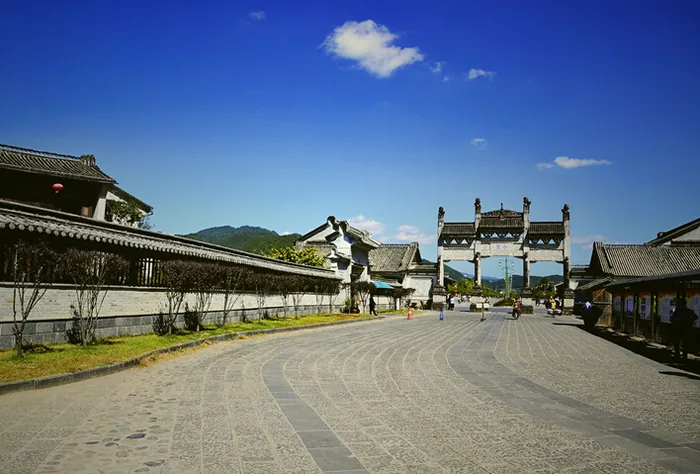
Day 2: Mangshi → Tengchong (Approx. 3 hours drive) · Hot Sea and Hot Springs
At 7:30 AM, I sat on a small stool downstairs at Mangshi Hotel eating Xidoufen—the owner piled a full scoop of powder ground from fried yellow beans into a coarse porcelain bowl, poured in boiling bone soup, sprinkled a handful of crispy fried dough stick pieces, and drizzled a spoonful of sesame peanut sauce. The richness of the bean powder wrapped around the charred aroma of the dough sticks, and the sesame scent tickled my nose. As I slurped the last bite, an old lady selling ivory mangoes nearby smilingly handed me one: “Little girl, eat this with the bean powder, it’s very sweet.”
At 8:00 AM sharp, I got into the Jetta I booked in advance and headed toward Tengchong. The driver was a local uncle from Tengchong, as talkative as a machine gun: “Look at the sugarcane outside the window, it’s taller than a person. You can drink freshly squeezed juice when we get to Tengchong; it’s ten times sweeter than what’s sold in supermarkets!” Sure enough, sugarcane farmers by the road were shouting their wares. I bought a stalk and bit into it; the juice “popped” in my mouth, sweet as if soaked in honey, and I couldn’t even bear to throw away the sugarcane pulp on my fingers.
The car turned at a bend on the Hangrui Expressway, and the green-tiled, white-walled roofs of Tengchong’s urban area bumped into view—like building blocks scattered on the ground. At 11:30 AM sharp, we stopped at the entrance of Yongzhou Restaurant. Two paper lanterns hung from the red-painted door, and the owner in a navy blue apron came out to welcome me: “Little girl, the Dajiujia (fried rice cakes) must be eaten while it’s hot!” In the coarse pottery plate served, the rice cakes were fried golden brown with crispy edges, wrapped with Xuanwei ham slices, fluffy scrambled eggs, and pickled vegetables. Taking a bite, the tenderness of the rice cakes first wrapped around the saltiness of the ham, followed by the smoothness of the eggs, and finally the tartness of the pickled vegetables rushed up—the layers flipped as fast as a book. The owner stood nearby and smiled: “This name was passed down from Xu Xiake—back then he was so hungry his legs were weak, he ate a bowl of fried rice cakes and said, ‘It saved my life,’ so it has been called that ever since.”
At 2:00 PM, I gripped my ticket and entered the Rehai (Hot Sea) Scenic Area. As soon as I stepped in, heat wrapped in a faint sulfur smell rushed over me, like stepping into a giant steamer. Both sides of the bluestone road were dense tropical forests, with water droplets hanging from leaves, hitting my arms coolly. The first thing I spotted was the Dagunguo (Big Boiling Pot)—surrounded by a circle of people in the center of the scenic area, the giant iron pot over two meters in diameter was glowing red, with dark green water bubbles “gudu gudu” popping upward, and the steam was so strong it turned the nearby branches yellowish-brown. A nearby stall sold steamed eggs, with three eggs strung on a straw rope and placed over the steam vent. The owner held a timer: “15 minutes, the shell will crack, the yolk will be soft.” I took the egg, the shell still steaming; peeling it open, the white was semi-solidified and the yolk flowed with golden juice. One bite was incredibly fresh, with a slight sulfur taste, but not overpowering at all.
Walking deeper, Zhenzhuquan (Pearl Spring) was right by the road—spring water bubbled up from underground like a string of pearls on a necklace. The water surface was blue-green, so clear you could see the small stones at the bottom. The nearby Huaitaijing (Pregnancy Well) was even more crowded; the two stone-carved wellheads were engraved with dragon patterns, and a sign read “Pregnancy Well.” The auntie selling water said, “In the past, people got pregnant after drinking this water; actually, it’s high in minerals—metasilicic acid, calcium, and so on—good for the skin.” I crouched by the well to catch a cup; it tasted sweet without any weird flavor, so I filled a bottle to take back for a foot soak.
Strolling until 4:30 PM, I dragged my steps back to the Rehai Hot Spring Hotel. The hotel is hidden within the scenic area, with the branches of a giant banyan tree at the entrance blotting out the sun. The auntie at the front desk took my luggage and smiled: “We’ve reserved a room with a balcony for you; you can see the volcano.” The room was decorated in an antique style, the wooden floors polished to a shine, with rattan chairs and a small tea table on the balcony. I dropped my luggage and headed straight for the private hot spring—the pool was built with local green stones and filled with hot spring water at exactly 38 degrees. The moment I soaked in, all my pores opened up. The sulfur smell wrapped around me, and my skin slowly became as smooth as a freshly peeled egg. After soaking for 20 minutes, I climbed out and drank a cup of ginger tea provided by the hotel; I was so warm that even my toes felt comfortable.
In the evening, I ate Tuguozi (clay pot stew) at the hotel restaurant, with pork ribs, potatoes, radishes, and Tengchong’s unique pickled vegetables stewed in a clay pot; the broth was so thick it could stick to the spoon. I shoveled rice while looking out the window; the sunset dyed the clouds on the volcano peak orange-red, like a giant marshmallow. After dinner, I strolled along the corridor, hearing the “gudu” sound of the hot spring mixed with the rustling of leaves, and suddenly I understood—the meaning of travel is not rushing to attractions, but biting into a hot Dajiujia, soaking in a silky hot spring, and listening to the wind blowing with the scent of sulfur.
Day’s Pitfalls & Practical Tips (Personally Effective)
- Transportation: Don’t drive too fast from Mangshi to Tengchong. There are viewing platforms on the expressway where you can stop; go down and buy a cup of freshly squeezed sugarcane juice (5 yuan), it’s sweeter than what’s sold in scenic areas.
- Food: Go to Yongzhou Restaurant for Dajiujia early! Arriving at 11:30 AM is just right to avoid queuing. The owner will add a spoonful of pickled vegetables—a divine flavor enhancer.
- Attractions: Remember to ask the owner for the straw rope for the steamed eggs at Rehai; the straw rope remains intact after cooking and can be kept as a souvenir (I brought mine back to hang on my keychain).
- Accommodation: The private hot spring at Rehai Hot Spring Hotel is for unlimited use! Remember to bring a swimsuit; the hotel sells them at an extremely high price (100 yuan a set).
- Avoiding Scams: Don’t buy the “wild honey” sold at the scenic area entrance, it’s all fake—go to a city supermarket and choose those with the “Tengchong Honey” geographical indication.
This day involved no rushing, no taking staged photos, just slowly driving, slowly eating, and slowly soaking in the hot spring. Tengchong’s heat isn’t dry; it’s a warmth wrapped in the scent of sulfur. The fragrance of Dajiujia isn’t sharp; it’s a layered freshness. Lying on the rattan chair on the balcony at night, smelling the distant sulfur and listening to the bubbling of the hot spring, I suddenly didn’t want to leave.
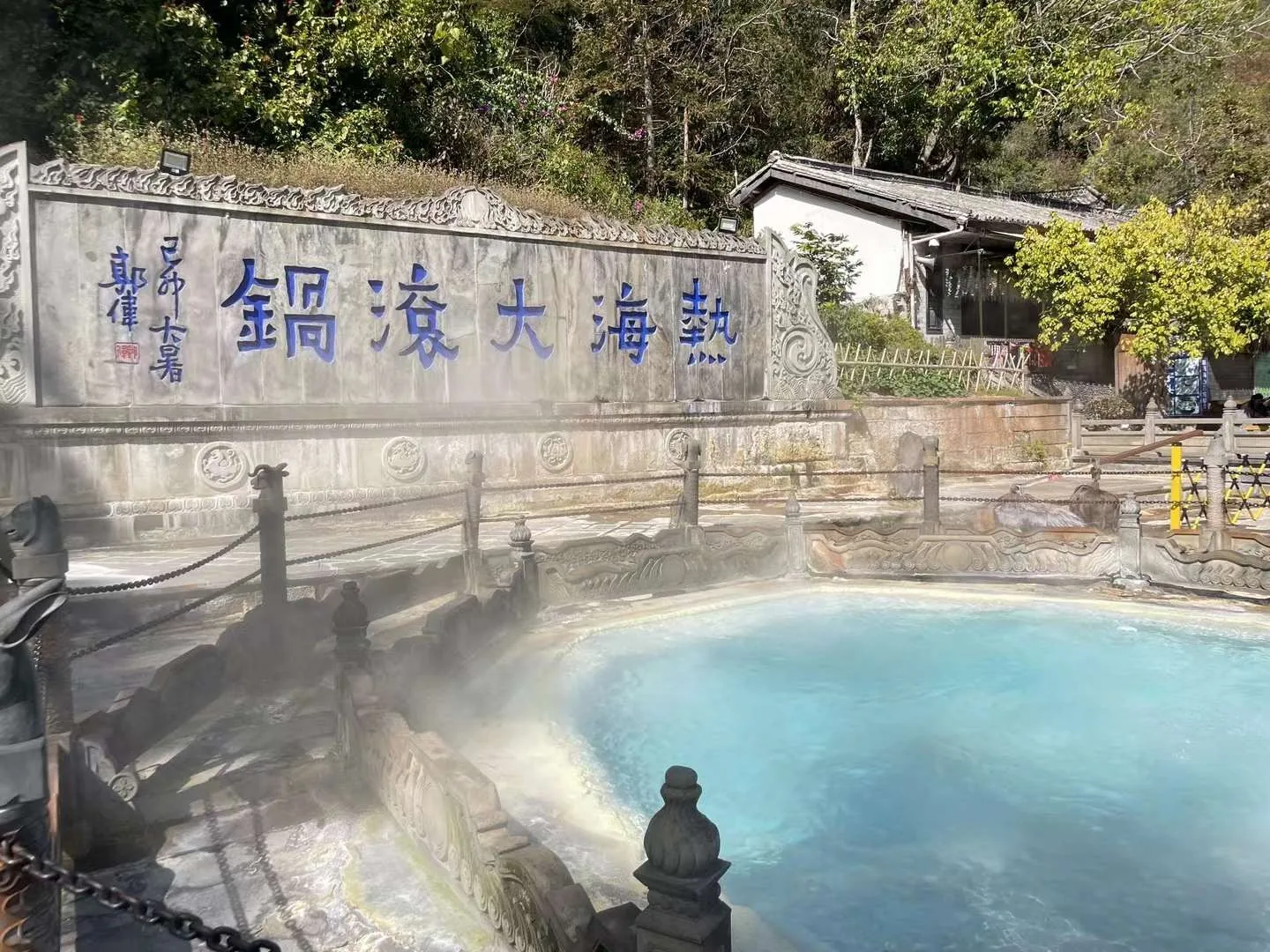
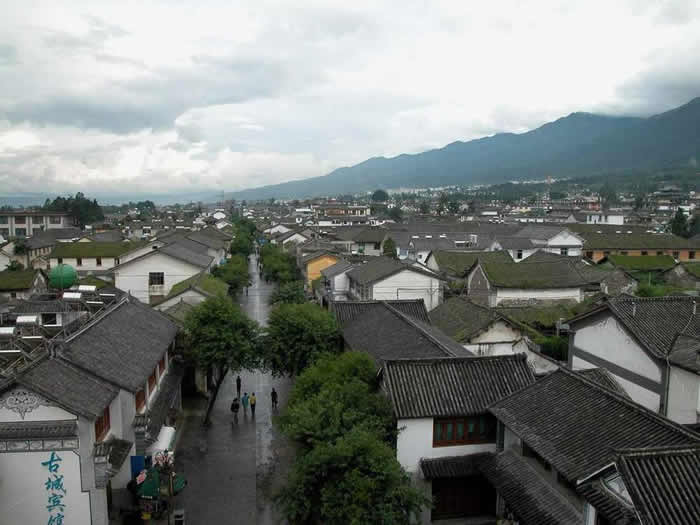
Day 3: Full Day in Tengchong · Ancient Town and Volcanoes
At 7:00 AM, the bluestone roads of Heshun Ancient Town were still wet with dew. I tucked my 55 yuan ticket in my pocket and walked in—yesterday I borrowed a copy of “Heshun Chronicles” from the hotel front desk and turned to the page titled “Morning Mist in the Ancient Town.” At this moment, the scene before me overlapped with the text: old houses with white walls and black tiles were immersed in thin mist, bougainvillea at the base of the walls covered the bamboo fences, and an old lady selling flower cakes lifted a bamboo steamer, the scent of roses mixing with the warm air.
Heshun Ancient Town: Time Hidden in the Alleys
| Location | Detailed Experience |
|---|---|
| Heshun Library | A small piece of paint had peeled off the wooden plaque saying “Heshun Library” above the lintel. Pushing open the door brought the “creaking” sound of wooden stairs. The administrator was an old grandfather wearing round-framed glasses. Seeing me flip through the “Tengyue Daily” (published in the 30th year of the Republic), he brought over a bamboo stool and said, “Sit here and read; the old table is brittle.” The smell of printer’s ink mixed with the scent of old wood. I crouched in a corner and read for half an hour, seeing a report on “villagers delivering grain during the Western Yunnan War of Resistance.” The handwriting was blurred, yet it felt more vivid than any textbook. |
| Wanlouzi | The brick carvings on the lintel of the Qing Dynasty commercial residence were covered with moss, and the four large characters “Tilling and Reading Legacy” were polished by time. Water droplets hung on the leaves of the ink orchid in the courtyard. The owner was an auntie in a blue cotton skirt: “This flower was brought from Myanmar by my grandfather, it’s ‘Snow Orchid,’ it smells fragrant when it blooms in winter.” She showed me the old abacus in the main hall—the beads were polished to a shine: “My great-grandfather was in the tea business; this abacus calculated millions in tea silver.” No explanation fee was asked; she just spoke slowly. |
At 1:30 PM, I carried my small backpack toward the Volcano Geological Park. The ticket was 55 yuan. The uncle checking tickets at the gate handed me a bottle of mineral water: “The stairs at Xiaokong Mountain are slippery, take it slow.” The bluestone road had a layer of moss. I gripped the iron chain and climbed up, reaching the top in 25 minutes—the crater looked like a giant bowl, its edges covered with cacti, their spines glinting in the sun. Looking down, the rocks at the bottom were dark brown and cracked, and the wind swirled with heat rising up. I held onto the railing and dared not move; a sense of dizziness wrapped in an earthy smell hit me, yet I was reluctant to leave—this is a “wound” of the Earth and a badge of honor for Tengchong.
Volcano Park: Dialogue Between the Core and the Sky
- Xiaokong Mountain: Altitude 2072 meters, 1200 steps. The legs feel a bit sore after climbing, but it’s worth it. There is a warning line at the edge of the crater, don’t cross it! Cactus spines hurt for three days if they prick you.
- Hot Air Balloon: After going down the mountain, I rushed straight to the base and chose the 15:00 flight (low wind). The staff helped me fasten the orange safety belt: “Don’t be afraid, the basket can hold four people.” As we ascended, the ground slowly became smaller—the volcano cluster looked like black chess pieces, the rice fields were green puzzles, and the villages drifted with smoke. 20 minutes later we landed; my palms were sweaty, but I felt 380 yuan was well worth this perspective.
In the evening, I returned to the city and followed the guide to find “Old Tengchong Breakfast Stall.” A red cloth curtain at the alley entrance had crookedly written “Xidoufen Baba.” It had no sign but smelled alluring. The owner was a plump auntie wearing a flowery apron, crouching at the entrance grinding bean powder. The stone mill went “creak,” and the bean scent drifted out with steam. I ordered a bowl of Xidoufen and two Babas: the Xidoufen was made from peas, thick enough to coat the spoon, no grit; the Babas were steamed glutinous rice, soft when bitten, eaten by dipping into the bean powder. The auntie also gave me a small jar of pickled vegetables: “Eat this to cut through the richness.” I sat on a stool at the entrance and ate; the auntie chatted: “These Babas need to be steamed for 40 minutes, my mother-in-law taught me.” My belly was round as I walked toward the hotel, even my waistband felt tight.
Day’s Pitfalls & Practical Tips (Personal Blood and Tears)
- Ancient Town Avoiding Pitfalls: The library is closed on Mondays! Check the opening hours the day before. Don’t believe the “paid explanation” at the entrance of Wanlouzi; the owner’s free stories are more vivid.
- Volcano Equipment: Wear non-slip shoes to climb Xiaokong Mountain! My sneakers were fine, but I saw someone in flip-flops slip. Don’t pick up stones from the crater; they are heavy and you can’t take them back.
- Hot Air Balloon: Be sure to go in the morning! High winds in the afternoon often lead to cancellations. Check the safety belt three times; don’t mind the staff being repetitive.
- Breakfast Stall Info: They close by 3:00 PM! I went at 9:00 AM the next day and only an empty stove was left; the auntie said “all sold out early.”
This day felt like rubbing the “soul” of Tengchong into my memory—the old newspapers of the library, the orchids of Wanlouzi, the dizziness of the crater, the scent of Xidoufen. I didn’t take many photos, but I remembered the round-framed glasses of the elderly administrator, the sound of the auntie’s stone mill grinding beans, and the perspective of the volcano cluster from the hot air balloon. Lying on the hotel bed at night, feeling the small stone I picked up from the crater in my pocket (actually I didn’t dare bring it, fearing the security check), I suddenly smiled.
Day 4: Tengchong → Yingjiang (Approx. 4 hours drive) · Border Nature Observation
At 7:00 AM, I got into the Jetta of Lao Guo, a driver from Yingjiang—he laughed on the phone the day before: “The road from Tengchong to Yingjiang is a gradual exhibition of tropical vegetation.” Just outside the Tengchong urban area, the banyan trees outside the window changed their appearance: from the “old naughty” with thick branches in Mangshi to tall rubber trees, with dew rolling off leaves and hitting the windshield with a “pata” sound. Lao Guo pointed outside: “Look at that field of sugarcane, another 20 minutes and you’ll be able to smell the sweetness of banana flowers in the air.” Sure enough, not long after, patches of banana leaves flashed past the window, large enough to wrap a child. Occasionally, a peacock-pheasant with flowery wings flapped into the forest, the rustle of its tail through the shrubs making one’s heart itch.
At 11:30 AM sharp, we reached Yingjiang county seat. Lao Guo helped me hold open the bamboo curtain at the alley entrance: “Dai Flavor Garden is here; Auntie Yuxiang’s Sadalu is the store’s treasure.” Pushing open the door, the Dai brocade door curtain swayed. Auntie Yuxiang in a flowered sarong wiped her hands and greeted me: “Little girl is here to eat sour meat? I just fished out some sour meat this morning, I saved the fattest piece for you.” Sadalu was served in a coarse pottery bowl, light brown minced meat with a fermented sour fragrance—not stinky, but a “mouth-watering” sourness like old jar pickles. Paired with soft rice noodles, Auntie Yuxiang brought a bowl of sour papaya soup, with two slices of fresh sour papaya floating in it. One sip was incredibly fresh, the sweet papaya flavor neutralizing the heaviness of the sour meat. She also handed me a small dish of chili dipping sauce: “Chop millet chili with garlic, then add a handful of cilantro; dip the meat in it, it hits the spot.” I polished off two bowls of rice noodles, my stomach round and full. When I left, the auntie stuffed a handful of green bananas into my hand: “Eat them on the way; they’re ten times sweeter than supermarket ones.”
At 2:00 PM, I dialed the number Lao Guo gave me for Xiao Yan—a guide for the Tongbiguan Protection Area, a Dai young man in a faded camouflage suit with an old canvas bag. He handed me mineral water upon meeting: “Going to the stream to find hornbills today, the road is slippery, wear those non-slip shoes of yours.” The road into the mountain was a dirt path, next to a clear stream where I could see finger-long loaches clinging to stones. After walking for two hours, Xiao Yan suddenly raised his hand: “Shh—” He pointed to the phoenix tree above: “Great Hornbill!” I looked up; a large bird stood on a branch, its black feathers glinting like satin, its yellow beak like a large helmet, with two horny protrusions on its head like an ancient general’s crest. Suddenly it flapped its wings and flew, a gust of wind accompanying it, letting out a low “gugu” call. Xiao Yan whispered: “The male; the female is in a tree hole hatching eggs, don’t disturb it.” I quickly took out my phone, my hands shaking, but I still managed to capture the white spots on its wings—like a sprinkle of snow. Xiao Yan said: “There are also Wreathed Hornbills here, with beaks as red as agate, but you need luck for that. You got lucky today.”
By 6:00 PM, I returned to Nabang Town and stayed at a Dai farmhouse—the bamboo building had two floors. I stayed upstairs; the floor was woven bamboo, elastic when stepped on. Outside the window, I could see phoenix flowers in the village, red as if on fire. At 7:00 PM, the owner Yan Wen called me to the courtyard: “The hand-grabbed rice is ready, come sit on the bamboo stool.” Hand-grabbed rice was served in a large bamboo tray, the bottom layer being translucent steamed glutinous rice, topped with roasted pork belly (the skin charred to a shine, oozing oil when bitten), Ghost Chicken (shredded black chicken mixed with lemongrass and millet chili, wonderfully sour and spicy), water fragrant vegetable (a unique Dai wild vegetable, cool and refreshing like chewing tender grass leaves), and a bowl of Paoluda—dried bread and sago soaked in a coconut milk base, full of milky fragrance. Yan Wen laughed and patted the back of my hand: “Dai people don’t use chopsticks; it’s more fragrant to eat with your hands.” I tried grabbing a ball of glutinous rice, dipped it in the oil from the roast meat; it was sweet and, paired with the sour and spicy Ghost Chicken, was actually addictive. The owner’s child, Yan Bao, wearing overalls, ran over with a green banana: “Sister, eat banana!” Peeling back the skin, the flesh was creamy yellow, one bite sweet as melted honey, with tiny seeds.
Lying on the bed in the bamboo building at night, listening to the insects outside—sounding like someone softly blowing a bamboo flute—and smelling the fresh scent of the woven bamboo floor, I thought of today: the temperature of Auntie Yuxiang handing me the dipping sauce, Xiao Yan’s eyes lighting up when pointing at the hornbill, Yan Bao’s little milky voice when offering the banana. The nature of the border is never an “attraction”; it’s something you can touch, smell, and eat—the fermented scent of sour meat wrapped in the tropical wind, the call of the hornbill hitting the stream, the sweetness of the Dai child’s banana reaching the heart. This feeling of being “alive” is more memorable than any check-in photo.
Day’s Pitfalls & Practical Tips (Cuts 90% of trouble)
- Transportation: Take the Hangrui Expressway and turn onto X231 for the drive from Tengchong to Yingjiang. Rubber and banana forests alternate along the way. Local drivers like Lao Guo will stop at viewing platforms where you can buy a cup of freshly squeezed sugarcane juice (5 yuan), sweeter than in scenic areas.
- Food: Eat the Sadalu at Dai Flavor Garden while it’s hot! The sourness becomes too sharp when cold. Don’t skip Auntie Yuxiang’s chili dipping sauce; it’s the “soulmate” of sour meat.
- Guides: You must find a local guide for Tongbiguan! Xiao Yan understands the birds’ habits, knows which trees have hornbills, and can teach you to identify bird calls. Hornbills are most active in the morning; it’s recommended to enter the mountain before 9:00 AM.
- Accommodation: Dai farmhouses in Nabang Town are clean and grounded. Owner Yan Wen’s hand-grabbed rice is a hidden surprise, and Yan Bao will proactively play with you, very healing.
- Avoiding Pitfalls: Don’t touch plants in the protection area randomly! Xiao Yan said some vines have thorns that prick. Watch hornbills from a distance; don’t chase them, as it will scare them.
This day involved no rushing, no “been here” photos, just slowly walking, slowly looking, and slowly eating. Yingjiang’s heat carries the moisture of tropical plants, the call of the hornbill sounds like the breath of nature, and the Dai auntie’s sour meat tastes like home. Falling asleep to the sound of insects at night, I dreamed of turning into a hornbill, flapping through the forests of Tongbiguan, with streams beside me and a blue sky above—it turns out that “border exoticism” is never a distant noun; it’s the relaxation of every cell when you immerse yourself in it.
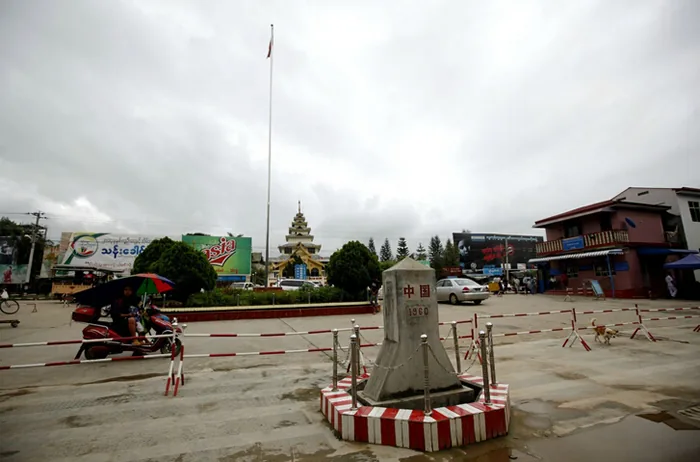
Day 5: Yingjiang → Ruili (Approx. 3 hours drive) · Fun at One Village Two Countries
The morning wind carried the lemon fragrance of Ruili into the car window—Lao Guo said “after Nabang Town, the air carries a Burmese sweetness.” The car followed X231 toward Ruili; the rubber forests along the way were replaced by tall palm trees. Occasionally, I could see Burmese merchants in flowered shirts carrying woven bags by the road, with the green of jadeite raw stones showing from the bags. At 10:30 AM sharp, we reached Ruili city area. I first headed for the Burmese milk tea stall at the scenic area entrance—the old lady wore a blue cotton apron, the tea in the aluminum pot was steaming, added with ginger bits and condensed milk. 10 yuan a cup; it was sweet with a bit of spice, warming me up completely.
With a 40 yuan ticket, I entered One Village Two Countries. The first stop was “One Well Two Countries.” The bluestone wellhead was polished to a shine, like an old piece of jade, with a coarse wooden ladle on each side. While I was squatting there looking, a Dai auntie came over with a plastic bucket: “Little girl, want some water?” I shook my head, and she smilingly scooped a ladle: “This water belongs to both countries; I draw it on this side, and you can drink it on that side too, it’s very sweet.” The well rim was engraved with “One Well Links Two Countries”; every word carried the warmth of years—it turns out the “border” isn’t a line, but the same sweetness in a single well.
Next, I found the “Sino-Burmese Swing.” Thick hemp ropes were tied to two large trees that could be encircled by arms; the iron frame was rusty but sturdy. I gripped the ropes and sat on it, and a staff member gave me a push—the wind carried the scent of Burmese curry toward me. As I swung higher, I could see the roofs of Muse City on the other side drifting with smoke, and a Burmese child holding a sugar-coated hawthorn shouting “Sister.” I was scared and gripped the rope tightly; my legs were a bit weak when I got off, but I was laughing uncontrollably: “I almost threw my phone over there just now!” The staff laughed and said: “This swing goes out into Myanmar; many couples come to check in, saying ‘one swing spans two countries’.”
For lunch, I ate soaked chicken feet at the scenic area entrance—the stall owner was an auntie in a flowered apron. Chicken feet were soaking in a stainless steel basin of bright red liquid, with millet chili and bay leaves floating in the soup. The auntie handed me disposable gloves: “Just soaked, sour and spicy enough.” One bite—the skin of the chicken feet was wrinkled, the sourness hit first, followed by the spice, then the fragrance of the bone; I nibbled every bit of meat clean even from the nail crevices. The nearby Dai-style pickles were free to add—radish slices were crispy, sour and sweet. The auntie said “these pickles were soaked in my family’s old jar for three years, a secret recipe not shared with outsiders.” I packed a box of the soaking liquid, intending to take it back to soak cucumbers.
In the afternoon, I strolled through Jiegao Port. Next to the boundary marker on Sino-Burmese Street, Burmese merchants set up stalls: the left side sold jadeite, with various ring faces displayed in glass cabinets; the right side sold Hinayana Buddhist pendants, with copper bells hanging in front of the stalls, jingling when the wind blew. I walked into a “Sino-Burmese Duty-Free Shop.” The owner, wearing thin-framed glasses, took out a jadeite bracelet: “A-grade, 300 yuan, I’ll give you a certificate.” I stared at the stone for a long time, hesitating. He said: “Take it to the Ruili Jewelry Identification Center; if it’s fake, I’ll pay you ten times back.” Later, I really went for identification; the certificate said “Natural A-Grade.” When I went back to him, he smiled and said: “Jadeite in Ruili doesn’t cheat its own people.”
At night, I stayed at a hotel near the Jiegao Bridge. The room window faced Myanmar—at night I could see the lights on the other side, like stars scattered on the ground, with occasional motorcycle lights flashing past like meteors. I went to “Achang Snacks” to eat Ghost Chicken Rice Noodles. The owner was Achang, wearing a black cotton shirt and a white apron. The rice noodles were served in a coarse porcelain bowl, the broth was sour and spicy, with chicken strips, sour papaya, and millet chili floating in it. The owner said: “This soup needs to simmer for three hours, old hen plus sour papaya, slow-stewed.” I ate the noodles with the soup; the silky noodles wrapped in broth were appetizingly sour and spicy. The owner chatted with me: “In the past, you had to get a border resident permit at Wanding to go over. Now it’s convenient; every day Burmese people come to sell vegetables, the green vegetables my family buys are delivered by them.”
Before sleeping, I sat on the rattan chair on the balcony, smelling the tropical flower fragrance outside and thinking about everything today: the same sweetness of One Well Two Countries, the curry scent from the swing, the sour and spicy chicken feet, and the chatting with the Achang owner. The “fun” of Ruili is never about buying souvenirs, it’s the “border daily life” you can touch, taste, and talk about—one well connects people of two countries, one jadeite bracelet holds honesty, one bowl of rice noodles simmers with the years.
Day’s Pitfalls & Practical Tips (Cuts trouble personally)
- One Village Two Countries: Grip the rope of the “Sino-Burmese Swing” tightly! I swung too high the first time and my heart almost jumped out. The water from “One Well Two Countries” can be drunk directly; it’s as sweet as mineral water.
- Jiegao Port: Bargain hard! Jadeite starting at 1000 can be cut to 300. Cut Hinayana pendants by half; the owner won’t be angry.
- Soaked Chicken Feet: You can pack the auntie’s soaking liquid! Take it back to soak cucumbers; it’s ten times more fragrant than store-bought sour juice.
- Ghost Chicken Rice Noodles: Eat it with the soup! The owner said “the soup is the soul; the noodles only have flavor when soaked.”
- Avoiding Scams: Don’t buy “low-priced jadeite” at the scenic area entrance! It’s all dyed quartzite; identification will prove it fake. Don’t touch the “duty-free cigarettes” from Burmese merchants; you can’t take them back and it’s illegal.
This day felt like falling into the sugar jar of “border life”—sweet water, sour chicken feet, spicy rice noodles, and the smell of curry in the wind. Lying on the hotel bed at night, listening to the insects outside, I thought of what the Achang owner said: “Living life slowly is what’s comfortable.” It turns out “One Village Two Countries” isn’t an attraction, but a temperature of “no distinction between you and me”—one well, one bridge, one bowl of rice noodles, linking people of two countries together.
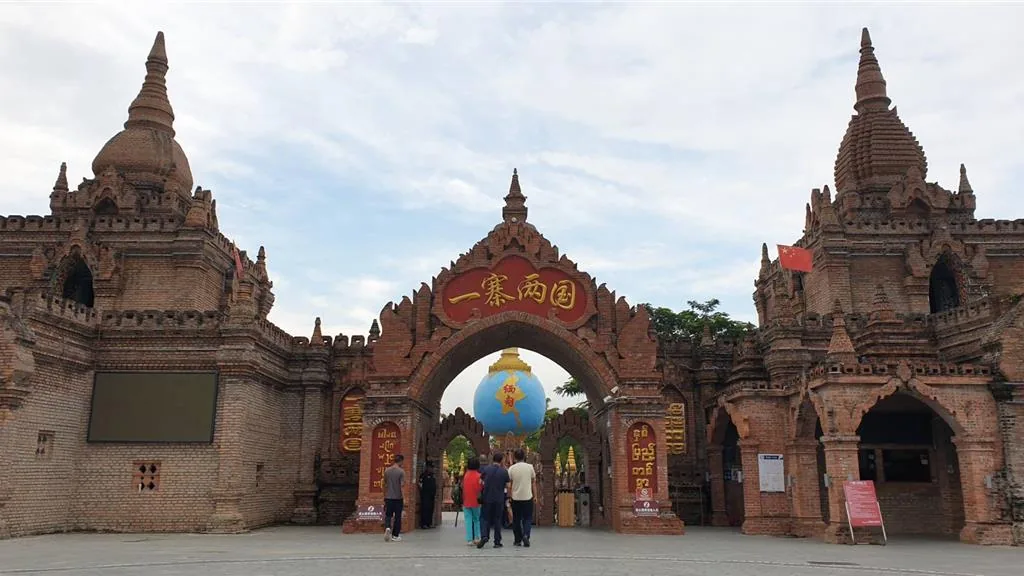
Day 6: Full Day in Ruili · Port and Rainforest
The early morning in Ruili was wrapped in tropical humidity. I tucked the soaked chicken feet liquid I packed from Achang Snacks yesterday into my bag and walked toward Jiegao Port—the scent of Burmese curry drifted in the wind, and bougainvillea petals were wet with dew, like someone had scattered diamonds in the green bushes. An old man selling coconuts at the intersection held a shaved coconut and shouted: “Little girl, want a fresh coconut?” I took it; the juice was sweet as if added with honey, and the coconut meat was so tender it could be sucked out, starting today’s itinerary on a sweet note.
Jiegao Port
The Tianya Diejiao (End of the World) Stones stand on a seaside cliff. Two gray-blue stones are engraved with “Tianya” and “Diejiao” in regular script; the characters are somewhat blurred by the sea breeze, yet they look like two magnets worn together by time. Waves crashed against the stones, splashing white foam half a meter high. Some young couples in matching clothes held Polaroids; the boy put his arm around the girl, and the girl smilingly buried her face in his shoulder, the background being the sparkling blue sea. “Are these stones natural?” I asked the auntie nearby selling mangoes. She wiped her sweat and smiled: “The waves washed them for hundreds of years, ‘bringing’ the two stones together—that’s called fate.”
The scent wafting from a nearby Burmese vegetable stall was alluring. A Burmese auntie in a flowered sarong held a plate and shouted: “Little girl, try Shan-style spring rolls!” The rice skin was so thin it was translucent, wrapping a whole shrimp and a handful of cilantro, fried golden and crispy. The fish sauce in the dish was the auntie’s own blend—added with Burmese millet chili, lemon, and sugar; it was sour and spicy, so fresh I almost jumped. The auntie said “these spring rolls need three hours of kneading the rice skin to be soft enough to wrap the filling.” I sat on a small stool in front of the stall and ate; the sea breeze blew my hair into a mess. Muse City on the opposite side had smoke drifting from roofs, and a Burmese child leaning on the boundary marker shouted “Sister,” his voice as crisp as wind chimes.
Moli Tropical Rainforest
At 2:00 PM, I carried my small backpack toward Moli Rainforest. The ticket was 40 yuan. The security guard at the gate handed me a crumpled map: “The boardwalk is 3 kilometers, walk slowly; the waterfall is at the end.” The boardwalk was made of old wood, covered with deep green moss, and was slippery; I had to grip the iron chain beside it. The air in the forest felt like a water-soaked sponge—fern leaves were larger than palms, and moss wrapped around tree trunks like each tree was wearing a green velvet coat. After walking for half an hour, I heard the “rumbling” sound of water. Zhaduo Waterfall came into view: water crashed down from a 30-meter-high cliff into the pool below, and the mist drifted over, feeling cool on my face. Standing on the viewing platform, I saw a rainbow hanging next to the waterfall—red, blue, and green layered together, like someone had crushed colored pens and scattered them in the sky.
Suddenly, the shrubs at my feet moved—a small squirrel scurried out, its fur as shiny as if waxed, its tail curled into a fuzzy ball. It crouched at my feet, holding a pine cone and nibbling; the “kacha kacha” sound was as crisp as fried soybeans. I crouched down and took out my phone to take a photo; it looked up at me but surprisingly didn’t run, continuing to nibble until I put my phone down, then it hopped back into the forest. “This squirrel isn’t afraid of people?” I asked the guide nearby. She smiled and said: “Animals in Moli are ‘used’ to people; as long as you don’t hurt them, they ‘play’ with you.”
Evening: Burmese Warmth in the Night Market
At 7:00 PM, I wandered to the “Ruili Night Market” for Burmese milk tea. The stall was a broken tricycle with a plastic lamp hanging on it. The owner was a Burmese uncle in a flowered apron, using an aluminum pot to boil milk tea. The tea was boiled very thick, with ginger bits and condensed milk added. 5 yuan a cup; it was sweet with a bit of spice, warming me up like hugging a sun-dried quilt. I ordered a cup and sat on a plastic stool, watching the bustle—an old lady selling skewers shouted “freshly roasted beef,” and a lady peeling mangoes sent the fragrance mixing together, as if the whole firework of Ruili was rubbed into the wind.
Before leaving, I packed a portion of soaked chicken feet—the auntie used a sealed box and added an extra scoop of sour papaya soup: “Eat it on the road tomorrow; it’s more flavorful when soaked soft.” Holding the box, I walked toward the hotel. Passing by the Menghuan Banaxi Guesthouse, elderly people were still playing chess under the banyan tree. The sound of chess pieces hitting the stone table went “pa,” mixing with the shouts of flower vendors in the distance. Suddenly I felt: the night of Ruili is soft, warm, sour and spicy like soaked chicken feet, and sweet like milk tea.
Day’s Pitfalls
- Jiegao Port: Go to Tianya Diejiao Stone early! The sun is harsh in the afternoon and the sea breeze is scorching. Look for the auntie in the flowered apron for Shan-style spring rolls; her fish sauce is a secret recipe, don’t buy the loose ones by the road.
- Moli Rainforest: Wear non-slip shoes! The mossy boardwalk is slippery; I saw someone fall. The small squirrels aren’t afraid of people, but don’t feed them snacks; it will spoil them into grabbing things from you.
- Burmese Milk Tea: Be sure to add ginger! The owner said “ginger is the soul, it dispels cold and warms the stomach.” The tricycle closes at 8:00 PM, don’t go too late or you’ll miss it.
- Soaked Chicken Feet Packing: Choose those with added sour papaya! The auntie said “sour papaya makes the chicken feet softer, they won’t be hard when eaten the next day.”
- Avoiding Scams: Don’t buy “Burmese perfume” in the night market! It’s all diluted alcohol and will itch on the skin. Don’t pick up “wild lingzhi” in Moli Rainforest; nine out of ten are fake.
This day felt like being soaked in tropical fruit tea—sweet spring rolls, fresh fish sauce, cool waterfall water, warm milk tea, and that fearless small squirrel. Lying on the hotel bed at night, feeling the dried mango I bought at the night market in my pocket, I thought of the waves at Tianya Diejiao Stone, the smile of the Shan auntie, and the smell of moss in the Moli forest. The “fun” of Ruili is never about checking in, it’s about putting yourself into the daily lives of local people: eating a spring roll, drinking a cup of milk tea, looking at a waterfall. Even the scent of curry in the wind becomes a “daily” sweetness. It turns out the “romance of the border” is just that simple.
Day 7: Ruili → Mangshi (Approx. 2.5 hours drive) · Border City Night View and Market
The morning wind carried the mango fragrance of Ruili into the car window. I held the Burmese milk tea I packed yesterday and sat in the front passenger seat of Lao Guo’s Jetta—he was taking me to Mangshi, saying “it’s on the way, I’m going back anyway.” The car followed the Hangrui Expressway northward; the palm trees along the way slowly changed into continuous sugarcane fields. The smell of curry in the wind faded, replaced by the sweetness of sugarcane, as if the whole summer of Mangshi was rubbed into the wind. At 10:30 AM sharp, we reached the Mangshi Farmers’ Market. I headed straight for the Ganba beef stall—the old lady wore a blue cotton apron, her slicing knife flying over the beef. The blade followed the grain of the meat, and the translucent thin slices fell into the bamboo tray. The old lady sprinkled salt and Sichuan pepper powder, rubbed it evenly with her hands, then put it into a vacuum bag with a “zizi” seal: “This meat has been cured for three days using hind leg meat; it’s chewy but not dry.” I pinched a slice; the salty fragrance carried the numbness of Sichuan pepper. One bite was more fragrant the more I chewed. I quickly bought 25 yuan worth and stuffed it into my backpack—this was a souvenir for my colleagues.
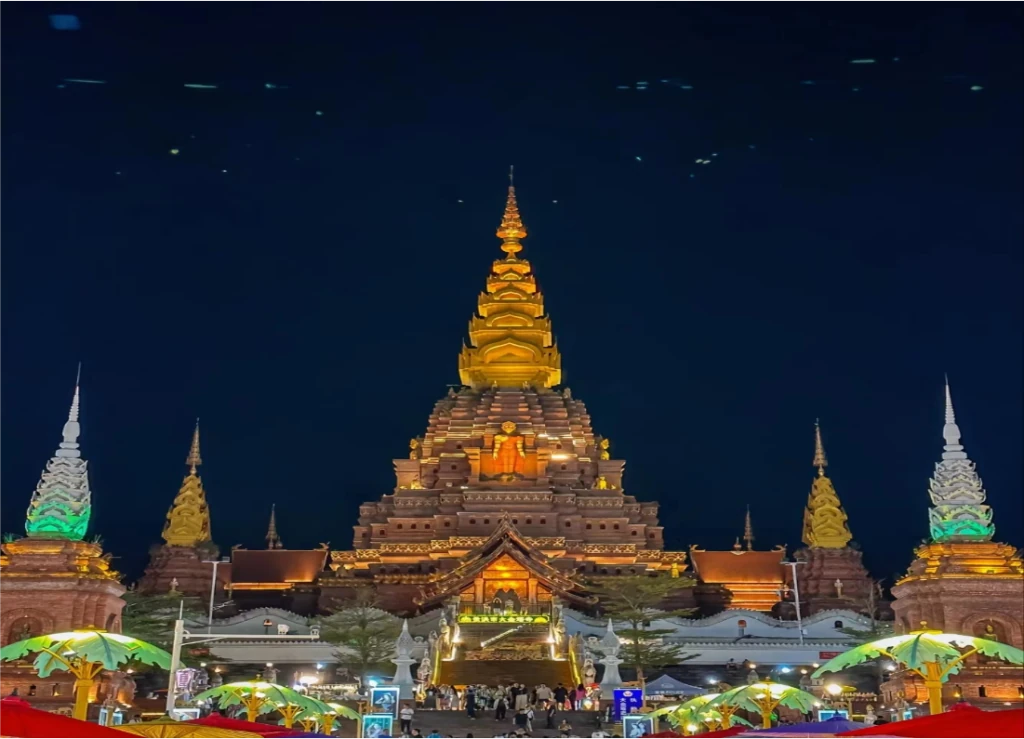
At 2:00 PM, I wandered to Menghuan Grand Golden Pagoda. The ticket was 40 yuan. The lady checking tickets wore a flowered headscarf, took the ticket, and smiled: “Little girl is here to photograph the pagoda? The sunset will be good later.” The stairs up the pagoda were made of old wood, the handrails glinting with verdigris, every step making a “creak.” When I reached the top floor, the wind blew with the heat from the day, blowing my jacket out—looking down, the roofs of the whole city were dyed orange. The gold foil of the pagoda reflected light like scattered gold. The distant mountains were gray-blue, like giant beasts lying on the ground. A group of aunties in Dai costumes surrounded the pagoda, in primrose yellow sarongs and silver bracelets, holding phones to pose. I went over and asked: “How much to rent the clothes?” The auntie in the flowered apron wiped her sweat: “50 yuan a set, including headpieces; I’ll help you comb your hair.” She helped me tie a simple bun and inserted a silver hairspin. In the copper mirror, my hair had little bells hanging from it, jingling when I walked.
At 7:00 PM, I walked toward the Sankeshu (Three Trees) Morning Market, which actually opens at night. Street lamps lit up, and the stalls’ light strings flickered with warmth. People were crowded, and fragrances drifted with the heat. The old man at the fruit stall held a durian honey and shouted: “Little girl, try this! Ten times sweeter than durian!” I leaned in; the shell of the durian honey was yellow-green and felt soft when squeezed. The old man cut one open; the flesh inside was golden, like melted honey. One bite was sweet as if soaked in sugar water, with tiny seeds. 10 yuan for 3 jin; I bought two jin. At the nearby sheep milk fruit stall, the small fruits were red like cherries. The old lady said: “Eat them dipped in chili powder, sour and sweet.” I pinched one and dipped it in some chili powder; it was so sour I squinted, yet I couldn’t help eating another.
At the end of the street, I bought a bag of Burmese peanut candy—in the transparent plastic bag, the candy was coated with sesame. One bite was sweet but didn’t stick to the teeth; the peanut fragrance was wrapped in the sweetness of maltose, as if the Burmese sunshine was eaten. The owner was a Burmese uncle in a flowered apron, smilingly saying: “This was made by my master using Burmese peanuts, simmered for three hours.” Holding the bag of candy, I sat on a stone bench at the market entrance, watching the passersby: aunties in Dai costumes carrying fruit, an old man selling skewers holding iron skewers, children running past with cotton candy, and the smell of roasted tofu drifting in the wind.
Before leaving, I went back to the farmers’ market to find the old lady to buy another jin of Ganba beef. She smilingly added two extra slices: “This meat is vacuum-packed; take it back and put it in the fridge, it’ll last a month.” Holding the beef, I walked toward the station. Passing by the Menghuan Banaxi Guesthouse, the elderly people under the banyan tree were still playing chess. The sound of chess pieces hitting the stone table went “pa,” mixing with the shouts of flower vendors. Suddenly I felt: this trip to Mangshi was not in vain—I ate the old lady’s Ganba beef, wore Dai clothes for photos, visited the night market and bought peanut candy. Even the sweetness in the wind became the taste of “memory”.
This day felt like being soaked in the sweet soup of Mangshi—the salty fragrance of Ganba beef, the wind at the Golden Pagoda, the sweetness of peanut candy, the smile of the old lady, and the silver hairspin of the auntie. Lying on the hotel bed at night, feeling the Ganba beef in my backpack, I thought of every bite and every sight today and suddenly smiled.
Day 8 (Optional): Departure from Mangshi · Itinerary Wrap-up
The early morning in Mangshi was still immersed in thin mist. I walked southward from the fragrance of the Sankeshu Morning Market—half a bag of the Burmese peanut candy bought yesterday remained, its sweetness mixing with the bean scent of Xidoufen in the wind. A 10-minute walk reached Shubao Pagoda (Tree-Wrapped Pagoda). For a 10 yuan ticket, the aerial roots of the old banyan tree at the entrance hung to the ground, like weaving a green velvet carpet for the stupa. The stupa is a Dai Hinayana stupa, its gray-blue brick body carved with lotus patterns. Banyan roots were entangled in the brick cracks, even wrapping around the spire—as if the tree was “hugging” the stupa. I reached out to touch the roots; they were as rough as a grandfather’s palm, carrying the temperature of the morning sun. The old lady selling Dai brocade nearby said: “This tree and stupa have grown together for over 200 years. Previously the spire was hit by lightning, and the tree wrapped the broken bricks and spire, slowly growing into this.” I walked around the stupa; every gap between the roots and bricks held the sound of the wind, and the leaves rustled as if saying “slow down, look again.”
At noon, I stepped into “Old Mangshi Sapie Shop.” A Dai uncle in a navy blue apron wiped the table: “Little girl, Kusa or Lemon Sapie?” I ordered Kusa Ersi (rice noodles)—the coarse pottery bowl was served with white Ersi noodles distinctly visible, poured with light green Kusa juice and topped with beef stomach slices and millet chili. The taste of Kusa hit first: it was the fermented bitterness of beef stomach with a touch of green grass astringency. Then the Ersi absorbed the soup, soft and sticky with bitter fragrance. Finally, the millet chili rushed up, becoming more addictive. The uncle pointed to the pottery jar on the stove: “Kusa needs to ferment for three days; the Ersi was steamed this morning, and the rice is local fragrant rice, which is why it’s chewy.” I even drank half the soup; it was bitter with a sweet aftertaste, like drinking a cup of thick tea.
At 2:00 PM I went to the airport. Mangshi Airport is as small as a courtyard, yet crowded with bustling daily life. An auntie selling jadeite displayed her glass cabinet, where ring faces were sparkling. I picked a small jadeite necklace; the auntie asked for 800: “This is from the Moxi-sha field, the water head is sufficient.” I cut it to 200: “Can we go to the identification center to verify?” The auntie smilingly handed over the certificate: “Mangshi people don’t do losing business; if it’s fake, I’ll pay you double back.” Later, I verified it at the airport identification window; it was indeed natural A-grade. At the scarf stall nearby, an auntie held a jujube-red woven scarf and shouted: “20 yuan! Dai peacock pattern, woven for three days!” I took it; the fabric was as thick as a grandmother’s old sweater. I got it for 15 yuan—half the price of boutique shops in the city.
Before boarding, I went to the airport specialty shop again to buy Ganba beef and Paoluda powder: the Ganba beef is made from hind leg meat, and the vacuum packaging is printed with “Mangshi Old Brand.” The owner said “it can be stored for a month in the fridge.” The Paoluda powder is bagged, containing coconut shreds, dried bread, and sago. The shop assistant was a Dai young girl; she stuffed a bag of dried mangoes into my hand: “Take them back; they’re ten times sweeter than supermarket ones.”
Day’s Key Information Summary Table
| Item | Detail Introduction | Practical Advice | Fee Reference |
|---|---|---|---|
| Shubao Pagoda | Over 200 years of history, a Dai stupa integrated with banyan roots | Go early to avoid crowds; good for photography in mist. Touch roots lightly, don’t pull. | Ticket 10 yuan |
| Sapie Ersi | Kusa with freshly steamed Ersi, fermented beef stomach bitterness + soft Ersi | Choose freshly steamed Ersi; Kusa with millet chili is more authentic. Lemon Sapie has conflicting flavors. | Avg 25 yuan |
| Airport Jadeite | Moxi-sha field ring faces, sufficient water head | Look for identification certificates; bargain boldly (cut price in half). | Necklace 200 yuan |
| Ethnic Scarf | Dai handmade brocade, peacock pattern | Bargaining tip: “I can buy three for this price.” | Scarf 15 yuan |
| Souvenirs | Ganba beef (hind leg), Paoluda powder | Choose vacuum-packed Ganba; avoid Paoluda powder with non-dairy creamer. | Beef 50 yuan/jin, Powder 15 yuan/bag |






