



Day 1: Arrive in Dali, Explore the Ancient City’s Lively Atmosphere
Transportation: Last time I landed at Dali Huangcaoba Airport at 3:00 PM, I chose the airport bus (25 RMB/person), which goes directly to the South Gate of the Ancient City. The journey took 40 minutes. There was a hand-drawn map of the ancient city posted in the bus, and the driver reminded us, “Turn left after getting off; pass through Boai Gate to reach Renmin Road.” If you’re in a hurry, booking a “Fast Car” via a ride-hailing app and taking Dali Road avoids traffic; it takes 50 minutes and costs about 80 RMB, which is pricier but saves time.
Accommodation: I stayed at the “Ancient City Seclusion” guesthouse, the third house in the back alley of Renmin Road, for 200 RMB/night. The Bai style “Three Rooms and a Screen Wall” courtyard is very comfortable—the bluestone courtyard is filled with succulents in clay pots, and the wooden beams of the main room are carved with camellia patterns. The owner is a local Bai ethnic brother. During check-in, he handed me a hand-drawn Erhai Lake cycling map, marking which sections are best for electric scooters, and even helped me book a scooter for 8:00 AM the next day (60 RMB/day), which was much easier than finding one myself.
Activities:
- After a nap until 3:30 PM, I headed out to explore Renmin Road. The afternoon sun slanted against the old walls; an orange cat was curled up in a brick crevice at the base of a wall, its tail twitching occasionally. I squatted there for 5 minutes taking photos, and it never woke up. At a tie-dye stall run by an old lady, the indigo cloth was freshly dyed with patterns of butterflies and camellias. While I was picking a square scarf, she demonstrated by tying a small flower with a rubber band and then untying it, saying “this makes the texture lively.” I bought it for 50 RMB, 10 RMB cheaper than in the shops.
- At 4:30 PM, I turned onto Fuxing Road to see the President’s Marshal Mansion. The vermilion gates were unlocked. I pushed them open into the courtyard; the wooden carvings on the doorframes were filled with details of mule caravans carrying tea and salt, with copper bells—the wood had been polished smooth by years of touch. An old caretaker was playing chess; seeing me look closely, he said, “This house used to be lived in by a caravan leader; it’s free to visit now.”
- At 6:30 PM, I visited the night market, looking for Yang’s Rushan (the second stall with a blue cloth sign at the intersection). The owner wore Bai ethnic clothing, and the griddle sizzled. Freshly grilled Rushan (cheese fan) was spread with rose jam and sprinkled with sesame seeds; it was crispy on the outside and chewy inside, with a blend of milky and floral scents. It cost 10 RMB a skewer; I ate two in a row without getting tired of it (the neighboring stall’s was burnt; this one had perfect heat control).
- For dinner, I went to Meizijing Restaurant (located behind the bookstore in the middle of Fuxing Road). I chose Erhai crucian carp for the Sour and Spicy Fish; the soup was bright red, and the fish was so tender it trembled when picked up. It was served with crispy pickled papaya shreds to cut through the richness. It cost about 60 RMB/person, enough for two people. The owner said, “The sour papaya is home-soaked, not adjusted with vinegar,” and it indeed tasted mellow.
| Item | Details | Cost |
|---|---|---|
| Airport Bus | Huangcaoba → Ancient City South Gate, 40 minutes | 25 RMB/person |
| Guesthouse | Bai courtyard with a central patio, includes hand-drawn map | 200 RMB/night |
| Tie-dye Scarf | Hand-tied by an old lady, indigo butterfly pattern | 50 RMB |
| Yang’s Rushan | Freshly grilled with rose jam, crispy and chewy | 10 RMB/skewer |
| Meizijing Dinner | Sour and Spicy Fish + Papaya shreds, for 2 people | 60 RMB/person |
Case Study: Once, a friend of mine didn’t book an electric scooter in advance and paid 70 RMB/day upon arrival, which was 10 RMB more than what I paid through the guesthouse, and they almost ran out of scooters. Tie-dye cloth bought in shops is 60 RMB for the same style, while the old lady’s roadside stall is more honest. The pace today was slow—from the afternoon cat to the night market smoke, I finally understood that the “lively atmosphere” of the ancient city is the smell of old walls, wood carvings, and Rushan mixed together.
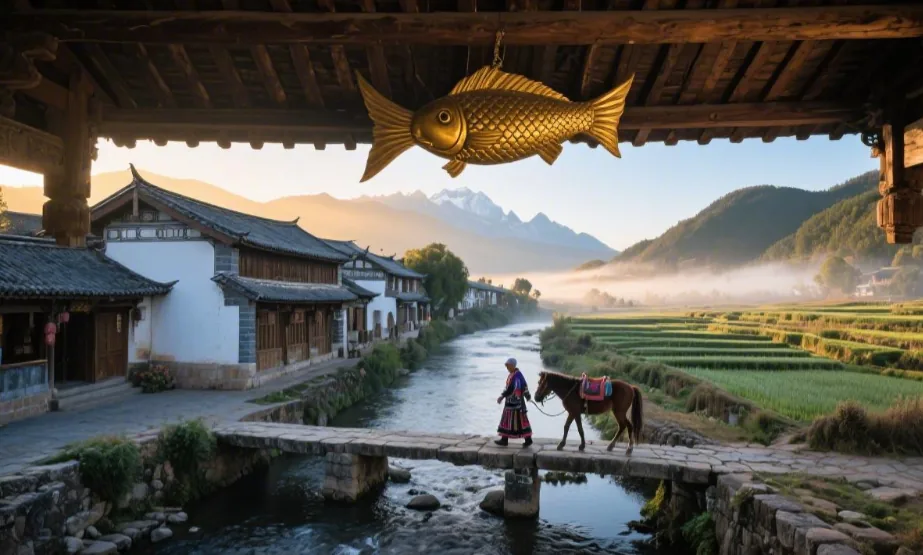
Day 2: Slow Tour Around Erhai, Seeking Bai Style in Shuanglang and Xizhou
Transportation: That morning at 8:30 AM, I went to the South Gate of the Ancient City to rent a scooter. I chose “Around Erhai Electric Scooter Rental,” the third shop against the wall. The owner, a tanned local young man, pointed to a white Yadea and said, “This one has a new battery; the 80 km range is enough for the whole trip.” It was 60 RMB/day including helmet and raincoat. As he handed over the keys, he added, “The wind is strong on the East Erhai Road, don’t mind the raincoat.” During the test ride, the seat felt soft and the throttle was responsive, definitely better than the “wobbly old bikes” mentioned online.
Route:
- East Erhai Road → Shuanglang (Arrive at 10:30 AM): Passing through Majiaoyi Village, I saw a Bai sister washing vegetables by the lake, the ripples dispersing the reflection of the Cangshan Mountains. I stopped by the road to take a photo. Upon reaching Shuanglang, I headed straight for Yuji Island. The entrance is on the west side; the 10 RMB ticket includes photo spots. Standing on the “Cang-Er No. 1 Photo” rock, with the nineteen peaks of Cangshan on the left and the shimmering Erhai on the right, I waited 5 minutes for the tourists to clear and took a photo with no one in it (someone on a lakeside balcony shouted “help me take a photo,” but I waved and said, “you do yours,” not wanting to crowd the view).
- Xizhou (Arrive at 13:30 PM): I navigated to the main shop of “Fuxing Poshu Baba” (the yellow-walled old shop at the entrance of Sifang Street). While queuing, I watched the master knead the dough; the dough hit the board with a “bang bang” sound. The savory ham filling was pre-fried, mixed with green onions and pepper, and grilled fresh for 3.5 RMB/piece. I bought two; the crust was so flaky it fell apart, and you could see the ham bits inside—much better than the sweet ones (the sweet ones use rose jam and are cloyingly sweet). Next, I visited the Yan Family Mansion. The 18 RMB ticket allowed me to see the “Three Courtyards, Four Houses, and Five Patios.” In the first courtyard, the screen wall was carved with “Purple Qi Coming from the East”; the second had wooden carved partitions with “Fishermen, Woodcutters, Farmers, and Scholars”; the third had a century-old stone vat. The steward said, “This house used to belong to Yan Zizhen of the Xizhou Merchant Group; the floor tiles were brought back from Myanmar by caravans.”
- Return via Caicun Wetland (16:00 PM): Heading north out of Xizhou, after passing Langqiao (Corridor Bridge), I turned right into the wetland. I found a rock by the reeds to sit on and watched the sun sink behind Cangshan. The water turned from blue to gold, and egrets flew low. I waited 20 minutes to capture the “Golden Peak Sunset” (use HDR mode on your phone; don’t shoot people against the light).
Tips in Practice: Before leaving, I checked that the battery was full. When I reached Caicun Wetland, 40% was left. Remembering the owner’s words, “You must return when 30% is left,” I immediately turned back. Later, I heard from the guesthouse owner that some guests were so engrossed in the sunset that the battery hit the alarm, and they had to push the scooter for 2 km back to the city, which was exhausting—the 30% red line must be strictly observed.
Case Study: Last time, my friend didn’t pay attention to the battery and stayed in Shuanglang for an extra hour. On the way back to Xizhou, the battery was at 15%. They had to push the bike to find a charging station, wasting an hour and getting sunburned. This time, I returned at 30% and reached the South Gate with 20% left. Charging for 2 hours (10 RMB) was enough for the next day, which felt secure.
| Item | Details | Cost/Remarks |
|---|---|---|
| Scooter Rental | “Around Erhai Electric Scooter Rental” at South Gate, new Yadea battery | 60 RMB/day (incl. helmet/raincoat) |
| Yuji Island Photo | “Cang-Er No. 1 Photo” rock spot, great for photos when quiet | 10 RMB/person (incl. entry) |
| Fuxing Poshu Baba | Sifang Street main shop, fresh grilled savory ham filling | 3.5 RMB/piece, crispy and fragrant |
| Yan Family Mansion | Three courtyards and five patios, see old merchant floor tiles | 18 RMB/person, free explanation |
| Caicun Wetland Sunset | Rock spot by reeds, use HDR mode for golden peak | Free, 20-minute wait for the shot |
That day, riding the scooter with the wind blowing and watching Cangshan and Erhai move before my eyes—the guesthouses of Shuanglang, the scent of Xizhou Baba, the sunset at Caicun—I realized that “slow travel” isn’t about rushing; it’s about letting your eyes and wheels follow the scenery.

Day 3: Depart from Dali, Enjoy Slow Time in Shaxi Ancient Town
Transportation: I left the ancient city at 7:30 AM and took a taxi for 15 minutes to Dali North Bus Station (fare 20 RMB). I bought a ticket for the 8:30 AM Shaxi-bound minibus (38 RMB/person) at the ticket window. The bus was a blue Yutong; the seat covers were faded white but clean. The driver was a Shaxi local and played Bai folk songs. On the way through Shangguan Town, fields of broad beans flashed past the window. Around 10:00 AM, we passed Jian Lake, its water as blue as glass. I arrived punctually at Shaxi Bus Station 2.5 hours later (around 11:00 AM). There were tricycles (5 RMB) waiting to take you to the ancient town area.
Accommodation: I stayed at “Shaxi May Memory Guesthouse”, located 100 meters outside the west gate of the ancient town, for 180 RMB/night. The renovated century-old courtyard was very thoughtfully done—the grey tile roof remained untouched, the wooden beams kept their original texture, the patio was paved with old stone slabs, and clay jars with sweet flag plants sat in the corners. The hostess, a Kunming native who married into Shaxi ten years ago, handed me a glass of home-brewed plum wine (sweet and sour to relieve fatigue) during check-in, saying, “The second-floor terrace has a full view of Yujin Bridge, best for sunset photos.” My window faced an old scholar tree, and I fell asleep to the sound of cicadas, much quieter than the Dali guesthouses.
Food: For dinner, I went to “Yi Restaurant” at the entrance of Sifang Street and ordered the Local Chicken Hotpot (88 RMB/pot). The owner said the chickens are free-range from the back mountain, freshly slaughtered and stewed. When the soup boiled, it smelled of angelica; the meat was firm and not dry. The served local potatoes and lettuce were picked from the garden that morning—the potatoes were floury and the lettuce crisp and sweet, even after long boiling. Two of us shared one pot and a portion of rice (10 RMB) and left completely stuffed; it was cheaper and more generous than Dali restaurants.
Afternoon Activities:
- After a nap, I started walking from the guesthouse: Ancient Stage → Xingjiao Temple → Yujin Bridge. The ancient stage is a two-story wooden structure with flying eaves carved with “Fortune, Prosperity, and Longevity” patterns. The bluestone base has been polished smooth by feet; I imagined the liveliness of the caravans resting here to watch plays.
- Xingjiao Temple is next to the stage. It’s a Ming Dynasty building. At the entrance is a 500-year-old Chinese pistache tree. The murals inside depict Ming Dynasty Buddhist stories; though the colors have faded, the lines remain clear. The old caretaker said, “This temple was built with money donated by the caravans to protect them as they passed through Shaxi.”
- Yujin Bridge is a stone arch bridge. The bridge piers have horseshoe prints as deep as 2 cm. The hostess said, “These were worn down by the iron horseshoes of caravans carrying salt; some prints even show the three-toed horse shape.” I squatted there and counted eight prints; the deepest one is on the third pier on the east side.
- Finally, I went to Ouyang Mansion. The owner, Uncle Ouyang, is a retired teacher. Sitting in a bamboo chair in the courtyard, he told stories: “Caravans carried salt from Shaxi to Tibet, a journey of six months. The salt bags would make their shoulders bleed, and they’d return with medicinal herbs to trade for money.” He pointed to an old stone mill in the yard: “This mill used to grind horse feed; now it grinds beans for tofu.”
Case Study: Last time, my friend stayed in a small guesthouse inside the ancient town to save money, but couldn’t sleep because of the bar music and was too tired to explore the next day. I chose this place slightly further out but quiet, so I slept well and had plenty of energy to listen to Uncle Ouyang’s stories in the afternoon. Another time, I had chicken hotpot at a different place where the soup was greasy and the meat was dry; the pot at “Yi Restaurant” was much more authentic.
| Item | Details | Cost/Remarks |
|---|---|---|
| Minibus Travel | Dali North Station 8:30 AM departure, via Jian Lake, 2.5 hours to Shaxi | 38 RMB/person, tricycle transfer 5 RMB |
| May Memory Guesthouse | Old courtyard renovation, stone patio + sweet flag, terrace view of bridge | 180 RMB/night, incl. plum wine |
| Yi Restaurant Chicken Pot | Free-range mountain chicken, local potatoes/lettuce, fresh soup | 88 RMB/pot, feeds 2 + rice 10 RMB |
| Yujin Bridge Horseshoe Prints | Deepest print (2 cm) on the 3rd pier, east side; three-toed shape | Free to visit, 15-minute observation |
| Ouyang Mansion Stories | Retired teacher tells caravan history, mentions old horse feed mill | Free to listen, incl. a small dish of fermented tofu |
That day in Shaxi, moving slowly and listening to Uncle Ouyang’s caravan stories as the sunlight filtered through the old scholar tree, I suddenly understood that “enjoying slow time” isn’t about being lazy; it’s about letting your ears follow the old tales of the town.
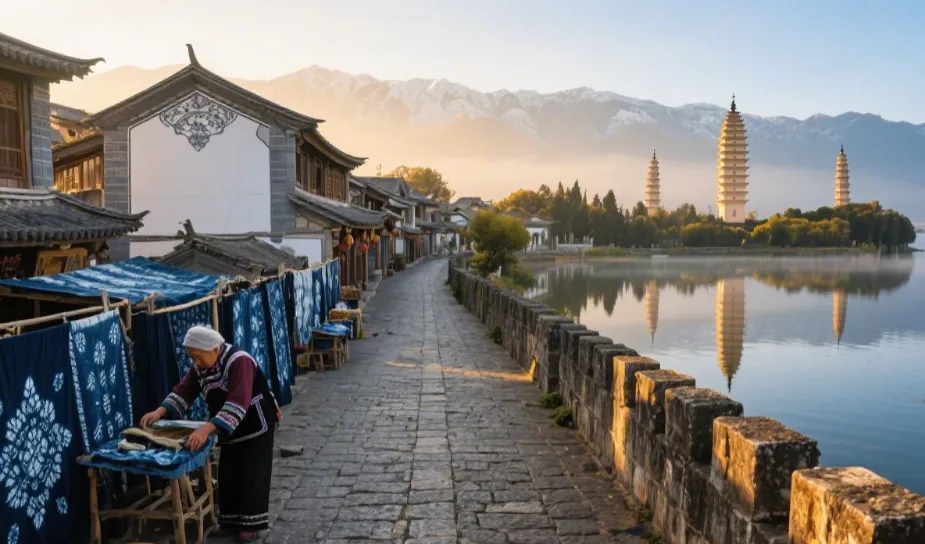
Day 4: Deep Shaxi Tour, Visiting Sideng Street and Shibaoshan
Transportation: Before heading to Shibaoshan in the afternoon, I asked the guesthouse hostess for a local driver’s number (138xxxxxxx) and agreed on 80 RMB for a round-trip charter (a white Wuling Hongguang, fits 4 people). The journey took 20 minutes. The driver, Mr. Li, was a Shaxi local who knew the roads so well he dropped me right at the Shibaoshan ticket gate and said, “Call me when you’re done with the grottoes, I’ll pick you up.”
Morning:
- Woke up at 7:30 AM and headed out at 8:00 AM to walk Sideng Street. The morning light had just climbed onto the grey tile roofs, shining on the flying eaves of Kuige Stage, where the “Two Dragons Playing with a Pearl” wood carving glowed warmly. The wooden railings on the second floor had worn-down grooves; the hostess said, “These were worn by caravans tying their reins.” The old shops along the street were just opening. The handmade straw bags sold by an old lady were made of mountain thatch, including totes and coin purses. I picked a tote bag with tassels (45 RMB), which was lighter and more breathable than those in Lijiang (where the same style sells for 60 RMB).
- At 11:30 AM, I had lunch at “Lao Ma Dian” (Old Horse Shop) in the middle of Sideng Street. The shop was narrow. The owner is a descendant of a caravan member. The roasted potatoes (5 RMB) were simmered over a charcoal fire; the skin was charred and crispy, and inside it was floury and sweet, served with chili powder + chopped houttuynia + coriander. The jelly (8 RMB) was made from peas, drizzled with sour vinegar and chili oil, and topped with fried soybeans and mint leaves—very appetizing. The two of us shared one potato and one bowl of jelly, finishing lunch for 12 RMB.
Afternoon:
- Mr. Li picked me up at 1:00 PM and headed straight to Shibaoshan. The mountain roads were winding and steep, but he drove steadily, arriving at the gate in 20 minutes (ticket 50 RMB; I bought it on the “Go Yunnan” app for 5 RMB less).
- The highlight was Grotto No. 8 of Shizhong Temple (Sculptures of the Nanzhao King’s Family). The light inside was dim, so I used my phone flashlight: In the center sat King Gelofeng of Nanzhao, looking majestic in a high crown, holding a tablet. To the left, the Queen held a lacquer box (for offerings), and to the right, the Prince held a lotus. Behind them stood two attendants, one holding an umbrella and one a sword. The carvings of the garments were so detailed that even the folds of the Queen’s skirt were clear—much more interesting than Grotto No. 7 (Lion Fighting Elephant).
- A 10-minute climb led to Baoxiang Temple (a small wooden temple at the summit). Standing on the platform outside the hall, I overlooked the Shaxi Plain: lush green rice fields surrounded the ancient town, Yujin Bridge looked like a white ribbon, and distant mountain mists swirled around the green peaks. It felt much more open than being inside the town.
Evening: After returning to the town, I went straight to “Raven Coffee” (a white-walled shop at the northwest corner of Sifang Street). The owner is from Shanghai and makes hand-poured coffee with Yunnan Arabica beans (35 RMB/cup), which had a nutty aroma. I sat on the second-floor terrace as the sunset turned the old houses golden, and took a panoramic photo of the town (using 0.5x wide angle to frame both Kuige Stage and Yujin Bridge).
Case Study: Last time, my friend didn’t charter a car and took the Shaxi-Shibaoshan minibus (15 RMB/person), which only runs at 10:00 AM and 2:00 PM; missing it means waiting half a day. Also, the bus only goes to the foot of the mountain, leaving a 1 km uphill walk that was exhausting. Chartering a car this time allowed for a flexible schedule. Also, a stall at the entrance sold straw bags for 80 RMB, while the old lady’s shop was only 40 RMB for better quality.
| Item | Details | Cost/Remarks |
|---|---|---|
| Shibaoshan Charter | Guesthouse contact Mr. Li (138xxxxxxx), Wuling Hongguang round-trip | 80 RMB, 20-minute drive |
| Sideng Street Straw Bag | Sold by old lady in ancient shop, thatch tote with tassels | 40 RMB+, 20 RMB cheaper than scenic area |
| Lao Ma Dian Lunch | Charcoal potatoes (with houttuynia) + Pea jelly (sour/spicy) | Potato 5 RMB + Jelly 8 RMB = 13 RMB/person |
| Shizhong Temple Grotto No. 8 | King Gelofeng family sculptures, fine carving, use phone light | Ticket 50 RMB (45 RMB on app) |
| Baoxiang Temple View | Summit wooden temple, platform for Shaxi Plain panorama | Free, 10-minute uphill climb |
| Raven Coffee Hand-pour | Yunnan Arabica beans, terrace for sunset town view | 35 RMB/cup, incl. a glass of lemon water |
Looking at the grottoes that day, as the sun shone through the small window onto the Nanzhao King’s face, I felt these stones didn’t represent ancient people, but the years of the Shaxi caravans carrying salt. Back in town, drinking coffee with the wind carrying its aroma, the day’s “antiquity visit” was truly complete.
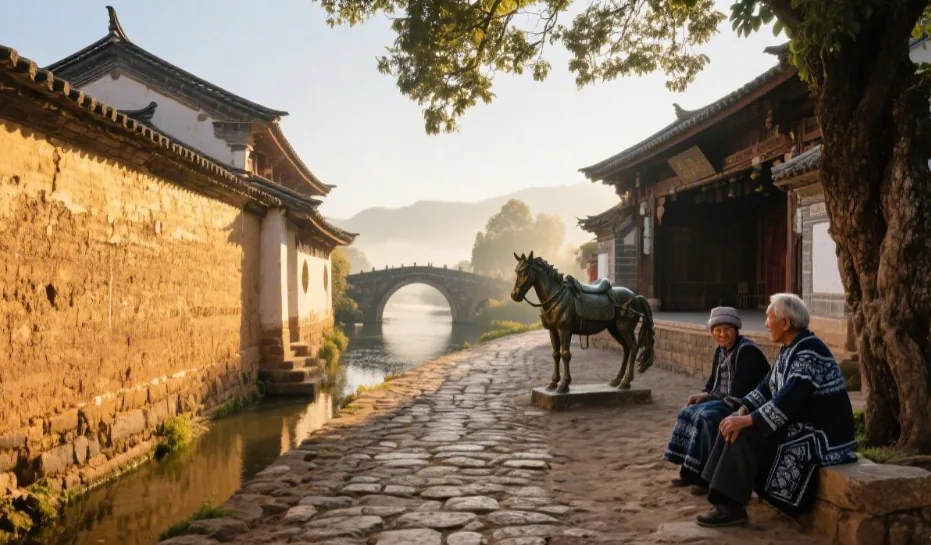
Day 5: Shaxi to Lijiang, A Stopover to Enjoy Ancient City Lights
Transportation: I arrived at Shaxi Bus Station at 7:50 AM (an 8-minute walk from the guesthouse) and bought a 8:30 AM departure minibus ticket (35 RMB/person). The bus was a green Yutong; the seats were a bit old but clean. The driver was a Naxi ethnic uncle who played Naxi folk songs. We stopped for 5 minutes in Jianchuan County to add water. Around 10:00 AM, we passed Heqing Plain, where the rice fields were golden. I arrived at Lijiang Bus Station on time after 2 hours (around 10:30 AM). From there, I walked 10 minutes to Zhongyi Road and another 5 minutes to the guesthouse, saving a bit on taxi fare (15 RMB).
Accommodation: I stayed at “Yunsu” Guesthouse in Dayan Ancient City (lower section of Wuyi Street, away from the noisy main streets) for 220 RMB/night. The room faced east; in the morning, sunlight poured through the carved wooden windows onto the bed. The wooden floors were polished bright, and the bathroom had a high-pressure shower (no need to worry about water pressure on the plateau). The owner is a Lijiang local. During check-in, he gave me a hand-drawn map to avoid crowds, marking quiet routes to Sifang Street, and reminded me, “Avoid the Bar Street after 10:00 PM; take Qiyi Street back instead.”
Itinerary:
- After a nap until 2:00 PM, I went to Zhongyi Market (near the South Gate, frequented by locals). The market was bustling. Vegetable stalls had carrots still covered in soil, and at the mushroom stalls, aunties shouted in dialect, “Fresh Matsutake just arrived, 80 RMB/jin!” I picked Matsutake as the auntie taught me: choose those with unopened caps and thick, firm stems, smelling of light almonds. I bought half a jin (40 RMB). Snow peaches were piled in bamboo baskets for 10 RMB each; I chose those with a white frost on the skin (freshly picked), and they were crispy and juicy, much better than supermarket peaches.
- For dinner, I went to “Amma Cured Pork Ribs” (diagonally opposite Zhongyi Market, easy to spot with its blue sign). The shop had wooden tables and long benches. I ordered the Cured Pork Ribs Hotpot (small pot 50 RMB) with kidney beans (10 RMB/portion). The ribs were smoked black pig ribs, stewed until the meat fell off the bone with a smoky aroma. The kidney beans were floury and soaked up the soup. With a side of “Water Lily” (Otellia acuminata) greens (15 RMB), it cost 50 RMB/person for two, 10 RMB cheaper than similar places inside the ancient city.
- 19:30 Watch Lanterns Light Up at Sifang Street: A 10-minute walk from the guesthouse to Sifang Street. I arrived just as workers were climbing ladders to hang red lanterns. At 19:40, the whole street lit up gradually, the warm light reflecting off the bluestone. An artist in ethnic costume played Naxi Ancient Music while people gathered around. A young man played the accordion and sang “Dida.” I stood there listening for a while; the wind carried the scent of osmanthus from the trees along the road.
Case Study: Last time, my friend didn’t buy the minibus ticket in advance and only arrived at the station at 8:25 AM. The bus was full, and they had to wait 2 hours for the next one (10:30 AM), arriving in Lijiang at noon and missing the afternoon market time. Also, once at Zhongyi Market, I didn’t check the Matsutake caps and bought ones that were already open (too old); I got much better ones this time using the auntie’s method. I chose “Yunsu” because I previously stayed on the main Wuyi Street and couldn’t sleep because of the bar drums; this place is 50 meters off the main street and much quieter.
| Item | Details | Cost/Remarks |
|---|---|---|
| Shaxi to Lijiang Minibus | Shaxi Station 8:30 AM departure, via Heqing Plain, 2 hours to Lijiang | 35 RMB/person, buy on-site |
| Yunsu Guesthouse | Quiet spot on Wuyi Street, east-facing room + quiet map | 220 RMB/night, incl. map |
| Zhongyi Market Shopping | Matsutake with closed caps (40 RMB/half jin), Snow peaches with white frost | Matsutake 80 RMB/jin, Snow peach 10 RMB each |
| Amma Cured Pork Ribs | Small rib pot + beans + greens; smoky fall-off-the-bone meat | Pot 50 RMB + beans 10 RMB + veg 15 RMB, 50 RMB/person |
| Sifang Street Night View | 19:30 lanterns light up; listen to Naxi music + accordion | Free, 19:40 for full lighting |
From Shaxi to Lijiang, the folk songs on the bus, the scent of mushrooms in the market, the sun-drenched room at the guesthouse, and the lanterns of Sifang Street seemed to bridge the two days’ rhythms. Arriving in Lijiang not too late, just as the night view began, was the perfect way to embrace the relaxation of this “stopover.”
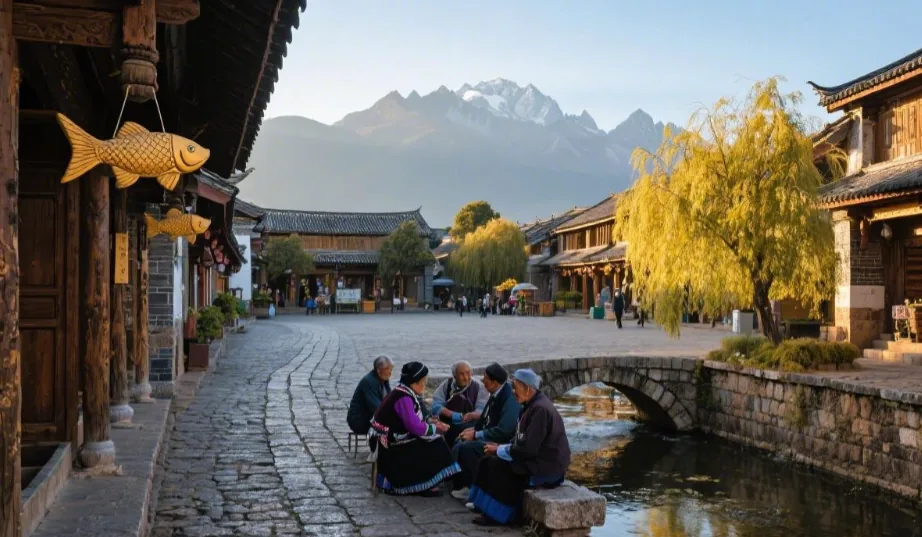
Day 6: Strolling Lijiang Ancient City, Visiting Mu Mansion and Black Dragon Pool
Transportation & Accommodation Continuation: Starting from “Yunsu” Guesthouse, it’s a 10-minute walk to the Mu Mansion entrance. I spent the whole day exploring the city on foot, resting on stone benches in the alleys when tired. The guesthouse owner reminded me that morning, “The 50 RMB Ancient City Maintenance Fee can be handled at the front desk, otherwise you can’t enter Black Dragon Pool,” so I paid it during check-in to avoid queues.
Key Experiences:
- Mu Mansion (Ticket 40 RMB): I entered at 9:00 AM as it opened. First, I saw the “Integrity Pillars” in the Assembly Hall—two red-painted wooden pillars carved with Chinese characters. They are “official oaths” from the Qing Dynasty Lijiang magistrates, with phrases like “not taking a single cent” and “serving the people diligently.” The pillars have been polished smooth by touch (locals say officials used to touch them while swearing in). Next, I climbed Wanjuan Tower (the highest point of Mu Mansion). The stairs were narrow and steep, but the wooden handrails were smooth. At the top, the entire ancient city was visible: grey tile roofs stretching out, Sifang Street looking like a chessboard, and the peaks of Jade Dragon Snow Mountain peeking through the clouds.
- Black Dragon Pool (Free with Maintenance Fee): I went at 3:00 PM (best for front-lighting), a 15-minute walk from the north gate. The water was so clear you could see the pebbles at the bottom. First, I found Deyue Pavilion—white walls and black tiles built by the water. The afternoon sun shone from the west, casting the pavilion’s shadow onto the water, perfectly aligning with the reflection of Jade Dragon Snow Mountain. I used “Live Photo” mode on my phone and selected “Long Exposure” to smooth the water, making it look like an ink painting.
- Shopping for Dongba Paper at Guangyi Street: At 4:30 PM, I went to the middle of Guangyi Street, looking for the “Naxi Dongba Paper Workshop” with its blue cloth sign (don’t go to the neighboring shops selling machine-made paper). The owner, a white-bearded grandfather, wore cotton gloves while handling paper. He said, “This paper is made from Wikstroemia bark; the watermarks are natural fibers, and it gets better with use.” I picked a sheet of creamy-yellow paper for 20 RMB; the watermark looked like a stream. He said, “Don’t cut bookmarks too narrow; leave some deckle edges for that handmade feel,” and gave me a small sample of the bark.
Food Diary: For lunch near Mu Mansion, I went to “Dianxi Prince” on the east end of Guangyi Street and ordered Cured Pork Ribs Hotpot (small pot 60 RMB) + Sautéed Water Lily (25 RMB). The ribs were smoked black pig ribs, stewed until tender. The soup included arrowhead and ginger, making it very warming. The Water Lily is a local water plant; the stems were crispy and sautéed simply with garlic, carrying a grassy aroma. The owner said, “Choose ribs with more marrow bones for a richer flavor,” and it was indeed richer than yesterday’s ribs.
Case Study: Last time, my friend didn’t pay the Ancient City Maintenance Fee and was stopped at the gate of Black Dragon Pool, having to return to the guesthouse to pay, wasting an hour. Another time, I bought Dongba paper on Guangyi Street without checking the material and got machine-made paper for 30 RMB/sheet, which was too thin and lacked texture; this time I learned to identify bark fibers from the grandfather. The Wanjuan Tower stairs are steep; I wore sneakers and still didn’t dare run, while a friend in flip-flops almost slipped—non-slip shoes are a must.
| Item | Details | Cost/Remarks |
|---|---|---|
| Mu Mansion | Integrity Pillars with official oaths; Wanjuan Tower view of the city | 40 RMB ticket, fewer people at 9:00 AM |
| Black Dragon Pool | 3-4:00 PM lighting for pavilion + mountain reflection; use Long Exposure | Free (incl. 50 RMB Maintenance Fee) |
| Dongba Paper Workshop | “Naxi Dongba Paper Workshop” on Guangyi St; bark paper with watermarks | 20 RMB/sheet, incl. bark sample |
| Dianxi Prince Lunch | Cured Rib Pot (60 RMB, marrow bones) + Sautéed Water Lily (25 RMB) | Approx. 42 RMB/person, free soup refills |
Touching the “Integrity Pillars” at Mu Mansion that day, I felt the indentations of the carved words as if touching the intentions of officials from centuries ago. While photographing the reflection at Black Dragon Pool, two wild ducks swam by, shattering and then reassembling the mountain’s image. I realized that “seeing history” isn’t about looking at old houses; it’s about letting the scenery meet the old stories in your heart. Walking back, the rough texture of the Dongba paper in my pocket felt like carrying the wind of Lijiang.
Day 7: Light Trekking in Shuhe and Baisha, Close Views of the Snow Mountain
Transportation: At 8:00 AM, I left “Yunsu” Guesthouse and walked 8 minutes to the Zhongyi Market Bus Stop to take Bus No. 11 (2 RMB/person, pay at the front door). It was a green minibus with faded white seat covers; the driver was a Naxi ethnic auntie who announced stops in both dialect and Mandarin. I got off at Shuhe Road Crossing at 8:20 AM and crossed the road to enter Shuhe Ancient Town (Maintenance Fee? No, my universal Ancient City fee worked). I walked 10 minutes along Renli Road to Sifang Tingyin Square, buying a roasted corn from a Bai sister for 5 RMB (sweet and crispy).
Route:
- Watch Elders Dancing at Sifang Tingyin Square in Shuhe: Arriving at the square at 9:30 AM, the central bonfire was just being lit. A dozen local elders in blue cloth tunics were holding hands in a circle, performing the “A Li Li” (traditional Naxi dance). The leader, 68-year-old Grandma Li, had silver bracelets that chimed. Seeing me watch, she waved me in, teaching me: “Point left foot, stomp right foot, swing your hands like you’re touching clouds.” I followed clumsily for two rounds; she laughed, “Relaxing your heart is more important than the movements.” I was sweaty but very happy.
- Making a Small Silver Bell at Baisha Old Silversmith Workshop: At 10:00 AM, I walked from Shuhe to Baisha (15 minutes along the Shubai Road stone path, flanked by rice fields). I navigated to “Baisha Old Silversmith Shop” (a grey-walled courtyard by Sifang Street). The master, Mr. He, was Naxi and wore reading glasses while hammering silver. When I asked to make a bell (30 RMB labor fee), he brought out 999 fine silver (purer than 925), saying, “Filling the bell core with lead makes it ring louder.” I chose a round hollow design and carved the character “Sha” (for Shaxi/Baisha). As he hammered, he said, “This hammer has been with me for 20 years; I used to make stirrups for caravans.” It took an hour to finish; it was polished bright and sounded as clear as melting snow.
- 15-Minute Walk to Baisha Murals: At 11:30 AM, I left the workshop and walked north along Baisha Street. After passing Wenchang Palace, I turned right into a small alley where the stones were mossy. Reaching the Baisha Murals (30 RMB ticket) in 15 minutes, I focused on the Dabaoji Palace Murals (Ming Dynasty Tibetan Buddhist paintings). The murals used mineral pigments like cinnabar red and azurite blue, which remained vibrant. They depicted Shakyamuni preaching; the floating ribbons of the Arhats were as fine as hair, and even the lotus patterns on the robes were clear. The old gatekeeper said, “These were painted by both Han and Tibetan artists; caravans used to kowtow here for safety.”
- Closing: Sitting by Qingxi Reservoir to View Jade Dragon Snow Mountain: At 3:00 PM, I took a taxi (10 RMB) from Baisha Murals to Qingxi Reservoir (near Shuhe, free). I picked a bench in the middle by the water to watch all thirteen peaks of Jade Dragon Snow Mountain—the main peak, Shanzidou, wore a white snow cap that glowed gold in the sun. After waiting 40 minutes (around 16:10), the sun moved behind the mountain, and the peak suddenly turned orange-red (Golden Sunset on the Mountain); the reflection in the water turned red too. I captured it using “Vivid” mode on my phone, underexposing the sky to highlight the snow.
Case Study: Last time, my friend didn’t check the bus schedule and waited for Bus No. 11 at 9:00 AM; since it only runs once an hour, they didn’t leave until 10:00 AM and missed the elders’ dance. Also, some shops in Baisha use 925 silver and charge 50 RMB labor; this old shop’s fine silver was better value. While walking to the murals, I slipped on some moss in my jeans; luckily, I grabbed a wall—non-slip shoes would have been much safer.
| Item | Details | Cost/Remarks |
|---|---|---|
| Bus No. 11 | Board at Zhongyi Market 8:00 AM, off at Shuhe 8:20 AM; 2 RMB | 2 RMB/person, 20-minute ride |
| Tingyin Square Dance | Grandma Li teaches “A Li Li”; relax your heart, swing like touching clouds | Free to join, 2 rounds for a workout |
| Baisha Silver Workshop | Mr. He made a 999 silver bell (carved “Sha”) using a 20-year-old hammer | 30 RMB labor, 1-hour pickup |
| Baisha Murals | Ming Tibetan paintings, mineral pigments, fine detail on Arhat robes | 30 RMB ticket, gatekeeper stories |
| Qingxi Reservoir View | Bench view of mountain peaks; 16:10 for Golden Sunset | Free, 10 RMB taxi from Baisha |
That day after dancing in Shuhe, I still felt the strength of Grandma Li’s pat on my back. The silver bell hanging on my bag chimed with every step like the mountain wind. When the sunset turned the snow mountain red at Qingxi Reservoir, I realized that “light trekking” isn’t about distance; it’s about letting your steps move slowly with the light of the snow mountain.

Day 8: Final Lijiang Touches, Tasting Authentic Flavors Before Departure
Transportation: At 9:00 AM, I checked out of “Yunsu” Guesthouse. The owner called a Didi for me at the front desk (Economic type, driver was local Naxi, plate starting with Yun P). The trip to the airport is about 12 km; the 50 RMB fare (incl. highway fees) took 30 minutes. The driver took Yuxue Avenue to avoid detours and pointed out where I saw the “Golden Sunset” at Qingxi Reservoir yesterday. Upon arrival, he proactively helped with my 28-inch suitcase, saying, “Next time you come to Lijiang, call me; I’ll give you a rate of 45 RMB,” which was very honest.
Breakfast: At 9:30 AM, I ate at “He’s” Breakfast Shop (on Wuyi Street, red sign with white characters near the back gate of Zhongyi Market). I ordered Chickpea Jelly (5 RMB) and Rice Sausage (8 RMB). The jelly was made from a blend of peas and chickpeas, served in a porcelain bowl with vinegar, chili oil, crushed peanuts, and coriander; it had a savory alkaline scent. The rice sausage was glutinous rice mixed with pig’s blood, fried until crispy on the outside and soft inside, perfect with chili powder. The total was 13 RMB, half the price of trendy shops inside the ancient city; it’s a favorite for locals.
Purchasing:
- Fresh Grilled Jiahua Flower Cakes: At 10:00 AM, I went to the Jiahua Bakery near Xiangshan Market (blue and white sign, transparent window showing the ovens). I bought the freshly grilled rose flavor for 3 RMB each. The freshly baked crust was so flaky it fell apart, and you could see the rose petals; the sweetness was just right (pre-packaged gift boxes are often too sweet). I bought 10 for 30 RMB, and they were still warm in the paper bag.
- Xiangshan Market Yak Beef Jerky: At 11:00 AM, I visited Xiangshan Market (take Bus No. 3 from the North Gate for 2 stops). I went straight to the “Tibetan Fragrance Yak Beef” stall (the owner wore a Tibetan hat; the stall is in the back). I chose the individually wrapped jerky (80 RMB/jin); look for firm texture and deep red color (bulk jerky gets hard easily). I had the owner weigh out 200g per bag (16 RMB/bag) to eat on the way. Compared to the bulk jerky I bought last time that was too hard to bite after three days, these individually wrapped ones last a week.
Case Study: Last time, I didn’t have the guesthouse call a Didi and hailed a taxi on the street; the driver asked for 60 RMB claiming the airport was far. Later I found out a called Didi is a fixed 50 RMB. Also, buying bulk yak jerky was a mistake as it wasn’t sealed and got sticky; individually wrapped is much better. And fresh flower cakes are definitely better than the pre-packaged ones that go soft after two days.
| Item | Details | Cost/Remarks |
|---|---|---|
| Guesthouse Didi Call | Front desk booked, Naxi driver, Yuxue Avenue route, luggage help | 50 RMB (incl. highway fee), 30 minutes |
| He’s Breakfast | Chickpea Jelly (vinegar/chili oil/peanuts) + Fried Rice Sausage | Jelly 5 RMB + Sausage 8 RMB = 13 RMB |
| Jiahua Flower Cakes | Freshly grilled rose filling at bakery; flaky crust, real petals | 3 RMB each, 10 for 30 RMB (warm) |
| Xiangshan Yak Jerky | Individually wrapped (200g/bag), firm texture, deep red meat | 80 RMB/jin, 16 RMB/bag (200g) |
| Summary | Ride scooters around Erhai (don’t drive); book Shaxi bus on “Caiyuntong”; let guesthouse handle maintenance fees | Tips from 8-day test for a smooth trip |
While waiting at the airport, eating a fresh flower cake and smelling the roses, I thought back to landing in Dali eight days ago—from the Erhai wind to the Shaxi caravan stories and the Lijiang snow mountain sunset, I slowly took in the mountains, waters, and ancient towns of Yunnan. Returning home isn’t the end; it’s about storing these details in your heart so that next time, you can follow the memory back to that slow-travel road.
“`
Keep Reading
- 5-Day Yunnan Plateau Secret Realm Tour | Shangri-La Dukezong Ancient City + Potatso + Songzanlin Monastery, Experience Tibetan Scenery
- 7-Day Popular Western Yunnan Loop Tour | Kunming + Dali + Lijiang, Classic Comfortable Travel Plan
- Yunnan Travel Outfit Pitfalls to Avoid | Does Dali-Lijiang Have “Four Seasons in One Day” Sun Protection & 3-Layer Dressing Tips
- Preventing Altitude Sickness in Yunnan: Avoid Pitfalls | Should You Buy Overpriced Oxygen at Scenic Spots Medication Checklist for Shangri-La/Snow Mountains
- Dali Erhai Lakeview Room Pitfall Avoidance | 3 Tips to Spot Fake Wide-Angle Sea Views! Shuanglang/Caicun Real Stay Black & White List
Shaxi Ancient Town, Nuodeng Ancient Village and Yubeng Village — Practical Information
Where to Stay · Room Type · Nearby
- Shaxi·around Sideng Street | Reference price Ordinary guesthouses about CNY 300–600 per night | Room tip: Step out onto the old street, good for strolling at night | Nearby add-ons: Sideng Street Sifang Street, ancient stage, Xingjiao Temple, Xianfeng Bai Bookstore[src]
- Shaxi·designer light-luxury guesthouses | Reference price About CNY 800–1200 per night | Room tip: A quiet setting with a strong atmosphere | Nearby add-ons: Yujin Bridge, Heihui River[src]






