



🏛️ Day 1: Royal Rituals on the Central Axis
I suggest you must arrive at Tian’anmen East Station (Line 1) or Jinyu Hutong Station (Line 8) before 08:30 AM. If you exit from Tian’anmen East, security queues usually take 30-50 minutes—this is a time cost many people overlook. Forbidden City tickets must be grabbed promptly at 20:00 PM, 7 days in advance via the mini-program. Have your ID number ready to paste; if you’re even a bit slow, the morning session tickets will be gone. The only entrance to the Forbidden City is the Meridian Gate (Wu Men), where you simply swipe your ID card to enter.
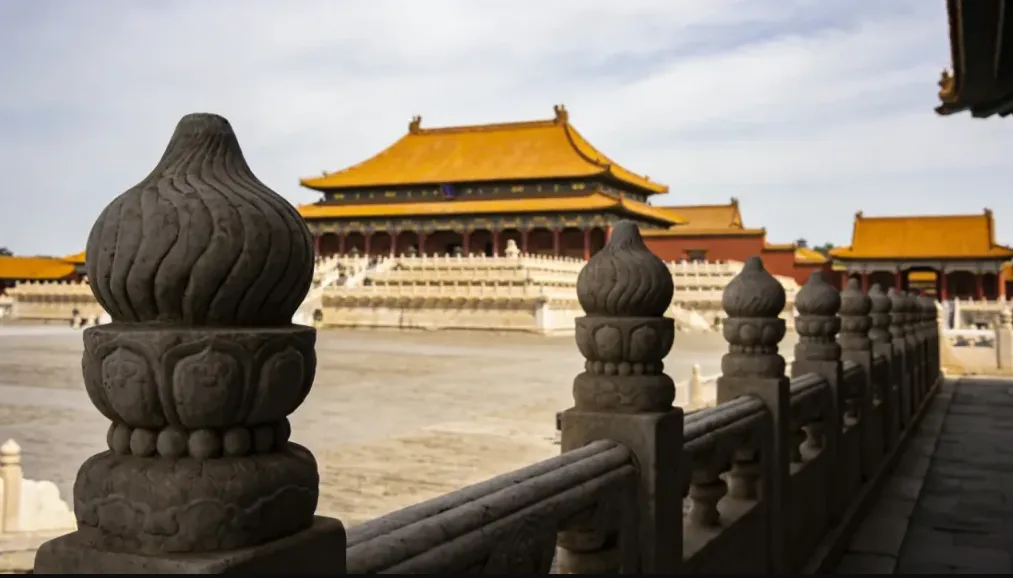
My personal deep-dive route: after entering the Meridian Gate, turn left to the Hall of Martial Valor (Wuying Dian) (often hosting high-level painting and calligraphy exhibitions) or turn right to the Hall of Literary Brilliance (Wenhua Dian) (the Ceramics Gallery) to avoid the initial massive crowds following tour flags along the central axis. After 10:30 AM, circle back to the central axis to see the Hall of Supreme Harmony, Hall of Central Harmony, and Hall of Preserving Harmony. By then, the main crowds have dispersed to the inner courts, allowing you to capture relatively empty panoramic shots of the architecture.
My tested experience: Don’t spend all your time obsessing over photos in the main courts. If you want to see the most exquisite items, you must spend 10 Yuan to buy a ticket for the Treasure Gallery (Ningshou Gong area). The Nine-Dragon Wall, Qianlong Garden, and the Well of Concubine Zhen are a paradise for detail-oriented visitors. The architectural density here is high; compared to the vast Three Great Halls, you can better feel the refinement and oppression of royal life here.
Around 13:00 PM, exit from the Gate of Divine Prowess (Shenwu Men, the North Gate). Just across the road is Jingshan Park. Don’t bother queuing for the highest pavilion to take the “classic” panorama of the Forbidden City; it’s so crowded you can barely stand. Instead, take a taxi or the metro to the Temple of Heaven.
- It is extremely difficult to find power banks in the Forbidden City, and return points are often full. I suggest bringing a high-capacity one yourself. The red walls absorb heat, and phone batteries drain faster than usual.
- Don’t rely on fast food inside the Forbidden City—it’s expensive and mediocre. I usually grab a coffee in the bookstore lounge to tide me over, then look for authentic Baodu (quick-boiled tripe) or Zhajiangmian (fried bean sauce noodles) on Shatan Back Street after exiting.
- When visiting the Temple of Heaven, be sure to buy the Combo Ticket (around 34 Yuan). If you only buy the gate ticket, you won’t even be able to step onto the stairs of the Hall of Prayer for Good Harvests; you’ll only see the tip from outside the wall.
- Entering through the East Gate of the Temple of Heaven is the most labor-saving. Head straight to the Hall of Prayer for Good Harvests, follow the Imperial Walkway to the Echo Wall and Circular Mound Altar, and finally exit from the South Gate. It’s the most convenient way to catch a taxi to Qianmen for dinner.
| Tour Segment | Details & Professional Advice |
|---|---|
| Forbidden City Entry | Avoid the Crowds: Security at Tian’anmen East is the slowest. I suggest walking through the Working People’s Cultural Palace. It’s less crowded and allows you to see the Taimiao architecture—an “overtake” route known mostly to old Beijingers. |
| Forbidden City Tour | Key Highlights: The Clock and Watch Gallery has demonstrations at 11:00 AM and 14:00 PM daily. Seeing those 200-year-old mechanical clocks in motion is a visual shock far greater than looking at static porcelain. |
| Temple of Heaven Light | Best Photo Time: After 16:30 PM in summer, and after 15:30 PM in winter. At this time, the setting sun hits the gilded top of the Hall of Prayer for Good Harvests, making the blue glazed tiles glow with a deep gemstone luster. |
| Scam Warning | In both the Forbidden City and Temple of Heaven, there are many people in “Qing Dynasty costumes” trying to pull you in for photos. The price seems cheap, but they will add layers of costs for printing later. Just wave them off and don’t stop. |
Around 17:30 PM, I suggest walking to Qianmen Street or Damochang Street for dinner. If you want to try Zhajiangmian, remember the authentic way to eat it: put in all the side toppings, but don’t pour all the sauce at once; Beijing’s yellow soybean sauce has a very salty aftertaste. I recommend trying Fangzhuanchang No. 69 Zhajiangmian; although there’s a queue, the sauce aroma is much more authentic than typical tourist restaurants.
Transportation Patch: Your step count for this day will easily exceed 25,000 steps. Beijing’s metro transfer passages are very long. If you’re tired, call a Didi or Shouqi car back to the hotel. Temporary parking is not allowed around the Forbidden City (Jingshan Front Street); you’ll need to walk east to Wusi Avenue to successfully hail a car.
Day 2: Great Wall Nightscape and Water Town Slow Life
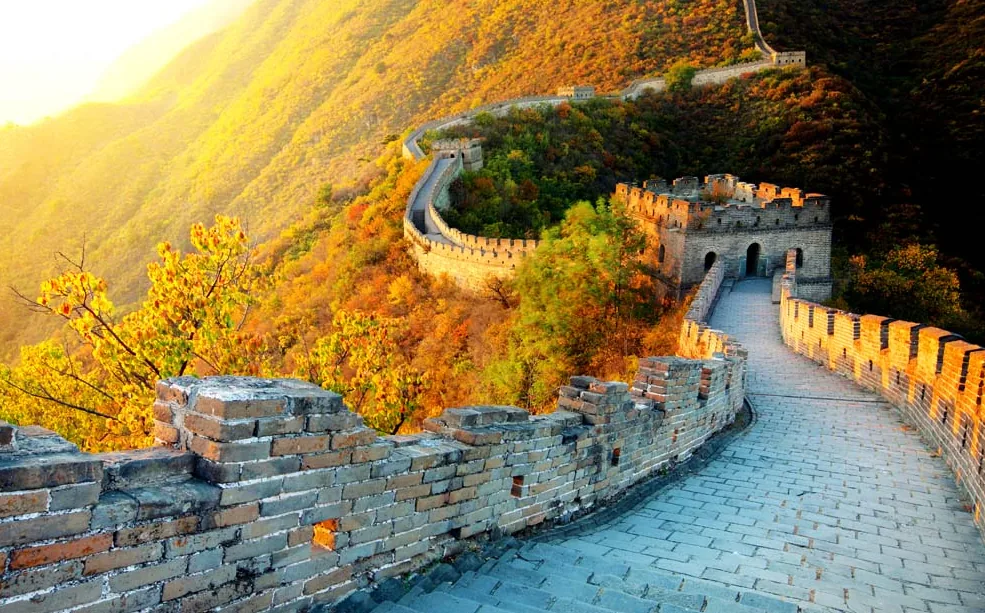
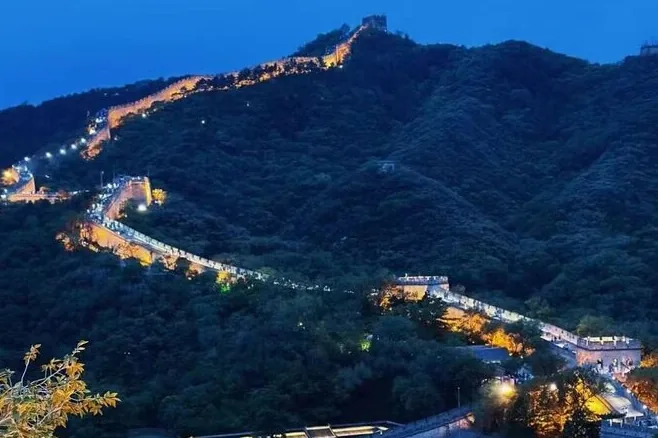
Around 12:30 PM after lunch, I suggest departing from the city. This timing avoids the morning peak and gets you to Gubei Water Town for the afternoon session. The most reliable way to get there is the direct bus from Dongzhimen Transport Hub, which costs 48 Yuan for a one-way trip and takes about 2 hours. If you miss the bus, a taxi costs about 400 Yuan, so carpooling is recommended. The Simatai Great Wall is the only section in China that retains its original Ming Dynasty appearance. Its ruggedness paired with the town’s elegance creates a contrast unique to the Beijing outskirts.
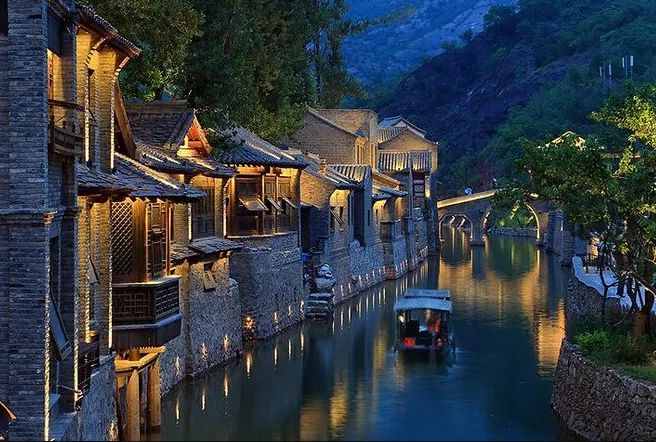
After entering the scenic area, I usually visit Yongshun Dye House first. The high poles are hung with large pieces of dyed cloth, and the afternoon light filtering through the fabric is perfect for photos. Continuing inward, you’ll find the Sima Distillery, where you can smell the rich aroma of grain liquor. Although the water town was reconstructed later, its flagstone paths, wooden structures, and canal layouts follow ancient architectural regulations, so the details don’t feel cheap.
My practical experience: The first thing to do after entry is to head to the visitor center for luggage check-in. If you stay in a hotel within the scenic area, your luggage is delivered to your room for free. Also, make sure to confirm your Night Tour Great Wall tickets before 15:00 PM. The night tour is capacity-limited and only accessible via cable car. If you don’t have a combo ticket, buying cable car tickets on the spot can involve very long lines.
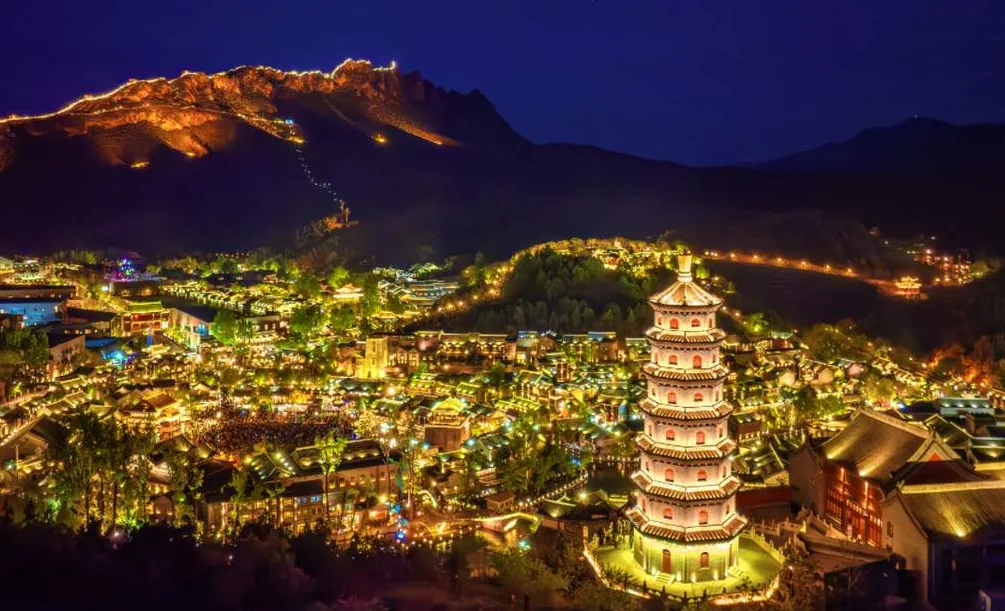
- Simatai Great Wall Night Tour: After dark, the Great Wall’s lights outline the entire dragon-like ridge. The night tour only opens towers 5 to 6. The path isn’t long, but the slope is extremely steep, so wear shoes with good grip.
- Dining at the Foot of the Wall: The shredded radish cake and Qiaotou cake on the food street are must-tries. They cost just a few yuan and are very satisfying when served hot. For a proper dinner, head to the Roast Meat House (Shaorou Guan) for typical northern flavors; the roast meat is rich but not greasy.
- Hot Spring Relief: After coming down from the Wall after 20:30 PM, nothing is more comfortable than a hot spring soak. I recommend Duan’s Courtyard or Yuda Hot Spring. Especially in winter, with cold air above and your body in the hot spring, the ultimate experience washes away the day’s fatigue.
- Drone Show: There is usually a drone lantern show at Sun and Moon Island Square at night. Set against the backdrop of the ancient town’s architecture, the visual effect is stunning. Arrive 10 minutes early to grab a spot.
| Tour Project | Details & Professional Advice |
|---|---|
| Ticket Combo | Best Value: Book the “Water Town Ticket + Great Wall Ticket + Round-trip Cable Car + Hot Spring” combo on the official site. If bought separately, the cable car alone costs 160 Yuan; the combo saves enough for two meals. |
| Transportation | In-area Transit: Guests staying inside the scenic area get unlimited rides on the electric shuttles. This is crucial for families with elderly or children, as it’s about a 2 km walk from the entrance to the cable car station. |
| Night Temperature | Temperature Warning: The suburbs are 5-8 degrees colder than the city, and the Great Wall is even windier. Regardless of the season, always pack a light windbreaker for the night tour. |
| Scam Tip | Do not buy “Great Wall shortcut tickets” sold outside the park. Those paths lead to wasteland and won’t get you into the official scenic area; it’s a pure waste of money. |
If you stay inside the scenic area, the town at 07:00 AM is most enchanting. Most tourists haven’t entered yet, there’s a light mist in the air, and you can stroll by the river in rare peace. Hotel breakfasts are usually hearty, allowing you to browse the shops before checkout—a “staggered experience” you can’t get staying outside.
Hardcore Accommodation Advice: While the Water Town Hotel is nice, I prefer Gubei Light or the more unique B&Bs. Staying in a B&B lets you chat with local hosts who can tell you which snacks are made fresh that day. Most importantly, guests staying inside get discounts on Great Wall tickets; don’t forget to ask the front desk for your discount voucher when checking out.
The focus of this day is “slow.” Don’t rush; take a boat ride or stand on the Wall for a while to watch the lights. That is what a vacation should look like.
Day 3: Architecture and the Beauty of Decay in Royal Gardens
Around 09:00 AM, I suggest taking Metro Line 4 to Beigongmen Station. Most tourists crowd the main gate (East Palace Gate), but entering from Beigongmen is a “work first, enjoy later” smart move. The entrance leads to Suzhou Street, a replica of the water town market streets Qianlong built in his backyard after visiting Jiangnan. While it’s now full of shops, the architectural layout is the highlight. A short climb up the mountain path brings you to Four Great Regions, a Tibetan-style architectural complex that is highly photogenic and much less crowded than the central axis.
After overlooking Kunming Lake from the top of Longevity Hill, descend the stone steps to the lakeside. Your legs might feel sore now. My private fatigue-avoidance tip: don’t walk back; head straight to the Stone Boat Pier. Buy a boat ticket here to cross Kunming Lake. Standing on the boat in the middle of the lake and looking back at the Tower of Buddhist Incense stacked on the hillside gives you the true essence of royal garden design.
My tested experience: The Long Corridor in the Summer Palace is 728 meters long, with every beam featuring Suzhou-style paintings of stories from “Journey to the West” or “Romance of the Three Kingdoms.” You can look up while walking, but don’t obsess over photos here as it’s always crowded. The best photo spot is actually the lakeside path outside the corridor, where you can capture its beautiful depth from the side.
- Ticket Advice: Be sure to buy the Combo Ticket (around 60 Yuan). Buildings like the Tower of Buddhist Incense, Suzhou Street, and Garden of Harmonious Virtue (for the opera stage) require separate ticket checks. If you only buy a gate ticket and later find everything requires a separate queue, your mood will suffer.
- Dining Strategy: Boxed lunches and instant noodles inside the park are overpriced and poor. I usually bring high-calorie rice balls or chocolate, or wait until I exit. Outside Beigongmen, there are many authentic Old Beijing snack shops; those brave enough can try fried Jiaoquan with Douzhi (fermented mung bean milk).
- Souvenir Warning: There are many souvenir shops. I suggest only looking at the official shop near Zhichun Pavilion. The paper bookmarks and washi tapes there have authentic designs. The plastic hairpins sold at roadside stalls are mostly wholesale items and not worth buying.
Around 14:30 PM, exit the Summer Palace and take a taxi or two metro stops to the Old Summer Palace (Yuanmingyuan). I only recommend one goal here: the Western Mansion Ruins (Xiyang Lou). The area is massive; if you try to walk the whole park, you’ll be exhausted. Buy an electric shuttle ticket (8 Yuan/person) at the entrance and have the driver take you near Dashuifa.
My true feeling: Standing before the ruins of Dashuifa provides a shock that no textbook can offer. Observe the Western carvings on the marble; even after fire and a century of rain, the lines remain clear. You don’t need a guide’s script—simply looking at the broken pillars allows you to feel the “beauty of decay.”
| Step Category | Details & Professional Advice |
|---|---|
| Transportation | Metro Priority: Line 4 connects the Summer Palace and the Old Summer Palace. Exit B of Yuanmingyuan Station is right at the park gate, very convenient. |
| Tour Highlight | Black Swan Spot: Around 16:00 PM, go near Lion Grove (Shizi Lin) in Yuanmingyuan. The black swans there are very friendly and often swim to the shore for food—it’s the most vibrant spot in the park. |
| Physical Effort | Footwear Choice: Between these two gardens, even with boats and shuttles, your walking distance will exceed 18,000 steps. You must wear professional sneakers; thin flats will be very tiring on these flagstone paths. |
| Scam Warning | The “Panoramic Model Exhibition” inside Yuanmingyuan is not great value; I suggest skipping it. Save your time for the Western Mansion Ruins and the nearby Huanghuazhen Labyrinth—the latter was a royal entertainment facility for Qianlong and is quite fun. |
After 17:30 PM, if you still have energy, head to Wudaokou near Yuanmingyuan for dinner. This is the university district, so the food density is high and prices are friendly. I recommend finding a Korean restaurant or charcoal BBQ; the flavors are very authentic due to the influence of international students nearby.
This day is a test of both aesthetics and physical strength. The Summer Palace shows “fullness,” while the Old Summer Palace shows “emptiness.” This contrast between prosperity and ruin is the ultimate meaning of a Beijing royal garden tour.
🏛️ Day 4: From Olympic Landmarks to Factory Art
Around 10:00 AM, I suggest taking Metro Line 8 to Olympic Park Station. Upon exiting, you’ll immediately see the Bird’s Nest (National Stadium) and Water Cube (National Aquatics Center). My personal advice: there’s no need to buy tickets to enter the venues. Unless you’re a professional researcher of sports architectural structures, what you see inside for dozens of yuan is just empty stands and a blue pool. The best experience is strolling along the Central Axis Landscape Avenue between the two buildings; it’s wide and offers a perfect spot to capture both landmarks in one frame.
After the Olympic buildings, if the weather is good, walk north along the avenue. The South Park of the Olympic Forest Park has no entrance fee and marks the northern end of Beijing’s Central Axis. If you want a glimpse of the “Beijing Nail Tower” (Olympic Tower), just view its five circular tops from the roadside. The climbing fee is high and the value is average.
My true feedback: If you want to take clean, high-end architectural shots, walk toward the side profile of the National Indoor Stadium, where you can avoid most tour group crowds. Also, the open space of Olympic Park has no shade; the direct sunlight is intense, so use sun protection even on cloudy days.
- Transportation: When leaving Olympic Park at noon, don’t hail a car—the road network is complex and there are many closures. I suggest going back to the metro to take Line 15 to Line 14, exit at Wangjing South Station, and then walk or use a shared bike to 798 Art Zone.
- Visit Focus: Arrive at 798 around 14:00 PM. Converted from a former radio factory, the focus is on the Bauhaus-style sawtooth factories on the 706 and 798 sections. I highly recommend the UCCA Center for Contemporary Art; it’s the pinnacle of private museums in China with high curation standards. Check their current special exhibitions on their WeChat account in advance.
- Industrial Heritage: If you like steampunk style, you must go to 751 D·Park next to 798. It preserves giant gas tanks, tracks, and two very vintage steam locomotives, which are extremely photogenic and free to visit.
- Consumer Tip: Dining prices inside 798 are generally high; an Americano usually costs around 40 Yuan. If you just need a break, find a roadside cafe with camping chairs. Don’t bother with the so-called “art restaurants”—the taste often doesn’t justify the price.
| Step Category | Details & Professional Advice |
|---|---|
| Entering Venues | Rational Spending: The interior of the Bird’s Nest and Water Cube is far less interesting than their exteriors. Saving those two ticket fees is enough for a high-quality art exhibition ticket in 798. |
| Walking Route | Avoid Getting Lost: 798 is huge and like a maze. I suggest heading to “Ceramics Third Street” and “Creative Plaza” first; that’s where the gallery density is highest and most essential. |
| Art Appreciation | Professional Recommendation: Besides UCCA, you can visit Pace Gallery or Hive Center for Contemporary Art. These galleries are mostly free and represent top-tier domestic and international artists. |
| Common Pitfalls | There are many stalls selling cheap jewelry and “modern crafts” in the park. The quality varies and most are Yiwu wholesale goods; just take a look, I don’t recommend them as souvenirs. |
After 16:30 PM, when you’re tired of art, sit at ACE Cafe in 798—it’s a hub for motorcycle culture and the building itself is unique. Or walk out of the zone to the nearby Wangjing area for dinner.
Food Test: Since you’re in Wangjing, I suggest trying authentic Korean BBQ. Wangjing is the largest Korean enclave in Beijing, so the short ribs and Bibimbap are very authentic. Any small street-side shop with a queue is unlikely to be a mistake.
The logic of this day is moving from “grand national narratives” to “personal aesthetic expression.”
Day 5: Hutong Flavors and the Serene Yonghe Palace
Before 09:00 AM, I suggest you arrive at Yonghe Palace (Lama Temple, Exit C of Yonghegong Station, Line 2 or 5). This is the largest and highest-ranking Tibetan Buddhist temple in Beijing. After entering, you don’t need to buy expensive incense outside; there is free eco-friendly incense at the entrance. My habit is to pay respects in the halls clockwise. The buildings in Yonghe Palace increase in height from front to back, symbolizing rising status, reaching a peak in the final building—the Pavilion of Ten Thousand Fortunes (Wanfu Ge).
The Pavilion of Ten Thousand Fortunes houses the famous White Sandalwood Buddha, 26 meters high in total with 8 meters buried underground. Because the indoor space is relatively tight, looking up at the top of the Buddha gives a religious art shock far stronger than looking at architecture on a plaza.
- Prayer Bead Advice: If you want to buy the currently popular “Yonghe Palace Incense Ash Bracelet,” head straight to the official Dharma distribution point inside; don’t buy from private shops outside as the source and blessing process are different.
- Lunch Transition: Directly opposite Yonghe Palace is Wudaoying Hutong. I prefer this over Nanluoguxiang; while commercialized, the pace is slower. I usually sit at a specialty cafe like Metal Hands for a while or have a simple vegetarian meal.
- Shichahai Stroll: Around 14:00 PM, take trolleybus 107 or a taxi to the Drum Tower. I don’t recommend the rickshaws soliciting business; they often charge one or two hundred yuan for a 15-minute loop and the commentary is mostly made up.
- Climbing for a View: The Bell and Drum Towers mark the northern end of the Central Axis. I suggest climbing the Drum Tower. The stairs are very steep, near 60 degrees, requiring hands and feet, but the view of Shichahai and the grey tiles of the surrounding hutongs reveals the true background color of old Beijing.
Around 16:00 PM, walk through Yandai Xiejie to Yinding Bridge. If you’re lucky with the weather, you’ll see the famous “Yinding Bridge Viewing the Mountains”—seeing the Western Hills from the bridge. Walk west around Houhai; you’ll pass the Former Residence of Soong Ching Ling and Prince Kung’s Mansion. The mansion is huge and the highlight is the “Fu” stone in the back garden, but the queue to touch it is massive. I usually skip the crowds to look at the exquisite colored beam paintings.
| Step Category | Details & Professional Advice |
|---|---|
| Yonghe Palace Tips | Clockwise Principle: Tibetan Buddhism emphasizes clockwise circumambulation and prayer. When viewing the Buddha in Wanfu Ge, don’t take photos of the statue as it’s disrespectful in the temple. |
| Hutong Scams | Reject Rickshaws: Ignore people saying they’ll “take you to a real courtyard house to see the big mansions.” Those are usually commercial shops converted from residences meant to sell overpriced tea. |
| Authentic Food | Hole-in-the-wall Recs: Near the Drum Tower, try the sesame cakes or Baodu at Ya’er Li Ji. Skip the fancy chain restaurants; the best taste is in these roadside shops with steam and long queues. |
| Shichahai Night Tour | Environment Choice: After 19:30 PM, the Shichahai bar street gets very noisy. For peace, head into Xiaojinsi Hutong or Dajinsi Hutong to see old Beijingers chatting under streetlamps. |
The cultural detail here is: Beijing’s hutongs follow “rules.” When walking among these grand courtyards, look at the Mendun (stone gate blocks). Round ones signify military officials, while square ones signify civil officials—a hierarchy recorded in stone even a century later.
- Dinner Suggestion: If not choosing a bar in this area, I suggest finding an Old Beijing Shuanrou (instant-boiled mutton) restaurant on Di’anmen Outer Street. Copper pots, charcoal fire, hand-cut mutton with sesame sauce and pickled garlic—this is an unshakable ritual for Beijingers once winter hits.
- Walk Route: After dinner, walk south along Wanning Bridge to see the 700-year-old Yuan Dynasty bridge, the starting point of the Grand Canal beneath your feet.
While the steps today aren’t as many as at the Forbidden City, the brick hutong paths make feet sore. I suggest buying foot patches at a time-honored pharmacy or soaking your feet before returning to the hotel.
Day 6: National Treasures Gathering and the Way Home
On the last day, I suggest focusing all your energy on the National Museum of China (NMC). As the peak of domestic museums, its reservation difficulty exceeds even the Forbidden City. You need to be ready to book on the official mini-program at 17:00 PM exactly 7 days in advance. NMC uses real-name registration, and security is extremely strict. Power banks are allowed up to 20,000 mAh, but lighters and fruit knives will be confiscated. I usually arrive at the North Gate by 09:00 AM when the queue is manageable; after 10:30, the line on North Plaza will be daunting.
After entering, don’t get distracted by temporary exhibitions in the lobby. Head down to the “Ancient China” gallery on B1. This is the soul of NMC. From prehistoric times to the Ming and Qing dynasties, the icons from history textbooks—the Houmuwu Ding, Four-Goat Square Zun, and Jade Burial Suit—are all right there. My strategy: walk chronologically from ancient to modern to clearly see the development of Chinese civilization. The density of exhibits is massive; allow at least 4 hours for a thorough visit.
My practical experience: Signal on B1 of NMC is very poor. If you want to scan codes for audio guides, connect to the museum Wi-Fi or rent an electronic guide at the service desk. Also, the air conditioning is very cold, especially on B1; even in summer, I suggest packing a light jacket, otherwise your knees will freeze after 30 minutes of looking at bronzes.
- Luggage Strategy: If you have a flight or train in the evening, you can bring your suitcase to NMC. There is a free luggage storage at the North Gate entrance with staff, saving you a trip back to the hotel.
- Lunch Solution: There is a simple dining area on B1 of NMC. While mediocre, it saves you from leaving and re-entering security. For better food, finish around 13:30 PM and take a taxi to the nearby Heyan Roubing (meat pie) restaurant; their pies are thin-skinned and full of filling—a flavor endorsed by Beijing locals.
- Square Photos: If you didn’t get good shots of Tian’anmen Square due to weather earlier, walk around the square after the museum. Special reminder: Tian’anmen Square now requires its own separate advance reservation; even just to walk near it, you can’t pass the cordon without one.
| Step Category | Details & Professional Advice |
|---|---|
| NMC Viewing | Key Point: Don’t try to see every gallery. Besides the permanent B1 exhibition, the “Ancient Chinese Ceramics” and “Ancient Chinese Buddhist Sculpture” galleries on levels 2 and 3 are of extremely high artistic value. |
| Departure Prep | Time Buffers: If heading to Daxing Airport, leave the Tian’anmen area at least 3.5 hours early; for Beijing South Station, 1 hour via Metro Line 4 is enough. Taxis are hard to hail on Chang’an Avenue; walk to South Heyan Street to call one. |
| Cultural Gifts | Recommendation: The souvenir shop on level 1 has miniature models of “museum treasures.” I highly recommend the “Storyteller Figurine” series—the design is humorous and far better than cheap roadside souvenirs. |
| Expense Recap | Budget Control: Beijing’s spending varies. With 150 Yuan daily for food, 400 Yuan per night for a hotel, and major tickets, a total 6-day cost of 4,000-5,000 Yuan is reasonable. |
A true record of expenses: Many feel Beijing tickets are expensive, but they are actually among the most reasonable in China. Forbidden City is 60 Yuan, Temple of Heaven around 30. The real costs are Great Wall cable cars (160 Yuan round trip) and taxis used to save energy. My biggest expense was accommodation. I recommend staying near a metro stop inside the Second Ring Road; it’s more expensive but saves at least 1 hour of commuting daily—crucial for high-intensity walking tours.
Final Suggestion: Beijing is a city measured by feet; over these 6 days, you’ll likely exceed 100,000 steps. After seeing those profound artifacts at NMC on the last day, you’ll find the fatigue worth it. If your energy is hit limit, just find a tea house in a hutong in the afternoon and watch the Beijing sunset. That is the perfect end to a trip.
I hope these plans help you find your own rhythm among the red walls and grey tiles of old Beijing. Check official accounts for any sudden traffic or closure updates. Wishing you a smooth journey home!
Related Guides
- 4-Day Beijing Winter Olympics Legacy Experience | Shougang Park Skiing + Ice Cube Skating + Olympic Village Tour Guide
- 4-Day Beijing Night Tour Route | Liangma River Cruise + Qianmen Night Market + Sanlitun Club & Bar Exploration Guide
- 5-Day Beijing Food Trip | Michelin Restaurants + Hutong Private Kitchens + Time-Honored Breakfast Spots Check-in Map
- 3-Day Silver-Haired Nostalgic Tour in Beijing | Old Brand Delicacies + Model Opera Screening + Educated Youth Themed Homestay
- 7-Day Slow Travel in Beijing for Autumn Charm | Red Leaves in Gubei Water Town + Zen Meditation at Hongluo Temple + Yanqi Lake Cycling Wellness Journey
Temple of Heaven Park —: Numbers to Check
Transport & Schedules
- City center → Temple of Heaven Stadium / gates of the Temple of Heaven | Bus: Take bus 36, 525, 685 or 957 to the “Temple of Heaven Stadium” stop, then walk into the park.[src]
Where to Stay · Room Type · Nearby
- Chongwenmen–Qianmen area (Dongcheng/Xicheng) | Reference price Old-Beijing-style inns/chain hotels, reference about CNY 260–500 per night (OTA reference) | Room tip: Standard twin/king room; choose near Metro Line 2/Line 5 stations | Nearby add-ons: Tian’anmen Square, Qianmen Street, Dashilan, Hall of Prayer for Good Harvests[src]
- Temple of Heaven East Gate/Ciqikou (Dongcheng district) | Reference price Budget hotels about CNY 300–460 per night (OTA reference) | Room tip: Standard twin/king room | Nearby add-ons: Temple of Heaven, Qianmen Street, National Natural History Museum[src]
Typical Climate & Packing (Past Years)
- January: -9.4–1.6 °C, Cold and dry; windy among the ancient cypresses, keep warm
- February: -6.9–4.0 °C, Cold, large day-night temperature difference
- March: -0.6–11.3 °C, Warming and windy
- April: 7.2–19.9 °C, Peak-season prices from Apr 1; fresh green on the ancient trees
- May: 13.2–26.4 °C, Pleasant climate, good for unhurried visits
- June: 18.2–30.3 °C, Rainy season begins; frequent afternoon showers






