



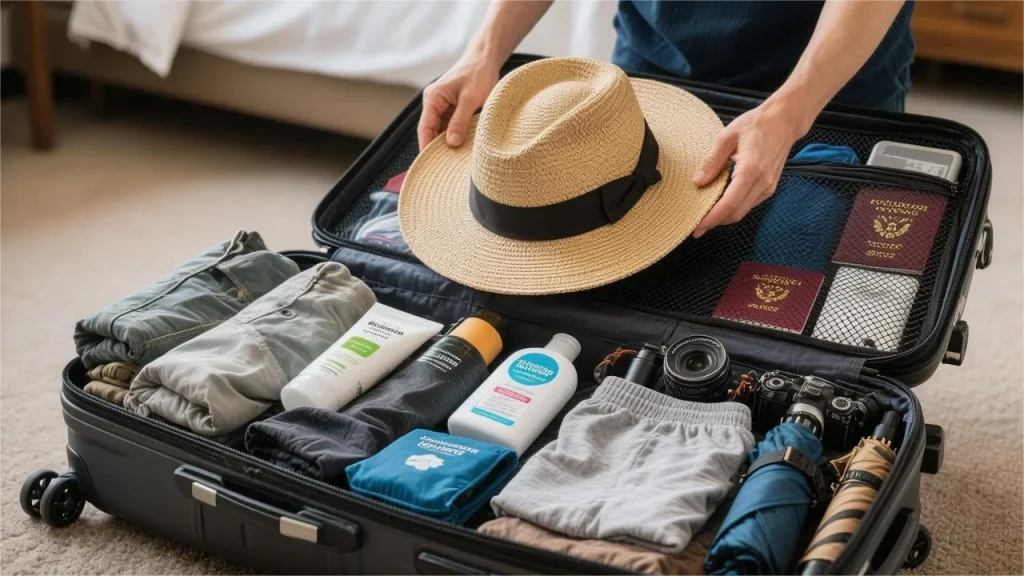
Yunnan has extremely strong ultraviolet radiation. It is essential to bring SPF50+/PA++++ sunscreen, polarized sunglasses, and a wide-brimmed hat.
The temperature difference between morning and evening in many places often reaches 10-15℃. It is recommended to bring 1 windproof jacket or lightweight down jacket, paired with a breathable T-shirt inside for easy layering and removal at any time.
Most popular scenic spots are at an altitude of above 2000 meters. It is recommended to prepare anti-altitude sickness medicine (such as Rhodiola, which needs to be taken 5 days in advance) and gastrointestinal medicine; the climate is dry, so high-moisturizing facial cream and lip balm are indispensable.
Four Seasons Dressing Guide
The altitude of conventional tourist routes such as Dali and Lijiang in Yunnan is between 1900-2400 meters, with a daily temperature difference of 10-15℃. In response to this climate, the “three-layer layering method” is recommended: a breathable and sweat-wicking T-shirt for the inner layer, a warm fleece sweater (about 200 grams) for the middle layer, and a windproof and waterproof jacket for the outer layer. When traveling to high-altitude areas (such as Shangri-La at 3300 meters), you must carry a down jacket with a down filling of more than 150 grams regardless of the month.
Dressing by Month
From March to May, most parts of Yunnan are at the end of a 90-day dry season. The average daytime temperature in Kunming and Dali rises steadily from 15℃ to 22℃, while the minimum temperature in the early morning hovers between 5℃ and 8℃ year-round.
Wearing a 180g pure cotton long-sleeved T-shirt with a 350g single-layer nylon windbreaker allows for adjustments to a 10℃ temperature difference within 3 seconds. At this time, the surface UV radiation intensity reaches 70% of the annual total, and the UV index often breaks 8 at noon without cloud cover.
- Upper body: A combination of a 180g long-sleeved pure cotton T-shirt and a 350g windproof jacket
- Lower body: 10-12 ounce regular denim jeans with a thickness of 0.5 mm
- At night: Add a 220g fleece inner layer when the temperature drops to 5℃
- Trousers fabric: Maintain a breathability rate of 20 liters/square meter/second
| Spring Temperature Fluctuation Range | Precipitation Probability/Relative Humidity | Recommended Upper Body Combination Data | Recommended Lower Body Fabric Parameters |
|---|---|---|---|
| Daytime 15℃ – 22℃ | 3-5 days per month / 45% | 180g long-sleeved pure cotton T-shirt + 350g windproof jacket | 10-12 ounce pure cotton denim jeans |
| Night 5℃ – 8℃ | Wind speed 3-4 (approx. 6m/s) | 220g fleece inner layer + 250g polyester jacket | High elasticity trousers with 5% spandex |
From June to August, the southwest monsoon brings moisture from the Bay of Bengal to cover the entire province. Continuous rainy days often exceed 15 days, and the monthly average precipitation in Lijiang and Shangri-La surges to over 200 mm, with relative humidity staying at a high level of 80% to 90% for a long time.
The moment rain hits the ground, the surface temperature drops sharply, with a perceived temperature drop of 4℃ to 6℃ caused by a single rainfall. The maximum daytime temperature is suppressed by rain clouds at around 24℃, and the nighttime temperature falls to around 16℃.
- Backpack: Always carry a lightweight single-layer hardshell jacket with a water pressure resistance index of 3000mm
- Underwear: 100% moisture-wicking and quick-drying fabric, drying 3 times faster than pure cotton
- Daytime: Wear a 120g quick-drying short-sleeved shirt and UPF50+ sun protection clothing
- Lower body: Breathable shorts or cropped pants with 80% nylon
| Summer Temperature Fluctuation Range | Precipitation Probability/Relative Humidity | Recommended Upper Body Combination Data | Recommended Lower Body Fabric Parameters |
|---|---|---|---|
| Daytime 16℃ – 24℃ | 15-20 days per month / 85% | 120g quick-drying short sleeve + UPF50+ thin sun protection clothing | Quick-drying shorts with 80% nylon |
| Night 10℃ – 16℃ | Extremely high incidence of severe convective weather | 150g long-sleeved sweat-wicking shirt + 3000mm water-repellent shell | 1 mm thick quick-drying breathable cropped pants |
From September to November, as the subtropical high retreats southward, precipitation drops in stages by about 60%. The sunshine duration in Dali restores to 8 to 10 hours per day, and air humidity falls back to a dry range of around 50%.
Temperature distribution shows polarization, with daytime temperatures stable at 18℃ to 20℃. At night, due to the lack of cloud cover, heat radiates away quickly, and the temperature drops sharply to 8℃. The warmth efficiency of fleece material at this time is about 40% higher than that of cotton.
- Wear a double-brushed polar fleece jacket with a weight of 250g/m² to 300g/m²
- Lock in a constant temperature air layer within 3 cm of the body surface in a static state
- Upper body: 200g pure cotton sweatshirt combined with 250g polar fleece
- Night: Add a windproof softshell jacket when the wind speed reaches 4m/s
| Autumn Temperature Fluctuation Range | Precipitation Probability/Relative Humidity | Recommended Upper Body Combination Data | Recommended Lower Body Fabric Parameters |
|---|---|---|---|
| Daytime 15℃ – 20℃ | 5-8 days per month / 50% | 200g long-sleeved pure cotton sweatshirt + 250g polar fleece jacket | Sweatpants with 150g micro-fleece lining |
| Night 8℃ – 12℃ | Wind speed 2-3 (approx. 4m/s) | Knit sweater with 20% wool + windproof softshell jacket | 300g thick windproof pure cotton long pants |
From December to February of the following year, cold air attacks from north to south. The average minimum temperature in Kunming in January is only 2.4℃, and high-altitude areas in Northwest Yunnan are below freezing for long periods, often falling below -5℃ at night.
A down jacket filled with 150 to 200 grams of white goose down with a fluffiness of 700FP has a thermal insulation value (CLO value) of 1.5 or higher, sufficient to withstand dry cold air at -10℃. The base layer should be thermal underwear blended with 30% to 50% Merino wool.
- The scale structure on the surface of wool fibers can absorb 15% of moisture emitted by the human body
- Heat loss from the head accounts for 20% of the whole body, so a knit hat with 50% wool is required
- Outer layer: Softshell windproof pants with a 0.2 mm thick windproof and breathable membrane
- Inner layer: Composite 200g high-density fleece to block cold winds of 10 meters per second
| Winter Temperature Fluctuation Range | Precipitation Probability/Relative Humidity | Recommended Upper Body Combination Data | Recommended Lower Body Fabric Parameters |
|---|---|---|---|
| Daytime 8℃ – 16℃ | 2-4 days per month / 40% | 30% wool thermal underwear + 700FP/150g down jacket | Softshell windproof pants with composite 200g fleece layer |
| Night -5℃ – 2℃ | High incidence of icing and frost | 250g pure wool thick sweater + 5000mm hardshell jacket | Pair with long socks containing more than 30% wool |
According to a 5-day 4-night itinerary, the replacement frequency of upper body items in spring and summer is once a day, occupying about 40% of the volume of a 20-inch carry-on suitcase.
In autumn and winter, the volume expansion rate of a single coat is as high as 300%. Using vacuum compression bags to pump out 80% of the air from fluffy down jackets and fleece clothes can release about 15 liters of effective volume in the suitcase to store an extra 3 pairs of warm thickened socks.
Specific Adjustments for Different Altitudes
For every 1000 meters of ascent, the temperature drops by 6℃. When crossing different landscapes in Yunnan, the fluctuations on the thermometer are much larger than the change of seasons on the calendar. The highest point of Jade Dragon Snow Mountain Glacier Park reaches 4680 meters, while the average altitude of Shangri-La city is about 3300 meters. In the peak summer of July to August, early morning temperatures in Shangri-La still drop to the 4℃ to 6℃ range.
Wind speeds at high mountain passes often reach 8 to 10 meters per second, and the wind chill effect exacerbates heat loss. When the ambient temperature shows 5℃ and the wind speed reaches 8 meters per second, the perceived temperature will drop to -2℃. At this time, the rate of heat loss from exposed skin increases by 30% to 50%.
- White duck down jacket with more than 200 grams of down filling and 600+ fill power
- Hardshell jacket with a wind pressure resistance index of 5000mm or more
- Polyester sweat-wicking underwear with a breathability rate greater than 5000g/m²
- Thickened knee-high socks with more than 30% wool
The reflection rate of sunlight on snow surfaces is as high as 80%, and the UV radiation received by the face will multiply. Ordinary pure cotton masks in a 0℃ environment will absorb moisture from breath and quickly freeze, eventually adhering firmly to the skin around the lips.
At the visitor service center of Jade Dragon Snow Mountain at 3356 meters, you can rent a long red winter coat for 50 RMB with a 300 RMB deposit. Just by leaving your coat at home, you can free up about 10 to 12 liters of internal volume in a 24-inch suitcase.
Continuing south down to the basin areas of 1900 to 2400 meters, the sunshine duration in Dali and Lijiang increases significantly. Dali City is at 1975 meters and Lijiang City is at 2400 meters. The day-night temperature difference between the two places fluctuates by 12℃ to 15℃ within a 12-hour cycle year-round.
Riding a bike by Erhai Lake at 8 a.m., the temperature is only about 10℃. By 2 p.m., in the Dali Ancient City under cloudless sunlight, the slate road temperature will quickly rise to above 25℃. During the dry season from November to April each year, relative humidity hovers between 40% and 50% for a long time.
The morning and evening temperature difference requires single items of clothing to be small in volume and easy to roll up. A 250g/m² fleece windproof jacket occupies only 1.5 liters of backpack space when rolled up, with a total weight of about 400 grams, and can be easily tucked into a 15-liter daily casual backpack.
- Single-layer nylon windproof cardigan weighing less than 300 grams
- Pure cotton short-sleeved or long-sleeved T-shirt with a weight of 180g to 200g
- Black rubber parasol with UPF50+ and UVA transmittance less than 5%
- Quick-drying cropped pants with a thickness of 1.5 mm to 2 mm
In sunny weather, the daily UV Index in this altitude range often breaks extremes of 10 or even 11. Wearing clothing labeled UPF40+ can effectively block 97.5% of UV penetration, avoiding the appearance of photoallergic erythema after 20 minutes of exposure.
Heavyweight 100% cotton denim jeans over 12 ounces usually take 24 to 36 hours to air dry in a regular Lijiang guesthouse without electric towel racks. In contrast, nylon-blended leisure pants can dry completely in 6 to 8 hours under the same ventilation conditions.
Continuing to descend into the tropical fringe areas of 500 to 1000 meters, the urban altitude of Jinghong City is only 580 meters. From April to October each year, the maximum daytime temperature stays stable above 32℃ for several months, accompanied by abundant monsoon rainfall.
Air relative humidity in rainforest areas will surge to 75% to 85%, and the evaporation rate of sweat on the body surface slows down significantly. The standard moisture regain of pure cotton fibers is as high as 8.5%, and the time for complete drying is 3 to 4 times slower than polyester, sticking to the skin surface when wet.
- Ice silk sun protection clothing with an 8:2 blend of nylon and spandex
- Moisture-wicking mesh short-sleeved shirt weighing less than 120 grams
- EVA material soft-soled river tracing shoes with bottom drainage holes
- Loose modal cotton maxi skirt with a length covering the calves
Air conditioning temperatures in most indoor restaurants and shopping malls in Xishuangbanna are usually set at 20℃ to 22℃. Walking from the 34℃ outdoor street into a 22℃ indoor environment, the instantaneous temperature difference of 12℃ causes pores to shrink violently, and the body surface temperature drops rapidly within 3 minutes.
Carrying a thin long-sleeved shirt weighing less than 150 grams after folding can effectively alleviate the cold and heat shock between indoors and outdoors. When going to the tropical botanical garden, wear long pants made of 40D (denier) density fabric to physically block mosquito mouthparts, providing mosquito protection for up to 8 hours.
Footwear Recommendations
More than 70% of the area in Dali Ancient City and Lijiang Ancient City is paved with five-flower stone roads. Due to years of trampling and natural subsidence, the vertical height difference between adjacent stones usually fluctuates between 2 to 5 cm. Walking on them with flat shoes thinner than 1.5 cm means the plantar fascia must bear 1.2 to 1.5 times the body weight in ground reaction force impact with every step.
The average daily step count for touring ancient cities is between 18,000 and 25,000 steps. To cope with standing and walking for 6 to 8 hours a day, you need to choose a pair of sports shoes with a midsole made of EVA foam or ETPU granules. The overall thickness of the sole should be between 2.5 cm and 4 cm to effectively absorb more than 60% of physical vibration when the heel hits the ground.
- The outsole is made of wear-resistant rubber material with a carbon content higher than 30%
- Reserve 0.5 to 1 cm of internal activity space for the forefoot
- The insole thickness reaches 4 to 5 mm, with sponge as the preferred material
- Control the weight of a single shoe within the range of 250 grams to 350 grams
Leaving the flat basin for hiking in Tiger Leaping Gorge or Yubeng Village, the slope often exceeds 30 degrees. Mud, gravel, and wet moss cover narrow trails less than 1.5 meters wide. Ordinary sports shoes lose significant grip on slippery mud and stone surfaces with a friction coefficient lower than 0.3.
The depth of the sole tread must reach 4 mm to 6 mm to embed into the soil and provide forward thrust in muddy sections. The rubber formula of the sole needs to effectively increase anti-slip friction by 30% on slippery rock surfaces with a 40-degree inclination.
- Mid-top design with a height of 12 cm to 15 cm
- Upper covered with a waterproof and breathable membrane with a hydrostatic pressure of 20000mm or more
- The toe is wrapped with a 2 mm thick anti-collision rubber patch
- The tongue uses a one-piece sand-proof design to block gravel from falling in
The mid-top design with the collar close to the ankle can reduce the probability of lateral ankle sprain by more than 40%. Passing through low-lying puddles in Blue Moon Valley of Jade Dragon Snow Mountain or high mountain meadows, the waterproof membrane can block external liquid water while discharging thousands of grams of water vapor per square meter every 24 hours.
Moving south into the tropical rainforest of Xishuangbanna, surface temperatures climb to above 38℃ at 2 p.m., and relative humidity exceeds 80% year-round. In such a high-heat and high-humidity environment, wearing fully enclosed waterproof hiking shoes will cause sweat from feet to soak 70% of cotton socks within 30 minutes.
When going to Manting Park or the Chinese Academy of Sciences Botanical Garden, choose jogging shoes or soft-soled sandals made of double-layer Jacquard mesh splicing. The mesh diameter is between 1 mm and 2 mm, allowing the air inside the shoe to exchange heat with the external environment several times per minute.
- The upper is composed of polyester large mesh material
- There are 2 to 4 physical drainage holes on the side or bottom of the shoe
- The shoe body has no suede or strong absorbent natural leather
- Pair with socks containing more than 75% sweat-wicking fibers
If you plan to participate in rainforest river tracing in Xishuangbanna, river tracing shoes with drainage holes allow water to flow out of the shoe quickly within 5 seconds. After leaving the water, the mesh can recover to more than 80% dryness in about 45 to 60 minutes at 30℃ ambient temperature and natural breeze.
During long flights or high-speed rail travel to Yunnan, the volume of the feet will experience a physiological swelling of about 3% to 5% due to slowed blood circulation in the lower limbs. It is recommended to try on new shoes between 3 p.m. and 5 p.m. when foot volume is at its maximum, ensuring the longest toe is exactly one index finger (about 1.2 cm) away from the inner edge of the shoe head.
Internal space planning of a suitcase is also constrained by footwear volume. A pair of size 42 high-top hiking shoes occupies about 4.5 to 5 liters of volume when laid flat. Compressing thin mesh sports shoes into the suitcase and wearing the largest and heaviest pair of shoes when traveling can save space for 3 to 4 short-sleeved T-shirts.
Sun Protection and Skin Care
Conventional routes such as Kunming, Dali, and Lijiang in Yunnan are all at an altitude of over 2000 meters. UV radiation increases by 12% for every 1000 meters of ascent, and the UV index on sunny days is stable at 10-15 year-round. Meanwhile, the relative humidity in the local dry season often falls below 40%. To cope with this high-altitude sunlight and low-humidity environment, lightweight urban water-based lotions and low-factor sunscreens do not work. It is necessary to configure SPF50+/PA++++ water-resistant sunscreen, UPF50+ physical UV-resistant clothing, and high-occlusion moisturizing creams and lip balms containing squalane or petrolatum in the suitcase.
Clothing Coverage
The average altitude of the Kunming-Dali-Lijiang line in Yunnan is over 2000 meters. As altitude increases, the thickness of the atmosphere decreases accordingly, and the UV penetration rate is 30% to 40% higher than in the plains. High-density solid fabrics can provide continuous and stable physical UV isolation effects.
The efficiency of fabric in blocking UV rays is determined by its weaving density and fiber properties. The UPF value of ordinary cotton T-shirts without special sun protection treatment is usually around 15, with light transmittance greater than 10%. The molecular structure of polyester (terylene) can absorb UV rays in specific bands, and its native UPF value is usually over 30.
When purchasing sun protection clothing, check the product implementation standard GB/T 18830-2009. Labeled anti-UV products must meet two hard indicators: UPF greater than 40 and UVA transmittance less than 5%.
- Ingredient ratio: The content of polyester or nylon must exceed 85%.
- Color selection: Dark colors such as black or navy blue have a 20% to 25% higher UV absorption rate than white.
- Fabric weight: Fabrics of 120g to 150g per square meter combine breathability and shading performance.
- Fit details: Cuffs should have thumb holes, and the hem should cover the upper edge of the buttocks.
The face and neck are the most severely exposed parts in high-reflection areas outdoors. The light reflection rate of Erhai Lake’s surface reaches 20%, and the snow reflection rate of Jade Dragon Snow Mountain can reach 80%. Wearing a wide-brimmed hat can block vertical sunlight from above.
Measured data shows that only when the brim reaches 8 cm to 10 cm can the shadow area completely cover the tip of the nose, cheekbones, and jawline area. Oversized brims exceeding 12 cm are easily folded or blown off when wind gusts reach level 4, affecting normal walking vision.
Conventional medical surgical masks consist of three layers of non-woven fabric, and the UV protection index is almost zero. When going to the plateau, wear special sun protection masks with the same material as UPF50+ sun protection clothing.
- Mask tailoring: The outer corner of the eye should extend upward to wrap around the temples.
- Breathing structure: The nasal cavity area should have hidden overlapping openings or mesh holes with an area greater than 5 square centimeters.
- Hem design: Should extend down below the collarbone to fully cover the entire neck.
Long-term UV exposure at high altitudes will cause corneal photodamage. Resin sunglasses lenses worn should have a “UV400” label to ensure 100% isolation of UV rays with wavelengths below 400 nanometers. Lenses labeled “Category 3” for transmittance have a light transmittance of 8% to 18%, suitable for the strong noon light in Yunnan.
Polarizing functions are especially applicable in water and snow mountain scenes. Polarized lenses contain a layer of shutter-structured polarizing film, which can filter out more than 99% of diffuse reflection glare. When riding around Lugu Lake or Erhai Lake in Dali, wearing polarized lenses allows you to clearly see scenes 3 to 5 meters under the water without being disturbed by dazzling reflections from the water surface.
Parasols are suitable for use on flat ancient town slate roads or scenic spot trails. The black rubber layer coated on the inner side of the umbrella surface can currently provide the highest level of protection parameters. When the black rubber coating thickness reaches 0.03 mm, the UPF value is usually 50+, and the visible light transmittance is less than 0.1%.
- Coating distribution: The black rubber layer must be attached to the inside of the umbrella ribs to prevent external scratching loss.
- Umbrella rib material: Use aluminum alloy or fiberglass ribs, with total weight controlled within 250 grams.
- Umbrella diameter: Maintain an unfolding diameter of 95 cm to 100 cm to shade a single torso.
Sun protection coatings and fabric fibers will suffer loss after multiple washings and external stretching. After 30 washes, the UPF value of conventional sun protection clothing will drop by about 15%. It is recommended to carry sun protection equipment washed fewer than 20 times and used for no more than two years to maintain the nominal protection values on the label.
Sunscreen
Kunming, Dali, and Lijiang are at altitudes of 1900 to 2400 meters. At noon, the peak surface UV radiation intensity often breaks 30μW/cm². Conventional commute sunscreens with SPF30 will exhaust their protection in this environment within 40 minutes. Bringing broad-spectrum sunscreen labeled SPF50+ can handle strong plateau light.
The SPF value on the sunscreen label represents the multiple of protection time against UVB (medium-wave ultraviolet). If a person develops erythema in 15 minutes without protection, applying an SPF50 product can theoretically delay sunburn to 750 minutes. The PA value targets UVA (long-wave ultraviolet) with stronger penetration, and PA++++ represents the ability to delay tanning by more than 16 times.
Choose sun protection products with “Broad Spectrum” on the packaging to ensure coverage of both UVA and UVB bands. Pure physical sunscreens (containing 20% zinc oxide) have an allergenicity rate lower than five per thousand, suitable for fragile skin caused by plateau wind and sand.
The prerequisite for reaching the nominal protection value is that the application thickness must reach the international standard of 2mg/cm². The average facial area of an adult Asian female is between 350 to 400 square centimeters. According to this standard conversion, the net weight of sun protection products needed for a single application to the entire face is 0.8 to 1.2 grams.
When liquid-type sunscreen is squeezed into the palm, the flattened area should reach the size of a one-yuan coin, about 2.5 cm in diameter. If it is a cream-textured product, the squeezed length should reach the total length of two adult finger segments. If the application thickness drops to 1mg/cm², the tested protection of SPF50 will fall to around SPF7.1.
- Zonal dotting: Divide 1 gram of paste into 5 dots on the forehead, cheeks, nose tip, and chin.
- Unidirectional smoothing: Use finger pulp to push in the same direction, avoiding circular rubbing that destroys the formation of the sunscreen film.
- Static film formation: After application, wait 15 to 20 minutes for moisture to evaporate and form a uniform sunscreen film.
- Edge supplement: Supplementary applications of 0.2 gram should be added to the hairline, above the ears, and the jawline extension.
When hiking on Cangshan Mountain or moving through Pudacuo National Park, surface moisture evaporation will dissolve the sunscreen film. Products with “Water Resistant” labels on the packaging indicate they can maintain nominal protection for 40 minutes in water bath tests. If labeled “Very Water Resistant,” the water resistance duration reaches 80 minutes.
The sunscreen film will have tiny ruptures within 2 hours due to clothing friction, sweat, and oil. A single application cannot provide all-day protection; reapplication is needed every 2 to 2.5 hours outdoors. When using sunscreen spray to supplement the face, spray it into the palm first and then press it onto the face to prevent inhaling ingredients and triggering respiratory rejection.
The active ingredients in aerosol sunscreen spray usually account for 10% to 20% of the total bottle capacity, with the rest being propellants like butane. A single part needs to be sprayed continuously for at least 3 seconds to form water droplets on the skin surface to reach effective concentration.
The low-pressure and hypoxia environment at high altitudes slows down skin microcirculation. The skin barrier self-repair cycle extends from the normal 28 days to over 35 days. If the application of sunscreen is insufficient and long-wave UV cuts through dermal collagen fibers, the recovery time for resulting redness and pigmentation will double.
Different body parts have varying tolerance to UV. The skin thickness on the back of the neck is only two-thirds of the facial stratum corneum, so the amount of sunscreen needs to be calculated at 1.5mg/cm². If arms are exposed, the total application from shoulders to wrists should reach 4 to 5 grams.
The base of high-SPF water-resistant sunscreen is mostly silicone or synthetic oils, with adhesion 1.5 times that of ordinary foundation. During evening cleansing, amino acid facial cleansers with a surfactant concentration lower than 10% cannot completely strip it off. Residual sunscreen mixed with sebum will trigger follicle blockage and acne within 48 hours.
- Dry hands and face: Keep face and hands dry, take 3 ml of cleansing oil or a 1-yuan coin-sized amount of cleansing balm.
- Emulsification reaction: Press the oil on the face and then rub with a small amount of 25℃ water to turn transparent oil into a white milky liquid.
- Rinsing duration: Rinse with plenty of water for at least 30 seconds to take away the stripped sunscreen film.
- Double cleansing: Use an appropriately foaming cleanser to wash away residual surfactants on the skin.
After sun protection products are opened, active ingredients like avobenzone will undergo photodegradation within 6 months. The protection of expired or long-opened sunscreen drops by more than 20%. Check the product batch number and period-after-opening (PAO) label (such as 12M or 6M) before travel, and discard old stock that has lost its activity.
Skin Care Products
Most tourist cities in Yunnan are in the Yunnan-Guizhou Plateau at an altitude of over 2000 meters. The relative air humidity in the winter and spring dry seasons usually hovers between 30% and 40%. Under the combined action of dry cold high pressure and 3 to 4 level winds, the transepidermal water loss (TEWL) rate is about 40% higher than in coastal plains.
Bringing daily-use lightweight gels or water-based lotions to this area will result in 80% of the moisture in the formula evaporating within 15 minutes after application. Once the moisture content of the stratum corneum drops below 10%, it will trigger facial tightness, local redness, and fine flaking.
In low-humidity environments, the maintenance procedure must shift from supplementing moisture to high-intensity oil occlusion. Ingredients ranked in the top three must be replaced from hyaluronic acid or butylene glycol to occlusive oils with physical blocking functions to form a protective film about 0.01 mm thick on the skin surface.
Vaseline (petrolatum) is currently a highly occlusive ingredient that can block 98% of transepidermal water loss. Plant-derived squalane or shea butter has a molecular structure similar to the human sebum film, with better penetration and fit, and an occlusion rate of 70% to 80%.
| Applicable Part | Product Formulation Requirement | Preferred Active Ingredients (Suggested Concentration) | Ingredients or Textures to Avoid |
|---|---|---|---|
| Face | W/O (Water-in-Oil) heavy cream | Ceramides (1-3%), Squalane (>10%) | Pure water sprays, refreshing gels |
| Lips | Water-free ointment | High-purity petrolatum, lanolin, beeswax | Menthol, camphor, salicylic acid |
| Torso and Limbs | High-lipid body cream | Shea butter (>5%), Glycerin | Products with high concentration of fruit acid (>8%) |
| Hands | Silicone-based hand cream | Urea (5-10%), Dimethicone | Thin fluid lotions |
Under the double stimulation of strong UV and low temperature, the amount of occlusive cream for a single application to facial skin should reach 1.5 to 2 grams, about the size of two soybeans. Rub the paste in the palm for about 5 seconds until it softens into a translucent state before pressing it onto the face to reduce surface friction.
Lip mucosa has no sebum gland distribution, and the thickness of the stratum corneum is only one-third of that of facial skin. In areas above 3000 meters altitude like Jade Dragon Snow Mountain or Shangri-La, native lip moisture will dissipate in large amounts within 20 minutes of exposure to cold air.
Carry heavy oil lip balm containing pure Vaseline or lanolin and apply it thickly every 2 to 3 hours. Paste with cool ingredients like menthol will accelerate local capillary contraction and take away free water, easily leading to mucosal cracking or even minor bleeding.
The number of sebum glands distributed on the front of the calves and outer arms is 50% less than that on the chest and back. If the bath water temperature exceeds 40℃, it will further wash away the already thin natural sebum film. It is recommended to control bath time within 10 minutes and replace overly strong soap-based shower gels.
The 3 minutes after drying the body is the golden window for applying body lotion. At this time, the stratum corneum still retains about 20% moisture. Take 15 to 20 ml of high-lipid body lotion containing shea butter and apply it evenly all over the body to lock in free water in cell gaps using exogenous oils.
- Hand loss: High-altitude temperature drops by 6℃ for every 1000 meters of ascent, and cold will slow down blood circulation in the hand terminals.
- Ingredient selection: Hand cream containing 5% to 10% urea can soften rough keratin, and dimethicone can form a strong waterproof film.
- Usage frequency: Apply about 1 gram of hand cream immediately after washing and drying hands, focusing on gaps between fingers and hangnail areas at the edges of nails.
During a 7 to 10 day trip to the plateau, the basal layer of the epidermis is in a state of high-pressure stress. High-concentration active skin care products containing more than 5% fruit acid, 1% salicylic acid, or 0.1% retinol (Vitamin A) must be removed from luggage. Strong exfoliating ingredients will destroy the integrity of the stratum corneum, doubling the risk of local capillary expansion.
For local patches caused by extreme dryness, 100% pure plant extracts (such as jojoba oil or marula oil) can be used for local application. Take 1 to 2 drops of pure oil and press onto the peeling part, leave for 30 minutes, and then cover with regular facial cream to force hydration of shriveled keratinocytes to make them flat.
Medicine and Altitude Sickness Prevention
Yunnan itineraries usually include an altitude span of 1900 meters (Kunming city) to 4680 meters (Jade Dragon Snow Mountain Glacier Park), accompanied by a daily temperature difference of 15℃-20℃. When humans are above 2700 meters, about 15%-25% of people will experience physiological reactions caused by a drop in blood oxygen saturation. It is recommended to reserve about 20cm×15cm of space in the suitcase for a medicine bag. The medicine list should focus on coping with headaches caused by low pressure on the plateau, motion sickness caused by long mountain roads, and gastrointestinal discomfort caused by changes in diet. Portable oxygen tanks are flammable and explosive items and cannot pass transportation security; they need to be purchased at local city pharmacies for 15-20 RMB per tank.
Altitude Sickness
Yunnan’s terrain shows a stepped elevation. Tourists flying from sea level to Kunming Changshui Airport will see the altitude instantly rise to 1890 meters. Atmospheric pressure drops from 101 kPa in the plains to about 80 kPa, and the oxygen content in the air drops to about 80% of the plains. Most healthy adults maintain blood oxygen saturation between 95% and 98% during this stage, and except for slight dry mouth, they rarely experience significant physiological discomfort.
After a 2-hour train ride to Dali Station at 1976 meters, the body begins the first stage of the plateau adaptation period. Vegetation coverage in the Cangshan and Erhai area reaches over 60%, and plant photosynthesis supplements some oxygen, effectively alleviating the hypoxia caused by low pressure. It is recommended to stay in this area for 24 to 48 hours to allow the red blood cell oxygen-carrying capacity to rise naturally and establish a physiological buffer zone for subsequent higher-altitude itineraries.
Continuing north along the Yunnan-Tibet line to Lijiang Sanyi Airport at 2418 meters, the oxygen content in the air drops to 75% of sea level. Since Lijiang is in the transition zone between the plateau surface and high mountain valleys, the heart rate of some tourists will climb from 70 beats/min in a quiet state to over 100 beats/min when walking quickly or moving luggage. The cerebral cortex on the first day of arrival will have a mild stress response to hypoxia, and night sleep time will extend accordingly.
Deep into the Diqing Tibetan Autonomous Prefecture, the average altitude of Shangri-La city jumps to 3300 meters, crossing the 2700-meter altitude sickness threshold defined by the medical community. Atmospheric pressure drops to about 67 kPa, and the blood oxygen saturation of unadapted tourists usually falls to the 88% to 92% range. The oxygen gap in brain tissue expands, easily triggering pulsating pain on both sides of the forehead, accompanied by loss of appetite and slight chest tightness.
| Altitude Range | Corresponding Main Yunnan Attractions or Areas | Estimated Blood Oxygen Saturation (SpO2) | Estimated Resting Heart Rate Change | Common Physiological Signs and Intervention Recommendations |
|---|---|---|---|---|
| 1800m-2000m | Kunming City, Dali Ancient City, Fuxian Lake | 95% – 98% | Normal or increase 5 bpm | Discomfort rarely occurs; maintain daily water intake of about 1.5 to 2 liters. |
| 2400m-2600m | Lijiang Ancient City, Shuhe Ancient Town, Lashihai | 93% – 95% | Increase 5-10 bpm | Shortness of breath after strenuous exercise; avoid hot baths on the first day of arrival to prevent oxygen consumption from capillary expansion. |
| 3200m-3500m | Shangri-La City, Songzanlin Monastery | 88% – 92% | Increase 10-20 bpm | High probability of headache and insomnia. Take 300 mg ibuprofen sustained-release capsule with warm water when pain occurs. |
| 4000m-4680m | Highest point of Pudacuo, Jade Dragon Snow Mountain walkway | 80% – 85% | Increase 20-30 bpm | Palpitations, purple nails. Inhale pure oxygen for 1-2 seconds every 50 steps; supplement 100 ml sugar water. |
After breaking the 4000-meter altitude line, the body’s physiological endurance reaches a high-pressure zone. Taking the 2914-meter-long Jade Dragon Snow Mountain Large Cableway, the altitude rises vertically from 3356 meters to 4506 meters at Glacier Park within 10 minutes. The temperature drops by 6℃ for every 1000 meters of elevation gain, and the outdoor temperature at the upper cableway station hovers between 0℃ and 5℃ year-round. Cold stimulation will significantly contract respiratory smooth muscle.
At the highest observation deck at 4680 meters, the oxygen content in the air is only 60% of that in the plains, and blood oxygen saturation will approach or even fall below the 85% warning level. Lips and nail beds will show varying degrees of cyanosis due to hypoxia, and the heart rate may soar to over 120 beats per minute. Relying on independent breathing can no longer meet the body’s oxygen demand, and external intervention must be used to maintain blood oxygen balance.
- Carry a portable compressed oxygen tank with 99.5% concentration, usually with a capacity of 1000 ml, connected to a mask by pressing a valve.
- Adopt a breathing frequency of “deep inhalation and shallow exhalation,” pressing the valve for 1.5 to 2 seconds each time, holding breath for 1 second before slowly exhaling.
- A single oxygen tank can only be used for about 10 minutes under continuous pressure; an intermittent oxygen inhalation method should be adopted to extend the usage cycle.
- Equip electrolyte effervescent tablets containing Vitamin C, drop into a 500 ml thermos of warm water to drink, neutralizing lactic acid accumulation in the body.
The altitude of Feilai Temple Viewing Platform of Meili Snow Mountain is also as high as 3400 meters. When waiting for the golden sunlight on the snow mountain at 6 a.m., the outdoor wind speed can reach level 5-6. Surface moisture evaporation accelerates, and invisible water loss exceeds 1000 ml per day. Blood viscosity rises accordingly, increasing the resistance of the circulatory system in transporting oxygen. You must force yourself to drink 300 ml of warm water at around 40℃ after getting up in the morning to reduce blood viscosity and promote gastrointestinal motility.
For tourists over 60 years old with mild hypertension, under the dual stimulation of plateau hypoxia and cold, systolic blood pressure can easily rise by 20-30 mmHg. A portable electronic blood pressure monitor should be carried to monitor blood pressure in three periods: morning, noon, and evening every day. Once the systolic blood pressure exceeds 160 mmHg, you must immediately descend to a lower-altitude area below 2500 meters.
The process of returning from high-altitude areas to low-altitude areas is called the “oxygen intoxication” reaction period in medicine. When tourists descend from Shangri-La at 3300 meters to Kunming at 1900 meters, oxygen partial pressure suddenly returns to normal, and a large number of oxygen free radicals enter the blood circulation. The body will experience strong drowsiness and lethargy; daily sleep time may extend by 2 to 3 hours than usual. It is necessary to arrange 1 to 2 days of low-intensity itineraries to allow the central nervous system to readapt to air pressure.
Targeted Medicine Preparation
Yunnan tourism routes usually cross multiple latitude and longitude zones, from Xishuangbanna at 21 degrees north latitude to Meili Snow Mountain at 28 degrees north latitude. Equipped with a waterproof medicine bag with a capacity of about 1.5 liters in the suitcase, it can cover most sudden physiological discomforts.
After altitude exceeds 2700 meters, atmospheric pressure drops, and human blood oxygen saturation decreases accordingly. Dilation of cerebral blood vessels easily triggers pulsating headaches. Prepare a box of ibuprofen sustained-release capsules or paracetamol tablets with a specification of 0.3g×20 capsules before departure. Take one with warm water when a headache occurs in Shangri-La. The drug takes about 1-2 hours to reach its peak blood concentration in the body and can maintain a stable analgesic effect at night.
Under hypoxia, the body’s glucose metabolism rate accelerates, and climbing the Jade Dragon Snow Mountain walkway at 4680 meters consumes a lot of physical strength. Prepare 500 grams of glucose powder or 10ml×5 vials of oral liquid. Every 100 meters of ascent, if you feel palpitations or slight dizziness, dissolve 20 grams of glucose powder in 200 ml of warm water to drink. Monosaccharide components can enter the blood within 5 minutes to increase blood glucose concentration.
The distance between scenic spots in Western and Northwestern Yunnan is usually more than 150 kilometers. From Lijiang to Lugu Lake is about 200 kilometers, and you need to cross a mountain road with an altitude of 3000 meters, with more than 30 bends along the way. Continuous vehicle bumping easily induces vestibular nerve dysfunction, producing nausea and vomiting, requiring early intervention.
- Dimenhydrinate tablets: Take 50 mg 40 minutes before getting on the vehicle to reduce vestibular sensitivity.
- Scopolamine patches: Stick behind the ear on hairless skin; the drug effect can last for 72 hours.
- Wind oil essence: Contains menthol; apply to the Renzhong acupoint to relieve the feeling of stomach churning through smell.
- Smelling salts: Inhale briefly to sharpen focus during motion sickness episodes.
After experiencing raw and cold Dai side dishes or high-fat yak meat hot pot, the intestinal flora of out-of-town tourists is prone to rejection. Carry a box of Montmorillonite powder with a specification of 3g×10 bags to cope with acute watery diarrhea. Its powder can cover the digestive tract mucosa in the intestine and physically adsorb rotavirus or pathogenic bacteria.
Adults should take 1 bag of Montmorillonite powder each time, which needs to be dissolved in 50 ml of warm water and shaken well for immediate consumption, at an interval of more than two hours from eating or other medications. Continuous diarrhea will lead to loss of potassium and sodium ions in the body, causing dehydration and electrolyte imbalance. Oral Rehydration Salts (III) are the clinically recommended hydration plan.
Each bag of 5.125 grams of oral rehydration salt powder should be strictly mixed with 250 ml of warm water according to the instructions and drunk in small amounts many times to maintain cell osmotic pressure balance. Combined with other auxiliary gastrointestinal medicines, the digestive system can restore normal operation faster.
- Multienzyme tablets: Swallow 2-3 tablets with warm water after meals to supplement pepsin and promote meat digestion.
- Omeprazole enteric-coated capsules: Inhibit gastric acid secretion and relieve heartburn after eating excessive sour and spicy food.
- Hydrotalcite chewable tablets: Neutralize gastric acid and protect gastric mucosa; onset time is around 15 minutes.
Dali and Lijiang have strong solar radiation, and the temperature difference between morning and evening stays at 12℃-15℃ year-round. Under UV irradiation during the day, the perceived temperature can reach 25℃, and it quickly drops to about 10℃ after sunset; frequent putting on and taking off of jackets makes it easy to catch a cold. Prepare a box of compound amantadine capsules or paracetamol, chlorphenamine maleate and bezoar granules to carry with you.
Catching a cold on a plateau above 3000 meters easily increases pulmonary capillary pressure and triggers pulmonary edema. Once symptoms of nasal congestion and runny nose appear, take cold medicine in time according to the dosage in the instructions to control upper respiratory tract inflammation; do not delay.
If the itinerary includes Pu’er or Xishuangbanna south of the Tropic of Cancer, you need to guard against Aedes albopictus mosquitoes carrying dengue fever virus in the tropical rainforest. Carry a 75 ml bottle of mosquito repellent with a DEET concentration of 10%-20%. Spray on exposed limb skin every 4-6 hours.
Touring Dali Ancient City or Lijiang Dayan Ancient Town requires walking tens of thousands of steps; uneven bluestone roads can easily lead to foot blisters. Prepare 10-15 waterproof band-aids; besides covering tiny wounds, pre-sticking them where the heel and shoe upper rub can reduce skin wear.
Pair with 5 ml portable iodophor cotton swabs; breaking one end with a red ring allows the iodophor liquid to flow out. Used for treating slight branch scratches or bumps, preventing bacterial infection. Tourists with hypertension or diabetes need to calculate the precise remaining dosage of medicine based on travel days and increase the redundancy by 30% for backup.
Taking an 8-day itinerary as an example, you need to carry at least 11 days’ worth of antihypertensive drugs, packed in two independent sealed waterproof bags. Medicines should be placed in a 20-liter backpack and not in a 24-inch check-in suitcase to prevent the danger of drug interruption caused by flight delays or lost luggage.
Related Guides
- 2026 Dali Travel Must-Visit Attractions Ranking | Besides Erhai, What Else is Fun in Dali
- Dali Travel Intangible Cultural Heritage Experience | Tie-dye, Bai Three-Course Tea & Jianchuan Wood Carving Handcrafted Slow Life
- Yunnan Travel FAQ | Must-Read Before Your First Trip to Yunnan
- Yunnan Travel Off-the-Beaten-Path Destinations | Avoid Crowds & Visit 6 Primitive Secluded Ancient Villages
- Lijiang Travel Is More Than Just the Ancient Town|Recommendation of 5 Zero-Bad-Review Hidden Gems Nearby
Shangri-La —: Numbers to Check
Tickets & Booking
- Tiger Leaping Gorge (Shangri-La section, Upper Tiger Leaping): Adult CNY 45; ticket + round-trip sightseeing escalator (Pingbu Qingyun escalator) CNY 125[src]
Where to Stay · Room Type · Nearby
- Inside Dukezong Ancient Town | Room tip: Convenient for getting around, but vehicles cannot enter, so confirm with the guesthouse whether they carry luggage | Nearby add-ons: Great Buddha Temple, prayer wheel, Guishan Park, Moonlight Square[src]
- Along Napahai | Room tip: Good views and quiet, but far from the city | Nearby add-ons: Napahai Yila Grassland, Shika Snow Mountain[src]
Typical Climate & Packing (Past Years)
- January: -7 °C–9 °C °C, [Travel climate reference]
- February: -5 °C–11 °C °C
- March: -2 °C–14 °C °C
- April: 2 °C–17 °C °C
- May: 5 °C–19 °C °C, The meadow turns green again
- June: 8 °C–20 °C °C






