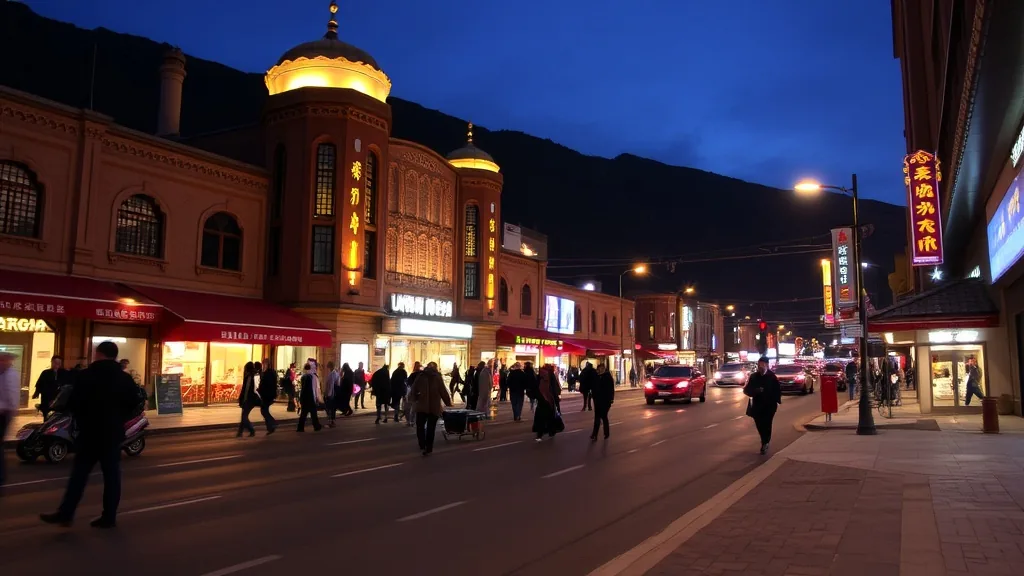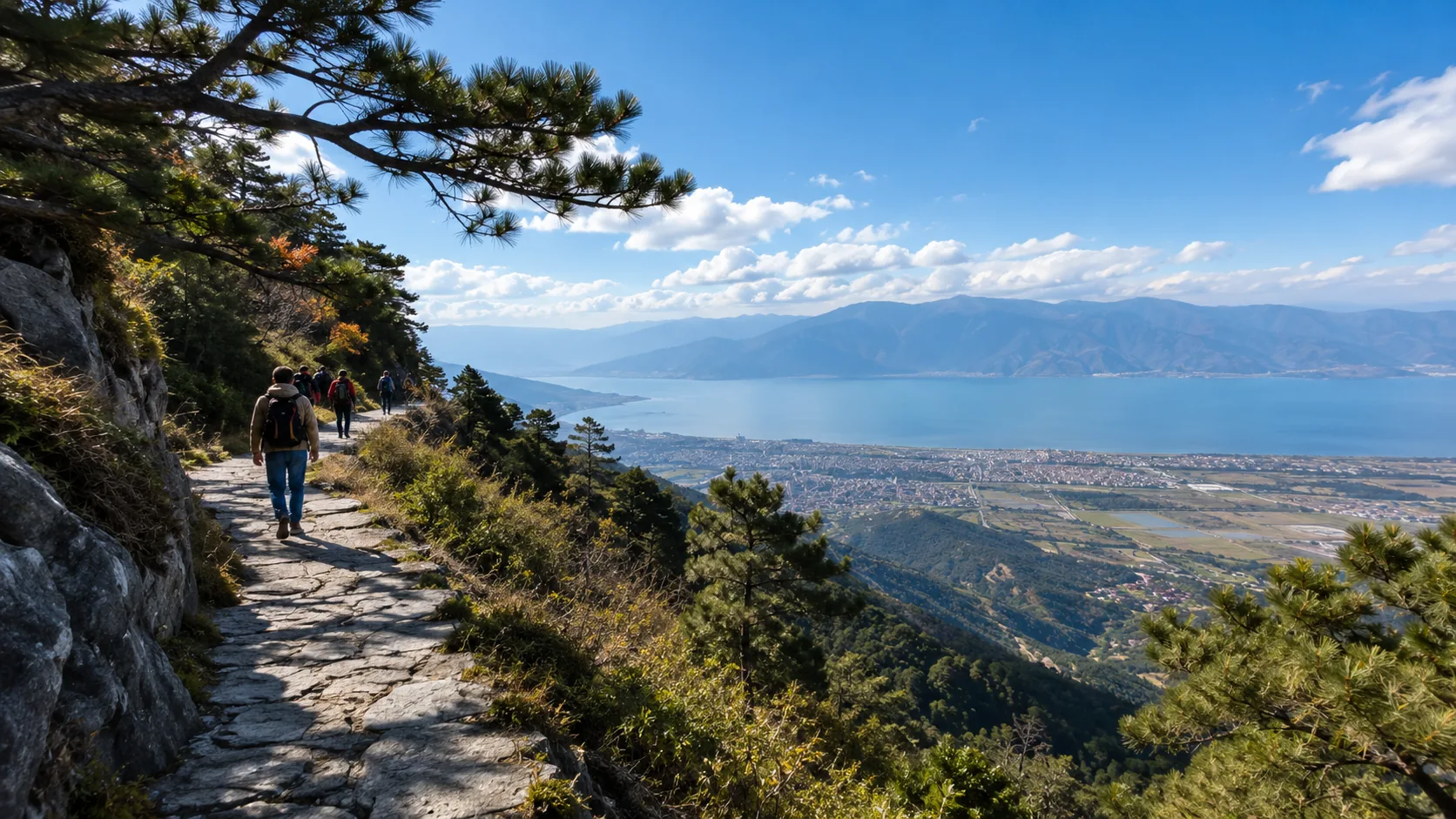



This five-day plan covers arrival, Dayan and Shuhe, a conditional snow-mountain outing, a gorge day only in officially open areas, and departure. It requires four nights. The original narrative names different guesthouse hosts without explaining the changes; confirm each night’s accommodation and luggage arrangements rather than assuming they are one property. Named businesses, interviews and undated purchases still need original records. Early starts can help with planning but do not guarantee empty streets or cableway tickets.
Day 1: Arrival in Lijiang and a Flexible Walk in Dayan Ancient Town
Transportation: How to get to the Ancient Town from the Airport/Station hassle-free?
From Sanyi Airport or Lijiang Railway Station, first confirm the correct Dayan drop-off point and the final walk to your accommodation. Lijiang Railway Station is not the Old Town entrance: do not plan a five-minute walk from the station to Dayan. A Yunnan Daily report describes the bus connection from the station forecourt to the Old Town South Gate. [1] Compare the bus, taxi and pickup options from Lijiang Railway Station, then check current signs, navigation and your host’s location. The original airport-bus figures of 10 yuan and a 20-minute frequency, and taxi figures of 15 yuan and 10 minutes, have no travel date or receipt. They are not current fares or guarantees. Budget separately for waiting, driving and carrying luggage into pedestrian lanes.
Accommodation Experience: Sleep well only by choosing the right place
I stayed at “Yunqi Xiaozhu” in Zhongyi Alley this time—It is definitely not one of those houses on Wuyi Street with “Internet Celebrity Guesthouse” signs. The guesthouses on the main street of Wuyi Street suffer from bar music that pierces through three layers of walls; last time I stayed there, I was woken up at 2:00 AM by the “ding-dong” of the doorbell. Zhongyi Alley is much quieter; the alley is barely 3 meters wide, lined with old houses featuring green tiles and white walls, with cacti and bougainvillea planted at the base, and the occasional sound of a neighbor’s dog barking.
My room was on the second floor. Opening the door revealed a small living room with bamboo lanterns woven by the owner hanging from the wooden beams, their warm yellow light reflecting old photos on the wall (all showing the ancient town as it used to be). The bedroom had a solid wood bed with just the right firmness. My favorite part was the windowsill—the owner grew a pot of mint. Opening the window in the morning, a breeze smelling of moss and mint “whooshed” in, more refreshing than any perfume. The owner is a gentleman in his 50s surnamed Li. Upon checkout, he stuffed a bag of flower cakes into my hand: “Freshly baked this morning, still warm, much fresher than those sold in the town.”
After Settling In: Guangyi Street and Qiyi Street
Start the walk after reaching your guesthouse and arranging luggage storage. The original 11:00 arrival does not demonstrate a visit before a 10:00 crowd peak. Its 50-yuan charge and ID-swipe claim do not establish a general South Gate admission ticket; confirm the actual fee type and any separate attraction tickets. The account describes Guangyi Street near Mufu, with old bluestone lanes and mint growing in the cracks.
The most interesting parts of Guangyi Street are the grandmothers’ stalls: Grandma Wang, wearing an indigo apron, set up a coal stove with an iron griddle, “sizzling” as she baked flower cakes. I leaned in to watch; her movements of pinching the dough and stuffing rose jam were very skilled, her fingers dusted with flour. Seeing me staring, she smiled: “Young lady, want a freshly baked one? It’s only sweet when it’s hot.” I bought one; the crust “cracked” as I broke it open, and the petals in the rose jam still looked dewy. The sweet floral scent mingled with the aroma of the pastry, much richer than the ones I bought at “Internet Celebrity” shops before (Grandma Wang’s flower cakes are 2 yuan each, half the price of the main street).
Turning right past Guangyi Street leads to Sifang Street, the center of the ancient town, but don’t squeeze into Wuyi Street—crowding varies, so choose the lanes that suit conditions on the day. I walked toward Qiyi Street, which is more “down-to-earth”: on the left is a “Silversmith Shop,” where a young man with glasses sat on a small stool hammering a silver bracelet. The “ding-dang” sound is very therapeutic. I tried on a plain silver bracelet; he said it was made of “Snowflake Silver” with a purity of 99.9%. It took half an hour of polishing to get that luster, and finally cost 200 yuan (half the price of similar quality in malls).
On the right, the account describes a tie-dye shop with a blue cloth curtain and a proprietress working at a dye vat. The reported Isatis-root and wormwood recipe has not been established. Three days of sun-drying do not prove that cloth will never fade. The national intangible-cultural-heritage account describes rinsing and drying as distinct stages and notes some colour loss during rinsing. Ask the seller for the actual dye, care instructions and readiness for wearing before handling or buying the cloth. [2] The original 120-yuan scarf purchase still needs a receipt; it is not a current shop quote.
Lunch: A “Hole-in-the-Wall” hidden in the alley
At 12:30 PM, I found “No. 88 Snack Shop” at the end of Qiyi Street—the storefront is as small as a private kitchen, with oilcloth covering the windows; if you don’t look closely, you’d think it’s someone’s home. Stepping inside, the owner was squatting in front of the stove stirring jelly. Looking up and seeing me, he shouted: “More chili oil or more vinegar?” I said “More of both,” and he laughed: “Alright, I’ll add a spoonful of my secret chili for you.”
The jelly was served transparent like a crystal; it could be pulled into threads with chopsticks. Drizzled with chili oil (bright red with floating sesame seeds), vinegar (sour enough to tingle the nose), and sprinkled with green onions and crushed peanuts, I took a mouthful—first sour, then spicy, and finally a numbing sensation on the tip of the tongue. It made me sweat. 10 yuan a bowl, the portion was generous, and I even drank half a bowl of the soup.
Afternoon Leisure: “Wasting Time” in the alleys
With no plans for the afternoon, I rested on a stone bench on Qiyi Street. Next to me, two local grandfathers were playing Xiangqi (Chinese chess). The chessboard was made of old newspaper, and the pieces were carved from wood with “Chariot,” “Horse,” and “Cannon,” their edges polished smooth. The grandfathers played very slowly, stroking their beards for a long time before each move. I watched for half an hour but couldn’t figure out which move was the clever one.
There was also a “Cat Cafe” in the alley, but not like the commercialized ones in the city—three orange cats were napping on bamboo baskets padded with old sweaters, and sunflowers grown by the owner were on the windowsill. I ordered a tamarind juice (8 yuan) and sat on the doorstep soaking in the sun. Listening to the grandfathers’ chess talk, the purring of the cats, I suddenly understood why Lijiang people live so slowly.
Evening Activity: “Nightlife” avoiding the tour groups
After 7:00 PM, the tour groups had basically left, and the hustle of Wuyi Street slowly subsided. I first went to “Ting Hua Tang”—in an alley at the corner of Wuyi Street, with lanterns hanging at the door, bamboo chairs and succulents in the yard, and a guitar on a stone table. The owner is a young man playing folk songs. Seeing me enter, he smiled and asked: “Take a seat here?” I ordered a honey citron tea (15 yuan). He started playing “A Little Happiness”; his voice was soft, mixing with the rustling of succulent leaves, very comfortable.
If you don’t want to drink alcohol, the late-night snacks at Zhongyi Market are definitely worth a visit. The market is brightly lit, with vendors calling out for grilled Erkuai, fried potatoes, and boiled rice noodles. I found a grilled Erkuai stall. The vendor was very agile, flattening the rice dough, spreading sauce, adding fried dough sticks and pickles, then grilling it over charcoal until it puffed up. One bite in, the crust was crispy, the dough stick inside was still hot, and the pickles were crunchy. 10 yuan for two. I finished them by the stall and bought a bowl of butter tea (10 yuan)—the milky fragrance was thick enough to coat the spoon, making me feel warm all over after drinking it.
Day 2: A Slow Walk in Shuhe Ancient Town
Alarm Rings: The Guesthouse Owner’s “Hidden Breakfast”
I set my alarm for 6:58 AM—leave time for breakfast and the journey rather than treating this as a guaranteed two-hour lead over tour groups. Guesthouse owner Lao Zhou, hearing movement, pushed the door open with an enamel bowl: “Girl, I saved some roasted potatoes for you, they’re hot!” The potatoes were steaming, with charred skins and a sandy yellow heart, sprinkled with local dried chili powder. One bite of the starchy aroma mixed with the slight spice of the chili was more substantial than any hotel breakfast.
The original story describes Lao Zhou as a Shuhe local running a guesthouse, although Day 1 names Mr Li and the evening returns to Dayan. Confirm where you are sleeping and whether a checkout or accommodation change is actually needed. If carrying a suitcase, arrange storage before walking around Shuhe; do not assume you can leave it in an unbooked taxi.
Transfer: Confirm the Entrance and Luggage Drop-off
The account recalls a 7:20 departure and a taxi to Shuhe’s North Gate. Its 25-yuan fare, 20-minute journey and claimed five-yuan saving lack a dated route and receipt. Agree on the permitted pickup and drop-off locations, lawful fare arrangement and luggage plan before leaving; a driver’s shortcut story is not a no-traffic guarantee.
When the car stopped at the North Gate, the morning mist hadn’t fully dissipated. Water droplets hung from the green tiles of the gatehouse, and the copper bells in the stone lions’ mouths tinkled in the wind. The account contrasts a quieter North Gate with a busier South Gate, but this is not a dependable crowd forecast. Confirm the actual entrance and pedestrian route on the day.
Morning Exploration: A “Living Water Lesson” at Jiuding Dragon Pond
Jiuding Dragon Pond is the first suggested stop once you enter Shuhe. The account recalls clear water, an old tree and red strings near the pond. Its claim that the spring flows directly from Jade Dragon Snow Mountain, and the explanation of a family-prayer custom, need site-specific evidence; do not treat water clarity as evidence that it is drinkable.
Walking along the stone path by the pond, the soles of my shoes brushed against stones polished bright by water, and I could hear the “ding-dong ding-dong” of the water. An old woman passed by wearing an indigo apron and carrying bamboo baskets. The arrowhead tubers in the baskets were covered in fresh mud. Seeing me staring, she smiled: “Young lady, want to buy some? They make very sweet soup!” I did not buy any. A remembered shape and a seller’s soup suggestion are not enough to identify an unfamiliar plant for eating.
Continue only on the marked public paths. The original description of Qinglong Bridge’s planks, the water below and the immediate connection to Sifang Tingyin Square needs a mapped route and photographs; do not use it as turn-by-turn guidance. The account recalls people practising Tai Chi in the morning light.
Lunch: Check the Café’s Identity Before Making a Detour
The original lunch suggestion is “Tian Deneng Coffee Museum”. Its actual city, address and claimed conversion from a church marked “Built in 1923” have not been verified. Confirm the business and opening before making a detour; if it cannot be located, choose an open restaurant along your confirmed Shuhe walk. The following café, menu and interview memories require the author’s original records.
The owner is a young man with round-framed glasses named Ajie. Seeing me enter, he poked his head from behind the bar: “Want to try today’s Rose Latte? I just roasted the beans this morning.” I ordered cured sausage fried rice with coffee. The fried rice arrived “sizzling” with plenty of wok-hei. The sausage was made from local black pork with a smoky aroma; the eggs were tender, the peas bright green; each grain of rice was distinct, coated in the sheen of the sausage oil. The charred aroma of the coffee mixed with the scent of fried rice. I thought while eating: “This is what a ‘down-to-earth cafe’ should be—not pretending to be artistic, just focused on making good food.”
After eating, I soaked in the sun in the courtyard. Ajie has a calico cat named “A Huang” (he said “giving it a rustic name makes it more intimate”), who was napping on an old rattan chair by the window, her tail tip twitching occasionally. Next to the chair were bags of green coffee beans stamped with “Ninglang” (a county in Lijiang). Ajie said: “I go to Ninglang every year to collect beans and sort them with the farmers; it’s much more interesting than being in the city.”
Afternoon: Keep the Walk Within Confirmed Open Areas
The account calls its afternoon destination “West Mountain Red Cliff” and claims a 20-minute climb. The precise trailhead, route, access permission and travel date are missing. Do not follow this name or time estimate into an unmarked hillside route. Until an officially open path is established, keep the afternoon to public town paths, cafés or rest stops that fit your energy and return transport.
The original hilltop photography story is not evidence of a currently accessible viewpoint. It also describes a 2:00 PM outing as the reward for seeing Shuhe before others woke up; an afternoon photograph cannot demonstrate an empty morning. Choose permitted photography spots and ask before photographing identifiable people.
Evening Return: A 5-yuan “Mobile Energy Station”
At 5:30 PM, the account turns to the return to Dayan Ancient Town; arrange pickup at a confirmed legal road access point. Passing a roadside stall, an auntie selling Lijiang Baba was kneading dough. The dough on the board was bright white; she pinched off a piece, rolled it into a round cake, spread brown sugar, sprinkled sesame seeds, and put it into the charcoal oven. Soon, the Baba puffed up into a golden ball, with a crispy crust that revealed stretchy brown sugar when broken.
Seeing me watching, the auntie handed one over: “Want a taste? It’s hot, 5 yuan.” I took a bite; the crust “crunched,” and the brown sugar inside was soft enough to pull into threads, making me squint with its sweetness. The auntie said: “I’ve been making Baba for 20 years. I used to carry a pole and walk the streets; now I stay at this stall. Tourists buy them when they come, and locals love them too.” I bought two, finished them by the stall without leaving a crumb—this was my most satisfying “afternoon tea” in Shuhe.
At 6:00 PM, the taxi appeared at the intersection on time. The driver asked: “How was your visit?” I said: “Better than expected—didn’t run into tour groups, even the air smelled of moss.” He laughed: “Come earlier next time, I’ll show you an even quieter path.”
As the car drove back to Dayan Ancient Town, dusk was falling. I looked back toward Shuhe; the sunset painted the sky orange-red, and the shadow of the old pagoda tree stretched very long. I suddenly understood: the meaning of travel is probably to see the most authentic version of the scenery before everyone else wakes up.
Day 3: Jade Dragon Snow Mountain, Planned Around Tickets and Health
The Evening Before: Book the Right Products and Check Conditions
Check the official ticket products, date, identity requirements and entry instructions before deciding a departure time. The Jade Dragon Snow Mountain management committee’s July 2026 notice distinguishes scenic-area admission and environmental transport from optional cableways; it describes advance booking through “玉龙雪山服务” and “丽江旅游集团”. It also warns that Glacier Park cableway demand can exceed supply. Recheck the current booking page for your date, rather than relying on a one-day-before rule or a promise that arriving before 10:00 avoids queues. [3] Pack suitable warm layers, a windproof jacket, sunglasses and sunscreen.
At 6:30 AM sharp, I went downstairs. Lao Chen had already placed hot soy milk and buns at the front desk: “Eat something on the way. The wind is strong on the mountain; an empty stomach can lead to dizziness.” I took the soy milk and left. The ancient town was still immersed in the night, the bluestone road was damp, and occasionally an early-rising grandmother would pass with a bamboo basket to buy vegetables. Seeing me with a camera, she smiled: “Going to the snow mountain? Remember to tie your hat tight!”
Getting There: Allow for Both Road and Scenic-Area Transfers
Confirm the actual bus stop or pickup location, first available service and destination for your ticket. The account’s 7-yuan city taxi and 15-yuan special-line figures are separate undated claims, not one through fare. Allow time for city traffic, boarding, arrival checks and the scenic-area connection to the cableway.
A 7:00 queue at a city bus station cannot be treated as arrival at the cableway at 7:25 after a claimed one-hour road journey. Work backwards from your actual booking instructions, including the road journey, internal transfer and checks. A ticket showing “validated” or already used before admission requires clarification with official customer service; it is not reassurance that an unused reservation is ready. Keep the order and identity documents available.
Big Gondola: “Snow Mountain Gradually Appearing” in a Closed Cabin
Board the Glacier Park cableway only after reaching its boarding area and completing the required checks. The account remembers a fully enclosed cabin and forest receding below. No precise boarding or ride duration is established by the original timetable.
Follow staff instructions in the cabin. If ear pressure or other discomfort persists, tell staff rather than relying on a driver’s chewing-gum or breath-holding advice. After the ride, assess how you feel before beginning any boardwalk ascent; reaching the cableway’s upper station is not the same as completing the walk to the higher viewing platform.
Glacier Park: The Viewing Platform Is Optional
Do not treat two breaths from a portable oxygen can as clearance to keep climbing. Stop ascending if symptoms of altitude illness develop, and seek help from scenic-area staff or medical services. CDC advises no further ascent while symptoms remain and descent if symptoms worsen at rest; confusion, loss of coordination or breathing difficulty require urgent help and descent. Consider your medical history before the trip and discuss high-altitude travel with a clinician when appropriate. [4] The account’s five-yuan oxygen can has no verified specification or supply record. Do not use its price or a momentary feeling of relief as proof of adequate treatment.
The boardwalk and 4,680-metre marker are not an obligation to reach the highest point. Continue only if conditions, staff guidance and your health allow; do not chase a blown-away hat or climb past barriers. The account’s claim of the “World’s Highest Post Office” and international postcard service is not established. Confirm the actual postal facility, services and opening before making it part of your plan.
The original postcard story mentions a snow-mountain image, a copper postmark and a two-yuan charge, while the table lists seven yuan and two plus two. These figures do not reconcile. Ask the postal counter to itemise the card, stamp or postmark and destination-specific postage; an ornamental mark is not proof of paid international postage or a ten-year colour guarantee.
Blue Moon Valley: “Blue Tears” of Snowmelt Water
After descending by cableway, follow the current scenic-area transfer signs for Blue Moon Valley. Do not assume a ten-minute walk from the Glacier Park upper area reaches the valley. Check the arrival and return stops, then choose permitted valley paths according to your energy and the remaining day; optional battery-car services are distinct from required scenic-area transport.
The water in Blue Moon Valley is snowmelt water, so clear you can see the pebbles at the bottom. Under the sun, the water surfaced with sapphire blue light, like the sky had been crushed and sprinkled in. “Yuye Lake,” “Jingtan Lake,” and “Lanyue Lake” were linked like a string of beads. I squatted by Jingtan Lake to take photos; the ripples turned the sunlight into golden dots, making the water on my phone screen too bright to look at.
Stay behind barriers while photographing the water. If a scarf or other item falls in, alert staff rather than entering or leaning dangerously over the water to retrieve it.
Spruce Meadow: An Optional Separate Visit
Include Spruce Meadow only if you have checked its separate cableway arrangements, operating conditions, remaining time and return connection. The account’s five-minute, ten-yuan taxi shortcut does not establish access to the meadow. Do not follow unmarked tracks or enter closed areas to avoid a queue. [3]
Stay on permitted paths and keep suitable footwear on; do not step onto protected grass for photographs. Mountain weather, cloud cover and health may make a shorter day preferable to adding another viewpoint.
Do not run at altitude for a photograph or wait for sunset if that would miss the final permitted return connection. The original sunset scene followed by a 4:30 departure has no date or operating-time evidence, so it is not a usable schedule. Skip the meadow if the first cableway and valley already fill the day.
Return: “Snow Mountain Sweetness” for 5 yuan
Arrange the return from the confirmed scenic-area pickup point. The original apple-stall story places Hutiaoxia Town on a short snow-mountain-to-Lijiang ride; that detour is not established and should not be used as the return route. The purchase location, date and fare still need the author’s records.
The account recalls buying five red apples for five yuan. Their origin and purchase date are unverified. A claim that fruit is sweet does not establish a half-month storage life; choose sound fruit and follow appropriate washing and storage guidance rather than relying on the seller’s guarantee.
Return to the guesthouse after the confirmed transfer; the original 5:10 arrival is not a dependable journey time. The account recalls Lao Chen offering hot ginger tea. A warm drink can be comforting, but it is not a substitute for assessment if altitude symptoms continue after the outing.
Appendix: Original Snow-Mountain Expense Figures (Unverified)
The original seven line items sum to 189 yuan, not 198. This corrects addition only: it does not validate the individual prices or produce a complete trip budget. The dated official notice treats scenic-area admission, environmental transport and optional cableways as different products. The original list omits or confuses required tickets, transfers and the optional Spruce Meadow visit. Its postcard amount is also inconsistent. Obtain itemised current quotes before budgeting; do not simply add old and current figures together.
| Item | Cost (yuan) | Note |
|---|---|---|
| City taxi (old claim) | 7 | Fare/date unverified |
| Bus (old claim) | 15 | Times and cover unverified |
| Cableway (old claim) | 140 | Check actual ticket |
| Oxygen (old claim) | 5 | Supply not verified |
| Postcard (old claim) | 7 | 2 + 2 is 4, not 7 |
| Meadow taxi claim | 10 | Not valid access guidance |
| Highland Red Apples | 5 | Old purchase claim |
| Total | 189 | Not a full current budget |
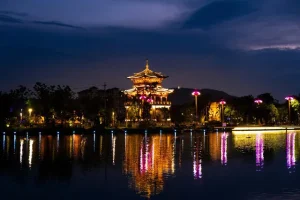
Day 4: Tiger Leaping Gorge — Check Open Areas Before Travelling
Before Booking: Do Not Follow the Former Middle-Gorge Trek
The former “Sky Ladder — Ray of Heaven — Teacher Zhang’s Path” instructions and Lower Tiger Leaping extension are withdrawn. The Shangri-La government notice of 10 February 2026 prohibits unauthorised activity in undeveloped or unopened parts of the Haba Snow Mountain nature reserve, explicitly naming the Middle and Lower Tiger Leaping Gorge sections and the high-route trail. It also prohibits publishing guidance for unlawful entry. This is not evidence that every attraction called Tiger Leaping Gorge is closed; it means this article’s old route cannot be recommended as an open day hike. [5]
Morning Decision: Verify the Actual Attraction and Transport
Check the current official notice, the exact attraction boundary and that day’s opening before booking. Choose only an officially open visitor area and its permitted paths; a private driver, a guesthouse booking or a locally collected fee does not authorise entry to a restricted reserve. If you cannot establish a lawful open visit, keep the day in Lijiang rather than substituting another unmarked gorge path.
For a confirmed open visit, agree on the licensed transport provider, road pickup and drop-off points, return meeting time, fare and cancellation terms. Allow separate time for the outward road journey, ticket checks and the return. The original 8:00 departure, two-hour drive and 50-yuan carpool are not a verified service timetable.
At the Site: Follow Barriers and Staff Instructions
Check weather and road notices before leaving and again on arrival. Do not descend toward the river, climb rusty chains, cross slippery narrow passages or use a “shortcut” simply because an older account describes it. Stay behind barriers and turn back when staff close an area. Photographs of another traveller on a path are not evidence of present access permission or safety.
Lunch and the Return: Keep Them on the Confirmed Route
Choose lunch within the permitted visitor area or along the confirmed road connection, checking opening and allowing time for the return pickup. The old narrative places Halfway Guesthouse after a short gorge walk and then adds Lower Tiger Leaping; its location, transfer and timing were not established. Do not navigate to it from those instructions or infer a view of Tiger Leaping Rock from the claimed balcony photograph.
The names Lao Yang, Lady Liu and Teacher Zhang, the guesthouse meal, interviews and photographs still require original evidence. They are not endorsements of an operator or access arrangement. Agree on a practical turnaround with your transport provider instead of waiting for an undated sunset or relying on a fixed 17:30 ride.
If the Gorge Visit Is Not Possible
Use the reserved day for a shorter public-town walk or rest in Lijiang, keeping the same confirmed overnight base before Day 5’s departure. Do not fill a closed gorge day with another unverified mountain trail. A quieter trip means leaving time for conditions and health, not collecting every viewpoint.
Appendix: Original Gorge Figures — Not a Bookable Route
The old 50 + 45 + 35 + 50 figures add to 180 yuan, but neither the ticket category nor the named services are established. They do not authorise the withdrawn trek or price a replacement visit. Confirm separate admission, transport, meals and cancellation terms for an officially open itinerary.
| Item | Cost (yuan) | Note |
|---|---|---|
| Outward ride claim | 50 | Service unverified |
| Old ticket claim | 45 | Not proof of entry rights |
| Lunch claim | 35 | Venue and menu unverified |
| Return ride claim | 50 | Time unverified |
| Total | 180 | Old sum, not an offer |