



Day 1: Lujiazui Modern Financial Center Sightseeing Route
I suggest making your first stop in Shanghai at Lujiazui. This area has the city’s highest level of modernization and the fastest pace, offering the most direct feel of the “financial center’s” prestige. When I bring friends here, I don’t advise climbing every skyscraper—it’s a waste of money and leads to visual fatigue. As the current highest point, the 118th-floor observation deck of the Shanghai Tower is the top priority. From there, you can see the complete grand bend of the Huangpu River and the rooftops of the International Architecture Exhibition on the opposite Bund.
- Transportation and Entry Logic: After taking Metro Line 2 to “Lujiazui Station,” don’t rush to walk underground; find Exit 6. As soon as you exit, you’ll be on that massive circular pedestrian bridge. This is physically the best spot to photograph the “Big Three”—you don’t even need a wide-angle lens to fit the Shanghai Tower, the World Financial Center, and the Jin Mao Tower in one frame.
- Observation Deck Timing: If you arrive at the entrance around 03:00 PM, the queue pressure is much lower. Going up then allows you to observe the layout of Puxi’s alleyways in daylight. Wait an hour, and you’ll see the sunset dip into Suzhou Creek, followed by the city’s landscape lights turning on in stages. This transition from day to night is incredibly striking.
- Business Lunch Refuel: At noon, if you don’t want to queue at the crowded tourist restaurants in Super Brand Mall, I usually go to LG1 or LG2 of the International Finance Center (IFC). There are many fast-food and high-quality casual dining options catering to the local financial professionals. The efficiency is high, and the consistency of ingredients is much better than typical tourist-trap restaurants.
- Riverside Route to Avoid Crowds: After dark, avoid the ferry terminals swarmed by tour groups and walk along Riverside Avenue toward the Art Museum. There are many cafes with terraces where you can sit for an hour for the price of a coffee. At this time, you’ll be facing the glowing Bund without the noise behind you—just the sound of the river hitting the shore. This perspective is Shanghai at its most charming.
Last time I took a friend to Lujiazui, he wanted to pay to queue for the Oriental Pearl Tower, but I talked him out of it. Actually, the Oriental Pearl is better for looking up at from below, or viewing from the terrace of the Museum of Art Pudong across the street. In front of the massive mirrored glass on the second floor of the museum, you’ll find the Oriental Pearl perfectly reflected—that’s a true masterpiece that requires no filters.
| Segment | Suggested Arrangement & Details | Estimated Expense (Per Person) |
|---|---|---|
| Scenery | Shanghai Tower 118th Floor Observation Deck. It’s recommended to book in advance via the official WeChat account to avoid wasting time at the ticket window. | Approx. 180 Yuan |
| Photography Spot | Lujiazui Circular Pedestrian Bridge. Position yourself near the IFC side to use the bridge’s curve as a foreground. | Free |
| River Crossing | Dong-Jin Line Ferry. Ride from Lujiazui Wharf to East Jinling Road. Even though it’s only 2 Yuan, the visual effect of “crossing the Huangpu River” is something no sightseeing tunnel can provide. | 2 Yuan |
| Dining Recommendation | IFC B2 Casual Dining. Try the local dim sum or Western-style salads; you can eat very well for 60-100 Yuan. | Approx. 80 Yuan |
Day 2: Xintiandi Shikumen and Haipai Fashion Experience
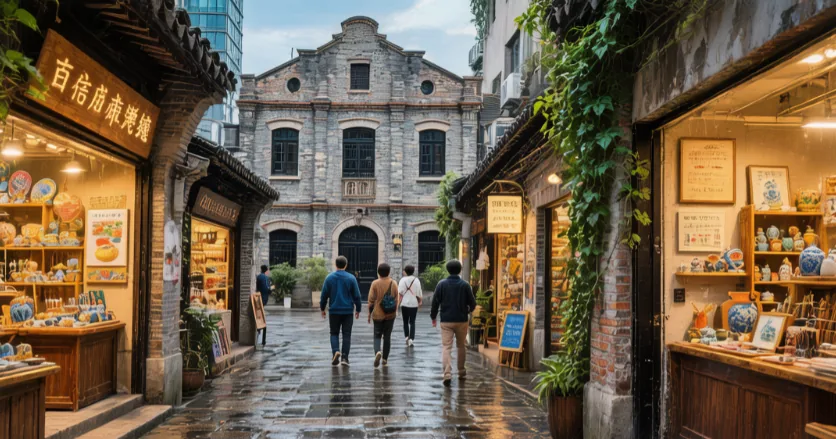
After experiencing the modernity of Lujiazui, I suggest moving your focus back to the Huangpu District in Puxi on the second day. This is where Shanghai’s urban memory is most concentrated, especially around Xintiandi. Many people think Xintiandi is just a high-end shopping area, but from an architectural restoration perspective, it’s a textbook example of balancing “urban renewal” and “commercial development.” I start this deep walk from South Huangpi Road Station (Line 1/14) or Xintiandi Station (Line 10/13).
- Architectural Details and Historical Touch: When sunlight spills into the alleys around 10:00 AM, you can visit the Site of the First National Congress of the CPC. These buildings are not just historical landmarks but top-tier samples of Shikumen restoration. Carefully observe the black lacquered gates, granite door frames, and the alternating red and grey pointing on the brick walls—this texture is incomparable to later imitations.
- Walking Logic of North and South Blocks: Pass through the congress site into Xintiandi North Block, where more of the original Shikumen texture is preserved. I suggest not just sticking to the main paths—duck into the narrow alleys that look like dead ends; you’ll find many private artist studios or hidden second-floor terrace cafes. In contrast, the South Block is more modern, showcasing Shanghai’s “coexistence of old and new” aesthetic through the fusion of glass curtains and old walls.
- Local Life on Middle Huaihai Road: In the afternoon, I usually walk to Middle Huaihai Road. In the hearts of locals, this road holds more “prestige” than East Nanjing Road. If you want authentic souvenirs, queue at Harbin Food Factory for some Butterfly Crackers or Almond Slices—that rich milky aroma is the hallmark of old Shanghai Western pastries. No need to buy too much; a small bag to snack on while walking is the best way to feel the leisure of Haipai life.
- Dining Tips: Western restaurants in Xintiandi usually cost over 300 Yuan per person. If your budget is more practical, I recommend walking 500 meters out. In the residential areas along Madang Road or South Huangpi Road, there are many old noodle shops that have been open for decades. Order a bowl of freshly stir-fried topping noodles (like spicy pork or pork liver noodles) for less than 40 Yuan. This taste, approved by both financial professionals and local residents, is the true color of Shanghai.
When I take friends through Xintiandi, I often point out the “fake walls.” In Xintiandi, some brick walls that look weathered were actually rebuilt with old bricks to maintain stylistic unity. This extreme pursuit of aesthetics is the professionalism Shanghai shows in commercial development—it’s not just about tearing down the old, but retaining the city’s soul through high maintenance costs.
| Area/Project | Recommended Practical Details | Estimated Expense (Per Person) |
|---|---|---|
| Site of the First National Congress of the CPC | Reservation via the official WeChat account is required; enter with ID. Avoid Mondays when it’s closed. | Free |
| Shikumen Open House Museum | A museum showcasing the living spaces of Shanghai’s middle class in the 1920s with high-fidelity restoration. | 20 Yuan |
| Harbin Food Factory (Souvenirs) | Go before 02:00 PM when stock is full and queuing time is manageable. | 50-80 Yuan |
| Specialty Dining (Noodle Shop) | Recommend local noodle shops around Madang Road for their “freshly stir-fried toppings.” | 30-50 Yuan |
The intensity of this day is moderate, relying more on your power of observation. Around 04:00 PM, if you still have energy, walk down Sinan Road to see the moss-covered old villas.
Day 3: Tianzifang Alleyway Creativity and Artistic Life
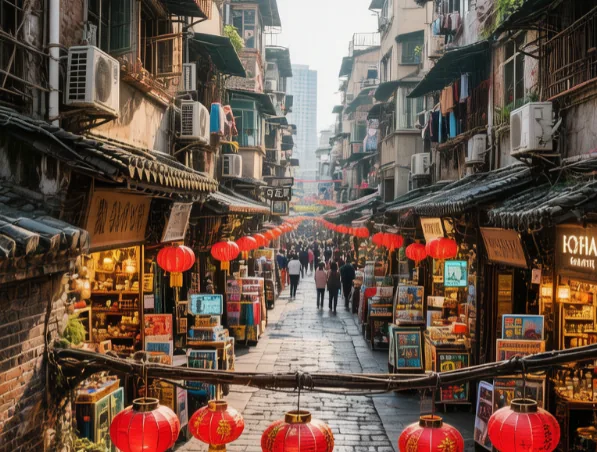
After the refinement of Xintiandi and the business vibe of Lujiazui, I suggest slowing down on the third day to feel the “wild growth” of artistic spirit in Shanghai’s Shikumen alleys. Today’s logic is to move from a complex marketplace labyrinth to the quiet French-style plane tree avenues, focusing on the seamless connection between daily life and intellectual atmosphere in Shanghai’s urban fabric.
- Tianzifang Labyrinth Survival Guide: Around 10:00 AM is the best time to enter Tianzifang, as residents have finished their morning rush and the tourist crowds haven’t fully arrived. I suggest exiting Dapuqiao Metro Station Exit 1, crossing Taikang Road, and entering from Alley 210. There are no main roads; I like to turn off my navigation here and wander through narrow lanes less than two meters wide. You’ll find an interesting phenomenon: a ground-floor avant-garde studio filled with abstract paintings, while freshly washed sheets hang from clotheslines on the second floor.
- Selection Logic for Creative Products: Commercialization inside Tianzifang is heavy. If you see Yiwu-style mass-market trinkets found at every Chinese tourist site, skip them. I recommend looking for handmade leather shops or independent photography galleries hidden deep in the courtyards. The owners are usually the creators who chose these deep alleys to avoid noise. Only here can you find items truly bearing the mark of Shanghai design.
- Walking Texture of Sinan Road: Around 02:00 PM, when you pull away from the hustle of Tianzifang, I suggest walking across Middle Jianguo Road into Sinan Road. This sensory switch is magical—the shouting of vendors is instantly replaced by the rustle of plane tree leaves. Both sides of Sinan Road are lined with representative detached garden villas with pebble-dash exteriors, which take on a warm, nostalgic hue in the sunlight.
- Cultural Pause at Sinan Books: At the intersection with Middle Fuxing Road, you’ll surely notice the villa at No. 517—Sinan Books. I highly recommend going inside, and not just for the books. The internal structure has been exquisitely restored, with every room feeling like an independent thinking space. From the second-floor window, you can overlook the rooftops of Sinan Mansions, a view that allows you to quietly understand why Shanghai is called the cradle of “Haipai Culture.”
I once sat on a wooden bench in the open plaza of Sinan Mansions at dusk, looking at the red brick walls of the nearby Zhou Enlai’s Former Residence. A local resident cycled past with fresh vegetables hanging from the handlebars, framed alongside polished professionals having afternoon tea. In that moment, I realized that Shanghai’s professionalism and elegance don’t just exist in the glass curtains of the financial district, but in this urban tolerance where diverse lifestyles exist without interference.
| Segment | Itinerary Details & Suggestions | Estimated Expense (Per Person) |
|---|---|---|
| Tianzifang Exploration | Focus on Alley 210 and Alley 248 of Taikang Road to discover independent studios in narrow lanes. | Free (shopping extra) |
| Lunch Recommendation | There are many local “hole-in-the-wall” eateries near Taikang Road; try scallion oil noodles and a fried pork chop for a satisfying meal. | Approx. 35-50 Yuan |
| Sinan Books | Entry is free, but ordering a pour-over coffee or buying an art book is a great experience in this atmosphere. | Coffee approx. 45 Yuan |
| Sinan Mansions Stroll | Observe the pebble-dash walls and French windows; this is a prime spot for photography. | Free |
Though the step count today is high, the shade of the plane trees and the intellectual atmosphere make it feel much lighter than mall-hopping.
Day 4: The Bund and Historical Landmarks Classic Tour
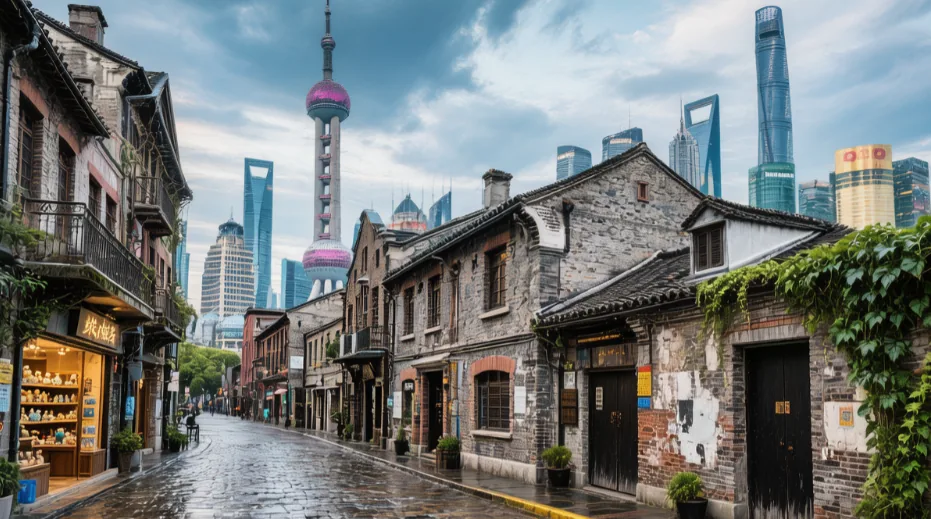
For your last stop in Shanghai, I suggest leaving it for the city’s “true colors”—the Bund and its backstreets. These buildings are more than just piles of stone; they are the microcosm of finance and culture since Shanghai opened its port. To avoid large tour groups, your start time should be slightly earlier than previous days for a better experience.
- Rhythm of Entering Yu Garden: I suggest entering exactly at 09:00 AM when the garden opens. As a Ming Dynasty private garden, its essence lies in the “infinite in the finite” landscaping style. Entering now allows you to photograph the complete reflection of the Pavilion in the Lake before the Nine-Turn Bridge is filled with people. Pay attention to the Great Rockery and the Taihu stone named “Exquisite Jade”—the garden’s crown jewel. As for the Yu Garden Old Street outside, I usually only walk through; I don’t recommend buying souvenirs there as they are overpriced and lack character.
- Switching to the Ferry Perspective: Around noon, you can walk to the East Jinling Road Ferry Station. Don’t take those luxury cruises that cost hundreds of Yuan. Spend 2 Yuan on a bus card for the Dong-Jin Line Ferry to the opposite bank and back; it’s the most cost-effective way to see the river. The second-floor deck of the ferry is when you are closest to the water and at the lowest angle, allowing you to look up at the “International Architecture Exhibition” from the waterline—a sense of grandeur you can’t feel looking down from a skyscraper.
- Northbound Route on the Bund: After returning to Puxi, start your walk along the Bund. My recommended route is heading north along Zhongshan East 1st Road. Don’t just take photos at Chen Yi Square; observe those 22 historical buildings with different styles. Focus on the iconic green copper roof of the Peace Hotel (classic Art Deco style) and the Bank of China Building next to it—during construction, it used bracket sets (dougong) on the eaves to reflect national character, a fascinating East-meets-West detail.
- Quiet Corner at Waitanyuan: If you feel the main Bund road is too crowded, turn in at the intersection with East Beijing Road to enter the Waitanyuan area. This is the starting point of the Bund development; the architectural density is high, but the number of tourists is only a tenth of the main road. The red brick buildings here, like the Capitol Theatre and True Light Building, are beautifully restored and perfect for photographing architectural textures in the slanted light of 3 or 4 PM.
When taking friends on this route, I usually remind them not to dine at restaurants directly facing the Bund. Actually, if you walk two blocks in—like Middle Jiangxi Road or Middle Sichuan Road—there are many local snack shops serving bank employees. The Shengjian buns and smoked fish in that area are much more authentic than the tourist restaurants along the Bund, and the prices are transparent; about 40 Yuan per person gets you a very characteristic Shanghai lunch.
| Tour Period | Action & Logic | Practical Details & Suggestions |
|---|---|---|
| 09:00 – 11:00 | Deep Tour of Yu Garden | Pre-book tickets via the mini-program; focus on the wood carvings and lattice window designs. |
| 12:00 – 13:30 | Ferry & Lunch | 2 Yuan experience at East Jinling Road Ferry Station; avoid Fuyou Road for lunch and head toward South Henan Road. |
| 14:00 – 16:30 | Bund Architecture Stroll | Focus on the dome murals of No. 12 (HSBC Building) and the lobby of No. 20 (Peace Hotel). |
| 17:00 – 19:30 | Waibaidu Bridge & Lights | Walk to where the Suzhou Creek meets the Huangpu River and watch the landscape lights of Lujiazui turn on from the Waibaidu Bridge. |
- Evening Light Ritual: Wait until 07:00 PM when all the landscape lights on the Bund turn on simultaneously. That pale yellow light hitting the granite walls helps you understand instantly why this was called the “Wall Street of the Far East.” At this time, you can walk back from Waibaidu Bridge and see the shimmering Suzhou Creek under the lights.
- Return and Food Refuel: After the tour, if you want a genuine Benbang meal to conclude your trip, I suggest looking in Ningbo Road or Tianjin Road behind the Bund. Those small restaurants that don’t require reservations and might even have faded signs usually hide the most authentic “pork large intestine with alfalfa” and “sizzling eel slices.” These places value heat and freshness over decor and plating.
Though the walking amount for this day is large, every segment of the road has a very clear cultural attribute.
Related Guides
- 3-Day Classic Shanghai Tour | The Bund Night View + Yuyuan Garden + Wukang Road Stroll | Complete Guide to First Impressions of the Magic City
- Shanghai Night Tour Essentials: 4 Hours | Huangpu River Cruise + Old Shanghai Style Street 1192 + Jing’an Temple Night View
- 3-Day Shanghai Food Tour | Michelin Restaurants + Time-Honored Local Cuisine + Nanxiang Xiaolongbao Flavor Map
- Shanghai 3-Day Romantic Route for Couples|Old Shanghai Vibe at Lane 1192 + Riverside Promenade Cycling + Jing’an Temple Art Night Tour
- 5-Day Trip Around Shanghai | Shanghai Landmarks + Suzhou Gardens + West Lake Hangzhou, Classic Yangtze Delta Route






