



Day 1: Iconic Landscape Tour of Shanghai’s Pudong and Puxi
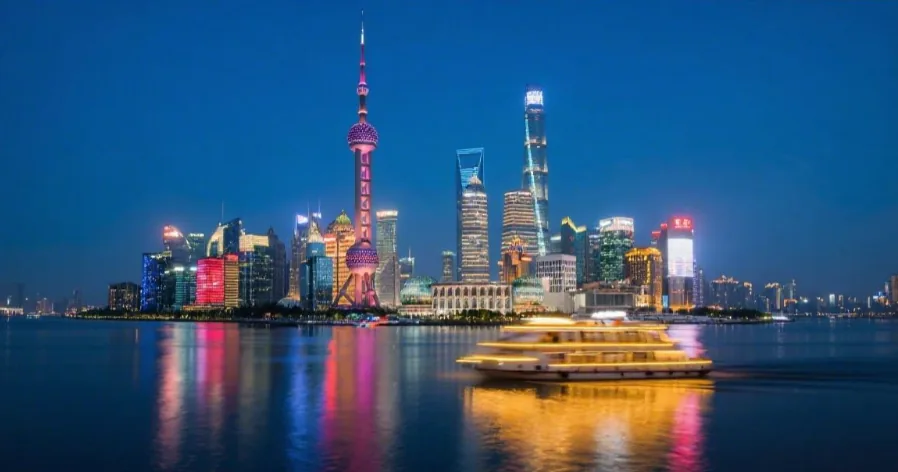
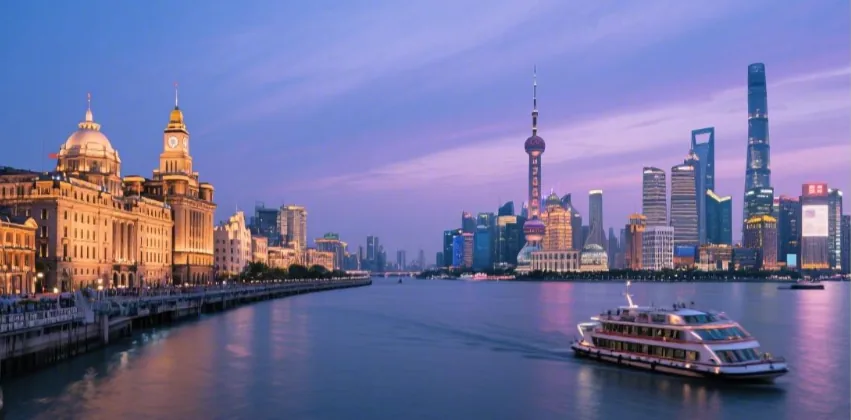
On the first day in Shanghai, I usually suggest starting in Pudong and then crossing the river back to Puxi, so you can clearly observe the developmental trajectory of the city across different eras. Around 9:30 AM, I suggest heading to the Lujiazui Financial and Trade Zone. While the Oriental Pearl Tower is highly famous, for a broader perspective, I highly recommend the Shanghai Tower. It is currently the tallest building in China. Standing at the “Top of Shanghai” observation deck on the 118th floor, you can look levelly at the neighboring Jin Mao Tower and World Financial Center. The visual impact brought by this height is truly unique.
I have tried ascending the tower in different weather conditions and found that while misty days offer a “cloud-top feeling,” you need a clear day with high visibility to see the layout of the International Architecture Exhibition on the Bund. The elevators inside the tower ascend extremely fast, reaching a height of over five hundred meters in just a few seconds. You might feel a slight pressure in your ears, which can be relieved by swallowing.
- Ticketing Advice: Be sure to make a real-name reservation through official channels in advance. Buying tickets on-site often involves long queues, and they may even sell out.
- Photography Tips: Inside the Shanghai Tower, look for angles directly facing the Oriental Pearl Tower. Utilizing spots with less glass reflection to look down can capture the most intense financial atmosphere of Lujiazui.
- Tour Highlights: Beyond the high-altitude scenery, the exhibition hall in the basement introduces the mechanical principles of how this skyscraper withstands strong winds, which has great professional educational value.
At noon, there are many dining choices in the Lujiazui area. The International Finance Center (IFC) or Super Brand Mall are my top choices because the catering management there is mature, ensuring food hygiene and taste. I suggest trying the local Jiangsu and Zhejiang cuisine, such as Pan-fried Pork Buns (Shengjian) or Crab Roe Soup Dumplings (Xiaolongbao). With an average spending of 120 to 200 yuan, you can dine quite exquisitely.
| Area | Recommended Restaurant Type | Spending Advice |
|---|---|---|
| IFC Mall | High-end Jiangsu/Zhejiang Cuisine, Exquisite Cantonese | Suitable for business or tourists seeking a high-quality environment; booking in advance is recommended. |
| Super Brand Mall | Popular chain brands, international cuisines | High density of restaurants, wide range of choices, relatively high cost-performance ratio. |
| Lujiazui Ring Road | Business fast food, cafes | If time is tight, there are many light meal options for a quick bite. |
Around 2:30 PM, I choose to take Metro Line 2; it only takes one stop to cross the Huangpu River and reach Nanjing East Road Station. East Nanjing Road Pedestrian Street has a long history. When I walk down this street, I remind myself to observe the building facades on both sides, which retain a large amount of Art Deco styles from the early 20th century.
- Walking Suggestion: Don’t just stick to the main pedestrian street; occasionally turn into the side alleys to see the local life of old Shanghai lanes (Lilong).
- Time-honored Brands Observation: There are often queues at the counters of time-honored brands like Shen Da Cheng and Zhen Lao Da Fang. Their Fresh Meat Mooncakes are freshly baked and worth the ten-minute wait.
- Historical Landmark: At the end of the pedestrian street is the Peace Hotel, a building of immense cultural value. The stained glass windows in the lobby are exquisite.
After nightfall, around 6:30 PM, the lights at the Bund will turn on punctually. At this time, I suggest avoiding the most crowded Chen Yi Square. My personal experience is to walk along the Suzhou Creek toward the Waibaidu Bridge. This is the confluence of the Huangpu River and Suzhou Creek, where there are relatively fewer people and you can photograph the panorama of the Bund from a more side-on angle.
Many people don’t know that the landscape lighting at the Bund has a closing time, usually at 10:00 PM. If you go late, the lighting effect of the building clusters will be greatly reduced. Also, the wind on the Bund platform is very strong; even in spring, it is suggested to bring a windproof jacket.
| Tour Project | Price Reference | Suggested Stay Time |
|---|---|---|
| Shanghai Tower Ticket | Approx. 180 yuan | 1.5 – 2 hours |
| Line 2 Metro Ticket | 3 – 4 yuan | 10 minutes |
| The Bund Viewing Platform | Free | 1 hour |
| Huangpu River Ferry (Dongjin Line) | 2 yuan | 15 minutes (Highly cost-effective way to cross the river) |
I suggest taking the two-yuan Huangpu River Ferry after dinner if your energy allows. Taking it from Jinling East Road Pier to Dongchang Road Pier on the opposite bank, those fifteen minutes of sea breeze and lights on both banks represent the moment most characteristic of Shanghai’s Haipai culture. For accommodation, I would choose a location on the extension of Nanjing East Road near Jing’an District; it allows quick access to attractions while avoiding the noisiest commercial centers, providing a quieter and more comfortable stay.
Day 2: Classical Suzhou Gardens and Historical Districts
The cost of traveling between Shanghai and Suzhou is very low in terms of both time and money. I suggest departing from Shanghai Railway Station or Shanghai Hongqiao Station around 7:30 AM. Taking the high-speed rail takes about thirty minutes to reach Suzhou Station. The architectural design of Suzhou Station itself is very distinctive. Upon exiting, you will find it immediately adjacent to the ancient city wall; this collision of a modern transportation hub and historical relics is a detail I really enjoy.
The essence of Suzhou-style life lies in “starting early.” My first task upon arriving in Suzhou is usually not visiting attractions, but finding a noodle shop for a bowl of Suzhou-style Noodle Soup. Suzhou people are particular about “Tautang Mian” (the first batch of noodles in fresh soup). The pot of broth just brewed in the early morning is the freshest. I usually order thin noodles with braised meat or stir-fried meat toppings. The braised meat should be soaked in the hot soup for a while until the fat slightly melts; the melt-in-your-mouth texture is very authentic.
- Transportation Advice: Within Suzhou city, Metro Line 4 provides direct access to the railway station and major scenic areas. If there are more than two people, choosing a ride-hailing service is more efficient.
- Reservation Details: All key gardens in Suzhou implement real-name, time-slot reservations. Especially for the Humble Administrator’s Garden, it is suggested to complete this on the official platform one week in advance.
- Pitfall Avoidance: There are many touts around the railway station recommending “cheap one-day tours” or so-called “specialty silk shops.” I suggest ignoring them and heading to official scenic areas on your own.
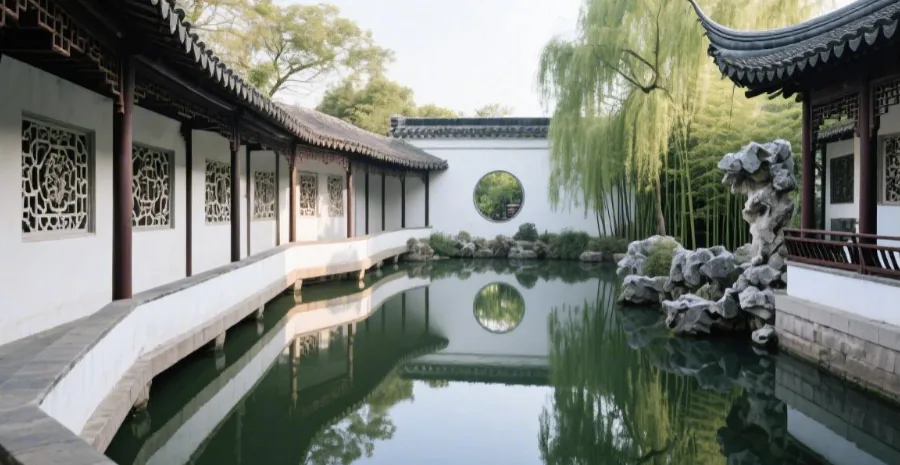
When visiting gardens, my first choice is the Humble Administrator’s Garden. This is the pinnacle of Jiangnan private gardens, where the most ingenious part is the layout of the water system, which accounts for more than half of the total area. My experience is to get in the moment the park opens at 8:30 AM. Only when the sunlight spills through the lattice windows onto the corridors and the large tour groups haven’t arrived yet can you appreciate that “view changing with every step” sense of tranquility. The adjacent Lion Grove Garden is completely different in style; it is famous for its rockeries, like walking into a labyrinth built of stone, which really tests your sense of direction.
Personal Experience Note:
During my visits to Suzhou, I found that the essence of the gardens lies not in the grandiosity of the buildings, but in the technique of “borrowed scenery.” In the Jianshan Tower of the Humble Administrator’s Garden, you can see the distant North Temple Pagoda through the window frame. This design technique of “borrowing” a building from the city into the garden is a manifestation of the wisdom of ancient garden creators. If you are interested in architectural details, I suggest bringing a telephoto lens to observe the exquisite brick carvings and ridge beasts on the eaves.
| Segment | Specific Location & Project | Details & Spending Advice |
|---|---|---|
| Morning Tour | Humble Administrator’s Garden & Lion Grove | Humble Administrator’s Garden ticket approx. 70-90 yuan (off-peak/peak); Lion Grove approx. 30-40 yuan. They are only a 5-minute walk apart. |
| Midday Dining | Gusu Bridge or Song He Lou | Must order Mandarin Fish in Sweet and Sour Sauce (Songshu Guiyu), which should be crispy outside and tender inside. Average spending is around 150 yuan. |
| Afternoon Stroll | Pingjiang Road Historical District | Free entry. Suggested to find a teahouse by the water. |
| Evening Culture | Suzhou Pingtan Performance | Performances at famous teahouses like Pipayu cost about 50-100 yuan per cup of tea, including about an hour of performance. |
In the afternoon, I arrange a stroll on Pingjiang Road. This road basically maintains the urban layout from the Song Dynasty, with a waterway on one side and a stone-paved road on the other. The degree of commercialization here is moderate, and many original residents still remain. I suggest finding a teahouse by the water at dusk to listen to a piece of Suzhou Pingtan. Even if you don’t understand the Wu dialect, the melodious sound of the strings will instantly immerse you in the Jiangnan atmosphere.
- Cultural Experience: Kunqu Opera and Pingtan performances on Pingjiang Road usually require on-site numbering or advance reservation. I suggest going to a teahouse around 3:00 PM to confirm the show times.
- Food Recommendations: Snacks like Haitang cake and Chicken Feet Galla on Pingjiang Road can be tried, but don’t treat them as a main meal.
- Clothing Advice: There are many stone-paved roads in the ancient city of Suzhou. It is suggested to wear flat, comfortable shoes; walking in high heels on this type of road surface is very difficult.
Regarding accommodation, I prefer choosing hotels converted from Suzhou-style residential houses near Pingjiang Road or Shantang Street. Although the room size of such hotels is generally smaller than modern star-rated hotels, the experience of opening a window to see the water and stepping out to white walls and grey tiles is irreplaceable. Waking up in the morning and seeing residents washing vegetables by the river and slowly rowing wooden boats—this is the most authentic Suzhou. If you have extremely high requirements for the sleep environment, I suggest choosing modern hotels toward the Industrial Park, which are quieter and have more advanced facilities.
Day 3: Huqiu Scenic Area and Intercity Transportation to Hangzhou
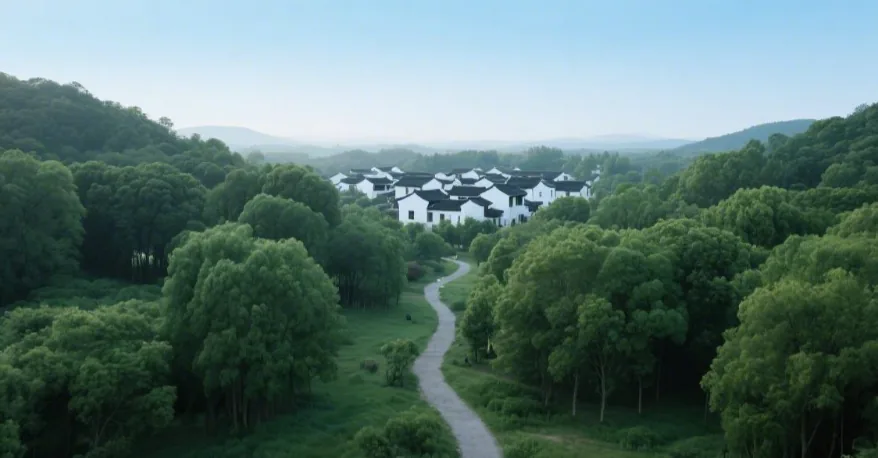
I leave the morning of the third day entirely for the Huqiu (Tiger Hill) Scenic Area. As one of Suzhou’s oldest landmarks, it carries over two thousand years of Wu culture. Upon entering the scenic area, I first observe the world-famous Yunyan Temple Pagoda, commonly known as the Tiger Hill Pagoda. Due to uneven foundation settlement, this tower has been leaning for a thousand years. It is the oldest existing brick-built pagoda mimicking wooden structures in China, possessing high architectural and archaeological value.
- Suggested Tour Route: Enter from the South Gate, see the Broken Beam Hall first, then pass the Sword Testing Stone to reach the Sword Pool. The Sword Pool is the most mysterious place in Huqiu; the water never dries up, and legend has it that the tomb of King Helü of Wu lies at the bottom.
- Architectural Detail Observation: The construction of Broken Beam Hall is very peculiar. The main beam of the entire hall is broken, relying entirely on precise mortise and tenon structures for mutual support. This application of mechanics is very rare in ancient wooden architecture; it is suggested to look up carefully at the connection of the wooden components inside the hall.
- Entry Time Control: I suggest arriving around 8:30 AM. At this time, the sunlight hits the ancient pagoda at an angle, providing the strongest sense of color layering, and you can avoid the large wave of tourists before the afternoon return.
- Tickets and Reservation: Peak season tickets are about 80 yuan; it is suggested to buy real-name tickets in advance through official platforms.
Personal Experience Case:
I once met an old painter sketching in the back hills of Huqiu. He told me that most tourists only see the pagoda and pool on the front hill, but the Yunyan Temple ruins and cliff carvings on the back hill are quieter. I followed his advice and found many inscriptions from the Ming and Qing dynasties along the stone paths on the back hill. With few people around, the environment there allows one to truly quiet down and feel Suzhou’s sense of antiquity.
After lunch, I head to Suzhou Railway Station. The high-speed rail transfer between Suzhou and Hangzhou is the most vital transportation node of this trip. Although there are many high-speed trains between Suzhou and Hangzhou, because these two cities are tourism and business hubs, tickets often sell out three days in advance. I usually complete the ticket-grabbing operation on the platform as soon as they are released.
| Segment | Specific Details | Price & Time Reference |
|---|---|---|
| Huqiu Tour Duration | Covers main historical sites and hilltop paths | Suggested stay approx. 3 hours |
| Suzhou Station Transport | Suggested to take Metro Line 4 or ride-hailing | Travel time approx. 20 to 30 minutes |
| Suzhou-Hangzhou High-speed Rail | Suzhou Station to Hangzhou East Station | Ticket price approx. 110-120 yuan, takes approx. 90 minutes |
| Hangzhou Arrival Connection | Hangzhou East Station to City Center | Metro Line 1 takes approx. 20 minutes, cost approx. 4 yuan |
After arriving at Hangzhou East Station, you will face a massive transportation hub. My personal experience is to follow the signs for Metro Line 1 (Xianghu direction) immediately after exiting; this is the most reliable way to reach the West Lake District. If you have a lot of luggage and choose to take a taxi, be sure to head to the official taxi boarding point or ride-hailing parking garage on the B1 level. Ignore drivers at the exit touting “flat-rate” services, as those vehicles usually lack safety guarantees and are overpriced.
After settling into your accommodation, I usually allocate the evening to the Hubin Road Pedestrian Street. The view here is excellent, directly facing West Lake. Around 7:00 PM, if weather permits, there are musical fountains at Hubin Park 3. If you are interested in traditional commercial culture, a ten-minute walk will take you to Hefang Street. It retains the architectural style of the late Qing Dynasty and early Republic. I suggest visiting the Hu Qing Yu Tang Traditional Chinese Medicine Museum; the wooden medicine cabinets and traditional medicine-gathering processes showcase a very authentic traditional Chinese medicine culture.
- Accommodation Area Recommendation: My first choice is near Hubin or Wulin Square. This is the commercial center of Hangzhou, with extremely developed dining options nearby, and it is within walking distance of the Broken Bridge on West Lake, providing a geographical advantage for early sightseeing the next day.
- Shopping Pitfall Advice: On Hefang Street, you will see many shops selling Longjing tea and silk. I suggest looking but not buying silk here, or choosing well-known brand stores like Wensli; for tea, it’s best to go to Longjing Village, the origin of West Lake Longjing, or buy from large time-honored brands.
- Food Records: For dinner, you can try Hangzhou cuisine like West Lake Fish in Vinegar Sauce or Longjing Shrimp. The vinegar fish nowadays mostly uses Kaihua freshwater fish, and the earthy taste has faded significantly. I usually go to Zhi Wei Guan or Nong Tang Li; these places have authentic tastes and average spending is around 100 yuan.
Hangzhou’s nights are humid, suitable for a slow-paced walk. I would suggest a stroll along Nanshan Road, where the plane trees under the lights have a beautiful sense of combining a modern metropolis with landscapes. Don’t stay out too late on the first night, as the in-depth West Lake tour on the fourth day requires sufficient physical energy.
Day 4: In-depth Tour of the West Lake Scenic Area
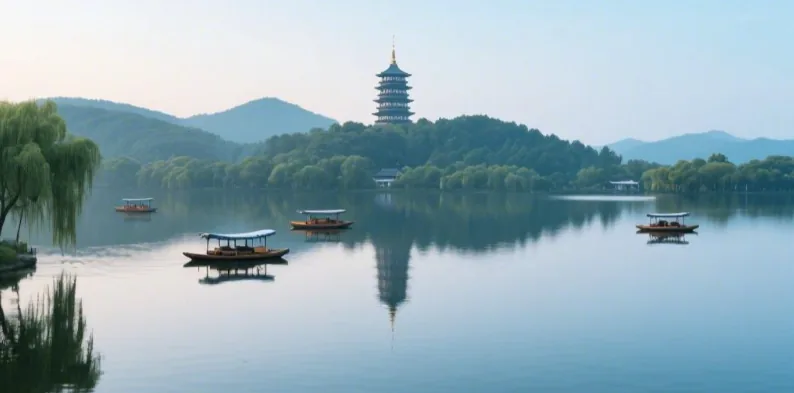
On my fourth day in Hangzhou, I usually devote all my energy to West Lake. The logic of touring West Lake emphasizes “going from the surface to the depth.” If physical strength allows, starting from the Broken Bridge around 8:30 AM is the best choice. At this time, the large tour groups haven’t fully spread out, and you can stand at the bridgehead to observe the water surface of West Lake extending into the distance. The Broken Bridge is famous not only for folk legends but also because it is the visual starting point connecting Beishan Street to the heart of the lake.
Walking along the Bai Causeway from the Broken Bridge, the road is lined with weeping willows and green peaches. I suggest walking toward Solitary Hill (Gushan); this approximately one-kilometer stretch concentrates the most essential cultural landscapes of West Lake. When you reach the Gushan area, don’t forget to visit the Xiling Seal Art Society. The garden buildings there are built into the hill, and their exquisiteness is not at all inferior to Suzhou gardens.
- Walking Route Suggestion: Broken Bridge — Bai Causeway — Autumn Moon over the Calm Lake — Gushan — Zhongshan Pier. The total walking time is about 1.5 hours; it is suggested to wear breathable flat shoes.
- Deep Sightseeing Observation: At the Zhejiang Provincial Museum and Wenlan Pavilion on Gushan, you can observe typical Qing Dynasty imperial library architectural styles.
- Cultural Detail: The Xiling Seal Art Society is known as the “Famous Society under Heaven.” The cliff carvings and stone arches there record the highest level of modern Chinese seal carving art.
I have led friends across the Bai Causeway many times and found that many people overlook the “Autumn Moon over the Calm Lake” at the foot of Gushan. In fact, there is a platform extending into the lake water, which is the best spot for observing the reflections of the inner West Lake. If you get tired walking on Gushan, you can sit in the resting area near Lou Wai Lou and watch the West Lake water birds skim past; this sense of tranquility cannot be felt while sitting on a tour bus.
Near noon, I choose to switch transportation at Zhongshan Pier near Gushan. West Lake is too big; relying entirely on legs will be extremely tiring. Adopting a “land and water combination” is the wisest move. I strongly suggest trying a hand-rowed boat, which is a small wooden boat rowed manually by a boatman. These boats are usually charged by the hour, and one boat can seat 4 to 6 people. Although more expensive than motorboats, it can take you into subtle waters that large boats cannot reach; that sound of wooden oars breaking the water is the true rhythm of West Lake.
| Tour Project | Details | Suggested Method & Price Reference |
|---|---|---|
| Bai Causeway Walk | Covers Broken Bridge, Autumn Moon over the Calm Lake, Gushan | Free entry; suggested stay approx. 2 hours. |
| Lake Tour | Take a boat to the three islands in the lake (Three Pools Mirroring the Moon) | Hand-rowed boat approx. 150 yuan/hour (per boat); large boat ticket approx. 55 yuan. |
| South Line Culture | Leifeng Pagoda Scenic Area & Jingci Temple | Leifeng Pagoda ticket 40 yuan; Jingci Temple incense flower voucher 10 yuan. |
| Dining Experience | In-depth trial of Hangzhou cuisine | Must order Longjing Shrimp, Dongpo Pork. Average budget 120-200 yuan. |
Around 2:00 PM, I will take a boat from the island in the lake to the south shore of West Lake. Leifeng Pagoda is the highlight of the south line tour. The current Leifeng Pagoda was rebuilt on the old site and has elevators inside, which is very helpful for saving physical energy. I suggest taking the elevator to the top floor eaves. From here, you can have a 360-degree panorama of the entire West Lake; the outline of the Su Causeway lying across the lake is especially clear.
- Dining Arrangement: Lunch or dinner can be solved at Zhi Wei Guan Wei Zhuang at the southern end of the Su Causeway. The vinegar fish here uses carefully selected ingredients with a balanced sweet and sour taste, and the Longjing shrimp has an elegant tea fragrance, typical of the Hangzhou style.
- Pitfall Avoidance: There are many so-called “Longjing Teahouses” around West Lake. If you are not a professional, I don’t suggest making large purchases at roadside teahouses, as you might easily encounter inferior products.
- Evening Suggestion: If you still have energy, Jingci Temple opposite Leifeng Pagoda is worth a visit. Every evening, the bell of “Evening Bell Ringing at Nanping Hill” tolls, echoing around the Nanshan Road area. That simple religious atmosphere forms a sharp contrast with the bustling Hubin opposite.
As the sun sets, I prefer to take a walk along the southern section of the Su Causeway. The Su Causeway is nearly three kilometers long and lined with lush trees, making it feel deeper than the Bai Causeway. Through this whole day’s itinerary, I measured the agility of the north line with my feet, experienced the tranquility of the lake’s heart via a hand-rowed boat, and finally overlooked the overall layout from the Leifeng Pagoda. Regarding transportation, ride-hailing services in Hangzhou are quite restricted around West Lake, especially during holidays. I suggest prioritizing the West Lake loop buses (such as the WE1314 route) or the metro, which can help you save a lot of time being stuck in traffic. For accommodation, if it’s for the next day’s Lingyin itinerary, you might consider moving west that night and staying in a guesthouse near Lingyin Road or Qingzhiwu, where the environment is more secluded and has a mountainous feel.
Day 5: Lingyin Scenic Area Tour and Return Transportation Advice
On my last day in Hangzhou, I usually slow down the pace and leave time for the Lingyin mountains and forests. Around 7:45 AM, when the whole city is still waking up, I suggest you arrive at the gate of the Feilaifeng (Peak Flown from Afar) Scenic Area. The essence of the Lingyin area lies in the early morning scent of greenery and the mountain mist that hasn’t yet dissipated. Many people don’t know that Lingyin Temple is actually a “garden within a garden.” You need to buy a ticket for the Feilaifeng Scenic Area first, and after entering the large area, buy a separate “incense flower voucher” for Lingyin Temple.
After entering the scenic area, my first stop isn’t heading straight for the main hall, but looking at the Feilaifeng Grotto Carvings on the opposite side of the stream. The Buddhist art value here is extremely high, especially that statue of the Laughing Buddha; its carving craftsmanship represents the peak of the Yuan Dynasty. You can carefully observe the face and the folds of the clothing; that natural sagging texture cannot be matched by later imitations.
- Ticketing Logic: Feilaifeng Scenic Area ticket is about 45 yuan; Lingyin Temple incense flower voucher is 30 yuan (to be bought after entering). It is suggested to handle all operations via mobile phone using your real name.
- Tour Highlights: The statue of Shakyamuni in the Great Hall of the Magnificent, the Hall of the Medicine Buddha, and the Hall of Five Hundred Arhats. The layout of the Arhat Hall is in the shape of a ” swastika ” symbol, and the statues inside have various expressions, well worth a detailed look.
- Pitfall Avoidance Experience: There will be many people at the gate of the scenic area who proactively approach to offer explanations. I suggest refusing. If you want to know the background, you can rent an electronic guide or read the official text descriptions at the gate.
Many people leave after seeing Lingyin Temple, but I actually recommend walking a bit further up the hill to Yongfu Temple. It is known as the “Most Beautiful Temple in China,” with buildings constructed along the hillside in a staggered fashion. My favorite moment is sitting in the Fuquan Tea House above Yongfu Temple and ordering a cup of West Lake Longjing. From here, you can overlook the entire Lingyin Scenic Area and even catch a glimpse of a corner of West Lake in the distance. The environment is much quieter than the bustling Lingyin Temple.
Near noon, I usually solve my lunch near the scenic area. The Ten-Ingredient Vegetarian Noodles at Lingyin Temple are a time-honored brand. Although the queue is long, that bowl of fresh broth truly represents the standard of temple vegetarian food. If you want to eat more like a local, you can walk or take a taxi for two kilometers to Longjing Village or Meijiawu to find a farmhouse for a tea-themed meal, such as Tea-scented Spare Ribs or Stir-fried Eel Slices.
| Segment | Specific Details & Operations | Price & Time Advice |
|---|---|---|
| Morning Entry | Suggest arriving before 08:00 | Avoid the large wave of tour groups after 9 AM; stay approx. 3 hours |
| Religious Culture | Praying and observing statues at Lingyin Temple | Incense flower voucher 30 yuan; three sticks of incense are given for free in the temple |
| Niche Recommendation | Stroll through Yongfu Temple and Taoguang Temple | Free entry; the path has some slope, so wearing sports shoes is recommended |
| Dining Choice | Lingyin Vegetarian Noodles or Longjing Farmhouse Food | Vegetarian noodles approx. 30 yuan per person; farmhouse food approx. 80-120 yuan per person |
Regarding shopping before leaving, I suggest staying vigilant. There are many “helpful people” around the scenic area trying to lure you to drink or buy tea; do not go with them. If you want to take back some authentic West Lake Longjing, I suggest going to time-honored brand stores on Longjing Road. Although the prices are transparent and there are no discounts, the quality is guaranteed. Silk products follow the same logic; official channels like the West Lake Silk Factory are a safer choice than roadside shops.
Around 2:00 PM, you need to consider the transportation connection for your return. Hangzhou East Railway Station is one of the largest hubs in the Yangtze River Delta with a complex internal structure, so be sure to set aside ample time.
- Transportation Allowance: For a taxi from the Lingyin area to Hangzhou East Station, you need to allow 45 to 60 minutes even on non-holidays. Lingyin Road and Beishan Street often experience seasonal congestion in the afternoon.
- Metro Option: If you’re afraid of traffic jams, you can take a bus or taxi to Huanglong Sports Center Station and transfer to Metro Line 3 and then Line 1; the time will be more controllable.
- Station Tips: The waiting hall of Hangzhou East Station is very large. If your train is at a boarding gate far in the back, it might take 10 minutes to walk from the entrance to the boarding gate.
My final half-day experience in Hangzhou was about avoiding the noise and seeking that tranquility within the mountain forests. The cultural depth of Lingyin cannot be fully understood through a cursory visit; leave more time for the inscriptions in the stone caves and for a cup of tea at Yongfu Temple. This process from a bustling metropolis (Shanghai) to exquisite gardens (Suzhou), and finally back to natural landscapes (Hangzhou) is the most reasonable rhythm for a Jiangnan trip. When finishing the five-day journey, I suggest buying a box of Dingsheng Cake from Zhi Wei Guan at the high-speed rail station to bring that sweetness on your way home.
Keep Reading
- 3-Day Spring Flower Viewing Tour in Shanghai | Gucun Park Cherry Blossoms + Jing’an Park Tulips, The Most Beautiful Moment of the Magic City
- Shanghai 4-Day Extreme Height Challenge | Shanghai Tower 118th Floor + Jin Mao Skywalk + Pearl Tower Revolving Restaurant
- 6-Day Shanghai Panoramic Tour | City Landmarks + Disney Resort + Zhujiajiao Water Town | No Backtracking Itinerary
- 4-Day Shanghai Autumn Guide | French Concession Fallen Leaves on Wukang Road + Forest Photography at Gongqing Forest Park
- Shanghai 4-Day Essential Route | Lujiazui Financial Center + Xintiandi Shikumen + Tianzifang Cultural Creativity | A Journey of Ancient & Modern Intersection






