



Day 1: The Bund Scenery and Michelin Dining Experience
I suggest focusing your first day entirely on the heart of the Huangpu District, where the transition between old and new Shanghai is most apparent. The restaurants on the Bund maintain exceptionally high standards, but the threshold for entry is reflected not just in price, but in reservation skills and an understanding of dress codes.
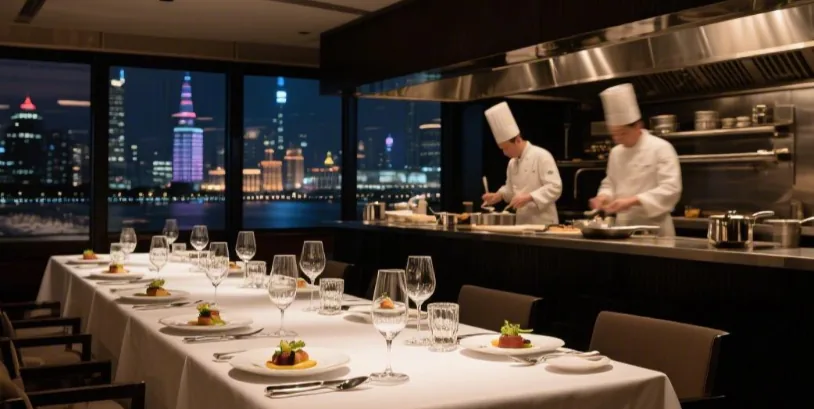
I usually choose to arrive near East Beijing Road around 11:30 AM. This is when the business district starts operating, offering the best walking experience. For lunch, I select a Michelin-starred restaurant specializing in modern Benbang (local Shanghai) cuisine, where the Black Truffle Abalone Rice is the signature dish. Each grain of rice is evenly coated in a thick, rich sauce, and the abalone is cooked to perfection—springy without being tough. My personal tip is that the Lunch Sets at these establishments are typically 30% to 40% cheaper than dinner prices with almost no difference in ingredient quality, making it the most cost-effective entry point.
In early autumn last year, I hosted several friends with extremely high culinary standards. At the time, I didn’t confirm a window seat through the concierge in advance, and we ended up sitting in the inner section of the restaurant. Although the dishes were still excellent, the experience was certainly diminished without the backdrop of the Bund’s international architecture. Since then, I always specify “near the window” in my reservation notes; even if there is a minimum spending requirement, it is well worth it for that view.
After lunch, walk from East Beijing Road toward Yuanmingyuan Road, commonly known as “Waitanyuan” (the Origin of the Bund). The red brick building clusters here have a deeper sense of historical accumulation than the row directly facing the river. I like to sit in a cafe here for a while, observing couples taking wedding photos and the beautifully restored old consulates. The roads here are mostly one-way with restricted traffic flow, making walking the only viable option; do not try to call a car here, as the time spent in traffic would be enough for you to walk half the length of the Bund.
As 6:00 PM approaches, it is time to enter the high-end restaurants along No. 18 on the Bund or Zhongshan East 1st Road. For dinner, I recommend trying the Crispy Roast Pigeon. This technique, a fusion of Cantonese and Benbang styles, focuses on the subcutaneous fat contracting instantly under high heat to form a texture like cellophane. Eat it without dipping sauce to taste the natural juices of the pigeon meat. Regarding attire, I have observed that while most Michelin restaurants do not strictly mandate suits and ties, “Business Casual” is a basic mark of respect. Try to avoid wearing athletic shorts or open-toed sandals; otherwise, even if the staff seats you, you might feel slightly awkward in such an atmosphere.
| Phase | Suggested Action | Specific Location and Details | Personal Advice |
|---|---|---|---|
| 11:30 AM | Begin Lunch Experience | Restaurants around 99 East Beijing Road | Book 3 days in advance; try the soy-sauce cured meat with salted rice for distinct layers of flavor. |
| 2:00 PM | Waitanyuan Stroll | Yuanmingyuan Road Pedestrian Street | Focus on the True Light Building and Lyceum Building; red brick walls are excellent photo backdrops. |
| 6:00 PM | Michelin Dinner | No. 18 or No. 27 on the Bund | Book dinner at least two weeks in advance; window seats may require a deposit, which is industry standard. |
| 8:30 PM | Riverside Walk | Zhongshan East 1st Road Viewing Platform | All street and building lights are on by now; the river breeze is strong, so bring a light windbreaker. |
Regarding travel and expenses in the Bund area, I have a few practical experiences to share:
- For accommodation in this area, choosing the Peninsula or Waldorf Astoria usually requires a nightly budget of over 3000 yuan. If seeking value, stay at a boutique hotel near Middle Henan Road; it is only a 15-minute walk to the Bund and costs less than half.
- For transportation, Exit 7 of East Nanjing Road Station on Line 2 is the most convenient. The Bund area has traffic control during holidays, and many intersections cannot be crossed on foot; be sure to follow the guidance of on-site personnel.
- Regarding dining costs, a Michelin one-star lunch is about 400-600 yuan per person, while two-star or higher dinners generally start at 1500 yuan, and a 10% to 15% service fee is commonly charged.
- Avoid the viewing platform between 3:00 PM and 5:00 PM on weekends, as the tourist density is extremely high, making it difficult to take photos or even walk. I prefer going after 8:30 PM, when the first wave of tourists has dispersed but the lights remain brilliant.
This plan is the best route I have summarized after many tours with friends; it bypasses “internet-famous” shops that have fame but mediocre taste, ensuring your time is truly spent experiencing Shanghai’s exquisite lifestyle.
Day 2: Time-Honored Benbang Cuisine and Local Market Flavors
I am focusing the second day on the border of Jing’an and Huangpu districts, which best embodies the city’s heritage. This is not only a hub for traditional commerce but also the “root” of Benbang dining culture. I suggest wearing comfortable flat shoes today, as Shanghai’s old lanes and commercial streets are best connected on foot; only by measuring with your steps can you discover the details hidden under the shade of plane trees.
Around 9:00 AM, I usually start from West Nanjing Road Metro Station and walk toward Wujiang Road. The morning here has a unique bustle. I personally highly recommend Shengjian with Fully Fermented Dough. Unlike the semi-fermented, thin-skinned, soup-heavy style common in modern chains, this traditional method results in a skin as soft as bread with a slight fermented tang. Upon biting, the filling is a large, firm meatball with a modest but extremely savory broth. To judge if a Shengjian shop is authentic, I look at the queue: if it’s mostly neighbors carrying grocery baskets and speaking Shanghainese, the taste is guaranteed.
Once while queuing on Huaihai Road, an elderly lady in front of me pointed out that you shouldn’t be in a rush to eat this fully fermented Shengjian. You must first open a small hole in the skin to let the steam out; otherwise, the thick skin absorbs the meat juice, which can scald your mouth and ruin the sweetness of the dough. These life details are things no food app can teach you.
- Transportation Planning: Use Metro Lines 2 and 10 for the day, supplemented by shared bikes or walking.
- Breakfast Cost: 15 to 30 yuan per person for a very substantial meal.
- Ordering Tip: At time-honored brand windows, be decisive. Pay at the cashier first to get your tokens, then go to the counter to collect your food.
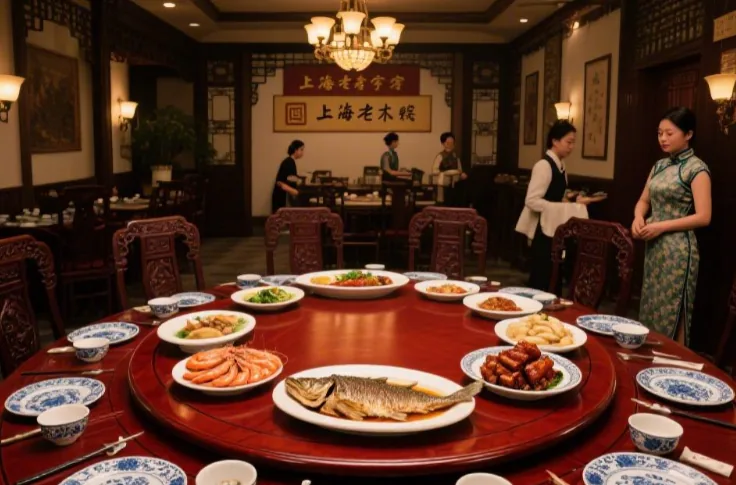
At noon, sunlight filters through the plane tree leaves. I recommend heading to Fuzhou Road or Middle Huaihai Road to find time-honored Benbang restaurants. The essential lunch dish is Braised Pork (Hongshao Rou). The soul of Shanghai Braised Pork lies in “thick oil and red sauce” (Nong You Chi Jiang). This isn’t just the color of soy sauce; it is an amber luster created by caramelizing rock sugar and long, slow simmering to fully integrate fats and sugars. The authentic way uses no water at all, relying entirely on Shaoxing wine and light soy sauce to bring out the natural aroma of the pork. Each piece should have a thick layer of skin and melt in your mouth, while the lean part remains moist from the glaze.
In the leisure hours around 3:00 PM, I like cycling around Sinan Road or Middle Fuxing Road. This is the heart of the former French Concession, with neatly trimmed plane trees on both sides. You don’t need to look for specific attractions here; every old villa with a garden has a story. I’ve found that the lane (Lilong) culture here is excellently preserved; you can often see clotheslines stretching across the air, creating a rich local atmosphere that contrasts sharply with the nearby bustling Huaihai Road.
I once accidentally wandered into a small lane near Sinan Road and saw an old gentleman trimming flowers in a rattan chair. He told me that most villa walls here use a “pebbledash” technique with crushed pebbles, which is both attractive and resistant to Jiangnan’s humid climate. Such architectural details can only be appreciated by slowing down.
As night falls and the lights around Jing’an Temple flicker on, I suggest trying Sizzling Eel Silk (Xiangyou Shansi) for dinner. This dish tests a chef’s control over heat. Fresh eel is shredded and stir-fried quickly with bamboo shoots or green peppers. The most exciting step is after plating: a small well is made in the center of the eel, filled with minced ginger, garlic, and pepper, and finally doused with a ladle of boiling lard. With a loud “sizzle,” the aroma instantly explodes. This ritualistic serving style is the ultimate expression of “freshness” in Shanghai dining.
| Time Node | Itinerary | Experience Details | Suggested Spending |
|---|---|---|---|
| 9:00 AM – 10:30 AM | Breakfast and Stroll | Try fully fermented Shengjian; observe the master flipping the pans. | 20 yuan/person |
| 12:00 PM – 1:30 PM | Traditional Benbang Lunch | Focus on Braised Pork and Oil-Exploded Shrimp for the “Nong You Chi Jiang” experience. | 150 – 250 yuan/person |
| 2:00 PM – 5:00 PM | Historic District Cycling/Walking | See old villas along Sinan Road; feel the quiet under the plane trees. | Free (except shared bikes) |
| 6:30 PM – 8:00 PM | Classic Benbang Dinner | Must order Sizzling Eel Silk to experience the aroma of hot oil. | 200 – 350 yuan/person |
Regarding the second day’s itinerary, I have a few practical personal tips:
- Avoid the Peak: Top-tier brands like Guangming Village usually have queues of over an hour at the take-out window. My trick is to go to the second floor for dine-in; although there is a minimum spending or ordering limit, it saves valuable travel time.
- Flavor Adjustments: Benbang cuisine is indeed sweet. If you find it too rich, order a side of Sautéed Alfalfa (Cao Tou) or Salted Pork and Vegetable Rice. The wine aroma in the alfalfa helps cut through the greasiness of the meat.
- Accommodation Choice: If you want to experience Shanghai charm, look for boutique guesthouses converted from old villas, but be sure to confirm if they have independent bathrooms, as plumbing in old houses is often outdated.
- Budget: The dining cost for this day varies greatly, from ten-yuan Shengjian to several-hundred-yuan Eel. Following my recommendations, a daily budget of about 500 yuan will provide a very decent experience.
As you walk this route, you will find that Shanghai’s charm lies not just in its glittering skyscrapers, but in these decades-old, soul-stirring shops and streets.
Day 3: Nanxiang Soup Dumplings and Ancient Town Charm
I will arrange the final day’s itinerary in the Jiading District, away from the city center, to explore the true source of Shanghai’s soup dumplings. Although Nanxiang Ancient Town is not as bustling as the city, it preserves a slow-paced market rhythm belonging to the old Shanghai suburbs. This trip is not just to satisfy the palate, but to see the historical layers behind the skyscrapers.
Around 9:30 AM, I usually appear on the platform of Metro Line 11. This line is very long, so I suggest finding a seat, as it takes about an hour from the city center. After arriving at Nanxiang Station, do not walk blindly; take a taxi or a bus for about two kilometers to reach the scenic area. I’ve noticed many tourists looking for food near the metro station, but the taste there is often not as authentic as deep within the ancient town.
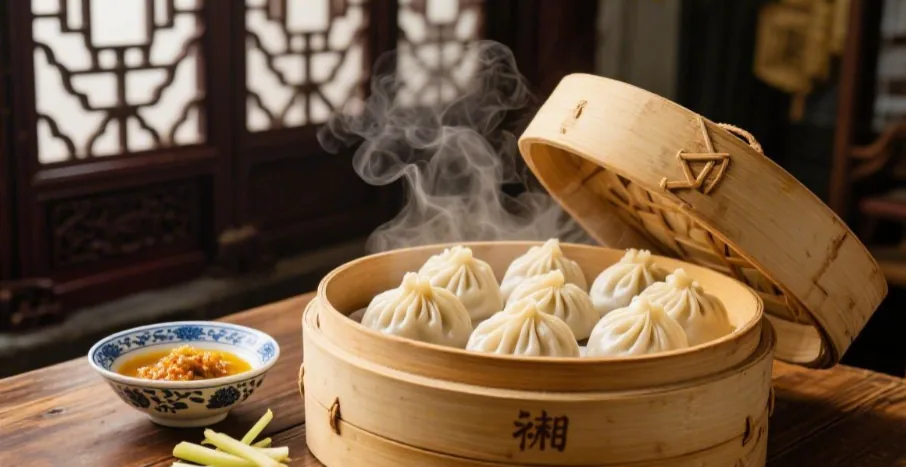
I remember once in Nanxiang Old Street, I saw a master demonstrative the process of making soup dumplings. He told me that the skin of Nanxiang Xiaolong is unfermented, relying entirely on manual kneading for its toughness. Each dumpling must have between 16 and 18 pleats to ensure that after steaming, the skin is as thin as paper yet strong enough to hold a full pouch of hot soup. This strict requirement for proportions is something industrial chain stores find hard to replicate.
- Transportation Point: Take Line 11 toward Jiading North or Huaqiao to reach Nanxiang Station.
- Ordering Skill: In the ancient town’s time-honored shops, dumplings are usually steamed to order, with a waiting time of about 15 minutes.
- Dining Etiquette: The authentic way to eat is “open a window first, then drink the soup”; it must be paired with the ginger shreds and aromatic vinegar provided.
Around 11:00 AM, I suggest locking in on a few time-honored brands near Guyi Garden. The Crab Roe Soup Dumplings are the highlight here. I have observed that good crab roe dumplings show a faint golden crab oil inside under the light. After biting a small opening, the golden broth overflows; that savory flavor comes entirely from the ingredients’ own fats without any heaviness from additives. If your appetite allows, pair it with a bowl of black glutinous rice porridge or “Dan Dang” (fried gluten puff stuffed with meat), which is a very typical Shanghai suburban lunch pairing.
At 1:30 PM, it is just a few minutes’ walk from the restaurant into Guyi Garden. This is one of Shanghai’s five classic gardens, and the ticket is only 12 yuan, offering great value. I love the stone paths and weeping willows here, especially for a post-meal stroll, which helps relieve the richness of the soup dumplings. The garden structure is very compact, and you can find many architectural remains from the Ming Dynasty. I noticed that most visitors here are local seniors playing chess or drinking tea; this sense of relaxation is completely unattainable in the Bund area.
At 4:00 PM, as the lights of the ancient town gradually turn on, I recommend browsing the stalls on the old street. You must try a Freshly Baked Begonia Cake (Haitang Gao). Begonia cake molds are specially made; the outer crust is covered with a layer of dark red caramel, and inside is piping hot bean paste. I’ve found that this cake must be eaten while hot; once cooled, the charred aroma of the crust is greatly diminished. This is one of the most representative desserts in the childhood memories of Shanghainese people.
| Period | Activity Content | Transport and Cost Details | Personal Advice |
|---|---|---|---|
| 9:30 AM – 10:30 AM | Round-trip Transport | Line 11 Nanxiang Station, one-way fare approx. 5-7 yuan | Have your digital transport card ready; take a taxi for about 15 yuan to the scenic area from the station. |
| 11:00 AM – 12:30 PM | Dumpling Tasting | Focus on Crab Roe Dumplings, priced around 35-50 yuan per steamer | Avoid tourist shops at the street entrance; choose established brands on Guyi Garden Road. |
| 1:30 PM – 3:30 PM | Garden Tour | Guyi Garden ticket 12 yuan, no advance booking required | Focus on the scenery around “Goose Playing Pond” for the best photo angles. |
| 4:00 PM – 5:30 PM | Specialty Snack Purchase | Begonia Cake, Dingsheng Cake, priced 5-10 yuan each | Observe the master sprinkling sugar; the darkness of the caramel determines the sweetness and crunch. |
Regarding this final day’s itinerary, I have several very practical operational tips:
- Crowd Avoidance: Nanxiang Ancient Town gets incredibly crowded at midday on weekends. My habit is to leave a bit earlier in the morning and finish ordering before 11:00 AM to avoid long waits at restaurant doors.
- Return Transport: If you are heading to Hongqiao Airport or the Railway Station after your trip, it only takes about 40 minutes by taxi from Nanxiang, which is much faster than going back to the city center to transfer. This can save you at least an hour of commuting time.
- Avoid Visual Pitfalls: Many signs on the old street sell “Nanxiang Xiaolong,” but many are franchises. I suggest checking if there is a master hand-wrapping the fillings on-site; these are usually made and sold fresh, ensuring better quality.
- Budget: This day’s spending is very grounded. Excluding transport, about 100 yuan per person is enough to experience Nanxiang’s most famous gardens and food.
This day’s itinerary serves as a supplement to the sophistication and prosperity of the first two days, showing a side of Shanghai more rooted in the land. I hope this three-day tasting journey allows you to take away more than just photos when you leave, but a deep understanding of the city’s taste memories.
Keep Reading
- Shanghai 3-Day Romantic Route for Couples|Old Shanghai Vibe at Lane 1192 + Riverside Promenade Cycling + Jing’an Temple Art Night Tour
- 5-Day Trip Around Shanghai | Shanghai Landmarks + Suzhou Gardens + West Lake Hangzhou, Classic Yangtze Delta Route
- 3-Day Spring Flower Viewing Tour in Shanghai | Gucun Park Cherry Blossoms + Jing’an Park Tulips, The Most Beautiful Moment of the Magic City
- Shanghai 4-Day Extreme Height Challenge | Shanghai Tower 118th Floor + Jin Mao Skywalk + Pearl Tower Revolving Restaurant
- 6-Day Shanghai Panoramic Tour | City Landmarks + Disney Resort + Zhujiajiao Water Town | No Backtracking Itinerary
Old Summer Palace — — Practical Data
Transport & Schedules
- City center → Old Summer Palace South Gate/East Gate | Bus: Bus 331, 432, 498 to the “Old Summer Palace South Gate” stop; bus 365, 320 to the “Old Summer Palace East Road/East Gate” stop.[src]
Where to Stay · Room Type · Nearby
- Haidian district, Zhongguancun/Wudaokou (along Metro Line 4) | Reference price Budget/chain hotels about CNY 300–600 per night (OTA reference) | Room tip: Standard twin/king room | Nearby add-ons: Old Summer Palace, Summer Palace, Tsinghua and Peking Universities[src]
- Around Haidian universities (youth hostels) | Reference price Budget, reference about CNY 100 per bed or several hundred CNY per night (OTA reference) | Room tip: Dorm bed/standard room | Nearby add-ons: Old Summer Palace, Tsinghua University, Peking University, Zhongguancun[src]
Typical Climate & Packing (Past Years)
- January: -9.4–1.6 °C, Freezing; the water surface of Fuhai freezes; the ice rink is viewab
- February: -6.9–4.0 °C, Cold, fewer visitors
- March: -0.6–11.3 °C, Warming and windy
- April: 7.2–19.9 °C, Crabapple and peony season; a good time for spring outings
- May: 13.2–26.4 °C, Pleasant climate
- June: 18.2–30.3 °C, The lotus pond comes into its own; afternoon showers






