



Day 1: Arrival in Lijiang, Adapting to the Highland Environment
- Itinerary and Transportation: When the plane landed at Lijiang Sanyi Airport, the clouds outside the window were low, and the dark silhouettes of mountains could be seen at the end of the runway. Choose a ride-hailing car out of the terminal (it is 5 yuan cheaper than a taxi); I am used to calling for a car with a spacious back seat so the suitcases don’t feel crowded in the trunk. Driving along the airport highway for 20 minutes, we passed a slope covered with purple primroses. The driver said that locals call them “Snow Mountain Welcoming Flowers.” Get off at the South Gate of the Ancient City. A stone tablet marked “Lijiang Ancient City” stands at the entrance of the flagstone road. An old lady selling roasted Erkuai nearby shouted “fresh from the oven,” the heat mixing with the aroma of wheat. Checked into the “Yuegulou Viewing Inn” booked in advance. The standard room in the off-season is 180 yuan/night. It is located in an alley 200 meters from the South Gate. Bougainvillea climbed the wooden corridors in the courtyard, and the rooftop terrace faces the peak of Jade Dragon Snow Mountain directly, where you can see the reflection of snow on the summit in the evening.
- Adaptation Strategy: No activities were specially arranged on the first day for fear of altitude sickness. At 3:30 PM, started walking slowly along Sifang Street. Light green moss grew in the gaps of the flagstone road, feeling soft when stepped on. Passed a shop selling handmade shawls; the lady owner handed over one to try on. The wool was thick but did not prick the neck (later I learned this is a traditional Naxi pattern). Walking to Zhongyi Market, it was already nearly 4:00 PM. The market was buzzing with people, and fruit stalls hung “picked today” signs. When picking cantaloupe, squeeze the navel of the melon. The stall auntie cut it open with a “click” of a stainless steel knife. The flesh was orange-yellow with a sandy texture. I bought half for 5 yuan/jin and ate it while holding it, the juice running down my chin, which indeed relieved my dry throat. At 5:00 PM, climbed Lion Mountain from the small path next to “Baima Longtan Temple” on the west side of the Ancient City. The stone steps were gentle and not tiring. Arrived at Wangu Tower at 5:20 PM. Choose the east viewing platform—at this time, the tour groups have not come up yet, so you can steady the camera to take a panoramic view of the Ancient City: the green-tiled roofs are gradually tinted orange, and Jade Dragon Snow Mountain in the northwest looks like a piece of white jade embedded in the blue sky. The ticket is 35 yuan. The wind was strong after reaching the top; leaning against the railing to watch the sunset, when the sun sank behind the mountain, the sky changed from pink-purple to indigo. I took more than 20 photos and none were wasted.
- Accommodation Experience: The inn is renovated from an old Naxi house. The wooden beams and pillars have growth ring textures. The room has a small humidifier (the owner said “the plateau is dry, keep it on at night”). When checking in, the owner brought self-made Rhodiola tea. A thick pottery cup held the amber tea soup, slightly bitter with a bit of sweetness, said to be made from grass roots picked from Jade Dragon Snow Mountain and dried. Drank half a cup before bed and lay in bed listening to the chirping of insects outside (not the noisy kind in the city, but a gentle “squeak”), sleeping until dawn without a headache. The owner also reminded: “Going to the snow mountain tomorrow, don’t wash your hair or bathe too frequently, as it is easy to catch a cold and aggravate altitude sickness.”
|
Item
|
Details and Expenses (Per person)
|
Personal Experience Tips
|
|---|---|---|
|
Airport Taxi
|
Ride-hailing car 30 yuan (20 minutes)
|
Choose “Economy” cars; they are enough, don’t choose business cars and spend more money
|
|
Inn Accommodation
|
Off-season standard room 180 yuan/night (including breakfast)
|
Rooftop terrace rooms need to be booked 3 days in advance for unobstructed views
|
|
Zhongyi Market Fruit
|
Cantaloupe 5 yuan/jin (half a melon about 8 yuan)
|
Walk deeper into the market; it is 1-2 yuan cheaper than the entrance stalls
|
|
Wangu Tower Ticket
|
35 yuan/person
|
Arrive before 5:30 PM to avoid peak tour group hours
|
Key Note: Don’t sleep later than 11:00 PM on the first day on the plateau; don’t drink Rhodiola tea on an empty stomach; keep a close eye on the scale when buying fruit at Zhongyi Market, as occasionally stall owners “slip” and charge an extra few cents.
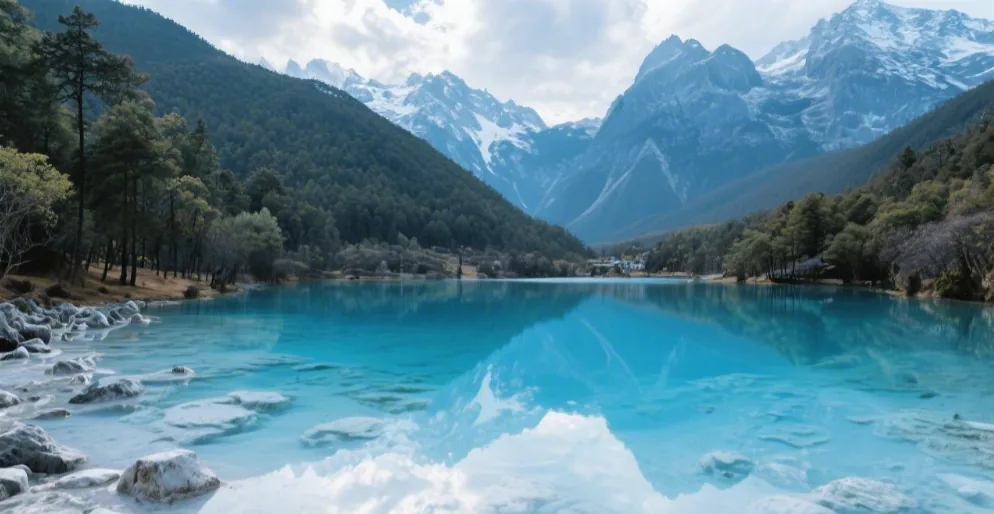
Day 2: Glacier Park Viewing + Spruce Meadow Light Hiking
Itinerary and Transportation: Departed from the North Gate of the Ancient City at 8:30 AM. Look for the blue “Jade Dragon Snow Mountain Shuttle” bus (with the snow mountain pattern printed on the body), 15 yuan/person, leaving as soon as it’s full. The driver was a Naxi uncle. Before starting the bus, he held a megaphone and shouted “Bring your ID card! Swipe the card to enter the mountain; if you don’t bring it, you’ll come for nothing.” I quickly felt my pocket to confirm. Seeing my backpack was empty, he added, “It’s cold on the mountain. Buy oxygen bottles at the ancient city pharmacy for 25 yuan/can; don’t buy them at the scenic area, they are half as expensive there.” I recorded it in my phone’s memo. The bus drove for 40 minutes. The view outside changed from the green tiles of the ancient city to undulating meadows. In the distance, the thirteen peaks of Jade Dragon Snow Mountain gradually revealed their sharp tops, and the sunlight shone on the snow with a silvery glow.
Glacier Park Viewing: Arrived at the Large Cableway station at 9:30 AM. When queuing, the wind blew into my neck. I put two heat pads on my lower back (the uncle said “if the waist and abdomen are warm, the whole body won’t be cold”). The Large Cableway is 140 yuan/person (including the mountain entrance fee). Tinnitus was obvious when the cabin rose. Looking down, there were spruce forests in the deep valley. Arrived at the 4506 meter platform at 10:00 AM. The plank road had thin ice, so I walked slowly with a trekking pole. When reaching the 4680 meter monument, I was gasping for air like I had run 800 meters. I quickly took a photo and left—the guide said “limit to 5 minutes; staying too long easily causes altitude sickness.” The monument stood at the wind vent, and my hat almost blew away. I squatted down to snap a photo with the sharp peak of Shanzidou in the background. Snow particles hit the lens and created a layer of mist, which actually gave it a sense of vastness.
Food Records: Arrived at “Snow Kitchen Restaurant” exactly at 12:00 PM for the buffet (68 yuan/person). The chicken rice noodles in the hot food area were piled high. The soup was milky white with a hint of herbal fragrance. The chicken was shredded and mixed with leeks. I drank three bowls before warming up. The cold dishes included cold-mixed walnuts and pickled shallots. I took one bite and put it down—my stomach felt cold and tight during altitude sickness; hot food is more reliable. An aunt at the next table said “last week I brought my grandson, and the kid ate cold dishes and had an upset stomach.” I was secretly glad I listened to the driver’s advice.
Spruce Meadow Light Hiking: Transferred to the Small Cableway at 2:00 PM (60 yuan/person). The cabin passed over the spruce forest, and sunlight leaked through in spots. Turn right after getting off the cableway to reach the wooden plank road. The whole path is 2 kilometers of flat road. The spruce trunks on both sides were straight, the bark cracked with deep lines, and the air was moist with the smell of pine needles. Walking to the middle section, there was a viewing platform. The snow mountain and meadow reflections in the same frame were amazing—the meadow looked like a green carpet spreading to the foot of the mountain, and Jade Dragon Snow Mountain was reflected in a small puddle nearby. I lay on the ground to take the photo, not caring if my skirt got muddy. At the end of the plank road, there were herdsmen leading small horses for a ride at 10 yuan a lap. I didn’t dare try (fearing the horse might startle and cause altitude dizziness).
Return and Snapshots: Returned at 5:00 PM. The bus stopped for ten minutes when passing Ganhaizi. Black yaks were scattered on the grassland; some were lying down ruminating, some were flicking their tails to drive away flies. I took a few photos through the bus window. The herd looked up at me, their eyes as gentle as the cats in the ancient city.
|
Item
|
Cost (Per person)
|
Details and Experience Tips
|
|---|---|---|
|
Shuttle Bus
|
15 yuan
|
Get on at the “Zhongyi Market” stop sign at the North Gate; don’t believe those soliciting on the roadside
|
|
Large Cableway
|
140 yuan
|
Put on heat pads (lower back + abdomen) while queuing; walk slowly at the summit
|
|
Oxygen Bottle
|
25 yuan (Bought in Ancient City)
|
Sold for 50 yuan/can on the mountain; 2 cans are enough
|
|
Snow Kitchen Lunch
|
68 yuan
|
Only eat hot food; drink more bowls of chicken rice noodle soup to warm the body
|
|
Small Cableway
|
60 yuan
|
Choose the afternoon for hiking; the light is soft and not glaring, and reflections are clear
|
I remember meeting a local big brother carrying a camera at the Spruce Meadow plank road. He said “to take a reflection of the snow mountain, you have to wait for the wind to stop so the water surface is like a mirror.” I waited until 3:30 PM, and sure enough, after a gust of wind, the puddle calmed down. My heart skipped a beat when I pressed the shutter—that photo later became my phone wallpaper, and every time I look at it, I think of the scent of pine needles in the forest.
Key Note: Don’t run or jump in Glacier Park; be quick when taking photos at the 4680 meter monument; the Spruce Meadow wooden plank road occasionally has ice, so wear non-slip shoes; use the oxygen bottle as soon as possible after opening, don’t leave it until the next day as it may lose effectiveness.
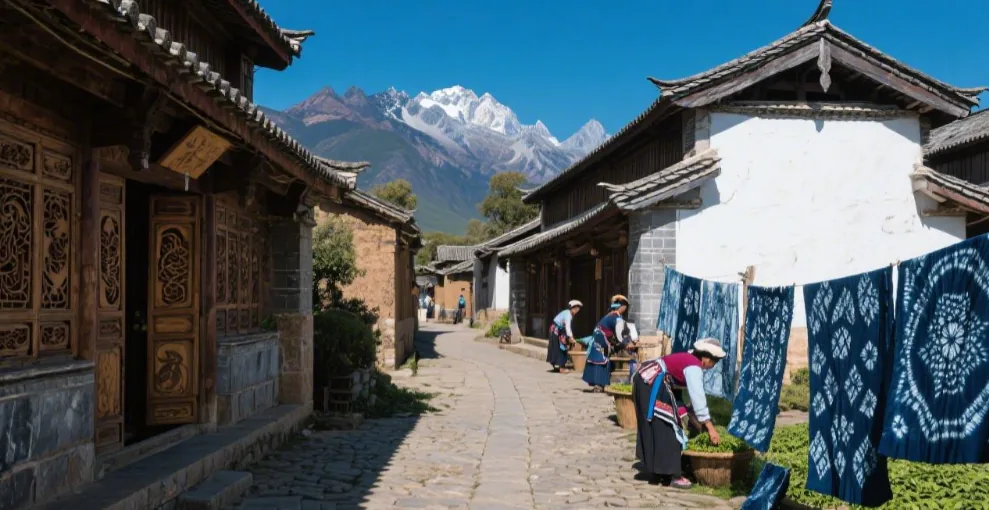
Day 3: Blue Moon Valley Deep Roaming + Baishui River Light Hiking
Itinerary and Transportation: Took a taxi from the South Gate of the Ancient City at 8:20 AM. The driver was a local Naxi who knew the roads and took a shortcut via Yuquan Road for a 25 yuan fare (3 yuan less than the navigation estimate). On the way, we passed a ridge with yellow wild chrysanthemums. He said, “These are the flowers ‘bordering’ the snow mountain.” Arrived at the Blue Moon Valley entrance at 8:50 AM. The electronic screen at the door showed “300 tourists today,” less than half of the peak season. I specifically arrived before 9:00 AM just to avoid the noise of tour groups after 10:00 AM—sure enough, there were only a few people taking photos by the lake, and the sound of water was clearer than human voices.
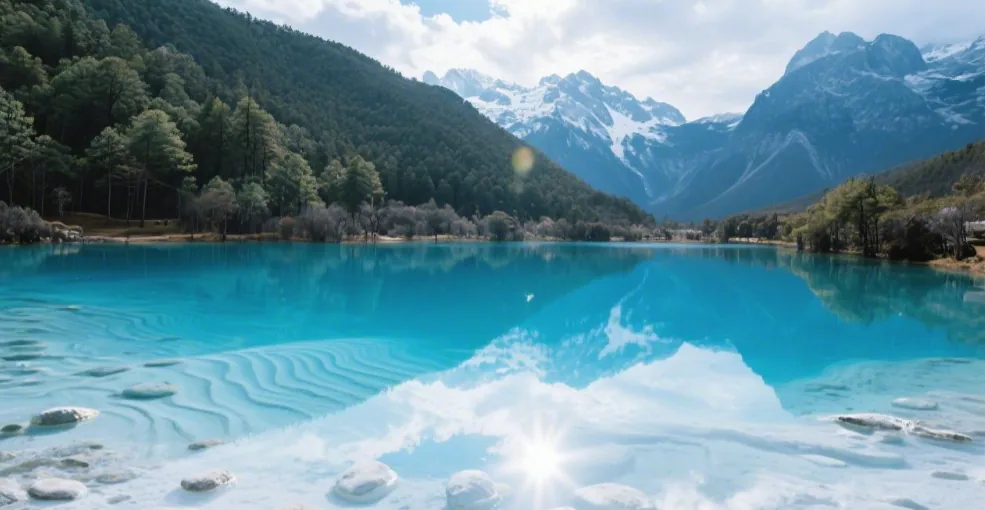
Blue Moon Valley Route: Follow the signs; the four lakes each have their own flavor.
Yuye Lake: The first lake, the water color is like diluted blue ink. The wooden plank road on the shore has been newly renovated and makes no squeaking sound when stepped on. When the morning light shines obliquely, there are fine golden spots on the water surface. I squatted low to take a reflection, and even the shadow of my own hat was clear.
Jingtan Lake: The clearest one, the water is deep enough to see the bottom, and the water grass floats like green silk ribbons. I took off my shoes and stepped into the water (it just reached my ankles), watching the snow mountain peak peek out from behind the spruce forest on the opposite bank, its reflection swaying in the water like an un-stretched painting.
Blue Moon Lake: In this area, the water color is Tiffany Blue. The stones on the shallow beach have been worn round by the current. I moved a flat stone to sit on and put my feet in the water. The chill climbed up my calves, but I was reluctant to leave—this color is more translucent than any filter.
Tingtao Lake: The last one is a waterfall lake. The water flows down from a ten-meter high cliff with a roar that drowns out the wind. I opened my phone to record a video. In the lens, the mist from the waterfall splashed onto my face, mixing with the scent of pine needles, which felt more immersive than just listening to the sound.
Food Records: Strolled to the “Yushuizhai Restaurant” next to Jingtan Lake. The wooden house smelled of firewood. Ordered Butter Tea (15 yuan/pot) and Roasted Erkuai (5 yuan): The butter tea was served in a copper pot, with a milky scent and a bit of saltiness. Drinking it felt like carrying a small heater in my stomach. The roasted Erkuai was freshly stuck to the furnace wall, with a crispy crust, filled with sweet sauce and minced meat. The sweet and savory taste paired with the tea was very effective for relieving fatigue after walking. An old couple at the next table said “this shop’s butter tea is thicker than in the ancient city, we drank three pots in a row.” I believed them and topped up another half pot before leaving.
Baishui River Light Hiking: Walk north from the exit of Blue Moon Valley. It’s a 1.5 km gentle gravel road. The gravel particles are not large, so wearing sports shoes doesn’t feel bumpy. The river water is melted snow, so clear that the white stones at the bottom are visible. Where the current is fast, it crashes into white waves, like a handful of crushed silver. During the hike, I encountered a patch of wild strawberries with red fruits hidden under the leaves. I picked two to taste; they were sour enough to make me frown but very fresh. At the end, there was a blue tent set up by a herdsman. An older sister was selling freshly squeezed yak milk (10 yuan/bag). The hot milk in a plastic bag had a slight grassy smell. I drank it while walking, and the warmth surged from my throat to my fingertips.
Avoiding Pitfalls: At the entrance, there were battery cars soliciting business (50 yuan/person), saying “you can sit if you can’t walk.” I tried a section of the road and found that a 2-hour walk is enough—along the way, you can photograph the wooden plank road from Yuye Lake to Jingtan Lake and the close-up of the waterfall at Tingtao Lake. You would miss these if you took a car. Moreover, when hiking, the wind blows from the valley, which is much more comfortable than being cooped up in a car.
I remember meeting a Tibetan auntie by Jingtan Lake. She pointed at the lake and said, “This water comes down from Jade Dragon Snow Mountain. Washing your eyes can clear your heart.” I scooped up some water to wash my face; it was wake-up cold, and when looking at the reflection, I felt that even my heart became translucent.
|
Item
|
Cost (Per person)
|
Details and Experience Tips
|
|---|---|---|
|
Ancient City Taxi
|
25 yuan
|
Get on at the South Gate; choose a local driver (knows the roads and doesn’t detour)
|
|
Blue Moon Valley Route
|
Free (Included in mountain entrance fee)
|
Arrive before 9:00 AM; Jingtan Lake is best for taking off shoes and stepping in the water for reflections
|
|
Yushuizhai Lunch
|
20 yuan (Butter tea + Erkuai)
|
Choose a window seat; it’s more pleasant to drink tea while looking at the lake
|
|
Baishui River Hiking
|
10 yuan (Yak milk)
|
Wear sports shoes for the gravel road; the milk at the end is freshly squeezed and purer
|
|
Avoiding Pitfalls
|
Battery car 50 yuan
|
A 2-hour walk is enough; the scenery along the way is much more than what you see from the car
|
Key Note: The stones in the shallows of Blue Moon Lake are slippery, so hold onto the wooden stakes on the shore when stepping in the water; bring a bottle of water for the Baishui River hike as there are no supply points along the way; don’t leave the yak milk for too long, it’s best to drink it while it’s warm.
Day 4: Full Day Roaming in Baisha Ancient Town
Itinerary and Transportation: At 9:00 AM, took Bus No. 6 (2 yuan/person) near the Large Water Wheel in the ancient city. The bus body was printed with the green “Lijiang Bus” logo and stops on request. Most of the people on the bus were local elderly people carrying bamboo baskets to buy vegetables. I chose a window seat to watch the rice fields outside change from golden yellow to light green. After 25 minutes, get off at the “Baisha Town Government” station. If you are in a hurry, you can choose a shared car (10 yuan/person). The drivers are mostly residents of the ancient town and will take you to see the old locust tree at the alley entrance—when I shared a car last time, the driver uncle pointed to a cactus at the base of a wall and said, “This plant is older than me.”
Cultural Experience:
Baisha Murals: Walk north from the bus station for 5 minutes to Wenchang Palace. The 30 yuan/person ticket includes the visit. The murals are on three walls inside the hall, featuring Ming Dynasty Tibetan Buddhist themes. In the painting of Sakyamuni preaching, the folds of the disciples’ robes are painted with mineral pigments—the guide (a Naxi auntie wearing a blue cloth shirt, 20 yuan/time) said “the red is made from cinnabar, the blue uses lapis lazuli, and the gold is mixed with gold leaf. They can be preserved for hundreds of years after painting.” I leaned in to look; the pigment layer had fine cracks like scabs of time. The auntie pointed to a corner and said “this piece was painted by Han painters and Lamas invited by the Lijiang Tusi in the Ming Dynasty, mixing Han and Tibetan styles.” The light in the hall was dim, so she specially turned on a flashlight to show the pigment details, making me lose track of time while listening.
Tie-dye Workshop (“Bunong Bell” Shop): Come out of the murals and walk west along Sifang Street. The one with blue dyed cloth hanging at the alley entrance is it. The shop owner is a quiet Bai girl who taught me how to dye a square scarf (50 yuan/piece): First, tie the scarf into a “twist” with rubber bands, then soak it in a Radix Isatidis plant dye bucket (dark blue with a hint of green, smelling like grass juice). After soaking for 20 minutes, take it out; it turns indigo after oxidation. “Tie it tight to have patterns,” she helped me adjust the position of the rubber bands, saying “this cloud pattern of yours will blur, looking like snow mountain mist.” Take it away after drying for 2 hours. The edge of the scarf still has the fuzz of plant fibers, which feels very authentic when used as a scarf at home.
Food Records: At 12:00 PM, went to “Naxi Zaguo Cai” to eat Cured Rib Hotpot (50 yuan per person). The shop is opposite the ancient town stage. The wooden sign is peeling but there are many locals. The cured ribs are smoked from black pig ribs, the meat is firm with a smoky fragrance. The soup base is stewed with potatoes and arrowhead. Must add mint leaves (the owner said “it relieves greasiness and adds freshness; outsiders often forget to add it”). I first scooped a bowl of soup; the mint leaves floated on top, and it tasted like chicken soup with cooling oil added. For side dishes, order water-lily (an aquatic vegetable that becomes soft and absorbs the soup). The dipping sauce uses scorched chili flakes + minced Houttuynia cordata. A Naxi grandmother at the next table saw me eating with gusto and added another spoonful of ribs to my plate.
Viewing Spot Experience: At 5:00 PM, went to “7 Sea Bar” on the second floor in the northwest corner of the ancient town. I heard guitar music while climbing the narrow wooden ladder. There were rattan chairs on the second-floor terrace. Order a latte (25 yuan); the beans are Yunnan small-grain species, and the milk foam is dense with a bit of charred aroma. Stayed until 6:00 PM when the peak of Jade Dragon Snow Mountain began to turn gold. The sunset dyed the snow orange-red, like putting a fluffy hat on the mountain top. The owner said “come half an hour before sunset every day, the light is softest.” I took a photo of the snow mountain with the roofs of the ancient town, where a few foxtails were still growing in the cracks of the tiles.
I remember when I was dyeing the scarf in the tie-dye workshop, I met a designer from Beijing. She said “cloth dyed with Radix Isatidis becomes softer the more it’s washed, unlike chemical dyes which become stiff.” I actually washed it twice later, and sure enough, the color didn’t fade, but instead gained a bit of old-fashioned gentleness.
| Item | Cost (Per person) | Details and Experience Tips |
|---|---|---|
| Bus/Shared Car | 2 yuan (Bus) / 10 yuan (Shared car) | Get on Bus No. 6 at the Large Water Wheel station, 25 minutes arrive; for shared cars, you can ask the driver to tour old alleys along the way |
| Baisha Murals | 30 yuan (Ticket) + 20 yuan (Guide) | Hire a guide to hear the stories of mineral pigments; the light in the hall is dim, so bring a small flashlight |
| Tie-dye Experience | 50 yuan (Scarf) | Tie and dye on-site at “Bunong Bell” shop; soak in Radix Isatidis dye for 20 minutes |
| Cured Rib Hotpot | 50 yuan (Per person) | Add mint leaves to the soup base; pair with water-lily and scorched chili dipping sauce |
| Viewing Spot | 25 yuan (Latte) | Second floor of “7 Sea Bar”; take a seat half an hour before sunset to photograph the golden peak |
Key Note: Flash is prohibited inside the Baisha Murals hall, use natural light for photos; don’t tie the scarf too loosely, otherwise the pattern will be blurred; don’t drink too much hotpot soup, leave some room to taste the roasted potatoes given by the owner.
Day 5: Distant View from Maoniuping + Relaxation at Ganhaizi Meadow
- Itinerary and Transportation: At 9:00 AM, took the scenic area shuttle bus (20 yuan/person) near the Zhongyi Market in the ancient city. The driver was a Naxi young man who grew up at the foot of Jade Dragon Snow Mountain. He said, “Maoniuping is higher than Spruce Meadow; the wind is stronger but there are fewer people.” After 50 minutes of driving, we passed Baishui River, and he pointed out the window: “Look at that white area, that’s the riverbed you walked yesterday.” When we arrived at the Maoniuping Cableway station, the mountain wind whipped snow particles onto my face, so I quickly wrapped my scarf tight.
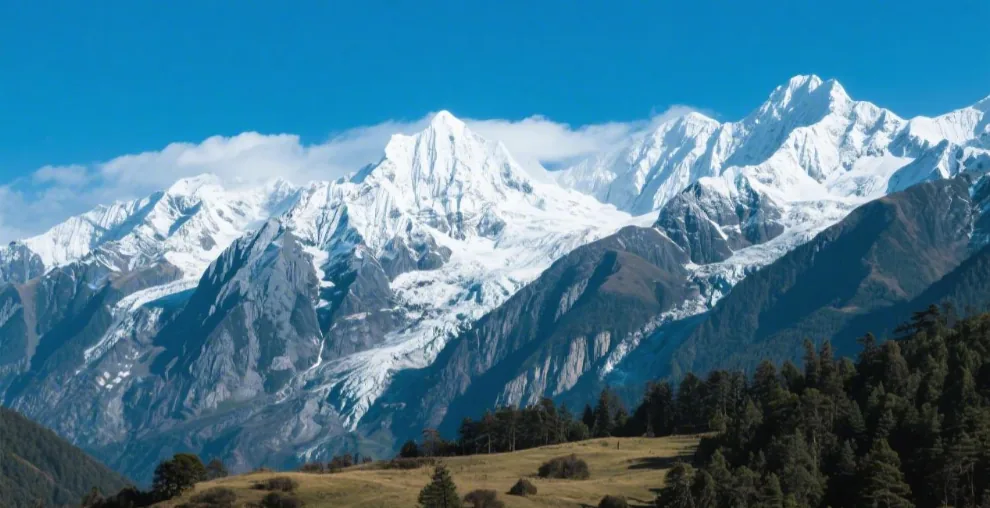
- Maoniuping Route: Take the Middle Cableway (65 yuan/person) up. The cabin glass was wiped clean, allowing a clear view of the meadow below changing from deep green to light yellow. At 10:00 AM, arrived at the 3800 meter platform. The wind was whistling, so I held onto the railing to stand firm—the view here is open and unobstructed, with the Shanzidou peak right in front of you. The snow on top looked as neatly cut as if by a knife. Walk along the 3 km loop on the left wooden plank road. The wooden boards made a “creak” sound when stepped on. Purple Gentiana flowers (a sign of high altitude) were blooming along the plank road. Walking to the middle viewing platform, I set the camera on a tripod to take a close-up of Shanzidou peak: the snow particles sparkled like fine diamonds in the sun, and the clouds at the mountainside were like gauze scarves wrapped around the peak. It took 1 hour and 40 minutes to finish the loop and return to the cableway station. It was not tiring but I had to walk slowly (easy to pant at high altitude).
- Food Records: For lunch, I brought my own dry food—yak beef jerky (30 yuan/bag, choose the ones with tendons as they are fragrant to chew) and highland barley cake (5 yuan/piece, firm and hunger-resistant) bought at Zhongyi Market the night before. Roasted potatoes at the scenic area restaurant are 8 yuan each. I bought one to try; the skin was scorched black and the inside was floury, sprinkled with chili powder, but it was twice as expensive as my dry food and not worth it. However, there were herdsmen on the platform selling freshly boiled milk tea (10 yuan/cup), which was savory with a milky taste; the whole person warmed up after drinking it.
- Ganhaizi Leisure: At 1:30 PM, came down from Maoniuping and took a taxi for 10 minutes to the free area of Ganhaizi (Don’t enter the paid “Ganhaizi Scenic Area”). Found a leeward grass slope to spread out the rented picnic mat (10 yuan/piece, the mat is thick and moisture-proof) and lay down to watch the clouds floating among the snow mountains. Waiting for the softest light between 3:00-4:00 PM, the horse herds came down from the other side of the mountain to graze: brown and black horses were scattered on the meadow, some bowing their heads to graze, some flicking their tails to drive away flies. I took photos from 50 meters away, and they didn’t hide. The background was the Jade Dragon Snow Mountain peaks, the snow-capped summits turning pink in the sunset. In the photos, the horse herd looked like black beans scattered on a green carpet.
- Cost Reference: Joint ticket for the two places (Mountain entrance fee 100 yuan + Middle Cableway 65 yuan) total 225 yuan/person (including free entry to Ganhaizi), picnic mat rental 10 yuan, self-brought dry food 35 yuan, total expenditure 270 yuan/person.
|
Item
|
Cost (Per person)
|
Details and Experience Tips
|
|---|---|---|
|
Shuttle Bus
|
20 yuan
|
Get on near Zhongyi Market; 50 minutes to Maoniuping Cableway station
|
|
Middle Cableway
|
65 yuan
|
Choose a window seat in the cabin to photograph the color change of the meadow under the mountain
|
|
Maoniuping Route
|
Free (Included in joint ticket)
|
3 km loop along the left wooden plank road; middle viewing platform to photograph close-up of Shanzidou peak
|
|
Lunch
|
35 yuan (Self-brought dry food)
|
Choose yak beef jerky with tendons; highland barley cake is better with milk tea
|
|
Ganhaizi Leisure
|
10 yuan (Picnic mat)
|
Photograph horse herds between 3:00-4:00 PM; spread the mat on a leeward grass slope in the free area
|
|
Joint Ticket Total
|
225 yuan
|
Mountain entrance fee 100 yuan + Middle Cableway 65 yuan, including free entry to Ganhaizi
|
Key Note: The wind is strong in Maoniuping, so wear a windproof hat to keep your ears from freezing; the wooden plank road occasionally has gravel, so wear non-slip shoes; don’t get too close to the horse herds in Ganhaizi (fear of kicking), use a telephoto lens to take more natural photos.
Day 6: Packing Up and Returning
Souvenir Shopping: At six in the morning, I strolled to the early market at Zhongyi Market. Bamboo baskets were stacked with dew-covered green vegetables, and steamers were puffing white steam. The “Jiahua Freshly Baked Flower Cake” stall is the third one at the entrance. The iron furnace is turning the baking tray. The crust is golden with scorched spots, 3 yuan/piece. I bought six (bite into it while it’s hot, the pastry flakes off, the rose filling is sweet but not greasy, with some flower petals). The stall auntie said “it’s also delicious when the crust is soft after two days, don’t put it in the fridge.” For dried mushrooms, go straight to “Zhongyi Market No. 135”—the owner is a middle-aged man wearing glasses. Matsutake slices are spread on bamboo trays in the shop. The color is light yellow with a bit of white, dry and not brittle (he picked up a piece and rubbed it to show me “no sulfur fumigation, it’s good if it doesn’t crumble when rubbed”), 120 yuan/jin, which is 30 yuan cheaper than the supermarket. Before leaving, he also stuffed a bag of sample dried porcini, “it’s very fragrant to stew chicken when you go back.”
Transportation Connection: The “Yuegulou Viewing Inn” where I stayed is close to the South Gate of the Ancient City. Call for a ride-hailing car at 7:00 AM (use Didi and choose “Economy”, 80 yuan to the airport). The driver is a local who said, “The morning peak starts at 7:30 and blocks Qixing Street. It’s safe to leave via Xianggelila Avenue at 7:00.” After 40 minutes of driving, we passed Heilongtan Park; the lake was still covered in mist, like a dream that hasn’t fully awakened. Arrived at the airport at 8:10 AM, the check-in counter just opened. Check-in and security were smooth all the way, with no hurry. If you wake up late and miss the time, he suggested “take Yuxue Avenue to bypass the Ancient City, it’s 10 minutes more but safer.”
Total Expenditure Reference (Single person 6 days):
|
Item
|
Amount
|
Details
|
|---|---|---|
|
Accommodation
|
900 yuan
|
5 nights at “Yuegulou Viewing Inn” standard room (180 yuan/night including breakfast)
|
|
Tickets & Cableway
|
About 800 yuan
|
Jade Dragon Snow Mountain entrance fee 100 yuan + Large Cableway 140 yuan + Small Cableway 60 yuan + Middle Cableway 65 yuan + Baisha Mural 50 yuan + Wangu Tower 35 yuan, etc.
|
|
Dining & Transport
|
About 600 yuan
|
Including taxi (Avg. 50 yuan/day), three meals (Avg. 70 yuan/day, including cured rib hotpot, butter tea, etc.)
|
|
Total
|
2300 yuan
|
High cost-performance in the off-season; accommodation increases by 50% in the peak season
|
Summary and Suggestions: After these 6 days, the oxygen bottle + sunglasses + SPF50 sunscreen for the snow mountain trip is really no joke—at 4506 meters in Glacier Park, you pant after walking a few steps without an oxygen bottle; the reflection of snow on a sunny day is glaring, so wear sunglasses to see the road clearly; plateau UV can turn your arms red, I applied sunscreen and reapplied twice. Light hiking at Spruce Meadow/Maoniuping is easier than Glacier Park (the former is 2 km on flat road, the latter is a 3 km loop, and the altitude is 500 meters lower), and the scenery is not bad: Spruce Meadow for the snow mountain meadow reflection, Maoniuping for the close-up of Shanzidou peak. Baisha Ancient Town is more original than Dayan Ancient City—there aren’t so many internet-famous shops, the door lintels of old houses are carved with Naxi script, the tie-dye workshop owner is quiet but has solid skills. Sitting at “7 Sea Bar” in the evening to watch the golden snow mountain summit is much quieter than the bar street in the ancient city.
I remember on the return day, I met a Naxi auntie at the airport who traveled with me in Baisha Ancient Town. She was carrying a bag of wild mushrooms and said “next time come stay in my yard, it’s more relaxed than an inn.” Only then did I realize that the meaning of travel is not just seeing the scenery, but also these steady feelings of random encounters—like the flower cakes in Zhongyi Market and the matsutake slices in shop No. 135, staying in memory with the atmosphere of daily life.
Key Note: Don’t buy too many flower cakes as souvenirs (7-day shelf life), and seal matsutake slices to prevent moisture; leave 2 hours for return taxi (including check-in and security), departing at 7:00 AM is the steadiest; total cost does not include shopping, adjust as needed.
You May Also Like
- 4-Day Family-Friendly Yunnan Tour | Kunming Zoo + Dianchi Haigeng + Stone Forest, A Stress-Free Route Perfect for Kids
- 8-Day Deep Dive into Yunnan’s Mountains, Water & Ancient Towns | Dali + Shaxi + Lijiang, Slow-Paced Itinerary
- 5-Day Yunnan Plateau Secret Realm Tour | Shangri-La Dukezong Ancient City + Potatso + Songzanlin Monastery, Experience Tibetan Scenery
- 7-Day Popular Western Yunnan Loop Tour | Kunming + Dali + Lijiang, Classic Comfortable Travel Plan
- Yunnan Travel Outfit Pitfalls to Avoid | Does Dali-Lijiang Have “Four Seasons in One Day” Sun Protection & 3-Layer Dressing Tips
Lijiang — — Key Facts
Typical Climate & Packing (Past Years)
- January: 0.3 °C–14.0 °C °C, [1981–2010 climate averages, daily average 6.4 °C]
- February: 2.5 °C–15.0 °C °C
- March: 5.4 °C–17.3 °C °C
- April: 8.3 °C–20.2 °C °C
- May: 11.3 °C–22.9 °C °C
- June: 14.5 °C–24.1 °C °C, Rainy season






