



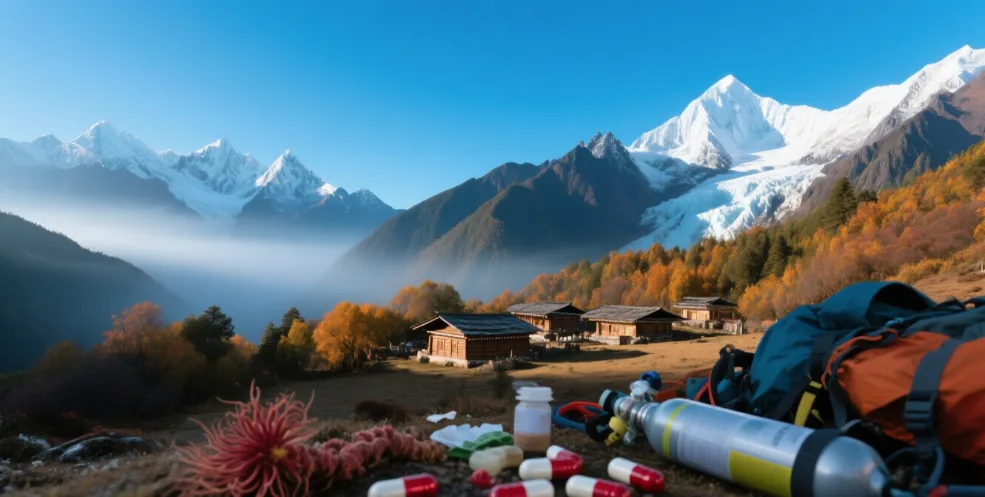
Lijiang and Shangri-La are located at altitudes of approximately 2400–3300 meters, with Jade Dragon Snow Mountain reaching a peak of 4680 meters. The incidence rate of altitude sickness is about 30%–40%. It is recommended to take Rhodiola rosea (300–600mg daily) 7 days in advance. Avoid strenuous exercise on the first day of arrival and drink plenty of water (≥2L/day). Medications such as Acetazolamide, Ibuprofen, and Glucose oral liquid can be prepared. For Yubeng hiking, it is advised to ascend slowly and take breaks in stages. If persistent headache or nausea occurs, descend immediately—safety first.
Levels of Altitude Sickness
Altitude sickness typically shows significant probability changes starting from 2500 meters: about 20% of people experience mild symptoms at 2500 meters, the proportion rises to 30%—60% above 3000 meters, and may exceed 70% above 4000 meters. Taking Yunnan routes as an example: Shangri-La is about 3300 meters, Yubeng is about 3050 meters, and Jade Dragon Snow Mountain is 4680 meters. Physical reactions vary significantly at different altitudes. Altitude sickness is generally divided into mild, moderate, severe stages, and serious complication stages, with judgments based primarily on altitude, the drop in blood oxygen, headache severity, mobility, and breathing conditions.
Mild Altitude Sickness
The altitude of 2500—3200 meters is the first adaptation zone for the human body entering the highlands from low altitudes. As air pressure drops, the partial pressure of oxygen in the air decreases, and the amount of oxygen entering the blood with each breath reduces. Based on sea level, the effective utilization rate of oxygen in the air at 3000 meters is about 70% of that at sea level. Most people start to experience mild reactions within 6—24 hours of entering this altitude.
In Yunnan travel routes, this stage appears very early.
- Lijiang Old Town: Approx. 2400m
- Dukezong Old Town, Shangri-La: Approx. 3280m
- Yubeng Village: Approx. 3050m
Many tourists experience mild altitude sickness on the first night after traveling 3—4 hours by car from Lijiang to Shangri-La.
The earliest changes in the human body usually come from the respiratory system. When blood oxygen drops, the brain increases the breathing rate to compensate for the oxygen supply. In plain areas:
| Metric | Average Range |
|---|---|
| Blood Oxygen | 96%—99% |
| Respiration Rate | 12—16 times/minute |
| Heart Rate | 60—80 bpm |
Common changes after entering 3000 meters:
| Metric | Common Range |
|---|---|
| Blood Oxygen | 90%—94% |
| Respiration Rate | 16—20 times/minute |
| Heart Rate | 75—95 bpm |
A drop in blood oxygen of about 5%—8% is the most common physiological change in mild altitude sickness.
Many people feel “a bit tired” or experience “light sleep” on the first day, which is mostly related to blood oxygen changes. As the body adapts to high altitudes, it gradually increases breathing depth and frequency while increasing the oxygen-carrying capacity of red blood cells.
Common physical manifestations are usually mild:
- Mild headache (mostly at the temples or the back of the head)
- Lighter sleep or waking up 1—2 times at night
- Slightly faster breathing while walking
- Slightly decreased appetite
- Physical strength decreased by about 10%—20%
These reactions are most obvious during the first night at high altitude. During activities the next day, many people can clearly feel relief.
Many tourists in Yunnan experience a typical itinerary:
- Morning in Lijiang at 2400m
- Afternoon in Shangri-La at 3300m
- Altitude increase of about 900m
If the altitude rise exceeds 800 meters/day, the body’s adaptation pressure increases significantly.
Comparing two itinerary paces:
| Ascent Method | Probability of Altitude Sickness |
|---|---|
| Ascending 300—500m daily | Approx. 20% |
| Ascending over 800m daily | 40%—50% |
The Yubeng trek is a typical example.
Xidang Village is about 2700m, and Upper Yubeng Village is about 3150m, with an altitude increase of about 450m on the day of the hike. Many people experience a mild headache on the night they arrive in Yubeng, but it improves significantly during activities the next day.
The body needs time to adapt to high altitudes. After entering 3000 meters, several changes gradually occur in the human body:
- Breathing rate increases by about 20%
- Cardiac output increases by about 10%
- Red blood cell production begins to increase within 24—48 hours
Full adaptation to an altitude of 3000 meters usually takes 2—3 days.
Moderate Altitude Sickness
After entering the 3200—4000 meter range, the proportion of altitude sickness occurrences rises significantly. Medical statistics show that at an altitude of 3500 meters, about 40%—65% of people will experience moderate altitude sickness symptoms. This stage is common during stays in Shangri-La, the Yubeng trek, and Meili Snow Mountain viewing routes. Compared to the mild stage, the body’s compensation for the low-oxygen environment has significantly increased, but oxygen supply is still insufficient. Many people experience obvious discomfort within 12—36 hours of reaching the new altitude.
Sea level pressure is about 1013hPa, while in 3500-meter regions, the pressure is about 650hPa, with the partial pressure of oxygen dropping by about one-third. Less oxygen enters the lungs with each breath, making the drop in blood oxygen more pronounced. Blood oxygen levels for many at this altitude are typically:
| Altitude | Common Blood Oxygen |
|---|---|
| Plain | 96%—99% |
| 3000m | 90%—94% |
| 3500m | 85%—92% |
| 4000m | 80%—88% |
When blood oxygen drops, the brain and heart need to increase their workload to maintain oxygen supply, so the resting heart rate often rises to 85—105 bpm. Some people may even reach over 110 bpm, which is why many feel a noticeable heartbeat in the highlands.
Physical reactions usually intensify gradually during the trip. For example, a common route:
- Lijiang 2400m
- Shangri-La 3300m
- Yubeng 3050m
- Meili Snow Mountain Pass 3800m+
As the altitude gradually approaches 3500 meters, many begin to experience more obvious discomfort. Headaches typically last longer than 3—6 hours and are accompanied by decreased appetite or mild nausea.
Typical manifestations of moderate altitude sickness usually include multiple symptoms appearing simultaneously. In traveler records, high-frequency situations include:
- Persistent headache (approx. 60% of travelers)
- Decreased appetite (approx. 40%)
- Mild nausea (approx. 30%)
- Nighttime insomnia (approx. 50%)
- Shortness of breath while walking (approx. 45%)
Many find their hiking speed significantly reduced.
In plain areas:
- Normal hiking speed: 4—5km/h
At an altitude of 3500 meters:
- Common speed: 2.5—3.5km/h
The increase in physical exertion is related to oxygen supply. When the human body performs activities of the same intensity at high altitude, energy consumption typically increases by about 15%—25%.
Sleep changes are particularly noticeable in the moderate stage. Many experience “shallow sleep” on the first night in Shangri-La or Yubeng. Research data shows:
| Altitude | Proportion of Deep Sleep |
|---|---|
| Plain | 20%—25% |
| 3500m | 10%—15% |
Additionally, nighttime breathing rhythms may show short pauses. Blood oxygen drops more significantly during sleep; some people experience a brief drop to 82%—88% in the early morning.
As the body gradually adapts, red blood cell production begins to increase. 24—48 hours after entering the highlands:
- Red blood cell production rate rises
- Hemoglobin gradually increases
The human body compensates for the low-oxygen environment by improving the oxygen-carrying capacity of the blood.
Hydration is very important at this stage. High-altitude air humidity is usually lower than 30%, and faster breathing leads to increased water loss. In 3500-meter regions:
- Water loss through respiratory evaporation increases by about 400—600ml/day
The recommended daily water intake for travelers is maintained at:
- 2.5—3 liters
If water intake is insufficient, headaches and fatigue tend to be more pronounced.
Dietary calories also affect physical recovery. The basal metabolic rate slightly increases in high-altitude environments. Research data shows that at an altitude of 3500 meters:
- Basal metabolic rate increases by about 10%—15%
Therefore, many hiking routes increase the proportion of staple foods, such as rice, noodles, or highland barley. Carbohydrates can be converted into energy faster.
In actual travel, moderate altitude sickness is most likely to appear after a day of continuous activity. For example:
- Hiking 10—15 kilometers during the day
- Altitude climb of 500—800 meters
- Entering a 3500-meter accommodation point that night
In this case, the burden on the body is more evident.
Common experiences typically include:
- Headache worsening after hiking
- Reduced food intake at dinner
- Waking up 2—3 times at night
If activity is reduced the next day, many people gradually recover within 24—48 hours.
Simple observation methods common in travel groups include:
- Blood oxygen below 90% but above 85%
- Heart rate about 20 bpm higher than on the plains
- Needing to stop briefly after walking 100—200 meters
Severe Altitude Sickness
When the altitude exceeds 4000 meters, the proportion of oxygen in the air remains 21%, but the pressure continues to drop, reducing the oxygen the lungs can absorb. Taking sea level as a reference, the effective oxygen partial pressure at 4500 meters is about 55%—58% of that at sea level. When staying at this altitude, common blood oxygen ranges for the human body drop to 75%—85%, with some even falling below 75%.
Locations in Yunnan travel where this altitude is most easily encountered include:
| Location | Altitude |
|---|---|
| Jade Dragon Snow Mountain Glacier Park | 4680m |
| Certain Meili Snow Mountain Passes | 4200—4500m |
| High points of Yubeng Sacred Waterfall route | 3900m+ |
Many tourists reach Jade Dragon Snow Mountain from Lijiang in a short time. Typical route:
- Lijiang Old Town: Approx. 2400m
- Spruce Meadow Cable Car Station: Approx. 3200m
- Glacier Park Platform: 4680m
The total ascent height is nearly 2200 meters, while the cable car operation time is usually only 15—20 minutes. The speed of altitude change is fast, making it difficult for the body to complete gradual adaptation.
As altitude increases, pressure on the human respiratory and circulatory systems increases. Above 4000 meters, common physical metric changes include:
| Metric | Plain | Common value at 4500m |
|---|---|---|
| Blood Oxygen | 96%—99% | 75%—85% |
| Resting Heart Rate | 60—80 | 90—120 |
| Respiration Rate | 12—16 times/minute | 20—28 times |
When blood oxygen drops more than 10%—15%, oxygen supply to the brain decreases, and many experience obvious headaches or dizziness.
Travelers usually stay at high-altitude attractions for a short time. For example, the Jade Dragon Snow Mountain Glacier Park platform:
- Average tourist stay time: 30—60 minutes
- Hiking boardwalk length: approx. 700 meters
- Actual climb height: approx. 120 meters
During this short-distance hike, many find their walking speed significantly reduced. In plain areas:
- Normal walking speed: 4—5km/h
At an altitude of 4680 meters:
- Common speed: 1.5—2.0km/h
Some tourists need to stop and rest every 20—30 meters.
Physical reactions often appear within 10—30 minutes of reaching high altitude. Common manifestations include:
- Obvious headache
- Shortness of breath while walking
- Increased heart rate
- Nausea or slight vomiting
- Weakness in limbs
These symptoms are related to reduced oxygen supply to the brain and muscles. At high altitudes, the human body compensates for the lack of oxygen by breathing faster, so breathing becomes more urgent.
The following situations are common in high-altitude areas:
- Needing to stop and rest after climbing 10—20 stairs
- Breathing faster while speaking
- Walking pace becoming significantly slower
- Shortened photography or activity time
Many scenic areas provide oxygen stations. For example, Jade Dragon Snow Mountain:
- Disposable oxygen bottle capacity: approx. 4—8 liters
- Oxygen inhalation time per bottle: approx. 10—15 minutes
After inhaling oxygen, blood oxygen can usually rise to 88%—92% for a short time, but the effect’s duration is limited.
In high-altitude environments, activity intensity significantly affects physical reactions.
For example, two different situations:
| Activity Method | Blood Oxygen Change |
|---|---|
| Slow walking | 80%—88% |
| Fast climbing | 75%—82% |
For attractions like Jade Dragon Snow Mountain, most tourists do not stay for more than 1 hour. After leaving the high altitude, the body’s oxygen supply gradually recovers, and many symptoms are relieved within 30—90 minutes.
Medicine Checklist
Traveling the Shangri-La—Yubeng—Jade Dragon Snow Mountain route, the altitude will rise from Lijiang’s approx. 2400 meters to 3000–4700 meters. Many people experience headaches, increased heart rate, or insomnia within 24 hours of entering 3000 meters and above. It is safer to prepare a small medicine kit before departure: Rhodiola rosea (5–7 days in advance), Ibuprofen or Acetaminophen, Acetazolamide, cold medicine, gastrointestinal medicine, Glucose oral rehydration salts. Control the overall weight between 200–400 grams, put it in a carry-on bag, and it can be accessed at any time before the Yubeng hike or the ascent of Jade Dragon Snow Mountain.
A Basic Highland Medicine Kit
The altitude span of the Northwest Yunnan route is quite pronounced. Lijiang is approx. 2400 meters, the urban area of Shangri-La is approx. 3200 meters, Yubeng Village is approx. 3000 meters, and the Jade Dragon Snow Mountain Glacier Park reaches up to 4680 meters. When rising 1000–2000 meters in a short time, the body needs 24–72 hours to adapt. Many experience mild headaches or shallow sleep on the first night, so preparing a small highland medicine kit before departure is safer.
Highland travel medicine kits are typically controlled between 300–500 grams. The volume does not need to exceed a small storage bag (approx. 15×10cm). The types of medicine do not need to be many, but the uses should cover common situations.
A simple principle: few medicines, but each corresponds to a common discomfort.
Common configurations can be organized by use.
| Use | Common Medicine | Common Dose | Suggested Quantity |
|---|---|---|---|
| Altitude Adaptation | Rhodiola rosea | 1 pill or 10ml each time | 7–10 days worth |
| AMS Prevention | Acetazolamide | 125mg | 6–8 tablets |
| Headache/Fever | Ibuprofen | 200mg | 6 tablets |
| Cold | Compound cold medicine | Regular dose | 4–6 packets |
| Gastrointestinal | Montmorillonite powder | 3g/packet | 3 packets |
| Gut Flora | Probiotics | 1 pill | 3–5 pills |
Organizing medicines by use makes them easier to sort and access.
Rhodiola rosea is frequently used in highland travel. Many tourists start taking it a few days before departure. The common suggested time is 5–7 days in advance.
Common doses of Rhodiola rosea:
- Capsule: 300–600mg/day
- Oral liquid: 10ml/time
Many continue to take it for the first 2–3 days after entering high altitude.
On the first night staying in Shangri-La (approx. 3200m) or Yubeng (approx. 3000m), many feel a slightly faster heart rate or shallow sleep.
Preparing Rhodiola rosea in advance is mainly to help the body gradually adapt to the low-oxygen environment.
If the itinerary involves activities above 3500 meters, some hikers prepare Acetazolamide.
The common dose of Acetazolamide is:
- 125mg every 12 hours
Many high-altitude hiking routes start taking it 24 hours before ascent.
For example:
- The highest point of the Yubeng Sacred Waterfall route is approx. 3800 meters
- Jade Dragon Snow Mountain Glacier Park is 4680 meters
Preparing 6–8 tablets of Acetazolamide is sufficient for about 3 days of use.
It is necessary to understand in advance whether the medicine is suitable for your physical condition.
Headache medicine is used frequently in high-altitude travel.
Common symptoms include:
- Mild headache
- Throbbing at the temples
- Shallow sleep
Common painkillers are as follows.
| Medicine | Single Dose | Onset Time |
|---|---|---|
| Ibuprofen | 200–400mg | 30–60 minutes |
| Acetaminophen | 500mg | 30 minutes |
Many use it once on the first night of arriving at high altitude.
Carrying about 6 tablets of painkillers can basically cover the whole trip.
The weight of the tablets is very light, usually less than 10 grams.
Cold medicine is also often put into highland medicine kits. Temperature differences between day and night in the Yunnan highlands are pronounced.
In Shangri-La during autumn and winter, temperatures in the morning and evening are often 3–8℃, and may rise to over 15℃ during the day.
When the temperature difference reaches over 10℃, some people are prone to mild cold symptoms.
Common carrying method:
- Cold granules 4–6 packets
- Volume is about a small pillbox
If clothing is soaked with sweat after hiking or cycling and then encounters low-temperature environments, the probability of a cold increases.
Therefore, many prepare basic cold medicine.
Gastrointestinal medicine is also common. The Yubeng hike usually takes 2–4 days.
Meals along the way are mainly:
- Noodles
- Rice
- Simple stir-fry
The dietary structure is quite different from usual, and some people experience gastrointestinal discomfort.
Common medicines include:
- Montmorillonite powder 3g/packet
- Probiotics 1 pill/time
Usually, preparing 3 packets of anti-diarrheal medicine + 3 probiotic pills is enough for the whole trip.
The total weight is about 20–30 grams.
Carried Supplies
During activities at high altitude, the body’s basal metabolism rises significantly. Research data shows that the resting metabolic rate above 3000 meters typically increases by 10%–20%, and energy consumption is higher during hiking or climbing. Common Yubeng hiking routes (such as Ice Lake or Sacred Waterfall) involve daily trips of 12–18 kilometers and cumulative climbs of 600–900 meters. Many experience hypoglycemia, fatigue, or dizziness on the way.
An adult weighing 70kg consumes about 350–450 kcal per hour when hiking at 3500 meters. If walking continuously for 4 hours, energy consumption is close to 1400–1800 kcal.
A common type of supply is glucose powder or glucose oral liquid.
Glucose is a monosaccharide that participates in metabolism within a few minutes of entering the body. Many highland hikers drink a cup of glucose water at rest points to replenish energy.
Typical carrying amount:
- Glucose powder 10–20g/packet
- Each packet is about 40–80 kcal
- Suggested quantity: 3–4 packets
During the Yubeng hike, many drink a cup of approx. 200ml glucose water before climbing or at rest points. Stamina will recover in about 5–10 minutes.
Glucose powder is very light; the total weight of 3 packets is about 30–40g, which can be kept in a small carry-on bag.
Another type of supply is energy gels. Energy gels were originally used for marathons and are now common in highland hiking.
A single energy gel typically contains:
- Carbohydrates 20–25g
- Calories 90–120 kcal
- Sodium 50–120mg
Some products also add a small amount of caffeine, such as 30–50mg, to help maintain alertness.
If the hike lasts more than 3 hours, it is common to consume an energy gel every 60–90 minutes.
The volume of an energy gel is about 9–12cm, and the weight of a single gel is 35–45g. Carrying 2 gels can cover most Yubeng routes.
Chocolate remains a traditional supply for many climbers. Dark chocolate has a high energy density.
For example:
- 100g of dark chocolate is about 540 kcal
- Carbohydrates about 45–60g
- Fat about 30g
It is not necessary to carry a whole bar during the Yubeng hike.
A common practice is to break it into small pieces in advance, each about 15–20g.
Each small piece of chocolate is about 80–110 kcal. Eating one on a long slope or before the finish line can provide quick energy.
Note the highland temperature. Morning temperatures in Shangri-La and Yubeng are often 3–8℃. Chocolate becomes hard, so it is recommended to keep it in a clothes pocket in advance.
Electrolyte replenishment is also meaningful. The highland environment is dry, and the human body loses water quickly.
In 3000–4000 meter environments, the breathing frequency increases, and water evaporation is pronounced. Many people’s daily water intake increases from 1.5L to over 2.5L.
Electrolyte powder typically contains:
- Sodium 200–400mg
- Potassium 100–200mg
- Glucose 5–10g
One packet of electrolyte powder mixed with 500ml of water can replenish electrolytes lost during hiking.
During long uphill climbs, replenishing electrolytes is more effective at maintaining stamina than just drinking plain water.
Suggested to carry 2–3 packets.
Some prepare nuts as supplies. The advantage of nuts is high energy density and small volume.
For example:
- Almonds 100g approx. 580 kcal
- Cashews 100g approx. 550 kcal
Usually, only 30–40g of nuts are needed during the Yubeng hike.
A small handful of nuts is about 170–200 kcal, suitable for eating slowly during breaks.
Nuts have a high fat content and are digested slowly, making them a more suitable source of stable energy for long-duration hikes.
Starting 8 days in advance, take Rhodiola rosea extract (300mg per pill, 3% salidroside), 1 pill every morning and evening, with a total intake of about 600mg/day. The route is Lijiang 2400m → Shangri-La 3200m → Yubeng 3050m → Jade Dragon Snow Mountain 4680m. On the first night in Shangri-La, blood oxygen was 90–92%, while companions who did not take it in advance were at 86–88%; during the 12km+900m climb in Yubeng, it took about 45 minutes of continuous walking before needing a rest.
Rhodiola Rosea Practical Test
Timing and Dosage
Altitude changes in Northwest Yunnan highland travel are usually concentrated in three zones: 2400m—3200m—4680m. Most tourists experience an altitude rise of about 800m during a 3–4 hour drive from Lijiang to Shangri-La, providing limited time for the body to adapt. Taking Rhodiola rosea before departure is mainly to help the body form a basic adaptation before entering a low-oxygen environment above 2500m. I started taking it 8 days before departure, recording time, dose, resting heart rate, and sleep state daily.
On the first day, I used only 300mg of extract (taken about 30 minutes after breakfast). Common Rhodiola rosea capsules are 300mg/pill with a salidroside content of about 3%, equivalent to 9mg of active ingredient. No obvious changes occurred on the day of taking it; resting heart rate was 61 bpm and blood oxygen was 98%, close to usual levels. Most studies suggest starting with a 300mg dose to allow the body to adapt gradually.
From the second to the seventh day, the dose was increased to 600mg/day, divided into two doses morning and evening. The schedule was 08:30 and 17:30. The interval was about 9 hours to avoid being close to sleep time. Slight changes appeared on the 3rd day, with morning heart rate at 58–60 bpm and the deep sleep ratio recorded by sleep monitors rising from 18% → 22%. No palpitations or stomach discomfort occurred.
Common dosage ranges are as follows:
| Dose | Daily Frequency | Cycle of Use | Applicable Situation |
|---|---|---|---|
| 300mg | 1 time | 5–7 days | First-time use |
| 600mg | 2 times | 7–10 days | Highland travel |
| 800mg | 2 times | 10–14 days | Long-term highland stay |
Most travelers use 400–600mg/day. Studies do not show more pronounced low-oxygen adaptation changes when exceeding 800mg/day.
By the 5th day before departure, changes in physical state were recorded. When running with a 5km pace of 5:30/km, the average heart rate was 148 bpm, close to the previous 150 bpm. Rhodiola rosea does not significantly change exercise capacity, but morning recovery speed was stable. Weight was maintained at 68.2kg ±0.3kg, with no changes in appetite.
Blood oxygen monitoring started on the 4th day. Blood oxygen in plain environments is usually 97–99%. Continuous recording results were as follows:
| Date | Blood Oxygen | Resting Heart Rate |
|---|---|---|
| Day 4 | 98% | 59 bpm |
| Day 5 | 98% | 58 bpm |
| Day 6 | 97% | 59 bpm |
| Day 7 | 98% | 60 bpm |
Blood oxygen does not show obvious changes on the plains due to Rhodiola rosea, but stability is good, with fluctuations kept within ±1%.
Approaching 48 hours before departure, the 600mg/day dose was maintained. During this phase, the main focus was on observing sleep impacts. Some people experience delayed sleep after taking it at night, so the second dose was adjusted to between 17:00–18:00. Falling asleep time changed from 23:10 → 22:50, showing little change.
The departure day itinerary was Lijiang 2400m → Shangri-La 3200m. After reaching the altitude of 3200m, the dose was not increased; instead, it was maintained at 300mg/day. The reason is that most highland medical materials recommend avoiding sudden dose increases after entering high altitude to prevent heart rate changes.
Blood oxygen changes on that day were as follows:
| Time | Altitude | Blood Oxygen |
|---|---|---|
| 08:00 | 2400m | 96% |
| 14:00 | 3000m | 92% |
| 20:00 | 3200m | 91% |
Compared to companions who did not take it in advance, blood oxygen was generally 86–88%. The difference was about 3–5 percentage points. Above 3000m, every 1% drop in blood oxygen brings noticeable changes in breathing.
Intake was stopped on the second day of high altitude. This is because Rhodiola rosea’s adaptation process primarily occurs during the 5–10 days of continuous use, and increasing the dose temporarily at high altitude has limited effect. Morning blood oxygen on the second day was 92%, and resting heart rate was 72 bpm. The heart rates of those who did not take it in advance were mostly 78–82 bpm.
Common dosage schedules for different groups:
| Group | Days in Advance | Dose |
|---|---|---|
| Short-term Travel | 5–7 days | 400–600mg |
| Hiking Travel | 7–10 days | 600mg |
| Long-term Highland | 10–14 days | 600–800mg |
On the Yunnan route from 2400m to 4680m, most tourists stay for 3–6 days. Taking it a week in advance is closer to the cycle used in research.
Additionally, daily data changes after taking it were recorded:
- Daily water intake 2.2–2.6L
- Average steps 8500–10000 steps
- Sleep duration 7.1–7.5 hours
When maintaining a stable life rhythm, no stomach irritation or dizziness occurred during the use of Rhodiola rosea.
Some people may experience slight excitement when taking doses above 600mg, so it is not recommended to take it before bed. Keep an interval of more than 8 hours between doses, and combine it with normal diet and sleep.
Over the entire 8-day recording cycle, a cumulative total of 4500mg of Rhodiola rosea extract was ingested. This converts to approximately 135mg of active salidroside. This dose is close to the 7-day low-oxygen adaptation dose used in sports medicine research.
The First Night in Shangri-La (3200m)
The road distance from Lijiang to Shangri-La is approx. 180km, with a travel time of 3.5–4 hours. Lijiang’s altitude is 2400m, and the urban area of Shangri-La averages 3200m. An altitude rise of about 800m occurs in a short time. The altitude near Xiaozhongdian is close to 3300m as the vehicles cross. Arrival time was 17:20, and the car’s barometer showed a pressure of about 690hPa, while standard sea level pressure is 1013hPa.
The first thing to do after getting off the car was to measure blood oxygen. The partial pressure of oxygen at 3200m is about 70% of that at sea level. The results of the first measurement for the 6 companions were as follows:
| Person | Took Rhodiola 8 days prior | Blood Oxygen | Heart Rate |
|---|---|---|---|
| A | 8 days | 92% | 82 bpm |
| B | 8 days | 91% | 84 bpm |
| C | 6 days | 90% | 86 bpm |
| D | No | 88% | 91 bpm |
| E | No | 87% | 93 bpm |
| F | 3 days | 89% | 88 bpm |
Blood oxygen measurement was done with a fingertip oximeter, taking 10 seconds. On the plains, most people are at 97–99%. A drop of about 7–10% above 3000m is a common range.
Within 30 minutes of arrival, activity levels were low, consisting only of moving luggage and checking in. The hotel is located near Dukezong Old Town, with an actual altitude of about 3240m. After entering the room, blood oxygen was measured again, showing a slight decrease for some:
| Time | Avg Blood Oxygen | Avg Heart Rate |
|---|---|---|
| On arrival | 89.5% | 87 bpm |
| 18:30 | 88% | 90 bpm |
With a drop of 1–2 percentage points in blood oxygen, most people will feel their breathing become slightly faster.
At 18:40, we went out for dinner, walking a distance of about 600 meters. The streets of Shangri-La Old Town have a gradient of 4–6%. This walk would normally take 8 minutes in a plain environment, but it took 12 minutes at 3200m. Measurements were taken again upon reaching the restaurant:
- Average heart rate: 96 bpm
- Blood oxygen: 87–89%
The two who did not take Rhodiola in advance experienced slight head pressure.
Headache scores (0–10) were recorded as follows:
| Person | Score |
|---|---|
| A | 0 |
| B | 1 |
| C | 1 |
| D | 3 |
| E | 4 |
| F | 2 |
The meal was a common high-carbohydrate structure for the local area:
- Rice: approx. 200g
- Beef: 150g
- Vegetables: 200g
Carbohydrate intake was about 90–100g. In high-altitude environments, the oxygen consumption of carbohydrate metabolism is lower than that of fat metabolism, so many highland meals are based on staple foods.
Dinner finished at 19:40. The outside temperature was 5°C and humidity was about 35%. Dry air speeds up the breathing rate. After returning to the hotel, water intake increased significantly, averaging 400–500ml per person. Total water intake records:
| Person | Evening Water Intake |
|---|---|
| A | 1.1L |
| B | 1.0L |
| C | 0.9L |
| D | 0.8L |
| E | 0.9L |
| F | 1.0L |
A daily water intake of 2–3L is recommended above 3000m because water evaporation through breathing increases significantly.
At 21:00, blood oxygen was measured again. The body began to adapt to the environment, and there was little change in the values.
| Time | Avg Blood Oxygen | Avg Heart Rate |
|---|---|---|
| 21:00 | 88% | 88 bpm |
The group that took Rhodiola in advance maintained 90–91%, while those who didn’t were at 86–88%. The difference remained at 3–4 percentage points.
At 22:30, we prepared for rest. Nighttime breathing frequency typically increases at 3200m. Some people experience “periodic breathing,” manifested as breathing becoming deep or stopping briefly. Sleep monitoring records were as follows:
| Person | Sleep Duration | Lowest Nightly SpO2 |
|---|---|---|
| A | 7.1h | 86% |
| B | 6.8h | 85% |
| C | 6.9h | 85% |
| D | 6.2h | 82% |
| E | 5.8h | 81% |
| F | 6.5h | 84% |
Those who did not take Rhodiola in advance had lower blood oxygen during sleep, dropping as low as 81–82%.
Two people woke up at 02:30 AM, recording heart rates of 90–95 bpm. Nighttime heart rates in the highlands are typically 10–15 bpm higher than on the plains.
At 07:20 AM, blood oxygen was measured again:
| Person | Blood Oxygen | Heart Rate |
|---|---|---|
| A | 92% | 74 bpm |
| B | 91% | 75 bpm |
| C | 90% | 76 bpm |
| D | 87% | 82 bpm |
| E | 86% | 84 bpm |
| F | 89% | 79 bpm |
Blood oxygen generally rose 2–3 percentage points after sleep. Headache scores fell to 0–2 points. After nighttime adaptation is complete, most people find the second day’s activities significantly easier.
At 3200m altitude, the body usually needs 24–48 hours to complete preliminary adaptation. Entering the second day, average blood oxygen had stabilized at 89–92%, capable of supporting daily walking and light hiking activities.
Jade Dragon Snow Mountain (4680m)
The Jade Dragon Snow Mountain Glacier Park platform is at an altitude of 4680m. It’s a 40km, approx. 1-hour drive from Lijiang urban area at 2400m to the visitor center at approx. 3350m. Continuing via the cable car for about 8 minutes reaches the upper station at 4506m, followed by a walk along the boardwalk to the 4680m platform. At altitudes above 4500m, oxygen concentration is about 60% of that at sea level, and most tourists stay for 30–90 minutes.
Blood oxygen was first measured after arriving at the upper cable car station at 4506m. Outside temperature was -3°C and wind speed was about 6–8m/s. The records for the 6 companions were as follows:
| Person | Took Rhodiola 8 days prior | Blood Oxygen | Heart Rate |
|---|---|---|---|
| A | 8 days | 88% | 96 bpm |
| B | 8 days | 87% | 98 bpm |
| C | 6 days | 86% | 100 bpm |
| D | No | 82% | 108 bpm |
| E | No | 81% | 110 bpm |
| F | 3 days | 84% | 104 bpm |
Plain blood oxygen is usually 97–99%; a drop of 10–18 percentage points is common at 4500m. At this point, breathing frequency increases significantly after standing still for 3–5 minutes.
Continuing the walk toward the 4680m platform. The boardwalk has about 600 steps, with an altitude rise of approx. 170m. Walking speed decreased significantly, with an average movement speed of 0.6–0.8 km/h.
Data recorded at a midpoint on the boardwalk at approx. 4600m:
| Altitude | Avg Blood Oxygen | Avg Heart Rate |
|---|---|---|
| 4600m | 84% | 112 bpm |
For every 100m rise in altitude, the partial pressure of oxygen continues to drop by about 1.2%. Some people began to experience a slight head throbbing.
The average time to reach the 4680m platform was 38 minutes. Measurements were taken again upon arrival:
| Person | Blood Oxygen | Heart Rate |
|---|---|---|
| A | 87% | 110 bpm |
| B | 86% | 112 bpm |
| C | 85% | 114 bpm |
| D | 80% | 126 bpm |
| E | 79% | 128 bpm |
| F | 83% | 118 bpm |
The blood oxygen of those who did not take Rhodiola in advance dropped to 79–82%. When below 80%, most people feel their breathing become noticeably deeper.
The body gradually recovered after staying on the platform for 10 minutes. Measurement data during the recovery phase:
| Time | Avg Blood Oxygen | Avg Heart Rate |
|---|---|---|
| 0 mins after arrival | 83% | 118 bpm |
| 5 mins rest | 85% | 106 bpm |
| 10 mins rest | 86% | 101 bpm |
The heart rate dropped about 15 bpm, indicating the body was beginning to adapt to the short-term low-oxygen environment.
Next, differences in physical sensations were recorded. The main manifestations of the group that took Rhodiola in advance were:
- Ascent time: 35–40 minutes
- Heart rate dropped below 105 bpm after a 10-minute stay
- Breathing recovery time was about 2–3 minutes
The group that did not take it showed another set of changes:
- Ascent time: 45–55 minutes
- Heart rate stayed above 120 bpm for 5 continuous minutes
- Head pressure score: 3–4 points (0–10)
Activity intensity needs to be significantly reduced at altitudes above 4500m.
Actual walking pace was adjusted to:
- Stopping for 20–30 seconds every 50 steps
- Resting for 3 minutes every 100m of altitude
- Walking cadence: about 60–70 steps/minute
Oxygen consumption is related to exercise intensity. Normal walking oxygen consumption is about 10ml/kg/min; at 4500m, the oxygen supply for the same activity drops by about 40%.
The effects of temperature and wind speed were also recorded on-site. At the 4680m platform:
- Temperature: -5°C
- Wind speed: 7m/s
- Apparent temperature: about -12°C
The cold environment makes breathing deeper, and some people experienced slight chest tightness. After staying for 20 minutes, we prepared to descend. Measurements were taken again during the descent:
| Altitude | Avg Blood Oxygen |
|---|---|
| 4680m | 86% |
| 4600m | 88% |
| 4500m | 90% |
Blood oxygen rose about 4 percentage points after the altitude dropped by 180m. Breathing became noticeably steadier. Tourists who enter altitudes above 4500m for a short time typically stay for 30–60 minutes. Most physical reactions were concentrated on:
- Heart rate increase of 20–40 bpm
- Blood oxygen drop of 10–20%
- Walking speed reduction of 30–40%
The group that took Rhodiola in advance maintained:
- Blood oxygen about 3–5 percentage points higher
- Heart rate about 10–15 bpm lower
- Ascent time shortened by about 10 minutes
In this kind of altitude environment, the body’s adaptation will be more stable if the activity pace is kept slow and the stay duration is controlled within 1 hour.
Related Guides
- 2026 Yunnan Travel Pitfall Guide | Avoid These 10 “Influencer Traps”, Even Locals Are Shaking Their Heads
- Yunnan Travel Clothing Guide | Spring, Summer, Autumn & Winter Weather Analysis & Packing List
- Essential Items Checklist for Yunnan Travel | What Practical Luggage Do You Really Need to Prepare for Yunnan
- 2026 Dali Travel Must-Visit Attractions Ranking | Besides Erhai, What Else is Fun in Dali
- Dali Travel Intangible Cultural Heritage Experience | Tie-dye, Bai Three-Course Tea & Jianchuan Wood Carving Handcrafted Slow Life
Lijiang — — Key Facts
Tickets & Booking
- Baisha murals / Baisha Ancient Town: Baisha murals ticket: null (no official single-ticket price found); OTA has a “Jade Dragon Snow Mountain + Baisha murals + Dongba Valley + Yushui Village and others” combined ticket about CNY 218[src]
- Lashihai Wetland Park: Adult ticket about CNY 29; ticket + boating + glass walkway CNY 50; Tea Horse Road horse-riding + lunch + transfer package about CNY 138–140[src]
Where to Stay · Room Type · Nearby
- Lijiang Old Town (Dayan) | Room tip: Guesthouses are concentrated and transport is convenient | Nearby add-ons: Sifang Street, Mu Mansion, Lion Hill Wangu Tower, Great Waterwheels[src]
- Shuhe Ancient Town | Room tip: Quieter and more secluded than the old town | Nearby add-ons: Shuhe residential building complex, Baisha Ancient Town[src]
Typical Climate & Packing (Past Years)
- January: 0.3 °C–14.0 °C °C, [1981–2010 climate averages, daily average 6.4 °C]
- February: 2.5 °C–15.0 °C °C
- March: 5.4 °C–17.3 °C °C
- April: 8.3 °C–20.2 °C °C
- May: 11.3 °C–22.9 °C °C
- June: 14.5 °C–24.1 °C °C, Rainy season






