



Day 1: First Encounter with Zhangjiajie | Xibu Street Folk Experience + Night View of Sea of Clouds
The plane wheels touched the ground at exactly 9:00 AM. As the Hehua Airport broadcast finished announcing baggage carousel information, I was already leading my child out. Taking a taxi to Wulingyuan took 40 minutes. The driver was a local who knew the roads well, avoiding the morning peak congestion in the city center. Outside the window, the rice paddies had just been irrigated, and the seedlings were a brilliant green. The fare was negotiated to 80 (including highway fees), 10 cheaper than the ride-hailing app estimate. The driver even reminded us, “When staying in Wulingyuan, don’t choose the very center of Xibu Street; it’s noisy at night.”
Our stay at “Shanyu Parent-Child Guesthouse” was on the edge of Wulingyuan, an 8-minute walk to Xibu Street. The hostess messaged ahead via WeChat to ask about the child’s age and reserved a second-floor room with a viewing balcony—opening the door revealed layered peak forests, like a giant version of green building blocks. Inside the room was a small tent, and the bookshelf held “Encyclopedia of Geography of China · Hunan Volume” and a few dinosaur comics. The children’s slippers had a blue bear pattern, and even the toilet seat had a pink plush cover. During registration, she handed me a small bag of dried kiwi, saying it was from her own orchard, “to keep the child full on the road.”
Around 2:00 PM, we strolled into Xibu Street, where the bluestone paths were worn smooth and shiny. I specifically took the child to the “Xilankapu Workshop” on the left side of the middle section of the old street. Red brocades hung under a bamboo sign, and the Tujia totems made the child’s eyes light up. Two women were weaving a large tapestry inside, and a middle-aged master wearing a blue headscarf greeted us: “Would the little one like to try a small one?” The experience fee was 50 including materials. The child immediately picked a panda pattern—having been obsessed with “The Story of Panda” lately, he insisted on weaving bamboo patterns into it. The master patiently taught how to thread the colored lines. At first, the child got the threads tangled into a ball and started sweating with anxiety, but the master smiled and undid it to start over: “Relax your wrists, just like drawing with crayons.” An hour later, the small square towel was finished. The panda’s dark circles were embroidered with thick thread. The child immediately tied it to his backpack as a bookmark and hasn’t been willing to replace it for three months.
Around 5:30 PM, we reached Xibu Bridge. The wind wrapped in water vapor felt a bit chilly. The sun was sinking behind the peak forest, and the light shifted from orange-red to pink-purple. A thin mist floated on the water, turning the reflection of Yubi Peak into an ink wash painting. I tidied the child’s wind-blown hair and had him stand by the bridge railing while I squatted to adjust mobile phone settings—the moment I pressed the shutter, an egret flew past the peak, landing perfectly in the background of our family photo. Later, the developed photo was hung in the living room; the shadow of the peaks draped over our shoulders, and the child always points at it saying, “The clouds were saying hello to us that day.”
For dinner around 7:00 PM, we chose “Laozaotai Restaurant,” located 200 meters inside Xibu Street with a red lantern sign. The wooden tables and chairs were wiped clean, and the walls were covered with photos of smoked Tujia bacon. We ordered the non-spicy version of Sanxiaguo (ribs + potatoes + tofu). When the server brought it out, it was steaming—the ribs were fall-off-the-bone tender, the potatoes were soft and soaked in broth, and the tofu was so silky it shook when picked up. Paired with a bowl of chilled mung bean paste with a hint of osmanthus honey, the child finished half a rib and licked his lips: “The bones are crispy, it smells better than the pressure cooker at home.” The three of us spent 128, and the portions were too generous to waste. Walking back to the guesthouse after dinner, the stalls selling roasted ciba (glutinous rice cakes) smelled charred and fragrant. The child rubbed his round belly and shook his head: “Let’s eat it tomorrow.”
|
Daily Practical Details (Tested & Effective)
|
Description
|
|---|---|
|
Transportation
|
Taxi from Hehua Airport to Wulingyuan is 80 (including highway); local drivers are more familiar with routes; guesthouse is an 8-minute walk from Xibu Street
|
|
Accommodation
|
“Shanyu Parent-Child Guesthouse” viewing balcony room (280/night), provides children’s slippers, picture books, and small tents; owner gifts homemade dried kiwi
|
|
Activities
|
“Xilankapu Workshop” at Xibu Street brocade experience (50/person); choose simple patterns (like pandas) for kids to finish easily
|
|
Dining
|
“Laozaotai Restaurant” non-spicy Sanxiaguo (ribs + potatoes + tofu), average 40 per person; chilled mung bean paste with osmanthus honey is great for refreshing
|
|
Tips to Avoid Pitfalls
|
Restaurants at the main entrance of Xibu Street are expensive; walk 200 meters further in for better value; don’t arrive at the bridge later than 6:00 PM for sunset (it gets dark fast and lighting becomes poor)
|
Highlights: Watch the next day’s sea of clouds from the guesthouse balcony (6:00 AM is best), brocade experience for hands-on folk culture, and free sunset shots of the peak forest from Xibu Bridge. Before bed, the child flipped through the brocade bookmark and said: “Zhangjiajie’s clouds are like cotton candy, the mountains are like building blocks, tomorrow I want to see monkeys!”
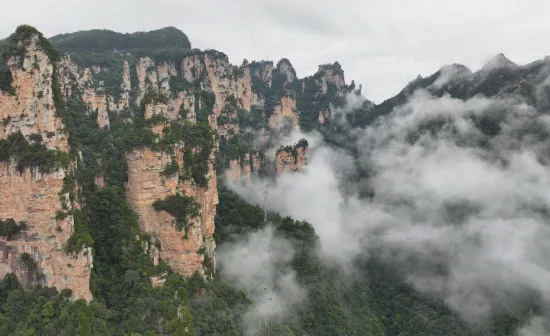
Day 2: Exploring Golden Whip Brook | Monkey Interaction + Geology Enlightenment Lesson
At 8:30 AM, clutching the tickets booked three days in advance on the “Zhangjiajie Tourism” public account (228 per adult including eco-bus, enter directly by swiping ID card), I led my child through the Forest Park Landmark Gate. A five-minute walk brought us to the entrance of Golden Whip Brook, where the sound of the stream reached us first—the entire 3.8 kilometers of bluestone path is as flat as a park walkway, making it perfectly smooth for strollers. I specifically brought a folding one, and it didn’t get stuck once.
- Entering the brook at 9:00 AM, the child was immediately attracted by moss-covered stones. I squatted down to show him: Golden Whip Rock thrusts straight up from the mountainside, glowing golden in the sunlight, looking like a whip stuck in the ground by a giant. “This is quartz sandstone,” I pinched a bit of fine sand by my feet, “billions of years ago this was the ocean. Sand piled up layer by layer into mountains, then the earth pushed up, and rain acted like small knives carving out the peaks.” The child leaned in to smell the grass in the rock crevices: “It smells like green grass, not sand!”
- Reaching Divine Eagle Protecting the Whip, a giant rock leans against Golden Whip Rock, truly resembling an eagle reaching out to grab the whip. Just as I was explaining that “the rocks didn’t break when the crust rose, so they stuck together,” there was a rustle in the bushes—three short-tailed macaques jumped from the branches, crouching two meters away and staring at the apple in the child’s hand. I quickly zipped the apple into my backpack. The child wasn’t afraid, whispering, “Their fur is gray and their eyes are round.” Remember for monkey interaction: Don’t show food, don’t make eye contact; if the child wants to feed them, use peanuts (sold at 5 per small bag in the scenic area) and throw them far away for them to pick up themselves.
- By 11:30 AM, the child was tired, so I carried him while resting on a stone stool by the stream. He pointed at the peak forest on the opposite bank and shouted: “Mom, look, does that mountain look like a dinosaur’s back?” I took the opportunity to explain that “peak forests are mazes carved by rain,” and he nodded, recording it in his portable notebook (a must-have for kids, for drawing wobbly mountains).
At exactly 12:00 PM, we arrived at “Shuiraosimen Restaurant” at the exit of Golden Whip Brook. The wooden sign hung under an old locust tree, and eight square tables inside were filled with tourists. We ordered steamed giant salamander (farm-raised, 88 per portion, meat as tender as tofu) and bacon stir-fried with bamboo shoots (shoots dug this morning, crispy and sweet with a hint of salt, 38). Rice was free to refill. The child said while eating the salamander meat: “Fewer bones than the fish in the supermarket!” The three of us were stuffed for only 124, great value.
At 1:30 PM, the eco-bus arrived on time (every 15 minutes, wave to stop). Getting on, the child stared at the route map behind the driver: “Next stop, Bailong Elevator?” I nodded. Twenty minutes later we were at the foot of the mountain. Bailong Elevator rushed up in 1 minute and 58 seconds. The child pressed against the glass shouting, “The floor numbers are jumping too fast!” Stepping out, our eyes lit up—the peaks of Yuanjiajie were like bamboo shoots stuck in the clouds. When looking for Hallelujah Mountain (the prototype for Avatar’s floating mountains), the child recognized it instantly: “Isn’t this the mountain from the movie?” He jumped around for photos with the selfie stick, nearly losing his hat.
At 4:30 PM, we took the Tianzi Mountain Cable Car down (72 one way, half price for kids). The cable car glided slowly, and the peaks below looked like giant penjing (bonsai). The child leaned against the window counting: “1, 2, 3… Mom, look, that peak looks like the tip of a calligraphy brush!” By the 23rd peak, the cable car landed. He rubbed his eyes and said, “My legs are numb but it’s so much fun.”
Back at the guesthouse that night, the child pulled out his sketches from the day (wobbly Golden Whip Rock and monkeys). I helped him trace the lines with colored pens and pasted a ginkgo leaf as a mountain-top decoration. He wrote shakily: “Zhangjiajie’s mountains are like building blocks, monkeys are like neighbors,” and pasted a stamp to mail it to Grandma. Before sleeping, he said: “I want to see the monkeys again tomorrow and bring them peanuts.”
Case Study: During the hike, we met a retired geology teacher. He pointed to the rocks at a bend in Golden Whip Brook and said, “Look at this layering, like a mille-feuille cake. Every layer is a different color, made of sand piled up in different eras.” The child was mesmerized and kept calling them “mille-feuille cake mountains” for the rest of the trip.
|
Daily Practical Details (Tested & Effective)
|
Description
|
|---|---|
|
Transportation
|
Eco-buses every 15 minutes (wave to stop); Bailong Elevator reaches top in 1 minute and 58 seconds (65 one way, 33 for kids); Tianzi Mountain Cable Car 72 one way (36 for kids)
|
|
Tickets
|
Forest Park ticket 228/adult (includes eco-bus), book 3 days early via public account, swipe ID to enter; strollers are allowed in Golden Whip Brook
|
|
Activities
|
3.8 km hike at Golden Whip Brook (flat bluestone path), focus on Golden Whip Rock (quartz sandstone) and Divine Eagle Protecting the Whip (crustal uplift remains); stay 1 meter away from monkeys, use 5 peanuts for interaction
|
|
Dining
|
“Shuiraosimen Restaurant” steamed giant salamander (farm-raised 88), bacon with bamboo shoots (38), average 60 per person; free rice refills
|
|
Tips to Avoid Pitfalls
|
Don’t buy expensive monkey food at the Golden Whip Brook entrance (5/pack inside is enough); avoid mid-day backlighting for Hallelujah Mountain photos (before 10:00 AM is best)
|
|
Recommendations
|
Geology explanation focusing on “sand becoming mountains” (easy for kids); Bailong Elevator for sea of clouds (high probability on sunny days); count peaks on the cable car (develops observation skills)
|
Highlights: The flat path of Golden Whip Brook is the gold standard for hiking with kids. Interaction with monkeys brings kids closer to nature, and the Hallelujah Mountain scenery is more shocking than in the movie. Before bed, the child was still flipping through his geology notes: “Tomorrow I’ll tell my classmates that sand really can turn into mountains!”
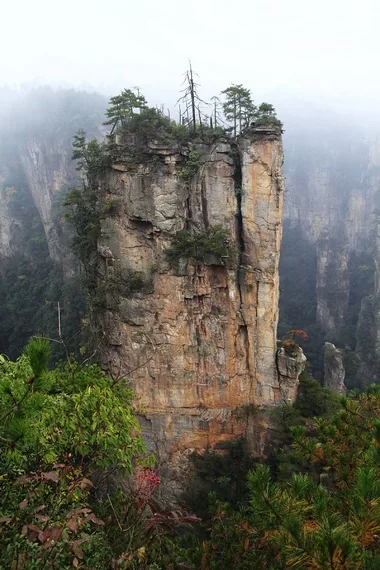
Day 3: Tianmen Mountain Challenge | First Glass Skywalk Experience + Cable Car through the Sea of Clouds
At 8:00 AM, I checked out of the Wulingyuan guesthouse and rushed with my child to the bus station—Wulingyuan Bus Station is 300 meters right from the end of Xibu Street. The first 7:30 AM bus to Tianmen Mountain was already in the yard, a blue bus full of passengers. We squeezed into the back row by the window. The 25/person ticket included insurance. The driver said, “It’s sunny today, the glass skywalk will definitely be open.” The 40-minute drive saw the scenery change from peak forests to farmland, with corn stalks just starting to ear, green as far as the eye could see.
- Arrived at the Cable Car Lower Station just after 9:00 AM. Looking up, the giant cable car towers stood like steel giants at the mountain foot. While queuing, the child grabbed my sleeve: “Mom, is this cable car longer than the Bailong Elevator yesterday?” I pointed to the electronic screen showing “28 minutes”—the world’s longest high-mountain cable car lives up to its name. Once inside, he immediately pressed against the glass: “The houses look like matchboxes! That rapeseed field looks like a yellow carpet!” Climbing past a village, we could see women drying chilies on rooftops, a sea of red. The child shouted, “They look like New Year lanterns!”
- Entered the West Line Glass Skywalk around 10:00 AM. There were shoe cover rentals at the entrance (5/pair, thick rubber non-slip soles); I picked blue ones with a bear pattern for the child. The skywalk hung over 1000 meters in the air, looking down at deep valleys and winding roads. He froze as soon as he stepped on: “Mom, I’m scared!” I intentionally held his hand and hopped twice, the soles making a thumping sound. He peeked and said, “It doesn’t seem that scary,” then tried walking himself. In the middle, he turned back and shouted, “It’s like walking on clouds! The clouds are transparent!” A sign by the walk read “1430 meters above ground.” After reading it, he stuck his tongue out: “Many times higher than our building!”
- After the skywalk, we took the Mountain-Tunnel Escalator (7 sections totaling 800 meters, 32/person). The child counted the sections: “1, 2, 3… it got dark in the tunnel at section 5.” I took the chance to explain Karst topography: “Look at this cave; it was limestone soaked in rain for a long time, like a sugar cube melting into cracks, slowly hollowed out like this.” He nodded: “So the mountain is made of giant sugar cubes?” The escalator exit was the mountain top platform. The wind was so strong it messed up his hair; I tidied it for him: “Next, I’ll tell you how ‘Tianmen’ came to be, you’ll know in a bit.”
At 12:00 PM, we had lunch at the Tianmen Cave platform. I brought whole wheat sandwiches (egg and lettuce) and sliced Hami melon. We sat on stone benches watching the full view of Tianmen Cave—the natural stone cave looked like a door split by an axe, with sunlight beaming through the cave and mist floating in the light. A nearby table ordered a kid’s meal (48) with chicken nuggets, fries, and a small pasta. The child looked at it and said, “Not as healthy as my sandwich.” We finished quickly and used the saved money to buy a grilled sausage (10) as a snack.
Descended the mountain at 1:30 PM, choosing the sightseeing elevator (32/person) to avoid the 999 steps. The elevator descended slowly through the mountain. The child counted: “Level 1, Level 2… heard running water at Level 5.” The exit was indeed a small waterfall, water splashing on his pants. He laughed: “Cooler than climbing stairs.” Passing the Tianmen Fox Fairy Theater, the exterior wall was showing a light show, with fox-shaped lights flashing blue and green. He ran over for a photo with “Fox Fairy” in the background.
At 7:30 PM, we returned to Wulingyuan to watch “Misty Rain Zhangjiajie.” The theater is near Xibu Street, and child tickets are 120. The stage used real mountain and water scenery, with lyrics subtitled on both sides. The child understood the plot of “brother looking for sister.” After the show, he pulled my sleeve: “Mom, did they find each other in the end?” I pointed to the photo at the end of the program: “See, they’re holding hands.”
Case Study: On the glass skywalk, we met a father and son from Beijing. The father kept his eyes closed out of fear of heights, but the son ran ahead saying, “Dad, look, I’m not afraid.” Chatting later, I learned the child often went on roller coasters at amusement parks and had built up courage—when challenging kids with such items, evaluate their daily bravery first; don’t force it.
|
Daily Practical Details (Tested & Effective)
|
Description
|
|---|---|
|
Transportation
|
Wulingyuan Bus Station → Tianmen Mountain Cable Car Lower Station (25/person, 7:30 AM first bus, 40-minute drive); check weather in advance (skywalk closes on rainy days; use “Moji Weather” for real-time Tianmen Mountain forecasts)
|
|
Tickets
|
Tianmen Mountain ticket 278/adult (includes cable car + escalator, 139 for kids), swipe ID to enter; rent skywalk shoe covers at the entrance for 5/pair (don’t buy 10 ones on the road)
|
|
Activities
|
28-minute cable car ride to see city → farm → peak forest transition (count villages and cornfields with kids); demonstrate hopping on the glass skywalk to overcome fear (from scared to proactive); explain Karst topography on the escalator using the “sugar cube in water” analogy
|
|
Dining
|
Bringing your own simple meal (sandwiches + fruit) is cheaper than the mountain-top restaurant (kid’s meal 48); grilled sausages at the Tianmen Cave platform are 10/each (kids love them)
|
|
Tips to Avoid Pitfalls
|
Don’t wear Crocs or sandals for the glass skywalk (slippery); don’t buy overpriced water at the lower station (convenience stores at the top are 3/bottle); don’t force the 999 steps (choose the elevator for seniors and children)
|
|
Recommendations
|
Cable car panoramic shots (have kids take close-ups of villages); record a video of hopping on the glass skywalk (kids love rewatching it); choose the 19:30 show of “Misty Rain Zhangjiajie” (clearer subtitles for kids to understand)
|
Highlights: Checking weather + wearing non-slip shoes is key for glass skywalk safety. The cable car view helps kids understand “topographic changes,” and the Karst explanation using a life example (sugar cubes) sticks better. Before bed, the child flipped through photos: “Tomorrow I want to go to the Grand Canyon slide (referring to the glass bridge slide)!”
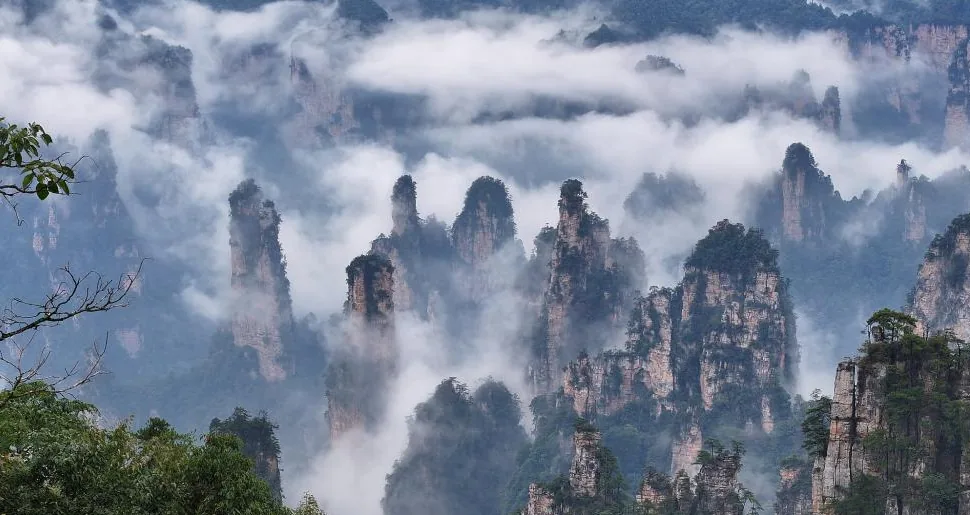
Day 4: Relaxed Finale | Grand Canyon Glass Bridge Adventure + Return Preparation
At 9:30 AM, I set off from the Wulingyuan guesthouse with my child, taking a 15-minute taxi ride to the Zhangjiajie Grand Canyon parking lot (fare 20). The entrance sign read “Glass Bridge + Grand Canyon Combo Ticket 118/person”; we swiped ID cards to enter. We started queuing at 9:50 AM. In front of us were a father and son from Shanghai. The child was so excited he was stomping: “Mom, look! The bridge is like a giant white dragon!”
- Stepped onto the bridge at exactly 10:00 AM. The 430-meter glass bridge looked like a transparent ribbon suspended 300 meters in the air. The child pulled back his foot as soon as he stepped on: “Mom, the trees are swaying below!” I pointed out the trampoline area (circular mesh floor) in the middle: “Try jumping three times, just like a trampoline!” He jumped five times, pointing at the valley floor: “Those trees are dancing the yangko!” The wind on the bridge was strong, so I gripped his jacket zipper. I heard a “click” above—a photographer was taking parent-child jumping photos (20 per photo). At the viewing platform, the child suddenly lay down: “Does it look like swimming on clouds this way?”
- Played the slide to descend at 11:00 AM; you must be above 1.2 meters (the child was just 1.1 meters). The slide is 450 meters long with a 35-degree slope. At the station, staff taught “legs together, hands hugging chest.” The child screamed as he rushed down: “Like a rocket! Faster than a roller coaster!” At the bottom of the valley, he picked up a maple leaf, saying he would stick it in his diary as an “adventure medal.”
At 12:00 PM, we had lunch at “Canyon Family,” a wooden stilt house smelling of firewood. We ordered kudzu powder porridge (5/bowl); the child had two: “Sliding down, like jelly!” The pickled fish (bass 38/portion) had snow-white meat and a broth with chopped chilies, eaten clean with rice. Seeing us with a child, the hostess gave us a bowl of brown sugar ginger tea (free), warming and relieving the spiciness.
At 1:30 PM, we entered Yellow Dragon Cave. A cool breeze met us at the entrance (constant 18°C). The dry cave area features the “Sea-Settling Needle” stalagmite (19.2 meters high); the lights on the tip looked like a gold rim. The child looked up and counted: “1, 2, 3… higher than our school flagpole!” In the Dragon Palace Hall, stalactites looked like upside-down bamboo shoots, water dripping rhythmically. We took a boat on the underground river (boat ticket 25/person). As the boatman pushed the pole, it startled a school of blind fish. The child leaned over the boat: “Are their eyes closed?”
Exited the cave at 3:30 PM into the blinding sunlight. A long queue stood before “Old Li’s Ginger Candy Shop” at Xibu Street. The owner was pulling sugar live: “Ginger candy needs 200 pulls to be chewy enough!” Bought 20/jin of ginger candy and gave a piece to the child: “Spicy at first, then sweet.” We wandered to the Kiwi Dried Fruit Factory Shop, chose 35/bag sulfur-free dried fruit. The child grabbed a handful: “Chewier than QQ gummies!”
Case Study: While queuing for the slide, we met a grandmother from Beijing with twins. The sister wore knee pads, but the brother didn’t. Going down, the brother’s knee got scraped red, and the grandmother took out a band-aid. Reminder that knee pads are essential for sliding with kids (10 a pair at shops outside the scenic area).
|
Daily Practical Details (Tested & Effective)
|
Description
|
|---|---|
|
Transportation
|
Wulingyuan → Grand Canyon taxi 20 (15 minutes); walking paths in the scenic area are flat, strollers can be pushed all the way
|
|
Tickets
|
Glass Bridge + Grand Canyon combo 118 (half price for kids), swipe ID to enter; slide 35/person (for 1.2m and above)
|
|
Activities
|
Glass Bridge trampoline area (mesh floor is non-slip); check shoelaces before the slide; see the “Sea-Settling Needle” in Yellow Dragon Cave and take the 8-minute underground river boat trip
|
|
Dining
|
“Canyon Family” kudzu powder porridge (5) + pickled fish (38), average 25 per person; free brown sugar ginger tea refills
|
|
Tips to Avoid Pitfalls
|
Don’t buy “wild kudzu powder” at the entrance (small workshops often adulterate it); tripods are banned inside Yellow Dragon Cave (to prevent hitting stalactites)
|
|
Recommendations
|
Parent-child interaction at the Glass Bridge trampoline; have kids count blind fish during the boat trip; buy sulfur-free dried kiwi at Xibu Street (35/bag)
|
Highlights: The glass bridge trampoline area lets kids release energy, the slide speed is suitable for younger children, and the Yellow Dragon Cave boat trip is more vivid than just looking at stalactites. Before bed, the child was still playing with the ginger candy: “Tomorrow I’ll tell the teacher that Zhangjiajie’s mountains can do magic!”
Related Reading
- Zhangjiajie 5-Day Classic Route Planning
- Zhangjiajie 5-Day In-Depth Tour | Wulingyuan + Tianzi Mountain + Glass Skywalk, Unlock Natural Wonders and Cultural Charms
- Where should I live in Zhangjiajie City or Wulingyuan | Scenic area distance, transportation time and accommodation options
- Top 10 Must-Visit Attractions in Zhangjiajie | Classic Landmarks Loved by Travelers
- Zhangjiajie In-Depth 4-Day Itinerary | Golden Whip Stream Hiking + Tianzi Mountain Cable Car, Unlock Geomorphological Wonders from All Angles
Zhangjiajie National Forest Park — Practical Information
Tickets & Booking
- Zhangjiajie National Forest Park (Wulingyuan core scenic area) single ticket: Standard ticket year-round CNY 165 each, with optional CNY 3 insurance, valid 4 consecutive days; concession ticket year-round CNY 83 each. Per the Hunan Provincial Development and Reform Commission “Notice on Matters Concerning Ticket Prices of the Wulingyuan Core Scenic Area” (Xiang-Fa-Gai-Jia-Fei-Gui [2024] No. 977), effective from Jan 1, 2025, valid 5 years; advance booking required (Timed and site-specific reservation entry is used; visitors are encouraged to use the “Zhangjiajie One-Machine Tour” WeChat mini-program for real-name reservation tickets and fast ticket-check entry)[src]
- Ticket concession policy: Free admission: children under 14 (exclusive), seniors 65 and above (inclusive), disabled persons, active-duty military personnel and retired military cadres with valid ID; half price: minors 14 (inclusive)–18 (exclusive), seniors 60 (inclusive)–65 (exclusive), and current full-time university undergraduate students and below; no booking required[src]
Transport & Schedules
- Inside the Wulingyuan scenic area → The various sights | Scenic-area eco-bus (included in the combined ticket/separate purchase): Eco-buses inside the scenic area connect the various zones; the high-platform touring lines at Tianzi Mountain, Yuanjiajie and Yangjiajie operate one-way loops, so plan to avoid backtracking[src]
Where to Stay · Room Type · Nearby
- Wulingyuan district (near the ticket stations) | Reference price Guesthouses/chain hotels about CNY 150–500 per night (reference) | Room tip: Close to the ticket stations, good for entering the park early and multi-day visits (the ticket is valid 4 days); conven | Nearby add-ons: Golden Whip Stream, Huangshizhai, Yuanjiajie, Tianzi Mountain, Yangjiajie, Ten-Mile Gallery, Xibu Street[src]
- Zhangjiajie city (Tianmen Mountain cableway lower station/Dayong Ancient Town area) | Reference price About CNY 140–550 per night (reference) | Room tip: If you also visit Tianmen Mountain, staying in the city is closer (the lower station of the Tianmen Mountain cableway is | Nearby add-ons: Tianmen Mountain, Dayong Ancient Town, Nanmenkou, Tujia Folk Customs Park[src]
Typical Climate & Packing (Past Years)
- January: 2.6 °C–9.4 °C °C, Zhangjiajie has a humid subtropical monsoon climate, humid and rainy
- February: 4.5 °C–11.5 °C °C
- March: 7.8 °C–15.9 °C °C
- April: 13.4 °C–22.7 °C °C, Spring is cloudy and misty, with a higher chance of cloud seas
- May: 18.0 °C–27.2 °C °C
- June: 21.6 °C–30.2 °C °C, Relatively high rainfall; watch for rain gear and slippery surfaces






