



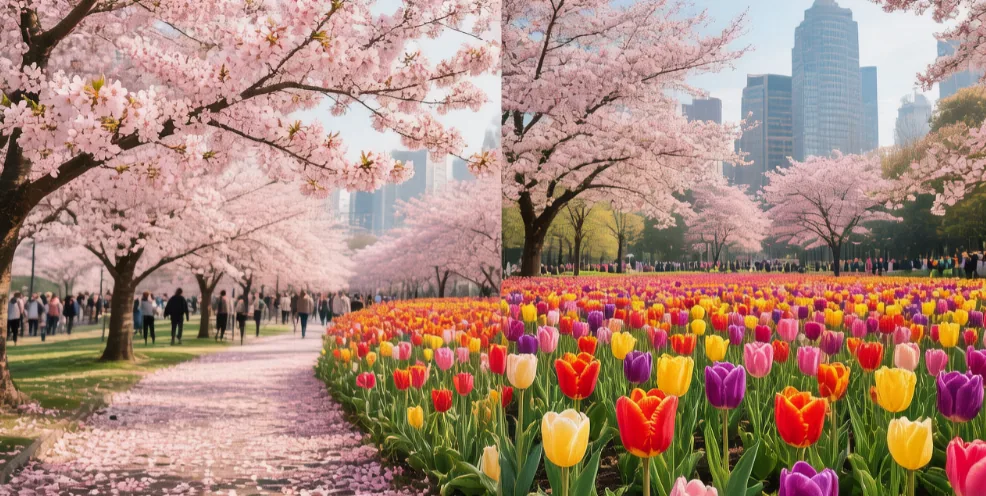
Day 1: Gucun Park Cherry Blossom Special Tour
- Transportation and Entry Decisions: I strongly suggest traveling by metro. Gucun Park has three main gates. Due to the intersection of Line 7 and Line 15, the station exit is closest to Gate 2. I usually exit from Exit 5 and walk for a few minutes to reach Gate 2. Compared to the remote Gate 1 and the roundabout route of Gate 3, Gate 2 leads directly to the park’s most concentrated Cherry Blossom Avenue, saving at least thirty minutes of physical energy for subsequent walking.
- Ticketing and Time Management: The park implements a real-name reservation system. I generally purchase tickets through official online channels in advance to avoid queuing on-site. It is recommended to arrive around 8:30 AM, as large tour groups have not yet entered the park on a large scale, and the light is soft, making it perfect for taking photos under the cherry blossom trees.
- Spatial Distribution and Viewing Order: Do not stay too long at the scattered flowers and trees near the entrance. My habit is to walk toward the Forest Sports Park. The Somei Yoshino variety there is the densest, providing the strongest visual impact of a sea of flowers. If you arrive early, you can even photograph the empty cherry blossom tunnels.
- Dining and Supply Experience: Fast food stalls in the park are often overcrowded during peak season and the taste is average. I am used to temporarily leaving the park around lunchtime to have lunch at nearby commercial complexes like Touch Mall. There are many dining options there, ranging from chain brands to specialty restaurants, and the resting environment is much more comfortable than the park lawns.
A friend once arrived at 10:00 AM during the peak flower-viewing period and mistakenly chose Gate 1 for entry. As a result, because the guidance signs in the park were not intuitive enough under the surge of people, he walked nearly five kilometers out of his way while searching for the scenic area, and his energy was exhausted by the time he reached the cherry blossom garden. In fact, by entering from Gate 2, you can see the cherry blossom forests in less than ten minutes. This difference in detail determines the entire morning’s travel experience.
| Time Node | Recommended Itinerary & Location | Experience Details |
|---|---|---|
| Around 8:30 AM | Arrive at Gate 2 and enter the park | The temperature is suitable, avoiding the peak entry after 9:30 AM; security check is fastest |
| 9:00 to 11:30 AM | Cherry Blossom Avenue & Forest Sports Park | Focus on mid-season cherry varieties; the trees here are older and clusters are lush, making it the park’s best photo spot |
| Around 12:00 PM | Move to commercial complexes outside for lunch | It is recommended to exit Gate 2 and cross the pedestrian bridge to the mall; the dining experience and value are far superior to temporary stalls inside |
| Around 2:00 PM | Qingtan Fairy Trace or Oriental Bird Park | Park crowds reach their peak in the afternoon; these two areas are relatively remote, allowing you to avoid the main road crowds and see some late-season varieties |
| Around 4:00 PM | Return journey to avoid peak | Suggest entering the metro station before the 5:00 PM rush hour; Line 15 usually has more empty seats at this time, providing a better experience |
When playing in Gucun Park, I pay special attention to the wind force of the day. Shanghai is windy in spring; although falling blossoms are beautiful, if I want to photograph the lush state of flowers hanging on branches, I prioritize the first sunny day after rain. Additionally, I suggest wearing soft-soled flat shoes; even if you choose the right gate, the amount of walking in the park usually exceeds 10,000 steps. If you plan to sit on the lawn, remember to bring a portable moisture-proof mat; the spring soil still carries ground heat and moisture, making it uncomfortable to sit directly.
Day 2: Jing’an Park Tulips and City Center Stroll
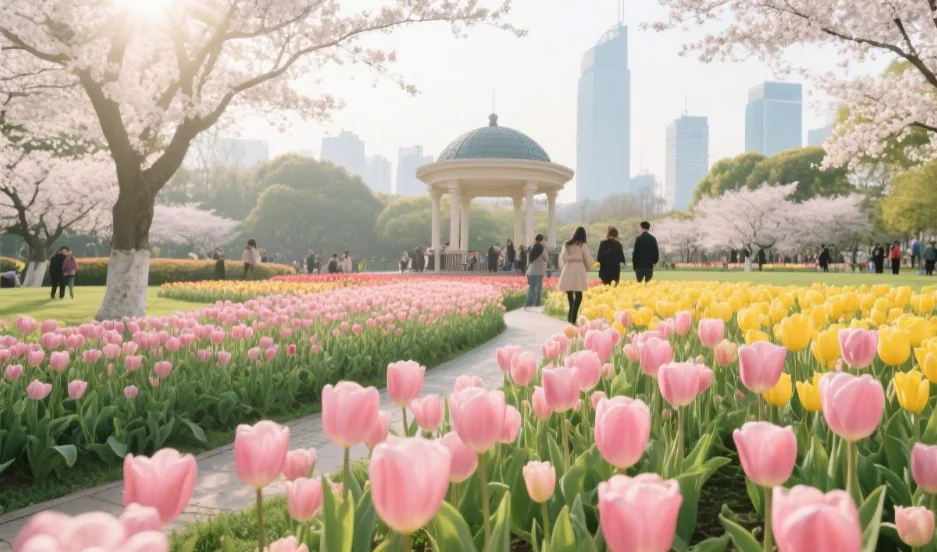
- Morning Flower-viewing Strategy: I suggest you choose to arrive around 9:00 AM. At this time, office workers in the Jing’an Temple business district have already entered their buildings, and the park is mostly filled with citizens doing morning exercises. The most vital part of this time period is the light. Since Jing’an Park is surrounded by Reel Mall and Kerry Centre, the sunlight around 9:00 AM just happens to pass through the gaps between buildings, shining directly on the tulips by the pond. I have tested and found that the transparency of petals under this natural light is extremely high, and the visual effect is more delicate than during the midday sun exposure.
- Walking Logic of Haipai Blocks: After finishing the park tour, you can walk east from West Nanjing Road. I personally highly recommend this section of the road because it showcases Shanghai’s cleanest urban interface. I would focus on the Shikumen architectural complex of Zhang Yuan; in spring, the public areas here are usually decorated with many high-quality artistic flower boxes. When walking to Wujiang Road, look out for the decorations of time-honored shops; that sense of fusion between tradition and modernity is a unique cultural microcosm of Shanghai.
- Afternoon Shade and Deep Stroll: Approaching 2:00 PM, the perceived temperature in the city center will rise. At this time, I usually move to the Yan’an Middle Road Large Green Space. The space here is very open, with rich vegetation, man-made streams, and undulating hills. I found that the late-season cherry blossoms and crabapples here bloom a few days later than those in Gucun Park because of the shade from tall trees; if you missed the early cherry blossoms, this is an excellent place to make up for it.
During a guiding experience in the city center, I encountered crowds taking photos at the main entrance of Jing’an Park under the scorching sun at 12:00 PM. Due to the harsh light, the colors of the tulips looked very raw in the lens, and the crowd was massive. In fact, simply by moving the time earlier to before 9:30 AM, or delaying it to the sunset glow after 4:30 PM and utilizing the pond reflections on the south side of the park, you can capture a serene picture with a high-end feel. This mastery of light and shadow rhythm is far more important than the equipment itself.
| Location & Area | Suggested Stay Details | Experience Feedback |
|---|---|---|
| Jing’an Park Main Entrance & Pond | Watch the high-density tulip arrangements, paying attention to the color combinations of different varieties | Free entry; suggested to exit from Exit 5 of Jing’an Temple Station (Lines 2/7/14), only a 1-minute walk |
| West Nanjing Road (to Zhang Yuan section) | Observe the pruning shapes of roadside trees and the window floral arts of commercial buildings | Walking distance approx 800 meters; there are many high-quality cafes along the way, suitable as resting points |
| Yan’an Middle Road Large Green Space | Find cherry blossoms and crabapples by the stream, experiencing a rare forest feel in the bustling city | The crowd flow here is significantly lower than in parks, perfect for quiet personal reflection or simple afternoon reading |
| Ju-Fu-Chang (e.g., Julu Road) | See the wisteria or magnolia peeking out from the courtyards of old villas | The price range for dining here is wide; I suggest finding independent eateries on Fumin Road for a better balance of value and style |
On this day’s itinerary, I particularly want to remind you about the choice of footwear. Although it is in the city center, because much of the pavement in this area is decorative floor tiles, walking for a long time puts significant pressure on the soles of your feet. I personally would choose sports shoes with good support rather than fashionable flats. Additionally, regarding dining, underground malls around Jing’an Temple (such as Reel B2 level) gather a large number of professional-level light meals. For tourists who want to solve lunch quickly and leave more time for scenery, this is much more efficient than queuing at restaurants during peak hours.
Day 3: Comprehensive Flower Viewing and Riverside Scenery
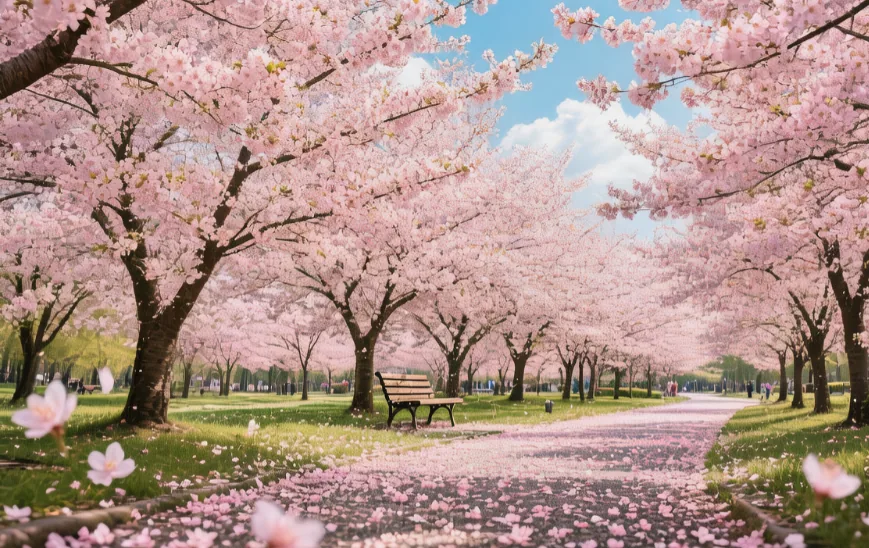
- Shortcut to Entry and Deep Observation at the Botanical Garden: The Shanghai Botanical Garden covers a vast area. For those specifically coming to see flowers, my personal experience is to avoid Gate 1 and head straight for Gate 3. Gate 3 is located on Baise Road; after entering, you can reach the Bonsai Garden and Peony Garden in less than five minutes of walking. Starting from late March, the premium varieties in the Peony Garden will enter their peak blooming period; the flower size and color saturation there are incomparable to ordinary community parks.
- Finding the Quiet Magnolia Forest: If you feel there are too many tourists on the main roads, I would recommend the Magnolia Garden inside the park. The trees here are usually taller, forming a relatively enclosed under-forest space. I found the floral fragrance is most intense in the afternoon breeze here, and because of its slightly remote location, it is perfect for friends who want to avoid the crowds and watch flowers quietly.
- Landscape Logic of the Riverside Area: Before evening, I suggest transferring from the north side of the Botanical Garden to the Xuhui Riverside (West Bund). The greening concept here is completely different from traditional parks, utilizing a large amount of ornamental grasses and cold-resistant flowers, such as pampas grass and sage. Combined with industrial relics by the river (such as old cranes and oil tanks), they create a visual tension where roughness and delicacy coexist.
In the past, I have met many tourists who entered from Gate 1 of the Botanical Garden following navigation. As a result, to see the Bonsai Garden, they had to walk for nearly twenty minutes through plain seedling areas. In fact, simply by positioning to Gate 3 on Baise Road, you can save your best energy for the Peony and Azalea Gardens. It’s the same at Xuhui Riverside; many people only stay near the Long Museum, but I suggest you walk all the way to the vicinity of the West Bund Museum. The plant groups there have richer layers, are closer to the Huangpu River water surface, feel cooler, and offer a more open landscape.
| Area & Point | Specific Play Details | Personal Practical Suggestion |
|---|---|---|
| Shanghai Botanical Garden (Area) | Focus on visiting the Peony and Azalea Gardens. Peony blooming periods are short; check the official website for flower news in advance. | After exiting Shilong Road Station on Metro Line 3, cycling or walking to Gate 3 is most efficient. |
| Magnolia & Bonsai Gardens | Observe ancient and famous trees over a hundred years old, feeling the pruning art of traditional Chinese gardens. | The ground here is mostly fine stone paths or lawn edges; wear dirt-resistant flat sports shoes. |
| Xuhui Riverside Promenade | Focus on observing the green belts near the West Bund Museum to see how modern plant landscapes blend with the Huangpu River. | The best arrival time is 4:30 PM, as you can capture both the clarity of daytime and the golden light of sunset. |
| Riverside Dining Belt | Choose a restaurant with an outdoor terrace to observe the lights across the river while dining. | Be sure to book one day in advance. River-view seats are very tight on spring weekends; on-site queuing usually takes more than two hours. |
- Practical Suggestions for Dining: Most supply stations inside the Shanghai Botanical Garden only supply simple drinks and snacks. I suggest that after visiting the Botanical Garden, you head to the commercial centers near Longhua Road for lunch, or take a taxi to Xuhui Riverside. The restaurants in the Riverside area are of high standard, especially shops featuring Haipai Western food or craft beer; sitting on a terrace in spring is a great enjoyment.
- Accommodation and Departure Arrangements: Since the third day involves activities in Xuhui District, if you need to head to Hongqiao Airport or Railway Station that night, you are very close to the transportation hubs. I suggest storing your luggage at the hotel or using the station’s storage service. Xuhui Riverside is very open; even if you carry more luggage, walking on the wooden planks by the river will not feel cramped.
- Costs and Pitfall Avoidance: The main entrance ticket to the Shanghai Botanical Garden is very cheap, but some gardens-within-the-garden (such as the Bonsai Garden and Exhibition Greenhouses) require separate tickets or a joint ticket. I suggest buying a joint ticket, as the tropical flowers in the greenhouse are also very worth seeing in spring. Xuhui Riverside is a completely free public space; your main expense will likely be that “river-view dinner.”
I especially love sitting on the steps of the West Bund, watching the crowds of strollers and the blooming flower clusters when the last ray of sunset in March spills over the Huangpu River.
Related Guides
- Shanghai 4-Day Extreme Height Challenge | Shanghai Tower 118th Floor + Jin Mao Skywalk + Pearl Tower Revolving Restaurant
- 6-Day Shanghai Panoramic Tour | City Landmarks + Disney Resort + Zhujiajiao Water Town | No Backtracking Itinerary
- 4-Day Shanghai Autumn Guide | French Concession Fallen Leaves on Wukang Road + Forest Photography at Gongqing Forest Park
- Shanghai 4-Day Essential Route | Lujiazui Financial Center + Xintiandi Shikumen + Tianzifang Cultural Creativity | A Journey of Ancient & Modern Intersection
- 3-Day Classic Shanghai Tour | The Bund Night View + Yuyuan Garden + Wukang Road Stroll | Complete Guide to First Impressions of the Magic City






