Day 1: Arrival in Kunming → Yuanyang (Stay in a guesthouse near Duoyishu)
I flew from Beijing to Kunming on the 27th day of the 12th lunar month. The 8:00 AM flight landed on time—the wind at the exit of Terminal 3 carried a dry warmth unique to Yunnan. I pulled out my phone to check the Didi order I had saved in advance. The driver, Master Zhang, was a local. “Miss,” he said as we met, “I drove someone to Yuanyang yesterday. They said the sea of clouds at Duoyishu this morning looked like cotton candy. You’ve picked a great time.” After a 40-minute drive to the South Passenger Station, Master Zhang helped me with my luggage and pointed to the B-zone sign: “The 12:00 PM bus is over there. My buddy drives it. Go on and freshen up; he’s got Pu’er tea on the bus.”
The waiting hall of the South Passenger Station smelled faintly of disinfectant. I bought my ticket for the 12:00 PM bus (150 CNY exactly). My neighbor was a Hani auntie wearing a navy blue headscarf, clutching an embroidered pouch. She chatted with me all the way: “I’m going to Yuanyang to see my grandson. He’s a guide in the scenic area. He said the terraces won’t be that crowded for Spring Festival this year, so you can really hunker down for the sunrise.” The bus was a new Yutong model with seats wide enough to stretch my legs. I chose a window seat. The auntie pushed her thermos toward me: “Have some chicken soup; it gets cold on the road.” Four hours later, at the Jianshui Service Area, she grabbed my arm and ran toward the convenience store: “Quick, buy 2 pounds of Jianshui honey tangerines, 10 CNY for 3 pounds, half the price of the scenic area entrance!” The skins were so thin you could smell the sweetness. I peeled one, and the juice splashed on my chin. The auntie laughed and handed me a tissue: “Slow down, nobody’s racing you.”
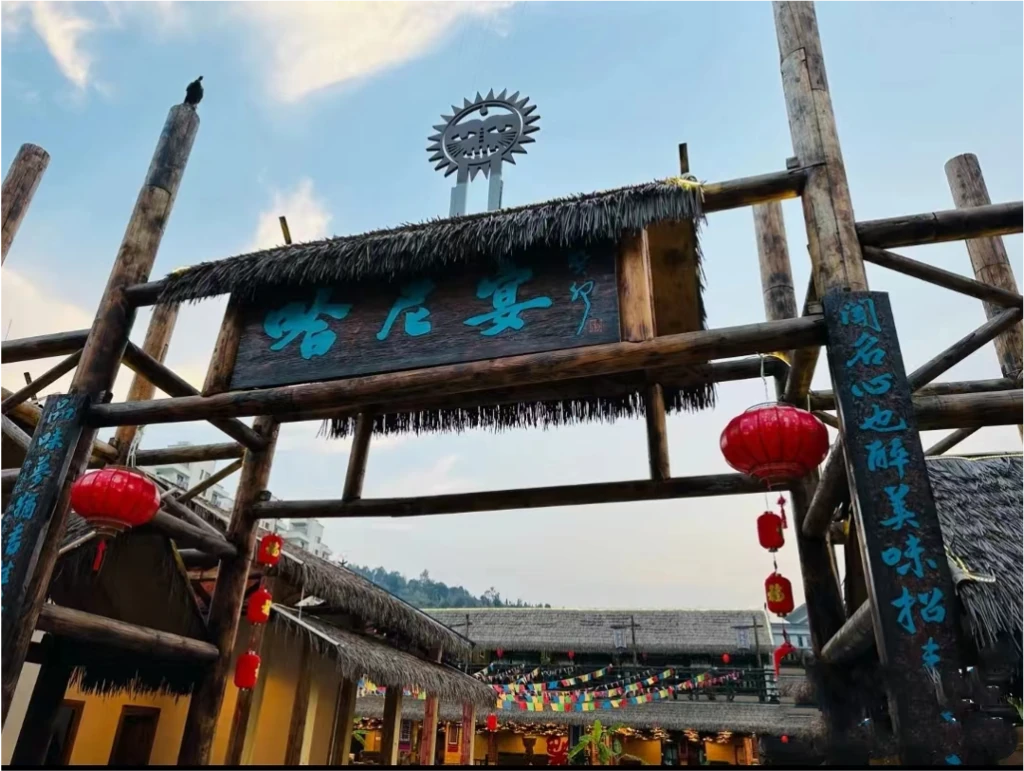
At exactly 2:00 PM, the bus swayed to the main gate of the Yuanyang Scenic Area—the lintel was modeled after a Hani mushroom house, with a wooden plaque reading “Yuanyang Hani Rice Terraces” hanging on the red lacquer pillars. Two security guards in indigo ethnic costumes nodded at me as they checked my health code. Outside the gate, I hailed a taxi parked by the road. The driver, a young guy in a baseball cap, said: “Going to Duoyishu? 60 CNY. We’ll take the village road; it’s 20 minutes faster than the main road.” The scenery outside the window slowly shifted from asphalt to layers of terraces. The green ridges looked like wind-rippled silk. Occasionally, I saw elderly farmers in bamboo hats carrying hoes, their pant legs flecked with mud.
20 minutes later, I arrived at “Terrace Family” Guesthouse. The owner, A-Jie, was squatting by the door wiping his electric scooter. He jumped up when he saw me: “Sister! I’ve been waiting for you!” He helped carry my bags inside. The guesthouse was a typical Hani mushroom house with a dried thatch roof and a row of bougainvillea by the door, the petals falling on the steps like pink snow. The room was laid with brocade sheets and two small dolls sewn from Hani homespun cloth sat on the bed. A-Jie pointed to a switch: “I turned on the electric blanket in advance. Test the temperature; it won’t be cold tonight.” I plugged it in, and within two minutes, the mattress felt like a little sun.
A-Jie brought a cup of tea: “This is Pu’er my dad just roasted this morning. Raw tea, give it a taste.” The tea was bright red and transparent, with a slight sweetness following the bitterness. I walked to the window and could see the full view of the Duoyishu terraces—the afternoon sun hit the water at an angle, making it glow pale green like countless broken mirrors fitted together. The distant mountains were wrapped in thin mist, looking like a fairyland. A-Jie leaned against the doorframe: “Sunrise is at 6:00 AM tomorrow. Come out 10 minutes early. I’ll help you snag a spot in the third row. The first row is too windy; the third row gives you the perfect view of the ridge curves.”
In the evening, I made a cup of honey water (wild honey from A-Jie, said to be from his grandmother’s bees) and sat by the window watching the night view of the terraces. The stars were incredibly bright, like diamonds scattered in the sky. Without city light pollution, I could hear dogs barking in distant villages and people singing folk songs in the Hani language—the sound was gentle, like wind through rice paddies. I felt the travel manual by my pillow, which stated “Yuanyang Terraces have over 1300 years of history,” but in that moment, I cared more about the scent of the rice leaves tomorrow morning and where the sun would climb out from behind the mountains.
Practical details I’ve gathered: ① The bus from Kunming to Yuanyang must be booked at the station window 1 day in advance to get a front seat and avoid motion sickness; ② Haggle hard for taxis—it’s normally 50-60 CNY from the main gate to Duoyishu, don’t listen to drivers asking for 80 CNY; ③ Turn on the guesthouse electric blanket 10 minutes before bed so you don’t have to wrap up like a zongzi; leave the window cracked slightly to smell the rice field breeze—it’s 10 times more comfortable than an air-conditioned room.
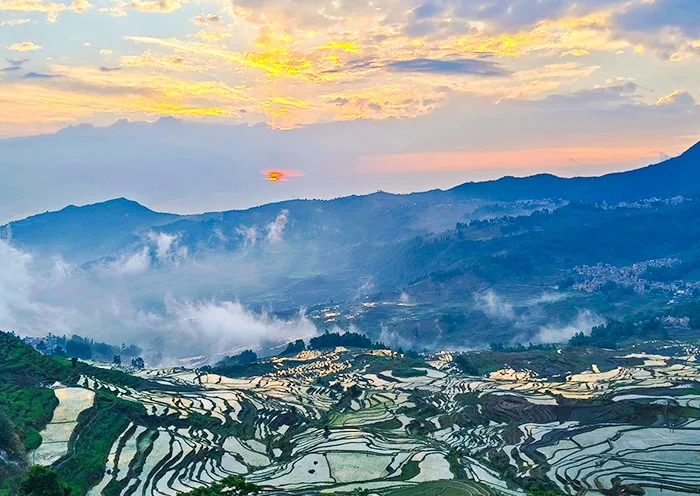
### Day 2: Deep Dive into Yuanyang Terraces (Slow pace for the best photos)
At 5:40 AM, I put on the light jacket provided by the guesthouse in the dark—the electric blanket still held some warmth. Outside, the terraces were soaked in morning mist, like a layer of gray gauze. I remembered A-Jie’s advice about the “front row spot at Duoyishu Viewing Platform” in my phone notes, grabbed my power bank, and headed out. The path from the guesthouse was a crushed stone road lined with wild chrysanthemums, their petals beaded with dew that wet the tips of my sneakers. I walked for 10 minutes; the iron gate of the viewing platform wasn’t open yet. I found a corner out of the wind. Nearby was a Hani auntie selling boiled corn, her bamboo basket covered with cotton quilts. Steam rose when she opened it: “Girl, want some corn? Home-grown sweet corn.” 5 CNY a cob. I took it and bit in; the kernels were so soft they melted, and sweet juice ran down my chin. I wiped it with the back of my hand, and she laughed: “Slow down, nobody’s racing you.”
At 6:20 AM, the sun poked over the eastern peaks—first a pale pink, then orange-red, and finally like a glowing coal dropping into the terraces. The morning glow reflected on the water, and every ridge was gilded with gold, as if someone had scattered gold dust over green silk. I held up my phone; the lens was foggy. I wiped it with my hem and caught a flock of egrets flying over the terraces, their wingtips catching the light. A young Hani girl in ethnic dress with red hair ties was squatting next to me filming a Douyin. She said: “Sister, stand over there. Use that old banyan tree as a background; it looks better.” I moved, and she was right—the banyan branches framed half the terraces. I posted it on WeChat Moments, and it got 20 likes in half an hour.
At 9:00 AM, I walked down the small path from the platform toward the Aichun Blue Terraces—A-Jie said it was “1 kilometer away, and you see a different side of the terraces along the way.” The path was dirt mixed with gravel and a bit slippery. I gripped my phone tight. Passing a tea field, the new buds were as tender as a baby’s fingernails. After 15 minutes, I suddenly saw a patch of blue—the water in the Aichun Blue Terraces isn’t ordinary green; it’s a deep blue like it was dyed with ink. The sun shines in, and the ripples shimmer like the sky was crushed and sunk inside. I squatted on the ridge and put my phone on the ground to shoot, pointing the lens at the water to catch my reflection—even the dew on my eyelashes was clear. An auntie weeding in the field looked up: “Girl, blue isn’t it? It’s because we raise fish in the terraces; the fish droppings fertilize the water, making it blue.” I nodded and asked if I could take a photo of her working. She laughed and waved her hand: “No need, I’m camera-shy.” But she leaned in anyway so I could snap her bamboo hat and mud-stained pants.
At 12:00 PM, I walked back toward the guesthouse along the ridges, my stomach growling. I passed “Grandma’s House” home cooking. The door curtain was woven bamboo, and the smell of chicken soup wafted out. Grandma was sitting at the door cleaning vegetables, wearing navy blue clothes and a black headscarf: “Girl, want fish? Freshly caught from the terraces.” 30 CNY for one. When she brought it out, the soup was steaming. Thin mint leaves floated in the clear broth. It was silver carp, the meat so tender it wobbled when picked up. I took a sip—it was so fresh my eyebrows nearly jumped. I finished half the bowl and took a piece of fish; few bones, firm meat. It was served with stir-fried water spinach from her garden, so crisp it crunched. I polished off two bowls of rice. Grandma sat opposite me, smiling: “Eat slow, there’s more in the pot.”
At 3:00 PM, I packed up and headed to the Bada Terraces. This time I took the guesthouse owner’s motorcycle for 10 CNY. The wind whipped my face as the terraces changed from green to yellow like a flowered carpet. I arrived at Bada at 5:20 PM. The viewing platform was already crowded. I found a high spot and set up my phone for the sunset. As the sun went down, the terraces seemed enchanted—first orange-red, then tangerine, and finally golden-red. Every layer had a different color: pale gold at the top, deepening further down, like a gradient gown for the earth. I took a panorama, holding my phone high to catch the moment the sun dropped behind the mountain, rays shooting out like lasers. I saved it immediately and posted: “The Yuanyang sunset is nature’s greatest artist.” Soon, a friend commented: “Where is this? I want to go too!”
At 5:00 PM, I hitched a ride on A-Jie’s electric scooter to Azheke Ancient Village—5 CNY per person. The scooter jolted over the stone road. A-Jie said: “This village isn’t developed; it’s all locals. Don’t go snapping photos of people’s doors randomly.” The village roads were paved with blue stones, and the houses were built of stone with thatched roofs. Bamboo baskets filled with corn and chili peppers sat by the doors. I wandered to a house where an old man was weaving a bamboo basket on a stone stool. The bamboo strips wound through his hands, quickly forming the shape of a small basket. I leaned in to watch. He looked up and smiled: “Want to buy one? 15 CNY. Hand-woven and sturdy.” I bought one; the bamboo still felt warm from his hands, woven with simple patterns and a small handle. A little kid with pigtails stared at my basket. I gave him a fruit candy, and he ran off with it, his grandmother calling “Slow down!” from behind.
Back at the guesthouse at night, I put the bamboo basket by my bed and watched the terrace night view—more stars than in the city, like scattered diamonds. Hani songs drifted from afar, gentle like wind through the rice fields. I felt the corn silk in my pocket and remembered the auntie’s smile, the fish soup at noon, the sunset at Bada, and the old man’s basket—I realized that deep travel isn’t about how many photos you take; it’s about touching the scent of rice leaves in the wind, eating freshly caught fish, and meeting locals willing to chat.
My “Slow Travel Secrets”: ① Get to the Duoyishu platform 10 minutes early to find a quiet corner—you get the front row without the squeeze; ② The ridges at Aichun Blue Terraces are slippery; you must wear non-slip sneakers or you’ll fall and get soaked; ③ You must order the terrace fish at Grandma’s House—only fresh-caught is that delicious, don’t order frozen; ④ Arrive at Bada for sunset half an hour early and find a high spot to get the full view without heads in the way; ⑤ Don’t take photos of locals in Azheke without permission; you can buy the old man’s baskets—they’re sturdy and great for holding fruit back home.
### Day 3: Yuanyang → Jianshui (Stay in an old house in the ancient city)
At 7:50 AM, clutching the bamboo basket I bought in Azheke yesterday (filled with the old man’s small basket and leftover corn silk), I made my way to the Yuanyang Scenic Area shuttle point—the sign hung on a sycamore tree at the station entrance. The driver, in a faded baseball cap, was wiping the windshield. When I handed over my ID, he glanced at the itinerary: “Sit in the third row by the window; you can watch the terraces recede.” The third row was indeed comfortable. The window was cracked open, and the wind brought in the scent of rice leaves. I watched the terraces turn from deep green to light green, eventually shrinking into a smudge on the horizon—much better than sleeping in.
At 10:00 AM sharp, the bus stopped at Jianshui Passenger Station. I hailed a three-wheeled motor taxi (locally called “modi”). The driver grinned when he heard “Old Times Guesthouse in the Ancient City”: “I know that place! The grilled tofu downstairs smells good enough to drift half a block!” It took 5 minutes—the guesthouse was an old wooden building with red lanterns hanging from the vermilion door. The stairs were made of patterned wooden planks that creaked when stepped on, like greeting an old house. The owner, a young man in a linen shirt, took my basket: “The room is on the second floor. The wooden beam ceiling is the original structure; I kept the worm-eaten marks—I didn’t patch them on purpose, they are the marks of time.” I pushed open the door to a window facing the blue-stone road. The scent of grilled tofu from “Old Zhou’s” shop downstairs wafted in. I put down my bag and sat by the window for a while; even my breathing felt sweet.
At 12:00 PM, I headed down with my phone (the map marked “Old Zhou’s Grilled Tofu” right by Daban Well). The mouth of the West Gate Daban Well was made of solid blue-stone, the edges polished bright. Two wooden buckets sat nearby, and an auntie was drawing water with a rope-bound iron bucket, the sound of the bucket hitting the wall ringing out. Old Zhou’s shop had a blackboard sign reading “Fresh Fried Bursting Tofu · Cold Rice Noodles.” A stout uncle in a greasy apron saw me and shouted: “Girl, sit in the rattan chair outside! There’s sun!”
The “bursting” tofu was freshly fried and steaming in a metal tray—the skin was so crispy it crumbled, and the inside was a tender core that flowed with juice, like a bite of an exploding cloud. The cold rice noodles were pre-mixed with sour vinegar, crushed peanuts, and sesame. I ladled a spoonful of tofu soup over them; the sour fragrance wrapped around the slippery noodles. Combined with a bite of tofu, it was so delicious my eyebrows arched. The uncle handed me a Cup of Paoluda (10 CNY), coconut milk floating with dried bread. I drank it while chatting with him: “Your tofu is ten times better than in Beijing!” He wrinkled his face with a smile: “Of course! We use water from the West Gate Daban Well; there’s no comparison!”
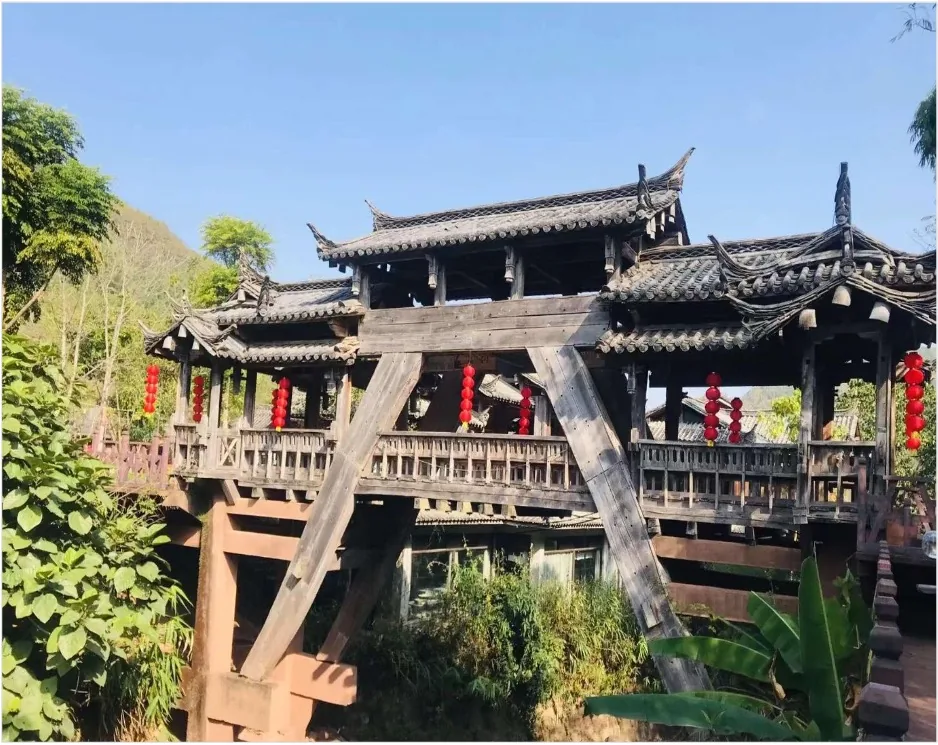
At 2:00 PM, I wandered to Chaoyang Tower. The steps were steep, so I held the blue-stone railing. The wind blew through the city wall, puffing up my jacket—the tower was high, its brick-red walls carved with dragon and phoenix cloud patterns. I reached out to touch it; the stone felt cool and was tinged with moss. Looking down from the tower, the blue-stone roads of the ancient city curved away, lined with shops selling silver, flowers, and handmade cloth bags. An auntie carried a shoulder pole selling Burmese gardenias; the flowers in her baskets were piled like small hills, smelling so sweet they made my nose itch. I took a panorama: the tower in the center, the street below like a ribbon, even the distant bell tower visible.
At 4:00 PM, I slipped into Zhu Family Garden. The ticket was 50 CNY. The security grandpa at the gate saw me carrying a Hanfu bag and smiled: “The light blue set that young guy rented is nice, why don’t you try this?” The Hanfu shop auntie came out and picked a light blue skirt with small orchid borders: “This is silk cotton, not cold for winter. The embroidery on the collar is handmade.” Dressed in Hanfu, I stepped onto the blue stones of the garden—the wooden doors and windows of the Ming and Qing courtyard were carved with plum, orchid, bamboo, and chrysanthemum. The pillars of the corridor were carved with couplets. Though the lotus pond lacked summer blooms, the withered stalks stood in the water like an ink painting. I posed by the rockery, which still bore marks carved by previous tourists (bad, but a trace nonetheless). I met a girl in pink Hanfu who asked: “Sister, where did you rent that? I want to take a picture for my mom!” I gave her the address and we took a photo together with camellia pots in the background.
Fresh from the Zhu Family Garden, I pulled out my notebook to organize today’s expenses and key points—it’s better to list key info in a table than to keep it in your head. Here is my “Yuanyang → Jianshui Practical List”:
| Item | Details | Cost | Notes |
|---|---|---|---|
| Yuanyang → Jianshui Shuttle | Departs 8:00 AM / 3rd row window / AC / See receding terraces | 30 CNY / person | Book 1 day early at the station / Window seat is better |
| Old Times Guesthouse | Old wood building in city / Near “Old Zhou’s” / Original beam marks | 200 CNY / night | Steep stairs / Wear non-slip shoes / Window faces stone road |
| Old Zhou’s Tofu (Lunch) | Fried bursting tofu / Cold rice noodles / Paoluda | Tofu 15 CNY / Noodles 10 CNY / Paoluda 10 CNY | Eat tofu hot / Chili powder makes it better |
| Chaoyang Tower | Free / Red walls with carvings / View of the city | 0 CNY | Least crowded before 8:00 AM / Stand in middle for panorama |
| Zhu Family Garden | Ming/Qing estate / Hanfu photos / Rockery looks good in winter | Ticket 50 CNY / Hanfu 30 CNY / hour | Light blue/pink Hanfu matches the garden style |
| Ancient City Night Market (Dinner) | Roasted potatoes with chili + Sichuan pepper / Papaya water | Potatoes 5 CNY / Papaya water 8 CNY | Pick fresh-fried potatoes / Ice papaya water is refreshing |
At 7:00 PM, I dove into the Ancient City Night Market. A crowd gathered around the roasted potato stall. The auntie cut the potatoes into chunks, fried them golden, and sprinkled chili powder, Sichuan pepper, and scallions: “Girl, eat it hot!” I took the paper bowl, my hand shaking from the heat. I took a bite—the potato was as soft as mashed potatoes, the spices penetrating every fiber. It was so good I ate three pieces without noticing the chili on my mouth. At the papaya water stall next door, the young guy handed me an iced cup: “Added coconut jelly and sago, sweet but not cloying.” One sip, and the icy papaya fragrance mixed with coconut milk perfectly cut the greasiness of the potatoes. I sat on a small stool by the road, watching people buy bouquets (Burmese gardenias for 10 CNY a bunch) and hearing the vendor shout “Fresh camellias!” The night air smelled of cassia, grilled skewers, and laughter, as comfortable as summers at my grandma’s when I was a kid.
My “Jianshui Tips”: ① Buy shuttle tickets in advance; the 8:00 AM bus gets you there in time for grilled tofu at lunch; ② Guesthouse stairs are steep, hold the railing if wearing heels; ③ You must order the “bursting” (baojiang) tofu at Old Zhou’s; the soup is so fresh you can drink half a bowl; ④ Chaoyang Tower has fewer people in the morning for panoramas; ⑤ You can haggle for Hanfu at Zhu Family Garden, 30 CNY for an hour is enough; ⑥ Get the potatoes hot and the papaya water iced.
Back at the guesthouse at night, I put the bamboo basket by my bed. The texture of the basket, the uncle, the little girl, the smell of tofu, the wind at Chaoyang Tower, and the feel of the Hanfu—all felt like treasures placed in that basket. I leaned against the window, watching Old Zhou’s tofu shop still lit downstairs, people sitting in rattan chairs eating tofu or walking with skewers—I realized the “slow” of Jianshui is turning days into tofu: soft, substantial, and with a hidden fragrance in every bite.

### Day 4: Slow Travels in Jianshui (The non-tourist local way)
Just as the sun climbed the eaves of Chaoyang Tower, the soy milk stall at the alley entrance began wafting sweet fragrance. Clutching the ginkgo leaf I picked up at Zhu Family Garden yesterday (used as a bookmark), I headed toward the Academic Examination Hall—on the way, I met an auntie selling roasted erkuai. The erkuai in the bamboo tray was coated with brown sugar sauce and crushed peanuts. The steam and sauce scent tickled my nose. I bought one and ate while walking; the sticky sweetness felt like the Jianshui morning.
The door of the Examination Hall was vermilion; a piece of lacquer had fallen off the “Yunnan Provincial Academic Examination Hall” plaque, looking like an old man missing a tooth. Inside, the owner in a navy blue shirt was repairing a rattan chair. He looked up: “Girl, want to wear Hanfu? I have sets here.” He pulled out a pale pink satin Hanfu with gold-threaded peonies. The fabric was as soft as my grandma’s old clothes. After changing, I straightened the buttons at the collar in the mirror—I actually looked a bit like an ancient scholar’s wife. The owner laughed and led me to the backyard: “Sit at that desk and write something; I’ll take a photo.” The desk was old elm with deep scratches. I held the brush and dipped it in ink, crookedly writing the character for “Fortune” (my strokes shook like earthworms). The owner said: “This looks like an ancient person wrote it—it has the flavor of real life!” In the photo, I sat at the desk with sunlight through the pomegranate tree on my shoulders, and the wall behind me still bore “Success in Exams” written by past candidates.
At 12:00 PM, I followed the scent to Lin’an Restaurant. The paint was peeling, leaving only the words “Lin’an Restaurant.” Pots of bougainvillea bloomed like fire by the door. A stout uncle in a greasy apron greeted me: “Sit inside, the Steam Pot Chicken just finished steaming!” 80 CNY for a set for two. The clay steam pot sat on the wooden table. The moment the lid opened, the scent of chicken soup rushed out—the broth was so clear it reflected my face, with a few wolfberries and ginger slices floating. The chicken was so tender it wobbled when picked up, even the bones soaked in freshness. The uncle said: “This is home-raised chicken, no feed. We only added a little salt when steaming.” It was served with stir-fried “grass sprouts” (caoya), a Jianshui specialty—crisp like small bamboo shoots with a bit of millet chili and garlic. It tasted like spring. I drank two bowls of soup and sucked the bones clean. The uncle smiled and handed me a tissue: “Slow down, there’s more in the pot.”
At 2:00 PM, I went for the Meter-Gauge Small Train. A faded sign on the old platform railing read “Jianshui Meter-Gauge Small Train.” The locomotive was dark green with peeling paint exposing the iron. The wooden seats inside were polished bright and creaked when sat on. 120 CNY including the ticket. I found a window seat—the train went “clack-clack” forward, wind blowing through the window and ruffling my hair. We passed rice fields with scarecrows in tattered hats and villages with smoking chimneys. A kid running with a dandelion waved, and I waved back. By the time we reached Tuanshan Residences, the sunset had just gilded the eaves. The gate was a Shikumen style. Inside the yard, pomegranate trees hung with green fruit. The bamboo curtains of the old teahouse were drawn, and Pu’er tea in a coarse clay pot was steaming. The owner in a skullcap greeted me: “Sit here, 10 CNY a cup.” The tea was bright red. He chatted: “Jianshui used to be called ‘Lin’an.’ Many scholars came from here in the Ming and Qing dynasties. Tuanshan was built by wealthy people then; it’s better preserved than the ancient city.” I touched the wooden pillars of the teahouse; they had deep scratches, as if telling stories of the past.
At 5:00 PM, I wandered to Purple Pottery Street. Dozens of stalls lined the street with banners saying “Purple Pottery” or “Jianshui Handmade Pottery.” Owners sat on small stools turning purple clay cups. I visited a young girl’s stall. She smiled and picked up two celadon-glazed cups: “Hand-thrown, the glaze is kiln-changed, very beautiful.” Original price 25 CNY, I bargained to 15 CNY each. She gave me a small box of clay: “Take this back and make a small cup to hold your Jianshui memories.” The clay was pale brown and soft like playdough. I made a crooked cup; it was ugly, but she said: “This is unique, worth more than buying one.”
On the way back to the guesthouse, I tucked the cup into my pocket, feeling its temperature—today I didn’t rush to sights or take “check-in” photos, but I felt like I tucked Jianshui’s life into my arms. Here is my “Slow Travel List”:
| Item | Details | Cost | Notes |
|---|---|---|---|
| Examination Hall | Opens 9:00 AM / Hanfu photos / Write “Fortune” | Ticket 30 CNY | Light colors look better / Owner helps with photos |
| Lin’an Restaurant | Old house / Steam Pot Chicken / Stir-fried grass sprouts | Set 80 CNY / 2 people | Drink soup hot / Grass sprouts must be flash-fried |
| Small Train | Departs 14:00 / Retro green train / Includes ticket / Scenery | 120 CNY / person | Window seat / Bring a light jacket (windy) |
| Tuanshan Residences | Preserved Ming/Qing architecture / Old teahouse | Tea 10 CNY | Touch the scratches on pillars / Feel the age of the house |
| Purple Pottery Street | Free / Bargain for handmade cups / DIY clay | Cup 15 CNY | Choose celadon or kiln-changed / Make a souvenir |