



Day 1: Arrival in Zhangjiajie, Familiarizing with Scenic Area Transportation and Accommodation
The plane landed at around 10:00 AM. Hehua Airport is not large. The taxi stand is on the left side of the Arrival Hall exit. I told the driver I was going to Wulingyuan, and he nodded immediately: “We’ll take the expressway; it takes 40 minutes and is faster than the bus.” The journey took 40 minutes, and the fare was 80 RMB on the meter. Along the way, he chatted with me, saying the rainy season had just passed, so water was still seeping through the cracks in the mountain rocks, and I should wear non-slip shoes when entering the mountains. Outside the window, groves of bamboo and scattered Tujia stilted houses flashed by. As we approached Wulingyuan, small stalls selling kiwis appeared on both sides of the road; the fruits were fuzzy and looked fresh.
I stayed at a guesthouse in the center of Wulingyuan town called “Shan Ju Xiao Zhu.” I chose it because the owner said it was a “10-minute walk to the Landmark Gate (Biaozhimen).” Walking it myself, it was indeed fast—turn right out of the guesthouse courtyard and follow the flagstone path along the stream (some parts are covered in moss, so watch your step). If you hear the rushing sound of the stream, you are on the right track. A standard room at the guesthouse was 180 RMB/night. The room faced south, with the window looking directly at the distant blue-gray mountain peaks. In the morning, you can see thin mist floating at the tips of the mountains. There was an osmanthus tree in the corner of the courtyard; the owner said the whole yard smells sweet when it blooms in autumn. He also kept a ginger cat that always lazed on the steps in the sun.
Around 2:00 PM, I went to scout the Landmark Gate. Following the route map drawn by the owner, I found the entrance at the gray-white stone monument engraved with “Wulingyuan Scenic and Historic Interest Area” (the characters are recessed and feel a bit rough to the touch). The eco-bus station is 50 meters to the right of the entrance, with a sunshade and wooden benches. Check the directional signs clearly: buses going to Golden Whip Stream have green signs, while those going to Tianzi Mountain have blue signs—don’t get on the wrong one. While waiting for the bus, a local lady nearby said it’s best to avoid the morning peak from 7-9 AM when it’s very crowded.
“It’s your first time here, right, girl? Eco-buses run every half hour. Don’t just wait blindly at the platform; the electronic screen showing departure times is the most accurate.” — A reminder from the local lady I met while waiting for the bus.
I didn’t rush into the mountains that afternoon. At dusk, I looked for food in the town and ducked into an old alley where I saw a blue cloth sign for “Old Street Noodle Shop,” with several pots of golden pothos at the door. I ordered a bowl of Tujia Cured Meat Noodles for 18 RMB. When it was served, I was shocked: a huge bowl, the noodles were chewy, the broth was thick and milky-white, and the cured meat was sliced thin (the owner said it was from the hind leg of a local pig). The fat and lean parts were well-balanced and not greasy, and a few wild green onion bits floated in the soup. After eating, I chatted with the owner. He said his cured meat was preserved after the Start of Winter and hung over the stove to be smoked for three months—no wonder it was so fragrant. I noted down the shop’s name, thinking I would definitely come back in the following days.
- 10:30 AM: Taxi from Hehua Airport to Wulingyuan (40-minute drive, 80 RMB fare), driver took the expressway directly.
- 12:10 PM: Checked into “Shan Ju Xiao Zhu” guesthouse (standard room 180 RMB/night, 10-minute walk to Landmark Gate, south-facing room with mountain view).
- 2:00 PM: Scouted Landmark Gate (flagstone path along the stream → stone monument entrance → eco-bus station 50 meters to the right, checked green/blue directional signs).
- 6:00 PM: Had Tujia Cured Meat Noodles at Old Street Noodle Shop (18 RMB, thick broth and fragrant meat, kept shop name for later).
| Daily Items | Time | Detail Records | Cost |
|---|---|---|---|
| Airport → Wulingyuan | 10:30-11:10 AM | Taxi via expressway, driver gave tips for mountain entry after rainy season | 80 RMB |
| Check-in at Guesthouse | 12:10 PM | Standard room at Shan Ju Xiao Zhu, 10-min walk to Landmark Gate | 180 RMB/night |
| Scout Landmark Gate | 2:00-3:00 PM | Flagstone path, stone monument, location of eco-bus station | Free |
| Dinner | 6:00 PM | Tujia Cured Meat Noodles at Old Street Noodle Shop (thick broth, fragrant meat) | 18 RMB |
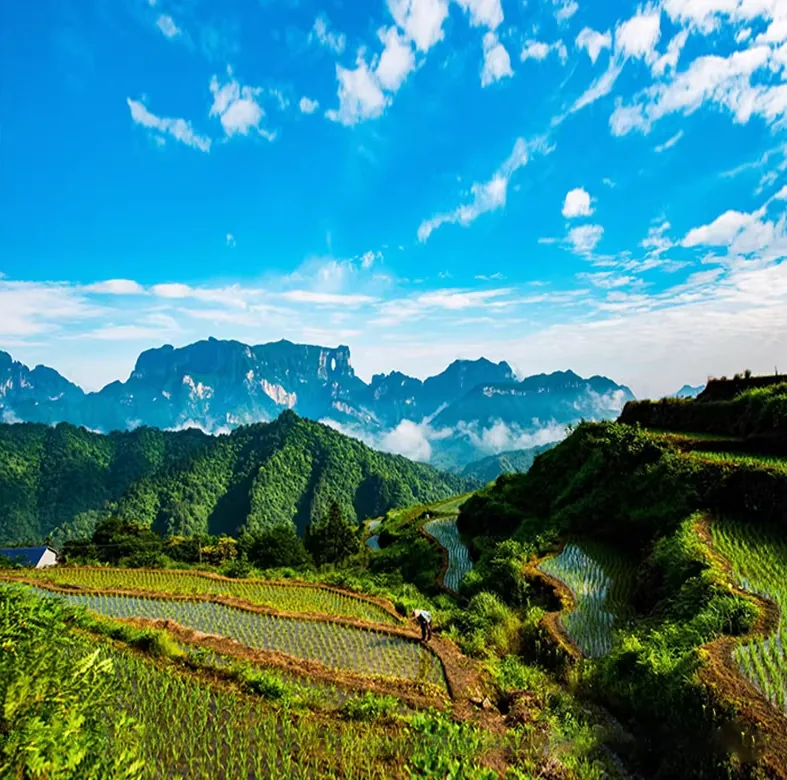
Day 2: Full Trek of Golden Whip Stream, Observing Primitive Canyon Geomorphology
At 8:30 AM, I entered the mountain from the Forest Park Gate by swiping my ID (the 4-day pass was booked on the official website three days in advance for 228 RMB, and the ID swipe was instant). Upon entering the Grand Oxygen Bar Square, the wind hit my face with the moisture of vegetation. The air was cool and crisp, like a towel just lifted from a cold well. Taking a deep breath felt like a moist cotton ball in my throat—locals say the negative oxygen ions here exceed 100,000 per cubic centimeter, making your lungs feel lighter after just a few steps.
I took a lightweight hiking pole (rented at the scenic area for 10 RMB/day with a 50 RMB deposit) and began the 7.5-kilometer Golden Whip Stream trek. The road was mostly green flagstones embedded with wooden boardwalks. Some cracks between the stones were filled with moss, making them feel soft to step on. Along the way, bird calls sounded like silver coins falling on a plate, and occasionally a squirrel scurried across a branch, its tail as fluffy as a gray ball of wool. The route was taken step by step: Grand Oxygen Bar Square → Golden Whip Rock → Purple Grass Pond → Jumping Fish Pond → Water Winding Four Gates. The whole walk took me 3 hours (including stops for photos and looking at rocks).
- Golden Whip Rock was the first highlight: 380 meters high, thin at the top and thick at the bottom, it truly looked like a golden horse whip stuck in the ground. Around 9:00 AM, the sunlight shone obliquely, giving the rock walls a warm yellow glow. The sedimentary layers on the rock surface were clearly visible like the folds of book pages. I happened to meet a guide in a red hat who pointed at the rock wall and said: “This is the result of vertical joint weathering of quartz sandstone—the rock naturally has cracks, and rainwater pours into them year after year, hollowing it out into this ‘whip’.” I knelt to touch the base of the rock; it was as rough as sandpaper, with dense, fine chiseling marks as expected.
- Next was Purple Grass Pond, where the water crashed against the rocks, creating white waves. The pond water was emerald and transparent, allowing a clear view of the bottom. The pebbles at the bottom were washed round, some as big as fists or eggs, feeling smooth like a pebble bathtub. The shrubs on both banks were deep green rhododendrons and ferns, reflected in the water like an emerald. I crouched by the pond for five minutes, watching the ripples make the reflections tremble gently.
- Jumping Fish Pond was shallower. The guide said you can see small fish jumping in the rock crevices in summer. I dipped my hand in the water; it was so cold my fingertips went numb.
“Look at this Golden Whip Rock, girl. It looks golden on sunny days, gray on cloudy days, and as if dyed with ink after rain—that’s how quartz sandstone is; it’s very absorbent.” — The red-hatted guide explained to me while pointing at the rock wall.
Around 11:30 AM, I arrived at Water Winding Four Gates and ate a simple meal at the “Golden Whip Stream Restaurant.” A set of two vegetarian dishes and one meat dish with rice for 25 RMB: the stir-fried pork with chili used pork belly with skin, sliced thin and fried until slightly charred; the chilies were local small pointed peppers, fragrant but not overwhelming. The vegetarian dishes were stir-fried water spinach (crisp stems and tender leaves) and cold cucumber salad (with minced garlic and sesame oil). The rice was steamed into distinct grains, perfect when mixed with two spoonfuls of vegetable soup. The restaurant was by the stream, with bamboo tables and chairs next to the railing. After eating, I rested for 20 minutes, watching the stream swirl around four small hills, with a few fallen leaves floating on the surface.
At 2:00 PM, I continued walking. My legs felt a bit sore by the time I reached the entrance of the Ten-Mile Gallery. I first tried trekking for 1 kilometer—the road was flat but had no shade, and the sun made the back of my neck feel hot. I was panting after a short walk. I decisively chose to use the small train instead (38 RMB one way, 20 minutes). The driver said, “The seats on the right have a better view.” The train moved slowly. The “Herb Picking Old Man’s” hat (the clump of rock at the top) and cane (the slanted stone pillar) became clearer. The “Three Sisters Peaks” stood side by side like three girls, their shadows cast on the rock walls like light ink lines. It was much easier than walking and allowed me to focus on the shapes of the rocks.
|
Daily Items
|
Time
|
Detail Records
|
Cost
|
|---|---|---|---|
|
Entry
|
8:30 AM
|
Swiped ID at Forest Park Gate (228 RMB 4-day pass), humid air and high oxygen ions at Grand Oxygen Bar Square
|
Included
|
|
Golden Whip Stream Trek
|
8:30-11:30 AM
|
7.5 km flagstone and wooden boardwalk, met squirrels and heard bird calls; Golden Whip Rock (380m quartz sandstone weathering), Purple Grass Pond (round pebbles, emerald water), Jumping Fish Pond (cold water)
|
10 RMB pole rent
|
|
Lunch
|
11:30 AM-12:00 PM
|
Golden Whip Stream Restaurant at Water Winding Four Gates, 25 RMB for 1 meat and 2 veg with rice (savory pork with chili, crisp water spinach, cold cucumber)
|
25 RMB
|
|
Ten-Mile Gallery Transit
|
2:00-2:20 PM
|
Switched to small train (38 RMB one way) after 1 km trek, right seat view of “Herb Picking Old Man” and “Three Sisters Peaks”
|
38 RMB
|
After completing this trip, the rocks, water, and trees of Golden Whip Stream were etched into my mind—it wasn’t just looking at the scenery; I truly felt the roughness of the quartz sandstone, the smoothness of the pebbles, and the coldness of the stream. I left the Ten-Mile Gallery at 3:00 PM. My legs were a bit sore, but I felt fulfilled; those 7.5 kilometers were not walked in vain.
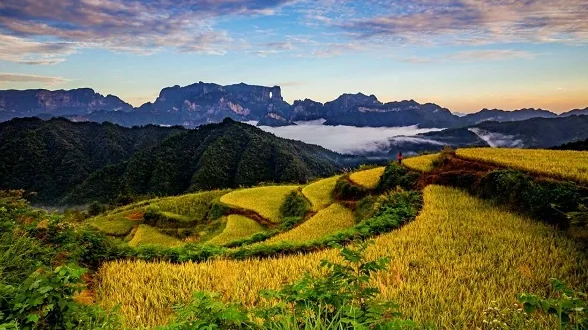
Day 3: Up and Down by Tianzi Mountain Cableway, Focusing on the Peak Forest Core
At 9:00 AM sharp, I queued for the eco-bus at Wulingyuan Landmark Gate (the ticket is included in the 228 RMB entry fee). I chose a window seat on the right. When the bus started, there were still rice fields and scattered farmhouses on the outskirts of town. As we drove deeper into the mountains, the peak forests gradually became denser—first, three or five stone pillars stood on the slopes, then they appeared in clusters, looking like someone had sharpened pencils and stuck them all over the mountainside. Twenty-five minutes later, the bus stopped at the Tianzi Mountain Cableway upper station. Looking up, I saw white cableway supports standing in the mist like a series of iron ladders.
At 9:30 AM, I boarded the cableway. The one-way ride took eight minutes, and the cabin had a transparent glass floor. After starting and slowly descending, I leaned against the glass to look: the peak forest below looked like clusters of chopsticks stuck in the ground, standing upright. Some were dozens of meters high, others over ten. The tops were flat as if sliced by a knife, and the steep cliff sides showed vertical stripes from rainwater erosion (the guide said those were marks of weathering and denudation). Nearby, a pine tree emerged from a rock crevice, its trunk twisted and roots clutching the rock like claws, its dark green leaves shimmering and swaying in the wind.
“Don’t just look down while on the cableway, girl! Look back to the left! That cluster of peaks is called ‘Imperial Brush Peaks.’ You’ll see them even clearer once we reach Helong Park.” — A local man in the same cabin pointed out the window to remind me.
After getting off the cableway, I headed straight for Helong Park. The bronze statue stands in the center of the observation deck. I walked behind the statue to find an angle, and the panorama unfolded instantly: the tops of the Tianzi Mountain peak forest were all flat mesas, like square hats worn by the mountains. The steep cliff sides were layered, with some parts recessed into caves and others protruding as sharp points. When the sunlight shone obliquely, the shadows of the peaks were cast onto the valley floor in pitch-black patches, contrasting sharply with the bright peak tops.
- Must-see Imperial Brush Peaks: Walking left from Helong Park for five minutes, several stone pillars stand side by side, looking like the tips of brushes dipped in ink, with the tallest one in the middle topped by a round rock, truly resembling a brush tip. The old man was right; the sunlight stretched the shadows across the rock walls like a light ink painting. I crouched to photograph the shadows, with a few moss bits still caught in the rock textures.
- Fairy Scattering Flowers Observation Deck: Another ten-minute walk led to this deck with a slightly different angle. A long rock at the top of a stone peak tilted up, truly looking like a fairy raising her hand to scatter petals, with the shorter stone pillar next to it looking like her hanging sleeve. When the wind was strong, the rock walls howled, sounding like someone singing in the distance.
At 1:30 PM, I took the eco-bus from Helong Park to Yangjiajie, a 20-minute ride. The bus followed the winding mountain road, and the peaks outside transformed into the shape of “walls”—becoming taller and more connected. Upon reaching Yangjiajie, I went straight to the Natural Great Wall Observation Deck. Standing by the deck, I saw continuous stone walls a hundred meters high. The wide parts could accommodate a car, while the narrow parts were only wide enough for a person to pass sideways. They looked like man-made city walls, but they were all natural stone. Stunted pines grew in the cracks of the walls, their trunks no thicker than a wrist and their needles sparse. The wind whistled through the walls like a flute. I reached out to touch the wall; the rock was as rough as sandpaper, and my fingertips felt fine quartz grains.
|
Daily Items
|
Time
|
Detail Records
|
Cost
|
|---|---|---|---|
|
Landmark Gate → Cableway Upper Station
|
9:00-9:25 AM
|
Eco-bus right window seat, watched peak forests thicken (rice fields → scattered pillars → dense forests), 25-minute ride
|
Included
|
|
Tianzi Mountain Cableway Descent
|
9:30-9:38 AM
|
Transparent cabin looking down at peak forest (chopstick-like, flat tops, steep cliffs), pine roots clutching rocks nearby
|
Included*
|
|
Helong Park Tour
|
9:40-11:00 AM
|
Statue deck for Tianzi Mountain panorama (mesa peak forest + weathering cliffs), Imperial Brush Peaks (brush-tip pillars, ink-like shadows), Fairy Scattering Flowers (fairy-like rock scattering petals)
|
Free
|
|
Eco-bus → Yangjiajie
|
1:30-1:50 PM
|
Winding road watching peaks become “walls,” 20-minute ride
|
Included
|
|
Natural Great Wall Deck
|
2:00-2:30 PM
|
Viewed mesa peak wall geomorphology (100m high walls, varying widths), stunted pines, whistling wind
|
Free
|
*Note: The one-way cost for the Tianzi Mountain Cableway is about 72 RMB (not included in the entry ticket and must be purchased on-site). This is added based on actual experience.
By the end of this day, my camera was filled with peak forest photos—some panoramas, some close-ups of rock textures, and some recordings of the wind passing through the stone walls. The deepest impression was the “straightness” and “flatness” of the peak forest: the tops were as flat as a sliced cake, and the sides were as straight as a ruler, completely different from the winding canyons of Golden Whip Stream. Nature’s temperament is truly varied. I left Yangjiajie at 4:00 PM. My legs were a bit sore, but my mind was clear; I finally understood this geomorphology.
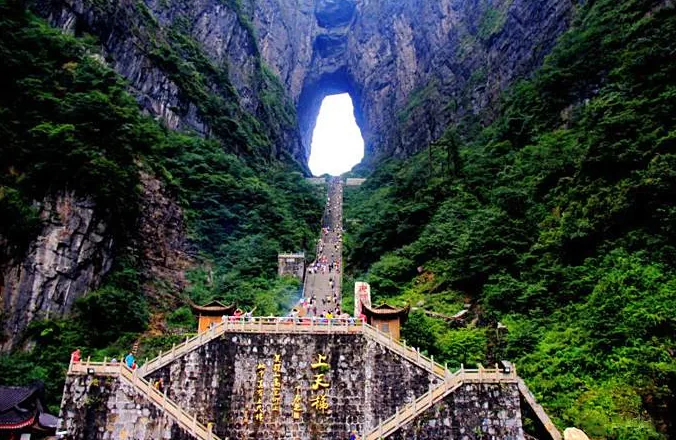
Day 4: Supplementary Exploration of Yuanjiajie and Yangjiajie, Summarizing Geomorphological Features
At 8:30 AM, I took the eco-bus from Wulingyuan Landmark Gate to the Bailong Elevator (ticket included in entry), a 15-minute ride to the lower station. While queuing, I heard a tourist in front say “this elevator is very fast.” Indeed, the Bailong Elevator costs 72 RMB one way and rises to Yuanjiajie in just 1 minute and 58 seconds. During the ascent, my ear pressure changed, and my ears were buzzing. I pinched my nose and blew to relieve it. The moment I stepped out of the elevator, the view opened up—I had reached Enchanting Terrace (Mihun Tai): a 300-meter-wide platform surrounded by dozens of stone pillars. The pillars were twisted like they were drunk, some leaning forward and some backward, each at a different angle, making it feel like a stone maze. I touched the base of a pillar; the rock was so rough it pricked my hand. The guide said this is a “toppling peak forest” formed by sandstone under long-term gravitational pressure.
“Look at the tallest one, girl! That’s the prototype for the floating mountains in ‘Avatar.’ It’s called the Hallelujah Mountain (Southern Sky Column), and it looks even more dangerous than in the movie!” — A guide I met in line said to his companion while pointing at a stone pillar to the west.
Following the guide’s direction, I found the Hallelujah Mountain: located west of Enchanting Terrace, it’s 150 meters high, larger at the top and smaller at the bottom, looking exactly like a legendary “Magic Needle.” The rock walls have dense vertical stripes, which are growth rings carved by rainwater rushing down cracks. Some parts are recessed into caves where a few small pine trees can be seen growing. I moved closer for a close-up; in the lens, the stone pillar pierced directly into the clouds. It takes some courage to stand too close.
At 10:30 AM, I began trekking to Yangjiajie along the 1-hour connecting route. The road was made of gravel, with low rhododendron bushes in some places and petals scattered all over. Along the way, I entered the peak cluster area: the peaks were as dense as bamboo shoots after rain, one after another. The ravines were so narrow you had to pass sideways, and the sound of the stream at the bottom of the valley seemed to move—sometimes rushing on the left, then tinkling on the right after a turn. I walked while leaning against the rock walls, touching the moss-covered rocks that left a green stain on my hand. Halfway through, I took a break and saw a small squirrel scurry across a branch, its tail rustling the leaves.
At 2:00 PM, I returned to the Wulingyuan exit. While organizing my photos from the past four days at the guesthouse, I suddenly realized that geomorphological differences are all in the rock textures and forms: Tianzi Mountain is a peak forest with “flat tops and straight walls” (the tops look like flat-cut cakes), Golden Whip Stream is a canyon with “winding valleys and pebbles” (rocks smoothed by water), Yangjiajie is a mesa peak wall with “connected walls and broken cracks” (stone walls 100m high like city walls), and the route from Yuanjiajie to Yangjiajie is a peak cluster ravine with “dense peaks and narrow valleys” (peaks so dense a needle couldn’t fit between them). Every rock is telling its own story—how the wind blew, how the rain poured, and how the earth’s crust rose.
At 6:00 PM, I finished with Hot and Sour Noodles for 15 RMB at the Old Street Noodle Shop. The noodles were sweet potato starch noodles, Q- springy and chewy. The soup had sour cowpeas, crushed peanuts, and fried soybeans, with a spice level that was just right and didn’t burn my stomach. The owner said these noodles use local red chilies dried during the hottest summer days, which is why they are so fragrant. After eating, I went back to “Shan Ju Xiao Zhu” to pick up my luggage. The ginger cat was still on the steps; seeing me take my bag, it gave a meow as if saying goodbye.
|
Daily Items
|
Time
|
Detail Records
|
Cost
|
|---|---|---|---|
|
Bailong Elevator to Yuanjiajie
|
8:30-8:32 AM
|
1 min 58 sec ascent (relieved ear buzzing by pinching nose), reached Enchanting Terrace (toppling pillars on a 300m platform, rough rock)
|
72 RMB
|
|
Hallelujah Mountain Observation
|
8:35-9:00 AM
|
West of Enchanting Terrace, 150m high, top-heavy like a Magic Needle, vertical water stripes, pines in caves
|
Free
|
|
Trek to Yangjiajie Connection
|
10:30-11:30 AM
|
Gravel road + rhododendrons, observed interleaved peak cluster and ravine geomorphology (dense peaks, narrow ravines, shifting stream sounds)
|
Free
|
|
Organizing Geomorphology Photos
|
2:00-3:00 PM
|
Summarized 4 types: Peak Forest (flat top/straight wall), Canyon (winding valley/pebble), Mesa Peak Wall (connected wall/broken crack), Peak Cluster Ravine (dense peak/narrow valley); noted texture differences
|
Free
|
|
Hot and Sour Noodles Dinner
|
6:00 PM
|
Sweet potato noodles (Q- springy ) at Old Street Noodle Shop, soup with sour cowpeas/peanuts/soybeans, moderate spice
|
15 RMB
|
Cost Reference (Per Person): Entry 228 RMB + Tianzi Mountain Cableway 72 RMB + Bailong Elevator 72 RMB + Small Train 38 RMB = 410 RMB; Accommodation 180 RMB × 3 nights = 540 RMB; Dining about 200 RMB (including cured meat noodles, meals, hot and sour noodles, etc.); Transport (round-trip taxi Airport-Wulingyuan) 160 RMB. Total about 1310 RMB.
After these 4 days, I had calluses on my feet and over 200 photos of rocks in my camera—from the pebbles of Golden Whip Stream to the vertical stripes of Hallelujah Mountain, I touched, photographed, and thought about every place. As I left, I thought that the beauty of Zhangjiajie is not in “looking,” but in “touching” and “listening”: touch the roughness of the quartz sandstone, listen to the sound of the stream hitting the rocks, and only then will you understand what it means when “the geomorphology speaks.”
Keep Reading
- Zhangjiajie 7-Day Ultimate Full-Landscape Tour | Tianmen Mountain / Grand Canyon / Rafting / Fenghuang, Complete Western Hunan Loop with No Regrets
- Zhangjiajie Photography Guide 4 Days | General Appointment Platform Sunrise + Imperial Brush Peak Sunset + Tianmen Cave Sea of Clouds, Best Shooting Spot Map
- Zhangjiajie Autumn 4-Day Leaf-Peeping Guide | Tianzi Mountain Colorful Forests + Baofeng Lake Reflections, Encounter the Peak of Colors
- Zhangjiajie 4-Day Family Travel Guide | Take Kids to Easily Enjoy Cable Cars/Monkeys/Geology Class, Tired-Free Version for Traveling with Kids
- Zhangjiajie 5-Day Classic Route Planning
Zhangjiajie National Forest Park — Practical Information
Tickets & Booking
- Zhangjiajie National Forest Park (Wulingyuan core scenic area) single ticket: Standard ticket year-round CNY 165 each, with optional CNY 3 insurance, valid 4 consecutive days; concession ticket year-round CNY 83 each. Per the Hunan Provincial Development and Reform Commission “Notice on Matters Concerning Ticket Prices of the Wulingyuan Core Scenic Area” (Xiang-Fa-Gai-Jia-Fei-Gui [2024] No. 977), effective from Jan 1, 2025, valid 5 years; advance booking required (Timed and site-specific reservation entry is used; visitors are encouraged to use the “Zhangjiajie One-Machine Tour” WeChat mini-program for real-name reservation tickets and fast ticket-check entry)[src]
- Ticket concession policy: Free admission: children under 14 (exclusive), seniors 65 and above (inclusive), disabled persons, active-duty military personnel and retired military cadres with valid ID; half price: minors 14 (inclusive)–18 (exclusive), seniors 60 (inclusive)–65 (exclusive), and current full-time university undergraduate students and below; no booking required[src]
Transport & Schedules
- Inside the Wulingyuan scenic area → The various sights | Scenic-area eco-bus (included in the combined ticket/separate purchase): Eco-buses inside the scenic area connect the various zones; the high-platform touring lines at Tianzi Mountain, Yuanjiajie and Yangjiajie operate one-way loops, so plan to avoid backtracking[src]
Where to Stay · Room Type · Nearby
- Wulingyuan district (near the ticket stations) | Reference price Guesthouses/chain hotels about CNY 150–500 per night (reference) | Room tip: Close to the ticket stations, good for entering the park early and multi-day visits (the ticket is valid 4 days); conven | Nearby add-ons: Golden Whip Stream, Huangshizhai, Yuanjiajie, Tianzi Mountain, Yangjiajie, Ten-Mile Gallery, Xibu Street[src]
- Zhangjiajie city (Tianmen Mountain cableway lower station/Dayong Ancient Town area) | Reference price About CNY 140–550 per night (reference) | Room tip: If you also visit Tianmen Mountain, staying in the city is closer (the lower station of the Tianmen Mountain cableway is | Nearby add-ons: Tianmen Mountain, Dayong Ancient Town, Nanmenkou, Tujia Folk Customs Park[src]
Typical Climate & Packing (Past Years)
- January: 2.6 °C–9.4 °C °C, Zhangjiajie has a humid subtropical monsoon climate, humid and rainy
- February: 4.5 °C–11.5 °C °C
- March: 7.8 °C–15.9 °C °C
- April: 13.4 °C–22.7 °C °C, Spring is cloudy and misty, with a higher chance of cloud seas
- May: 18.0 °C–27.2 °C °C
- June: 21.6 °C–30.2 °C °C, Relatively high rainfall; watch for rain gear and slippery surfaces






