



Before traveling to Yunnan, focus on understanding four key points: ① Weather: Small annual temperature range but diurnal temperature variation can reach over 10°C; the rainy season is from May to October, so bring rain gear; ② Altitude: Kunming is about 1900m, Lijiang 2400m, and Shangri-La 3200m; to prevent altitude sickness, move slowly and drink plenty of water; ③ Route: The classic route is Kunming-Dali-Lijiang-Shangri-La, with 7-10 days being reasonable; ④ Pitfalls: Scenic spot tickets are relatively high (e.g., Jade Dragon Snow Mountain is about 140 yuan + cableway fee); beware of low-priced tour groups and forced consumption.
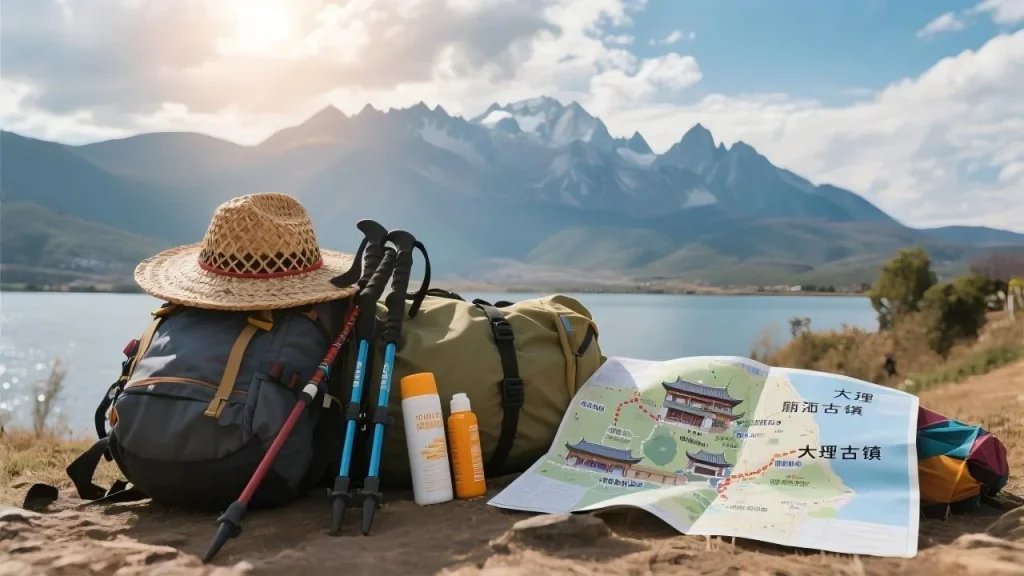
Weather and Dressing
Yunnan spans 8 latitudes, with terrain rising from 76m to 6740m, encompassing climates from tropical to frigid. The annual temperature difference in Kunming is about 10°C, while the daily temperature range in Dali and Lijiang reaches 12°C to 15°C. For every 1000m increase in altitude, the temperature drops by an average of 6°C. In July, Shangri-La can drop to 8°C at night, while Xishuangbanna can reach 28°C in the afternoon in January. The UV index remains at an extremely high level of 11+ year-round, with annual sunshine hours exceeding 2200 hours. Differences in spatial altitude bring sudden shifts in temperature, so pack clothing for three seasons.
Temperature Distribution
Yunnan’s isotherms are sharply divided along the Ailao and Hengduan Mountains. In Mengla County, the southernmost part of Xishuangbanna, the direct sunlight at 21 degrees north latitude keeps January afternoon temperatures above 26°C year-round.
Moving about 400km north across the Tropic of Cancer to Pu’er City, the altitude climbs from 500m to 1300m. During the same period, the temperature in Simao District of Pu’er drops to around 20°C, and people on the streets start switching from short sleeves to long-sleeved shirts.
Driving north along the Kunming-Mohan Expressway into the central Yunnan plateau, the altitude of Kunming’s main urban area stabilizes at around 1890m, with more than 200 days a year seeing daily average temperatures between 15°C and 25°C. The alpine mountains of northwest Yunnan completely shatter the illusion of warmth. The altitude of Shangri-La City leaps to 3280m, where night temperatures in mid-summer July often fall below 8°C, bottoming out at 5°C in the early morning.
The temperature gap caused by height differences is extremely exaggerated at the foot of Meili Snow Mountain. The Feilai Temple observation deck in Deqin County is at an altitude of 3400m, where the outdoor temperature at 7 AM in late December hovers around -8°C. Descending to the Lancang River valley, 30km from Feilai Temple, the altitude drops to just over 2000m. At noon, the temperature at the bottom of the valley is heated by the sun to 15°C, creating a 23°C temperature difference between the two locations within a few hours.
High-density data comparisons can intuitively show temperature misalignments across latitude and altitude.
| Observed City | Estimated Altitude | Jan Afternoon Avg | Jan Dawn Avg | July Afternoon Avg | July Dawn Avg |
|---|---|---|---|---|---|
| Jinghong City | 550m | 26°C | 14°C | 33°C | 23°C |
| Kunming City | 1890m | 16°C | 3°C | 25°C | 17°C |
| Dali City | 1976m | 15°C | 2°C | 24°C | 15°C |
| Lijiang City | 2400m | 13°C | -1°C | 22°C | 13°C |
| Shangri-La | 3280m | 6°C | -10°C | 18°C | 8°C |
Temperatures within the same city shift violently with the angle of sunlight. Dali Ancient City sits with the Cangshan Mountains behind it and Erhai Lake in front; in November, the 8 AM temperature is only 6°C, and you can see your breath on Fuxing Road. By 2 PM, strong plateau sunlight pierces the thin atmosphere. Without cloud cover, the surface temperature surges to 22°C within two hours, a perceived temperature difference of 16°C.
The vertical temperature gradient of Jade Dragon Snow Mountain in Lijiang is extremely steep. The Ganhaizi Visitor Center is at 3100m, with daytime temperatures of about 12°C in autumn. Taking the large cableway up 1400m to the Glacier Park at 4506m, the law of physics—a 0.6°C drop for every 100m of ascent—takes effect. On a sunny afternoon at 1 PM, the outdoor temperature at Glacier Park stays near 0°C year-round.
Microclimates cause local distortions in temperature distribution near water. Lugu Lake, with a surface area of over 50 square kilometers, acts as a natural heat reservoir, absorbing heat and slowing down the nighttime cooling. In the Lige Peninsula, within 50m of the shoreline, the minimum night temperature in winter is 3°C to 4°C higher than in Ninglang County, ten kilometers away. The wind blowing from the water surface carries faint moisture, buffering the invasion of dry, cold air.
Zhaotong City in eastern Yunnan is located in the transition zone of the Yunnan-Guizhou Plateau, long exposed to cold air moving south from the Sichuan Basin. Winter temperatures in Zhaoyang District often hover between 0°C and 5°C, where the clash of cold and hot air triggers freezing weather.
- Menghai County in Xishuangbanna has an average annual temperature of 18°C; after rain, humidity reaches 85%, making it feel hot and humid.
- Tengchong City is nourished by the southwest monsoon from the Indian Ocean, with an average annual temperature of 15°C; sub-zero temperatures are rare in winter.
- Bingzhongluo in Nujiang Prefecture is located in a deep mountain canyon; it is scorched by the Foehn effect in summer, with valley floor temperatures often exceeding 30°C.
- The Baima Snow Mountain Pass in Diqing Prefecture is at 4292m; it is blocked by snow from mid-October, with temperatures below zero for half the year.
On thermal imaging maps from meteorological satellites, surface temperatures are torn into countless uneven patches of heat and cold. From 25°C in the Yuanyang Hani Rice Terraces in Honghe Prefecture, to 18°C by Fuxian Lake in Yuxi, and 8°C at the peak of Jizu Mountain in Dali.
Driving from Kunming to Shangri-La in a single day, the external temperature display on the car’s dashboard undergoes a roller-coaster-style plunge. It shows 18°C on the Kunming Ring Road in the morning and jumps to 9°C upon arriving at Tiger Leaping Gorge in the evening.
Irregular temperature jumps cause trouble for tourists who only look at the average temperature on weather forecasts. The 15°C daily average shown on mobile apps is a deceptive figure balanced between 25°C at noon and 5°C at midnight.
Plateau winds at night can strip away another layer of perceived temperature. Xiaguan Town in Dali is squeezed by high mountains and canyons, creating a wind tunnel effect; winter night gusts reach levels 6 to 8, making it feel 5°C colder than the actual temperature.
Climate and Dressing
The terrain of Yunnan spans more than 6000m from south to north. Jinghong City in Xishuangbanna is only 550m above sea level, where mid-January afternoon temperatures can soar to 28°C. Traveling 600km north to Kunming, the altitude rises to 1890m, and the temperature drops to around 15°C for the same period.
Continuing northwest through Dali to Lijiang, the altitude climbs into the 2400m range. Meteorological stations calculate that for every 1000m rise above sea level, air temperature drops by exactly 6°C. During the height of summer in July, night temperatures in Dukezong Ancient City, Shangri-La, still fall below 8°C. Diurnal temperature ranges shift rapidly. Watching the sunrise by Lugu Lake at 7 AM feels like less than 10°C. By 2 PM, having moved to Dali Ancient City for coffee, the overhead sun bakes the surface to over 26°C.
Stuffing a suitcase with heavy cotton hoodies wastes space. Cotton fabric dries slowly after absorbing sweat; in a 4-level cold wind at 2500m altitude, body heat is lost extremely fast. Wear a 150g polyester short-sleeve or Merino wool base layer as the first layer. Fabrics with an 80% sweat-wicking rate keep the skin dry after heavy sweating. Replace bulky sweaters with 250g fleece jackets. Carry a “rib” down jacket with 100g to 150g of down filling, which compresses to the size of a fist and can be pulled from a backpack side pocket at any time.
In the deep canyons of northwest Yunnan, rain and temperature drops happen simultaneously. Precipitation is frequent from May to October; ten minutes after rain hits the ground, the air temperature plunges by 8°C to 10°C. Wind speeds in the Xiaguan area of Dali remain at levels 4 to 6 year-round. Walking along the Erhai Ecological Corridor, a thin knitted cardigan cannot block the cold wind blowing down the collar.
- Look for 3-in-1 hardshell jackets with waterproof and breathable membranes.
- The waterproof rating on the label should reach 10000mm water column pressure.
- Choose a breathability index of 8000g/m²/24h to prevent internal condensation from walking sweat.
- Wear woven 4-way stretch pants with Teflon coating for wind and water resistance.
- Prepare a pair of 100g thin Merino wool thermal leggings as a base layer.
During the dry season from November to the following April, strong winds blow the relative humidity below 30%. High-altitude hypoxia coupled with extreme dryness makes body surface water evaporation three times higher than in lowland cities. If you don’t apply body lotion before bed, the skin on your shins will dry out and flake. Apply a pea-sized amount of Vaseline to your nasal cavity to reduce the risk of nosebleeds at night.
The road conditions underfoot are a test of physical strength. Dayan Ancient City and Shuhe Ancient Town in Lijiang are paved with irregular colorful stones and uneven bluestone slabs.
- Wear lightweight hiking shoes with midsoles made of EVA or ETPU foam.
- The rubber sole thickness should be between 3 to 4cm with deep anti-slip treads.
- Wear sports socks with a blend of 70% cotton and 30% nylon and a terry-cloth sole.
- Prepare 3 to 5 pairs of disposable cotton underwear; in the rainy season, it is extremely difficult for clothes to dry in guesthouses.
- Carry 5 packs of electrolyte powder containing sodium and potassium ions to mix with 500ml of warm water after sweating.
Walking 20,000 steps in hard-soled Martin boots or high heels in the ancient city will result in plantar fasciitis and calf muscle soreness, making it difficult to get out of bed the next day. Leave the bottom half of your suitcase for soft-soled footwear.
If the itinerary shifts south to Ruili City on the China-Myanmar border or Menghai County in Xishuangbanna, your wardrobe needs a total overhaul. The local average annual relative humidity fluctuates between 75% and 85%. The air is constantly filled with hot, humid vapor. Even in the coldest month of January, a short-sleeved linen-cotton blend shirt paired with breathable mesh quick-dry pants will still leave you slightly sweaty in the Starlight Night Market.
High-end hotels in Jinghong City, Xishuangbanna, keep powerful air conditioning at 16°C year-round. The 32°C outdoor heat creates an absolute difference of 16°C with the interior. Stuff an 80g nylon sun-protection shirt into your backpack to put on when entering to block the wind and cold. Traveling north along the Yunnan-Tibet line to the Meili Snow Mountain area, the Feilai Temple observation deck is at an altitude of 3400m. At 6:30 AM in December, the outdoor temperature is -5°C, and valley winds pull the perceived temperature down to -10°C.
The Shudu Lake boardwalk in Potatso National Park, Shangri-La, is 3.3km long. In the primeval forest at 3500m, it is shaded year-round; at 4 PM, if the sun is blocked by clouds, the temperature drops from 18°C to 10°C within twenty minutes.
A heavy, knee-length windproof down jacket serves as an outer barrier. Combine it with a fleece trapper hat that covers the ears and a pair of windproof gloves to stand steady for half an hour in the sub-zero biting wind waiting for the snow mountain sunrise.
UV Intensity
Yunnan’s average surface elevation is around 2000m, with Kunming’s main urban area at 1891m. For every 1000m climb in altitude, the atmosphere’s ability to absorb UV rays decays by about 10% to 12%. The end of the Dali Cangshan Ximatian cableway is at 3920m, where the UV radiation received is nearly 40% higher than in sea-level cities.
The UV index released by the meteorological bureau is usually calibrated with values from 0 to 15. Every year from April to October, the index in Lijiang Ancient City at noon frequently breaks 11. Standing in unshielded sunlight at Sifang Street at 2 PM, exposed skin will develop erythema in just 12 to 15 minutes.
The spectrum in sunlight that damages skin is concentrated in the 280nm to 400nm range. UVB waves penetrate the epidermis, causing high-altitude sunburn and peeling. UVA waves can penetrate the dermis, destroying collagen and leading to photoaging; skin turning three shades darker after a trip to Shangri-La is due to the effects of UVA waves.
Many tourists renting cars to drive the Yunnan-Tibet line think they won’t get burned while hiding in air-conditioned cars. UV-protective glass blocks 99% of UVB waves but has zero blocking effect on the longer wavelength UVA waves. Driving for 3 hours against a window, the arm and cheek near the window receive almost the same amount of UVA radiation as direct outdoor exposure.
When Jade Dragon Snow Mountain is shrouded in fog, tourists mistakenly think sunscreen is unnecessary. Cloud cover only blocks UV rays by 20% to 30%. At the Glacier Park observation deck at 4680m, the white snow reflects up to 80% of UV rays, with strong light hitting the chin and bottom of the nose from below.
Tests on the UV transmittance of different colored fabrics show huge differences. Dark clothing absorbs light and converts it into heat, while light clothing allows a large amount of UV rays to penetrate the gaps between yarns.
- The UV blocking rate of black polyester fabric is stable at over 96%.
- When a white cotton T-shirt gets wet from sweat, the UV transmittance surges to 20%.
- The UPF value for a light yellow silk shirt measured by a meter is only UPF10.
- A dark blue windbreaker using original yarn sun-protection technology shows no decay after 100 washes.
Selecting hard sun-protection gear depends on factory test data. The protection area of hats and umbrellas determines the erythema reaction time of the skin around the cheekbones.
- Look for the UPF50+ tag inside sun hats when purchasing; the brim width should be greater than 8cm to cover the jawline.
- Sun umbrellas should have a black glue coating on the inner surface, with a light transmittance below 0.5%; no light should pass through when a flashlight is pressed against the umbrella.
- Choose nylon sun-protection shirts with a density greater than 40D; styles with titanium dioxide infused into the fabric won’t lose sun-protection power after 50 washes.
- Wear polarized sunglasses for snow and lake trips, marked with UV400 to block harsh light between 315 to 400nm.
Applying sunscreen is a supplement to physical blocking, and the protection against tanning should be PA++++. To reach the rated protection, apply 2mg of sunscreen per square centimeter of skin. An adult face requires an amount the size of a coin, weighing about 1.2g to 1.5g.
Sunscreen film-forming agents need time to evaporate, so finish applying to the face 20 minutes before going out. When hiking in the 3300m-high Dukezong Ancient City, sweat accelerates the loss of sunscreen, requiring reapplication every two hours. The edges of the ears, back of the neck, and the tops of feet in sandals are areas easily missed.
After 8 hours of exposure to high UV environments, the surface temperature of the epidermis rises by 2°C to 3°C. Return to the guesthouse and use 15°C to 20°C cold water to rinse reddened areas to cool down. Use a gel containing 5% Vitamin B5 for a 20-minute thick mask to reduce capillary activity in the epidermis.
The time period with the highest total daily UV dose is concentrated between 11:30 AM and 3:30 PM. This period accounts for over 75% of the daily total radiation. Move activities like cycling Erhai Lake or walking Shuhe Ancient Town to 8 AM to 10 AM to avoid the toxic midday sun.
In special geographical environments, the rate of burns caused by multi-angle light reflection is multiplied.
- When taking a pig-trough boat on Lugu Lake, the water surface reflection is 20%; wear long sleeves, pants, and a sun mask to cover the cheekbones.
- Hiking Tiger Leaping Gorge consumes significant physical energy; choose a sun-protection shirt with breathable mesh under the arms and a back sweat-wicking rate of over 80%.
- When staying in hotels above 3000m, apply a night cream containing 0.1% retinol to repair the damaged stratum corneum from the day.
The relative humidity of plateau air is year-round below 40%, and strong light accelerates moisture evaporation from the lips. Lips have almost no stratum corneum or pigment protection and zero resistance to UV rays. Keep a lip balm with SPF15 in your pocket and reapply after every drink of water.
Food can change the skin’s sensitivity to light. Coriander, celery, and lemon are rich in photosensitive substances like furanocoumarins. Eating a large plate of cold-mixed coriander at lunch before climbing Potatso National Park will cause the body to accumulate photosensitive substances, doubling the skin’s efficiency in absorbing UV rays.
Altitude and Altitude Sickness
The average altitude span of Yunnan travel routes is between 1890m (Kunming) and 4506m (Glacier Park, Jade Dragon Snow Mountain). When a person reaches 2500m, the oxygen content in the air drops to 75% of sea level; at 3300m, it drops to 68%. At this point, the resting blood oxygen saturation often falls below 90%, easily causing headaches, palpitations, or insomnia. Ignoring the altitude drop and climbing rapidly can easily induce Acute Mountain Sickness (AMS).
Standard atmospheric pressure at sea level remains at 101.3kPa, with about 260g of oxygen per cubic meter of air. The altitude of the Kunming Changshui Airport runway is 2100m; the moment you step out of the cabin door, the atmospheric pressure drops to about 78kPa.
At this time, the volume ratio of oxygen concentration in the air is still 20.9%, but the air density has become thinner. With every breath you take, the absolute mass of oxygen entering your lungs is 79% of that at sea level.
The body first notices this 21% oxygen gap. Walking on the streets of Kunming at 1890m, your heart rate, which was originally 60 beats per minute, quietly climbs to 75 beats to compensate for the oxygen shortage by speeding up blood circulation.
Driving into Dali, the bluestone roads of Dali Ancient City are at an altitude of 2052m. The oxygen content in the air drops to 77% of sea level, and the pulse oximeter reading in a sitting state jumps between 94% and 96%.
Starting from Dali and driving 160km north along the Dali-Lijiang Expressway, you reach the 2418m-high Lijiang Ancient City. The pressure gauge needle drops to 75kPa, and the equivalent oxygen content remains at 74%.
Carrying a 20-inch suitcase up the sloped stone steps of a guesthouse in Lijiang Ancient City, the thigh muscles instantly consume a large amount of blood oxygen. The breathing rate increases from 16 times per minute to over 22, and light sweat appears on the forehead.
A chartered car takes you over the Nine Turns and Eighteen Bends mountain road to Lugu Lake; the Lige Peninsula observation deck is at 2690m. The oxygen content drops to 71%, and UV rays penetrate the thin atmosphere, making radiation intensity 1.5 times that of the plains.
| Location | Estimated Altitude | Atmospheric Pressure (kPa) | Equivalent Oxygen (vs Sea Level) |
|---|---|---|---|
| Kunming Urban Area | 1890m | 80.5 | 81% |
| Dali Ancient City | 2052m | 78.8 | 77% |
| Lijiang Water Wheel | 2418m | 75.2 | 74% |
| Lige, Lugu Lake | 2690m | 73.1 | 71% |
| Dukezong, Shangri-La | 3276m | 67.5 | 68% |
| Feilai Temple, Meili | 3400m | 66.2 | 66% |
| Glacier Park, Jade Dragon | 4506m | 57.8 | 57% |
Continuing up National Highway 214 along the Yunnan-Tibet line, the altitude of Jiantang Town in Shangri-La rises to 3276m. The pressure plunges to 67kPa, and the equivalent oxygen content in each breath is only 68%.
Lying flat on a bed in a Shangri-La guesthouse, the resting blood oxygen saturation rubs against the 88% to 91% edge. The amount of oxygen carried by the blood decreases sharply, and a layer of cyanosis slightly appears at the edges of the fingernails.
Buying a freshly ground coffee sitting in Renmin Road in the ancient city, the physical temperature of boiling water has changed. Water that boils at 100°C in the plains starts to tumble and bubble at just over 90°C in Shangri-La.
- Bai restaurants in Dali are equipped with 8kg aluminum alloy pressure cookers
- The internal pressure of the pressure cooker is locked at 120kPa to force the water temperature to 100°C
- Undercooked rice starch entering the intestines increases the digestive load by 30%
- Increased blood supply to the stomach takes away a 5% blood quota from the brain
Lighting a cigarette in the plains takes about 3 minutes to finish. In the oxygen-deficient environment of Shangri-La, tobacco burns incompletely, producing carbon monoxide concentrations 1 time higher than usual.
After two puffs, 5% of the red blood cells in the blood are occupied by carbon monoxide. The remaining 68% oxygen quota is forcibly reduced by 5%, increasing the chance of sudden headaches.
The vacuum-packed chips brought up the mountain have the 101kPa plain pressure sealed inside, which forms a huge pressure difference with the 57kPa mountain pressure outside. The plastic bag swells like a hard balloon and bursts at the seal near an altitude of 4000m.
- Car tire pressure increases by about 0.3 bar compared to the plains
- Sunscreen in plastic soft tubes automatically overflows when the cap is unscrewed
- The ignition rate of lighters drops to 60% due to air pressure
- The moment a thermos is opened, fine hot water droplets spray out
- The internal pressure of shampoo pump heads is unbalanced, causing leakage
At the Sun-Moon-Gold Mountain observation deck of Meili Snow Mountain’s Feilai Temple, the early morning temperature hovers between -2°C and 5°C. At an altitude of 3400m, with low temperatures and 66% oxygen content, setting up a tripod to shoot for 10 minutes in the cold wind causes the capillaries at the fingertips to contract completely.
Blood returns to maintain internal organ temperature, and the surface temperature of the hands drops below 15°C. The action of pressing the DSLR camera shutter becomes stiff, with the brain issuing two nerve commands for every one shutter press.
In 10 minutes, the Glacier Park cableway on Jade Dragon Snow Mountain lifts a person from the 3356m lower station to the 4506m upper station. In an 1150m vertical climb, the pressure drops from 66kPa to 57kPa.
A pressure difference of 9kPa is instantly generated inside and outside the eardrum. The oxygen content drops from 66% to 57%; in these 10 minutes, the body has no time to secrete erythropoietin, making it a physical endurance test.
Stepping out of the cable car, level 7 winds mixed with snow particles hit the face. With 57% oxygen, walking fast for 5m to grab a photo spot causes the heart rate to soar from 85 to 130 beats/min in 3 seconds.
Pulling out a 1000ml portable oxygen canister and pressing the valve for 1.5 seconds near the nose and mouth, the pure oxygen sprayed in those 1.5 seconds pulls the local oxygen concentration back to 21%, and the heart rate falls back to 100 beats/min within 10 seconds.
After waiting 40 minutes in the line for the descent cable car, the body’s glycogen reserves are exhausted. Taking a bite of a 50g Snickers bar, the 57kPa pressure reduces saliva secretion, making swallowing chocolate twice as difficult as in the plains.
Body Function Management
Arriving at the 3300m Dukezong Ancient City in Shangri-La, drop your luggage and sit quietly on the edge of the bed for 15 minutes. Clip a pulse oximeter on your right index finger and observe the numbers on the screen. The resting heart rate of a normal person in the plains is usually 60 to 80 beats/min; in the first two days on the plateau, a surge to 95 to 105 beats/min is a normal compensatory response of the human body. The heart is speeding up the pumping of blood to make up for the 32% oxygen missing from every breath of air.
The blood oxygen saturation (SpO2) reading is more informative than the heartbeat. In Dali at 2000m, the value can often stabilize above 94%. When the bus crosses the 4292m Baima Snow Mountain Pass, the number on the screen will likely fall below 85%. If not accompanied by a severe splitting headache or projectile vomiting, a reading between 80% and 89% can be managed through self-regulation.
Forcibly cut your normal walking pace in half. On the wooden boardwalk of Glacier Park at 4506m on Jade Dragon Snow Mountain, maintain a snail’s pace of 40 to 50 steps per minute. Every time you move up 10 steps, stop and take 3 deep breaths. Fill the alveoli with a large breath, then slowly exhale with lips in a whistling shape, making the exhale time twice as long as the inhale time, forcing the naturally hurried breathing rhythm to slow down.
- Slow down actions like climbing stairs or carrying heavy objects by 3 times
- Avoid sudden head-down or bending movements when washing and brushing
- Lower speaking volume to reduce lung oxygen consumption
- Avoid sudden turns that cause vestibular dizziness
Consciously slowing your breathing rhythm cannot prevent water loss with the air. Air humidity on the plateau is year-round below 30%, and the water carried away with each breath is 2.5 times that of the plains. Even if you don’t feel thirsty, the body is evaporating water wildly. Dehydration makes blood viscous, and the efficiency of red blood cells in transporting oxygen drops off a cliff.
Daily plain water intake must hit the red line of 3000ml to 4000ml. Keep a few 550ml bottles of mineral water with you and force yourself to take two or three sips every 20 minutes. Drinking in large gulps increases the excretion pressure on the kidneys, while small, frequent amounts let the water truly enter the blood circulation.
Observing urine color is the most accurate gauge for body hydration. If the urine is dark yellow or even amber, the body is in a state of moderate dehydration; immediately supplement with 500ml of water. If the liquid color is clear or light yellow, the blood viscosity is in the safe zone.
- Strictly control the amount of food in each meal to 70% of your normal amount
- Increase the proportion of carbohydrates like rice and noodles to over 60%
- Stop eating beef and mutton that require a lot of oxygen to digest
- Keep two sugar cubes or hard candies in your pocket to suck on at any time
The gastrointestinal tract needs more than 20% of the body’s total blood supply to digest food. After a full meal of local chicken hot pot in a restaurant in Lijiang at 2418m, a large amount of blood rushes to the stomach, and the blood oxygen quota for the brain is severely squeezed. The fuller you eat, the more intense the sleepy feeling of oxygen deficiency after the meal.
Carbohydrates are converted into glucose for energy in the body, consuming 15% less oxygen than fats and proteins. When climbing snow mountains over 4000m, putting a few small bags of bread or wafer biscuits in your bag is more useful than carrying large pieces of beef jerky. High osmotic pressure sugar can replenish blood sugar at the fastest speed, calming the nervous system irritated by oxygen deficiency.
While you can maintain your state during the day with sugar and food control, the most likely time for physical problems is during sleep at night. After falling asleep, autonomous breathing becomes shallow, and the ventilation volume per minute decreases by nearly 20%. You might feel perfectly fine in Shangri-La during the day, but at two or three in the morning, you might be jolted awake when your blood oxygen falls below 75%.
It is most appropriate to set the hotel room air conditioner temperature between 18°C and 20°C. If the room temperature is too high, it causes capillaries to dilate, keeping the heart rate high; if it’s too cold, it easily triggers shivering, and muscle contraction for heat generation consumes the scarce oxygen at double the rate. For the first night, resist the urge to take a bath or wash your hair to prevent hot water from stimulating and accelerating the body’s blood circulation.
- Soak your feet in warm water for 10 minutes and dry thoroughly before bed
- Slightly raise the pillow by 5 to 10cm to improve the airway angle
- Leave the bedroom window open by two fingers’ width to maintain air circulation
- Keep a thermos filled with 45°C warm water at the bedside to moisten your throat at night
Indoor temperature is easy to control, but outdoor cold winds have great killing power. For every 1°C increase in body temperature, the basal metabolic rate rises by 13%. Loss of body temperature due to wind makes the body consume a lot of oxygen to shiver and generate heat. Pull the zipper of your windproof jacket all the way to your jaw and wear a fleece hat that covers your ears.
The head accounts for about 9% of the human body’s surface area; in a gusty environment around 0°C, the heat lost accounts for nearly half of the total body heat dissipation. In the time it takes to take off your hat for photos at a pass, the scalp blood vessels contract violently, quickly bringing on a needle-like migraine.
If accompanied by a severe migraine, swallow a 300mg Ibuprofen sustained-release capsule and drink 200ml of warm water. It takes about 45 minutes for the dissolved tablet to cross the blood-brain barrier and suppress the pain nerves. Before the pain completely disappears, sit in a wind-sheltered corner and rest.
Oxygen Consumption
Portable oxygen cylinders on the market mostly label their water volume as 1000ml or 1400ml. In pharmacies around Lijiang Ancient City at an altitude of 2418m, the price per bottle is controlled within the 15 to 20 yuan range. Inside the vending machines at the Glacier Park cableway station on Jade Dragon Snow Mountain at 4506m, the price for the same product climbs to 60 yuan.
The internal pressure of common canned gas is maintained at about 0.8MPa, with a medical grade purity of 99.5%. If the nozzle is held down, a 1000ml canister will be completely empty in 8 to 10 minutes of continuous spraying.
The tidal volume of an adult in a resting state is about 500ml. In an oxygen-deficient environment above 4000m, the body’s compensatory mechanism forces the breathing frequency to jump from 12-20 times per minute to over 25.
For people who exercise regularly with a lung capacity exceeding 4500ml, the basic oxygen demand is 15% to 20% higher than for those who lack exercise. The larger the muscle tissue proportion, the faster oxygen is consumed at altitudes above 3000m, and the number of 1000ml oxygen canisters carried needs to double accordingly.
By pressing the mask against the mouth and nose and inhaling wildly, the vast majority of high-purity oxygen escapes into the air with the action of gasping for breath. The effective oxygen that actually enters the alveoli for blood gas exchange is less than 30% of the amount sprayed.
- Exhale completely to empty the lungs of residual air before pressing the valve
- Press the mask edges tightly against both sides of the nose to prevent leakage
- Short-press the nozzle for 1.5 to 2 seconds along with the inhalation action
- Hold your breath for 1 second and then exhale slowly
- Repeat the single oxygen supplement cycle for 3 to 5 groups then pause
Blindly inhaling high-frequency pure oxygen breaks the body’s acid-base blood balance, triggering respiratory alkalosis. Numbness in the fingertips accompanied by involuntary twitching of facial muscles indicates that the blood carbon dioxide concentration has fallen below the safety line of 35mmHg.
The timing for intervention with portable devices depends on objective oximeter readings. If a pulse oximeter shows an SpO2 value consistently below 82% in a resting state and the heart rate exceeds 115 beats/min, turn on the oxygen valve.
If the reading is stuck in the mild hypoxia range of 85% to 89%, drink 2 vials of 20ml 50% high-concentration glucose injection and sit quietly for 15 minutes.
- Choose glucose liquid in plastic soft tubes for backup
- Blood sugar concentration peaks within 10 minutes after consumption
- The brain consumes more than 20% of the body’s oxygen quota
- High-concentration sugar liquid quickly reduces the oxygen demand pressure on the nervous system
The gastrointestinal tract requires more than 20% of the body’s total blood supply for a hot pot meal made of 200g of fatty beef. After a full meal, the blood oxygen quota for the brain is severely squeezed, and the sleepy feeling of oxygen deficiency after eating comes very intensely.
When staying overnight in a guesthouse in Dukezong Ancient City, Shangri-La, at an altitude of 3300m, a person’s autonomous breathing becomes shallow during sleep. Mild discomfort suppressed by 2 bottles of portable oxygen during the day can easily evolve into a severe throbbing headache between 2 AM and 4 AM.
Hotel rooms with built-in diffused oxygen systems have oxygen concentrators continuously outputting 3 to 5 liters per minute. The overall oxygen concentration in the sealed room is pushed up to and maintained at a micro-increased state of 23% to 24%, lowering the equivalent altitude of the room by 800 to 1000m.
In ordinary standard rooms without diffused oxygen equipment, the cost of renting a medical-grade 5L nasal cannula oxygen concentrator for one night is 80 to 120 yuan. The best position for inserting the fine silicone tube into the nose is 1.5cm into the nasal vestibule; too deep can irritate the nasal mucosa and cause capillary rupture and bleeding.
To deal with vasodilatory headaches caused by high altitude, the analgesic effect of Ibuprofen sustained-release capsules (300mg/tablet) is superior to pure oxygen inhalation. After swallowing the tablet, it takes about 45 minutes to cross the blood-brain barrier to work; maintain an intake of 100ml of warm water per hour until the pain disappears.
The prescription drug Acetazolamide is medically used to prevent altitude sickness. According to guidelines, it needs to be taken 24 to 48 hours before climbing, with a daily dose of 125mg to 250mg. Taking it half a month in advance cannot increase the oxygen-carrying capacity of red blood cells in the body.
For every 1°C increase in body temperature, the basal metabolic rate increases by 13%, and the oxygen consumption of all tissues in the body increases proportionally. The zipper of the windproof coat must be pulled to the jawbone; heat lost from a head exposed to level 6 gusts accounts for over 40% of the total body heat dissipation.
- Carry canned oxygen with a total weight not exceeding 600g during daytime hiking
- Abandon the summit plan immediately if vomiting symptoms occur
- Descending 500m by bus is better than 1 hour of oxygen inhalation
- Set the room temperature at night on the plateau between 18°C and 20°C to reduce oxygen consumption
Taking off a wool hat to take photos for 1 minute at a 4000m pass causes sudden contraction of scalp blood vessels, triggering an acute hypoxia reaction. Consuming most of a 1000ml bottle of portable oxygen barely pulls the blood oxygen back to the passing line.
Carry 3 1000ml iron canisters with you, maintain a steady and slow pace, and control your stride to within 60 steps per minute. Rely on the compensatory capacity of the alveoli themselves to adapt to the pressure difference, and keep the oxygen bottles in the side pockets of your backpack.
Routes and Common Pitfalls
Yunnan has over 320,000km of total highway mileage, with mountain roads accounting for 94%. It’s 540km from Kunming to Xishuangbanna (3.5h by train, 7h by bus) and 620km from Kunming to Shangri-La (4.5h by train). Cross-prefecture public transport fees range from 150 to 300 yuan. The average daily cost for independent travel is 400 to 800 yuan. Over 70% of tourism complaints are related to forced shopping in low-priced tour groups and fatigue from bus rides exceeding 5 hours a day.
Travel Time and Costs
More than 40 trains run daily from Kunming Station and Kunming South Station to Dali. From Changshui Airport, taking Metro Line 6 and transferring to Line 4 to Kunming South Station takes 85 minutes. A second-class seat from the South Station starts at 145 yuan, and the fastest C-train takes only 1 hour and 58 minutes to cover 330km.
After playing in Dali for a few days and heading north, trains to Lijiang are frequent. This 160km railway line closely follows the eastern shore of Erhai Lake and the edge of the Cangshan Mountains; the second-class seat has a fixed price of 80 yuan. The travel time fluctuates between 1 hour 15 minutes and 1 hour 30 minutes.
The Lijiang-Shangri-La railway has opened, ending the history of only being able to take buses over the mountains. Spend 63 yuan for a second-class seat, and oxygen will be continuously supplied in the carriage. You can reach 3200m altitude across the Jinsha River in 1 hour and 18 minutes.
Traveling south is a completely different line. The Fuxing bullet train from Kunming South to Xishuangbanna passes through Yuxi and Pu’er. For the 540km journey, a second-class seat is about 210 yuan; the train passes through dozens of tunnels, taking about 3 hours and 20 minutes.
Details of time and cost for main public transport in the province:
| Origin | Destination | HSR/Train 2nd Class | Shortest Train Time | Bus Station Bus | Estimated Bus Time |
|---|---|---|---|---|---|
| Kunming | Dali | 145 yuan | 1 hour 58 min | 110 yuan | 4.5 hours |
| Dali | Lijiang | 80 yuan | 1 hour 15 min | 65 yuan | 2.5 hours |
| Lijiang | Shangri-La | 63 yuan | 1 hour 18 min | 68 yuan | 3.5 hours |
| Kunming | Xishuangbanna | 210 yuan | 3 hours 20 min | 225 yuan | 8.5 hours |
| Dali | Baoshan | 61 yuan | 1 hour 10 min | 85 yuan | 2.5 hours |
Rental car prices are heavily affected by peak and off-peak seasons. A standard 5-seat compact car costs only 80 to 120 yuan a day in the off-season. During summer or the National Day holiday, the price for the same model can soar to 350 to 500 yuan a day.
Expressway tolls in Yunnan are roughly 0.5 yuan per km. Driving from Kunming to Xishuangbanna, the one-way toll is nearly 260 yuan. Mountain expressways have many climbs, so a 1.6L car’s actual fuel consumption often approaches 8 to 9 liters per 100km.
One-way drop-off fees are a major source of income for rental companies. If you pick up a car at Kunming Changshui Airport and return it at Dali Station, the company will charge about 300 yuan in dispatch fees based on map distance. Returning it in Lijiang, this fee can jump to 500 to 600 yuan.
For Baoshan and Tengchong on the western edge of Yunnan, the high-speed rail is not yet fully completed. A bus ticket from Dali Bus Station to Tengchong costs 130 yuan. The bus bumps along the Hangrui Expressway and provincial roads for nearly 5 hours, and you have to pass an ID check at the border station near the Nujiang Bridge.
To reach the Ruili Port on the China-Myanmar border, you first take a train to Baoshan Station. Transfer to an intercity bus for about 75 yuan one-way. The remaining 200km are all winding mountain roads and long descents; the bus driver must stop to add water to the tires to cool them down, taking a total of 4.5 hours.
The Ninglu Highway from Lijiang to Lugu Lake is about 200km. Driving this road yourself involves many sharp turns and steep slopes. There are only two lanes for both directions; when encountering a heavy truck climbing, the 4-hour estimated drive is often stretched to 5.5 or 6 hours.
Hiring a local car or platform vehicle is priced by seat count and mileage. A 7-seat Buick GL8 from Dali to Lijiang usually quotes 800 to 1000 yuan one-way. The guests are expected to pay for the driver’s lunch, about 40 to 50 yuan.
Carpooling arranged by guesthouse owners usually uses 9-seat or 14-seat vans. Carpooling from Dayan Ancient City in Lijiang to Dukezong Ancient City in Shangri-La costs a fixed 100 to 120 yuan per person. They pick people up at various guesthouses between 7:30 and 8 AM, taking 50 minutes just to get out of Lijiang.
Keep in mind these hidden costs for long-distance charters or carpools:
- Water/rest stops: Some remote dry toilets charge 1 to 2 yuan in cash.
- Cleaning fee: If someone vomits and soils a seat, the driver will ask for a 100 to 200 yuan car wash fee.
- Wait fee: If you stop for more than two hours at sights like Tiger Leaping Gorge, an extra 30 to 50 yuan is required.
Intra-province flights are sometimes cheaper than high-speed rail in the off-season. A “red-eye” flight from Kunming to Xishuangbanna often drops to a base price of 120 yuan. Adding the 50 yuan fuel surcharge and considering the 90-minute airport wait, the total time is similar to the 3.5-hour train ride.
The train from Dali to Lincang costs 111 yuan and takes less than two hours. To go from Dali to Pu’er or Xishuangbanna in the south, there is no direct train. You must return to Kunming Station to transfer, wasting a whole day in waiting rooms and carriages.
Retail Pricing Differences
In large agricultural markets in Kunming, the default unit for vegetables and fruits is the kilogram (kg). If a tourist sees cherries priced at 45 yuan on a roadside stall, they will likely be charged 90 yuan after weighing. The price on the cardboard is based on 1000g, and you will lose out if you calculate based on the 500g (jin) mindset.
When shopping in Dali and Lijiang Ancient Cities, shops are filled with silver jewelry. The base silver price for a 999 sterling silver bracelet in chain stores fluctuates around 6 to 8 yuan per gram. Combined with the “intangible cultural heritage” handcrafting fee, the price for finished silver in shops can reach 25 to 38 yuan per gram.
Leave the ancient city and go to a Walmart or RT-Mart supermarket frequented by locals. Silver jewelry there is priced per gram plus a labor fee, totaling about 12 to 15 yuan per gram. A 30g solid silver bracelet costs over 1000 yuan in the ancient city, but less than 500 yuan at a supermarket counter.
- Snowflake Silver: Purity marked S990, labor fees are often charged per piece.
- Silver polishing cloth: Sells for 15 yuan; some shops only give it for free with a 500 yuan purchase.
- Exchange fee: Trading old silver for new in the ancient city carries a depreciation fee of 10 to 15 yuan per gram.
- Appraisal card: Claimed authoritative quality certificates cost only 2 yuan to mass-print.
Tour buses stop at Western Yunnan service areas where rows of Maca and Panax notoginseng stalls are found. Labels show a bold “special price 8 yuan,” with “per gram” printed in tiny font below. After you put two handfuls of herbs on the scale, the owner grinds them in a machine behind the counter.
Once the machine runs and the herbs are powdered, they cannot be returned. Two handfuls of notoginseng weigh about 250g; at 8 yuan per gram, the bill becomes 2000 yuan. If you go to the Juyuan Herbal Wholesale Market in Kunming, the same quality notoginseng is quoted and labeled by the kilogram.
In the wholesale market, plump “spring” notoginseng sells for 260 to 350 yuan per kg. This converts to only about 0.3 yuan per gram. Scenic spot vendors change the unit from kg to gram to play a numbers game, making the price twenty times higher; if you are slow to pay, you might get scolded.
- Wild Gastrodia: Fresh market price 60 yuan/kg; dried slices sell for 3 yuan/g in scenic spots.
- Black Maca: Bulk greenhouse stock is less than 30 yuan/kg; it’s priced at 888 yuan in a wooden box.
- Dendrobium: Fresh stalks are sold by the bunch; one bunch of about 50g is called for 100 yuan.
- Saffron: About 40 yuan/g in regular pharmacies; street stalls often dye safflower to fake it.
If you take a cheap tour for a few hundred yuan, the itinerary will say “visit an ethnic village.” After getting off the bus, you are led into a large jade shop. Thousands of square meters of counters under spotlights make the jade bracelets look watery and transparent.
Jade doesn’t have an international market price like gold. A floating flower bracelet labeled 38,800 yuan can be taken for 3,880 yuan after the guide “negotiates” a 90% discount. Take it to a jade market in Ruili or Guangdong, and the wholesale price is often less than 400 yuan.
Local experts never buy jade at the jade cities next to bus stations. At the Tengchong jade morning market, owners use flashlights to talk prices, and you can find decent leftover carvings for a few hundred yuan. Shops provide certificates with QR codes; getting one at a processing point costs only 10 yuan.
When buying tea in Pu’er or Xishuangbanna, the sales pitch at the tea table is complex. You sit for free tea, and they all claim to be 15-year-old Lao Banzhang or Iceland ancient tree tea. After five or six cups, you might feel too embarrassed to leave and spend 600 yuan on a 357g “Seven Sons” tea cake.
The beautifully packaged tea cake shows whole leaves on the outside, but the inside is full of tea scraps. In tea factory outlet stores in Pu’er City, the same year and grade of ripe tea cake retails for 80 to 120 yuan. The year and mountain printed on the paper are all custom-printed.
- Raw Pu’er: New tea is slightly astringent; current year spring tea cakes can be easily bought for tens of yuan.
- Flower Cake: Freshly baked at chain stores for 3 to 5 yuan each; shelf life is only 7 days.
- Bagged Yak Jerky: Sells for 100 yuan for three bags in tourist supermarkets; the first ingredient is often pork.
- Ethnic Tie-dye: A DIY experience at a workshop is 150 yuan; finished fabric in a shop is 30 yuan.
- Porcini Slices: 200 yuan/kg at agricultural markets; a 50g bag in a gift shop is 80 yuan.
Checking the units when shopping can save half your travel expenses. Master the weight conversion rules and use a calculator to check the numbers before paying. Avoid “per gram” specialty shops and go to large supermarkets for souvenirs; check the base market price before paying so you don’t lose out.
Local Transportation Charges
After getting off the plane and getting your luggage, the taxi flag-fall in Kunming is 8 yuan, with a night surcharge after 22:00. Going to the city center in Wuhua or Panlong District, the meter usually fluctuates around 90 to 110 yuan. Choosing a ride-hailing car at the B2 pickup area takes about 8 minutes, and a “fixed price” order is usually about 60 yuan.
Arriving at Kunming South Station, the city center is nearly 30km away. A taxi takes at least an hour and costs about 80 yuan. Going to the nearby Dounan Flower Market, taking Metro Line 4 and transferring to Line 1 costs only 5 yuan and takes 40 minutes, much cheaper than 40 yuan for a taxi.
Dali Station has been renovated; the exit is 17km from the South Gate of the ancient city. Private vans parked outside usually ask for 15 to 20 yuan per person and won’t leave until they have 7 people. Go to the nearby bus hub and spend 3 yuan for Bus 8; it takes 70 minutes to reach the Feng Hua Xue Yue Hotel junction near the ancient city.
When renting a car to circle the 130km Erhai Lake, roadside rental prices are inflated. A standard convertible costs 350 to 600 yuan a day, while a retro Beetle-type car is about 280 yuan. When returning, if there is a new scratch, the owner will demand at least 500 yuan for painting.
Be aware of these costs for renting electric scooters around the lake:
- Standard lead-acid battery car: 40 to 50 yuan a day, can only reach Xizhou.
- Long-range lithium battery car: 80 to 100 yuan a day, can run 80km.
- Drop-off fee: Rent in Dali Ancient City, return in Shuangluo, pay 50 yuan.
- Charging fee: Charging at a village shop halfway costs 5 to 10 yuan.
Arriving at Lijiang Station, it’s about 10km to Dayan Ancient City. Blue minivans outside charge 10 yuan per person and often take you to a specific guesthouse or agency to sell tours. A Didi ride is about 25 to 30 yuan and takes half an hour to reach the gates.
Cars cannot enter the ancient city, which is full of uneven stones. Dragging a suitcase over 24 inches for 10 minutes will likely ruin the wheels. Hiring a tricycle to help with luggage starts at 30 yuan; if the guesthouse is on a hillside or Lion Mountain, an extra 20 yuan is added for the labor.
The visitor center at the foot of Jade Dragon Snow Mountain is nearly 20km from Lijiang. A one-way taxi is about 70 yuan; some drivers ask for 50 yuan more to include the return trip. Entering the mountain requires a 100 yuan fee per person, which is not included in any cableway or show tickets.
The large cableway at the snow mountain is 140 yuan, and you are forced to buy a 20 yuan park bus ticket. If large cableway tickets are sold out, the Spruce Meadow small cableway is 40 yuan, and the Yak Meadow medium cableway is 60 yuan. Down jacket rentals in the park are 50 yuan with a 200 yuan deposit, returned when you hand back the jacket.
For Lugu Lake 200km away, the winding road is a test for drivers. A 5-seat family car costs 400 to 450 yuan one-way and takes nearly 4.5 hours. A bus ticket at the station is 70 yuan per person, stopping for 20 minutes at a Ninglang rest stop.
Expenses inside the Lugu Lake area are as follows:
- Pig-trough boat: 50 yuan per person for a return trip to Liwubi Island, manually paddled.
- Carpool around the lake: Arranged by guesthouses, about 70 to 80 yuan per person.
- Electric scooter rental: 80 yuan a day; hills consume a lot of battery.
- Bonfire party shuttle: 20 yuan per person for return transport, finishing around 21:30.
Flying to Xishuangbanna Gasa Airport, the distance to the Gaozhuang Starlight Night Market is less than 10km. A daytime taxi is less than 20 yuan and takes 15 minutes. After 20:00, the main road outside Gaozhuang is jammed, and the wait time on the taxi meter can reach 15 yuan.
Wild Elephant Valley or the Tropical Botanical Garden are both over 30km from the city. A taxi for the day is about 200 to 250 yuan; ask if the driver’s lunch is included. Botanical Garden entry is 80 yuan; sightseeing buses for the West and East zones are 50 yuan each, or 100 yuan for the full pass.
Renting Dai ethnic clothing for photos in the Night Market costs 50 to 80 yuan for standard outfits, and over 100 yuan for refined ones with headpieces. Roadside makeup and hair cost about 80 yuan. A freelance photographer with a light board costs 199 to 299 yuan per hour, including 5 to 8 edited photos.
Traveling to Shangri-La, the bus from Lijiang takes nearly 4 hours and costs 68 yuan. To see Tiger Leaping Gorge on the way, tickets are 45 yuan; a driver will charge an extra 30 to 50 yuan for waiting an hour. The taxi flag-fall in Shangri-La is 8 yuan, and few drivers are willing to use the meter.
From Shangri-La Bus Station to Feilai Temple opposite Meili Snow Mountain, the 180km trip takes over 4 hours and costs 62 yuan. The bus winds around the Baima Snow Mountain Pass at 4200m; entry to the Feilai Temple observation deck is 40 yuan. An off-road vehicle to the Yubeng Village entrance costs nearly 600 yuan a day.
Note these costs and time differences for cross-prefecture trains:
- Kunming to Dali: 2nd class 145 yuan, fastest takes 1 hour 58 min.
- Dali to Lijiang: 2nd class 80 yuan, takes 1.5 hours.
- Kunming to Shangri-La: 2nd class 260 yuan, 4.5 hours through high-altitude tunnels.
- Kunming to Banna: 2nd class about 210 yuan, 3+ hours on the China-Laos Railway.
Related Reading
- Yunnan 6-Day Snow Mountain Secret Realm Tour | Jade Dragon Snow Mountain + Blue Moon Valley + Baisha Ancient Town, Packing Snow Peak Views, Light Hiking & Ancient Town Strolls All in One
- 4-Day Family-Friendly Yunnan Tour | Kunming Zoo + Dianchi Haigeng + Stone Forest, A Stress-Free Route Perfect for Kids
- 8-Day Deep Dive into Yunnan’s Mountains, Water & Ancient Towns | Dali + Shaxi + Lijiang, Slow-Paced Itinerary
- 5-Day Yunnan Plateau Secret Realm Tour | Shangri-La Dukezong Ancient City + Potatso + Songzanlin Monastery, Experience Tibetan Scenery
- 7-Day Popular Western Yunnan Loop Tour | Kunming + Dali + Lijiang, Classic Comfortable Travel Plan
Lijiang —: Numbers to Check
Tickets & Booking
- Lashihai Wetland Park: Adult ticket about CNY 29; ticket + boating + glass walkway CNY 50; Tea Horse Road horse-riding + lunch + transfer package about CNY 138–140[src]
Where to Stay · Room Type · Nearby
- Lijiang Old Town (Dayan) | Room tip: Guesthouses are concentrated and transport is convenient | Nearby add-ons: Sifang Street, Mu Mansion, Lion Hill Wangu Tower, Great Waterwheels[src]
- Shuhe Ancient Town | Room tip: Quieter and more secluded than the old town | Nearby add-ons: Shuhe residential building complex, Baisha Ancient Town[src]
Typical Climate & Packing (Past Years)
- January: 0.3 °C–14.0 °C °C, [1981–2010 climate averages, daily average 6.4 °C]
- February: 2.5 °C–15.0 °C °C
- March: 5.4 °C–17.3 °C °C
- April: 8.3 °C–20.2 °C °C
- May: 11.3 °C–22.9 °C °C
- June: 14.5 °C–24.1 °C °C, Rainy season






