



Common pitfalls for independent travelers in Yunnan: In terms of transportation, attractions are scattered; for example, it is about 180 km from Lijiang to Shangri-La but takes 4 hours on mountain roads, so it is easy to underestimate travel time. Regarding shopping, be wary of low-priced jade and silver, where markups can reach 3-5 times the market value. Group tours often feature “0-yuan tours” with forced consumption, where stops at shopping points typically exceed 2 hours per person. Consumption in ancient towns is relatively high; catering prices in Dali and Lijiang are 30%-50% higher than in urban areas. It is recommended to plan routes in advance and choose legitimate merchants to avoid impulsive spending.
Transportation
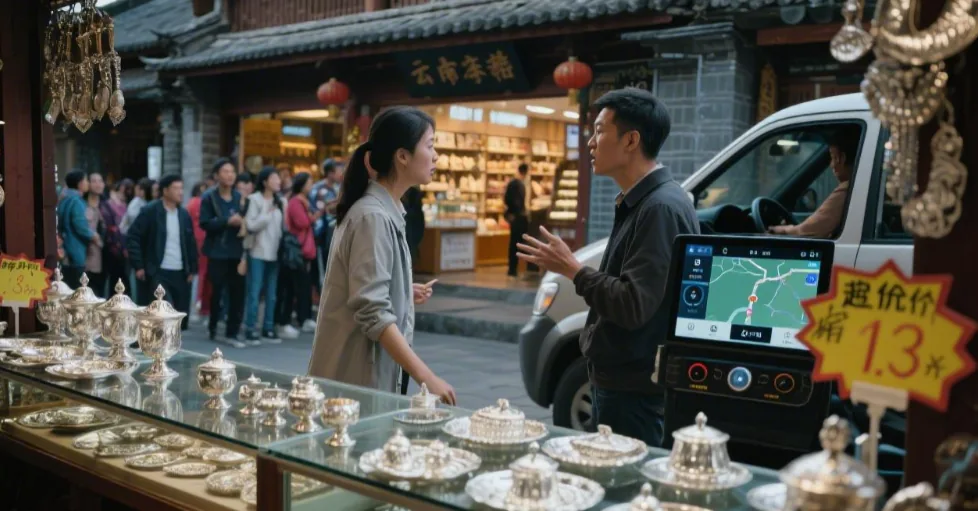
High-speed rail from Kunming to Dali costs 145 yuan, and to Shangri-La is around 230 yuan. By 2026, the provincial high-speed rail network is fully formed, yet there are still many “10-yuan chartered cars” at railway station exits. These vehicles are usually affiliated with small local travel agencies and profit by taking tourists to horse ranches or silver shops with kickback rates as high as 40%. Legitimate ride-hailing services have a starting price of about 10 yuan, and shuttle buses to scenic areas cost 15-30 yuan; choosing official channels can avoid about 80% of extra expenses.
Low-Cost Car Scams at Railway Stations
In 2026, Dali Station receives tens of thousands of tourists daily, and the line of drivers at the exit holding signs saying “5 yuan to the Ancient Town” has never diminished. The actual distance from the railway station to the South Gate of Dali Ancient Town is 17.2 km. Even late at night without traffic, the basic fare for ride-hailing is between 42 and 55 yuan. That 5 yuan wouldn’t even cover the parking fee at the exit and two liters of gasoline; the driver’s profit lies entirely in the second half of the journey.
As soon as you get into such a car, the driver will gauge your background through conversation within the first three minutes, such as whether it’s your first time in Yunnan or if you’ve booked Jade Dragon Snow Mountain tickets for the day after tomorrow. If you say you haven’t planned yet, they will immediately pull out several worn, laminated flyers, claiming they have “insider prices that travel agencies can’t get,” such as a Lashihai horse ranch for only 120 yuan compared to the original price of 280 yuan.
These drivers are usually part-time salespersons for low-end horse ranches or silver shops in the surrounding areas. For every person they successfully bring, they can get a cash kickback of 35% to 45% of the consumption amount. If you clearly state in the car that you only want to go to the hotel to sleep, the driver’s attitude will quickly turn cold, and they might even drop you off at an intersection three kilometers away from the Ancient Town on the pretext that “the road ahead is under construction and the car can’t enter.”
Many tourists end up spending over a thousand yuan at these unsafe wild horse ranches just to save 30 yuan in fare difference. These ranches often lack proper travel accident insurance. If a fall occurs during the ride, the driver and the ranch owner will pass the buck to each other. Due to the lack of a formal contract, it is very difficult to recover losses through the local cultural and tourism departments.
- Dali Station: Walk 280 meters to the right after exiting to find the bus waiting area; the shuttle to the Ancient Town costs 10 yuan—just scan and go.
- Lijiang Station: Blue-painted taxis are generally reliable; a flat rate to Dayan Ancient Town is usually 30 to 40 yuan. Don’t get into 5-yuan vans.
- Xishuangbanna Station: The scenic area shuttle on the left side of the exit costs only 5 yuan to reach Gaozhuang Xishuangjing; private cars asking for 20 yuan often take you to remote hotels.
- Kunming South Station: Metro Line 4 is the first choice to get to the city; the fare is 6 yuan and takes about 55 minutes, which is much safer than “black cars” on the roadside asking for 150 yuan.
- Shangri-La Station: It’s about 5 km to Dukezong Ancient Town; buses go directly for 1 yuan. There’s no need to listen to drivers at the entrance who offer to take you to “pure Tibetan villages.”
At Lijiang Railway Station, some illegal drivers target people who failed to grab tickets for the Jade Dragon Snow Mountain Large Cableway, claiming there is a “back mountain path” to skip the 100-yuan entry fee. After charging you 100 yuan for the car, they will drive to the wasteland near the Baishui River at the foot of the mountain, point at the distant peak for you to look at, and then head back—this does not allow any contact with the actual scenic area.
In 2026, Jade Dragon Snow Mountain implements extremely strict real-time, name-based appointments. The 140-yuan ticket for the Glacier Park Large Cableway must be purchased in advance on the official WeChat account. No driver has the ability to “bypass the ticket gates.” The places they take you to are mostly free observation decks at altitudes below 3000 meters, where glaciers and snow cannot be seen at all.
These low-cost cars are generally over 8 years old, with interiors smelling of heavy smoke and engine oil; it’s unknown if the airbags work properly. On the G214 National Road or Da-Li Expressway, where altitude drops can easily reach a thousand meters, these cars lack necessary commercial operation insurance. If an accident occurs, the passenger’s personal rights are difficult to protect at a legal level.
Illegal drivers will also continuously promote so-called “local black goat hot pot” along the way. These restaurants are often located in remote alleys, and the price per pound of meat might be marked as low as 48 yuan. But when you settle the bill, you’ll find that the pot base fee, dipping sauce fee, and mysterious tableware fees add up to an easy per capita consumption of over 150 yuan, while a similar restaurant on Meituan costs only 60 yuan for a group deal.
| Origin and Destination | Regular Platform Reference Price | Low-cost Black Car Quote | Actual Potential Cost |
|---|---|---|---|
| Dali Station – Dali Ancient Town | 45 yuan (Ride-hailing) | 5-10 yuan | 150 yuan horse ranch kickback |
| Lijiang Station – Jade Dragon Snow Mountain | 80 yuan (Chartered incl. insurance) | 20 yuan | 100 yuan fake attraction ticket |
| Banna Station – Gaozhuang | 25 yuan (Metered) | 10 yuan | 300 yuan latex pillow promotion |
| Kunming Station – Stone Forest | 35 yuan (Bullet train) | 120 yuan | 20% shopping store commission |
Drivers at Kunming South Station often exploit the confusion foreigners have regarding the distance between “Kunming Station” and “Kunming South Station.” Late at night after the subway has closed, they charge tourists over 200 yuan for a ride to the city. In fact, even at 2 AM, the price of a regular ride-hailing service is only about 100 yuan, and the route is transparent—you won’t be taken to a so-called “flower wholesale market” in the suburbs.
In Shangri-La, if you encounter a driver saying “30 yuan to see a sky burial” or “50 yuan to enter an original village,” it is recommended to decline immediately. These places are mostly simple performance venues built manually; subsequent steps like toasting and Hada-offering each cost 20 to 50 yuan, and finally, you will be forced to buy dried meat with a unit price exceeding 200 yuan per pound.
Professional drivers usually wait in designated taxi lanes at railway stations. They wear uniforms and won’t tug at tourists’ luggage at the exit. Anyone with wandering eyes, avoiding cameras, and constantly pushing follow-up itineraries is operating on a model where “transporting passengers” has become “selling traffic,” and you are just the “goods” waiting for settlement in their eyes.
By 2026, Yunnan’s traffic signs are very comprehensive, with clear instructions for every step out of the high-speed rail station. As long as you don’t covet those few dozen yuan in savings, insist on using ride-hailing apps with track monitoring, or take the blue scenic area shuttles regulated by the local transport department, these consumption scams surrounding stations basically won’t happen.
Car Rentals & Self-Driving
There are thousands of rental-plated cars parked on the B2 level of Kunming Changshui Airport. In the 2026 off-season, the daily rent for a Volkswagen Lavida is around 58 yuan, but it jumps to over 280 yuan during the Spring Festival or National Day holidays. Many stores display “zero deposit” advertisements, but when you go in to handle procedures, the clerk requires an Alipay credit score of 700. If the score is insufficient, they immediately demand a 3000-yuan credit card pre-authorization.
The 58-yuan daily rent explicitly includes basic insurance, but the deductible threshold for a single-vehicle accident is set at 1500 yuan. Even if a tiny piece of paint the size of a fingernail is accidentally scraped off the bottom of the front bumper, the repair shop’s damage assessment will list a 400-yuan painting fee. Including a loss-of-operation fee of 150 yuan per day during repairs, a two-centimeter non-original paint scratch can result in a loss of nearly 600 yuan.
When registering for car pickup, the salesperson will spend 10 minutes trying hard to persuade you to pay an extra 60 yuan per day for full deductible waiver service. Once you refuse, the subsequent inspection process becomes incredibly long and rigorous. Several staff members will use high-intensity flashlights to illuminate the area around the chassis; it’s hard for out-of-town tourists to identify a 3-centimeter old crack hidden on the inside of the front right wheel from two years ago.
| Common Rental Shop Charges | Amount Requested by Shop | Actual Market Repair Price | Response Strategy |
|---|---|---|---|
| Tiny scratch on bottom of bumper | 400-600 yuan | Within 150 yuan | Squat down and film bottom edges with flash |
| Fingernail-sized damage on tire sidewall | 800 yuan for new tire | 0 yuan for old damage | Check the manufacture year codes of all four tires |
| Large mud stains on floor mats | 50-100 yuan detailing fee | 30 yuan regular wash | Spend 20 yuan to wash it before returning after muddy roads |
| Missing two bars of fuel | 1.5x market price + service fee | 80 yuan | Keep photos of the dashboard at pickup |
The paper contract says “full tank pickup and return,” but when you power up the car, the fuel gauge needle is stuck at seven-eighths. Less than 10 km from the airport, the fuel gauge drops by one bar. To make up for the half-bar of fuel consumption when returning the car, the driver has to detour 3 km around Changshui Airport to find a Sinopec station. If you return it with slightly less fuel, a 50-yuan refueling service fee and high-priced gas will be forcibly deducted.
Yunnan’s terrain is complex and rainy. The G214 National Road from Dali to Shangri-La features a continuous downhill stretch of 15 km. Some rental platforms provide older Nissan Sylphys with extremely worn brake pads; a pungent burnt smell can be detected in the cabin after a few minutes of continuous braking. The non-paved roads full of gravel along the eastern coast of Dali Erhai Lake have potholes that easily damage the plastic parts of the chassis side skirts.
When returning vehicles at the high-speed rail station before a late-night flight after 10 PM, some small street-side shops charge an extra 80-yuan service fee in the name of overtime. If you drive to the Puer rainforest and return with red mud all over the car, the staff will refuse to accept the car on the spot, claiming it’s too dirty to check for scratches. The driver can only spend 60 yuan on a full detailing at a designated nearby partner car wash in the middle of the night.
According to regulations, the 2000-yuan traffic violation deposit will be frozen for 30 days after returning the car. Road markings in Shangri-La’s urban area are old and unclear, and there are more than 20 cameras catching drivers crossing solid lines around Dukezong Ancient Town. A text message for a 3-point deduction and a 200-yuan fine arrives when you are already out of the province; the market rate for a local agent to handle it starts at 200 yuan.
- Before getting into the car, open the trunk and lift the soundproof mat to check if there are rust or water stains in the spare tire pit; refurbished flooded cars are prone to stalling on the Yun-Gui Plateau.
- Start the engine and connect Bluetooth to test the four door speakers; turn the air conditioning to maximum to test cooling speed. A broken compressor can cause heatstroke in 35°C Xishuangbanna.
- Return the car 3 hours before takeoff to allow at least a 40-minute buffer for arguing with staff about old tire injuries.
The Hang-Rui Expressway from Chuxiong to Dali is filled with heavy trucks, and flying stones from the car in front can easily cause a tiny 2-millimeter crack in the windshield. After finding the crack with a magnifying glass, the inspector demands an 800-yuan fee for a full glass replacement. If you encounter damage, finding a roadside Fuyao Glass repair shop yourself to fix it with resin costs only 80 yuan; it’s hard to distinguish the repair marks after half an hour of drying.
The density of speed cameras around Dali Erhai is extremely high, and the entire West Lake Road has a speed limit of 40 km/h. Stepping on the gas a bit too hard to reach 48 km/h will result in evidence of 20% overspeeding. The fine along with high-definition photos will be sent to your phone within a week after returning the car. The shop’s point-deduction service is clearly priced at 100 yuan per point; if not paid on time, the 2000-yuan violation pre-authorization will not be unfrozen for a long time.
Large direct-operated shops like CAR Inc. and eHi Car Services have entire floors of dedicated parking buildings at Kunming South Station. Drive the car into the designated space and scan the code to settle the order; if there are no obvious dents, the staff will check and release the deposit on the spot. For unknown third-party shops booked through travel apps, the pickup location is often in a dilapidated auto parts city two kilometers away from the station, and it costs 12 yuan to take a taxi there with luggage.
Intra-regional Transfers
In 2026, for circling Erhai Lake in Dali, there are tens of thousands of colorful rental electric scooters on the 129.6 km road. There are nearly 40 long downhill slopes from Xiaguan to Shuanglang. A 60-yuan rented scooter labeled with a “100 km range” often runs out of battery near Xizhou after about 45 km with the throttle wide open. There are very few repair shops on the eastern side of the lake, and the starting price for a tow truck rescue is 150 yuan.
The ecological corridor on the west side of Erhai is 46 km long, and motor vehicles and external electric scooters are completely banned. The blue-and-white shared bikes parked inside implement strict geofencing. If you ride 50 meters out of the corridor boundary without checking the map, the bike will automatically lock and power off, and a 30-yuan to 50-yuan cross-district dispatch fee bill will pop up on your phone.
- Beetle Chartered Car: Around 280 to 350 yuan a day with a driver, including fuel; the driver also acts as a photography assistant with reflectors.
- High-power Electric Motorcycle: 120 yuan per day, equipped with dual batteries; it can complete the full 100 km on the undulating roads of the eastern coast when fully charged.
- Tourism Shuttle Bus: 98-yuan pass, allows unlimited hop-on hop-off at 15 fixed stops around the lake for 3 days.
- Convertible Jeep: Rent is about 400 yuan, comes with its own sunshade on top, suitable for a family of four with elderly or children.
Moving 180 km north from Dali, the transfer for Lijiang Jade Dragon Snow Mountain uses a different set of billing rules. There is a 23 km winding road from Dayan Ancient Town to the Ganhaizi Visitor Center. Private car owners charge 80 yuan for a round trip. Non-work vehicles entering the mountain face extra queues and must pay a 20-yuan environmental parking fee; during peak season at 8 AM, you can be stuck at the toll gate for 40 minutes.
Internal transportation at the Snow Mountain is completely monopolized by official environmental buses. All self-driven cars must park at the No. 3 Parking Lot at an altitude of 3100 meters. To go to the Glacier Park at 4506 meters or Blue Moon Valley, you must queue at the transfer center for a blue bus that costs 20 yuan per person. Claims by private car owners to “send you to the cableway entrance” are all lies.
- Snow Mountain Line Bus: Departs from Zhongyi Market daily, fare is 15 yuan, runs every half hour from 7 AM to 4 PM.
- Scenic Area Environmental Bus: Basic road fees are included in the entrance ticket; an extra 40-yuan transfer fee is required for the further Yak Meadow.
- Ancient Town Luggage Shipping: 50 yuan per piece, shipped from inns to the airport or high-speed rail station, avoiding the trouble of dragging wheels on bluestone roads.
- Shuhe Mini-car: A metered ride from Dayan to Shuhe is about 18 yuan; don’t take the 20-yuan unmetered black vans on the roadside.
Turning to Xishuangbanna in the south, the distribution of attractions is wide. Going from Gaozhuang to Wild Elephant Valley and the Xishuangbanna Tropical Botanical Garden involves completely opposite directions, with a single trip exceeding 45 km. Roadside motorcycle taxis take 30 yuan and promise to go to the Botanical Garden, but on the rainforest expressway with an 80 km/h limit, the motorcycles can’t run fast and can only take muddy paths for a bumpy two-hour ride.
Jinghong Banna Passenger Station has daily shuttle buses to various villages, with fares ranging from 17 to 25 yuan depending on distance. The bus fares are low, but they stop frequently along rubber forests and remote villages to pick up and drop off passengers; what should be a 40-minute straight trip takes an hour and a half. A ride-hailing car to Manting Park in the city costs only 8 yuan, while walking there will leave you drenched in sweat.
- Scenic Area Direct Bus: Buy tickets at Water Splashing Square; it’s 55 yuan one way to Wangtianshu. Two fixed schedules daily, reservation needed one day in advance.
- Banna Ride-hailing: Cheap starting price during the day, but extremely hard to call a car around Starlight Night Market after 8 PM; system surge pricing hits 1.5x.
- Chartered Car to Daluo: 120 km to the border port; a compact car costs 200 yuan one way. There are three checkpoints along the way to verify IDs.
Heading toward Lugu Lake on the Sichuan-Yunnan border, the road around the lake is 68 km long, crossing both provinces. Inn owners rent out two-wheeled electric scooters for 60 yuan a day. There is a continuous steep slope of 3 km from Dazhu Village to Goddess Bay in the Sichuan section. Electric scooters struggle uphill, and accidents where brake pads smoke from overheating on the downhill occur frequently every month.
Lugu Lake villagers have formed a dedicated charter fleet, charging a fixed price of 300 yuan to take tourists around the lake for 6 hours. Driving a wide-body car in and scraping the side mirror paint on the narrow one-way roads of Lige Peninsula will result in a repair shop painting fee starting at 400 yuan. Only by understanding the fine details on the bill and knowing the local micro-terrain transport network can the two or three hundred yuan fare be spent clearly.
Shopping
In 2023, the Yunnan Provincial Tourist Shopping Refund Center handled 5.39 ten thousand refund applications, involving an amount of 3.84 billion yuan. Tourists’ consumption in Yunnan is highly concentrated in four categories: emeralds and jade, silver, precious Chinese medicinal materials, and Pu-erh tea. The highest single refund amount exceeded 20 ten thousand yuan. The deviation rate between offline tourist commodity prices and actual fair market value is between 300% and 1000%. The refund process requires keeping official invoices, POS card slips, or WeChat/Alipay transfer records; the refund cycle is completed within 30 working days.
Jade and Silver
In Yunnan tourism shopping, the consumption of jade and silver has long accounted for more than 40%. Data from the 2023 Yunnan Refund Center show that the refund amount for these two categories exceeded 200 million yuan. In single refund records, the highest amount was nearly 18 ten thousand yuan. Tourists encounter stores in Lijiang and Dali ancient towns, with an average of 20-40 shops per main street.
For jade, the gap between the marked price and the actual transaction is very obvious. A bracelet marked at tens of thousands of yuan commonly sells for between 2000-6000 yuan. Clerks will repeatedly emphasize “direct supply from Myanmar” or “direct from the mining area,” but the actual source is mostly the processing market in Guangdong. Many products are B-grade or C-grade, with processing costs of 100-300 yuan/piece, yet they can be sold for several thousand yuan.
Appraisal certificates are something many people look at. Official certificates carry the CMA logo, and scanning the code can check weight, photos, and numbers. In some scenic areas, “certificate matching” exists, where one certificate corresponds to multiple items.
- A-grade Emerald: Natural, market price fluctuates greatly
- B-grade: Acid-washed and resin-infused, low cost
- C-grade: Dye-treated, colors are overly vivid
The same bracelet might be priced at 800 yuan in a wholesale market but can be seen for over 8000 yuan in a scenic area. The more uniform the color and the more transparent it is, the higher the markup.
Looking at silver, the pricing system is a bit clearer. In 2024, the price of silver raw material was in the 5-6 yuan/gram range, while it is commonly sold for 18-30 yuan/gram in scenic areas. Bracelets, cups, and necklaces are all calculated by weight; the total price is determined by the weight.
| Product | Raw Material Cost | Scenic Area Price | Common Weight |
|---|---|---|---|
| Silver Bracelet | 6 yuan/gram | Around 20 yuan/gram | 20-40 grams |
| Silver Water Cup | 6 yuan/gram | Around 25 yuan/gram | 100-200 grams |
| Silver Necklace | 6 yuan/gram | Around 18 yuan/gram | 10-20 grams |
A 30-gram bracelet costs about 180 yuan, while the scenic area price is 600-900 yuan. Many people seeing “on-site hammering” will think it is handmade, but most are semi-finished products with simple on-site processing.
Many shops will emphasize “snowflake silver” or “detoxification and health benefits.” Silver content labels are generally Ag999 or Ag9999; the purity difference has little effect on price. The so-called “Wan-zu silver” and “Qian-zu silver” have very little difference in wearing experience.
There are several details in the transaction process that are easily overlooked. When weighing, the tray weight sometimes isn’t cleared, with an error of 5-20 grams. Calculated at 25 yuan/gram, the extra 10 grams is 250 yuan.
Some shops will include labor fees in the price per gram. A marked price of 28 yuan/gram might only seem a few yuan more, but it is actually more than 4 times higher than the market price.
Regarding sales methods, many stores arrange an “experience process.” First, they explain jade culture, then show the warehouse, and finally give an “insider price.” The whole process usually takes 30-60 minutes, and the transaction rate is not low.
- Explanation time: around 15 minutes
- Viewing time: around 20 minutes
- Bargaining process: around 10 minutes
The commission rate for guides is between 10%-30%. For a 3000-yuan item, the commission is about 300-900 yuan.
Payment methods also differ. Card or QR code payments have records, making follow-up handling relatively convenient. Cash transactions still account for about 20% in scenic areas, making it harder to protect rights.
Another detail is lighting. Jade display cabinets mostly use cold light sources, making colors appear more transparent. Under natural light, color and transparency will drop by a level.
Price differences between different channels are also quite obvious:
- Department store counters: Higher prices, complete certificates
- Wholesale markets: Low prices, requires self-judgment
- Scenic area stores: Prices fluctuate greatly; the difference for the same type can reach 5 times
In a set of 2023 refund data, the average refund for jade was around 3200 yuan, and about 600 yuan for silver. Refunds require keeping the invoice and original packaging, with a processing cycle generally between 15-30 days.
Many people buy thinking “I’m already here,” only to find the price difference is too large later. Looking at a few more shops is practical; cases where the price for the same style differs by several thousand yuan are very common.
Medicinal Material Consumption
The density of medicinal material stalls in Yunnan scenic areas is very high; on average, you can see 3-5 shops every 100 meters on the main streets of Dali and Lijiang ancient towns. In the 2023 Yunnan tourism refund center data, medicinal material disputes accounted for about 22%, with single amounts concentrated between 800-5000 yuan. Common categories include Panax notoginseng (Sanqi), Gastrodia elata (Tianma), Maca, Dendrobium, and Saffron, with price gaps generally between 2 to 8 times.
Many problems arise from the “pricing method.” Stall verbal quotes often say “20 yuan” or “30 yuan,” but the actual unit is grams. The font on the price tag is very small, reading “yuan/gram.” A tourist grabbing a handful of Sanqi might weigh around 200 grams, which at 30 yuan/gram totals 6000 yuan. By the time this is discovered, the product has already been sliced or powdered.
- A Sanqi slicing machine processes a portion in just 3 seconds
- Maca powdering takes less than 5 seconds
- A bag of 300 grams of Maca powder, settled at 25 yuan/gram, is about 7500 yuan
Once processing is complete, merchants usually will not accept the return of the raw material. Many people only realize the unit issue when settling the bill.
The price difference for Sanqi is quite obvious. Wenshan local Sanqi is sold by “head count,” with 20-head and 30-head being medium specifications. Wholesale market prices are between 120-300 yuan per jin. Similar products in scenic areas are commonly quoted at 20-40 yuan per gram, which translates to 1 ten thousand – 2 ten thousand yuan per jin.
Maca is low-priced in Kunming wholesale markets. Yellow Maca bulk price is about 20 yuan/kg, and high-quality purple Maca is about 40-80 yuan/kg. After slicing in scenic areas, it’s sold by the gram, with common prices of 15-30 yuan/gram, a price increase of more than 10 times.
Dendrobium and saffron issues are concentrated on “source.” Fresh Dendrobium officinale strips have a market price of about 200-400 yuan/kg, while in scenic areas, they are cut and sold by the gram, with marked prices of 30-80 yuan/gram. The wholesale price of saffron is between 20-50 yuan per gram, while scenic area prices are commonly 80-150 yuan/gram, with some mixed with other floral filaments.
Many stalls offer “free tastings.” Sanqi powder is flavored with honey to mask the bitterness; Maca slices are pre-soaked to soften. The tasting amount is very small, and the taste differs greatly from the actual purchase amount.
- Tasting Sanqi powder: about 1 gram per portion
- Actual purchase: usually starting from 200 grams
- Single consumption is commonly over 2000 yuan
There is another detail in the purchase process: the weighing. Some electronic scales are not cleared, with the tray weighing between 20-50 grams. Weighing 300 grams of medicinal material may actually only be around 250 grams.
Another case is “mixing.” Tourists select different grades of Sanqi, and the merchant packs them together, settling the bill at the highest unit price. It looks like several prices when selecting, but everything is unified at the high price in the end.
Common situations summarized together are clearer:
- Quote does not mention the unit, bill is settled by gram
- Processing before weighing, cannot be returned
- Electronic scales not cleared, overcharging weight
- Unified high price settlement after mixing
- Tasting does not match the actual product
Purchase channel differences are very obvious. Local Kunming pharmacy chains like Yixintang and Jianzhijia sell Sanqi powder at about 1-3 yuan per gram, with clearly marked prices. Large Chinese medicinal material markets support buying by the jin with transparent prices.
Scenic area stalls have no unified pricing; prices on the same street can differ by more than 3 times. In 2023 complaint records, a tourist bought Sanqi in the same ancient town where Shop A quoted 18 yuan/gram and Shop B quoted 35 yuan/gram.
Payment methods also affect follow-up. Card or QR code payments have records, making it easier to handle refunds. Cash transactions are harder to prove.
There are also transportation issues. Powdered medicinal materials absorb moisture significantly; when humidity exceeds 60%, they easily clump. After being placed in a sealed bag for 3 days, the weight will increase by 2%-5%, mainly due to absorbing moisture from the air.
Pay attention to these details before settling the bill for more practicality:
- Ask clearly if it is “yuan/gram” or “yuan/jin”
- Check if the scale is cleared during weighing
- Do not slice or powder before confirming the price
- Try to pack separately to avoid mixed calculations
Judging these details on-site can often save several thousand yuan.
Specialty Foods
Among the food tourists take away from Yunnan, flower cakes, Pu-erh tea, and dried mushrooms account for nearly 70%. Many people spend 100-500 yuan on these. In fact, the price difference for the same item between ancient towns and supermarkets can be 1.5 to 3 times. In the refund center data, food-related issues account for nearly 30%, mostly concentrated on “wrong ingredients, faked years, and vague origins.”
Many flower cakes sold in ancient towns are supplied by the same factory. If you see one for 10 yuan, the ex-factory price is generally around 3 yuan. Not many have “30% rose content” as labeled; in random checks, many are below 10%, with the fragrance mainly relying on essences. Freshly baked flower cakes have a shelf life of 3-7 days, but many sold in scenic areas are labeled for over 30 days, indicating preservatives have been added.
- Jiahua: 6 yuan/piece in stores, with substantial rose filling
- Pan Xiang Ji: Gift boxes around 60-80 yuan per box, support shipping home
- Roadside stalls: 10 yuan for 3 pieces, taste quite sweet, rose flavor is not obvious
Many stores offer tastings; brand stores can have hundreds of people tasting daily. The taste of scenic area samples and the actual products purchased can differ quite a bit.
The price difference for tea is even larger. Many shops focus on “Bingdao” or “Banzhang,” which sounds very high-end. In fact, the price layering is very obvious:
| Type | Wholesale Price | Scenic Area Price |
|---|---|---|
| Common terrace tea | Around 100 yuan/kg | 300-800 yuan |
| Common ancient tree tea | Around 1000 yuan/kg | Over 3000 yuan |
| Bingdao ancient tree | Starting from 5 ten thousand yuan/kg | Commonly 39 yuan per cake |
A tea cake is usually 357 grams. Those sold for dozens of yuan in scenic areas are mostly common blended teas, and the years are mostly recent. True ripe tea aged over 10 years has a market price starting from 2000 yuan/cake.
Many shops will let you taste, but the tea used for tasting might not be from the same batch as the one sold to you. People who go to tea markets will average more than 5 tastings before deciding.
Price differences for dried mushrooms are also quite obvious. Yunnan’s annual wild mushroom output is about 60 ten thousand tons, with 30% for export. Scenic area prices are usually double:
- Matsutake dried slices: Wholesale 300-600 yuan/kg, sold for 800-2000 yuan in scenic areas
- Porcini: Wholesale around 100 yuan, sold for 300-600 yuan in scenic areas
- Termitomyces: Fresh 200-400 yuan/kg, dried ones are more expensive
There’s a detail for dried goods often ignored: moisture. If a merchant sprays a little water before bagging, the weight can increase by 5%-10%. You’ll notice it becomes significantly lighter after keeping it for two days.
Where you buy makes a big difference:
- Large supermarkets: Unified prices, exchangeable
- Brand stores: Invoices provided, can be shipped back, shipping is generally 10-20 yuan
- Ancient town small shops: The same thing can double in price between different shops
There is also data for refunds: the average food refund is over 200 yuan, provided the packaging is not opened. Transportation also has a big impact. Flower cakes shipped at room temperature for more than 3 days will become dry. Pu-erh tea is afraid of moisture; if humidity is over 70%, it easily gets a musty smell. Cold-chain shipping for flower cakes costs about 30% more.
Local Tours and Ancient Towns
Local day tour pricing in Yunnan has fixed ranges. A single ticket for the Jade Dragon Snow Mountain Glacier Large Cableway is 140 yuan, the entry fee is 100 yuan, plus round-trip fare of about 50 yuan, oxygen, cold-weather clothing, and lunch—the hard cost per person has exceeded 300 yuan. Day tours on the market for around 200 yuan usually include 1-2 shopping stops for tea or medicinal materials. The “snowflake silver” sold in Dali and Lijiang ancient towns is mostly marked at 15-20 yuan/gram, much higher than the daily price of about 6-7 yuan/gram for physical silver. Medicinal material stalls often use the “grind first, settle later” tactic to change the unit from jin to gram, causing single consumptions to jump to several thousand yuan.
Identifying Day Tour Prices
Walking the streets of Lijiang Dayan Ancient Town, you will see many small blackboards advertising “199 yuan Jade Dragon Snow Mountain Day Tour.” There’s clearly something fishy about this price, because the large cableway ticket alone is 140 yuan, and the entry fee is another 100 yuan. Adding the 20 yuan scenic area environmental bus, you already owe the scenic area 260 yuan before even getting on the car.
Plus round-trip fuel to the Ancient Town and driver labor, the hard expenses for this kind of tour are at least 350 yuan or more. Selling it to you for 199 yuan means the travel agency loses 150 yuan for every person they take. This deficit must be made up through other consumption, usually starting with buying oxygen and renting cold-weather clothing at the first stop.
In a small pharmacy in the Ancient Town, a 1000ml bottle of oxygen costs only 15 yuan, but at the supply stations along the tour route, the price becomes 60 to 100 yuan. The guide will repeatedly emphasize the dangers of the mountain to make you anxious, so you buy three or four bottles of oxygen at once, making up a large part of the price difference.
If your tour fee says “meals included,” it’s likely a simple meal costing less than 15 yuan. If you want to eat something decent, like the famous local black goat hot pot, the guide will take you to a designated agritainment restaurant where the meal fee is usually another 50 to 80 yuan per person, with a 30% kickback going to the guide.
Comparing the bottom prices of different routes, you can refer to this set of industry test data:
- Jade Dragon Snow Mountain Day Tour: Pure play cost is between 450 yuan and 520 yuan. Those below 380 yuan usually have shopping trips to pharmacies or spirulina shops.
- Lugu Lake Two-Day Tour: Pure play cost is between 600 yuan and 800 yuan. Those below 400 yuan often force an additional purchase of a 200 yuan Tibetan home visit or bonfire party.
- Shangri-La Two-Day Tour: Pure play cost is between 700 yuan and 900 yuan. For tours below 500 yuan, the guide will have you stay in a Tibetan medicine shop for more than 90 minutes.
| Route Components | Official/Market Fair Price | Shrinkage Points of Low-Cost Tours |
|---|---|---|
| Pudacuo Entrance | 138 yuan (incl. bus) | Changed to free small minority meadows |
| Songzanlin Monastery | 90 yuan | Becomes a distant view or just a photo at the gate |
| Business Van (7 seats) | About 120 yuan/day per person | Changed to 19-seat buses to increase capacity |
| Standard 4-star Stay | 180 yuan – 260 yuan/room | Arranged in town inns far from the city (about 80 yuan) |
The one-way distance to Lugu Lake is over 200 km, and fuel and tolls for a business van averaged per person are about 150 yuan. If you book a 300 yuan tour, after subtracting car fare and tickets, the remaining money isn’t even enough for a night in a lake-view room. These tours usually put you in cheap inns 2 km away from the shoreline.
If you want to watch the sunrise by the lake, you’ll have to spend another 50 yuan on a taxi or walk for half an hour. To recover costs, the guide will recommend a 280 yuan roast whole lamb feast. Although nominally voluntary, if you don’t participate, the remaining members have to find roadside stalls during mealtime or even face cold treatment from the guide.
In Shangri-La itineraries, tickets are the main expense. Tiger Leaping Gorge is 45 yuan, and Pudacuo is 138 yuan—these are solid expenditures. If the tour fee is only around 400 yuan, a “Tibetan Medicine Culture Museum” is usually added to the itinerary. Staff there will give you a free pulse reading, say your altitude sickness is due to insufficient hemoglobin, and recommend buying Tibetan medicine worth thousands of yuan.
The profit margins on these Tibetan medicines are extremely high; selling a 2000-yuan portion of medicinal materials nets the guide and the travel agency about 800 yuan. This kind of shopping store usually consumes an entire morning of your time, leaving you with only enough time for a quick photo at the real attractions. In the end, the money you spent on medicine could have booked two high-quality pure play tours.
Before signing up, be sure to check the contract carefully for details on “vehicles.” The comfort of a 7-seat van and a 19-seat bus is completely different. A 7-seat van can stop for photos at any time, while a bus can only stop at fixed service areas. The flexibility difference is usually around 100 yuan per person.
Then there’s insurance. Regular travel accident insurance is usually included in the tour fee, with coverage around 30 ten thousand, costing only 10 yuan. If the contract says “insurance self-provided” or asks you to pay another 20 yuan for insurance on the bus, that money is basically extra income for the driver and hasn’t actually entered the insurance system.
If you are booking a tour through short video platforms, beware of “buy one get one free” vouchers. These vouchers are often highly restrictive, such as only departing on specified dates or staying in remote hotels. These products essentially sell tourists to local “connectors” to fill initial marketing costs through subsequent add-ons.
To avoid wasting money, you can look at the travel agency’s qualifications. A legitimate pure play tour will list all included items very clearly. For example, whether it includes the large cableway ticket, whether it includes cold-weather clothing, and whether the lunch standard is 30 yuan or 50 yuan. Anything vaguely saying “arranged according to actual conditions” usually has a trap waiting for you.
When inquiring at travel agency shops in the Ancient Town, try asking: “If I don’t buy oxygen or visit a home, how much extra do I need to pay?” If their face changes immediately or they tell you it’s “mandatory,” it proves the tour price is not real. A reasonable day tour should allow tourists to complete the attractions in the contract without additional fees.
Prices in Lijiang and Shangri-La can rise by 20% to 50% during peak seasons. If you can still find a 200 yuan Jade Dragon Snow Mountain day tour during National Day or Spring Festival, the shopping ratio for such a tour will only be higher. At these times, grabbing an official cableway ticket and taking a taxi to the scenic area yourself is actually cheaper than booking a low-cost tour.
Settlement of High-Unit-Price Items
In handmade silver shops in Dali or Lijiang ancient towns, the price for snowflake silver usually fluctuates between 18 and 35 yuan/gram. According to market conditions in March 2026, silver raw material is only about 6.8 yuan per gram; even including labor, prices over 20 yuan contain extremely high markups. After entering the shop, the clerk will quickly bring out a silver bowl marked “S999” and put it in your hand, saying this kind of silver can purify water and improve bodily circulation.
When you take an interest in a silver bracelet of about 40 grams, the clerk will quickly put it on an electronic scale. The unit settings on some scales are in “liang” or “qian.” If you don’t see the unit clearly and think the 20 yuan price is per liang, you’ll find the 800 yuan expectation has turned into a much higher figure at settlement. You must personally confirm that the unit price setting on the electronic screen is 1.00 or some other multiplier after the scale settles.
To make you feel the money is well spent, the shop will demonstrate a “fire test.” Silver ornaments turn red but not black under a torch, but this only proves it is silver, not high-purity snowflake silver. After buying, if you request an official invoice, the shop might say the system is being upgraded and only give you a handwritten receipt. If you want to cash it in in other cities, these receipts are generally not recognized in regular gold shops.
For silver settlement, you can compare these specific data points:
- Market Raw Material Price: 6.5 to 7.5 yuan/gram.
- Ancient Town Finished Price: 18 to 45 yuan/gram (including rent and commission).
- Handmade Premium: For items truly hand-hammered for over 2 hours, the labor fee usually accounts for 50 to 100 yuan of the total price.
- Weight Loss: When refurbishing or exchanging styles, shops usually deduct 10% of the weight, which is also a hidden cost.
Silver counters are often next to medicinal material stalls. Because the unit of the unit price is vague, this is where the bill amount jumps the fastest. The stall owner will pile Sanqi or Maca into a small mountain, with a price tag showing a prominent “15.” When you ask, the owner will vaguely answer “15 yuan.” You think it’s 15 yuan per jin, pick two large Sanqi, and they weigh about 200 grams.
At this point, the owner will very enthusiastically ask you: “Do you want it ground into powder? It’s easier to absorb that way.” Before you can even react, the medicine is tossed into a high-speed grinder. 20 seconds later, the powder is packed in a jar, and the owner hits 3000 on the calculator. You then realize there’s a line of grain-sized text after the original price saying “per gram.”
Once the medicinal material is ground into powder, you cannot return it. The shop owner will point at the powder and say it’s already yours, and not paying is suspected of forced buying and selling. In this case, because the physical state of the medicine has changed, it is difficult to restore it to its original state for resale. The result of mediation is often that you still have to pay an expensive difference, even if you don’t need that much powder at all.
Weight logic differences in medicinal material purchases:
| Item | Market Rate Reference | Ancient Town Stall Quote | Settlement Trick |
|---|---|---|---|
| Sanqi (20-head) | 280-350 yuan/jin | 10-20 yuan/gram | Unit changes from jin to gram after grinding, jumping 50 times |
| Maca (Black) | 50-80 yuan/jin | 5-15 yuan/gram | Exploits tourists’ lack of sensitivity to TCM weight units |
| Saffron | 30-50 yuan/gram | 80-120 yuan/gram | Often mixed with cheap safflower, weight deviation about 15% |
Tea settlement is another story. Walking into a tea house in the Ancient Town, the owner will invite you to drink 2012 Pu-erh aged tea for free. The standard weight for this tea cake is 357 grams, and the wholesale price at the source might only be around 80 yuan. But in the tea house, if you enjoy it and want to take it away, the price will become 380 yuan or even 880 yuan. The owner will show certificates proving it is ancient tree tea from Bingdao or Xigui.
In fact, the annual output of real ancient tree tea is only a few hundred kilograms, making it impossible to be sold in large quantities in street-front shops in the Ancient Town. If you decide to buy, the owner will suggest shipping it home for you, so you don’t have to carry heavy items while shopping. The tea cake sent by courier might be from a completely different batch than the one you tasted on-site.
By the time you get home and find the taste is off, and try to call the number on the shipping label, the other party will refuse a refund on the grounds that “tea is a natural product and each brew tastes different.” If you paid in cash during settlement, you don’t even have a transfer record, making it extremely difficult to protect your rights. Reference value for Pu-erh tea: terrace tea wholesale price is about 30 to 60 yuan per cake, while arbor tea market price is about 150 to 300 yuan.
For purchases over 500 yuan, always insist on taking the goods yourself. If you buy jade or emerald, the shop will give you an “appraisal certificate” with a QR code. The webpage after scanning might be a fake one made by the shop itself, showing an estimated value often in the tens of thousands of yuan, while you actually paid only 2000 yuan, giving you the illusion of a bargain.
A real certificate should have the CMA or CNAS logo. You can search the certificate number on the spot on the official website. If it can’t be found, or if the photo on the certificate doesn’t match the actual details, the stone might just be B-grade jade treated with strong acid or dyed quartzite. The material cost of such a stone is only dozens of yuan, and the so-called settlement discount is all an act.
Avoid all “lucky draw” traps during settlement. Some jewelry shops will let you draw a red envelope, and you immediately hit the first prize, which can be used to deduct 2000 yuan in cash. You then find that for the gold-inlaid jade originally priced at 2100 yuan, you only need to pay 100 yuan. In fact, that piece of jade is only worth 5 yuan, and the 100 yuan you paid is all profit for the shop.
This settlement model is very common in ancient towns. Regardless of the price, if cash payment is involved, always ask for a formal receipt with an official stamp. If the other party only gives a handwritten note, it indicates a legal loophole in the transaction. You can compare and find that in regular malls in Kunming city, the price of medicinal materials of the same grade is usually only one-third of that in scenic areas.
Entertainment Service Billing
When looking for travel photography in the Ancient Town, the 199 yuan poster prominently displayed at the door usually only includes one set of clothes and digital files. Hidden costs start from makeup; if you didn’t bring your own disposable powder puff and false eyelashes, the shop will charge you 20 to 30 yuan. If you fancy the high-end ethnic costumes in the window, you’ll have to pay an upgrade fee of 50 to 100 yuan on the spot.
The photographer takes 60 photos with you as you walk, but the contract explicitly states they only provide 5 professionally retouched photos. When you choose the photos, if you want to take the remaining 55 original photos, each will cost an extra 15 to 25 yuan. If you want to take photos in Mufu Palace or Wangu Tower, the entrance fee of about 50 yuan is also for you to pay; don’t expect the studio to cover it.
These miscellaneous costs for travel photography can easily total over 500 yuan in the end. Before signing a contract, you must stick to these specific numbers:
- Price for original photos outside the retouching set: It’s only a good deal if negotiated below 10 yuan per photo.
- Makeup supplies fee: Ask clearly if eyelashes, powder puffs, and hair accessories are free.
- Shooting duration: Confirm if it’s 40 minutes or 2 hours.
Nightlife in ancient towns mainly centers on bars, where the billing rules are also quite detailed. A dozen 12 bottles of domestic bottled beer (330ml each) in Dali or Lijiang bar streets average between 240 and 400 yuan. If there are fruit platters and snacks on the table, the set often takes away another 150 to 200 yuan from you.
In bars with live performances, the price for a booth (minimum consumption seat) usually starts at 600 yuan. If the singer on stage interacts frequently, someone might come over with flowers for you to give to the singer; a bouquet of plastic flowers costing 50 yuan is very common. To avoid mismatching numbers when paying, check the group purchase deals on Meituan first; a set with 6 bottles of beer plus snacks usually only costs about 120 yuan.
If you meet someone who invites you to drink via social apps, be sure to change venues. The bars these people take you to might charge 980 yuan or even more for a set of ordinary red wine and fruit platter. If you don’t pay, two or three burly men might stand at the door. When consuming at a bar, be sure to keep the printed order slip and check the number and unit price of drinks before scanning to pay.
For projects like horse riding in Lashihai or rowing in Lugu Lake, billing changes often occur during the trip. There are several horse riding routes in Lashihai; Route 1 takes half an hour for 160 yuan, and Route 3 takes one hour for 280 yuan. Some grooms will stop halfway and say the horse is tired and needs bean cakes, charging you 10 or 20 yuan per portion.
A pig-trough boat in Lugu Lake takes about 40 minutes for a circle, with a cost of 50 to 100 yuan per person. If you want the boatman to take you to more photo spots, there’s usually an extra charge of 20 yuan per spot. These projects often don’t have regular invoices, only handwritten receipts; confirm the specific number of spots and total duration before paying.
For outdoor projects, it is suggested to look at these billing points in advance:
| Project | Industry Benchmark Price | Common Points for Overpaying |
|---|---|---|
| Oxygen Bottle | 15-20 yuan/bottle (in town) | Becomes 60-80 yuan on the mountain |
| Down Jacket Rental | 50 yuan/piece/day | Deposit 200 yuan, cleaning fee deducted upon return |
| Performance Ticket | 200-300 yuan | Booking through an inn might be 50 yuan more than the official site |
Oxygen bottles are essential in high-altitude areas. Buying 1000ml of oxygen in an ancient town pharmacy costs only 15 yuan, but at the Jade Dragon Snow Mountain cableway entrance, the same specification can sell for 60 yuan. Shake it when buying to feel the weight; low-pressure empty bottles are gone in a few breaths. When renting down jackets, remember to take photos of the original damage or stains on the clothes to prevent deposit deductions when returning them.
Sliced fruit platters sold in ancient towns seem cheap at only 20 yuan a portion. But the bottom of these boxes is often filled with cheap watermelon or pear chunks, with blueberries or strawberries on top. It is recommended to buy fruits by the jin and watch the vendor enter the unit price on the electronic scale. For dried fruits or medicinal materials priced by the “gram,” be sure to calculate the total price before grinding.
For instance, if a vendor quotes 15 yuan for Maca or Sanqi, you might think it’s per jin, but it’s actually per gram. Once you agree to have it ground, you have to pay 3000 yuan for 200 grams of medicine. At this point, it’s impossible to return the goods because they have become powder. The best way is to buy the original whole pieces and process them at the hotel or buy them at city supermarket chains.
The official prices for folk performance tickets in ancient towns are transparent. For example, a VIP seat for “Lijiang Eternal Love” is usually around 290 yuan. If you meet someone on the street saying they can take you in through the back door for only 100 yuan, they are basically taking you to see a distant shadow outside the wall. Buy tickets through the official mini-program; you can not only choose good seats in the front middle but also avoid middleman markups.
All entertainment projects involving manual service might have hidden hints for tips. When taking a horse carriage in Lijiang Ancient Town, if the driver explains very hard, he might ask for 20 yuan for tea money at the end. If you don’t want to pay, clearly inform them at the beginning that you only need basic transportation. In these scenarios, clear refusal is more effective at protecting your wallet than being vague.
Related Reading
- What Pitfalls to Avoid on Yunnan Family Trips | Climate Changes, Itinerary Intensity & Attraction Selection Tips
- How to Travel in Yunnan Without Backtracking | Kunming, Dali, Lijiang, Xishuangbanna Itinerary & Pitfall Guide
- What to Know Before Going to Yunnan | Weather, Altitude, Routes & Common Pitfalls Explained
- Yunnan 6-Day Snow Mountain Secret Realm Tour | Jade Dragon Snow Mountain + Blue Moon Valley + Baisha Ancient Town, Packing Snow Peak Views, Light Hiking & Ancient Town Strolls All in One
- 4-Day Family-Friendly Yunnan Tour | Kunming Zoo + Dianchi Haigeng + Stone Forest, A Stress-Free Route Perfect for Kids
Lijiang — — Key Facts
Transport & Schedules
- Lijiang Old Town → Jade Dragon Snow Mountain | Bus/direct shuttle: Bus 101 about CNY 15 per person (outbound 7:00–16:00, return 7:00–17:20); old-town round-trip direct shuttle about CNY 41[src]






