



When booking a scenic homestay in Lijiang Old Town or Erhai, prioritize listings with a score ≥4.7, ≥300 reviews, and a positive rating rate ≥95% over the past 6 months. During peak season (July–October), first-line lake-view rooms cost about 600–1200 yuan/night, while in the off-season, they often drop to 300–500 yuan. Check the actual window view photos and ensure the floor is ≥3. Confirm if it is ≤800 meters (a 10-minute walk) from attractions and whether it includes breakfast and airport transfers to significantly improve cost-effectiveness and stay experience.
Dali Erhai Lake
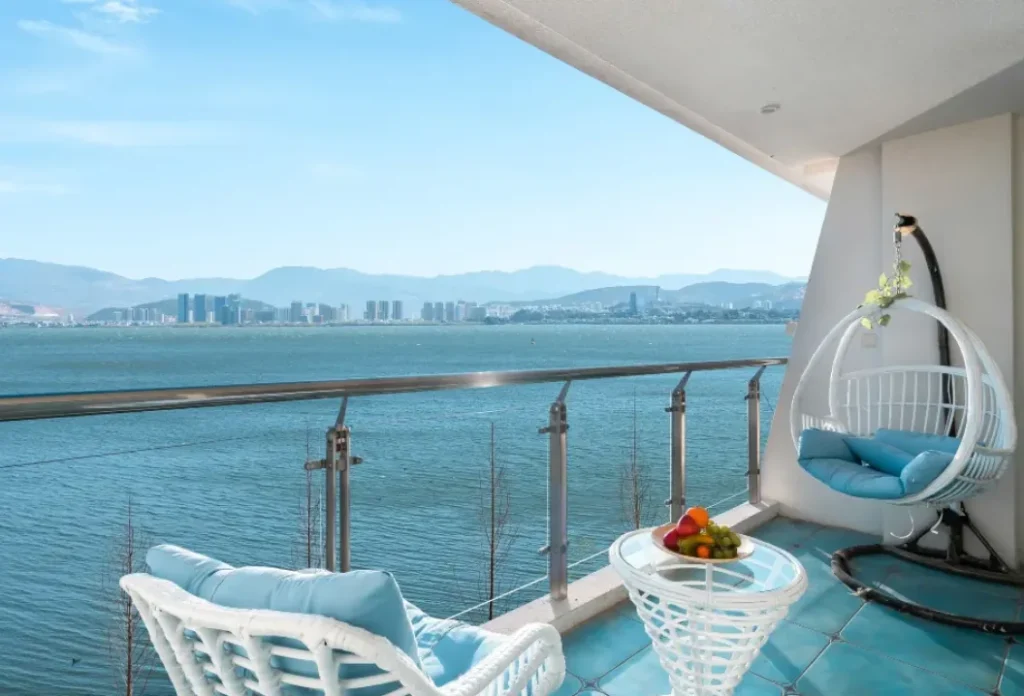
The circumference of Erhai Lake is about 128km. First-line lakeside homestays are mainly distributed in Shuanglang, Panxi, Caicun, and Wase. Rooms that are ≤30 meters from the shore, on floor ≥3, and feature unobstructed floor-to-ceiling windows usually provide a complete lake view. In the off-season (November–March), lake-view rooms are mostly 280–450 yuan/night, while in the peak season (May–October), they are generally 600–1000 yuan/night. Shuanglang has the highest density of listings but also high foot traffic; prices in Panxi and Caicun are typically 20%–35% lower. When booking, checking for listings with a score ≥4.7, ≥200 reviews, and a positive rating rate ≥95% in the last 90 days ensures a more stable stay experience.
Regional Location
Erhai Lake is about 128km in circumference. Statistics from public booking platforms show more than 3000 listings, of which about 35%–40% are tagged as “lake view” or “sea view.” In actual stay records, the proportion of rooms where the full lake surface can be seen is usually only 15%–20%, as most listings are 60–150 meters away from the shore.
Some lakeside villages have seen an increase of 50–120 new homestays within 3–5 years. The areas with the highest density of listings are usually concentrated in towns with flatter shorelines, which are more conducive to building structures facing the lake.
As the number of listings increases, distinct differences in accommodation distribution across various regions have formed.
| Region | Distance to Shore | Number of Listings | View Characteristics | Average Room Rate |
|---|---|---|---|---|
| Shuanglang | 10–50m | 600+ | Sunrise view | 700–1200 |
| Caicun | 30–120m | 400+ | Sunset view | 350–700 |
| Panxi | 20–80m | 300+ | Lakeside trail | 450–800 |
| Wase | 50–200m | 200+ | Open lake surface | 400–750 |
With the increase in density, buildings in the first row are typically 10–30 meters from the lake, the second row 40–80 meters, and the third row may reach over 100 meters. When the distance exceeds 80 meters, the proportion of the lake in the window view usually drops to 30%–40%.
As the number of buildings grows, lakeside structures are generally 2–5 floors high, with a floor height of about 3 meters/floor. When a room is on the 1st or 2nd floor, the roof height of the front row (about 6–8 meters) easily blocks the view. Rooms on the 3rd or 4th floor make it easier to see over the front row of buildings.
The width of the lake-encircling road is usually 6–10 meters, and some areas also feature 3–5 meter-wide cycling paths. If the homestay is located behind the road, you might see the road before seeing the lake from the window.
The proportion of the view outside the window changes significantly according to the distance from the shore.
| Distance to Shore | Proportion of Lake in Window View |
|---|---|
| 10–30m | 60–80% |
| 30–60m | 40–60% |
| 60–120m | 20–40% |
| Over 120m | 10–20% |
When the lake proportion is below 30%, buildings or trees tend to occupy a large portion of the frame in photos.
As accommodation density increases, the daily tourist volume in some popular areas can reach 20000–50000 people/day, with over 50 nearby restaurants and coffee shops. The nighttime ambient noise level in crowded tourist areas is usually 55–65dB.
In contrast, villages with fewer listings have a tourist volume of 5000–8000 people/day. The distance between accommodation zones can reach 3–8km, and nighttime noise levels are mostly 40–50dB. In high-density towns, 40–70 homestays are distributed within a 1km shoreline range. The spacing between buildings is usually 6–12 meters; when the spacing is less than 8 meters, some rooms may only catch a partial glimpse of the lake.
The shoreline is curved, resulting in different orientations. For example, most buildings on the east bank face West or Southwest, while those on the west bank face East or Northeast. Changes in orientation affect viewing times.
| Orientation | Common Views |
|---|---|
| East-facing | Sunrise |
| West-facing | Sunset |
| South-facing | Lake and distant mountains |
| North-facing | Shoreline |
When a room faces West, the sunset light between 18:30–19:20 illuminates the lake. East-facing rooms are better for seeing the sky’s color changes during sunrise at 06:40–07:10.
Modern homestay rooms are mostly 30–45㎡ in size, with balcony widths of about 1.5–2.5 meters. When the balcony width reaches over 2 meters, the outdoor viewing angle can reach 90–120°. Some older homestays have room areas of only 20–28㎡ and window widths of 1.2–1.6 meters. Narrower windows reduce the proportion of the lake in the field of vision.
In dense areas, you might see 3–5 rows of building rooftops outside the window. Even at a distance of 50 meters from the shore, the lake may still be blocked if there are many floors. First-line properties within 30 meters of the lake often cost 700–1200/night in peak season. Rooms 60–120 meters from the shore are typically 350–700/night.
Judging Landscape Quality
There are over 3000 homestays around Erhai, and about 35% are labeled as “sea view rooms,” but only 15%–20% of rooms actually offer a complete lake view upon check-in. Many properties 80–150 meters from the shore still use the sea-view tag, while the actual view is often blocked by roads, trees, or buildings. When checking room photos, observe the proportion of objects outside the window: if the lake occupies more than 50% of the frame, it is essentially a full lake view; if it only occupies 20%–30%, it is usually a side or distant view.
Many tourists find a significant gap between photos and reality, mostly due to shooting angles. Promotional photos on platforms often use 24mm wide-angle lenses, which provide a wider field of view than a mobile phone’s 1× lens (approx. 26mm), making the lake appear larger. Photos uploaded by users are closer to the naked-eye perspective; you can check 30–50 guest images in the review section to judge the real proportions.
When visual information remains unclear, judgment can be made based on location and architectural conditions. Most first-line lake-view homestays are within 10–30 meters of the shore; exceeding 60 meters usually places it in the second-line view category.
After confirming the location, it is also necessary to consider the room height.
- 1st-floor rooms: Shoreline railings are about 1.1 meters high and cycling paths are about 3 meters wide, which easily block the view.
- 2nd-floor rooms: The lake is visible in some areas, but trees reaching 4–6 meters in height may cause obstruction.
- 3rd–4th floor rooms: Usually offer a more complete field of vision.
- 5th floor and above: More open views, but some homestays do not have elevators.
Most highly-rated lake-view rooms are concentrated on the 3rd–4th floors, as this height provides a good view of the lake while maintaining a stable shooting angle. When viewing from indoors through a window, the optimal viewing distance is typically between 30–120 meters. Rooms ≤30 meters from the shore allow you to see details like water birds, boats, or ripple changes; once the distance reaches over 100 meters, lake details decrease significantly, and the lake usually occupies less than 40% of the frame in photos.
Therefore, many homestays will label themselves as “unobstructed sea view,” but this needs to be judged alongside the actual distance.
- 10–30 meters: Lake occupies 60%–80% of the window view.
- 30–60 meters: Lake occupies 40%–60% of the window view.
- 60–120 meters: Lake occupies 20%–40% of the window view.
- Over 120 meters: Usually considered a distant view.
As the viewing distance increases, the floor needs to be higher to maintain the view proportion. For example, a room 80 meters from the shore on the 2nd floor might have the lake blocked by rooftops, whereas the 4th floor would more likely offer a complete perspective.
Besides distance and height, window size also affects the viewing experience. Common window types in Erhai homestays are divided into three categories:
| Window Type | Width | Field of Vision |
|---|---|---|
| Regular Window | 1.2–1.6m | Narrow field of vision |
| Large Window | 1.8–2.4m | Complete lake view visible |
| Floor-to-Ceiling | ≥2.5m | Widest field of vision |
When the window width reaches over 2.5 meters, the indoor viewing angle is close to 120°, allowing the naked eye to see the lake, sky, and distant mountain silhouettes simultaneously.
After understanding the building conditions, orientation must also be considered. Light differences between the east and west banks are significant. The East Bank (Shuanglang, Wase) sunrise time is usually between 06:40–07:10, while the West Bank (Caicun, Panxi) is better for sunset, which occurs around 18:30–19:20.
Lighting changes at different times affect photos and viewing quality:
- 20 minutes before sunrise, the sky brightness is low and lake colors are softer.
- 30 minutes after sunrise, the light is most stable.
- 40 minutes before sunset, the sky color changes are most pronounced.
Therefore, when booking, you can ask about the room orientation. For example, east-facing balconies are better for sunrise photos, while west-facing rooms have softer light in the evening.
Review Information
On major booking platforms, the number of reviews for a single property varies greatly, from 20 to 2000. The total number of reviews affects rating stability; for example, for properties with ≥200 reviews, the rating fluctuation is usually within ±0.05, whereas with ≤50 reviews, a single negative review can drop the score by 0.1–0.2. Thus, look at the review volume before the score.
Properties with ≥200 reviews, a score ≥4.7, and ≥30 new reviews in the last 90 days have higher rating stability.
As the number of reviews increases, descriptions of scenic rooms usually focus on four dimensions: view, location, service, and hygiene. In properties with about 500 reviews, the proportion of reviews mentioning the view is usually between 40%–60%.
If many reviews mention a “balcony with a full lake view” or “unobstructed view from the window,” it usually means the view matches the photos.
Some properties may have many reviews, but they are concentrated 2–3 years ago, with fewer than 20 in the last year. When reviews are outdated, the homestay may have changed management or undergone renovations.
Properties with ≥30 reviews in the last 90 days usually maintain an occupancy frequency of at least 10–15 room nights per month.
When occupancy is high, issues like noise, breakfast times, or transport distances are mentioned frequently. In Erhai West Bank homestays within ≤30 meters of the shore, reviews often say “1-minute walk to the lake” or “can see the cycling path from the balcony.”
If reviews repeatedly mention “the cycling path is right at the door” or “less than 50 meters to the lake,” it typically indicates the property is truly close to the shore.
Most platforms allow guests to upload 3–9 photos, of which about 30%–40% are landscape shots. These images show the real shooting perspective, such as the proportion of the lake in the frame and any trees or buildings outside.
When there are over 30 real window view photos in the review section, the visual information becomes much clearer.
If photos are concentrated in the last 6 months, it means the property still maintains similar view conditions. If there are almost no new photos in a year, there may have been renovations or construction changes.
Properties with ≥10 photos from the last 6 months generally have more reliable visual information.
Some homestays have 10–20 rooms, but only 3–5 rooms might actually face the lake. If reviews mention “the room we booked wasn’t a sea view” or “cannot see the lake from the room,” it indicates significant view differences between room types.
When reviews mention “only high floors can see the lake” or “some room types have no view,” you must confirm the specific room name when booking.
If ≥80% of ratings are 5 stars and ratings of 3 or below are ≤5%, the rating structure is stable. If the low-score proportion reaches over 10%, reviews will likely mention hygiene, noise, or facility issues.
| Rating Proportion | Evaluation Structure |
|---|---|
| 5-star ≥80% | Stable ratings |
| 4-star 10–15% | Mostly detailed suggestions |
| ≤3-star ≤5% | Occasional experience differences |
When the number of reviews and photos reaches a certain scale—such as ≥300 reviews and ≥40 real photos—the view information can be fully judged through the review section.
Lijang Old Town
Lijiang Old Town sits at an altitude of 2410 meters, with a protected area of about 3.8 square kilometers and approximately 1800—2200 registered inns and homestays. About 30% are labeled as “scenic rooms,” but rooms that can actually see large areas of old town rooftops or distant snow mountains usually account for less than 15%. The street alleys in the old town are mostly 4—6 meters wide, with building heights of 2—3 floors (approx. 7—9 meters), so many rooms have a window visibility distance of only 20—30 meters. Three-story inns on slopes are more likely to achieve a rooftop view of over 500 meters.
Impact of Elevation Difference
The overall altitude of Lijiang Old Town is about 2410 meters, with a North-South distance of about 1.2 kilometers and a cumulative elevation difference of about 25—30 meters. Although the slope isn’t obvious, in a dense urban environment, this difference significantly affects rooftop sightlines and the view range.
The area around Sifang Street is one of the lowest in the old town, with an average altitude of 2408—2410 meters. This area has the highest street density, widths of 4—6 meters, and building heights of 7—9 meters. Due to the tight arrangement of houses, the visibility distance from 2nd-floor rooms is usually 20—40 meters.
Moving North 300—500 meters leads into the slopes, where the ground height increases by 12—18 meters. A three-story inn here can see over multiple rows of rooftops, expanding the visibility distance to 200—500 meters.
The total area of the old town is about 3.8 square kilometers, with slope accommodations covering less than 1.1 square kilometers but concentrating about 280—320 inns. Slope buildings are usually elevated row by row, with a height difference of 1.5—2 meters between each row, creating a stepped rooftop landscape.
| Area | Altitude | Number of Listings | Building Density |
|---|---|---|---|
| Sifang Street Area | 2408–2410m | Approx. 420 | High |
| Wuyi Street Area | 2410–2415m | Approx. 360 | Medium-High |
| Mid-Slope Area | 2415–2425m | Approx. 280 | Medium |
| North Gate Area | 2412–2416m | Approx. 240 | Medium |
| South Gate Area | 2410–2413m | Approx. 180 | Lower |
Although there are fewer listings on the slopes, the proportion of scenic rooms is higher. The proportion of scenic rooms near Sifang Street is usually 8%—10%, while mid-slope areas can reach 25%—30%. Room rates also show a clear gap: ordinary street-view rooms are about 180—260 yuan/night in the off-season, while 3rd-floor view rooms on slopes commonly range from 420—680 yuan/night.
The ground level of 3rd-floor rooms on slopes is typically 15–20 meters higher than Sifang Street. Combined with a building height of 7–9 meters, the overall viewing height can reach 22–28 meters. From this height, one can overlook rooftops within a 300—800 meter range.
Flatland courtyards are usually arranged horizontally, with consistent building heights on both sides of a street. Slope courtyards rise layer by layer, with common rooftop height differences of 2—3 meters between adjacent courtyards. This arrangement creates distinct rooftop layers:
- 1st row rooftop height: approx. 7 meters
- 2nd row rooftop height: approx. 9 meters
- 3rd row rooftop height: approx. 11 meters
- 4th row rooftop height: approx. 13 meters
When a room is on the 3rd floor of a slope, the sightline can cross 4—6 rows of rooftops. There are 6 main entrances to the old town, with the North Gate and Water Wheel entrances having the highest traffic. The North Gate daily traffic is about 15000—20000 people, with about 240 nearby inns. This area is 5—7 meters higher than Sifang Street, so some 2nd-floor rooms can also see distant rooftops.
Environmental differences across areas are distinct:
| Area Location | Distance to Sifang Street | Foot Traffic Density | View Probability |
|---|---|---|---|
| Sifang Street | 0–200m | High | Low |
| Wuyi Street | 200–400m | Medium-High | Medium |
| Mid-Slope | 300—600m | Medium | High |
| Near North Gate | 400—600m | Medium | Medium |
| South Gate Area | 600—800m | Lower | Low |
As distance increases, the average street width in some areas is around 4 meters, while slope alleys are usually 5—7 meters. Wider streets increase the visibility distance from rooms by 20—40 meters. Most old town courtyards face Southeast or Southwest. To get better views, slope inns often design terraces on the roof or western side. Terraces are usually 10—12 meters high with an area of 20—60㎡.
On clear days, the silhouette of distant mountain ranges can be seen from slope terraces. The straight-line distance from the old town to the distant mountains is about 25—35 kilometers. Among the approx. 2000 accommodations in the old town, rooms that feature both rooftop views and distant mountain views usually account for less than 5%.
The slope of the old town’s hillside streets is typically 10%—18%, with some sections 120—200 meters long. It takes about 6—10 minutes to walk up a slope with a suitcase. Therefore, about 60% of slope inns provide electric tricycle transfer services, usually costing 20—40 yuan/trip.
Prices for Different Views
There are about 1800—2200 operational accommodations in Lijiang Old Town, with an estimated 35000—40000 guest rooms. While about 30% of room type tags use descriptions like “scenic room” or “old town view,” only 12%—18% actually offer a relatively complete rooftop view.
In the off-season (November—March), ordinary room rates are generally 180—260 yuan/night, rising to 320—420 yuan/night in peak season (July—October). The higher the landscape grade, the more obvious the price difference; some rooftop terrace room types approach 900 yuan/night in peak season.
| View Grade | Visibility Range | Off-season Price | Peak Season Price |
|---|---|---|---|
| Alley or Courtyard | 10–20m | 180–260 yuan | 320–420 yuan |
| Partial Rooftop | 20–80m | 260–420 yuan | 420–600 yuan |
| Rooftop Overlook | 150–400m | 420–680 yuan | 650–850 yuan |
| Rooftop + Mountains | 300–800m | 600–900 yuan | 850–1200 yuan |
Alley or courtyard view room types are the most common, accounting for about 55% of all rooms. Outside the window is usually a courtyard or the wall of an opposite building, with a visibility distance mostly between 10–20 meters. These rooms generally have an area of 18—24㎡ and window widths of 0.8—1.2 meters.
In approximately 420 inns located around Sifang Street, over 70% of rooms fall into the courtyard or alley view category.
As floor height increases, 2nd-floor rooms facing the street usually have a visibility distance of 30—60 meters, showing one or two rows of rooftops. Prices are generally 80—120 yuan/night higher than ordinary rooms. Among the 2000 accommodations, there are about 8000—10000 such rooms.
Further up are rooftop overlook rooms. 3rd-floor rooms or slope inns can see over multiple rows of rooftops, with a common visibility of 200—400 meters.
| Room Location | Visible Rooftop Rows | Common Price |
|---|---|---|
| 2nd Floor Street View | 1–2 rows | 320–480 yuan |
| 3rd Floor Flatland | 3–4 rows | 420–620 yuan |
| 3rd Floor Slope | 4–6 rows | 480–680 yuan |
The ground height of 3rd-floor rooms on slopes is typically 15—20 meters higher than Sifang Street, and with a floor height of 7—9 meters, the viewing height is about 25 meters. On clear days, rooftops over 500 meters away are visible.
Another high-priced category includes rooms with terrace structures. Terraces are usually 8—15㎡ in size and 10—12 meters high. Such rooms account for less than 10% of the 2000 accommodations, mostly concentrated in slope inns.
Terrace room price ranges are as follows:
| Room Structure | Terrace Area | Off-season Price |
|---|---|---|
| Small Terrace Room | 8㎡ | 520–680 yuan |
| Medium Terrace Room | 10–12㎡ | 600–780 yuan |
| Large Rooftop Terrace | Over 15㎡ | 750–900 yuan |
Some slope inn rooftop platforms can see tile rooftops within a 600-meter range; the number of terrace rooms is usually 1—3.
Rooms facing West or Southwest can see the sunset illuminating the rooftops between 17:30—18:30, so prices are usually 50—100 yuan/night higher than standard rooftop rooms.
Here is the approximate proportion of different scenic room types across all listings:
| Room Type | Proportion of All Rooms |
|---|---|
| Courtyard or Alley View | 55% |
| Partial Rooftop | 25% |
| Rooftop Overlook | 15% |
| Rooftop + Mountains | 5% |
Rooms with distant mountain views are the rarest. With a straight-line distance of 25—35 kilometers, mountains are only visible from 3rd-floor slope rooms or rooftop terraces. Among the approx. 2000 accommodations, there are usually fewer than 100 such rooms.
Small inns with 6—10 rooms typically have only 1—2 scenic rooms. Large inns with over 20 rooms can have a scenic room proportion of 25%.
| Inn Scale | Average Room Count | Scenic Room Count |
|---|---|---|
| Small Courtyard | 6–10 | 1–2 |
| Medium Inn | 12–18 | 3–5 |
| Large Inn | 20–30 | 6–8 |
Among the approx. 300 slope inns, there are on average only 2 rooms with rooftop terraces.
Prices also fluctuate with tourist seasons throughout the year.
- Spring (March—May): Average 260—380 yuan
- Summer (June—August): Average 420—650 yuan
- Autumn (September—October): Average 380—600 yuan
- Winter (November—February): Average 180—320 yuan
The price gap for the same scenic room between peak and off-season is usually 40%—70%. Room types with truly distant views are scarce, with price differences mainly concentrated between 300—800 yuan/night.
Room Structure
Building heights in Lijiang Old Town are generally 2—3 floors (approx. 7—9 meters), with an average courtyard spacing of 6—12 meters. Most inns are renovated Naxi courtyards, where windows are typically 1.0—1.2 meters above the floor. In such density, if a room is on the 1st or 2nd floor, the view is easily blocked by the opposite eaves or walls, with a common visibility distance of only 15—30 meters. A 3rd-floor room in the same position can usually increase visibility to 80—150 meters, and over 400 meters on a slope.
About 60% of listings are renovated from old courtyards built between 1995—2015, where room areas are generally small. Early renovated rooms were mostly 18—22㎡, while rooms renovated in recent years have expanded to 26—35㎡. This change in area impacts not only comfort but also window size, balcony design, and the number of rooftop platforms. Floor-to-ceiling windows in newly renovated inns are commonly 1.8—2.4 meters wide, significantly wider than the 0.8—1.2 meters average of old courtyards.
The average rooftop height is 6—8 meters. if the opposite eave is more than 0.5 meters higher than the top of the window, most of the view will be blocked. Some inns have increased window heights to 1.4—1.6 meters during renovation while raising balcony railings to 1.1 meters, which can expand the viewing angle by about 40°—70°.
The following structural differences are common in actual stays:
- 1st-floor rooms: Visibility of the opposite wall within 10—15 meters.
- 2nd-floor rooms: Average visibility distance of 30—60 meters.
- 3rd-floor rooms on slopes: Visible distance of 150—400 meters.
- Rooftop terrace height: Usually 10—12 meters.
- Rooms with balconies: Viewing angle usually 100°—120°.
About 70% of old town inns have only 2 floors, and the proportion of inns offering 3rd-floor rooms is less than 25%. If a room is in a mid-slope area, such as the Lion Mountain region, a 3rd-floor room can usually see tile rooftops within a 500-meter range, whereas 3rd-floor rooms in flat areas have a visibility of 120—200 meters.
Besides floor level, window size significantly affects the viewing experience.
| Window Type | Common Size | Viewing Angle | Old Town Listing Proportion |
|---|---|---|---|
| Ordinary Wood Window | 0.8–1.2m | 40°–60° | Approx. 45% |
| Large Window | 1.4–1.8m | 70°–90° | Approx. 30% |
| Floor-to-Ceiling | 1.8–2.4m | Over 100° | Approx. 18% |
| Balcony Door/Window | Over 2.0m | Around 120° | Approx. 7% |
Floor-to-ceiling windows are usually found in inns renovated after 2018, accounting for less than 20% of accommodations. If such a room is on a slope, the visible rooftop range usually reaches 300—600 meters.
Old town courtyards are typically “U-shaped” or “square.” An average courtyard area is 120—220㎡, with 8—16 rooms surrounding it. Gardens or water features in the center usually have a diameter of 6—10 meters. If a window faces the courtyard, the view is mainly of the inner garden, and external rooftops are hardly visible.
Within the same inn, views vary greatly between room types:
| Room Location | Common Sightline | View Range |
|---|---|---|
| 1st Floor Courtyard | Garden or pool | 5–10m |
| 2nd Floor Courtyard | Courtyard rooftops | 10–20m |
| 2nd Floor Street-facing | Street rooftops | 20–60m |
| 3rd Floor Slope | Old town rooftops | 200–500m |
Thus, while many inns offer “scenic rooms,” the actual view might just be of the inner courtyard.
Rooftop platforms are also a common design. About 40% of inns set up public terraces, usually 20—60㎡ in size. Public terraces are mostly 9—12 meters high, offering views of vast rooftop areas. However, the proportion of private terraces located within rooms is only 8%—10%.
Differences in terrace structure mainly include:
- Public rooftop platform area: 30—80㎡.
- Private room terrace area: 8—15㎡.
- Rooftop railing height: 1.1—1.3 meters.
- Terrace height: Usually over 10 meters.
- Rooftop visibility distance: 400—800 meters.
Terrace rooms are typically 150—300 yuan/night more expensive than ordinary rooms. Lijiang Old Town is at a latitude of approx. 26°52′N, and the winter sun angle is low. If a room faces Southeast, indoor light is better between 7:30—9:30. Southwest-facing rooms have more prominent light between 17:30—18:30.
On Lion Mountain slopes, some 3rd-floor terrace rooms can see the silhouettes of distant mountains. On clear days, the visibility distance is usually 25—35 kilometers. Among the approx. 2000 accommodations, there are usually fewer than 100 such rooms, a proportion of about 5%.
You May Also Like
- Yunnan Altitude Sickness Survival Guide | Shangri-La/Yubeng/Jade Dragon Snow Mountain, Medication Prep + Rhodiola Rosea Review
- 2026 Yunnan Travel Pitfall Guide | Avoid These 10 “Influencer Traps”, Even Locals Are Shaking Their Heads
- Yunnan Travel Clothing Guide | Spring, Summer, Autumn & Winter Weather Analysis & Packing List
- Essential Items Checklist for Yunnan Travel | What Practical Luggage Do You Really Need to Prepare for Yunnan
- 2026 Dali Travel Must-Visit Attractions Ranking | Besides Erhai, What Else is Fun in Dali
Dali —: Numbers to Check
Tickets & Booking
- Xizhou Ancient Town: Free; Yan Family Residence about CNY 18, Yan Family Courtyard Museum about CNY 21–30; Xizhou wheat-field mini-train CNY 35; no booking required[src]
- Shuanglang Ancient Town: Free; Nanzhao Customs Island about CNY 50–56; no booking required[src]
- Erhai cruise: About CNY 142 per person (the Greater Shuanglang line one way and other ticket types)[src]
Transport & Schedules
- Dali station → Kunming South station | EMU: E.g., D8784/D8781: Dali departs 15:40–Kunming South terminates 18:22, 2 h 42 min total, 356 km; stops at Yunnanyi, Chuxiong, Guangtong North, Lufeng South, Kunming[src]
Where to Stay · Room Type · Nearby
- Dali Ancient Town | Reference price Moderate range (mostly OTA guesthouses) | Room tip: Convenient for food, lodging and transport, suitable for a first visit to Dali | Nearby add-ons: Chongsheng Temple Three Pagodas, Renmin Road night market, Cangshan Gantong cableway[src]
- Shuanglang Ancient Town | Reference price On the high side (lake-view guesthouses) | Room tip: Right by Erhai with a good view but relatively inconvenient transport | Nearby add-ons: Nanzhao Customs Island, Yuji Island[src]
Typical Climate & Packing (Past Years)
- January: 2 °C–16 °C °C, [Travel climate reference]
- February: 4 °C–18 °C °C
- March: 6 °C–21 °C °C
- April: 9 °C–24 °C °C
- May: 12 °C–25 °C °C
- June: 15 °C–25 °C °C, Rainy season






