Welcome to Hiplay Travel: 15 years of expertise in global tourism, dedicated to serving international travelers with premium travel experiences and optimal travel services worldwide
Day 1: Arrival in Kunming, City Acclimatization and Rest
The clock had just struck 10:00 AM upon landing. I exited from Changshui Airport T1 and headed straight for the taxi stand outside Gate 3 (avoiding the crowded Gate 1 queue). My driver, Master Zhang, was a Kunming local. On the way, he talked about Green Lake (Cuihu) where “summer lotuses touch the sky, and winter gulls blot out the sun.” The 40-minute drive took us through the Second Ring Road, offering a distant view of the “Sleeping Beauty” outline of the Western Hills (Xishan). The fare was 80 yuan (including 10 yuan for the expressway).
I stayed at a family-run guesthouse on Wenlin Street, Wuhua District, near Cuihu. The landlady, Auntie Wang, had gray hair but was quick and efficient. My room was on the 2nd floor, facing south; the wooden floor was polished, and the bedsheets smelled of sun. The balcony had a small bamboo chair—allowing a glimpse of the Cuihu lotus pond corner (in summer). It cost 150 yuan per night. Auntie handed me warm water, saying, “Take it easy when you first arrive, don’t rush off.” She also gave me a hand-drawn map marking nearby markets and breakfast stalls.
In the late afternoon sun, I walked along the wooden boardwalk by the lake: I saw several elders gathered around a stone table playing Chinese chess, the pieces clicking loudly. An onlooker, an old man with a cigarette, offered advice: “Jump the horse!” The red-billed gulls, which are only present in winter, swooped overhead, their wings stirring the air. A bold one landed on the railing. I crumbled some bread for it; as it snatched the crumbs, its claws lightly grazed my palm, making me laugh with the tickle.
Around 6:00 PM, I went to Jianxinyuan’s Huguo Road old store (the facade displays a “China Time-Honored Brand” plaque). The place was busy but orderly. I ordered the Traditional Zhuangyuan (Scholar) Set Meal. The soup was served steaming hot; one sip was fresh and rich, but not overly salty. The rice noodles were slippery, soaking up the broth, and the side dish of Termite Mushroom (Jizong) had an earthy chewiness (Auntie said: “Harvested during the rainy season, dried and stored”). A local uncle at my table struck up a conversation: “This soup is simmered for 8 hours, and the rice noodles must be today’s fresh, wet ones.” The meal cost 35 yuan per person, leaving my stomach warm and cozy.
Acclimatization Feeling: Kunming’s altitude is 1890 meters. My breathing felt slightly shallow when I got off the plane, but it normalized after a few steps—no altitude sickness. Don’t run or jump when you first arrive; I took slow strolls by Cuihu, drinking a cup of warm water every hour (the guesthouse has a kettle). By evening, my body felt like it was soaking in warm water, not as easily fatigued as on the plains.
Auntie Wang saw me out, saying, “Go to Zhuanxin Farmers Market tomorrow morning; their douhua (tofu pudding) rice noodles are authentic. Remember to add sweet soy sauce.” I nodded. She added, “Don’t buy those ‘low-price tours’ advertised by touts outside; they’re all scams.”
Accommodation: Wenlin Street family guesthouse (Balcony overlooking a corner of Cuihu, 150 yuan/night, Auntie Wang is hospitable)
Afternoon Activity: Stroll on the Cuihu boardwalk, watch elders play chess, interact with the winter red-billed gulls
Dinner: Jianxinyuan Huguo Road store (Traditional Zhuangyuan Set Meal, Termite Mushroom aroma, 35 yuan/person)
Acclimatization: 1890m altitude, no sickness. Don’t run/jump initially, drink plenty of warm water, warm water every hour to ease the body
Item
Cost (Per Person)
Details
Airport Taxi
80 yuan
Picked up at T1-Gate 3, includes 10 yuan expressway fee
Family Guesthouse
150 yuan
Wenlin Street 2nd-floor south-facing room, balcony overlooks Cuihu
Dinner
35 yuan
Jianxinyuan Traditional Zhuangyuan Set Meal (with Termite Mushroom)
Total for the Day
265 yuan
Basic expenditure during acclimatization period
Day 2: Kunming → Dali (approx. 3-hour drive), Dali Ancient City Slow Stroll + Erhai Lake West Bank Cycling
At 9:30 AM, I departed from Kunming Station, holding my high-speed rail second-class ticket (145 yuan). The electronic screen in the waiting hall flashed “Kunming → Dali 2 hours 10 minutes.” The carriage had spacious seats; I sat by the window. A Bai ethnic minority auntie next to me, wearing a silver neck ring, pointed out the window: “Look, doesn’t that cloud look like the peaks of Cangshan Mountain?” Two hours later, I arrived at Dali Station. I exited and turned right to the blue shed for carpooling. Driver Brother Li drove a seven-seater minivan; it was 20 yuan/person to the Ancient City, a 15-minute drive through streets and alleys. The grayish-blue outline of the Ancient City wall gradually came into view, and the air smelled of rushan (milk fan cheese).
I stayed at a guesthouse outside the Ancient City’s South Gate on Yeyu Road. The owner, Xiao Yang, was a local young man. My room was on the second floor, facing east, with a wooden window that opened to rice fields (lush green in summer, turning golden waves when the wind blew). It cost 180 yuan per night. He handed me an electric scooter key: “Rented from ‘Little Scooter Home’ downstairs for 50 yuan/day. With 100km range, it’s enough to ride to Xizhou. 200 yuan deposit, refundable upon return.” He charged it for me, saying, “Ride with the wind in the afternoon; it saves power from Cai Village to Xizhou. Save your appetite for the stone slab BBQ at Meizijing.”
Dali Ancient City Slow Stroll: Enter from the South Gate and first wander down Renmin Road, avoiding the tour groups on the main Sifang Street. Watch the silver jewelry store sister hammering silver (engraving camellia flowers on a bracelet, with a crisp ‘ding-dong’ sound), and smell the hand-brewed coffee drifting from a corner cafe. Then walk down Fuxing Road, where green moss grows in the cracks of the flagstones. Pass by “Jiang Gong Ancestral Hall” (free) to see the Bai ethnic minority’s colored paintings (phoenixes carrying peonies). Finally, ascend Wuhua Tower (5 yuan entry fee). The wind is strong on the top floor, offering a panoramic view of the Ancient City’s checkerboard rooftops and the distant snowy peaks of Cangshan Mountain (the snowline looks like a white silk ribbon on a clear day).
Erhai Lake West Bank Cycling: Started cycling the electric scooter at 2:00 PM, covering the Cai Village Pier → Xizhou Ancient Town section, about 25km. Rode along the West Erhai Lake Loop Road (Huanhai West Road), passing by Longkan Pier (if you come early, you can see the sunrise stain the water red). Large tracts of rice fields with scarecrows (golden yellow in autumn); November metasequoia forests turn red, with fallen leaves covering the roadside like a carpet. Arrived at the Panxi S-bend (free for photos). Villagers by the road sell strawberries (10 yuan/box, sweet with a hint of sour). Don’t believe the “Photo Fee” signs; find your own angle to capture the arc of Erhai Lake—the wind tossed my hair, and the blue water looked like a transparent jade.
Returned to the Ancient City around 6:00 PM and went to Meizijing Restaurant (mid-section of Renmin Road, with an old plum tree in the courtyard). Boss Lady Afang recommended the pork belly stone slab BBQ: thick slices of pork belly with skin, sizzled on a volcanic rock slab (evenly heated, won’t burn) until oil oozed out. Sprinkled with chili powder, it was fragrant but not too spicy. It was served with pickled vegetable soup (made with sour bamboo shoots + radish greens, refreshing) and grilled tofu (crispy outside, tender inside, bursting with juice when bitten). A local man at the same table said: “Their stone slabs are self-hewn from rocks, unlike others.” The meal cost 60 yuan per person; I was sweating a little from the heat. Afang even gave me a bowl of iced sour plum soup.
Spent the day: High-speed rail ticket 145 yuan (comfortable second-class seat), carpool 20 yuan (Brother Li drove steadily), electric scooter rental 50 yuan (range was enough for Xizhou trip), dinner 60 yuan (Meizijing stone slab BBQ + sour plum soup). The guesthouse from the previous night was 180 yuan (already paid). Actual expenditure for the day was 215 yuan (excluding accommodation). No extra cycling fees; the deposit was refunded upon returning the scooter.
Tips: The hand-brewed coffee at “Wamao Cafe” on Renmin Road is good (the sister knows her beans). If you meet a headwind while cycling, push the scooter for a while; don’t force it and drain the battery. Take photos at the S-bend after 4:00 PM for softer, non-glaring light. Avoid scams: The jewelry stores on the Ancient City’s main street have inflated prices; the small handicraft shops on Renmin Road’s alleys are more honest. Don’t rent a scooter that is too cheap (short battery life, inconvenient if you break down halfway).
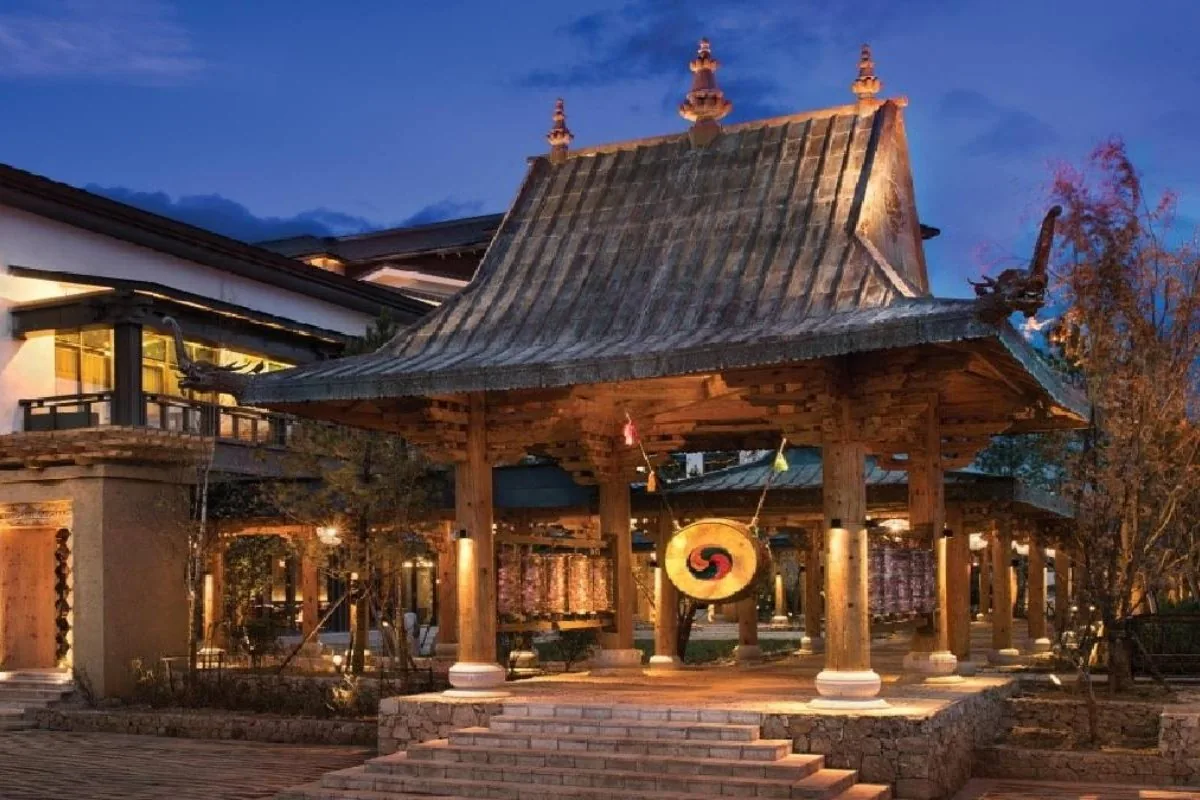
Day 3: Dali In-Depth Tour, Xizhou Ancient Town Tie-Dye Experience + Shuanglang Viewing Cangshan and Erhai Lake
At 7:50 AM, I waited for the 8:00 AM Xizhou bus (15 yuan/person) on the east side of the Ancient City North Gate parking lot. It was a white minibus. The driver helped with my luggage and said, “We’ll take the Dali-Lijiang road, 40 minutes, not too bumpy.” We passed through Yinqiao Town, viewing Bai ethnic minority villages with blue tiles and white walls, and broad bean seedlings planted along the field ridges (lush green in spring). Occasionally, a farmer wearing a bamboo hat passed by with a carrying pole.
After getting off, I walked north for 5 minutes along Zhengyi Road to “Puzhen Tie-Dye Museum” (a sign with wooden lettering, an old workshop run by local Bai grandma Yang Guiying, a thirty-year-old store). The experience began with selecting a cotton/linen square scarf (30 yuan/piece, available in original white and beige; I chose beige for better coloring). Grandma handed me a copper wax knife: “Draw simple plum blossoms; connect the petals with dots, and use a firm stroke for the branches.” She provided hands-on guidance; if I drew wrong with the wax-dipped beeswax, it could be scraped off. The pattern I drew by hand felt warm. Next, it was indigo dyeing (the dye is fermented from indigo root, with a slight grassy smell). The scarf was stirred in the vat for 2 hours, came out greenish, and was hung in the courtyard to oxidize—turning from green to blue in half an hour, like a piece of the sky had been cut out. When rinsing and removing the wax, the wax shavings floated like gold dust. After removal, the plum blossom pattern was perfectly clear. Grandma embroidered the letter “Y” (my name’s initial) with red thread on the corner: “So others know you made it.”
At 1:30 PM, I took the minibus from Xizhou Bus Station (50m right of the Ancient Town exit) to Shuanglang (12 yuan/person, 1:30 PM departure, 1 hour drive). Passing through Wase Town, I saw fishing boats lined up on Erhai Lake, with fishermen casting their nets that glittered silver. After arriving in Shuanglang, I walked 10 minutes to the Yuji Island Viewing Platform (free, a cement platform high up on the island). At 3:00 PM on a clear day, the sun was just right. Erhai Lake was blue like melted gemstone; the shallow water near the shore was greenish, and the distant 19 peaks of Cangshan Mountain were covered in snow like a velvet blanket. With luck, Jade Dragon Snow Mountain (Yulong) poked its tip through the clouds on the west side (Grandma said, “More common on clear autumn/winter days”).
Around 6:00 PM, I went to Haiyan Restaurant (in an alley on Yuji Island, with dried fish hanging at the entrance) for Bai ethnic minority Sour and Spicy Fish. Boss Haiyan brought the clay pot: “We use carp caught this morning from Erhai Lake (two fingers wide, few bones). The sour papaya is local, dried for half a year.” The fish was tender, the sour and spicy flavor shot up to my nose but didn’t choke me. Served with Water Caltrop Flower Soup (an endemic Erhai plant, white flower, green stem, clear and slightly sweet soup). The meal cost 70 yuan per person (fish 48 yuan + soup 15 yuan + two vegetable dishes 7 yuan). A Shanghai tourist at the same table said: “It’s fresher than the fish in Dali Ancient City, no muddy smell.”
I stayed at Tinglangju Guesthouse in Shuanglang (lake-view room 200 yuan/night, 5 minutes walk from the viewing platform). My room was on the second floor, with rattan furniture on the balcony. I could hear the sound of the waves even through the glass. At 10:00 PM, I turned off the light to watch the stars. With no light pollution, the Big Dipper was bright, and I could clearly make out its handle. Occasionally, a shooting star streaked across (I didn’t make a wish, afraid of disturbing the sound of the waves).
Transportation: Ancient City North Gate Bus (8:00 AM departure, 15 yuan/person, 40 minutes to Xizhou) → Xizhou Bus Station Minibus (1:30 PM departure, 12 yuan/person, 1 hour to Shuanglang)
Tie-Dye Experience: Puzhen Tie-Dye Museum (Grandma Yang Guiying guidance, drew wax on a beige scarf, indigo dyed for 2 hours, removed wax for setting, 30 yuan including materials)
Viewing: Yuji Island Viewing Platform (free, viewed Cangshan and Erhai Lake + distant Yulong Snow Mountain in the clear afternoon)
Cuisine: Haiyan Restaurant Sour and Spicy Fish (Erhai carp + sour papaya, served with Water Caltrop Flower Soup, 70 yuan/person)
Accommodation: Tinglangju Lake-view Guesthouse (Balcony listening to waves, 200 yuan/night, clear star view)
Item
Cost (Per Person)
Details
Xizhou Bus
15 yuan
Ancient City North Gate parking lot east side, 8:00 AM departure, 40 minutes, passed Yinqiao Town Bai villages
Shuanglang Minibus
12 yuan
Xizhou Bus Station 1:30 PM departure, 1 hour, passed Wase Town viewing Erhai fishing boats
Tie-Dye Experience
30 yuan
Puzhen Tie-Dye Museum (Grandma Yang Guiying guidance, drew wax and dyed beige scarf, embroidered name as souvenir)
Lunch
70 yuan
Haiyan Restaurant Sour and Spicy Fish (Erhai carp + sour papaya, served with Water Caltrop Flower Soup, old store in Yuji Island alley)
Accommodation
200 yuan
Tinglangju Lake-view Guesthouse (2nd floor balcony listening to waves, 200 yuan/night, no light pollution for stars)
Total for the Day
327 yuan
Includes transportation, experience, dining, accommodation. Tie-dye scarf is a souvenir (not a pure expense)
Tips: Go for the tie-dye experience in the morning (Grandma is more energetic and teaches meticulously). The light is softer at Yuji Island Viewing Platform after 3:00 PM; no filter needed for photos of Cangshan and Erhai Lake. Haiyan Restaurant has a queue during meal times; try going off-peak at 5:00 PM. Avoid scams: Don’t believe “carpool is faster” touts for the Xizhou bus (higher price and detours). Don’t follow “paid guides” at the Shuanglang viewing platform (the free platform offers better views).
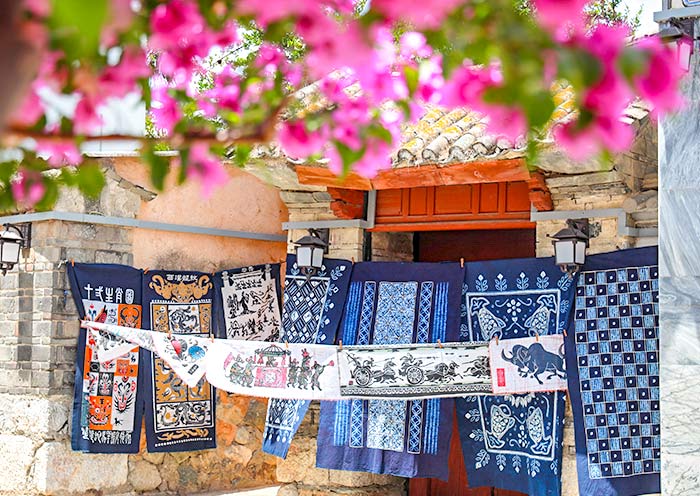
Day 4: Dali → Lijiang (approx. 2.5-hour drive), Initial Exploration of Lijiang Dayan Ancient Town Night View
I departed from Dali Station at exactly 9:00 AM, holding my K9626 train ticket (34 yuan, Dali Station → Lijiang Station, 2-hour journey). The broadcast in the waiting hall had just finished announcing “Now boarding.” I saw a Naxi ethnic minority uncle carrying a bamboo basket getting up—he said he takes “this train every day to Lijiang to sell matsutake mushrooms, they have to catch the morning market.” The window seat in the carriage offered a good view. The Cangshan remnants gradually faded into a pale silhouette. Passing Eryuan, a large wetland area came into view, with water birds flying low over the water, their wingtips touching the drops. I arrived at Lijiang Station punctually at 11:00 AM. I turned right at the exit to the “Carpool Waiting Area” and waited for 5 minutes. Driver Master He drove a white SUV, 30 yuan/person to Shuhe Ancient Town. The 20-minute drive through the city passed by Xiangshan Market, where the aroma of preserved pork ribs mixed with the smoky scent of burning pine branches.
I stayed at a guesthouse in a deep alley on Renli Road, Shuhe Ancient Town. The owner, A-Peng, was a local Naxi man. My room was on the third floor, facing north, with silent wooden floors. The window directly faced a centuries-old scholar tree (its branches reached the balcony, blocking the sun in summer). It cost 160 yuan per night. As he handed me the key, he pointed to the thermos flask on the table: “It’s dry on the plateau; drink plenty of freshly boiled water.” He also drew a simple map: “Take Bus 6 (2 yuan) to Dayan Ancient City; it’s 20 minutes to the city gate. There’s a store called ‘Grandma’s Preserved Ribs’ at the end of Wuyi Street, near Zhongyi Market. Her ribs are stewed until tender.”
Evening Stroll in Dayan Ancient Town: Took Bus 6 (2 yuan) from Shuhe at 5:00 PM to the “Ancient City Gate Station” in Dayan. Entered through the Big Water Wheel (with a wooden plaque reading “Welcome” in Dongba script). I deliberately bypassed the crowds on Sifang Street and walked down Wuyi Street. I admired the exterior wall of Mufu Mansion, with its vermilion base painted over with intricate patterns—the Dongba script for “Auspiciousness” looked like tadpoles, and the “Pine and Crane Prolonging Life” painting showed a crane standing on one leg on a rock. Copper bells on the eaves chimed in the wind, like whispering. I passed by the “Naxi Ancient Music Workshop,” where an elder at the entrance was playing the erhu, the tune of “Baisha Xile” drifting out, ancient and distant, like water flowing over flagstones.
Sifang Street Bonfire Party at Night: Arrived at the center around 8:00 PM. Saw local Naxi aunties leading the lighting of the bonfire (pine branches stacked into a tower, flames leaping half a person high). Tourists and residents held hands in a circle to dance the “A Li Li”—the footwork was light, like stepping on clouds; when arms were swung, they cut the wind. I tried to follow; an auntie laughed and corrected me, “Start with the left foot, don’t use the same arm and leg.” No one charged money. When tired, I sat on the stone steps to watch the sparks fly up, mixed with the sweet aroma of grilled erkuai (rice cake).
For dinner, as A-Peng suggested, I went to “Grandma’s Preserved Ribs” next to Zhongyi Market. The shop was small but packed with people. Grandma, wearing a blue apron, brought the clay pot: “The ribs are black pork ribs, stewed for three hours. We added water chestnut and carrots to the soup.” The ribs were soft enough to fall off the bone, with a slight brown sugar sweetness in the meat (Grandma said, “It enhances freshness without being cloying”). The soup was rich but not greasy. The dipping sauce was shredded fresh mint leaves + chili powder paste (cooling and spicy). I also ordered a portion of Water Caltrop Flower (transported from Erhai Lake, crispy stem, tender flower like a small umbrella). A Beijing tourist at my table sipped the soup, saying, “It’s more authentic than the chain stores in the Ancient City, no strange taste.” The meal cost 55 yuan per person.
Spent the day: Train ticket 34 yuan (hard seat by the window to see the wetlands), carpool 30 yuan (Master He’s SUV passed Xiangshan Market), accommodation 160 yuan (Shuhe deep alley guesthouse facing the old scholar tree), Bus 2 yuan (Shuhe to Dayan), dinner 55 yuan (Grandma’s preserved ribs + Water Caltrop Flower), Total 281 yuan. The bonfire party and the exterior of Mufu Mansion were free, with no extra expenditure.
Tips: The “Naxi Grocer” at the end of Wuyi Street has handmade Dongba paper (you can write blessings on it and take it home). The bonfire party starts at 8:00 PM, with the most people at 9:00 PM; go early to secure a front spot. Grandma’s Preserved Ribs has a queue during meal times; go off-peak at 6:30 PM to wait less. Avoid scams: The jewelry stores on Dayan Sifang Street’s main street have inflated prices (bargain realistically at small handicraft shops on Wuyi Street’s alleys). Don’t believe “fixed-price private car” for carpooling; 30 yuan per person is transparent.
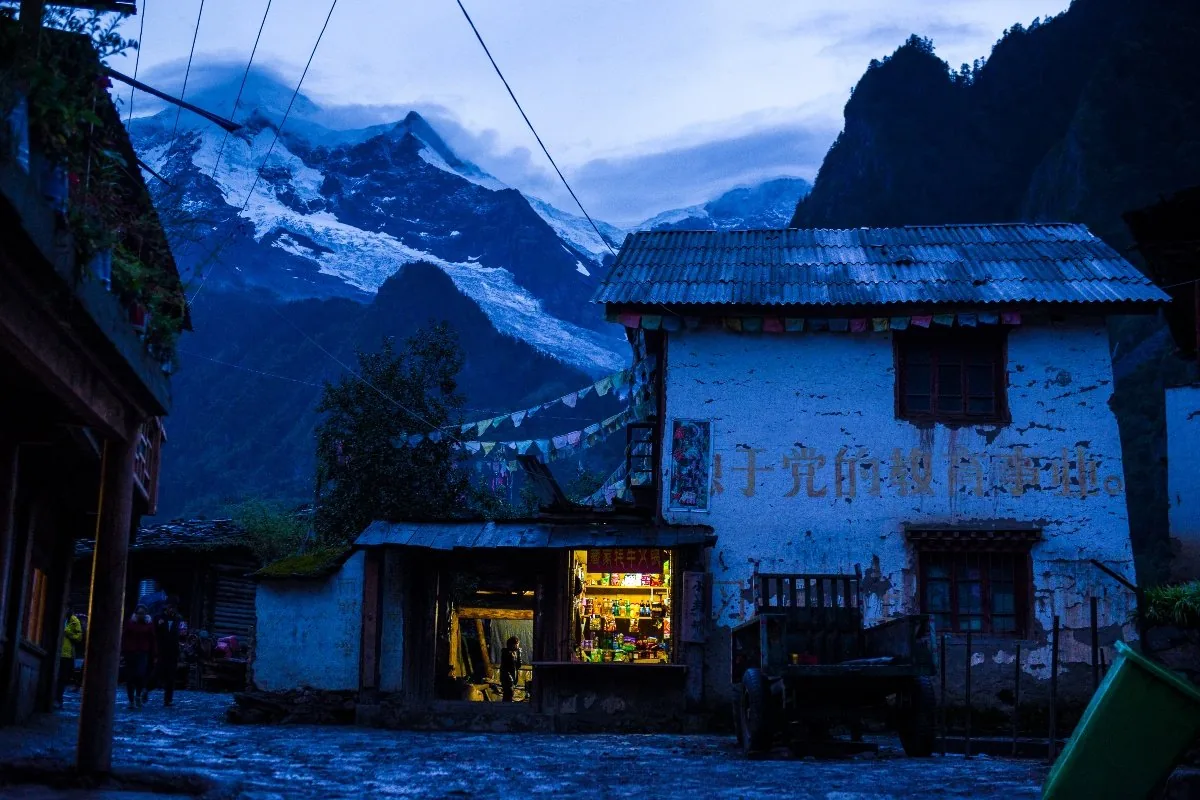
Day 5: Lijiang Jade Dragon Snow Mountain Day Trip, Blue Moon Valley + Spruce Meadow Light Hike
At 6:50 AM, I waited for the carpool downstairs at the Shuhe guesthouse. Driver Master He drove a black SUV (pre-arranged the day before), saying, “Jade Dragon Snow Mountain is clear today, good for seeing the snow.” Departed at 7:00 AM sharp. The fare was 50 yuan (round trip, including the 230 yuan entrance fee, total 280 yuan, paid a day in advance). On the way, Master He and I chatted; he said, “The entrance fee includes the eco-bus; don’t trust the ‘fee-free entrance’ touts on the roadside—they’re scams to lure you into horse riding.” After a bumpy 40-minute ride, we arrived at Ganhaizi Visitor Center. Master He reminded me, “First check the ‘Lijiang Tourism Group’ mini-program to confirm the large cable car ticket has been exchanged.” I had booked the package ticket (including the large cable car 140 yuan and the entrance fee 230 yuan) 3 days in advance. I only felt reassured after exchanging the physical ticket.
Remembered my gear: Buy oxygen bottles down the mountain (20 yuan/bottle at a small stall outside the Visitor Center, lightweight aluminum canister). The price is 60 yuan “extortionate” on the mountain. Rent a thin down jacket for 50 yuan/piece (rented at the Visitor Center, dark blue style; it’s below 10℃ on the mountain, and the wind makes you shiver). I also brought a piece of chocolate (Master He said, “Take a bite if you feel dizzy from altitude sickness; it’s filling”).
Blue Moon Valley: Took the scenic eco-bus (included in the package ticket) to the final stop, “Baishui River Station.” Walked the entire 3km wooden boardwalk (flat path, not strenuous). The lake water appears blue-green due to calcium carbonate minerals, looking like the sky was crushed and mixed into the water—Yuye Lake is the most photogenic spot. Squatting down to capture the reflection, the snow-capped peak landed exactly in the center of the lake. When there was no wind, it looked like a mirror. An old local auntie sold baked potatoes by the boardwalk (5 yuan/piece, fragrant with chili powder). I bought one to warm my hands; the heat dispersed some of the cold.
Spruce Meadow (Yunshanping): Took the eco-bus back from Blue Moon Valley to the “Cable Car Lower Station.” Took the large cable car up the mountain (8-person cabin, 10 minutes to 3240m altitude). Exiting the cable car led straight to Spruce Meadow grassland. The surrounding spruce forest was dense like a wall, the meadow grass was bright green, and the thirteen peaks of Jade Dragon Snow Mountain were fully visible in the distance (only visible completely on clear days). I wore a red jacket (bright color stands out) for photos in front of the prayer flag array. The wind made the flags snap, and the background of the snow mountain looked like a painting.
Had lunch at the Spruce Meadow Restaurant (next to the cable car station); it was quiet with few people. Ordered Yangzhou Fried Rice 30 yuan (rice grains were distinct, mixed with ham and corn, no strange taste), with a cup of hot ginger tea (10 yuan, warming). An auntie from Guangdong at the next table said, “It’s cleaner than the fast food down the mountain, but a bit pricey. Just bear with it.”
Descended the mountain punctually at 3:00 PM. Took the cable car + eco-bus back to Ganhaizi, and carpooled back with Master He’s car. Arrived at the Shuhe guesthouse at 4:30 PM. Owner A-Peng brought warm water: “You must be exhausted today? The heater is on upstairs; get some rest early.”
Item
Cost (Per Person)
Details
Carpool Round Trip + Entrance Fee
280 yuan
Shuhe → Jade Dragon Snow Mountain (50 yuan transport fee) + Entrance Fee 230 yuan (incl. eco-bus). Master He’s SUV departed at 7:00 AM
Oxygen Bottle
20 yuan
Bought outside Ganhaizi Visitor Center (lightweight aluminum canister). Sold for 60 yuan on the mountain
Thin Down Jacket Rental
50 yuan
Rented at Visitor Center (dark blue style, for below 10℃ wind chill on the mountain)
Spruce Meadow Lunch
30 yuan
Spruce Meadow Restaurant Yangzhou Fried Rice (distinct rice grains, with 10 yuan hot ginger tea)
Total for the Day
380 yuan
Includes transportation, ticket, equipment rental, dining. Free entry/hike for Blue Moon Valley/Spruce Meadow
Tips: Blue Moon Valley wooden boardwalk is best in the morning for blue water photos (with the sun), the afternoon is backlit and looks greenish. Don’t step on the middle rope of the Spruce Meadow prayer flag array (locals say “it’s disrespectful”). Use the oxygen bottle quickly after opening (aluminum canisters leak fast). Avoid scams: Don’t buy “high-priced oxygen bottles” at Ganhaizi (look for the 20 yuan aluminum canister). Don’t order the “Yak Meat Noodles” at Spruce Meadow Restaurant (45 yuan, small portion, not worth it).
Day 6: Lijiang → Shangri-La (approx. 4-hour drive), Dukezong Ancient City Prayer Wheel + Tibetan Meal Experience
At exactly 8:00 AM, I was in the waiting hall on the second floor of Lijiang Bus Station, queuing with my 68 yuan bus ticket (Lijiang → Shangri-La, 4-hour journey). It was a Yutong white bus, with wide seating that allowed me to straighten my legs. I chose a window seat in the third-to-last row, planning to enjoy the scenery. As the bus departed, the driver, Zhaxi (a Tibetan young man, dark skin, smiling), announced over the loudspeaker: “We’ll stop briefly at the Tiger Leaping Gorge viewing platform; you can see the Jinsha River from afar, but don’t get off and wander!” As the bus left the city, the remnants of Jade Dragon Snow Mountain gradually lowered. Passing the First Bend of the Yangtze River, the muddy yellow tributary of the Jinsha River made a sharp turn around the mountain, like a constrained yellow belt. Four hours later, we arrived at the Tiger Leaping Gorge viewing platform (1800m altitude). Zhaxi pointed in the distance: “That’s the Jinsha River. It’s fiercer during the rainy season; the waves can flip small boats.” I squinted and saw the river churning white waves in the gorge. The roar was audible even through the bus window.
Arrived at Shangri-La Bus Station at 12:30 PM. I exited and turned right to the “Carpool Waiting Area,” waiting for 8 minutes. Driver Zhuoma drove a silver sedan, 30 yuan/person to Dukezong Ancient City. The 20-minute drive through the city passed by Dukezong Primary School (red walls, white roof; I heard children chasing and laughing during recess, and Tibetan songs drifted out). I stayed at a Tibetan guesthouse near Moonlight Square in the Ancient City. The owner, Uncle Ciren, was a local Tibetan man. My room was on the second floor, with a copper fireplace in the center (burning pine branches with a crackling sound). Yak skulls and brightly colored Thangkas hung on the wall, 180 yuan per night. He handed me butter tea: “It gets cold at night; the fireplace is kept burning, and the quilt is made of lamb wool, warmer than an electric blanket.” Milk residue and barley cake were placed on a wooden table by the fireplace; the warmth spread from my backside to my heart.
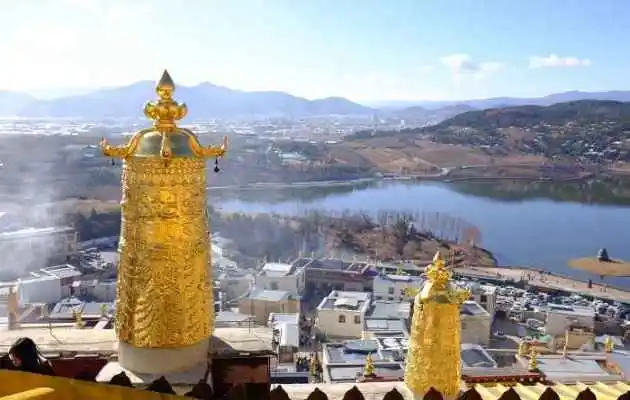
Prayer Wheel: Went to Guishan Park at 3:00 PM (10 minutes walk from the guesthouse). Saw the world’s largest prayer wheel (about 21 meters high, with a copper body covered in carved scriptures, gleaming gold in the sun). Seven or eight Tibetan aunties were pushing it. I joined them—it required 10 people working together. I held the right side of the cylinder, and the aunties chanted “One, two, push.” The copper cylinder slowly started to turn. The copper bells inside chimed loudly with the rotation, mixed with the sound of chanting. The scent of pine branches drifted in the wind. After turning it three times, we stopped. An auntie handed me a Hada (ceremonial scarf): “To pray for peace.” I clasped my hands together, learning from her, feeling settled inside as if ironed smooth.
Tibetan Meal Experience: Went to “Jingjing’s Mani Stone Tibetan Restaurant” at 6:00 PM (east side of Moonlight Square, with a pile of Mani stones carved with the Six-Syllable Mantra at the entrance). Boss Lady Yangjin, wearing a Tibetan robe, recommended three must-try items: Butter Tea (salty and fragrant, made by churning brick tea and yak butter; it’s an acquired taste, but the second sip was surprisingly milky), Yak Meat Hot Pot (bone-in yak meat chunks simmered for 2 hours; the meat was firm, not tough, served with potatoes and carrots, fragrant when dipped in chili powder), and Barley Cake (freshly baked, slightly sweet and chewy, tasted like a sweet whole-grain dessert when dipped in honey). A Tibetan girl at the same table said: “Their butter tea is homemade, and the yak meat is directly sourced from the ranch, not watered down.” The meal cost 80 yuan per person; I felt warm all over, even my fingertips were no longer cold.
Uncle Ciren saw me out, saying: “More aunties push the prayer wheel after 5:00 PM; they aren’t rushed and will teach you how to push. For Tibetan meals, don’t order ‘Tibetan Pig’ (expensive and greasy); the Yak Meat Hot Pot with Barley Cake is the most authentic. Yangjin’s place has been open for ten years; you won’t go wrong.”
Spent the day: Bus 68 yuan (Yutong window seat to see the Jinsha River), Carpool 30 yuan (Zhuoma’s sedan passed the primary school), Accommodation 180 yuan (fireplace room with lamb wool quilt), Dinner 80 yuan (Yangjin’s three Tibetan dishes), Total 358 yuan. The prayer wheel was free; the fireplace warmth and the Hada blessing were unexpected bonuses.
Tips: When pushing the Guishan Park prayer wheel, don’t use brute force (the aunties said, “Turn it with the momentum”). If you can’t get used to butter tea, don’t force yourself; Yangjin’s place offers sweet tea (with milk) as an alternative. Don’t try to dry wet clothes near the guesthouse fireplace (pine smoke is heavy and irritating to the eyes). Avoid scams: Don’t believe the “direct to Ancient City 50 yuan” touts outside the bus station (the 30 yuan carpool is regulated, Zhuoma has an operating license). Don’t order the “high-priced Tibetan medicinal wine” at Tibetan restaurants (80 yuan/small cup; better to drink butter tea).
Day 7: Shangri-La Pudacuo National Park, Shudu Lake Boardwalk Hike
At exactly 9:00 AM, I waited for the carpool near Moonlight Square in Dukezong Ancient City. Driver Danzeng drove an old Jeep (introduced by guesthouse owner Uncle Ciren the day before), saying, “Pudacuo is clear today; Shudu Lake reflection will be sharp.” 40 yuan/person. There were two other tourists from Guangdong in the car, and we talked about “walking slowly when hiking on the plateau.” After a bumpy 30-minute ride, we arrived at the Pudacuo entrance. We passed the edge of Napa Lake (lush green grassland in summer, golden yellow in autumn) and saw herders guiding yak herds across the river, their hooves splashing mud.
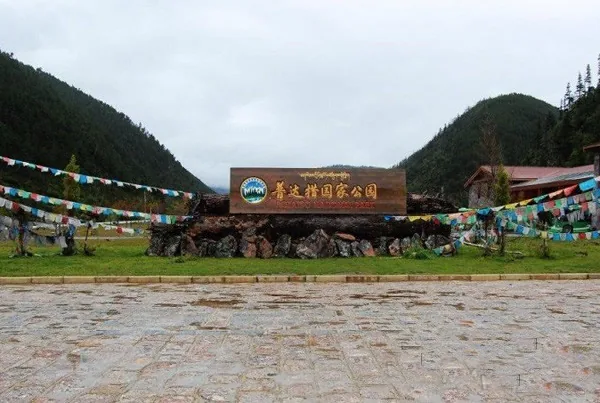
I bought the Entrance Ticket + Sightseeing Bus Package for 138 yuan/person (cash payment at the window; electronic payment can sometimes be slow). The ticket inspector, a Tibetan girl, reminded me, “The sightseeing bus only goes to the Shudu Lake entrance; the round-trip hike takes 1.5 hours. Don’t miss the last bus.” The sightseeing bus climbed the winding mountain road, from 3300m to 3600m altitude. Outside the window, the spruce forest thickened, and the air was cool and crisp with the scent of pine needles.
Shudu Lake Wooden Boardwalk Hike (3km round trip, 1.5 hours): Entered from the entrance; the boardwalk followed the lake and was stable underfoot. In the primeval forest, hanging lichens (like an old man’s white beard, covered in dew drops) were illuminated by the sun filtering through the branches, casting light spots. The wetland meadow had small yellow flowers in summer (dots of color) and was golden yellow in autumn (waves when the wind blew). The lake reflected the green mountains (remnants of Jade Dragon Snow Mountain faintly visible in the distance). When the water was calm, I could see cloud shadows drifting in the reflection. Midway through, a squirrel darted across the boardwalk (brown-yellow fur, fluffy tail), knocking down a few pine needles. I paused and didn’t chase it—remembering Uncle Ciren’s warning: “Don’t feed them snacks; they’ll become dependent on humans.”
Had lunch on a stone bench midway on the boardwalk, eating my own packed food: 2 slices of whole wheat bread (soft, not dry) + 1 Shuanghui ham sausage (ready-to-eat), 10 yuan total. I ate while watching the lake. An old couple next to me was using a camera to photograph birds (saying, “That’s a Black-necked Crane, a nationally protected animal”). I leaned over to look, but the bird flapped its wings and flew away, leaving a ripple.
Took the sightseeing bus out of the park punctually at 3:00 PM. Took Danzeng’s Jeep back to the Ancient City (40 yuan/person), arriving at the guesthouse in 30 minutes. Uncle Ciren was waiting by the fireplace: “You’re back? Butter tea is warm in the pot. You must be tired from the hike.” The room was the same copper fireplace room (180 yuan/night, with a lamb wool quilt for warmth), the pine branches in the fireplace were half-burnt, and blue smoke rose from the ashes.
Item
Cost (Per Person)
Details
Carpool Round Trip
40 yuan
Ancient City → Pudacuo (Danzeng’s Jeep, 30 minutes, passed Napa Lake viewing yak herds), same car for afternoon return
Entrance Ticket + Bus
138 yuan
Purchased with cash at Pudacuo gate (electronic payment sometimes slow). Bus goes to Shudu Lake entrance, last bus 3:30 PM
Lunch (Packed Food)
10 yuan
2 slices of whole wheat bread + 1 ham sausage (bought at the supermarket, eaten on a stone bench on the boardwalk, watching the lake and birds)
Accommodation
180 yuan
Tibetan guesthouse near Moonlight Square in Dukezong Ancient City (Uncle Ciren’s copper fireplace room, lamb wool quilt, butter tea warmed by the fireplace)
Total for the Day
368 yuan
Includes transportation, ticket, dining, accommodation. No extra hiking fee; squirrel observation was a free nature experience
Tips: Shudu Lake hike is best after 10:00 AM for the sun (the lake water is clear and blue). There is a simple restroom midway on the boardwalk (2 yuan fee, bring change). Bring a small garbage bag (don’t leave bread crumbs; the squirrels will come). Avoid scams: Don’t buy “high-priced oxygen bottles” at the scenic spot entrance (20 yuan down the mountain, 50 yuan here). Don’t sit in the last row of the sightseeing bus (it’s bumpy and can cause motion sickness).
Day 8: Shangri-La Songzanlin Monastery Visit, Napa Lake Loop Bird Watching
Around 9:00 AM, I waited for Bus 2 (2 yuan/person) at the Dukezong Ancient City North Gate bus stop. It was a dark green minibus. The driver, a Tibetan uncle wearing a baseball cap, saw me holding a camera and said, “Songzanlin Monastery is on the hilltop; walk slowly, it’s not tiring.” The 20-minute drive passed Jiefang Village Tibetan settlement (wooden roofs with prayer flags). I saw an old auntie drying highland barley in the courtyard; the golden grains were spread across the ground. I got off at the “Songzanlin Monastery Station,” looking up to see the red walls and golden roofs stacked up the slope, like a suspended small city. The scent of butter tea drifted in the wind.
I bought the 90 yuan entrance ticket (includes basic guided tour, paid by QR code at the window). Seeing the “Lama Guide Service” sign next to it (50 yuan/time), I waited for 5 minutes—Lama A-Wang, wearing a maroon robe with neatly trimmed nails, approached and said, “I’ll speak in Tibetan first, then explain in Mandarin.” He led me in from the Hall of Heavenly Kings, saying, “This monastery is the ‘Little Potala Palace,’ named ‘Guihua Temple’ by Emperor Kangxi in the Qing Dynasty.” We reached the Great Assembly Hall, where I saw the statue of Je Tsongkhapa (the gilded face was benevolent, holding a lotus, the monastic robe ‘s texture outlined with mineral pigments). A-Wang quietly reminded me, “Don’t step on the threshold (it’s the Buddha’s shoulder), don’t wear a hat when taking photos (disrespectful to the Buddha).” Seeing a tourist ahead wearing a baseball cap taking photos, he gestured gently for the person to remove it.
Guesthouse owner Uncle Ciren had told me last night: “Go to Songzanlin Monastery in the morning for good light. Choose Lama A-Wang for the guided tour; he knows Mandarin and is patient. Don’t buy ‘consecrated ornaments’ at the monastery entrance (expensive and authenticity is questionable); the monastery’s Dharma item circulation center has clearly marked prices.”
Songzanlin Monastery Visit: Walked along the central axis to the Je Tsongkhapa Main Hall (the brightest golden roof), viewing the murals about the “Gelug school lineage story” (pigments made from ground minerals, not fading for centuries). Ascended to the top floor of the Zhakang Hall (must remove shoes) to overlook Lamuyangcuo Lake (the small lake in front of the monastery, reflecting the monastery like a mirror). After finishing the tour, A-Wang gave me a small piece of cypress leaf: “Keep it in your bag; it calms the mind.”
Napa Lake Loop Bird Watching: Carpooled in the afternoon at 2:00 PM (with two Chengdu girls, private car 150 yuan/car, driver Zhala drove a pickup truck), looping the lake for 2 hours. Walking along the Yila Grassland section, I saw Black-necked Cranes in summer (black neck, white body, standing on one leg by the water) and Bar-headed Geese (gray back, white belly, flying in flocks). The grassland was golden yellow in autumn (the grass waves like a golden carpet), and the distant yak herds looked like scattered black pearls. Had a simple Tibetan meal at “Herder’s Home” on the loop road for lunch: Tsampa 20 yuan (roasted highland barley flour, mixed with butter tea and kneaded into a ball, slightly sweet and chewy), Yak Yogurt 15 yuan (thick like cream, with a layer of milk skin on top, sweet and sour with sprinkled white sugar). I ate outside the tent, the wind carrying the scent of grass.
Returned to the Ancient City at 5:00 PM and went to “Tibetan Baozi Shop” on Sifang Street for Yak Baozi (steamed buns) (10 yuan/cage, 6 pieces). Boss Lady Zhuoma said, “The filling is yak meat + onion, the dough is made with old starter.” The Baozi had a thin skin and large filling; the juice squirted out when bitten (careful of burns). The meat filling was firm, not tough. I paired it with a bowl of seaweed and egg drop soup (5 yuan) to cut the richness. When I returned to the guesthouse, Uncle Ciren was warming butter tea by the fireplace: “Tired from bird watching? Tomorrow, you’ll go to Xidang Village to prepare for the Yubeng trek.”
Item
Cost (Per Person)
Details
Songzanlin Monastery Bus
2 yuan
Bus 2 from Ancient City North Gate (dark green minibus, 20 minutes to the monastery, passed Jiefang Village Tibetan settlement viewing dried highland barley)
Songzanlin Monastery Ticket
90 yuan
Includes basic guided tour, QR code payment (electronic screen showed “Guihua Temple” history)
Lama Guided Tour
50 yuan
Lama A-Wang (maroon robe, Tibetan/Mandarin bilingual explanation, gave cypress leaf, reminded not to step on the threshold or wear a hat)
Napa Lake Carpool
75 yuan
Private car 150 yuan/car (pickup truck, shared with Chengdu girls, 2 hours loop, Yila Grassland bird watching)
“Tibetan Baozi Shop” on Sifang Street (10 yuan/cage of 6, thin skin, large filling, with 5 yuan seaweed soup)
Total for the Day
262 yuan
Includes transportation, ticket, guided tour, dining. Bird watching was a free nature experience, cypress leaf was a souvenir
Day 9: Shangri-La → Xidang Village (approx. 4-hour drive), Yubeng Trekking Preparation
At exactly 8:00 AM, I waited at the old scholar tree outside the East Gate of Dukezong Ancient City. Driver Old Yang arrived punctually in a black pickup truck—guesthouse owner Uncle Ciren had vouched for him the day before, saying, “He’s been driving the Yubeng route for ten years; he can find the mountain road with his eyes closed.” The 120 yuan/car was a private hire (Old Yang said it costs the same even when carpooling in peak season, saving time waiting for others). Tibetan folk songs played on the car radio; he turned it up: “Today we take National Highway 214; the wind is strong at Baima Snow Mountain Pass. Dress warmly.” The car climbed the mountain road along a tributary of the Jinsha River, the winding path made me slightly dizzy. Old Yang stopped at Helong Bridge, pointing to the stone monument at the bridgehead: “He Long led his troops across here; the Red Army slogans are still visible.” The altitude slowly climbed from 3300m to 3800m. The spruce forest outside the window thickened, and the prayer flags at the pass snapped in the wind. Old Yang pointed to the snowy peak visible through the clouds: “That’s the main peak of Baima Snow Mountain; you’re lucky to photograph it.” Four hours later, we arrived at Xidang Village at 1:00 PM sharp. The village was hidden in a fold of the valley, with wooden houses scattered on the slope. Cooking smoke mixed with the scent of pine branches drifted over. The wooden sign at the village entrance, “Yubeng Trekking Start Point,” was faded by the sun.
I stayed at the first guesthouse at the village entrance. Owner Uncle A-Rong was a Yubeng local. I had booked a week in advance by phone for 300 yuan/night (he said, “The electric blanket rooms are snapped up quickly in peak season; latecomers only get dorm beds”). My room was on the second floor, with an east-facing window overlooking the Yubeng River—the water flowed rapidly like a silver chain, splashing white foam on the rocks. The bed was covered with thick cotton quilts, and the electric blanket was toasty warm on setting two (the temperature difference between day and night is large on the mountain; it can drop to zero at night). Hiking poles and crampons were piled in the corner; Uncle A-Rong said, “Renting is 20 yuan a day; it’s cheaper to buy them down the mountain.” His skin was dark, he wore a worn-out felt hat, and his finger joints were as thick as old tree roots. He handed me butter tea with a smile: “Freshly brewed; drink some to ward off the chill. Tomorrow’s trek is tough.”
Uncle A-Rong’s Trekking Advice: He pointed to the Yubeng map on the wall, ticking off points with his fingers—bring hiking poles (buy 10 yuan/piece in Feilai Temple down the mountain, sold for 30 yuan on the mountain; don’t be a sucker), wear thick-soled anti-slip shoes (don’t wear sneakers; the gravel roads hurt your feet), and a jacket with a fleece lining (it’s below zero near Ice Lake). Pack chocolate and beef jerky (high-calorie; take a bite when you’re exhausted). He also showed me his phone photos: “There was a landslide last month during the rainy season; it blocked part of the road. Now you have to take a detour that adds an hour. Remember to check the weather forecast.”
At 6:00 PM, I had the guesthouse’s Yak Meat Stew with Potatoes for dinner. Uncle A-Rong brought the clay pot: “The yak meat is from the hind leg with tendon (stewed until tender). The potatoes are local (floury, soaked up the meat broth).” The meat chunks were firm, not tough, and the soup was thick enough to coat the spoon. Sprinkled with cilantro, the aroma made me squint. I ordered a bowl of rice (10 yuan) and ate a large portion. A hiker from Guangdong at the same table said he didn’t bring hiking poles last time, and his knees hurt for three days going downhill. “Uncle A-Rong knows best.”
Uncle A-Rong cleaned up the dishes, adding: “Start at 7:00 AM tomorrow. It’s a 6-hour trek from Xidang Village to Yubeng Upper Village. If you’re low on stamina, take the SUV (200 yuan/person) to Nanzong Pass, then walk for 3 hours. Don’t litter at the Pass (it’s a place where locals sacrifice to the mountain god). Don’t drink the Ice Lake water (it has minerals). Bring enough hot water.”
Spent the day: Carpool 120 yuan (Old Yang’s pickup passed Baima Snow Mountain Pass), Accommodation 300 yuan (electric blanket room overlooking Yubeng River), Hiking Pole 10 yuan (bought aluminum alloy type in Feilai Temple down the mountain), Dinner 50 yuan (Yak Meat Stew with Potatoes) + Rice 10 yuan, Total 490 yuan (including rice). Uncle A-Rong’s trekking experience was more valuable than any paid guide.
Tips: When buying hiking poles in Xidang Village, look for the “aluminum alloy type” (light and sturdy; A-Rong said, “Don’t buy the plastic head ones; they break easily”). Turn on the electric blanket half an hour before bed; the quilt will be warm when you get in. Talk to Uncle A-Rong more; he can tell you the real-time road conditions in Yubeng (e.g., which section was just repaired). Avoid scams: Don’t believe “Xidang Village direct to Yubeng SUV 150 yuan” (it rises to 200 yuan in peak season, and you might not get a seat). Don’t rent “high-priced crampons” at the guesthouse (they cost 30 yuan down the mountain, but here they charge 50 yuan).
Day 10: Xidang Village → Yubeng Upper Village (Trek approx. 6 hours), Forest and Stream Scenery En Route
At exactly 8:00 AM, the morning fog hadn’t fully lifted in Xidang Village. I squatted on the stone steps at the village entrance, munching on compressed biscuits, watching the Tibetans guiding their yak herds past—the copper bells on the yaks’ necks clanging, startling a few blue-tailed robins. Driver Zhaxi drove a dark green SUV (with prayer flags tied to the roof) and called out to me: “You have to cross three mountains to get to the Pass. Are you sure you don’t want to take the car?” I shook my hiking pole in my backpack, and he laughed: “Alright, you go first. I’ll wait for you at the Pass with butter tea.”
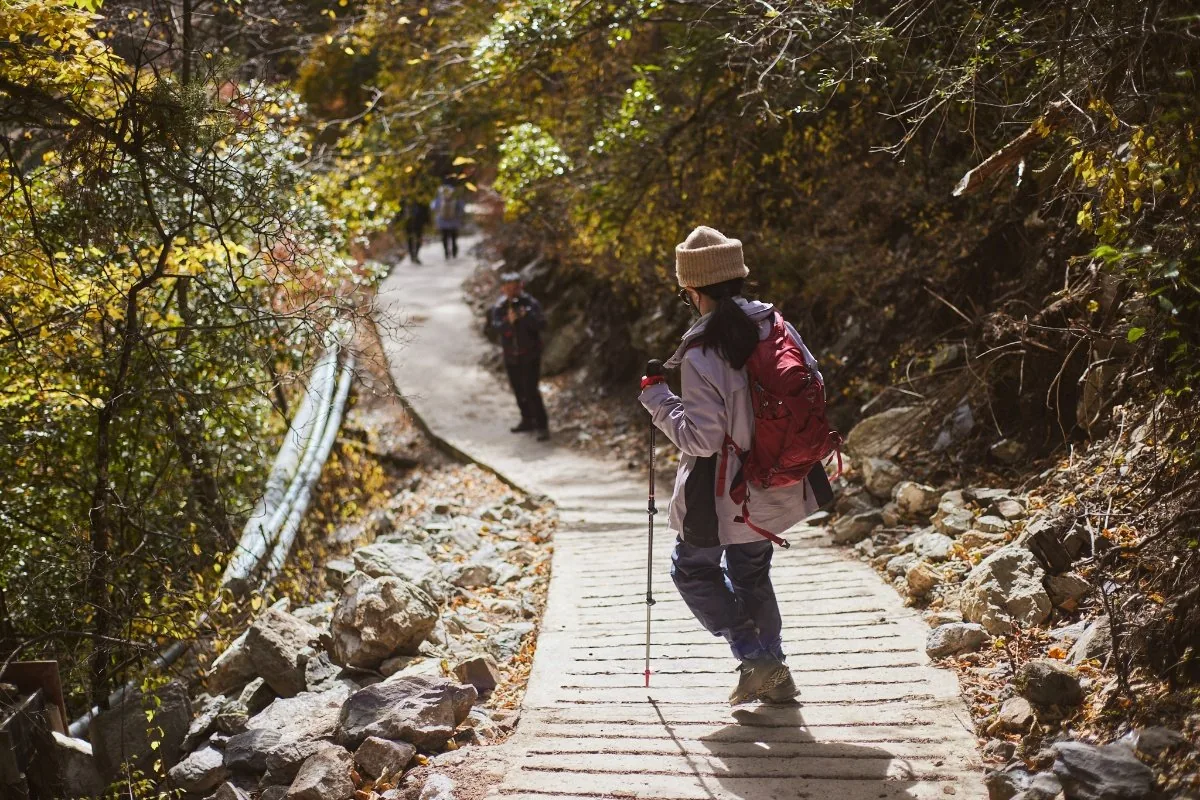
Trekking Prelude: Started from Xidang Hot Spring, walking south along the stream. The water was so clear I could see the pebbles at the bottom, and the moss was faintly green; stepping on it was slippery. The first two kilometers were gentle grassland, dotted with wildflowers. The sound of a mule team’s bells drifted from a distance. Turning a corner, the primeval forest loomed—spruce and fir branches were covered with hanging lichens, which swept against my face like an old man’s white beard when the wind blew. Zhaxi’s “primeval forest” was true to its name; roots were gnarled into bridges, creaking underfoot. The pine needles were thick; walking barefoot would be softer than carpet.
Nanzong Pass View: Arrived at Nanzong Pass (3700m altitude) at 1:00 PM. The array of prayer flags flapped loudly in the wind. The Tibetan-hung flags were brightly colored: blue, white, red, green, and yellow, layered one upon another. Mani stones carved with the Six-Syllable Mantra were piled high. I followed the local custom, turning clockwise three times. The sound of the scriptures mixed with the sighing of the pine trees was especially clear as the wind swept over the flags. Zhaxi handed me a thermos: “Drink something hot; the high altitude can make you drowsy.” The savory aroma of butter tea mixed with milk warmed me from my throat to my stomach.
Yubeng River Trek: After descending the Pass, I walked along the Yubeng River. The stream was sometimes wide, sometimes narrow. Wide sections formed emerald green pools where small fish darted between the rocks. Narrow sections had swift water, splashing white foam on the stones. The banks were covered with alpine rhododendrons. Although the blooming season was over, the dark green leaves glistened in the sun. The ground was softly covered with pine needles. I reached Xiaonong Base Camp, where the log-fenced camp still had the remains of old mountaineering tents, and a half-burnt chocolate wrapper was buried in the ashes of the stove. The restroom was a simple dry toilet; the wooden board was over a sheer drop, so I had to grip the iron chain when squatting.
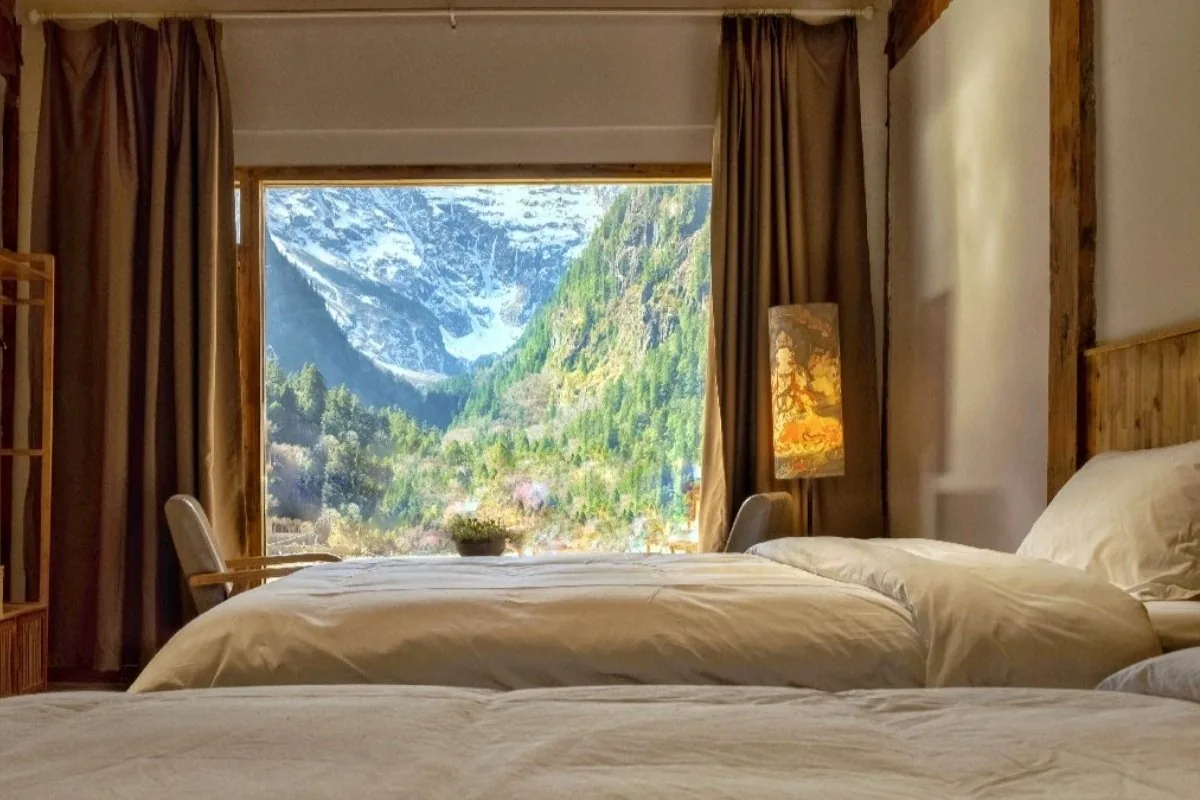
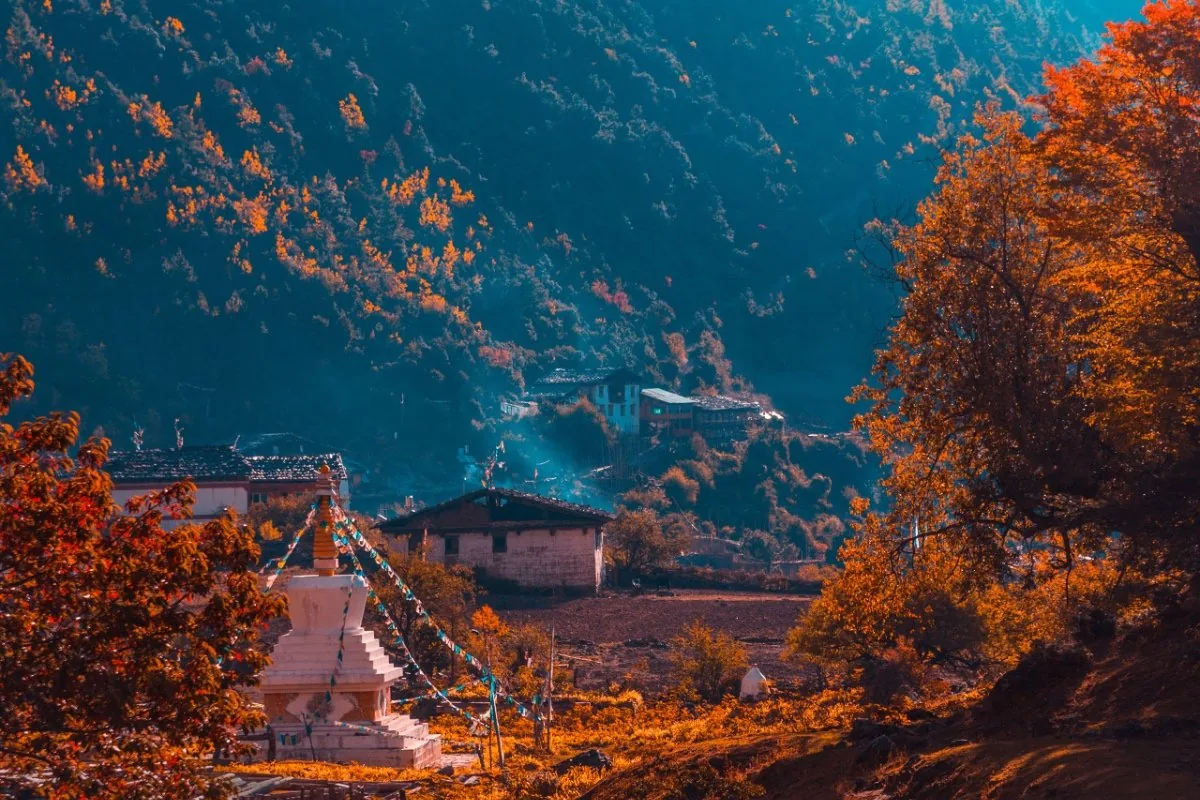
First Impressions of Yubeng Upper Village: Arrived at the village (3150m altitude) at 4:00 PM. The guesthouse was a Tibetan wooden building; the window frame on the second floor was carved with a lotus pattern. Opening the window, I could see the snow mountain. The owner, Pingcuo, was drying highland barley in the courtyard. Seeing me arrive out of breath, he tossed me a bowl of hot butter tea: “Drink this and get some sleep. I’ll take you to Ice Lake tomorrow morning.” The room had an electric blanket, a yak wool blanket on the bed, and the pillow was filled with dried mugwort, smelling of herbs.
Dinner and Night Chat: Had yak meat soup pot for dinner at the guesthouse restaurant. The broth was made from beef bones, a milky white with an oily sheen. The beef was thickly cut, the tendon parts chewy, served with wild highland vegetables (Chenopodium album, blanched and mixed with chili oil). Boss Lady Zhuoma brought barley cake: “Dip it in the soup for more flavor.” The cake was toasted until crispy, and I could see the air holes when I broke it open. After dinner, I chatted with the Beijing girl in my room. She said she fell the day before when it rained, and her leg was still bruised: “The Yubeng road looks flat, but it’s all gravel.”
Item
Details
Transportation Choice
SUV 200 yuan/person (Zhaxi driver, prayer flags for blessing on the roof, 20 minutes to cross the pass, saving 1 hour of hiking)
Trekking Gear
Hiking poles (rented for 10 yuan/piece at Xidang Village, aluminum alloy for anti-slip), jacket (for light mountain rain), thermos
Scenery En Route
Primeval forest lichens, Nanzong Pass prayer flag array, Yubeng River gravel beach, Xiaonong Base Camp remnants
Accommodation Experience
Yubeng Upper Village view guesthouse (Pingcuo’s place, electric blanket + yak wool blanket, snow mountain view from the window, 24-hour hot water)
Took Rhodiola capsules for 1 week in advance, drank water every half hour during the trek, avoided strenuous exercise
Day 11: Yubeng Upper Village → Ice Lake (Trek approx. 6 hours), Alpine Meadow and Glacier Remains
At exactly 7:00 AM, the wooden houses of Yubeng Upper Village were still shrouded in indigo morning fog. I pulled my fleece-lined jacket tight (the 5℃ wind on the mountain stung my face) and opened the door. Guesthouse owner Pingcuo was already lighting a fire in the courtyard: “The road to Ice Lake is slippery; keep a firm grip on your hiking pole.” He handed me a piece of chocolate and tucked it in my pocket: “Suck on it; you get hungry after just a few steps at high altitude.” I had a backpack packed with instant noodles + eggs (bought at the convenience store last night, noodles 5 yuan, eggs 10 yuan/2 pieces, total 15 yuan). I followed the Beijing girl from my room out of the village. The dew-covered flagstones made a “crunch” sound, and the tip of the distant snow mountain was just starting to show white.
The route first went through the alpine meadow. In the noon sun of summer, the small yellow flowers were fully open, their petals thin as paper, dotted across the green carpet. The wind made them ripple like waves. Getting closer, they smelled of a mix of grass and wild chrysanthemums. At 3600m altitude, we turned into the rhododendron forest. The peak blooming season in May was long past, leaving only glossy dark green leaves. Dry flower calyxes from last year hung from the branches, like small brown bells. Pine needles covered the ground, soft enough to walk barefoot on. Occasionally, a squirrel darted past, its tail knocking down a few leaves.
Arrived at Xiaonong Base Camp at 12:00 PM. Prayer flags flapped loudly in the wind outside the wooden hut, next to a pile of old mountaineering oxygen canisters (rusty). I found a flat stone to sit on, using my thermos to brew a Master Kong Braised Beef Instant Noodle (5 yuan). I cracked the soft-boiled egg (10 yuan/2 pieces, boiled for 8 minutes with a runny yolk) I brought. The warm soup mixed with the yolk’s fragrance warmed my fingertips. The base camp had a simple dry toilet (wooden board over a cliff; you had to grip the iron chain when squatting). A Tibetan vendor next to it sold yak jerky (50 yuan/bag; I didn’t buy it—Pingcuo said it was only 30 yuan down the mountain).
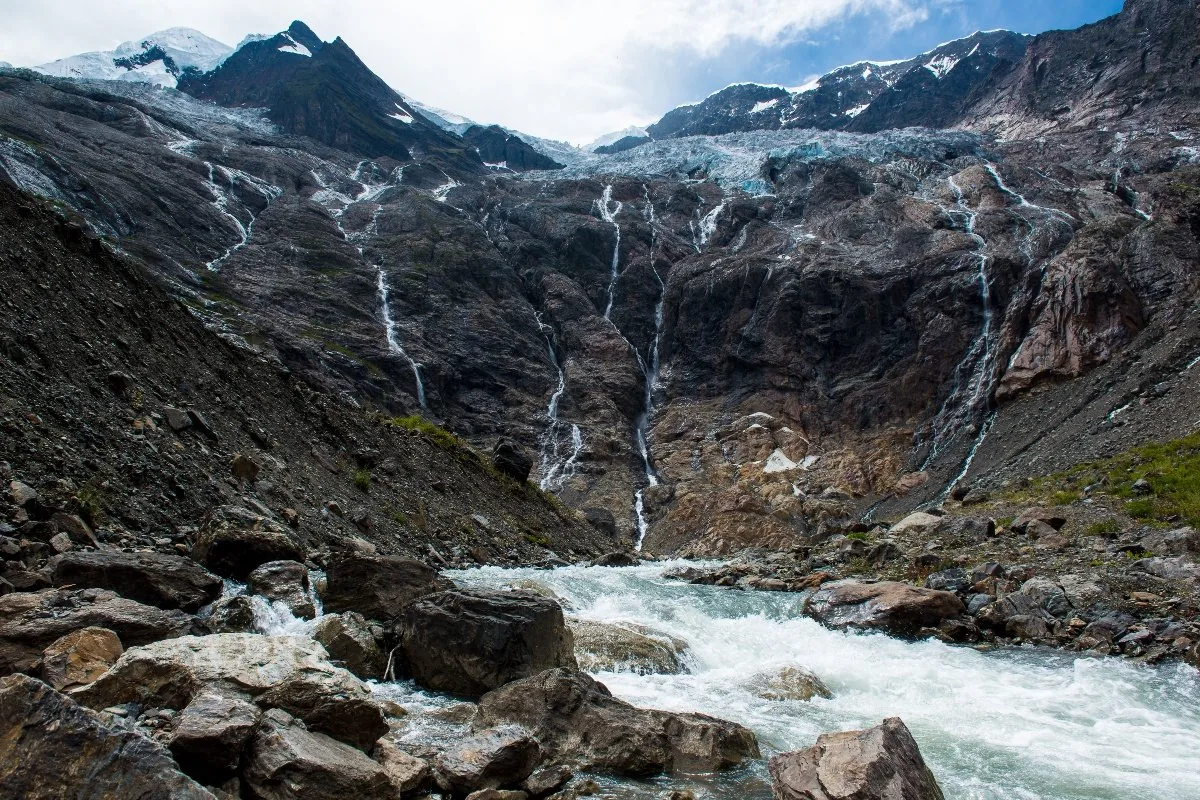
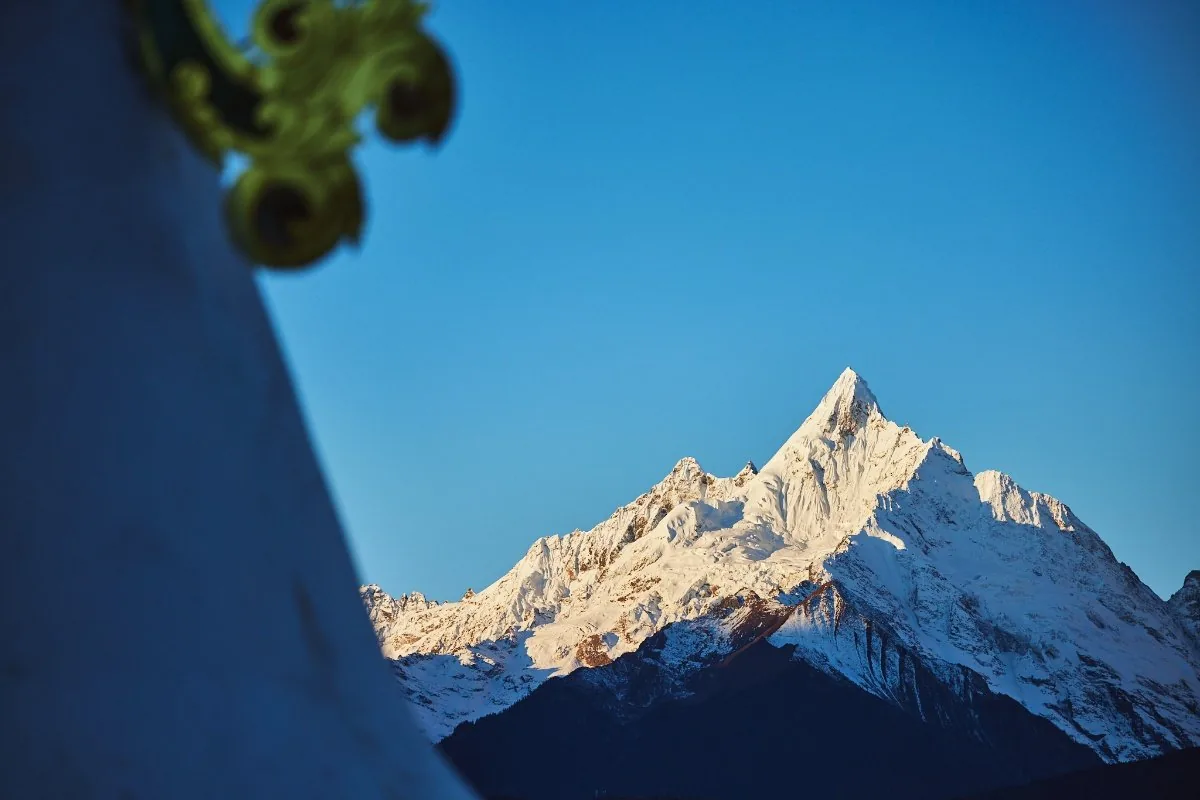
Continued walking at 2:00 PM. The road was steep, the gravel making the hiking pole hit the ground with a “thud.” Upon reaching Ice Lake, my eyes lit up—the lake water was deep blue, like melted sapphire. The reflection of the Meili Snow Mountain range was in the water, the curvature of the snowline exactly the same. The glacier remnants by the lake were grayish-black moraine rocks, their edges rounded as if licked by time. Clusters of purple gentian flowers (endemic to the plateau) grew in the crevices. I crouched by the lake to take a photo of the reflection. The wind skimmed the water, creating ripples, and the snow mountain shattered into starlight. Zooming in on the photo, I could even see the individual snowflakes.
Pingcuo knocked on my door in the evening, handing me a cup of butter tea: “Let me tell you the legend of Ice Lake—locals say there is a ‘Snow Mountain Guardian God‘ in the lake, a white snake protecting the glacier. Once, someone littered, and the road collapsed after the rain; they said the god was angry. Don’t edit your photos too much; the god likes honesty.”
Started the return journey punctually at 4:00 PM. My knees were a bit sore on the downhill path. By the time I reached the Upper Village, the setting sun had turned the snow mountain orange-red. Back at the guesthouse, I sorted through my photos. The reflection of Ice Lake, when zoomed in, showed every snowflake clearly. For dinner, I ate the leftover Barley Cake (5 yuan, toasted until crispy, you could see the air holes when broken) with butter tea (10 yuan). I chatted with Pingcuo until 9:00 PM. He said, “The Ice Lake glacier melts by one-third every year; go while you can,” and pointed to an old photo on the wall: “Ten years ago, there weren’t so many rocks by the lake; it was all ice.”
The total cost for the day was only 30 yuan: 15 yuan for my own packed food (instant noodles + eggs), 5 yuan for the barley cake dinner + 10 yuan for butter tea. The accommodation was the same view guesthouse (Pingcuo’s place, 350 yuan/night, electric blanket + yak wool blanket, snow mountain view from the window). The trek had no entrance fee; Ice Lake was free to visit.
Tips: Take photos of Ice Lake in the afternoon sun around 2:00 PM; the water will be clear blue with no glare in the reflection. Don’t pick the flowers in the meadow (locals say “the god will be unhappy if you pick them”). Take small steps when walking downhill to protect your knees. Avoid scams: Don’t buy high-priced yak jerky at Xiaonong Base Camp (it’s double the price of the 30 yuan/bag down the mountain). Ice Lake has no supply points; bring enough water (1.5L/person).
Day 12: Yubeng Lower Village → Xidang Village (Trek Return), End of Trip and Return Journey
At exactly 9:00 AM, the morning fog in Yubeng Upper Village had just lifted. I started from the Upper Village with an empty backpack, walking down the gentle flagstone path towards the Lower Village—this path was newly built last year, with a slope so gradual it felt like a stroll. Low-lying alpine willows grew by the road (their branches reaching the water). The lower reaches of the Yubeng River widened here; the current slowed down, and a few pine needles floated on the surface, occasionally a small fish flipped its tail, creating tiny ripples. Two hours later, at 11:00 AM, I arrived at Yubeng Lower Village. An old auntie was drying highland barley under the old scholar tree at the village entrance. Seeing me pass by, she offered me a piece of milk residue: “Take it easy going down; the road is slippery.”
Lower Village to Xidang Village Options: I asked guesthouse owner Pingcuo. He said the trek took 7 hours downhill (all gravel road, hard on the knees). The SUV option was divided into two segments—Lower Village → Ninong Canyon Exit (200 yuan/person, 1 hour, taking the new canyon road), then carpool back to Xidang Village (50 yuan/person, 20 minutes). Since I had a flight to catch, I chose the SUV. Driver Zhaxi drove a modified pickup truck (with Yubeng prayer flags tied to the roof). On the way, he talked about Ninong Canyon: “The waterfall is big in the rainy season. Now there’s less water, so you can see the footprints of blue sheep on the cliff face.” The car passed the Ninong Waterfall Viewing Platform (free), where the waterfall plunged from a hundred-meter cliff. The spray mist drifted onto the car window, cool and refreshing.
Zhaxi handed me a bottle of mineral water: “When you get to Xidang Village, don’t trust the ‘direct to Shangri-La 50 yuan’ touts. The official carpool is 120 yuan/car. I’ll contact Old Yang for you; he’s been driving the mountain road for eight years; he’s reliable.”
Arrived at Xidang Village at exactly 3:00 PM. Old Yang’s white SUV was waiting at the village entrance (carpool 120 yuan/car, shared with two Shenzhen tourists). The car took National Highway 214 back to Shangri-La. Over the four-hour journey, we passed Baima Snow Mountain Pass (4292m altitude, we stopped to photograph the snow-capped peaks and cloud sea) and saw herders guiding yak herds across the river (their hooves splashing mud). Arrived at Shangri-La Bus Station at 7:30 PM. I headed straight for the airport—my flight to Kunming was at 8:30 PM that evening (MU5832, 800 yuan ticket including tax, bought a discounted ticket a week in advance). I took the airport bus (20 yuan) to the city center, then a taxi back to the hotel (50 yuan). I was packing my luggage when it was nearly midnight.
Total Cost Reference (12 days, single person) noted in the table, all based on actual tickets and transfer records:
Item
Cost (Yuan)
Details
Transportation
2500
Incl. Kunming-Dali HSR 145 + Dali-Lijiang Train 34 + Lijiang-Shangri-La Bus 68 + Shangri-La-Xidang Carpool 120 + Xidang-Yubeng SUV 200 + Yubeng-Xidang SUV 250 (incl. Ninong section) + Xidang-Shangri-La Carpool 120 + Shangri-La-Kunming Flight 800 + City Taxis/Bus 200
My final advice, learned the hard way: Don’t rush the Yubeng trek (I saw a young man who ran too fast to take sunrise photos and fell into the stream, his knee swollen for three days). Drink plenty of hot water on the plateau (I got altitude sickness at Jade Dragon Snow Mountain, only recovered after downing two cups of hot ginger tea). Respect Tibetan customs—do not randomly photograph prayer flags or Mani stones (I saw a tourist being gently stopped by an auntie at Songzanlin Monastery from photographing prayer flags, only later realizing they were “letters hung for the gods”).
Lying in the Kunming hotel bed that night, scrolling through the Ice Lake photos, I suddenly understood that these 12 days were not about ticking off sights; they were about immersing myself in the mountains and waters—the taste of the wind, the laughter of the Tibetan people, the rhythm of my heart during the trek—more authentic than any guide.
Inside Dukezong Ancient Town | Room tip: Convenient for getting around, but vehicles cannot enter, so confirm with the guesthouse whether they carry luggage | Nearby add-ons: Great Buddha Temple, prayer wheel, Guishan Park, Moonlight Square[src]
Along Napahai | Room tip: Good views and quiet, but far from the city | Nearby add-ons: Napahai Yila Grassland, Shika Snow Mountain[src]
Typical Climate & Packing (Past Years)
January: -7 °C–9 °C °C, [Travel climate reference]
I will not arrange official attractions on the first day. After arriving in Xinjiang, it is more important to sort out your accommodation, vehicles, luggage…
I will not arrange scenic spots on the first day. The focus is to arrive in Urumqi, stay, eat, buy supplies, and confirm departure information for the next…
I won’t arrange distant spots on the first day. I will mainly arrive in Urumqi, check in, eat, buy supplies, and prepare things for the trip to Tianshan Tia…
The three cableways on Cangshan Mountain are not different ticket stalls on the same line, but go up the mountain from different entrances to different area…