



Chartered car travel in Yunnan is generally reliable, but it is essential to choose a legitimate platform and pay close attention to contract details. General costs range from approximately 500 to 900 yuan/day (including the driver), reaching up to 1200 yuan during peak seasons. It is recommended to check driver ratings (≥4.8) and years of experience (3 years or more). Routes should be communicated in advance; for example, a standard Dali-Lijiang-Shangri-La trip takes 3-5 days. Be sure to sign a contract, clarify fuel/toll fees and cancellation rules to avoid temporary price hikes and disputes.
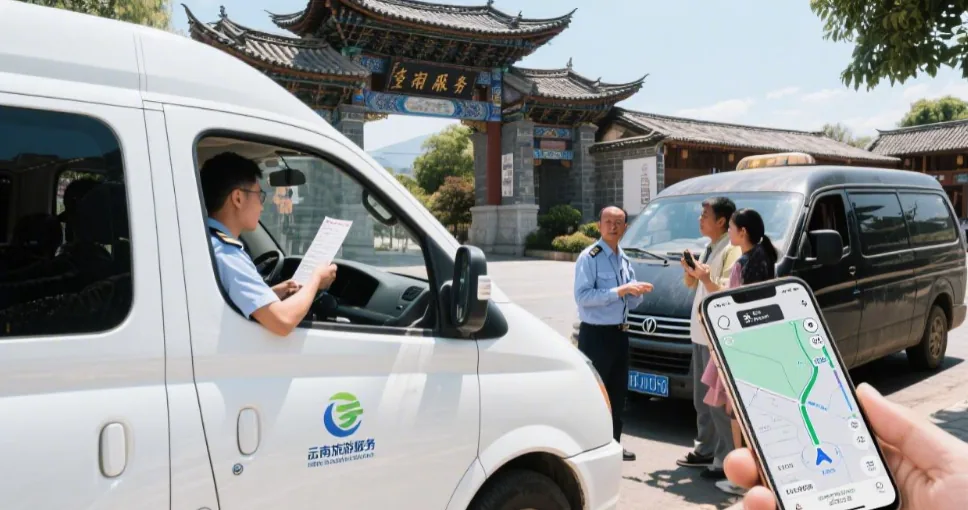
Costs and Driver Selection
The average daily cost for a chartered car in Yunnan ranges from 400 to 1500 yuan. A 5-seater sedan starts at 400 yuan in the off-season, while a 9-seater business van can exceed 1000 yuan per day in the peak season. The fare includes vehicle usage, fuel, tolls, and parking fees. Passengers are required to pay a daily meal allowance of 50 to 100 yuan to the driver. For cross-city overnight routes, passengers must cover the driver’s accommodation at 150 to 200 yuan per night. One-way empty return fees apply for different drop-off locations. When choosing a driver, verify their commercial operation license and at least 5 years of driving experience. Funds for orders on large OTA platforms are supervised by the platform. Private orders from unlicensed individuals offer no third-party guarantee.
Vehicle Pricing Fluctuations
For chartered cars from Kunming to Dali and Lijiang, fees are calculated daily, and the difference between off-season and peak season can be double. In November, renting a Toyota Corolla for local travel in Dali costs only 350 to 400 yuan a day. During the Spring Festival, even an old car with 80,000 kilometers on it cannot be chartered for less than 600 yuan a day.
Sedans have low chassis clearance and are only suitable for highways between Kunming and Dali. For a family of three with two 28-inch suitcases, the Corolla’s trunk simply won’t fit them. Switching to a more spacious Haval H6 or Honda CR-V costs an extra 100 yuan per day in the off-season, ranging between 450 and 550 yuan.
During the summer vacation in July and August to see the grasslands in Shangri-La, SUV prices will rise to around 800 yuan per day. Northwest Yunnan has high altitudes and many mountain roads; an SUV with a displacement of 2.0T or higher makes climbing effortless. On rainy days when traveling on the rough roads of Dulongjiang, a chassis higher by a dozen centimeters reduces the risk of hitting rocks and paying for repairs.
If more than 4 people travel together, a 5-seater car is considered overloaded by traffic regulations; being caught by police at the Lijiang toll station results in a 6-point deduction and a 200-yuan fine. Chartering a Buick GL8 or Maxus G10 for 6 people costs between 700 and 800 yuan a day in the off-season. With all three rows occupied, the average daily cost per person is about 130 yuan.
During the National Day holiday, the daily rent for a 7-seater business van can soar to 1200 to 1500 yuan. An older Buick GL8 with 5 years of service is about 50 yuan cheaper. If you specifically request a brand-new GAC Trumpchi M8 registered within six months, you must add at least 150 yuan for vehicle depreciation.
9-seater vehicles are usually Toyota Hiace or Ford Transit. For 8 adults carrying a lot of photography equipment to shoot Meili Snow Mountain, a 9-seater costs 900 to 1000 yuan a day. The rear of the cabin can hold 6 24-inch suitcases. Driving on the winding roads of Deqin on snowy days, the weight of the vehicle keeps it steady on black ice and prevents skidding.
The table below lists the base prices of several chartered car models in Yunnan during different months, calculated based on the flat Kunming-Dali round-trip route. For high-altitude or poor road condition areas, the unit price will fluctuate upward.
| Seats | Common Representative Models | Off-season (Nov-Mar) | Peak Season (Jul-Aug) | Extreme Peak (Nat’l Day/Spring Fest) |
|---|---|---|---|---|
| 5-seater | VW Lavida / Toyota Levin | 350-400 yuan/day | 500-600 yuan/day | 600-700 yuan/day |
| 5-seater | Haval H6 / Tank 300 | 450-550 yuan/day | 700-800 yuan/day | 800-1000 yuan/day |
| 7-seater | Maxus G10 / Buick GL8 | 700-800 yuan/day | 1000-1200 yuan/day | 1200-1500 yuan/day |
| 9-seater | Ford Transit / Toyota Hiace | 800-1000 yuan/day | 1200-1400 yuan/day | 1500-1800 yuan/day |
The prices in the table are fixed figures based on driving 300 kilometers per day. If you charter a Tank 300 to drive the rough roads of Bingchacha, the daily wear and tear is high, and the starting price begins at 800 yuan. Rough roads ruin tires; replacing an All-Terrain (AT) tire costs 800 yuan, and the driver will factor this into the daily rental fee.
If traveling with an infant requires a safety seat, renting a used one from the car company costs an extra 30 to 50 yuan per day. If you are afraid of altitude sickness at Jade Dragon Snow Mountain, asking the driver to prepare a 10L medical-grade large steel oxygen cylinder in the trunk costs about 120 yuan for the rental and refilling fee.
Young people taking two snowboards to ski at Daheicashan in Huize will need a luggage box installed on top of a 7-seater business van. A Buick GL8 with a roof box is 80 yuan more expensive per day than a standard one. The extra roof box increases wind resistance on the highway, raising fuel consumption by 1.5 to 2 liters per 100 kilometers, with the fuel cost included in the price hike.
For the southern Yunnan line to Xishuangbanna, where temperatures exceed 30 degrees, the air conditioning is on every day. An 8-year-old Maxus G10 might feel sluggish when the AC is on, even with the pedal to the floor. Those in the know would rather spend an extra 100 yuan a day to specify a joint-venture business van with a service life of less than 3 years and a 2.5L displacement.
License plate numbers can reveal price secrets. A car with a “Yun A” Kunming plate going to Lijiang is not as familiar with local speed cameras as a “Yun P” Lijiang local car. During months when unlicensed commercial vehicles are strictly cracked down on, Kunming cars wandering around Lijiang Ancient City are easily stopped by police for half-hour document checks.
RV chartering is a niche high-end consumption in Yunnan. A Type C Maxus RV that sleeps 4 people, including a driver, costs 1200 to 1500 yuan a day in the off-season. Staying overnight at a campsite by Lugu Lake to connect to electricity and water requires an extra campsite fee of 150 to 200 yuan per night.
For special-offer cars priced 200 yuan lower than the market rate, check the tire tread before boarding. If the four tires are worn down to the steel wire and haven’t been replaced, the car owner is cutting prices by saving on the 300-yuan-per-tire cost. Driving at 70 km/h through water puddles in the Nujiang Canyon during the rainy season, a single step on the brake could cause the car to slide over ten meters.
Verification of Driver Qualifications
When renting a car in Yunnan, checking the driver’s documents before boarding can save a lot of trouble. If you find a private car owner online, they might only charge 300 yuan a day, which is 150 yuan lower than the normal market price. However, you won’t find the green tourist charter license plate issued by the transport department on their private car.
If you get rear-ended on the Dali-Lijiang Highway, the insurance surveyor will take one look and define it as illegal operation; tens of thousands of yuan in repair fees and medical expenses won’t be compensated at all. Passengers would have to go to the police station for half a day of statements, the car would be towed away, and your 3-day itinerary would be ruined.
It is necessary to spend two minutes checking three original documents upon meeting. If you rent a 9-seater Toyota Hiace for a family trip, the driver’s red license must clearly state the qualified vehicle type as B1. Bringing a C1 license to drive is considered driving without a proper license.
- The driver’s license issuance date must be at least 5 years ago
- A valid road transport practitioner qualification certificate should be viewable on their phone
- The blue vehicle license must have the word “Commercial” printed on it
The winding mountain roads in Yunnan are no joke; driving from Kunming to Shangri-La covers 620 kilometers. The car climbs from a basin at 1900 meters to a plateau of over 3300 meters. From July to August, it rains every day, and the G214 National Highway in Diqing Prefecture is often blocked by landslides and falling rocks.
From December to February, on the shady sides of Baima Snow Mountain Pass that never see the sun, the ground is often covered in 5 to 10 centimeters of black ice. A novice who hasn’t driven in the mountains for at least 3 winters will burn out the brake pads within minutes on a long downhill stretch of over ten kilometers.
The most effective way to check a driver’s background is to scroll through their WeChat Moments. Look back 6 months for real videos and locations of them taking guests to Meili Snow Mountain or Lugu Lake. If traveling with a child aged three or four, watch the driver open the trunk to count emergency items before departure.
- Two 10L large portable medical oxygen cylinders
- A steel toolbox containing beef tendon anti-skid chains for that specific tire size
- A first-aid kit containing vomit bags for altitude sickness and bandages
Many people don’t care to check the insurance policy. Ordinary private cars only buy the cheapest seat insurance, compensating at most 10,000 to 20,000 yuan per person. On Yunnan’s mountain roads with cliffs dropping two or three hundred meters, that amount wouldn’t even cover the first day’s emergency surgery fees.
Commercial vehicles registered under regular fleets have commercial third-party liability insurance starting at 2 million yuan. The insurance limit for each seat on the vehicle is set between 500,000 and 1,000,000 yuan. Before paying, ask the driver to send this year’s electronic insurance policy and verify every character against the license plate and the person’s name on your phone.
When booking on a large platform, the system will mandate a travel accident insurance of 20 to 50 yuan. If something happens on the road, it can pay up to 300,000 yuan, and local hospital medical bills can be reimbursed for 30,000 to 50,000 yuan. If you transfer money to a stranger on WeChat, you won’t even find a phone number for claims if something goes wrong.
If trapped by heavy snow in Deqin County in winter, an experienced driver can call a repair shop owner in the next town and have a rugged SUV pick you up within 2 hours, and even arrange a heated room for the night.
Around Lashi Lake in Lijiang or Shuanglang in Dali, some drivers might tell you the road ahead is blocked by police and take you to a friend’s silver shop to buy things. The best way to prevent this is to call the driver and chat for five minutes before paying the deposit.
Intentionally ask him how to drive to a quiet, ticket-free village near Shaxi Ancient Town. If he keeps complaining on the phone that the road is too bad and there is no parking, and tries to persuade you to go to a “fake” ancient city 20 kilometers away with a 150-yuan ticket, hang up immediately and find someone else.
The riding experience in the first two days can help you see if the person is reliable. After boarding at 8:00 AM, you can sit in the back and quietly observe their driving habits to get an idea.
- Driving for 4 consecutive hours without stopping at a service area for a 20-minute break
- Driving at 110 km/h on a highway with a 100 km/h limit while constantly changing lanes to overtake
- Refusing to switch high beams to low beams when meeting an oncoming truck at night
- Using one hand to send voice messages on a winding mountain road where the oncoming lane is not visible
If you encounter a driver with any of these habits, take a 15-second video clip as evidence. Send this video to platform customer service and request a free vehicle and driver replacement when the car reaches the next prefecture-level city.
Hidden Cost Allocation
Many people think the negotiated 600-yuan daily rent for a chartered car will cover everything to the destination. However, after traveling less than 100 kilometers and stopping for lunch at the Chuxiong service area, a few extra items on the bill often lead to arguments.
- For lunch and dinner every day, it is industry practice for the passenger to pay for the driver’s meals
- If taking the driver to a restaurant, expect to pay an additional 50 to 80 yuan in meal fees based on the number of people
- If the driver doesn’t eat with you, you need to provide a daily cash or WeChat subsidy of 50 to 100 yuan for meals
For a 5-day, 4-night itinerary to Shangri-La, if the car stops at Feilai Temple in Deqin County overnight, the driver needs a place to sleep. If you book a 400-yuan-a-night viewing inn, you don’t need to book such an expensive room for him, but an accommodation subsidy is unavoidable.
The market rate for accommodation subsidies is between 150 and 200 yuan per day. If purchasing an all-inclusive package online, this fee will be settled in advance on the payment page. If renting privately, agree on whether to pay a lump sum or daily installments before boarding on the first day.
Unless the route starts and ends at the same place, a troublesome one-way empty return fee will appear. If you travel from Kunming to Dali and then take a high-speed train, the Buick GL8 has to drive back 350 kilometers to Kunming alone.
The highway toll for an empty car back is about 210 yuan. Adding the 300-plus yuan for fuel burned by a large-displacement business van over 350 kilometers, the total bill of about 500 yuan will be added to your final balance before you get off.
- From Dali back to Kunming via the Hangrui Highway, the empty return fee starts at 500 yuan
- From Lijiang back to Kunming via the Dali-Lijiang and Hangrui Highways, the distance increases to 500 kilometers, and the fee is 800 yuan
- From Xishuangbanna back to Kunming via the Kunmo Highway is 540 kilometers, and the empty return fee is over 1000 yuan
During the rainy season on the G219 National Highway in Nujiang Prefecture, a car driving on muddy roads all day will be covered in yellow mud. While standard dust from highways is the driver’s responsibility, if a passenger gets altitude sickness and vomits on the leather seats, you must pay for the cleaning.
Cleaning a leather seat at a professional car wash costs at least 100 to 150 yuan. At the parking lots of Jade Dragon Snow Mountain or Pudacuo National Park, parking fees range from 20 to 50 yuan and must be paid by the passenger.
If the daily driving hours and mileage aren’t strictly defined before departure, trouble will surely arise after 8:00 PM. According to Yunnan’s chartering rules, normal working hours are limited to 10 hours per day, and the driving mileage is capped at 300 kilometers.
If you start from Dali Ancient City at 9:00 AM and insist on going to Weishan Ancient Town 150 kilometers away for the night view, returning at 11:00 PM, the extra 4 hours will incur an overtime fee of 200 yuan at a rate of 50 yuan per hour.
Mileage overages are even more expensive. If you drive 400 kilometers in a day, the extra 100 kilometers are charged at 3 yuan/km for a 5-seater and 5 yuan/km for a 9-seater, potentially adding a 300 to 500 yuan difference to the daily cost.
Never sign a one-page handwritten agreement unless it explicitly states “Fuel and Tolls Included”. A few unscrupulous fleets use a low price of 300 yuan a day to get you in the car, then pretend to be ignorant at the highway toll station and ask you to pay.
The one-way toll from Kunming to Xishuangbanna is 380 yuan; a round trip with unclear toll responsibilities can cost you 760 yuan. If you find you’ve been scammed and check the handwritten slip, it often lacks an official seal, making it impossible to find the company to complain to at the Industrial and Commercial Bureau.
In your daily itinerary, if you go to the silver or jade shops recommended by the driver, the parking fee and the driver’s meal for that day are usually waived regardless of whether you buy anything. The shop owner will privately give the driver a “headcount fee” of 30 to 50 yuan.
If you insist on a “pure play” route without visiting any shopping stores, all expenses for food, accommodation, and travel must be calculated clearly. Send a checklist of where to go, when to start and return, and which miscellaneous fees are included via WeChat in advance, and have the driver reply with “Agreed.”
Taking the old road to Lugu Lake via Ninglang involves a 50-kilometer gravel section. According to custom, the 50-yuan labor fee for changing a flat tire and the 80-yuan repair shop fee are the driver’s responsibility. Some novices might get angry on the road and force the passengers to pay the 130 yuan.
When driving towards Mangkang on the Yunnan-Tibet line, refilling an empty medical oxygen cylinder at a clinic along the way costs 80 to 100 yuan. This expense is considered a personal consumable and is not reimbursed by the charter fee.
Security deposits for pets are often overlooked. Bringing a Corgi into a Buick business van may require a cleaning deposit of 300 to 500 yuan. At the end of the trip, if a single tuft of dog hair is left in the cabin, the 300-yuan deposit will not be refunded.
On a 7-day loop, if you bring the car to Dukezong Ancient Town in Shangri-La and find that driving inside is restricted, parking at a private lot outside costs 60 to 80 yuan per night, which is added to the passenger’s bill.
Route Planning
The safe daily driving limit for chartered cars in Yunnan is 250 to 300 kilometers. Dali to Lijiang is 180 kilometers (2.5 hours); Lijiang to Shangri-La is 170 kilometers on a national highway with speed limits (4 hours). Long-distance cross-region driving (Lijiang to Xishuangbanna is 850 kilometers, with 420 yuan in one-way tolls) will incur a daily empty return fee of 200 to 300 yuan. The number of attractions visited in a single day should be limited to 2. National regulations state a driver’s total daily driving and service time cannot exceed 10 hours. For long-distance moves between prefectures, a segmented travel mode using high-speed rail combined with local chartered cars is more reasonable.
Daily Driving Time
Road conditions in Yunnan are all in the mountains; habits from flatland driving do not apply. The 330-kilometer Hangrui Highway from Kunming to Dali takes 4 hours for a sedan. From Lijiang to Lugu Lake, the 200-kilometer S307 provincial road involves constant mountain crossing, taking nearly 5 hours one way. If you plan your itinerary based only on mileage, you’ll spend all day in the car.
Distances on the route map must be converted to actual local speeds. Even with good highway conditions, speed limits drop to 80 km/h or 60 km/h on long downhills and tunnel groups. On the G214 National Highway to Shangri-La and Meili Snow Mountain, there are many large trucks on the two-lane road. Overtaking is difficult, and the average speed stays around 40 to 50 km/h.
- Hangrui Highway: Kunming to Dali, 330 km, 80 km/h limit in tunnels, approx. 4.5 hours.
- Dali-Lijiang Highway: Dali to Lijiang, 180 km, four lanes, approx. 2.5 hours.
- G214 National Highway: Lijiang to Shangri-La, 170 km, high-altitude winding road, approx. 4 hours.
- S307 Provincial Road: Lijiang to Lugu Lake, 200 km, dense curves, approx. 4.5 to 5 hours.
The standard daily service limit for the charter industry is 10 hours. These 10 hours include driving, passengers sightseeing, meals, and rest stops. A 7-seater van picking up guests at 9:00 AM should end the day by 7:00 PM. Exceeding the agreed service time requires an overtime fee of 50 to 100 yuan per hour according to industry custom.
Driving on high-altitude mountain roads is very physically demanding for drivers. Traffic laws strictly require a 20-minute rest after 4 hours of continuous driving. Blind spots are large on Yunnan’s mountain roads, requiring high concentration. Keeping the daily distance between 200 and 300 kilometers and driving time around 4 hours ensures the driver can guarantee safety.
Only when daily driving time is under 4 hours does the travel experience reach the standard. Scenery in Yunnan is all along the road; you’ll want to stop at scenic viewpoints. The 60-kilometer Erhai Lake ring road has multiple stops like Shuanglang and Little Putuo; driving and stopping through this short section takes a full 3 hours.
- Photography at Viewpoints: Set aside 30 to 40 minutes daily for spots like the Jinsha River Big Bend.
- Restroom Stops: Based on a stop every 1.5 hours, add an extra 40 minutes daily.
- Meals Along the Way: Lunch, from stopping and ordering to finishing, usually takes 1.5 hours.
Special high-altitude climates affect driving efficiency year-round. From November to March, the Baima Snow Mountain Pass in the Diqing Tibetan area (4292m) often has black ice. In icy sections, vehicles with anti-skid chains can only crawl at 20 km/h. A journey originally planned for 3 hours taking 5 hours is common in snowy weather.
July and August are the rainy season in Yunnan, with western and southern Yunnan receiving over 85% of annual rainfall. Roads in Nujiang and Dulongjiang follow mountains and rivers and are often blocked by landslides. For non-mainstream routes, waiting for road repairs or taking detours can easily add dozens of kilometers and 2 hours of driving.
The drive from Dali to Tengchong is about 320 kilometers, passing through the long downhill section in Baoshan. This downhill stretch lasts for dozens of kilometers and is used by heavy trucks year-round. Trucks spray water to cool their brake pads, making the asphalt road very slippery. Experienced local drivers with over 10 years of experience will proactively reduce speed to below 70 km/h.
Passengers’ physical endurance limits daily driving mileage. Winding mountain roads with continuous sharp turns plus altitudes above 3000 meters can cause altitude sickness or motion sickness even in those who usually don’t get car sick. The “Eighteen Bends” on the road from Lijiang to Lugu Lake consists of continuous S-curves over ten kilometers. Sitting in a car for more than 5 hours is exhausting for most people.
- 9:00 – 11:30: Depart in the morning, finish the first 120 km, and arrive at a lunch rest area.
- 11:30 – 13:30: Arrange lunch and visit a small nearby attraction for 1 hour to stretch.
- 13:30 – 15:30: Finish the afternoon 80 km section and arrive at the accommodation or main attraction.
- 15:30 – 18:00: Sightsee at the main attraction and arrange dinner nearby.
Congestion on township roads and at scenic area shuttle points can be unexpected. Jade Dragon Snow Mountain has a daily limit of 10,000 people. Entering the mountain in peak season, queuing at toll gates and shuttle centers can take over 40 minutes. Waiting time at popular attractions counts towards the driver’s 10-hour service period.
Cross-Prefecture Empty Return Costs
If you rent a car in Kunming and drive it to Xishuangbanna, the distance is over 540 kilometers. After the guests get off, the driver has to drive the empty car back to Kunming. The fuel, tolls, and the driver’s daily wage for these 540 kilometers are all charged to the passenger.
Taking a mainstream 7-seater Buick GL8 as an example, the combined fuel consumption is about 10 liters per 100 kilometers. With many mountain highways in Yunnan, 540 kilometers will consume about 55 liters of 95-octane gasoline. At current prices of about 8.5 yuan per liter, the one-way fuel cost is 460 yuan.
The highway toll from Kunming to Jinghong is about 0.5 to 0.6 yuan per kilometer. The one-way toll for 540 kilometers is about 280 yuan. Because of many trucks and complex road conditions, it takes at least 7 to 8 hours to drive back, so the 200-yuan daily service fee is paid as usual.
If the car is returned in Xishuangbanna in the afternoon, the driver cannot make it back to Kunming the same day. He must stay at a local budget hotel. The guest must pay an extra 150 yuan for the overnight accommodation subsidy plus some meal money.
For a 9-seater Ford Transit, the math changes. The fuel consumption on mountain roads is about 12 liters of diesel per 100 kilometers. Diesel is 7.5 yuan per liter, so 540 kilometers burns nearly 450 yuan in fuel. Highway tolls for a 9-seater are significantly higher than for a 7-seater, nearly doubling the cost.
| Vehicle Type | Real Fuel Consumption (L/100km) | 500km Fuel Cost | 500km Highway Toll | Est. Total One-Way Empty Return |
|---|---|---|---|---|
| 5-seater SUV | 8L (92 Gasoline) | 320 yuan | 250 yuan | approx. 920 yuan |
| 7-seater Buick GL8 | 10L (95 Gasoline) | 425 yuan | 250 yuan | approx. 1025 yuan |
| 9-seater Ford Transit | 12L (0 Diesel) | 450 yuan | 400 yuan | approx. 1200 yuan |
The longer the route, the higher the bill. Traveling from Lijiang all the way to Xishuangbanna, the highway mileage approaches 850 kilometers. The driver returns from Banna to Lijiang alone, spending 12 hours on the road.
The toll for 850 kilometers soars to 450 yuan. 85 liters of 95-octane gasoline will be burned, with fuel costs exceeding 720 yuan. Plus two days of driver wages (400 yuan) and one night of accommodation (150 yuan), this empty return costs the guest 1720 yuan.
- Toll Expenses: Estimated at 0.55 yuan per kilometer; cross-prefecture trips are often several hundred kilometers.
- Fuel Consumption: 7-seater vans use 9 to 12 liters per 100 km; mountain climbing increases fuel use.
- Driver Wages: The daily wage of 200 to 300 yuan is settled normally for the return trip day.
- Inter-city Food/Lodging: For returns over 8 hours requiring an overnight stay, allow 150 to 200 yuan.
Going to Tengchong via the western Yunnan border line is a bit shorter. Dali to Tengchong is 320 kilometers, a 4.5-hour drive. The return toll is about 180 yuan, and fuel is 270 yuan; it’s possible to do a round trip in one day.
Even if it can be done in a day, returning the Dali rental in Tengchong still requires paying about 600 yuan in empty return fees. Many drivers factor this into the daily rental unit price when quoting.
Shangri-La to Dali is 300 kilometers via the G214 National Highway and Xijing Line. National highways have no tolls, saving 150 yuan. However, the route through Tiger Leaping Gorge is potholed and slow, taking the driver 6 hours to return an empty car.
Taking a high-speed train from Kunming to Xishuangbanna takes only 3.5 hours. A second-class ticket is about 180 yuan. For a family of three, three tickets cost 540 yuan—saving more than half compared to a 1300-yuan empty return fee.
| Popular Routes | Distance | Train Price (3 People) | Train Time | Est. 7-seater Empty Return Fee |
|---|---|---|---|---|
| Kunming – Dali | 330 km | 435 yuan | 2 hours | 850 yuan |
| Kunming – Lijiang | 500 km | 660 yuan | 3.5 hours | 1200 yuan |
| Kunming – Banna | 540 km | 540 yuan | 3.5 hours | 1300 yuan |
Splitting long routes can save a lot of money. Take the high-speed rail from Kunming to Dali and charter a local car for 3 days. Then take the train to Lijiang and find a new local driver there.
The bills for cross-province returns are massive. Some guests take the Yunnan-Tibet line from Lijiang to Lhasa, covering 1800 kilometers. The driver returns from Lhasa to Lijiang alone, spending 5 days on the road.
- Safe Travel Time: **1800 km of high-altitude mountain roads**, taking 5 days for a single driver.
- Travel Expenses: 5 days of driver lodging and meals total nearly 1000 yuan.
- Depreciation: Long-distance empty driving accelerates tire wear; an extra 0.2 yuan/km is added.
- Toll Differences: No highway tolls in Tibet, but standard tolls apply in Yunnan.
Wages, food, and lodging for these 5 days, plus maintenance for nearly 4000 kilometers of round-trip travel, are all included. A one-way return fee from Lhasa to Lijiang ranges from 6000 to 8000 yuan.
Setting the start and end points in the same city saves hundreds or thousands of yuan in return fees. Calculating the mileage on a map can help manage these costs.
Stay Duration at Attractions
Natural scenic areas in Yunnan are vast. Jade Dragon Snow Mountain covers 340 square kilometers. Even with a ticket, cars cannot enter the main area. From a hotel in Lijiang’s Dayan Ancient Town to the Ganhaizi Visitor Center at the foot of the mountain is 20 kilometers, taking 40 minutes one way.
Transferring within the mountain is time-consuming. To reach the Glacier Park at 4506m, you need to transfer 3 times. The shuttle bus takes 20 minutes, and queuing at the lower cableway station takes 30 to 50 minutes. The cableway ascent takes exactly 15 minutes.
- City Drive: 20 km, approx. 40 minutes.
- Queuing/Transfer: Shuttle plus cableway, over 1.5 hours in peak season.
- Plank Road Climb: Climbing from 4506m to 4680m takes 1.5 to 2 hours.
- Blue Moon Valley: Hiking around the lake after descending takes about 2 hours.
- Total Time: Exploring one mountain takes 7 to 8 hours.
A plan to see the snow mountain in the morning and go to Lugu Lake in the afternoon won’t work. Lugu Lake is another 4-hour mountain drive away. The body cannot support 12 hours of high-intensity movement above 3000 meters.
Altitude significantly changes walking speed. In flatlands, an adult walks 4 to 5 km/h. Pudacuo National Park in Shangri-La is between 3500 and 4159 meters.
The oxygen content is only about 65% of that at sea level. The Shudu Lake plank road in Pudacuo is 3.3 km long. Walking this flat path takes 2.5 to 3 hours. A slightly faster pace can send your heart rate to 110 bpm instantly.
Forcing a high heart rate can cause severe altitude sickness. Headache and nausea can make walking impossible. You need to rest on a wooden bench for 10 minutes every 500 meters. Pudacuo **consumes a whole half-day**.
Lakes in Yunnan are like inland seas. Erhai Lake in Dali has a 129 km circumference. Fuxian Lake in Yuxi has a surface area of 212 square kilometers. Driving around Erhai without stopping takes 2.5 hours at 50 km/h.
There are many scenic stops along the way. The eastern shore has a 15 km cliffside road. Finding parking in Shuanglang Ancient Town takes 20 minutes. Having coffee by the water takes 45 minutes. A complete Erhai tour takes 7 to 8 daylight hours.
- Pure Driving: 129 km with speed limits, at least 2.5 hours.
- Shuanglang Parking: Finding a spot plus walking into town, approx. 40 minutes.
- Photography Stops: 5 fixed stops, 20 minutes each.
- Meals/Rest: Lunch plus afternoon tea, fixed at 2 hours.
Historical ancient towns require a very slow walking pace. Lijiang Ancient City covers 7.27 square kilometers, with roads paved in uneven five-color stones. Dragging a 20-inch suitcase for 500 meters takes 15 minutes and wears down wheels quickly.
The street layout is like a dense maze. Walking from the Big Water Wheel to Mu Mansion is 1.2 km but takes 40 minutes through crowds and narrow alleys. If you only allow 2 hours, you’ll only see the crowds at Sifang Street and miss the quiet alleys.
Visiting religious temples is subject to specific rules. Songzanlin Monastery in Shangri-La has 143 main buildings. Visitors must follow monks clockwise. The mandatory guided tour lasts 1.5 hours.
Climbing the 146 steep steps to the main hall at 3380m takes 20 minutes of slow walking. The visit cannot be rushed. Including 15 minutes for the shuttle bus from the visitor center, staying here for 3 hours is normal.
Tropical rainforest attractions face heavy stamina loss. The Xishuangbanna Tropical Botanical Garden covers 11.25 square kilometers. It is divided into West and East areas. Temperatures at 2:00 PM hit 32 degrees with 80% humidity.
- West Area: Densely packed plants, 2.5 hours on foot and electric cart.
- East Area: 80% of the park, 8 km long, approx. 3 hours.
- Heat Rest: During the 1:00 PM to 3:00 PM peak heat, rest in the shade.
- Queuing/Repellent: Applying mosquito repellent plus waiting for carts takes about 40 minutes.
The West area is full of exotic plants and takes 2 hours. The East area is a primary tropical valley rainforest and takes 3 hours even by electric cart. Sweating causes fast energy loss. Walking for 10 minutes requires a break for ice water. A full garden tour takes 6 hours.
Security checks in border cities consume significant time. Ruili is 750 km from Kunming. Visiting the Jiegao Gate requires identity checks by armed police. The checkpoint queue is slow, taking 20 to 30 minutes to pass.
Shopping at jade markets in Tengchong or Ruili takes time. One market has over 400 stalls. A quick walk-through takes 1 hour. Sitting down to inspect goods and haggle takes 30 minutes. Border town itineraries should **have plenty of empty space and be planned in half-day blocks**.
Dispute Prevention
Statistics from the Yunnan Provincial Department of Culture and Tourism show that travel transport complaints accounted for 17.4% of all tourism complaints in 2023. Disputes often center on a lack of written proof, unclear charges for itinerary changes, and induced shopping. Prevention must be in writing: include daily mileage limits (300 to 350 km), overtime fees (50 to 100 yuan/hour), and driver meal/lodging subsidies (150 to 200 yuan/day) in a lease contract with an official seal.
Contract Terms and Fees
Signing a paper “Car Rental Contract” with a travel agency’s seal is much more effective than oral promises on WeChat. Renting a 7-seater Buick GL8 under 3 years old from Kunming Airport for a Western Yunnan loop costs around 600 yuan per day. The first page of the contract must specify what these 600 yuan cover: fuel, one-way highway tolls, and 30-yuan scenic area parking fees must all be included.
Many drivers make excuses to take tourists to eat “specialty dishes,” where a cured rib hotpot could cost seven or eight hundred yuan. The contract should fix the driver’s meal and lodging subsidy. Giving him 150 to 200 yuan in cash daily for meals and lodging, settled per meal or per day, is best. While you eat an 80-yuan black goat hotpot, the driver can get a 20-yuan fast-food meal or noodles on his own.
With many mountain roads, drivers will start complaining after 9 hours. Write down that a daily service is 9 hours, and any extra time is 100 yuan per hour for overtime. Limit daily travel to 300 km; for overages, 5-seaters are 2 yuan/km and 7-seaters are 4 yuan/km.
- Requests for service between 12:00 AM and 7:59 AM incur a 100-yuan night service fee
- Highway tolls are borne by the charterer, reimbursed with paper receipts
- The 30-yuan parking fee at Jade Dragon Snow Mountain is included in the daily rent
- The driver arranges their own lodging with a 120-yuan daily subsidy; no shared rooms
Traveling from Dali to Xishuangbanna covers over 800 km one way. If the car is returned in Banna, the driver must drive back to Dali alone, with fuel and tolls paid by the buyer. This one-way empty return fee is typically calculated as total mileage multiplied by 2.5 yuan per kilometer. This 2000-yuan return fee should be written into the contract in advance to avoid arguments at the Starlight Night Market.
| Charge Item | Common Pricing in Yunnan | Sample Contract Format |
|---|---|---|
| Daily Fare | 400 to 1200 yuan (fluctuating) | 按合同约定金额/day, including fuel/tolls |
| Empty Return | approx. 1500 yuan (Kunming to Banna) | Extra 按合同约定金额 for return trip |
| Breach Penalty | 30% of total agreed amount | 按合同约定金额 penalty for unilateral breach |
| Cleaning | Mud is free; 200 yuan for vomit | Max 200 yuan for severe interior soiling |
The deposit should not exceed 20% of the total cost. For a 5-day loop totaling 3000 yuan, a 600-yuan WeChat transfer is enough to lock the car. Split the final payment into two or three parts: pay 1000 yuan when reaching Lijiang, and the remaining 1400 yuan when the car returns to Kunming station. Paying everything at once leaves you no leverage if the driver smokes in the car or insists on taking you to buy Panax notoginseng.
- Transfer 20% deposit before departure, noting the date and model in the transfer remarks
- Pay 40% as a mid-term payment halfway through the trip
- Settle the remaining 40% once safely at the final train station
- Keep screenshots of WeChat transfers and electronic contracts in the cloud for three months
Some private fleets might say on pickup day that the original car is in maintenance and give you a 5-seater Corolla instead. If the contract specified a Toyota Highlander, a downgrade to a compact sedan should result in a price reduction of at least 150 yuan per day. If forced to change cars, demand double the daily rent as a refund; for a 600-yuan/day car, he should pay you 1200 yuan.
When using the Chuxiong-Dali or Dali-Lijiang Highways, ETC records are easy to check. Before chartering, ask the driver to send a screenshot of the last three months of traffic violations and the insurance policy. Do not rent a car with third-party liability coverage below 2 million yuan. If a minor scrape occurs with a local tricycle on a national highway, you don’t want to pay out of pocket because the coverage was insufficient.
Buy your own 50-yuan personal accident insurance instead of relying on the car’s seat insurance. Seat insurance often only covers 10,000 yuan per person—barely enough for an X-ray and a cast. Add a sentence to the agreement: “In case of a traffic accident, the lessor shall bear all medical expenses exceeding the vehicle insurance limit.” Put the responsibility on the fleet, not your own wallet.
- Verify the insurance effective date to ensure coverage for the trip
- Seat insurance should be at least 50,000 yuan per seat; the fleet must supplement if less
- For trips to Jade Dragon Snow Mountain above 4500m, buy insurance covering altitude rescue
- Select the Internet Court of your place of residence for the contract’s jurisdiction
When booking on Klook, send the above fee standards to the customer service chat window. The Lijiang city charter page on Klook clearly states overtime service is 100 yuan/hour. Send screenshots of these figures to private fleet owners to negotiate based on transparent market rates; anything 50 yuan over the market price is a rip-off.
Responsibility for Itinerary Changes
Heavy rain in July and August often causes landslides on the G214 National Highway to Bingzhongluo or Meili Snow Mountain. If the car is turned back by police halfway, a 5-day trip might be cut short on the 3rd day. Agree with the driver on WeChat beforehand that for spots missed due to road blocks, a refund based on uncompleted mileage will be given. If a 350 km trip from Kunming to Dali is missed, based on 500 yuan/day and a 300 km daily limit, the fleet should refund about 580 yuan.
If the car breaks down at the 4292m Baima Snow Mountain Pass, waiting for rescue can be frustrating. Older Buick GL8s often overheat on mountain roads. If repairs take over 2 hours, the fleet should arrange a similar 7-seater for transfer within 4 hours. For the lost half-day, the lessor should compensate with one night’s lodging fee, say 450 yuan.
- If a breakdown isn’t resolved in 2 hours, deduct 50% of that day’s fare
- If the rescue car takes over 4 hours, the fleet covers the passengers’ overnight stay
- If the GL8 is downgraded to a Maxus G10, refund 100 yuan/day for the price difference
- If the AC is broken and cannot be fixed, the daily fare is discounted by 20%
If you have a whim in Lijiang to visit Lugu Lake, which is a 200 km one-way winding drive from Lijiang, the driver will use an extra tank of fuel. This should be calculated beforehand: market rates for extra distance are 2.5 yuan/km for a 5-seater and 3.5 yuan/km for a 9-seater. A 400 km round trip would cost an extra 1000 to 1400 yuan in fuel/tolls; confirm the change with a 200-yuan deposit on WeChat.
Flight delays at Kunming Changshui or Lijiang Sanyi are common. In thunderous weather, a 3-4 hour delay can cost the driver dozens of yuan in parking fees. Define the waiting time in the contract: “2 hours free waiting.” Extra time is compensated at 30 to 50 yuan/hour for the driver, plus an 80-yuan night subsidy after 11:00 PM.
- First 2 hours of flight delay are free; 40 yuan/hour thereafter
- If a traveler’s oxygen level drops below 85% and they end the trip early, refund all but a 20% penalty
- Adding a cold-spot 15 km off-route is settled at 3 yuan/km
- If guests are over 1 hour late at 8:00 AM, the daily mileage limit is reduced by 30 km
- If guests fail to get the 140-yuan cableway tickets for Jade Dragon Snow Mountain, no refund for the empty drive
During holidays, the Cangshan Gate in Dali can be completely blocked, and a driver might pressure you to get off early and drag your 24-inch suitcase for 1.5 km. If dropped 3 blocks from your hotel, take a photo with the street sign. If not delivered to the lobby, deduct 100 yuan from the final payment. If the driver takes the toll-free S221 without permission and arrives 2 hours late, deduct a portion of the service fee.
If a minor scrape occurs, a police report takes time. If the driver is at fault, the passengers’ loss should be compensated. By industry rule, **if delayed over 3 hours, the 450-yuan daily fee is waived**. If a passenger is slightly injured and goes to the county hospital, the registration and 280-yuan CT check fee are paid by seat insurance or the fleet owner—don’t use your own medical insurance card.
If a guest cancels 5 days before departure, the 500-yuan deposit is usually refundable. Within 48 hours, it’s considered an “empty slot” compensation and won’t be returned. If the fleet breaks the promise 1 day before, those who booked via Fliggy or Ctrip can have customer service force a double refund of the 500-yuan deposit, **equivalent to 1000 yuan in compensation**.
- Cancellations over 72 hours before departure: full refund of deposit
- Cancellations under 48 hours before: 400-600 yuan deducted as compensation
- Fleet breaches 24 hours before: 30% of total charter cost as penalty
- Driver forced change mid-trip: guest gets 50% refund for that day
During the March Street fair in Dali, a 20-minute drive can take two and a half hours. The driver burns gas while waiting. Limit daily driving to 10 hours in the memo; buy him a 25-yuan pack of Yuxi cigarettes or a 50-yuan red envelope for overtime, and he’ll be much more helpful carrying those heavy boxes of Pu’er tea the next day. Set all rules clearly to avoid arguments during surprises.
Evidence Collection for Violations
The first thing to do upon entering the car is to start a recording on your phone. During the 2-hour drive from Dali to Lijiang, a driver’s small talk is often a way to probe. He’ll find out if you’re staying at a 1500-yuan Songtsam or a 300-yuan inn to estimate kickback potential. You don’t need to hold the phone; hide it in the door pocket or armrest as long as it clearly records him suggesting silver or Pu’er shops.
Don’t trust verbal promises; rely on photos. Many disputes in Yunnan happen because the license plate doesn’t match or the driver changes. Photograph the inspection sticker in the top right of the windshield and the “Road Transport Permit” with a photo and ID number on the dashboard. If a private car is operating illegally, this photo is your evidence to get back your 20% deposit and demand double compensation.
- Recording Points: When the driver says, “I’ll take you to a local wholesale spot,” confirm immediately if there is a fee for not going.
- Document Photos: Capture the seven-digit plate starting with Yun L or Yun A and the starting mileage (e.g., 85600km).
- Location Records: If taken to a remote restaurant or shop, send your location on WeChat to a friend and screenshot the map with coordinates.
Route deviation is a common trick. If the plan was the Hangrui Highway, but the driver takes the G214 National Highway to a “black shop” for 58-yuan-per-pound “native chicken,” keep a map track running in the background. This track shows exactly where and for how long you stopped. If 3 out of 8 hours were spent at a shop, use this data to pay one-third less for the trip.
Never scan a driver’s personal QR code for payment, especially without a note. Always write “x-month x-day Kunming-Banna charter fee” in the transfer description. If booking through a platform, keep all chat records in the app—don’t switch to WeChat. This is the fastest way for platform customer service to determine a violation and return your 500-yuan penalty.
- Payment Proof: Screenshots must show the recipient’s real-name info and the 28-digit transaction ID.
- Receipt Collection: Collect and photo every 10-yuan toll or 30-yuan parking ticket to prevent the driver from over-reporting.
- Video Capture: If a driver leaves you halfway, immediately film the rear of the car as it drives away, ensuring the license plate is visible.
Yunnan is now very strict about tourism chaos, and with evidence, processing is fast. Package the MP3 audio, document photos, and track screenshots. If the driver asks for an “empty return fee” at the end, show this evidence. According to the “Road Transport Regulations,” the fine for illegal commercial operation starts at 30,000 yuan; owners will usually settle at the original price to protect their car.
If forced to shop, call [Area Code] + 12345 or use the “Go Yunnan” app. As long as you have the seven-digit plate and the specific minute of the recorded push, the tourism department usually reacts within 24 hours. For a 5000-yuan piece of jade, as long as you have the receipt and intact packaging, the success rate for a refund through official channels is nearly 100%.
- Complaint Requirements: Prepare an evidence package under 50MB with call logs, tracks, and payment screenshots.
- Efficiency: Inform the other party you have recorded the journey and demand settlement based on the contract price of 400-600 yuan/day.
- Refund Channel: Use Yunnan’s 30-day no-reason refund policy at airport or station refund counters with your original receipt.
Related Guides
- What Pitfalls to Avoid on Yunnan Independent Travel | Transportation, Shopping, Group Tours & Ancient Town Spending
- What Pitfalls to Avoid on Yunnan Family Trips | Climate Changes, Itinerary Intensity & Attraction Selection Tips
- How to Travel in Yunnan Without Backtracking | Kunming, Dali, Lijiang, Xishuangbanna Itinerary & Pitfall Guide
- What to Know Before Going to Yunnan | Weather, Altitude, Routes & Common Pitfalls Explained
- Yunnan 6-Day Snow Mountain Secret Realm Tour | Jade Dragon Snow Mountain + Blue Moon Valley + Baisha Ancient Town, Packing Snow Peak Views, Light Hiking & Ancient Town Strolls All in One
Shangri-La —: Numbers to Check
Tickets & Booking
- Tiger Leaping Gorge (Shangri-La section, Upper Tiger Leaping): Adult CNY 45; ticket + round-trip sightseeing escalator (Pingbu Qingyun escalator) CNY 125[src]
Where to Stay · Room Type · Nearby
- Inside Dukezong Ancient Town | Room tip: Convenient for getting around, but vehicles cannot enter, so confirm with the guesthouse whether they carry luggage | Nearby add-ons: Great Buddha Temple, prayer wheel, Guishan Park, Moonlight Square[src]
- Along Napahai | Room tip: Good views and quiet, but far from the city | Nearby add-ons: Napahai Yila Grassland, Shika Snow Mountain[src]
Typical Climate & Packing (Past Years)
- January: -7 °C–9 °C °C, [Travel climate reference]
- February: -5 °C–11 °C °C
- March: -2 °C–14 °C °C
- April: 2 °C–17 °C °C
- May: 5 °C–19 °C °C, The meadow turns green again
- June: 8 °C–20 °C °C






