



Day 1: Starting Strong at Xihua Road
On your first day in Guangzhou, I wouldn’t schedule the itinerary too early. Once you actually land, get out of the airport, take the metro, check into the hotel, drop your luggage, and wash up, time passes faster than you’d expect. Setting the first stop in the afternoon fits most people’s actual state better. Xihua Road is a great opening act, not because of its fame, but because this route is perfect for “adapting to Guangzhou while slowly opening up your stomach.” You don’t need to make heavy navigational judgments right away, nor do you need to worry about not being in the city rhythm yet. Eating here is like a warm-up; the walking isn’t tiring, and the shops are well-connected, so even if you didn’t sleep well the night before, you can still enjoy the food clearly.
I usually start at Chen Clan Academy or Zhongshan Ba—whichever is more convenient from where you are staying. If you live near Liwan, Chen Clan Academy, or Changshou Road, the first afternoon is almost effortless; just a short walk from the metro exit connects you to the main line. If you are staying in Zhujiang New Town, Tianhe, or Kecun, the metro transfer isn’t complex, but you should allow an extra 20 to 30 minutes for travel. The biggest fear on the Xihua Road line isn’t the distance, but getting tired before you even start eating. Therefore, I try to keep the first leg of transportation as short as possible to avoid wasting energy on the arrival process.
| Starting Area | Suggested Method | State Upon Arrival | My Judgment |
|---|---|---|---|
| Near Chen Clan Academy | Walking or short bike ride | Most relaxed | Suitable for starting on the first afternoon |
| Near Changshou Road | Metro or walking access | Smooth rhythm | Convenient for connecting to Old Xiguan later |
| Tianhe Direction | Mainly Metro | Slightly time-consuming | Better to leave early |
| Kecun/Haizhu Direction | Metro transfer | Fairly convenient | Not recommended to add other attractions |
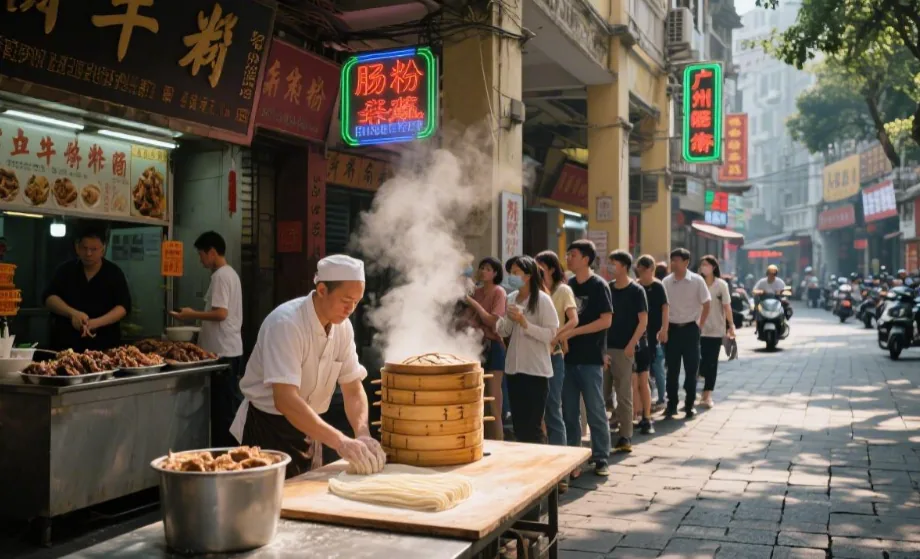
After arriving at Xihua Road, I don’t immediately rush into the first shop with a queue. Instead, I walk through the main street first. This might look like “wasting time,” but it’s actually very valuable. Xihua Road is different from purely touristy food streets; it’s a daily neighborhood street where food is intertwined with residents’ lives. Walk for ten minutes first: see which door has neighbors buying as they walk, which has students grabbing a snack after school, and which has an auntie whose hands never stop working. Then you’ll have a good idea. On a street-food line like this in Guangzhou, popularity does not equal stability; on the contrary, excessive crowding sometimes disrupts the production rhythm. Especially in the afternoon, the truly comfortable shop is often not the busiest-looking one, but the smoothest-looking one.
14:00 Gather at Xihua Road to Start Eating
I think 14:00 is a very suitable time. The lunch rush has just passed, the shops won’t be chaotic, the pots are still hot, and the street flow feels natural in terms of workday and lifestyle rhythms. If you’ve just arrived in Guangzhou that day, your body is slowly transitioning out of travel mode; you won’t have been fasting for too long, nor will you be too fatigued. How you take the first bite is more important than what you eat. My habit is to find a small portion of something savory first—like rice noodle rolls, wontons, noodles, snacks, or beef offal—but definitely don’t start with anything too oily, too sweet, or too large. The purpose of the first bite isn’t to fill you up, but to tune your tongue and stomach to the frequency of this old Guangzhou street.
Many people make the mistake on the first day of wanting to try everything they see, resulting in eating three or four items in 15 minutes and feeling stuffed for the rest of the way. Xihua Road isn’t suited for that. The real interest here isn’t the impact of a single shop, but the layers built up bite by bite along the whole street. For the first round, I generally look for three things: whether the food is freshly made, whether the people buying at the door look like nearby residents, and whether the service is fast but not chaotic. As long as these three pass, I’m willing to try it even if the sign isn’t prominent.
- Walk a bit down the street before deciding on the first shop
- Choose savory for the first bite, don’t start with sweets
- Portions should be small rather than large
- Watch the stove and service movements; they are more useful than looking at the sign
When I walk these old street lines, I usually stand in front of the first shop for two or three minutes. I check if the food in the pot is turning over quickly, if diners also buy extra to take away, and if nearby residents are buying as they pass. If all three are smooth, my confidence in that first bite is much higher.
14:10–15:30 Eating Along Xihua Road Main Street
This period is the most important main line of the afternoon. My way of eating isn’t following a “viral list” one by one, but following a rhythmic texture. Start with something soft, then follow with something chewy; if there’s a soup-based item in between, don’t immediately follow it with another soup item. For many old street snacks in Guangzhou, the true deliciousness isn’t a heavy flavor, but whether the smoothness, rice aroma, meat fragrance, heat control, and the clarity or thickness of the soup base are well-handled. Therefore, I only eat until I’m 60% full in the first round, with the goal of mapping out the flavor framework of this street.
The advantage of Xihua Road’s main street is its high density. You almost don’t need to plan deliberately; you’ll constantly encounter choices as you walk. But high density also has a downside: it’s easy to get swept away, following any queue or stopping at any crowded door. My method is to break these 70 or 80 minutes into three small segments. Spend the first 20 minutes trying the first item, the middle half-hour finding a second item of a different type, and the last half-hour seeing if you need a third based on your state. This arrangement prevents your appetite from being overwhelmed and your palate from getting tired.
| Time | Suggested Action | What I Would Do |
|---|---|---|
| 14:10–14:30 | First savory item | Choose a small portion, check texture and heat control |
| 14:30–15:00 | Second item along the street | Change the texture, don’t eat the same category |
| 15:00–15:30 | Third item based on state | Control the amount, leave room for later |
What I care about most in the first round on Xihua Road isn’t whether I ate at the “most famous” place, but whether I tasted the differences. For example, with rice-based products, a good one will feel smooth and won’t stick to your mouth; with noodle soups, a good one makes you feel the soup and toppings are integrated, not separate; with beef offal or braised dishes, a good one won’t just taste of salt but will have clear layers. These kinds of old Guangzhou streets shouldn’t be judged solely by “is it fragrant” or “is there a queue,” as that makes it easy to overlook truly enduring shops.
The street scene of Xihua Road is also beautiful. As you eat while walking, you’ll see residents buying groceries, students walking through the streets with backpacks, elderly people sitting outside to catch the breeze, and people on e-bikes stopping for a quick takeaway. These scenes aren’t “added value”; they are the reason why this street’s food remains so consistently good. It’s not a route created specifically for tourists, but a living scene that was already in motion. Eating here, it’s easy to distinguish which shops are stable long-term businesses and which rely on short-term hype.
Once, I planned to queue at a very crowded shop on the main street, but after standing for less than five minutes, I noticed that while there were many people, the service was chaotic, and those who got their food looked unimpressed. In contrast, a nearby plain-looking shop had neighbors grabbing food and leaving, clean tables, and steady work at the stove. I switched over, and after eating, I knew my judgment was correct.
The cost of this segment is actually easy to control. If you follow the “small portions, variety, no excess” approach, the total for the first three items usually won’t be high. What really makes you spend more isn’t the unit price, but losing your rhythm and wanting to add everything you see. That’s why I deliberately keep myself slightly hungry in the first afternoon, so my judgments later stay sharp.
15:30–16:10 Exploring Jinhua Straight Street and Surrounding Alleys
At this time, I generally turn off the main street to wander around Jinhua Straight Street and the surrounding small alleys. The main street of Xihua Road feels concentrated and easy to get into, while the alleys feel more detailed. The shops are smaller, the storefronts older, and the pace slower. Often, you aren’t seeing “shops made for people to find,” but shops that have always done daily business here. In Guangzhou, flavors often aren’t hidden deep; they grow within normal life. Once you walk in, you’ll clearly feel the atmosphere change.
I don’t necessarily eat continuously during these 40 minutes. More often, I look and take mental notes to prepare for the next round. For example, if there was a shop on the main street that seemed decent but I wanted to observe more, I’ll leave it for now; if I see something in the alley that looks right at first glance, I might try a tiny portion. If my stomach is already 60% or 70% full, I’ll just look without rushing. The small alleys of old Guangzhou are great for this “second-level judgment” because you can better see if a shop is operating stably over the long term.
Another benefit of Jinhua Straight Street and the nearby alleys is that they are comfortable for walking. After 15:30, the sun isn’t as harsh, and the street rhythm slows down. Turning in from the main street, you won’t feel constantly pushed by the flow of traffic, making it easier to quiet down. For a food-seeking itinerary, this quietness is important. Only when your pace slows down can your palate’s judgment remain clear.
- No need to buy continuously in the alleys
- Watch the payment rhythm and table turnover at the door
- An old sign doesn’t mean bad condition; check if it’s clean
- The afternoon is the best time to see the true state of a shop
My favorite time around Xihua Road isn’t when it’s most crowded, but after 15:30. Shadows start appearing on the road, the shops are neither too busy nor too idle, and the people buying at the door aren’t as squeezed as during peak times. This is the best time to see what a shop is usually like.
16:10–17:30 Returning to Xihua Road to Fill Gaps and Eat Another Round
Coming back to the main street for the second round, my mindset is completely different. The first round was for trying; the second is for choosing. After a round on the main street and another in the alleys, you have an initial judgment of this line. Which ones did you remember after passing, and which ones left no impression? It’s very obvious now. The second round isn’t about hitting a target number, but about solidifying the memories.
I usually add a sweet item at this time, or something with a completely different texture from before. For example, if you ate soft, soup-based items earlier, find something more solid now; if earlier was savory and fresh, find something clean, sweet, and finishing. In old street eating in Guangzhou, the sense of rhythm is more important than the category. If you eat right, three or four items feel great; if the order is chaotic, even just two items can feel overwhelming, messy, and indistinguishable.
At this point, I don’t chase common viral favorites anymore. By after 16:00, the true state of the street becomes clearer. Some shops are strong at noon but drop off quickly in the afternoon; others are more stable in the afternoon. As you walk back, you already have the answer. What’s truly worth eating is usually that shop you thought about trying when you passed it earlier, not the place you suddenly saw someone else call famous on your phone.
| What’s suitable to add in this round | Why at this time |
|---|---|
| Sweets | After eating savory, the palate can better distinguish layers |
| Solid snacks | After walking a round, the stomach has adapted |
| Shops you skipped but liked the look of | With comparison, it’s easier to judge the value |
This segment is also when personal taste shows most clearly. Some people still like soup-based things by the second round, some prefer chewy textures, and some start looking for sweet soups to finish. I don’t force a fixed template, because if a food itinerary is too mechanical, it feels empty. Truly useful experience is telling you how to judge at this time, not dictating exactly which items you must eat.
I usually go back to check on one or two shops I noted earlier during the second round. Not to “check off homework,” but to confirm if my first impression still holds. Many shops look good the first time you pass, but by the second time, their true state is clear. A shop that makes you want to return is usually more reliable.
17:30–18:30 Finding Sweet Soup and Snacks Nearby to Finish
During this hour in the evening, I basically don’t arrange heavy main dishes for this Xihua Road day. The reason is practical: most people are 70% or 80% full after the previous segments, and taking on a heavy main dish would make the body feel sluggish at night. The comfortable part of a Guangzhou food tour is that you don’t find satisfaction by “stuffing” yourself repeatedly, but by stopping when you still want a little more. If the first afternoon can end here, your appetite will be great the next morning, and the whole trip will be smoother.
Sweet soup or light snacks are perfect for the end. It’s not just to cleanse the palate, but to give the first day a slow finale. You can sit down and watch how people nearby order, chat, and take away. The flavors of the old street aren’t just in the bowl, but also in these very daily small actions. The sense of life in many parts of Guangzhou becomes concrete during a short period of sitting down in the evening.
I especially suggest not rushing during this sweet soup segment. You’ve been standing and walking, looking and eating; sitting for 15 to 20 minutes helps you settle down. You’ll start to recall which bite was most worth a second visit, which place was famous but didn’t leave much impression, and which small alley you’d like to turn into again next time. This kind of judgment is much more useful than “how many shops did I eat at today.”
- Focus on lighter items for the finish
- Sitting down is more appropriate than eating while walking
- Ending the first afternoon at 70% to 80% full is most comfortable
- The point isn’t to eat until full, but to find the flavors you’d eat again
Day 1 Route: Depart from Chen Clan Academy Metro Station—Xihua Road Main Street—Jinhua Straight Street—Xihua Road North Section—Surrounding Old Streets
Walking the entire Day 1 route, the actual distance isn’t long—about 3 kilometers or so. What really drains people isn’t the distance, but the number of choices. You have to constantly judge along the way, deciding which shop to enter and what to save for the second round, so your feet might not be very tired, but your brain is constantly working. Because of this, I suggest not adding other attractions on the first day. Walking this section of Xihua Road thoroughly is rich enough.
Coming out of Chen Clan Academy to join Xihua Road is a smooth way to go. Scan the main street first to establish a first impression, then turn into Jinhua Straight Street and the surrounding alleys to taste the details, then return to the north section of Xihua Road to fill gaps, and finally find sweet soup or light food in the surrounding old streets to finish. The advantage of this order is: concentrate, then disperse, then recover, so neither your appetite nor your walking gets messy. Many people like to scatter their routes on the first day, ending up spending most of the afternoon in transit with little time to actually eat. I don’t recommend this.
Regarding accommodation, I prefer to stay near Liwan, Chen Clan Academy, or Changshou Road for the first night. It’s not about how fancy it is, but staying close to the old city makes the next day’s trip to Pantong and Panxi Restaurant much easier. In Guangzhou, the benefits of staying close are very practical. You don’t have to commute for a long time after eating in the afternoon, you can rest early at night, and your appetite and energy will be more stable the next day.
| Route Segment | Walking Experience | What it’s suitable for |
|---|---|---|
| Chen Clan Academy Metro to Xihua Road | Warm-up segment | Entering the old city state |
| Xihua Road Main Street | Fastest pace | First round of trial eating |
| Jinhua Straight Street and surrounding alleys | Most detailed | Second-level judgment |
| Xihua Road North Section to surrounding old streets | Slowing down for the finish | Gap-filling and sweet soup |
Key Points on How to Eat on Day 1
For this section of Xihua Road, I always insist on savory first, then sweet. If sweets come too early, the tongue becomes dull, and many details—especially rice aroma, soup base, and meat fragrance that need slow appreciation—get covered up. The steadiest way for the first afternoon is to control the first round to two or three items, keep individual portions as small as possible, don’t eat the same type consecutively, and switch if the queue exceeds 20 minutes. It’s not because that shop isn’t worth it, but because your time and appetite on the first day are precious and shouldn’t be held back by a single choice.
In terms of cost, this segment is quite flexible. If you follow my “small amount, many trials” method, the first afternoon’s spending usually won’t be outrageous; it depends more on whether you lose your rhythm. Many people don’t seem to have eaten expensive things, but rather bought too much. It’s easy to add extra orders when sweet soup, fried food, drinks, and cooked food all appear together. My experience is that being 70% full on the first afternoon is the steadiest. Leaving a little space makes you eat even better the next day.
To mention a few practical details: keep your phone charged, as you’ll frequently use maps, payments, and photos in the old streets, and the battery drains quickly. I usually bring a small power bank; it’s not big, but it’s enough. Don’t wear new shoes; Xihua Road might not look long, but you are constantly stopping, standing, walking, and stopping again, which is hard on the feet. Wear light clothes; Guangzhou afternoons can be muggy, and you’ll get hot walking. If you’ve just arrived, it’ll feel much better if you can wash your face and change into a thinner shirt at the hotel before heading out to eat.
I never advocate for “going hard on the first day” when walking old city food lines. Guangzhou isn’t a city that wins you over with an immediate impact; it’s better suited for slow eating. As long as you can find two or three things you’d be willing to eat a second time on the first afternoon, you’ve started the line very well.
Day 2: Walking Pantong Slowly, Panxi Restaurant in the Evening
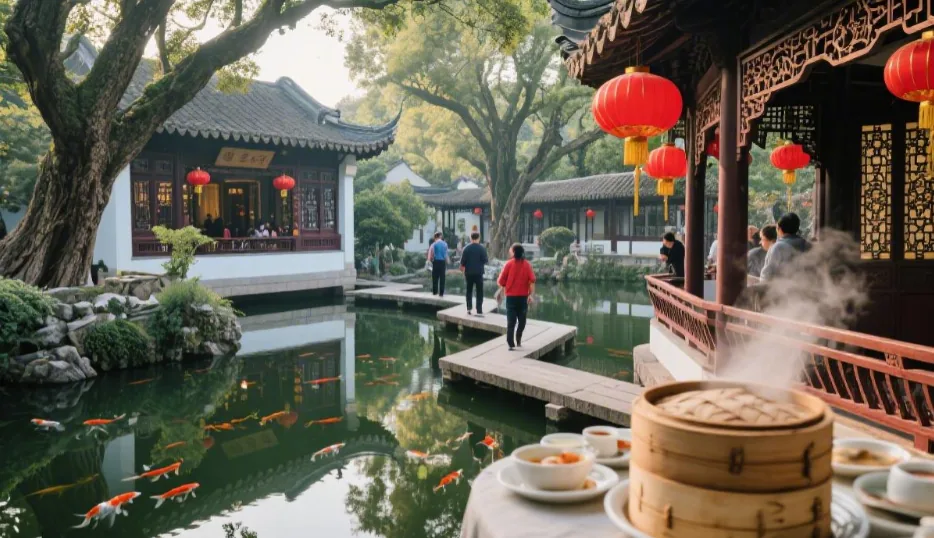
On Day 2, I will actively slow down and no longer do continuous trial eating like on the first afternoon. The reason is simple: an old city food route like this in Guangzhou isn’t sustained by high-density eating every day. Xihua Road was eaten very thoroughly the day before; if you still push forward with that rhythm on the second day, your appetite will be messy, your feet tired, and you won’t be in the right state when it’s time for the truly serious meal in the evening. This entire line of Pantong, Lizhiwan, and Panxi Restaurant is best walked slowly. It’s not about quantity, but about the neighborhood’s atmosphere, walking pace, meal timing, and the complete experience of an old restaurant.
I like to think of this day as “paving the way for the dinner.” The daytime isn’t empty—in fact, there’s a lot of content—it’s just that the content isn’t reflected in heavy eating. You’ll see old Xiguan houses, tree shadows by the canal, small shops just opening under the arcade, and the flow of locals buying groceries in the community. You will also slowly understand why Guangzhou’s old city diet is so close to life. The deliciousness here isn’t just a dish on the table, but also when a street is quiet, when it is busy, what time is suitable for a drink, and what time is suitable for sitting down to a serious meal.
09:30 Start Wandering Around Pantong
Arriving at Pantong at 09:30 is a very stable arrangement. Too early, and the street hasn’t fully woken up; too late, and once the sun is up, people get impatient and walking becomes irritating. This time is just right—the air is still comfortable, shops are opening one after another, and people buying groceries mix with those taking a stroll, creating a very natural daytime starting state for the whole area. Coming out of the metro, you don’t need to rush to find what to eat first; instead, walk along the street first to tune your body to “slow wandering” mode.
Pantong is a good place to start because it isn’t the kind of place where you need to immediately judge which shop is most worth the queue as soon as you enter. This is more like an entrance, letting you switch from Day 1’s trial-eating state to Day 2’s observation state. Along the way, you’ll see people washing, picking, and preparing vegetables at their doors, small dim sum shops just setting out steamers, and neighbors turning into alleys with bags of groceries. The daily sense of Guangzhou’s diet is particularly obvious in this segment. It’s not a picture prepared for photos; it’s life happening every day, which is why I think Pantong is suitable for the first half of Day 2.
If you stayed near Liwan, Chen Clan Academy, or Changshou Road the night before, going out at this time will be very easy. After washing up, drinking some water, and grabbing a light bag, you can head over without needing complex transfers. The benefits of staying close to the old city will be especially apparent on Day 2. You don’t have to get up early to catch time, nor do you need to take the metro for a long time for a morning itinerary; both your stomach and feet will save energy.
- Don’t fast for too long on the second morning, but don’t eat a formal big breakfast either
- Drinking some warm water before going out is more stable than immediately looking for coffee
- Tissues and a small power bank in your bag are enough; no need to bring too much
- The morning is mainly for walking; eating is just an ornament
When I walk this section of Pantong, I usually don’t start looking for shops right away. Instead, I walk along the street and canal for a few minutes first. This action is very useful for toning down the “wanting to try everything I see” state from the day before. Once your pace slows down, your judgment on whether to eat the first item will be more accurate.
09:40–11:00 Walking Slowly Around Lizhiwan
From 09:40 until about 11:00, I basically don’t chase shops. The truly comfortable part of the Lizhiwan area isn’t that there’s a “must-enter shop every five minutes,” but that the whole area looks very smooth when connected. The riverside, stone bridges, old alley entrances, arcades, old house walls, tree shadows, and small shops neighbors frequent—these things will create a background for your dinner in advance. Many first-time visitors walk through here too quickly, only wanting to know which place is the most famous; as a result, they’ve walked the path and reached the place, but haven’t truly entered the rhythm of the area.
I prefer to understand this time as “seeing how old Xiguan operates.” As you walk, you’ll find that life and eating here are inseparable. Some people buy a pastry to take home, some sit at the door slowly drinking tea, and some are just passing through but stop to see if a familiar shop is still there. The diet in Guangzhou’s old city is not an isolated shop, but a long-established daily order. Not eating too much during the day makes it easier to see this feeling.
During this hour, I usually only allow myself one or two light items, or even just a drink. Since the dinner is the main event, the morning shouldn’t steal the show. Many people always feel “since I’m already here, I’ll eat what I like when I see it” while traveling. Consequently, they are already 70% or 80% full by noon, and don’t have enough space when entering an old restaurant in the evening. When the food comes, they have to force it down, which is a pity. For an old-brand restaurant like Panxi, the real value is the rhythm of the whole meal, and you must leave a complete state for it.
| Period | What’s suitable to do | What I value more |
|---|---|---|
| 09:40–10:10 | Walk along Lizhiwan first | Let the body slow down |
| 10:10–10:40 | See the daily state of the street | Watch the flow of people and shop rhythm |
| 10:40–11:00 | Choose a light snack or drink | Keep the appetite, don’t spoil dinner |
The cost of this segment is usually not high because you aren’t supposed to eat much. Conversely, this is a particularly comfortable point of Day 2: the morning isn’t built on consumption, but on the street area’s own visual and walkable appeal. Many good places in old Guangzhou are like this; you don’t spend much money, but you can have a very flavorful time.
When I walk slowly by Lizhiwan, my favorite thing to watch is the first 20 to 30 minutes after shops open. This period best shows how a shop usually does business: do regular customers know exactly what to order, is the shop calm and unhurried, and are there neighbors who “just happened to buy a portion”? These things are more useful than simply looking at online reviews.
11:00–12:00 Finding Snacks on Pantong Road and Enning Road
Approaching noon, the sense of daily life on the street will be stronger than in the morning. At this time, I’ll transition from pure strolling to “eating a little bit.” But “eating” here is not the same as the dense trial eating on Xihua Road on Day 1. Day 1 was an appetizer; this segment on Day 2 is more like a battery boost. You aren’t here to challenge your appetite, but to give your body some actual energy while incorporating the daily flavors of the Pantong and Enning Road area.
I prefer to find snacks or light main dishes with a local daily feel in this segment; I don’t pursue variety, only smoothness. This is because Pantong and Enning Road are connected. You sit down to eat a bit, and can still continue walking slowly when you get up, without the burden of “needing to find a place to rest immediately after eating.” Many comfortable food routes in Guangzhou let walking handle part of the digestion, rather than stopping in place after every item. This way, the route keeps pushing forward smoothly, and people don’t get tired.
I will pay special attention to two things during this segment. First, don’t eat too many different things. During this hour at noon, choosing one type that feels smooth for your mouth, stomach, and rhythm is enough. Second, don’t suddenly switch back to “check-in mode” just because the surroundings start getting busy. Once you start having a bit of this and a bit of that, your afternoon state will deteriorate. The meal at Panxi Restaurant is worth your serious execution of this little bit of restraint at noon.
- For this round before noon, it’s better to eat one comfortable portion than to force three or four items
- Pantong Road and Enning Road are suitable for looking as you walk, not for strictly sticking to a list
- Light food, snacks, and drinks are more suitable for this time
- Continuing to walk for 15 minutes after eating feels better than resting in place
I usually treat this hour as time to “lay the foundation for dinner,” not “another round of a food street.” As long as this bite at noon is smooth and doesn’t cause bloating in the afternoon, the whole person will be very comfortable when entering Panxi Restaurant in the evening.
12:00–14:30 Rest at Noon, Save Your Stomach for Dinner
During this period at noon, I really suggest resting—it’s not just a saying. The biggest problem for many people doing a Guangzhou food route isn’t that they didn’t find good food, but that they ate every meal too fully, and eventually, the whole trip had no layers. A place like Panxi Restaurant is worth saving a full appetite for, and it’s worth leaving these two-plus hours at noon for it. Even if you do nothing, just going back to the hotel to rest, drink water, wash your face, and take off your shoes to relax will make the experience of that evening meal much better.
If you live near Liwan, this rest is easy to arrange. Taking a taxi back or sitting for two metro stops isn’t a hassle. If the hotel is far away, you can also find a quiet place to sit; there’s no need to force more sightseeing. The most unsuitable thing to do at noon on Day 2 is to “add another area in the gap.” That looks full but actually hurts the rhythm. In a city like Guangzhou, eating comfortably depends on leaving white space, not filling every schedule gap.
During this time, I generally only do a few very practical things: hydrate, lie down for a bit, check the evening route, and stop consuming main foods. If I really feel a bit hungry, I’ll at most have a very small snack around 15:00, but definitely not another proper meal. The thing old restaurants fear most isn’t that you don’t have money to order, but that you don’t have the appetite to order. Once a person is stuffed in the afternoon, even the best dishes will taste flat in the evening.
| Period | Suggested Arrangement | Why arrange it this way |
|---|---|---|
| 12:00–12:40 | Leave the Pantong area | Slowly wrap up the morning segment |
| 12:40–13:30 | Return to hotel or find a place to sit and rest | Let both feet and stomach settle down |
| 13:30–14:30 | Drink water, organize, relax | Leave space for dinner |
| Around 15:00 | If really hungry, have a very light snack | Does not affect the dinner state |
This period also has a realistic benefit: it lets you switch from “eating while walking” to “sitting down and eating seriously in the evening.” Once the body has a pause, the evening experience will be completely different. You won’t be breathless when entering Panxi Restaurant, nor will your feet feel numb, and your brain won’t be calculating which shop you missed at noon. This sense of completeness is part of the old restaurant experience.
I always emphasize resting at noon when writing Guangzhou food lines, because old-brand restaurants and serious dinners are sustained by your state. Exhausting yourself during the day makes a good performance in the evening impossible. These two-plus hours at noon might look like “nothing scheduled,” but they are actually part of the content.
17:00 Arrive Near Panxi Restaurant
Arriving near Panxi Restaurant around 17:00 is what I consider the most appropriate way to enter. Old restaurants are not suited for rushing in right at mealtime; if you are in a hurried state, the whole meal will feel tight. The benefit of arriving early isn’t just to avoid the crowd, but to enter the atmosphere of the place. Some old restaurants in Guangzhou are worth eating at not only because the food is good, but also because from the moment you walk to the door, look at the external environment, observe the guests, and slowly sit down, your mood is already different.
Every time, I leave 20 to 30 minutes to walk around first. Look at the relationship between the surrounding water and buildings, and see what the dining crowd is like—whether there are local families, elders with children, friends gathering, or out-of-towners specifically here to eat. This sense of mixing is important; it shows that this isn’t a single-purpose “check-in point,” but a place that is still normally used for eating today. Truly interesting old restaurants in Guangzhou mostly have this vibe: you can see they have history, but they don’t just rely on history to survive.
If it’s your first time, this early arrival can also help with more practical things. For example, looking at the general structure of the menu to have a budget concept; thinking about whether you want to order conservatively today or spread out a bit; going to the restroom and tidying up your clothes and state. Don’t underestimate these small actions; they all affect whether you are calm when you sit down.
- Arriving early is much more comfortable than arriving exactly on time
- Walking around before the meal slows you down
- Old restaurants are more suitable for entering with a little sense of ritual
- Looking at the surrounding crowd first helps you judge the true vibe of the place
I’ve always felt that eating at an old restaurant shouldn’t be hurried like catching the next metro. At a place like Panxi Restaurant, those 20 to 30 minutes before the meal are worth it. Get your pace steady before entering, and the rhythm of the meal will be much more natural.
17:30–19:00 Dining at Panxi Restaurant
By this meal, I’ll treat it as the most formal meal of the four days. Formal doesn’t mean you must order a lot or very expensive things, but you must pair them seriously. For two people, I usually suggest controlling it to three or four items; structure is more important than quantity. The steadiest way is to have one fresh dish, one richer dish, and then a closing or balancing dish, adding a dim sum or soup if necessary. This way, the meal has ups and downs, rather than being too full in the first half and just forcing it down in the second.
I care about three things most in old restaurants. First, whether the ingredients are handled cleanly and the taste is crisp. Second, whether the seasoning is well-proportioned, allowing the original flavor of the ingredients to emerge. Third, whether the serving order makes the meal smoother rather than messier. The strength of old-brand Guangzhou restaurants is often not novelty, but stability. When you eat, you feel it’s not grabbing, not noisy, and not piled up; the sense of proportion is held. For a first-time visitor to Guangzhou, this “stability” is important because it makes you understand what the food aesthetic here actually cares about.
When two people order, I don’t suggest spreading the menu too thin. When it’s thin, every dish feels like it’s cutting the queue, and the table gets messy. Instead, honestly build around a clear structure. For example, decide first if you want soup or dim sum today, whether the main dishes should be one fresh and one rich, and then decide whether to add more based on your appetite. This ordering method looks conservative but is actually more suitable for first-timers. You aren’t here for a crowded table, but for the complete experience of a meal in an old restaurant.
| Ordering logic for two people | Why it’s suitable | What the eating feels like |
|---|---|---|
| 2 main dishes + 1 balancing dish | Steadiest | Hard to overeat |
| 2 main dishes + 1 dim sum/soup | Clear rhythm | Clear layers before and after |
| 3 main dishes + 1 dim sum | Suitable for bigger appetites | Requires more restraint at noon |
Regarding the cost, I suggest letting the budget for Day 2 evening be more relaxed than Day 1. Day 1 was street eating, where spending depends more on whether you bought too much; on Day 2, the spending is part of the experience. It’s not about ordering expensive dishes, but about not tightening up too much at this stage. You’ve already given most of the day’s rhythm to this meal; if you get to the table and don’t dare to order anything because of a strict budget, the meaning of the whole day’s preparation will be discounted. My experience is that the worst thing in an old restaurant isn’t spending a bit more, but ordering without a structure.
One more practical point: a place like Panxi Restaurant is more suitable for dining in rather than a hurried takeaway. Its goodness doesn’t just lie in a single dish taken out, but in the environment, the serving, the relationship on the table, and the process of eating with companions. If you just want a taste and then leave, you only get part of it.
- 3 to 4 items for two people is steadiest
- One fresh, one rich, and one closing dish is more comfortable than all heavy flavors
- Think of the structure first, then look at the menu; don’t order everything you see
- The budget for Day 2 evening can be higher than Day 1
- Old restaurants are better for sitting and eating seriously, not for rushing
What I fear most in such old-brand restaurants isn’t ordering too little, but ordering in a mess. As long as the structure is right, three items can be very complete; if the structure is messy, even five items can look crowded. The goodness of Guangzhou’s old restaurants is often not in piling the table, but in a sense of proportion.
19:00–20:00 Walk Along Lizhiwan After Dinner
After finishing this meal, I basically won’t arrange a second round of food-seeking. The best way to end is to walk slowly along Lizhiwan. Daytime Lizhiwan is part of the old city’s daily life; nighttime is more suitable for slowly digesting the meal you just had. The waterside, lights, pedestrians, breeze, tourists stopping on the bridge, and locals chatting nearby—these things extend the memory of that meal at Panxi Restaurant. You’ll find that the truly comfortable part of Guangzhou isn’t constant eating, but having a place to let the flavors settle after eating.
This walk is also physically necessary. Old Guangzhou diet has its own characteristics—many dishes emphasize oiliness, heat control, and freshness—and going straight back to the hotel by car immediately after eating will make the whole person feel a bit heavy. Walking for 20 to 40 minutes after a meal isn’t tiring, but relaxing. You won’t feel like you are “consuming,” but rather wrapping up that meal slowly. For me, if the Panxi Restaurant experience ends right after eating, the day would be missing a piece; only by connecting the night part at Lizhiwan does the whole of Day 2 feel complete.
Moreover, Lizhiwan at night is perfect for reflecting on the day’s feelings. What did you see in the morning, why did you need a rest at noon, which dish best suited your stomach for dinner, and what kind of proportion did you like best in the old restaurant—all these judgments can slowly emerge while walking. Guangzhou’s food routes aren’t decided by a single bite, but are feelings accumulated all along the way.
This Day 2 line looks relaxed, but actually has a very intentional order. Start from Zhongshan Ba in the morning, let yourself enter the slow pace of Pantong and Lizhiwan, stop proactively at noon to save appetite and energy for the evening, arrive near Panxi Restaurant early in the evening to let your mood and body slowly enter the dinner state, and walk along Lizhiwan for a bit after eating to wrap it up. It doesn’t rely on the dense trial eating of Day 1, nor does it try to fill every hour like common travel routes, but it is very suitable for Guangzhou.
The truly useful part of this line is that it arranges “walking, resting, eating, and seeing” in a reasonable order. Many people coming to Guangzhou mistake a loose schedule for lack of content. In fact, it’s the opposite—the old city of Guangzhou shouldn’t be consumed in a hurry. If you give it a little time, it will reveal its flavors and temperament to you naturally.
| Route Segment | Suggested Period | Main Task |
|---|---|---|
| Zhongshan Ba Metro to Pantong Road | Morning | Enter the slow pace |
| Lizhiwan Surroundings | Morning to before noon | Mainly walking, a few light foods |
| Noon Rest | Noon to afternoon | Save state for dinner |
| Panxi Restaurant | Evening to night | Eat a formal meal |
| Lizhiwan Night View Path | After dinner | Finish with a walk |
In a place like Panxi Restaurant, I never recommend first-time visitors to order too broadly. For two people, the steadiest way is to build around “main dish + dim sum or soup + a balancing dish.” This way, your flow from appetizer and main flavor to the final closing will be smooth, and the table won’t be messy. If there are three or four people, it’s naturally easier to order because the layers can be spread wider, but two people are also completely enough, provided you aren’t greedy.
Day 3: Filling Gaps in the Old City, Eating More Finely
By Day 3, my thinking shifts significantly. The first two days were more about getting to know Guangzhou; Day 3 is about “screening Guangzhou.” This day, I won’t put the “freshness of seeing things for the first time” first, but rather “is it really worth eating a second time.” After walking Xihua Road, Pantong, and Lizhiwan for the first two days, you already have a few directions: you might start to prefer the smoothness of rice products, or the comfort of soup-based things, or you might have a better feeling for roasted meats, sweet soups, and the living atmosphere of arcade streets. The role of Day 3 is to land these vague impressions on the denser, older, and more walkable streets of Baohua Road, Duobao Road, and around Shangxiajiu.
I’ve always felt that Day 3 is the day that most feels like “actually eating in Guangzhou” in the 4-day food tour. This is because you are no longer being led by surface information like “famous,” “long queue,” or “appearing many times online.” You start knowing what you want to find—what kind of shop will make me stop, and what kind of flavor is worth trying again. This area of Old Xiguan is best for carrying this state. It doesn’t require you to eat at every single shop, nor does it require you to stick strictly to a route; it’s more suited for you to walk, adjust, and complete the parts you didn’t fully taste in the first two days.
10:00 Starting from the Old Xiguan Neighborhood
Starting at 10:00 from the Old Xiguan neighborhood is the steadiest. Too early, and some shops are still slowly setting up—the soup isn’t ready, the dim sum isn’t all out, and the rhythm at the door hasn’t emerged; too late, and the crowd in this neighborhood will clearly increase, making you feel pushed as you walk. Around ten is just right—the neighborhood is awake, but hasn’t entered its busiest time. You’ll see people at the end of their breakfast, people delivering goods, people just lifting their curtains to open shop, and neighbors chatting at their doors; this sense of life makes the entire route very smooth.
Coming out of Changshou Road Metro Station to join Old Xiguan is my most common way. After coming out of this exit, you don’t need to make many judgments; just follow the texture of the neighborhood to connect naturally to Baohua Road and Duobao Road. Day 3 is very different from Day 1. On Day 1, I valued “getting started quickly”; on Day 3, I value “judging accurately.” So when first entering the neighborhood, I don’t immediately look for what to eat for the first bite; instead, I watch the street state for five to ten minutes. See which shop is starting to get customers, which stove has steady movements, which table is cleared neatly, and which door has more nearby residents; all these are worth watching.
If you stayed near Liwan, Changshou Road, or Chen Clan Academy for the first two nights, Day 3 will be very easy. Because you are already familiar with the rhythm of this old city, there won’t be a sense of strangeness when you go out. Staying close also has an advantage: you don’t need to do too much preparation early in the morning; just wash up, drink some water, and head out with a small bag, so your physical state is more relaxed. For a route like Old Xiguan, being relaxed is worth more than being tight.
- No need to eat a lot specifically before going out on Day 3
- Watch the street first when starting; don’t rush into the first shop
- Changshou Road as a starting point is the smoothest; walking to Baohua Road and Duobao Road is natural
- This day is more suitable for making judgments based on the feelings of the first two days, rather than returning to the mode of “deciding where to eat by looking at a list”
By Day 3, my mindset is very stable. I won’t immediately stop just because there are many people at a shop’s door, nor will I automatically feel I should enter a familiar sign. The most important thing at this time is to see what I actually want to eat, not what others think I should eat.
10:10–11:30 Walking, Looking, and Eating Along Arcade Streets
The time after ten until before noon is the best for walking and looking in Old Xiguan. The rhythm of the arcade streets is better suited for “observation” than the first day’s Xihua Road, which was for rushing. Day 1 was about opening your stomach; Day 3 is about comparing details. Whether it’s rice noodles, noodles, dim sum, sweet soup, or roast meat, it’s easier to taste the difference by now. You’ll start noticing if a bowl of soup really has layers, if the skin and filling are coordinated, if the heat control has slipped, and if they can still stay steady after the peak rush. These feelings aren’t impossible to taste on Day 1, but they can’t be this clear because you were still familiarizing yourself with the city’s flavor framework back then.
Arcade streets are great for this comparison. You don’t necessarily have to eat continuously; often, standing at the door for a while lets you know if a shop is right for you. For example, some shops are very busy at the door, but the service is chaotic—people grab their food and look for seats, making the overall rhythm very cramped; other shops don’t look as prominent, but the aunties’ hands are steady, the tables are clean, and the people buying are calm—those shops are often more enduring. The thing I admire most about Guangzhou’s diet is its “non-grabbing” nature. Truly good flavors won’t overwhelm the tongue immediately, but leave you remembering their sense of balance after eating.
In this segment, I eat slower and less than on Day 1. Not to save money, but to leave space for judgment. The first bite might just be a familiar texture; the second bite will intentionally change type to create a comparison. For example, if you ate something rice-based and soft earlier, find something with more bite later; if earlier was soup-based, try something drier next. As long as the structure is right, two items are enough to give me a new understanding of this street area.
| Time | What’s suitable to do | How I would judge |
|---|---|---|
| 10:10–10:35 | Observe along the arcade street first | Check door rhythm, stove state, table turnover |
| 10:35–11:00 | Eat the first item | Choose a type you already confirmed you liked in the first two days |
| 11:00–11:30 | Add a second item or keep looking | Intentionally change textures, establish comparison |
This segment in the arcade street also has a very practical point: you can clearly feel if “the state has dropped after the peak.” In many shops, the food looks similar when it’s most busy because everyone is chasing efficiency. After 10:00, truly steady shops slowly reveal themselves. The stove is still steady, the service is still smooth, and the flavor hasn’t become scattered because there are fewer people. This kind of shop is more worth remembering, even if it doesn’t rank high on various lists.
- In the first half of Day 3, the number of items eaten can be fewer than Day 1
- If you want to compare something, it’s best to try it at different shops and times
- Standing at the door to observe for a few minutes is often more useful than ordering immediately
- Arcade streets are good for changing routes as you walk; don’t stick rigidly to a list
Sometimes when I walk around Old Xiguan, what I remember isn’t which place was the most crowded, but which shop stayed steady when it wasn’t too busy. Everyone can manage when busy; being able to maintain the craft when it’s quiet shows a true foundation.
11:30–12:30 Finding a Pleasing Small Shop to Sit Down and Eat
During this hour at noon, I strongly suggest finding a pleasing small shop to sit down, rather than continuing to eat while standing the whole time. Since there was already a lot of eating-while-walking in the first two days, if you keep standing on Day 3, your body will start to stiffen and your feet will get tired. There are many such small shops suitable for sitting in the old city—it’s not about how big the storefront is or how famous the name is, but whether you feel comfortable after sitting down. Whether the tables are clean, the clearing is efficient, the turnover is fast, and whether the people sitting nearby are local residents are all more important than the decor.
I really like the “sitting down” feeling of this meal on Day 3. Because it can settle the moving state of the previous time. The most touching part of Old Xiguan shops is often not that they are “stunning,” but that you’ll feel this is exactly what the flavor of this neighborhood should be after sitting down. It’s not trying to show off how great it is, but is always here, making a regular lunch very steadily. What supports Guangzhou’s daily diet isn’t just those historical, famous restaurants, but also these long-term stable small shops. After finishing this meal, your judgment of this city will be more solid.
I generally don’t order too complexly for this meal. By Day 3, the more things on the table, the easier it is to distract from the key points. What I care about more is whether I feel grounded and comfortable after this meal, and whether I have the feeling of “coming back next time” for this shop. The cost usually isn’t outrageous—tens to over 100 RMB per person is common—but it provides a very useful judgment: you start knowing that Guangzhou doesn’t just rely on “representative works,” it is also supported by these daily stable small shops.
| What I look for when choosing a small lunch shop | Why it’s important |
|---|---|
| Tables and floor cleared efficiently | Shows stable operational rhythm |
| Neighbors and locals at the door and inside | Strong daily nature, not just for traffic |
| Menu not overly fancy, service not messy | Easier to eat steady things |
| People leaving look naturally satisfied | Shows the meal is accepted as daily life |
When I find a small shop in the old city to sit down, I don’t look at “whether someone recommended it” first. I care more about whether the people inside look like they would normally come here for lunch. As long as that holds, I’m generally willing to try.
12:30–14:30 Afternoon Rest
I will execute the Day 3 noon rest even more seriously than Day 2. Because on this day, it’s particularly easy to get more and more into the flow during the morning. You’ll stop under the arcades a bit longer, turn into an alley just because it looks right, and stand at a shop door longer than usual; unconsciously, your energy gets drained. Old Guangzhou looks flat, but it’s actually hard on the feet. Slow walking, standing to observe, and then walking again—this consumption is bigger than imagined. So stopping at noon isn’t just to leave space for the afternoon, but also to let yourself catch a break from the continuous input.
If you’ve already stayed near Liwan for two nights, this rest will be especially easy. Going back to the hotel to wash your face, shower, change shoes, and put down your bag to rest will make you feel much lighter when you head out again in the afternoon. I personally care a lot about the state of Day 3 afternoon because the second half of this day isn’t just continued wandering, but doing “return eating” and “gap-filling.” If you don’t rest at noon, your accuracy when making these judgments in the afternoon will drop significantly. Once tired, both taste and patience are affected.
During these two hours, I won’t arrange extra attractions, nor will I feel “it’s a pity to be idle.” In an old city food route, rest itself is part of the route. You’ve already absorbed a lot of information—what you saw, smelled, ate, and noted down—and it needs a little time to settle. Otherwise, by the afternoon, you’ll likely just be repeating movements rather than making serious judgments.
- Day 3 noon requires leaving the street more than the first two days
- Returning to the hotel to rest is more useful than adding more attractions
- Changing shoes or loosening up your feet will clearly affect the afternoon state
- Noon rest is not a gap, it’s about preserving judgment for the “return eating” later
By Day 3 noon, I usually don’t push myself anymore. Because the body is more honest than in the first two days; if you’re tired, you’re tired. Rather than stubbornly continuing to wander, it’s better to stop and save the best state for those few bites truly worth returning for in the afternoon.
15:00–16:30 Returning to an Old Street You Want to Eat at Again
After 15:00, I will definitely arrange “return eating.” This isn’t for repetition, but for confirmation. Whether a flavor is truly worth recommending is best shown by eating it a second time. The first time, it might be because you were hungry, or because you found everything fresh since you just arrived in Guangzhou, or because the queue and surrounding atmosphere raised your expectations. If it still tastes good the second time, then the judgment is basically solid. The most precious thing about Day 3 afternoon is that you finally have the chance to verify the impressions left over the first two days by your own standards, not others’.
I usually arrange one or two items I remember most from the first two days for this segment. It might be that bite from Xihua Road on Day 1 you kept remembering, or the daily flavor you met near Pantong on Day 2 that stayed on your mind. Going back to eat it again isn’t to write “I ate it twice,” but to know if it really stands the test of repetition. Many things are good the first time because your state was right; what’s truly good is what still feels comfortable and memorable when it enters your mouth the second time.
This segment has a very personal experimental meaning, and it most looks like what a mature food route should be. You no longer need someone else to tell you which shop you must eat at, because you are forming your own version. The goodness of Guangzhou is largely here: it doesn’t force you to accept a standard answer, but allows you to slowly grow your own flavor map.
| What return eating is suitable for verifying | What’s easiest to see the second time |
|---|---|
| The bite you liked most in the first two days | Whether it is truly enduring |
| Shops you didn’t feel properly due to long queues | Whether they are still worth it after the hype is gone |
| Types you didn’t understand the first time | Easier to distinguish details the second time |
- Eating a second time best shows if something is truly stable
- No need to return to many shops; one or two is enough
- Return eating is not repetition, it’s confirmation
- By Day 3 afternoon, personal taste is more important than a list
I’ve always felt that the flavor truly worth writing into a route isn’t the one you “felt was okay the first time,” but the one you “still want to eat the second time.” Arranging return eating on Day 3 afternoon is to solidify that feeling.
16:30–18:00 Continuing to Fill Gaps, Specifically Eating Flavors You Missed Earlier
Before evening, I generally won’t go too far, but stay around the same neighborhood specifically to catch up on things I didn’t have time to eat in the previous days. For example, that shop you watched for a long time but gave up on because the queue was too long; or something you were worried about eating too much of earlier and didn’t dare to try; or a type you’ve already eaten once but want to find another shop to compare with. “Gap-filling” here is not to make up numbers, much less to make the list look complete, but to make the entire 4-day route more complete in terms of taste.
This time on Day 3 is most suitable for gap-filling because by now you are very clear about your boundaries. You know how much more you can eat, what’s worth trying again, and what you can skip. This way, every bite you fill is more efficient. The truly comfortable part of Old Guangzhou is that you don’t need to eat every single thing; as long as you fill in the parts you most wanted to confirm, the route will get more and more complete. Many satisfying itineraries aren’t about chasing new things every day, but about looking back at the right time and gathering up the regrets.
During this time, I usually also take a look at the state of the old street in the evening. Many places feel better after 16:30—the crowd isn’t at its peak, but the life atmosphere clearly picks up. You’ll see children after school, neighbors heading home with groceries, small shops continuing business, and the darkening shadows under the arcades as the sun slowly goes down. For an old city food route, these things and the bite you just added are actually connected.
- Gap-filling is best done within the same area; don’t travel across the city again
- Items you hesitated over in the first two days are best judged on Day 3
- Eating around evening feels more comfortable on the street than at noon
- By this step, choice is more important than quantity
The thing I do most in the second half of Day 3 is to seriously resolve those few thoughts in my mind about “actually wanting to try it.” It’s not for the sake of completeness, but to make this route a little less vague and a little more certain.
Day 3 Route: Changshou Road Metro Station—Baohua Road—Duobao Road—Old Streets Around Shangxiajiu—Enning Road Entrance
This Day 3 route is more suitable for a “free walking style” than Day 1. Starting from Changshou Road Metro Station, follow Baohua Road towards Duobao Road, then slowly lead into the old streets around Shangxiajiu, and finally finish near the Enning Road entrance. The advantage of this line is that it doesn’t require you to be exactly on time at every point, nor does it require you to eat every segment according to the original plan. Because by Day 3, the most valuable thing isn’t “finishing according to the table,” but whether you can modify the route as you walk based on your flavor experience from the first two days.
This route has a very complete neighborhood feel. Baohua Road is better for starting, Duobao Road for stabilizing the rhythm, the old streets around Shangxiajiu for interspersed observation and gap-filling, and near the Enning Road entrance is very suitable for the finish. You’ll find that by Day 3, you already have a feeling for “which road is worth ten more minutes of walking.” This feeling was slowly cultivated over the first two days and is one of the most valuable parts of this 4-day route.
| Route Segment | Suitable Time | Key Content |
|---|---|---|
| Changshou Road Metro to Baohua Road | Morning Start | Enter the Old Xiguan state |
| Baohua Road to Duobao Road | Morning | Walk and eat, distinguish details |
| Old Streets Around Shangxiajiu | Around Noon | Find a small shop to sit and eat |
| Near Enning Road Entrance | Afternoon to Evening | Return eating and gap-filling |
The best state for Day 3 is taking the judgments accumulated over the first two days, correcting and screening all the way, and eating this city more finely.
Day 4: Wrapping Up at Fangcun Banyan Tree
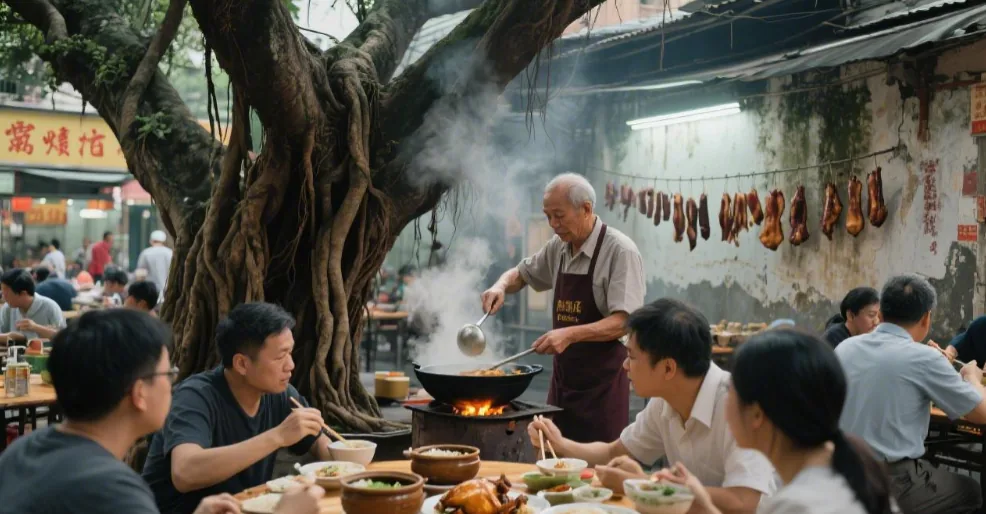
Coming to Day 4, I won’t arrange the itinerary according to “how much I still haven’t eaten,” but according to “how to make this Guangzhou trip more complete.” The previous three days have already covered Xihua Road, Pantong, Lizhiwan, and those different rhythms; if you still keep stuffing in the same dense way on the last day, the whole person will be tired and memories will be messy. Fangcun Banyan Tree is suitable for the end not because its fame is bigger than the previous days, but because its rhythm can just wrap up the feeling you ate your way through. This place is more about life, more relaxed, and more like the daily second half of Guangzhou. You aren’t here to shock your palate, but to look at this city a bit deeper for the last time.
I like starting the last day in the afternoon for very practical reasons. In Fangcun at noon, the sun is more direct and the street feels harder; many small shops are open, but the atmosphere hasn’t fully picked up. After 15:00, people start stopping under trees, crowds begin gathering at alley entrances, and the state of street snacks, treats, and small shop trades slowly feels right. You’ll find that this isn’t a place to eat heavily as soon as you arrive, but to walk and look for a while first, feeling how neighbors use this piece of the street at this time. The best state for Day 4 isn’t proving how much more you can eat, but putting the flavors of this trip in a more relaxed place.
If you’ve been staying near Liwan or the old city for the first few nights, heading out on the afternoon of Day 4 will be very comfortable. Organize your luggage before checking out and store it at the hotel, or pick it up later; it won’t affect this route. The Fangcun line itself doesn’t require getting up early and isn’t suitable for rushing. Even if you have to return home that night, I’d rather you leave the time for this relaxed finish than temporarily squeezing in another area. On a Guangzhou food route like this, the worst thing on the last day is greed.
15:00 Arrive at Fangcun to Start the Last Day
I think starting the last day at 15:00 is very appropriate. This time is neither early nor late, the body is fully awake, and the fatigue accumulated from previous days won’t be as obvious as when you just woke up in the morning. More importantly, a place like Fangcun needs popular energy to slowly gather before it has flavor. When you come out of the metro, you don’t need to rush into choices; walk along the street first and bring your speed down. On the last day, I’m not that obsessed with “what the first bite is” anymore, because the value of this day lies in whether the finish is smooth enough, not how bright the opening is.
Fangcun is a bit different from the places we went in the previous days. Xihua Road was for trying as you walk, Pantong was for slow preparation, Old Xiguan was for return confirmation, and Fangcun is more like putting these feelings back into daily life. You’ll clearly feel there’s a bit less “strategy guide vibe” here and more “this is how life naturally is.” The shops by the road aren’t in a hurry to show you anything, the people sitting under the trees aren’t in a hurry, and neighbors’ buying actions are very smooth. This kind of place is perfect for the end because you no longer need someone else to teach you how to eat, and you can make judgments more by your own feeling.
- Setting off in the afternoon of Day 4 is better for Fangcun than the morning
- Don’t schedule the last day too full anymore; both stomach and feet need space
- Walk slowly after exiting the metro; don’t look for the first shop immediately
- This afternoon is better for following the neighborhood feeling, not for checking off a list item by item
Every time I put Fangcun on the last day, my mindset naturally settles down. By this stage, there’s no need to pursue intense freshness; rather, it’s those very ordinary, steady street-side flavors that are more likely to stay in your head.
15:10–16:20 Walk the Old Streets of Fangcun First
From around 15:10, I basically just walk slowly, not rushing to buy or sit. It’s best to look at Fangcun’s old streets first. You see who is buying at the door, how they talk, how they buy, and whether they walk away with it or eat it standing; then see if the shop is fast, if the table is clean, and if the prep is organized. Many truly memorable old flavors in Guangzhou don’t rely on the storefront to pull you in first, but rely on this state of “doing stable business normally” that you see at a glance to keep you there.
Compared to previous days, this section of Fangcun is better for following live feelings. You don’t need a full list in advance; even just standing at a street corner for two or three minutes reveals some differences. Some shops look ordinary, but regular neighbors keep coming, showing the daily support is very steady; others have big storefronts and prominent locations, but those stopping are mostly passersby—that kind of shop isn’t necessarily bad, but it might not be where you should spend your time on Day 4. By this point, I’m unlikely to automatically give a shop extra points just because “many people mentioned it online”; I care more about its real state in this specific time slot.
One thing I really like about the old streets of Fangcun is the very clear change during the time before evening. At 15:00-plus, the street still carries a bit of daytime looseness; as it approaches 16:00, many small shops gradually enter their state. Standing at a street segment, you can see cooked food starting to sell faster, more guests appearing in sweet soup shops, and more people standing at doors chatting than before. For a food route, this sense of time is important, because many flavors aren’t the same all day; the truly smooth moments are often just as daily life is starting to heat up.
| Period | What Fangcun’s old streets are better for | What I’ll focus on |
|---|---|---|
| 15:10–15:35 | Walk a segment first, don’t rush to buy | Check street atmosphere and shop opening state |
| 15:35–16:00 | Stand for a while and observe a few shops | Check regular guest ratio, turnover speed, door rhythm |
| 16:00–16:20 | Decide whether to eat the first item | Choose by live feeling, not by fame |
- In the old streets of Fangcun, looking is more important than eating first
- Shops where neighbors always buy in passing are more worth noting
- This hour in the afternoon is great for judging a shop’s “daily state”
- Don’t go looking stubbornly for items on a list on Day 4; pleasing to the eye is more important than crowded
What I do most in Fangcun is stand under a tree or at a corner and watch how people flow for a few minutes. Once I understand who’s buying in passing, who’s here specifically, and who’s coming and going familiarly, many choices actually emerge.
16:20–17:30 Finding Old Flavors Around the Banyan Tree
By the later afternoon, I’ll slowly shift focus to around the Banyan Tree. What touches me most about this place isn’t “having many choices,” but its very complete atmosphere. People sit under the tree chatting, some leave after buying, some eat while standing and talking; the street won’t give you strong pressure, nor will it keep pushing you to the next shop. Many of Guangzhou’s old flavors are preserved in such ordinary-as-can-be life scenes. It doesn’t rely on loud introductions or deliberate packaging; you have to look slowly and eat slowly to understand why it’s remembered.
In the segment around the Banyan Tree, I usually only choose two items with the most daily feel—seeking smoothness over complexity. Day 4 is no longer suitable for high-intensity comparison, nor for adding things randomly for the sake of “richness.” On the contrary, what’s more important now is which bite makes you feel comfortable, and which bite can represent your impression of Guangzhou over these few days. Sometimes it’s not an old brand or a most popular item, but a very steady daily snack in a street-side shop. Eating that kind of thing, it might not “pop” with the first bite, but you’ll feel it’s connected to the surrounding streetscape, voices, tree shadows, and evening light.
This segment also has a practical benefit: the walking rhythm is just right. You eat a little, walk a short segment, and stop again; you won’t be pushed all the way by food like in a high-density food street. On Day 4, the body already has fatigue accumulated from three days, so this “eat a bit then walk a bit” rhythm is very suitable. Especially after 16:30, the streets of Fangcun will get smoother and smoother; cooked food, snacks, sweet soups, and roadside stalls all slowly enter a comfortable state, and choices at this time are more accurate than at noon.
| How to eat in this segment | Why at the Banyan Tree surroundings |
|---|---|
| Choose two items with the most daily feel | Better for slow appreciation, not for piling things up |
| Eat a small item, then walk a segment | Leave space for taste, and make the body more relaxed |
| Favor smooth, stable, and steady flavors | Day 4 is better for remembering “comfort,” not chasing excitement |
- Banyan Tree surroundings are better for choosing small but memorable flavors
- No need for strong flavor comparison at this point
- The street atmosphere itself is part of the experience
- What you want to remember on Day 4 is mostly not the most complex, but the smoothest bite
My favorite feeling near the Banyan Tree is that after finishing a small item, you can look up and keep watching how people around you sit, talk, and slowly live their day. That state of “having space to see life after eating” is very Guangzhou-like.
17:30–18:30 Continuing Another Round in the Evening
During this hour in the evening, I’ll treat it as “catching up on my favorite texture,” not “hurrying to finish what I haven’t eaten.” Many people easily lose their mindset balance on the last day; having seen and noted too much in the previous three days, they feel by the last night that there’s still a lot they haven’t encountered, so they add things randomly. This is the easiest way to wash out the impressions built up over the previous days. What you should really do on the evening of Day 4 is confirm the kind of flavors you like most once more, or find a comfortable place to sit and eat slowly, rather than proving you can still eat more.
I usually catch up on one bite of a type I clearly already like. It might be the kind of texture that was smoothest in the previous days, or the daily flavor I most wanted to try again while walking in Fangcun today. By now, judgments are out, and spending will be steadier. Day 4 is usually cheaper than Day 2’s formal dinner, and often more economical than when blindly trying things on Day 1—not because you eat less, but because you won’t buy randomly anymore. When a mature food route reaches the last day, spending is often more stable. Money isn’t spent on “trial costs,” but on things you already confirmed you truly like.
This segment is also very suitable for sitting down and eating slowly, rather than continuing to stand and swallow while walking. After the previous days, you’ll find that many Guangzhou flavors actually don’t need to be eaten while rushing; sitting down helps you taste the details better. This is especially true for Day 4 evening. You no longer need to rush the rhythm, and there’s no need to keep pushing yourself into a high-density state.
| How to arrange the evening round better | Reason |
|---|---|
| Catch up on your favorite types | Avoid letting the last day’s memory get messy |
| Sit down and eat a round slowly | Day 4 is better for a “steady end” |
| Don’t add too many extra items | Prevents rhythm and appetite from going out of control together |
| Spend according to your own taste | By this step, spending will be more targeted |
- On Day 4 evening, add what you like, not what’s unnecessary
- Spending will usually be more stable than previous days because judgment is mature
- Sitting down is more comfortable than continuing to eat while standing
- The last day is most afraid of adding randomly, not of having a bit less
When I reach the last day, the last thing I want to do is “see what I haven’t eaten and quickly fill the gap.” That looks busy, but it’s very easy to wash away the good flavors remembered before. Leaving that one bite you like most is more worth it.
18:30–20:00 Wrapping Up Slowly in Fangcun at Night
During this hour and a half at night, I prefer to leave it for a “slow ending.” You can continue walking or find a place to sit; you don’t necessarily have to keep eating. After walking for four days, the truly comfortable wrap-up isn’t another rush, but letting the favorite flavors from these days slowly line up in your head. A city like Guangzhou is very suitable for ending this way. Its goodness isn’t giving you strong stimulation in a short time, but building up bite by bite, step by step. In this last period, the slower you are, the more you can remember it.
I really like this bit of residual warmth in Fangcun at night. The sky slowly goes down, street sounds are softer than in the day, some people in shops are still busy while others are wrapping up, and the people under trees and by the road aren’t as hurried as during mealtime. Walking a segment now, you’ll naturally start recalling the previous days: the excitement of trying-as-you-walk on Xihua Road, the relaxation of slow preparation in Pantong and Lizhiwan, the sense of certainty when confirming in Old Xiguan on Day 3, and then today’s wrap-up in Fangcun with its strong sense of life. They aren’t separate; it’s exactly these different rhythms put together that make the whole route work.
If you have to return home that night, I will also try to leave this last segment and not arrange it too fragmented. Once you return to the rhythm of transport and luggage, the person will immediately switch states. The value of this last segment in Fangcun is that it can help you keep the “still in Guangzhou” feeling a bit longer. Even if you just buy something light and sit for a few minutes to watch the street wrap up, it’s more meaningful than rushing to another shop.
- You can stop eating a lot during this period at night
- Walking and sitting to watch the street is a way to finish in itself
- Day 4 is best for going over the flavors you liked in previous days in your head
- If returning home that day, still try to leave some time for this segment
I’ve always felt that the best way to end Guangzhou is not to “go hard for the last time,” but to walk slowly and slowly remember these days. A place like Fangcun is particularly suited for this because it won’t rush you; it will only let you naturally bring your footsteps down.
Related Guides
- Guangzhou 4-Day Hiking Tour | Baiyun Mountain Crossing + Huolushan Forest Park + Niutou Mountain, Hardcore Off-Road Route for Outdoor Enthusiasts
- Guangzhou 5-Day Citywalk | Tianhe South Road No.1 + Tiyu Xilu Heng Street + Liede Village, Hidden Alley Treasures Behind the Prosperous CBD
- 4-Day Family Trip to Guangzhou | Chimelong Safari Park + Birds Park + Guangdong Science Center, Stress-Free Guide for Parents
- Guangzhou 5-Day Lakeside Cycling Tour | Bio Island Greenway + Haizhu Lake + Baiyun Lake Park, The Most Beautiful Two-Wheel Route Through Urban Water Systems
- Guangzhou 4-Day Music & Theater Tour | Xinghai Concert Hall + Guangzhou Opera House + Friendship Theatre, A Visual & Auditory Journey of Elegant Art and Supreme Acoustics






