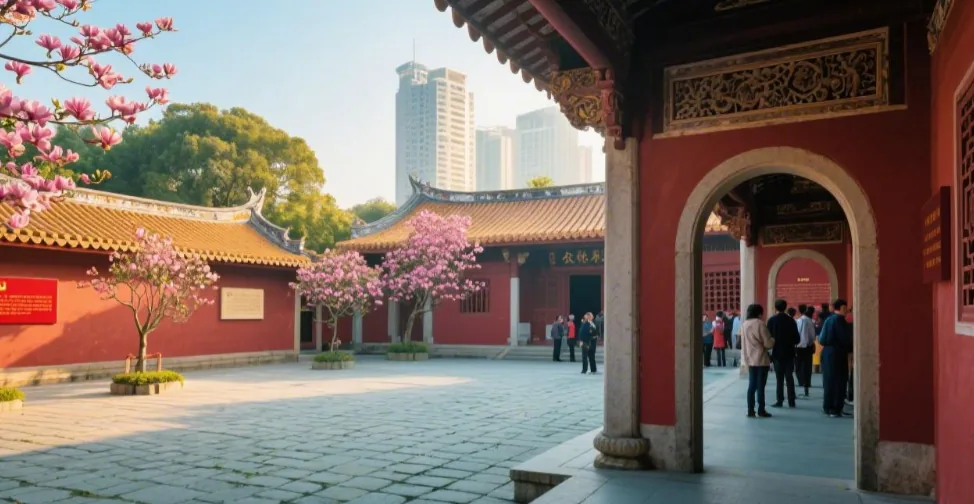
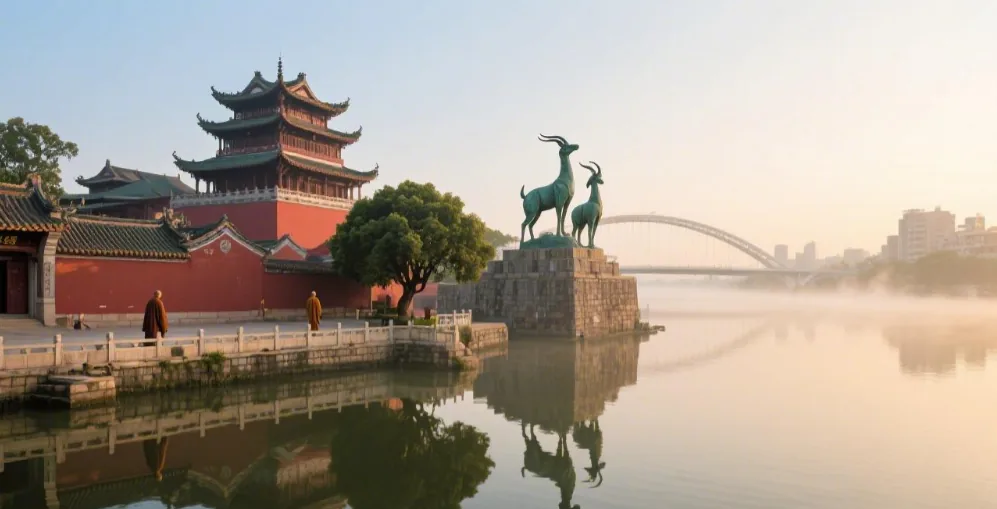
Day 1: Nanyue King Museum, Exploring the Earliest City and Kings of Guangzhou
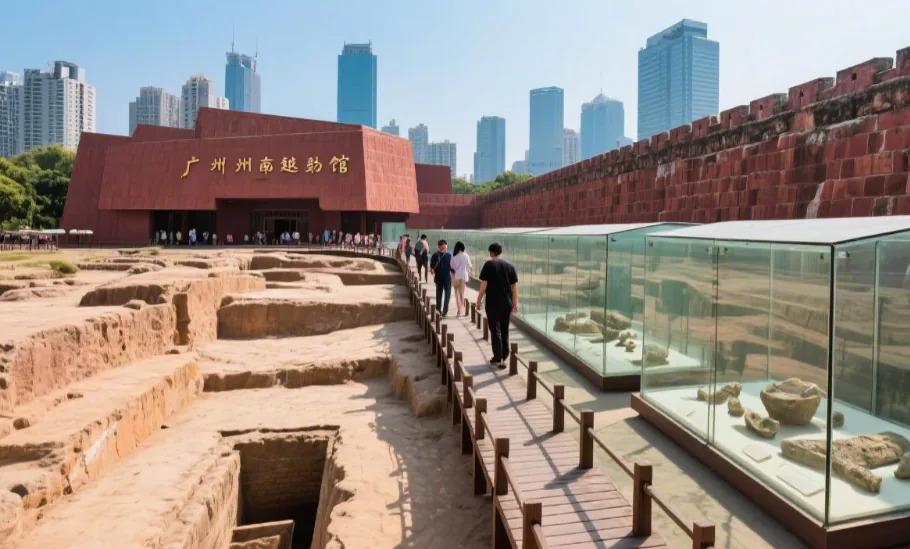
I would reserve the most important part of the first day for the Nanyue King Museum, specifically visiting the King’s Tomb area first. I won’t leave it for the afternoon or try to cram it in with other major museums. On the first day, your attention is at its peak and your legs are fresh, making it the perfect time for the King’s Tomb. This isn’t a place you can just breeze through in ten minutes; it serves as the starting point of Guangzhou’s historical timeline. Once you understand the Nanyue King’s Tomb, the excavated artifacts, the identity of the tomb owner, and the urban layout at the time, your visits to Sun Yat-sen Memorial Hall, the Peasant Movement Institute, and Beijing Road in the following days will form a connected narrative rather than a collection of isolated sights.
I usually set my departure time around 08:30. Staying around Gongyuanqian, Beijing Road, or Haizhu Square is convenient; you can take the metro to Yuexiu Park Station, and the walk to the museum is easy. I don’t recommend staying too far away on the first day, especially in areas like Pazhou or Panyu that require multiple transfers. Historical tours are exhausted not by walking, but by fragmented transportation. Spending 40 minutes changing trains and then searching for the entrance drains your energy before you even start the exhibit, leading to a superficial experience.
The King’s Tomb area of the Nanyue King Museum is best explored by “following the flow” rather than immediately fixating on specific artifacts for photos. My habit is to enter the museum to observe the spatial relationships first, then look at key artifacts, and finally read the explanatory texts. The greatest value here isn’t just in a single object, but in the relationship between the tomb itself, the excavation system, the hierarchy, and the early urban pattern of Guangzhou. Once you perceive this layer, you’ve truly “seen” the King’s Tomb.
| Time | Route | How I Arrange It |
|---|---|---|
| 08:30 | Depart from Hotel | Staying near Gongyuanqian or Beijing Road saves time; the metro is reliable. |
| 09:00—09:15 | Arrival and Entry | Don’t rush; get a clear view of the entrance and the visiting route. |
| 09:15—10:10 | Walk the First Half of the Main Line | Focus on the tomb structure and overall layout without lingering too long. |
| 10:10—11:00 | View Artifacts and Explanations | Focus on period, identity, and usage; don’t read every single sign. |
| 11:00—11:30 | Review Key Displays | Revisit content you haven’t fully processed yet. |
| 11:40—12:40 | Lunch | Eating around Yuexiu Park or returning to the Gongyuanqian area is smoother. |
| 13:20—15:00 | Slow Walk in Yuexiu Old Town | Slow down in the afternoon to see the neighborhoods; avoid heavy content. |
| 15:20—17:00 | Free Adjustment | If energetic, explore more streets; if tired, return early to rest. |
When I enter the King’s Tomb area, I usually focus on the “Tomb” first. By understanding the tomb’s structure, its specifications, and the status it represents, your understanding of the artifacts will be much smoother. Many people do the opposite—searching for famous exhibits as soon as they enter, feeling they’ve “seen it,” and then leaving. This scatters the most important information. The content of the King’s Tomb can be grasped in four layers: the tomb, the person, the artifacts, and finally, the city. The tomb tells you the rank, the person tells you the identity, the artifacts tell you about exchange and craftsmanship, and the city tells you why Guangzhou was already an extraordinary place over 2,000 years ago.
- I spend the first 40 minutes walking the main line to avoid breaking the rhythm with display cases.
- I only look for three types of information in text descriptions: period, identity, and usage. Don’t waste time on repetitive phrasing.
- Stop for items that illustrate rank, etiquette, craftsmanship, and exchange relationships.
- Viewing the whole first and then focusing on details is more effective than stopping at a single artifact from the start.
- Reserve at least two hours for the King’s Tomb; 2.5 hours is even safer.
On my first day at the King’s Tomb, I don’t aim to “see a lot,” but to “see clearly.” By following the space, identity, and era, a structure forms in your mind. Once this structure is established, the rest of your Guangzhou history tour won’t feel scattered.
In terms of content, the most valuable thing about the King’s Tomb area isn’t “how many exhibits it has,” but how it establishes the historical weight of early Guangzhou. Many people associate Guangzhou with modern trade, arcade houses (qilou), the Pearl River, and Shamian. However, if you clear up the Nanyue King line on the first day, you’ll realize Guangzhou didn’t just become important later—it was the political and exchange center of the Lingnan region early on. This realization colors the rest of the trip. On day two, you see modern public architecture at Sun Yat-sen Memorial Hall; on day three, a revolutionary site at the Peasant Movement Institute; but on day one at the King’s Tomb, you see the very roots of the city.
I don’t recommend a packed schedule. After entering at 09:00, try not to let photography interrupt you for the first hour. It’s not that you shouldn’t take photos, but doing it too early keeps your focus on “capturing the image” rather than letting the information sink in. On the first day of a 5-day tour, you need to establish the chronological foundation of Guangzhou’s history. Once you’ve finished the first round, you can go back to take photos more leisurely.
After leaving the museum, don’t go too far for lunch. I usually choose between two directions: either solve it near Yuexiu Park or return to the Gongyuanqian area. The former saves walking, while the latter makes it easier to connect to the old town route in the afternoon. Don’t make lunch too complicated; the priority is saving energy for the afternoon. If you spend over an hour traveling and queuing for a specific restaurant, your afternoon state will noticeably decline.
| Lunch Planning Strategy | Suitable Situation | My Choice |
|---|---|---|
| Near Yuexiu Park | Want to walk less | Finish quickly to preserve energy for the afternoon. |
| Back to Gongyuanqian Area | Connect to the afternoon walk | Ready to start the next route immediately after eating. |
| Avoid crossing districts | Afternoon street walking planned | Reduce transport and queuing fatigue. |
In the afternoon, I prefer to give time to the streets of Yuexiu Old Town rather than cramming in a second museum. The reason is practical: the information density of the King’s Tomb is high, and your brain needs a buffer. This buffer isn’t lying down in a hotel, but switching to a lighter perspective—moving from the hall to the street, from display boards to the city’s surface. Yuexiu is perfect for this. You don’t need to memorize more info; just walk and observe the intersections, old buildings, street scales, and the flow of people. The “centrality” of Guangzhou you felt in the museum will feel more real in the streets.
After 13:00 or 14:00, I usually slow down and don’t set strict checkpoints. The first day isn’t for “blitz” schedules—avoid “big museum in the morning, another museum in the afternoon, and a night tour.” History tours are about continuity, not quantity. If you see four spots in a day, you might only remember “I went to many places.” But if you look deeper into the King’s Tomb and leave the afternoon for Yuexiu, your memory will be more complete.
- The afternoon is for street layers, not heavy museums.
- Don’t rush the number of sights; one or two street sections are comfortable.
- Sit down for 10 minutes when you find a nice spot to let the morning info settle.
- Ending the day a bit later is fine, but don’t exhaust yourself.
In the afternoon of the first day, I care about “connection,” not “quantity.” In the morning, you see Guangzhou 2,000 years ago; in the afternoon, you see the city surface still running today. Placing both in the same day creates a contrast that is more valuable than hitting extra tourist spots.
Cost-wise, the first day is easy to control. The museum ticket is inexpensive. The real risks of overspending are the hotel location and repeated taxi rides. Staying in the old town might cost a bit more per night, but it trades for transport efficiency. For a 5-day trip, this is usually worth it. On day one, starting with less hassle helps you get into the “vibe” easier. History tours aren’t a physical competition; a smooth rhythm is more important than saving a bit on fare.
A practical detail: shoes and backpacks. I don’t carry heavy loads on the first day. The King’s Tomb requires steady walking and sustained attention for 2-3 hours, not specialized equipment. Choose light shoes with soft soles, and just bring water, tissues, and a power bank. If your pack is too heavy, your shoulders and feet will tire by noon, making the afternoon walk much less enjoyable.
Day 2: Sun Yat-sen Memorial Hall Area, Approaching Modern Guangzhou
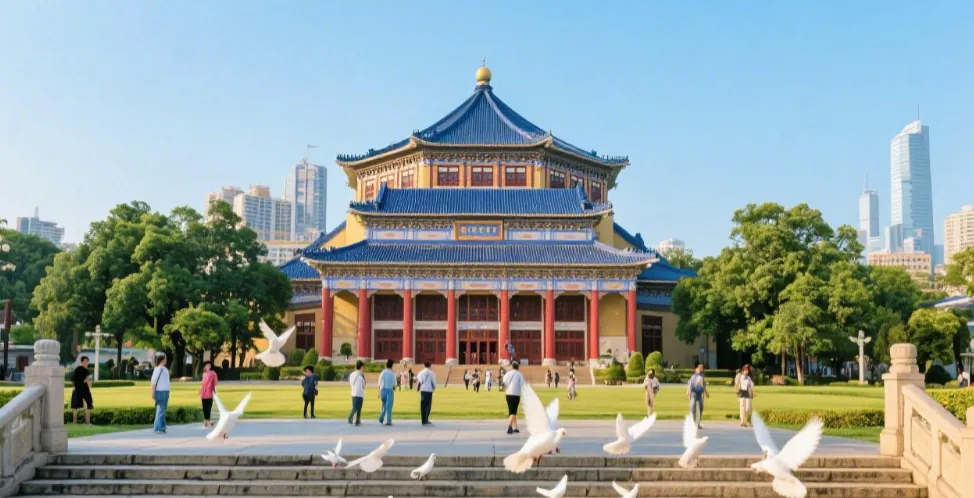
On the second day, I slow down significantly and leave time for the Sun Yat-sen Memorial Hall area. Located at No. 299 Dongfeng Middle Road, the park is usually open from 06:00 to 22:00, and the main building from 09:00 to 17:30. Tickets are 10 for full price and 5 for half price. I usually go in the morning or early afternoon to avoid any temporary closures for performances or meetings. This area is best seen from the outside first, then the inside, and finally connecting it to the surrounding streets.
There is a practical reason for this arrangement. After Day 1 at the Nanyue King Museum, your mind is full of ancient Guangzhou. On Day 2, you move from ancient royal tombs to modern public architecture and city order. This switch is fascinating. You realize Guangzhou doesn’t just have an “old town flavor” or commercial streets; it has distinct urban expressions for different eras. Sun Yat-sen Memorial Hall is one of the most stable and easily understood expressions. Its architecture, plaza, and axis are so complete that you don’t need to be an expert to see how it differs from a typical park building.
| Time | Route | How I Arrange It |
|---|---|---|
| 09:00 | Depart from Hotel | Staying in Gongyuanqian or Beijing Road makes the commute smoother. |
| 09:30—10:00 | View External Space | Don’t rush inside; walk the plaza, steps, and the main facade. |
| 10:00—11:20 | Enter the Main Building | Focus on the openness, internal structure, and details. |
| 11:20—11:40 | Return Outside | View the front and greenery from new angles to complete the understanding. |
| 11:45—12:45 | Lunch | Eat along Dongfeng Road or toward the old town; don’t go far. |
| 13:10—15:00 | Short Walk in Surrounding Old Town | Connect the monument to the reality of the streets. |
| 15:20—16:40 | Continue Walk or Return Early | Save energy for Day 3 and 4; don’t turn it into a “death march.” |
When I arrive, I don’t charge straight for the door. The first layer to appreciate is the external scale. Standing on the plaza looking at the building, you see the proportion between the steps, the lawn, and the structure. Many people find the entrance, go in, and think “the outside was okay too” later. It’s better to stay outside for 20-30 minutes first. Once you’ve seen the front, sides, and the overall field of vision, the sense of “monumentality” inside won’t feel hollow. It’s a complete spatial arrangement oriented toward the city.
- I usually circle the exterior once before stopping at a prime spot for a long look.
- Leave 20 to 30 minutes for the exterior, or you’ll only remember the colors, not the spatial relationship.
- Morning light is more stable for seeing the rooflines and the openness of the plaza.
- This isn’t a place for fast walking; speed causes you to miss the “weight” of the site.
Inside, I focus on three things: the openness of the space, the internal details (like the ceiling and decorations), and the view back out toward the commemorative axis. While many only take photos outside, the interior explains why this building is truly worth seeing. The outside gives you majesty; the inside gives you order. In a fast-changing city like Guangzhou, a perfectly preserved, large-scale public memorial space says a lot about its place in urban memory.
What I care about most at Sun Yat-sen Memorial Hall isn’t a specific photo angle, but the feeling of walking from the outside in and back out again. If treated as a “check-in” spot, it’s over in 30 minutes; if you stay, its weight becomes palpable.
I don’t recommend adding too many other museums on this day. Day 2 is about subtraction. Leaving the main time for one building and one neighborhood makes it easier to process and remember. Lunch should be simple—near Dongfeng Road or on the way to the old town. Avoiding cross-district travel during lunch keeps the rhythm intact. On the second day, as your body adjusts to the trip, a steady pace ensures the remaining three days are easier.
| Lunch Planning | Suitable Situation | My Choice |
|---|---|---|
| Eat nearby and continue | Want to save afternoon for streets | Saves the most time and keeps the rhythm. |
| Eat toward the old town | Connect to the afternoon walk | No backtracking required. |
| Avoid crossing districts | Don’t want to fragment the day | Saves physical energy and navigation time. |
In the afternoon, I look for “how the Memorial Hall stays in today’s Guangzhou.” The easiest way is to walk the surrounding old town without entering more heavy museums. The Yuexiu area here has a mature road network and is very visitor-friendly. Walking from a commemorative space into a living street highlights a fascinating contrast: from a formal memorial to a bustling urban center. This transition is worth experiencing because history isn’t just in halls; it’s on the corners and streets people use every day.
I split the afternoon into two parts: the “just out of the memorial” phase where the building’s structure is still in your head, and the “pure walking” phase where you stop trying to memorize things. By Day 2, you need space to digest the information you’ve absorbed. This short walk is the perfect buffer.
- No heavy museums in the afternoon keeps the focus sharp.
- The surrounding old town is for looking, not “completing” a checklist.
- 20 to 30 minutes on one street is better than hopping between ten spots.
- Find a place to sit for 10 minutes to let the morning’s impressions sink in.
The beauty of Day 2 isn’t “I entered this building,” but “I walked out of this building and saw today’s Guangzhou.” That connection is worth more than an extra tourist site.
Costs are low today. Tickets for the main building are only 10, and the park is free. The biggest factor is your hotel location. If you are close to a metro or within walking distance, Day 2 is high-reward and low-cost. For a first-timer, this is the perfect way to establish a first impression of modern Guangzhou because it is clear and concentrated. Just don’t rush it—this is a day for slowing down.
Day 3: Peasant Movement Institute and Old Town Streets, Sensing the Pulse of the Old City
On Day 3, I focus on the Peasant Movement Institute, not just for its significance, but because it perfectly bridges the previous days. After ancient roots on Day 1 and modern monuments on Day 2, the Peasant Movement Institute on Day 3 makes the timeline flow naturally. Located at No. 42 Zhongshan 4th Road, it’s right at Metro Line 1, Peasant Movement Institute Station, Exit C. It is open from 09:00 to 17:30 (closed Mondays), free to enter, and currently requires no reservation—just a security check. They even offer free scheduled tours, which are very helpful.
I make this day quieter. It’s not a site that wins you over with sheer size; it’s about understanding. You have to observe the relationship between the courtyards, halls, and classrooms to see how it was used and why it survives in the city center. Its beauty lies in the spatial traces of its function. If you go too fast, it’s just another “been there” spot; if you follow the order, you get a structural memory.
| Time | Route | How I Arrange It |
|---|---|---|
| 09:20 | Arrive at the Station | The old town rhythm starts immediately; no need to hunt for the way. |
| 09:30—10:10 | Observe Overall Courtyard | Don’t read boards yet; see how the gate, court, and hall relate. |
| 10:10—11:20 | Enter Main Exhibits | Follow chronological order; focus on key years and people. |
| 11:20—11:40 | Revisit Key Spaces | Go back to the areas that felt information-dense. |
| 11:40—12:40 | Lunch | Eat along Zhongshan 4th Road or Beijing Road; stay local. |
| 13:00—14:40 | Walk Zhongshan 4th Road | Transition from the hall to the street to connect site to city. |
| 14:40—15:30 | Sit Down in a Neighborhood | Don’t rush; let the morning’s content settle. |
| 15:40—17:00 | Small Scale Review | Walk a favorite stretch again or end early. |