


Day 1: Arrival in Guangzhou and Getting Settled
I specifically chose an afternoon flight to land in Guangzhou, thinking of avoiding the traffic pressure of the morning rush hour. Exiting from Baiyun Airport T1 Terminal, I followed the signs to find Metro Line 3 (towards Airport South), rode for 12 stations to Shiqiao Station, and checked the station map for the exit—Exit B leads to a turn right for 50 meters to reach the Pan 12 bus station. I had checked this bus route in advance; Pan 12 (towards Yuyin Shanfang Terminus) goes directly to the vicinity of the scenic area, with a 40-minute journey and a fare of 2 yuan. If taking a taxi, the navigation showed about 35 yuan, and one would have to worry about traffic jams, so the bus is indeed cost-effective. Counting the waiting time, the whole trip took about 1 hour, 20 minutes faster than originally planned, and I arrived just in time for the sunset glow upon getting off.
The accommodation chosen was the 7 Days Inn near Panyu Square (Shiqiao Metro Station Branch), at 300 yuan/night including breakfast. I compared three hotels when booking, and this one won because it is close to both Yuyin Shanfang and Baomo Garden—measured by navigation, it is a 15-minute drive to Yuyin Shanfang and only a 5-minute walk to the bus station, making it convenient even with luggage. The room was small but clean, the sheets were freshly changed, the bathroom had separate dry and wet areas, and the window faced the residential green belt, so no road noise could be heard at night. The receptionist even reminded me: “Go to Yuyin Shanfang early tomorrow; there are fewer people before 9:00, and the light is good for photos.” This advice really came in handy later.
Having rested enough in the evening, I strolled along the small alley next to the hotel, where several mobile stalls were set up under the arcades of the old street. The most conspicuous was an old woman’s starfruit stall, with yellow and green fruits piled in bamboo baskets, stems still carrying fresh leaves. She said: “Just picked from my own orchard, 10 yuan for 3 jin, very sweet!” I picked two medium-sized ones with smooth skin and no spots, feeling slightly soft but not collapsed when squeezed. With the first bite, the sourness rushed out first, followed by clear and sweet juice; the flesh fiber was fine without any astringency, much better than the ripened goods bought in supermarkets. The aroma from a nearby mung bean paste shop wafted over, but I resisted buying—saving my stomach for the main meal tomorrow. This stroll gave me a general sense of Guangzhou’s summer humidity and its lively atmosphere.
Here is a small tip: Don’t rush to visit attractions when arriving in Guangzhou in the afternoon; walk around the accommodation for half an hour first. Not only can you adapt to the climate, but you can also discover small stalls often visited by locals, which are more authentic than the “internet celebrity shops” recommended in guides.
|
Project
|
Method
|
Cost (Yuan)
|
Time
|
Remarks
|
|---|---|---|---|---|
|
Airport to Hotel
|
Metro + Bus
|
Metro 7 + Bus 2 = 9
|
About 1 hour
|
Line 3 to Shiqiao Station, transfer to Pan 12
|
|
Accommodation
|
Economy Hotel
|
300
|
4 nights
|
Breakfast included, 5-minute walk to bus station
|
|
Starfruit Tasting
|
Roadside Stall
|
10 (for 3 jin)
|
Instant
|
Buying 2 cost about 7 yuan, sweet and sour and juicy
|
Day 2: In-depth Tour of Yuyin Shanfang
- Transportation: At 8:30 am, I hailed a Didi at the hotel entrance. The driver was a Panyu local and said that Yuyin Shanfang has many local family tours on weekends, so he suggested going early. The journey took 20 minutes via Yusuan West Road, passing a rice field that looked comfortable in its lush green. The fare was 15 yuan, 15 minutes faster than the bus. Getting off at the scenic area parking lot, I looked up and saw the four gold-plated characters for “Yuyin Shanfang.”
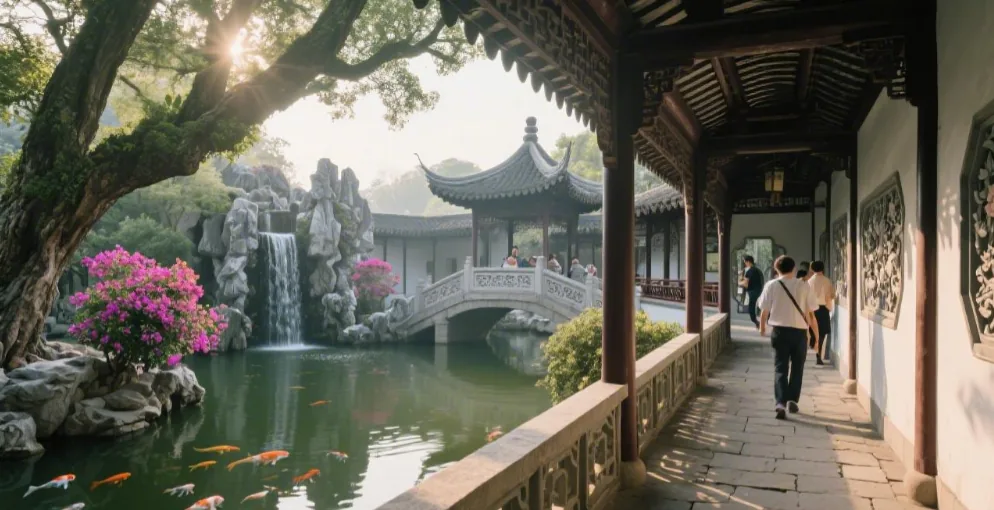
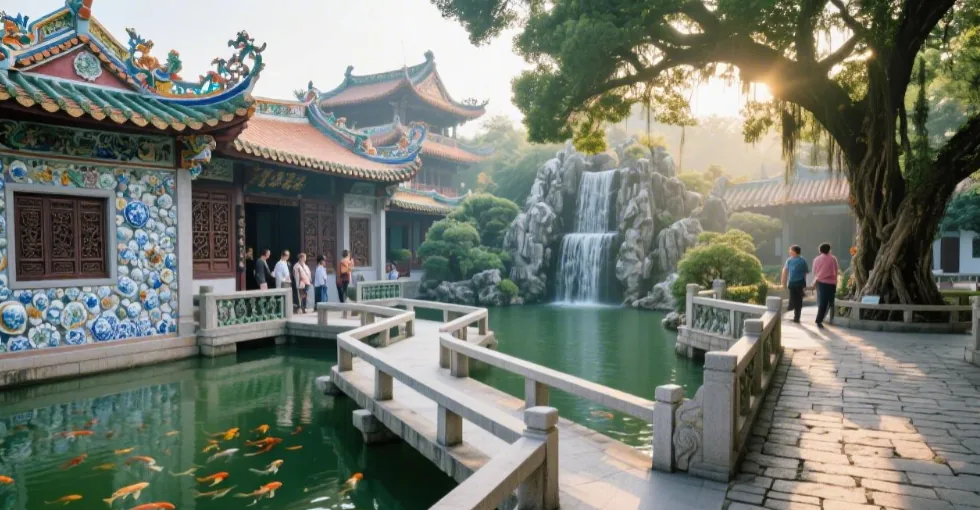
- Route: After entering, I first headed for Shenliu Hall, the “heart” of Yuyin Shanfang. The Hundred Birds Facing the Phoenix wood carving screen inside is as tall as a person and two meters wide. I looked closely—the phoenix’s tail feathers used three layers of openwork carving, with fine sawteeth carved on the edges of each feather. As the sunlight filtered through the window lattice, the feather patterns reflected light like they were real. The surrounding birds included sparrows, magpies, and light-vented bulbuls, some tilting their heads to preen and others spreading wings as if to fly; even the curvature of their claws grasping branches was different, typical of Cantonese “exquisite” craftsmanship. A piece of old calligraphy and painting hung on the back wall of the hall, dated “the fifth year of Tongzhi,” revealing that this garden is over 150 years old.Next was the Linchi Annex, where the wooden lattice windows face a pond planted with plantains and willows, their leaves drooping to the water surface and shadows breaking into green patches. I took a small stool and sat there, watching two black carps swimming slowly, occasionally splashing small water flowers with their tails. When the lotus flowers are in full bloom in summer, this place must look like a living painting.
The Huanhong Kuagü Corridor Bridge is a must-walk, with red-painted columns and green glazed tiles, and vines climbing over the bridge roof providing shade in summer and shelter from rain in winter. There is an open space in the middle of the bridge facing a water pavilion. I took a full-body photo—the background was green trees, flying eaves, and flowing water under the bridge, looking good even without editing. The wind blew from the lake surface while walking on the bridge, making it 2 to 3 degrees cooler than under the tree shade; no wonder locals say “Walking across this bridge dispels half the summer heat.”
The octagonal pavilion of Linglong Water Pavilion is a great place to watch fish. Copper bells hang from the pavilion corners, tinkling when the wind blows. I squatted on the stone railing by the pavilion and watched the koi competing for food: red like fire, gold with orange spots, and white with black borders. Throwing a handful of fish food (5 yuan a pack) could create waves half a meter high. A red koi jumped up to grab the food, its tail brushing the water and splashing a little on my trouser leg.
- Lunch: 50 meters outside the East Gate of the scenic area, “Chen Kee Roast Meat” with its blue sign is very conspicuous. Seeing I was alone, the owner recommended the roast goose rice, saying they use Qingyuan black-brown geese roasted fresh daily. At 48 yuan a portion, the roast goose skin was so crispy it cracked with a poke of a chopstick, and the meat juice seeped into the rice along the grain. The rice became soft and fragrant after absorbing the juice. The daily soup was winter melon and barley, given for free, which was refreshing. An old man at the next table said he comes to eat once a week, just for this “Wok Hei” (breath of the wok).
- Afternoon Stroll: At 2:00 pm, I returned to the garden to see Yu Garden (Miss’s Building), located in a separate small courtyard in the northwest corner. It is a two-story small attic with green brick exterior walls, and the door is a Tanglong door with wooden frames carved with lotus branches. The stairs were so narrow that one could only pass sideways, and the handrails were made of old wood polished bright—likely from the ladies going up and down in the past. Opening the window allows a view of the back garden; closing the door to read or embroider must have been very quiet indeed. The rockery in the back garden was piled with Yingde stones with ferns growing in the gaps. A small waterfall flowed from the top of the rocks, and the water hit the stone pond with a “ding-dong” sound, like rain but not noisy. I sat on a stone bench and listened for 10 minutes.
- Expenses: Entrance fee 18 yuan (bought by scanning a code on-site, no queue), lunch 48 yuan (roast goose rice + soup), transportation 15 yuan (Didi), totaling 81 yuan.
A small observation: At Linglong Water Pavilion, I met a mother with a child, teaching the child to recognize fish—”red is fire, gold is the sun, and white is the cloud.” The child pointed at a white fish with black spots and shouted “it looks like a kitten,” words more vivid than the scenery itself.
|
Project
|
Details
|
Cost (Yuan)
|
Remarks
|
|---|---|---|---|
|
Transportation
|
Didi Express (Hotel – Scenic Area)
|
15
|
Depart at 8:30, 20-minute drive
|
|
Ticket
|
Yuyin Shanfang Adult Ticket
|
18
|
Scan code to purchase on-site
|
|
Lunch
|
Chen Kee Roast Goose Rice + Soup
|
48
|
50 meters outside East Gate, free soup
|
|
Total
|
81
|
Including transport, ticket, meal
|
Key Reminder: Do not touch the wood carvings in Shenliu Hall as they have protective glass; the Huanhong Kuagü Bridge is backlit in the morning, so taking portraits is better after 3:00 pm; the stairs in Yu Garden are steep, so wear non-slip shoes.
Day 3: Full Day Experience at Baomo Garden
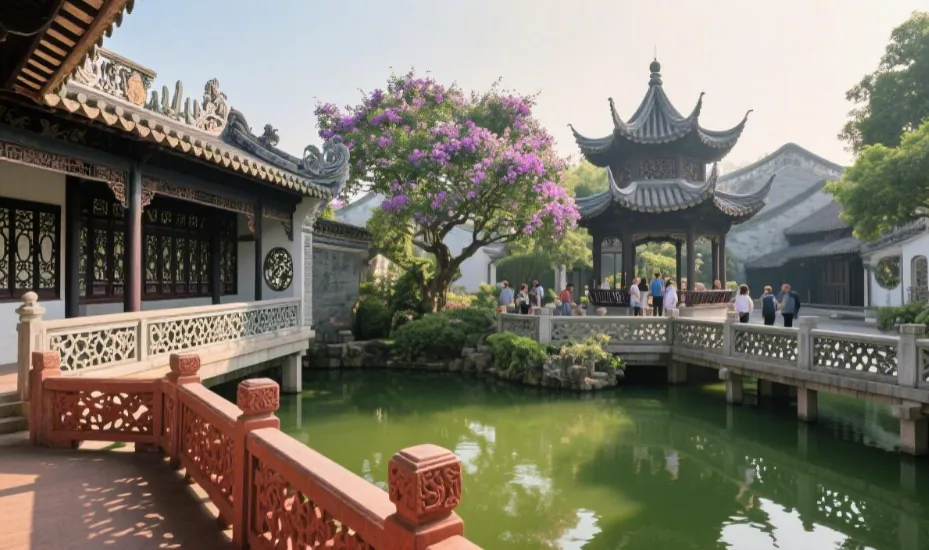
- Transportation: At 8:45 am, I called a taxi from the hotel. The driver was a local master and said that Baomo Garden gets crowded after 9:00 am on weekends, so going early allows for quiet enjoyment. The journey took 35 minutes via Yusuan West Road and then the Dongxin Expressway, passing a lychee forest with green fruits hanging from the branches. The fare was 25 yuan. Getting off at the South Gate, I looked up to see three gilded characters for “Baomo Garden” on the vermilion gate, with the manes of the stone lions on both sides carved so that every hair stood upright.
- Main Path: Upon entering, I first headed for the Purple Grotto Boat, an imitation of a Song Dynasty pleasure boat. The wood carvings on the hull were all stories—the gourd of Li Tieguai in “Eight Immortals Crossing the Sea,” the lotus basket of the “He-He Er Xian,” and even the anchor chain links were carved with grass patterns. The three characters “Baomo Garden” on the bow were in running script with powerful strokes; I heard a nearby guide say they were written by a Lingnan calligrapher.Next was the Zhiben Hall, where the brick carving “Guo Ziyi’s Birthday Celebration” occupied an entire wall. I counted and found there were 108 characters: the God of Longevity stroking his beard and laughing, grandsons either holding gift boxes or bowing, and distant musicians pressing strings or drummers raising mallets. Even the wine cups on the table were carved with lotus patterns, and the meander patterns on the rims were clearly visible. The brick carving used a “deep carving” technique, allowing one to feel the layers of the folds in the characters’ robes, typical of the “using a knife as a pen” style of Cantonese brick carving.
The Longtu Hall behind Zhiben Hall was originally a private school in the Qing Dynasty and now displays old desks and the four treasures of the study. The Qing Dynasty official robes in the glass cabinet were stone-blue with a crane embroidered on the rank patch and amber frog buttons; the porcelain included blue and white flower vases with the mark “Made in the Qianlong Reign of the Great Qing,” with patterns wrapping around three times and a smooth glazed surface. The sign read “Converted to an exhibition hall in 1920,” and one could imagine students studying here in the past.
The Porcelain Sculpture Exhibition of Along the River During the Qingming Festival was too shocking—using millions of porcelain pieces to assemble the banks of the Bian River. White porcelain pieces outlined the boatmen’s bamboo hats, green pieces shaped the vendors’ shoulder poles and customers’ baskets, and blue and white pieces even paved the ripples of the water under the Rainbow Bridge. Looking closely, I could feel the edges of the bamboo strips on the boat canopies and the peddlers’ pellet drums, giving a “tactile” sense compared to just looking at a painting.
The Rose Garden was to the east of the exhibition, with climbing frames covered in green leaves forming a natural arch. Roses of various colors were blooming together: pink like sunset, yellow with gold edges, and white with a layer of fuzz. I took a close-up; the morning dew hung from the tips of the petals, shining like small diamonds in the sun, and the wind carried a scent mixed with the smell of grass, which was very pleasant.
- Lunch: At 12:30 pm, I had Wonton Noodles for 30 yuan in the park’s simple dining area. The lady at the stall said the soup base was simmered all night with dried dace and pork bones. Taking a sip—it was so fresh it was amazing, not fishy at all. The wonton filling was a whole shelled shrimp mixed with pork (30% fat, 70% lean), juicing when bitten; the noodles were bamboo-pressed noodles, cooked until chewy, and fragrant when mixed with the yellow chives in the soup. There was a free pickled radish on the table, which was crunchy and refreshing, and I even finished all the soup.
- Afternoon Activities: At 1:30 pm, I bought fish food for 5 yuan/pack (the uncle selling it said, “Don’t buy the 10 yuan one; this pack is enough for half an hour, the fish love it”), and went to feed the koi. Red, gold, and white koi swarmed together. A red koi jumped up to grab the food, its tail brushing the water and splashing my trouser leg.At 2:00 pm, I went to Zidai Bridge to take a panoramic photo—the stone arch bridge connects to the island in the middle of the lake, the bridge arch reflecting in the water to form a circle, and a large banyan tree on the island casting shadows on the bridge like an ink painting. I used the wide-angle lens on my phone to capture the bridge, island, and tree all together, looking good even without editing.
The Ash Carving in the Thousand-Elephant Corridor was a highlight. Flowers, birds, and auspicious beasts were molded on the corridor roof and walls: peony petals were layered with lime and glutinous rice paste, the beasts’ eyes were inlaid with black glass, and the peacock’s tail feathers stood out one by one. I heard from a staff member that these ash carvings were made by master craftsmen in 1980 using mineral pigments, so they haven’t faded for decades. I touched them; the surface was a bit rough, the texture of old craftsmanship.
- Expenses: Entrance fee 54 yuan (bought on-site, entered by swiping ID card), lunch 30 yuan (wonton noodles), fish food 5 yuan, transportation 25 yuan (taxi), totaling 114 yuan.
In the porcelain sculpture exhibition, I met a retired history teacher. Pointing at the “Rainbow Bridge,” he said: “Look at the stone lions on the bridge railing, don’t they look like the ones in front of the Hall of Supreme Harmony in the Forbidden City? These were replicated by craftsmen according to ancient paintings.” He gestured as he spoke, explaining in more detail than a guide.
|
Project
|
Details
|
Cost (Yuan)
|
Remarks
|
|---|---|---|---|
|
Transportation
|
Taxi (Hotel – Baomo Garden South Gate)
|
25
|
Depart at 8:45, 35-minute drive
|
|
Ticket
|
Baomo Garden Adult Ticket
|
54
|
Swipe ID card to enter
|
|
Lunch
|
Wonton Noodles in Park Dining Area
|
30
|
Dried dace soup base, includes free pickled radish
|
|
Fish Food
|
Koi feeding pack (5 yuan/pack)
|
5
|
Recommended by the uncle, enough for half an hour
|
|
Total
|
114
|
Including transport, ticket, meal, fish food
|
Key Reminder: Baomo Garden is large, so wear sports shoes instead of leather shoes; do not use flash in the porcelain sculpture exhibition to protect the pieces; do not pick at the ash carvings in the Thousand-Elephant Corridor, as the lime falls off easily.
Day 4: Free Time and Local Experience
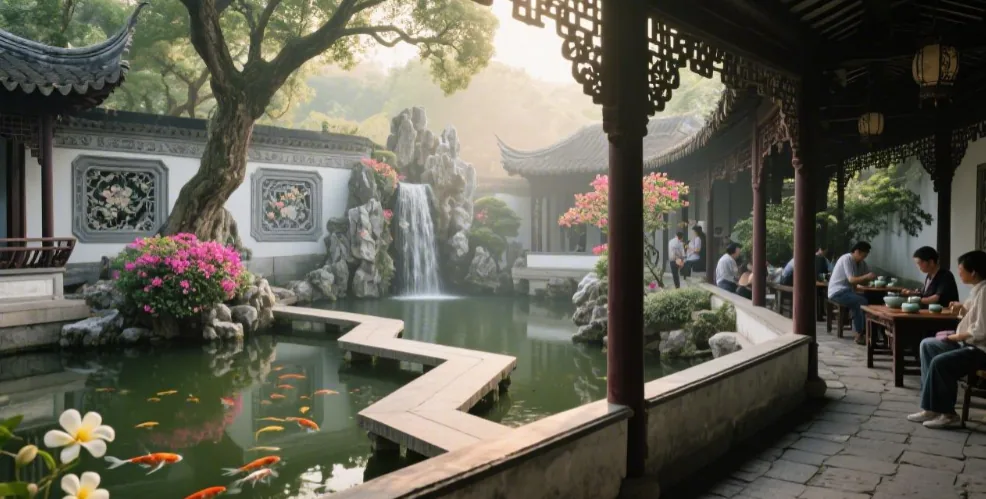
Around 9:00 am, I took the Pan 67 bus to Shawan Ancient Town (boarded from Panyu Square Station, 15 minutes to Shawan Ancient Town South Gate, fare 2 yuan). The ancient town is open for free, and there is a map at the entrance. I first went to see the Oyster Shell Wall—on the side of the “He Clan Ancestral Hall,” the wall is about 4 meters high, built from tens of thousands of oyster shells neatly arranged with the tips pointing out and the mouths pointing in. The guide said this wall is warm in winter and cool in summer; the calcium in the shells prevents corrosion, and this wall is 120 years old. I touched it; the shell surface was rough with moss, and dried grass clippings were stuck in the cracks, truly the texture of an old wall.
Next, I went to “Qinfangyuan” to eat Ginger Milk Curd for 10 yuan. The shop was very small, and the landlady made it on the spot: she poured 200 ml of water buffalo milk (she said they use local Shawan water buffalo milk) into a stainless steel bowl, took a piece of old ginger to squeeze about 15 ml of juice, quickly poured the milk onto the ginger juice, stirred it slightly with a spoon, and said, “Don’t stir too much, wait three minutes for it to solidify naturally.” I stared at the bowl; after two minutes the milk began to thicken, and at three minutes the whole bowl set like tender tofu with a smooth surface and no air holes. The ginger flavor was strong but not choking, the milky aroma wrapped in the ginger’s spiciness, and drinking it hot made my stomach comfortable; it was better than expected, so I bought a box of ginger candy before leaving.
In the afternoon, I returned to the hotel to organize photos and compared Yuyin Shanfang and Baomo Garden: Yuyin is like a lady from a humble family, the rockeries are exquisitely piled, the octagonal pavilion of Linglong Water Pavilion only accommodates five or six people, and even the plantain leaves are neatly trimmed; Baomo Garden is like a wealthy family, stories are carved all over the Purple Grotto Boat, the porcelain sculpture exhibition occupies half a hall, and the lake is so open that small boats can sail. I put the photos of the koi from both together—the fish in Yuyin were crowded in a small pond, while the ones in Baomo Garden were frolicking in a large lake of dozens of square meters; indeed, “the garden lives up to its name.”
Fearing fatigue, I didn’t go to Zhujiang New Town in the evening and instead had Sampan Porridge for 18 yuan at “Keung Kee Sampan Porridge” under the hotel. The owner cooked it fresh; the base was made of Simiao rice, dense with a milky aroma, and the ingredients included fresh grass carp slices (thinly sliced and boneless), freshly made egg shreds, crispy peanuts, fried pigskin, and chopped green onions. The fish slices were just cooked and juicy; the egg shreds were golden and fluffy, and the peanuts were crispy but not hard. After a bowl, I felt warm and considered it dinner, remaining full until 8:00 pm.
Pitfalls to Avoid and Recommendations
- Pitfalls: Baomo Garden is large (walking at least 3 hours), so wear sports shoes and not leather shoes; Yuyin Shanfang has westward sun in the afternoon (backlit after 3:00 pm), so go at 9:00 am for good light; souvenirs in the scenic area are expensive (5 yuan/postcard), buy them at the city post office for 2 yuan/card; some “internet celebrity ginger milk curd” in Shawan Ancient Town use milk powder, so look for “Qinfangyuan” which is made fresh.
- Recommendations: Must see the Hundred Birds Facing the Phoenix wood carving in Yuyin Shenliu Hall (every feather is distinct) and the Porcelain Sculpture Exhibition of Along the River During the Qingming Festival in Baomo Garden (millions of porcelain pieces create a 3D scene); Qinfangyuan Ginger Milk Curd (solidifies in three minutes) and Shawan Ribs (crispy outside and tender inside with sweet sauce) in Shawan Ancient Town are worth a special trip.
|
Project
|
Cost (Yuan)
|
Remarks
|
|---|---|---|
|
Accommodation (4 nights)
|
1200
|
7 Days Inn at Panyu Square, breakfast included, 5-minute walk to bus station
|
|
Tickets
|
72
|
Yuyin Shanfang 18 + Baomo Garden 54
|
|
Dining
|
About 500
|
Including main meals (roast goose rice, ribs, etc.), snacks (ginger milk curd, sampan porridge), and simple meals (wonton noodles)
|
|
Transportation
|
About 200
|
Taxis (Yuyin 15 + Baomo 25), buses (Pan 12/67, etc.), fish food 5
|
|
Total
|
About 1972
|
Budget for one person; can be split to about 986 yuan/person for two traveling together
|
When eating ribs in Shawan Ancient Town, an old man at the next table said: “This shop has been open for 30 years, I’ve eaten here since I was a kid, and the sauce recipe has never changed.” Seeing him eat with such gusto, I ate two more pieces—indeed, old flavors are reliable.
Day 5: Return Preparation
- 09:00 Check out and Luggage Storage: I checked out of the 7 Days Inn (Shiqiao Metro Station Branch) at Panyu Square after staying for 4 nights. The receptionist, Auntie Li, was quick and helped me store my 28-inch suitcase in the reception safe after checking the room card. “It’s safe here; come pick it up half an hour before you leave, I’ll keep it for you.” She said while handing me a storage tag with my room number and luggage description. Upon checking out, I gave the unopened Panyu map to the cleaner, Sister Wang. She smiled and took it: “Stay here again next time; I’ll save a quiet room for you.” The checkout process took 5 minutes with no extra charge.
- 10:00 Revisit Outer Landscape of Yuyin Shanfang: Walked 10 minutes from the hotel to the scenic area, but didn’t enter the gate this time, specifically looking at the outer old scenery instead. To the left of the entrance is a blue stone tablet. I squatted down to copy the words—”Yuyin Shanfang was built in the fifth year of Tongzhi in the Qing Dynasty (1866), built by Wu Bin to commemorate his ancestors,” which is more specific than the “1860s” I found before. Next to the tablet is a century-old banyan tree, its aerial roots hanging to the ground like a green curtain, brushing over the tablet surface when the wind blows, adding an ancient feel. Nail flowers were planted at the base of the wall, blooming in red and purple, and several old women were picking vegetables under the tree. Seeing me take photos, they didn’t hide but instead said, “This garden was even more beautiful when it was young.”
- 12:00 Panyu Specialty Lunch (Shawan Ribs, Sampan Porridge): Took the Pan 67 bus for 15 minutes to Shawan Ancient Town and ate lunch at an old shop next to “Shawan Buffalo Queen” (no sign, but a queue of over 10 people). Shawan Ribs for 60 yuan are ribs cut into sections and coated in a light brown sweet sauce—the owner said it’s made by simmering rock sugar, light soy sauce, and five-spice powder for 2 hours, then fried until crispy outside and tender inside, with meat juice mixing with the sauce fragrance, sweet but not cloying. Sampan Porridge for 18 yuan uses Simiao rice for the base, with grass carp slices (thinly sliced and boneless), freshly made egg shreds, crispy peanuts, and fried pigskin. The fish slices were just cooked, and the porridge was dense with a milky aroma. An old man at the next table said: “This shop has been open for 30 years, I’ve eaten here since I was a kid, and the sauce recipe has never changed.” I even finished all the soup and was so full I could hardly walk.
- 14:00 Retrieve Luggage and Head to Airport: Returned to the hotel to retrieve my luggage (the storage tag was checked), took the Pan 12 bus (boarded from Yuyin Shanfang Station, 15 minutes to Shiqiao Station, fare 2 yuan), then transferred to Metro Line 3 (towards Airport South), rode for 12 stations to Baiyun Airport T1 Terminal, the whole journey taking 1 hour. I set off right at 14:00 and arrived at the airport at 15:00, just in time for my 16:00 flight when getting my boarding pass. I met a local aunt on the metro who reminded me “The airport security queue is long, just arrive 1 hour early,” which was verified later—I passed security at 15:20 and had 40 minutes left to wait for the flight.
|
Project
|
Details
|
Cost (Yuan)
|
Remarks
|
|---|---|---|---|
|
Checkout and Storage
|
Luggage storage at 7 Days Inn reception
|
0
|
Free, collect with storage tag
|
|
Lunch
|
Shawan Ribs + Sampan Porridge at an anonymous old shop in Shawan Ancient Town
|
78
|
Ribs 60, porridge 18
|
|
Transportation to Airport
|
Pan 12 Bus (2) + Metro Line 3 (7)
|
9
|
1 hour for the whole trip, including transfer time
|
|
Total
|
87
|
Extra expenses for the day
|
Key Reminder: The last Pan 12 bus is at 21:30, and frequency during the day is high (every 15 minutes); Metro Line 3 towards Airport South is crowded during peak hours (8-9 am), so choosing after 14:00 for the return is more relaxed; don’t just look for internet celebrity shops for ribs in Shawan Ancient Town; old shops with long queues are often more reliable.
When retrieving my luggage, Auntie Li at the reception gave me a “Panyu Tourist Map,” saying “Stay here again next time, and I’ll give you a discount”—this small warmth of the trip was an unexpected harvest.
Related Reading
- 5-Day Historical Tour of Guangzhou | Museum of the Nanyue King + Sun Yat-sen Memorial Hall + Peasant Movement Institute, A Millennium-Old Pilgrimage to Yangcheng’s Historic Sites
- 4-Day Guangzhou Foodie Adventure | Xihua Road Snacks + Panxi Restaurant + Fangcun Banyan Tree Head, Foodie’s Hidden Local Food Map
- Guangzhou 4-Day Hiking Tour | Baiyun Mountain Crossing + Huolushan Forest Park + Niutou Mountain, Hardcore Off-Road Route for Outdoor Enthusiasts
- Guangzhou 5-Day Citywalk | Tianhe South Road No.1 + Tiyu Xilu Heng Street + Liede Village, Hidden Alley Treasures Behind the Prosperous CBD
- 4-Day Family Trip to Guangzhou | Chimelong Safari Park + Birds Park + Guangdong Science Center, Stress-Free Guide for Parents