Key Points: Black-headed Gulls are most concentrated at Dianchi from December to March; Cuihu Lake is free to stroll and experience local senior life; Jianxinyuan Cross-Bridge Rice Noodles broth is simmered for 8 hours with local chicken and pork bones, better value than scenic spots.
Day 2: Kunming → Dali (2-hour High-Speed Rail), Stay in Dali Ancient City, Stroll Renmin Road, Foreigner Street
Woke up at 5:30 AM when it was still dark, purposely set the alarm for 6 AM fearing I’d miss the high-speed rail. Clutching the G2831 ticket bought on 12306 the night before (7:30 AM departure from Kunming South, 9:32 AM arrival at Dali), arrived at Kunming South Station 40 minutes early. The waiting hall wasn’t crowded. Found a window seat and ate a steamed bun. Boarding started at 7 AM. The carriage was a “Fuxing Hao” second-class seat, with clean blue seats, and outside the window, the station’s bougainvillea was blooming brightly. The 2-hour journey wasn’t long. Mid-way past Chuxiong, the mountains outside the window changed from earthy yellow to light green, like an unfolding gradient silk.
Arrived at Dali Station promptly at 9:32 AM. Exited the station, turned right 50 meters to the bus stop, and took Bus No. 8 (3 yuan, exact change only) towards the Ancient City. The bus rattled for 40 minutes. Passing through Xiaguan urban area, I saw continuous patches of Bai ethnic houses with blue-tiled roofs, and strings of dried corn hanging by the walls. Got off at the “Ancient City South Gate” stop, dragged my suitcase towards the middle section of Renmin Road, turned into a narrow alley full of blooming bougainvillea, and found the reserved “Yunqi Xiaoyuan” homestay—a renovated Bai ethnic old courtyard. The bluestone courtyard was filled with potted succulents. Landlady Auntie Yang was sun-drying preserved mustard greens on a bamboo sieve and quickly came to take my luggage: “Room 302 upstairs, open the window and you can hear the guitar sounds from Renmin Road.” The room was 180 yuan/night, including a simple breakfast of congee and preserved bean curd. A handwritten note was placed by the pillow: “Free Pu’er tea after 8 PM, come sit in the courtyard.”
It was nearly 11 AM after dropping off my luggage. I took my camera out for a street walk. Renmin Road is indeed suitable for a slow stroll: on the left, an uncle at the “Silversmith Shop” was hammering away, the firelight reflecting on his wrinkles. I got closer and saw he was crafting a silver bracelet with a scrolling lotus pattern, the lines as fine as hair; on the right, “Shanzhichuanxing” coffee shop wafted the fruity aroma of pour-over Yirgacheffe, and dried rose petals were displayed in the glass cabinet. Midway, I found “Zazi Bookstore,” the wooden door slightly ajar. Pushing it open, I was met with a mix of old books and pine wood scent—shelves reached from the floor to the ceiling, filled with second-hand Yunnan travelogues and ethnographies. In a corner, I found a 2015 “Dali Miscellany.” The owner, a young man with glasses, smiled: “Feel free to read. You can pick it up next time if you like, I’ll keep it for you.”
At 6:30 PM, I moved to Foreigner Street. As the owner said, the big banyan trees were hung with red lanterns, and the warm light cast mottled shadows through the branches and leaves onto the ground. Folk guitar music drifted from the street bars, singing about “Cangshan snow, Erhai moon.” A girl in Yi ethnic costume was taking a selfie with her phone, her silver ornaments sparkling under the lanterns. I bought a Grilled Milk Fan (10 yuan, sweet with rose jam). The vendor, a Bai ethnic older sister, used a long iron skewer to turn the Milk Fan over charcoal fire, brushing the jam when the edges were slightly charred. The bite was crispy on the outside and chewy inside, with a blend of rose and milk flavor, not overly sweet. While eating, I watched couples queuing to take ethnic-style photos, the photographer shouting “Smile!” with a reflector, the red lanterns and old houses serving as the backdrop.
For dinner, following Auntie Yang’s recommendation, I went to “Meizijing Restaurant” at the end of Renmin Road. I ordered the signature Sour and Spicy Fish (60 yuan per person). When served, the soup was reddish-orange, the fish was freshly caught Erhai crucian carp, and the sour star fruit slices were uniformly cut—I later asked the waiter, who said the owner picks them at the market every morning. Picking up a piece of fish, the sourness was appetizing but not harsh, the spiciness was from the fragrance of dried chili, not industrial chili essence. Served with a bowl of rice, I drank all the soup. An elderly couple at the next table said they eat here once a week: “Their sour star fruit is self-pickled, different from others.”
- Itinerary and Transportation: G2831 High-Speed Rail (7:30 AM Kunming South – 9:32 AM Dali Station, 145 yuan), Bus 8 (3 yuan, 40 minutes to Ancient City South Gate)
- Accommodation Experience: Yunqi Xiaoyuan Homestay (Middle section of Renmin Road, Bai ethnic old courtyard, 180 yuan/night with breakfast, Auntie Yang drying preserved mustard greens, gave handwritten note)
- Food Log: Grilled Milk Fan (10 yuan, charcoal-grilled crispy with rose jam), Meizijing Sour and Spicy Fish (60 yuan per person, Erhai crucian carp + homemade sour star fruit)
- Attractions and Activities: Watching embossing at the Silversmith Shop on Renmin Road, flipping through second-hand Yunnan travelogues at Zazi Bookstore; Red lantern night view on Foreigner Street, listening to folk guitar
- People and Culture: Silversmith uncle making scrolling lotus silver bracelet, bookstore owner guiding to Foreigner Street, elderly couple regular customers at the Sour and Spicy Fish restaurant
- Tip/Avoid: Prepare 3 yuan in change for Bus 8 (no change given); choose freshly grilled Milk Fan (don’t buy the refrigerated one); order a small portion of Sour and Spicy Fish (portion is enough for 2 people)
| Item | Details | Cost/Key Experience |
|---|---|---|
| High-Speed Rail | G2831 (7:30 Kunming South – 9:32 Dali) | 145 yuan, Fuxing Hao second-class seat, view of Chuxiong mountains from window |
| Bus | Bus 8 (Dali Station → Ancient City South Gate) | 3 yuan, 40 minutes, passes through Xiaguan Bai ethnic residential area |
| Accommodation | Yunqi Xiaoyuan (Middle section of Renmin Road Bai ethnic old courtyard) | 180 yuan/night, courtyard succulents + Auntie Yang’s handwritten note |
| Renmin Road | Watching embossing at Silversmith Shop, flipping through old books at Zazi Bookstore | Free, books can be stored at the bookstore for later pickup |
| Foreigner Street | Big Banyan Tree red lantern night view, Grilled Milk Fan | Grilled Milk Fan 10 yuan, sweet rose jam, freshly grilled |
| Dinner | Meizijing Restaurant Sour and Spicy Fish | 60 yuan per person, Erhai crucian carp + homemade sour star fruit soup base |
Day 3: Dali Circum-Erhai Lake (Cycling/Chartered Car), Check in Xizhou Ancient Town, Shuanglang Observation Deck
Left Dali Ancient City at 8 AM, rode a shared electric bike for 10 minutes to Cun Village Pier (the starting point of the West Erhai Ecological Corridor). Rented a mountain bike at the rental spot next to the pier (with a blue sign saying “Erhai Cycling”): 20 yuan/day, 100 yuan cash deposit (the owner said electronic payment takes time to arrive, having cash is safer). Adjusted the seat height, tied up my camera bag, and started cycling along the corridor towards Xizhou at 9 AM—the wind blowing from Erhai Lake carried moisture, the rice leaves rustled, the rice paddies along the way were yellow and green, and the shadow of Cangshan Mountain in the distance fell on the water, truly looking like an unfinished oil painting.
Arrived at the entrance of Xizhou Ancient Town around 10:30 AM. Parked the bike and entered Sifang Street. Headed straight to the old “Fuxing Layered Rice Cake” shop at the corner of the street. Freshly baked rice cakes were piled up in bamboo baskets, their crust golden and crispy, heavy in my hand. Savory 3 yuan/piece, layers of crispy crust flaked all over my hand when I bit into it, the inside filled with minced green onion, minced meat, and lard aroma; Sweet was also 3 yuan, the rose sugar filling was flowing but not cloying. The owner’s wife wrapped it in kraft paper and handed it to me: “Eat it while it’s hot, the crust gets soft when it cools.” Next to her, a Bai ethnic grandmother sat on the threshold of an old house embroidering an apron, the indigo cloth embroidered with camellias, the stitches dense like machine sewing. I got closer to watch her thread the needle, and she looked up and smiled: “I learned this pattern when I got married; I’m embroidering it for my granddaughter’s dowry.”
Ate a bowl of pea jelly at Xizhou at 12 PM (10 yuan, drenched in sour and spicy sauce), rested enough, and at 1:30 PM contacted a chartered car. Didn’t look for roadside touts, used the driver Master Wang recommended by the homestay (saved his number), negotiated 150 yuan/car (Xizhou → Shuanglang, 1-hour direct). Master Wang drove a seven-seater minivan and had bottled water ready: “The road to Shuanglang is narrow, I’ll drive slowly, so you can enjoy the view.” Passing through Waxi Town, he pointed out the window: “There are seagulls at Xiaoputuo over there, you can see them in winter too, but we’re in a hurry today, come again next time.”
Arrived at Shuanglang at 2:30 PM, and went straight to the Yujidao Observation Deck. Climbing a few steps, the view suddenly opened up—the Nineteen Peaks of Cangshan Mountain lined up, the snowy peaks shimmering silver in the sun, Erhai Lake was as blue as a piece of glass, and passing boats dragged long white wakes. I arrived at 4 PM (according to the recommended time), the light was soft and not harsh, and the photos looked good without a filter. Red ribbons were tied to the observation deck railing, inscribed with “Peace” and “Smoothness.” A girl was standing on tiptoes tying her own wish ribbon.
Had dinner at Shuanglang at 5 PM, choosing a terrace seat at the popular “Haidi Life” (reserved 1 hour in advance). Ordered Lemon Chicken Feet (25 yuan/serving). The chicken feet were cooked until soft and boneless, evenly mixed with lemon slices, chili, and coriander. The sour and spicy taste hit the top of my head but wasn’t irritating. Sat on the rattan chair on the terrace, watching the sunset dye Erhai Lake orange-red, the sound of boats honking mixed with laughter from the next table, and a faint smell of the lake in the wind. A man at the next table said: “Their chicken feet are freshly mixed every day, sold out means sold out. I came late last time and missed it.”
- Itinerary and Transportation: Rent bike at Cai Village Pier (20 yuan/day, 100 yuan cash deposit) → Cycle along West Erhai Ecological Corridor to Xizhou (1.5 hours); Chartered car (Master Wang 150 yuan/car, Xizhou → Shuanglang 1 hour)
- Attractions and Activities: West Erhai cycling for rural Erhai view (rice paddies yellow and green, Cangshan reflection); Buy Fuxing Layered Rice Cake at Xizhou Sifang Street (savory/sweet 3 yuan/piece, freshly baked crispy crust flaking), watch Bai ethnic grandmother embroidering apron (indigo cloth embroidered with camellias); Yujidao Observation Deck in Shuanglang (go at 4 PM, directly facing Cangshan Nineteen Peaks + Erhai Lake, good spot for sun-drenched snowy peaks photo)
- Food Log: Xizhou Pea Jelly (10 yuan sour and spicy sauce), Fuxing Layered Rice Cake (savory onion meat/sweet rose filling), Haidi Life Lemon Chicken Feet (25 yuan/serving, freshly mixed sour and spicy)
- People and Culture: Bike rental owner advised against cycling East Erhai; Bai ethnic grandmother talked about the history of the apron pattern; Chartered driver Master Wang pointed out Xiaoputuo seagulls in Waxi Town; Man at Haidi Life talked about the freshly mixed chicken feet
- Tip/Avoid: Only choose West Erhai Ecological Corridor for cycling (less traffic, beautiful scenery, don’t believe touts saying “East Erhai is closer”); Use homestay recommended driver for chartered car (negotiate 150 yuan fixed price, avoid roadside touts holding signs saying “100 yuan trip”); Don’t step on the lawn at the observation deck (50 yuan fine)
- Recommended Experience: Cycling West Erhai to feel the wind and moisture (adjust seat height when renting); Eat Xizhou rice cake while hot (crust gets soft when cold); Watching sunset on Shuanglang terrace while eating Lemon Chicken Feet (reserve seat in advance)
Key Points: West Erhai Ecological Corridor cycling from Cai Village to Xizhou, wind carries moisture, rural Erhai view like an oil painting; Fuxing Layered Rice Cake freshly baked, crispy crust flaking, savory and sweet 3 yuan/piece is good value; Go to Yujidao Observation Deck at 4 PM, soft light, not harsh, best for full view of Cangshan Erhai; Choose homestay recommended driver for chartered car, 150 yuan fixed price to avoid roadside touts.
Day 4: Dali → Lijiang (2-hour Train), Stay in Lijiang Ancient City, Night Tour Sifang Street, Dayan Huaxiang
Left Dali Ancient City at 9:30 AM, dragged my suitcase for 10 minutes to Dali Station, and boarded the K9628 green-skin train promptly at 10 AM (hard seat 34 yuan, the carriage smelled of instant noodles and orange peels). This train was an older model, the seat covers were faded but relatively clean. I sat by the window, watching wild chrysanthemums flash past the tracks. The 2-hour journey wasn’t unbearable. Passing through Heqing midway, the terraced fields outside the window turned from green to golden, like a layer of crushed gold laid on the hillside. Arrived at Lijiang Station at 12 PM. Exited the station, turned right to the taxi waiting area, and the metered fare to the Ancient City North Gate was 15 yuan (the driver was a Naxi uncle who said, “This road is close, don’t believe the black cabs shouting 20”).
Arrived at the Ancient City North Gate at 12:30 PM, and following the reservation information, found the “Naxi Impression” Inn next to Sifang Street (200 yuan/night). The inn was a renovated old courtyard, the wooden stairs creaked when I stepped on them, like talking to the old house. Landlord Auntie He greeted me. The room was on the second floor, the window diagonally overlooking a corner of Sifang Street, and a small copper Dongba script ornament was placed by the pillow. It was only a little past 1 PM after dropping off my luggage. Chatting with Auntie He, I learned: “Sifang Street looks best when the lanterns are lit at night. Rest first, go out after 6 PM.” She also slipped me a note: “Ancient city maintenance fee is 50 yuan. Guests staying at inns might be exempt. I’ll ask the management office for you tomorrow.”
Started the night tour at 6:30 PM. The stone slabs of Sifang Street were warmly lit by red lanterns. They were a bit slippery to walk on, so I held the wall as I walked slowly. There was a small stall selling Dongba paper on the street. The vendor was a young girl with glasses, with rough yellow paper and a bamboo pen in front of her. “Want to try writing your name?” She handed me the bamboo pen. “Dongba script is like drawing. This is ‘I’, and this is ‘Lijiang’.” I clumsily drew the word “I,” and she smiled and helped me correct it: “The stroke should pause a bit to have ancient charm.” Spent 10 yuan on a postcard printed with my name in Dongba script. She said, “It has a postmark on the back, you can mail it directly.”
“Girl, there’s weaving display at Dayan Huaxiang tonight, want to take a look?” The Dongba paper vendor pointed north. “The Naxi grandmother over there weaves traditional cloth. It’s rare to see now. My grandmother used to weave this too.”
Following her direction, I walked 5 minutes to Dayan Huaxiang, where a cloth curtain hung in the intangible cultural heritage display area, reading “Naxi Weaving.” A Naxi grandmother in a blue gown sat at a wooden loom, pressing the foot pedal, the shuttle passing back and forth between the warps, making a “clack clack” sound. The cotton threads in her hand were dyed indigo and earthy yellow, and the woven pattern resembled a mountain stream. I moved closer to watch, and she looked up and smiled: “This pattern is called ‘Seven Stars with the Moon.’ I’ve been weaving for 40 years. Young people don’t like to learn it anymore.” Spent 30 yuan on a piece of her woven square cloth, the edge still bearing the loom’s texture.
For dinner, following Auntie He’s recommendation, I went to “Ama’s Cured Ribs” nearby Sifang Street (50 yuan per person). The restaurant was steamy, and a large pot of cured ribs was simmering. The broth was milky white, seasoned with Sichuan pepper and cardamom. Ordered a small pot (enough for 2 people), served with baby squash and potatoes. The ribs were slow-cooked until falling off the bone, the lean meat was tender, and the fat was not greasy. The dipping sauce was a secret chili powder mixed with minced Houttuynia cordata. It was so fragrant I wanted to drink all the soup. A couple at the next table said: “This place has been open for 15 years. The cured ribs are pickled by the boss himself, different from what’s sold in supermarkets.”
- Itinerary and Transportation: K9628 green-skin train (10:00 AM Dali Station – 12:00 PM Lijiang Station, hard seat 34 yuan, view of Heqing terraces from window); Taxi (Lijiang Station → Ancient City North Gate 15 yuan, Naxi driver pointed out the short cut)
- Accommodation Experience: Naxi Impression Inn (Old courtyard next to Sifang Street, wooden stairs creak, 200 yuan/night with copper Dongba script ornament, Auntie He gave note about maintenance fee inquiry)
- Food Log: Ama’s Cured Ribs (50 yuan per person, small pot with baby squash and potatoes, self-pickled ribs fall off the bone, dipped in secret chili powder)
- Attractions and Activities: Sifang Street night tour (warm yellow light of red lanterns on stone road, buy postcard with handwritten Dongba name 10 yuan at Dongba paper stall); Dayan Huaxiang intangible cultural heritage weaving (Naxi grandmother weaving “Seven Stars with the Moon” cloth, bought square cloth 30 yuan)
- People and Culture: Dongba paper vendor taught how to write Dongba name; Naxi weaving grandmother told the history of the “Seven Stars with the Moon” pattern; Couple at Ama’s Cured Ribs recommended the 15-year-old shop
- Tip/Avoid: Ancient City Maintenance Fee is 50 yuan (ask the inn if it’s exempted, don’t buy the ticket unnecessarily on the spot); Take metered taxis from the waiting area (black cabs overcharge); Choose the Dongba paper with the vendor’s handwritten name (printed ones lack warmth)
- Recommended Experience: Strolling Sifang Street after the lanterns are lit (warm light and shadow are good for photos); Watching the “clack clack” sound of the loom at Dayan Huaxiang (hearing 40 years of craftsmanship); Dipping rice into Ama’s Cured Ribs soup (so fragrant it makes you want to lick the bowl)
| Item | Details | Cost/Key Experience |
|---|---|---|
| Train | K9628 (10:00 Dali – 12:00 Lijiang) | 34 yuan hard seat, green-skin train to see Heqing terraces |
| Taxi | Lijiang Station → Ancient City North Gate | 15 yuan, Naxi driver pointed out the short cut |
| Accommodation | Naxi Impression Inn (Old courtyard next to Sifang Street) | 200 yuan/night, wooden stairs + Dongba script ornament |
| Sifang Street | Red lantern night view, buy postcard with handwritten Dongba name on Dongba paper | Postcard 10 yuan (vendor taught writing Dongba script) |
| Dayan Huaxiang | Naxi grandmother weaving “Seven Stars with the Moon” traditional cloth | Traditional cloth square 30 yuan (“clack clack” sound of loom for 40 years) |
| Dinner | Ama’s Cured Ribs (small pot with baby squash and potatoes) | 50 yuan per person, self-pickled ribs fall off the bone, dipped in chili powder |
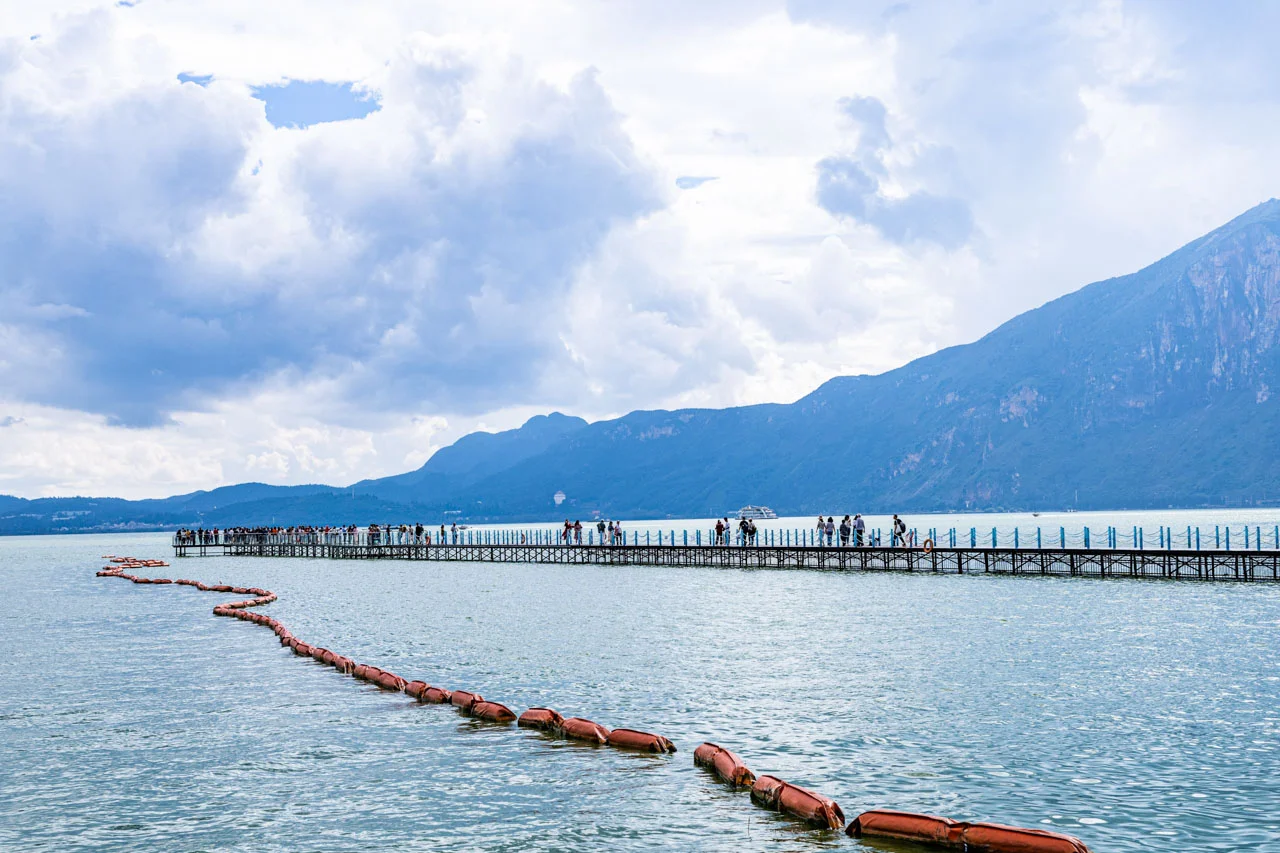
Day 5: Lijiang Surroundings (Jade Dragon Snow Mountain Scenic Area + Blue Moon Valley), Afternoon Return to Shuhe Ancient Town for Tea
Woke up by the alarm clock at the inn at 6:30 AM. Outside was still dark. I quickly put on my down jacket (with a fleece jacket layered underneath), stuffed sunglasses, a thermos, and rented windproof gloves into my bag—the pure-play small group tour booked the day before was meeting at the Ancient City North Gate at 7 AM, 280 yuan/person including the entrance fee, large cable car, and eco-bus. I figured it would save me the trouble of queuing for tickets. There were 6 people in the group, and the driver was Master He, a Naxi man with a sun-tanned face. He had ginger tea ready in the car: “It’s cold on the mountain, sip a few times to warm up.” Left at 7:30 AM, drove along Yuquan Road towards the Snow Mountain. The morning fog carried the smell of pine needles, and the distant peak only showed a white tip of snow.
Arrived at the Jade Dragon Snow Mountain Visitor Center at 9 AM. The small group was first dropped off at the 2900-meter platform. The wind was painfully cold on my face. I quickly opened the oxygen tank I had bought on Pinduoduo in advance (25 yuan/can, a portable brand, half the weight of the 60 yuan ones at the scenic area), and took two puffs—my head immediately stopped feeling dizzy. A young man next to me in a T-shirt, who had just bought an oxygen tank from the scenic area, frowned and complained: “This smells sharp, not as pure as my 25 yuan one online.” A few tourists inhaling oxygen on the platform reminded each other “breathe slowly, don’t overdo it.” I leaned against the railing and watched the clouds drift between the snowy peaks, waiting for my body to adapt before walking to the cable car station.
Took the large cable car up to the 4680-meter Glacier Park at 10 AM. The cable car compartment slowly ascended. The forest below faded from deep green to light yellow, eventually leaving only bare rocks. At the top, the wind howled into my collar. I wore the rented windproof hat (20 yuan/piece, rented at the scenic area entrance) and crouched by the observation deck to photograph the snowy mountains—the ice cracks on the rock wall looked like spiderwebs, and the sunlight made the snowy peaks shimmer silver. I took a side-view photo with the continuous snowy peaks as the backdrop. An auntie in the same group felt weak in the legs and didn’t dare to move forward: “It’s too high, I feel anxious.” Master He supported her: “The railing is strong, just move slowly, don’t run or jump.”
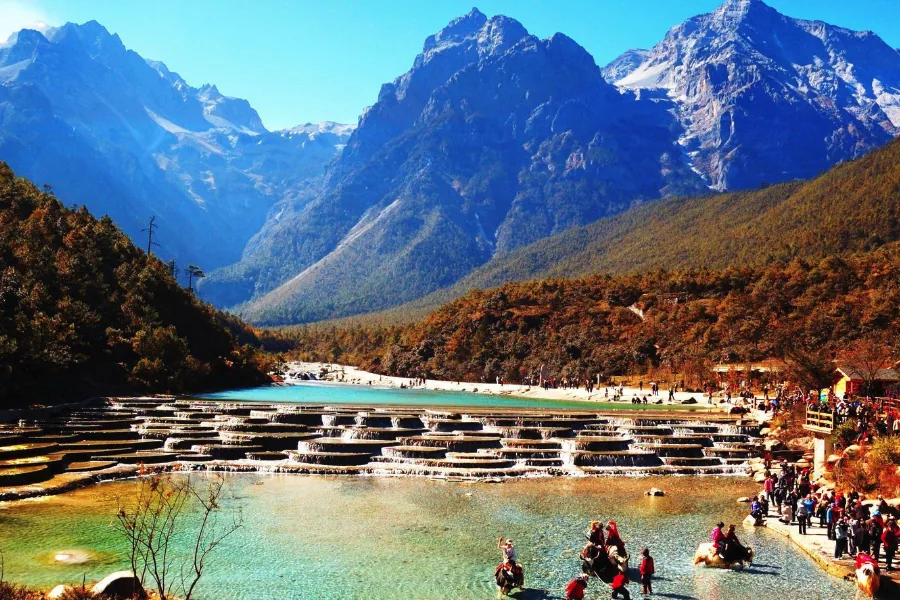
Descended the mountain at 12 PM to Blue Moon Valley. Took the eco-bus for 20 minutes to the valley entrance. I was stunned at first sight—the lake water was as blue as melted sapphire, the color varying in depth across different sections: YuYe Lake was the bluest, like jelly; Jingtan Lake was lighter blue, like milk was added; and Blue Moon Lake had a pale green tint. Walked a loop along the wooden boardwalk (about 1.5 kilometers, the planks creaked when stepped on). Crouched down by YuYe Lake to photograph the reflection; the tip of the snowy mountain was right in the center of the lake. The reflection was like a mirror when the water was still.
I waited for 5 minutes and indeed captured the cloud shadow moving across the snow peak. A park ranger was patrolling on an electric bike by the lake. When someone stepped on the lawn, he shouted: “50 yuan fine!” I kept to the wooden boardwalk, watching small fish swimming in the shallow water, the ripples spreading like blue paint.
Returned to Shuhe Ancient Town at 2 PM and looked for the “Fuxianju” Teahouse as recommended by the inn. Turned north from Shuhe Sifang Street into a small alley. Morning glories climbed the bamboo fence. Pushing open the door revealed a small courtyard, with wooden tables shaded by bamboo curtains. The owner, a Bai ethnic auntie wearing a silver bracelet, was brewing Pu’er tea in a copper pot: “30 yuan per person, tea can be refilled as you like.” She handed me original flavor melon seeds (unsalted) and started talking about the Tea Horse Road: “The caravans used to carry tea from Dali to Lhasa, a 3-month journey. The way I brew this tea is passed down from that time.” Sunlight filtered through the bamboo curtain and scattered on the table. The light patches swayed with the fan. I held the rough pottery cup and listened to her tell stories of caravans encountering wolves, with only the “gurgle” of the boiling tea in my ears, so quiet I could hear my own heartbeat.
- Itinerary and Transportation: Pure-play small group met at Ancient City North Gate at 7 AM (280 yuan/person including entrance fee + large cable car + eco-bus, Master He drove and provided ginger tea); Large cable car up to 4680-meter Glacier Park at 10 AM (windy, wear windproof hat); Eco-bus to Blue Moon Valley at 12 PM (1.5 km boardwalk); Taxi 15 yuan to Fuxianju in Shuhe (bamboo fence courtyard)
- Attractions and Activities: Inhaling oxygen at the 2900-meter platform of Jade Dragon Snow Mountain (Pinduoduo oxygen tank 25 yuan/can, 60 yuan ones at scenic area smell sharp); Photographing the 4680-meter snowy peak at Glacier Park (crouch at the observation deck to photograph ice cracks, don’t run or jump to prevent altitude sickness); Circling Blue Moon Valley (YuYe Lake is best for reflections, wait for cloud shadows for layering, don’t step on the lawn 50 yuan fine); Listening to Tea Horse Road stories at Fuxianju Teahouse in Shuhe (30 yuan/person Pu’er tea + melon seeds)
- People and Culture: Master He advised on wind protection at Glacier Park; Photographer taught how to take reflections at Blue Moon Valley; Bai ethnic auntie at Fuxianju told caravan stories (copper pot brewed Pu’er, unlimited refills)
- Tip/Avoid: Don’t run or jump on the snow mountain (instance of an auntie feeling weak in the legs); Don’t step on the lawn at Blue Moon Valley (ranger patrols for fines); Buy oxygen tank on Pinduoduo in advance (25 yuan portable type); Rent a windproof hat at Glacier Park (20 yuan/piece, don’t wear wool hat as it leaks wind)
- Recommended Experience: Waiting for cloud shadows to photograph reflections at Blue Moon Valley (best when YuYe Lake is still); Sunbathing and listening to stories in the bamboo curtain courtyard at Fuxianju (sunlight patches swaying is the most calming)
Pure-play small group 280 yuan includes large cable car + entrance fee, departing at 7 AM to avoid crowds; Pinduoduo oxygen tank 25 yuan/can is more cost-effective than the scenic area, inhale for half an hour at the 2900-meter platform to adapt; YuYe Lake in Blue Moon Valley is best for reflections, wait for cloud shadows to be more lively, walk the boardwalk to see different shades of blue; Fuxianju Teahouse 30 yuan to listen to Tea Horse Road stories, sunbathing and drinking tea with melon seeds in the bamboo curtain courtyard is the most calming; Wind is strong at Glacier Park, wear a windproof hat, don’t run or jump to prevent altitude sickness.
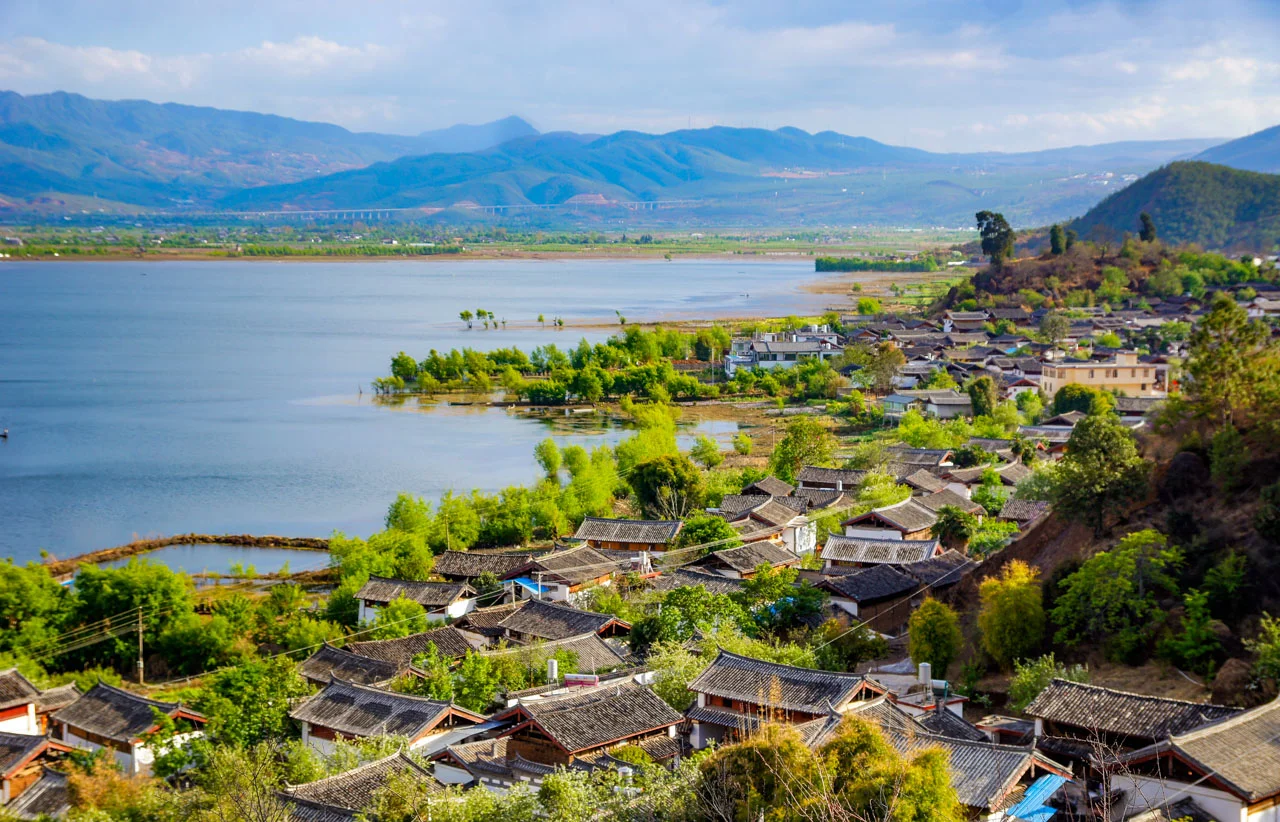
Day 6: Lijiang → Shangri-La (4-hour Bus), Stay in Dukezong Ancient City, Turn the World’s Largest Prayer Wheel
Left Lijiang Ancient City early morning at a little past 6 AM, dragged my suitcase for 15 minutes to Lijiang Bus Station (the old station in the new urban area, with a stall selling boiled corn outside). Boarded the bus promptly at 7:30 AM (Yutong 35-seater, wide seat spacing, I chose a window seat). The ticket was 80 yuan cash payment (the ticket window said the electronic ticket system sometimes stalls, having cash is safer). The driver was a Tibetan uncle, his face rosy. Before departure, he pointed out the window: “We’re taking National Highway 214 today, passing the Jinsha River Canyon. There are fewer landslides in winter, so it’s safe.” The bus left Lijiang city and gradually drove into the mountains. The clouds outside the window were low, clinging to the mountainsides.
Passed the Jinsha River Canyon at 9 AM. The river made a sharp turn here, the yellow-green waves splashing against the rocks, and the mountains on both banks were reddish sandstone, looking like they had been scorched by fire. The driver uncle rolled down the window, and the wind rushed in with the earthy smell of the river: “The river is muddy like soup in summer, clearer in winter. Look, there are cold water fish in those rock crevices.” I stared at the river surface and indeed a small fish “whoosh” darted past, leaving circles of ripples. The bus rattled until 11:30 AM, finally reaching Shangri-La Bus Station. Exited the station, turned right 200 meters to the bus stop, but I wanted to walk to aid digestion, so I dragged my suitcase along Changzheng Avenue for 20 minutes and found the reserved “Zaxi Dele” Inn—right next to the East Gate of Dukezong Ancient City.
The inn was a two-story Tibetan-style building, 220 yuan/night. The room was on the second floor, and I immediately smelled pine wood when I opened the door. The bed was a Tibetan carved wooden bed, with eight treasures carved on the headboard, covered with a thick wool blanket, and a small jar of butter oil was placed by the pillow (the landlord said to apply some in the nostrils before sleeping to prevent dryness). Landlady Sister Zhuoma welcomed me and handed me hot butter tea: “The altitude is 3300 meters. Don’t wash your hair or take a shower today, it’s easy to get altitude sickness.” She pointed at Guishan Hill outside the window: “The prayer wheel is right up there. Go in the afternoon, there will be fewer people. Locals all love to go.” It was only 12:30 PM after dropping off my luggage. I took a sip of butter tea to warm up and walked towards Guishan Park.
Guishan Park is at the highest point of the Ancient City. The World’s Largest Prayer Wheel is located in the summit square. I could see it from afar—21 meters high, 10 meters in diameter, the cylinder wrapped in copper, engraved with Tibetan scriptures, looking like a giant golden pillar. When I arrived, a dozen locals were already circling the prayer wheel, including grandmothers in Tibetan robes and grandpas in felt hats. A grandmother in a maroon Tibetan robe saw me standing and waved: “Girl, come and push together. Three clockwise turns, silently praying for peace in your heart.” About ten of us pushed together. The prayer wheel slowly turned, the copper rubbing and emitting a “humming” echo. The scriptures seemed to float with the sound. After three turns, the grandmother handed me a handful of barley grains: “Scatter them under the prayer wheel to accumulate merit.”
Had dinner at 6 PM, following Sister Zhuoma’s recommendation to “Jingjing De Mani Stone” in the Ancient City (5 minutes from the inn). Ordered the Yak Meat Hot Pot (70 yuan per person). When served, the soup base was milky white, with a few slices of Angelica sinensis and goji berries floating—the owner said it was simmered with yak bones for 8 hours. The yak meat was thickly cut, tender after boiling for 5 minutes, with a milky flavor, unlike ordinary tough beef. I ordered barley cake as a side dish (10 yuan/serving), grilled until crispy on the outside and soft inside. Breaking it open and sprinkling some white sugar, dipping it in the hot pot soup was refreshing. A Tibetan couple at the next table were eating and laughing: “This place has been open for 12 years. The soup base recipe is passed down from the owner’s grandfather. You can’t taste this flavor anywhere else.”
- Itinerary and Transportation: Lijiang Bus Station bus (7:30 AM departure – 11:30 AM arrival at Shangri-La Bus Station, 80 yuan cash, Yutong 35-seater window seat); Walking within the Ancient City (Bus Station → Zaxi Dele Inn 20 minutes, Inn → Jingjing De Mani Stone 5 minutes)
- Accommodation Experience: Zaxi Dele Inn (East Gate of Dukezong Ancient City, Tibetan carved wooden bed + thick wool blanket, 220 yuan/night, Sister Zhuoma gave butter tea, gave anti-altitude sickness butter oil, reminded not to wash hair or shower)
- Food Log: Jingjing De Mani Stone Yak Meat Hot Pot (70 yuan per person, yak bone simmered 8 hours milky white soup base, thick-cut yak meat tender and flavorful, paired with barley cake 10 yuan/serving dipped in soup)
- Attractions and Activities: Turning the World’s Largest Prayer Wheel at Guishan Park (21 meters high copper engraved scriptures, 10+ people pushing together “humming” sound, three clockwise turns silently praying for peace, scattering barley grains for merit)
- People and Culture: Tibetan grandmother invited me to push the prayer wheel and gave barley grains; Grandpa in felt hat talked about the 60-ton weight of the prayer wheel and stories of ancestors pushing the scriptures; Tibetan couple at the hot pot restaurant recommended the 12-year-old shop soup base recipe
- Tip/Avoid: Shangri-La altitude is 3300 meters, don’t wash hair or shower on the same day (Sister Zhuoma emphasized preventing altitude sickness); Prepare cash for the bus (electronic tickets occasionally stall); Don’t push the prayer wheel counter-clockwise (locals say it’s disrespectful)
- Recommended Experience: Watching the reddish mountain body and clear river water at Jinsha River Canyon (soft light when passing the canyon at 9 AM); Pushing the prayer wheel collaboratively with locals (feeling the collective ritual); Hot pot with barley cake (milky soup base + crispy soft cake is a perfect match)
| Item | Details | Cost/Key Experience |
|---|---|---|
| Transportation | Lijiang Bus Station Bus (7:30-11:30) | 80 yuan cash, Yutong 35-seater to see Jinsha River Canyon reddish mountain body |
| Accommodation | Zaxi Dele Inn (East Gate of Ancient City Tibetan-style building) | 220 yuan/night, Tibetan carved bed + Zhuoma gave butter tea for altitude sickness prevention |
| Prayer Wheel | World’s Largest Prayer Wheel at Guishan Park (21 meters high) | 10+ people pushing together “humming” sound, three clockwise turns silently praying for peace, scattering barley grains |
| Dinner | Jingjing De Mani Stone Yak Meat Hot Pot | 70 yuan per person, yak bone simmered 8 hours milky white soup base, barley cake 10 yuan as side dish |