



Day 1: Arrival in Kunming (Stay near Green Lake)
I arrived at Kunming Changshui Airport at 6:30 AM. The T2 terminal had just opened its early bird security channels. The officer smiled while scanning my ID, saying, “Your flight has a window seat; you’ll be able to see the sea of clouds rolling later.” My seat neighbor was a lady moving to Dali, who kept reminding me, “The Xidoufen (pea porridge) at Zhuanxin Farmers Market must be paired with Youtiao (fried dough sticks); they start selling at 5:00 AM.” 40 minutes later, I landed and met my pre-booked driver—an uncle in a navy blue cotton shirt. He took my suitcase and tapped it: “First time here, young lady? I’ll drive along Green Lake so you can watch the black-headed gulls fighting for bread.”
As the car drove along the airport highway toward the city, the air was already filled with the scent of sweet osmanthus. When we reached “Lakeside Cottage” next to the Green Lake Hotel, the old elm door creaked open, and the first thing that hit my nose was the light fragrance of pine furniture. The landlady, wearing a silver bracelet, came out to greet me: “You’re in Room 302, facing east; the morning sun will warm your pillow.” The room wasn’t large, with light blue patterned wallpaper and a bay window covered in a beige knitted blanket. I dropped my luggage and pounced on it, just in time to see the water of Green Lake shimmering like broken silver-green. Three black-headed gulls skimmed the water; one brave one landed on the windowsill and tilted its head to peck at my fingertip. Its feathers brushed against my hand, making me laugh out loud.
At 5:30 PM, I headed out with the “Zhuanxin Market Map” the lady had given me. A 10-minute walk brought me to the market entrance, where the aroma of fried potatoes drifted through the shadows of parasol trees. Under the red-and-gold sign of Jianxinyuan, the queue stretched to the alley entrance. A grandpa in a floral shirt was taking photos of the window with his phone: “My granddaughter only eats this ‘Zhuangyuan Set’; she says the soup is so fresh she could lick the bottom of the bowl.” I leaned in to look; the auntie at the window was ladling soup into a thick porcelain bowl—milky white bone broth bubbling slightly, floating with slices of ham, minced chives, and a marinated egg. When I tasted it, the broth was as sweet and clear as newly sprouted willow leaves. The rice noodles were handmade, thick and round, with a nice chew. The marinated egg was cooked through and translucent, the white having soaked up the soup, with a slightly runny yolk inside.
Squeezing through the cobblestone path, I saw a plump man pushing a wooden cart. The “sizzling” sound of potatoes frying on an iron plate carried the scent of sweet soy sauce. “Want it spicy?” he asked while wiping oil off his hands, “Zhergen (fish mint) is free to add!” I ordered the sweet soy sauce with fish mint. The potato chunks were fried crispy on the outside and powdery on the inside. With a “crunch” bite, the pungent taste of fish mint mixed with the mellow sweetness of the soy sauce became more fragrant with every chew. I ate two in a row, not even noticing the potato crumbs on the corner of my mouth.
Finally, at the far corner of the market, I saw an auntie wearing a bamboo hat. Her wooden cart displayed freshly baked flower cakes. The crust was golden and crispy; when broken open, the rose filling “oozed” out, and the floral scent rose with the steam. “Want a taste?” she handed me a piece. “It’s good cold too, no preservatives added.” I bit into it; the crunch of the crust wrapped around the sweet, sticky rose jam, and I could even chew the fibers of the flower petals. It was so fragrant I licked the crumbs off my fingers. I bought 5 at once. She packed them in a brown paper bag tied with a hemp rope: “Pair it with soy milk tomorrow morning; it’s ten times better than a hotel sandwich.”
Returning to the guesthouse around 8:00 PM, the warm yellow streetlights lit up Green Lake outside the window. The lights reflected on the water, and occasional night runners passed by, their shadows flickering on the walls. Feeling the flower cakes in my pocket, I suddenly understood that Kunming’s “slow pace” isn’t an act—it’s the airport uncle’s tip, the landlady’s smile, the aroma of the fried potato stall, and the tenderness of a gull willing to land in your palm. This day wasn’t rushed, there were no tickets to fight for, and even the wind was soft, like soaking in warm honey water.

Day 2: Kunming → Shaxi Ancient Town (4-hour drive, Stay in Shaxi)
Transportation: The West Bus Station’s bus is a bit “Old School”
At 7:40 AM, clutching the 120-yuan ticket I bought on the “Baba Kuaiba” mini-program, I stood in Area D of the West Bus Station. The hall smelled of mushroom and fresh pork buns from the neighboring shop. The speakers looped announcements for the “Shaxi Ancient Town shift starting ticket check.” The blue bus had faded blue cloth seat covers with slight indentations from previous passengers. The driver, in a navy blue uniform, tapped my 28-inch suitcase as he took it: “Put it in the bottom, it’s secure. There’s fresh ground coffee at the Xiaguan service area halfway; call me if you need to rest.” As the bus started moving, the wind carried the last of Kunming’s osmanthus scent through the window. Watching the skyscrapers get shorter, I suddenly remembered a line from a guide: “Shaxi is a town left behind by time.”
Arrival: The cobblestones of Sideng Street “Speak”
Four hours later, the grey-brick walls of the East Gate hit my view—the cracks between bricks were embedded with horse hoof prints of varying depths, as if someone had carved old times into the wall. Stepping onto the cobblestones of Sideng Street, the moss in the gaps was slippery. I walked while leaning against the walls of old wooden houses; the faded spring couplets still held the ink of last year, and the copper bells hanging on the lintels jingled in the wind like someone softly calling me.
The tofu stall of an old lady at the alley entrance was steaming. Wearing a navy blue side-buttoned shirt, her silver bracelets clinked against the iron pot: “Little girl, do you want spicy fried tofu?” She flipped the square pieces of tofu with an iron spatula, the oil “sizzling” and the aroma of sweet soybeans filling the street. I took the tofu in a paper bag and dipped it in dry chili powder—crispy enough to crunch on the outside, tender enough to ooze inside. The chili powder was fragrant without being burnt. She smiled and said, “This tofu is made with water from the Sideng Street well. It’s sweet.”
Afternoon: Librairie Avant-Garde hidden in the “Folds of Time” of an old horse inn
At 2:00 PM, I followed the sign “Librairie Avant-Garde Bai Cultural Bookshop” to the courtyard of an old horse inn! The lintel still bore the old plaque of “Caravan Station,” but walking in felt like entering another world—osmanthus trees in the yard had dropped a carpet of broken gold, and the walls were lined with raw wood bookshelves filled with Shaxi local chronicles, Bai embroidery patterns, and even old caravan ledgers from the Republic of China era.
I picked up a worn copy of “Shaxi Heritage” and sat in a rattan chair by the window. Sunlight filtered through the wooden lattice, spilling onto the pages. The wind flipped the book, carrying the scent of osmanthus. I read that “the caravans’ bells once echoed through the nights of Sideng Street,” and suddenly heard the sound of a Sanxian (three-stringed instrument) from outside.
The bookstore owner was a man in round glasses wearing a grey cotton shirt with ink stains on the cuffs. He brought a cup of roasted green tea in a coarse ceramic cup: “Freshly roasted locally, try it.” The tea was amber-colored, tasting bitter at first then sweet, with a toasted aroma like a full day of sunshine. Seeing me staring at the ledger, he sat down: “I’m a descendant of the caravans. This bookshop is to keep a memory for the older generation—look at this ledger from the 1930s; every entry says ‘ten catties of tea bricks’ or ‘five catties of salt’.” I didn’t close the book until the sun stretched my shadow long. Saying goodbye, he tucked a small bag of dried osmanthus into my hand: “Soak this in water back home; it’s more fragrant than the supermarket’s.”
Accommodation: The “Vibe” of the Horse Inn Guesthouse is warmer than air conditioning
The guesthouse for the night was the “Shaxi Old Horse Inn” at the end of Sideng Street. When the old wooden door opened, the scent of pine mixed with the cooking smells from the alley rushed out. The room was converted from an old house, with an old elm bed frame glowing with a warm luster, covered in coarse cloth sheets. The linen curtains were light blue, making the room dim and cozy when drawn, like being wrapped in a gentle veil.
Sitting by the window, I heard dogs barking and a neighbor’s radio playing a Bai melody, the voice soft and sweet like honey. Before bed, I went downstairs for hot water; the landlady brought a cup of hot milk: “Just boiled, added some local honey to help you sleep.” The milk was warm and sweet without being cloying. I drank it while watching the moon—the moon in Shaxi is very bright, shining on the cobblestones, the copper bells of the horse inn, and behind every closed wooden door, as if the whole town’s tenderness was kneaded into the moonlight.
This day had no sights to rush to, no check-in photos to take, and I didn’t even bother pulling out my phone—the beauty of Shaxi is found by sitting down for a cup of tea, listening to a melody, and taking a bite of fried tofu.
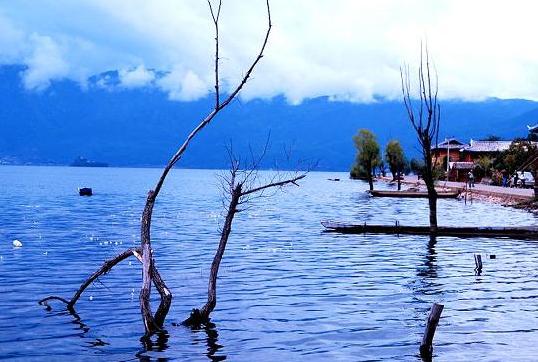
Day 3: Shaxi Slow Tour → Depart for Lugu Lake (6-hour drive, Stay in Lige Peninsula)
At 8:30 AM, clutching the dried jasmine the old lady gave me yesterday, I set off from the Old Horse Inn on Sideng Street. The cobblestones were still wet with morning dew, making them slippery like silk dipped in warm water. Within 10 minutes, I saw the stone arch of Yujin Bridge. The blue-grey body was carved with blurred caravan marks, and the rusty iron rings on the railings were traces of where horses were once tied. I stood on it, leaning against the rail; the air was thick with the sweetness of osmanthus from the alley. Willow trees by the bridge reached the water, their strands flicking water droplets at me. I jumped back, only to catch my reflection and the bridge’s shadow in the water, looking like a wash painting wrinkled by the wind.
The “ding-dong” of a Sanxian came from under the bridge. Following the sound, I found three Bai grandmas sitting on the steps of the Old Stage—wearing navy cotton shirts, silver hairpins in their buns, plucking shiny lacquered strings. Seeing me, the one in the blue cloth apron waved: “Little girl, come sit, listen to ‘Caravans Over Snowy Cliffs’.” The stone steps were warm from the sun. Squeezed between them, the metallic notes of the Sanxian mixed with their raspy singing: “Brother’s caravan crosses the snow mountain, Sister’s silver jewelry waits in the sky…” Not until my phone buzzed did I stand up. An auntie stuffed a handful of dried jasmine into my hand: “Take it back to soak; it’s 10 times more fragrant than the supermarket’s.”
At 12:00 PM, I followed the scent of sour vinegar to “Old Horse Cold Chicken” at the alley entrance. The red-and-white plastic sign was covered in a thin layer of dust. The owner was a bald man in a greasy apron. Seeing me, he slapped a bamboo tray: “Cold chicken just out of the pot, you want thick or thin rice noodles?” I ordered thick handmade noodles and watched him assemble: translucent slices of cold chicken layered over noodles, a handful of fresh mint, crispy fried peanuts, and a ladle of sour vinegar sauce simmered for half an hour. I took a sip of the soup first; it was so sour I squinted, but it was immediately followed by the refreshing bitterness of mint. Then the chicken—it was so tender it barely needed chewing, the skin gelatinous. After mixing, every strand was coated in sour fragrance. I finished half the bowl of soup and gave the boss a thumbs up: “I’m coming back for this.”
At 2:00 PM, I shared a car with two girls who had quit their jobs to travel. The driver was a guy in a denim jacket holding a “Lugu Lake Carpool” sign; the car was a shiny 7-seater SUV. An hour into the drive to Jianchuan, we passed an alpine meadow knee-deep in grass. A dozen black yaks were scattered in the green waves, some grazing, others staring at us with grass seeds on their eyelashes. The driver stopped: “There’s no crowd here during National Day; take some photos.” I crouched in the meadow to touch the Galsang flowers; the grass seeds tickled my fingers. The floral scent mixed with the faint smell of yak dung was surprisingly fresh.
By 6:30 PM, we arrived at Lige Peninsula. The “Lige Peninsula Resort Inn” sign hung on an old locust tree. The owner in a baseball cap took my bags: “3rd floor, the balcony faces the lake.” The room had lake-blue wallpaper and a rattan chair on the balcony. I dropped my bags and ran downstairs to the shore—the sunset dyed the lake orange-red, like a handful of crushed gold. Gemu Holy Mountain in the distance looked like a giant green barrier, the clouds at its peak moving slower than elsewhere, as if caught by the mountain’s hem. I sat on a rock touching the water; it was piercingly cold but I didn’t want to pull away until the owner shouted: “Girl, the silver fish omelet is getting cold, you said you wanted it this morning!”
That night, I ate the silver fish at the inn. The fish were caught by the owner that morning, fried golden on both sides. The egg aroma mixed with the fresh fish, and I ate two big bowls of white rice. Afterward, I sat in the rattan chair watching the stars—the stars in Lige are as dense as a handful of crushed diamonds. Gemu Holy Mountain’s shadow loomed in the night sky, and the sound of a guitar drifted from the neighboring inn. I held my knees and thought: It turns out that when you slow down, even the wind has a shape.
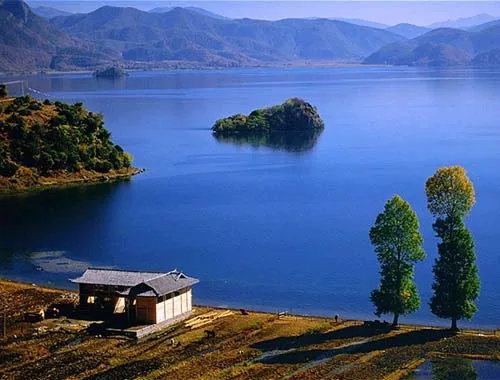
Day 4: Lugu Lake Loop (Stay in Daluoshui)
Morning in Lige was wrapped in mist. I crouched at the inn door biting into a roasted potato from the landlady—crispy skin, soft inside. At the village entrance sat an electric scooter covered in Mosuo totems. The rental guy was a Mosuo man with a small mustache: “Going around the lake? This one has enough battery, 80 yuan a day, I’ve charged it for you.” He adjusted the seat and tucked a pack of tissues in the basket: “It’s dusty on the road, use these for your hands.”
After 10 minutes of riding, the salty smell of the lake intensified. The first stop was Nisai Village. Giant banyan trees at the entrance stretched their branches like giant green umbrellas, with Galsang flowers blooming underneath—pink like crushed clouds, red like dried chilies. A Mosuo auntie in a navy apron sat on a stone bench, red and black yarn in her lap. Seeing me approach, she held up a shawl: “Good eye, little girl; this is the Mosuo ‘Lucky Pattern.’ Red for fire, black for mountains. Took three days to weave, take it for 50 yuan.” I touched it; the coarse wool was warm from the sun, the edge adorned with a small silver ornament. She helped me tie it: “Beautiful, matches your dress today.”
Further south in Xiaoluoshui, I passed a grassy marsh where yaks grazed slowly, their tails swinging. The pig-trough boats by the shore were lined up. A rowing sister in a blue cloth shirt smiled: “Want a ride? 50 yuan for half an hour, I’ll take you to see the ‘Flowers of the Lake’—though they haven’t bloomed for National Day yet, the water is clearer.” I got on; the moment the oar broke the surface, the lake water as blue as a gem splashed my hand, refreshingly cool. She hummed a Mosuo tune, her voice like it was soaked in lake water: “Brother’s boat rocks and sways, Sister’s song drifts away…” The wind blew her blue headscarf, revealing a silver hairpin. I stared at my reflection in the water and forgot to take photos.
At 12:00 PM, I rode back to Lige. The owner was already waving a spatula: “The silver fish omelet is ready!” He brought out a coarse ceramic plate—the silver fish were just caught, their transparent bodies fried golden, wrapped in runny egg chunks. The fragrance filled the whole yard. I sat on the doorstep eating; the freshness of the fish mixed with the egg aroma and the owner’s homegrown rice. I even mixed the oil from the bottom of the plate with my rice. He laughed and patted my shoulder: “Slow down, there’s more to see this afternoon.”
In the afternoon, I went to Gemu Holy Mountain. There was a small queue at the cableway. The staff, a guy in a windbreaker, scanned my health code and let me through: “Few people today, go on up.” The cable car climbed slowly; the village, meadows, and lake became smaller, like an unfolding 3D map. At the top, the wind was strong enough to blow off a hat. I held mine and looked down—Lugu Lake was surrounded by mountains like a crescent moon. The water shimmered like broken silver in the sun, smoke rose from the wooden houses on the shore, and Gemu Holy Mountain looked like a giant stone pillar with clouds wrapped around it like a deity’s belt. The sound of prayer flags snapping was in the wind. I took a photo; the lake water was so blue it looked like it could swallow you.
At 6:00 PM, I rode to Daluoshui, my arms aching. I saw smoke from a barbecue stall. The owner, an auntie in a floral apron, shouted: “Here you are! Eat the roasted Mosuo Baba while it’s hot, crispy outside and sweet inside!” I sat on a plastic stool and bit into the Baba—the crust was crispy, and inside was sweet corn paste. Paired with grilled pork belly and a cold beer, I squinted in comfort. People at the next table talked about the sunrise; some said “get up early for Lige Peninsula.” I licked the beer foam off my lip, thinking this slow life is much better than rushing through sights.
Lying in the inn bed that night, hearing the Mosuo singing mixed with the waves, I smiled—looping the lake isn’t about the scenery; it’s about touching the auntie’s shawl, riding the sister’s boat, eating the omelet, and feeling the wind of Gemu. These hidden tendernesses are the sweetest part of Lugu Lake.
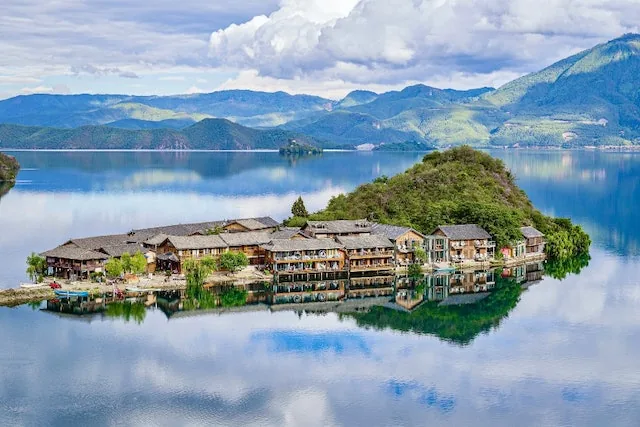
Day 5: Lake Tour → Depart for Yubeng (5-hour drive, Stay in Upper Yubeng)
Morning at Lugu Lake was wrapped in light mist, like freshly opened sweet wine. Carrying the corn Baba the Mosuo auntie gave me yesterday (crispy skin, warm sugar center), I followed the inn owner to the pier—he wore a navy cotton shirt, trousers rolled to his ankles, waving my ticket: “30 yuan a person, Liwubi Island isn’t far, sit tight.”
Riding a Pig-trough Boat to Liwubi Island
The boat was made of old wood, the gunwales polished shiny and smelling of tung oil. The boatman, A-Jie, was in his early 20s, mud on his rubber shoes, hands calloused. Every stroke he’d yell: “Watch the waves, don’t get your shoes wet!” As we moved, the salty-sweet lake air rushed in. I looked down—broken silver ripples sparkled, and occasional silver fish jumped, splashing cold droplets on my neck.
Ten minutes later, we reached the island. A cobblestone path led to a small temple. The red walls were peeling slightly, and faded prayer flags hung over the door. A monk sat on the steps hitting a wooden fish; the rhythm was as slow as the lake’s ripples. Every strike sent the scent of incense—ghee mixed with cypress—drifting over. I walked in; fresh apples were offered before the Buddha, and sunlight hit the golden face of the statue. The monk smiled: “Pray, the Lake God will protect you.” I joined my palms, my fingertips touching the cool wooden floor.
Noon: Roasted Potatoes by the Pier
Back from the island, walking along the pier, the scent of chili powder and salt hit me. The shop owner was a hunched old man in a patched black jacket, standing before a blackened roaster. He held up a split potato in his palm: “Freshly roasted, hot, want a taste?” I took it; my fingertips immediately turned red from the heat. The skin was charred black, but the inside was as soft as mashed potatoes. Sprinkled with coarse chili and salt, the sweet fragrance exploded with the spice. The old man smoked his pipe nearby: “These potatoes grow in the island’s sandy soil, lots of starch, very sweet. I’ve roasted them for 30 years, the taste never changed.”
Afternoon: Carpool to Yubeng
The owner helped me book a 7-seater SUV. The driver was a Tibetan man in a navy jacket with a copper prayer wheel at his waist. Leaving Lugu Lake, the road turned into a snake. Between turns, mountains layered over each other—dark green pines, light green meadows, occasional pink-white Galsang flowers. The wind smelled of bitter pine needles. Yaks grazed on the slopes, their tails swinging. The driver laughed: “I’ve driven this road for 8 years, don’t worry, no motion sickness.” I leaned against the window; the mountain peaks were capped with clouds like soft white hats.
Five hours later, the car stopped under the old locust tree in Upper Yubeng. Dragging my suitcase up the steep stone path, I saw Tibetan wooden houses draped in colorful prayer flags—red, yellow, blue, flapping in the wind. The guesthouse owner, Uncle Zhaxi, stood at the door in a dark red sweater, holding a copper pot: “Hard journey, young lady. Room’s on the second floor, Tibetan rugs, hot water in the pot.”
The room was small, with a small Thangka on the wall and a thick wool rug. Zhaxi brought a bowl of butter tea: “Just made, a bit salty, you’ll feel warm once you’re used to it.” I took a sip—salty fragrance with a hint of tea bitterness, warming me from the stomach to my fingertips.
At dusk, I sat on the porch watching villagers harvest highland barley. The sweet scent of barley filled the air. An old lady brought a bowl of yogurt: “Try it, homemade, no sugar.” It was as thick as tofu pudding, topped with fried rice. I thanked her and looked at the stars—far more than in the city, like someone scattered diamonds across the sky.

Day 6: Trekking to Ice Lake (Stay in Yubeng Village)
At 5:30 AM, the Tibetan fire pit was burning bright. Uncle Zhaxi brought ginger tea: “Going to Ice Lake? I’ve warmed your anti-slip shoes by the fire; your feet won’t be cold.” The shoes still held the warmth of the embers. As I put them on, my wool socks brushed against the Tibetan embroidery—so warm my toes relaxed.
At 7:00 AM by the mani stones, Zhaxi lit the way with a flashlight: “Take the path toward the Holy Waterfall fork, cross the scree slope first, watch your ankles.” I set off, my first step landing in a mud pit—the soles bit into the mud with a reassuring “creak.” High-altitude rhododendrons along the way still had remnant blooms, pink-purple petals with dewdrops like sleeping trumpets.
Xiaonong Base Camp sat at 3600 meters. From afar, the red-roofed white houses looked like toy blocks. A small shop sold instant noodles and water. The owner, a young man in a Tibetan robe, held up a 5-yuan water bottle: “No water at Ice Lake; I carried this from the village yesterday.” I took it; the bottle still held his body heat. The water was cold with a hint of mineral sweetness.
Another hour up, the shadow of Ice Lake hit my eyes—a pale blue ice cap nestled at the foot of the snow mountain, like a blue crystal forgotten by God. Water seeped from the ice cracks, “dripping” on the rocks. I didn’t dare speak loudly, afraid to shatter the silence. I crouched on a rock and touched the ice—hard as stone, but translucent blue. My fingertips caught some frost, cold but enticing.
At noon, I gnawed on milk bread with chocolate sauce on my face, sitting by the prayer flags to take photos. My phone shut down due to the low temperature; I laughed at the black screen, as my eyes had already captured the view. A Tibetan local passing by asked, “Beautiful, isn’t it?” I nodded. He wiped his forehead: “I come every year; the ice is bluer this year.”
At 3:00 PM, heading back, my legs felt like lead, but I didn’t want to rush. The clouds on the snow peaks looked like white hats. Back at the guesthouse, Zhaxi had prepared a basin of herbal water: “Soak for 15 minutes.” The warmth of mugwort and saffron soaked into my soles, easing the ache.
That night, lying on the Tibetan mattress, I remembered the blue of the lake—a blue with temperature, like Zhaxi’s tea and the local man’s smile. I walked for 10 hours, my shoes were muddy, my socks had holes, but I didn’t regret it. The meaning of trekking to Ice Lake isn’t just reaching the end; it’s the mud pits, the frost, the people met, and the stories of faith and nature in the wind.

Day 7: Trekking to Holy Waterfall (Stay in Yubeng Village)
At 7:00 AM, the wind struck the copper bell. Uncle Zhaxi brought barley cakes: “The path to the waterfall is gentle but windy, wear this fleece.” The cake was warm and smelled of barley and sweet butter.
Trekking Prep: Old Tibetan’s “Simple Methods”
Zhaxi pulled an old canvas bag from the cabinet and gave me three things:
- Waterproof shoe covers: “Meadows have heavy dew; wet shoes slip easily.”
- Folding cup: “No shops along the way; drink the mountain spring water.”
- Small bag of salt: “Sprinkle some on your forehead when circling the waterfall to ward off evil.”
9:00 AM Departure: The “Flag Rain” of the Meadow
The path from the inn felt like a soft pine-needle carpet. 40 minutes in, the Holy Waterfall Meadow opened up—entire slopes draped in prayer flags. Red, yellow, blue, and green flags tangled in pine branches and hung by mani stones. The “flapping” sound was like a Tibetan song. Galsang flowers hid in the gaps like scattered sugar.
12:00 PM at Holy Waterfall: Three Rounds for Peace
The sound of the waterfall hit my ears first—a “rumbling” from the mountain’s belly. Turning the last corner, the Holy Waterfall hung before me: meltwater falling from a 100-meter cliff, splashing like broken silver. The water was so clear I could see pebbles and tiny shrimp.
An old grandma in a Tibetan robe was spinning a copper prayer wheel. “Girl, walk three rounds!” I followed her:
- First Round: Smelling the cool bitterness of the water and the snow mountain.
- Second Round: Hearing the “creak” of the prayer wheel layered with the waterfall.
- Third Round: The wind lifted my hair, and suddenly it was quiet—no itinerary, just the sounds and the grandma’s smile.
4:00 PM Back at Village: Native Chicken Hotpot
Back at the inn, Zhaxi called out: “Native chicken hotpot is ready!” The clay pot bubbled with the scent of angelica and codonopsis. The chicken was raised by the owner, its skin yellow and meat falling off the bone. I had two big bowls of soup.
The neighbor brought a bowl of barley wine: “Try it, keeps the cold out.” It was light and sweet.
Night: Yubeng’s Stars “Scattered Diamonds”
At dusk, Zhaxi lit a butter lamp. Stars emerged—not faint like in the city, but dense like scattered diamonds. The air smelled of cypress from the Tibetan rugs.
Today’s Practical Tips (Uncle Zhaxi’s Version)
| Item | Details |
|---|---|
| Equipment | Waterproof shoe covers (heavy dew), folding cup (no shops), small bag of salt (for the ritual) |
| Dining | Native chicken hotpot is a must (fresh and tender) |
| Culture | Circle the waterfall clockwise three times; sprinkle salt on forehead |
| Best Time | Depart in the morning (avoid afternoon wind, good light for photos) |
Before bed, the landlady brought hot milk with saffron: “Helps you sleep.” Drinking it while watching the stars, I realized the best travel is touching the flags, drinking the soup, seeing the stars, and the smile of an old lady.
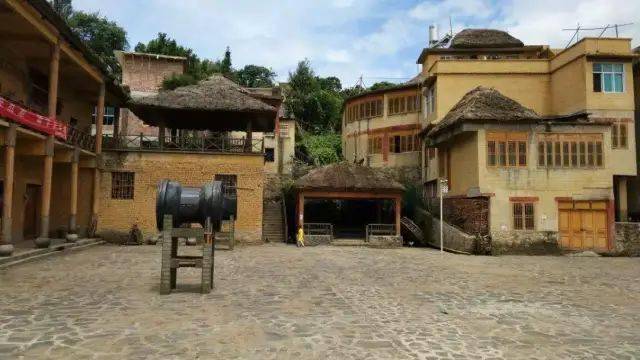
Day 8-9: Leaving Yubeng → Return
Day 8: Crossing Mountains, Turning the Prayer Wheel in Dukezong
At 7:00 AM, Uncle Zhaxi called a carpool from Deqin. The driver was a man in a navy robe. The back seat had bags of dried barley, and a copper bell hung by the window. He handed me a warm barley cake: “Eat this, it’s a 6-hour drive.”
The mountain road transitioned to asphalt, passing through Deqin’s grasslands where yaks grazed. Six hours later, I reached Shangri-La. He dropped me off: “Dukezong Ancient Town isn’t far; turn left at the intersection. There’s an old locust tree at Hanting, and you can spin the prayer wheel at night.”
At 8:00 PM, I went to spin the giant prayer wheel. The town walls were earthy yellow, with butter lamps flickering. I joined the locals. My hands touched the ghee on the wheel. By the third round, everything went silent—just the “crackle” of the lamps and the breathing of the people around me.
Day 9: Journey Home, Choosing a “No Rush” Route
In the morning, Zhaxi brought beef porridge: “Take some for the road.” I chose to fly to Kunming—National Day train tickets are easier to get there.
The ride to the airport was 40 minutes with a young Tibetan driver playing Tibetan songs. The flight to Kunming took 1 hour 40 minutes, then the high-speed rail back to Hangzhou. Eating the yak jerky Zhaxi gave me, I thought of the ice lake, the waterfall, and the prayer wheel.
A friend chose to carpool to Lijiang. She posted a photo of the rhododendrons on the mountain road, saying “A bit more lively than Yubeng, but less quiet.” I touched the ghee box in my bag—the return isn’t an end; it’s bringing the wind and the sounds of Yubeng home with me.
Pitfalls to Avoid:
- Don’t buy tea at the scenic area entrance! I bought “Wild Puer” that was bitter and undrinkable. Stick to home-carried Dianhong.
- Choose freshly baked flower cakes at Zhuanxin Market! Packaged ones are machine-made and dry; fresh ones are 10 yuan for 3 and much better.
- Buy trekking shoes in advance! Rental shoes are as hard as bricks. I bought mine in Kunming, and my feet didn’t hurt at all.
Expenses: Around 2800 yuan/person:
- Flights: 1000 yuan (booked 1 month early for National Day);
- Accommodation: 8 nights, average 150/night, total 1200;
- Food: 100 yuan/day, total 900;
- Carpool: Daily carpool + village transport, 300;
Total is exactly 2800. The remaining 200 went to yak jerky and flower cakes.
Recommendations:
- Librairie Avant-Garde in Shaxi: A must! I sat for an afternoon with roasted tea.
- Sunset at Lige, Lugu Lake: Sitting by the water as it turns from blue to orange-red.
- Yubeng Ice Lake: You must go! Hearing the ice “crack” and seeing the blue cap is unforgettable.
A colleague asked where I went that wasn’t crowded. I showed him this. Travel isn’t about “standard answers,” it’s about finding a quiet place to feel the mountain wind and hearing a stranger say “slow down.”
Packing my bags, I remembered Zhaxi’s words: “Travel is letting your heart slow down.” My heart truly did.
Related Guides
- 7-Day Yunnan Lunar New Year Escape Guide: Xishuangbanna + Yuanyang Rice Terraces + Jianshui Ancient Town—Celebrate Without Crowds, Spend Less
- 8-Day Border Exploration of Yunnan: Ruili + Tengchong + Yingjiang + Mangshi, Exotic Scenery and Cuisine on the China–Myanmar Border
- 10-Day Meili Snow Mountain Circumambulation Trek: Yubeng + Sacred Waterfall + Ice Lake + Holy Lake, Pilgrimage of Tibetan Locals & Natural Wonders
- 9-Day Self-Drive on the Yunnan-Tibet Highway: Kunming → Dali → Lijiang → Shangri-La → Deqin → Markam, Snow Mountains & Tibetan Culture
- Yunnan Travel Anti-Scam Guide: 3 Places to Avoid! 3 Must-Eat Food List, with Route Pitfall Tips
Shangri-La —: Numbers to Check
Tickets & Booking
- Tiger Leaping Gorge (Shangri-La section, Upper Tiger Leaping): Adult CNY 45; ticket + round-trip sightseeing escalator (Pingbu Qingyun escalator) CNY 125[src]
Where to Stay · Room Type · Nearby
- Inside Dukezong Ancient Town | Room tip: Convenient for getting around, but vehicles cannot enter, so confirm with the guesthouse whether they carry luggage | Nearby add-ons: Great Buddha Temple, prayer wheel, Guishan Park, Moonlight Square[src]
- Along Napahai | Room tip: Good views and quiet, but far from the city | Nearby add-ons: Napahai Yila Grassland, Shika Snow Mountain[src]
Typical Climate & Packing (Past Years)
- January: -7 °C–9 °C °C, [Travel climate reference]
- February: -5 °C–11 °C °C
- March: -2 °C–14 °C °C
- April: 2 °C–17 °C °C
- May: 5 °C–19 °C °C, The meadow turns green again
- June: 8 °C–20 °C °C






