



Day 1: Arrive in Dali → Explore the Ancient City → Evening Three-Course Tea (14:00-21:00)
Transportation Details: Upon exiting Dali Huangcaoba Airport, walk 50 meters to the right to find the airport bus ticket office. Ask for a ticket to “Dali Ancient City East Gate.” Buses run from 7:30 to 20:00 every 30 minutes. Arrive at the platform 10 minutes early. The buses are white air-conditioned coaches with spacious seats. They stop at the South Gate and East Gate (listen carefully as announcements can be quiet). If taking a taxi, turn right outside the arrival hall to find the taxi queue. If carpooling, drivers might ask “is it on the way?” Choose a vehicle from a formal taxi company (marked with the “Dali Taxi” logo). Taking a taxi to the Ancient City is recommended in the evening to avoid missing the last bus.
Accommodation Review: I chose a guesthouse 200 meters inside the South Gate. Search for “Dali Ancient City South Gate Bai Courtyard” on navigation. It’s a renovated two-story traditional house with heavy wooden doors and a small central courtyard filled with succulents and ceramic pots. The standard room has solid wood beds (firm but comfortable) and traditional carved wooden windows that open to views of ancient city rooftops and the silhouette of Cangshan Mountain. The owner, a local Bai auntie, offers e-bike rentals (30 yuan/day). Free mineral water and Cangshan maps are available at the front desk. Prices are 200 yuan/night during the off-season (September-November) and rise to 260 yuan/night during peak season (March-May), though booking a week in advance secures a discount.
Afternoon Strolling Route: Leave the guesthouse at 14:00 and walk east to Renmin Road, the artistic main street of the city. Focus on the “Lanxu” tie-dye exhibition area on the left—glass cabinets display tie-dye fabrics in shades ranging from light blue to deep indigo. Staff explain “Zha” (tying) techniques, such as the “wrapping method” for petals or the “twist-tie method” with rubber bands. 100 meters further is Wenxian Tower, an iconic building. The second-floor railings feature wooden Ruyi patterns, and stone lion statues sit at the base of the pillars. The eaves curve sharply upward; standing below, you can hear the wind chimes tinkling. If tired, “Ancient City Teahouse” in the middle of Renmin Road offers Pu’er tea (15 yuan/cup) where you can watch seniors play Chinese chess.
Evening Three-Course Tea Experience: Arriving at the “Dali Ancient City Three-Course Tea Tradition Center” at 18:30, the shop already had five or six tables of independent travelers. The inheritor, a Bai grandfather in his 60s wearing a navy buttoned jacket, led us to a small elm-wood table with three porcelain bowls and a plate of Rushan (milk fan). The first bowl, “Bitter Tea,” is dark brown. He explained it uses large-leaf tea roasted until slightly charred (notable toasted aroma); one sip numbs the tongue and tightens the throat—symbolizing that “life begins with hardship.” The second bowl, “Sweet Tea,” includes fresh Rushan (a Dali specialty similar to fluffy cheese) and brown sugar. As it melts, the tea turns pale yellow, offering a sweet, milky contrast. The third bowl, “Aftertaste Tea,” is unique, containing peppercorns and ginger slices. It’s numbing and spicy. The grandfather smiled and said: “This is like life; after the bitter and sweet, you savor the remaining flavors.” The process takes 40 minutes, and we each received a small bag of dried osmanthus from his garden.
Note: A couple at our table found the first bitter bowl difficult. The grandfather explained: “Young people drink too much milk tea; this roasted tea is strong, but the bitterness gives way to a sweet aftertaste.” After finishing all three, the girl bought two boxes of Tuocha (80 yuan/box) for her parents.
| Item | Details |
|---|---|
| Airport Transport | After getting off the bus at East Gate, walk back 50 meters to the South Gate entrance; taxi to South Gate is about 25 yuan, to East Gate about 30 yuan |
| Three-Course Tea Booking | Must call 1 day in advance (0872-266待确认); sessions are 18:30-21:00 (every 30 minutes, 8-10 people per session) |
| Ancient City Tips | Tie-dye scarves on Renmin Road priced at 30-50 yuan are often machine-printed (smooth texture); authentic handmade pieces feel rough with visible tie marks |
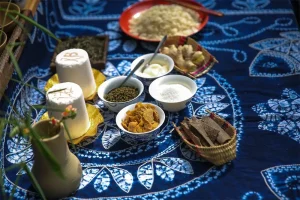
Day 2: Xizhou Ancient Town Tie-Dye (9:00-12:00) → Zhoucheng Village Workshops (14:00-17:00)
Transportation: Depart from the North Gate of Dali Ancient City at 8:30. Look for “Route 8” at the blue-and-white bus sign. Get off at “Xizhou Town Government” (2 yuan coin or use Alipay “Dali Electronic Bus Card”). Route 8 uses white minibuses with plastic seats; sit on the left for a nice breeze. Alternatively, take a carpool from the North Gate—look for private cars with a “Carpool” sign heading to Xizhou. Usually 30 yuan/person for a 4-passenger car (pay in cash or WeChat). It takes 15 minutes to reach Xizhou Sifang Street. From the drop-off point, walk 100 meters along the stone path past a milky-scented Rushan stall and turn left to find the wooden sign for “Xizhou Indigo Dye Studio.”
Morning Tie-Dye Process: At 9:00, enter the “Xizhou Indigo Dye Studio,” a two-story Bai residence. The owner, a middle-aged provincial inheritor with glasses, showed us the material area. White cotton comes in three sizes: square cloth (30cm×30cm, 30 yuan), scarf (70cm×180cm, 50 yuan), and handkerchief (20cm×20cm, 20 yuan). I chose the scarf (50 yuan). He taught the tying technique: draw a simple pattern like a sun with a pencil, then use large stitches or rubber bands to secure sections. He noted that “imperfections give it a handmade feel.” The tied cloth is placed in a 1.5-meter diameter wooden vat filled with fermented indigo liquid for 20 minutes. After rinsing and untying on a small stool, the cloth smelled like grass and earth. My “sun” became abstract, but the owner called it “full of life.”
Lunch Selection Tips: At 12:00, go to “Yang Shunbao Xizhou Baba” at Sifang Street. They have two iron ovens for sweet and savory golden cakes. Sweet Baba uses local rose sugar (pinkish center), while savory Baba features diced Xuanwei ham (salty and fragrant). The sweet crust is incredibly flaky, while the savory one is packed with ham and green onions. Note that there are separate queues for sweet and savory flavors. Freshly baked is best. I bought one of each (8 yuan each, 16 yuan total) and ate on a stone bench while watching Bai aunties shop with bamboo baskets.
Afternoon Zhoucheng Village Scene: At 14:00, take Route 8 back to Xizhou and transfer to a carpool to Zhoucheng Village (or take a direct carpool for about 40 yuan/car). Zhoucheng’s main street is lined with workshops where villagers sit outside sewing patterns or hanging dyed fabrics to dry like blue waterfalls. Visit “Duan Shukun Tie-Dye Workshop.” The owner, a man in his 50s, invited me to smell the fresh indigo leaves in the vat (pungent but fresh). They sell various products: children’s bibs (50 yuan), tablecloths (from 80 yuan/meter), and curtains (150 yuan/meter). I bought a 1-meter butterfly tablecloth (120 yuan), which he wrapped in newspaper. He emphasized that their home-grown indigo dyes become more beautiful with every wash.
Note: In Zhoucheng, I saw a mother and daughter looking at 25-yuan machine-printed scarves. The shopkeeper told them: “Those use chemical dyes that fade after two washes.” She showed them real tie-dye (textured with tie marks), and they ultimately bought two handmade scarves for 60 yuan each.
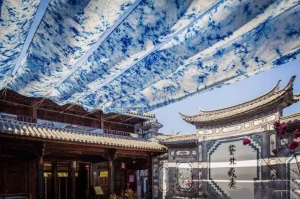
Day 3: Xinhua Village Silverware Making (9:00-12:00) → Silversmith Village Old Street (14:00-17:00)
Transportation Choice: Depart from Dali Ancient City Passenger Station (300 meters west of South Gate) at 8:00. Tickets to “Xinhua Village” are 12 yuan/person, departing at 8:30, 9:30, and 10:30 (take the earliest for best light). The light blue minibuses pass through the Dali-Lijiang highway with views of farmland and Bai villages. Alternatively, take a carpool from the South Gate for 40 yuan/person (full with 4 people), reaching Xinhua in 25 minutes. Walk 200 meters from the drop-off point past the “Silversmith Heritage” sign and turn right to find the “Xinhua Silverware Tradition Hall.”
Morning Silverware Crafting: At 9:00, enter the hall, a two-story Bai-style building. I chose the “Hammered Silver Pendant” experience (150 yuan/person, including 999 sterling silver + tools + 1-on-1 guidance). The master let me feel the silver sheet: “This is 999 silver, much softer than a coin.” He introduced the small hammer (shaping), fine chisels (patterning), and sandpaper (polishing). Step 1: Flatten the silver on an anvil. Step 2: Use a compass to draw a circle and cut it with special sharp shears. Step 3: Use sandpaper to smooth the edges (he warned me not to cut my fingers). Finally, he used a punching machine to make a hole for a free red cotton cord. The process took 2 hours, and I took the pendant home in a small pouch.
Noon Sour and Spicy Fish: At 12:00, visit “Yang’s Fish Manor” at the village entrance, featuring live Erhai fish. I ordered the Sour and Spicy Fish (35 yuan/serving, approx 400g). The chef cleaned the fish and stir-fried it with sour papaya slices, chili, garlic, and ginger before simmering. 15 minutes later, the golden soup was served. The fish was incredibly tender, with tartness from the papaya (not vinegar) and fresh heat from the chili. It came with free potato and tofu sides. I finished every drop of the soup.
Afternoon Silversmith Old Street: At 14:00, stroll through the main street filled with silverware shops, some with “Century-Old Shop” banners. I was drawn to an artisan in his 60s hammering silver bars into bracelets on a low stool. He said it takes ten years to master the rhythm. While main street shops have higher prices (300-500 yuan/bracelet), you can bargain. I bought a carved bracelet (initially 300 yuan) for 150 yuan after bargaining. At the end of the street, I found an 80-yuan silver ring marked “999 Silver,” half the price of the Ancient City version, with a free resizing service.
| Item | Details |
|---|---|
| Connections | Tell the minibus driver to stop at “Silversmith Village Main Street”; ensure carpool drivers take the Dali-Lijiang highway to avoid detours |
| Silver Making | 999 silver may oxidize slightly over time (clean with a silver cloth); uneven hammering is a normal part of the handmade character |
| Street Tips | Formal shops have “Intangible Heritage” signs and mark “999 Sterling Silver”; roadside stalls may use alloys—check with a magnet (real silver is not magnetic) |
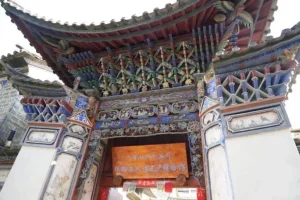
Day 4: Sanfang Yizhaobi Architecture Tour (9:00-12:00) → Bai Residence Museum (14:00-17:00)
Transportation Details: Depart at 8:40. A taxi from the Ancient City to Xizhou Yan’s Mansion is about 50 yuan (30 minutes). For a cheaper option, take a white “Xizhou Carpool” van from the South Gate for 20 yuan/person. From the drop-off, it’s 50 meters to the entrance. Tickets are 20 yuan/person (WeChat accepted), featuring an old photo of the mansion. The back explains the “Three Rooms and a Screen Wall” (Sanfang Yizhaobi) layout.
Morning Yan’s Mansion Details: At 9:00, enter the courtyard with its bluestone floor and goldfish pot. I hired a guide (10 yuan, optional). The main hall features six lattice doors; the upper parts are hollow carvings of plum, orchid, bamboo, and chrysanthemum, while the center doors only open for major events. The side rooms feature “powder walls” (lime-washed). The core is the 4m×6m screen wall (Zhaobi) facing the entrance, painted with “Pine and Crane for Longevity” in ink green and white. The guide noted that the “Fu” character in the corner indicates a Yang family residence (different surnames have specific patterns: Yang is “Pure and Honest Heritage,” Li is “Green Lotus Legacy”). Bai houses prioritize white walls with simple blue decorative patterns under eaves.
Lunch Cold Chicken Rice Noodles: At 12:00, go to “Cold Chicken Rice Noodles” on Sifang Street. A bowl of shredded chicken rice noodles is 12 yuan. The noodles are thin and white, topped with fine chicken shreds, sour pickles, and aromatic sesame oil. The broth is light but savory. A local uncle recommended adding a spoonful of “Papaya Vinegar” (a Bai fermented specialty with a mild tartness) for authenticity.
Afternoon Residence Museum Secrets: At 14:00, take a 10-yuan carpool to the “Dali Bai Residence Museum” (3km away). The museum consists of authentic old houses reassembled component by component. Tickets are 30 yuan (bargainable to 25 yuan). Free tours are at 10:00 and 14:00. The hall uses mortise and tenon joints without a single nail; the guide tapped the joints to show how tight they remain even during earthquakes. The courtyard floor slants slightly toward the center to catch rainwater (“Four Waters Returning to the Hall”), symbolizing wealth staying within. An old craftsman explained that the main gate never faces the kitchen directly to prevent smoke from driving away fortune. I also saw carved windows and copper oil lamps.
Key Detail Supplement
- Connections: Ensure taxis take the Dali-Lijiang line for speed; clarify the museum entrance with carpool drivers.
- Yan’s Mansion: Guides explain the screen wall patterns and door meanings; the ticket photo dates back to the 1930s.
- Lunch: “Sifang Street Cold Chicken Rice Noodles” is a local favorite; the sesame oil and pickles are the “soul” of the dish.
- Residence Museum: You can touch the joinery; the drainage slope is visible to the eye; exhibits include Qing Dynasty artifacts.
- Culture: “Fang” refers to the rooms; Bai surnames have specific screen wall mottos (e.g., Zhang: “Hundred Patience Family,” Yang: “Pure and Honest Heritage”).
Day 5: Freedom to Explore or Deep Experience (Flexible All Day)
Catching Up: If you loved tie-dye, return to the Xizhou studio at 8:30 when it’s quiet. I went back to learn the “Twist-tie” method (30 yuan). The master taught me that tighter ties create more white space. If you want more silverware, go to “Cun Silversmith” in Xinhua. Their hand-hammered kettles and silver combs are popular; a comb is 35 yuan (10 yuan cheaper than the Ancient City), and buying two gets you a free leather case.
Erhai Lake Cycling: Rent a Yadea e-bike at “Haiqi Guesthouse Rentals” near Caicun Pier (15 mins from the city) for 50 yuan/day (200 yuan or ID deposit). Route: Caicun Pier → North along West Erhai Road → Longkan Pier (rocky beach) → Panxi S-Curve (most beautiful section with white railings). I stopped at the S-Curve for a coconut (8 yuan). The 12km ride takes 1 hour 40 minutes. Tip: Wear sunscreen and a hat between 11:00 and 15:00. If the battery drops below 30%, navigation shows the nearest charging point.
Cangshan Gantong Cableway: For mountain hiking, go to Gantong Cableway (20 mins from the city, 35 yuan taxi). Tickets + round-trip cableway are 280 yuan (book on the “Go Yunnan” app to skip lines). The 15-minute ride offers views of the lake. From the top, walk the flat Yudai Cloud Path to see alpine rhododendrons (March-May). I walked 20 minutes to “Qingbi Stream,” which has crystal clear snowmelt water. Warning: The cableway closes at 17:00 (16:30 in winter). Bring a light jacket as it’s 5-8°C cooler than the city.
Note: At Caicun, a couple rented an old bike for 40 yuan and nearly crashed due to poor brakes. They later switched to a new Yadea like ours for safety.
Key Information List
- Catch-up: Try small square tie-dye (30 yuan) or silver buckles (15 yuan); Xinhua combs make great gifts.
- Cycling: Caicun to Panxi is the highlight (12km, 1.5-2 hours); avoid the sun during peak hours; check battery levels.
- Cangshan: Cableway is 280 yuan; Yudai Path is an easy 3km walk (1 hour); best for rhododendrons in Spring.
- Notices: Don’t rent unlicensed bikes; ticketing stops 30 minutes before closure; bring warm clothes for the mountain.
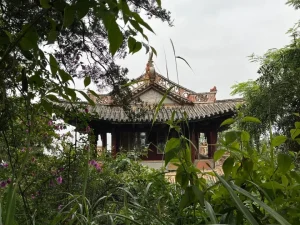
Day 6: Organize Harvests → Return Home (Flexible Schedule)
Departure Prep: Wake up at 7:30 and check luggage. Pack tie-dye and silver items (rings, pendants) in your carry-on to prevent damage. Most guesthouses offer free drying services for last-minute laundry. Walk 10 minutes to “Zhoucheng Tie-Dye Cooperative” outside the East Gate for wholesale-priced tablecloths (80 yuan/meter, 30% cheaper than tourist spots). I bought a 1.2m×1.8m butterfly cloth (96 yuan). Then, buy a silver coffee spoon (35 yuan) on Renmin Road and vacuum-packed Xizhou Baba (30 yuan/box of 4, 24-hour shelf life at room temp).
Return Logistics: For flights before 9:00, book a “Dali Airport Line” Didi by 7:40 (80 yuan, 30 mins). For afternoon trains, take a taxi from the South Gate (30 yuan, 20 mins) or carpool (20 yuan/person). Choose a taxi if you have large silver items, as trikes aren’t allowed in the station plaza. Arrive at the airport 90 minutes early. Roll tie-dye fabrics to minimize wrinkles and wrap silverware in clothes to prevent scratches.
Note: At the cooperative, a woman wanted machine-printed cloth for 25 yuan. The owner explained: “Chemical dyes fade; ours use indigo and get softer with use.” She chose the 120-yuan handmade version for its longevity.
Key Information List
- Souvenirs: Zhoucheng tablecloths (80-120 yuan/meter); Xinhua silver spoons (35 yuan); Vacuum Xizhou Baba (30 yuan/box).
- Connections: Leave 90 minutes early for flights; use the Dali-Lijiang highway for the airport; train station taxis are approx 30 yuan.
- Luggage: Roll fabrics to reduce creases; wrap silver in soft cloth; don’t crush the vacuum-packed cakes.
- Check-in: 90 minutes for domestic, 180 for international; liquids in carry-ons (like silver polish) must be under 100ml.
| Item | Description |
|---|---|
| Souvenir Buying | Tablecloths: From 80 yuan/meter (96 yuan for standard size); Silver spoons: 35 yuan; Vacuum Baba: 30 yuan/box (4 pieces) |
| Airport Transport | Taxi from South Gate: Approx 80 yuan (30 mins via highway); arrive 90 mins early; roll fabrics and wrap silver |
| Train Transport | Taxi to Dali Station: Approx 30 yuan (20 mins); Carpool 20 yuan/person (15 mins); use taxis for large luggage |
| Luggage Care | Roll fabrics to minimize wrinkles; wrap silver in clothes; avoid heavy pressure on vacuum-packed cakes; liquids under 100ml |
Related Guides
- Xishuangbanna 4-Day Dai Cuisine Guide | Gaozhuang Starlight Night Market + Man Ting Park + Dai Garden Water Splashing Festival, Tropical Food Map
- Yunnan 8-Day Self-Driving Route | Kunming-Dali-Lijiang-Lugu Lake, All Costs Including Highway Tolls + Fuel Fees + Parking Fees Calculated Clearly
- Yubeng 7-Day Hiking Guide | Sacred Waterfall Line + Ice Lake Line + Sacred Lake Line, Progressive Route from Novice to Experienced Trekkers
- Tengchong 3-Day Food + Hot Springs|Dajiujia + Xidoufen + Tuguo Zi, Soak in Hot Springs While Eating Authentic Snacks
- Yunnan 7-Day High-End Vacation Route | Aman Dali + Jinmao Resort Lijiang + Conrad Lugu Lake, Private Vacation Guide
Dali — — Practical Data
Tickets & Booking
- Xizhou Ancient Town: Free; Yan Family Residence about CNY 18, Yan Family Courtyard Museum about CNY 21–30; Xizhou wheat-field mini-train CNY 35; no booking required[src]
- Erhai cruise: About CNY 142 per person (the Greater Shuanglang line one way and other ticket types)[src]
Transport & Schedules
- Dali station → Kunming South station | EMU: E.g., D8784/D8781: Dali departs 15:40–Kunming South terminates 18:22, 2 h 42 min total, 356 km; stops at Yunnanyi, Chuxiong, Guangtong North, Lufeng South, Kunming[src]
Where to Stay · Room Type · Nearby
- Dali Ancient Town | Reference price Moderate range (mostly OTA guesthouses) | Room tip: Convenient for food, lodging and transport, suitable for a first visit to Dali | Nearby add-ons: Chongsheng Temple Three Pagodas, Renmin Road night market, Cangshan Gantong cableway[src]
- Shuanglang Ancient Town | Reference price On the high side (lake-view guesthouses) | Room tip: Right by Erhai with a good view but relatively inconvenient transport | Nearby add-ons: Nanzhao Customs Island, Yuji Island[src]
Typical Climate & Packing (Past Years)
- January: 2 °C–16 °C °C, [Travel climate reference]
- February: 4 °C–18 °C °C
- March: 6 °C–21 °C °C
- April: 9 °C–24 °C °C
- May: 12 °C–25 °C °C
- June: 15 °C–25 °C °C, Rainy season






