Yubeng 7-Day Hiking Guide | Sacred Waterfall Line + Ice Lake
Day 1: Arrival at Yubeng Village, Rest and Adapt
Exiting Deqin Bus Station at 7:00 AM, I clutched the Dimenhydrinate motion sickness medicine I took half an hour earlier (bought at a pharmacy for 12 RMB/box; slower than online but reliable). I hopped into an off-road vehicle bound for Xidang Village—its green body splattered with mud. The driver, wearing a Tibetan felt hat, looked back and shouted, “Hold on tight! The next 20 kilometers are all hairpin turns.” Sure enough, the car began twisting like a braid the moment it started. I stared at the prayer flags fluttering outside and the yaks on the meadows, my palms sweating. Fortunately, the medicine kicked in, and I didn’t get sick. 1 hour and 40 minutes later, we reached Xidang Village. At the entrance stood a stone inscribed with “Yubeng Scenic Area.” An auntie selling butter cakes handed me one for 5 RMB. It was piping hot; I took a bite, and the aroma of yak butter and wheat filled my mouth—a perfect light meal to settle my stomach.
Then, I took the scenic area shuttle bus up to Upper Yubeng Village—a green mid-sized bus with slightly old but clean seats. The driver played Tibetan songs; I couldn’t understand the lyrics, but the melody was gentle. We passed a meadow filled with small blue flowers. I rolled down the window, and the scent of sweet highland barley drifted in on the breeze. The driver said, “This is autumn in Yubeng. In two weeks, the poplar forests will turn yellow.” 20 minutes later, we arrived at the village entrance. I dragged my heavy hiking backpack toward the guesthouse. The stone path was a bit bumpy, but it felt better than concrete.
“Upper Yubeng Village Home” is located right in the village center, a Tibetan-style wooden building. The stairs creaked as I climbed to the second floor. Tashi, the owner, greeted me with a smile—dressed in a navy blue Tibetan robe with a string of copper keys hanging from his waist, speaking slightly broken Mandarin: “Young lady, drink some ginger tea first to drive out the cold.” The ginger tea was served in a coarse ceramic cup with two pieces of rock sugar. It was warm, and the warmth spread through my chest instantly. The room wasn’t large, with a woven Tibetan rug on the headboard and a window facing the direction of Goddess Peak. In the afternoon, the sun slanted in, casting a golden-red glow on the snowy summit. I leaned my trekking poles in the corner and slumped onto the bed—my breathing was a bit fast, but not too uncomfortable. Tashi had warned, “Don’t wander around when you first arrive; adapt slowly.”
At 3:00 PM, I strolled up the stone path. I passed an old grandmother drying highland barley in front of her house. she smiled and offered me a handful of roasted barley; the grains were so plump you could hear the husks cracking. I took a handful and popped them into my mouth—smoky and fragrant, much more exciting than the plain sunflower seeds in the city. In the alley, a little girl with twin braids, clutching a small copper prayer wheel, tugged at my sleeve and taught me to say “Tashi Delek” in Tibetan. Her voice was crisp. I followed along, and she clapped and laughed, handing me the prayer wheel to play with. The cylinder was engraved with the Six-Syllable Mantra and felt cool to the touch.
At 7:00 PM, I returned to the guesthouse. Tashi brought me a bowl of green vegetable noodles—the bowl was topped with a handful of scallions, and the broth was milky white. He said, “It simmered for three hours, and the noodles were hand-rolled this morning.” The noodles were chewy with a hint of wheat fragrance, and the greens were small oilseed rapes freshly picked from the field, crisp and fresh. I drank half the soup. At the next table, people were eating yak meat hotpot. The aroma wafted over, and I swallowed hard but resisted—I didn’t dare eat greasy food during the altitude adaptation period. Before bed, Tashi brought a cup of sweet tea poured from a copper pot. The cup was heavy, and the tea was sweet with a milky flavor, warming me enough to tuck my hands into my sleeping bag. I fell asleep shortly after lying down, vaguely hearing the sound of the wind outside and the distant barking of dogs. I didn’t have the splitting headache my friends warned me about; instead, I felt very peaceful.
Tashi later told me: “The altitude of Yubeng rises gradually. Don’t shower on the first day, don’t run, and even speak slowly. Your body needs to recognize the air here first.” I remembered this and didn’t touch the hot shower that night, using only lukewarm water for washing. As it turned out, steady adaptation is more effective than anything else.
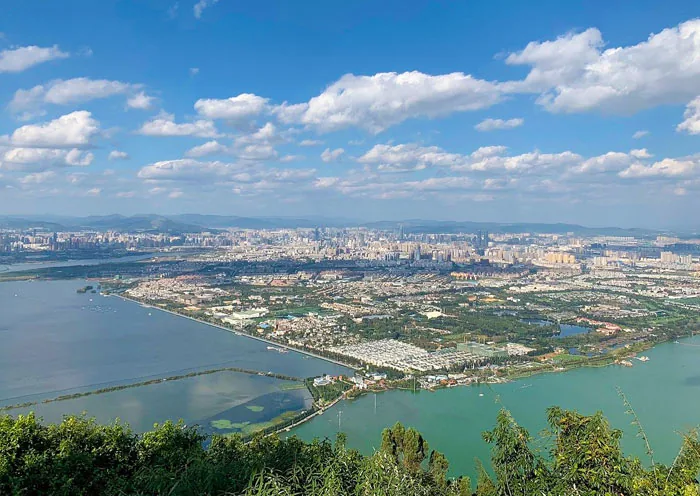
Day 2: Light Hiking Nearby, Getting to Know the Terrain
At 8:50 AM, I slung my trekking pole over my shoulder. Tashi chased me out with a cup of warm butter tea: “The path by the creek is easy to walk, don’t wander into the woods—it rained yesterday, and the marshes are hidden deep.” I took a sip of the tea, the milky fragrance mixed with ginger clearing my throat, and nodded as I walked out of the village.
Turning right out of the door led to a small path along the creek. Clover grew in the cracks of the blue stone slabs, and the water was so clear you could see small pebbles and tiny fish swimming at the bottom. Stepping on them was bumpy but cool, much more comfortable than stepping on wet roads in sneakers. The wind smelled of bitter pine needles mixed with the fresh scent of the creek. I looked up at Goddess Peak—her profile was hidden in the clouds, showing only the very tip, like a loose white hat. After walking for half an hour, I met an “Ajiala” (Tibetan for “elder sister”) wearing a straw hat, squatting on the ridge of a field planting highland barley. Small specks of mud splashed as her hoe fell. Beside her was a little boy in a Tibetan robe, clutching a warm highland barley cake. He smiled at me and broke the cake in half to share—the crust was crispy, filled with yak butter, making me squint with delight at the taste.
Small blue flowers bloomed on the ridge like miniature trumpets, dew condensing on the petals. I touched one with my fingertip; the dew was piercingly cold, but it left a floral scent on my finger. The little boy tugged at my sleeve, pointing into the distance and shouting “Yangzhuo” (Tibetan for “bee”). Following his finger, I saw a few bees circling the blue flowers, their wings buzzing so loud it made my ears itch.
At 11:30 AM, I reached a stone pavilion halfway through to rest. The pavilion was built by old Tibetans using volcanic rock, with a roof covered in dried pine branches. Sitting on it left a hint of resin scent. An old man was there spinning a prayer wheel. He held a copper prayer wheel with faded Six-Syllable Mantras and waved at me: “Sit here, it’s sunny.” I pulled out the roasted highland barley kernels Tashi gave me—pre-roasted and fragrant, they were so crispy you could hear the husks crack, with a hint of saltiness. I also took a bite of a Red Fuji apple I bought at the village entrance this morning; the juice ran down my chin, sweet as if soaked in honey. The old man chatted with me: “I’ve walked this path for fifty years. It used to be a cattle path, now it’s for tourists—you are lucky, the rain has been steady this year, and the barley is growing strong.”
At 2:00 PM, I started walking back, intentionally slowing my pace to play in the creek water—the cold made my toes curl, but it washed away the morning’s fatigue. I passed a poplar forest where the leaves were already half yellow. When the wind blew, golden leaves floated down, landing on my trekking pole. I picked up one and tucked it into my notebook as a souvenir.
I returned to the guesthouse at 3:30 PM. Tashi was sitting on a stone bench at the door peeling walnuts. Seeing me, he smiled: “Tired?” I collapsed onto the stone bench, my calves tight with soreness. Tashi turned back into the house and brought a basin of ginger water—the temperature was just right, covering my ankles, and the ginger scent was sharp enough to make my nose itch. I soaked for 15 minutes, and the soreness slowly dissipated from the soles of my feet, even relieving the stiffness in my shoulders.
During dinner, Tashi poured me a cup of butter tea: “The walk today was light, but the Sacred Waterfall route tomorrow has stairs to climb. Don’t stay up late tonight.” I chewed on some yak jerky and asked, “How did you live before there were tourists?” He put a piece of potato into my bowl: “In the past, we dug for cordyceps in the spring, picked matsutake mushrooms in the summer, harvested barley in the autumn, and roasted yak meat around the hearth in the winter—now with tourists, money is easier to earn, but sometimes I miss the slowness of the past.”
Lying in bed, I heard the sound of the creek outside and the distant barking of dogs. The soreness in my calves had mostly faded. I touched the blue flower specimen in my pocket, thinking about the Sacred Waterfall tomorrow, and found myself quite excited—it turns out the first step in adapting to altitude is to first understand the temperament of these mountains.
Later I understood that the core of light hiking is not how far you go, but placing your feet on this land and listening to it tell you where to slow down and where to rest. For example, the creek path is easier than the forest path; for instance, choose sunny spots to rest at noon; for instance, don’t bring snacks that melt easily—these are not items on a guidebook, but things Tashi, the Ajiala, and the little boy quietly taught me through their daily lives.
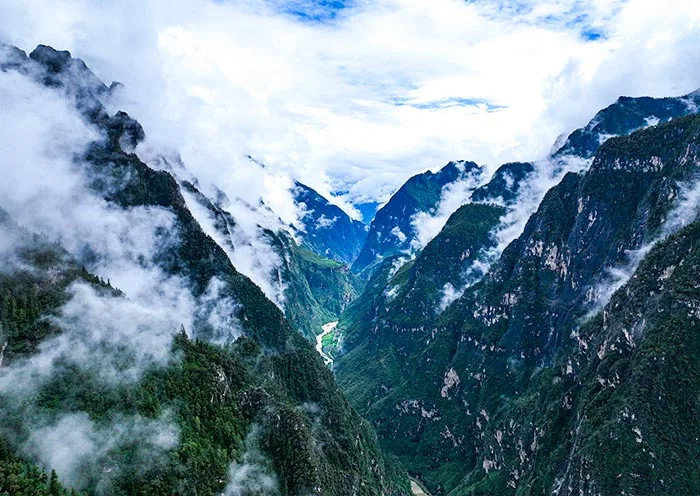
Day 3: Sacred Waterfall Route! Circling the Mountain to Clear Karma
At 7:50 AM, Tashi bumped open my door with a copper pot, the spout steaming with sweet tea: “Drink up! It’s going to snow a bit at the summit.” I took the cup; the sweet milky taste mixed with the bitterness of brick tea warmed my stomach instantly. He knelt down to help me adjust my trekking pole wrist straps—I was using SCARPA pole tips yesterday, and he said, “You must poke them firmly into the cracks of the stone slabs, otherwise the stairs are slippery enough to make you fall on your butt. I fell on those 200 steps from Xiaonong Base Camp to the Sacred Waterfall last year and had purple knees for half a month.” I stuck out my tongue and stuffed compressed biscuits and the yak jerky Tashi gave me into my bag—the biscuits were salty and fragrant with roasted sesame, and the jerky had a milky taste, much more substantial than city snacks.
When I left, the yellow dog from the village entrance followed me for half a mile until Tashi shouted for it to “go back and guard the door,” after which it sat on the barley ridge wagging its tail. Following the creek path from yesterday, the grass was longer today, its dew making my ankles slippery. I poked at it with my trekking pole, and droplets splashed on my pants, the cold waking me up. Turning a corner, Goddess Peak suddenly burst into view—the snow on the summit glowed golden-red like sun-warmed syrup. The prayer flag forest at the foot of the mountain clattered in the wind; red, yellow, and blue cloth strips wrapped around mani piles, like giving the snow mountain a Khata scarf.
Itinerary Timeline & Key Experiences
| Time |
Location/Node |
Activity Details |
Feelings/Practical Tips |
| 8:00-9:30 |
Creek Side Gentle Slope |
Walk up along the creek, pass barley fields, Ajiala teaches me to see the profile of Goddess Peak |
Easy path, steadier with non-slip hiking shoes; blue flowers on the ridge can be picked but don’t touch bees |
| 9:30-10:30 |
Xiaonong Base Camp (3600m) |
Sit under red and black tents chewing compressed biscuits, Ajiala hangs new prayer flags |
Altitude rise is noticeable, breathing becomes faster; Base Camp has hot water for 5 RMB, bring your own thermos for better value |
| 10:30-11:20 |
200 Steps to Sacred Waterfall |
Hold the railing up the stairs, legs shaking but smelling the crisp bitterness of the snow mountain |
Stairs are slippery! Poke trekking poles into stone cracks; don’t stop when it snows to avoid soaking your clothes |
| 11:20-12:30 |
Directly Below Sacred Waterfall |
Circle three times, collect water to wash hands, see the rainbow |
Circle clockwise; waterfall water is cold but sweet, don’t shake hands too hard after washing to avoid slipping |
| 12:30-14:30 |
Descent back to Village |
Walk slowly and massage legs, plant new prayer flags to say hello |
Descent is more tiring than ascent, step firmly; insert prayer flags into mani pile gaps, don’t tear old scriptures |
At 12:30 PM, I headed down the mountain. My legs felt a bit weak, but I gripped my trekking pole and moved slowly. Passing the prayer flag forest, I inserted a new one—not out of superstition, but to say hello to this mountain: “I came, I saw, and I am happy.”
At 2:00 PM, I returned to the village. Tashi saw me and smiled, holding up a copper pot: “Soak your feet first!” The ginger water was brought out, the temperature just covering my ankles, and the ginger scent made my nose itch. I soaked for 20 minutes, and the soreness in my calves slowly dissipated from the soles of my feet, even the stiffness in my shoulders was gone. I changed into a dry sweater and went downstairs, where the aroma of yak meat rice bowl hit me—the rice was hand-cooked and soft, the beef stewed so tender even the tendons were easy to bite, and the sauce over the rice with potatoes and carrots was so delicious I took three big gulps.
Tashi later told me: “The mist from the Sacred Waterfall cleanses the lungs. Circling three times isn’t a rule; it’s about letting the snow mountain see your sincerity.” I nodded while chewing on rice, suddenly understanding—so-called “clearing karma” is nothing more than leaving urban anxiety under the waterfall to float away with the mist.
At 3:00 PM, I sat on the stone bench at the guesthouse entrance, basking in the sun. The wind carried the sweet scent of highland barley, and from afar came the sound of the Sacred Waterfall and Tibetans singing folk songs, the melody slow and rhythmic, like chatting with the mountain. I touched the blue flower specimen in my pocket—picked on the ridge this morning, the petals had dried but still held a faint fragrance.
While soaking my feet in the evening, Tashi brought a cup of hot milk: “The Ice Lake route tomorrow is steeper, go to bed early tonight.” I smiled, holding the cup: “I walked 8 kilometers today and didn’t feel particularly tired.” He scratched his head: “Because you’ve learned the mountain’s temperament—go slowly, and it won’t bully you.”
Appendix: Daily Expense List
- Yak jerky: 15 RMB (Tashi gave it to me, didn’t want money but I transferred 20 RMB)
- Compressed biscuits: 5 RMB (Bought at guesthouse, filling)
- Yak meat rice bowl: 25 RMB (Lots of meat and thick sauce, recommended)
- Ginger water foot soak: Free (Gift from Tashi, heartwarming) Total: 45 RMB (10 RMB less than expected, happy!)
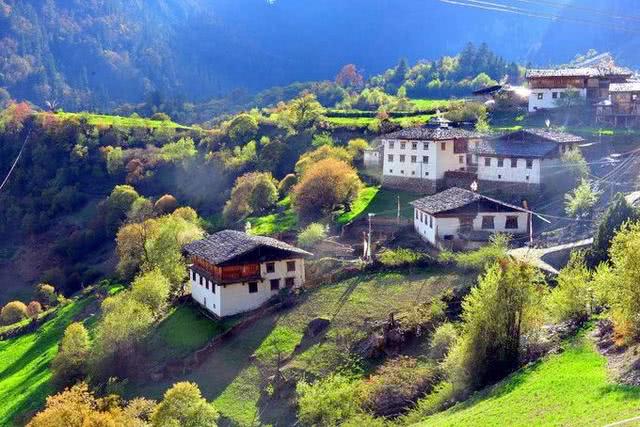
Day 4: Ice Lake Route! Seeing the Purest Blue Lake
At 6:50 AM, Tashi knocked on my window: “Start early for the Ice Lake route, otherwise once the sun comes out at noon, the melting snow makes the road very slippery.” I rubbed my eyes and got up. He stuffed crampons into my backpack—the hard plastic tooth kind, 10 RMB a pair, more non-slip than high heels. The temperature was only 5 degrees when I left, so I wrapped myself in a fleece jacket. Tashi handed me a piece of roasted potato: “Eat something to line your stomach; it takes 1 hour to reach the Ice Lake trailhead.” The potato was so hot I had to toss it between my hands, its aroma mixed with wood smoke floating in the morning breeze.
Itinerary Timeline & Key Details
| Time |
Location/Node |
Specific Experience |
Practical Tips |
| 7:30-8:30 |
Slope Behind Village to Ice Lake Trailhead |
Walk up along the same creek as yesterday; the water is faster, splashing my pants; passed a patch of dwarf rhododendrons with pink flowers |
Tighten crampons beforehand! Mine were loose at first, and I almost sprained my ankle on ice shards; don’t pick rhododendrons, Tibetans say “those are hats for the mountain” |
| 8:30-9:00 |
Ice Lake Trailhead (3500m) |
Ajiala Tsring’s milk tea stall is by the mani pile; the copper pot is steaming, and the aroma of yak butter travels for miles |
Hot milk tea is 10 RMB a cup, with roasted rice; drink it while it’s hot! It has a gamey taste when cold |
| 9:00-10:00 |
Base Camp (3800m) |
There’s a stove burning yak dung in the tent; I chewed on some compressed bread while a young man nearby wiped his ice axe |
Base Camp is windy, don’t unzip your jacket! Bread from yesterday was hard but filling |
| 10:00-11:00 |
Ice Lake (4300m) |
The last 1 km is a steep slope; climbed up holding an ice axe, panting heavily at the top; the water is light blue, like a piece of shattered glass |
Use hands and feet on the steep slope! I used trekking poles to probe the ice, stepping firmly; took 20 minutes to reach the shore |
| 11:00-11:40 |
Stay at Ice Lake |
Sat on a rock by the lake, touched the ice—bone-chillingly cold, but the water felt soft; took 100 photos |
Don’t walk to the center of the lake! The ice is thin; someone fell in last year, luckily they were pulled out quickly |
| 11:40-16:00 |
Descent back to Village |
Walked slowly and massaged legs; passing the prayer flag forest, Tsring Ajiala gave me an orange candy |
Descent is harder than ascent; if your knees hurt, rest for 5 minutes, don’t push through |
When I reached the Ice Lake trailhead, Tsring Ajiala’s milk tea stall was just starting to steam. She wore a jujube-red Tibetan robe with her hair in a braid. Seeing me, she shouted, “Young lady, want some milk tea? Yak butter with roasted rice!” The copper pot spout was dripping with milk stains. I handed over 10 RMB, and she wiped the cup with her sleeve and filled it—the first sip, yak butter fragrance mixed with the crunch of roasted rice, was so hot my tongue trembled, but it warmed me to my stomach. She smiled and pointed up: “The road to Ice Lake is slippery, go slowly, don’t rush.” I nodded while holding the cup, only remembering to ask halfway through: “Do you sell milk tea here every day?” She wiped her hands: “My husband is a guide, I bring them supplies and earn some pocket money—tourists like hot drinks, so I come every day.”
Inside the Base Camp tent, the stove burned yak dung, the smoke smell mixing with yak butter fragrance. I chewed on the compressed bread Tashi gave me. A young man in a hardshell jacket was wiping an ice axe: “This Ice Lake, there was more snow when I came last year; now it melts early, the road is more dangerous.” I looked up at the snow mountain outside; the sun shone on the snow line, glowing golden-red like a golden crown for the mountain.
The last 1 km of steep slope was the most exhausting. I gripped the ice axe, digging the tip into the ice with every step, my trekking pole probing the stone cracks, the wrist strap leaving red marks. By the time I reached Ice Lake, I was leaning against a rock panting. I looked up and saw the water—not a piercing blue, but a light blue like diluted ink, mixed with a soft milky blue. Ice shards hung by the shore, refracting rainbow-colored light in the sun. I knelt down and touched the ice surface—bone-chillingly cold, but the chill from my fingertips seemed to freeze all the restlessness in my heart.
I sat for 20 minutes and took 100 photos. Not intentionally posing, but with every movement, the position of the mountain changed slightly, and the light on the water shifted. In one photo, I put my phone on a rock and took a selfie with Ice Lake—Goddess Peak in the background, clouds on the summit like marshmallows, drifting very slowly.
During the descent, my legs started to ache. Passing the prayer flag forest, Tsring Ajiala gave me an orange candy: “Rest a bit before going; the candy is warm, keep it in your mouth to stay warm.” The wrapper was tinfoil; as I sucked on it, the orange sweetness mixed with a milky taste and slowly melted away.
I returned to the village at 4:00 PM. Tashi was sitting on a stone bench at the door, sweet tea boiling in a copper pot. He saw me and smiled, holding it up: “Drink quickly! The wind at Ice Lake hurts the body.” The sweet tea was brick tea with milk, very creamy. Drinking it warmed my whole body, making me forget the soreness in my legs. I sat opposite him, flipping through the photos on my camera—the light blue of Ice Lake, the golden-red of the snow mountain, Tsring Ajiala’s jujube-red robe, and my mud-stained hiking boots.
Tashi later told me: “The water in Ice Lake is melted snow; it’s colder than the Sacred Waterfall but purer—just like the soul of Yubeng, hidden in the deepest part. You must walk slowly to see it.” I nodded while chewing on the yak jerky Tashi gave me—it turns out the most beautiful scenery is never grabbed by running, but by stopping, waiting for the wind, waiting for the snow to melt, and waiting for your heartbeat to synchronize with the mountain.
Appendix: Daily Expense List
- Crampons: 10 RMB (Bought from Tashi, durable)
- Hot milk tea: 10 RMB (From Tsring Ajiala, fragrant)
- Compressed bread: 5 RMB (Bought at Base Camp, filling)
- Sweet tea: 5 RMB (Brewed by Tashi, warming) Total: 30 RMB (5 RMB less than budget, happy!)
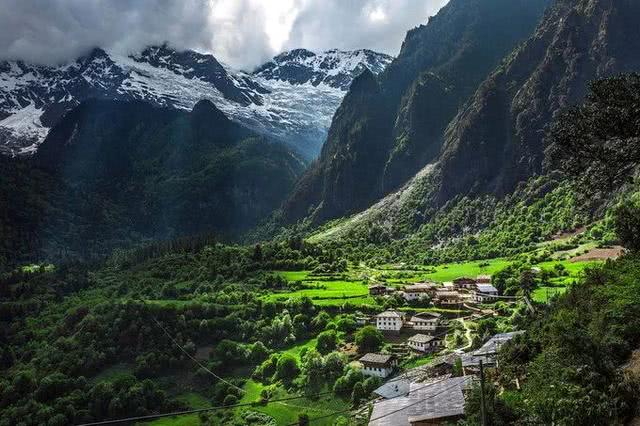
Day 5: Sacred Lake Route! Challenging the Highest Altitude
At 6:40 AM, Tashi stood at my door holding an aluminum lunch box—the porridge was lukewarm yak butter porridge, sprinkled with a handful of crushed roasted peanuts, the aroma and texture enticing: “Eat before you go; Sacred Lake is at a high altitude, you need something substantial in your stomach.” I took the lunch box, chewing even the crushed peanuts at the bottom. He knelt to help tie my hiking boots with a double knot: “Don’t let them loose; a tourist tripped on loose laces yesterday and almost fell into the bushes.” I stared at the red tassels on his felt hat: “Tashi, I’m afraid of altitude sickness.” He smiled with a face full of wrinkles: “It’s okay, the ginger tea last night worked. Go slowly; the mountain doesn’t rush people.”
Itinerary Timeline & Key Details
| Time |
Location/Node |
Specific Experience |
Practical Tips |
| 7:00-9:00 |
Behind Village Slope → Sacred Lake Trailhead |
Walk up along the Ice Lake creek; meadow changes to knee-high dwarf sedge with tiny pale yellow flowers; passed Ajiala Drolma’s yak herd, she offered a bowl of warm milk with skin so thick it could be lifted in sheets |
Walk at a steady pace on the slope! Don’t run, or you’ll be too breathless at the trailhead; yak milk has no gaminess and is more thirst-quenching than sweet tea |
| 9:00-12:00 |
Sacred Lake Trailhead (3200m) → Sacred Lake (4300m) |
The last 1 km is a steep cliff blocked by bushes; I climbed up grabbing rhododendron branches, fingernails digging into humus soil; at the top, the wind suddenly stopped, and Sacred Lake hit my eyes directly |
Must use hands and feet on the cliff! Poke trekking poles into the soil for leverage; don’t pull rhododendron branches, Tibetans say “those are the hair of the snow mountain” |
| 12:00-14:00 |
Stay at Sacred Lake |
Sat on a sun-warmed rock by the lake; the water is emerald green, like crushed spring soaked in water; ate a Ferrero Rocher, which melted a bit on my hand, tasted sweet when licked |
Don’t sit on ice! Rocks are warm from the sun; choose Ferrero Rocher as they handle heat better without melting messily |
| 14:00-16:00 |
Descent → Sacred Lake Trailhead |
Knees hurt like someone was pinching them; used trekking poles for support every step, palms soaked with sweat; passed prayer flags, Drolma Ajiala gave me a milk candy: “Rest a bit, it’s warm” |
Shift center of gravity back during descent! Don’t bend over, or knees will hurt more; milk candy is homemade, so creamy you can chew the happiness |
| 16:00-18:00 |
Back to Village → Bath → Eating Noodles |
Tashi handed me ginger tea at the village entrance: “Go back and bathe, it eases the knees”; after bathing, ate tomato egg noodles; the broth was sour and fresh, egg had a runny yolk |
Rest for 10 minutes before bathing after descent! Lower heart rate first; tomato noodles add Vitamin C to relieve muscle soreness |
When I reached the Sacred Lake trailhead, Drolma Ajiala’s yaks were scattered on the meadow. She was sitting by a mani pile milking a yak, the milk shimmering in the aluminum bucket: “Young lady, want a warm drink?” I took the bowl; the milk skin floated on top, and it tasted sweet with a hint of grass. “Thank you, Ajiala,” I smiled. She waved it off: “Our snow mountain is more lively because you come.”
The last 1 km of the cliff was the most grueling. I gripped rhododendron branches, fingernails digging into the dirt, trekking poles making a “creaking” sound in the humus soil, sweat dripping from my chin onto my hiking gear. By the time I reached Sacred Lake, I was leaning against a rock. I looked up and saw the water—not the light blue of Ice Lake, but an emerald green, like the grass of spring crushed and soaked in water. The rocks by the lake were warm from the sun, so I sat down, pulled out a Ferrero Rocher, and unwrapped it in my palm. It had melted slightly; I licked my finger, squinting at the sweetness. The wind was low; I could hear my own heartbeat and the distant breath of the snow mountain.
I took 200 photos. Not posing, but the color of Sacred Lake changed with every move—when the sun hit, it turned a brighter green; when clouds drifted by, it became softer. In one photo, my phone was on a rock, and I was smiling at Sacred Lake with Goddess Peak in the background, the clouds on the summit drifting slowly like marshmallows.
During the descent, my knees hurt badly. I gripped my trekking poles, poking the tips into the ground with every step, shifting my weight back as Tashi taught me. Passing the prayer flag forest, Drolma Ajiala gave me another milk candy: “Rest a bit, the candy is warm.” Wrapped in tinfoil, the milky taste slowly melted in my mouth, and the pain in my knees seemed to lighten slightly.
I returned to the village at 6:00 PM. Tashi was waiting with a copper pot: “Go bathe quickly!” I clung to the stairs, moving up one step at a time, gritting my teeth. Soaking in hot water, the pain in my knees slowly turned into a warm current, and even the stiffness in my shoulders dissolved. Changed and went downstairs, the owner brought tomato egg noodles—the broth was bright red like amber, smelling of sour tomato; the noodles were hand-rolled and chewy, the egg hard-boiled but with a runny yolk inside. I drank half the soup, gasping from the heat but feeling incredibly satisfied.
Tashi later sat opposite me with sweet tea: “The water of Sacred Lake is the tears of the snow mountain, purer than Ice Lake—every step you climbed was a conversation with the mountain.” I nodded while eating a marinated egg—so-called “challenge” is not about conquest, but about learning to reconcile with your own body, learning to slow down and listen to the mountain wind and your own heartbeat.
Pitfall Reminders:
- The altitude of the Sacred Lake route rises quickly (3000 → 4300m); don’t rush for the first 2 hours, walk at a steady pace to prevent altitude sickness;
- Must use hands and feet on the cliff section; don’t worry about getting dirty, safety is more important than photos;
- Choose Ferrero Rocher or similar heat-resistant chocolate, as ordinary chocolate will melt and become a mess;
- Don’t take a hot bath immediately after descending; rest for 10 minutes to lower your heart rate first, otherwise you might feel dizzy.
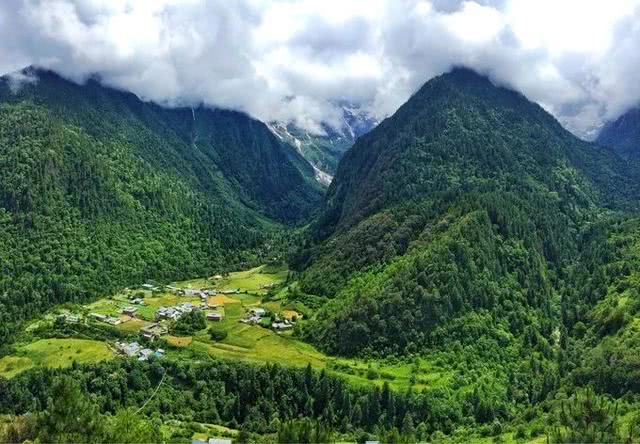
Day 6: Descent to Ninong Canyon, Stay at Feilai Temple
At 7:50 AM, Tashi bumped into my room with warm highland barley cakes and sweet tea—the cakes were still steaming, edges roasted crispy; the sweet tea had his private stock of milk powder, the milky flavor mixing with the bitterness of brick tea, warming my throat instantly. “Eat before you go; the wind in Ninong Canyon is like a knife, you’ll get an upset stomach on an empty belly.” He knelt to rub the rubber base of my trekking pole against the door sill: “The wooden boardwalk is slippery, don’t poke the tip too hard; a tourist poked a hole in it last time and had to pay 200 RMB.” I laughed while chewing the cake, stuffing the last piece into my mouth; crumbs fell on my collar, and Tashi reached out to brush them off: “Slow down, no one is racing you.”
Itinerary Timeline & Key Experiences
| Time |
Location/Node |
Specific Details |
Practical Tips |
| 8:00-9:30 |
Scenic Shuttle to Ninong Entrance |
Tibetan driver Tashi Dundrup played “Qinghai-Tibet Plateau,” the speakers vibrating the roof; passing Yubeng Village, Ajiala Tsring stood by the road waving; I shouted “Tashi Delek,” and she responded with her prayer wheel |
Front seats have a better view of the receding snow mountains; bag your trash beforehand, there are bins at the exit, don’t litter |
| 9:30-10:00 |
Ninong Canyon Entrance |
Iron gate with a faded “Ninong Canyon” wooden sign; nearby shop sells water for 5 RMB; owner Ajiala Drolma says “no water inside, buy one more bottle” |
The entrance sign is an old artifact, don’t touch it carelessly; choose room-temperature water, cold water might cause stomach chills |
| 10:00-15:00 |
Ninong Canyon Trek |
Boardwalk built along the cliff; Jinsha River below flows so fast it crashes against rocks, splashing the boardwalk; feet shivering from the cold mist; met a Tibetan boy, Tsring, skipping stones at a platform; his stone skipped three times, then he gave me a round one: “This one is good for throwing!” |
Boardwalk is narrow in spots, fit for only one person; queue up; the boy’s stones are from the riverbed, don’t take them away, leave them for him |
| 15:00-17:00 |
Exit → Deqin → Feilai Temple |
Bought air-dried yak jerky at the exit for 20 RMB a pound; owner said “dried for half a month, the more you chew, the more fragrant”; 2-hour bus to Deqin was bumpy; 1-hour transfer to Feilai Temple, winding roads made me dizzy |
Choose darker yak jerky, it’s drier; go to the toilet before transferring, few public restrooms near Feilai Temple |
| 17:30-19:00 |
Hotpot at Mingzhu Laka |
Sichuan owner Mr. Wang wore a floral apron; copper pot boiled with beef tallow, aroma filling the yard; ingredients were fresh-cut beef, powdery potatoes, sweet cabbage; I blanched a slice of beef, so tender it had no residue; Mr. Wang handed me a beer: “Celebrate your finish! Not easy!” |
Pair hotpot with local butter tea to cut the greasiness; about 30 RMB per person, generous portions, don’t over-order |
| 19:30-21:00 |
Star Gazing at Guesthouse |
The sky at Feilai Temple was as bright as a handful of crushed diamonds; the Milky Way stretched from behind Goddess Peak; stars were so clear I could count constellations; Mr. Wang pointed: “That’s Orion, see the three stars in the belt!” I took 10 photos; got 50 likes on social media in half an hour |
Bring a fleece jacket, mountain wind is cold at night; use “Night Mode” on your phone, don’t use flash, it’ll annoy others |
Tsring’s child chased the bus for half a mile until Tashi Dundrup honked the horn; he stopped, holding a stone and shouting: “Sister, come back next time!” I waved through the window, tears almost falling—not from exhaustion, but from the reluctance to leave these mountains and waters.
The trek through Ninong Canyon was easier than I imagined. The boardwalk is newly repaired and bouncy to walk on; the Jinsha River beside it is like a silver ribbon, sunlight making the surface sparkle. I gripped my trekking poles, heading down step by step, occasionally stopping for a photo—myself in the lens, backpack on, cliff and river behind, looked pretty cool. At a rest point halfway down, I sat on a plastic stool eating bread; a fellow hiker handed me an electrolyte drink: “Replenish some salt, there’s still a way to go.” I took it with a “thank you”; his hardshell jacket was muddy, but he smiled happily.
By the time I reached the exit, I was sweating. The auntie selling yak jerky smiled and handed me a bag: “Taste it, home-dried.” I took a piece; the meat was firm with a taste of the sun. I bought two bags for my backpack—souvenirs for friends.
On the bus to Deqin, I dozed off clutching my bag. I heard someone singing a Tibetan song outside; the melody was different from the morning, more upbeat. Opening my eyes, I saw pine forests by the road, needles covering the ground like a green carpet.
When I arrived at Feilai Temple, Mr. Wang was already waiting at the door. His guesthouse is a Tibetan wooden building with prayer flags hanging at the entrance, clattering in the wind. “Go put your luggage away first, the hotpot is almost ready!” He led me downstairs; the copper pot was already bubbling, the aroma of beef wafting out; I swallowed hard.
I ate the hotpot until I was sweating. The beef was fresh-cut, cooked in 10 seconds, tender and juicy; the potatoes were powdery and soaked in broth; the cabbage was sweet and crisp. Mr. Wang poured me a cup of local butter tea: “It cuts the grease, eat more.” I drank the tea, ate the hotpot, and looked at the snow mountain through the window—the 7-day trek had finally reached its moment of relaxation.
At 8:00 PM, I sat on a stone bench with Mr. Wang to look at the stars. Feilai Temple has the brightest starry sky I’ve ever seen; the Milky Way was like a glowing ribbon across the sky. Mr. Wang pointed at Orion: “See those three stars in the middle, don’t they look like a belt?” I took out my phone and took a photo; the Milky Way was as clear as if it were right in front of me. I posted it on social media, and a friend commented: “So beautiful! Where are you?” I replied: “Feilai Temple, the end of the Yubeng trek.”
Back in my room, I lay in bed, hearing the wind outside and the distant sound of the creek. I touched the yak jerky in my pocket, thinking of the Jinsha River in Ninong Canyon, the hotpot at Feilai Temple, and the stars—it turns out the descent is not an end, but packing the beauty of Yubeng into your pockets to take home.
Pitfall Reminders:
- Some sections of the Ninong Canyon boardwalk are loose; don’t jump, walk slowly;
- Best time for stargazing at Feilai Temple is after 20:00; don’t miss it;
- Go early for hotpot at Mingzhu Laka, otherwise the beef might sell out;
- Bring a bottle of electrolyte water for the descent to replenish energy.
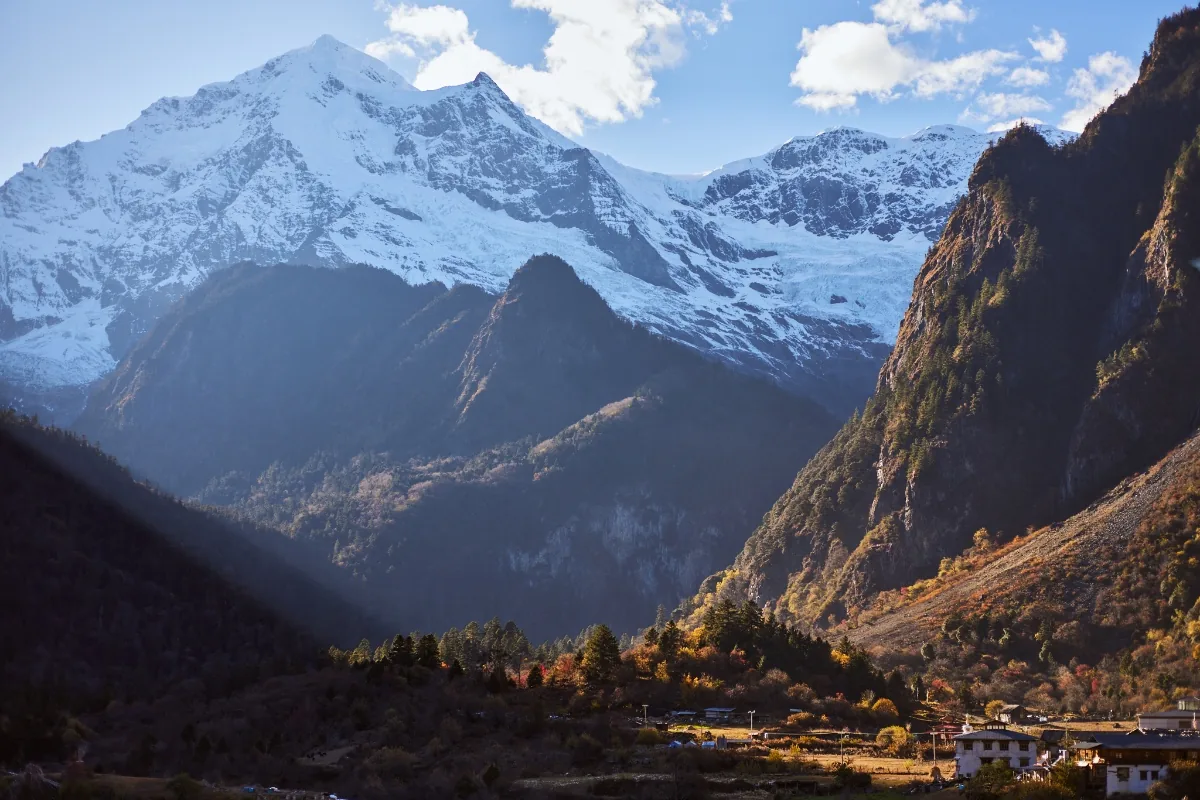
Day 7: Going Home, With a Mind Full of Scenery
At 8:30 AM, I rolled over in the guesthouse’s down duvet—the pillow was stuffed with dried barley stalks, as soft as stepping on the clouds of Yubeng. The prayer flags outside clattered in the wind. Tashi’s knock came with the aroma of sweet tea: “Young lady, you awake? Brought you something for the road.”
He stood at the door, the cuffs of his Tibetan robe pilled from wear, clutching a crumpled brown paper bag containing vacuum-packed yak jerky and crispy roasted barley cakes. “I saw you liked the sweet tea yesterday; this was roasted by Ajiala Drolma this morning, still warm.” I took the bag, my fingertips brushing his ice-cold hand; he shrunk his neck and smiled: “I’m going to the back mountain to herd yaks. Go slowly on the road, don’t be like that tourist yesterday who walked down too fast and sprained an ankle.”
At 9:00 sharp, I left the guesthouse with my small backpack. The bus was at the village entrance under the crooked old locust tree. The driver, Tashi Dundrup, was squatting by the road wiping the car. Seeing me, he shouted: “Sit in the co-pilot seat! The view ahead is good; you can see Goddess Peak one last time.” When the car started, the morning mist hadn’t fully dissipated. Yubeng Village slowly shrank into a distant speck, and the snowy summit of Goddess Peak poked through the mist like a piece of sunlit candy.
On the road, I chewed on the barley cake—crispy, with a wheat fragrance and a hint of char, just like the butter cakes Tashi Dundrup boiled yesterday. I thought of the stars at Feilai Temple last night, the Milky Way stretching from behind Goddess Peak, so bright I could count the stars in Orion’s belt. Mr. Wang had poured me a cup of warm butter tea: “Going home tomorrow, remember to pack the wind of Yubeng in your bag, otherwise you came for nothing.” I thought he was being sentimental then, but now, touching the jerky in the bag, I understood what he meant by “packing the wind”—it’s the coolness of the Sacred Waterfall splash on my face, the blue of Ice Lake reflected in my eyes, and the emerald light of Sacred Lake.
The bus took 1 hour to reach Deqin. The small shop next to the station smelled of sweet yak milk candy. I bought a bag; the wrappers were printed in Tibetan script, and the candy was hard enough to make a clinking sound, sweet like honey from a Yubeng herder’s home. Deqin Airport is very small. A Thangka hung on the waiting room wall, depicting the Sacred Waterfall of Yubeng—water crashing down from the clouds exactly as I had seen it. I stared at it for a while until the announcement called: “Passengers for Shangri-La, please board.”
When the plane took off, I pressed against the window to look—the clouds below were as thick as the snow in Yubeng, occasionally revealing snowy peaks like the emerald green of the Sacred Lake. An auntie in the next seat asked: “Where are you going, young lady?” I showed her the photo of Sacred Lake on my phone: “Going home, coming back from Yubeng.” She squinted and smiled: “Yubeng, I went there last year. The water at the Sacred Waterfall is so cold; the splash on your face can sober you up.”
Two hours later, I landed in Shangri-La, took my luggage, and caught a taxi home. The plane trees downstairs were the same, leaves covering the ground. I pulled out my keys and opened the door; the pothos in the entryway was still alive—Tashi had watered it for me before I left. In the evening, I boiled a bowl of tomato egg noodles; the broth was made with dried tomatoes I brought back from Yubeng, sour and fresh like the water of Ice Lake. I sat at the table flipping through photos—the mist of the Sacred Waterfall with its snowy scent, the blue of Ice Lake like shattered glass, the green of Sacred Lake like crushed spring, and the “Sunlight on Golden Mountain” at 4:00 AM at Feilai Temple, golden-red light on the snow like a crown.
A neighbor auntie passed by and poked her head in: “What’s cooking? It smells wonderful.” I shouted back: “Tomato egg noodles, with dried tomatoes from Yubeng!” She waved: “Next time come to my house, I’ll make you yak meat buns.” I agreed and lowered my head to take a sip of soup, the heat making my throat tremble—it turns out going home isn’t the end; it’s simmering the snow mountains, creeks, and stars of Yubeng into the soup, hidden in memory.
As I lay in bed with the streetlights shining in, I pulled the barley cake from under my pillow and took a bite. The crispy fragrance and wheat taste were like Tashi’s smile. I have to work tomorrow, but remembering the green of Sacred Lake, the blue of Ice Lake, and the water of the Sacred Waterfall, I suddenly feel full of energy—those unspoken “it’s worth it” moments have turned into scenery in my mind, jumping out to cheer me on whenever I’m tired.
Before sleeping, I sent a message to Mr. Wang: “I brought back the scenery of Yubeng.” He replied quickly: “Come again next time, I’ll take you to see Ice Lake in winter; it’s covered in thick ice, you can walk on it and have a snowball fight.” I smiled and tucked myself in, smelling the barley scent in the quilt, and slowly fell asleep—dreaming of being back in Yubeng, the splash of the Sacred Waterfall on my face, the blue of Ice Lake surrounding me, the green of Sacred Lake in my eyes, and Tashi’s sweet tea, Drolma’s yak milk, and Mr. Wang’s butter cakes, all waiting for me to return.
Solving Common Problems During Trekking
What to Do If You Can’t Walk Anymore
On the second half of the Sacred Lake route, I truly experienced what “legs like lead” meant—descending from the Sacred Lake trailhead, my knees felt like they had soggy towels jammed in them; every step was heavy, and sweat dripped onto my hiking clothes in small circles. Tashi had said before, “Don’t push too hard; the mountain isn’t in a hurry, so being in a hurry won’t help you.” I just jabbed my trekking pole into the ground and counted the blue stone steps: one, two, resting for five minutes every ten steps. When resting, I put all my weight on the trekking poles, digging the tips into the humus soil like they were rooted. I still had the yak jerky Tashi gave me this morning in my pocket; I pulled it out and took a bite—salty and fragrant with a milky taste; chewing it until my jaw ached actually brought back some strength. I later understood that being unable to walk isn’t just fatigue; it’s your body shouting, “I need to catch my breath.” Slowing down is more effective than racing.
What to Do If It Rains
Before I left, Tashi stuffed a disposable raincoat into my bag: “10 RMB, more durable than an umbrella, the wind won’t blow it away.” I thought it was a hassle and didn’t take it seriously, but then it started snowing lightly on the Sacred Waterfall route—not rain, but ice shards that stung my face. Passing Xiaonong Base Camp, Ajiala Tsring called out to me: “Young lady, buy a raincoat; my husband just got them, 10 RMB, waterproof!” I quickly paid. The raincoat she gave me was navy blue, with a brim that could be flipped down to protect my forehead. Once I put it on, I realized the cuffs had elastic, so the wind couldn’t get in. I wore GORE-TEX hiking shoes; Tashi had said, “These shoes won’t leak even if you step in a mud puddle,” and he wasn’t lying—it rained for half an hour, and my socks were still dry. Later, huddling in a prayer flag pavilion drinking sweet tea, the cup Ajiala handed me was steaming, the sweet milky taste mixed with tea fragrance. Holding the warm cup, I thought: Preparing a raincoat in advance isn’t a hassle; it’s a gift of warmth to your rainy self.
What to Do If You Get Lost
The second time I walked the Ice Lake route, I took a wrong turn—I thought I was right based on the map, but I kept getting further off, and the prayer flag forests were all unfamiliar. I pulled out my phone and opened the 2-Step Outdoor offline map (I had downloaded the Yubeng pack in advance, so it could locate me without a signal), only to find I was on the “Ice Lake branch line,” half an hour away from the main path. Just as I was getting anxious, a young man in a Tibetan robe came toward me with a backpack and a prayer wheel: “Young lady, lost? I’ll take you back.” He was a local guide, Tsring, who took me back for 50 RMB via a niche route—along the way were dwarf rhododendrons I’d never seen, in pink bloom. He even pointed out scriptures on the rock walls: “My grandfather carved these to pray for a smooth journey.” When we reached the main road, he smiled and said: “Next time you take an unfamiliar route, look at the signs first, don’t just focus on taking photos.” I later learned that getting lost isn’t scary; what’s scary is being unprepared—offline maps and local guides are “escape routes” for your panicked self.
That night back at the guesthouse, Tashi boiled ginger tea: “Didn’t fall today, did you?” I smiled, holding the cup: “Thanks to the methods you taught me.” He wiped the table: “You tourists are always thinking about rushing; actually, the roads of Yubeng are for you to learn to slow down—to learn how to negotiate with your body and compromise with the mountain.” Drinking the ginger tea, I thought of the legs on the Sacred Lake line, the sweet tea in the rain, and Tsring the guide. I suddenly understood: The trouble with trekking is never the road itself, but that you haven’t learned “how to get along with the road.” And these solutions are not items on a list; they are Tashi’s reminders, Ajiala’s raincoat, Tsring’s prayer wheel—the mountains and waters of Yubeng quietly teaching me.
Small Reminders:
- Don’t push too hard when you can’t walk; counting steps, leaning on trekking poles, and eating snacks are more useful than “perseverance”;
- Choose a raincoat with a brim and elastic cuffs; it’s safer than an umbrella;
- Be sure to download offline maps in advance, don’t wait to find a signal when you’re lost;
- Don’t find guides too expensive; locals can help you avoid many hidden pitfalls.
Keep Reading
Shangri-La — — Practical Data
Tickets & Booking
- Tiger Leaping Gorge (Shangri-La section, Upper Tiger Leaping): Adult CNY 45; ticket + round-trip sightseeing escalator (Pingbu Qingyun escalator) CNY 125[src]
Where to Stay · Room Type · Nearby
- Inside Dukezong Ancient Town | Room tip: Convenient for getting around, but vehicles cannot enter, so confirm with the guesthouse whether they carry luggage | Nearby add-ons: Great Buddha Temple, prayer wheel, Guishan Park, Moonlight Square[src]
- Along Napahai | Room tip: Good views and quiet, but far from the city | Nearby add-ons: Napahai Yila Grassland, Shika Snow Mountain[src]
Typical Climate & Packing (Past Years)
- January: -7 °C–9 °C °C, [Travel climate reference]
- February: -5 °C–11 °C °C
- March: -2 °C–14 °C °C
- April: 2 °C–17 °C °C
- May: 5 °C–19 °C °C, The meadow turns green again
- June: 8 °C–20 °C °C










