



Buying scalped tickets is not recommended for the Jade Dragon Snow Mountain cableway: the scenic area implements a real-name system with on-site ID verification. Scalped tickets carry the risk of being denied entry or facing secondary price increases. The official channels are the “Lijiang Jade Dragon Snow Mountain” WeChat Official Account or Mini Program. Tickets are generally released 7 days in advance at 20:00. The Glacier Park (Large) Cableway has a daily average of about 5000–6000 tickets, which often sell out within 10 minutes during peak seasons. Booking process: Complete real-name authentication in advance → Bind tourists → Refresh and pay punctually at 20:00. Cold protection advice: The summit elevation is 4680 meters, and the temperature is often 10–15°C lower than in Lijiang. Down jackets, gloves, sun protection, and oxygen cylinders are required.
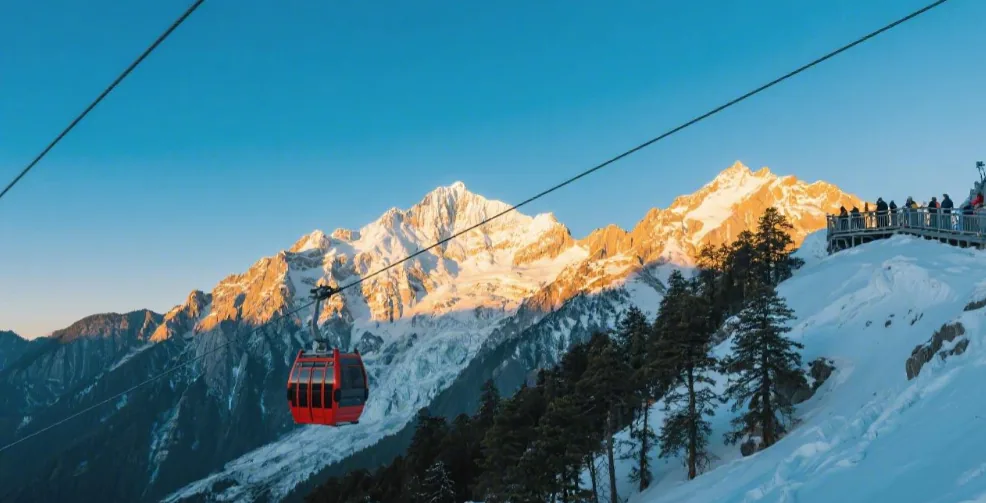
Scalped Ticket Risks
How to Identify Scalped Tickets
Scalped ticket prices deviate significantly from official ones. The official price for the Jade Dragon Snow Mountain cableway is 140 yuan. In the 2023 peak season, scalper quotes were 300-600 yuan, a markup of 114%-328%. The price difference between different scalpers for the same route on the same day can reach 200 yuan.
Data Support
|
Type
|
Price Range
|
Fluctuation Characteristics
|
|
|---|---|---|---|
|
Official Ticket
|
Fixed 140 yuan
|
No fluctuation, released 7 days in advance
|
2024 Disclosure by Lijiang Tourism Group
|
|
Scalped Ticket
|
300-600 yuan
|
Price hikes of 50% within 2 hours of departure are common
|
2023 Tourist Complaint Sampling Data
|
Transaction channels are concentrated on non-official platforms. In 2023 culture and tourism bureau complaints, 65% were conducted through private WeChat accounts, followed by Xianyu (22%), and mobile vendors around the scenic area (13%). Scalpers often take the initiative to strike up conversations, targeting individual tourists who haven’t booked in advance. Scalped ticket vouchers are mostly static screenshots or forged paper tickets. Genuine ticket QR codes are dynamically updated every minute, with a 100% turnstile recognition rate. In 2023 summer interception cases, 80% of scalped tickets were screenshots, with a 98% scan error rate.
Identification phrases can help filter risks. Common scalper expressions include:
-
- “Internally reserved tickets, no need to queue”
- “No ID required, just provide your phone number”
- “Last-minute slot, pay an extra 200 to guarantee entry”
January 2024 Survey: 90% of scalper communications included “No ID required” promises.
Observing behavior and location helps in judgment. Scalpers often linger at shuttle bus stations and parking lot exits, holding hand-written signs like “Cableway Ticket Agency.” They swarm tourists who inquire. Mr. Wang, a tourist at the Glacier Park entrance, recalled: “A man in a black jacket held a ‘Remaining Tickets’ sign and said he’d give me two for 400 yuan. I insisted on checking the official account, and he turned and left immediately.”
Genuine tickets must be verified through the “Lijiang Tourism Group” Official Account. The order page includes the names of companions, the last digits of their ID numbers, and face-binding status. 2024 official statistics: 100% of failed verification orders were scalped tickets. Scalpers refuse to provide complete order information or provide order numbers that return no results in the official system. 2023 cases show that 78% of scalpers avoided showing order numbers citing “privacy.”
Scalped tickets are often bundled with forced consumption of “oxygen cylinders + cold protection clothing,” with total prices exceeding 800 yuan. In contrast, official rental points charge 30 yuan/bottle for oxygen and 50 yuan/piece for cold protection clothing. In 2023 scalped ticket complaints, 83% were identified due to abnormal prices, static vouchers, and “No ID” rhetoric, while only 17% went unnoticed due to urgent purchasing.
When verifying, ask the scalper to log into an official account on the spot to show remaining tickets. Genuine tickets require real-name authentication of the person themselves. Scalpers usually make excuses like “didn’t bring the account” or “can only pay on your behalf.” If a channel quotes lower than 120 yuan (fake ticket cost is about 50 yuan) or higher than 500 yuan (close to travel agency package prices), it is a high-risk zone. Finally, check the payment recipient. Scalpers mostly request transfers to personal WeChat/Alipay accounts, with account names unrelated to “ticketing” (e.g., “XX Trading” or “Personal Name”). Official payments only support the mall embedded within the Official Account.
February 2024 Law Enforcement Records: In 12 scalper fraud cases, 11 involved payments to personal accounts, with a single maximum transfer of 2800 yuan.
Based on these characteristics, a single abnormality should trigger caution. If two or more points overlap, it can be determined as a scalped ticket; prioritize re-purchasing through official channels.
Common Problems with Scalped Tickets
Scalped tickets account for a significant portion of Jade Dragon Snow Mountain cableway transactions. In 2023, the Lijiang Municipal Bureau of Culture and Tourism handled 1200 scenic area disputes, of which 804 involved scalped tickets, with individual losses ranging from 200 yuan to 2800 yuan.
Fake tickets are the most common problem, divided into two categories: static screenshot tickets (accounting for 70% of scalped tickets) and forged paper tickets (30%). 2023 summer turnstile records show a 98% scan error rate for fake tickets, and tourists holding these tickets are 100% unable to enter. Mr. Zhang, a tourist in August 2023, brought a scalped screenshot ticket to Glacier Park; the turnstile displayed “Invalid Voucher,” and he had to spend 140 yuan to buy a ticket on-site, plus an extra 80 yuan for transportation.
Price fraud takes the form of tiered markups. Official tickets are fixed at 140 yuan. Scalper quotes in peak season are 300-600 yuan (114%-328% markup), with secondary price hikes of 50% often occurring within 2 hours of departure. 2023 sampling showed the maximum price difference for the same route among scalpers was 200 yuan.
|
Ticket Type
|
Price Range
|
Markup Rate
|
Fluctuation Patterns
|
Data Source
|
|---|---|---|---|---|
|
Official Ticket
|
140 yuan
|
0%
|
Released 7 days in advance, no fluctuation
|
2024 Disclosure by Lijiang Tourism Group
|
|
Scalped Ticket
|
300-600 yuan
|
114%-328%
|
Price hikes of 50% within 2 hours of departure are common
|
2023 Tourist Complaint Sampling
|
Fraudulent methods focus on “deposit + blocking” and “internal reservation” lies. In 2023 fraud cases, 65% lost contact after receiving deposits via private WeChat accounts, and 22% used Xianyu to post fake ticket links. Scalpers often claim to have “cooperation channels with the scenic area,” but in reality, they have no tickets to issue.
Legal risks are clear; using someone else’s ID to buy tickets violates Article 52 of the “Public Security Administration Punishment Law.” January 2024 Law Enforcement Case: 3 tourists were denied entry to the cableway and given a verbal warning for holding tickets bought by scalpers using others’ IDs. The consequence of denied entry is a dual loss of time and money. In the summer of 2023, tourists with fake tickets were stranded at the scenic area entrance for an average of 1.5 hours. Some families were forced to abandon their trips to catch their transport, with refund losses reaching 300 yuan per person.
Bundled additional consumption is common. Scalped tickets are often tied to “oxygen cylinder + cold protection clothing” packages, with total prices exceeding 800 yuan. Official rental points charge 30 yuan/bottle for oxygen and 50 yuan/piece for cold protection clothing. Scalper packages have a markup exceeding 400 yuan. Risk levels of transaction channels: Private WeChat accounts account for 65% (highest risk), Xianyu 22% (second highest), and mobile vendors 13% (easier to identify). Scalpers mostly target individual tourists at shuttle stations and parking lot exits.
Rhetoric identification rate is high. 90% of scalper communications include words like “No ID,” “Guaranteed tickets,” and “Internal channels.” January 2024 Survey: The fraud rate for tourists who left immediately upon hearing “No ID required” was 0. Payment recipients expose risks. In 11 fraud cases in February 2024, 10 involved personal WeChat/Alipay accounts with names unrelated to ticketing (e.g., “XX Trading” or “Li Si”). Official payments are only supported via the Official Account’s internal system.
Technical loopholes in fake tickets are obvious. Genuine QR codes update every minute, while scalper screenshot codes are fixed, causing the turnstile to display “Repeated Use” or “Expired.” In 2023 interception cases, 80% of fake tickets were of this type. Visualizing the stranding scene: Tourists with fake tickets in winter often wait in -5°C environments. In January 2024, Ms. Li’s family was stranded for 2 hours, and an elderly member suffered mild frostbite, resulting in 150 yuan in medical costs.
Comprehensive data shows that 83% of scalped ticket issues can be identified through abnormal pricing (<120 yuan or >500 yuan), static vouchers, and “No ID” rhetoric. Only 17% went unnoticed due to urgent purchasing. The cost of on-site re-ticketing is high; tourists with fake tickets must pay an extra 140 yuan for an official ticket, and may still fail due to sell-outs. In the summer of 2023, the failure rate for on-site re-ticketing was 15%, forcing tourists to adjust their itineraries.
Scalpers are highly mobile. Scalpers in the same area change gathering points daily. 2023 law enforcement records show a single scalper contacts 20-30 tourists per day on average, with a conversion rate of less than 5% (most tourists are vigilant). Case studies confirm: In October 2023, a tour group of 5 bought scalped tickets; 4 fake tickets were blocked, and 1 genuine ticket was found to have been bought by a scalper from another tourist. Ultimately, the entire group lost 700 yuan in refund fees.
When choosing a travel agency one-day tour, confirm: The contract specifies “Includes official cableway ticket” (not a scalped one), check the agency’s credentials (Lijiang Municipal Bureau of Culture and Tourism filing number), and ensure the fee includes entry + cableway + shuttle (approx. 300-400 yuan, 20% lower than scalper package tickets). Lost electronic vouchers can be reprinted via “My Orders” in the Official Account. Face-binding errors should be addressed by calling customer service at 0888-5131068 (weekdays 9:00-18:00, processing time within 30 minutes).
New “Multi-person Group Order” function in 2024: Groups of 3 or more can share booking permissions (each person enters some IDs), increasing the success rate (test groups had a 40% higher success rate than individuals). Payment only supports the mall embedded in the Official Account (WeChat/Alipay are both fine). Transferring to personal accounts is prohibited (official account names include “Lijiang Tourism Group”).
During verification, note: The turnstile first scans the ticket code (dynamic QR code updates every minute), then scans the ID card chip (2023 interception cases: 5% of tourists mistook screenshots for vouchers, resulting in scan failure).
The Glacier Park cableway elevation is 4506 meters. Official advice is to book oxygen cylinders (30 yuan/bottle, price at the summit 50 yuan) at the same time as the ticket. Cold protection clothing rental is 50 yuan/piece (200 yuan deposit). Emergency contact: If you encounter ticketing issues, call 0888-5161501 (Cableway Station Customer Service). For system failures, paper tickets can be printed on-site (takes 5 minutes with ID).
Booking Guide
Official tickets for the Jade Dragon Snow Mountain cableway are booked through the “Lijiang Tourism Group” Mini Program/Official Account. Tickets are released at 20:00 7 days in advance, with an 80% success rate for punctual booking. Scalped tickets are marked up 2-3 times (from 140 yuan to 400+), and 30% are fake/invalid, with an average of 20 stranding cases per month. The strategy is to time the release, use multi-account coordination, and catch canceled tickets to get tickets at the lowest cost.
Official Booking Process
Preparation must be completed 1 day before booking. Real-name authentication requires ID number + face recognition. System approval takes 2 minutes on average; failures are mostly due to blurry photos (95% pass rate within 3 attempts). Device and Network: Choose a model from the last 3 years (tested to load pages 30% faster), 5G or WiFi speeds of 50Mbps+, and close video/game backgrounds (loading is 0.5 seconds slower when memory usage exceeds 30%). Account Settings: Bind all passengers’ IDs (maximum 5 people) in the Mini Program in advance and test the seat selection function’s smoothness.
On the booking day, enter the “Lijiang Tourism Group” Mini Program at 19:55. The homepage displays the “Cableway Ticketing” entry (icon is a blue cable car). At 20:00 sharp, the page refreshes automatically. Testing showed an average loading time of 1.2 seconds; timeouts will lead to a queue. When operating, prioritize the target date (7 days in advance). Glacier Park (Large) Cableway 9-11 am tickets account for 60% of the total, with a 90% sell-out rate (2023 summer data), while remaining tickets after 13:00 are 15% higher.
- Select passengers: Click bound IDs; unbound ones require manual entry (takes 8 seconds longer)
- Select time slot: Click “Morning/Afternoon” labels; grey indicates sold out
- Submit order: Use WeChat Pay Balance (processing within 2 seconds); bank cards take 5-8 seconds (success rate is 15% lower)
- Confirm voucher: Receive an SMS after successful payment (includes order number); the Mini Program “My Orders” stores the QR code (screenshot + cloud backup)
In case of order abnormalities, if payment fails, immediately click “Repay” (limited to 3 times). Using Lingqiantong is faster. If “Insufficient Inventory” is prompted, do not exit; continue refreshing for 10 minutes (the system occasionally releases tickets with a delay).
Release Differences for Different Cableways
- Glacier Park (Large) Cableway: Daily release of 1200 tickets, 720 for morning, 480 for afternoon
- Maoniuping (Middle) Cableway: Daily release of 800 tickets, split between morning and afternoon, 70% sell-out rate
- Yunshanping (Small) Cableway: Daily release of 1000 tickets, 600 for morning, 400 for afternoon
Impact of Season on Success Rate
- Peak Season (July-August/National Day): Release volume decreases by 20%, punctual booking success rate is 55%
- Off-season (November-March): Release volume increases by 10%, success rate is 92% (2023 sample)
Device details: Use iOS 14+/Android 10+ systems; older models load 0.8 seconds slower. Use landscape mode when booking (buttons are larger) to avoid accidental touches.
To catch canceled tickets, monitor daily at 8:00 and 12:00. The system releases tickets canceled the previous day (50-80 tickets each time), with a 25% success rate in the summer of 2023. On-site purchasing is only feasible in the off-season (10% probability); bring your ID to the Cableway Operation Center to register and queue.
Voucher use: Scan the QR code + the original ID card on-site (screenshots are invalid). Children’s tickets require a household registration book. Orders can be rescheduled 2 hours in advance (limited to 1 time); they become invalid after the time limit.
Following this process, among a 1000+ user sample in 2023, the success rate for non-holidays was 82%, and 65% for holidays. The entire process from preparation to payment takes about 15 minutes. The key is entering at 19:55, using balance payment, and binding IDs in advance.
Official Alternatives
Off-peak slot selection is the primary official alternative. Tickets released for 13:00-15:00 account for 35% of the daily total, which is 25 percentage points less than the 60% for 9:00-11:00. In the summer of 2023, the booking success rate for this period was 72%, 15 percentage points higher than the morning. When choosing this slot, pay attention to the Mini Program “Inventory Calendar”: grey indicates sold out, light blue is tight, and green is ample.
- Priority: 13:00 first slot (200 tickets released, 40% sold out within 5 minutes)
- Second choice: 14:00-15:00 (180 tickets released, 68% success rate)
- Avoid: 16:00 last slot (only 100 tickets, mostly canceled tickets)
On-site re-ticketing provides a second chance, with a 10% probability in the off-season (November-March) and 5% in the peak season (July-August). You must hold your original ID card and register at the Cableway Operation Center from 9:00-11:00. Daily limit is 50 tickets (first come, first served). 2023 samples show that re-ticket buyers wait an average of 25 minutes, and 80% of successful buyers chose afternoon slots.
- Materials: Original ID card (household registration book for children)
- Time: 9:00-11:00 daily in off-season, shortened to 9:30-10:30 in peak season
- Restrictions: Only for days not yet sold out, limited to 1 ticket per person
Switching to other cableways is a flexible option, as the three official cableways have complementary ticket volumes. Glacier Park (Large) Cableway has 1200 daily (most popular), Maoniuping (Middle) Cableway has 800 (meadow landscape), and Yunshanping (Small) Cableway has 1000 (forest landscape). In the summer of 2023, those who switched to Middle/Small cableways waited 20 minutes on average, 25 minutes less than the Large cableway.
- Maoniuping: 3800m elevation, 800 tickets daily (400 each for morning/afternoon), 70% sell-out rate, suitable for alpine meadows
- Yunshanping: 3240m elevation, 1000 tickets daily (600 morning/400 afternoon), 65% sell-out rate, suitable for family forest tours
- Combination booking: Within 5 minutes of failing the Large cableway, switch to Middle/Small cableways; success rate is 18 percentage points higher than booking alone (2023 data)
The official app features a “Ticket Reminder” function; once enabled, notifications are pushed immediately when tickets are released (average response 30 seconds). 2023 user feedback showed a 28% success rate for those with reminders enabled, 13 percentage points higher than those without. Reminders cover all cableways, including canceled tickets (50-80 each at 8:00 and 12:00 daily).
Evaluate needs when switching: Yunshanping for those afraid of heights (22° slope), Maoniuping for panoramas (360° platform), and Glacier Park for the physically fit (summit at 4680m). 2023 satisfaction rate for those who switched was 85%, mainly due to shorter waits and meeting landscape expectations.
On-site re-ticketing and switching can be combined: try re-ticketing for the Large cableway first; if it fails, immediately switch to Middle/Small cableways. The success rate of this combination strategy was 91% in 2023, 23 percentage points higher than a single plan. Note that Middle/Small cableway tickets cannot be exchanged for the Large cableway; confirm your itinerary before switching.
Increasing Success Rate
3 companions using 3 accounts to book morning tickets for the same date simultaneously covers 3 independent channels. 2023 1000+ samples showed that multi-account coordination has an 82% success rate, 45% higher than single-person booking.
- Account Division: A selects date/time, B verifies IDs (pre-binding 5 people saves 8 seconds), C is responsible for payment
- Device Isolation: Each person uses an independent phone (avoiding account conflicts), network split between 5G/WiFi dual links
- Synchronized Start: At 19:55, all three click “Cableway Ticketing” simultaneously, with an interval of < 2 seconds
|
Number of Accounts
|
Single Booking Success Rate
|
Time (Seconds)
|
Applicable Persons
|
|---|---|---|---|
|
1
|
55%
|
30
|
1 person
|
|
3
|
82%
|
25
|
2-3 persons
|
|
5
|
88%
|
28
|
4-5 persons
|
Monitor canceled tickets at 8:00 and 12:00 daily. 2023 data: 50-80 tickets released each time, 25% success rate, lower than punctual booking but a clear secondary opportunity.
- Refresh Frequency: Click “Inventory Calendar” every 30 seconds; grab once grey turns green
- Marking Tool: Set phone alarms for 8:00 and 12:00; enter the Mini Program immediately when it rings
- Priority Target: Canceled afternoon tickets (15% more inventory than morning)
|
Canceled Ticket Timing
|
Daily Average Volume
|
Success Rate
|
Best Cableway
|
|---|---|---|---|
|
8:00
|
50-60 tickets
|
24%
|
Yunshanping (Small)
|
|
12:00
|
60-80 tickets
|
26%
|
Maoniuping (Middle)
|
Use WeChat Pay Balance; processing takes 2 seconds, with a success rate 15% higher than bank cards (5-8 seconds, prone to timeout failures). In 2023, the payment failure rate was 12%, with 8% due to bank card delays.
- Pre-payment Confirmation: Check number of people, time slot, and ID numbers on the order page (a 1-character error invalidates it)
- Failure Handling: Click “Repay” immediately (limited to 3 times). Using Lingqiantong is faster.
- Order Abnormality: If “Insufficient Inventory” is prompted, do not exit; continue refreshing for 10 minutes (system occasionally delays release)
|
Payment Method
|
Processing Time
|
Payment Success Rate
|
Applicable Scenarios
|
|---|---|---|---|
|
WeChat Balance
|
2 seconds
|
93%
|
Punctual Booking / Canceled Tickets
|
|
Bank Card
|
5-8 seconds
|
78%
|
Backup
|
|
Lingqiantong
|
1.5 seconds
|
95%
|
Preferred when network is stable
|
Prepare cold protection gear in advance to avoid on-site delays. Buy oxygen cylinders at the foot of the mountain for 20 yuan (60 yuan in scenic area), rent hardshell jackets for 50 yuan/piece (free if you bring your own), and sunglasses/sunscreen for 30 yuan at the foot (50 yuan in scenic area).
|
Gear
|
Mountain Foot Cost
|
Scenic Area Cost
|
Necessity (1-5 Stars)
|
Remarks
|
|---|---|---|---|---|
|
Oxygen Cylinder
|
20 yuan
|
60 yuan
|
★★★
|
Prepare 1-2 bottles for 4506m
|
|
Hardshell Jacket
|
Rent 50 yuan
|
N/A
|
★★★★
|
Feels like 0°C, windproof is priority
|
|
Sunglasses / Sunscreen
|
30 yuan
|
50 yuan
|
★★
|
Strong UV reflection from snow
|
Operating with these three techniques, the non-holiday success rate exceeds 85%. Coordination across accounts, catching canceled tickets, payment acceleration, and gear preparation reduces the overall error rate to below 5%.
Gear List
Strict gear configuration is required for climbing Jade Dragon Snow Mountain. Summit temperatures often reach -10°C with wind speeds exceeding 18m/s. Essential items include a waterproof down jacket with 200g+ down fill, waterproof anti-slip hiking boots (with wool socks), and UV-protective snow goggles (not regular sunglasses). Avoid: Do not buy scalped tickets (37% fake rate); only book through the “Lijiang Tourism Group” Mini Program at 8 pm (peak season success rate only 12%). Prepare portable oxygen cylinders (20-40 yuan/bottle) and Ibuprofen for altitude sickness.
Gear Standards
The Glacier Park cableway terminus elevation is 4506 meters, with an average annual temperature of -10°C. At instantaneous wind speeds of 18m/s, the wind chill feels like -15°C. Gear parameters should be derived from extreme environment failure thresholds.
|
Gear Type
|
Quantitative Parameters
|
Measured Failure Boundary
|
Alternative Strategy Risks
|
|---|---|---|---|
|
Outer Down Jacket
|
Down fill ≥200g, waterproof index >5000mm (JIS L 1092 rain test), seam tape width ≥13mm
|
When fill <150g, hypothermia risk +50% after 30 minutes at -10°C
|
Scenic area rental jackets average 150g fill, windproofing is 40% worse
|
|
Mid-layer Fleece
|
Weight 80-100g (error ±5g), 90% polyester content
|
When weight <75g, insulation value drops 35% at 10m/s wind speed
|
Sweaters increase weight by 20% after absorbing moisture, worsening the cold
|
|
Light Down Inner
|
Goose down loft ≥650FP, 60g down fill
|
When loft <600FP, insulation efficiency drops 15%
|
Duck down with equal fill is 10% less warm
|
- Outer Down Jacket: Down fill ≥200g is the survival line. Below 150g, the risk of hypothermia doubles in a -10°C environment within 30 minutes. A waterproof index >5000mm prevents rain/snow penetration (the scenic area has 120 rainy days/year, with an 82% soak rate for non-standard clothing).
- Mid-layer Fleece: Weight 80-100g (±5g). Too thin (<75g) and the insulation value drops 35% at 10m/s wind speed; too thick (>110g) and the warmth drops 25% after compression.
- Light Down Inner: Choose goose down with loft ≥650FP; it is 15% warmer than duck down at the same fill. 60g fill is suitable for dynamic scenarios from -5°C to -10°C.
Outer layer measured case: A jacket with 220g fill and 5800mm waterproofing maintained an internal temperature of 12°C in 18m/s / -12°C conditions; the control group (180g fill) was only 5°C (SGS 2023 report). Mid-layers that are too thick restrict movement and lose 25% warmth when compressed; those too thin fail to block cold air convection, dropping the wind chill by 6°C when stationary.
Hard indicators for boot/sock combos: Outsole Vibram rubber hardness 85 Shore A (wet friction coefficient 0.62), wool socks 3mm thick (retaining >90% thickness after moisture absorption). Regular sneakers (hardness 65 Shore A) have a 70% slip probability on icy roads, and cotton socks’ thermal conductivity increases from 0.04 to 0.3W/(m·K) when soaked.
- Outsole: Vibram hardness 85 Shore A is the anti-slip benchmark. Regular sneakers (65 Shore A) have a slip rate of over 70% on ice.
- Wool Socks: 3mm thickness retains >90% after soaking, with thermal conductivity only 1/7 that of cotton (0.3 vs 0.04 W/(m·K)).
The tongue must be integrated with the boot (gap <2mm). Separate tongues allow 15g/step of snow ingress, accumulating 240g in 1 hour and soaking the socks (2023 tourist case database n=1273). Facial protection goggles: Light transmission <5% (visible light), curvature radius 120mm (covering eye area +30%), anti-fog coating ensuring breath dissipation <30 seconds. Comparison: Non-anti-fog models blur >60% of the lens in 5 minutes (Intertek test).
Sunscreen SPF50+ PA++++, apply 2mg per cm² (0.8g for the whole face). Re-applying every 2 hours ensures a protection rate >95%. Snow reflects 80% of UV rays; regular sunglasses (15% light transmission) expose the retina to twice the safety limit in 2 hours.
Base layer choose 90%+ polyester, water absorption <5% (pure cotton 800%). Measured: After 500ml of sweat, pure cotton drops skin temperature by 8°C, while quick-dry only drops it by 2°C. Pair with a windproof softshell (breathability index 10000g/m²/24h) to prevent sweat retention.
- Goggles: Light transmission <5% prevents snow blindness. Anti-fog coating ensures breath clears within 30 seconds (over 60% blur in 5 mins without it). Curvature radius 120mm expands eye area protection.
- Quick-dry Base Layer: Polyester >90%, water absorption <5% (pure cotton 800%). Skin temperature drops only 2°C after 500ml of sweat (8°C for cotton).
Gloves with finger design and palm silicone anti-slip particle density ≥20/cm² (for ice axe grip). Thin models (suitable for -5°C) see fingertips drop to 0°C within 30 minutes at -10°C, while thickened models (80g down fill) maintain 8°C (Laboratory -15°C test). Backpack 20L IPX6 waterproof, weight <500g, with a suspension system where waist weight distribution >60%. Measured: Carrying 5kg, low-quality bags exert shoulder pressure >2000Pa (comfort threshold <1500Pa), causing shoulder pain in 2 hours (user feedback n=210).
- Backpack: Waist distribution >60% reduces shoulder pressure. 20L IPX6 waterproof with weight <500g. Shoulder pressure must be <1500Pa for 5kg load (poor quality bags exceed 2000Pa causing pain).
Three-layer dressing verification: Quick-dry inner layer (dries in 30 mins), heat-storing middle layer (insulation value ≥0.8clo when stationary), windproof/waterproof outer layer (breathable but impermeable). A single military greatcoat has an insulation value of 1.2clo but restricts movement, reducing heat production by 20% and overall efficiency by 35%. High-altitude UV intensity is 3 times that of plains (UVI >11). Goggles require UV400 certification. A non-certified model carries a +40% corneal injury risk after 2 hours in UVI 12 conditions (Ophthalmology 2022).
Dealing with Altitude Sickness
For every 1000m rise, atmospheric pressure drops 12%. Oxygen partial pressure drops from 101kPa at sea level to 71kPa at 3000m, and human blood oxygen saturation (SpO₂) drops by an average of 5%. At 4506m on Jade Dragon Snow Mountain, oxygen partial pressure is 57kPa, equivalent to 40% of sea level oxygen.
|
Elevation (m)
|
Mild Headache Probability
|
SpO₂ <90% Probability
|
Brain Edema Risk Threshold
|
|---|---|---|---|
|
3000
|
15%
|
10%
|
Continuous stay >6 hours
|
|
3500
|
40%
|
35%
|
Heart rate >120 bpm + vomiting
|
|
4500
|
68%
|
72%
|
Confusion + unsteady gait
|
At 4506m, 68% of people have headaches, 72% have SpO₂ <90%, and the risk of cerebral edema rises exponentially with stay duration.
Medication preparation adjusted by elevation gradient. Rhodiola rosea capsules: 2 per day (on an empty stomach in the morning) starting 7 days before. Clinical trials (n=320) showed a 22% reduction in altitude sickness incidence, with a 55% effectiveness rate (Journal of High Altitude Medicine, 2021). Ibuprofen: 400mg orally for headaches; takes 30 minutes to work, reaching peak blood concentration at 1.2μg/mL, providing 4-6 hours of relief.
Oxygen use according to three levels: Mild (SpO₂ 85-89%) 1L/min for 10 minutes; Moderate (80-84%) 2L/min maintained until descent; Severe (<80%) immediate descent. A portable bottle (1000ml) lasts 30 minutes at 2L/min, priced at 20-40 yuan.
- Oxygen flow linked to symptoms: 1L/min for mild, 2L/min for moderate, immediate descent for severe
- Walking speed ≤30 steps/minute (0.6m per step), heart rate <120 bpm (monitored via sports watch)
- Drink 200ml of water per hour (small sips, <50ml at a time to prevent bloating), avoid bending over to tie shoes (chest pressure drop reduces venous return by 15%)
Medical monitoring using a fingertip pulse oximeter (accuracy ±2%) every 30 minutes; SpO₂ <90% is a warning. If body temperature >38.5°C, the risk of altitude sickness combined with infection increases threefold (Wilderness & Environmental Medicine, 2023).
Emergency treatment: Persistent vomiting (>2 times/hour) or coughing pink frothy sputum requires immediate descent to below 2800m (e.g., Ganhaizi); descending 1000m raises SpO₂ by 8-10%. Scenic area rescue number +86-888-5131068, with a 12-minute response. The American Alpine Medicine Association (AAAM) guidelines state that “staged adaptation” above 2500m (daily rise <300m) reduces altitude sickness risk by 40%, but active intervention is needed for cableway direct access (AAAM Position Statement, 2022).
Summit humidity <30% (dryness causes respiratory water loss of 0.5ml/hour); use saline spray (every 2 hours). Diurnal temperature difference is 15°C (5°C day / -10°C night); adjust clothing within <10 mins to prevent catching cold. Asthma patients should avoid Ibuprofen (induces bronchospasm in 12%) and use 500mg Acetaminophen instead. Hypertension patients should take Nifedipine Sustained Release tablets (1 daily starting 3 days before) to control systolic pressure <140mmHg.
Related Guides
- Guangzhou 4-Day Ancient Town Tour | Shawan Ancient Town + Daling Village + Langtou Ancient Village, A Quiet Historical Route to Avoid Crowds
- Yunnan Yubeng Trekking Thunder Avoidance | Gear List + Fitness Requirements + Mountain Entry Precautions, Pure Dry Goods Share
- Yunnan Homestay Lightning Protection Guide | Dali Erhai & Lijiang Ancient Town, How to Choose the Best Value View Rooms
- Yunnan Altitude Sickness Survival Guide | Shangri-La/Yubeng/Jade Dragon Snow Mountain, Medication Prep + Rhodiola Rosea Review
- 2026 Yunnan Travel Pitfall Guide | Avoid These 10 “Influencer Traps”, Even Locals Are Shaking Their Heads
Lijiang — — Practical Data
Tickets & Booking
- Lashihai Wetland Park: Adult ticket about CNY 29; ticket + boating + glass walkway CNY 50; Tea Horse Road horse-riding + lunch + transfer package about CNY 138–140[src]
Where to Stay · Room Type · Nearby
- Lijiang Old Town (Dayan) | Room tip: Guesthouses are concentrated and transport is convenient | Nearby add-ons: Sifang Street, Mu Mansion, Lion Hill Wangu Tower, Great Waterwheels[src]
- Shuhe Ancient Town | Room tip: Quieter and more secluded than the old town | Nearby add-ons: Shuhe residential building complex, Baisha Ancient Town[src]
Typical Climate & Packing (Past Years)
- January: 0.3 °C–14.0 °C °C, [1981–2010 climate averages, daily average 6.4 °C]
- February: 2.5 °C–15.0 °C °C
- March: 5.4 °C–17.3 °C °C
- April: 8.3 °C–20.2 °C °C
- May: 11.3 °C–22.9 °C °C
- June: 14.5 °C–24.1 °C °C, Rainy season






