Day 1: Arrival in Kunming, Relaxed City Stroll
I landed at Kunming Changshui Airport last Sunday at 11:00 AM. Upon arrival, the wind carried the warmth of a full morning’s sun against me, making my nose itch—it was far more comfortable than the damp cold of early winter back home. I spent three minutes looking for the blue-vested ride-hailing sign at the arrival gate and settled on a 15 RMB fare with a driver to Hanting Hotel near the railway station. Along the way, he chatted in a Kunming-accented dialect: “You’re lucky today. Yesterday the seagulls were fighting for food at the dam; tomorrow you might run into crowds of kids feeding them.” Bougainvillea flashed past the car window—purple and red blossoms climbing over fences like a floral carpet woven for the airport road.
I arrived at Hanting just after 11:30 AM. The front desk girl smiled as she handed me the key card and pointed to the window: “You’re on the 3rd floor, to the right of the elevator. You can smell the fragrance from the bun shop at the alley entrance in the morning.” The room wasn’t large but was tidily kept. The bedsheets were light blue checkered linen, smooth to the touch; the hot water in the bathroom came out instantly, towels were folded perfectly square, and even the bristles of the disposable toothbrush were softer than what I’d used before. I tossed my backpack onto the bed and dozed off on the pillow for five minutes—Kunming’s air pressure is low, making breathing feel lighter than back home.
I headed out at 1:00 PM and walked 5 minutes to the “Kunming South Railway Station” stop on Metro Line 5. The subway carried a faint scent of disinfectant, with Bai ethnic tie-dye fabrics hanging from the ceiling. The broadcast alternated between Mandarin and Kunming dialect: “Next stop, Dianchi College, please prepare to disembark.” The 4 stops passed quickly. When I exited, the sun was shining obliquely on the wooden plank path of the Dianchi Dam. I grabbed a 10 RMB bag of bird food and walked toward the water. Plane trees by the path filtered the sunlight into scraps of gold; occasionally, a leaf drifted to my feet, feeling soft as I stepped on it.
The water of Dianchi Lake was a pale cyan, with a few red-painted small fishing boats floating on the surface. I found a quiet corner to squat down and scattered some bird food—first, two seagulls tilted their heads and approached, their sharp beaks tapping the back of my hand, followed by seven or eight more flying over. Some perched on my wrist, their feathers tickling me, while others skimmed the water to snatch food, splashing small ripples. A little girl in a red down jacket nearby shouted, “Mom, look! This seagull is eating mine!”, her laughter as crisp as a bell. I played until 3:00 PM, with bird food residue on my palms and a soft seagull feather tucked in my pocket.
I took Bus 5 to Green Lake (Cuihu). An auntie on the bus was selling roasted potatoes from a bamboo basket, the aroma filling the entire carriage. I struck up a conversation: “How much for the potatoes?” She smiled and lifted the insulating cloth: “5 RMB, fresh out of the oven, very warm, want to try one?” I didn’t buy any, but I remembered that scorched fragrance. I got off at the Green Lake Park station and walked along the flagstone path by the lake. The wind carried the bitter scent of lotus leaves—if it were summer, the lotus flowers would cover the lake in pink and white, squeezed together. Though only withered lotuses remain now, water droplets rolled across the leaves like scattered silver coins.
Around 5:00 PM, I wandered to Nanping Street. The “Jianxinyuan” rice noodle shop at the corner emitted the scent of chicken soup. I stood at the door and sniffed; the boss shouted: “Young man, coming in for small-pot rice noodles? It’s hot!” I found a window seat and ordered a chicken broth base with thinly sliced meat and pickled vegetables. The rice noodles arrived steaming; they were slippery and soaked in broth, and the chicken soup was so delicious I almost wanted to swallow my tongue. I slurped my noodles while watching the crowds—an old lady in ethnic dress walked by with a vegetable basket, young couples took selfies with milk tea, and a fresh flower cake stall drifted sweet scents, with crumbs falling near the bamboo tray, attracting two little sparrows.
At 7:00 PM, I returned to the hotel, took a hot bath, and hung my jacket—stained with bird food—on the balcony, smelling the lemon scent of laundry detergent.
By the way, a small tip to avoid a pitfall: Don’t buy the 20 RMB bird food sold at the Dianchi entrance; the 10 RMB stuff at the convenience store near the railway station has the same ingredients. Green Lake lotuses only bloom in summer; if you come in winter, you can go to Zhuantang Park, where the winter jasmine blooms early and you can smell the fragrance in December. Also, don’t just flock to the main street for snacks in Nanping Street; the braised noodles at “Fuhuayuan” are more authentic than nearby shops, 12 RMB a bowl, topped with braised beef and pickled vegetables—you can even finish the soup.

Day 2: Kunming → Dali, Exploring the Ancient City and Watching the Sunset
At 7:30 AM, clutching a high-speed train ticket from the automatic machine at Kunming Station, I entered the waiting hall. The flower cakes in the glass cabinet were still steaming. I nibbled on some leftover Rushan (milk fan) from yesterday—the crispy shell wrapped in rose filling, crumbs falling into my down jacket pocket, which I’d have to clean later. The 8:00 AM train departed on time. My neighbor was an auntie with a camera who filmed the mountains outside the window the whole way: “Look at these clouds, changing from Kunming’s gray to Dali’s cotton candy, like a new painting every half hour.” After passing Chuxiong, the wind carried a hint of salty sea air. I pulled up my hoodie; it was cool but not biting.
At 10:00 AM sharp, I stepped onto the tiled floor of Dali Station. At the exit, drivers holding rental signs shouted at the top of their lungs; I ignored them and followed the yellow-vested volunteers to the taxi point. The driver was an uncle wearing a Bai ethnic tie-dye headscarf. Hearing I was going to Longkan Wharf, he turned the wheel and laughed: “That place is magical, only 2 kilometers from the Ancient City. You can hear the Erhai waves at night.” The fare was 30 RMB. Along the way, he pointed to the vast rice fields: “In two more weeks, the rice will be as yellow as gold foil, ten times better for photos than the city walls.” The car rattled past a roadside field of purple sage, and I caught a bitter fragrance similar to the mugwort dried on my balcony at home.
I reached the guesthouse at 10:30 AM. The proprietress was a Bai auntie in a navy blue cloth shirt. She took my small bag: “You’ve got a sharp eye, young lady. This room faces east; the 6:00 AM Erhai sunrise will shine right onto your pillow.” The room wasn’t large, the walls were painted as white as freshly steamed rice cakes, and the tie-dye sheets were blue and white checkered, soft as clouds. On the balcony stood two rattan chairs. I sat down as the wind rolled in from Erhai, carrying moist water vapor, swaying the curtains and even the water bottle on the table.
At 2:00 PM, I went out with some spare change, first wandering to Renmin Road. The old houses on both sides had gray tiles and white walls, with wooden plaques saying “Cultivation and Study Passed Through Generations” hanging over the lintels. Some doors were ajar, revealing tie-dye racks inside—indigo fabrics hanging down as if dragging the colors of Erhai into the house. I ducked into “Lanxu” tie-dye shop. The owner sat at the threshold stirring an indigo vat; every stir of his wooden stick produced deep blue bubbles. He said, “We don’t use chemical dyes here. Isatis root is soaked for three days and nights, and the dyed fabric gets brighter the more you wash it.” I touched a butterfly-patterned scarf on the rack; the fabric was thick and the texture uneven. The owner asked for 30 RMB, and I gritted my teeth and bought it—later I found it was half the price of the main street.
Unordered List: 3 Observational Details at “Lanxu” Tie-Dye Shop
- Freshly dyed handkerchiefs hung on boards by the vat, indigo water still dripping from the edges, smelling of herbal bitterness;
- The owner demonstrated the steps: draw patterns on white cloth, tie it tight with cotton thread, soak in the vat for 20 minutes; after untying, the patterns appear;
- A small blackboard hung in the shop saying “Today’s Tie-Dye Theme: Cangshan Snow.” The owner said the patterns change monthly with the seasons.
At 4:00 PM, I trudged up the stone path to the foot of Wuhua Tower. The stone steps were a bit slippery, so I leaned against the wall. Both walls were carved with Bai “Three Rooms and a Screen Wall” patterns. Only after climbing up did I realize Wuhua Tower is actually a gate tower. Looking down from under the eaves, the roofs of the ancient city looked like fish scales—gray tiles upon gray tiles—with the distant Cangshan Mountains floating in the clouds like a stroke of ink on rice paper. An old lady selling roasted Erkuai below called to me: “Want one, young lady? Sweet sauce and crushed peanuts, even more fragrant than the milk fan in your hand.” I took it; the Erkuai was so soft it could stretch, the sweet sauce wrapping around the peanut aroma—one bite and I almost swallowed my tongue.
At 5:30 PM, I walked toward Longkan Wharf, passing a field of reeds with fluff flying everywhere, sticking to my hoodie like a layer of snow. The walkway at Longkan Wharf is made of deep brown wood that creaks when stepped on. I found a stone by the water to sit on and propped my phone on a withered branch to film the sunset. At first, the sunset was orange-red, dyeing the surface of Erhai into crushed gold that shimmered with the wind.
At 7:00 PM, I returned to the Ancient City, my stomach growling. Following the rich fish scent down Renmin Road, I saw the red sign for “Ancient City Casserole Fish.” The boss was a bald man who shouted while wiping sweat: “Perfect timing! Freshly caught Bow Fish, the soup has been simmering for half an hour!”
| Casserole Fish Ingredient Comparison | Fresh Bow Fish | Frozen Fish |
|---|---|---|
| Fish Meat Texture | Firm texture, vibrates slightly when picked up | Loose texture, easily falls apart in soup |
| Broth Flavor | Fresh without being fishy, with a natural sweetness | A bit earthy, requires heavy seasoning to mask |
| Recommendation Index | ★★★★★ | ★★☆☆☆ |
The casserole arrived steaming, with the fish lying in a milky white broth surrounded by tender tofu, soaked wood ear mushrooms, and shredded cabbage. I took a piece of fish; it was so tender it melted in my mouth. The broth was so fresh my eyebrows arched—the uncle said the soup was made from fish bones without MSG. I sipped the soup while the streetlights outside flickered on, the flagstones of the ancient city glowing warmly. People walked their dogs or munched on flower cakes; even the wind seemed to turn sweet.
Before bed, I sat on the balcony rattan chair, smelling the osmanthus outside (the guesthouse courtyard had a golden osmanthus tree), flipping through today’s photos: the blue and white patterns of the tie-dye scarf, the crowds below Wuhua Tower, the sunset at Longkan, and the steaming fish soup. I suddenly felt that Dali isn’t for “checking in,” but for “soaking”—soaking in the Erhai wind, the ancient city alleys, and a bowl of hot casserole fish, letting time slow down and sway with the breeze.
A few final tips from the heart:
- Guesthouses at Longkan Wharf must be chosen for their “Erhai view,” otherwise you’ll only hear the noise from the bar next door at night;
- Don’t buy tie-dye on the main street; shops in the Renmin Road alleys are more honest—a 30 RMB scarf is twice as thick as a 100 RMB one on the main street;
- Wuhua Tower has fewer people after 5:00 PM; no need to squeeze for photos, and you can capture the panoramic view of the ancient city—when I went at 8:00 AM, the tower was full of tour groups;
- Always choose “Fresh Bow Fish” for the casserole; don’t believe the boss if he says “frozen is just as fresh”—the flavor is ten levels apart.
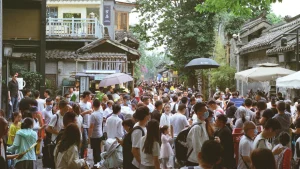
Day 3: Dali Cangshan + Erhai Loop, Deep Dive for a Day
At 7:00 AM, I was woken by the wind on the balcony—the wind smelled of Cangshan pine needles. I rubbed my eyes, put on my hoodie, and stuffed a Rushan cake into my mouth. The crisp, sweet fragrance spread, serving as today’s opening statement. At 8:30 AM, I waited for the Cangshan direct bus. The driver was a bearded guy who laughed when he saw my camera: “Going to Ximatan, right? You’re lucky today, no fog on the summit, you can see the snowline.” The fare was 35 RMB. The bus was half-filled with hikers, from uncles with trekking poles to old ladies with thermoses. They chatted about “when the Cangshan azaleas bloom,” and the driver chimed in: “Late May to early June, the whole mountain is so red it looks like it’s on fire.”
The bus rattled for 40 minutes to the Cangshan scenic area entrance. An auntie at the ticket window wearing reading glasses took my ID: “Young man, the Ximatan package is 290, including entrance + grand cableway + shuttle bus. Remember to stay on the path up there; the meadows are slippery.” I clutched my ticket and headed in. The shuttle bus climbed the winding mountain road, and the trees changed from Yunnan pine to high-mountain azaleas—pink and red clusters squeezed onto the slopes like a spilled palette.
Taking the grand cableway up, I specifically chose a window seat. The cable car slowly rose, the forest below thinning until bare rocks were exposed. The mountain wind, carrying the chill of snow, slammed in, and I quickly pulled up my windbreaker hood. At Ximatan, the meadow spread out like a green velvet carpet. In the distance, I could see the silhouettes of the 19 peaks of Cangshan, some still tipped with snow. I crouched to touch a blade of grass; dew wet my fingertips. A guy in trekking pants nearby was photographing a little squirrel holding a pine cone on a rock, completely unafraid of humans. Around 12:00 PM, I headed down. At the exit, an auntie was selling snow peaches for 5 RMB each—crisp, sweet, and juicy, every bite was refreshingly cool.
By the time I reached the foot of the mountain at 1:00 PM, I was starving. Following a scent, I found “A-Niang Cold Chicken Rice Noodles.” The old lady in a blue apron was moving her ladle fast: “Mild or medium spicy, dear? Our pickled vegetables are home-made and very appetizing.” I chose medium. The noodles arrived in a bright red broth with shredded chicken, pickles, mint, and chili. Slippery noodles soaked in broth, the spice racing from my tongue to my forehead, only to be calmed by the coolness of the mint. The lady smiled: “Eat slowly, there’s more noodles if you need, for free.” I finished half the bowl of soup and even polished off the free pickled radish.
At 2:00 PM, I went to rent an electric scooter. The owner, a young guy in a cap, lifted a curtain for me to choose: “This one has a 60 km range, enough for a loop around Erhai. Deposit is 100, refunded when you return.” I touched the seat; it was a bit hot but acceptable. I checked the battery before leaving—it showed full—so I set off. From the ancient city, I rode along the Erhai West Loop toward Xizhou. The rice fields were just heading out, dew clinging to the leaves, with occasional farmers in conical hats weeding.
At 3:30 PM, I arrived at Xizhou Ancient Town. Clover grew in the cracks of the flagstone road, and the gate tower bore the gilded characters “Xizhou.” I headed straight for “Yang Shunbao Broken Crust Baba.” The owner was kneading dough into round balls: “Sweet or savory? Sweet is rose sugar, savory is ham, both freshly baked.” I took two. The sweet one had a molten rose sugar center and a crust so flaky it crumbled; the savory one was packed with ham bits and scallions, the salty aroma permeating every layer. The owner laughed while wiping his hands: “I’ve been making Baba for 30 years. The secret is low heat; slow roasting makes it crispy.”
At 5:00 PM, I rode toward Shuanglang, passing a sunflower field with heavy, drooping heads and bees circling. Yuji Island in Shuanglang wasn’t far—a 10-minute boat ride for 25 RMB. The wind was stronger on the island, the Erhai blue like a piece of shattered glass, clear enough to see stones underwater. I walked the island path and saw Bai fishing boats docked, nets hanging from the gunwales.
At 18:00, I returned to the ancient city to drop off the scooter. The owner checked the battery: “15 km left, not bad, didn’t run it dry.” I returned the helmet and, with my remaining 20 RMB, went for dinner. I passed the “Bai Three-Course Tea House,” where the proprietress called out: “Want to try the Three-Course Tea? 30 RMB per person, includes a performance.” The tea house had wooden tables and chairs with Bai tie-dye hanging. The first course was bitter tea, roasted and brewed, making me wince; the second was sweet tea with walnuts and brown sugar, soothing the throat; the third was “aftertaste” tea with Sichuan peppercorns and honey—numbing yet sweet.
Lying on the guesthouse bed at night, I scrolled through photos: the snowline from the cableway, the flaky layers of Xizhou Baba, the Erhai blue of Yuji Island, and the three layers of tea. I suddenly remembered the old lady’s “Eat slowly.” Travel is the same—no need to rush, no need for perfect photos. Slow down to taste the wind, the tea, and the warmth of the noodles.
A few tested tips to avoid pitfalls:
- Try to go to the Cangshan Ximatan cableway early in the morning; the UV is strong at noon and it gets windy and cold;
- When renting a scooter, check the battery range; don’t believe the owner’s “80 km” claim—60 km is just enough for the Erhai loop;
- Choose freshly baked Xizhou Baba; once cold, they get soft and aren’t as good;
- Don’t buy expensive souvenirs on Yuji Island; the 10 RMB shell necklaces at roadside stalls are more delicate than those in shops.
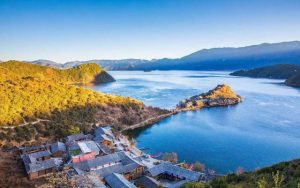
Day 4: Dali → Lijiang, Ancient City and Folk Music
At 8:30 AM, I boarded the bus with oranges I bought at the Dali Station convenience store—the skins still had morning dew, and they were sweet and slightly tart, perfect for waking me up. My neighbor was an auntie in a tie-dye apron who talked about how “lazy” the Lijiang sun is: “When you get there, don’t rush. Just sit on a stone block in Sifang Street and sunbathe; it’s better than visiting sights.” After Xiaguan, the salty smell of Erhai faded, replaced by the bitter fragrance of pine needles and mountain soil. I watched the view change from rice fields to green mountains and drifted off to sleep.
At 10:30 AM, I stepped onto the tiled floor of Lijiang Station, the sun making me squint. I followed the yellow-vested volunteers to the taxi stand. The driver was a short-haired man who saw I was going to Home Inn and pointed to the plane trees: “Your suitcase wheels need oiling, but Lijiang’s roads are flat, so it’s fine.” The fare was 15 RMB. On the way, he remarked, “Lijiang’s autumn is short; in two weeks you’ll need a sweater.” I felt the orange in my pocket, thinking of finding a sunny spot to eat it later.
I reached Home Inn at 11:00 AM. The girl at the desk sniffed: “That orange scent is strong. Your room has blankets that were just sun-dried, they smell even better.” I pushed the door open, and sure enough, the sun-scented blankets were piled on the bed with a hint of lemon detergent. I flopped onto the bed, listening to the birds—not the sharp chirping of sparrows, but a long flute-like sound. My breathing slowed down.
At 2:00 PM, I headed out with my small bag. The stone lion at the South Gate had moss on its ears, like a pair of glasses. Walking along the flagstone path, the uneven texture felt like stepping on furniture made by an old carpenter. In the center of Sifang Street stood the giant water wheel, creaking as it turned, splashing water onto the stones, reflecting passing red skirts and blue shirts. An auntie selling hand drums sat on a stone block, her drum painted with Naxi totems; she played a lively beat mixed with an off-key “Welcome to Lijiang” song while girls crowded around for photos.
When I took a taxi to Mu Mansion, the driver said, “This used to be the Tusi’s residence; now it’s a tourist spot, worth a look.” The ticket was 40 RMB. The guide at the entrance held a small flag and wore a Naxi embroidered apron: “Inside there are wood carvings in the main hall and orchids in the courtyard; they are all old treasures.” Inside, I found pillars carved with “Dragon and Phoenix,” the lines rough as if chiseled by hand. The guide said: “This is the craft of Naxi carpenters; they don’t use blueprints, only memory.” The courtyard was filled with pots of Cymbidium orchids with long leaves and pale purple flowers, smelling faintly like a cup of light tea.
At 5:30 PM, I wandered back to the ancient city and walked along the river to find “Running Water” Café. The owner was a guy in a denim shirt sitting in a rattan chair with a guitar. He smiled: “Osmanthus or rose tea? The osmanthus was freshly picked this morning.” I ordered the osmanthus tea for 20 RMB and sat opposite him. He began playing “In an Instant,” his voice low as if talking to the river. Other guests were reading or humming along; the sound of flowing water mixed with the song, adding a gentle filter to our conversation. I watched the sunset on the river, drinking my tea slowly, not even wanting to leave the flowers at the bottom of the cup.
At 19:30, starving, I walked north from Sifang Street and caught the scent of cured pork ribs—a salty aroma aged for decades mixed with the sweetness of radish. I saw the red sign for “Grandma’s Cured Pork Ribs.” The owner was a man in glasses who shouted: “Come in! The ribs were simmered starting early this morning!” The casserole arrived steaming, with ribs piled high, each coated in a deep brown marinade, and radishes soaking in the oily soup. I took a rib; the meat fell off the bone easily. One bite—salty with a hint of sweetness from Sichuan peppercorns and star anise. The radishes were soft yet slightly crisp, and the broth was so good I could drink three bowls. Paired with the complimentary rice, I had two bowls and felt so full I wanted to sigh with satisfaction.
At 8:30 PM, I walked back through the alleys. The streetlights were a warm yellow, stretching my shadow on the flagstones. I passed a small handmade silver shop where the owner sat at the door hammering a bracelet. The rhythmic “ting-ting” mixed with distant folk music provided a background track for the night. Back at the guesthouse, I sat on the balcony, flipping through photos: the Mu Mansion carvings, the Sifang Street water wheel, the osmanthus tea, and the steaming hot pot.
A few tested pitfall/recommendation tables
| Category | Details | My Experience Summary |
|---|---|---|
| Mu Mansion Visit | Explanation fee 30 RMB/person (groupable); hard to appreciate carvings/orchids without it | The guide tells Naxi Tusi stories; 10 times more interesting than wandering alone |
| Folk Music Café | Riverside cafés (like “Running Water”) are quieter than alley ones; good for sunset/river lanterns | Osmanthus tea is 20 RMB; the singer isn’t loud, perfect for daydreaming or journaling |
| Cured Ribs Hot Pot | Choose 10-year-old shops (like “Grandma’s”); the soup is simmered since dawn | Thick meat, not dry; radishes soak up the soup; much better than trendy shops |
| Ancient City Outfit | Wear comfortable sneakers! The flagstones are uneven; white shoes hurt after a while | I wore canvas shoes and my soles were sore; regretted not switching to sneakers |